← Embracing Digital Transformation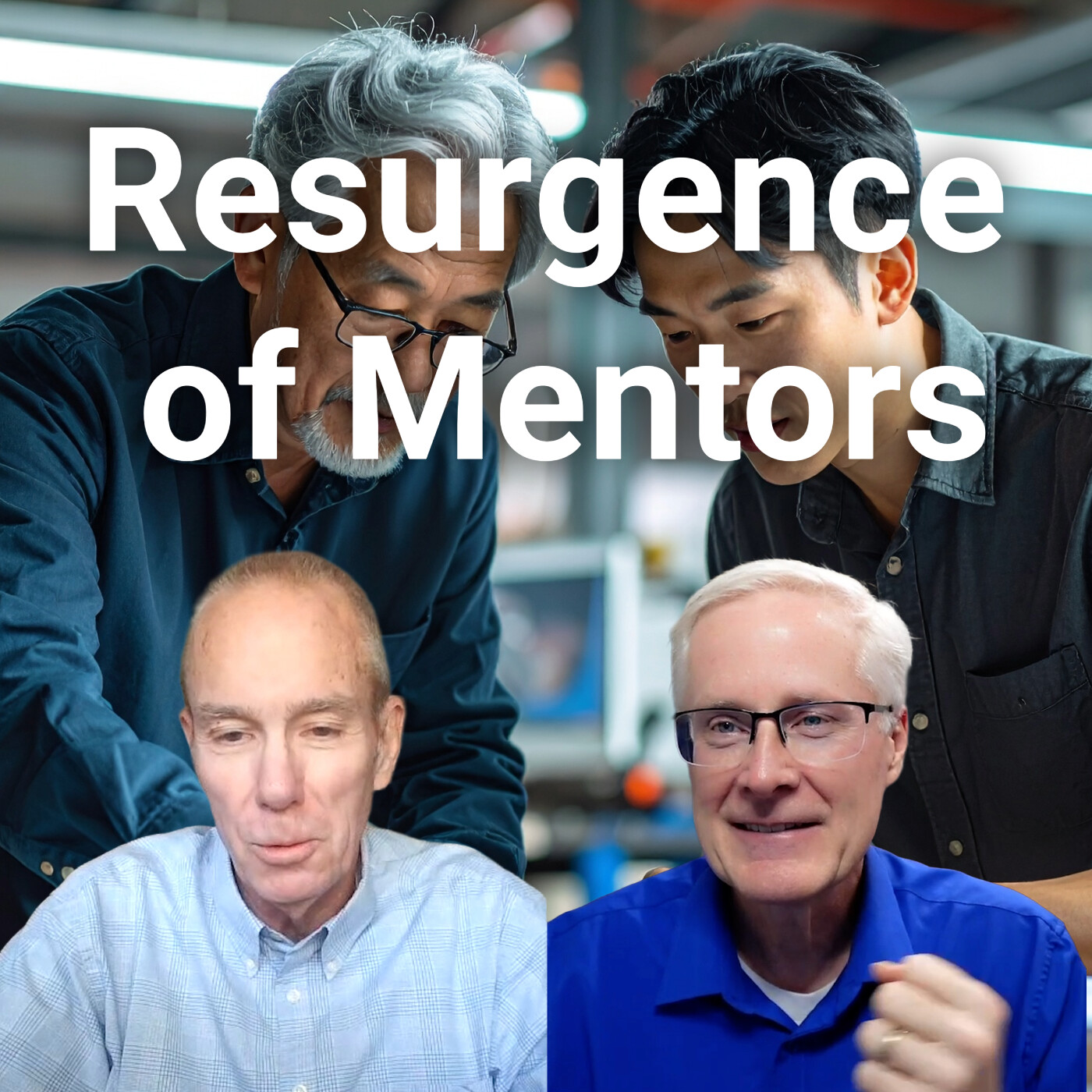
Embracing Digital Transformation
#346 The Lost Art of Mentorship: Why AI Can’t Replace Experience
00:32:21
Loading summary
Transcript61 lines
- [00:01]
A
And if you're a leader and you fail with mentoring or bringing your employees along, that's on your shoulders. It's not anybody else's shoulders. What could you have done differently? And part of that is making sure there's mentorship.
- [00:18]
B
Welcome to Embracing Digital Transformation, where we explore how people process, policy and technology drive effective changes. This is Dr. Darren, Chief Enterprise architect, educator, author, and most importantly, your host
- [00:35]
C
on this episode, the Lost Art of why AI Can't Replace Experience. With special guest Richard Brew, mentor, evangelist and founder of True North PMP Consulting. All right, Richard, welcome to the show.
- [00:52]
A
Thank you. Happy to be here, Darren. Hey.
- [00:55]
C
I'm really excited to talk about what we're going to talk about today, which is kind of. It's like a lost art of things kind of slowly disappearing. We're going to talk about that how? Well, all right, before we get, before we dive into that, though, everyone that listens to my show knows that I only have superheroes on the show. And every superhero has a background story. It got their origin story. So, Richard, what's your origin story?
- [01:26]
A
Well, thank you, Darren, again. I'm Richard Brew. I'm with True North PMP Consulting. My journey began 48 years ago working in corporate America for companies like Lake and Decker, Owens, Corning. And the brunt of my Fortune 500 career was at General Electric in their plastics division, where I held numerous jobs anywhere from individual contributor right up into the upper management of those organizations.
- [01:53]
C
Whoa. So you were at GE when leadership was keen there?
- [01:58]
A
I mean, I was there when Mr. Welsh was there who obviously believed in strong leadership, strong process, strong vision and focus. I spent a lot of time in Crotonville, sitting in the classroom there with him, teaching us. I also had one on one time with him five times a year in Detroit where he would sit with me and talk about the work that I and my team were doing in the Detroit market.
- [02:28]
C
Very rare. And people like you are going to become more and more rare. Sorry. So GE then where from GE?
- [02:37]
A
I left corporate America in 2017. I wanted to help small to medium sized businesses understand how to become better at project management and new product development commercialization because they didn't have the depth and breadth of resources that I had working for those Fortune 500 companies. And obviously we had vendors that were small to medium size. So I saw them struggle. So I got this idea in my head that, you know, what, what we do here, they can do very easily. They just need someone to help them, you know, find the path. So the mission of my company, True North PMP consulting is to help companies become better at project management, become better at new product development commercialization so they get reduced costs, faster cycle time to revenue, reduced risk and waste. Well, you say, how do you do that? Well, we do that by applying the best practices of project management. Okay, it's very basic stuff but when you apply it and follow works, whether it's waterfall or agile, and our speciality within that is recovering derailed projects, projects that are over budget, behind schedule, they've got scope creep. So we do a lot of work in that area so that there's better predictability and profitability brought back into the projects.
- [04:00]
C
Okay, so Richard, this is a great, this is a great segue into. Do you feel like basic project management skills are lacking not just in small and mid sized businesses, but also large businesses too? Or, or, or, or is it only geared towards small and medium sized businesses? What are you seeing out there?
- [04:22]
A
It, it, it's a variant. I just got off an assignment with a, a multibillion dollar company that makes building materials and they had a project management process that somewhat worked years ago. However, bought out by a private equity firm, they eliminated the project management office and other product managers. So it came from a very structured environment to a very loose and whatever the engineering management or someone felt they needed to do. So I've seen it in bigger companies and I still see it in small to medium sized companies. But again, they usually don't have the type of training that someone like you and I have to do a project and that's when we get called in, when they've expended all their resources, say we don't know how to do this, we've tried, so could you come in and help us?
- [05:11]
C
Okay, so, so why is this? Because, yeah, I, I think project management is a basic skill that, you know, I even learned before I went to business school. I learned it really early on in my career. Some basic things that you know, you have to have to do. Is it not being taught anymore? Are people just abandoning it, saying oh, project managers have slow things down? What do you think is causing this problem?
- [05:39]
A
Well, I do think as a discipline it's growing. If you look at the statistics from PMI.org, they claim that, you know, there's a shortage of certified project managers, whether you're agile or waterfall and the demand's going to grow. And I believe that because with the advent of AI and other things, it's no longer just basic project management in some cases. But you know, the thing that I find Very interesting is a lot of these students coming out of college, they have a lot of engineering knowledge, a lot of engineering training, but very little project management training. And that they get that if they're lucky on the job versus when maybe you and I came or coming up, I had mentors. I went into General Electric and the first day I was assigned a mentor and a mentor that knew project management and a mentor that would guide me and show me the ropes so that I didn't make any grave mistake, but I learned how to do it the GE way, if you will. Now is the GE way the right way? Maybe not in every case, but I had a mentor and that's one of the things I see lacking. Yeah, it's still being taught at college classrooms. I teach it at the community college level, but, you know, I only get maybe 10, 15 students a semester, which is, you know, which I find very amazing because where I live there's all this investment coming in down here. Honda and UPS and all these big companies. But you know, GK and Automotive, but there's not, there's not a lot of training unless you can grab it at a community college level.
- [07:23]
C
So that's really interesting. Let's go back to the mentor thing because I think that's an interesting concept that big businesses are kind of, they get at lip service, but they don't ingrain it in culture like a ge. I knew that was part of the GE culture. Hey, you got a mentor, someone that cared about your career that wasn't in your, in your management chain. Someone that, you know, that really was kind of looking out after you. I've been in lots of different companies that talked about it, but just talked about it. Why do you think, why do you think it, it hasn't turned into this really rich culture that we see across all American businesses.
- [08:14]
A
When you call it, you will say you want to talk about a lost art? That's a lost art. I mean companies, big companies and you know, again, small to medium sized companies, I'm not saying they don't have mentors, but it's not the same level. I think the bigger companies have, have overlooked this for the last several years because they think just by standardizing a process or by adopting a piece of software, you know, a project should, should just flow like goose grease. Well, yeah, those are tools, but you know, you still have to learn how to use those tools. And keep in mind you have people that are just being exposed to those tools that don't know how to use them. So they have you Know, they, they, they have very few resources to go to. And I think that the major companies are overlooking this. They're all be looking the fact that when you hire somebody, you have a fiduciary responsibility to that person because they're your employee, but you also have a development responsibility. And they need to get back to that mentorship type program. You know, a lot of companies hire junior engineers and they throw them on a project and it's sink or swim with very little help. And that's, that's just not fair to the, to the employee.
- [09:29]
C
You know, I've, I've. My, my kids are now entering the job market. Well, they, they started entering the job market 10 years ago, but I noticed the lack of mentorship with my younger ones. It kind of like abandoned it. They said, you know, hey, you'll figure it out and it'll take you a year and a half before you're productive. I'm like, what, What a waste of. Yeah, so. Most definitely. So why do you think they're abandoned? Why do you think they're. They're not. It's almost like they don't care about the development of their employees. Is it too expensive, too long, or what? What are you attributing to?
- [10:09]
A
It's not expensive? I mean, if you're my mentor and I'm your mentoree. Right. We, we. It's just you helping me talk. You were in the same environment, in the same business. So what I think's going on, quite frankly, I think that that leadership has decreased the importance on this because they want to see results. They want to see results quickly. So I came across a very interesting comment from a colleague the other day. A lot of businesses, at least down here where I am in Raleigh, are starting to find the gray hairs again, because the gray hairs know how to get things done. And the kids that are coming out of the local colleges here, they don't have the same work ethic. They don't have the same vision of what work is. But I think that's cultural because you and I grew up in a different time.
- [10:59]
C
Yeah.
- [11:01]
A
And kids today are not growing up in the time that we grew up in. But I also think that they overlook it because they view it as, you know, wasted time. It's an expense. And when I get in these conversations, it's not wasted time. It's a human being that you've asked to do something for you that needs to be developed if you expect to retain them in the long, long haul. And it's not extra cost. Because you already have that mentor on staff. That mentor is willing. There's no additional salary going to that person. It's their time as needed by the mentoree. So I just think they're more concerned on the result than they are and how to get the result. And they get frustrated and they want to blame the people of the process. It's like you only have yourself to look at in the mirror. And if you're a leader and you fail with mentoring or bringing your employees along, that's on your shoulders. It's not anybody else's shoulders. What could you have done differently? And part of that is making sure there's mentorship.
- [12:12]
C
So I like what you're saying here because you're right. There's no real additional cost. I do have to think long term instead of quarterly. And maybe that's where the problem is with, with our big businesses today. There's so much pressure from Wall street and from the board. If you don't hit your quarter, you know, they're like, hey, maybe you're not going to be around next, you know, next quarter. So maybe we need to kick Wall street out of the boardroom a little bit so that these companies can actually have long term vision goals. We see that in companies out of Japan, for example. Very strong process, very strong mentorship programs. And these companies have long term vision. So maybe that maybe they're all correlated somehow.
- [13:00]
A
Well, at least we grew up in a time. And I'll tell you one of Mr. Welsh's famous sayings. The day makes the week, the week makes the month, the month makes the quarter, make your number. I mean, that's one of the reasons why Jack Welsh was very successful. He kept us all focused on what we needed to do daily, weekly, monthly and quarterly. And we had, we had systems in track to, to, to, to know where we were at any given point in time. And there's a lot of people now that, that want to criticize Jack Welsh as being the demon. But that's how a business to me should be run. It does, it's, it's not, you know, it's, it's not that hard. And you can say Wall street. Well, he had to worry about Wall Street. They all have to worry about Wall Street. But you know, it's, it's more not about Wall street, it's about my street. What do I want my street to look like? How do I want my people on my street to do and do right for the company and the client? And that's the mindset, I think Leadership has to say is if I'm all about my street, if I take care of my street, the numbers will come. But I'm not going to get my street happy and clean until my people know how to make it happy and clean.
- [14:23]
C
So it's very contrarian to the management styles that we're seeing today, which are a lot more loose, a lot not as prescriptive. In fact, I have someone coming on, on my show later in probably four or five episodes that's saying we need to move away from organizations being machines to more organic and more organism based. So there seems to be different differing opinions about this. But I think we're seeing now I could be wrong. I think we're seeing a lot of businesses kind of in a quagmire in between the two. Where in the. I see it at intel we've had everything's loose and then all of a sudden everything's strict and then everything's loose and employees are like going what's going what am I supposed to do?
- [15:15]
A
Flavor of the day.
- [15:16]
C
Flavor of the day. Are you seeing the same thing?
- [15:27]
A
I, I have seen it in this assignment that just came off of. It was very clear, good people, smart people, great people. But it was like what are we doing today? You said you wanted to work, you wanted to work on these sets of project products, but these core products are now having problem in the market. So you have me switching over here today, but then tomorrow I'm back over on the new stuff and I but. And you want the new stuff in the market in nine months. I can't do that because you got me, you know, 40% of my time taking care of the old stuff. You lack of focus, you know, I mean that, that is fairly prevalent in a lot of cases. But again, you know, if you, what we coach this company on is you can't, you have to have separation of church and state. There's new products, there's core products. You have to have people just worrying about the core and the people about the new. But it comes down to people. You may said that people, anything we do on this earth in business and personally, it's people doing something for people. Okay? Everybody's enamored with these AI tools now and what they can do, that's great. They still need people, they're not going to do your job for you. So you know, you can, you can bring in on all this talent and say look at all these AI tools I have. But if they don't know how to plan a project or execute or Control it or close it or whatever. Those tools are meaningless. They're just a stab in the dark. And that's what I think we've got to get to in corporate America, which is we have some very nice tools that are emerging. We have some very educated people that we have out there. We have to find a better way to blend the two so that both are more effective at what they do. And again, that comes down to coaching, mentoring, and leadership.
- [17:19]
C
You know, I'm glad you brought that up because it reminds me of other industrial changes that we've had in our economy over the last 150 years.
- [17:31]
A
Right.
- [17:32]
C
There's always been new tools being developed, and it changes the way that we work. And those that stay with the old way of working get plowed over. And those that just focus on the tool without having any foundation fail as well. We saw it with the dot com boom. We saw it with the Industrial revolution in the 1800s. I mean, this is not new, what we're going through right now.
- [17:55]
A
No, history repeats itself. History sure does. You know, and sometimes we're not astute enough to look back at history and say, well, what lessons did it teach us that I didn't figure out the first time around that I can use this time? And that's what we have to do, especially with the advent of AI because, you know, I have a lot of clients that put a lot of stock that AI is going to get them where they need to be. And maybe it will, maybe it won't. But I still remind them that's a tool. That's a tool that's utilized by people for people. And the moment you forget the human and the people aspect of it, the tool is just, it's just another wrench in your, in your toolbox. It's not going to help you in some cases.
- [18:43]
C
Yeah, I'm glad you brought that up as well, because that fits well with the book that I just released called AI Augmented Teams. And, and I use the word AI Augmented for a reason, because I'm, I'm not augmenting AI. I'm augmenting teams with AI. Yep. With. Which means I'm making them better and more effective, more efficient, more creative, more happy adjective in there. And I found the same thing with my research going out there. Teams that just say, all right, everyone's doing AI with no plan. And then they, then they take all their subject matter experts and say, you guys cost too much. I'm going to get rid of you guys and just put a bunch of junior people on AI and they can do the work. They fail. Yeah, they fail miserably.
- [19:32]
A
Right.
- [19:33]
C
They do, because they lost that knowledge, that tribal knowledge that only exists with people experience and working through things.
- [19:44]
A
Yeah. And then, you know, leadership can get frustrated. And in those cases I say, well, if you've, if your tribal knowledge is basically left you and you're left with new tribe members and tools, it's put you, it would probably behoove you to bring back some of the older tribe elders into your organization to help the new tribe members figure out how it, how it was done and how it can be done better. But those are lessons learned, Right. I mean, I see this all the time with clients that. Yeah, you're right. We should do that. Well, should and should and will, that's two different things. You got to get to will. I will do that. If you want to, if you want to be better.
- [20:26]
C
Well, we saw the same sort of thing with the great outsourcing in the early 2000s, if you remember that time.
- [20:32]
A
Oh yeah, yeah.
- [20:34]
C
Where we said, all right, we're gonna, we're gonna take all this work and we're just gonna ship to India or we're gonna ship it to China or to South America or wherever and we'll just get rid of these people here and just shift it. Because people are dispensable and we're not. We saw that.
- [20:53]
A
Right? Yeah.
- [20:54]
C
Dispensable. Dispensable is the right one. Right?
- [20:58]
A
Yeah. Excuse me. And we are not. You know, one of the lessons I watched at GE when that was going on was a lot of their tribal knowledge was sent over to China and India and parts unknown. And when it came down to them assessing how well they were bringing your products to market, they figured out real quick that the critical elements that they outsourced were the critical elements they needed in their own house and they brought it back. Now, I'm not saying there's no room for outsourcing, but that was lesson I learned of that was, you know, that was very convenient. It was very cost effective. You made a lot of money companies, but basically you, you, you cut yourself as a self inflicted wound because you were not, you really weren't any better. You were just cheaper.
- [22:00]
C
So we're seeing the same sort of thing right now with AI. We see a lot of investment and, and big companies meta, Amazon have all said the same things. Hey, our investments in AI have cost us a lot of money. So we have to do headcount reduction in order to afford it. And that's like cutting your Leg off, despite yourself. Right?
- [22:25]
A
Self inflicted wounds. Yeah, it's a self inflicted wound. Again, everything is. And what I do and what you do for a living, it starts and ends with people. The moment you forget that first part of the equation, I don't know what you're thinking. You're, you're thinking in all different directions, but you're not going to get where you want to go.
- [22:49]
C
All right, hey, let's shift gears just a little bit. Let's shift gears to certifications specifically around like PMI or TOGAF and things like that. Does, is that good enough? Does, can that replace some of the mentor or augment some of the mentorship by going after those certifications and those trainings? Is that, do you see where I'm going with that? Because PMI said, hey, we need more project managers.
- [23:16]
A
Yeah, well, the training, whether it's pmp, pmi, ACP Certified, Scrum Master, whatever the training is, they provide you more knowledge and tools. Okay, but it's training. It's like going to college, right? When I took, you know, biology, I read the book, I took the test, I put on the test, what the book said, I passed the test. It's not that much different. If you look at the PIM PMP certification, they have a pmbok. We're now up to number eight. You read the pmbok, you study the pmbok, you take the test. The test wants you to say what's on the pmbok, not necessarily what you may do in real life, however right or wrong that is. But they want the answer out of the pmbok. So I tell people, get the training, it will give you framework, but the framework needs to be colored. Okay? So don't tell me about scope management. Tell me about how you do scope management. How do you color it? How do you figure out what's in and out of scope? How do you figure out the assumptions and constraints around all the scope? How do you understand whatever the risks are about that? That's how you're coloring. All that PMBOK is doing is showing you these are the things you need to think about. But it's up to you to figure out how to color, to color it so that it has meaningful, successful, sustainable solutions for what you're trying to do. So I'm open, but that's not a crutch for saying, well, I don't need a mentor because you know as well as I do there's some very good PMP elders, I call them out there that these, these, these New, newly minted engineers and newly minted PMPs. They need those types of people to say, hey, I understand I have to color this, but I don't know, I don't know what color. Please help me, please help me. They still need that.
- [25:18]
C
Do you think we should move to more of the trades? Because, because I'm thinking of the trades like plumber or electrician. They have a mentorship or apprenticeship programs before you become a certified plumber or a licensed plumber. I mean, you got to do a lot of grunt work under the, under the eyes of a master plumber or a master electrician. Right. Do you think we should move more into that, into that realm? Because that knowledge, all that tribal knowledge is being passed down pretty effectively with those programs. But we're not doing it everywhere else.
- [25:57]
A
No. And you know, in fact, we're even suffering in the trades because there's not enough people that are going into the trades, as you know. But I agree with that. I don't care if you're a small, medium or large size business, if you're going to hire someone for a specific job function, that person should be paired with someone who's been there for a while, who understands the company, the culture, what's required of the governance within that company to work and do projects and project type work. Because as you said, these in the trades, they move very quickly with what they learn because every day they're working with their heads in their hands to figure out stuff. It's no different in corporate America. And I think if companies are really interested in preserving tribal knowledge, if they're really interested in long term retention of their employees, that's one of the greatest thing they can do.
- [26:58]
C
I, I really like. So we don't really need to go to a full certification, but organizations need to adopt that same mentality of the apprentice mentor, mentorship. How do you, how do you motivate the mentors to do that? Because we're all busy, right? I mean, I can't, I can't tell you how many hours a week I work.
- [27:21]
A
Right, right.
- [27:22]
C
And now you're going to give me two or three mentees. I mean, come on, I mean, how we, how do you motivate me? Well, I'm a problem, Richard.
- [27:33]
A
Yeah. Well, again, I think first of all you have to have a willing, a willing mentor. And you know, I'm 70 years old, right. So I decided in my late 60s that I, it's time to give back. It's time to share what I've learned to whomever is Interested to be part of that sharing. And I think there's a lot of folks my age, your age, that are willing to do that because we're seeing all the disconnects from the outside, whereas these companies may not be seeing it on the inside. So I don't worry about. Does you know, Darren really want to be a mentor? I believe Darren would be. I believe Darren's been around long enough and that he values this company and the time he had here and wants to leave it better than he found it. So nine times out of 10, most people say, yes, I. I'm more than willing to provide my help and expertise to this young guy or gal to help them become better at what they do here at the company. So I don't think that's the problem. I think that's the problem. That's a decision. We're going to do it right?
- [28:47]
C
No, no, I think you're right. And from the executive level, that means we're going to do it, meaning I'm going to make sure that it happens by giving people the appropriate time, maybe program to set up whatever the case may be, if people want to learn how. Because people may say, well, I don't know how to mentor someone is. There's. How do I get started? Right.
- [29:11]
A
Right.
- [29:11]
C
What do we tell them?
- [29:13]
A
Well, I would say first, reach out to your local community college. Just about everyone I know has a, what I call extension courses in business leadership, which involves coaching and mentorship. I will look for that. If you just want to learn, there's obviously enough books out there you want to read. And if you really want to, just boil it down like, I can't go to college and I don't want to read a book. Figure out as a mentor or perspective what it is, you're really, really good at, what it is that turns you on about what you do and let your leadership know that. Just say, hey, you know, I've got limited time here. You know, I'm passionate about what we're doing here. I see you bringing in all this new talent. I would like to help this talent. So when I leave here, I am confident I have done all that I can to preserve this company and make it better than. It's just as simple as that. Me coming to your office saying, darren, I know you see me around here for 25 years walking the halls. You know, we've had coffee together a lot. I've got so much time. I really want to do this, Darren. How? How can we do this? How can I help you do this with these group of people that we're bringing.
- [30:29]
C
Wow. I mean, as an executive, I would say what an incredibly valuable employee. Right. I'm going to spend the time to do that. So great. I mean, I love that, Richard. I think that's the key moment of this, of this episode. And we're out of time. So we ended perfectly. So, Richard, people want to reach out to you or your company. Where do they go to do that?
- [30:53]
A
They can find me on LinkedIn at Richard Brew B R O O I also have a website called ww.brTrue North PMP consulting.com where they can reach me. And your listeners should also know that I also audit project and project management processes. It's a very in depth audit to help them understand where they're very good at product and project management, where they're struggling a bit, where the bottlenecks are and how they can fix that. So it would be my pleasure to be of assistance to any of your your folks that listen to your show. Sir.
- [31:35]
C
Well, hey Richard, thanks for coming on. This has been a great, a great episode. So I appreciate the time.
- [31:41]
A
Darren, thank you so much for allowing me to be here today.
- [31:47]
B
Thanks for listening to Embracing Digital Transformation. If you enjoyed today's conversation, give us five stars on your favorite podcasting app or on YouTube.
- [31:56]
C
It really helps others discover the show.
- [31:58]
B
If you want to go deeper, join our exclusive community@patreon.com embracingdigital where we share bonus content and you can always connect with other change makers like yourself. You can always find more resources@embracingdigital.org until next time, keep embracing the digital transformation.