← Embracing Digital Transformation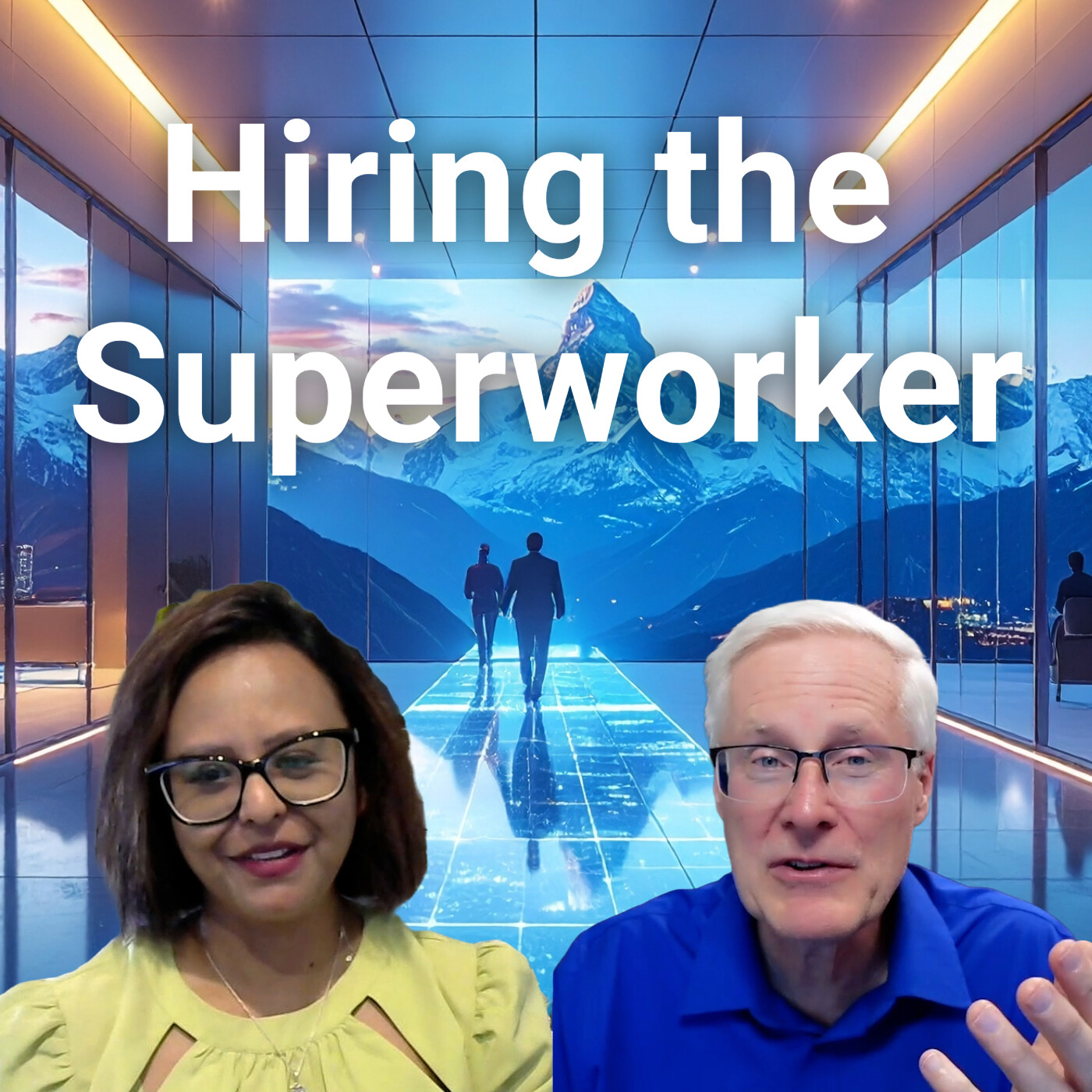
Embracing Digital Transformation
#351 Why Hiring Is Broken: AI, Trust Gaps, and the Rise of the Super Worker
00:30:03
Loading summary
Transcript62 lines
- [00:01]
A
The velocity, the hiring, everything is there. But there are more and more rejections happening from both sides. The candidates coming to know the broken promises, they are not accepting an offer. And it's not always that there is a problem with regards to, I would say hiring and such. It's the messaging that is not resonating with most of the candidates.
- [00:28]
B
Welcome to Embracing Digital Transformation. Explore how people process, policy and technology drive effective change. This is Dr. Darin, Chief Enterprise architect, educator, author and most importantly, your host on this episode, why Hiring is AI Trust Gaps and the Rise of the Super Worker with SRI Day, founder of Brands Lumen Shree. Welcome to the show.
- [01:01]
A
Thank you so much, Darren for having me here today and feel so excited to be.
- [01:08]
B
I have so many notes written from our because. But before I talk to, before I bring anyone on the show, we talk, but not too much because I want to be surprised still. But I had tons of notes on what we're going to talk about today, which is AI employment, Gen Z. I mean there's so much just in those three words, so much to talk about. But before we do that, everyone that listens to my show knows that I only have superheroes on the show. Every superhero has a background story. So Sri, what's your background story?
- [01:45]
A
So I hope this is interesting, but I wanted to know if, you know, imposter syndrome, is that a superhero story?
- [01:55]
B
Absolutely it is. Some of the best superheroes are imposters. Superman, right? Pretending to be human. He's an alien.
- [02:05]
A
Right. I spent about 15 years into employer branding and talent marketing across various geographies and helping organizations attract the right people, you know, by being clearer about who they really are. Now last year I went through redundancy and then also navigated some health challenge. And when something like this happens, Darren, you know, life together becomes very quiet very quickly. Right. So, and I started asking myself questions and a very honest question like what problem can I genuinely solve? So that's what led me to become from a corporate life, become an entrepreneur and open my company called Branz Lumen. But here's the thing, you know,
- [03:08]
B
in
- [03:08]
A
couple of weeks from now that we speak, I'm heading to Everest Base camp and my friends are like, if I'm nervous, you know, are you anxious? But you know, honestly, after the last year, I feel like I've already done the hardest climb. So now it's only about running altitude and training myself at the adrenaline level.
- [03:35]
B
So are you going to base camp just to hang out at base camp or are you going to try and
- [03:41]
A
summit I'm summit, so not the summit. So we are doing the base camp trick. 5000 above the base sea level. Yes.
- [03:52]
B
That's crazy. That is crazy. But you'll have to come back on the show and tell us how it went.
- [03:59]
A
I would love to. It's honestly 2026. The first thing for me was like, while I just started my brand, I wanted to be very conscious of the fact that I wanted to look after myself. One was health. And that's where the thing came. What is that? That I could do something which is out of my comfort zone. Of course, leading a life of a corporate. You know, all of that is good. One was, of course, I went outside of the comfort zone of building something, but then was, how can I push my limits further? Was Everest base camp. So a group of friends, we picked it up, said, let's just go do it, do this. But I was still not very sure. So what I did, what we started doing was a lot of practice over the weekends doing hikes, grade fours, grade threes. And I think now. I'm sorry, now I know two weeks. I'm actually going to be. It's going to be 10th day next month when we would be somewhere up there, 10 days. It's. It's actually the total is 18 days. We're giving some breaks in between. Definitely want to see, you know, you have altitude sickness and things.
- [05:18]
B
Oh, yeah, yeah, yeah.
- [05:19]
A
We. Acclimatizations and all of that. So it's. It's roughly about 18 days. Yeah.
- [05:27]
B
Wow, that's. That's. Yeah, yeah. You most definitely need to come back on. We want to hear how it, how it all goes. So I think it's great. I mean, I had a health scare about 15 months ago, 16 months ago, I had open heart surgery. My listeners kind of know that. And it does change you, right? You start thinking, okay, what's more important? What's the most important things to me now? What impact do I want to have on society? That's how I was thinking, what. What impact do I want to have?
- [05:57]
A
Same, I think same here for me with my. Because my health situation was always there, but the sudden thing that, you know, I was diagnosed or with something I wasn't sure of, you know, and the disability or the, you know, cognitive disability came up so sudden for me. It was like I need to pause, you know, and everything around me, so what could I do? And that's the reason why one of the very big things that I, when I speak to clients and I do talk about while hiring and Everything that we are going to be talking something about, you know, invisible workplaces, all of this with AI. How can we become more and more conscious when we try to hire someone?
- [06:47]
B
You know, I like where you're headed with this because it means that I have to spend more time hiring people and make wise decisions, which means I'm going to have to understand them more. I think a lot of times we're in such a rush to hire someone that we. Oh, you have a pulse, right? You, you, you can string together a couple sentences. We're going to hire you. I think we're going to actually have more humanity built into our, these organizations. And I think AI is going to help us with that.
- [07:24]
A
I so kind of like, you know, I absolutely believe in what you, you, you just mentioned here. And the thing is, Velocity is great. Know, one of our topics today is that we'll catch up on Velocity. Velocity in hiring is great. But when it comes to AI, AI definitely is going to help us in numerous ways, but that's where consciously can it be AI led? I don't think it can be ever AI led. It has always has to be human led. That has to be there. And with all of the hiring like when we do with volumes, are we treating it with fairness? Because AI wouldn't know if I have a cognitive disability, it might just rule me out. And I wouldn't stand a chance in the application tracking system. And most of the systems have AI built in. So there has to be empathy, there has to be authenticity, because employee branding is all about authenticity. And how authentic can we be?
- [08:43]
B
Well, you know, I'm glad you brought that up because what came to my mind was a lot of the HR systems out there that do all of the initial filtering, they become so robotic and they become so unhuman like that they're filtering out maybe really incredible talent, right? Because people have learned how to work the algorithm, they've learned how to write. So you're not getting the best, you're not getting the best candidates in front of you. And so maybe with AI in there, maybe, maybe it will help because AI is a little more fuzzy than the, the old algorithms, right? It's a little more, it can handle more nuance that can handle. It's not saying, oh, you've got these keywords and you go through type of thing, right?
- [09:40]
A
Absolutely. So there has to be a human element and that's where the human sides of things should come in. Like, you know, it has to be human in like the touch points have to be very Very authentic. When it comes to messaging, it should not be like keywords. So I have certain keywords put in my ATS and I just da da da da da AI filters it out. What it can do is have that human LED stories come into. So it is a balance between both done well.
- [10:19]
B
Okay, how does all of this play into what's going on in hiring right now? Because it seems to me hiring right now has been paused. Are you seeing the same thing, Sree?
- [10:32]
A
I wouldn't say it has been paused, Darren. What I do see is, and you know, in some of the reports that's come out that we are moving into a very bani bani kind of a world where, you know, it is brittle, it's anxious, it's non linear and it's very incomprehensible. Now what it does is in all of this matter, when we speak about hiring, the velocity is picking up. But is the trust element there? You know what the messaging, they are, you know, the most of the companies are trying to say while is most of it gets broken when the system, you know, I'm getting an, I'm putting across my application, I get a rejection and I immediately know, okay, this is not human. Right. So the volume is there, the velocity of hiring, everything is, is great, it's going. But somewhere I think consciously also candidates are taking those measures right now. They're taking a pause. And so all of it, if I have to say, is that the velocity, the hiring, everything is there. But there are more and more rejections happening from both sides. The candidates coming to know the broken promises, they are not accepting an offer. And it's not always that. There is a problem with regards to, I would say hiring it and such. It's the messaging that is not resonating with most of the candidates.
- [12:14]
B
That's really. So you're seeing a lot more candidates rejecting offers?
- [12:18]
A
Yep.
- [12:19]
B
Yeah. That's really fascinating. Are you seeing this, are you seeing this rejection happen across generations or do you see it specifically like Gen Z is compared to Millennials, compared to Gen X? Are you seeing a difference between those?
- [12:43]
A
So I did, you know, come across some of the reports that I was, you know, going through while I was preparing for one of my blueprint report on trust and velocity where it mentioned that right now about 43% of professionals globally are considering leaving their employer in 12 months. You know, and that's the highest probably in six years. And that's a disengagement and that's a trust crisis at scale. And it's not Something to do with Gen Z. Nobody knows what Gen Z wants, right? That's true. Yeah. Because Gen Z, if you look at it, most of them, they do not want any of those fancy corporate jargons that's been given on career pages. They don't want dining vouchers or they don't want this or what they're looking at is very simple. And they're looking at whether my organization is going to support me with my skills development. And that's something that's very, very big that you know, we kind of see nowadays that most of the time that you would see one is of course the skill development and then there is do they have respect for people in that organization?
- [14:12]
B
That's really interesting because it reminds me a little bit of after the.com boom and bust. After the bust we saw employees now questioning right. Whether hey, is this, is this new job going to help me further my career and build up, help me build up my skills. Where in the boom part it was like who's going to pay me the most money? Right. So we're starting to see kind of some things come back into play, which is really interesting.
- [14:49]
A
Yes. And I would say that, you know, most organizations, and this is what I do personally, I look into the three C's that I call. Yeah. So I look at, you know, when I talk to clients, the first things, and this is for everybody listening, I believe that we should look at three Cs that I call. One is clarity. You know, the signals that signals confident and easy to read messages. Some, something that's not vague and doesn't have a corporate language, you know, is simple and it's, it's completely clear, it's authentic. Second would be your consistency. The messages that we put on a career site to a leadership what the leaders are speaking to a LinkedIn message. It should have consistency completely. And that's where we were talking just some time back about AI. So there are certain times that the messaging can just go wrong and when it does your promises are getting broken. And the third C, I would say connection. Is there a single moment where a human being shows up in all of this with genuine warmth. And you know, most organizations I would say kind of nail either the two or they nail either one. The perfect ones are of course there where they need any three at any time of you know, point in time. So that's where I was going back to that you would have a lot of employees who would look at leaving the 43% of professional globally are looking considering to change Jobs in the next 12 months.
- [16:56]
B
That's, that's amazing. So are you seeing a difference in geography based on, on this sort of thing? Do you see certain geographies that, that, that value these three things more than other geographies?
- [17:14]
A
I would say it's actually the same across the 8 to 10 regions that I manage something or the other keeps. Either it's, it's there, you know, some. So it's very difficult to kind of have all of the three completely.
- [17:32]
B
Well, yeah, of course, yeah, yeah.
- [17:34]
A
So, so it becomes like the gap has. The gap has always been there and with AI now it's made it more urgent.
- [17:45]
B
So as to say no, that, that makes sense. That makes sense to me. So what am I to do with my employees to build up these things? Right? What steps can I make to move forward, to make this happen, in keeping them. Because hiring is expensive, right? It's expensive to hire people. And if I have 43% people wanting to leave, what can I do to. To change that around in each of these areas?
- [18:17]
A
So I think there is a new worker coming into being called the superworkers. And this is a very interesting term that's coming up. A super worker is someone who combines high achievement, active AI skill development and genuinely positive mindset. So you would see that they are also your highest, highest flight risk. If I say, you know, so they would be the ones that you would look. And so they are the ones who are saying, hey, you know what? Skill development. I'm not looking at the fancy things you're giving me. I'm looking at skill development. I'm looking at respect. So these are the ones that would dominate as we. And it's not only Gen Zs, it's also every many workers because if you see most of the big IT like Accenture now has made it pretty, pretty dominant that you have to have AI based. You have to improvise, you have to take those courses, develop your skills in AI.
- [19:26]
B
That's so, so AI positive. I love the positive mindset. Right. And then what was the third one you had? AI skills development, positive mindset.
- [19:38]
A
And, and the super, super workers is what I meant that, you know, they, they absolutely have to have the positive mindset towards technology, towards.
- [19:50]
B
Ah, there you go.
- [19:52]
A
Yeah, yeah. So it is comic. It combines of your high achievement. Sorry, I think it was high achievement that I.
- [20:00]
B
High achievement.
- [20:01]
A
Yeah, yes. Active AI skill development and genuinely positive mindset towards technology. Having that.
- [20:10]
B
Yeah. It would be really hard to have someone that hates technology right now on your team. But Sri I see that. I see that in customers that I work with and in some co workers where they're like, I don't know about this AI stuff. You know, I'm like, whoa, yeah. So now that this makes a lot
- [20:35]
A
of sense now to add on here, you know, you, if you think about any digital transformation that's stalled, you know, the technology was probably ready, the processes were designed, but people kind of didn't adopt it. And I do know there are many of them. When I would say like two years back where I was working, we were asked to, you know, adopt to AI, I did see people resisting because at that point in time, people like, you know, I don't understand it. It's very difficult, but the way today it's going. And that's where employer, brand comes in. So the trust infrastructure of any organization gets cracked because of all of this, because no amount of technology, even AI can accelerate adoption. So it has to be that, yes, you know, that's the way the world's going and that's what we need to do. Foreign
- [21:40]
B
let's say that I, I find a super worker.
- [21:43]
A
Yep.
- [21:44]
B
Can I. How do I build a team? Because I can't have a team of all super workers. Or can I?
- [21:52]
A
You can. You probably can. In the sense, honestly, they are the ones who will not be inspired with growth culture. If you tell them. Growth culture. No, they do not. So they basically is like, okay, can you give me this? Can you? And those are very practical asks, you know, to give them upskilling. I think that's the best way to go. Tell them what probably would excite them. When you are publishing a job description or anything, give the real story behind what they are actually going to see, actually going to work. That's what motivates salary. Yes, to an extent. But more than that, it's those components. What am I, what, what does it mean to work with Darren? Okay, a shout out from Darren, like, what does he, you know, how does he probably keep his employees engaged? A quote, a testimonial, a video. Such so many inspiring videos that you have. Imagine those going out to a candidate at the first touch point. I would be like, okay, this is the place where.
- [23:10]
B
Oh, see that? That's Internet. That's almost, that's almost cheating from the other employers where you're reaching out with almost like personal messages, engaging with them at. That's pretty incredible approach.
- [23:30]
A
I think it is. The more AI put is coming in, the more it is to talk about authenticity, authentic storytelling. And every time you have, instead of Just imagine you have a job description out there, which is just boring. A big long essay kinds half of the time, the job description, the skills that you put there, you probably don't even need it. You know, it's just a copy paste. But imagine there.
- [24:00]
B
Oh yeah, everyone copies and pastes. Yeah.
- [24:03]
A
Imagine there you have someone in the engineering department who comes out from their testimonial. You make a J.D. a job description. That's what inspires because a candidate, end of the day is now completely having like a consumer like behavior. You know, and glassdoor reports say that 83% would actually look into your organ. They go to the Glassdoor, they review your company, they've already created an opinion about you before even the, the, the recruiter picked up the phone and called. So if you have your story, if you have those things coming up on testimonials in job description format, I'd be more than happy to kind of see like, okay, this resonates what it is.
- [24:58]
B
No, I really like this. It's an interesting approach because right now it feels like there's a lot more people looking for jobs than there are offers out there. But what you're kind of turning the tables on, saying companies need to be more aggressive in hiring by engaging with potential employees more at a human level than we, we've seen in a long time.
- [25:27]
A
You know, and also to put that across is an organization's credibility that converts your talent interest. So you know the talent interest in joining you. I meant to say so if you have high trust and high velocity, you know, your hiring is stable and it's predictable. Now if you have a low trust and you have high velocity, you can get risky growth and drop offs and late responses. You will find your candidate ghosting you. So most organizations sit in that low trust, low velocity kind of a thing and quadrant and then they kind of, they wonder like, you know, why is my pipeline so fragile? So the answer I would say is it's actually almost never the sourcing problem. It's always those signals. And you know, to give you an example, like when, when I was searching for jobs and before I made up my mind to go as a solo entrepreneur, I happen to give like there is actually very less of employee branding talents there. It's a very niche skill. So when I was applying for a few roles and it's on a Friday evening and I, I applied to this jobs and you wouldn't believe, within probably 30 minutes or 15 minutes I got a rejection. Now to all the listeners out there and if you are into the hiring spectrum. I understand that AI will be there in your ATSs, but you are hiring for an employer branding role. Your promise gets broken immediately. And I would say no. And I'm like, why? It can also happen that it is the way you put the algorithm is that I get a rejection in a humanly possible time. I mean, I know the best of the ways that, you know, we Australians, we kind of work not on a 8pm on a Friday or a Saturday.
- [27:43]
B
Yeah, yeah, exactly.
- [27:45]
A
Else so, you know, so for me it's those trust issues, those gaps that, you know, really organizing and it's not very difficult. It's very simple things that we can put across while hiring that can resonate, that can help your pipeline build faster in a much more authentic way.
- [28:09]
B
No, I, I, I love, I love what you brought to the show today, Shreve. People want to find out more or want to engage with you. How do they reach out to you to learn more about, about hiring and you know, at the corporate level and then also as an individual, how do I break through these AI things? How, how do I engage with, with a future employer? Where do they reach out to find out more from you?
- [28:37]
A
So brands. Lumen.com is where I have all of my information or LinkedIn is the best way that, you know, I drop in me a message and I'd love to kind of have a chat with you and see where we could bring about those clarity, those communications that absolutely. Employee branding is a long, a broad topic.
- [29:03]
B
Awesome. Sree, thank you so much for coming on the show
- [29:08]
A
and thank you so much for having me here, Darren.
- [29:10]
B
It was wonderful talking and good luck with your Everest base camp hike. I mean, pretty incredible. I can't wait to hear more about it.
- [29:20]
A
Thank you so much, Darren. You have a wonderful rest of your day.
- [29:29]
B
Thanks for listening to Embracing Digital Transformation. If you enjoyed today's conversation, give us five stars on your favorite podcasting app or on YouTube. It really helps others discover the show. If you want to go deeper, join our exclusive community@patreon.com embracingdigital where we share bonus content and you can always connect with other change makers like yourself. You can always find more resources@embracingdigital.org until next time, keep embracing the digital transformation.