← Embracing Digital Transformation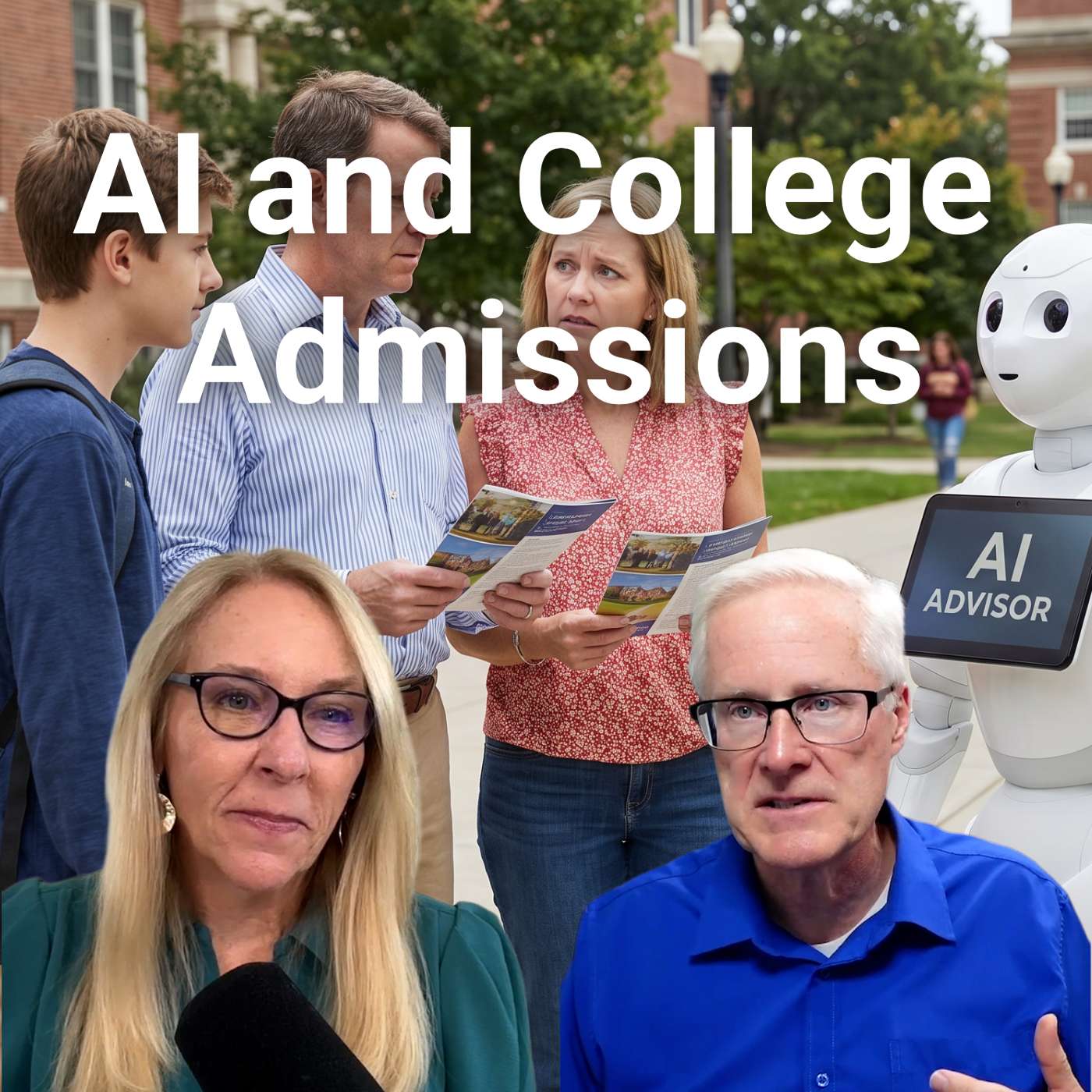
Loading summary
Transcript105 lines
- [00:00]
Podcast Host
Welcome to Embracing Digital Transformation. Before we dive in, I wanted to personally thank you for listening. Many of the ideas we discuss on this show inspired my new book, AI Augmented Teams. If you're looking for practical ways to combine human expertise and AI to achieve better outcomes, I think you'll find it valuable. Learn more at Paydar AI Books. That is P A I D A R AI Books. Now let's get started with the show.
- [00:31]
Shelly Howard
Critical thinkers make sure that AI is doing what AI should be doing correct.
- [00:40]
Dr. Darren
You hit it right on the nose. We're still going to need people involved, but what's going to happen is people are going to have to start upping their game. Welcome to Embracing Digital Transformation, where we explore how people process policy and technology drive effectiveness of change. This is Dr. Darren, Chief Enterprise architect, educator, author, and most importantly, your host
- [01:11]
Podcast Host
on this episode, How AI is Reshaping Education and College Admissions with Shelly Howard, college admissions expert, founder and CEO of
- [01:21]
Dr. Darren
College Ready, Shelly, welcome to the show.
- [01:26]
Shelly Howard
Thank you so much for having me.
- [01:29]
Dr. Darren
Hey, and I'm sorry we had a little pre meeting before this the show because I lost my notes that we talked, but now it was like, oh, yeah, I remember our previous conversation. I'm really excited about the topic today on AI in education. What's happening? I can teach. I can talk about it from the teaching side of things. You could talk about it from the other side of things that the parents and the students. So interesting times. But before we drive into that, everyone that listens to my show knows that I only have superheroes on the show. And every superhero has a background or an origin story. So, Shelley, what's your origin story?
- [02:10]
Shelly Howard
It's so fun to share. I grew up in Southern California. I was born to two entrepreneurs and I really didn't even know if college was something I wanted to do. I just thought I would do what my parents did. And it really wasn't until my senior year in high school and I sat, brought my parents down and I said, hey, I think we need to have a talk. And they're like, what? And I'm like, yeah. The counselor came in today and wanted a head count how many people are applying to college and house divided. When parents said, absolutely, you're going, there's no doubt you need more time to grow up. You need to learn on somebody else's dollar and then go start your own business. And the other parent said, absolutely not. You need to do what I did and you need to just get out there and get started and you'll figure it out. Yeah, yeah, for sure. And so I remember, like looking at both of them, like ping pong, like, what, what, what? What do you mean? And we came to a compromise. I was going to apply to two schools and if I got in, we would make that decision. So we kind of just like kind of pushed it aside or prolonged it a little bit. And so my big genius plan is I was going to apply to San Diego State and so I can surf or I was going to go to University of Colorado Boulder so I could snow ski. And so I was truly looking for a really cool vacation spot that I was going to learn. And so scary to me. I got into both of them and then I sat my parents back down and I'm like, now what do we do? My dad said, I'll make it real easy for you. You go to San Diego, you get your car and I pay. You go to Colorado. I wish you well. Please write and visit when you can. And in other words, we're not paying out of state tuition is basically.
- [04:04]
Dr. Darren
That's what it was. Yeah.
- [04:06]
Shelly Howard
And so at that moment I realized, wow, did I not prepare for this time in life? I absolutely, I loved high school. I had a great experience. I had part time jobs, I knew what I wanted to do. Like, I had all that figured out. But I didn't think of the middle plan between high school and becoming a millionaire. That was kind of the, the empty area for me. So long story short, that's a big
- [04:33]
Dr. Darren
empty area there, Shelley.
- [04:36]
Shelly Howard
Yeah, that's what the superhero is there.
- [04:39]
Dr. Darren
Yeah, that's right.
- [04:41]
Shelly Howard
So I did, I. I went off to San Diego State and I had an amazing experience. My father was wise. He said, I will pay for the first four years. After that is all yours. So I did summer school in winter session and I graduated in four years. And then when I got out, I had four careers waiting for me, literally the day I got out.
- [05:06]
Dr. Darren
That's incredible. That doesn't happen, right?
- [05:09]
Shelly Howard
And so I was like, what in the world? Everybody else was struggling and I'm thinking, this is not that difficult. Why is everybody having such a hard time? What I didn't realize is I love interviewing. And so I absolutely crushed all of my interviews. And so when I graduated, Procter and Gamble offered me a really nice package and sent me right back to Orange County. And I lived happily ever, ever after. I mean, it was so fantastic. And then. Yeah. And so I climbed the ladder in seven years and they wanted me to move to Ohio. And that's when I became an entrepreneur.
- [05:58]
Dr. Darren
Because you don't want to move to Ohio is.
- [06:03]
Shelly Howard
And the reality was at that point, I had been just really dying to become an entrepreneur. I mean, my whole life, that's all I ever wanted to do.
- [06:14]
Dr. Darren
Well, that's what you saw with your parents, right?
- [06:17]
Shelly Howard
Yes, they were super wise. They showed me what life could look like as an entrepreneur. They didn't show me, like, some days you don't know how you're going to pay the bill part, but they showed me like, the really great part. And so I just thought that's exactly what I want to do. I want to set my schedule. I want to like, I want to do it my way. And so it was a very different time back then. I waited till I was fully vested. So I did use my financials. I learned in college and I gave my notice and I left. I didn't have another job. I just said, I'm going to start something. And so I did. And college Ready is my seventh business I have started and exited from. And this past year, I became the 2026 Global Educational Consultant of the Year, which is our highest accolade. And so now I'm like, this is fantastic. What's next? So we are now addressing AI and that's what you and I get to talk about.
- [07:22]
Dr. Darren
You know, that's, that is, that's an incredible story. I mean, your superpower sounds to me like interviewing. You've got the gift of gab.
- [07:31]
Shelly Howard
I do.
- [07:33]
Dr. Darren
That's a, that's a special gift.
- [07:35]
Shelly Howard
Yeah. I genuinely care. And that's why I think I love working with teenagers. They get a really bad rap and I am so curious. The way they think is so amazing to me. We get along great.
- [07:50]
Dr. Darren
No, that's, that's awesome. So let's, let's talk about AI thrown into the mix about this. We're coming up on. On generative AI. Well, specifically chat. GPT's birth was 2022. November 30, 2022. Everyone should know that date. We're coming up on its fourth birthday. It's only four years old, but it has changed everything, especially in education. Are you seeing that with your, your students and your parents? Because you're you. I mean, you're obviously your students are your customer, kind of sort of. The parents are the real customer here, right?
- [08:39]
Shelly Howard
Correct. Yeah, for sure. We're seeing.
- [08:42]
Dr. Darren
So what concerns do they have? What concerns are they raising right now in this whole thing?
- [08:48]
Shelly Howard
So I have families that have been with me since they were in seventh grade, and now they're coming up on their senior year. So we've built a relationship and we're building their strategy and their platform and truly helping them to step into adulthood. And those families came to me. I just had a senior kickoff meeting. We call them rising seniors. And we, we talked openly about AI and what I need these students to really understand and their parents to really comprehend. Because I have been tracking AI for the last four years. I was not scared of it. I actually was very curious. I have a very curious mind, apparently. And so I started asking these questions way back then. And so what I shared with the parents is the, the careers that we know are the first on the chopping block, the first ones that we're pretty sure we have a good idea that are going to disappear. And that was terrifying for them because they're like, well, what about my son who's been doing coding for the last four years and now he wants to do engineering and there's no entry level jobs. That's a real concern. And so we talk about it openly and honest. And I say, aren't you glad you're thinking about this now and not letting your 17 year old pick based on the location of the school, take on debt and then graduate and talk about it? I go, I think that's a huge opportunity. Right? So grateful. And then there's parents that were in the room that said, I just lost my job to AI. They just wiped out my department and I don't want that for my child. How are we going to navigate that? So there were two real dynamics in the room. And I so appreciated where both of them were coming from. And at college ready we start, the very first thing we do is we start with who is the student. And it's so different than the world does. And I did we talk about what are their core values, their gifts, their strengths, their advocacy, those things that they're genuinely good at, the things that they're challenged at. And then we start to build what's next instead of picking a school or a location or a major and then having to unwind it all. So for us it's really, do you want to go path A, path B or path C? We're not just panicking and saying what are we going to do now? And I think that's where we need to really look from a family's perspective is why somebody chooses a career or a major and how AI will impact it. Nobody knew in four years, right, Darren, that it would come this quickly.
- [11:50]
Dr. Darren
No, no, not at all. And there's still so much more to come. A Job that may seem safe with AI may not be in, in the, in the future. So what that tells me is you kind of alluded to it is it really doesn't matter what major you pick. Not anymore.
- [12:11]
Podcast Host
Right.
- [12:11]
Dr. Darren
What matters is building up what in, in my book that I have that just came out, I talk about four key skills, subject matter, expertise, skill. That's our major. But there's three other skills that are important. I call them core skills, meta skills, and AI skills. The core skills, meta skills you already alluded to. Right. How do, how well can I communicate? Critical thinking, debate, discussion. Right. These skills that we frankly have lost in our society now are extremely important in, in the world of AI. So what you're seeing, I see as well on the other side of, of the fence, which is on the educator side.
- [12:59]
Shelly Howard
So my families want to know a good question. This would be brilliant if you could just share the, enlighten our, our listeners. They want to know what are schools doing to keep up with this? Because they're forcing, oh, there you go, parents. They're forcing the children, the children, the teens to choose a major or they can't apply. And now they're picking majors. But we don't know if that department at that school is really understanding how AI is going to impact that major. Let's talk about.
- [13:33]
Dr. Darren
They're not yet. Yeah. So this is the dilemma, right? Schools right now are at a crossroads. They're trying to figure out what to do with this. And I, and I see it, I teach at Vanderbilt and even at Vanderbilt, you know, one of the top universities in the, in the nation, they, they are coming out of understanding, you know, how is AI going to impact things. But their first gut reaction, especially in humanities, was don't use it, you can't use it. It's cheating. Yeah, right. And even I teach computer science. So I'm like, wow, how am I going to teach computer science when they can just type in, they can take my syllabus, drop it into Gen AI and have it generate all of the answers. So I took a different approach. We now embrace it in class. It's used in class. You can't cheat in my classes. It's impossible. I make it so it's just impossible. And you have to actually use AI to survive. In my class, we don't code anymore. We're now architects. So this is where I think we're going to see a major shift in higher education. And I think we're already starting to see it. You'll see it in the curriculum coming out in this fall, we're up leveling. The entry level jobs are gone. So we have to produce out of college the mid tier and senior level positions that we would normally have years to develop a junior person. But those, there's no room for that anymore. And that's a huge gap that we've got to figure out. So there's my soapbox.
- [15:29]
Shelly Howard
The big question. Everybody's blowing up my phone right now, who's listening to you, right. Is going to be saying, but can we use AI on college admissions essays and applications?
- [15:42]
Dr. Darren
You know what my answer to that would be? Of course. And the reason I say that is because in the workplace today, if you don't use AI, you're falling behind. Right. That's just how, that's just how it is. Does your boss care that you used AI to provide a great slide deck on justifying a big business decision? Yeah, he doesn't care. Just as long as defensible and reliable, that's all they care.
- [16:18]
Shelly Howard
So, yeah, we're getting close.
- [16:20]
Dr. Darren
A weird spot that we're in, right?
- [16:22]
Shelly Howard
Yeah. Some schools are saying that they're checking applications and essays and if they detect AI, it's automatically. No.
- [16:30]
Dr. Darren
Well, there, there was a great professor at Penn, at Penn State that checked all of his. It was an English, English professor and he checked all of his work against AI using AI to check it. Hey, did you write this? And AI said, well, of course I did. Every single student failed. He goes, well, that doesn't make any sense. So we have to get. And this is where I'm having a problem with education right now as a system, not as individual, but as a system. I think it's broken because I let me back up a second in my class. I no longer have written exams. They're all oral. Because it's an oral exam. You can't cheat if it's a written exam. All I did was open up the gates to say how, how good are you at prompting? Right. So we're going to have to change the way that we, that we do things. I always thought also that things that are essay based and admissions always, always gear the results more towards people that are good at writing.
- [17:48]
Shelly Howard
For sure. Yeah.
- [17:49]
Dr. Darren
Which are not engineers, typically, because I'm an engineer. I'm a horrible writer. But I've written now four books. Why? Because I teamed up with a good team, a tech writer on my first three books and now with Generative AI on my, on my fourth book. So this whole, I think the whole college thing is going to have to change. But I don't know how yet. I know what I'm doing in my little ecosystem, so I wish I had a great answer for you, Shelley, but I, I don't know how you can enforce it, and I don't. You know, they say they've got all these great tools that can detect AI written stuff. I think there's tons of tools that can fool those tools now. So.
- [18:42]
Shelly Howard
Wow.
- [18:43]
Dr. Darren
It's, it's just going to get to the point where who has the most money that can afford the best tools? Yeah.
- [18:50]
Shelly Howard
Who's got the arsenal of tools?
- [18:52]
Dr. Darren
Yeah, yeah, that's where it's going. So I think we probably need to change the way we do admissions. It's going to have to be much more personal. Yeah, I, I don't know how else to.
- [19:06]
Shelly Howard
So Vanderbilt, when I was touring there, I was there during a hurricane warning. Being from Southern California, the sirens went off. The wind ripped my umbrella out of my hand. It was like something out of a movie. Every school, right, has their unique location, their unique setup. So how, you know, coming from the inside of a school, how would you, you know, recommend to families to think about their, their child's future? Some are questioning, should they go into the trade school? Some are questioning, should I be an influencer? Some are questioning, is college even worth it? Like, these are all things that I'm helping families understand. But I would love, from your perspective, maybe if you could share.
- [19:59]
Dr. Darren
Yeah, you know, that's a. This, it's a good point. I have 10 kids myself.
- [20:03]
Shelly Howard
Oh, yeah. I remember you telling me that.
- [20:05]
Dr. Darren
Yeah, three are in college right now, but, well, kind of in college. It's summertime, right. So they're at home eating all of the food in the house, which is a whole nother story. But so I've had these conversations with them. To me, the, the most important thing to learn in school right now, whether you go to a community college or a trade school or a four year university, is adaptability and resilience. These are going to be critical in the next four to 10 years because things are going to change so much in the industries that you're going to have to adjust. Now, this is not the first time this has happened. Last time it happened was in the 90s and I graduated with a computer science degree in mid-90s. Awesome time to graduate with computer science because there was a shortage of computer scientists and we were hiring history majors to write code. Right. And we were training them up on how to do it. Right. Because we just needed, you know, we just needed People typing is what we needed. But 10 years earlier, before that, in the early 80s, you could get a, a business degree which included typing as a specialty. And there used to be typing pools. I'm sure you remember this. This.
- [21:41]
Shelly Howard
I do, I do.
- [21:43]
Dr. Darren
And when you mention, oh, you had a career as a typist, if you mentioned that to someone today, they're like, what? People had a whole career that all they did was type and go. Yeah. And you got, and you got, you went to school to become a typist. You went to a two year, you get a two year certification to become a typist and you had to take typing tests. I remember my first job, I had to take a typing test.
- [22:11]
Shelly Howard
Sure.
- [22:12]
Dr. Darren
And I was a horrible typist. And they were like, yeah, 20 words a minute. Darren isn't going to cut it. So jobs change, things change. So right now we're at the middle of this major shift change. So whatever you choose, choose something that will help you about critical thinking, adaptability, resilience, and build up those meta skills and those core skills that you need. And I would look at universities that are teaching AI in their curriculum. That's what I've been saying, embracing it. Because if you've run into a school that says there's no AI here, that school's not going to last much longer and you're going to graduate with a degree that will get you nowhere. That's how I feel.
- [23:14]
Podcast Host
Sure.
- [23:14]
Shelly Howard
In your book, do you address some of the careers that are first to be taken over?
- [23:22]
Dr. Darren
I do not.
- [23:23]
Shelly Howard
Okay.
- [23:24]
Dr. Darren
And the reason why I don't. Yeah, I. The reason I don't. Because the book's going to be outdated as soon as I publish it if I do that.
- [23:32]
Shelly Howard
Yeah.
- [23:33]
Dr. Darren
Right. Instead I talk about those. Because if we look, if we look at those four skills, the subject matter expertise. Skills are skills you learn through time. 10,000 hours to become a subject matter expert. Right. The other three are things that I can learn in school. And I can see this with my own children. If I look at the degrees that my kids got and what fields they went into, probably my one daughter, she's a product manager, she has a history degree and she bosses around a bunch of software engineers and all of her brothers are software engineers. And I said, oh, well, all right, well, so. But the skills that she learned in her history degree on, she's very detail oriented. She can also pull stories together very well and she can see big picture things and pull them in. Perfect for a product manager.
- [24:31]
Shelly Howard
Right.
- [24:31]
Dr. Darren
So it's, it's being adaptable in, in figuring that stuff out. So I think it does depend on which degree you get and how much money you spend. But I don't think a four year university is the only place now. I think things have shifted and that's
- [24:51]
Shelly Howard
why parents are really starting to think about return on investment. So I talk about it often. My son, you know, he attended Harvard pre med and graduated without debt and everybody's like, yes, I would love that. But more importantly, he graduated pre med. He, he was already thinking, what is a career that I will love forever, that I'm actually good at and that I can make in the impact I want. So we, we were already teaching those skills like you said, to be able to pivot. And I think that is going to be so critical going on going forward. So when we look at can AI do that, somebody still has to oversee that. We don't know if it's right or wrong.
- [25:44]
Dr. Darren
Right, that's right.
- [25:46]
Shelly Howard
And that's where a lot of families are getting stuck. They think it's going to wipe out everything, but it can't wipe out everything. There still needs to be critical thinkers then make, make sure that AI is doing what AI should be doing, correct
- [26:03]
Dr. Darren
that, that you, you hit it right on the nose. We're still going to need people involved, but what's going to happen is people are going to have to start upping their game. Oh right, let's talk about that.
- [26:18]
Shelly Howard
Yeah.
- [26:18]
Dr. Darren
And yeah, and this is something that my wife and I actually talk a lot about. It's like we're going to have to have people that are not just punching the clock anymore. You're going to have to actually show up and contribute something valuable. Right where. And we kind of get at the beginning of our career, we want to be valuable. We want to provide something valuable to society or to the company we're working for or our community, whatever case may be. And then it's kind of beaten out of us. Right. Because I got to do this same report I do every single week. Every, at the end of the week I got to do a report and, and we get bogged down in the mundane and the drudgery and then we're like punching our time card. Right. With AI. AI handles the drudgery for us.
- [27:15]
Shelly Howard
I think it's exciting and does all the things I don't like to do. The redundancies.
- [27:21]
Dr. Darren
Yeah, exactly. Which means it frees you up to do higher level things. So that's where we've got to start teaching as well. We've Got to start teaching at higher level concepts. Like in the classes that I teach, I no longer teach them the details of a certain programming language. I now teach them the concepts behind it and the design behind it. And then I said, now you need to direct a, say, a set of AI agents to go program that for you, right? So now you're the commander of your ship. You're not the yeoman, you're not the ensign, right? Swapping the deck or putting up the sails. Now you're the commander of your ship. And that's where we've got to. We've got to get people to that place. But it requires much more mental power to do that for sure.
- [28:20]
Shelly Howard
So from the perspective of a professor at a very prestigious school, would you consider a student that has a high GPA and a high test score and very little else a better candidate to do well at your school? Or somebody who has a gpa, a test score, community service, leadership, extracurriculars, letters of recommendation, the essays, the whole shebang. Which of those, especially in this new world, would you find to. To do better?
- [28:57]
Dr. Darren
I. There's something missing. I need someone with grit, okay? And someone with adaptability, right? And I don't know how to test for that. I don't know how to. I can see it in my students that I have, okay? When I throw them problems and they're sitting there looking at a blank page and they don't know what to do. And that's what I've done with my courses before. The courses were much more laid out. The assignments, step A, step B, step C. These are the results that you should get. Make sure you. You'll do these things to get this result. I don't do that anymore. Now it's open ended. And I say take what we've discussed in class and the online lectures that are available and prove to me that you understand these concepts. And here are the, the. Here's the general guidelines. But literally it's like three or four sentences and that's it. Where before they would have pages, and I tell you the first assignment, my students freak out. They're like, wait, no, you need to tell me exactly what to do. And I go, no, that's for you to decide. You are in charge of your education now. So I don't know how you do that for admissions. That's the problem that I'm dealing with. But if you want your student to succeed in the future, forget about just school. They need to have failed. They need to have been able to figure out why they failed make adjustments and fail again. And so if I were to look at things, if I saw someone and I saw that they, they failed, maybe starting a business and then they started a business and it succeeded, I would pick them over someone that just got straight A's their whole high school career. I. To me, failure is a great lesson, a great way to learn something if you actually learn. Yeah.
- [31:13]
Shelly Howard
We, we have a nonprofit attached to college ready. It's called World. And its main purpose is to help students step out, take a risk, and it's okay to fail forward. And that is such a new concept for them.
- [31:33]
Dr. Darren
Oh yeah.
- [31:34]
Shelly Howard
What they're learning is that like the mental capacity to think about and analyze and redirect and that's an entrepreneur's mindset because we fail forward a lot. So I think. Right. There's going to be some people who adapt much easier than others. And so what is your second book going to be like? I'm very curious. That's different from your first.
- [31:59]
Dr. Darren
So the second book is called Becoming AI Augmented. So this is for the individual. My first book is about teams. So am I managing a team of, of individuals that an AI is thrown into the loop. How do I manage this effectively so that they can actually produce reliable and defensible results? That's the key. Reliable and defensible. So in, in my next book, I'm, I'm geared towards the individual, you as a person. How, how do I become AI augmented? Instead of. I have a term in AI faker. An AI faker is someone that is really good at AI but doesn't have the depth of the subject matter expertise.
- [32:49]
Shelly Howard
Okay.
- [32:50]
Dr. Darren
And they, and they may not even know that. Right. So that's, that's what, that's what that book is, is about. And I've got others that I'm working on with, collaborating with other educators on educating the AI augmented and changing the system to handle AI more effectively. So there's a lot going on right now in this whole space.
- [33:15]
Shelly Howard
So, so powerful. Well, I know that my families are just in awe because I, I talk to families every day that are touched by this, that are concerned by this. And what we are assuring them is you will still need a college degree for certain careers. So it's not that you're just going to do nothing. A lot of people are like, well, should we just not? And I'm like, that sounds terrible. To just not. What, what follows that. And so we're trying to, at college ready, we're really trying to help families to, to navigate Based on what we do know, and that is the student. And if we can really.
- [34:00]
Dr. Darren
I'm glad you said that. Yeah. That's the key, is we gotta, we gotta look at the human that's there. AI is not replacing humans. No, somebody that humans used to do.
- [34:14]
Shelly Howard
Yeah, somebody told me a metaphor today. It's like a contractor and a hammer. Right. A hammer by itself is just gonna sit on a table and probably not get anything done, but with a really good contractor, you can build a home. And I thought, ah, so simple, but so profound. That's as I see AI and I. Hopefully families will see the benefit that we're not going away. We just have to think differently.
- [34:44]
Podcast Host
Absolutely.
- [34:45]
Dr. Darren
And, and if I had my crystal ball, I'd be a billionaire, but I'm not. Or a trillionaire. We can't even say billionaire because that's not even big enough anymore.
- [34:56]
Shelly Howard
No, it's 10 kids.
- [34:58]
Dr. Darren
Yeah, exactly. So, but what careers will be around? I don't know. But I do know one thing. People will be valued that can think, that can critically think, that can communicate effectively. So if you had to pick training instead of just saying, oh, you've got to pick a career, if you had to pick any kind of training in you, in the degrees that you're focusing on, I would look at any classes on debate, on communication skills. And, and look, really, are they talking about communication or are they talking about writing? Because communicating and writing are two separate things. Right. I, I would say we probably need more courses on rhetoric and logic. These are going to be extremely important moving forward. And then pick something that you're good at. I, I, I know that there's been this big movement. Pick what you love. Well, what if something you love, you're not good at? Right. So pick something you're good at that you understand. Take that, and then you'll learn to love it. You will, you'll be, you'll be really good at it. Um, and if you're good at something, guess what? You end up loving it. Um, so that's what I would say to people. Maybe get back to some, some foundational education and then build on, on that. I, I don't know what else to say. It's, we're in a, we're in a tricky, a tricky spot right now.
- [36:47]
Shelly Howard
Sure. And, you know, the fact that there's people like you at the universities who are, who are pioneering this makes me feel really good because there's a lot
- [36:58]
Dr. Darren
more than you think is what I would say.
- [37:01]
Shelly Howard
Okay.
- [37:01]
Dr. Darren
But the system is not set up to handle it. Does that make sense? So it's a system problem, something I'm, I'm trying to address with another book. And, and I'm working with some deans at some universities specifically around, hey, we got to change some things here.
- [37:20]
Shelly Howard
So as we're, we're looking at the best school for the best for the student. Right. The college match, the college search. And what I'm helping families understand is if you pick a school based on a location like uc, UC Santa Barbara, yes, it's a beautiful location, but is it really going to get you to that next level career and that return on investment like I love that campus, no doubt. But is it the right education for you? What advice would you give families in that area?
- [37:56]
Dr. Darren
Your network is everything, I'll be brutally honest. Especially now. I've had several people on the podcast talk about the new HR processes that are coming out. It is so hard to get through that first screening. That happens because it's happening with AI. So unless you know which algorithm they're using or prompting they're using, you're never going to get past it. So how do you get past it through your network? So if you're going to school to learn, awesome. If you're going to school to network, great. But if you're doing both, that's where you're going to get it. Right. Networking is so important. Something I didn't do very well in college, but I've had to do in my career and it took me some time to figure that out is, you know, learning how to network is extremely important. So I would look at schools that have very strong alumni, very strong networking capabilities and that teach that and encourage it. That's what I would look at.
- [39:06]
Shelly Howard
I was. My son got married this past weekend and he went to Harvard. The bride went to UC Santa Barbara. Two very different schools.
- [39:16]
Dr. Darren
Oh yeah.
- [39:16]
Shelly Howard
And I spent time talking to the Harvard guys and the UC Santa Barbara girls and I asked each and every one of them, was your degree worth it? Are you in debt and are you using the degree that you got? The Harvard, hands down were. It was worth every penny, every cent, every everything. And they all had. It was incredibly worth it for the networking. So they said the degree was great. The networking is what's keeping them in the best careers ever. So I love that you tap into that.
- [39:57]
Dr. Darren
Yeah. That interpersonal communication skills and building those networks are critical in especially today. They have been in the past, but I think they're even exaggerated more today.
- [40:11]
Shelly Howard
So helpful. So I, I agree with you. I think this is here to stay. I remember looking at my dad's first cell phone and saying, oh, how that'll never last. And now look, we have a computer in the palm of our hand, right?
- [40:24]
Dr. Darren
Yeah, yeah. No, it's a. And it's, it's an exciting time. And we'll see, we'll see what happens. I hope, I hope I'm right. I hope I'm not completely off on this, but I think I am. We're already starting to see some shifts and the universities are trying, they're trying to make adjustments. It's just there's so much inertia in the old way of doing things that it's hard for them. So I'm, I'm trying to light a fire under, under them a little bit.
- [40:57]
Shelly Howard
Okay, good.
- [40:58]
Dr. Darren
Make some changes, but we'll see what happens.
- [41:01]
Shelly Howard
So great. Thank you so much. This has been so enlightening.
- [41:05]
Dr. Darren
Well, hey, thank you for coming on my show and interviewing me. It was awesome.
- [41:10]
Shelly Howard
I told you, I'm curious.
- [41:12]
Dr. Darren
I know. I think, I think it's great. So thanks, thanks again for coming on the show. If people want to reach out to you, how do they do it?
- [41:21]
Shelly Howard
So first thing, I have two best selling books on Amazon that for your listeners are right now for the next 30 days will be downloadable for free. The first one is how to send your student to college without losing your mind or your money. And the second one is the college admissions plan simplified. Beyond that, you can go to my website@www.collegeradyplan.com and if you would like to chat about AI or your future child's, your child's future. You can go to collegeradyplan.info and set up 30 minutes where we can have a wonderful conversation and get you on the right path.
- [42:02]
Dr. Darren
Sounds great. Hey, thanks for coming on the show. This has been a delight. Thanks for listening to embracing digital transformation. If you enjoyed today's conversation, give us five stars on your favorite podcasting app or on YouTube. It really helps others discover the show. If you want to go deeper, join our exclusive community@patreon.com embracingdigital where we share bonus content and you can always connect with other change makers like yourself. You can always find more resources@embracingdigital.org until next time, keep embracing the digital transformation.