← Embracing Digital Transformation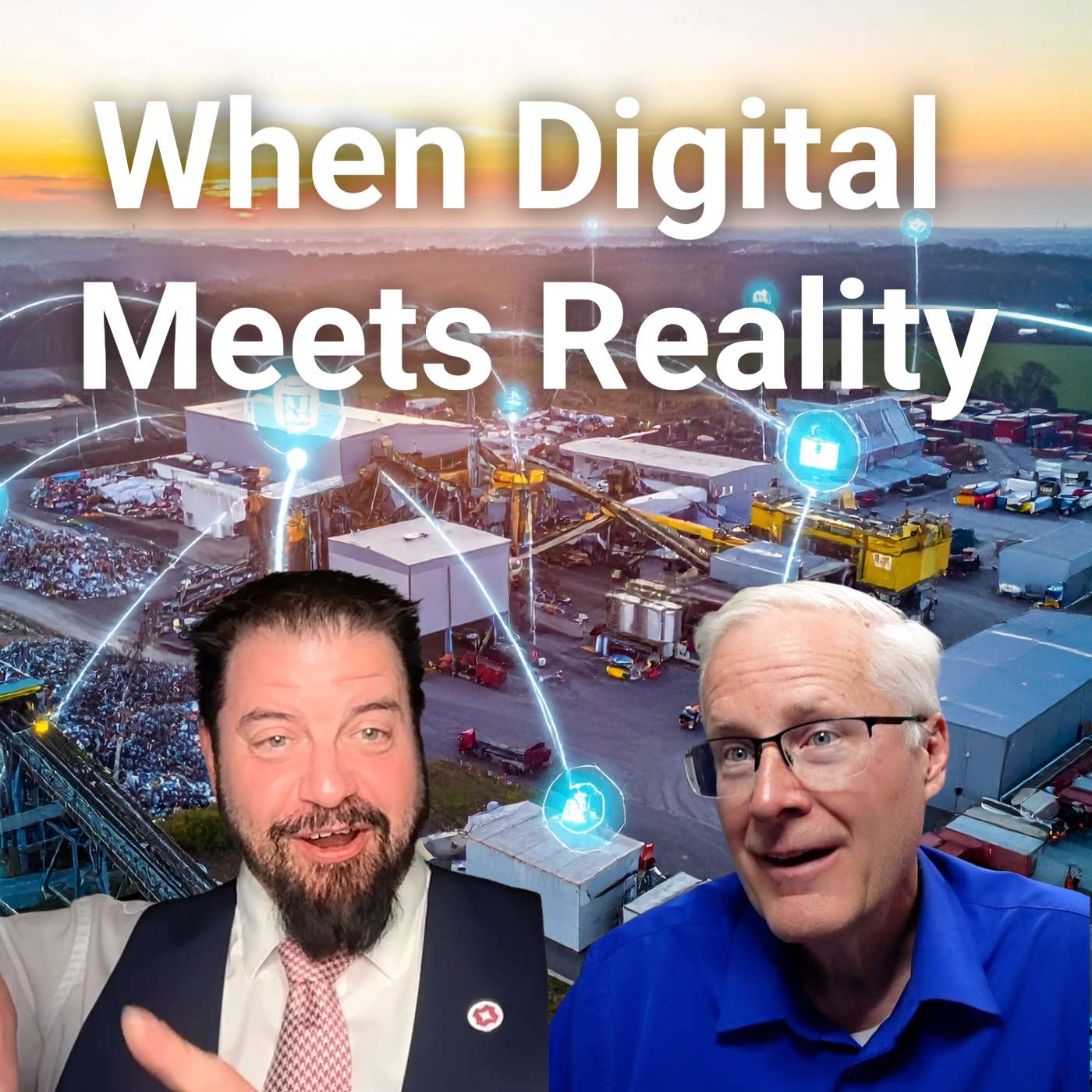
Embracing Digital Transformation
#363 Making Industry 4.0 Viable: When the Real World Meets Digital Transformation
00:30:17
Loading summary
Transcript91 lines
- [00:00]
Host/Announcer
Welcome to Embracing Digital Transformation. Before we dive in, I wanted to personally thank you for listening. Many of the ideas we discuss on this show inspired my new book, AI Augmented Teams. If you're looking for practical ways to combine human expertise and AI to achieve better outcomes, I think you'll find it valuable. Learn more at Paydar AI Books. That is P A I D A R AI Books. Now let's get started with the show.
- [00:31]
Evan J. Schwartz
This system needs to talk freely to that thing. I don't want to be locked into your system that you own, your global architecture within your enterprises, but that requires a lot of upfront work.
- [00:42]
Dr. Darren
This tells me digital transformation really is about enterprise architecture. Welcome to Embracing Digital Transformation where we explore how people, process, policy and technology drive effective changes. This is Dr. Darren, Chief Enterprise architect, educator, author, and most importantly, your host
- [01:08]
Host/Announcer
on this episode. Making Industry 4.0 viable. When the Real World meets Digital Transformation with Evan J. Schwartz, Innovation executive and technology strategist.
- [01:21]
Dr. Darren
Evan, welcome to the show.
- [01:23]
Evan J. Schwartz
Hey Darren, thanks. Thanks for having me.
- [01:26]
Dr. Darren
Hey, we got a really interesting topic. We're dealing with real things in the real world and digital transformation around. Around those things and something that everyone deals with, but no one talks about, which is garbage and recycling and supply chain. All these things that we all deal with but. And when we first talked and went, hey this, this is a really interesting topic and how digital transformation has completely transformed that whole industry. But before we do that, everyone that listens to my show knows that I only have superheroes on the show and every superhero has a background story. So Evan, what's your background story?
- [02:10]
Evan J. Schwartz
I wanted to be a chemist and I had stayed on that road for a while while technology was one of the things that just came very easy to me. I. I learned how to program out of the back of Commodore magazine, if anyone. Yeah.
- [02:23]
Dr. Darren
Oh wow.
- [02:25]
Evan J. Schwartz
They used to have. So I, a good friend of mine who's in my book, John Leonard, who was also on the chemistry track, used to sit there for hours reading out that code in the back while I was hand jamming it in and trying to save it to like a Vic 20 tape. Anyone that's ever done that knows how fragile that event is.
- [02:42]
Dr. Darren
Oh yeah.
- [02:43]
Evan J. Schwartz
How hours of time can evaporate on you. But I never gave into it. And while that wasn't my profession, it was just so easy. I started a gaming company at 16 called Lookath Industries for dial up bulletin board systems and I just loved it. And when we first released it around the world and it was fidonet, there was no Internet. It Was dial up bbs. It was almost the hose, right? This is a long time ago. And we sold this graphic game online. We built this entire protocol called ddo effects, which is digital dynamic online effects language for full event based graphical. I mean, before even HTML was heard of, this was over at bbs. And we were like, this is it. This is where it's going to be, right? We released that thing and it went around the world in less than 20 days, file bone style, Passing the packets around.
- [03:34]
Dr. Darren
Oh, yeah.
- [03:34]
Evan J. Schwartz
And I remember riding on my bicycle up to the post office on 3rd street in Neptune beach, and I opened my little box. I could only afford a 25amonth mailbox. And there were these three keys on it with these big orange things on the back. And I was stupid, I didn't know. So I grabbed these, took them up to the post. I'm like, hey, man, someone left some keys in my post office box. He patted me on the head and he pointed to the big bins at the bottom and said, they go in there, they'll stay in there. Your mail's in there. When I opened up, there were Santa Claus bags full of orders and those, those.
- [04:08]
Dr. Darren
That is so awesome, Evan.
- [04:10]
Evan J. Schwartz
I had to call my dad to come pick me up to bring all this stuff. And that's when he found out that I had started the company and I was selling this stuff. And he's like, what? What is it exactly you. He didn't understand software at all. I mean, even up until the point he passed away, God bless him, he was very salt of the earth. He thought I was scamming people because I couldn't get him to understand what a piece of software was. He wanted to know how many of
- [04:33]
Dr. Darren
them you could physically handle.
- [04:35]
Evan J. Schwartz
That's right. He's like, he. Look at the disk. Is it this thing? He's like, no, no. Because I. I forced our buyers to send me a disc mailer with a disc and a check. Then I would put my software on your disk, put it in your disk mailer, mail it back fully, no cost. And I kept your check.
- [04:50]
Host/Announcer
Wow.
- [04:51]
Evan J. Schwartz
Oh, yeah. So I didn't know any business. I was 16. What do I know? Enough. Yeah, it launched. I was like, dad, this is easy. Why is this so hard for people? Yeah. There was a hubris mistake that got me kind of hooked into what I thought for the longest time. And I just had this conversation with someone else yesterday where I had misdiagnosed my passion for the longest time. I thought I had this creation passion, like an artist, right? To just for the sake of creating. It took me a couple of decades to realize I had missed the boat altogether. It was the creation of value, the application of that thing that I was attracted to as I moved away from games for that's a much longer story back into the business world. And I saw the things that I was building, impacting people's lives, producing value, my first scale system and generating that scale ticket that I. It took me a while to figure out. Only once I kind of inched out of the software business, writing this book and seeing the value and impact that it had on people's lives. And then a friend of mine, Matt Berseth, another AI company here local in Jacksonville, asked me to fill in on a class at Jacksonville University, which is how I became an adjunct professor there. I didn't even have it in my radar. He's like, could you cover this class for me? You do great at it. I was like, I don't know, man. This isn't really my wheelhouse. Fell in love with it, and I've never looked back. So I realized it had nothing to do with software really, or it's just the creating of value that is changing people's lives that I'm. I'm really passionate about, which is kind of what's led me across my entire career. It's driven the entire thing all the way up to where I sit today as an innovation officer for AMCS Group.
- [06:31]
Dr. Darren
That. That is a what a what an incredible background story, right? And it. It brought back memories, even. It brought back the smell of my dad's office at my house and my GU modem.
- [06:44]
Evan J. Schwartz
Spinning up U.S. robotics, baby.
- [06:47]
Dr. Darren
U.S. robotics, that's right. Yeah. I was ecstatic when I got a 9600B modem.
- [06:53]
Evan J. Schwartz
Oh, man, I remember the 1200B. Yeah, I was happy to get that. I had the old 300 where you had to quickly hang up the phone on top of it. It's good. A long time ago,
- [07:12]
Host/Announcer
It was.
- [07:13]
Dr. Darren
All right, so let's talk about garbage.
- [07:17]
Evan J. Schwartz
Okay?
- [07:18]
Dr. Darren
Just throw it out there like garbage. But this. This is really what we're. We're actually talking about. Supply chain is what we're really talking about.
- [07:26]
Evan J. Schwartz
And digitizing circular economy. Really making efficient use. And look, if you measure the advancement of a society, it's based on how well it can efficiently use the resources and energy that it has available to it. Right? And it is a reverse logistics problem. You know, companies invest a lot of money building these products, and there's all kinds of supply chains. If I go back through every little hop, getting out of gaming, going into business, insurance. That was the connectivity. Getting into a little company in Gainesville, Florida, infinite energy that moved gas around, you know, through aged pipes. And you had line loss because they were old pipes, so gas would leak out. So there was transportation. So you still have transportation, you still had people, you still had something, think so people, places and things. Right? It's where it came from. And it was all of the complexities across those businesses to move things around, account for them, bill for them, collect resources, understand how to get value out of them. And then that moved into the forestry industry, where this was legit. You know, growing trees, managing land, cutting them, hardwood pulp, wood, creating paper, lumber, building. And that became a sort of what I call wealth industries. What we say at AMCs or resource intensive industries. This is the, this is the bottom of the food tree on most industry in around the globe. Because even in the forestry side, where me and John sort of recircled back around is he went and followed his passion into chemistry. And the terpenes that you pull out of the trees during the processing go into the chemical manufacturing for fuel additives, for flavors. So it's all connected. You know, one person's waste product is another person's feedstock leading into their system.
- [09:11]
Dr. Darren
That's.
- [09:12]
Evan J. Schwartz
So there's, there's an incredible amount of complexity there to make it valuable. If you think about, you know, we mine minerals out of the ground. We've gotten, we've spent thousands of years getting really good at that, harvesting trees. Thousands of years getting good at it. We've only spent a few decades trying to figure out that once I built this complex product, sending it into the marketplace, how to get it back, break it down into its pieces, put it back into usable circular economy, where there's still value, there's. Otherwise, you know, it's. For the longest time, it would just be cheaper to put it in the ground and go mine it from the ground and start over from scratch. But that's. That can't be the answer. And as we've applied technology and we've had the opportunity to look at our processes and look where we're losing value. Technology is helping us make better decisions, create predictability, create models that we can leverage in our business. Anyone that's ever been in an MES system manufacturing execution system for the control knows very well about PLC watching for targets and absolute and upper performance. Otherwise you're not making that thing that your recipe intended with this input to that output just doesn't happen. The whole world is slowly drifting into that type of a model across every job, across every function, particularly now with the advent of AI. But it's industries are slow to change. The pulp and paper, you know, evolved maybe about 15 years ago, but the waste and recycling, maybe only about eight to 10 years ago, you could say. Eight to 10 years ago there was, you know, three, maybe two guys on the back of a truck slinging trash into the back of it. Today it's a mobile data center. There's onboard compute, 15 cameras, sensors everywhere. Everything about that engine is well understood. There's lift sensors scanning on barcodes. AI is looking outside the camera to see what's going on. Not for safety, obviously, but now even for checking for contamination, checking for overfilled containers, all kinds of things that we're now able to sense and bring in to be able to make good decisions.
- [11:18]
Dr. Darren
Okay, and you just downloaded a whole bunch of stuff on us there, Evan, which is awesome. Let's, let's peel back a little bit on, on the digital transformation itself. And you went through the Pope, you went through the pulp industry transformation and also the waste management transformation. What was the biggest barriers that you saw at first in these organizations and what were the impediments that they overcame so that they would now start using this? Was it pressured by government, was it financial? I mean, what, what sorts of things did you see that started changing the industries?
- [12:02]
Evan J. Schwartz
So the original, the, the initial drive was to look for ways to make things more efficient. Right. I mean, this goes all the way back to the delivery of the Internet. When it first came out, everyone was convinced it was great and people just threw it over their current business model and they're like, so what? So I'm running my business and now I'm online, I'm not seeing the value. It, it took thinking differently to figure out how can I get more value out of this and how does this technology help me? We didn't know right on the first ones. So the answer for when it first started to transform is very different than why is it struggling today? Because today we almost know better. But in the beginning, it was a level of exploration. I would say people were the major transformational hurdle. I remember when I released the first scale system and you know, at the time, they're no longer that, but at the time Smurfit Stone and Smurf Jefferson Stone was trying to roll out their scale system to be able to reduce the cost of bringing in virgin wood into their mill. And they had done all the necessary work. They did Everything. Right. What would have go somewhere around $12 and change just admin overhead to get a load of wood across the scale system. All paper business in that. If you're doing a million loads, that's. That's a significant cost, right?
- [13:17]
Dr. Darren
Yeah, yeah, yeah.
- [13:18]
Evan J. Schwartz
With the added at the end of it. I'll go ahead and do the spoiler alert. By the time we got it done, we had reduced that cost to just under $1.5. So you can see that's unlocking somewhere close to 10, almost $11 million a year free cash flow. That's after the cost of the system itself applied to it. So that's a significant benefit through efficiencies of the system. But the very first release of this, I remember that scaler grabbing that mouse. He was a security guard. He didn't have a computer. You know, he wrote things on a piece of paper with a stubby pencil and carbon. And he put one carbon here, driver one and he had a backup. He white knuckled that mouse trying to get that cursor to move the way he wanted. And it at the time, a mentor of mine is like, you know, and I. The term Mr. Wizard wasn't a term of. Right, right. It came out with a tone and it was Mr. Wizard. You forgot about people when you built your cool piece of software. Right. No one knew how to do this. And at that time it was a pelco. If I'm remembering properly. We didn't have the cool touchscreens we have today. It was like a thick smooshy. We called them punch screens. You almost said. But once we went to that, the adoption rate shot up because you know, in a lab as we're moving a mouse and clicking, moving mouse but not thinking about the job. There was no concept of UX at the time. It was here's a piece of tech you're going to use. It almost force fed and now make, make me an honest successful man by being successful. So that was an important point for me to realize that if you don't keep people at the top of your plan for your adoption, it's not going to work.
- [15:05]
Host/Announcer
Well.
- [15:05]
Dr. Darren
And you had to meet people where they currently were. Right. I mean especially when you're dealing in industries that are highly physical. Right at the beginning for sure. Yeah.
- [15:17]
Host/Announcer
Right.
- [15:18]
Dr. Darren
I mean that's what, that's what we're seeing. People tend to be in those careers for a long period of time or
- [15:23]
Evan J. Schwartz
multi generational or multi.
- [15:25]
Dr. Darren
Generational. Yeah. There you go. So there's this built in culture that, that just doesn't evolve very quickly. It's.
- [15:32]
Evan J. Schwartz
No, it doesn't. It doesn't. And look, even today we're seeing almost a repeat of that with AI So I would say if we carved out those two branches irrep today, the mistakes being made today that are causing the same mistake. So the reality is 35 plus years later, we're still making mistakes, but they're just different mistakes. They're avoidable mistakes. Before we had to carve out this industry, we didn't have anything to lean on. UX was new, all of it was new. But today, going into a digital transformation without some kind of a vision, we three or four non negotiables, these have to hit. This is why we're doing it. Making sure that everyone in your organization knows why you're putting them in pain. And make no mistake, it's going to be painful. It's measured pain, but it will be painful. There is no change without pain. Why would you change anything if there was no pain? So you're going to have to prepare your people for it and people will tolerate and incredible amount of pain if they know why they're enduring it and that there's some destination where it goes away. Help them get on the journey. That is singularly the most critical point. When someone's like, we're swapping out this software. Nobody knows why. No one can tell you. It should be the same answer from everyone at all levels as to why the company's doing that. I see that so often. And you end up creating tribal where again, people are messy. Factor, factor in the fact that. Right, right. And without a vision to unite people, their tribes will be built within this and it's going to sabotage rollout.
- [17:03]
Dr. Darren
Oh yeah, they'll torpedo. They'll torpedo and change.
- [17:06]
Evan J. Schwartz
But that's, that's the modern problems today is that kind of thing.
- [17:10]
Dr. Darren
So how do you, how did you get executives to buy into this? Because this is an investment.
- [17:16]
Host/Announcer
Right.
- [17:16]
Dr. Darren
And you. And the reason I'm bringing this up is because we're seeing the same sort of thing with AI today.
- [17:22]
Evan J. Schwartz
Yeah.
- [17:23]
Dr. Darren
Everyone jumped on the bandwagon and now they're like going, oh my goodness. My, my Chad GPT or my Claude Bill is outrageous. I'm not seeing any roi.
- [17:35]
Host/Announcer
How.
- [17:35]
Dr. Darren
I mean, and I'm sure you went through the same sorts of things in, in the transformations that you saw in paper and pulp and waste management. They're like, dude, we collect garbage.
- [17:48]
Evan J. Schwartz
Yeah.
- [17:49]
Dr. Darren
Why are you telling me I need to do more than that? What I mean how do you approach that and how do you show.
- [17:54]
Evan J. Schwartz
So the executives are looking at dashboards, they're looking at their metrics for driving their business and they're saying, how can I improve this today? That is not a difficult conversation to have with an executive. It's all meeting your CEO's fiduciary responsibility, bottom line, free cash flow, how do I reduce or increase my margins and reduce my costs and then talk me through why this system does that. Right. So those become fairly, very easy, I would say conversations. It's at the operational level where things start to break down. You get to that next tier and you're saying, here's a better way to do it. And if you just go after the end, that'd be the same, Darren, as me asking you. I'm going to, I'm going to send you to New York and I'm not going to tell you where you're starting and I'm not going to tell you how long you're going to be there, but I need you to prepare for that journey. How do you do that if you don't know where you're starting? You can't. And so the next challenge of the operational is that it's surprising to me how little companies really know how they function today. If you don't have your AS is, you don't have your. You might have big block diagrams, but they were a static thing you wrote up the first time. That was a planned approach. But when you really get to the boots on the ground, the people doing the work. Yeah, not really that way. And then you stumble upon an Excel spreadsheet or an access database in the corner that's holding up the whole business. This is a multi billion dollar company being held together by this thing that the executives that, that level have no,
- [19:28]
Dr. Darren
they have no vision, they have no view. Visibility.
- [19:31]
Evan J. Schwartz
That's right, that's right. They have no visibility to it. They just know that they're hitting these metrics and they need to make it better and better and better. So the, the convincing part isn't the challenge, it's just making sure that the work was done all the way down to the boots, to make sure that before you plot your journey, you know what you want on the end. You've got your vision, you've got your to be, you've got your big boxes, but you got to know where your starting point is, otherwise you're not plotting a good journey and you start to see scope creep and you start seeing other people's agendas get in There. And before you know it, you. I caught the. 10 more minute. Just 10 more minutes. Just 10 more minutes. Every coder's been there and error. I got this. I'm close. Just 10 more minutes. Let me do a build. 10 more minutes. But you see that in a project of whatever your cycle is, whether it's two week sprints monthly, it's just one more month. Two more months. You will clunk to the tune of millions. There was a large advertisement and of a. I don't want to get into details and names here, but there was a company in Germany that wrote down over a half a billion dollars. Half a billion. In a failed ERP implementation. You know, the same thing happened to many of my customers. 36 million, 75 million. Where they had just gone. Sure they would. A little bit more. A little bit more. This close.
- [20:47]
Host/Announcer
So how do you.
- [20:48]
Dr. Darren
How do you fix it, Evan? Because, I mean, this is a. This is a systemic problem that we're seeing across the board.
- [20:56]
Evan J. Schwartz
Seventy percent, according to Gartner, still do this.
- [20:59]
Dr. Darren
I just. Why? I mean, or not why, but how do we fix it? There's a better question. Why? I don't care. Why? How do I.
- [21:07]
Evan J. Schwartz
All right, All right. Yeah. So the. All right. So you're getting into it. So the. Right after I wrote the book. The book is 35 years of my experience. It explains why we're here. So that. And you're right. Who cares? Tell me how to fix it. That's great. That there's a bunch of stories. So we then set out and there's a 750 page called the Customer Journey. If you ask me for it, I'll send it to you free of charge. No money. Because we put it out there and the customer's like, that's it. You've pegged it. That's exactly what needs to happen. And then they can't even get through the thing before they go, okay, how much would you charge me to do it? That's their very first reaction. Well, the challenge with that is there's an ownership problem. Companies are too quick to go. Here you go, vendor. Here's the keys to the company. Call me when you're done. And you're expecting that vendor to treat your house as well as you would. There are things that you're going to have to take some ownership of. The journey. It's called the Customer Journey because it's your journey. Get involved. So in that 750 pages are really just the pinpoint specific things that you need to prepare your vision. Otherwise you need to get your clan, your tribe all walking in. If you don't have it, don't go any further, take a step back. That should be done before you buy, before you even go shopping, is understand why you're about to put your company through this bank. Have it very clear. And it can't be a shopping list of 50, 60 items. It's three to four things that, when done well, should pay for this entire implementation and justify the cost. Software. Because I'm going to tell you this, there is no software that meets your snowflake. Every customer I've ever met goes, we're the standard in the industry. We follow the standards. Yeah, you may be in the same industry. None of you do it the same way. Not one of you. You all have your secret sauce, your own processes, the things that you're convinced make it right and you're convinced you're doing it right. And everybody else's feeling, but everyone's doing it right in the way that they're doing it. And so that means you need to know what you have, the journey you're going on and what you need to expect. But there's going to be things that you do today that it's going to feel like a step back. But if they're not part of that vision, those big three things that are going to move the needle, work around it. Your vendor will fix it on roadmap, but it can't be a blocker. The second you pause your project because you've asked for a checkbox on the customer screen that says something important to you, you're off rails. You're just pitch the problems to your vendor, let them come back to you with the solution for it, but make sure they're educated. I've seen more projects fail because the customer's secretive with their vendor. They don't want some things. They, they think it might cause a change in the price. The vendors desperately try to make happy with your software purchase. But if you're going to hold back secrets or you're not going to share things, that's going to make it difficult to succeed.
- [24:12]
Dr. Darren
Yeah, yeah. Otherwise they're just guessing. But sometimes, sometimes though, because I've, I've seen this. I was a cio, sometimes we don't know.
- [24:24]
Host/Announcer
Right.
- [24:25]
Evan J. Schwartz
I've seen two people, both vendor and customer, not really know, but kind of trying to fake each other out like they did know. And guess what? We're all surprised. Now we don't have a plan. You know, what I could do is if I Knew that was a risk up front. I could plan for it. I could put a lot more energy into working through that problem. We're agreeing. Neither of us really have a strong answer for this. We're going to have to go into it eyes wide open. At least what we should agree to do is not lose ground to the way you're doing it now. So if we don't have a great answer. You know, my dad used to tell me, if you can't do something right, do something smart. So if we can't find a right or way, let's just be smart about it. We'll build around this piece and then we'll just keep banging on this together as partners. Because the biggest thing is you're not buying a car, you're buying a piece of software for your business. Business. And I guarantee you what you're buying today isn't what you're going to need 18 months from now. The world, everything is changing around by the vendor. Do everything in your power to buy that vendor. By the partnership, the relationship with that vendor. Get on their roadmap, bring them close to your business if they have an extensibility solution and you can own your secret sauce by extending their platform. Great, do that. Draw those lines with your vendor. I don't want these included in your product because I don't want to, you know, accelerate my competitor, have those open discussions. I guarantee you every software would do this.
- [25:55]
Dr. Darren
This is very similar to what the Japanese economy is built on with their Kaizen. They have very strong relationships with their vendors. Right. I mean, they're in the same family basically. And yeah. So that's what you're saying is, hey, we need to get tighter with our, with our vendors. It's not just, I'm going to buy this off the shelf, but isn't there a danger in, in doing that too?
- [26:20]
Evan J. Schwartz
In what way? Not if you approach in.
- [26:23]
Dr. Darren
I'm locked into one vendor.
- [26:26]
Evan J. Schwartz
No, you don't have to be. Look, you don't have to have a single vendor to rule it all. We don't even do that. Look, we, I mean, at amcs, we own a platform, but we apply to open architecture standards. So we have a fleet management system. But you don't, you don't like ours, unplug ours. Here's the defined data contracts where you could plug in, but make that non functional requirement a requirement of your shopping. Right. That's the, that's the benefit of slow thinking the upfront before you buy. I have these non functional requirements. I'm expecting it to be open architecture. I'm exposing, expecting it to be pluggable to my other systems. I've already invested in a good CRM. I've already invested in an accounting system. I'm happy with this system needs to talk freely to that thing. I don't want to be locked into your system that you own your global architecture within your enterprises. But that that requires a lot of upfront work.
- [27:18]
Dr. Darren
This tells me digital transformation really is about enterprise architecture.
- [27:23]
Evan J. Schwartz
There's a strong piece to that for sure. Yeah.
- [27:26]
Dr. Darren
Because it even gets worse has like a dirty name to it because oh my enterprise architects go out there and they analyze and create funky models and diagrams and then it's not reality and nothing ever happens with it. If they're going, well, was this a waste of time or not? I'm a big proponent of enterprise architecture work.
- [27:51]
Evan J. Schwartz
Yeah.
- [27:53]
Dr. Darren
So. Because if you do it right, then you're bringing process and people and technology right there.
- [28:00]
Evan J. Schwartz
If you're not a fan of enterprise architecture, it means you don't really know what your processes are. Yeah, that's you to the table. But at the end of the day, people who try to defend that, ah, that's a waste of time. They don't really have processes. They're a take the hill type of strategic thinker. You know, just run at it. We'll beat it up, we'll invent it as we go and you can survive for a while. But you're not going to get enterprise that way. You're going to stay small, mom and pop, mid market.
- [28:27]
Dr. Darren
That's about as you've seen large enterprises do this.
- [28:30]
Evan J. Schwartz
Yeah, I, I have two and I am surprised at how far they've gotten that way. But it comes at almost a brute force attack level of invest.
- [28:40]
Dr. Darren
You're right. It's brute. They use brute force, right?
- [28:42]
Host/Announcer
That's right.
- [28:43]
Evan J. Schwartz
It's the only way to do it.
- [28:44]
Dr. Darren
As soon as a competitor rears its head that is more nimble and agile, that brute force doesn't hold up.
- [28:52]
Evan J. Schwartz
No. Because then your order of magnitude past the 95% mark becomes it's the cost prohibitive beyond that.
- [28:59]
Dr. Darren
Yeah. Yeah, absolutely. Wow, Evan, this is, this has been great. Evan, if people want to reach out or your book, let's talk about your book. If they want to get your book and learn more about it. How do they reach out to you? How do they get your book?
- [29:13]
Evan J. Schwartz
The easiest way is just to go to my website. It's evanjschwartz.com There's a link says book you can get it on Amazon. You can get a reader, you can get someone to read it to you. I think we've got the audio version. Or you can buy it direct from me. It doesn't matter to me how you get it.
- [29:27]
Host/Announcer
That's.
- [29:27]
Dr. Darren
That's awesome. Evan. Thank you for coming on the show. This has been. This has been awesome. And. And you hit a really sweet spot on something I'm working on myself, which is around standards and enterprise architecture and digital transformation. So thanks, Evan, for coming on the show and bring garbage and paper to the show. I mean, this is awesome.
- [29:50]
Evan J. Schwartz
You'd be surprised, man. This is the bottom base lifeblood of our modern civilization.
- [29:55]
Dr. Darren
Oh, absolutely.
- [29:57]
Evan J. Schwartz
The thing that makes it beautiful is it's almost transparent. It just happens. And that's the hallmark of a great technology, is that it's.
- [30:05]
Dr. Darren
That's awesome. Thanks again, Evan.
- [30:06]
Evan J. Schwartz
No worries, man. I appreciate it, Darren. Thank you.
- [30:12]
Dr. Darren
Thanks for listening to Embracing Digital Transformation. If you enjoyed today's conversation, give us five stars on your favorite podcasting app or on YouTube. It really helps others discover the show. If you want to go deeper, join our exclusive community@patreon.com embracingdigital where we share bonus content and you can always connect with other change makers like yourself. You can always find more resources@embracingdigital.org until next time, keep embracing the digital transformation.