← Embracing Digital Transformation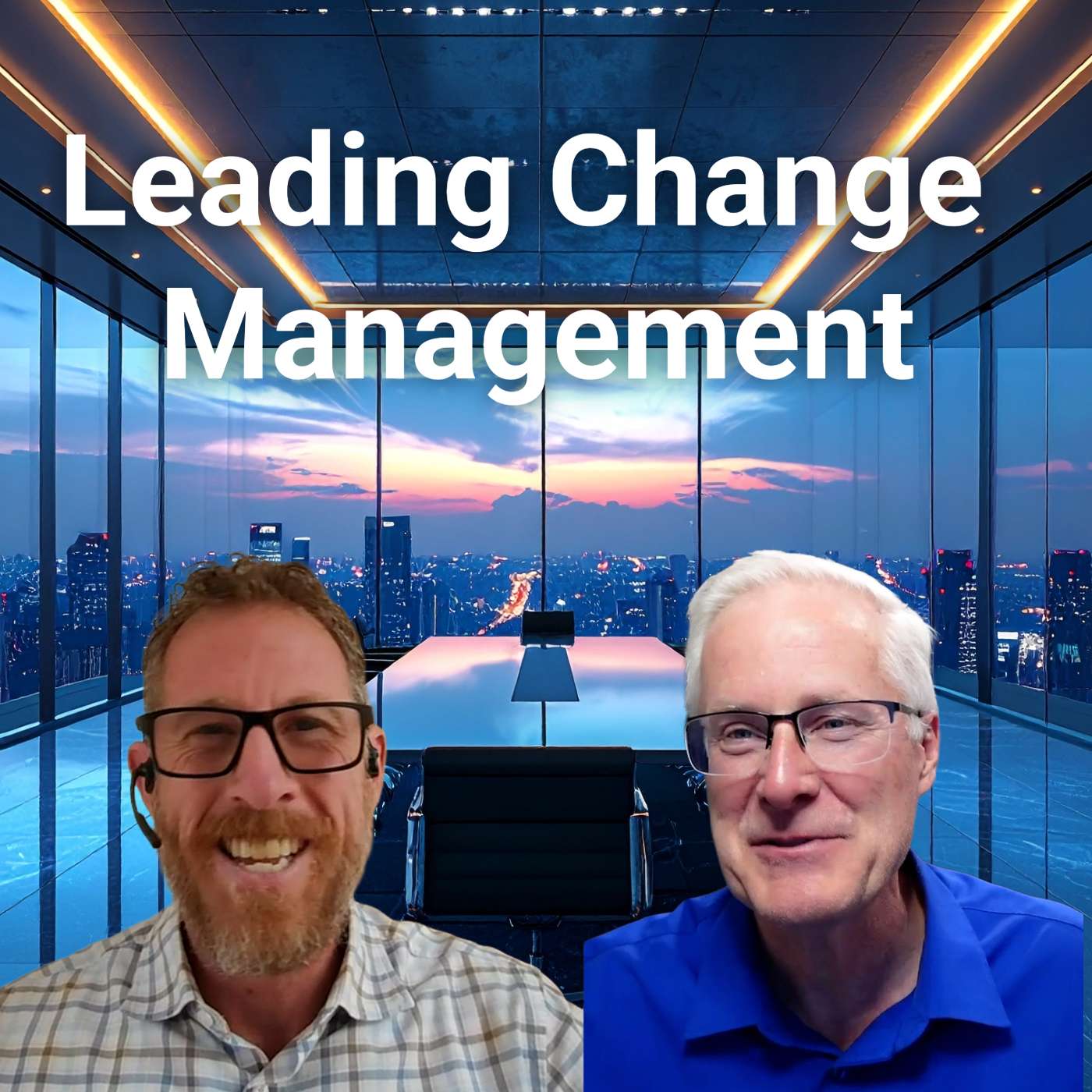
Embracing Digital Transformation
#365 How to Successfully Lead AI Transformation in Your Organization
00:31:22
Loading summary
Transcript57 lines
- [00:00]
A
Welcome to Embracing Digital Transformation. Before we dive in, I wanted to personally thank you for listening. Many of the ideas we discuss on this show inspired my new book, AI Augmented Teams. If you're looking for practical ways to combine human expertise and AI to achieve better outcomes, I think you'll find it valuable. Learn more at Paydar AI Books. That is P A I D A R AI Books. Now let's get started with the show.
- [00:31]
B
But with this modern tech and generative AI specifically, we're still learning. We still have the training wheels on our bike and so we're trying to make assumptions and guesses based on what we think we know and what's coming. But two, three years from now, we're going to learn that what we thought was happening and what we thought we were capable of. We were off.
- [00:55]
A
Welcome to Embracing Digital Transformation where we explore how people process, policy and technology drive effective change. This is Dr. Darren, Chief Enterprise architect, educator, author, and most importantly, your host on this episode, how to successfully lead AI transformation in your organization with digital transformation expert Jared Lucien, founder and CEO of Blue Tree Technology Group. Jared, welcome to the show.
- [01:28]
B
Thank you very much, Darren. Happy to be here.
- [01:31]
A
Hey, we're gonna, we're gonna really hit hard on culture and change management and all that stuff today, especially with executive leadership and in their role in that. However, before we get started, everyone that listens to my show knows that I only have superheroes on the show. Every superhero has unique background, background and origin story. So Jared, what is your origin story?
- [01:58]
B
Wow. I, I, I could probably spend all day talking about the, the, the interesting life I've lived. I've, I've been pretty fortunate in business specifically. I, I started in college actually doing what I think a lot of folks in Silicon Valley did, which was getting into computers. You know, this is back when it wasn't very easy for internationally, for a lot of countries to get high powered machines, modern machines. And so I started using ebay at an early age to help ship, you know, build and ship laptops overseas to foreign countries. I can't claim that it was wildly successful, but it worked for a few years. And after that I got into quick service franchises, primarily Cold Stone Creamery in Southern California. Oh yeah, yeah, yeah. That was fun. Had up to, I think about 60 employees, mostly teenagers at that point in time, scooping ice cream all day. It was fun. It was a fun business to be in while it lasted. Vending businesses, I've done that a little bit. Very profitable. But today I, I spend the, the majority of my time focused on bluetree Technology Group, which is a technology consulting firm. And I've been running this business now for about 15 years.
- [03:34]
A
Wow, that's, that's an amazing, I mean, obviously an entrepreneur. Obviously. I mean if you're, if you're dealing with teenagers as, as an employer, you have to be an entrepreneur because there has to be an upside to it. Right. Because teenage employees can be difficult at times.
- [03:53]
B
Yes. Employees in general. I think at the end of the day we're all humans and we're all, we're all dealing with our own, own issues, challenges personally and professionally. But teenagers are unique and unique bunch to, to manage for sure.
- [04:09]
A
Yeah, absolutely. Well, so, so what, what give. I, I'm just going to be brutal on this. What gives you cred to tell an executive how to do change management?
- [04:22]
B
Well, prior to, you know, I talk a lot about the businesses I've been involved in, invested in and, and have run and operated, but I, I have also worked for a lot of other companies and prior to starting Blue Tree, I worked for several large organizations in the high tech industry. And my role in each of those firms was both business development and consulting, working with executives to help them go through digital transformation of varying types, shapes and sizes. Most of those organizations that I worked with over the years were what I would consider enterprise level, north of a billion dollars in revenue. And so I was fortunate enough to have access to and have an audience with high powered executives on a consistent basis, learned a lot from them, but also was in a position to help them through the years to understand what was possible, what they weren't doing today that they could be doing, what their competition was involved in and how we could help them be more market competitive. And so through that experience, it allowed me to have the conf to start my own company doing much of the similar things that I was doing before, just with a team that I get to hand pick.
- [05:42]
A
Which is awesome. Right? I mean that, that's part of being an entrepreneur. Right? You're the boss, you get to, you get to make those decisions. So I have, I have so many questions. You've been doing this for a while. So digital transformation is not new or change management, not new. It's been around for a while.
- [06:01]
B
Yes. Decades, Decades.
- [06:05]
A
Do you see any difference now though with Generative AI in play or can I use the same things that I've been doing in the past through this transition that's happening today?
- [06:18]
B
I would say yes, maybe, and sometimes no. Right. It really depends on the organization itself. There are companies today that are still running mainframe. So when you look at a company like that, when we're talking to them about digital transformation, we're talking about moving into 2026, and AI is so far off in the distance, not that it should be, it just needs to be. Because there's a process to get to maturity and modernization before we can start thinking about futures. Right. Other companies that have stayed modern over the years, or have gone through the transformation over the years, or are young and new and up and coming, AI is something very relevant to them. And so when we start talking about transformation as it relates to modern technology and leading technology, there is definitely a shift in the industry because we can do so many things today that we just couldn't do before, and we can do them at such a fast rate. And so it creates a lot of excitement, a lot of energy that we just didn't have before. But it also creates some complications, because even though nothing in technology ever has been overly simple, any organization, any tech, it can be complicated. And the bigger you are, the more complicated it can be. But with this modern tech and generative AI specifically, we still, we're still learning. We still have the training wheels on our bike. And so we're trying to make assumptions and guesses based on what we think we know and what's coming. But two, three years from now, we're going to learn that what we thought was happening and what we thought we were capable of, we were off. And so I think there's just a lot of, we're like, doing that whole, like, run while we're learning in the process. And that has its own, you know, book of challenges.
- [08:28]
A
Do you think that is one of the reasons why we're seeing so many AI initiatives fail or. Because, I mean this. The study came up from MIT, right. 95% of AI initiatives are not meeting business goals that were originally established, which I. I don't know if that's a failure. Well, it is a failure. Right. Because you said I was going to do this and I didn't make it. But do you think that's because the technology is changing so quickly? I can't. It's like chasing the mice in my garage. I can't quite catch them. Right. Because I move something and they scatter around. They're moving around all the time.
- [09:07]
B
That's a great analogy. I love that. Yes, yes, I think that's part of it, Sure. I think so, based on my experience. This is my opinion alone, but it is shared by many. It boils down to the fact that we have humans involved. I think we, in any, in any project that is not successful, we've got to look at, look at the reasons why. And I don't know that there is such a big difference in today's world than there was 20, 30 years ago. We still have, have people trying to figure out how to maximize the use of this new thing that's, that's readily available today and learning in the process. And we make a lot of assumptions going into any project and what we think is going to be successful and we bring in expertise at times and in other times we think we have it all figured out, we don't need expertise. And both scenarios can create challenges and create project success or failure. Right. Are we bringing in the right expertise? Are we not bringing expertise? Did we let ego get involved? You know, is it, is it a money issue? Were we trying to do this effectively on this limited budget that just didn't align to what we were trying to accomplish and so we ran out of funds or, or we just couldn't see far enough ahead to, to understand what the, what the problems were. And, and in today's world with AI, everything's happening so quickly. There's just no way to look too far ahead. So we, we have to make those assumptions. We have to guess and we have to try and figure it out. And, and with those risks, the risk of, of trying to, to do something new. Failure is a natur. Sometimes.
- [10:52]
A
But I mean, but, but failure, Failure is important because only if we learn from it, I guess is, is the right thing.
- [11:00]
B
Right?
- [11:00]
A
I mean, I, I don't know how many. I'm sure you did this as an entrepreneur. How many times did you fail before you succeeded or even after you succeeded? Did you fail after you succeeded?
- [11:11]
B
Almost every time.
- [11:15]
A
Exactly. Right. Not. You can't catch lightning in a bottle every single time. Right. But if you're learning, then your chances will go up. So I mean, how, how do you help organizations understand that? Because I, I know they want to have this roadmap and they want to see success at the end and they don't want any bumps in the road. How do you help them understand that there will be bumps in the road? And it's how we adapt and how we shift based off of, you know, the current environment. I think that's the only way we're going to survive with how fast things are moving.
- [11:56]
B
I'd agree, Darren. I think that's very, very observant of you. And I, I think, I think it's a combination of a Few things, right. What we're seeing to be most successful right now, which is not atypical from what we've been seeing over the last 10 years, 15 years, is, is. And when I say we, I mean my team right there. I've got some amazing people that, that report to me today and they, I get to hear the stories about what's going on and see the projects firsthand. And what I see is a combination of a few things. One is we need to start with getting all the right stakeholders in the room together. We need to. One of the biggest challenges or the biggest lines to failure is, is not having all the right people on the same page. And so finding alignment is critical for success. We need the people downstream to understand the business vision that only the executives typically have. We need the executives with the vision to understand what's working and what's not and the risks of implementing something at the end user level. Right. And there's a lot of times there's no one bridging that gap. And so step one is always like, let's make sure we understand who the right players are in the team, in the organization, and let's put them in the room to together virtually, physically, both ideally. And let's talk about what we're trying to accomplish and why and make sure everyone understands the why. Because if we can get to the why and we're all aligned with the why, then it's just a matter of the how, right? How do we do it? And that's where we can bring in expertise. And that's a key, especially with modern tech. We need to bring outside expertise. People who have done it, like you mentioned, have gone through the pain, have failed, have learned from the failure, and now understand how to do it maybe a little differently that can share their experience that, that people who haven't gone down the path yet can glean from, can learn from. Right. And think about how do we apply those lessons into our business, our model. So I think those are two really key things, right? Let's, let's make sure we have the right people on the right aligned on the same page. Let's bring in the right expertise that has an idea of how we could do this. And then let's make sure we're considering where we are today and what needs to change. And I bring this last point up because this is something I've seen time and time again where organizations are so focused on the technology itself, the thing, the product, what it's going to do for us, the future state. But we don't think about the processes, the policies, how this is going to impact the people doing the job day to day. You know, usually this gets handed off to some team with the, with the title it right in their, in their name or next to their name. Yeah, and, and, and it's, and at the end of the day, it's, it takes, it takes an army, it takes a colony, it takes a community. It doesn't. One individual or one team is not going to make transformation successful. And so that's a really important key is understanding what are our current processes, what are our current policies, and how are they going to be impacted when we decide to make this change. And doing that up front in advance of hitting the go button, hitting the green light is key to success because even though we're still going to have hiccups, we're still going to hit bumps in the road. Thinking about that in advance and creating a roadmap strategy that aligns process and people to the technology is the only way we have a chance of success and oftentimes wild success.
- [15:33]
A
Well, and I love how you said that because it's the moniker of my show. Leveraging People, Process, Policy and Technology for Effective Change. So there you go. Thank you, Jared.
- [15:43]
B
Yeah. Yeah. My job is done here.
- [15:45]
A
My job is done. But you can't. On some really interesting points there, and that is getting people aligned first, which, and, and, and understanding the vision and, and getting that all done. I did not see that happen with all these AI initiatives. Instead, I saw executives saying, I have to do that or I'm going to fall behind. I have to do AI. And I've even heard a executive say AI first. Like AI first. About what? No, we need to do AI. Well, for, for what purpose? And I think we missed that. And because of that, we're seeing a lot of failures. But to the. What's the right word? If I'm thinking about a CEO and I'm concerned. Right. Everyone else is doing AI, I'm, I don't have a strategy yet. I don't have a plan. Just go do it. I'll put money on it. Let's just go do it. That's what they're doing. And. Yes, but so how do I balance between, okay, I've got, I got six months to come up with a strategy while my competitors are running away with, with AI and I'm falling behind. So how do I balance that?
- [17:16]
B
It's a great question. I think, I think we're, you know, I don't, I don't Think this is terribly new. AI is, is new for the world, right? In, in a lot of senses. But, but we saw similar patterns back in 2010 with cloud, right? Everyone's talking cloud, right?
- [17:34]
A
Cloud first. And then I, I was like, oh my goodness, people.
- [17:39]
B
Yes, yes.
- [17:41]
A
Yeah.
- [17:41]
B
But ask somebody at that time, what is the cloud? What does it even mean? Right now it's commonplace. But I remember I struggled when the term first came out because I didn't understand what people were talking about. It takes time and it takes education, it takes experience to figure out what we mean. And AI is no different in the sense that AI can mean a lot of different things. Artificial intelligence, what are we trying to accomplish? Why are we trying to do that? That in what I hear you talking about, Darren, is what I see in the market right now, which is a lot of CEOs, especially not just CEOs, but a lot of CEOs, especially CEOs, CIO CTOs that are trying to keep up with competition, get out of the curve and they see their peers over in company XYZ doing this thing or they're reading it in an article and they think, oh, we're going to fall behind if we don't get on this. And they read an article, they watch a video and someone's telling you if you don't get on this now, you're going to fall behind. So we, we get in these cycles of fear based momentum, right? We're driving things forward because we're scared of what might happen if we don't. And, and that's not a recipe for success because we haven't decided, we haven't figured out why we're doing the thing to begin with. Just because everyone else is doing it doesn't mean we should. Or just because everyone's doing it right now doesn't mean we should.
- [19:06]
A
I think that, I think, frankly, I think that comes from business school because in business school when I, when I went and got my mba, we were told about the buggy whip company that went out of business right when automobiles came. Everyone points to Kodak. Kodak who, the young generation doesn't even know who Kodak is, right? Kodak was the biggest, one of the biggest companies in the world. Completely gone in, in a decade, right? Because they didn't pivot. So they're all concerned if I don't pivot, if I don't do this, then. But they're not pivot. They're just shotgunning it. They're like, yeah, I gotta do something. So is there a Happy Medium. Somewhere in the middle.
- [19:50]
B
I think so. I. I think so, Darren. I think.
- [19:53]
A
What's that look like, Jared?
- [19:55]
B
Yeah, I don't know about. I don't know about medium. There's, there's something. I think there's a way to start this. But, but do it, do it with, with some level of caution. Mitigating risk of complete failure. Right? And I think the way to do that is identifying the one thing, the one project, the one thing that could have a strong impact. Figure out what that is. If we think about, if we consider bringing AI technology into our organization, let's take the time to figure out what, what do we think is going to be the most impactful way of implementing that into our organization? Is it, is it creating efficiency in a specific department that is lacking efficiency right now? Is it helping to drive revenue? What is, what is that thing? Identify that, figure that out. But take just enough time to figure that one thing out. Instead of trying to boil the ocean, to use a overused term, right? Let's. Let's find that one thing and then let's use that as our proof of concept and let's go test it. Let's bring in the experts that have done have leveraged AI in that specific way, and let's use them and bring them in to help us figure out how to do in our company. And then let's test it and test it just enough to figure out that to be successful so that we're only spending the amount of money we need to. We're only distracting our employees just enough to figure it out. Right. And we're not trying to change our entire business overnight. We're just figuring out how do we do this AI thing, right. Correctly in this specific way. And then we prove it out or we don't. Right? It's either success or it's failure. And we learn from that experience either way. If it's successful, we now have a model that we can go and rinse and repeat somewhere else with a different use case. If it's not successful, we learn from that. We figure out the why it wasn't, and then we try it differently. Round two.
- [22:00]
A
I love that approach. I think that's a good way to go. Here's another. I'm going to throw another kink in it because.
- [22:07]
B
Please. Yeah, I love this.
- [22:10]
A
Okay. All of my employees are worried. They're worried they're not going to have jobs, right? I mean, that's. There are worried. You've got a mix of people. You'll have some people that will be forward thinking in using AI. So they're already using AI to do their work every day. I would say that number a year ago was probably 10%. That number today well over 50%. And I would say a year from now it's probably going to be in the 90%. So my employees are already moving forward. So I've got that pressure too. Right. And they want to move, they want to move quicker because they're worried about their jobs. They need to be valuable to the company somehow. How do I, how do I now incorporate that aspect? And are you seeing this in your engagements because you're engaging with these companies and their change management? Are you seeing more people wanting change as employees or being kind of forced into it or how is that working? You know where I'm going with that, Jared? I'm trying to figure out that dynamics.
- [23:30]
B
Yes, I hear you. To answer your, your last question there, yes, we're, I'm seeing it, My team's seeing it. We're seeing two things. We're seeing the, we're seeing the fear of, of or the risk of job loss, the risk of being irrelevant or becoming irrelevant. And the fear of that driving people to do one of two things. Either what I, you know, just to validate what you're seeing in the market, right. It's the same thing I'm seeing which is, which is people are either are either getting on top of it and getting educated and doing it on their own without the support of their company, right. Or they're doing it with the support of their company or they're ignoring it because it scares them so much that they don't know how to take action or they don't have the confidence that they have the ability. They're in the place in their career. They have the knowledge or the education level or whatever they think is keeping them from being successful adopting new technology. And so they, they, they hide from it. They're, they're running away pretending it doesn't exist. So we have, we have pros and cons in all of these situations, right? We, it's a pro. The person who's not getting educated because they're trying to avoid it is, is only a con. If they're working for a company who cares about adopting new technology, right? If they're working for an antiquated organization who, whose executive leadership is not, does not care about change then, or progress, then they're fine. Not an issue. It's not an issue, right. They're going to write it out to retirement and the ship will eventually sink. Right. If, if the organization cares and leadership is pushing this down, if they're in support of the individuals who are trying to get educated, that that's preferable, like that's optimal as long as they're focused in the right direction and they're getting the, the right type of support from the right people. But even there, there's risks. We have, we have. The biggest risk I see though is next to the, you know, the individual who doesn't want to get educated and the company who is progressing forward is, is the individual who works for a company who wants progress but hasn't organized structure around how to progress, how to get educated. And so they're doing it on their own because they know they need to see relevant. You mentioned this, right? You brought this up. That scenario to me is the biggest, is the riskiest one because we have, we have no governance, we have no structure, we have no policy, we have no regulation. And so therefore data is at risk because we're using technology that has access to systems and information that might be confidential, might be IP like internal confident confidential information. It might be customer data. Right. And we're, and we, because we're not educated potentially, right. As the, as a human, we're giving this machine because we don't know better like access to all this data that, and we, and we. That there are no controls around right. This, that is risky to an organization and anything that organization touches.
- [26:42]
A
I'm glad you brought that up because I see that in organizations especially employees are like I've got to use AI, but my company has a policy against using it. But I got to use it anyway because my, my co workers are using it and they're excelling and they look so great. All their work is polished and all that. And if I don't do it then I'm going to not have a job. So it's this conundrum. But you're right, we have a big risk of this data going into these public gen AIs which there's not a good track record on our public gen AIs out there on protecting intellectual property. Let's just be brutally honest. They're all getting sued mass billion dollar lawsuits. Right. Because they stole information or they used information without permission. Right. And they continue to do that. And I think their whole philosophy around it is we'll, we'll see in court in 10 years when you finally win, I'll be a trillion dollar company anyway, so what do I care, right? That's kind of in Their attitude. Yeah.
- [27:55]
B
That are dead in the water. And either way I don't care.
- [27:57]
A
Yeah, yeah. It doesn't matter. Right.
- [27:59]
B
Yes.
- [28:00]
A
So they're taking a big risk. But that risk. And I shouldn't, I shouldn't just pile on the gen AI, public gen AI, because I think they are providing a major value to society as a whole. However, to think that your data that you're giving it is not being consumed by it is naive.
- [28:19]
B
Yes, I agree.
- [28:22]
A
So I, I, I'm a big proponent of private gen AI where in this case the models are running. They've already been trained. They're running on my own Hardware, on AI PCs or in my data center, whatever. The data's not leaving, it's not going anywhere outside of my stuff and it won't. And so I think there's a great middle ground here. Just like what we said earlier about the cloud. There was the cloud, now there's multi hybrid cloud.
- [28:54]
B
Yes.
- [28:54]
A
Private clouds. We're going to see private gen AI rise to its occasion. We'll see personal gen AI that's running on my laptop. My data's not going anywhere. The cloud would say, no, everything needs to go in the cloud. We know that's not true. So there's my soapbox. Jared. I love it.
- [29:12]
B
I love it there. I, I'm of the same opinion. I agree with you. I think, I think not only is it, is the, are we naturally going to go in that direction? I think, I think we need to for no other reason than privacy. Right. Like we, we as, as long as there are enough people on planet Earth that care about human privacy, human security, like we're, we're, we have, we will have to figure that out. Right. And a lot of organizations, maybe most. Right. Will need to establish some form, even if it is hybrid. Right. Because we can't stop the development and the benefits that come from development. And so we need to have access as development happens, to be able to bring that in house and use it. But we need to secure the data that's being accessed behind it to protect the organizations, protect ourselves, the people.
- [30:07]
A
No, I, I love that, Jerry. Awesome. Hey. This has been a wonderful conversation. I, I learned so much. You know, I, I'm excited about all, you know, this world that we're in right now. I think it's an exciting time.
- [30:22]
B
That was incredible. Right? Yeah.
- [30:24]
A
Of change. Yeah. And I'm glad to hear that there's someone else out there like myself, which is you, that is fighting the good fight, as I like to call it, on digital transformation. So thanks for coming on the show today, Jared.
- [30:38]
B
Thanks so much for having me, Darren. I really enjoyed this conversation as well. I appreciate you.
- [30:44]
A
Hey, if people want to reach out to you, Jared, where do they, where do they go? What website can they go to? Or are you out on LinkedIn?
- [30:52]
B
I am. I'm really active on LinkedIn, so I, I'm pretty, pretty proactive in my communication with DMs, etc. That's the easiest way to find me. My company is Bluetree Technology group. Website is bluetreetg.com Pretty simple.
- [31:09]
A
Awesome. Jared. Thanks again for coming on the show.
- [31:12]
B
Hey, thanks for having me, Darren. Take care.
- [31:17]
A
Thanks for listening to Embracing Digital Transformation. If you enjoyed today's conversation, give us five stars on your favorite podcasting app or on YouTube. It really helps others discover the show. If you want to go deeper, join our exclusive community@patreon.com embracingdigital where we share bonus content. And you can always connect with other change makers like yourself. You can always find more resources@embracingdigital.org until next time, keep embracing the digital Transformation.