← Embracing Digital Transformation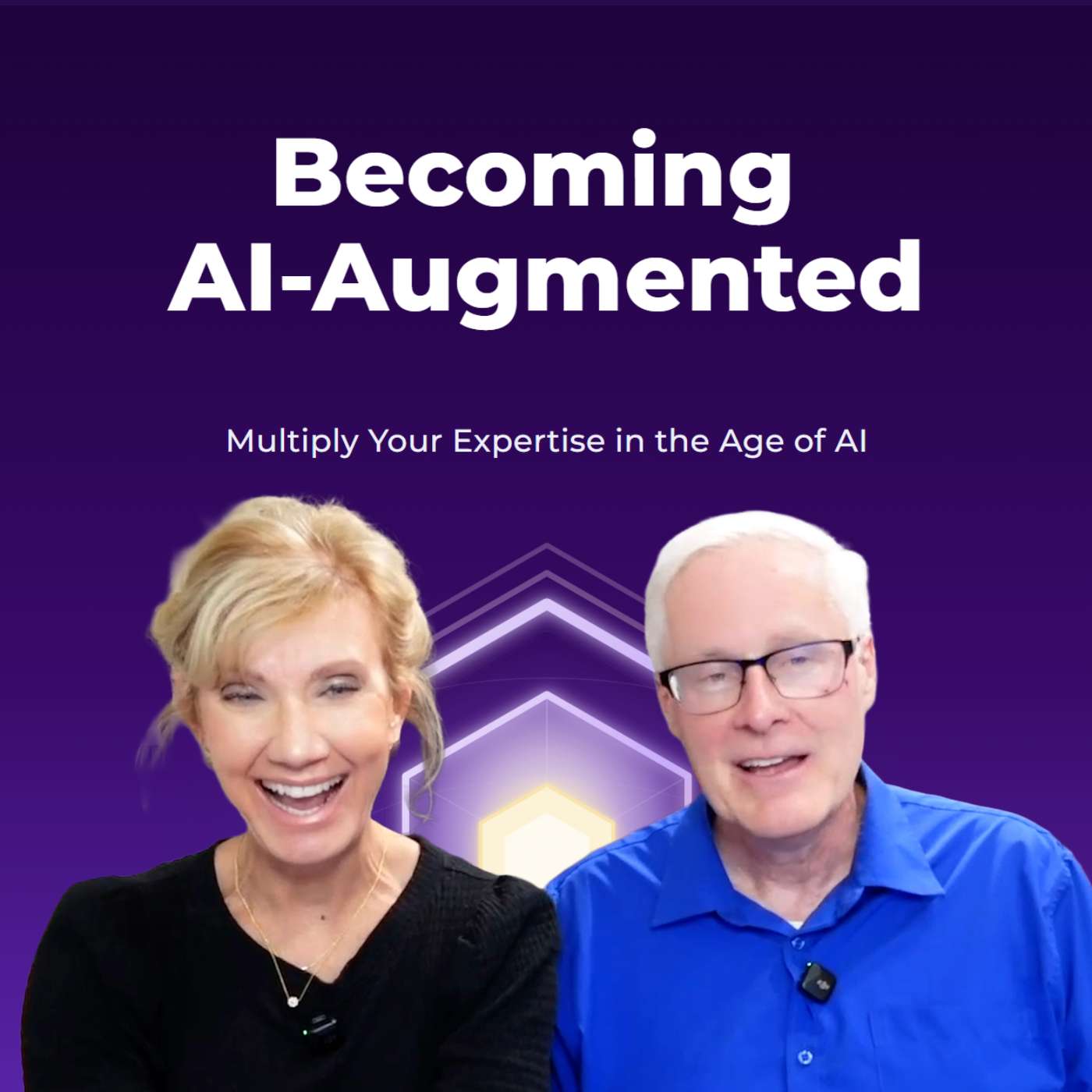
Loading summary
Transcript189 lines
- [00:00]
Dr. Darren
Welcome to Embracing Digital Transformation. Before we dive in, I wanted to personally thank you for listening. Many of the ideas we discuss on this show inspired my new book, AI Augmented Teams. If you're looking for practical ways to combine human expertise and AI to achieve better outcomes, I think you'll find it valuable. Learn more at Paydar AI Books. That is P A I D A R AI Books. Now, let's get started with the show.
- [00:31]
Paige Pulsifer
So, okay, I like that because you and I have had lengthy discussions about this. We have that Darren will say, oh, AI is not taking people's jobs, it's creating. And I'm like, no, no, it is taking some people's jobs. It is, it is. So I think we finally agreed on that.
- [00:46]
Dr. Darren
Yes.
- [00:47]
Paige Pulsifer
Because it is happening. It is taking people's jobs, but it doesn't replace you. Doesn't replace you, but you have to find a new. You have to find where you fit someplace else. Right?
- [00:58]
Dr. Darren
That's right. And that's what I try and bring out in the book. Becoming AI Augmented is all about learning how to use AI to become a better part of yourself.
- [01:09]
Why this matters to you. AI is no longer a future topic. It is already changing how people draft, decide, and deliver work. The real issue for leaders is not whether the technology exists, but whether your teams can use it without losing quality, accountability or confidence. If your organization treats AI as a shortcut, it will create shallow work and hidden risk. If it treats AI as a capability multiplier, it can free people for higher value tasks. Let's explore what that looks like in practice. Welcome to Embracing digital transformation. This is Dr. Darren. On this episode, how to use AI without losing your voice or judgment with Paige Pulsifer.
- [01:58]
Hey, welcome back to hosting my show.
- [02:01]
Paige Pulsifer
Why, thank you. It's a delight to come onto your show and be the host for the guest host. Right. Am I the only guest host that you have ever had?
- [02:11]
Dr. Darren
No, you're not.
- [02:12]
Paige Pulsifer
Oh, yes, you had Anna.
- [02:14]
Dr. Darren
You had Anna Scott.
- [02:16]
Paige Pulsifer
Oh, Anna Scott. And then you've also had. Didn't you have like an AI interview you?
- [02:21]
Dr. Darren
No, no, I interviewed the AI.
- [02:23]
Paige Pulsifer
Oh, you interviewed the AI.
- [02:24]
Dr. Darren
Okay, that's right.
- [02:25]
Paige Pulsifer
That's right.
- [02:26]
Dr. Darren
So. But no, I mean, you're the. You're the only recurring host co host that's come on the show. But normally when you come on the show, it means something's going to happen.
- [02:36]
Paige Pulsifer
Hopefully something good.
- [02:40]
Dr. Darren
You know what? Maybe if, you know, maybe if I'm hospitalized or anything, you can take over the space show.
- [02:44]
Paige Pulsifer
Well, I think if you're hospitalized, we're just probably not going to have the show.
- [02:49]
Dr. Darren
No, the show must continue on. Must. Must continue on. All right, so why are you here today? What's. What's the deal?
- [02:57]
Paige Pulsifer
Well, Darren, I'm here because you have written another book. So the last time I interviewed you, you had written a book.
- [03:06]
Dr. Darren
Well, let's bring that out.
- [03:07]
Paige Pulsifer
Let's bring it out.
- [03:08]
Dr. Darren
We got to bring it out. It's right behind you.
- [03:10]
Paige Pulsifer
Is it? Okay, you got it.
- [03:11]
Dr. Darren
There it is. All right. This is the last book. AI Augmented Teams.
- [03:15]
Paige Pulsifer
Yes. And that's when I interviewed you before. We talked about that book, why you wrote it, who it's for. We talked about all that, and now
- [03:24]
Dr. Darren
we have Becoming AI Augmented Book Number two. Book number two. You know, when I first wrote AI Augmented Teams, I meant it to. To be becoming AI Augmented. But you were the one that said, darren, this book is not about individuals, it's about teams.
- [03:46]
Paige Pulsifer
I did, yes.
- [03:48]
Dr. Darren
And you completely changed my whole perception on writing the first book. Everything down to introducing Sarah Bogue in the first book and her journey as a manager of a teen going through their digital transformation for AI of one. That was all your idea. Your idea was to have that constant story.
- [04:11]
Paige Pulsifer
Well, because I do love reading, I do love books, but my books are usually thriller, psychological. So I was like, darren, when's somebody going to get kidnapped? Or. It didn't happen. So it wasn't.
- [04:26]
Dr. Darren
It didn't happen.
- [04:26]
Paige Pulsifer
It wasn't as exciting. And so I said, but it could be story driven to make it a little more interesting and connect people to the book a little bit more rather than just being technical.
- [04:38]
Dr. Darren
Well, so. And then when. With that, I said, okay, I can tell a little story at the beginning of each chapter.
- [04:44]
Paige Pulsifer
Yeah.
- [04:44]
Dr. Darren
And. And that's kind of what I focused on was an individual story for each chapter. And when you read through it, you go, no, that's not going to work.
- [04:53]
Paige Pulsifer
Yeah. I wanted the com. A common story throughout all of them. The. The same characters carry the story through. I thought that would be more interesting because people are like, oh, what's going to happen? You know, what's going to happen to Leo? And trying to think of their names now.
- [05:08]
Dr. Darren
Ava.
- [05:09]
Paige Pulsifer
Ava. Yeah. What's going to happen to the, you know, in the next chapter? So, you know, I mean, not.
- [05:14]
Dr. Darren
And it was brilliant. It was brilliant. So I shouldn't just have my name on these books. Your name should be on them, too.
- [05:20]
Paige Pulsifer
Well, I expect more lengthy dedications to me in the front of these books.
- [05:28]
Dr. Darren
Well, all right. I gave you a dedication in the fir.
- [05:31]
Paige Pulsifer
In the first book you did, and I appreciated it. It was very nice.
- [05:33]
Dr. Darren
The second book, though, I dedicated to
- [05:35]
Paige Pulsifer
my parents, which lovely. It was absolutely lovely.
- [05:38]
Dr. Darren
Don't get me starting to cry about that.
- [05:40]
Paige Pulsifer
No crying today.
- [05:41]
Dr. Darren
No crying today. All right, so the second.
- [05:44]
Paige Pulsifer
Oh, wait, I'm sorry, I'm the host of the show. Why are you taking control?
- [05:48]
Dr. Darren
Because that's what I do.
- [05:51]
Paige Pulsifer
It's my show that I'm hosting for.
- [05:55]
Dr. Darren
All right, go ahead, ask.
- [05:56]
Paige Pulsifer
Okay, so, Darren, first of all, we briefly touched on this, but let's talk about it in a more lengthy way. Why did you write this second book?
- [06:07]
Dr. Darren
Well, I wrote the second book because that's what I meant to write first.
- [06:12]
Paige Pulsifer
Okay.
- [06:12]
Dr. Darren
So I. I took the learnings from the first book and I wrote a book for people, for individuals, not managers of people, but for individual people. That's what I wanted to do first. I just went about it the wrong way. Okay. So that's why I wrote the book, because I want people to not be afraid of AI and not think that AI is replacing them. AI may replace people's jobs, but it can't replace you as an individual.
- [06:42]
Paige Pulsifer
Okay, I like that because you and I have had lengthy discussions about this. We have that. Darren will say, oh, AI is not taking people's jobs, it's creating. And I'm like, no, no, it is taking some people's jobs. It is, it is. So I think we finally agreed on that. Yes, because it is happening. It is taking people's jobs, but it doesn't replace you. Doesn't replace you. But you have to find a new. You have to find where you fit someplace else. Right. You have.
- [07:09]
Dr. Darren
Right.
- [07:09]
And that's what I try and bring out in the book. Becoming AI Augmented is all about learning how to use AI to become a better part of yourself. And it really can apply to more than just AI. It can apply to any technology or anything. So the book is really almost like a self help book in some respects. It's finding yourself in this crazy world that we live in where AI seems to be taking over everything.
- [07:35]
Paige Pulsifer
Okay, but what would you say? I have a lot of friends and I think just a lot of people in general, they are very scared of AI they don't want to become AI Augmented. They're scared. They want to ignore AI. They want to not have it in their lives because they are afraid of the implications of AI in our society, in our life. So what would you say about that?
- [07:59]
Dr. Darren
I would say people felt the same way with the invention of the car. Technology comes and we learn how to use it for good. And some people will use it for bad. People use cars for bad things like robbing banks. Right, right. But it's just like when the car first came out, there were a lot of people that were scared of it. Right. Oh, what industries are going to change is going to change a lot of jobs. And it did, but it also created a lot of jobs too. So AI is just another one of those revolutions that we're seeing. We saw the industrial revolution, the invention of electricity, or the capturing of electricity, cars, computers.
- [08:45]
Paige Pulsifer
I'm gonna say the Internet. The Internet. It is so funny to go back and watch people like news, you know, broadcasters that were, Those are so funny. Those are so many go back watching. They're going, you know, this Internet thing that's not going to work and that's not going to fly and it's just going to be a, you know, overnight thing and, and the Internet is used for good and bad.
- [09:07]
Dr. Darren
Right, but can you go imagine the world without the Internet? No, it would be very difficult.
- [09:13]
Paige Pulsifer
But we have to be very discerning and we have to be skeptical. Right. Of the Internet and AI. We have to be. We can't just go, okay, I'm accepting AI and everything's going to be great.
- [09:25]
Dr. Darren
Well, and that's what I talk about in my book. That's why it's becoming AI augmented. Not becoming or relying on AI or learning prompting techniques. This book really says, how can I use it effectively, ethically? And so that it brings out the best of me. By relegating some of the other things that maybe I find boring in my job, I can relegate that to an AI instead. And then I can focus on things that are more in my strength, in my wheelhouse, that make, that makes me unique.
- [10:04]
Paige Pulsifer
I, you know, I am becoming more AI augmented.
- [10:09]
Dr. Darren
Yes, you are.
- [10:10]
Paige Pulsifer
I am. I mean, I don't think I would write an email today without using AI to help me write an email.
- [10:19]
Dr. Darren
And are you becoming dependent on it then?
- [10:25]
Paige Pulsifer
In a way, yes. But I mean, could I still write my own email? Of course I could. Do you know what I mean?
- [10:29]
Dr. Darren
But do you write more emails now than you used to?
- [10:33]
Paige Pulsifer
I feel like my emails are, are more, they have more clarity and more direction. Do you know what I mean? Like, I feel like before I was always just trying to find those words and always trying to sound like I knew, maybe knew what I was talking about or.
- [10:50]
Dr. Darren
You're more polished.
- [10:52]
Paige Pulsifer
Yes, but because my AI knows me, knows my personality, knows it helps Me write emails that still sound like me. And sometimes I'll say, well, that, that doesn't sound like me. You know, make that way more casual or more fun. And it does. And sometimes I still change the email, but I love it.
- [11:13]
Dr. Darren
So that's one of the reasons why I wrote the book was to help people understand the follies of AI, the benefits of AI and all those things. And we told it in the storyline. I love the storyline in this book. It's a great storyline of two people and a couple other supporting characters. You mentioned Leo. Leo's a supporting character, the managing director of this company. But it really tells a great story between Ava and Michael.
- [11:42]
Paige Pulsifer
Yes.
- [11:43]
Dr. Darren
And you got to. You. You actually got to go through the story in depth because. And we'll talk a little bit about that because you were building out the audiobook part of it, so you were going through. Making sure that it was easy to listen to.
- [11:59]
Paige Pulsifer
Right.
- [12:00]
Dr. Darren
I guess that's the best way to put it.
- [12:01]
Paige Pulsifer
Well, and then it made sense. You know what I mean?
- [12:04]
Dr. Darren
Like, are you saying my writing doesn't make sense?
- [12:06]
Paige Pulsifer
I mean, I didn't say it. You said it, but I'm not going to disagree. No, it's just. It needed to. We need to make sure it flowed, that it made sense, that, that it was. Make that it was having Michael speak when Michael is supposed to be speaking and Ava speak when Ava was supposed
- [12:23]
Dr. Darren
to speak, bringing out their personalities a little bit more.
- [12:25]
Paige Pulsifer
Yep.
- [12:26]
Dr. Darren
Yeah. Yeah. So the really cool thing about Ava and Michael is Ava is young, great at AI, But. And they're both work for a civil engineering company and. But Ava doesn't have the experience that Michael has. Ava's not a subject matter expert yet. She's getting there. Michael, on the other hand, 30 years experience. Right. A white hair like myself knows his stuff. AI is a little scary for him. And how these two approach problems is really fascinating.
- [12:58]
Paige Pulsifer
Yeah, I agree. I agree. I actually really enjoyed reading about them and how they took turns. You know, Michael was kind of how great I am.
- [13:08]
Dr. Darren
Yes.
- [13:09]
Paige Pulsifer
Being very assertive. And Ava, you don't know what you're doing. And then all of a sudden it was Ava telling Michael he didn't know what he was doing. It was, it was a. It was a fun story arc to see how it came and went and.
- [13:21]
Dr. Darren
Yeah. Well. And it's not all. It's all. Not all rainbows and unicorns either. No. Ava gets demoted, almost fired, has to work her way back up. So I love, I love how we can demonstrate some of the really cool things in the AI augmented operating system, which I developed in the first book and then I'm using in the second book in the becoming, which is really turned into this core. I call it the corpus canon. And you like that word. The other day when I brought that up, you're like, you've never used that before.
- [13:55]
Paige Pulsifer
I was like, what is that?
- [13:57]
Dr. Darren
It's the foundation that my books are built on.
- [14:00]
Paige Pulsifer
Right.
- [14:00]
Dr. Darren
And from this perspective, it's an individual perspective taken from someone that is new in the workplace. I call her an AI faker. We've had a big discussion about AI fakers and the underleveraged, which is Michael, who's been around a long time, a little bit afraid, a lot afraid of AI at the beginning and doesn't know where he quite fits as Ava supplants him. As the board starts going to Ava for things instead of him, there's a lot of conflict there. The internal conflict in both Ava and Michael. So it's actually a fun read. And then we do some teaching afterwards. So I kind of like the way that this turned out.
- [14:43]
Paige Pulsifer
I did, too. Yeah. I like how you. It is like a story, and then it's. Then it's you talking about, you know, the story and what they've learned and what they're doing wrong and. But you mentioned AI faker. For those that haven't heard about that before or didn't read your first book. I mean, come on, you need to.
- [15:04]
Dr. Darren
You need to go read the book.
- [15:05]
Paige Pulsifer
You need to go read the book. But explain people what an AI faker is.
- [15:14]
Dr. Darren
So in AI faker, it's. It's not a mean term, but it is in some respects. You don't want to be an AI faker, but it happens when you're using AI to kind of fake your way through. And it's okay. Even myself, I would call myself an AI faker when it comes to writing books because I'm not an expert in writing books. I don't have a foundation in that. But I'm using AI to help overcome some of my lack of knowledge. Right. I'm an AI faker still and those. And we have a dear friend that has published several books. She's a New York Times bestselling author. She's commented on my book a couple of times and say, oh, yeah, you're an AI faker. I can tell.
- [15:56]
Paige Pulsifer
Right.
- [15:57]
Dr. Darren
But I'm not an AI faker when it comes to organizational management, cloud computing, and things like that. I am AI augmented because I have subject matter Expertise in that. So I want to become more AI augmented when it comes to writing books. And I'm getting there as I learn and I progress. So that's really the difference. That's what an AI faker is.
- [16:22]
Paige Pulsifer
Yeah, I, I, and most people are AI fakers, and they don't even know that they're an AI faker.
- [16:28]
Dr. Darren
Absolutely.
- [16:28]
Paige Pulsifer
Yeah, I know. I'm an AI faker.
- [16:31]
Dr. Darren
Yeah, I, I am, too.
- [16:33]
Paige Pulsifer
I am for sure an AI faker, but I am aware of it and I want to. I want to become. I want to become more AI augmented. Yeah.
- [16:44]
Dr. Darren
Good sell on the book. Good sale.
- [16:45]
Paige Pulsifer
Thank you.
- [16:45]
Dr. Darren
What?
- [16:45]
Paige Pulsifer
What?
- [16:46]
Dr. Darren
You can get it on Amazon. Right. Okay. Well, let's talk about your help. You did quite a bit of work on the second book. You helped me out quite a bit with the audio part of the book because we generated the audio. This is actually pretty cool. The first book, we started off by you reading the narrative, you reading the story, and we captured about 30, 40 minutes of you reading the story.
- [17:14]
Paige Pulsifer
Right.
- [17:15]
Dr. Darren
And we cloned your voice. So there's a page clone out there, a voice clone out there, and we cloned my voice as well.
- [17:23]
Paige Pulsifer
Right.
- [17:24]
Dr. Darren
And so you handle all of the narrative part of the book, and I handle all the declarative, the teaching.
- [17:31]
Paige Pulsifer
Right.
- [17:32]
Dr. Darren
And you said you would help me out with getting the audio track ready. So you went through the book. What do you find in doing this? Was it enjoyable? Was it?
- [17:45]
Paige Pulsifer
I mean, I, I knowing I don't mind doing stuff like that, it was frustrating for a bit because I would start going through it and then I would say, darren, this is really messed up. Like, it says it's Michael. It's not Michael. It says it's Ava. It's not Ava. And so then you would say, after me spending hours working on it, you would say, stop, let me go back. Let me try and fix that. And I don't know what that entailed. When you say fix that.
- [18:11]
Dr. Darren
What it entails is me taking your feedback, feeding it back into the AI that was taking the book and putting voices to the individual people in the narrative and also in the, in the teaching part. And it had a hard time sometimes figuring out who was speaking. And so we had to give more context to the AI so it could do a better job at parsing this out for us so we knew who the right voices were to use where. And it still took, it took some iterations, us working with it. So it did.
- [18:46]
Paige Pulsifer
Yeah, because it was. No, it was very unreliable. It would be, it would Be going along just great for a while. And then all of a sudden it was completely unreliable and saying things that, you know, shouldn't have been saying and mixing people up. And so then when we have to stop, you'd have to go back and. And so that's what it was teaching me. You were teaching me about AI. You can't just go to AI and go, do this for me. Whatever it might be, just do this. It needs so much more context than just one sentence of do this for me.
- [19:22]
Dr. Darren
It absolutely does. And the more context you give it or the more succinct in your context that you give it, the better off it is. Now, in the end, it actually did a pretty good job.
- [19:32]
Paige Pulsifer
Yeah, it did.
- [19:32]
Dr. Darren
But you still had to edit parts of it. Right. There were still some things that messed up on. But we were like, that's good enough where I can make the changes. It still saves me time.
- [19:42]
Paige Pulsifer
Right.
- [19:42]
Dr. Darren
And now when we. When we do the work on the next book, which we're working on right now, another book, then it'll go much faster. So we're learning with the AI how to use it effectively.
- [19:57]
Paige Pulsifer
Yeah, it was. It was. It was frustrating. But you're right, it still ended up saving time. Even though it was frustrating, it still saved time of, you know, putting it in there line by line. You still were able to get it to where we needed it, close enough to where we needed it to be with just a few changes. So. But. So I guess that's what I'm trying to get to, is you have to be patient.
- [20:20]
Dr. Darren
Well, and patient. And this fits into the concept in the book. In all in. In the books, both of them. The integrity packet concept.
- [20:29]
Paige Pulsifer
Yes. Explain what that is. You've mentioned that a few times, a few times before on your show and with your book. What isn't. What is Integrity Packet?
- [20:37]
Dr. Darren
So an integrity pack is really simple. It's. It helps you generate, you know, decisions or content, whatever, in a reliable and defensible way. Just like with you with the audiobook, you needed to check it. You needed to put in your assumptions, you needed evidence that. That the AI could use. And then you had to take ownership and say, hey, I'm accountable for. For this going out. I want it to look good. And then what is the risk? And we put the risk up there, too. Is it okay if it misses two or three of the voiceovers? Maybe it's okay. So we put kind of a risk value up there. That's what an Integrity packet is. Those elements. So you actually ran an Integrity Packet in doing this work, not necessarily knowing that you were doing it. It was, you experienced what that means, which is making sure you've drawn out your assumptions correctly. Make sure that you're checking the work, provide evidence that you're checking the work, provide that feedback back into the AI so it gets better, and then taking that accountability and ownership of it. That's really what an Integrity Packet is.
- [21:52]
Paige Pulsifer
So see, I am, I'm very much an AI faker because I was using the Integrity Packet without even knowing it. That's how much of a faker I am.
- [22:00]
Dr. Darren
You're such a faker.
- [22:01]
Paige Pulsifer
But now as I'm learning, right, I'm becoming less of a faker the more
- [22:06]
Dr. Darren
I learn well, and that's the point that I want people to understand. I myself am I a faker in a lot of things, but I'm an AI augmented in others. And it will change as I grow and progress. I could be really good at AI and be an incredible AI faker. In fact, there's an archetype in AI faker called the polisher. I am not a polisher. Paige knows that I am not detail oriented, but maybe AI can help cover some of the, some of those follies that I have. But I'm constantly progressing and that's the key behind this. We show you how you can progress using the concept of Integrity Packet. You can create these Integrity packets as you generate things and they can be generated, they can be put back into the AI so it knows how you make decisions together with it. So it's a very powerful tool.
- [22:57]
Paige Pulsifer
Okay, I like it. Are you done writing books?
- [23:05]
Dr. Darren
No, not even close.
- [23:07]
Paige Pulsifer
Okay, so you are writing a series of AI augmented books for different teams, individuals, educators, right?
- [23:18]
Dr. Darren
Yeah, yeah, absolutely.
- [23:19]
Paige Pulsifer
Okay, so. So what is this year? So you have done teams and individuals so far, Right.
- [23:24]
Dr. Darren
And I'm working on a book right now with a dear friend of mine, Jeremy Harris. He's a lawyer, a privacy and AI policy lawyer, great at what he does. He and I are writing a book together called AI Augmented Organizations.
- [23:40]
Paige Pulsifer
Okay.
- [23:41]
Dr. Darren
And what's cool about the way that we do this is as Jeremy and I've been looking at organizations and how. How to become an AI augmented organization, we found that the, the common thing that we use, the AI augmented operating system, that AAOs can be used across organizations, teams and individuals. So I have that common corpus, Common corpus canon that I just build out. And then the series of books is actually pretty cool because I just take on a different lens. I'm taking on the Lens in the organization book of the C suite of the leaders of an organization. And how can they use the same technique to empower their organization to become more AI augmented? That's the idea behind it.
- [24:29]
Paige Pulsifer
Okay, so you're writing a series of books. Why? Is it for the money? Is it for the fame? Is it for the notoriety? Because we've sold so many.
- [24:39]
Dr. Darren
Yeah. Not enough.
- [24:42]
No, go and buy the book.
- [24:44]
Yeah, go buy. Buy more of the book. Buy, you know what? Buy 100 copies. Yeah. For your friends and family and co workers.
- [24:51]
Paige Pulsifer
So why are you doing this series of books?
- [24:54]
Dr. Darren
Well, at first it was to get all these ideas in my head out.
- [24:59]
Paige Pulsifer
Okay.
- [24:59]
Dr. Darren
And it did. It forced me to articulate and form a model that I could reuse over and over again and explain to other people easily. So it kind of forced that. And. And I have a passion around. Around this. So much so that I want everyone to understand it. I want. I want people to see that there's hope out there because there's a lot of people that are really scared right now. I want them to see. No, you're in control. Right? These are. We're talking about becoming AI augmented humans. Right? We. The human is still in control. It's the thing that's the most important thing. And I truly believe that AI can bring the best out of people instead of us being relegated to doing nothing, which some of the CEOs out there and in the big gen AI companies are saying, oh, we just need to pay people to exist. I think that's horrible. There's so much value that we can provide, and if we can be augmented with this new technology, that's even better.
- [26:02]
Paige Pulsifer
Okay.
- [26:02]
Dr. Darren
So that's. That's my passion behind it.
- [26:04]
Paige Pulsifer
Okay.
- [26:06]
Dr. Darren
The series of books I am tackling the education market. I do teach at Vanderbilt, and I have been using these techniques for the last year with my classes. And now we're tackling the education market as well. I'm writing a series of books for education and I'm getting some great help from some fellow professors and administrators on writing those books based off of the same thing, the aaos, the AI Augmented Operating System. So I'm really excited about Helps. More people are getting involved in it. So it's turning into this movement. I call it the AI Augmented movement. So.
- [26:44]
Paige Pulsifer
And you really enjoy it? You really enjoy doing this?
- [26:47]
Dr. Darren
I do. It's a lot of fun.
- [26:48]
Paige Pulsifer
Yeah. And I enjoy having a husband that just is on his computer 24 7. I mean, it's the sarcasm. It is so fun.
- [26:58]
Dr. Darren
All right. So do you, like, what do you do on the beach, honey?
- [27:03]
Paige Pulsifer
Oh, here we go. Here we go. He's going back to when we used to go on a vacation. You and I would go on a vacation. And I'm sick because I love the beach. The beach is my happy place. And I would bring a book, right? And you know, nap, read, pina colada. Nap, read, repeat, pina colada. And you tried to do that the first couple times it went. Because I think you thought that that's what I wanted you to do.
- [27:27]
Dr. Darren
That is what you wanted me to do. Let's be clear about it.
- [27:30]
Paige Pulsifer
And then probably on our second or third vacation, you, like, get out your computer. And I'm like, you're bringing a computer to the beach?
- [27:39]
Dr. Darren
Yeah. Because you thought I was working.
- [27:41]
Paige Pulsifer
Yeah, I was like, what, what do you like? You're supposed to be relaxing. And you're like, I am relaxing. I am relaxing. You don't enjoy listening to too many, you know, you don't enjoy listening to fictional books, really, about murder. I mean, you do. When we go on a car ride, we always do a book. Yeah, but you don't sit down and read a book for entertainment purposes very often. Hardly ever. So you were telling, you tried to explain to me that you being on your computer and coding or writing a book or whatever you're doing, that is your way to relax. And so I, I did, I, I grasp it now. I have no problem with you being the only person on the beach with your computer.
- [28:23]
Dr. Darren
I am not the only person on the beach with my computer anymore. Other people, I started a trend. That's a trend.
- [28:29]
Paige Pulsifer
Okay. So, yes, I, I, I don't have a problem with it anymore as long as I, I have to remind him sometimes to give me some attention.
- [28:37]
Dr. Darren
Yeah, that is true. I do get lost when I'm writing. I get lost in the characters that I'm developing. I get lost in the philosophy behind the models that I build. Yeah. So. And I told you, pull me back in so I don't get lost.
- [28:53]
Paige Pulsifer
I do. I have to, I have to pull him back in.
- [29:00]
Dr. Darren
Now.
- [29:00]
Paige Pulsifer
What I think people also might be interested in. So when did you, when did you write your first book? When did you start writing your first?
- [29:09]
Dr. Darren
Probably in. When was it? January.
- [29:13]
Paige Pulsifer
Yeah, probably.
- [29:13]
Dr. Darren
Probably January.
- [29:14]
Paige Pulsifer
So since January, you have published two books, and you are well into some of your others.
- [29:23]
Dr. Darren
The third, the third and fourth.
- [29:25]
Paige Pulsifer
So how are you doing this? I mean, I think when most people think about writing a book, it's, you know, a year, two year A five year process. How are you writing these books so fast?
- [29:34]
Dr. Darren
So this is actually pretty cool. I use the techniques I talk about in the book to help write the book. So I start with my core foundation, which I mentioned, the AI augmented operating system. And I really focus on that. How can that be used to help people, to help teams, organizations, teachers, students, administrators, whatever the case may be. And I focus on building that out. Then I have created several AI agents that help me make sure I have consistency throughout my corpus. And then working with partners now, because I want more perspectives coming in, I interview them about the corpus, we capture stories, and then from that we build up this profile of all this great content. And then I have about 35 to 40 agents that help me actually write the book. So developing character arcs, all that stuff. And this is where I could truly show that I'm AI augmented, because I don't know all the nuances of writing. I don't, and I probably never will. Right. But AI can help cover some of those gaps. I still am in control. I still control the character arcs, I still control the storylines. I have all of the work that I've already spent on the corpus, and it's bringing all that together with a new lens to help people from their perspective. Like the book we're writing for students, for example, I haven't started that one yet, but we are running one for educators. And I'm interviewing other professors at other universities on their findings on using AI and walking through the aos with them, and they're teasing out areas where I need more strength or I need to draw back a little bit. And we're capturing all that in a very unique way, and we're really excited about it. The people I'm working with are like, this is amazing. We can get our ideas out so quickly and revise them so quickly. So that's how I'm doing it. I'm using AI to help me write these books in an AI augmented way. Okay, so there you go.
- [32:04]
Paige Pulsifer
I think it's. I think it's wonderful. I think it's wonderful. And I say this. I. I've said this many times. As we get older, I want to be less busy, less, and you want to be more busy. You've got your podcast, you teach, you have a wonderful job, you're writing books like you want to be.
- [32:25]
Dr. Darren
I. I don't. There's a part of me that says, I have all this experience, I want to pass it on.
- [32:32]
Paige Pulsifer
Right. I always tell people, you feel like you have an obligation for the things that you know. You feel like you have an obligation to share that with people.
- [32:44]
Dr. Darren
I do. I do.
- [32:45]
Paige Pulsifer
You do. You have a passion and an obligation. You say I I need to let people know these things. I.
- [32:50]
Dr. Darren
And I don't know if that's fame. I really don't care that. I really don't know.
- [32:53]
Paige Pulsifer
You don't care about. You don't care about fame.
- [32:55]
Dr. Darren
But I do care to leave a legacy behind, right?
- [32:58]
Paige Pulsifer
Yes.
- [32:59]
Dr. Darren
Is that so? There you go. That's us in a nutshell.
- [33:03]
Paige Pulsifer
Okay. Love you.
- [33:05]
Dr. Darren
Are you sure?
- [33:05]
Paige Pulsifer
I'm sure.
- [33:08]
Dr. Darren
Thank you, Paige, for the insightful interview. This is what I take away from this interview. The first lesson is that AI should be measured by how well it extends human judgment, not by how much it automates without oversight. The second is that many professionals are already using AI in a limited area improvised way, which means leaders need a more disciplined model for context, review and accountability. The third is that fear is often a signal that people do not yet see where they fit in the new workflow. That is a management problem, not just a technology problem. Executives should ask themselves whether their teams know which tasks AI should absorb, which decisions must stay human, and how quality will be checked. They should also ask whether their AI strategy is building confidence or dependency. The broader trend here is clear. The winners over the next several years will not be the organizations that use AI most aggressively, but the ones that use it with the most integrity. That is how you stay relevant, credible, and in control.
- [34:17]
Thanks for listening to Embracing Digital Transformation. If you enjoyed today's conversation, give us five stars on your favorite podcasting app or on YouTube. It really helps others discover the show. If you want to go deeper, join our exclusive community@patreon.com embracingdigital where we share bonus content and you can always connect with other change makers like yourself. You can always find more resources@embracingdigital.org until next time, keep embracing the digital transformation.