← Embracing Digital Transformation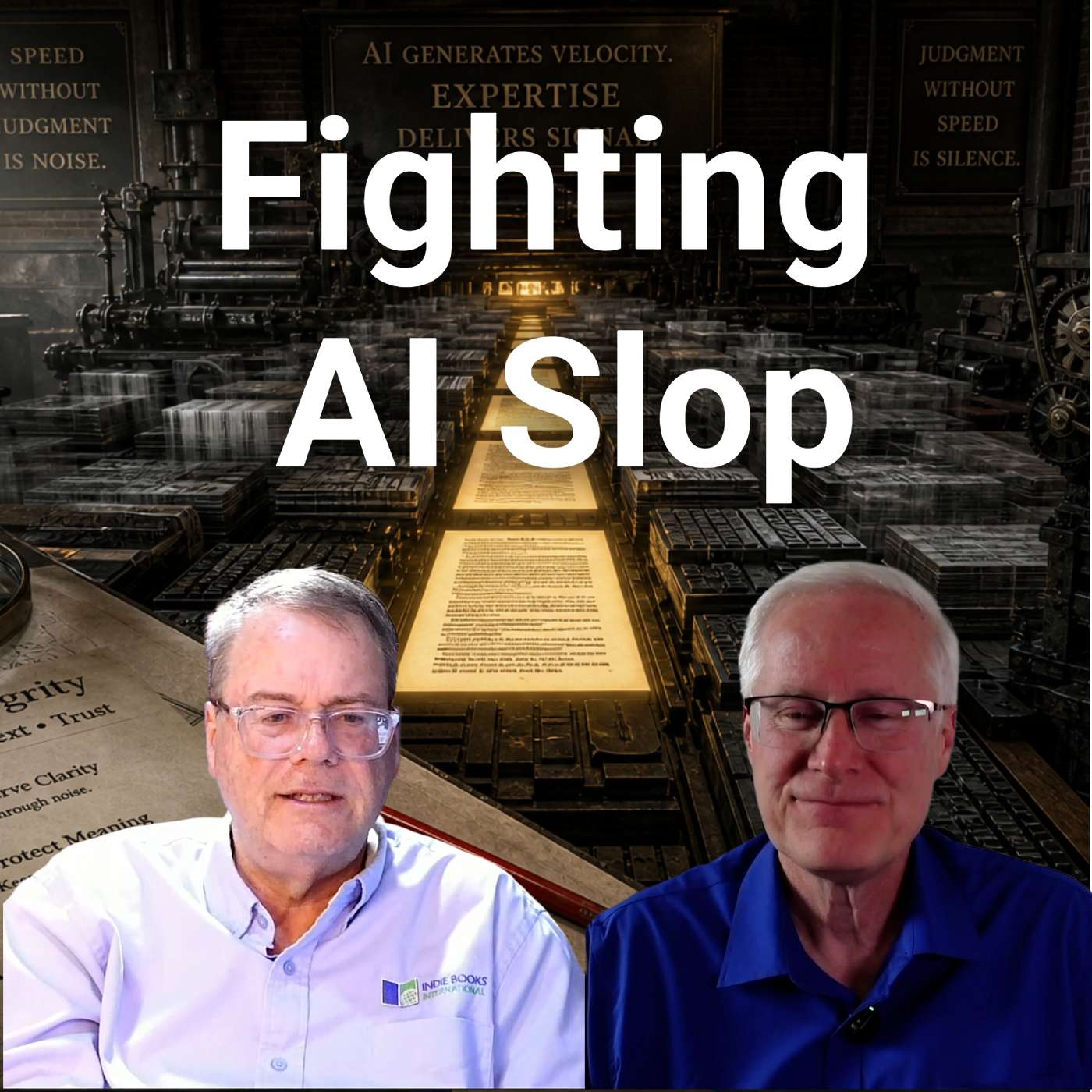
Embracing Digital Transformation
#372 Using AI to Write Better Books Without Losing Your Voice
00:32:37
Loading summary
Transcript106 lines
- [00:00]
Dr. Darren
Welcome to Embracing Digital Transformation. Before we dive in, I wanted to personally thank you for listening. Many of the ideas we discuss on this show inspired my new book, AI Augmented Teams. If you're looking for practical ways to combine human expertise and AI to achieve better outcomes, I think you'll find it valuable. Learn more at Paydar AI Books. That is P A I D A R AI Books. Now let's get started with the show.
- [00:31]
Henry Devries
The AI tsunami that's just going to. So it's going to proliferate and be everywhere. And she argues it'll be more important than ever to have a certain niche and a really strong point of view that you're willing to defend so you will stand out from the sea.
- [00:53]
Dr. Darren
Why this matters to you. Publishing is no longer about reaching everyone. It is about reaching the right people with enough clarity to earn trust in a market flooded with content. The real challenge is not producing more words, but creating work that signals expertise, solves a real problem, and stands apart from generic AI output. If you lead a team, a business, or a transformation effort, this conversation will help you think differently about authority and credibility and how ideas become influence. Let's get into it. Welcome to Embracing Digital transformation. This is Dr. Darren on this episode, AI publishing and the New Authority Model for Authors with Henry Devries.
- [01:44]
Darren
Henry, welcome to the show.
- [01:47]
Henry Devries
It's so great to be here and talk books and technology and AI and all good things.
- [01:53]
Darren
So, Henry, I'm glad that we hooked up so that we could talk about this because I think I told you last time, I just released a book. It's been about three weeks ago, and I've got a series of books that are coming in. So we're going to talk about AI and its impact on publishing and on books and all this great things. But before we do, everyone knows that I only have superheroes on the show and every superhero has a background story. So, Henry, what's your superhero background story?
- [02:24]
Henry Devries
Oh, wow. I guess I was born on the planet Krypton and came here in an egg.
- [02:30]
Darren
Actually, Sorry, that one's been taken here.
- [02:33]
Henry Devries
I tried to keep that identity secret.
- [02:35]
Darren
Yeah, exactly.
- [02:37]
Henry Devries
So I have always wanted to be a writer. Since I was 15, I've been a professional writer and, and have worked all my life and now have written 20 books. And I run a publishing company and have published 200 books. And I get excited as a ghostwriter getting other people's ideas into print just as excited as I get for my own books.
- [03:06]
Darren
That's really incredible. I mean, that's quite a long pedigree right there, Henry. So you've seen a lot of shifts and changes, probably all the way back into the 90s when Amazon started taking off. That changed publishing dramatically. And now you're seeing another shift again, right?
- [03:29]
Henry Devries
Oh, definitely. So the reason I have a company are two digital changes. The first digital change was print on demand publishing. So we didn't need offset presses and we didn't need to ship things to China and back. And we can do one book at a time now, just as cost effective as a print run. That's amazing. So that changed things. But what really changed things was the shift in publishing and the idea that we shouldn't have gatekeepers in large buildings in New York City deciding what you get to read. That there can be some democracy brought to publishing and let the people decide what they want to read. And that's one of the reasons. Reasons there are more than 40 million books available on Amazon.com right now. Because we're giving people a wide variety of choices.
- [04:25]
Darren
Well, I have a question about that wide variety of choices because I have a book out on Amazon right now which we've talked about, but I want to sell more of these books. So how, with 40 million books, I'm just one in 40 million.
- [04:42]
Henry Devries
See, what I want you to do is have this as your mantra. Mantra.
- [04:47]
Darren
Mantra, okay. Mantra.
- [04:48]
Henry Devries
Yeah. Here's your mantra. Your motto, okay, I am going to be interesting to less people, but I'm going to be more intensely interesting to these people.
- [05:00]
Darren
I love it.
- [05:02]
Henry Devries
So it's a narrow niche. Sometimes we say 2,000 to 10,000 people out there, but you're going to be intensely interesting to them because you know their world, you know their problems, and your book helps them solve a problem that worries them, upsets them, concerns them. They have fear, uncertainty and doubt around this issue. So they are going to seek out knowledge on this topic and you're going to be the authority expert on that topic. And I like to say you can't spell the word authority without the word author.
- [05:41]
Darren
Yeah, exactly. I love that. I love that. But all right, so I gotta. Because I want to sell millions. Of course, everyone does. But that doesn't make sense anymore.
- [05:52]
Henry Devries
Right? Well, my whole business is built around the marketing with a book model. That's a series of books I've written and I speak about that regularly. It's not marketing a book. It's not trying to get your book to be this bestseller loved by a wide variety of people. It's to be intensely interesting to a small group, maybe less than 1,000 people. But those thousand people will want more of your expertise, and they'll hire you for consultant, excuse me, consulting, professional speaking training. And that's how the authors I work with get a 4x to 20x ROI on the money they put into this publishing effort. And I have people who've given me testimonials that our books have helped them make over a million dollars more than they would have made.
- [06:44]
Darren
Okay, So I love the shift because I've been thinking about that shift myself. Right. My book comes out, it's all to drive people to hire me for workshops or to speaking gigs or to consultings. Right. And that's basically what you're talking about, right? Is I'm using my book as a marketing enabler. Is that right? Word.
- [07:11]
Henry Devries
Yeah, you're using it in a good sense. We're not enabling it to drink or smoke. We're enabling it to help people. So. So that's good.
- [07:21]
Darren
Right, right. And the idea is. So that's a major shift.
- [07:27]
Henry Devries
That is a major shift. And as we said, those technological shifts, both in printing and then a guy named Jeff Bezos thought that people should buy everything online. And he was going to start with books and the ability that you can buy your book online without having to go trace it down to a bookstore. So that's why there can be 40 million books available on Amazon. But they're narrow cast. They're not for everybody. They're for a certain select audience. And with the Internet, you can search through keywords and find books and information
- [08:14]
Darren
that you're looking for.
- [08:16]
Henry Devries
So all those have been a major shift in publishing versus the days where, like, my. My first book. I'm old. My first book came out before this thing called the Internet, before Al Gore invented the Internet. So I. I'm sorry, I have to laugh.
- [08:34]
Darren
Al Gore created the Internet thing because it's. Yeah, yeah.
- [08:37]
Henry Devries
You got to keep up with the jokes, Darren.
- [08:38]
Darren
Yeah, I'm trying to.
- [08:41]
Henry Devries
You're trying. So, you know, how would people buy my book? Well, my publisher printed 2,500 copies of my book and offered it to bookstores, and the bookstores had them. I remember my Warren Buffett book, a bigger book. And I was in New York City, and they said, oh, you should go to this, you know, famous bookstore on Fifth Avenue and see your book on the shelf. Well, I went there and I saw the shelf and there was one copy of my book, and I said, what happens if somebody buys that? Somebody said, well, in 90 days, we restock books.
- [09:26]
Darren
And
- [09:28]
Henry Devries
I had somebody call me up once that they had read about one of my books and they went around and they couldn't find it at a bookstore and they were mad at me. I said, I guess they sold out. There's going to be another printing. You know, I don't really handle all that, but all that's over. Oh, Darren. I'm a movie fan too and I don't know if you're a movie fan, but.
- [09:50]
Darren
Oh yeah, absolutely.
- [09:51]
Henry Devries
If you look at old time movies, look at all of them that would say, oh, if there was a smartphone, this thing would be. The problem would be solved. This movie would be over in 10 minutes. Because you know, you call them. Yeah. Or you look up information. Got it. Yeah. The world has changed so much for the better.
- [10:13]
Darren
I agree. All right, so that shift happened 20 something years ago. 20, 20 years.
- [10:19]
Henry Devries
That big shift around, let's see, the web started and website started around 93. There was a big shift where it exploded around the year 2000. There was the dot com bubble where investors were throwing all kinds of money at any. Somebody said, I have a website, here's a million dollars, keep going. And then that flattened out and that's when print on demand digital printing really took off in the early aughts of 2000. And so Amazon, you know, as a book reseller.
- [10:56]
Darren
Yeah, yeah, so, so that's been a while, but it's taken some time to, for the whole industry to adjust sometime.
- [11:07]
Dr. Darren
Right.
- [11:07]
Henry Devries
Yeah, well, there was, I mean there was anger in the industry with the traditional publishers. Oh yeah, I remember. And with, you know, this Amazon. And so ibooks from Apple started as like this alternative and yeah. You know, and then, then everybody, the next big explosion was Kindle with an ebook and you, you know, you'd buy a special reader. You know, now it's like it's on everybody's iPad, it's on everybody's phone.
- [11:38]
Darren
It's amazing.
- [11:39]
Henry Devries
But, but I was amazed because I wanted to buy the autobiography of Mark Twain. It had just been published. He, he had instructed that it be published 100 years after his death. And it's a thousand pages and I didn't want to carry that thing around. And so he said, yeah, get Kindle, put it on now I have all these things. The next big explosion was audible with audiobooks. That sales chart has been like a hockey stick, you know, kind of flat. And then it's gone straight up. And even in our own business, we're all listening to books more than we're reading books, not our authors and our, you know, that we're helping, but just for our pleasure. And, you know, my wife, who's a partner here, she used to say, well, I'm reading. Well, I'm listening to the biography of Barbara Streisand. Or I said, like, quit saying. You know, just, you know, you're consuming it. We're just going to use the word read any way we take in that information.
- [12:49]
Darren
And so, so we. We're in the middle of. Of a new change, which is AI
- [12:56]
Henry Devries
So how is the industry after the AI Baby, don't. I'm not one of those, you know, old grandpas on the part. Get those kids off my lawn. Get that AI out of here. You know, they're going to be robots that kill us all. I also am a journalist. I write for Forbes and I write for California Business Journal. And they've had me write about AI And I'm basically saying, you know, when people say, well, I'm not going to go talk to those robots, I said, you're talking to Siri every day. You know, it's like, you're already doing it. You're having that.
- [13:36]
Darren
So, Henry, what's the big shift, though, with AI in publishing and writing?
- [13:43]
Henry Devries
Darren, you know what the Marriott, sorry, Merriam Webster word of the year in 2025 was? No AI slop. AI slop is what's happening. And, you know, people can spot that kind of writing. ChatGPT loves to have three bullet points and then a em dash at the end and tag a thought onto a sentence.
- [14:07]
Darren
Yes.
- [14:07]
Henry Devries
Say sentences like, it's this. It's not that. You know, it's like, yeah. And we're all seeing that. AI is a great research tool for writing. I'm writing a historical fiction novel right now, and I'm using it all the time to track down, you know, families and where they lived. Oh, my family was in occupied Netherlands in World War II. And through some research I did yesterday, it looks like they were in the resistance, something they never mentioned to me in their whole life, except they would tell this little story. And I tracked down clues through AI that said, oh, you know, that was an act of war zone. And they were helping the Canadian army. So therefore, you know, and somebody who was their best friend, famous person in the farm and all that AI had, oh, he was a member of the Dutch resistance. And I'm going like, okay, I'm getting a lot of clues here. That's what AI is great for writing and researching. Also, we use AI tools all the time for checking grammar, for checking spelling style. You know, there's Things we can run through. We check it for plagiarism. We use AI to see if somebody. And sometimes it's inadvertent, but maybe an author was writing a book and lifted a passage somewhere out of somewhere else, meant to rewrite it, but overlooked it. That's happened several times. And then we spot it and it's like, oh, thank you for spotting that. I could have got in trouble for that.
- [15:55]
Darren
So how do you. Because I'm in the throes. I wrote one book already.
- [16:01]
Henry Devries
Yeah.
- [16:01]
Darren
And when I first wrote it, I wrote it like a PhD dissertation. And I asked AI to give me a readability score and a competitiveness score. And it said, it's crap. No one, no one can read it unless they're a postdoctorate.
- [16:16]
Henry Devries
And I went, is that one of the official categories? Crap?
- [16:18]
Darren
Yeah. Yeah, it was crap.
- [16:20]
Dr. Darren
Yeah.
- [16:21]
Darren
Crap on toast. It was like, what am I going to do? So I actually had it help me rewrite the book at the appropriate grade level of my audience that I was targeting.
- [16:34]
Henry Devries
Yeah, we did that. We just had somebody writing for college graduates and he was trying to impact people. And I said, yeah, you need to do 10th grade level.
- [16:43]
Darren
And that's what it told me I
- [16:45]
Henry Devries
can be helpful with. You feed it in and say, give it to me at a 10th grade reading level, but keep the ideas the same. Keep the, you know, we'll do other ones where I'll do an interview with somebody and I'll say, you know, give me a thousand word article. You know, that would be like an article published in Forbes. But don't bring in any new research, only use the interview that follows and then take a pass at that. And then I rework that. I look to get rid of any AI slop that got into it.
- [17:22]
Darren
So that's my big question I have for you, Henry, because you're in the industry. How. How do I leverage AI most effectively without becoming dependent on it? Where I'm more AI augmented than I am at the mercy of AI does that make any sense?
- [17:43]
Henry Devries
Absolutely. AI is a tool. And we like to say AI is like your drunk uncle. Sometimes says very wise things and sometimes hallucinates. So you got to be careful. It means well, but it's pulling in its speed to get you information. It's making some assumptions and it's making some, you know, combining things because it has evidence that's probably right. There's some funny episodes. If you've seen things where people confront AI with. Is that really true? Well, no, it isn't.
- [18:21]
Darren
Where'd you get that information from?
- [18:23]
Henry Devries
Yeah, I know. It's just like somebody there was a very funny podcast with real back and forth with an AI program that got called on making stuff up. So humans are always good. Just like Wikipedia is a tool. But we tell our authors, don't quote Wikipedia. And for goodness sakes, double check the sources where something came from on it. So it still takes hard work to do great writing. William Zinser said that. And on writing, well, that's a classic text and it takes the hard work. But all these tools can help you with some of the refining some of the research. But it's not like, oh, just tell them to write your book for you.
- [19:12]
Darren
Well, I'm glad you brought that up because I'm. This is the. The book I just released is my fourth book that I've. That I've written. The other three. I had a technical writer who was a best friend of mine and we co wrote the books together because I'm not a great writer. But I got lots of crazy ideas in my head and he was able to pull that out of me. Right. What I found when writing this book by myself was I used AI as my friend, as someone to pull the ideas out of my head and help me. It gave me a safe place to just type in my crazy ideas and get them down on something that I understood and now help that get to the rest of the world. So I actually think that AI can unleash people that maybe aren't great writers to open up that part of their creativity that maybe can't exist without some help. Does that make any sense?
- [20:17]
Henry Devries
It does. One of my authors is a great writer and a big seller and I helped her edit her last book. And she would take our ideas for every chapter and feed in and say, give us ten alternate chapter titles. And dang, a lot of them might be seventh on the list. But that's really good. So giving you choices and things to play off of because it's just doing what you would do. Brainstorming and coming up, what is. But it does it in 30 seconds instead of an hour.
- [20:56]
Darren
Well, and it also has it written down already instead of me writing it on a whiteboard and then going back and going, I can't quite read that chicken scratching that I put.
- [21:08]
Henry Devries
Yeah.
- [21:10]
Darren
So do you think, how do you think this is going to morph in the next four or five years? Do you think it's going to open up more people to writing or do you think it's going to kind of corner people in and we're going to start seeing better writing or just more AI slop.
- [21:35]
Henry Devries
Well, everything's a pendulum, you know, so it swings one way and then swings back. So it's already coming back against AI slope, and it's going for the lowest common denominator there. And one of my authors calls it the tsunami. The AI tsunami. That's just gonna. So it's gonna proliferate and be everywhere. And she argues it'll be more important than ever to have a certain niche and a really strong point of view that you're willing to defend so you will stand out from the sea. You know,
- [22:19]
Darren
I like that point. Right. It's trying to find a strong niche.
- [22:23]
Dr. Darren
Right.
- [22:23]
Darren
And become the expert, not just the authority, but the expert in that niche. That kind of.
- [22:31]
Henry Devries
That's it. And AI can be helpful as a research tool, but I don't believe AI can strategize like a human being can.
- [22:45]
Darren
I don't think so either. In fact, I found that with my writing, with the tools, that I am in charge. Right. I'm. I'm the person that comes up with the strategy and. But AI can help unleash some of that in me and capture it, which I think is critical. All right. So this is a very different world that we're living in than even five years ago. So. And you talked about the audio thing. I do have a question on the audio thing, because this happened to me. I decided with my book, because it is called AI Augmented Teams, that I was going to have the audible book have multiple voices, one being mine and one being my wife's, because my book reads as a narrative and then a declarative in each chapter. And so my wife was going to read the narrative, a storyline, and I was going to read the lessons learned from the story. So we cloned our voices and we had it run through. And when I went to go submit it to Audible, it rejected it because it was AI generated voices.
- [24:07]
Henry Devries
Right.
- [24:08]
Darren
Do you think that's going to break down? Do you think, or will we always have voice actors reading these books? Do you think we'll get to the point where that breaks down? And I purposely even said at the beginning of the book, these are my voice and my wife's voice that have been cloned specifically for this. We kind of decided with the book, it's called AI Augmented Teams. We're going to be AI augmented. And we mentioned that at the beginning of the audiobook.
- [24:42]
Henry Devries
So what do you think of a new Marilyn Monroe movie? We have enough on her image and Voice and script into it. And we could have a new Marilyn Monroe movie now just on the. The basic level of YouTube. YouTube is rejecting all videos that are AI created.
- [25:05]
Darren
Right.
- [25:05]
Henry Devries
I've heard that, you know, they're getting rid of that too. Amazon, I believe, last I heard. If, if they judged that this book was AI generated entirely, they're not going to publish it.
- [25:23]
Darren
They asked me that question, actually, when I. When I submit it to Amazon. They said, did you use AI? I said, absolutely. And they asked me, did you edit the output or did you just take it directly?
- [25:37]
Henry Devries
There you go.
- [25:38]
Darren
Yeah.
- [25:40]
Henry Devries
So that's the big difference.
- [25:44]
Darren
Yeah. But where are going from this? Because audio is different, right? Yeah.
- [25:51]
Henry Devries
Though there's all these videos on, you know, Facebook and TikTok and whatever that are. You can tell it's this AI voice and that they just fed a script through and this AI voice is saying it and. And I know it's going to get better and better. And we're just on some initial generations right now. And you. And. And all those people who say the fake news where, you know, you. You won't be able to believe a video.
- [26:23]
Darren
The news already. So.
- [26:25]
Henry Devries
Yeah, I mean, it's like, like. No. Yeah, yeah.
- [26:29]
Darren
I mean, so whether a person is saying it or an AI saying it, if it's fake news, it's still fake news. Right, Right. And we can take that all the way back to 1775 and 1776 when we did. When fake news or bending the truth caused a revolution in the. In the Americas. Right. The Boston Massacre. Right. Five people died in that massacre. Right.
- [27:02]
Henry Devries
1770. And John Adams defended them and said, that's right. The truth is a stubborn thing.
- [27:12]
Darren
So we're dealing with something that's been around forever. Right.
- [27:16]
Henry Devries
Right.
- [27:17]
Darren
It's this whole thing.
- [27:19]
Henry Devries
Are you saying it wasn't Native Americans who climbed on that ship in the Boston harbor and threw tea overboard?
- [27:25]
Darren
No.
- [27:26]
Henry Devries
Oh, no. I thought that was a native uprising. Yeah. No. Propaganda and fake news. Yes. Have been around. We're probably getting far afield. But it's just raising all the AI concerns from a content standpoint. I know in Hollywood screenwriters, the idea that producers will just say, well, here's an idea and here's the characters. Now write me a screenplay and a first draft of the screenplay will come out. And a screenwriter didn't have to do that and wasn't involved in all that is very frightening.
- [28:14]
Darren
It is. Well. And I actually talk about that in my book. I call that AI Fakers. They're faking. And so if you look into it, what you find is it's polished, but there's no depth, there's no foundation. Because foundation and depth only come from subject matter experts. People that understand the content or the technique or, you know, and the, the list goes on and on. Right. Those subject matter experts need to help be involved to create something truly AI augmented instead of AI faked. So that's. I call that group of people AI fakers and I think they're the ones that are generating the AI slop. And it's easily seen and I think it will continue to be easily seen because it's non defensible and not reliable. And that's kind of my thesis behind it.
- [29:16]
Henry Devries
Yeah.
- [29:17]
Darren
So. Hey Henry, this has been great talking to you, man. If people want to find out more about you or the books that you've written, where do they go?
- [29:29]
Henry Devries
Well, thanks for asking. So I am a ghostwriter. I am also a book coach. And you can go to indie I-N-Wiki-ebooksintl.com and there's a way to get in touch with me and if you wanted to have a strategy session about a book, I'm happy to do that. I only have so many spots a month, so you might have to wait a bit to have time with me. I do classes. If anybody mentioned your name, Darren, I would comp them into my $365 book kickoff class. Just your name would be good enough. Yeah. And that's where I teach people to answer seven questions you have to answer before you can write a book or promote a book. So I think of myself also as a book architect and I help people with book blueprints.
- [30:22]
Darren
I love that.
- [30:23]
Henry Devries
And that's where it starts. So they can also go to my website, persuadewithastory.com I have a series of books there and I teach people how to tell a good story either in print or when they're speaking. And I have a number of books, so lots of free information on those and also ways to get in touch with me.
- [30:46]
Darren
Henry, it's been a pleasure having you on the show. We most definitely will follow up with, with you and see how things are going. And you know, I, I'll have to. We'll see how my book, my book experiment goes and I'll, I'll be reaching out to you for some help. For sure Will.
- [31:07]
Henry Devries
As Teddy Roosevelt says, the man in the arena. You're the man in the arena, Darren. You're doing it. I'm trying. You try. Tries to. Trying real hard, Ringo. I'M trying real hard.
- [31:20]
Darren
Thanks again, Henry.
- [31:22]
Henry Devries
Okay Darren, thanks. Bye Bye.
- [31:25]
Dr. Darren
Thank you Henry for the insightful interview. This is what I take away from this interview. The larger trend here is not just AI and publishing. It is the commoditization of generic content and the rising value of expertise. Leaders should rethink the assumption that broader reach automatically creates more value. In reality, narrow relevance and a clear point of view often create stronger demand. The executive trade off is speed versus Credibility. AI can accelerate research, structure and editing, but it cannot supply judgment, strategic positioning or lived experience. Ask yourself whether your content would still stand if every obvious AI phrase were stripped out. Ask whether your organization is using AI to amplify expertise, expertise or just to produce more noise over the next several years. The winners will be the people who use AI to work faster while becoming more precise, more useful and more distinct. The lesson is simple. AI can help you sound better, but only expertise makes you matter.
- [32:33]
Darren
Thanks for listening to Embracing Digital Transformation if you enjoyed today's conversation, give us five stars on your favorite podcasting app or on YouTube. It really helps others discover the show. If you want to go deeper, join our exclusive community@patreon.com embracingdigital where we share bonus content and you can always connect with other change makers like yourself. You can always find more resources@embracingdigital.org until next time, keep embracing the Digital Transformation SA.