Loading summary
Transcript98 lines
- [00:01]
A
Applications rolling out and becoming productized and starting to burn in. And I think that you're going to see the shift from enterprises now, the CEO saying, hey guys, time out. Quit like, you know, like trying to DIY this stuff and vibe code this stuff and go out in the market and let's find the best enterprise grade AI application for the problem we're trying to solve.
- [00:26]
B
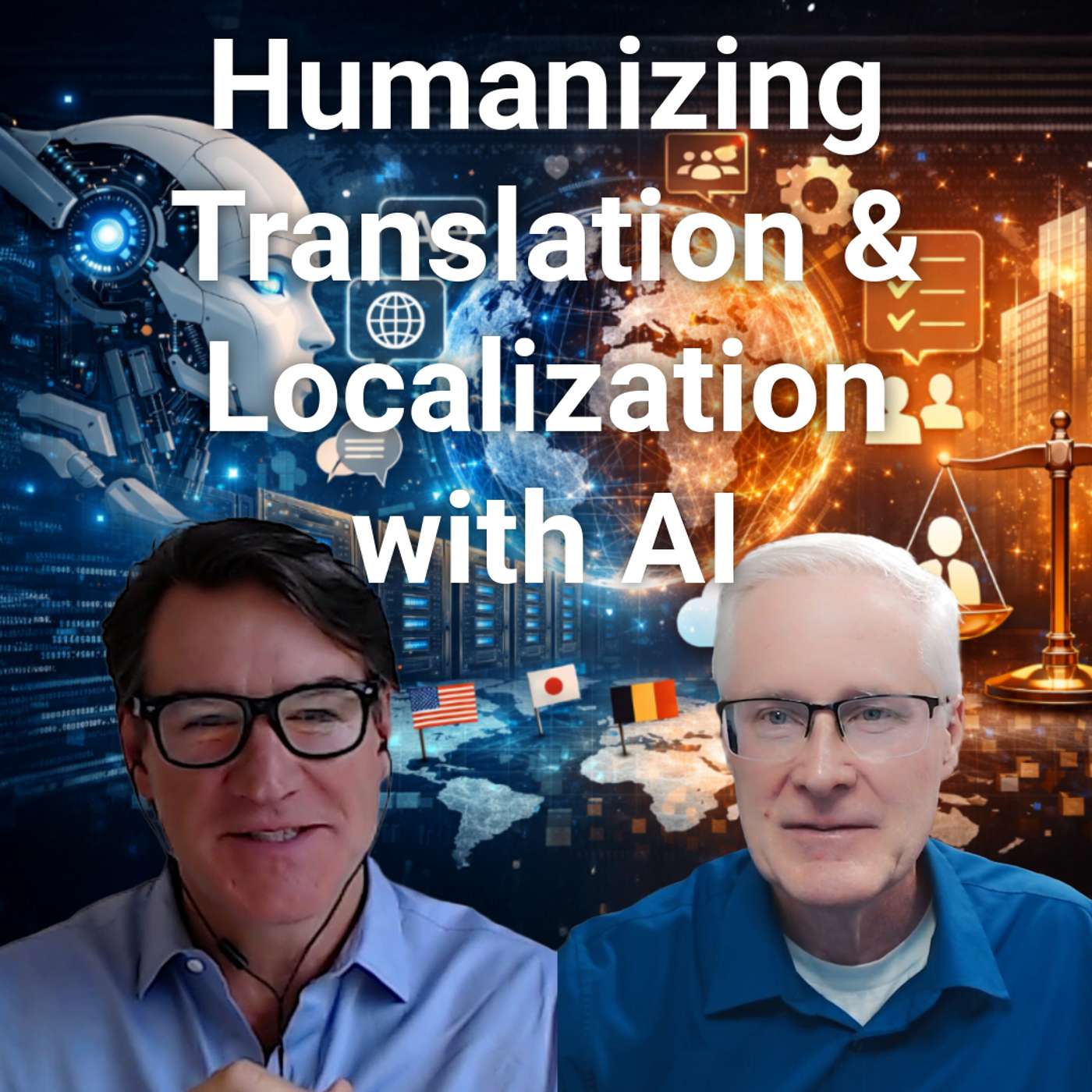
Welcome to Embracing Digital Transformation where we explore how people process, policy and technology drive effective change. This is Dr. Darren, Chief Enterprise architect, educator, author and most importantly, your host. On this episode, we look into language, translation, localization and AI with the CEO of Smartling, Brian Murphy. Brian, welcome to the show.
- [00:59]
A
Darren, great to see you. Thanks for having me on.
- [01:02]
B
Hey, Brian. It's been a while since we've talked, but the stuff that we want to talk about today about language and translation and operationalizing generative AI couldn't come at a better time, frankly right now. But before we dive into that subject, everyone that listens to my show knows that I only have superheroes on the show and every superhero has a background story. So, Brian, what's your background story?
- [01:28]
A
Oh, gosh. Well, I might be the exception then. So my name is Brian Murphy. I'm the CEO of Smartling. I'm in my fifth year, which is hard to believe, but I've been building software and e commerce companies for over 20 years now. I operated with venture capitalists. I've operated at global publicly traded scale with ebay and recently over the last several years, been working with private equity. So I think I've got a pretty good background from cocktail, cocktail napkin startup to global enterprise and now private equity. So it's really been, I've been, really been fortunate to have those experiences in my career and I think I've also been lucky. You know, we've been around long enough. We've seen kind of like three, at least three big technology shifts in my career, starting with the commercialization of the Internet and cloud mobile and now AI. So it's been a blast.
- [02:23]
B
Well, that makes you a superhero. Just, just that, right? You've lived through three major shifts.
- [02:28]
A
It really has been surviving.
- [02:31]
B
Yeah, surviving. Yeah. Yeah. You're still alive, right?
- [02:34]
A
Yes.
- [02:34]
B
And, and it sounds like thriving a little bit.
- [02:37]
A
Yeah.
- [02:38]
B
Have you noticed any difference in the three major shifts?
- [02:42]
A
Speed, speed, speed, speed. Incredible. Right. When you think about how long, I mean, you know, if you think about the Internet, right, that started what, in the 60s with, you know, DARPA, net, near net, Cernet, all that kind of stuff. But you know, we, we got into the commercialization. And by the time things really got going, it, it took, you know, maybe a decade. Right. And then, yeah, Cloud was maybe twice as fast. Mobile, twice as fast. And then AI, when did that launch? Or, you know, or I should say large language models, the version of AI that we're working in now with large language models, you know, two and a half years ago, I think GPT launched. Right. And when you look at the impact that it's had globally on every company and the revenue that these companies are driving, it's just incredible, the pace.
- [03:28]
B
I totally agree. Yeah. In fact, ChatGPT just had its third birthday in November of this year. Yeah, that's amazing. Only three years old and it's completely changed industries. Trillions of dollars have been spent or alluded to be spent. I know, that's a whole nother story.
- [03:53]
A
I know, I know. It is amazing. I do think though that this one, I mean, listen, I think I. My suspicion is that this is going to follow like what happened in, you know, the commercialization of the Internet. You know, there's, if you think about, if you look back, the, the parallels are there. There's massive investment in the infrastructure. Back then it was fiber and it was switches and all that kind of stuff. And now it' centers and chips and all that. And I think that there's going to be a significant reset. Right. That's going to happen at some point like it did back then. But out of that, then it's going to emerge out of that, you know, that hype cycle, you know, is going to emerge really, really, really powerful impacts on the world.
- [04:38]
B
No, I, I agree with you there. It seems like right now though, we're, we're in a weird hype cycle. It's almost paralyzing because large corporations are still trying to figure out what to do with it and how to operationalize it. I'm, I was. MIT just came out with their study that, you know, only 5%, only 5% of AI projects are productized or not even. What's the right word? Productionalized.
- [05:09]
A
Yeah. Right. Yeah. And that makes sense to me actually. You know, it was really funny. If you remember back in the day, back going back to commercialization, I remember when we were building our first company, like there was nothing, there was no software. We had to build our own servers, we had to build out our own data centers, we had to build our own shopping carts and payment solutions. Right. There was nothing. So we had to build all that. And today, if you think about it, you know, GPT launched Third birthday, right. Corporations start becoming aware of it, you know, two, two and a half years ago. And there's a massive amount of pressure from boards, from investors on CEOs to, to implement AI. And so they went out and they did that and they saw the promise because they, you know, once again, it's the magic window. Like it, it appears like magic. Right? So, but if you think about how many applications were there, right, to go do, was there an AI CRM solution? Was there an AI, no. So, so they're like, holy smokes. I, I need to, my board's telling me I need to implement AI, you know, IT team, you know, cio, cto, go start building stuff. And that's usually not a great recipe for success, Right, right.
- [06:22]
B
It's a great recipe for having fun and doing science experiments and things like that. But yeah, success and enterprise. Enterpriseizing it.
- [06:32]
A
I don't know.
- [06:33]
B
Is that a word?
- [06:34]
A
Totally. And you combine that with Vibe coding, with the ability of Vibe code, the fact that these solutions, you know, these LLMs can code, right. Or help accelerate coding. So all of that, you know, and the pressure and like kind of the fomo, you know, fear of missing out, all of that, we're seeing that. But now I think what's happening is, is now that we're about two, two and a half years in, we're now beginning to see like really interesting AI applications rolling out and becoming productized and starting to burn in. And I think that you're going to see the shift from enterprises now, the CEO saying, hey guys, time out, quit, like, you know, like trying to DIY this stuff and Vibe code this stuff and go out in the market. Let's find the best enterprise grade AI application for the problem we're trying to solve. And I think that we're going to move into this new period of SaaS, right? So if, you know, cloud, you know, gave birth to this whole new type of company, you know, Salesforce, HubSpot, right? These incredible SaaS applications, we're now beginning to move into a period, we're going to see this incredible emergence of AI applications, right? New or some SaaS companies will be able to cross that chasm themselves and create really powerful AI enabled applications from there.
- [08:07]
B
So do you think that some of those SaaS like Salesforce or, or even Zoho, CRM or HubSpot, do you think they're just going to add AI to their stuff and that will be good enough? Or do you see a fundamental change in the way that, that how the tools that we're going to use. Do you see where I'm going with that?
- [08:28]
A
I do 100% and the answer is yes, I do. So.
- [08:31]
B
Oh. So both. Okay.
- [08:33]
A
Yeah. And you're going to see some succeed and some fail. So I'm going to make fun of like copilot here for a second, you know.
- [08:38]
B
Oh, please do, because that's a funny, that's easy to make fun of.
- [08:41]
A
Right. Okay, so that's like, hey, we added AI to this application. Right. And does it work? No, it doesn't. So I'm looking at so many of these applications where it, it, where it doesn't work. It's kind of clunky. You could tell it was nat on. They didn't rethink the, they didn't rethink the architecture, they didn't rethink the ux. And this is why there's this cycle of companies. Right. So if you think about prior to Salesforce, you know, you had Siebel, right. And you had these, you know.
- [09:08]
B
That's right. Yeah.
- [09:09]
A
Right. You had these software applications that were at the time enterprise grade, the best in class, and then they just didn't cross that chasm. And some do and some don't. And so I think that you're going to see a massive shift in value of creation and destruction, not only as part of like, you're going to see like this obviously. I mean, how many, how many AI companies are there that are getting funded right now and data centers and blah, blah, blah. Like, like to your point, trillions of dollars. That's in the next five years that's going to go, you know, and this, it will, it, it always does.
- [09:42]
B
Right, right.
- [09:43]
A
There'll be a handful of winners and you can guess some of them and we're going to be surprised by some of them. And then I also think that we're going to be, you can guess, some of the application companies and we're going to be very surprised by companies that are just going to come out of nowhere and, and, and dominate.
- [10:00]
B
Um, so, so it's very reminiscent of the late 90s, early 2000s. That's what it sounds like to me.
- [10:07]
A
Yes, I think so too. I mean, it's amazing. I mean, even when you, even when you look at the, the market valuations of these companies, like, what's happening? Oh, they're out of, out of control. They're out of. Well, they are, but the good news is at least they're not like, you know, like 2,000, 3,000 times higher. But they are max, certainly max. Value. But the difference between then and now too is that now there's real revenue, right? Then there was no revenue.
- [10:32]
B
You're right. You're absolutely. There was no revenue back then. I raised money in the late 90s for dot com. And yeah, I mean, people just on the back of an envelope, an idea, and they were getting $5 million in funding.
- [10:48]
A
It was probably better to actually be pre revenue back then, but no, now there's real companies, they are emerging, they're burning cash, all these kind of things. Um, but I do think that this is, we're, we're about to enter into a really, really, really productive time here as, as these companies emerge.
- [11:09]
B
So, so do you, do you think that enterprises will then. Cause right now I feel like enterprises are almost paralyzed in their hiring, in their progression towards adoption. They're, they're sitting and waiting. That's how I feel. And are you, are you feeling the same thing?
- [11:28]
A
No, I don't think they're sitting and waiting. I think they've been moving forward, like, very aggressively to try and figure out, hey, we need an AI solution here. I think they're evaluating those results right now and they're beginning to evaluate the new applications coming in. And so I think there's a tremendous amount of money being spent and attention being paid to this. I just think that we're in this wash right now where there's this transition happening. So. Okay, to give you an example from our own perspective, right, so, and where it affects us is we're an AI translation application, right? So our customers are like OpenAI, Apple, Disney, IBM, Verizon, Pepsi Global corporations, and we, and we translate, help them translate, localize billions of words per year. Right. 84% of our translation now is being done by AI. Okay, that wasn't that, that, that didn't exist two and a half years ago.
- [12:32]
B
Yeah, that's completely changed your business model, hasn't it?
- [12:35]
A
100%. It's completely changed it. And I'll talk a little bit. Why, why we were able to do that maybe faster than some, but, but the reality right now is that we are now delivering translation and localization six times faster for 60% less cost and with higher quality than we could two years ago.
- [13:00]
B
Okay.
- [13:01]
A
So that's incredible, right? So that's the impact of AI. And now one of the wrestling matches we have is with companies going to them. And I always joke, I'm like, here's your, here's your PowerPoint slide of that outcome. Right? Done. Dusted, enterprise grade. You know, hundreds of engineers Working on it. This is what we do for a living, right? This is what we do. Or you guys can VI code and DIY your own solution. You guys can continue to do that. So that's the wrestling match that we sort of have with some of the larger enterprises that have that capability. They have an engineering team and they, you know, they have an interest in doing that. But as soon as, as soon as they see that, they're like, oh wait a minute, you mean I don't have to figure all this out on my own and continue to maintain it, enhance it and yada yada. And you guys just come in with this cost effective turnkey solution and deliver me, you know, 6x faster translation, 60% less, 30% higher quality. Great, you know, done and dusted.
- [13:59]
B
So that's, that's really interesting because a lot of the big AI gen AI providers like OpenAI, Gemini and Things like that, they've sold, they sold it that you don't need to buy expensive stuff anymore. You can just do stuff with us with our models. But it's still complex problems that are being solved. You still need some subject matter experts. Like for you guys your subject matter expertise is in translation and localization, right? Yes.
- [14:33]
A
And it's also just like the dirty little secret of everything. It's like there's, there's the integration, right. So all of these companies have these brownfield tech stacks, like you know this, right. No one's got just a straight up version of Oracle or, or that's right, yeah. Right. And they've got like a tech stack that might have like our average customer has six different platforms that we integrate to with across 50 different projects or instances. Right. So it's what that, that whole like that last mile is super dirty. Then there's obviously all of the work that we do and just like the, there's like, like 40 or 50 different features within our application that are really kind of like a requirement of having a translation localization orchestration platform, right. That does all this stuff. It's like if you're going to DIY it, then you're going to figure out you have to build and maintain all of those integrations and they're changing every month, right. That brownfield stuff. And then you have to build a platform that's going to be competitive with ours and then continue to maintain it. Right. Like, so you're going to need full stack engineers, data scientists, linguistic AI engineers, blah blah, blah, blah, blah, blah blah. You know, you're just going to need all those like all of A sudden you're going to need this whole thing and it's going to cost you.
- [15:56]
B
A lot more than hiring you guys. Yeah, yeah.
- [15:59]
A
It's going to cost you like a million bucks to build it. Minimum. And at least half a million dollars a year just to maintain it. I'm like being super generous with those numbers. Right. Just to do minimum viable localization platform.
- [16:22]
B
Yeah. So what this tells me is AI actually might make your company even more valuable.
- [16:29]
A
I think so. Because the way I look at it is that translation localization is a $25 billion.
- [16:36]
B
Industry.
- [16:37]
A
Right. So in other words, companies, companies spend, Enterprises, companies spend $25 billion billion dollars a year on translation and localization of other websites, their software applications, their content, their videos, all that stuff. Right. If we can, if we can offer a turnkey, easy to use AI translation solution that cuts that turnaround time, you know, once again by 6x. That's today. And that's going to continue to come down because this is Jevons Paradox. Right, Right. Just like cloud services, the, the cheaper and easier to make it. There's no shortage of content companies ration the amount of translation they do. So as we bring that down, that's going to increase and they're going to be able to translate, localize everything more like 99% automation, super instantly, inexpensively to me. Why wouldn't you do that?
- [17:29]
B
Well, that brings up the next question I have. You're going to drive more and more translation shows. You're going to see the market grow. Because if it's easier, I think. Right, right now I gotta back up a second. Right now if you're in high tech, you know, you have to understand English in order to survive.
- [17:48]
A
Yeah, right.
- [17:49]
B
Programming and all that stuff. But with, with the ease of access of new languages on reading, maybe, just maybe there won't. I always thought things would drive to a universal language. Maybe it will do the opposite.
- [18:08]
A
It's going to do. Yeah, exactly. So I'll give you a great example, a great statistic. 65% of people won't buy or convert on a website that's not in their own language. Really? Yeah, like they can read English. But think about it. Like, I mean I can read a little bit, you know, a little bit of Spanish and, and German, but like if I go to, I'm. I'm unlikely to convert on a website in Spanish. Right. So, and, and given the opportunity, if I can, if I can access. It's also kind of like a personalization thing. Anyways, long story short, I don't have to blame her. But that's just the statistics. And so why don't all companies localize them? Well, because it's expensive and it's slow.
- [18:53]
B
Yeah, yeah.
- [18:54]
A
And 20 cents a word and two week turnaround time, it's just too much of a pain. So they, they ration that. But if we can make translation as a service automated, easy, cost effective, right then I'm going to localize everything because it improves my conversion rate, gives me competitive advantage. And that's what we see and that's literally what we see our customers doing is they are, they are beginning to convert content, localized content that they never would have before because, because. Yeah, right. And, and also it's important. So this is also, there's, there's also, I think there's a really, we, there's also a governance element here that's really important. So we should take a step back like okay, great, just use LLMs, translate everything well, timeout because you've got this little, this little problem called brand out there to worry about. Right. So we all know that Gen AI hallucinates. Oh yeah, yeah, right. It's not super accurate. So like I can't just throw it into an LLM and have it translate all of my content because A, it's going to hallucinate some amount A B, the quality is not quite there. I've got brand, I've got all these kinds of issues that it could be problematic for. So this is where kind of like the third leg of that stool or the third layer of the layer kick as we described it in this AI translation application is what we call language quality assurance. And that's basically where we go in at the end of the translation and we, we do hallucination detection mitigation, we do a quality assessment and we give you essentially a score. Right. Says okay, these translations are great fit for purpose publish or these we have some concerns about. We're going to push them over into, onto a work surface where we can have a human review.
- [20:46]
B
So you've really truly operationalized because like you mentioned, just translating English into Mandarin Chinese, I can do that with, with Google Translate or an LLM. But you don't know if it's accurate, you don't know if it's especially in Mandarin. I can't even imagine Mandarin because there's so many different dialects. People don't even know there's a difference between Shanghainese and Beijing Mandarin, which I have learned the bad way, I've been there. Right. Different little tiny things on that localization. So I Love how you've operationalized this. What was popping into my head was the localization. Localization. Right now if we talk. Let's just talk English. Look, when we talk localization in English, we typically talk British English and American English. Yeah, there's a whole lot more than that.
- [21:45]
A
There's. There's. There's a lot more than that. There's a lot more Spanish. Right. There's all kinds of different. Kinds of different. Spanish. Spanish.
- [21:50]
B
Oh, yeah.
- [21:51]
A
Spain Spanish, Mexico Spanish, Central American Spanish, South American Spanish, the U.S. spanish. There's all kinds of this localization. And so this gets to the heart of marketing. So I've always been, you know, a big part of the marketing organizations that the companies I've been in. And for us in marketing, personalization is like the holy grail, right? Personalization, like we're going to define our icp, our Personas, our personalized pain points, and we're going to deliver this rifle shot of a message at this consumer to get them to convert. Right.
- [22:20]
B
Because they know me.
- [22:22]
A
Because they know me. Exactly right. And then what happens? Now I'm a global corporation. I put all this time and money and energy into this amazing hyper personalized message. Then I either don't translate it or I botch the translation and I've blown it all up. What's the point of doing all that work? Right? So this is where, from an investment perspective, this is the last mile. This is that this is achieving that holy grail personalization on a global scale. We're able now to take all that personalized messaging and translate it, localize it exactly, correctly into that language. And those consumers, those customers appreciate that. They get that the language is so specific. Like, you know, like even in the US Like, I can hear accents. I can hear. I know someone's from the Midwest. I have. I know if someone's from the Midwest or the south of the Northeast, just by the vernacular, the words they use and how they talk. And it matters. I can, I. There's all these things. So all that localization matters, and it matters across languages too. And so that's the, you know, that's what we're getting at.
- [23:39]
B
So this what you're talking about, by operationalizing and leveraging AI, you can do more for your. With your company. I could do more localization, things like that. In the early 90s, I worked for Lucent Technologies and I worked for their Octel, their voice, which is the same voicemail that exists today. And I remember walking by someone's cube and I heard the voice the lady's voice that answers the phone, right? It was our voice team and I became friends with that team. They had localization in the United States.
- [24:20]
A
Yes.
- [24:20]
B
They had like 14 different localizations in the United States. And I said, why do you guys do that? Why not just come up with one common one? And they said, because people respond when other people talk like them.
- [24:33]
A
Yeah, it's. It's a little tribal. I mean, it's just kind of burned into our.
- [24:37]
B
It's amazing.
- [24:37]
A
You know, we know. And that's why people talk differently, because then you're like, oh, I know, I know you and you know me. And so that, that's a big part of it. So, you know, when we build, when we build for every one of our customers, right? So we build custom translation engines, right? So not only is, not only are we taking their translation memory, so if we've translated that string sentence before we lock it into the database, we. It's perfectly translated, right. We also, we also account for terminology, glossary, style guide. And all of this is driven by AI. So, for example, if I'm talking to, if I'm writing an article, like a technical document in Japanese, right? It's going to have, for IBM, it's going to have a very specific tone of voice to it and lexicon and brand and terminology as compared to maybe I'm writing a blog for Apple in France or in Spain, right. You can imagine they're going to sound completely different. They could be the exact same words, but they're going to sound very, completely different. Now, in the past, humans did that, right? That's what the role of the translator does. Now that's being automated with AI. With human oversight, though, this is kind of like where the, the whole governance bit comes in, right? So in our world, human oversight isn't an afterthought. It's actually an architectural principle and ensures that AI amplifies expertise instead of amplifying errors. So, you know, we talked a little bit about how do you operationalize this? Well, part of it obviously is building the architecture and the technology, but also it's like, how do I get that human oversight into this so they can be super productive and give us the outcomes that, that we want and especially the quality that we need. There's a whole mechanism that we put in place that creates that.
- [26:38]
B
This has been a fundamental shift in your processes, in your organization. And I love how you guys have kind of embraced generative AI and making fundamental shifts, which obviously you had to or you'd be replaced, right? How how do you teach that to other organizations? Because I see other organizations that just say we're going to keep our processes the same and just automate it with AI. And that's a huge mistake.
- [27:12]
A
Yeah, that's, that's not going to work. You really have to, in fact, I'll tell you what, it's, it's, it's hard. I, I, I'll tell you what. We, we've had a, we've had many, many, many vigorous discussions on this, on how we re architect the user experience. Right? So how we'll, one of the things that we, we did was we did kind of like a project the end of last year. I said, all right, I'll write you a check for 20 million bucks. You go away and you tell me how you're going to destroy SmartLink. What would that product be? So once again on my team I've got the, I've got some of the world's best translation localization engineers, product managers, AI specialists, linguists, all that. I got this entire team. I've have dream team. Right? So, so let's, okay, crumple up the ball, throw smartling away. What would you do today if I, if I was a venture capitalist and funded you today? And so we kind of, we tried to approach it that way and, and I think you have to because it's totally different. Otherwise you end up with like, you're just like kind of like bolting like this chatbot window onto your existing application and it stinks.
- [28:14]
B
It stinks. Well, and we've seen the result of that already. I mean copilot is exactly, they just bolted AI on the side and everyone's like, oh, this doesn't do what I want it to do.
- [28:26]
A
Right, right.
- [28:27]
B
User experience is not there.
- [28:29]
A
Right? Right. So we, so you have to kind of think, you have to think about the user experience differently. What problems are they trying to solve and really identify that, that application. So we kind of look at what are the long poles in the tent where people spending a lot of time, right? And how do we, how do we, how do we, how do we remove that time and automate it? And then, and then there's the whole, once again, there's the whole governance bit, right? So to give you an example, you know, we've created these role based review layers, right? So because our, our customers are big global enterprises, they have to have high quality, they can't have snafus, right? They can't like translate something and have it be, create a whole brand issue. Right? So we have These role based review layers where translators, linguists, compliance reviewers all have checkpoint points in the AI assisted process. We have feedback loops. So AI models improve iteratively based on curated human corrections and contextual annotations. Right. So we're creating this massive set of training data that once the humans fixed it, it's now fixed it. It's now fixed. Right. Governance panels. So cross discipline teams periodically review model behavior and enterprise impact. Right. So like it's this whole series of basically checkpoints and governance points that allow us to make sure that we're. Because it's at scale. We're doing, like I said, billions of words. I can't, like you can't look at it with by hand.
- [29:59]
B
So this, this also tells me that you had to retrain your staff.
- [30:03]
A
Yes. Yeah. Their jobs changed.
- [30:06]
B
Their jobs changed dramatically, right?
- [30:09]
A
Dramatically, dramatically. And I actually had to restructure the teams. So not only did I. So three things happened. Most many people adopted, adapted. Right. To this new way. Some didn't and didn't make it right or didn't want to be part of it.
- [30:27]
B
But that happens, right?
- [30:28]
A
It does happen. They just, they just didn't want to be part of it or whatever. And then we had to restructure the team and then really just. It's been, it's not an easy process. It's a really painful process. Over the last two and a half years, it's been like massive, sheer force of will. Kind of like re, you know, realigning this organization to this new vision as.
- [30:51]
B
The CEO, that must, you must have just been on pins and needles, right?
- [30:55]
A
I mean, I disagree, but you do.
- [30:59]
B
It or you perish, right? You. You progress or you perish.
- [31:03]
A
Yeah, you do. I think maybe I've always, like, to me, I've always been really energized by change. So I like, you know, if you think, if I look back at my career, almost all of them, all of my career choices have been around creating a change in, in a market. And that to me is fun. I get bored when, when things are.
- [31:29]
B
Just turn the crank.
- [31:30]
A
Yeah. Yeah. So I like that. I like that energy and that stress.
- [31:37]
B
I'm sure not everyone on your staff appreciates it as much as you do.
- [31:41]
A
No, they do not. We. We talk about that. We talk, we talk about that.
- [31:47]
B
I, I bet you do. Because I'm, I'm a change agent too, so I know exactly what you're talking about. I've been CIO and I'm like making massive, huge changes and my staff is freaking out. Right. I'M like, no, come on, guys. I know we can do this. And yeah, so I know how difficult that can be.
- [32:05]
A
So it is tough. I. So one of the, one of the takeaways on this is always you do have to check yourself to make sure not. You're. You're pushing through amount of change. Who. I think Jeff Bezos just had what he. I just read a really interesting interview about him. Like, someone said a guy who's. One of his reports was saying to him, basically, hey, Jeff, you come up with enough ideas in a day that would kill this company. Oh, yeah, right. Because he's a very creative person. So as a CEO or cio, you do also have to be very good at checking yourself and saying, whoa, whoa, slow it down. Focus on the critical view here, because you can easily start, you know, spinning your organization around.
- [32:44]
B
No, that. That's great advice. Hey, Brian, we are out of time. This has been wonderful. I've enjoyed. If people want to find out more about you, your philosophy around this and your company, where do they go?
- [32:58]
A
Come to smartlink.com that's the best place to start. That gets you right in there. We've got a tremendous amount of material available for you. You can contact me on LinkedIn. Be happy to chat with folks. This is something we've got a lot.
- [33:10]
B
Of passion for, and we most definitely need to talk some more, Brian, because I want to find out a year from now how you're, how you're progressing, what, you know, pitfalls you've ran into and what successes that you've had. I, I love your approach. I think it's an approach a lot of organizations need to start looking at.
- [33:29]
A
It's been great. It's really. I'd be more than happy to do that. Plenty, Plenty of, lots of, Lots of pitfalls every. All over the place. So we. Oh, I'm sure, I'm sure. Yeah.
- [33:39]
B
Uncharted territory. There's always things you can step on that are not pleasant.
- [33:45]
A
Yeah, no, I know. It is. It is. It's fun. Like, we're out there. I tell the team, I'm like, guys, we're, We're, We're. We're. We're making this up. There is no path in front of us like we, we. We're creating it. So it's, it's, it's a lot of fun. But, Darren, it was great talking with you. I really appreciate the opportunity.
- [33:59]
B
Hey, thanks again, Brian.
- [34:00]
A
Thanks.
- [34:05]
B
Thanks for listening to Embracing Digital Transformation. If you enjoyed today's conversation, give us five stars on your favorite podcasting app or on YouTube. It really helps others discover the show. If you want to go deeper, join our exclusive community@patreon.com embracing digital where we share bonus content and you can always connect with other change makers like yourself. You can always find more resources at Embracing Digital. Until next time, keep embracing the digital transformation.