← Embracing Digital Transformation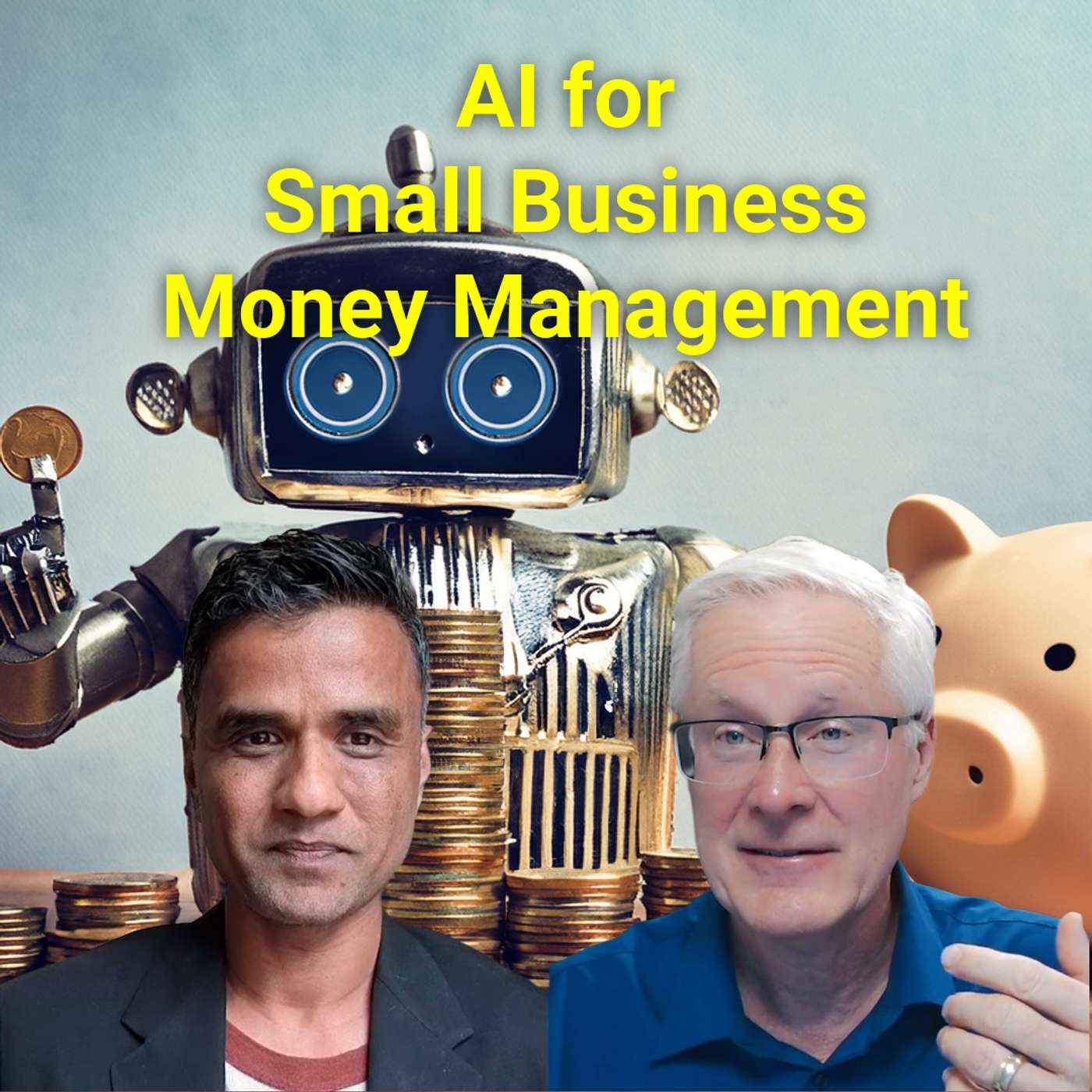
Embracing Digital Transformation
From Text to Action: How AI is Transforming Bookkeeping and Beyond
00:35:16
Loading summary
Transcript71 lines
- [00:00]
A
How do you handle the security aspect of this? Because this has always been a concern that I've had with AI is, oh, no, now my AI is going off and doing crazy things. How do I still remain in control? Because I need some control. Right? So what have you guys done to help with that? Welcome to Embracing Digital Transformation, where we explore how people process policy and technology drive effective change. This is Dr. Darren, Chief Enterprise architect, educator, author, and most importantly, your host on this episode, embracing the small business AI revolution with founder and CEO of Bookkeeper, AI Dinesh Sumro. Hey, Dinesh. Welcome to the show.
- [00:55]
B
Thank you very much for having me. I'm really excited to be here.
- [00:59]
A
Well, you know, it was interesting. You're in, you're in Scotland right now, somewhere in. In the uk. I'm in California. So the time difference is. It's substantial, right? Eight hours or so. But I enjoy, I enjoy talking to people on the other side of the pond. But before, hey, before we get started today, everyone that listens to my show knows that I only have superheroes on my show. And every superhero has background story and origin story. So, Dinesh, what's your origin story?
- [01:31]
B
Yay. So I'm actually born and raised in Pakistan and then I immigrated like 15 years ago or so to Canada. Best country I am, you know, really grateful for. Canada taught me a lot. And you know, like, people coming from India or Pakistan, they're kind of good in sort of like since travel, they're playing with tech. So that was sort of my thing. I really love tech. So moving to Canada, I continued that and I worked with Microsoft a few years and then very shortly with Shopify because they were offering remote work, you know, so that was like quite an attraction for me. And then, you know, I went to the journey we call in our sort of like a startup field that you become freelancer, then you do startups, you fail some projects and then you kind of, you know, move forward and progress. And today I am the founder of Dev AI or bookkeeping AI or make Reels AI. These are kind of AI agents we are building for small businesses. And they're quite different than ChatGPT, which everybody knows in AI. We can talk about it, but in some summary, I'm focusing on text to action AI or agents. These are difference different than chat GPT. We can go, we can talk about it further.
- [02:58]
A
Yeah, no, no, I, I think I would love to talk about this because this is where I'm gonna say the real work gets done. But it is, it's, you know, it's great to have a chat, to help me write emails better or to help me grade student papers. But let's talk about how, you know, we can move beyond a chat into action. I think, I think that'll be very interesting. But I have something to. I have a question for you. So everyone knows that Canada. I used to live in Canada. One of my kids was born in. In Toronto. And so it was quite a shock for me to move up to Canada from California because it's cold and there's white stuff that falls out of the sky called snow is so moving from Pakistan. What's the weather like in Pakistan compared to Canada?
- [03:49]
B
It's pretty hot. You know, in Pakistan is pretty hot. And then I did my MBA to cut the story. I did my MBA in the uk, so University of Wales Institute, Cardiff. That's my MBA from. Okay. I kind of got a little taste of some, like, cold weather. But of course, Canada is totally on a new level. And there's a joke that everybody in Canada is polite because there's a joke that if you're rude, if you're not nice to people, you're going to be alone in winters. So.
- [04:21]
A
Yes, I have heard that. I have heard that before.
- [04:24]
B
And of course, Sunshine State is one of my favorite states in the US So I totally understand what you felt in Toronto.
- [04:33]
A
It was, it was pretty brutal. I lasted one winter up there and that was all I could take. I moved back to Silicon Valley, but I've been back so many times. I've worked with Canadian government up there and they always call me into Ottawa for winterloo at the end of January, beginning of February, where It's like negative 30 degrees Celsius.
- [04:53]
B
You know, it's like craziness.
- [04:55]
A
Yes. Yeah. But. All right, so let's dive into. Let's dive into what you're doing now and be. Because this is very actionable. I guess this is where businesses can actually start using generative AI and AI techniques.
- [05:17]
B
Right.
- [05:17]
A
To actually automate and get some work done. And I think it's highly disruptive, especially it gives a leg up for small business. Yes.
- [05:38]
B
Yeah. So I started working three years ago. You know, Chat GPT was there and I saw a problem. Chat GPT, you enter some text, it returns you the text. Right. So that is pretty good. Right? You know, it's kind of giving you. You're asking something and giving back the knowledge. Right. So I saw a problem. I'm like, okay, is we gotta have like a abundance of knowledge or, you know, information. What are we going to do with it. So the next step should be that AI is actually performing a task, you know, like so that should be I should be working on, right. So that's how I started three years ago, working and as an innovator. We did not have the term back then. Now it's called text to action. ChatGPT is text to text or text to image or text to video, these kind of things, you know, like coming out with ChatGPT we went for text to action. Now it has a name and even ChatGPT or OpenAI is working on. It's like with the browser based agents, you may have heard about them. So it's a pretty exciting area. And of course working started three years ago. So we created like a first agent, let's say make reels. AI people should check it out and you just type in the text and it not only created the wheel video, it create the music sound text, edited it, stitch it, put your brand logo. A lot of tasks which are quite repetitive and nobody like creative person wouldn't enjoy that doing it, right? So that it does and then give you so you can review it and it also publishes it for you, right? So it's doing a lot of tasks or jobs to be done. We call in software. So which was pretty exciting. And the bookkeeping AI which we call Paula, Paula AI accountant is getting quite traction right now. And if you are a small business and you know you should look into it and it's quite kind of like doing most of the boring things, most of the tasks even bookkeepers hate. That's what my like I'm trying to categorizing transactions, right? Categorize transaction, creating P and L and is again is a text to action. So you can ask her, hey, can you create an invoice and send it to Paul? She's going to create an invoice, send it to Paul and automatically remind them because she knows there's a due date and the payment was not received because your bank account is connected with her Paula. So she's checking, she's doing auditing, she's guiding you about your business health. So she's doing a lot of things and it's a pretty exciting text to action, sort of like an application which is highly useful for small businesses.
- [08:16]
A
Okay, so I have a question around that. A lot of small businesses are using QuickBooks or Zoho Finance or Zoho Books, whatever. Are you integrating with these types of tools? Are you replacing these types of tools? Because those tools are very manual based. Manual. You Know where I'm going with this?
- [08:37]
B
So I call QuickBooks is a 90s software designed for accountants for that time, that era.
- [08:48]
A
Correct.
- [08:49]
B
Yeah, yeah. Not, not for modern business, not for finance or tech savvy or AI savvy businessmen or entrepreneurs, or not even financial pros. I mean, today's financial pros is a millennial, right? They're not like, you know, from other generations. So they are quite tech savvy. They can handle the software and of course QuickBooks do not serve them. QuickBooks is slow, it's clunky, it gives you stress. And I'm an ex QuickBooks user and I got frustrated and I thought, okay, there should be a better way for the modern businesses and AI era. And that's why we created bookkeeping AI. So it totally replaces it and the experience is just delightful. And of course the UI is conversational. One thing I noticed. Sorry.
- [09:38]
A
That's cool. That's very, very cool.
- [09:41]
B
Yeah. One thing you will notice that ChatGPT is kind of transforming the whole industries, you know, the software industry as well. Because in 20 years we had dashboards, we had buttons, we had to log in screens. And now in tech world, we call it liquid experiences. That means chat GPT give you a conversational interface. Now users or people will be expecting that kind of user interface in other applications as well. That's called liquid experience. That's how the industry is shaped. Like Tinder did it with this left and right and a lot of other softwares use that interface and got pretty big. So with ChatGPT, the conversational interface is the next big thing. And that's why we also implemented conversational finance in the book Finance.
- [10:30]
A
Yeah. You're the only one that I've ever heard compare tender to bookkeeping. So that's a first on the show. I think that's good. That's awesome. So this is really interesting because what you're talking about is truly disruptive. So if I were to take this beyond a small business and these text to action concepts into large businesses, this could completely wipe out a bunch of business processes that were originally established there. Because the human to computer interaction was not great. Right. Like you said before, it was button clicks, fill out forms. There's a whole new way of interacting with computers that maybe I should be questioning the way I do things.
- [11:19]
B
Completely, right? Absolutely, absolutely. I mean, it's gonna not only gonna change how we work, it's gonna change how we live, how we entertain ourselves and how we produce value as well. Like, you know, so it's completely Transformed. I mean, your podcast, I love it because it's talking about digital transformation and this is an extension to it. This is like a societal transformation as well. So it's quite a significant time or innovation, I would say ChatGPT or AI in general. We have just quite dramatic.
- [12:05]
A
All right, so I got to go back to the bookkeeping AI, right. Because this is a big deal for me with, with my production business. I spend so much time going through all this stuff, getting invoices sent out, you know, whatever the case may be. So you guys have taken a completely different approach. It can handle everything for me just by interacting with it. And it's obviously going to be reaching out beyond its own. Its own tools. How do you handle the security aspect of this? Because this has always been a concern that I've had with AI is oh no, now my AI is going off and doing crazy things.
- [12:47]
B
How.
- [12:47]
A
How do I still remain in control? Because I need some control. Right. So what have you guys done to. To help with that?
- [12:55]
B
So we still kept the layer old, old school layer like a sock to compliance and SOC to data store or data residency options. Either you are the US for European Union, we have an Ireland option. And if you're in Canada, we have a Canadian. I also see that's where the things are headed in the future, the globalization. So all those established trust will be, you know, like breaking apart. So, you know, some Americans would want to see their data in America, in the United States, right. So that's. We have that layer and we use instead of creating our own because as an innovator, you know, the world is not ready to allow you to fully innovate and break things. So. So we still use plaid. I'm sure you know that this is.
- [13:46]
A
A. Oh yeah, yeah, I'm familiar with plaid.
- [13:48]
B
Yeah. So we use their bank connection. So we don't want to take all the like a risk or liability. So we use them and people trust them. So that's your secure layer soft tool. They give you bank data. We don't have access to your data bookkeeping. I cannot do any changes. It just reads the data plate gives and then it do the financial accounting. That's what its job is. And then of course, Paula, which is I'm calling it a private AI actually I want to share one thing with you. That bookkeeping also has a feature called private AI that means whatever prompts you're writing chat GPT would not know is coming from Darren's business. So because I noticed earlier that, you know, there's going to be problem in the future. AI model is knowing everything about you. Right. So this is kind of concerning. Maybe it will get conscious. It already know what type of person you are, what kind of like weaknesses you have. It can fire back. Right. So we have this layer called private AI and we also have multimodal so you can choose the model in bookkeeping AI. What Paula answers using ChatGPT Claude and we are adding open source and then as well as we don't share your name or business with AI model.
- [15:01]
A
Oh so so this is a very interesting approach because I other people have said a multimodal which includes on. On my AI PC because I've got some AI PCs here, I'm running my own local models. But you're doing something in addition to that. You're obfuscating the information that you're sending off to a public gen AI so that they don't know it's coming actually from you.
- [15:27]
B
Yes, absolutely. We call it a private AI. That's pretty clever. Yeah, it's going to be the next big thing as well. Private AI and multimodal as well. So multi model is one thing. Okay. You don't like Sam Altman's, you don't like his politics so you want to switch to clock which is. Or you want to use the open source deep seek. Right. So we have those options and in addition we kind of don't let any model companies to know who's sending this prompt. It's literally they don't know it's just a text they're receiving and they're answering it.
- [16:01]
A
That's pretty clever because I'm glad you brought up the privacy thing because public gen AI, they've gotten in trouble a couple times or public for leaking information. There's data leakage that can happen. It has happened in the past. So you guys have kind of, you know, hey, we're just not going to tell them all the information, just the information that is required to get the task done.
- [16:27]
B
Absolutely. Yeah. I think everyone should be following all the tech companies should be following this path because you can trust anyone. But to be honest, you never know. As you already mentioned, there are instances of abuse and you know like so this, the activities which were quite awful in the past in tech. So it's better to be safe, preventive measure.
- [16:52]
A
All right, so a big question that first pops into my mind when I hear you guys talking about this. This sounds like what we've been hearing all the buzzwords on AI agents or agentic AI is this kind of the Tip of the spear of AI agents or would you guys categorize yourself different than that?
- [17:13]
B
I mean I would call them a pretty like a very powerful agent. So browser agents, to be honest, people might hate me for this. I don't see many practical use cases of browser agentic browsers, you know, like information summarizing. I could do it right now with chat GPT, right. So agent if I need to make a booking I would never give it because if he has my credit card make a booking which is non refundable or I'm done. I, my agent spent 600, I cannot get a refund and it makes a booking for a hotel I did not want to stay. So it's very high risk. So I don't see many practical use cases but I'm quite open minded and I'm following this. So browser agentic browsers very like a minimal impact task or information summarizing. That's, that's how I see it right now.
- [18:08]
A
Got it. All right, so so you, you, you want to make sure that the human is in the loop making the final decision on things. So maybe I send an agent out there to go find me all the options, right? Because I, you know, when, when I travel international, I spend hours searching all the different paths to get from point A to point B and find the cheapest, you know, routes. And that don't take me 36 hours because if you just go with the cheapest, it routes you through a whole bunch of different cities and it takes 36 hours to get there. And so what you're saying is hey, have the, have the agents or have the AI go out and find information for you, give you the information back so that you can make a decision. Is that what I'm hearing?
- [18:58]
B
Yeah, absolutely. And it's a great use case what you just told me, trip planning or where to go. I just did it in Scotland. I went to Highlands and all the time in my car I have, I have a voice. I have approach at GPT so I can talk with her. I, you know, so she's my friend. I call her, you know, Amanda. I name her. So you named her even. Oh, oh, there you go. Or like I'm an old, you can call me old school. I grew up in a very community sense. So you know, I just, it's weird to talk with the machine right now. Yeah, like so Amanda. Yeah, so I talked to her and she was guiding me. Incredible. She's giving me incredible tips. Which highway to take. It should be busy, should have more scenic. Right so it's an incredible use case. Again I would argue that that use case can be done with the ChatGPT in the conversational sort of like sense in agentic browser Agent. Yes, you can also run it in either or. So that would be an incredible use case. But all these, the companies who are talking about agents, they're claiming that she's going to make a booking, she's going to book your flight and I think it's a little bit far, maybe two years down the line, but not today.
- [20:30]
A
So the AI work that you guys are doing is not well, you're doing text to action, but the actions are. What's the right way to put this? The actions aren't destructive? No. The actions aren't non reversible. Is that the right way to put it?
- [20:49]
B
Yeah, so yeah, that's, that's a correct assumption. So in my last use case, what I was trying, what I was telling you, that agent is, has a full autonomy to take decisions. Right. So it's not only finding your trip but making a booking as well. So that's where I have a problem. I don't see. Yeah, that's what we still, we are there and we ever will be there because that's not an issue of capability, it's an issue of trust and risk which has nothing to do with capability. Right. So Maybe in the one year they can 100% accuracy, they can book it. But humans, I don't trust it because my money is there. Right. So that's what I was talking about. That is not going to happen soon. However, man in the loop or man in the end, there are new terms coming out. To be honest, that is an incredible use case for agents, for AI, even for our bookkeeping tool. We do all the boarding tasks and then there is a man in the end who can review it, who can see it or who could teach or who can tell like always do this action. So there is a man in the whole task execution at some point, either at the middle or in the end.
- [22:03]
A
Or in the end. So I, I love how you emphasize the importance of we still need humans. Because when you talk to some of the futurists it's like no, no one has to work anymore. People just lounge around, nothing. We need to just pay people to do nothing. You know what, they've been talking about that since the late 1800s when automation first came into the industrial revolution. They go, no one has to work anymore. You know, farm equipment changed everything. No one's working in the fields. There's still Farmers, there's still a lot of people working in fields. There's still factory workers, there's still information workers. There's. So I just, I think things are going to shift. They're going to shift quickly and jobs are going to change. And I love how you keep the human aspect of this whole thing.
- [22:53]
B
I think so. First I would want to. I want to emphasize that this AI innovation is way bigger than like, like sort of like electricity, you know, creation of electricity.
- [23:06]
A
It's a big deal.
- [23:07]
B
Yeah, it's a big deal. And if you notice there's a one interesting thing happening with AI that or in last 50 years that productivity is delinking with labor that means to be more productive, you don't need more humans. Right. That's where we are heading. So it is which is a good and bad as well for society. Right. So we will be the most productive like human species or like a generation out there. However, the downside is that we will be needing less and less humans. Right. So of course it can never be in a state where you need a zero human of course. But it will be significantly less. And AI is directly competing with low and medium skills human being. Right. So that's what I mentioned many times at the place.
- [24:04]
A
I think it's actually competing with some high, some high value people too. I mean programmers for example.
- [24:14]
B
A lot of those programmers are being replaced. Yes. They are sort of competing inside of again at the knowledge sort of level. The bigger picture, the strategy and the knowledge of surrounding environments. I do not have it. So she can write you the code, but she don't know that this company is running in US and you have to comply with this and that and you need to so those kind of high level tasks still. I would say that it may not be able to replace. Not again for the capability part, but rather the trust and the execution in the real world. Give me the code. But it cannot go out and talk to the customer in real world, collect the feedback and come back.
- [25:03]
A
I love that you put that in there. Because working with humans I. I think it's actually going to get people to actually talk to each other more. Is that, is that strange of me to think that?
- [25:17]
B
Yeah. So it's yes and no. Because what's happening right now if you notice that people are building relationships with AI, you know.
- [25:28]
A
So yeah, I'm starting to see that too. Yeah. Which that has me a little bit concerned.
- [25:34]
B
Right. So this is concerning. There is like because there was an epidemic of loneliness already happening because of course we are stick to Our screens and we are the Gen Zs are losing, you know, the social skills. Right. So they find they were lonely and now AI is there who's, you know, have empathy, who can understand, who can listen to them, who cannot judge them. So naturally I would be sort of attracted to that entity, whatever entity is a human or non human.
- [26:04]
A
Well, yeah, because the they, they may Gen AI, their whole job is to answer your question and to.
- [26:13]
B
Right.
- [26:14]
A
I mean it's, it's, it's to please you.
- [26:17]
B
Right?
- [26:17]
A
It's to do something for you. And the empathetic AIs are even, even better at that. Right. Because they're out there trying to engage with you and be part of you. And you know humans, they're going to go, yeah, I'm tired of, of you complaining all the time or I'm tired of listening to the same thing over and over again where a Gen AI doesn't get tired of that.
- [26:41]
B
Right. To be honest. Yeah, you, you summed up well. So, yes, definitely, you know, human beings, we can get every, you know, irritated or you know, we are exhausted after work and I want to hear what problem my friends or my partner has, but AI is there, highly energetic, ready, like they want to listen and eager.
- [27:01]
A
Eager. Eager to.
- [27:03]
B
Yeah, to your point, this is the, the what I'm seeing, it's quite dangerous. And also there is a segment of people I would call myself in where I also run a small community of digital nomads and I am pushing people to do, you know, IRL events. This is a term in real life events. So there is a segment of people who would be more driven towards IRL events, IRL sort of meetups, dating and partners. So yeah, there will be polarity but I'm afraid the majority of the thing would be leaning towards AI. But of course it will people like me and you who would be pushing IRL and who would be doing more in real life event.
- [27:58]
A
I, I like that you brought up digital nomad because you're a digital nomad yourself. There, there could be a big tendency, especially with digital nomads, to disconnect because you move around. You're not forming a strong community where you're living because you're, you may only be there for two or three weeks or two or three months. So there is, there is a danger, right, that hey, we're going to miss that social interaction, that community building in. I love that you call it irl. I think that's hilarious because that's an old, that's an old term that is. Yeah, it's an old term for like bulletin boards and things like that. There were IRL channels that were out there that people and IRC channels.
- [28:47]
B
Oh yeah, yeah.
- [28:49]
A
But you're calling it IRL in, in, in real life. Right. I love that. I think that's great. And, and I think it's necessary. So I. Kudos to you, Dinesh. On, on driving. Hey, we need to, we need that social interaction. We need that.
- [29:07]
B
Yeah, I am actually it's like a sort of like growing up because countries like Pakistan or India or if you go to Asia, it's very like community driven. You know, it's a different side of societies. And I grew up like, you know, organizing events, parties and all that. So that's kind of kicking back in. And I'm like The community is 200,000 people and we are the digital Nomad, the biggest community of digital nomads and we are all over the world and I am pushing people. So yes, Digital Nomad have two dangers. First, the human connection. You told. And the second is the knowledge work. Right. Because AI is kinda you know, automated. Yeah. The whole service based economy which is based on knowledge or accumulation of knowledge. Right. You go to university to can you can acquire that specific knowledge and then you make money for that accumulation of knowledge. Right. But now a 16 year old kid in their like room, they have the same knowledge which a professor in Harvard has. So this is like a dramatic thing. And for Digital Nomad as well, it's going to be pretty risky and we are already thinking about, you know, what we will be doing. And also people should become a plumber. I think I called my ex boss, like Bill Gates, he was saying that we should be plumber. I really respect him. But not everyone can be plumber. Right? I mean, that's right. Five billion plumbers. Right. There needs to be a demand for the plumbing work. Right. So that. So I don't think so. Yes, there are many fields, there is like a whole list, people are talking about it. And so there will be new jobs created. And for digital nomads as well, and for everyone as well, which is yet to seen. You know like cloud engineer, YouTubers. Nobody knew about these 50, 30 years ago.
- [31:06]
A
That's right. Yeah. There's all new. Well, and you brought up an interesting point earlier. It's the risk and trust. And you made the point that a 16 year old has the same knowledge as a MIT professor. I would say same information, but maybe not the same wisdom, maybe not the same knowledge. Because you still need subject matter experts to Correct. And to guide AIs into giving you something valuable, it makes people, it augments people's intelligence and it augments people's know, information base. And, and so I, I agree with, I agree with you. It's going to change and it's going to be an exciting time for me. It's, it's very exciting. But you can't just wait for it to happen. You got to be part of the movement.
- [31:58]
B
That's the fun. And yes, exactly to your point, the wisdom, the knowledge, the broad awareness of the environment you are operating, that piece of knowledge, I can just give you the knowledge. But the other actors, the other variables which are outside of the machine. Right. So in real world, humans, politics, hierarchies of organizations, only another human can deal with those. So that is the factor which AI may not be able to replace, I think ever or maybe in 50 years when our whole society, you know, is based on robots. Right. We are no humans and only robots are operating. Yeah, that is possible. But otherwise, of course, human element will be very important.
- [32:44]
A
No, I agree. Hey, Dinesh, this has been incredible. Thank you. If people want to learn more about the work that you guys are doing with text to AI or digital nomad or any of this information, how can they reach out to you?
- [32:57]
B
Yeah, so if you type AI bookkeeping, to be honest, our tool or agent shows up, which is also very exciting because we start investing not in SEO, but how we can train LLM to suggest our product. It is, it's called LLM optimization. Llmo.
- [33:15]
A
I've heard that recently.
- [33:16]
B
Yeah, so it's doing pretty well. So if you type AI bookkeeping or bookkeeping, AI with 1K bookkeeping or AI with 1K. You should, to be honest, look into it. It's really gonna. You're gonna love your bookkeeping again and you can totally automate the boring task or make reels or devia. These are the three agents you can type. Make reels, AI, bookkeeping, AI or devi AI. You can find it if you want to find join. If you're a digital nomad, join your people. There are 200,000 of us on Facebook. It's called Digital Nomads around the World. I created this community seven years ago, so I'm nomading for last seven years so they can join it. And I think, Darren, you also have a lot of. You mentioned you already been to Scotland. Seems like you are also kind of digital ma, because your work, podcast and all that is.
- [34:08]
A
I do, yeah, yeah. I'm, I'm never in one place very long. So I do have a home base. But yeah, you're right. I, I can work from anywhere in the world, which is really incredible. So. Hey Dinesh, thanks again for coming on the show.
- [34:23]
B
I am really grateful for inviting me, Darren. It was such an incredible, like, sort of like conversation we had, and I hope it offered a little bit value to your listeners.
- [34:33]
A
Oh, absolutely. Thanks again.
- [34:35]
B
Thank you very much.
- [34:41]
A
Thanks for listening to Embracing Digital Transformation. If you enjoyed today's conversation, give us five stars on your favorite podcast, podcasting app or on YouTube. It really helps others discover the show. If you want to go deeper, join our exclusive community@patreon.com embracingdigital where we share bonus content. And you can always connect with other change makers like yourself. You can always find more resources@embracingdigital.org until next time, keep Embracing the Digital Transformation.