← Embracing Digital Transformation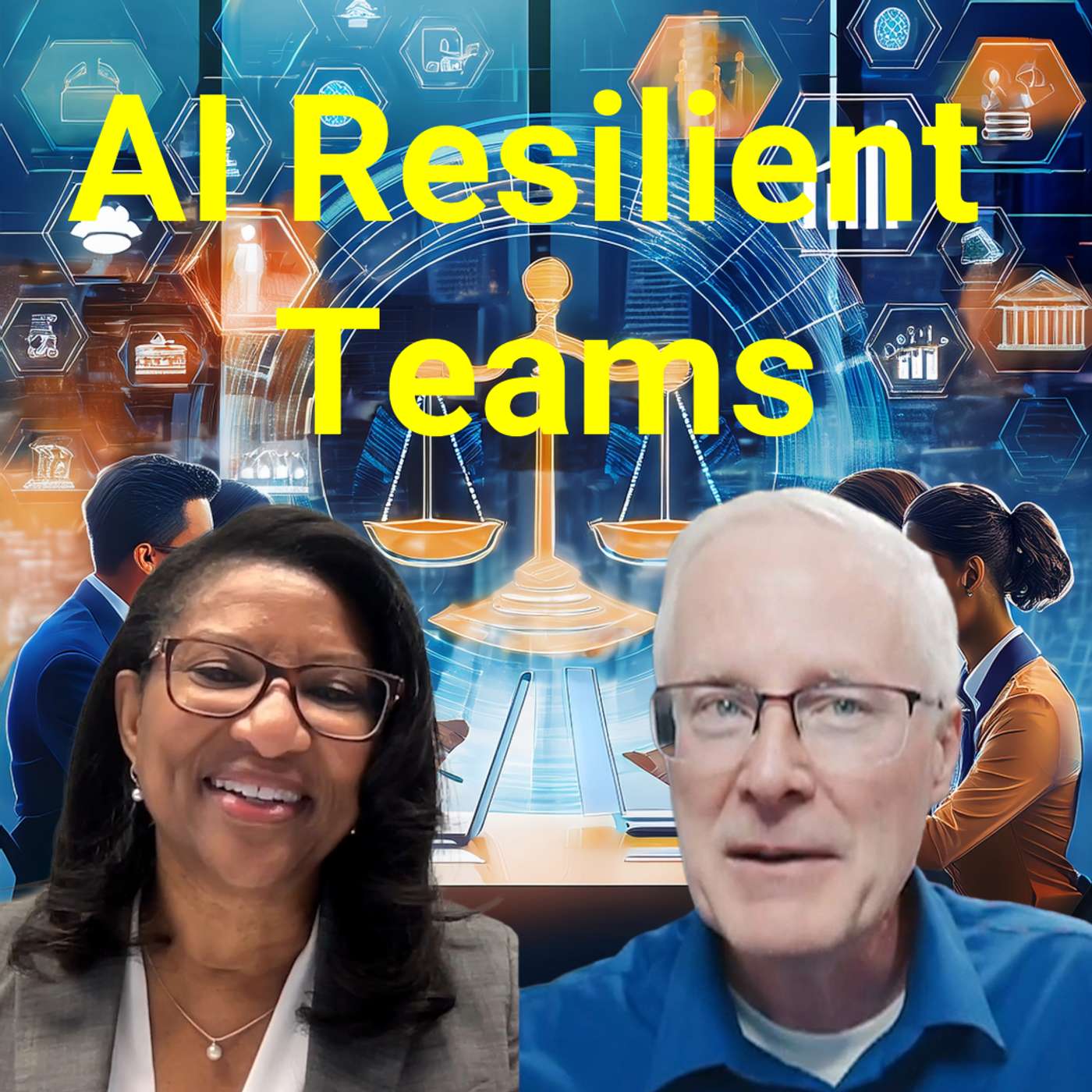
Embracing Digital Transformation
Generative AI & Resilient Teams: Thriving in Uncertain Times
00:33:19
Loading summary
Transcript72 lines
- [00:00]
A
Sort of the groundwork that you need in order to make the decision be done by these AI tools. And the answer is yes. It then frees up time to kind of reduce the number of folks that need to make a decision or the decision that they're going to be made. Well, that's much more informed, a bunch quicker rate. So we see that a lot. It's about that speed. It's about getting the right data and getting sort of that leg up and being able to make a decision.
- [00:28]
B
Welcome to Embracing Digital Transformation, where we explore how people process, policy and technology drive effective change. This is Dr. Darren, Chief Enterprise architect, educator, author, and most importantly, your host on this episode. Generative AI and resilient teams thriving in uncertain times with CEO of Thomas Reuters, Laura Clayton McDonald's. Laura, welcome to the show.
- [01:02]
A
Thank you so much.
- [01:04]
B
Hey, Laura, before we dive into what we're talking about today, you know, effective teams and AI and, and all these great things, let's. Let's talk about my show a little bit. Everyone knows on my show I only have superheroes on my show, and every superhero has an origin story, so. All right, Laura, what's your origin story? What makes you a superhero?
- [01:28]
A
What makes me a superhero? You know, my parents make me a superhero. My parents were born and raised in Panama, and I was so lucky to be a part of this family because they are pioneers, they're adventurers. And that is sort of like the core of. When you think about me, I think about that a lot. I think about what they did is that they decided that they wanted to come to the United States. And one of the ways to do it is to join the US Air Force, which my father did and got trained up, learned English. The first place he was stationed was Bermuda, and that's where I was born. But I think about what they.
- [02:03]
B
Wait, how, wait, how do you get stationed in Bermuda? That sounds like a vacation.
- [02:08]
A
It sounds like a vacation. So lucky to have that opportunity. And, you know, for him and my mom, it was once again that next step that was going to get them closer to the United States. And, you know, the military taught my father English, got them all trained up. And one of the things that happened was, you know, in order to move the United States, you're leaving behind your family, friends, food, culture, music, all of those things. And they did it for a family yet to be born. So I think about that all the time, and I honor them. But I get that spirit of, you know, going out there and being a pioneer from them.
- [02:50]
B
All right, so you're Super. You're a super pioneer.
- [02:53]
A
I'm a super pioneer.
- [02:55]
B
Yeah. I almost feel like you need a covered wagon or something and go across the plains. But we have modern pioneers today. Right? Well, this is really awesome. Let's dive in. Let's take that pioneering spirit that you have, and let's dive into. Specifically, I want to talk about what's disrupting everything right now, which is generative AI. And specifically, I see a lot of organizations that are kind of on pause. They don't know what to do, especially executives. They're like, well, do I replace all my people with AI? There's a lot of uncertainty. A lot of people are out there kind of worried. How in the world do I build an effective team when there's so much uncertainty in the world and everyone's worried about their jobs right now?
- [03:47]
A
Yeah, that's a very good question. You know, as the president of Thomson Reuters, I support corporations everywhere, from small medium business to enterprise, nonprofit to profit. And they're all facing that challenge. The world has changed so much. The complexity is there. How do you get started? And especially how do you build a team that's able to sort of withstand all of this complexity and survive and be successful? And it's really about building a resilient team. I think that's really what the advice is that we give leaders and how they think about the world. You know, we. We went through a sort of a recent crisis. We learned a lot from the pandemic.
- [04:26]
B
Yeah, we did.
- [04:27]
A
We absolutely did. Right. About how folks can be resilient, how we can shift the way of working from what you might, you know, what we traditionally thought of. You had to go into the office to something that's hy remote. And we were still able to accomplish quite a bit, be successful, grow the economy. So that would be the first thing we. We have a lesson already. Think back to what we did.
- [04:53]
B
So I'm glad you brought that up, because I'm seeing a trend of just the opposite, which is a lot of companies are saying, you have to be back in the office. Productivity only comes from being in the office. But at the same time, there's a lot of uncertainty. There seems. It almost seems like during COVID we rallied together as a community or as a culture, as a world. And we said, we're going to beat this thing and we're going to be able to handle this. And productivity went up during that time. But now it's Almost like the CEOs and executives, they forgot. They're like, no, everyone needs to be in the office or I'm gonna, you know, it's almost like we're back in the 1950s. I'm gonna beat you until morale goes up. That's how it feels.
- [05:44]
A
It does feel. Am I wrong?
- [05:46]
B
Are you seeing the same thing?
- [05:47]
A
No, I think it does feel that way. And you said something really sort of, you know, that really caught my attention, and that is there was a rallying cry for the pandemic. There was a rallying cry and we put aside sort of differences, silos, and we all came together to said we are to overcome this, be a healthy, you know, society, and this is what we're going to do together. And I'm wondering if it needs that level of crisis for us to sort of have that coming together. So what is that rallying cry? Can we create a similar type of rallying cry? Maybe. AI is that. I'm not sure.
- [06:27]
B
It might be. Or is it too soon? It's only been five years. Yeah, yeah, exactly. Maybe we're all tired. We, like the world tired of the COVID tranche, Right? Because I don't know, I worked more during COVID than I normally worked. It was like, you know, me and all of. All my family came back home, right? All my kids in college came back home and WI fi was, you know, overused and all that, but it seemed like we had more family time, but I was working more hours, too. It was a weird, weird time.
- [07:03]
A
It was a very weird time. And, you know, we're always going to be sort of living through those times. And how do you build a workforce that is resilient, that can withstand and overcome that? And I think it starts with really understanding for the individuals there. Are we clear about what the purpose is? Why do we do what we do? And this is a lot of sort of the focus that I have is whether it's a team that's in times of crisis or not crisis, but you have to sort of build that rallying cry back to that theme. What is that rallying cry? What is that purpose? And it starts with each individual. When you think about cultures, they're made up of individuals bringing together their hopes and dreams, values, objectives, goals, and they're coming together as one once again, that rallying cry. And I think that's really the purpose. And it starts with that. You know, I read a really, you know, I. I cite this all the time, Simon Sinek, and, you know, it. It starts with why? Why do we do what we do? And. And. And there's a personal philosophy statement associated with it. I mean, I have a personal philosophy statement. You know, when I worked at Microsoft, a lot of really good work was done. We each had to develop our personal philosophy statement. We put them all together. It then became the personal philosophy statement for the team. But it was always aligned with the.
- [08:23]
B
Bigger sort of purposes, bigger goals of the company.
- [08:25]
A
Bigger goals of the company. And I think it starts there. So you got to build a team there, you got to invest in the team, engage with the team, ensure that they have this tools and the skills in order to overcome anything that might be out there like AI. There's an education that needs to occur.
- [09:00]
B
Let's, let's talk about AI because AI is a big disruptor.
- [09:04]
A
We're.
- [09:04]
B
I'm already seeing, and I use, I use generative AI every single day. It's, it's a key aspect of, of my podcast because I release it in several different languages and things like that. AI seems to be kind of this. I think it's being used to increase the distance between executives and their workers in a weird way in that I think executives feel like I can save money from the bottom line by replacing workers with AI. And workers are feeling that.
- [09:42]
A
Yeah.
- [09:42]
B
So now. So I think it's causing some friction. Are you seeing the same thing or.
- [09:51]
A
Yeah, I mean, not necessarily. That may be in the back of their minds, but what we're seeing is that we're looking at how do you free up time? How do you become more productive? It's probably more of that than we're going to let go of individuals. And we're trying to become more productive, use our time more wisely. As you, as we were talking about it in terms of COVID it's felt like folks were working more hours than they, than maybe what they did before the pandemic. So how do you sort of get your life right sized, get the time that you spend right size? And we think of, at Thompson Reuters, we think of, you know, AI as a tool to improve your productivity, to free up time for you to do more higher value added work. So one stat that we cite from time to time, we've got this product called Co Counsel Legal. You use this product if you're a lawyer, legal professional, could be in legal ops, it could be a lawyer. But you use this product, you can double the speed of getting work done. Because we reference the fact that, you know, AI is sort of, it's consumerized. Right. We can go into all kinds of different tools. It's easy. It's. I can draft an email, I Can draft this, I can draft that very easily, very quickly. You save time. Saving time, you're more productive. You've just freed up the opportunity to do other things that you may not have had the time to do. We think about applying that to professionals and all of a sudden now you have folks who are delivering more value to their enterprises because they have more time to do so.
- [11:24]
B
So, so let's talk about that. As an executive, I've got a lot of. You're an executive, right? You've got a lot of people that rely on, on the business decisions that you're making. There's a lot of fear maybe in them. What plan, what plan could you put in place to help, you know, ease. Kind of help. Help your employees understand I'm not replacing you. Let's. Let's do a better job together. This is a, a great moment for our company to succeed. How do I, how do I instill that in them when there's so much uncertainty? What are some of the tips and tricks I could use?
- [12:02]
A
Yeah, I mean, I think the first thing is really understanding why we're doing it. And so you have to build that vision for the team about why this is important and how it's going to help. What's in it for you to give value back to you. So that's really important because I think it's aligned with sort of change management principles. Building out the vision, explaining what the benefit is for the individual, involving the employee as part of the planning process, doing a pilot, surrounding them with experts. There's lots of different sort of tips and tricks to get folks on board. Not that different than what you would think about in terms of change management. So it's neit. It's something else tomorrow. We don't know. But whatever it is you want to build. And going back to our earlier point, a resilient team build a vision. What's in it for them? Pilot show, the benefit. There's actually value. Surround them with experts and the support of it. You know, there will always be fear about change. Not too many people love change. That's for sure. That's for sure. So we just have to do the best that we can in building out a really good vision for, for the team.
- [13:14]
B
I like how you've laid that out. We need to treat this generative AI as a big digital transformation. That's what it is. I mean, and you know, that's something I espouse on the show, of course. And we always start with people and then process. We talked a little bit about the people side, what about the process side? Do you see generative AI making huge changes to your process in your company or incremental changes? How would you, how would you go about doing that?
- [13:48]
A
Yeah, right now, I guess I see it as sort of incremental changes because we're changing a whole sort of mindset and a way of working. And you know, one of the, the kind of cool projects that we're doing inside of Thomson Reuters is that we realize once again with the vision, it's a little bit of top down in addition to a bottoms up. And so we're bringing the staff together to kind of play with AI Bring us all together as a team. We've got a, you know, we're surrounding ourselves with experts. So how would you use it? Tell me about your day, how do you spend your time? And I think that's just a wonderful way to kind of get folks introduced to it. You know, also we use it every day. It's at our fingertips. We're doing it every day. We are leveraging AI and so it's not as scary as we might think it is. And especially if you have folks who are kind of helping you along the way, shaping and guiding you. So I think once you do that and then it spreads through the organization, then you're going to see major changes. Right now you can see them in teams or individuals or departments, but when you have the whole of the organization all aligned around that, the vision, all understanding how it can impact their work and free up time, then all of a sudden you're going to get the bigger changes here. But it's going to take a little bit of time. Not everybody, you know, while they, they like the idea, as you said, a little bit of hesitation.
- [15:14]
B
Folks love hesitation. I like what you said here. Bring your teams together, have play sessions with AI Almost right. It's almost like, hey, this is really cool. Look what it can do. Instead of just dancing disco cats, I can actually get some work done. Right. And that's really cool. And especially if it's the executives that are doing it.
- [15:48]
A
That's right.
- [15:48]
B
Look, this is how I use it to help me get my work done more effectively. It's okay to use it's right. It's beneficial to us individually and as a company. So then it takes on more of a we're doing this together instead of I'm an executive looking for ways to save money by cutting people.
- [16:09]
A
Yeah. I mean, when.
- [16:10]
B
That's the fear that everyone has, right?
- [16:12]
A
It is. I mean, when we talk about Sort of our vision for our corporate customer is really to help them navigate compliance obligations, whether it's laws, policies, procedures, and also achieve their commerce goals. Digital transformation, making money, improving customer loyalty, engaging better with your employees. There's so much more than that. And hopefully we'll see more and more examples of how folks are freeing up time to be much more strategic, better decisions and much more impact to the bottom line.
- [16:47]
B
I, I like that. Impact to the bottom line, but also the top line.
- [16:52]
A
Also the top.
- [16:52]
B
Right, right. Because we can generate more revenue now if we are working more strategically. Hopefully. Right.
- [17:00]
A
Hopefully we are.
- [17:03]
B
You've worked with a lot of big companies. Yes. And Generative AI has done something really interesting. It has kind of leveled the playing field a little bit in that a small company can now compete with some of the big companies in the same marketplace. If I'm. And because we all know this about small companies, they can make decisions very quickly, especially if there's five people in a room. Right. I mean, they can come up with a decision really quickly with larger companies. How, how do I, how do I navigate this? Because large companies have bureaucracy built in somewhat on purpose, because there's more at risk. Right. I can't take a big risk in, in a large company that the impact is too large. So how do I, how do I navigate that? Right. I need to be, I need, I've got all these disruptors that are coming after me. How do I handle that?
- [18:06]
A
Yeah, I mean, I think AI is a really good tool for making that happen. I truly believe that. Once again, if we go back to the principle that what it does, it helps you become much more productive. Think about those qualities of that competitor, that startup or that smaller organization. They've got nimbleness. As you said, the decision makers can fit inside a room. You don't have to put together a zoom call or a webex call or a team's call to bring them all together. They're right there. How do you replicate that? Can some of the work, sort of the groundwork that you need in order to make the decision be done by these AI tools? And the answer is yes. It then frees up time to kind of reduce the number of folks that need to make a decision or the decision that they're going to be made. Well, it's much more informed, a bunch quicker rate. So we see that a lot. It's about that speed. It's about getting the right data and getting sort of that leg up and being able to make a decision. Now it's not fully Adopted everywhere. Yet just as we said, there's all about sort of building vision and et cetera. But we foresee sort of a future where that is the case where you get that level of nimbleness. And it's almost like it's almost a leveler. To a certain extent, AI is. So the smaller company, if they're thinking about how they sort of compete with some of the larger companies, can they almost multiply the number of people that they have by using AI? We have an example of a company they can't afford to have in house counsel. So their CFO uses our practical law tool to help with the analysis of documents and contracts, and then only very sparingly decide, this is what I'm going to sort of use outside counsel for. For. So it's a really interesting tool. They kind of, a smaller company can level up, a larger company can become much more efficient and nimble. And it's it. And, and so we're seeing, you know, instances.
- [20:06]
B
It's really interesting. I, I like that a lot. I, I like that concept a lot. Let's talk about, let's talk about this in the impact on law, because this is a big, A big area. One of the targets you always read in the LinkedIn post, these jobs are going away because of AI, right? And they always mention lawyers and software engineers. Those are the top two. And I'm a software engineer, right? So I'm like, no, our jobs are not going away. You still need someone, right, that knows what they're doing. Same thing in law. But I. And it's the same problem in software engineering. If we're using generative AI to do work that we used to give our junior associates or our interns and things like that, are we developing a skills gap because they're no longer learning those valuable skills by doing the hard work? Do you know what I'm trying to say there, Laura?
- [21:05]
A
Yeah, I do. I do. And I think about this one quite a bit, actually. So our daughter is a lawyer in a top law firm in Manhattan. And I think about how, you know, what she learned when she was in law school and what I learned when.
- [21:22]
B
I was in law school, very different, I bet.
- [21:25]
A
Very different. And the tools that are accessible to her has put her at a different level. The work that she does today with the generative AI tools that are available, very different. And I do wonder, that skill of critical thinking, designing a strategy, planning those organizing documents, sometimes you actually physically have to touch the document and read it yourself and understand it. And so I do Think about that a lot. I think about how organizations like Thomson Reuters can spend time with law schools and still sort of reinforcing how this tool can be used the right way, not as a substitute for critical thinking, but as an assistant to it. Because one of the things, as a lawyer, you are still held to the code of professional responsibility, which is you are still involved in reviewing the work of a junior associate or anybody who may be providing you with information, because you've got to sign off it. So this supplements that. It's not a replacement for it. And, you know, how do we help sort of bolster human judgment by sort of assisting with doing some things that may be mundane, but you still have to be involved in it. But it is a really good question our way. I mean, we think about it too, in terms of, you know, using smartphones and, you know, using search sites to get information. That whole process of thinking, hopefully that is something that's expanded upon in schools at all levels. Do not forget about how you need to.
- [23:06]
B
Do not forget. Absolutely. In fact, I'm teaching Vanderbilt University and I'm teaching computer science, and this is the first semester that I'm going with a geni first approach, meaning I'm telling my students, I expect you to use generative AI. There won't be an exam, and you've got to present your. Your stuff. And the final is an interview with me based off of what we've learned throughout the semester. Because I thought I can give him a written exam. All I'm doing is telling him to cheat. I mean, I'm like, come on, we gotta change the way we do this. So I'm trying to teach them critical thinking and how to leverage these tools to augment their subject matter expertise that I'm trying to teach them this semester. So it's a. It's very difficult. It's hard. It's so much easier if I just. Yeah, no, it's so much easier if I just lecture and just say, all right, this is what we're going to talk about. Read my lecture notes and I'll give you an exam at the end. I. That's. That's easy. Yeah.
- [24:29]
A
Yeah. Well, I love what you're doing, too. It's. It's that and they're. They actually have to articulate what it is. And you can't use AI to speak for you. You're right there.
- [24:40]
B
Not yet.
- [24:41]
A
Not yet. That'll be another episode that's a whole nother.
- [24:48]
B
But, but you're right. I. What I'm learning is that communication is going to be even more important moving forward because the human experience is, I think, going to be unleashed with generative AI because all that mundane work that we had to do before can be augmented and made more efficient so that we can spend more time actually having human interaction, which I think will be a great freeing thing for a lot of workplaces if we could just get over this fear part that we're working through right now.
- [25:30]
A
Working through. That's right.
- [25:32]
B
That's right. Yeah. So. All right. So legal profession's safe, right? It's safe. I, I've got a son in law that's going into the legal profession that I can, I can tell, tell my daughter that it's okay. He's going to have a job.
- [25:50]
A
He's going to have a job.
- [25:52]
B
All right, that's all right. Let's, let's talk a little bit about AI policy a little bit. Right, because you help or you help companies walk through, you know, digital transformation, things like that. What about generative AI policies? Do I need one? Should I be looking at it or can I lean on my data privacy policies that I maybe already have or the other policies that I have around that protect me from liability and things like that?
- [26:27]
A
Yeah, this is a really good question. And we do advise our customers, it's important to have one around generative AI, the ethics of that use, who's involved in the committee. There's probably a review that needs to occur to make sure that folks, once again, there's, you know, that it may be as simple as if you're going to be presenting a report and you're going to use generative AI to do it, but you kind of put a little bit of a footnote there so we can understand the source of that. It's not all sort of accurate. And we need to make sure that we understand the sources of information. Before we didn't have to do that necessarily, or if we did it and we used another source, we'd, we'd put a footnote.
- [27:10]
B
So of course we would.
- [27:11]
A
Yeah, yeah. So there's a policy around sort of documents. There's an ethical one. If we use AI to generate code or once again generate documents, are we still complying with the other sort of policies that we have? I know that, you know, when we think about are we being fair to all communities, are we being open, are we being transparent about it? You know, we, once again, there's a sort of a test and an analysis that needs to be done. It's not something, you know, you put together the policy. But you also need sort of an organization, a committee, a group that can review, test, ask questions, approve of how AI is used in an organization. Because I think it's really important for it to be sort of tailored and focused about how it's used and where it's used. There are things that, you know, maybe you don't put a policy over. Maybe it's drafting up an email, just saying hello to somebody. But other things that are really critical about how we offer our contracts, the contracts, our products to folks. You really have to do that. So, you know, there are some policies that are in place that are good, but it's not good enough. You really need to have something that's tailored just for the use of generative AI.
- [28:34]
B
So, so do you. Do you feel like generativity is so different than what we've had before? I mean, think back in the 90s or late 90s when the Internet started coming about and, and email became a primary way of. Of communicating business. Where before I had a piece of paper that went. Or a phone call. Right, A phone call. I could get away with talking about things on a phone call. Right. Because there was no trail. Right. Because you would bounce ideas off of a client says, all right, we'll put that in a paper, in a contract and get it moving. Email caused a disruption, a little bit of disruption. Is generative AI more profound than email was, or about the same? Can we learn from what we went through in the 90s?
- [29:27]
A
Yeah, that's a really good sort of thing. I mean, we should be able to learn what we went through in the 90s. This one has taken it a step further. So it's not about just sort of writing sort of simple, straightforward content. This is something that can fundamentally, I guess it depends on the email, but this could actually fundamentally change the way that you run the business, the way that you offer up services, because it pulls from so many different sources. At least with the email, you're still involved. It wasn't.
- [29:56]
B
You're still in charge. Exactly.
- [29:58]
A
That's right. You're still in charge. It wasn't automated. This was you putting those words in an email, sending it out. You had to be careful about what you sent and, you know, confidentiality. You're right about. Nowadays you can even use a tool to record what we're saying.
- [30:18]
B
Yes, it's changed. Everything's changed.
- [30:20]
A
Right. And then put that out there. And you know, we, we have sort of, you know, there's a. You can't just put it out there. We're going to have to get each other's permission and edit it properly, et cetera. But this is so much different. It's automated. It's almost. You have to be even more proactive and insert yourself. That human element, I think, becomes much greater because of the power of AI.
- [30:48]
B
So there's our sound bite for the, for the, for the episode right there. There's our sound bite. This has been great. I've enjoyed talking to you, Laura, and. But we're out of time. We're, we're clear out of time. If people want to learn more about Thompson's Reuter, where do they go? How do they. Can they reach out to you? You know, what's your phone number? We'll have everyone call you. No, I'm just kidding.
- [31:15]
A
Well, if they want to learn more.
- [31:17]
B
About, hey, what do I need to do to protect myself and what do I do to help leverage my company to take advantage of this big digital transformation that we're going to do?
- [31:28]
A
Absolutely. So go to our website, Thomson reuters.com you can find me on LinkedIn. I'm there at Laura Clayton McDonald. Happy to talk about not only what AI can do and how you help that use that to digitally transform your organization, but also happy to talk about transforming your business, your people, your teams, and how to build a high performance team. I'm very excited about that. It's all about purpose. Again. If I had to sort of put one sort of message out there for folks, really work on your purpose statement, I'm going to share mine because I did do it at the beginning, which is to live life in an exemplary manner and all that matters with courage, curiosity, compassion, humility, integrity and optimism. Each one of those words stands for a story from my family, which I'm happy to share with anybody who contacts me. This is something I truly believe in.
- [32:24]
B
And I, I know, I know you, I know your passion for your, for your statement because that just rolled right off your tongue. So, Laura, thank you for coming on the show. It's been a delight.
- [32:37]
A
Well, thank you so much. Happy to be here.
- [32:44]
B
Thanks for listening to Embracing Digital Transformation. If you enjoyed today's conversation, give us five stars on your favorite podcasting app or on YouTube. It really helps others discover the show. If you want to go deeper, join our exclusive community@patreon.com embracing digital, where we share bonus content and you can always connect with other change makers like yourself. You can always find more resources at embracingdigital. Org. Until next time, keep embracing the digital Transformation.