Podcast
Empowered to Connect Podcast
Hosted by Empowered to Connect · EN
The Empowered to Connect Podcast a place where we come together to discuss an attachment rich, healing centered approach to engagement and well being for ourselves, our families and our communities.
22episodes
Episodes
Newest firstAll episodes
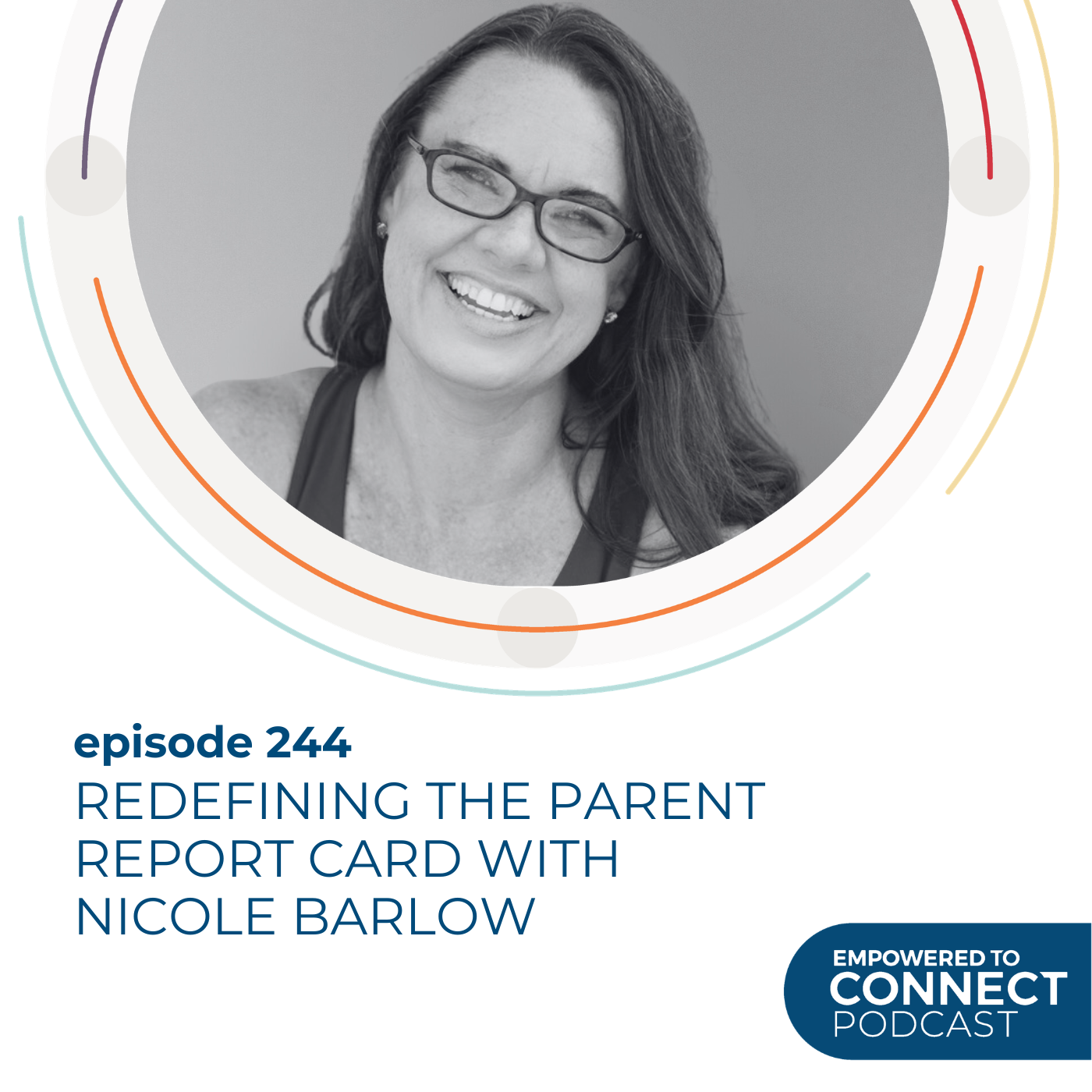
[E244] Redefining the Parent Report Card with Nicole Barlow
3d ago00:54:59Tap to summarizeWhat if the parent report card you've been grading yourself on this whole time was never actually yours to fill out? Episode summary bullets: Nicole Barlow, longtime foster and adoptive mom and one of our Cultivate Connection facilitators, shares how she went from feeling like a "rockstar" foster parent to realizing she was in way over her head. Why the peer-to-peer model at the heart of Cultivate Connection matters: none of us are exempt from putting these tools into practice in our own homes. The weight of being watched. Nicole opens up about neighbors, strangers, and offhand comments that shaped how she saw her own parenting. How Nicole's understanding of Scripture around obedience and discipline shifted over time (a perspective she shares from her own faith journey). Redefining success: from "my kids are compliant" to "does my adult child still call me, even from a hard place?" Why a compliant kid isn't always a regulated kid, and what Nicole wishes she'd noticed sooner in her own home. Dysregulation isn't disobedience: a look at fight, flight, freeze, and fawn, and why repair matters more than perfection. Nicole and Jesse's honest conversation about social media, comparison, and the images of parenting we quietly measure ourselves against. Nicole's closing encouragement for any parent white-knuckling their way through this season: "It's not yours to carry." Resources mentioned: Cultivate Connection On-Demand course: https://empoweredtoconnect.shop/products/cultivate-connection-on-demand Connecting Practices Handbook: https://empowered-to-connect.myshopify.com/products/connecting-practices-handbook-ebook-spiral Timestamps: 00:00 – Meet Nicole Barlow and her foster and adoptive journey 09:53 – From "I've got this" to feeling completely in over her head 18:13 – Faith, obedience, and the pressure of what other people think 26:31 – What "successful mom" used to mean to Nicole, and what changed 33:08 – Why her most compliant kid taught her the most about trauma 39:07 – Redefining success as relationship, not response 48:36 – Nicole's word for any parent white-knuckling it right now Connect line: Find more trauma-informed parenting tools and connect with our community at http://empoweredtoconnect.org or follow along on Instagram @empoweredtoconnect.
Transcribe →
[E243] The Risk of Winning
2w ago00:55:57Tap to summarizeEver notice how a bedtime standoff, a backtalk moment, or a flat-out refusal can turn into you against your kid? Jesse sits down with Mo & Tona Ottinger for an honest look at what happens when parenting starts to feel like a competition, and why "winning" a moment can quietly cost you the relationship. This one includes real, unfiltered stories (including a New Year's Eve bedtime battle that's now family legend) and a simple mindset shift that changes how you handle the next hard moment. What we cover in this episode Why parenting can start to feel like you're on opposite sides of the net from your own kid, and how to get back on the same team The difference between winning an interaction and being "rightly related," and why the second one matters more long term A real, unfiltered bedtime story about doubling down that went sideways (and the do-over that followed) What to do when your expectations and your child's needs are out of sync, especially with kids who struggle with big behaviors A simple practice for slowing the moment down mid-conflict so you can respond instead of react Resources mentioned Cultivate Connection On Demand: ETC's parenting course, referenced for its "before, during, and after" framework Connect with us Have a question or topic you'd like us to cover? Send your idea to info@empoweredtoconnect.org
Transcribe →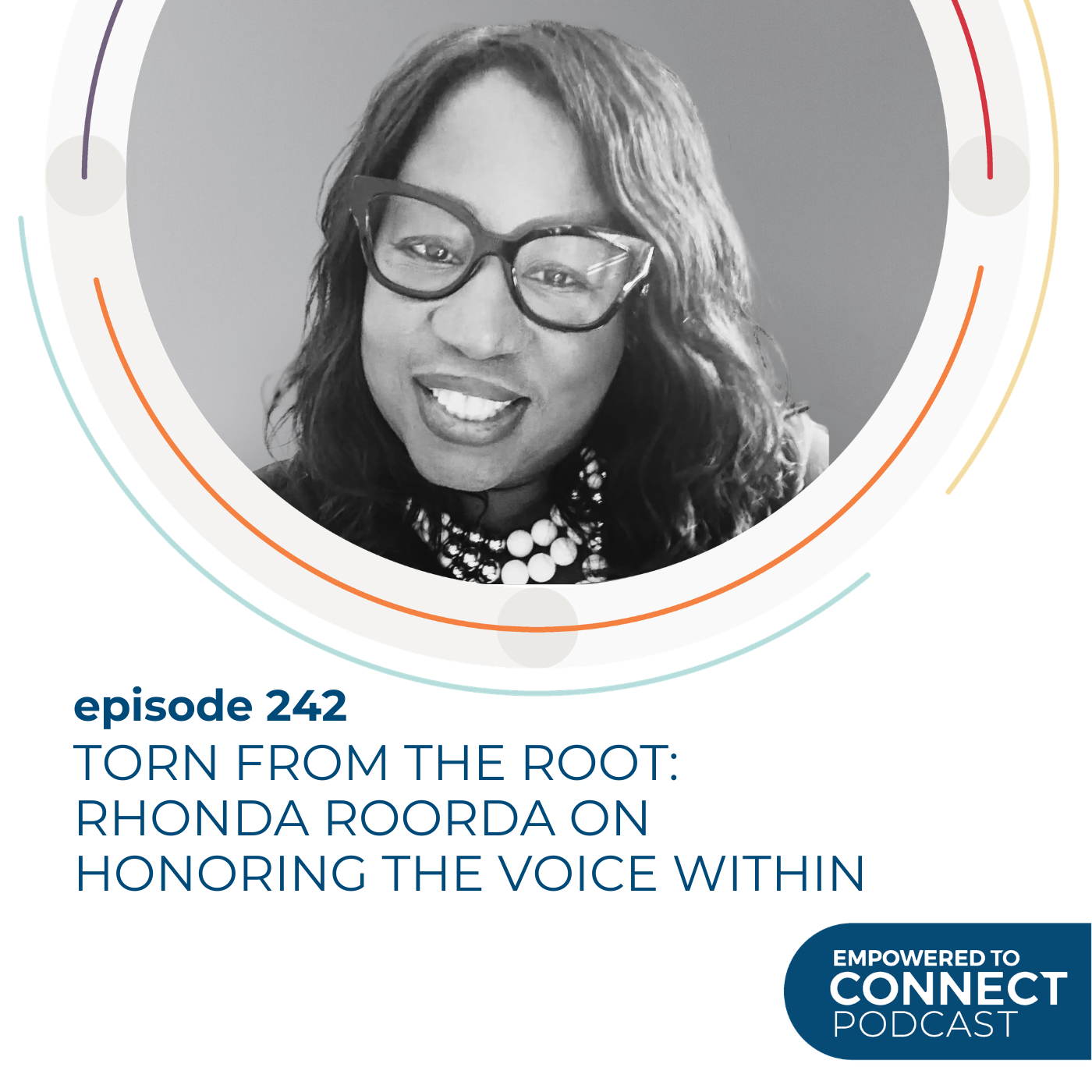
[E242] Torn From the Root: Rhonda Roorda on Honoring the Voice Within
Jul 1401:26:06Tap to summarizeSome books change the way we see. Rhonda Roorda's In Their Own Voices did that for countless adoptive families, including our own here at ETC. In this episode, Rhonda returns to walk us through her debut memoir, Torn from the Root, and the four questions at its center: who was going to get hurt, what was it going to cost, who would be held accountable, and what hope could there be for repair. It is a tender, unflinching conversation about transracial adoption, the voice of the child within, and what it really takes to belong. Listener-care note: this episode includes honest discussion of trauma, abuse, and mental health within the context of transracial adoption. In this episode Why Rhonda turned the lens on her own story after decades of documenting others, and what it meant to listen to the little girl within her The four questions from her memoir that frame the whole conversation The history most adoptive families never hear, from the 1970 National Association of Black Social Workers statement to the research that shaped current policy How everyday language and labels shape a child's sense of identity and worth The difference between celebrating a child's culture and simply living near it A family "blueprint" approach to belonging, where every member is honored and advocated for What repair actually requires, starting with an honest audit of ourselves How nurture, in ETC terms, shows up in our words, our attention, and our follow-through Resources Torn from the Root: A Memoir of a Black Transracial Adoptee by Rhonda M. Roorda (Temple University Press). Pre-order available now, releasing July 2026. In Their Own Voices, In Their Parents' Voices, and In Their Siblings' Voices, the landmark trilogy Rhonda co-authored with Dr. Rita J. Simon In Their Voices: Black Americans on Transracial Adoption, Rhonda's award-winning solo work Rhonda M. Roorda's website: https://rhondamroorda.com Context referenced in the episode: the 1970 National Association of Black Social Workers position on transracial adoption, and the Multi-Ethnic Placement Act of 1994 with the Interethnic Adoption Provisions of 1996
Transcribe →
[E241] The Consequences of Consequences
Jun 3001:06:46Tap to summarizeYou said it would be the last warning. You meant it this time. And somehow you are standing in the hallway with your voice raised, wondering how you ended up here again. If consequences have quietly become your first move, and you are starting to suspect they are not actually working, this conversation is for you. What we cover in this episode Why a consequence is so often the first thing we reach for, and what that reach is usually really about What a quick consequence shuts down: the curiosity, the teaching, and your child's chance to learn what to do instead The difference between a punishment mindset and a loving limits mindset, and how each one handles power How the Faris and Ottinger homes actually deal with mistakes now, including the "consequence" the Faris’s friends could not believe was real Small, doable first steps if you want to lean on consequences less, starting with one question you can ask yourself in the moment Resources mentioned Cultivate Connection (the on-demand parenting course where the Collaboration module lives): https://empoweredtoconnect.shop/products/cultivate-connection-on-demand Connecting Practices Handbook (ideas for giving voice, choices, and compromises): https://empoweredtoconnect.shop/products/connecting-practices-handbook-ebook
Transcribe →
[E240] Your Summer Survival Guide
Jun 1601:06:00Tap to summarizeSummer is here, and Jesse and Tona are keeping it real: they love summer, and it also asks a lot of them. In this episode, they sit down (virtually, because summer pivots happen to hosts too) to talk honestly about what it actually feels like to parent through the loss of structure — and what it can look like to find your footing in the middle of the season. They cover everything from the emotional load working parents carry when school lets out, to practical ideas for younger kids and teenagers alike. Whether your summer is high-energy or gloriously low-key, this conversation is a permission slip to stop trying to curate someone else's summer and start trusting your own. In this episode: Why summer can feel like something you have to survive even when you love it The difference between structure and rigidity — and why predictable rhythms matter for kids Practical, low-cost ideas for younger kids The "summer of ___" concept for kids & teenagers Boredom tolerance as a regulation skill — and what to do when your child genuinely can't self-entertain Resources & Mentions: ETC Summer Survival Kit Use Scaffolding - Free downloadable, Podcast Episode 90 & Episode 147, and we just wrote about this in our newest ETC Newsletter! The Lazy Genius Collective / Kendra Adachi Inside Out 2 (the character Ennui)
Transcribe →
[E239] Replay Let's Talk About Lying with Robyn Gobbel
Jun 200:48:34Tap to summarizeWhy do kids lie, even when the truth would have been easier? This week, we’re replaying an oldie but a goodie: Let's Talk About Lying with Robyn Gobbel. Lying is usually about fear and felt safety, not character. This one will change how you respond.
Transcribe →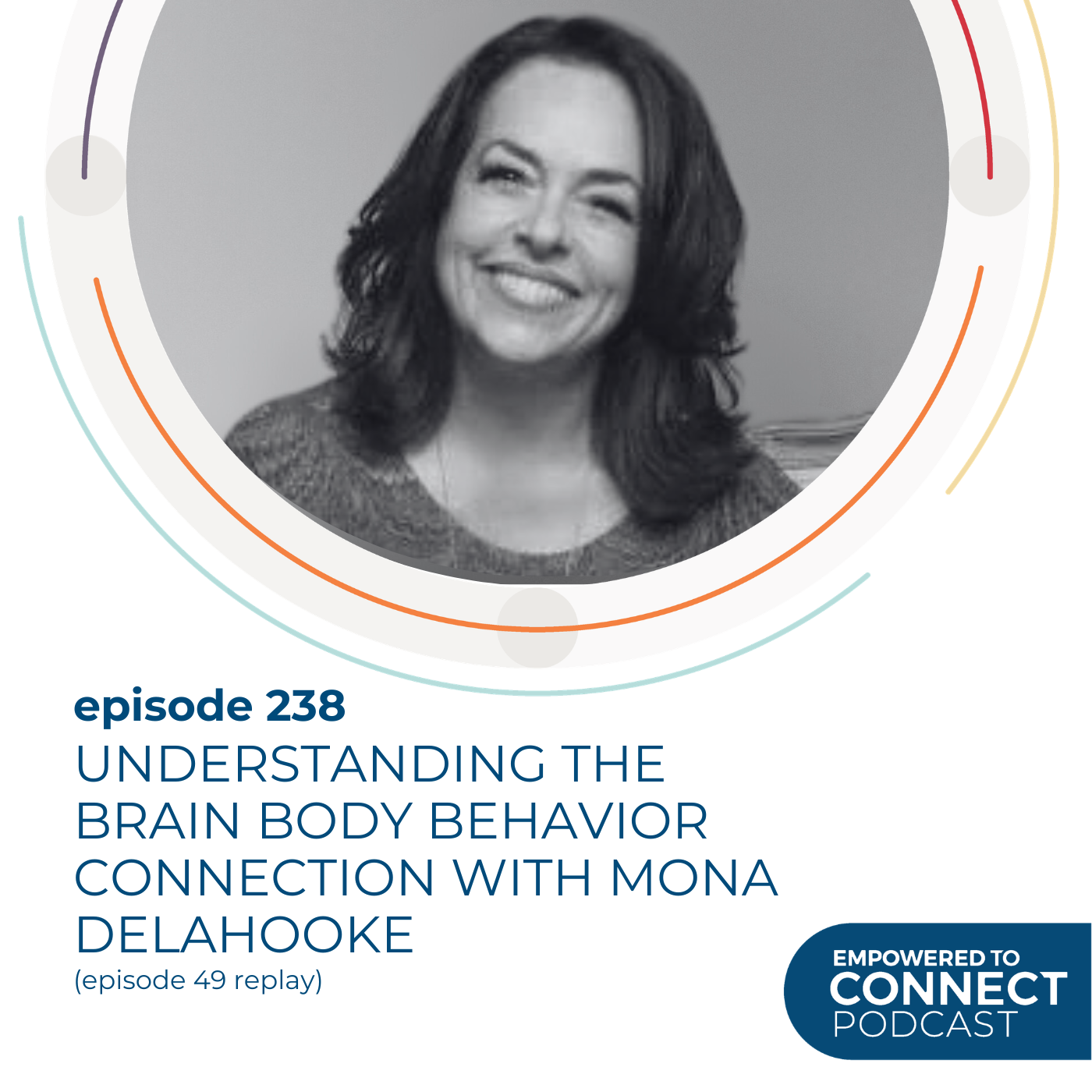
[E238] Replay Understanding the Brain, Body, Behavior Connection with Mona Delahooke
May 1900:40:56Tap to summarizeCatch the replay! Mona is a Pediatric Psychologist and the author of Beyond Behaviors, among several other books. If you've ever read Beyond Behaviors, you know how brilliant she is! In this episode, we talk about the Brain - Body - Behavior connection and why it is absolutely essential for parents and caregivers to understand. Struggling with perplexing behavior in your home? This may be the episode you've been waiting for. We also talk about Mona's book that was published in 2022. Wanna learn more from Mona? Buy her book Beyond Behaviors here, sign up for the Beyond Behaviors course Mona teaches here or head on over to her website to learn more about her there!
Transcribe →
[E237] When You’re New to Supporting a Foster or Adoptive Family
May 500:48:00Tap to summarizeEpisode 237 is live! ️ If someone you love is in the middle of a new placement (whether that's a newborn, a toddler, or a teenager), this one is for the people standing beside them. Tona, Becca, and Jesse get practical about what it actually looks like to show up well for foster and adoptive families. Not just in the first week, but in the long haul. What's the most meaningful thing someone did for you (or that you did for someone else) during a new placement?
Transcribe →
[E236] When You're New to Walking Together as Adoptive/Foster Parents
Apr 2100:56:50Tap to summarizeCommunity can feel different when your parenting journey looks different. Sometimes your circle shifts. Sometimes it shrinks. And sometimes it stretches you in ways you didn’t expect. But here’s what’s true: you are not the only one figuring it out as you go. Ask for help. Say the honest thing. Find people who truly get it, and hold onto the ones who love you even when they don’t fully understand. Your community might not look how you imagined, but it can still show up for you, support you, and grow with you. To learn more about Empowered to Connect, check out our website, follow us on social media and YouTube!
Transcribe →
[E235] When You’re New to Parenting through Adoption & Foster Care
Apr 700:59:25Tap to summarizeIn this episode Becca, Jesse, and Tona walk us through what it looked like for them at the beginning of their parenting journey. Starting foster care, adoption, or any new parenting role can feel disorienting and overwhelming. It won’t always feel natural or easy, and you may not feel an instant connection. That’s normal! There will be stress, uncertainty, and moments where you question yourself, but that doesn’t mean you’re doing it wrong. What matters most is showing up consistently, being willing to learn, and creating a sense of felt safety over time. You don’t have to be perfect to make a real difference. Your steadiness and presence is what builds trust. To learn more about Empowered to Connect, check out our website, follow us on social media and YouTube!
Transcribe →