← Endocrine Feedback Loop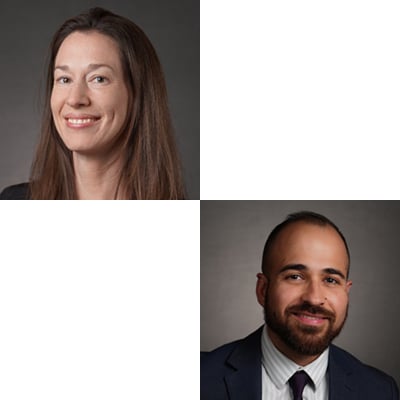
Endocrine Feedback Loop
EFL053 - The Cost Effectiveness of Molecular Testing for Indeterminate Thyroid Nodules
00:40:58
Loading summary
Transcript28 lines
- [00:00]
A
This is Endocrine Feedback Loop. I am your host Chase Hendrickson and welcome you to this Journal Club Podcast series brought to you by the Enderkin Society. Thanks for joining us as we explore an important article recently published in one of the Society's clinical journals. Hello and welcome again to the Endocrine Feedback Loop podcast for our 53rd episode. For this episode, we review a recent JC E M paper that reports the impact in Canada of molecular testing for indeterminate thyroid nodules. This area of thyroidology has evolved rapidly over the past few years, so we will take the opportunity to discuss thyroid nodules and molecular testing in general. In addition to looking at how these authors report the financial impact of utilizing molecular testing. As is typical for us on this podcast, we will be looking at an observational study and so we'll need to think carefully about what this report was and was not designed to answer. I host the Endocrine Feedback Loop and spend most of my time working at the Vanderbilt University Medical center as a general endocrinologist and medical director. As you might guess, with a paper on molecular testing of thyroid nodules, we need two thyroid experts today and we have just that. Anupam Kotwal returns as our regulator Contributor for the month. He hails from the University of Nebraska Medical center, where he focuses his clinical care and research on endocrine oncology, especially thyroid cancer. He's the medical director for their thyroid tumor program and has a research emphasis on immune biomarkers for thyroid cancer. Our guest expert today is Sarah Mason from the University of Colorado at Colorado. She too focuses her clinical care on thyroid disorders with a research focus on molecular diagnostic testing. She's an expert endocrine educator directing the fellowship program at the University of Colorado and participating in the Endocrine Self Assessment Program, the ESAP with the Endocrine Society. She is well known to you all from her many publications and talks. So, as advertised, I'm joined by the perfect pair of endocrinologists today. As is also always the case, everything we say will be our opinions only and not those of our respective institutions or the Endocrine Society. For today's episode, we discuss publicly funded molecular testing of indeterminate thyroid nodules. Canada's experience, which is a forthcoming article from the Journal of Clinical Endocrinology and Metabolism. Florence Levesque at the Universite Laval in Quebec City served as the first author and was joined by authors from several institutions throughout Quebec, Canada. I will now turn the discussion over to Anupam. He will review the main points that the authors make in their introduction and ask Sarah to give us insight into thyroid nodules and molecular testing.
- [02:38]
B
Anupam thanks Chase for that introduction. So just for some background, the authors in this study do mention that thyroid nodules are quite common as we know, and the fine needle aspirator FNA is the next step after finding a thyroid nodule which that decision is based on how the nodule appears on the ultrasound as well as its size and most of the nodules will be classified accordingly based on that fna. Most do result is benign, some as malignant, but then anywhere between 20 to 30% may result as what we call indeterminate on the cytology and these can include Bethesda Category 3 or a Bethesda Category 4. Within those categories the risks of malignancy is quite variable. So The Bethesda category three carries a risk of malignancy anywhere between 6 to 20% and four carries a risk of malignancy anywhere between 14 to 35%. And these numbers depend on the different reports could be depending on the prevalence of the cancer, the pathologist expertise and also really some of the categories including the pre malignant category that may be included as a malignant result. I would like to ask Sarah here to comment on her practice and especially her expertise with some of these biopsy results and her preference for the next steps in this scenario.
- [04:06]
C
So indeterminate thyroid nodules are a common clinical problem faced by most endocrinologists. There are a number of different options for management and I just want to go through a few of those briefly. One option is upfront surgery or hemithyroidectomy, which we certainly should consider in patients who have symptomatic thyroid nodules who have indeterminate thyroid cytology or if they just have a really strong patient preference for surgery. We also think about upfront surgery in patients who have nodules that have indeterminate cytopathology and a high risk ultrasound pattern. So this would be a nodule that's high suspicion according to the ATA system or the American College of Radiology system and categorized as Tirads 5. And the reasoning behind this approach is that the estimated risk of cancer in such nodules with high suspicion ultrasound findings and indeterminate cytopathology is just simply too high for molecular testing, for example to be an effective rule out test for cancer. And this is because disease prevalence, and in this case that's cancer affects the negative and positive predictive value of diagnostic tests. So said another way, the false negative rate is expected to be well above that 5% threshold that has been largely considered to be the maximum acceptable rate for false negatives in this setting. Another option for Bethesda 3 nodules, those with AUS cytology, would be to repeat the biopsy once more. And this is a cost effective option that was also used in this paper. And about half of nodules in this setting will have a benign cytologic result when sampled. Again, this is not the case, however, for Bethesda 4 Cytology, where a diagnosis of follicular neoplasm actually shows good inter observer agreement and reproducibility. And repeating the FNA for cytologic evaluation, if that's not indicated in this situation, and therefore we might consider molecular testing for such nodules with Bethesda 4 Cytopathology. So one of the questions again is whether to repeat the FNA first after getting Bethesda 3 Cytopathology on the first instance, or reflexively sending that molecular test right at that time instead of repeating the biopsy. And this might depend a little on your practice setting. And so, for example, I live in the Mountain west where we draw from a patient population that lives hundreds of miles away from the university and includes multiple surrounding states. And so from a practical perspective, I often will send reflexive molecular testing from the get go. I collect this prospectively in all of my patients who are undergoing biopsy and store the specimens in the freezer so that I'm able to send this if the biopsy comes back showing indeterminate cytology, so my patient doesn't have to return for a subsequent biopsy.
- [06:52]
B
Yeah. So the authors have commented on some of these points that you raised, Sarah, regarding the classical treatment for these indeterminate nodules being diagnostic surgery, but in those cases, most final results were Benign, up to 75%. So thought being that, you know, are these patients being exposed to unnecessarily surgical risks such as dysphonia, hypoparathyroidism, if they have a total thyroidectomy, then they are hypothyroid for the rest of their lives. But even with a partial or a hemi thyroidectomy, about one third may require thyroid hormone. This also then adds to wait time. So more and more surgeries, especially those that may not be necessary, that increase the wait time for surgery as well as hospital expenditures. And so that becomes important, especially in a public or publicly funded health system. So just because of the points that were raised, now there are molecular tests that can help us guide the management of these indeterminate thyroid nodules. So I'll just very Briefly mention the two most common commercially available ones, especially in the US. The first one is Thyroseq version 3, which is the one that was tested in this study that performs next generation DNA and RNA analysis to look at about 112 genes and it can detect more than 12,000 mutations, single nucleotide variations, insertions, deletions as well as different gene fusions as well as copy number alterations. The other commonly used molecular test is a firma GSC or genome sequencing classifier and that performs mRNA expression analysis of 167 genes. And both of these tests do help generate scores that help estimate the risk of malignancy. So they may classify the cytology then as a negative molecular result or a positive and then provide some more information, especially when the result is positive. So I know Sarah, you commented a little bit on your practice earlier, but have you seen or what is your input on how the management of just thyroid nodules has evolved over the past few decades?
- [09:07]
C
I started my endocrine fellowship in 2010 before molecular testing was part of our usual management of thyroid nodules, and management at that time was much more simplistic. I already mentioned that for Bethesda three thyroid nodules, the typical next step in the evaluation of nodules with such cytology would be to repeat the FNA because that may yield a definitive diagnosis in many cases. But for Bethesda 4 thyroid nodules, those were often subjected to diagnostic operations. As you mentioned previously, those were frequently benign lesions and so ultimately being able to better preoperatively stratify nodules and the risk of malignancy using testing such as molecular testing is quite appealing.
- [09:51]
B
So in this study they have looked at Thyroseq version 3 and we'll discuss some of this later on. But this test has been validated and the validation study demonstrated a high sensitivity of 94% and negative predictive value of 97% and a specificity of 82%. The authors in this study wanted to answer some questions that have not been answered so far, and one of them being how does this molecular test perform in a public health system? That's important because the cancer prevalence may be different in that system within the indeterminate nodules as compared to the studies that have already been done. And the other question they wanted to answer is if this test is indeed beneficial from a cost standpoint compared to diagnostic surgery in the setting. So the authors aimed to evaluate the benign call Rate of Thyroseq v3 in this population of indeterminate thyroid nodules. They wanted to look at the mutations in the cases that were positive for the molecular test. And then also look at the cost benefit analysis comparing this Thyroseq v3 molecular test to the standard of care, which was diagnostic surgery.
- [11:06]
A
At this point, we're going to move on to the methods. So we've had a nice setup already with Anupama and Sarah talking about the background of thyroid nodules, how that's evolved. And I think we can clearly see that there's an argument for the benefit of doing molecular testing. And one of the clear arguments is that it's a financial perspective that you really see that benefit and this in this setting of a public health system as one of the most rigorous ones to assess that. And so this will be very helpful for us as we think about using this test for our patients. And can we clearly make the argument that this is a wise financial move to be doing this testing? The way the authors approach this is they use a cross sectional study. As we were taking a look at this, we went back and forth. The authors don't clearly label their study design. They describe it as a prospective study. And it certainly is that. I think it best fits as a cross sectional study. As a reminder of how those work. A cross sectional study, you view the data as having been collected at a single point in time. That can be a little bit difficult as you think about that, because sometimes that single point in time is actually several weeks or maybe even months apart. But the key is that this is not a cohort study. A cohort study happens is when you split people into groups based on exposure, just like a cross sectional study. But instead of getting your outcome data at the same time, you follow individuals over time to see if they will or will not develop the outcome or outcomes of interest in these cross sectional studies. You have that information up front and I think that that fits best with what we see here. We'll talk a little bit about this. The authors describe several things as happening over years of monitoring, but as we'll see, they pull a bunch of this, these cost assumptions from other studies. It's not their data in and of itself. And so I think what they are looking at is really a cross sectional study. So we'll come back to that. We'll think about what the authors describe here in their study design. So as I mentioned, it is a prospect of study. And the authors got their, their patients, the subjects here, between November of 2021 and November of 2022 from five academic institutions in Quebec. And these individuals, it was 500 consecutive patients who had that indeterminate thyroid nodule, FNA, that cytology. And it had to be either Bethesda 3 or 4. As Anupam walked through already what that means, the implications of that, these individuals had to also have that thyroseq data available. So there were several key exclusion criteria. I'm going to just mention them briefly here, but then we're going to come back to why it's so important that they defined it this way. So first of all, they excluded individuals who had thyroid pathologies that required surgery regardless. So individuals who had Graves disease, if you had a contralateral large thyroid nodule with compressive symptoms, if you had a contralateral malignant nodule, they were only looking at adults. So they excluded individuals under the age of 18. They also excluded individuals who preferred surgery despite a negative result on that molecular testing. Importantly, they excluded individuals if the ultrasound showed a risk that was anything other than that, Tirads three or four. And this is notably different from other studies. And again, we're going to come back to this here in a second. And then finally, they excluded individuals who had a large thyroid nodule and they defined that as being greater than 4 centimeters. One other word on the study design here, Anupam referenced this already, but it had to do with doing the FNAS that for Bethesda 4 you only had to have one FNA that showed that, but for Bethesda 3 you had to have two FNAs where the cytology showed that with the molecular testing, the results that the author showed, it was simply classified as positive or negative, as was reviewed and utilized for decision making here and has been noted already that NIF P was considered positive. So this is a point where we wanted to get Sarah's input. So Sarah, one thing I think that we encounter clinically a lot is this whole idea of NIF P and sometimes it's described as benign. I think you've described it as being a pre malignant condition. And should we really consider that as a positive result? Give us your insight on that. As if we should consider that a positive result, as if we get it back. We don't actually treat it as if it's a malignancy afterwards. So help us understand that a little bit more.
- [15:13]
C
That's a great question. NFP's are considered positive on thyrocity testing. And that's because they're clonal neoplasms. So they have genetic alterations present that drives tumorigenesis. They're not hyperplastic lesions. And the WHO actually classifies NIF peas as low risk follicular cell derived neoplasms. So it's in a distinct, different category than truly benign thyroid nodules and malignant thyroid nodules. They're considered borderline tumors that are morphologically and clinically intermediate between the malignant and benign counterparts. And they do have the potential to develop metastasis, albeit this is an extremely low risk for spread elsewhere. And thus I do think it's appropriate, as the authors did in this study and has been the case in many other studies evaluating molecular testing for NIFT PS to be considered true positives on molecular testing. And that's because our current approach for managing these is similar to thyroid nodules that are malignant, where we manage these with a thyroid lobectomy. And this is for two reasons. One, we can't actually diagnose NFP without removing it and seeing the histopathologic findings. So that's an extreme limitation. And then secondly, we don't have active surveillance studies demonstrating clinical outcomes with unresected NFP's over time, although this would certainly be something that would be of interest to endocrinologists in the future. It's just not something we have now since we can't diagnose them preoperatively.
- [16:50]
A
Good helpful insight there. One other final word on the molecular testing, and that's for individuals who had a negative result on that molecular testing that they were followed for two years. This is one point the authors mentioned that they do this, and I think it's probably better said, is that they will do this. That data is not included in here, and any of the data that they project might come from that two years of monitoring, again, is from other studies. So we're going to think about that here in just a second. Finally, we'll move on to exposures and outcomes. So the exposures as they are defined here in this cross sectional study, the first one, the important one, is just simply the result of that molecular testing. They do categorize that based on that Bethesda category, whether it's three or four, but that simple, positive or negative. That is how you're going to think about the exposures here. The authors report age and sex, but they don't treat those as confounders, though you could have considered doing that here. The outcomes, another place we're going to think about here. So Anupam mentioned already what the authors are interested in identifying. So the outcomes are the benign call rate and also some of the details of the mutations, even though they categorize them as positive or negative, they do report some of those Details, and then importantly, with the cost benefit analysis that's done here, is that this is not based on the accuracy of the diagnostic test, but on whether a surgery was avoided or not. So, Sarah, I think you had some really good insight here, so why don't you elaborate on that? Because often we think about these tests and we want to know, is the test accurate, is it inaccurate? And if you're thinking about that, then often the way that's translated as far as an assessment of diagnostic accuracy might be something like a positive predictive value or a negative predictive value. So elaborate for us why the authors didn't do that and why they simply reported whether or not a surgery was.
- [18:38]
C
That's a really important question. Negative predictive value. In this type of study, these real world studies of thyroid nodules, where the molecular test results are used to determine the patient's management, cannot actually be determined. And that's because most of those patients who have negative molecular testing don't go to surgery. So we don't know their ultimate histopathologic diagnosis. Therefore, we can't calculate true negative rates or false negative rates and thus cannot determine sensitivity, specificity, or negative predictive value. Now, in theory, we could determine the positive predictive value if all or nearly all patients go to surgery, but that's not necessarily the case in all of these studies. And so instead, authors tend to focus on how many surgeries are avoided, basing the expected false negative rates on previously published studies where all of the patients did go to surgery.
- [19:31]
B
Good.
- [19:31]
A
And we think this real strength of the study and that the authors focused on what they're truly able to determine here. Finally, one other point to make on the cost benefit analysis is that the authors detail all of their cost assumptions. This is very standard when you're doing these cost benefit analyses. We won't go through them in detail. They are in the paper there. But we'll note that with some of those assumptions that they are again looking at outcomes that they bring in from other studies with that monitoring. In particular, if they're monitoring people who have a negative result and so don't go to surgery, how likely some of them are to needing further interventions because of potentially having had a false negative result on that molecular testing. All right, so that's it for the methodology. I'm going to kick it back over to Anupam and he's going to walk us through the results as the authors report them.
- [20:17]
B
Okay. So for the results, the study had 500 patients, as we just heard about, that underwent iris C predation. 3. Testing after an indeterminate thyroid nodule cytology and Amongst this group, 72.6% had a negative result on the molecular test and 27.4% had a positive result. When they looked at patients with negative versus positive results, the nodule sizes included were similar 2, 1 and 2.3 centimeter and the percentage of females included was approximately 80% similar. Between the two groups, the age was mid to late 50s, slightly younger, median age of 55 years as compared to 59 years in the thyrocic positive cases and a higher proportion of cases that were Bethesda 4 in the Thyroseq positive cases. So 55% Bethesda 4 in Thyroseq positive versus 39% in Tyrosic negative. When they looked at the primary objective which was how this test performed, especially the benign call rate for the entire population, this was 72.6%. This benign call rate was higher in Bethesda 3 nodules being 78% and slightly lower overall in the Bethesda 4 nodules being 65%. In this group, all but one patient with a negative molecular test avoided surgery. So 99.7% of patients with negative molecular test did not need a surgery. The one case that did undergo surgery finally on pathology still resulted as benign. Now looking at the molecular tests that were positive in that group, the positive Predictive value was 68.2%. Cases with positive molecular test who underwent surgery were most. So 94% of the positive tests underwent surgery and in that group more frequently they were malignant, being 67.6%. Now, most malignancies were differentiated thyroid cancer or the premalignant or this category called nisp. The most common genetic alteration in the malignant group was copy number alterations. Within the thyroc positive cases that underwent surgery, 32% resulted as benign and in that group the most common genetic alteration found were RAS mutations. So that was their primary objective, looking at the performance. And then the second objective was to look at the cost benefit analysis compared to diagnostic surgery over three years. So this analysis was based on the initial validation study of Thyroseq version 3, which showed a 6% false negative rate. So keeping that in mind, it would appear that 2% each year would be the risk of malignancy in those molecular test negative nodules. And with that assuming if the cost of molecular test was the same as the cost of surgery, that would happen when the benign call rate of the test is 61%. So keeping that assumption in mind, this study found that the benign call rate was actually higher than 61% being 72.6%. So that resulted in a $0.86 million saved each year over a period of three years. And so the authors then extrapolate that, so if these patients were to be followed for 10 years, then over or if this data was to be evaluated for 10 years, then over that time, $8.6 million of savings would occur. The authors have done some additional cost benefit analysis and have evaluated that even if the cost of the molecular test, I.e. thyroseQ version 3, were to increase to about $6,000, there would still be cost saving compared to all of these cases undergoing diagnostic surgery. And so I will hand this back to Chase to provide some more discussion.
- [24:16]
A
We will start with where the authors start. And that's just as they describe their overall findings. So as the authors report it, the findings of this study lend support to the clinical utility of ThyroSeq v3 in evaluating intermittent thyroid nodules in a public healthcare system that spans a large geographical area like the province of Quebec. And the authors point out, as ONAPOM just told us, that that benign call rate of 72.6% is higher than the 61% in the validation study. So the inference from that that the authors make is that that Thyroseq version 3 performs well in a public healthcare system in reducing rates of unnecessary surgery for indeterminate thyroid nodules, while also saving health care dollars over time. They wanted to wrestle a little bit with trying to explain why that was the case. And they thought a really important part of that was how they selected the individuals who underwent this testing, is that it was very specific for those individual jewels who had that low intermediate ultrasound risk nodules appearance, and that they also had a diameter less than 4cm. And they thought that that was the explanation for that higher benign call rate than the validation study that they referenced. They also point out that it's important to note that the cost benefit analysis is influenced by the cost and that's highly dependent upon the practice types. And so it's not going to be automatically the same and comparable between other locations. Another thing that we really want to be thinking about here is what was mentioned earlier is about the rate of 67.6% of the malignancy or the NFP finding in those individuals with the POS of molecular testing results. And that that is a significant improvement in what you would get from cytology alone. So cytology alone, your risk of malignancy in those categories, those two categories is going to be between 10 and 40%. And this is the whole underlying idea behind why you would want to do the molecular testing in the first place. So, Sarah, help us understand. So they look specifically at just one type of molecular test. There are other ones that are out there. Obviously affirma is the other big one out there. So can we automatically assume that we're going to get similar results if we're in a cent that uses a different type of molecular test, or is there anything else that we need to be keeping in mind there?
- [26:31]
C
Yeah, I think the results, you know, of one molecular test to another are not perfectly generalizable across the board. However, there was a study from the UCLA group that did compare specifically the ThyroseQ test that was used in this study to the AFIRMA GSC test that's also widely available in this country and demonstrated that there were no differences in how the test performed in their specific patient populations. So we at least know for those specific tests, thyroseq and afirma, that they seem to perform relatively similarly to one another without significant differences in any of the important parameters like positive predictive value or negative benign call rate.
- [27:15]
A
One additional point to highlight that the authors mentioned already is that 72.6% of those individuals with those indeterminate thyroid nodules that were included in the study avoided surgery, with 94% of those with positive results undergoing surgery. So, Sarah, we'll step a little bit outside of what the authors are looking at here. You mentioned in passing earlier the idea of active surveillance. It's not something that the authors were looking at here, but is something that is becoming of more and more interest, and we still don't have enough data on how to exactly do this. So how would this, if we're thinking about active surveillance, and if that actually also comes into the picture about something that we would need to consider here, how might we think about how to marry those two things together? Molecular testing and the results and the guidance that we get from that, along with a potential option of active surveillance even for those individuals with positive results.
- [28:05]
C
I think this is where it comes down to what genetic alteration was demonstrated on that molecular test. And I'd add that the ThyroseQ test, the Firma GSC test, which includes Expression Atlas and Fi Genex, which is the other major test that's available commercially in the United States, all provide genomic information about the thyroid nodule that was biopsied. And there are certain genetic alterations that can be identified with those tests that may be lower risk for malignancy. And certainly when they are malignant, those nodules tend to be lower risk thyroid cancers. And so in those circumstances where a lower risk genetic alteration is identified in some specific clinical situations, it might be a reasonable approach to recommend active surveillance for your patient, especially in patients who have significant comorbidities where surgery wouldn't necessarily be a easy option. Conversely, some of the genetic alterations that we can identify using molecular testing are really specific for thyroid malignancy. And again, this is the BRAF V600E mutation, for example, is picked up on all of these tests and that has nearly a 100% risk of malignancy. And so in such cases, oftentimes immediate surgery would be the most appropriate approach for those patients. But I could see examples where it's a small nodule, maybe a centimeter in size that's nicely confined to the thyroid, has a BRAF V600Amutation. So we know it's likely a papillary thyroid cancer. That could also be something that might qualify for active surveillance in the right clinical circumstances.
- [29:45]
A
Again, not something that the authors talk about. This is not a purpose of their study, but is a question that comes up and I know many of you, all other listeners might be considering. We will move on to the author's limitations as they describe them. And they say, first of all, one of their limitations is that the negative molecular testing nodules were not operated on. So the performance in that group is unclear. We've talked about that already and how we think that the authors did not assume more than they should have in dealing with that group. The authors also point out that 13% of the individuals with positive molecular testing nodules did not have that surgical follow up data. So we're missing some information there. The authors point out in one of their assumptions that they made in their nodule follow up is that two year duration for those with negative testing. And so that might have needed to bend longer, but they decided to do two years here. And then finally, as is going to be the case in any of these types of assessments, is that they had to make a bunch of assumptions for the cost benefit analysis. That's always something that you have to do and there's always potential error that's introduced with that, and so they appropriately point that out. So the authors leave us with their summary in which they state that the results of this study demonstrate the practical utility of molecular testing in managing indeterminate thyroid nodules in a public healthcare system with a benign call rate of 72.6%. In a second we will think about whether we should be changing what we do as endocrinologists who take care of individuals with thyroid nodules. But before we do that, I want to just think about the quality of this report overall as we typically do. Anupam, let's start with you. You spent a lot of time assessing this article. Just what's your sense of the quality of this report?
- [31:24]
B
Yeah, so Chase, as you were mentioning earlier, it is more on the side of a cross sectional study as opposed to a prospective or a retrospective cohort. So it's kind of a quality just based on study design would be more on the moderate side. I think to answer their question specifically focusing on avoiding surgeries, it was a reasonable study design chosen especially the, you know, they've included multiple sites. And to answer that question, as far as the cost analysis, it appears to be a reasonable design again to answer this one focus particular question that they wanted to look at.
- [32:05]
A
Sarah, what are your thoughts on the quality of this report overall?
- [32:08]
C
I agree with those thoughts. It's a pretty good study as far as the molecular world goes and these real world validation studies in comparison. The majority of previous studies were retrospective in nature and they did include a prospective cohort in this study and hence a very, I think well thought out inclusion and exclusion criteria. But one of the major limitations is just that we are missing, you know, surgical pathology for a small portion of patients who had positive testing. And we also don't have that long follow up that's needed for molecular benign nodules in order to determine their true outcome. And by long follow up, I mean like 10 plus years follow up which is not necessarily available for any study as of now. Just because we know that thyroid malignancies are tend to be indolent and grow slowly over time. And so we really do need to follow patients for a long period of time in order to know what their true clinical outcomes are and whether we're missing any aggressive cancers or I shouldn't even say aggressive cancers, but cancers in general.
- [33:15]
A
And our last item as typical, we'll think about whether the results of this study should change our clinical practice now. So Anupam, let's start with you on this. What guidance can you give us on should this confirm what we do? So we all practice in the United States, but we have listeners worldwide. So with variable access to molecular testing and other components that would be comparable to this study. But what guidance can you give us? I know as you were analyzing this, you had lots of questions about how does this work in other systems where you're maybe not selecting patients quite the same where that benign call rate for a Few of the reasons we highlighted might be different. You're going to have different surgical expertise and so that's going to affect the outcomes and the negative consequences of surgery. A lot of things that are going on in that. So. So Anupam, give us some guidance on how you think about potentially applying these results to the United States or even elsewhere throughout the world.
- [34:09]
B
Yeah, absolutely. So, yeah, I think there's some good takeaway points from this study in that the test still showed a good performance in terms of preventing surgeries just to diagnose the nodules, and that these tests have performed very well in that regard in pretty much all settings. Now, this cohort was a little bit selective in that, you know, those Bethesda 3 and 4, there was some differences in the how many biopsies they had to have. So some ways, especially in resource limited settings, could be to keep in mind the ultrasound risk stratification. If a nodule is very suspicious appearing, or if the person has other nodules, compressive symptoms, they're planning to undergo surgery for those reasons and the nodule results as indeterminate. Bethesda 4, we may be more likely to proceed with surgery irrespective of the molecular result. On the other hand, if it's a single nodule, repeated biopsy continues to come back as molecular indeterminate or psychologically indeterminate, and that molecular result is benign, we get very comfortable in managing those as a benign nodule, hence preventing unnecessary surgery. As terms of practice, my practice is also to collect some sample at the first biopsy to prevent second biopsies that patients may have to undergo. But we only send for molecular testing if the result is indeterminate. Couple points just to highlight here is that the patient populations may differ. So you really have to know what is the prevalence of malignancy in the population of indeterminate nodules where you practice? If it's in this, you know, 20, 30% range, then these tests will perform just like the authors showed. But that may differ based on the prevalence of malignancy there. And the other point is this point of oncocytic nodules. So we've looked at some data and the false positive rate is a little bit higher, especially those Bethesda 3 oncocytic nodules, because, for example, if a patient has Hashimoto's, they may still have oncocytic cytology. So there are some ways where the tests still need improvement in predicting malignancy or ruling out or ruling in malignancy and preventing unnecessary surgery. But I think overall Molecular tests have been kind of like a game changer, especially in this indeterminate nodule to guide management, especially preventing unnecessary surgery.
- [36:35]
A
Sarah, same question for you. Should this change anything that we do? Does it confirm what we're doing right now? What is your assessment on how we can apply these results to our practice?
- [36:43]
C
I would say that this confirms, I think, what current practice is in the United States. I think what's really important about this study is that they were able to demonstrate cost effectiveness of molecular testing in a public health care system where generally the cost of healthcare is lower than in countries like the United States. And so despite that fact, they were able to demonstrate cost effectiveness of incorporating this test or molecular testing period into their clinical care. And I think that's important because it allows for, again, patients who potentially may not have had access to molecular testing previously to have that as an option. That may allow them to avoid interventions like surgery that not only can be costly and associated with possible side effects, but also mean time missed from work, surgical scars for people who that matters to. I think there's other factors that weren't even taken into account here where molecular testing, when benign, can really help patients that we serve in terms of preventing them from undergoing some of these interventions that are a little more invasive.
- [37:47]
A
And Sarah, I'm going to ask one final follow up question on that. I've asked you to speculate before, so we'll do that again. So you mentioned the key and what's really important about the molecular testing, just to state the obvious, is that it helps a bunch of people who didn't need surgery avoid having that surgery. So I'm wondering, as you think about the future of molecular testing, again, that's not the purpose of this article here, but as we think about where this field is going in the future, there are still a lot of individuals, as you mentioned, who are having thyroid cancers removed, but they're having indolent cancers removed, ones that were likely never going to cause them problems in the future. So do you see a future to where molecular testing is not just telling us yes, this is cancer or no, this is not cancer, but really telling us the information that we need to know, which is this is an aggressive cancer or this is not an aggressive cancer. So a final speculation for us as you try to predict what the future of molecular testing might look like for us.
- [38:41]
C
First of all, I don't think we're there yet. The majority of currently available research demonstrates that in most cases the specific genetic alteration that's identified on molecular testing doesn't seem to be an independent predictor or the studies just haven't been done yet. And that's beyond the information that we typically have available to us in all of our patients, which would be their preoperative imaging, their interoperative findings of aggressiveness, and then ultimately histopathology. So we're not there yet. I do think that that could be the future and where we're going, but just a lot more research is needed. I will say one of the probable exceptions is, you know, when genetic duets that are associated with higher risk cancers are identified, for example, BRAF E600E plus the TERT promoter mutation or RAS plus the TERT promoter mutation, those combinations, those genetic duets, have been associated with higher risk for distant metastases, for higher mortality in patients with thyroid cancer. And so I do think that in some cases we're using that information preoperatively to affect our management of those patients and what surgeries we're recommending and so forth, and how closely we follow people even. But I think we're not there yet overall. But I do hope with more time, with more research, that this area will provide further information that can help us prognosticate for our patients.
- [40:01]
A
And with that, I would like to thank Anupam Kotwal and Sarah Mason for joining me for this month's edition of Endocrine Feedback Loop. I hope that you all learned as much as I did and that you will join us again next month. And now you're in the loop. This has been Endocrine Feedback Loop. Endocrine Feedback Loop is brought to you by the Endocrine Society with Production Oversight by Brandy Brown and Andrew Harmon. If you want to like and subscribe, you can find us on Apple, Spotify, or wherever you get your podcasts. We'd love to hear your feedback on this episode or the podcast itself. Please email us@podcastron.org Endocrine Feedback Loop is a free service of the Endocrine Society. To learn more or to become a member, visit the society's website at www.endocrine.org.