Loading summary
Transcript34 lines
- [00:01]
A
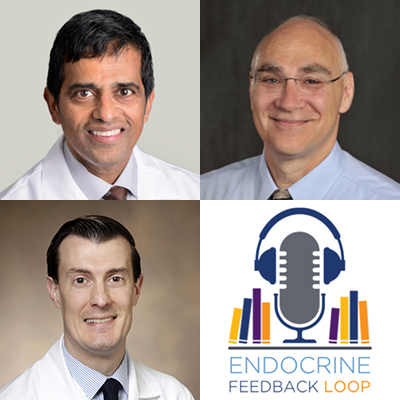
This is Endocrine Feedback Loop. I am your host Chase Hendrickson and welcome you to this Journal Club Podcast series brought to you by the Enderkin Society. Thanks for joining us as we explore an important article recently published in one of the Society's clinical journals. Welcome again to the Endocrine Feedback Loop podcast for our 66th episode. For this month's edition, we review a recent JES article that looks at the frequency of positive islet antibodies in a population of adults without diabetes. While that may seem initially to be an unusual article choice, we found it to be quite helpful in an era where we now have a therapeutic option to delay the onset of clinical type 1 diabetes. When we can identify people early enough, that treatment option naturally raises questions about how we can find some such patients and the risk of false positive results with these antibodies. While this paper does not answer all of those questions, it does give insight into some of them and allows us the chance to discuss the topic further. I host the Endocrine Feedback Loop and work at the Vanderbilt University Medical center as a general endocrinologist and medical Director. Joining me again today is our regular contributor is Steve Whitland from the University of Rochester. He too is a general endocrinologist and clinical director, though he focuses his clinical work on diabetes and conducts research in diabetes, diabetes technology and innovations in diabetes treatment. Today's guest expert is Raghu Mirmira from the University of Chicago. He is an internationally known translational researcher whose beta cell work will be very well known to you all as our listeners from his numerous publications. He directs the Diabetes Research and Training center at the University of Chicago and is also the Vice Chair for Research in their Department of Medicine. So as you can easily tell, the perfect pair of endocrinologists joins me today to talk about this paper. As is also always the case, everything we say will be our opinions and not those of our respective institutions or of the Endocrine Society. For today's episode we discuss prevalence of Islet Autoantibodies in Adults without diabetes, which was published in the Journal of the endocrine Society in August 2025. Megan Pauley served as the first author and was joined by colleagues at the University of Colorado. I will now turn things over to Steve will walk us through these authors introduction and get Raghu to give some key background information on islet autoantibodies and type 1 diabetes.
- [02:31]
B
Thank you Chase. So although we think of type 1 diabetes or has been in the past as quote unquote juvenile diabetes, in fact more adults than youth are diagnosed with type 1 diabetes. One number that's been bandied about is about 62% of patients with type 1 diabetes are actually adults. And we know traditionally that islet cell antibodies precede the onset of disease. And I'm going to pause for my section to ask Raghu for an overview of the natural history of type 1 diabetes, including the role of antibodies.
- [03:07]
C
Thank you, Steve. And thank you, Chase. Delighted to be here. So we've learned a lot about the natural history of type 1 diabetes, just really in the past decade, thanks to a variety of clinical studies that have looked at the natural progression of disease. One of the things that we've learned is that the disease is quite different whether you look at children versus adults. And oftentimes when we think of the disease, we stratify them by age at onset. And that's the one thing that we've learned about autoantibodies in the disease, is that the appearance of autoantibodies differs largely by age or at least the prevalence of the kinds of autoantibodies that we see. There are several autoantibodies that we measure. There's anti insulin antibodies, autoantibodies, there's GAD autoantibodies, zinc transporter, 8Ia2. So we've got several antibodies that we typically characterize in individuals, but there's maybe two worth thinking about. One is insulin autoantibodies, which tend to appear more frequently in younger age groups. So typically in young children before the age of five, that typically appears first. Whereas in older individuals, and certainly in adults, we tend to see the Gad65 autoantibody appearing first. These are not hard and fast rules. This is just prevalence of what we tend to see in populations. And then when we look at risk of disease, it typically goes up when you have the appearance of more than one autoantibody. So by the time you have two autoantibodies, the chance that you'll develop disease, certainly within the subsequent 10 years, is much greater. Again, the timeline to development of disease differs between the young and the older, but in the young, it can be more rapid and aggressive compared to older individuals, where it's slower. So we really think about how many autoantibodies there are and typically what age the individual is. When we think of the natural history and the likelihood that somebody will progress.
- [05:30]
B
To disease, just for completeness sake, Gregor, would you agree that in adults, occasionally patients may develop what looks for all the world like type 1 diabetes without antibodies present?
- [05:42]
C
Yeah, we see that, too. It's something that we're struggling with in the field is how do we stratify different forms of diabetes? Many of these people can be ketosis prone, and that's something that we tend to think of as more characteristic of type 1 diabetes. But we now know that there's a spectrum of disease, and where does somebody fit along the spectrum from type one to type two? And there are actually clinical studies that are ongoing right now to do more careful genetic and antibody characterization of these individuals. But you're absolutely correct. They can look all the world like they have type 1 diabetes and have no autoantibodies. And perhaps they have a monogenic form of diabetes or other genetic form of diabetes.
- [06:28]
B
For example, proceeding with their introduction, they mentioned that in youth with multiple antibodies, about 70% progress to type 1 diabetes within 10 years. Similarly to what you mentioned, they mention also that single insulin autoantibodies confer a lower risk. Moreover, adults with insulin autoantibodies are felt to have a lower or slower progression of autoimmune diabetes than we see in children. They note, and I think that's fair, we have much less information on the prevalence of insulin autoantibodies in adults and the natural history of those who do have positive insulin autoantibodies with or without a family history. So, Raghu, do you have any issues you'd like to bring up around unanswered questions about positive antibodies in adults?
- [07:21]
C
Yeah. So let me just point out, and maybe that was the underlying premise of this study. In the end, we like to identify risk as somebody not just with autoantibodies, but somebody who's got a family history. We don't typically look for autoantibodies in somebody with no family history, because we could argue, but the cost benefit analysis is pretty high, high cost, low benefit in those individuals. But it turns out that up to 90% of people that present with aggressive type 1 diabetes have had no family history. So they're not anybody we would have screened for autoantibodies to begin with. And so we're already kind of biasing ourselves when we do check for autoantibodies in individuals, because we usually check for autoantibodies in individuals who have family history. That's certainly a place to start. But we now know that there's a larger risk out there and we need more parameters in order to define who is at risk and who should we be checking autoantibodies on.
- [08:27]
B
And I'm going to quote the authors, the goal of this study is to explore the prevalence of multiple or single insulin autoantibodies in adults without known diabetes. And irrespective of their type 1 diabetes family history, they tangentially allude to this. But I think that the importance of knowing this data are because we now have an intervention, heplizumab, to prevent progression to stage 3 type 1 diabetes. And therefore data on the prevalence in the general population is important in devising strategies for detection as to who could benefit from peplizumab. And with that, I'm going to refer back to Chase for the methodology in the study.
- [09:13]
A
We'll jump right into the methods here and the way I would encourage us to think about how this study is designed is as a cross sectional study, as a reminder of how those studies work. Cross sectionals take some population. Sometimes it's a general population. Here it's a much more focused. We'll get into that in a second. But they simply take a cross section through that. So it's a look at a single point in time and they collect a bunch of parameters. Some of the information that you can identify here, you can infer that it was pre existing. But a general weakness of cross sectional studies is that you don't follow people over time so that you're not starting with a group of people who do not have an outcome of interest and you wait for them to develop it. So that can be one of the challenges here. But similar to cohort studies, it has the same structure, is that whatever you decide is that your exposure of interest, you're splitting people into groups based on whether they're exposed or unexposed. And then whatever your outcome of interest is, you're looking to see if one of those groups has it more frequently than the other one. So that same structure is still there. I will add the authors put in a little bit of extra information. They have a little bit of following people over time. So that has a bit of a component of a prospective cohort study that's not the core of this study. And I suspect that we'll hear more from this group that is much more in the form of a prospective cohort study in the future, but only got just a hint of that. And we'll get into that here just a little bit into this study in particular, let's think about the patient population. So we're first of all going to describe where this study comes from overall before we talk about the patients that made up the bulk of this study. So this is work that is being done in Colorado that's a part of the autoimmunity screening for kids or the ask. The ASK study in Colorado. So with that study, they recruited youth ages 1 to just under 18 from the Denver area. And this was for testing of antibodies for both type 1 diabetes and celiac disease. The authors mention later on that combining these two things potentially introduce a bias. They call it a selection bias. I might think of it as just a challenge with generalizing the results because some of these cross sectional studies, many of us are familiar with NHANES study, for example, those are much more designed to be representative of the general population. It's much more of a challenge when you're being more selective about who gets in your study or who's perhaps volunteering to be in your study, that it may not be very representative. And so we're going to think more about that. Again, the authors point that out there where that is an issue. So in this study. So they started with recruiting the youth here, but then what this paper looks at is not those youth, but the adult parents or guardians of many of these individuals. So they identified over a thousand who were screened for antibodies between February 2021 and February 2022. Now, of note, the participants were neither selected nor excluded because of a family history of type 1 diabetes. We've talked about that already. This is something that the authors wrestle with. We're going to come back to it in the discussion. But I thought it would be helpful to pause here and get Raghu's thoughts on this. So we can imagine that if you've got a study, you're advertising it, you're promoting it, you're trying to get individuals to be interested in participating, that if you're saying, hey, we're going to test you to see what your risk is for having type 1 diabetes, there's a really good chance, chance that you're going to attract people who have a reason to be worried that they might have type 1 diabetes. And I think it's pretty easy to assume that one of, if not the major reasons for that would be because somebody in their family has type 1 diabetes. So we're likely to get a lot of those folks. And I'm skipping ahead to Steve's part. It does end up representing a little over 10% of the study population here. So a fairly high number. So, Raghu, just thoughts as far as a study design. Do you agree with this approach. Would you have maybe introduced something to try to either exclude these folks or select them, or how might you have thought about that?
- [13:01]
C
Well, I wrestled with this myself. I mean, in part, if you were going to initiate a screening protocol in the general population, you're going to see the same sort of bias, right, that people would be more likely to have their autoantibodies checked if they have a family history. So I think in some respects it kind of reflects what might happen in the real world. On the other hand, individuals with family histories of type 1 diabetes are likely to test more often positive for autoantibodies than those without a family history. But again, I point out the one thing, and that is what I said earlier, that the majority of people that get diagnosed with type 1 diabetes don't have a family history of the disease. So the 10% probably doesn't skew too terribly much. What we might see in the general population is my take.
- [14:00]
A
The way this study worked is if that initial testing was positive, then participants were invited back for confirmation testing and then they were only included here as if that second test was also positive. As far as the autoantibody testing, that screening itself. So they measured autoantibodies to all four. Raghu's mentioned them already. So it was antibodies to insulin to glutamic acid decarboxylase. It's the GAD antibody, the islet antigen 2 or Ia2, and then finally that zinc transporter 8. A couple of different methods. There was a radio binding assay and then an electrochemoluminescence assay. So Raghu, you think about this stuff a lot, know a lot about this. Most of us don't. So give us just a high level overview. You mentioned some distinctions already between the antibodies, but anything else you'd want to mention there and then, anything that's helpful to keep in mind as far as the different ways that you can actually measure those antibodies?
- [14:53]
C
Yeah. Well, I think today the general standard is we probably use both methodologies to measure antibodies. There's a couple of reasons. The radio binding assay was the older assay, the more traditional assay, but it often picks up what we call low affinity antibodies. Whereas the ECl assay, electrochemiluminescent assay picks up what's called high affinity antibodies. So you can probably imagine that there's a sensitivity issue between the two, that the radio binding assay is probably going to be a little more sensitive because it'll pick up less lower affinity autoantibodies. But it also is the case that they're less likely test positive by the RBA assay to actually develop disease just because they may have a lower affinity antibody, whereas those who test positive for the ECL are likely to have or develop disease down the road. But you may lose some individuals in that process. So it's hard to say what's better. The RVA assay was really the gold standard because it was what was used prior to the ECL assay. But now I think there's a general consensus that you probably want to test both ways. And then those that test positive for both are probably ones that have very real autoantibodies that are both high affinity and likely to develop disease.
- [16:18]
A
Just a couple comments on the statistical analysis. So, first of all, the authors measured the confounders that could have been at play here, several ones that they've labeled as covariate. And so that was race or ethnicity, family history of diabetes, which I've defined as a first degree relative with type 1 diabetes, the sex, and then also various characteristics of the particulars of the screening results. When those were positive. The authors go on in this section to talk about a comparison group that they use. They comment that they compare the adults that we've already talked about already to a fairly large selection, well over 7,500 individuals of general population, youth who were in this ask this ACT task group. And I'll mention as an aside, I was a little surprised to see this here. Steve's going to comment on some of these results. That actually turns out to be a fairly significant part of the results and the conclusion. But as the authors describe it in the methods, it's only at the very end here that they tuck this description about this comparator group that they use. So we don't know a lot about it, but it will turn out to be fairly important as we think about some of the conclusions that the authors draw. Those are the methods that we wanted to touch on the particulars. I'm going to hand things back over to Steve at this point so that he can go through the results.
- [17:33]
B
1,087 participants completed the screening and they were ages 19 and a half to 63.9, and the average age was 40.7 years. And notably, as opposed to other Studies, in type 1 diabetes, 75% were female. Whereas usually in type 1 diabetes studies there's a slight preponderance of males, 42 of those screened, I.e. 3.86% were positive for any insulin autoantibody. Six of them screened positive for multiple insulin autoantibodies. Two of the six had a family history of type 1 diabetes. 19 screened for one insulin autoantibody by both methods and 17 screened for only one insulin autoantibody by only one method. And importantly, when we address those 1716 of the 17 screened positive only by the radio binding assay method, which is for the lower affinity autoantibodies as Dr. Neil Mira mentioned and my comment is that the significance of these may be very different from the electrochemiluminescent assay. Then about 85% of those were between the ages of 30 and 50 years. That is at least they succeeded in obtaining an adult range of interest. Although there's not much data on patients older than the age of 50 in the trial, the GAD antibody was the commonest in all three groups, which is what has been seen in other studies. Only 24 of the 42 patients who initially were positive completed the confirmation testing, so notably the numbers are getting smaller. Interestingly, although 30 of the adults had a history of celiac disease, none of them tested positive for insulin autoantibodies either. There was some self selection in the recruitment or an over diagnosis possibly of celiac disease which is not uncouth in comparing the adults and the frequency matched youth which goes back to Chase's comment. In the methods they controlled for first degree relatives and sex. The prevalence of multiple insulin antibodies was not different between the two cohorts. Single insulin antibody by both assays was higher in the adults 1.75 versus 0.59%, which is about a threefold increase. Single antibody was similar in both groups and reminder in the adults at least virtually all the antibodies with the radio binding assay. 16 of the 17 patients in terms of patient characteristics and insulin autoantibody prevalence and notice here the numbers are getting very small especially for the multiple autoantibodies. So adults had a relative risk of 2.97 versus youth for single antibody by both methods. There was no significant difference for single autoantibody by the radio finding assay or multiple insulin autoantibodies. Hispanics had a higher likelihood of a single insulin autoantibody by both methods 2.32 hazard ratio and by one method relative risk was 1.67. First degree relatives were more likely to screen for multiple insulin autoantibodies. The relative risk was 4 or single insulin autoantibodies by both methods the relative risk was 2.33. There was no impact of first degree relatives on the one method single assay, which makes one again question the significance of a single radio binding assay positivity in adults. Although again we're dealing with small numbers. There were only two patients who progressed to type 1 diabetes. So those are the data and I'll.
- [21:44]
C
Send it back To Chase, we'll jump.
- [21:46]
A
Into the discussion and start with a couple of quotes from the authors. First one is that the prevalence of multiple positive islet autoantibodies in these adults was 0.55%, which was similar to that from a matched sample of Colorado youth. And then the other quote being is that multiple islet autoantibodies is a defining characteristic of preclinical type 1 diabetes. The authors then go on to unpack a couple of different issues. The first one we'll start with is that they point out that adults are more likely than youth to screen positive for just a single antibody. And they point out some information related to that. We've touched on it already. But the first point being is that that risk of progression to clinical type 1 diabetes in antibody positive adults without a known genetic risk or family history is unknown and that studies of adults who have positive antibodies with a positive family history show a relatively slow or even no progression to clinical diabetes. So, Rob, do another question for you. Just comment on these observations, how you think about this. We'll eventually move to does this need to change our practice? But help us just begin to put some of these observations into a clinical context.
- [23:03]
C
You know, I think we should just keep in mind a couple of things as caveats. It turns out that this is mostly females in this study. Right. The majority of individuals who get diagnosed as adults are actual male. So it's a little different than what you see with other autoimmune diseases, which I think tells you that there's more to the disease itself than just autoimmunity. We think that there is other genetic factors and then certainly environmental factors that play into this. This study looked entirely at just the prevalence in a single center of individuals who are adults. That's it. And that doesn't apply necessarily to any other part of the country or the world. It doesn't apply necessarily to males and then their potential risk of developing disease. And there could be variations in other environmental exposures and other genetic risk factors. HLA is the biggest genetic risk factor which wasn't really discussed in this article. Right. Because we like to think of a combination of autoantibodies and HLA risk factors as sort of really conferring risk. And then there's other risk genes as well that have a much lower predictability of disease which haven't been looked at either pro insulin gene variations and a variety of others. So I think you can only take from this study the raw numbers, cross sectional, single site, mostly female. Here are the data. You can't say anything about risk to progression because we just don't know enough about what's happening over time to these individuals.
- [24:54]
A
We will circle back to that later on. But first a few other comments from the authors. They point out that race and ethnicity had no effect on the likelihood of multiple positive antibodies. Though we'll mention here, as Steve has pointed out already, I think it's important to remember fairly small numbers here. They do say though that Hispanic race ethnicity was more likely to lead to a positive test for a single antibody. Also first degree relatives were more likely to screen positive for multiple antibodies and single antibodies, but not single antibodies by any one method. So Steve, you had a comment on this that I think would be helpful for our listeners to hear.
- [25:36]
B
Well, I've also, I've previously alluded to this. It really brings into question the importance of the radio finding assay in adults or the significance right with the importance. And it'd be interesting to see a five or ten year follow up. This is to see in fact if any of these patients progress over a longer period of time. We also note, and Dr. Murera could comment that in adults the disease seems to progress more slowly than in children, at least those with single antibodies.
- [26:10]
A
I had a couple of comments looking forward to more of a cohort study. So if the authors weren't planning on doing that already, hopefully they they will. One last concept that we want us to get into before we wrap this up is this idea of antibody fluidity. The authors unpack that. They they cite several other studies. I suspect that for many general endocrinologists like myself, that's probably an underappreciated or relatively unknown concept. So Rahu, can you unpack that just a little bit? What is this phenomena? What is antibody fluidity? How do we need to be thinking about that?
- [26:43]
C
Well, I don't know that we know very much about antibody fluidity, but there is this very well described phenomenon that people can test positive and then test negative. People can test positive for one antibody and then test negative and then test positive for a different antibody. So those individuals, we don't really know too much about their real risk for progression because their individuals we don't follow long enough to really find out what will happen eventually to them. So there is a very real phenomenon of antibody fluidity and the chances that those people are high risk is pretty low.
- [27:26]
A
The authors then move on to what I think is a real strength of their paper as they talk about the limitations of what they've done and almost everything that we've talked about as a limitation the authors grapple with here. They mentioned selection bias. We unpacked that the author's focus specifically on how that might have happened with offering screening for both type 1 diabetes and celiac disease. They point out that females are overrepresented, as we've heard about already. They do point out that the majority of their patients were between the ages of 30 and 50. Because this is a cross sectional study, they said, we looked at prevalence. So just how many people have positive antibodies at this time? They did not look at incidence. You can't do that with cross sectional study. That's where you need a cohort study to try to understand what that looks like over time. They do also mention that there was fairly low proportion of positive screens who return for confirmation testing. And then finally, yet another thing we've grappled with. They point out that given the relatively high proportion of those with a family history of type 1 diabetes, these results may not be generalizable. And their conclusions? They give what I would describe as a summary where they say results demonstrated a high islet antibody prevalence in adults similar to that seen in a matched sample of youth from the same population, as well as differences in islet antibody positivity across race and ethnicity status. They then go on to state what I would say is an implication. It's one we've mentioned already. It was what drew us to this article in the first place, and I'll quote them again here, where they say screening adults from the general population for islet autoantibodies may identify a significant number of people with type 1 diabetes in preclinical stages who may benefit from therapeutic intervention to delay disease progression. We're going to get to that idea here in a little bit because I think that's the most appealing part or the one that excites the most interest. But first of all, I want us to just think about the quality of this report overall. Steve, let's start with you. You spent a while analyzing this. What are your thoughts just about the quality of this report as presented by the authors?
- [29:36]
B
I think that what they did was done well. I think that the numbers are small and I think that the fact that a large proportion of the patients were positive for a single autoantibody that was only radio binding affinity questions what the significance of that finding is. Also the lack of long term follow up, and that's just by study design. The lack of long term follow up really prevents dissecting what the long term implications of the positivity are. And going Back to the question of treatment, we need to know that because right now in practice, the ADA recommends screening first degree relatives for a consideration of teplizumab. And I think we need to know in adults what the significance of positive antibodies are and how many antibodies in an adult of which kind is enough to push us to treat that person with templizumab. So I think it has practical applications because of the availability of a medical intervention.
- [30:51]
A
And we'll circle back here in just a second to that thought of should this change what we're doing right now for our patients? But before we do that, Raghu, thoughts from you. You, you've mentioned some thoughts already about the quality of this report, but anything else that you would add to what Steve mentioned.
- [31:04]
C
So I think this is a step that we want to take in the right direction. One thing that we need to understand about preventive therapies like teplizumab is that when that study that was published was conducted, diabetes is defined largely in three stages. And stage one is when you have multiple autoantibodies and you have no evidence of glycemic derangement. Stage two is when you have multiple antibodies with evidence of glycemic derangement. And stage three is when you have recent onset disease. So everybody who was enrolled in the teplizumab study were what we call stage two. So what we don't know from any of the data presented in this paper is in the context of those who have autoantibodies, what is their glycemic control look like?
- [31:59]
B
Right.
- [31:59]
C
And without that information, we couldn't possibly determine who might be a candidate for therapy even if they had a first degree relative. That's why I said that it may be the first step that we take is because the first thing that we do is screen for autoantibodies and then we ask the question, what stage are they in? 1, 2 or 3? And then if they're in stage 2, we say you're a candidate. So there's that. But then there brings a bigger question as to if we're trying to identify individuals at risk. Are there other things above and beyond autoantibodies we should be looking at? I'm not going to go into the details of that, but there are a lot of people in the field, including myself, that say autoantibodies are one potential risk factor. But we need to be thinking about other combinations of risk, genetic risk scores, maybe other tests that we might do to augment. And so we might end up with ultimately down the road, you know, multiple things that portend risk.
- [33:05]
A
All right, Steve, we've hinted at a lot of this already, but let's, let's be more explicit here. So based on this, as far as your clinical practice, patients that you see, or even patients that you could see, ideas that might come out of your medical center, anything that you would advocate for changing right now or. No, not quite yet. This was a good groundwork, but not ready to change our clinical practice quite yet.
- [33:27]
B
I'm not sure it's ready to change our clinical practice quite yet. I think the question that this speaks to is whether a single autoantibody in an adult first degree relative, in fact, is enough to say, okay, listen, let's check this patient and see if they're in stage two, and then go on to treat with teplizumab. So I don't think we have enough information. I think it's a good start. I think we need larger studies. I'd appreciate Dr. Mira's comment.
- [34:00]
C
Yeah, I completely agree with that. We need larger studies. And, you know, we need to recognize that there is a literature out there that that suggests that islet autoimmunity may not be exclusive to type 1 diabetes. And maybe that's a completely different topic to be discussed at a later time. But I think it just reflects the fact that there is a complexity here that beta cells may be very, very central to the disease. And we just need more information. And fortunately, there's a lot of clinical studies ongoing right now that's that that'll likely give us that information.
- [34:40]
A
And with that, I would like to thank Steve Whitland and Raghu Mirmira for joining me for this month's edition of Endocrine Feedback Loop. I hope that you all learned as much as I did and that you will join us again next month. And now you're in the loop. This has been Endocrine Feedback Loop. Endocrine Feedback Loop is brought to you by the Endocrine Society with production oversight by Brandi Brown and Andrew Harmon. If you want to like and subscribe, you can find us on Apple, Spotify or wherever you get your podcasts. We'd love to hear your feedback on this episode or the podcast itself, please email us@podcastren.org.
- [35:26]
B
Endocrine Feedback Loop is a.
- [35:28]
A
Free service of the Endocrine Society.
- [35:30]
B
To learn more or to become a member, visit the society's website at www.endocrine.org.