Loading summary
Transcript28 lines
- [00:01]
A
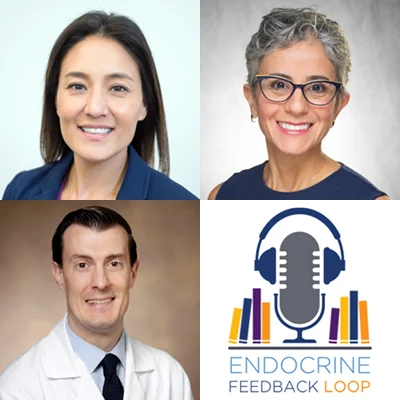
This is endocrine feedback loop. I am your host, Chase Hendrickson and welcome you to this Journal Club Podcast series brought to you by the Endocrine Society. Thanks for joining us as we explore an important article recently published in one of the Society's clinical journals. Welcome back to the Endocrine Feedback Loop podcast for our 68th episode. For this episode of the podcast, we look at a JCNM paper that compares the effect on calcium of initial and subsequent doses of denosumab in people with chronic kidney disease. Though concerns have arisen over the years about the problems with stopping denosumab therapy, it remains an appealing medication for some of our patients with ckd. So we thought this report had the potential to change our practice and gave us the opportunity to delve into the challenges around osteoporosis and ckd. As is often the case for papers we review, the authors use an observational study design, giving us a chance to discuss the pros and cons of such an approach. Before I introduce our team to you, I remind you that I host the Endocrine Feedback Loop and work at the Vanderbilt University Medical center as a general endocrinologist and medical Director. With us today as this episode's regular contributor is the podcast's resident expert in bone and mineral metabolism, Amal Shibley Rahal. She comes to us from the University of Iowa, where she is a master educator in endocrinology, Currently serving as an Associate Dean for the Carver College of Medicine. She serves as the lead endocrine educator for their internal medicine residency, having also been the Fellowship director in the past. Her clinical practice focuses on bone and calcium disorders, with many publications in this field and in endocrinology in general. Today's guest expert hails from the University of Western Ontario. Kristin Clemens practices general endocrinology at St. Joseph's Hospital in London, Ontario, and focuses her practice on osteoporosis. She works as the Medical Director for the Osteoporosis and Metabolic Bone Disease Program at Western and is an active health services researcher with vast experience in both observational studies and in clinical trials of people with osteoporosis. So, as you can tell, the perfect pair of endocrinologists joins me today to discuss a paper on osteoporosis. As usual, everything we discuss will be our opinions only and not those of our respective institutions or the Endocrine Society. This month we discuss dose specific effects of denosumab on serum calcium levels in patients with osteoporosis and various renal functions, which came out earlier this year in the Journal of Clinical Endocrinology and Metabolism. Xiaozu's son served as the first author for this paper, which comes out of the Massachusetts General Hospital. I will now turn our discussion over to Amal. She will lead us through the main points that the authors make in their introduction and get Christian to review some important concepts for us.
- [02:54]
B
Amal thank you, Chase. As Chase indicated, the study is about denosumab and denosumab is a potent antiresorptive agent that is often preferentially used in patients with chronic kidney disease and osteoporosis. It has been shown to have a similar potency at suppressing bone resorption across a wide range of renal functions ranging from normal to dialysis dependent kidney failure. And the drug's potential to increase bone mineral density appears to be similar among CKD patients acquiring dialysis and those who do not. At this point, I would like to ask Kristen to give us a high level overview of some of the challenges in treating osteoporosis in patients with chronic kidney disease.
- [03:40]
C
Thanks so much Amal. Fragility fracture prevention is extremely important in patients with chronic kidney disease, but it is complex. We know that patients can not only have osteoporosis, but they can have other kidney bone diseases that are concomitant and those are things like osteomalacia, osteitis, fibrosis cystica and a dynamic bone disease. And these diseases need to be optimized first. Osteoporosis is also complex to manage as many of our medications for osteoporosis like bisphosphonates can't be used in those with reduced kidney function, which is typically defined by an EGFR or a creatinine clearance less than 30 and the presence of hyperparathyroidism as well as vascular risk factors can make use of other agents for for osteoporosis like teriparatide and romozozumab. Difficult.
- [04:37]
B
Thank you Kristin. We mentioned earlier that denosumab seems to be an effective and potent drug in patients with chronic kidney disease. In terms of its antiresorptive action, however, there is a caveat. Patients with advanced chronic kidney disease have impaired gastrointestinal calcium absorption due to decreased activation of vitamin D in the kidney. As a result, they are more dependent on osteoclast mediated calcium mobilization from the bone to maintain their serum calcium levels. This results in advanced chronic kidney disease patients being at higher risk of developing hypocalcemia and in some cases severe hypocalcemia when treated with denosumab compared to those with normal renal function. And this has been shown in several studies and reports. And here I would like to stop again and ask Kristen to elaborate a bit more about the mechanisms by which antiresorptive therapy causes hypocalcemia in people with chronic kidney disease.
- [05:36]
C
Patients with kidney disease, particularly when it's advanced, are already Hypocalcemic due to low 25 hydroxy vitamin D and also poor conversion of 25 hydroxy vitamin D to 125 hydroxy vitamin D. And as mentioned, this can lead to poor calcium absorption from the gut. As we know to try to compensate for this, we often see a higher level of PTH in circulation, and the hope is that this will help to mobilize calcium from the bone. And this is facilitated again by osteoclasts. When we give patients a dose of denosumab, it potently inhibits the osteoclast. This can then reduce the release of calcium from the bone and the kidneys. Unfortunately, because of some of the mechanisms I reviewed earlier can't adequately compensate. So then what happens is you can get a precipitous decline in calcium levels after the administration of denosumab.
- [06:37]
B
So our study seeks to evaluate whether patients with advanced chronic kidney disease who are receiving denosumab experience similar hypocalcemia risks with the first dose of denosumab as compared with subsequent doses of the medication. It hypothesizes that subsequent doses of denosumab may be associated with less risk for hypocalcemia compared to the initial dose of the drug. And at this point, I will turn it over to Chase to walk us through the methods of this study.
- [07:08]
A
Yes, now that Amal and Kristin have set the stage, we'll dig into how the authors set up this investigation so that we can be sure to think through any caveats that go along with that. But first of all, I would describe this study as a retrospective cohort study. So we've looked at a lot of these over the years, but we'll do a quick overview of how those work. As a reminder, cohort studies start by splitting individuals into groups. So you have an overall group that's your cohort, and they have to have at least one thing in common. And then within that, you have to have certain exposures that allow you to put people into different groups. At a minimum, you've got to have two different groups, and that's often somebody exposed to something, somebody not exposed to something. You may have multiple Groups based on degree of exposure, and that that's how you decide how your groups are made up. You then follow those individuals over time. That's a key component of a cohort study. And what makes it a retrospective cohort study is that all of these things have happened by the time you begin your investigation. So you're going back, you're going through a chart review, you're going back through some database. You have to be able to reconstruct that time sequence because you still have to have that, but you're not following those people in real time. That would be a prospect of cohort set if you were doing that. So that's the way that these studies are set up. So now with this study in particular, think about the population here. So what these authors did is they initially they looked at all patients at the mass General Brigham who received inosumab between January of 2016, and that went all the way through February of 2024. And that is their cohort overall. There's a few other inclusion criteria that we're going to look at in just a second, but think of that as the big group. Anybody who got denosumab for osteoporosis specifically. Now, before we go into those inclusion criteria, another question for Kristen here to help us understand this is a little over eight years of data that they're looking at. We alluded to it before, but there have been some potential trends in how and when denosumab is used. Anything that we might need to keep in mind that may have been changing outside of this study. As far as denosumab used for osteoporosis.
- [09:12]
C
I expect that over time there was an increase in prescriptions for denosumab amongst people who have preserved kidney function. There may not been as much of an increase in those with advanced kidney disease because there's still not a lot of great data that suggests its efficacy. I do wonder, though, whether there may have been more knowledge of the risks of hypocalcemia with use of this medicine. So maybe there was some difference in academic practice with this knowledge. So maybe clinicians wanted to monitor patients more closely or maybe even want to keep them within their academic center because of this risk that has become more apparent over recent years.
- [09:58]
A
These are individuals who received anosumab for an indication of osteoporosis, and with that had to be the standard dose, 60 milligrams, and they had to have received it every six to nine months. So we're not looking at individuals who may have, say, missed A dose, and so had prolonged periods of time in between their doses. And this is a key thing here, is that these individuals had to have received at least two doses to be included in this study as another one. You also had to have had adequate data both before and after each dose. And so that after was a couple of tests per month. I think this is important to keep in mind because it raises a lot of possibilities. It's understandable why the authors made this decision. They want to see what the changes in calcium are. So to be able to do that, you have to have calcium levels before and after. But since this wasn't prospective, they weren't determining upfront how these individuals were going to be monitored. They are simply relying on, well, who had these labs checked? And so this increases the possibility that individuals who met these criteria, who had these additional labs both before and after, were for some reason considered high risk by the individual who was prescribing the denosumab in the first place. There's a few different ways that you could think about it. A detection bias would be one, so, meaning you're possibly looking for a worrisome outcome in one group differently than another. So again, Kristen alluded to it already. There's this increasing awareness of hypocalcemia as a potential side effect. So maybe practitioners were checking labs more frequently whenever they were worried about somebody having hypocalcemia. So then it makes it a lot easier to find it if you're looking for it. So that's your detection bias. A selection bias could also be a place here. So this is to get into this study, to be selected for it, so to speak, you had to have all of these different labs available. And so that's going to be pulling people who may be more or less at risk for the outcome of interest here. So we need to keep this in mind. Again, it's understandable why the authors did this, not faulting them or saying that they made a mistake. But it does come with those caveats of how we going to interpret this, knowing that not every individual, patient or subject in this study was looked at exactly the same way. Okay, so those were the inclusion criteria. And some comments along with that. Really no additional exclusion criteria. It was just all related to the inverse of the inclusion criteria, if you will. And then of note, the investigators also obtained a medication history. Okay, so now we're going to look at the exposure. So again, your population, overall, the entire cohort is the group of people from over eight years who used Anasa MAF for OSTEOPOROSIS the way that they then split them into groups is based on the exposure. And they did it in a couple of different ways. What I would describe as their main analysis, the most important way that they did this was looking at which dose of denosumab you had received. So meaning is this the first dose, the second dose, the third dose, and that was then how they defined those groups that was the exposure of interest. They stratified it. So within each of those, they then stratified it based on what your gfr. So they had subgroups within each of those groups. That I think was the main point that they were trying to make, at least the way that they build their analysis. They went and they did an additional analysis and really they just flipped it around the other way. So with that additional analysis, they initially started by defining their groups based on the GFR, kind of typical criteria based on stages of CKD. So if you were 60 or above, if your GFR was between 59 and 30, if you were less than 30, so again, that was the groups there. Then they then turned around and stratified that by which dose you had received, the first, second, third, et cetera. So a couple different ways of thinking about exposure is what the authors did here and then outcome. So this is the key thing that you're looking for. So in a cohort study, once you've split your subjects into groups based on an exposure, you're then looking for outcomes to say, okay, does just one group or another have more or less of whatever my outcome of interest is? So the primary outcome that the authors are looking at here is change in serum calcium. So that's after the initial and then subsequent denosumab doses. They do have a secondary outcome that's related. They were also interested in cumulative incidence of hypocalcemia. So that's what we're going to be hearing more about. That's our high level overview of the methodology that the authors employ. So I'm going to hand things back over to Amal and she's going to walk us through all of these results as presented by the authors.
- [14:16]
B
First, we will review the characteristics of the study cohort. 10,398 potentially eligible patients who received denosumab between January 1, 2016 and February 29, 2024 were identified. After exclusions were applied, the researchers developed two cohorts. The primary cohort consisted of 159 patients who had received at least three consecutive doses of denosumab for osteoporosis at a dose of 60 milligrams every six to nine months, as Chase indicated previously. And these subjects had sufficient laboratory data both before and for four months after each dose. A secondary cohort was also identified that included 325 patients who received at least two doses of denosumab and had sufficient laboratory data before and one month following each dose of denosumab. So now looking at this flowchart, what is very striking is that they initially identified about 10,000 subjects who were started on denosumab within their timeframe and ended up with a couple of cohorts that consisted of only a few hundred patients. So I would like to discuss with Kristen and Chase a little bit what that means, you know, the end being so small when their initial potential eligible group was much, much larger.
- [15:48]
A
I think this ties back to the concern that I mentioned before. And again, it depends on how you think about it, whether you want to consider this a detection bias or a selection bias. Maybe. I think this supports ethos because they started with a huge number of patients over 10,000 individual, then by the time you shrink it down, you only have a couple of hundred, maybe 300, when you have a bit more of a liberal way of defining this. So that really makes me worried. This is a really, really small subset of all of these individuals who might have been eligible. And it just raises that question of, okay, this is then almost certainly related to what data was available, the lab data. So why were these individuals getting labs tested so much? What was so unique about them? One of the obvious things is going to be, well, they had ckd, people were worried about it. But then it just creates question of, yes, of why were we checking this so much. We're going to give estimates for how often something happens. And I just worry that if we've got such a small subset that if we maybe then try to extrapolate if, well, this is roughly how often this happens or you're X number of times likely to have this problem is, boy, we're really basing that on such a small subset. Not that it's invalid, but it's the biggest question that I had about this study.
- [16:57]
B
And Kristen, I'm wondering if you had other concerns or ideas here.
- [17:01]
C
I fully agree with Chase. I think that oftentimes in our practice, lower risk patients are discharged back to primary care for osteoporosis management. So it's likely that these clinicians did keep higher risk patients with them. We also know that, you know, people don't necessarily always continue on denosumab for the longer term. So we may also have people who had either stopped their dose or had a truncated treatment period. So those would be some additional thoughts on top of tasis.
- [17:30]
B
So basically what you two have identified is whether we are somehow looking at the higher risk population here, which are the ones that their doctors were worried about them sufficiently to A keep them in their practice and then B do frequent labs on, which basically is an inclusion requirement. Another thing that makes me wonder is actually the reverse if we are missing some of the higher risk patients, meaning is there a big chunk of those patients who got the first dose of denosumab and developed hypocalcemia so severe that people did not give them any more denosumab? I can think of myself early on when we started using denosumab, where this happened with a couple of my patients, and after the first dose the hypocalcemia was so severe and so difficult to recover from that I stopped denosumab. And since to be in this study you should have had at least two doses of denosumab, that makes me wonder how many had such a severe hypocalcemia after the first dose that they did not get it anymore. So are we actually missing the sicker patients or the more severe cases too? So I think the selection bias potentially could go both ways in this situation. All right, so moving on with the results, we will look at Table 1 that shows the baseline characteristics of both cohorts. And I will not describe every single data entry in Table 1. I will focus on just a few highlights. Within the primary cohort, 46 sub, that is 29% had a GFR between 30 and 59, and 24 subjects, that is 15%, had a GFR below 30. The rest of the subjects, which is a little bit over half, had a GFR above 60. Within the secondary cohort, 106 subjects, that is 33% had a GFR between 30 and 59, and 47 subjects, that is 14%, had a GFR below 30 and the rest had a GFR above 60, which again is about half of that cohort. The mean age in both cohorts was about 73 years, and about 87% of the subjects in both cohorts were women. The mean baseline calcium ranged between 9.5 and 9.8 milligrams per deciliter across both cohorts and across the different GFR groups. And the mean 25 hydroxy vitamin D concentration was between 43 and 45 ng grams per milliliter as expected, the mean PTH concentration increased as the GFR decreased. So now we will examine the changes in serum calcium concentration after each dose of denosumab, which is the main research question in the primary cohort. Those results are summarized in Table 2 and Figure 2. After the first dose of denosumab, the average drop in serum calcium was 0.34 for those with a GFR more than 60, 0.52 for those with a GFR of 30 to 59 and 1.12 for those with a GFR below 30. The drop in calcium for the GFR group below 30 was significantly higher compared to the drop observed in the other two GFR groups. Now let's look at the change in calcium concentration with subsequent doses of denosity. For this part we will focus on the group of patients with a GFR below 30. Within this group, the drop in serum calcium was at 1.12 after the first dose. As we already discussed, it was 0.72 after the second dose and 0.6 after the third dose. The drop in calcium after dose 1 was statistically larger than the drop that was observed after dose two and dose three and there was no statistical difference between the drop observed after dose 2 versus dose 3 for the GFR groups above 30. There was no difference in the drop in calcium concentration between dose one, dose two and dose three. Now here it is important to note that the average time until nadir calcium concentration was six to seven weeks in patients with a GFR below 30 and close to nine weeks weeks in patients with a GFR above 60. This is an important point to remember for later in the discussion and may carry practical implications. As a reminder, the results that I have discussed so far come from the researchers analyses of the primary cohort that consisted of 159 patients who received at least three doses of denosumab. Now I'm going to turn our attention to the secondary cohort. This cohort consisted of 325 patients who received at least two doses of denosumab. Here the researchers evaluated the incidence of denosumab induced hypocalcemia across the different GFR groups and between dose one and dose two. These results are listed in Table three. What they found is that within four weeks of the first dose of denosumab, lab hypocalcemia was seen in 4.1% of patients with a GFR above 67.6% of those with a GFR between 30 and 59 and in 21.3% of those with a GFR below 30 and this trend was statistically significant. So the lower your gfr, the higher the likelihood that they developed hypocalcemia. A similar pattern was seen after dose 2 of denosumab, but the incidence of hypocalcemia was lower in all groups after the second dose and there was no statistical difference between the three groups. If we focus on the group of patients with a GFR below 30, we will see that while 21.3% of them developed hypocalcemia after the first dose, only 14.9% developed hypocalcemia after the second dose, but this trend was not statistically significant. As we look at these results, however, it is important to remember that we are only looking at hypocalcemia within four weeks of each denosumab dose, which was the inclusion criterion for the secondary cohort. However, we know from the analysis of the primary cohort that it takes an average of six to almost nine weeks to reach the nadir calcium concentration. So the hypocalcemia incidence that is reported here might be an underestimate and at this point I would like to turn it back to Chase for discussion and to go over the conclusions.
- [24:32]
A
We'll see how the authors synthesize all of these findings that Amal just walked us through, and as usual, we'll get Kristen to give us some thoughts on these as we go along. We'll start with the two main findings as the authors report them and I'll quote them here. The first one is that denosumab was associated with a higher risk of hypocalcemia among patients with advanced CKD as compared to those with normal or mildly impaired renal function. Then the second one is among patients with GFR, less than 30 subsequent doses of denosumab were associated with less magnitude of serum calcium levels decrease as compared to the initial dose. The authors then go on as is customary and compare their results to the medical literature. They point out that most studies only look at the effect of the initial denosumab dose on those calcium levels and that some of those reports mentioned pretty severe, pretty high risk of hypocalcemia. So Kristin, let's come back to this. Amal mentioned it already and got our thoughts on this as to well, we've potentially excluded all those people because in this investigation it's only looking at people who have had at least two doses. So just like she described, maybe people who had a really bad hypocalcemia never got a second dose, so they wouldn't have been eligible for this study. So as we think about comparing the results results of this investigation to previously reported studies, how do we need to think about that? How do we need to factor that in? What limitations does that present to us?
- [25:57]
C
Thanks, Chase. So the study estimates were in some respects very different from some of the larger population based analyses that have come out of the US recently. So reflect on one study that was published in JAMA of postmenopausal women receiving hemodialysis where the risk of hypocalcemia was quite a bit higher in those who received anosumab compared with other antiresorptive medications. Risk might be different in this population, again because they were very highly selected and had to receive a couple of doses of denosumab to be included in the cohort. It also may have been very different because we're actually not sure of the proportion of patients in this cohort who were receiving dialysis. So I do think that the results need to be be interpreted with caution and may not be fully generalizable to some of the patients that we may see in our own practices.
- [26:53]
A
The authors then move on to propose a mechanism for why hypocalcemia is an issue in getting denosumab when you have ckd. Mal mentioned a little bit of this, as did Kristen in the introduction, but we're going to delve into it a little bit deeper. So like we mentioned already, and as the authors point out here, when you have ckd, that limits the intestinal absorption of calcium, so then it makes individuals much more dependent upon the bones to mobilize calcium. And importantly with denosumab, it's really that first dose that is particularly potent with suppressing bone resorption does so more than subsequent doses. And so that then potentially explains why the change in the serum calcium is so much more with that first dose compared to subsequent ones. So Kristen, right back to you on this. Does that make sense as an explanation or. Or maybe doesn't totally connect the dots for you. What are your thoughts on that proposed mechanism from the authors?
- [27:48]
C
From a physiologic standpoint, it makes sense. So we do know that if you monitor PTH over time, you do get quite an increased compensator increase in PTH about one to three months after denosumab. And this might enhance renal calcium absorption and then maybe stimulate 125 conversion, providing patients with a new SETI state. I also wonder if part of the reason why we see less hypocalcemia with subsequent doses is whether patients were supplemented more appropriately. So I think it would be commonplace for us if we saw one episode of hypoglycemia to probably prophylax patients a little bit more so with subsequent injections. And so that's something that I wasn't able to tease apart in this study and I wonder could be contributing as well.
- [28:36]
A
We will move on to thinking about some of those limitations and we'll list here the ones that the authors mentioned. So the first one that they list is that there were a small portion of patients who had enough data to be included. We've talked about that and the authors readily identify that as a potential issue with their report. Just like Krista mentioned, the authors point out that calcium intake could not be quantified here. There's also a single healthcare system was another thing that the authors mentioned, as is the inclusion relying on a diagnosis of osteoporosis and that they were not able to include BMD or fracture data into their report. And then finally, importantly, the authors point out that they didn't consider other comorbidities besides ckd and so there was very much a possibility for confounding in this report. Move on now to the conclusions from the authors and I'll give you their summary and quote them again here where the authors say serum calcium decreases less following subsequent doses than following the initial dose of denosumag among patients with osteoporosis and advanced ckd. The authors give us some recommendations. They came from earlier in the discussion, but I thought that they'd be helpful to include here as we're wrapping up. And they recommend that individuals or practitioners who are prescribing denosumab to individuals with CKD that they focus on improving patient counseling, improving interdisciplinary communications, and finally proactively increasing calcium doses for at risk patients around the time of that initial denosumab dosing. Okay, so we're going to think about whether this should change our practice as endocrinologists to treat people with CKD and osteoporosis. Before we get to that aspect of it, I just want to think about the study over. Amal, let's start with you and get your thoughts on the overall quality of this report.
- [30:27]
B
I think the analysis themselves were good, you know, within the limits of what is available to them. They were good at pointing out caveats where those existed. For example, the time until nadir hypocalcemia that was elicited in Cohort 1. But Cohort 2 did not have enough monitoring time to fully elucidate that so that was a helpful part of the analysis that they did and pointed out. Michael, Concern, though, is in the generalizability of these data and their applicability to the general patient population. I think it's reasonably reassuring for people with less severe degrees of CKD that their calcium does not seem to drop by that much even after the first dose. I find myself less reassured when it comes to those with a gfr less than 30 because I have a feeling many were excluded because. Because what I described earlier, that they probably got one dose and their calcium dropped too much and they didn't get any more. You can almost see that in the proportions of the patients with a GFR of less than 30, which is only about 15% in the cohorts. So they are underrepresented, which to me suggests that the exclusions applied mostly to that group. So I'm worried about the quality of the study from a generalizability point of view, applicability point of view.
- [31:45]
A
Kristen, same question for you. What are your thoughts about the quality of the report overall?
- [31:49]
B
Yeah, I think that this adds to.
- [31:51]
C
The literature base, but I did want some more information from the author. So to Amal's point, again, I wanted some more information about the people who discontinued, who were excluded, a little bit more about their monitoring strategy and more information about how the prophylaxis was altered. I think would have gone a long way for me. And I agree as well in terms of the generalizability, being a very focused academic population that was studying and we.
- [32:17]
A
Will end where we always do, which is thinking about our clinical practice and whether it needs to change based on this information. So, Lamal, let's go back to you. You see a lot of folks with osteoporosis, you're frequently wrestling with this question of if and how to treat it for individuals who also have ckd. So what are your thoughts, the results of this paper? Will it change your practice, not have an impact? Confirm what you're doing already. Walk us through how you would think about that.
- [32:42]
B
I think for the most part it will confirm what I do already. You know, I'm usually quite aggressive about. We're quite careful in prescribing denosumab for patients with advanced CKD and those on dialysis. And when I do, I am very aggressive about monitoring them very closely and quite aggressive about prophylactically increasing their calcium supplementation. So I don't see anything in this study that will make me change that practice. I mean, if anything, it reaffirms what I do. I think really the change is more it reassures me a little bit more in that the ones with less severe chronic kidney disease are probably gonna be okay. It will not necessarily lead me to less monitoring, but I'll be a little bit more comfortable when making the decision to prescribe.
- [33:31]
A
Kristen, we will wrap things up with you. Why don't you give us your thoughts on this about the same question will this change your practice? And then and also give give us some thoughts. Amal alluded to hers already, but some of these recommendations that come from the authors about what we should be doing. What are your thoughts about those in particular?
- [33:47]
C
Yeah, I do agree with the recommendations of the authors and I also share the same sentiment as Amal. One to make sure that denosumab is the right fit for the right patient. And I think that this gets there and shares the importance of doing the calcium check and monitoring closely. I think it may not necessarily help things drastically on my end, but I think it does point to the need to prior to the injection, making sure you've got a strong multidisciplinary team. I really liked that the authors did pick that up. I don't prescribe the medication unless I have an engaged nephrologist, an engaged patient or an engaged caregiver just because the amount of monitoring that needs to be done. I also appreciated that the authors mentioned needing to get some of that other baseline blood work in advance and all those pieces pieces again important to kidney bone disease management, need to be optimized prior to providing the denosumab injection. So highlights a really important area and hopefully we will see some more evidence come out about best treatment and fracture prevention in this population.
- [34:56]
A
And with that, I would like to thank Amal Shibley Rahal and Kristen Clemens for joining me for this month's edition of Endocrine Feedback Loop. I hope that you all learned as much as I did and that you will join us again next month. And now you're in the loop. This has been Endocrine Feedback Loop. Endocrine Feedback Loop is brought to you by the Endocrine Society with Production Oversight by Brandy Brown and Andrew Harmon. If you want to like and subscribe, you can find us on Apple, Spotify or wherever you get your podcasts. We'd love to hear your feedback on this episode of the podcast itself. Please email email us@podcast.org. Endocrine Feedback Loop is a free service of the Endocrine Society. To learn more or to become a member, visit the society's website at www.endocrine.org.