← Endocrine Feedback Loop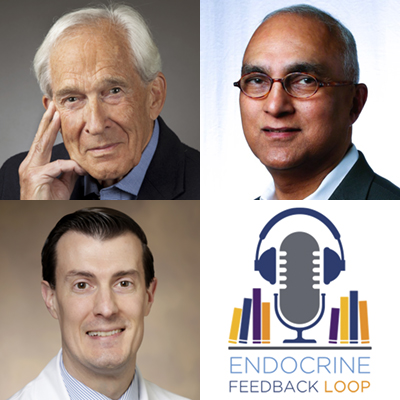
Loading summary
Transcript24 lines
- [00:01]
A
This is endocrine feedback loop. I am your host Chase Hendrickson and welcome you to this Journal Club Podcast series brought to you by the Endocrine Society. Thanks for joining us as we explore an important article recently published in one of the Society's clinical journals. Welcome again to the Endocrine Feedback Loop podcast for our 69th episode. This month we review a JCNM paper on the gut microbiome of adolescents with type 1 diabetes, which hopes to understand differences between those with a normal BMI compared to obesity. Studying gut microbiomes has been a hot topic for several years now and we are excited to take the opportunity to unpack this work and see how it helps us better understand our patients. We will both work through the challenges that come with any observational study and learn more about the specific techniques used by these investigators in this study. As always, we will end with our thoughts on how these findings advance the care we as endocrinologists provide. I host the Endocrine Feedback Loop podcast and work at the Vanderbilt University Medical center in Nashville, Tennessee as a Medical Director and general endocrinologist. Today's regular contributor is Ashok Balasubramanyam from the Baylor College of Medicine in Houston, Texas. He serves as a Vice President and Senior Associate Dean there, as well as the Director of their Clinical Scientist Training program. He is well known for his translational research in diabetes, particularly atypical diabetes, as well as for being the immediate past chair of the Endocrinology Specialty Board for the abim. Joining us today in our virtual recording studio as our guest expert is Oka Learnmark from Lund University in Sweden. He is the world's leading expert in the autoimmunity underlying type 1 diabetes, both the pathophysiology and its cure. He is well known to you all as our listeners from his many talks and papers, as well as the many leaders in endocrinology that have trained under him. Importantly, as we will hear more about shortly, he is the PI for the NIH supported the Environmental Determinants of Diabetes in the Young study. So as usual, the perfect pair of endocrinologists joins me to review this paper. As is also always the case, everything we say will be our opinions only and not those of the endocrine society or our respective institutions. Today we look at gut Microbial changes associated with obesity in youth with type 1 diabetes, which was published in February 2025 in the journal of Clinical Endocrinology and Metabolism. Heba Ismail from Indiana University served as the first author for this paper. I will now hand the Conversation over to Ashok. He will give us some key background information, review the main points made by the authors in their introduction and get Oka to give us some key insights.
- [02:54]
B
Ashok thank you, Chase. It's wonderful to be here again with you and with Oka. Lernmark and Happy New Year to everyone. So it goes without saying that type 1 diabetes is a very complex disease, which means that the environment has an enormous effect on its pathophysiology and natural history. However, it's always been difficult to quantify and identify specifically what are these environmental factors, to comprehensively evaluate the effect of one aspect of it, that is our microbial environment, both internal and external, is a very important aspect. And the technique to do this took a significant leap forward some decades ago with the rapid growth of what is now generally known as microbial science. And as Chase mentioned, in the field of diabetes, this has led to at least one landmark ongoing study, which is the TEDDY study. And TEDDY has generated tremendous insights and into the connection between the gut microbiome and the onset of autoimmunity and the nature of the crosstalk between the microbes and the immune system in the pathobiology of type 1 diabetes. Now, today, we're not discussing any of the very notable papers that have come out of the main TEDDY study itself. Rather, as Shay said, we're discussing a paper by Ismail et al. Recently published in the jcem. But we mentioned TEDDY for two reasons. One is because I do believe that in some sense this paper in the JCEM was inspired by TEDDY and adds to the body of knowledge related to microbial immune interactions in type 1 diabetes. And the other reason, of course, is because we're honored to have Dr. Oka Lehrnmacher, one of the heads of Teddy, as our guest expert. Now, in a recent review of Teddy, just a few months ago, in late 2025, the Teddy investigators defined six goals of that comprehensive and as I said, still ongoing project. And one of those goals is to, quote, disentangle the heterogeneity of type 1 diabetes phenotypes and to characterize possible endotypes. And I think it's entirely likely that the authors of this current paper in JCAM had that goal in mind when they undertook to examine the differences in the gut microbiome in adolescents with autoimmune type 1 diabetes, but specifically those who are obese versus those who were lean amongst the adolescents with type 1 diabetes. So Ismail et al begin their paper by noticing the increased prevalence of obesity in children and adolescents with type 1 diabetes and this is important because the presence of obesity adds another pathological dimension to the metabolic complexity of type 1 diabetes. In other words, we already know that type 1 diabetes is primarily characterized by severe insulin deficiency, but with obesity, you're now adding on the significant aspect of insulin resistance. And if you do that, what happens to the complications and how does it change the pathophysiology? Now, the development of type 1 diabetes has been previously shown to be influenced by the intestinal microbiome, in other words, by the taxa and the species of the microbes in the gut and, and their products. As with many other complex diseases, type 1 diabetes patients therefore exhibit what is now being termed gut dysbiosis. Obesity in the absence of type 1 diabetes also causes a different kind of gut dysbiosis, contributing to the insulin resistance associated with diabetes. And perhaps I can pause for a minute and ask Oka if you could possibly give us sort of a high level overview of, of the concept of gut dysbiosis and how do you think this might affect type 1 diabetes and obesity?
- [06:43]
C
Oh, thank you, Ashok. Well, it's a pleasure to be participating in this discussion. It's a very rapidly developing area of research and translational research. So the imbalance in the gut microbial community was sort of discovered when we looked at TEDDY children from birth and we asked the parents to collect stool samples every month up until four years of age. And these stool samples were in four different countries, the United States, three different states, Sweden, Finland and Germany. And the parents were really able to provide the study with the monthly stool samples, which provided the possibility to map out the development of the human microbiome. And one should ask the question, what is imbalance? If you deal with a system where you have perhaps in each person 150 to 400 different species of bacteria, and there is about 1 trillion cells per milliliter of the microbiome. So what do we really mean with imbalance in this very complex bacteria but measurable system? So the developing gut microbiome, which is the contribution of the TEDDY study, undergoes three distinct phases of microbiome progression. There is a developmental phase during 3 months to 14 months of age, and then there is a transitional phase between 15 and 30 by months of age. And this, to our surprise, was followed by a stable phase where each individual at 31 to 46 months of age, acquired the personalized microbiome, if you wish, and it is established by four years of age. And the imbalance that wasn't really observed in the TEDDY study, but it may be caused by loss of beneficial microbes, and it would then allow the expansion of harmful microbes. And I think a lot of investigators look at the microbiome as a complex system which attain a minimum composition. So if one member of the microbiome is lost, it's going to be replaced by expansion of another already present member of the microbiome. After your microbiome has been established, the stable phase, any long term change of the microbiome may create a new situation where the normal gut function is going to be disrupted. One example is, of course, treatment with antibiotics that may simply reduce or remove one member of the microbiome. So the gut dysbiosis and the change is going to be very personalized. I think that is reflected in this paper. It was indications of changes in several people, But I think one has to look at the stable phase and what has happened to each individual person to really carefully define the dysbiosis, because it's going to be very different from person to person.
- [10:58]
B
Thank you. Okay, that's really helpful. So there's sort of a personalized gut, but that appears after the age of four. The changes can then lead to disease because of the fact that an inimical kind of bacteria may take its place.
- [11:12]
C
Yeah. I just want to add that it was important to have the four different countries, because it was possible by the final analysis of identifying the different bacteria based on their DNA, that there are country differences that we need to take into account.
- [11:34]
B
Very interesting. Thank you. Given that the present study seeks to answer the question, what is the nature of gut dysbiosis in adolescents who have both type 1 diabetes and obesity? So each condition seems to have some characteristic changes in the gut. But what if you have both? Are both kinds of dysbiosis present, or does one kind predominate or is there some kind of interaction? Then, more importantly, might any of these changes affect the natural history of type 1 diabetes in this patient? So it's a complex question, and I think to sort of begin to answer that, this paper has taken this ambitious focus to address the question. Specifically, the Authors have studied 48 adolescents between the ages of 11 and 19 years who had type 1 diabetes to determine if there is a difference in the gut microbiome between those with a BMI in the lean range and those with a BMI in the obese range. And they hypothesize that, in fact, there would be a difference.
- [12:36]
A
Chase, as you can easily tell, we've got big important questions that we're wrestling with here. So we're going to think about how the authors designed their investigation to see if they could answer some of those questions. As usual, we'll start by thinking about the study design that's used here. And I would describe it as a cross sectional study as a reminder of how cross sectional studies work. A key component of that is that you're getting your data all at one point in time. Time. That's in contrast to cohort studies. We look at a lot of cohort studies on this podcast, and cohort studies have an advantage of having a time component. The real strength of cohort studies then, is that you can clearly identify that something that you have labeled as a potential cause that it predates the effect that you are investigating. That can become a challenge with cross sectional studies because you don't have that time component. You're getting all of your data at once and you may have theories about what predates. And sometimes just from the pathophysiology that you're studying, it may be very obvious and fairly easy to demonstrate that it predates, even if you don't have that information. But in situations to where you could potentially flip a cause and effect and an argument that you're building, you do have to be aware that this is a potential weakness of a cross sectional study. The way that these investigators approach this. First, of all, their population, these were all patients from the diabetes clinics that are at the Riley Hospital for Children in the greater Indianapolis, Indiana area. The authors point out that this is a relatively new area of investigation, so they didn't have a good understanding of an effect size, how many subjects that they would need to clearly demonstrate a difference. So they set a goal of 20 subjects in each BMI group. They ended up with a few more than that. Shokes already mentioned that. But they ended up with 27 individuals in the lean category and 21 individuals in obese category. They were mindful that as with any observational study, there could be other differences, so they wanted to be able to investigate that. So within each group, they found 16 individuals that were matched for age, sex and race to the other group so that they could do further analysis to investigate the possibility of confounders. More on that in just a second. But to wrap things up, you've heard this is a study of individuals with type 1 diabetes. So all of these individuals had type 1, and at the time of enrollment they were between the ages of 11 and 18. So I want to pause here and just get Ashok and Oka's thoughts on any other concerns that we would have about potential Confounders some of the more sophisticated analysis that they'll do that we'll get to later. Those add a few other ways of accounting for diabetes, Both what the A1C is and how long people have had diabetes for. But for the main analysis here, it's these three confounders that were adjusted for at least were investigated. Any other confounders that we should have been thinking about that maybe the author.
- [15:25]
C
Should have included here one of the confounders that in our clinical trials at Lund University Clinical center in Malmo, Sweden, we have introduced that all participants are given vitamin D, omega 3 fatty acids and probiotics to make certain that all the participants of these factors that are often found to be confounders that everyone has the same amount and keep that throughout the study. I want to ask Ashok, what do you think about residual parasol function in a type 1 diabetes group like this very heterogeneous one, clearly obese group, and the other group is a typical type 1 diabetes adult or adolescent group. How do you see the importance of their own residual insulin production?
- [16:26]
B
I mean, it's a very complex but important question. Residual beta cell function is assumed to be very low if somebody has a diagnosis of type 1 diabetes. But we do know that with the emergence of different phenotypes of type 1 diabetes, that there are people with relatively higher amounts of residual and people with none. And factors such as how early you achieve that diabetes, ethnic factors, certain aspects of the autoimmune disease markers, all of those seem to contribute to whether or not there is a residual. And, you know, the question is, could that introduce a confounding element? I don't know about that. The other question is, does the microbiome affect the amount of residual insulin or does the amount of residual insulin affect the microbiome? You know, which is a very hard thing to establish in a study like this where people already have type 1 diabetes. You know, perhaps the teddy can address that because be starting well before the onset of the disease. And that's a very important question to answer. And there are also some technical issues and there's always a question as to how you measure residual beta cell function. We have tests that are useful, but still relatively crude. But it's a great question. The other confounder I was thinking about was simply medications. You know, the authors did decide to exclude metformin, which is a pretty rigorous thing to do and a useful thing to do because that's often the first drug that you give to people. Children with obesity related Diabetes, but there are other drugs as well, and we just don't know how they all affect the microbiome. And even a short course of antibiotics the child might have taken would have affected it. Different kinds of feeding, of course, these are adolescents and not getting breastfed, obviously, but any other kind of dietary change. So it's a very difficult study. If you become over compulsive, you can never do the study because there are so many confounders. But I would have thought that really being a little more rigorous about other medications would have been helpful.
- [18:25]
A
As far as the definitions that the authors use here, standard ones. So for the lean category that was a bmi between the 5th and 85th percentile, and then the obese category was a bmi in the 95th or greater percentile. Some exclusions, the authors list a few. I'm going to highlight just some of the main ones, some of which have already been described. But if individuals had any other types of diabetes, they were excluded. They're looking at only type 1 diabetes. Any recent infection, that was also a reason for exclusion. Any immunosuppression, and that would include any recent glucocorticoid use. And then as Ashok mentioned, any metformin use would be a reason for exclusion. The authors in their paper then go on with a fairly extensive description of the stool collection, the DNA extraction and sequencing, and then the stool microbial metabolite measurements. Okay. We thought this would be a great place for you to help us out. This is an incredibly complicated way of assessing these things. Most of us as endocrinologists know little if anything about this. So could you help us understand just some of the basics that, that we would need to know to understand what the authors did here?
- [19:33]
C
What they have done is something since I was involved in putting the Teddy protocol together in 2002, that we had to invent our own collection tubes. We tried out different ways of collecting the soul samples on the market. There was only one company making stool collecting tube at the time. You know, we're only talking 20 years back in time. So during the years of the development of the human microbiome and the sequencing techniques, the introduction of next generation sequencing machinery, this has now become routine. It's very elegant. There are a couple of companies, one of them is mentioned in the paper where they have developed special collection tubes for about a 1 gram stool sample. And in the cap of the collection tube there is a small scope that you use to scoop up the stool. And in the collection tube there is also preservative and these are the typical preservatives for DNA isolation. Guanidine, EDTA and sodium azide. Guanidine will break up proteins, inhibit degradation. EDTA will split the different proteins apart in the sodium A side is a inhibitor of many enzyme systems. So this is well thought out. We have done a study just 10 years ago where we used a similar collection device. And the clever solution to break up the stool is that you add in this case five glass beads into the tube. They are already present in the tube so the person collecting the sole just have to cap the tube and shake it and the sample is ready for the next step. This is the isolation of DNA and that is also very well developed. Now it is a hands free isolation of DNA and it is automated and it goes through a system where these inhibitors that I talked about are effectively removed before the DNA sequencing is in preparation. And the first step is that you make DNA library which means that fragments of the stool DNA is introduced into other bacteria where you can amplify the DNA and that is the sample which is then subjected to the DNA sequencing machinery. And I'm saying machinery because this is all hands free direct DNA sequencing where the nucleotide sequences are entered directly into the database and then there are softwares which are available and the bioinformaticians know exactly how to organize the data and then run the DNA sequencing against databases to find out what the bacteria is that you have been isolating the DNA from. I should just add in the end here this fairly lengthy description that in the beginning when we were planning this DNA sequencing of stool samples, then we were criticized by the microbiome researchers prior to DNA sequencing that we were not isolating the different bacteria. So that is avoided or it's really not possible these days to grow these bacteria in vitro. Everything we know about the microbiome is based on the DNA sequencing and the different genes.
- [23:57]
A
We will wrap up with the dietary recall portion of the methodology here. And in that we've heard a little bit about that already, but the authors describe the way that they collected this information. It was a 24 hour dietary recall for all participants in an attempt to assess both the macro and micronutrients taken in by these folks. And I think an important thing to mention, this is something that the authors are well aware of and and they actually mention in their own discussion is that this is an area that's heavily reliant upon subjective information. So that then introduces the possibility of a bias, specifically a recall bias. I think a real strength of this study is that everything else is very objective data. And so you always have to be worried about the possibility of confounders and biases in these studies. But it helps when it's primarily objective data. This is subjective, and it depends on what the individuals are remembering that they took in. And knowing that they're a part of a study, and potentially knowing which group they're in, which arm they're in, can affect how they think about just simply what food they ate over the last 24 hours. So some questions about that, we're going to think about that a little bit more as the authors wrestle with that in their discussion. But with that, we will wrap up the methods section and I'll hand things back over to Ashok to walk us through the results.
- [25:14]
B
Thank you, Chase. I'd really love to begin with a very important point that Orka made in his concluding statement, which is that all of the information that we derive either about the differences in the bacteria and microbes and of their consequences is almost entirely based on DNA sequencing. It's not on speciating the bacteria by culture. And that's important because there are sort of three levels of outcomes that are being measured. One is, do the kinds of bacteria make a difference? The second is, do the bacteria make something which might possibly or plausibly be connected to the onset of the disease or the continuation of the disease? Right. The third thing is, where are you measuring that and what in fact is the mechanistic link? And all of that is now being based largely on inferences that come out of detailed DNA sequencing. I think it's important to keep that in mind because the authors here, in fact, are trying all three levels of outcomes. And another brief note regarding nomenclature. In microbiome analysis, there are two kinds of bacterial diversity measures that are reported, something called alpha diversity and something called beta diversity. And it's important here because the alpha diversity measures microbial richness and the evenness within a given sample. So it answers the question, how many species are there and what is the abundance of these different species within a given sample? And beta diversity quantifies the difference in the microbiome between two or more samples. In other words, it asks the question, how different are the microbiomes between two different samples? I'm mentioning that because in this study, alpha diversity was not different between the lean and the obese group, so the intra group richness or variability of bacteria was not different. However, the beta diversity was different between the lean and the obese groups, and it was different primarily in a number of different taxon species. But broadly, the conclusions were that there was a relative increase in the abundance of Bacteroides species in the lean group and a relative increase in the abundance of the species Prevotella in the obese groups, which is good information. Lean and obese. Remember, everyone has type 1 diabetes. But not completely consistent with previous data, because in the past, Bacteroides have been seen to be higher in people who are obese compared to those who are lean. Nevertheless, it's more important to look at the relative differences. And therefore, in microbiome science, in metabolic diseases, importance is attached to something called the PB ratio, which is a ratio of Prevotella to Bacteroides. This, in fact, was higher in the obese, which has been noted many times before. So that was reassuring in a sense that there is a strong effect of obesity per se, that you can detect, even though Everybody has type 1 diabetes in this group. Now, deeper differential abundance analysis showed that if you go still further into different kinds and species of bacteria, the obese seem to have a higher abundance of fermenting bacteria, whereas the lean group seem to have a higher abundance of several bacteria that produce short chain fatty acids. But there's a small caveat out there, because again, one can conclude from previous studies that the short chain fatty acid producers might actually have a good metabolic effect. But it's important to note that everything here was measured in the stool. There was not a measure of these same products in the blood, for instance.
- [28:53]
C
Right.
- [28:54]
B
And in the stool, the lean actually had the opposite is often the scene in certain patients. So the fact is that there was this difference in terms of fermenting bacteria and the obese and short chain fatty acid producers in the lean. And then taking the next step to see, can you do pathway analysis on these different groups of bacteria and do the pathways tell you anything about pathophysiology? But it turned out that the obese had a greater prevalence of pathways that synthesize branch chain amino acids, which also is interesting because by now there is a long and pretty distinguished history of evidence that circulating branch chain amino acid increases are associated with obesity and insulin resistance, even if you're not, frankly, obese, and a whole variety of downstream effects. So the fact that the obese have bacteria that potentially produce more of this is of great interest. What was new, and I thought very interesting also, is that the lean had a greater evidence for degradation of branch chain amino acids. You know, the degradation is largely oxidative. So what does it mean that you're oxidizing more fatty acids in the gut it's hard to tell. In other work that we've done, there are certain phenotypes of diabetes that seem to be associated with higher oxidation of branching amino acids versus just higher levels of them, suggesting that there may again be some differences that are meaningful in terms of the biochemical outcomes. And then they looked at the metabolite differences. Turns out the obese have higher levels of the three main short chain fatty acids, which is butyrate, acetate and propionate. Finally, there were no significant group differences in the dietary intake composition, suggesting that possibly the diet in the previous 24 hours did not play a major role in either the composition or the differences between the lean and the obese groups in terms of microbiome. So it's a little complicated, but those are the main results that one can tease out from the study and in the discussion.
- [30:58]
A
We'll start with how the author summarized their main findings and I'll quote them here when they say Youth with type 1 diabetes and obesity have significant differences in the differential abundance of several taxa, significant differences in several functional pathways, as well as differences in fecal short chain fatty acid levels compared with youth with type 1 diabetes who are lean. Another notable finding that the authors point is that the increased relative abundance of Prevotella capri and the increased P to B ratio in the obese group that Ashok mentioned. So Oka, we'd like to get your thoughts again on this. So the what are the importance of this findings? The the authors go on and they talk about some other studies that, that ask similar questions and what they found in those, but help us understand what, what is the importance of identifying these differences here?
- [31:45]
C
I think this biosis of having the increase in the Prevotella copres is based on the fact that these are bacterial that are able to break down plant fibers into short chain fatty acids and really is a group of bacteria that is, you know, worth looking at in details that as the authors have done because of the production of butyrate of the short chain fatty acids which are predominants, I think that's what they are primarily discussing is butyrate, but it's also propin unate. And these are as Ashok pointed out in the summary, providing a possibility perhaps for maintaining obesity that has been developing earlier. And I think the observation of this change in ratio in this relatively small group of type 1 diabetes patients with and without increased BMI is really worth to follow up in further studies.
- [33:03]
A
The authors then go on to talk about those functional pathways that Ashok outlined for us and they summarize that by stating that there were several differences that were identified, including between the branched chain amino acid metabolism and the degradation and that secondary bile acid biosynthesis. So, Oka, same question back to you again on these functional pathways. Help us understand what are the important of the findings that the authors highlighted here.
- [33:29]
C
I think the fact that the authors made an effort to measure the short chain fatty acids in their stool sample is an additional strength to their study. You know, they were able by gas chromatography to identify butyrate propionate and acetate in the samples. And I think that documents the fact that they are produced. But as Ashok pointed out, they are produced in the gut and we don't know to what extent they reflect anything in the blood circulation of these individuals. So that's something that needs to be investigated. So I think it's an important additional observation to their microbiome DNA sequencing.
- [34:21]
A
As the authors begin to wrap up their report, they highlight some strengths of their own work and that includes a sophisticated measurement and stringent analysis methods that they utilize that we heard a little bit about already. They then go on to talk about some of their own limitations that they have identified. We've mentioned several of these already, but they do highlight that the dietary recall was incomplete and possibly affected by a recall bias. They point out that given the nature of the study, there is an inability to prove causation. Though as they elaborate on that, they do suggest a causal pathway may be at play here. They point out that in the functional pathway, the differences that they found there couldn't be confirmed with their most sophisticated analysis method. So it calls those results into question. And then finally they point out that there's a small sample size and so little limitations that come with that. They then end their report with a summary, which I'll quote them again, where they say our study is the first to examine and show differences in the relative abundance of several bacterial taxa as well as differences in several functional pathways associated with either a lean BMI or obesity in youth with type 1 diabetes. Further, we found significantly higher short chain fatty acid levels in the stool of individuals with obesity and type 1 diabetes. So we're going to wrap things up with our thoughts here and I'm going to start with Ashok just to give us an overview of his thoughts on the quality of this report.
- [35:47]
B
I think it's a very nice paper. I mean, given all the caveats we talked about and many of those are unavoidable, I would say this is a good preliminary study. Study. The sample size is Definitely small. It's interesting that despite the fact the sample size is small, one finds some distinct differences between obese and lean patients with type 1 diabetes. In other words, it's not just all drowned out in the noise of having type 1 diabetes, which is useful, I think, for setting the stage for larger studies and perhaps more mechanistic studies. I also thought it was a little bit daring but helpful that that beyond pointing out the differences in the taxa, there's also the functional analysis which raises some interesting hypotheses if it is the case in fact that obesity with type 1 diabetes bringing on an element of potent insulin resistance, which interestingly is adding to a whole other story that's emerging in type 1 diabetes about whether obesity itself is adding to the inflammation and adding to the autoimmunity. But that's another story, but it is sort of linked to that. My point is that if some of this is true, then maybe targeted treatment on those elements leading to obesity and insulin resistance might be part of the more targeted treatment of type 1 diabetes depending on your physical makeup, right? Obesity or not. I mean, that remains to be seen, but these are interesting leads. Another interesting lead was about the bile acids. You know, that's a very interesting area not well explored is another mediator between the gut and the immune system. And the fact that one finds associated with the lean folks versus not is also something that is worth picking up on. So I think that there are some very interesting observations that should open the door for future studies.
- [37:35]
C
This is a very good and important beginning of something that is spurning out of a relatively small study with perhaps surprising outcomes that they were able to identify. For example, this biosis between the PB ratio that is the major finding. And I think everyone understands that this is not going to be the only explanation of the differences between the two groups. Other factors needs to be investigated and one of them is a very interesting phenomenon in in type 1 diabetes. If you look at children selected at birth based on their genetic risk for developing type 1 diabetes. It was observed then in the Teddy study that children who have the HLA type Dr.3DQ2, which is comprising about 30% of the Tedisodi, that they already at age 4 and 6 had a propensity for increased BMI. This was further supported by HLA typing of about 4,000 newly diagnosed type 1 diabetes children in Sweden were children who were obese at the day of diagnosis. Overweight and obese were also Dr.3 positive to a greater extent. So there is some component of heredity and genetics in this group. When you read this study, you wonder when did the increase in BMI really took off in the test group with increased bmi? And it could be that maybe they were obese already at the time of diagnosis and you get that long term effect on the microbiome. So for the future, I think it's important, as Shug pointed out, that we need to take this into the clinic. We need to figure out the way by which we would able to treat these patients with an effective way of reducing their weight because it's probably going to diminish the risk for complications.
- [40:01]
A
And with that, I would like to thank Ashok Balasupramanu and OK Learn Mark for joining me for this month's edition of Intercom Feedback Loop. I hope that you learned as much as I did and that you will join us again next month. And now you're in the loop. This has been Endocrine Feedback Loop. Endocrine Feedback Loop is brought to you by the Endocrine Society with Production oversight by Brandy Brown and Andrew Harmon. If you want to like and subscribe, you can find us on Apple, Spotify or wherever you get your podcasts. We'd love to hear your feedback on this episode of the podcast itself. Please email us at podcast@endocrine.org.
- [40:49]
B
Endocrine Feedback Loop is a free service of the Endocrine Society. To learn more or to become a member, visit the society's website at www.endocrine.org.