Podcast
Energy News Beat Podcast
Hosted by Stuart Turley · EN
Covering the energy markets around the world, one story at a time. Our daily podcast keeps you up to speed on all the latest energy news while our weekly interviews with energy industry experts keep you in the know for all things energy development. Follow us at energynewsbeat.com
53episodes
Episodes
Newest firstAll episodes
OIl Ignores Prices Ignore Physical Costs - 10 Big Stories on the Energy News Beat Standup
1w ago00:25:09Tap to summarizeIn this explosive episode of the Energy News Beat Daily Standup, host Stu Turley breaks down ten major stories that expose a widening chasm between what financial markets are signaling and what's actually happening on the ground in global energy infrastructure.From a $40-50 disconnect between paper oil prices and physical barrel delivery costs, to California's dramatic collapse from 38 refineries down to just seven, Turley reveals how geopolitical tensions, regulatory overreach, and decades of underinvestment are creating a perfect storm in energy security.With Russian refining capacity crippled by drone strikes, Middle Eastern facilities under attack, and the UN quietly admitting its climate doomsday scenarios were implausible, this episode challenges conventional wisdom on energy policy and makes a compelling case that energy security truly starts at home—through domestic production capacity, not wishful thinking about net-zero mandates that have cost over $10 trillion while delivering far less energy independence than nuclear investment could have provided.1. Oil Price Disconnect: Paper vs. Physical MarketsWTI futures hovering in low-to-mid $90s while physical delivery costs ~$120$40-50 premium between paper markets and actual barrel acquisitionRefinery crack spreads at historic highs (96% in US)Future traders focused on de-escalation; physical markets screaming warnings2. Two Solutions to Reduce Fuel PricesIncrease refining capacity – No new US refineries in decades; first new one coming to Brownsville, Texas (2025)Demand destruction – Governor Newsom’s attempts failed; demand only slightly down as people leave CaliforniaPhysics matter; policy must align with infrastructure reality3. Global Refining CrisisRussia: Every refinery hit by drones; capacity down to 40%India: Only country with spare refining capacityQatar: Down from 77-80 MTPA to 12 MTPA due to Strait of Hormuz blockadeQatar Energy adapting: Using US carriers to maintain contracts4. Middle East Security ThreatsIraq militias attacking Saudi refineries for second consecutive daySaudi air defenses intercepting dronesEgypt also targetedBab-El-Mendeb Strait closure = $120 oil; currently at $845. LNG Market BoomSurge in Final Investment Decisions (FIDs) for new liquefaction capacity84 million tons of new capacity in 2025; 37 MTPA in first half 2026US leading project growthLNG must bypass choke points for true energy security6. Venezuela Oil Resurgence$13 billion in sales since Maduro’s captureProduction rebounding: 800K barrels/day (January) → 1.2M barrels/day (March-April)Chevron and Exxon positioning for expansionPotential model for Iranian recovery (without IRGC)7. US Crude Inventory DeclineDown 7.2 million barrels to 404.5 millionCushing, Oklahoma at 18.6 million barrels (near operational bottom of 20M)Cushing lost importance to world oil pricingParadox: Empty Cushing should support prices, but doesn’t8. California’s Transportation Fuel Infrastructure CollapseDemands 58 million gallons daily: 37M gasoline, 11M jet fuel, 10M dieselRefinery count: 38 → 7 (6 more closing due to CARB regulations)Limited import pipes; insufficient storage capacityProduction declining sharply while demand remains highMost expensive transportation fuels in nation for residents9. Natural Gas Success StoryExpand Energy (NASDAQ: EXE) reports 27.5 MMCF/day from Hainesville wildcatNorth America’s largest independent natural gas producer performing wellVectorVest rating: Buy10. Europe’s Energy Crisis: Nuclear Shutdown During Heat WaveFrance shutting off GoFan2 nuclear reactor due to 40°C heat waveNuclear plants rely on river water for cooling (design flaw)Environmental regulations limit water discharge temperatureEU electricity mix: 30% wind/solar (vs. 29% fossil fuels) – but at what cost?De-industrialization and higher consumer costs11. Climate Policy ReckoningUN climate panel quietly admits doomsday scenarios were implausible$10.4 trillion spent on wind and solar globallyAlternative scenario: Same investment in nuclear = 174 additional reactors (vs. 94 current US reactors) + 1,700 worldwideNet-zero policies result in 38% higher consumer energy costs in blue statesFear-mongering and policy misalignment with physics12. Key Takeaway: Energy Security Starts at HomeDomestic production capacity is criticalEnergy dominance displayed through exportsRealistic policy must account for infrastructure constraintsNeighbor-to-neighbor preparedness (emergency power solutions like Jackery)1.Oil Prices Ignore the Warnings of the Physical Markets. Refinery Crack Spreads Grow2.Iraq Militias Attack Saudi Oil Facilities for a Second Day3.LNG Vessel Demand Soars as US Leads Project Growth, and Qatar is Offline4.QatarEnergy Adapting while Protecting its Revenue Stream5.U.S. Sale of Venezuela’s Oil Hits $13 Billion Since Maduro Capture6.US Crude Oil Inventories Decreased by 7.2 mb to 404.5 mb7.The impending collapse of California’s transportation fuel infrastructure8.Expand Energy’s First Far Western Haynesville Wildcat IPs 27.5 MMcf/d9.France Shuts Off More Nuclear Power as Heat Builds Across Europe, Sparking an Energy Domino of FailuresStill very relevant - 10: UN Climate Panel Quietly Admits Its Doomsday Climate Scenarios Were ‘Implausible’ – How much money has been spent on Net Zero because of lies?Check the articles on https://theenergynewsbeat.substack.com/A shout-out to Steve Reese and the Reese Energy Consulting group for sponsoring the Podcast https://reeseenergyconsulting.com/.Data2 if you have any business systems, can you trust A? Well, they have the patent on validation. . https://data2.zoholandingpage.com/energyAnd we have WellDatabase rolling in as a new sponsor. https://welldatabase.com/
Transcribe →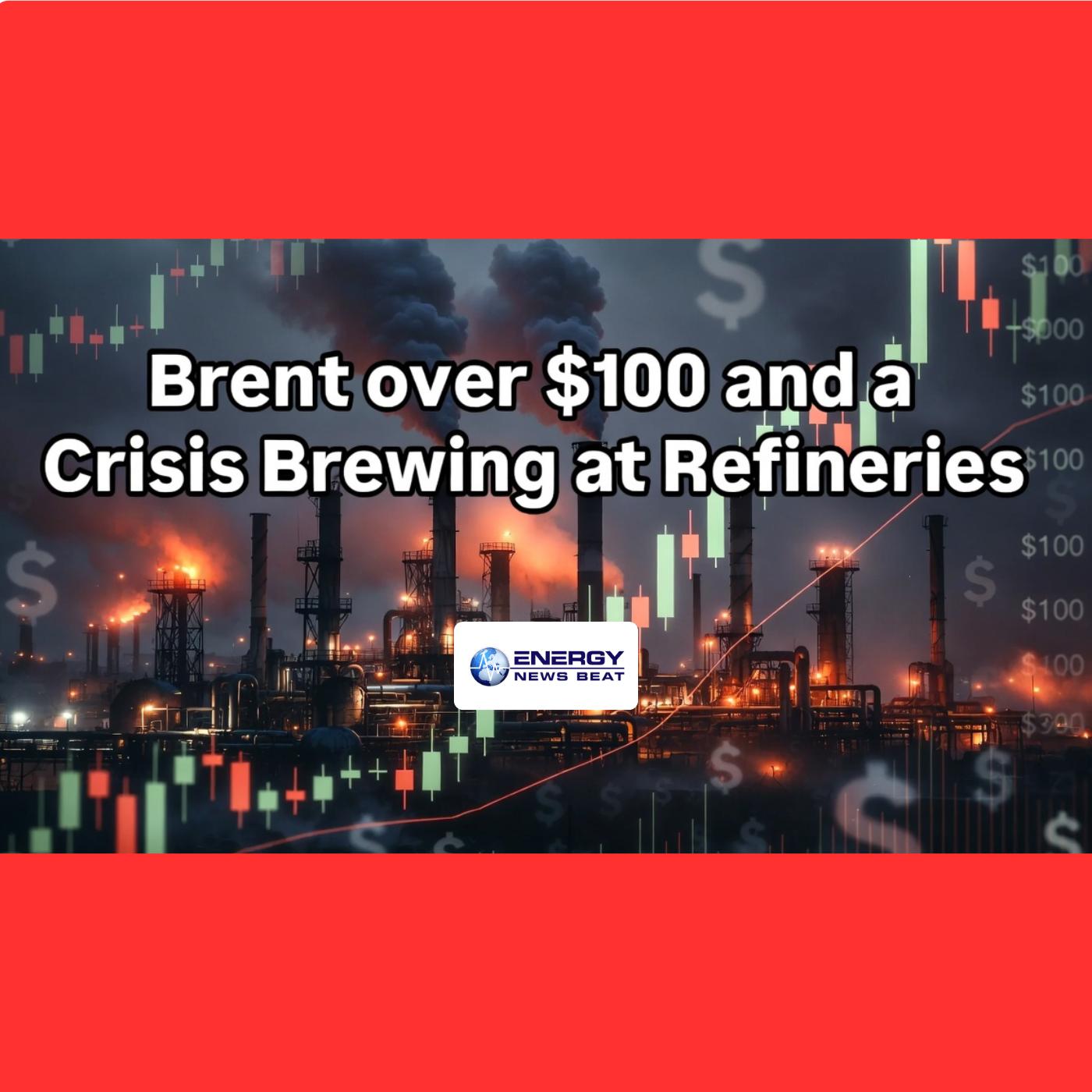
Brent over $100 and a Crisis Brewing at Refineries
2w ago00:29:03Tap to summarizeRey Trevino, Crude Truth Podcast Host, and President at Pecos Operating stops by.We have a wild stand-up with 8 huge stories. It is fun having guests on the stand-up, and Rey brought the receipts today. The picture above was created by Grok, and it is Clark Savage standing by the tanker “Stan Turley” - I think Grok was having a moment.With Brent crude surging past $100 per barrel and West Texas Intermediate jumping dramatically, the conversation reveals how Houthi attacks on shipping lanes, Chinese strategic positioning, and disruptions at key maritime chokepoints are reshaping energy markets worldwide. Through an in-depth discussion with energy expert RT Trevino, the podcast challenges prevailing narratives about the energy transition, presenting compelling data that shows fossil fuels still account for 86% of global energy consumption. From Europe’s LNG crisis and America’s emergence as a natural gas superpower to the manufacturing exodus from Canada to the U.S., this episode provides essential context for investors, policymakers, and anyone seeking to understand the complex forces driving energy prices and global economic security in 2026.1. Oil Price Surge & Global Geopolitical TensionsBrent crude has surged above $100/barrel, with West Texas Intermediate (WTI) jumping from $81 to $91. This spike is driven by geopolitical instability, particularly Houthi attacks on tankers in the Bab El-Mandab Strait and the Red Sea, which are disrupting global oil supply routes and forcing tankers to take longer routes around the world.2. Strategic Chokepoints & Supply Chain DisruptionsThe podcast discusses critical maritime chokepoints—the Bab El-Mandab Strait, Suez Canal, and Panama Canal—all facing disruptions. VLCCs (Very Large Crude Carriers, carrying ~2 million barrels each) cannot fully load through the Suez Canal, and the Panama Canal is experiencing drought conditions. These disruptions add months to shipping times and significantly impact global energy markets.3. China’s Strategic Positioning & U.S. Energy PolicyThe hosts explore China’s role in global energy dynamics, including its partnership with Iran and the Houthis, and how President Trump’s sanctions on Venezuelan and Iranian oil are affecting global supply. There’s discussion of a Chinese military base in Yemen and how U.S. strategic bombing targets infrastructure supplying Iran.4. LNG Supply Crisis & Europe’s Energy DependencyEurope faces an LNG supply crisis, forcing buyers toward coal and natural gas. The podcast highlights the hypocrisy of European nations sanctioning Russia while importing 90% of Russia’s LNG. Germany’s decision to blow up coal plants and Japan’s mothballing of nuclear facilities are criticized as short-sighted energy policy.5. U.S. Natural Gas as the FutureThe U.S. is positioned as the “Saudi Arabia of natural gas” and is exporting record amounts to Europe. The podcast emphasizes natural gas as a critical energy source and advocates for expanded infrastructure and production.6. Grid Reliability & Energy Mix RealityUsing Texas ERCOT as an example, the discussion shows that despite renewable energy investments, fossil fuels remain essential. Natural gas provided 62% of grid power, wind 25%, and solar dropped to zero at night. The grid required battery storage to prevent blackouts, demonstrating the unreliability of intermittent renewables.7. Global Energy StatisticsKey data points: 86% of the world’s energy still comes from fossil fuels (gasoline, diesel, transportation), and 57% of global electricity is generated from fossil fuels. This underscores that the energy transition is actually an “energy addition,” not a replacement.8. Manufacturing Shift from Canada to the U.S.A KPMG survey shows 42% of Canadian manufacturers have moved or are moving production to the United States, driven by pro-business U.S. policies and concerns about supply chain dependency on China.9. Corporate Earnings & Energy Sector PerformanceGE Vernova reported strong Q2 2026 earnings ($11 billion, up 22%), with natural gas turbines sold out for five years. Tesla’s Q2 earnings showed record deliveries but profit concerns due to AI investments.10. Oil & Gas Investment OpportunitiesWe conclude with a discussion of oil and gas as solid investment portfolio additions, offering monthly revenue, tax deductions, and long-term returns compared to renewables, which have years before generating returns.●1.Brent at $100 and U.S. Refinery Utilization at 96%: What This Means for Consumers and Investors2.LNG Supply Crisis Pushes Buyers Toward Coal, Natural Gas, and Oil: Energy Security Takes Center Stage3.Greece Exposes the Hypocrisy and Limits of Europe’s Russia Energy Sanctions4.Mark P. Mills Covers the Myth of an Energy Transition5.Fossil Fuels Still Generate 57% of the World’s Electricity — But We Remain Deeply Dependent on Them for Transportation, Manufacturing, and Building the “Renewables” Themselves6.GE Vernova Raises 2026 Outlook on Surging AI-Driven Power Demand While Advancing Venezuela7.Nearly Half of Canadian Manufacturers Are Moving to the US — A Self-Inflicted Wound from Tariffs, Uncertainty, and Costly Green Policies8.Tesla’s Q2 2026 Earnings: Record Deliveries and Energy Growth Overshadowed by Profit Miss Amid Massive AI InvestmentsCheck the articles on https://theenergynewsbeat.substack.com/A shout-out to Steve Reese and the Reese Energy Consulting group for sponsoring the Podcast https://reeseenergyconsulting.com/.Data2 if you have any business systems, can you trust A? Well, they have the patent on validation. . https://data2.zoholandingpage.com/energyAnd we have WellDatabase rolling in as a new sponsor. https://welldatabase.com/
Transcribe →
The Next Generation Nuclear Program with Grace Vanderhei and Alina Voss
2w ago00:50:19Tap to summarizeIn this Energy Newsbeat podcast episode, host Stu Turley sits down with nuclear experts Grace Vanderheide (nuclear fuels engineer and former Miss America) and Alina Voss (NX Atomics) to explore the nuclear industry’s pivotal moment. As the U.S. restarts decommissioned reactors and deploys advanced reactor designs, the conversation reveals that nuclear’s future hinges not on engineering breakthroughs alone, but on solving the unsexy realities: grid infrastructure, ratepayer affordability, and honest public communication.From passive safety mechanisms to manufacturing innovation, the speakers tackle misconceptions about nuclear while confronting hard truths about cost discipline, transmission bottlenecks, and the need to engage women and younger generations in the energy transition.Here is Grace’s LinkedIn: https://www.linkedin.com/in/gracevanderhei/Here is Alina’s LinkedIn: https://www.linkedin.com/in/alinavoss/1. Nuclear Fleet Expansion & Reactor RestartsThe conversation highlights the restart of decommissioned reactors (Three Mile Island, Palisades, Dwayne Arnold) and power upgrades to existing plants. Grace explains that power upgrades alone could generate the equivalent of about seven new nuclear reactors over 2-5 years—a cost-effective way to increase energy output without building new facilities.2. Grid Infrastructure & Transmission CrisisA critical theme is the neglected state of America’s transmission and distribution infrastructure, which is 20 years behind in many regions. Alina emphasizes that transmission has been “completely slept on” and warns that without grid upgrades, new generation capacity (whether nuclear or data centers) will face the same challenges. The grid is the “missing middle” that most Americans don’t understand.3. Ratepayer Concerns & Energy AffordabilityBoth speakers stress that public fear isn’t primarily about nuclear safety anymore—it’s about electricity costs. They discuss how data centers and new energy projects risk being blamed for rate increases, and how the nuclear industry must avoid the same PR pitfalls by being transparent about costs and protecting consumers from project overruns.4. Net Zero Targets vs. RealityGrace and Alina critique net zero marketing as disconnected from actual energy policy. They argue that closing nuclear plants while pursuing net zero targets is contradictory, and that voluntary blackouts/brownouts represent a failure of grid planning rather than a solution. They advocate for maximizing clean energy generation rather than reducing consumption.5. Advanced Nuclear Fuel & TechnologyGrace discusses accident-tolerant fuel (ATF) and high-assay, low-enriched uranium (HALEU), explaining how 90-95% of spent nuclear fuel is reusable. Alina describes NX Atomics’ liquid metal-cooled reactors and passive safety features, emphasizing innovation in manufacturing (3D printing) and financing models.6. Passive Safety & Reactor DesignBoth experts explain passive safety mechanisms—how reactors automatically shut down without human intervention or external power (using gravity to drop control rods). This addresses public misconceptions about nuclear accidents.7. Small Modular Reactors (SMRs) & ManufacturingThe discussion highlights SMRs as a manufacturing challenge, not just an engineering one. Alina notes that companies like Allo Atomics are building factories alongside reactors to achieve economies of scale. The key is treating nuclear as a manufacturing game, not just an engineering project.8. Construction Cost & Timeline DisciplineGrace emphasizes that the #1 priority for nuclear expansion is delivering projects on time and on budget. She argues that nuclear engineers’ perfectionism culture conflicts with business realities, and that construction specialists—not engineers—should lead builds once designs are finalized.9. Workforce & Gender DiversityGrace highlights the quadrupling of nuclear engineering undergrad enrollment (from 14 to 60+ students per class at UW-Madison). She stresses the need to engage women in nuclear, noting that women are often unaware nuclear is clean energy and need clearer messaging about its value proposition.10. Public Perception & Communication StrategyBoth speakers discuss how to communicate nuclear’s benefits authentically, especially as AI-generated social media content proliferates. They emphasize the need for human-to-human interaction and authentic storytelling to build trust, particularly with younger generations and women.11. Uranium Supply ChainGrace expresses interest in the global uranium supply chain and how it will evolve with nuclear expansion—a critical but underexplored topic.12. Political & Policy SupportThe conversation touches on positive momentum from policymakers (like Energy Secretary Chris Wright) and the need for intentional policy to protect ratepayers and avoid the mistakes made with data centers.This was an absolute blast, and honestly it is great to see young people taking the reins and running after nuclear. We need all the power we can get, and the future is bright with nuclear enthusiasts like Grace and Alina. Thank you both for your leadership and stopping by the podcast - Stu Check the articles on https://theenergynewsbeat.substack.com/A shout-out to Steve Reese and the Reese Energy Consulting group for sponsoring the Podcast https://reeseenergyconsulting.com/.Data2 if you have any business systems, can you trust A? Well, they have the patent on validation. . https://data2.zoholandingpage.com/energyAnd we have WellDatabase rolling in as a new sponsor. https://welldatabase.com/
Transcribe →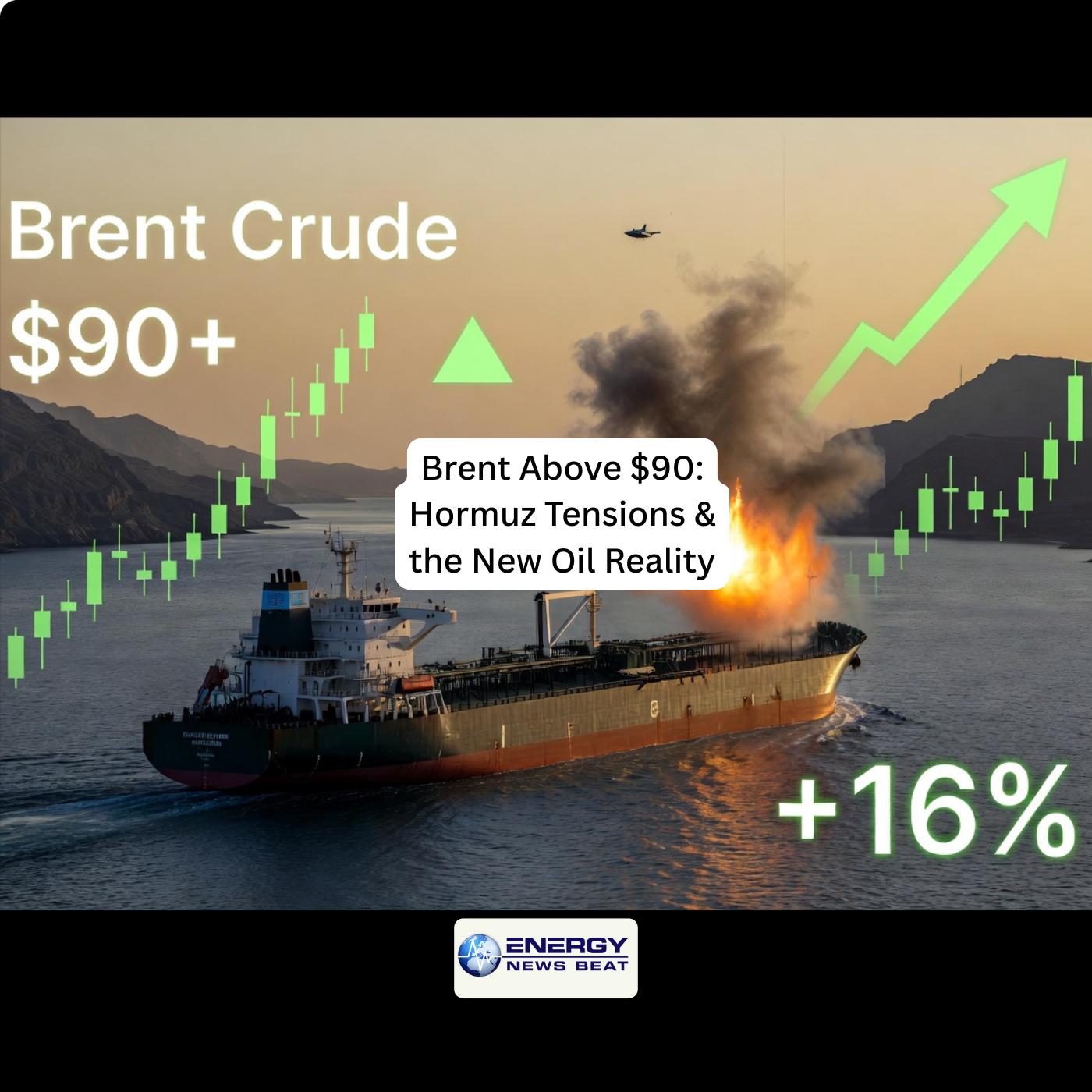
Brent Above 90 Dollars. Hormuz Tensions and the New Oil Reality
2w ago00:23:44Tap to summarizeOil is up, China is buying again, and America's energy future is at a crossroads. In this episode, we tackle eight stories that matter: geopolitical chaos driving Brent above $90, the SPR disaster, Halliburton's shale boom, the AI data center power crisis, and why the Trump administration is reshaping energy policy. This is the energy news you can't afford to miss.1. Oil Market Volatility & Geopolitical TensionsThe podcast opens with oil prices surging above $90/barrel for Brent crude, driven by attacks in Kuwait, tanker incidents in the Strait of Hormuz, and renewed U.S.-Iran tensions. The Houthis are also active in the Red Sea, creating additional supply chain disruptions. Analysts are predicting higher oil prices for longer, with crack spreads at historic highs.2. U.S. Oil & Gas Production StrengthHalliburton reports positive outlook for North American shale activity in 2026. The U.S. has reached a record 13.586 million barrels per day in 2025, with enhanced oil recovery and the Permian Basin continuing to thrive. Natural gas exports and LNG are highlighted as critical economic drivers.3. Strategic Petroleum Reserve (SPR) CrisisThe Biden administration's mismanagement of the SPR is heavily criticized—including massive drawdowns without refill (180-300 million barrels), wasted taxpayer dollars on damaged equipment, and aging infrastructure. The GAO warns of "looming operational limitations," and the host emphasizes the need to refill the SPR given current geopolitical risks.4. Data Center & AI Power Demand ExplosionData centers are on track to consume up to 20% of U.S. electricity by 2035 due to AI growth—a 4-5x increase from current levels. However, grid transmission bottlenecks are a major constraint; the U.S. needs 5,000 miles of new high-voltage transmission lines annually but has only added 392 in the last two years.5. UK North Sea Energy PolicyThe incoming UK Prime Minister is signaling support for North Sea oil and gas projects (Jack Draw gas field, Rosbank oil field), though the host expresses skepticism about bureaucratic obstacles. The irony is highlighted: the UK imports Norwegian gas while sitting on untapped North Sea reserves.6. Iraq's Oil Export StrategyIraq is shipping 4 million barrels per day via 1,400 tanker trucks daily—a forced paradigm shift due to geopolitical constraints. Iraqi oil companies are also partnering with Chevron, ExxonMobil, and ConocoPhillips to capture flared gas, reducing Iraq's reliance on imported energy.7. Trump Administration Energy Policy & Climate Research AccountabilityPresident Trump has ordered a suspension and potential debarment of officials tied to fraudulent climate research. The host criticizes the "false climate narrative" and argues for an "all of the above" energy approach (coal, natural gas, nuclear) until technology allows full transition to renewables.8. Federal Energy Subsidies & SpendingIn fiscal year 2025, federal subsidies and tax expenditures totaled $64.1 billion, with renewables, EVs, and efficiency capturing 90% ($57.9-58 billion), while fossil fuels received only $2.6 billion. The host distinguishes between subsidies and tax incentives.1.Brent Tops $90 as Tanker Hit in Strait of Hormuz Amid Escalating US-Iran Tensions — Is “Higher for Longer” Here to Stay?2.Halliburton Sees Improvement in North American Activity in 20263.US Strategic Petroleum Reserve Sites Left Inoperable Under Biden Administration — Trump and Energy Secretary Wright Race to Fix the Damage4.Data Center Growth on Track to Absorb a Fifth of US Power Use by 2035: Nuclear Had Better Be Implemented Before We Get There5.U.S. Needs 5,000 Miles of New High-Voltage Lines Annually — It Only Built 3926.New UK Prime Minister Set to Back North Sea Oil and Gas Projects7.Thousands of Tanker Trucks Haul Iraq’s Oil to Secure Revenue: A Forced but Strategic Paradigm Shift8.President Trump Orders a Review of the Green Graft and False Research ProvidedCheck the articles on https://theenergynewsbeat.substack.com/A shout-out to Steve Reese and the Reese Energy Consulting group for sponsoring the Podcast https://reeseenergyconsulting.com/.Data2 if you have any business systems, can you trust A? Well, they have the patent on validation. . https://data2.zoholandingpage.com/energyAnd we have WellDatabase rolling in as a new sponsor. https://welldatabase.com/
Transcribe →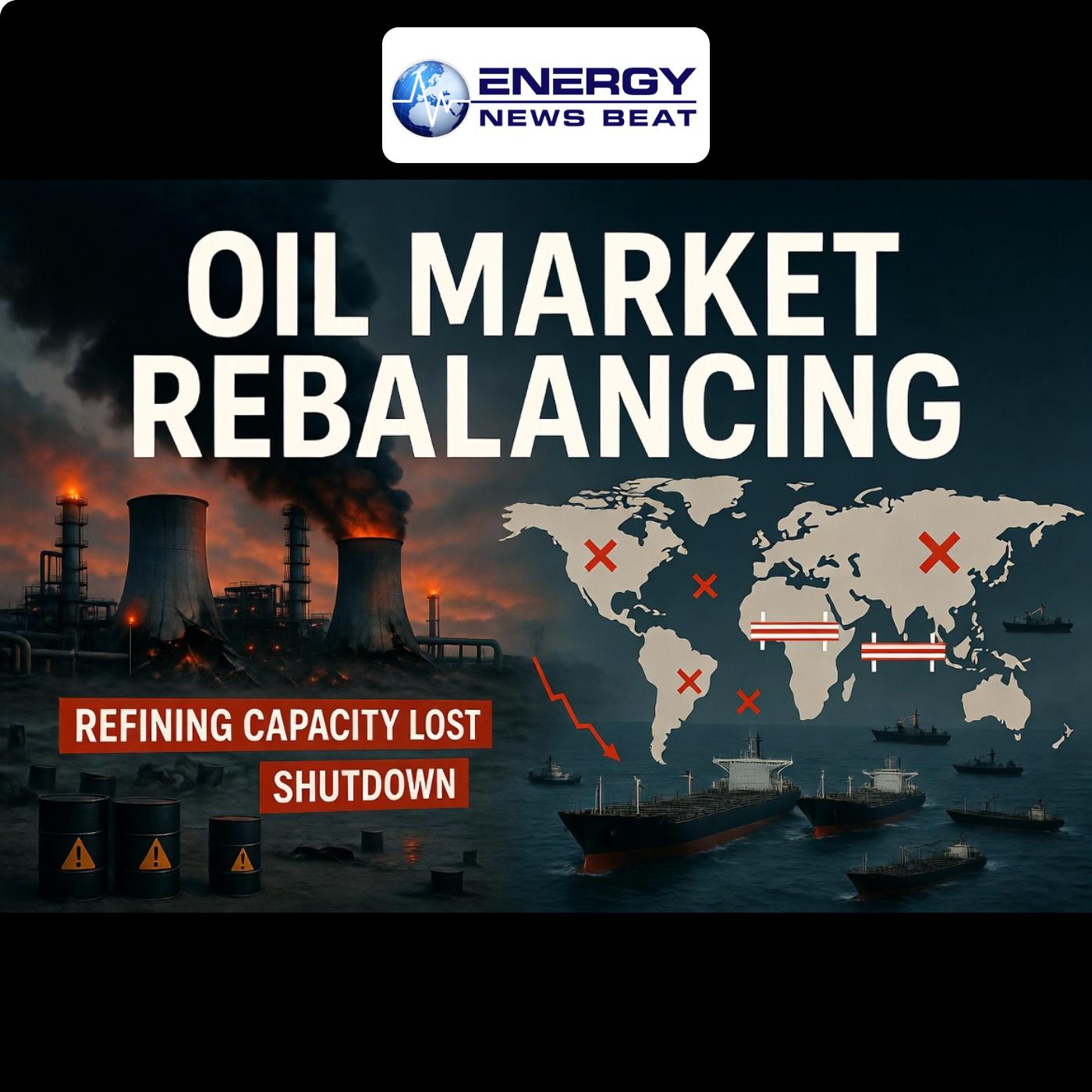
Oil and Gas Markets are rebalancing
3w ago00:19:05Tap to summarizeWelcome to the Energy News Beat Standup, where host Stu Turley breaks down the 10 biggest energy stories reshaping global markets. In this episode, we dive into a world in flux: Russia's refining capacity is crumbling under Ukrainian drone strikes, Iraq is suspending exports and seeking independence from Iranian energy, and new pipeline projects are being fast-tracked to bypass the Strait of Hormuz. Meanwhile, back home, data centers are driving unprecedented energy demand, New York is doubling down on restrictive policies while Texas and Virginia race ahead, and grid vulnerabilities are becoming impossible to ignore. From geopolitical disruptions to emerging security threats—including rumors of Iranian drones in Cuba—this episode explores how energy markets are rebalancing, how new trading blocs are forming, and why now is the time to prepare for what's coming next.1. Global Oil Market RebalancingThe podcast opens with discussion of how the global oil market is undergoing significant rebalancing due to geopolitical disruptions, particularly Russia's degraded refining capacity from Ukrainian drone strikes. Russia's refining capacity has been slashed to 39 million barrels per day, forcing a shift in global trade dynamics.2. Russia's Refining Crisis & Ukraine's Drone CampaignA major focus is Ukraine's successful drone campaign against Russian refineries. Ukraine has struck over 24 of Russia's 34 major refineries, and all of Russia's major refineries are now within reach of Ukrainian drones. This has fundamentally changed how the war is being fought and has disrupted global energy supplies.3. Iraq's Energy Independence & Export ChallengesIraq has suspended crude loading at all export terminals (impacting 4 million barrels per day). The discussion covers Iraq's negotiations with major oil companies like Exxon and Chevron, and efforts to become energy independent from Iran by developing domestic natural gas instead of importing it.4. Strategic Pipeline Development & Hormuz BypassGoldman Sachs projects that new pipelines could divert 45% of Strait of Hormuz oil by 2027 and 60% by 2028. This reflects global efforts to circumvent potential disruptions at this critical chokepoint, which is bad news for Iran's economic recovery.5. Canada's Shale Gas RenaissanceLong-dormant shale gas reservoirs in Alberta are being revitalized through oil plays, particularly in the Basal Belly River Formation. This represents a significant opportunity for Canadian energy production.6. Data Center Energy Demands & New York's MoratoriumNew York has imposed its first moratorium on data centers (affecting only 5 facilities), which the host criticizes as "virtual signaling." The discussion contrasts New York's restrictive energy policies with other states like Texas, Virginia, and Georgia that are attracting data centers due to better energy availability and lower costs.7. Grid Resilience & Security ThreatsThe podcast warns about potential grid vulnerabilities, citing Exelon's CEO prediction that Americans could face blackouts as soon as 2027. There's also concern about 136 Iranian drones rumored to be in Cuba that could potentially target U.S. grid infrastructure in Florida.8. Energy Market Prices & Investment OutlookThe episode concludes with current market prices (WTI crude at $82.72, Brent at $88.77, natural gas at $2.91) and emphasizes the importance of energy awareness and personal preparedness for potential emergencies.Check the articles on https://theenergynewsbeat.substack.com/A shout-out to Steve Reese and the Reese Energy Consulting group for sponsoring the Podcast https://reeseenergyconsulting.com/.Data2 if you have any business systems, can you trust A? Well, they have the patent on validation. . https://data2.zoholandingpage.com/energyAnd we have WellDatabase rolling in as a new sponsor. https://welldatabase.com/
Transcribe →
Building the Future at Warp Speed. How Aalo Atomics is Solving the Energy Crisis
3w ago00:40:23Tap to summarizeYasir Arafat, Co-Founder, CTO, & President, stops by the Energy News Beat podcastOn July 4th, 2024—America's 250th birthday—something extraordinary happened that most people missed. Allo Atomics turned on a brand new advanced nuclear reactor for the first time in 50 years. But here's what makes this truly revolutionary: they designed, built, and achieved criticality in less than 12 months. In this episode of the Energy Newsbeat Podcast, host Stu Turley sits down with Yasir Arafat, CTO and President of Allo Atomics, to explore how a company that was just two people 2.5 years ago is now rebuilding American manufacturing muscle and solving one of humanity's greatest challenges—powering the AI revolution while ending global energy poverty.From factory-based mass production to autonomous reactors powered by AI, from 36-day construction timelines to modular power plants that rival grid reliability, this conversation reveals how American innovation is about to transform energy forever.This is the story of how nuclear went from a decade-long project to a factory product—and why it matters for every country on Earth.Buckle up, as this was a huge discussion, and I hope that it is the first of many with Aalo Atomics. They are going places, and we need them to be as successful as they seem likely to be. They have the nuclear market and are designing the entire supply chain, from standardized fuel to go-to-market strategies, controlling it along the way.Secretary Chris Wright was at their offices and personally signed their approvals for critical mass testing. This is huge, and they were one of four reactors that kicked off our 250th anniversary in style.This is just about as cool as it gets - Well done Aalo Atomics and Secretary Chris Wright!1. Advanced Nuclear Reactor Development & AchievementYasir Arafat, CTO and President of Allo Atomics, discusses their groundbreaking accomplishment of building and turning on a brand new advanced nuclear reactor on July 4th—the first time this has been done in 50 years. This was achieved in less than 12 months as part of an executive order challenge from President Trump.2. Rapid Company Growth & Manufacturing Scale-UpAllo Atomics grew from a 2-person company 2.5 years ago to nearly 200 employees. The company is expanding its manufacturing facility from 40,000 square feet to 200,000 square feet this year, with plans to reach a million square feet within three years—positioning it as the largest nuclear reactor manufacturing facility in the United States.3. Factory-Based Mass Production ModelRather than traditional project-based nuclear construction, Allo is pioneering a factory mass-production approach similar to the automotive and aerospace industries. This includes automated welding systems and modular component design that can be transported and assembled like “Lego blocks.”4. AI Data Center Power DemandsThe podcast highlights the massive energy needs of AI data centers, which require 60 gigawatts of power over the next five years. Nuclear provides the ideal solution as a 24/7, clean baseload power source that doesn’t depend on weather.5. Fuel Supply Chain & EnrichmentDiscussion of uranium enrichment levels, with Allo’s reactors operating at 5% enrichment using commercially available uranium dioxide fuel—avoiding the need for exotic fuel forms or military-grade materials that would complicate supply chains.6. Modular Power Plant Design (AuloPOD)Allo designed a 50-megawatt power plant with multiple reactors and turbines providing N+1 redundancy, achieving 99.9% availability. This allows data centers to operate independently from the grid while maintaining reliability.7. Accelerated Construction & DeploymentThe company built its first nuclear reactor building in just 36 days—reducing construction costs by one-fifth. Their goal is to compress the entire deployment process from order to operation in less than 12 months, compared to the traditional 6-10+ years.8. Vertical Integration & Supply Chain SolutionsAllo manufactures the majority of hardware in-house while partnering with 100+ suppliers. The philosophy is “no unobtanium”—every component must be obtainable from existing suppliers or manufactured internally.9. AI Integration in Nuclear Design & OperationsAllo uses AI extensively for engineering design, licensing acceleration, and autonomous reactor operations. They have 62+ major AI projects running, with human validation at every step to ensure quality and safety.10. Global Energy Impact & Future ApplicationsThe conversation extends beyond data centers to broader applications: ending energy poverty worldwide, powering remote locations, military bases, marine vessels, and even lunar bases. The vision is to transform the U.S. into an energy exporter and uplift nations through reliable, low-cost nuclear power.11. Series C Funding & IPO PlansAllo is currently raising Series C funding and plans to go public only after demonstrating its ability to execute at scale with licensed products and generate revenue.This is a compelling discussion about how American innovation and manufacturing expertise can solve the global energy crisis through advanced nuclear technology.Check out Aalo Atomics here: https://www.aalo.com/Connect with Yasir on his LinkedIn here: https://www.linkedin.com/in/yasiraalo/A shout-out to Steve Reese and the Reese Energy Consulting group for sponsoring the Podcast https://reeseenergyconsulting.com/.Data2 if you have any business systems, can you trust A? Well, they have the patent on validation. . https://data2.zoholandingpage.com/energyAnd we have WellDatabase rolling in as a new sponsor. https://welldatabase.com/
Transcribe →
The Future of the Oil and Gas Markets - Special Joint Podcast with Trisha Curtis, PetroNerds
4w ago01:03:51Tap to summarizeIn an era of unprecedented geopolitical tension and energy market volatility, Stu Turley of the Energy Newsbeat podcast sits down with Trisha Curtis, CEO of the Petro Nerds podcast, to dissect the forces reshaping global energy markets and international power dynamics. From Iran's desperate gambit to control the Strait of Hormuz to China's calculated investments in coal-to-oil synthesis, this conversation reveals how energy—not ideology or military might alone—is the true currency of geopolitical leverage.The hosts challenge conventional market wisdom, expose the hidden costs of net-zero policies, and make a compelling case that the United States possesses unprecedented energy advantages that policymakers and analysts have catastrophically underestimated. With Europe in energy decline, China preparing for conflict through energy resilience, and the Middle East in flux, this episode serves as a masterclass in understanding why energy security is national security, and why the decisions made today will determine which nations thrive and which fade into irrelevance.Check out the PetroNerds at https://www.youtube.com/@petronerds633 Connect with Trisha on LinkedIn https://www.linkedin.com/in/trisha-curtis-petronerds/1. Global Oil Market Volatility & Strait of Hormuz CrisisThe hosts discuss the unprecedented market volatility throughout the year, particularly focusing on the Strait of Hormuz and Iran's actions. They analyze how Iran's attacks on shipping and infrastructure represent desperation rather than strength, as alternative pipelines and routes are being developed by Saudi Arabia and the UAE to bypass Iranian control.2. Strategic Petroleum Reserve (SPR) ManagementA significant focus on how the U.S. and China are using their SPRs differently. Secretary Chris Wright is praised for using the SPR as a loan (requiring repayment) rather than a permanent release, which avoids budget cycle issues. The hosts note this strategy received insufficient market coverage.3. U.S. Oil & Natural Gas ProductionDiscussion of America's impressive production capacity—nearly 14 million barrels per day of crude oil and 136 billion cubic feet per day of natural gas. The hosts emphasize that the U.S. has significant leverage in global energy markets that isn't being properly appreciated or communicated.4. China's Energy Strategy & Geopolitical ImplicationsExtensive analysis of China's energy stockpiling, coal-fired power generation dominance (more than the U.S. total capacity), and investments in coal-to-oil synthetic manufacturing. The hosts interpret China's 2026 coal-to-oil investments as preparation for potential conflict.5. European Energy Crisis & DeclineCritical examination of Europe's energy policy failures, particularly the UK and Germany's abandonment of coal and nuclear power. The hosts highlight how net-zero policies have made Europe dependent on Russian LNG and created energy security vulnerabilities.6. Electricity Grid Reliability & Cost IssuesDetailed analysis showing that wind and solar installations increase electricity costs without improving reliability. The hosts present data showing blue states have 38% higher electricity prices than red states, correlating directly with renewable energy policies. They argue that baseload power (coal, natural gas, nuclear) is essential.7. ESG & Net-Zero Policy CriticismStrong critique of ESG metrics and net-zero commitments by major oil companies, arguing these policies increase costs without environmental benefit and represent a form of control rather than genuine sustainability.8. U.S. Manufacturing & Supply Chain ResilienceDiscussion of reshoring manufacturing and the importance of controlling the entire energy value chain—from crude extraction through plastics manufacturing—to reduce dependence on China and create a more resilient economy.9. NATO, Defense Spending & Geopolitical RealignmentAnalysis of NATO discussions, with criticism of European countries (particularly Spain) for insufficient defense spending and energy investment. Discussion of new trading blocs forming around the U.S., Saudi Arabia, UAE, Russia, India, and Japan.10. LNG Market DynamicsAnalysis of Qatar's LNG production disruptions and the broader natural gas market, including how Iran's attacks on LNG vessels represent attempts to control energy flows and how alternative infrastructure (floating LNG, pipelines) may bypass traditional chokepoints.The overarching theme is that energy security is fundamental to national security and economic prosperity, and current Western policies prioritizing net-zero over reliable, affordable energy are strategically disadvantageous compared to competitors like China.This will be more in line with a new series covering the global energy policies and insights from Trisha. Check out the Energy News Beat SubStack https://theenergynewsbeat.substack.com/A shout-out to Steve Reese and the Reese Energy Consulting group for sponsoring the Podcast https://reeseenergyconsulting.com/.Data2 if you have any business systems, can you trust A? Well, they have the patent on validation. . https://data2.zoholandingpage.com/energyAnd we have WellDatabase rolling in as a new sponsor. https://welldatabase.com/
Transcribe →
Courage Can Save Us
Jul 700:35:58Tap to summarizeIn a nation where 62% of Americans see courage in their communities but only 30% see it in their elected officials, we're facing a crisis of leadership. The United States is healing. On this episode, host Stu Turley sits down with Rye Barcott, U.S. Marine Corps veteran, New York Times bestselling author, and co-founder of With Honor—an organization dedicated to recruiting and supporting veterans to run for office across party lines. Together, they explore what true courage really means, why service is the path to purpose, and how we can rebuild trust in American leadership. From the remarkable overlap of their fathers' service in Vietnam to the alarming decline of veteran representation in Congress—from 70% to just 20%—this conversation challenges us to rethink what it takes to be a leader in America. Whether you're interested in politics, military service, or simply finding meaning through service to others, this episode offers both inspiration and a call to action: elect people who aren't afraid to lose, because they'll stand by their convictions.1. Courage as a Core ValueRye Barcott, author of "Courage Can Save Us," distinguishes between bravery (instinctive reaction to danger) and courage (the deliberate choice to serve the common good). He emphasizes that courage is essential for both individual well-being and national strength, particularly in addressing youth mental health crises through service.2. Military Service & Personal InspirationThe conversation explores how military service shapes character. Rye shares his father's Vietnam experience as a reconnaissance officer and how that inspired his own Marine Corps service. Stu reveals a remarkable connection—both their fathers were reconnaissance officers in Vietnam during the same period, with Stu's father coordinating aerial reconnaissance missions.3. Veterans in Politics & LeadershipA significant focus is the decline of veteran representation in Congress—from 70% historically to just 20% today. Rye's organization, With Honor, works to recruit, train, and support veterans running for office across party lines. The podcast highlights that 752 veterans are running this cycle, the highest number ever.4. Bipartisan Unity & ServiceThe discussion emphasizes that service creates common ground across political divides. Rye features 5 Democrats and 5 Republicans in his book, and highlights the Congressional Veterans Caucus (38 House members, ~12 Senate members) that transcends party lines to focus on national security and veterans issues.5. Trust in LeadershipAccording to Gallup polling data cited, veterans and nurses are the two most trusted groups across all party lines. However, only 30% of Americans see courage in elected officials, compared to 62% who see it in their communities—highlighting a leadership crisis.6. Political Dysfunction & CorruptionThe hosts discuss concerns about political corruption, particularly in California's energy policies, which they argue have caused deindustrialization and affordability crises. They emphasize the need for leaders willing to lose re-election for their principles.7. Youth Engagement & PurposeService is presented as a path to purpose for young Americans, particularly addressing loneliness and mental health challenges. The book targets younger Americans seeking meaning through military or civilian service.8. American Soft Power & Global PerspectiveThe podcast celebrates America's cultural influence globally, referencing the World Cup bringing international visitors who discover American values firsthand. They discuss the importance of maintaining American pride and the world's continued admiration for American culture, music, and values.9. Civility & Respectful DialogueA key theme is the need to engage with those who hold different political views respectfully, rather than viewing them as enemies. The hosts criticize algorithm-driven outrage and advocate for genuine conversation across ideological lines.10. State & Local InvolvementThe discussion encourages Americans to get involved locally and support candidates who prioritize country over party affiliation, with particular emphasis on the growing number of independents (45% of Americans) rejecting the traditional two-party system.Book: Courage Can Save US (Bloomsbury, June 9, 2026) — NYT and USA Today bestsellerAll author proceeds go to With HonorSurvey: With Honor–Gallup, 3,199 U.S. adults, May 12-22, 2026Audience can share their own Courage Moment at couragecansaveus.comWith Honor website: withhonor.orgAvailable wherever books are soldAmazon Link: https://a.co/d/0aOOJeuGCheck out the Energy News Beat SubStack https://theenergynewsbeat.substack.com/A shout-out to Steve Reese and the Reese Energy Consulting group for sponsoring the Podcast https://reeseenergyconsulting.com/.Data2 if you have any business systems, can you trust A? Well, they have the patent on validation. . https://data2.zoholandingpage.com/energyAnd we have WellDatabase rolling in as a new sponsor. https://welldatabase.com/
Transcribe →
What is next for the Oil and Gas Markets?
Jul 600:58:15Tap to summarizeDoomberg stops by and drops some truth bombs around the cage. We cover his article for tomorrow and Friday and tee up his book. You can read all of Doomberg's articles on https://newsletter.doomberg.com/Doomberg stops by and drops some truth bombs around the cage. We cover his article for tomorrow and Friday and tee up his book. You can read all of Doomberg's articles on https://newsletter.doomberg.com/1. Sanctions Against Russia & Their IneffectivenessThe hosts discuss Doomberg's article "Treatment Resistant," which argues that sanctions against strong countries like Russia don't work as intended. They compare it to treating cancer—if you don't cure it, it comes back stronger. The EU's strategy of limiting Russian LNG exports while simultaneously importing Russian LNG is highlighted as contradictory and ineffective.2. EU Censorship & Free Speech ConcernsA significant portion focuses on European overreach in censorship, including a new European Court of Justice ruling that makes it illegal to even quote or critique Russian media. This threatens independent journalists and Substack creators, raising concerns about freedom of speech and the weaponization of sanctions enforcement.3. Ukraine War & Geopolitical StrategyThe conversation covers the ongoing conflict in Ukraine, including:Russian refinery damage from drone strikes and its actual impactThe importance of the land corridor to Crimea for RussiaCriticism of endless U.S. military involvement in foreign conflictsThe need for diplomatic talks between Trump, Putin, and Zelensky4. Energy Markets & Oil PricingDiscussion of current oil prices (~$68/barrel), refining capacity constraints, and the crack spread differences between Texas ($5) and California ($15). They debate whether oil will drop to $50 and discuss the role of NGLs (natural gas liquids) as an alternative hydrocarbon source.5. Peak Not Oil & NGL ProductionDoomberg presents the thesis that we're not running out of oil—instead, we're transitioning to abundant NGLs (propane, butane, ethane). U.S. NGL production is expected to cross 8 million barrels per day, offering cleaner-burning alternatives.6. NATO & U.S. Foreign PolicyCritical examination of:Article 5 obligations (e.g., defending Estonia)The Jones Act and its impact on energy pricesWhy the U.S. should focus on the Western Hemisphere rather than global conflictsThe dangers of nuclear proliferation resulting from military interventions7. California's Energy CrisisDiscussion of California's regulatory overreach, refinery closures, and how the temporary suspension of the Jones Act has helped provide cheaper energy to the state.8. Upcoming Doomberg Stories"Sources and Methods" (Friday) - Examining media bias and how to verify information in an age of AI and deepfakes"Blue Chips" (Tomorrow) - A gas-to-data project in the Permian involving Chevron, Microsoft, and GE9. Media Literacy & PropagandaThe hosts emphasize the importance of critical thinking, cross-referencing multiple sources (including alternative media), and understanding that major outlets like the Financial Times have biases and propaganda elements mixed with legitimate reporting.This episode is essentially a deep dive into energy geopolitics, the failures of Western sanctions policy, and the importance of independent analysis in an increasingly censored information landscape.Check out the Energy News Beat SubStack https://theenergynewsbeat.substack.com/A shout-out to Steve Reese and the Reese Energy Consulting group for sponsoring the Podcast https://reeseenergyconsulting.com/.Data2 if you have any business systems, can you trust A? Well, they have the patent on validation. . https://data2.zoholandingpage.com/energyAnd we have WellDatabase rolling in as a new sponsor. https://welldatabase.com/Check out the Energy News Beat SubStack https://theenergynewsbeat.substack.com/A shout-out to Steve Reese and the Reese Energy Consulting group for sponsoring the Podcast https://reeseenergyconsulting.com/.Data2 if you have any business systems, can you trust A? Well, they have the patent on validation. . https://data2.zoholandingpage.com/energyAnd we have WellDatabase rolling in as a new sponsor. https://welldatabase.com/
Transcribe →
Jack Prandelli stops by the Energy News Beat Global Oil and Gas Markets Update
Jul 300:54:24Tap to summarizeYou won't want to miss this episode with Jack Prandelli from Switzerland. As an international trader and Substack Author, Jack has been on target with his articles on global oil and Gas Markets. Check out The Merchant News Substack: https://themerchantsnews.substack.com/Follow Jack on X @jackprandelliConnect with Jack on LinkedIn: https://www.linkedin.com/in/prandelligiacomo/1. LNG (Liquefied Natural Gas) Supply & GeopoliticsThe hosts discuss Shell's report on increasing LNG demand and how the U.S. is positioning itself as the world's most reliable LNG supplier. Key points include:Damage to Qatar's Ras Lafanne facility (70% production loss) has shifted market dynamicsThe U.S. is signing long-term LNG contracts with Asian clients, displacing QatarEurope faces competition with Asia for U.S. LNG supplies due to lost Russian gasThis represents a major geopolitical win for the U.S.2. Critical Minerals & Copper Supply ChainExtensive discussion on copper's critical role in energy transition and manufacturing:Copper is essential for AI, green energy, and electrificationChina controls over 50% of global copper refining capacity, creating strategic dependencyThe U.S. lacks domestic processing infrastructure despite abundant lithium reservesThis supply chain vulnerability gives China significant leverage over Western economies3. Oil Prices & Trump's StrategyAnalysis of Trump's focus on lowering oil prices before midterm elections:Discussion of the "crack spread" (refining margin) and why lower crude prices don't immediately translate to lower gas pricesStrategic use of the U.S. Strategic Petroleum Reserve for exports and refiningComparison with China and India's government pressure on refineries to keep prices lowThe importance of reopening the Strait of Hormuz for oil transit4. India's Rising Oil Demand & Russia-India PartnershipIndia emerges as a critical player in global energy markets:India will lead global oil demand growth by 2050India increasingly imports Russian oil despite sanctionsA strategic partnership is forming where Russia exports crude to Indian refineries, which then supply Russia with refined productsThis relationship reduces Russia's dependence on China5. Geopolitical Realignment & Energy DominanceBroader discussion of shifting global power dynamics:The U.S. is reasserting control over South American oil resources (Venezuela, Argentina)China's strategic oil reserves strategy and patient approach to purchasingThe fragmentation of the world into competing trading blocs (U.S., China, Russia, India, Saudi Arabia)Soft power and hard power strategies in energy markets6. California's Energy Crisis & Renewable FailuresA cautionary case study on premature green energy transition:California's net-zero policies have devastated oil production (from 2,000 wells/year to 17 in 2025)Refining costs in California ($15/barrel) are 3x higher than Texas ($5/barrel)California now imports 40-60% of its diesel, jet fuel, and gasoline from AsiaOnly 6-7 refineries remain (down from 38), with more slated to close7. Renewable Energy Reality CheckCritical analysis of the renewable energy transition timeline:$10.2 trillion spent on wind and solar has only yielded 3% energy gainCurrent battery storage technology is insufficient for grid-scale implementationNuclear energy is more reliable but faces uranium supply chain concernsThe hosts advocate for lowest-cost, lowest-environmental-impact energy solutions8. Strategic Energy IndependenceOverarching theme about national security:Energy security must start at home with domestic productionEnergy dominance is demonstrated through exportsOver-reliance on foreign supply chains (especially China) creates vulnerabilitiesThe U.S. should leverage its oil and gas advantages while developing nuclear capacityThe podcast emphasizes that global energy markets are in flux, with the U.S. reasserting dominance, new trading blocs forming, and critical mineral/metal supply chains becoming geopolitical battlegrounds. The hosts argue that premature abandonment of fossil fuels without adequate alternatives is economically and strategically dangerous.Check out the Energy News Beat SubStack https://theenergynewsbeat.substack.com/A shout-out to Steve Reese and the Reese Energy Consulting group for sponsoring the Podcast https://reeseenergyconsulting.com/.Data2 if you have any business systems, can you trust A? Well, they have the patent on validation. . https://data2.zoholandingpage.com/energyAnd we have WellDatabase rolling in as a new sponsor. https://welldatabase.com/
Transcribe →