Podcast
Engineering Enablement by DX
Hosted by DX · EN
The show focused on developer productivity and the teams and leaders dedicated to improving it. Each episode features in-depth interviews with Platform and DevEx teams, along with the latest research and approaches for measuring developer productivity. Presented by DX (getdx.com), the developer intelligence platform designed by researchers.
39episodes
Episodes
Newest firstAll episodes
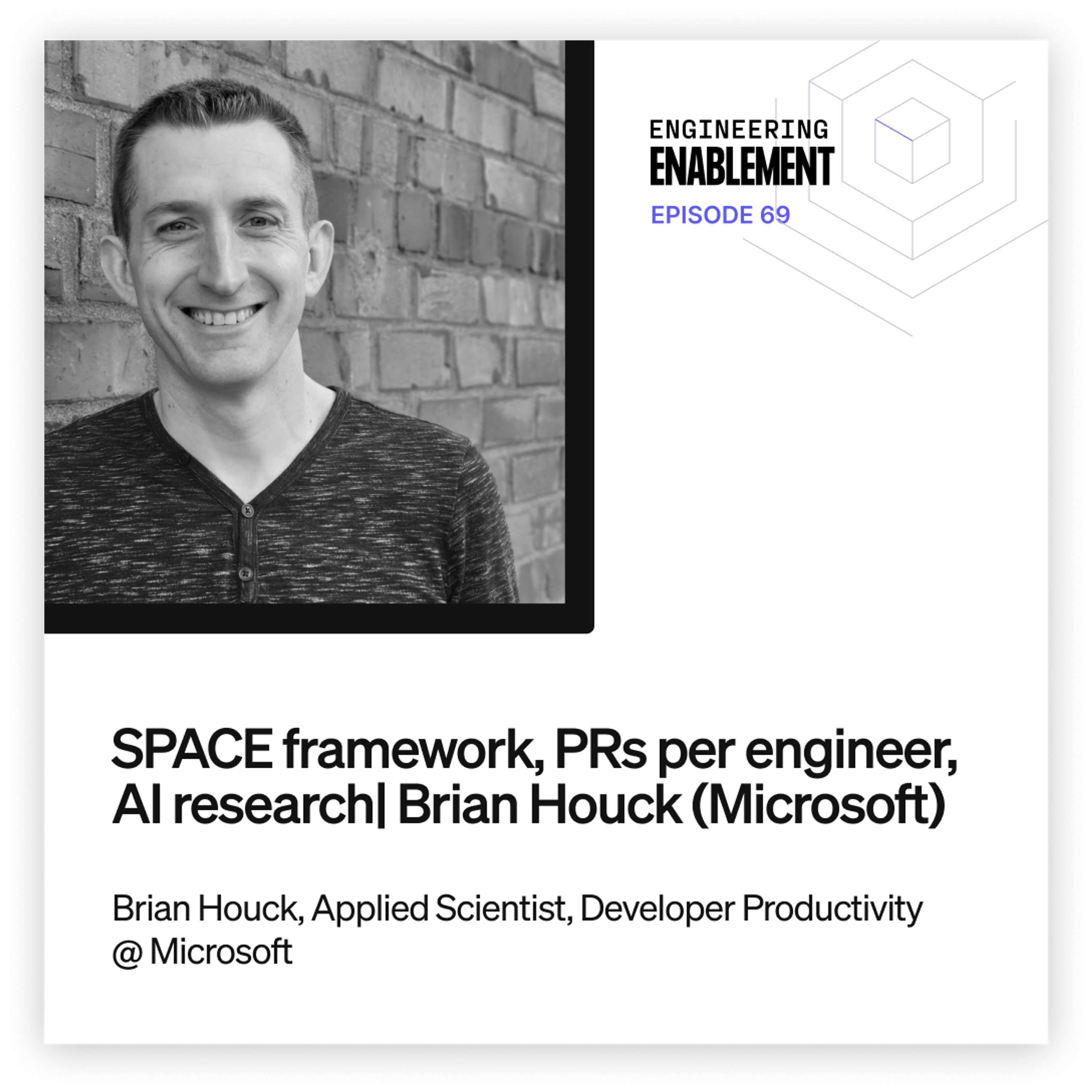
SPACE framework, PRs per engineer, AI research | Brian Houck (Microsoft)
Nov 26, 202400:32:14Tap to summarizeIn this episode, Brian Houck, Applied Scientist, Developer Productivity at Microsoft, covers SPACE, DORA, and some specific metrics the developer productivity research team is finding useful. The conversation starts by comparing DORA and SPACE. Brian explains why activity metrics were included in the SPACE framework, then dives into one metric in particular: pull request throughput. Brian also describes another metric Microsoft is finding useful, and gives a preview into where his research is heading. Mentions and linksConnect with Brian on LinkedInThe SPACE of Developer Productivity: There's More to It Than You ThinkMeasuring developer productivity with the DX Core 4DevEx in actionDORA, SPACE, and DevEx: Which framework should you use?Discussion points(0:48) SPACE framework's growth and adoption(3:47) Comparing DORA and SPACE(6:30) SPACE misconceptions and common implementation challenges(9:34) Whether PR throughput is useful (15:13) Real-world example of using PR throughput (21:33) Talking about metrics like PR throughput internally (24:39) Where Brian’s research is heading
Transcribe →
CTO buy-in, measuring sentiment, and customer focus
Nov 12, 202400:58:04Tap to summarizeClick here to view the episode transcript. In this episode, Snowflake’s Gilad Turbahn, Head of Developer Productivity, and Amy Yuan, Director of Engineering, dive into how they elevated developer productivity to a top company priority. They discuss the pivotal role of Snowflake’s CTO, who personally invested over half his time to guide the initiative, and how leadership's hands-on involvement secured buy-in across teams. The conversation also explores the importance of collaboration between engineering and product management, and how measuring user sentiment helped them deliver meaningful, long-lasting improvements.Mentions and linksConnect with Gilad and Amy on LinkedInMeasuring developer productivity with the DX Core 4Discussion Points(0:48) The need for a shift at Snowflake(3:59) Leadership involvement and prioritization of developer productivity(8:56) The partnership between engineering and product managers(20:01) From feature factory to customer outcome-focused development(27:36) Shifting measurement focus to user sentiment and customer outcomes(39:13) Gaining buy-in for sentiment metrics and tying them to business impact(51:11) How Snowflake’s CTO and volunteers accelerated developer productivity improvements.
Transcribe →
Platform team challenges, realigning on DevEx, and change management
Oct 25, 202400:34:21Tap to summarizeClick here to view the episode transcript. In this episode, Emanuel Mueller Ramos, Head of Developer Experience at Skyscanner, discusses the evolution of his team as they transitioned from focusing on frameworks and middleware to becoming a customer-centric, impact-driven organization. Emanuel details the strategies he used to gain stakeholder buy-in, why it's crucial to rethink traditional productivity metrics, and how they made a cultural shift to prioritize developer happiness and effectiveness. This conversation highlights the steps necessary to build a developer experience function that delivers meaningful impact.Mentions and links:Follow Emanuel on LinkedInMeasuring developer productivity with the DX Core 4Discussion points:(1:14) The beginning of Skyscanner's developer productivity division(3:53) Gaining stakeholder buy-in and refocusing the teams(5:57) Redefining success metrics for developer productivity(8:57) Pitching the developer experience focus to leadership(17:26) Moving from frameworks to feedback loops(20:45) Fostering a customer-centric culture(23:20) Defining the collaboration between platform and developer experience teams(26:41) Choosing the right metrics for developer experience success (31:31) Risks and challenges ahead
Transcribe →
Exploring Developer Productivity with AI: Insights from Airbnb, GitHub, and Jumio
Jul 17, 202400:35:25Tap to summarizeClick here to view the episode transcript. In this week's episode, Abi is joined by industry leaders Idan Gazit from GitHub, Anna Sulkina from Airbnb, and Alix Melchy from Jumio. Together, they discuss the impact of GenAI tools on developer productivity, exploring challenges in measurement and enhancement. They delve into AI's evolving role in engineering, from overcoming friction points to exploring real-world applications and the future of technology. Gain insights into how AI-driven chat assistants are reshaping workflows and the vision for coding.Links: How to measure GenAI adoption and impactTimestamps:(2:58) Challenges of Measuring AI Productivity(6:02) Use cases for GenAI within the Airbnb developer organization(10:26) GitHub’s process for developing and testing new GenAI tools for developers(12:42) Driving GenAI adoption strategies at Airbnb(14:20) Research impact and productivity gains with GenAI tools at Airbnb(17:03) Copilot use cases surveyed among Jumio's developers(18:46) Challenges measuring impact of AI products at GitHub(21:33) Biggest gains of GenAI usage at Airbnb(24:19) Future opportunities in GenAI(30:31) Challenges in GenAI for developers
Transcribe →
How SiriusXM revamped their platform and developer experience | Jared Wolinsky
Jun 19, 202400:40:58Tap to summarizeClick here to view the episode transcript. In this week's episode, Abi welcomes Jared Wolinsky, Vice President of Platform Engineering at SiriusXM, to delve into the inner workings of platform engineering at SiriusXM. Jared sheds light on their innovative approach to prioritizing projects, emphasizing alignment with overarching business goals. They explore how these strategies boost developer speed and drive technological advancement within the organization.Links: When is the right time to establish a DevProd team reportTimestamps:(1:39) SiriusXM's major rebuild(4:46) Challenges of building a platform during a major product revamp(7:22) Navigating trade-offs(10:06) Defining the ideal developer journey at SiriusXM(17:28) Navigating the path to a user-centric developer experience(23:05) Collaborating with leadership to iterate and gain approval(25:05) Balancing enablement and platform(28:28) Implementing a data-driven prioritization framework(34:29) Aligning projects with business goals
Transcribe →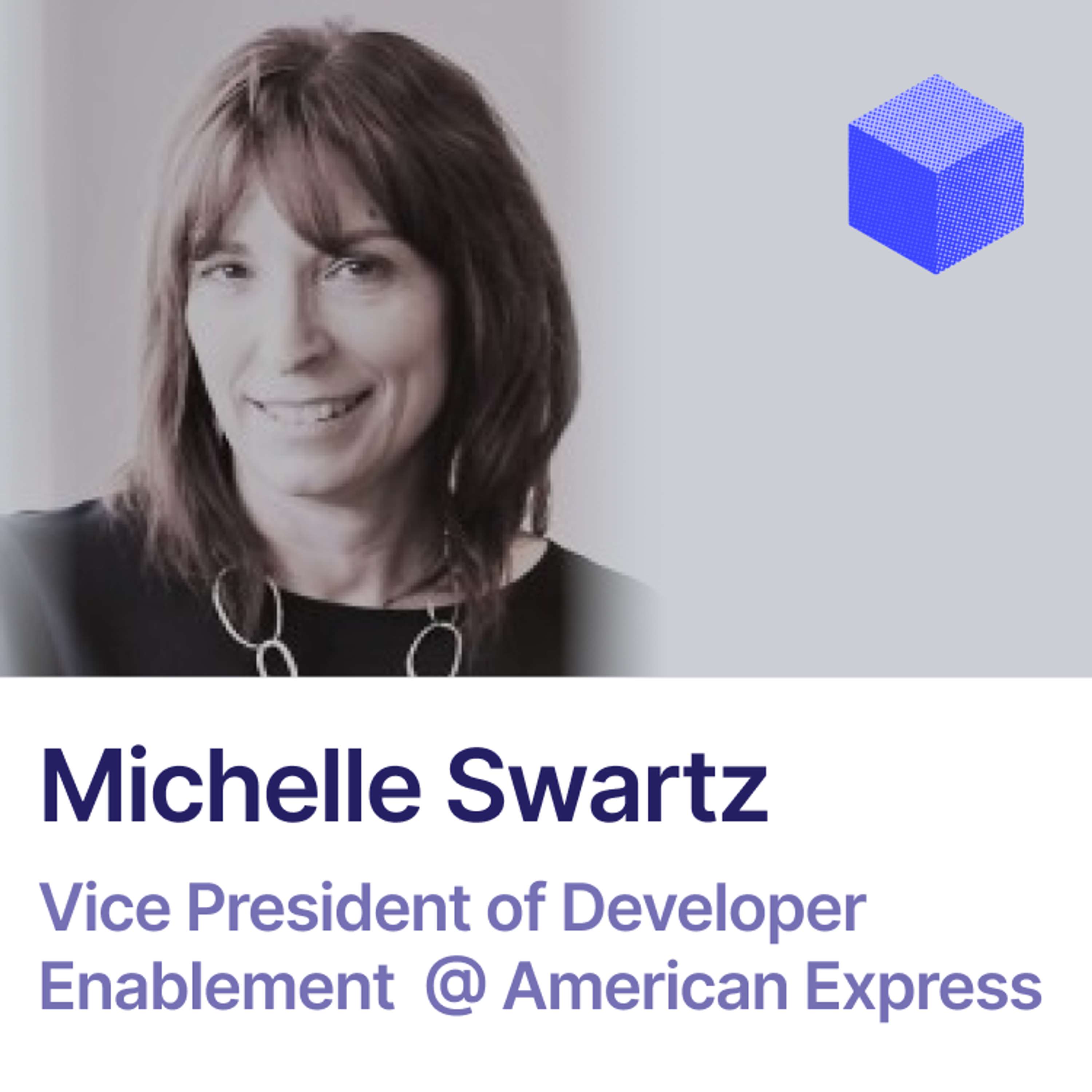
Developer Experience at American Express | Michelle Swartz (American Express)
Jun 4, 202400:45:00Tap to summarizeClick here to view the episode transcript'. In this episode, Michelle Swartz, Vice president of Developer Enablement American Express, shares insights on improving developer experience. She discusses the creation of an onboarding bootcamp and the development of the AmEx Way Library for better knowledge management. Michelle explains how AmEx balances standardization and flexibility with the concept of Paved Roads. She also highlights the importance of measuring success, fostering community, and elevating the company's tech credibility.Mentions and linksGenAI GuideTimestamps(5:45) Challenges of advocating for DevEx in non-tech companies(7:43) Importance of senior leadership buy-in for DevEx(9:58) Genesis of the DevEx organization and Jedi Council(12:12) Transition to a dedicated DevEx function(13:17) Formalizing investment in DevEx(18:02) Initial efforts and learning in improving DevEx(19:25) Using sentiment surveys to prioritize DevEx areas(27:26) Addressing knowledge management challenges(29:49) Balancing standardization and freedom in DevEx(36:21) Implementing Paved Roads: evolution vs. revolution
Transcribe →
DORA, SPACE, and DevEx: Choosing the right framework | Laura Tacho + Abi Noda
May 21, 202400:39:35Tap to summarizeClick here to view the episode transcript'. This week’s episode is a recording from a recent event hosted by Abi Noda (CEO of DX) and Laura Tacho (CTO at DX). The episode begins with an overview of the DORA, SPACE, and DevEx frameworks, including where they overlap and common misconceptions about each. Laura and Abi discuss the advantages and drawbacks of each framework, then discuss how to choose which framework to use.Mentions and Links: Dora.devDiscussion points:2:50- DORA, SPACE, DevEx overview10:35- Choosing which framework to use13:15- Using DORA22:42-Using SPACE
Transcribe →
The science behind DORA | Derek DeBellis (Google)
May 7, 202400:47:50Tap to summarizeClick here to view the episode transcript. In this week's episode, we welcome Derek DeBellis, lead researcher on Google's DORA team, for a deep dive into the science and methodology behind DORA's research. We explore Derek's background, his role at Google, and how DORA intersects with other research disciplines. Derek takes us through DORA's research process step by step, from defining outcomes and factors to survey design, analysis, and structural equation modeling.Mentions and Links:Derek DeBellis on LinkedInDX’s guide to measuring GenAI adoption and impact2023 Accelerate State of DevOps ReportDiscussion points:(3:00) Derek’s transition from Microsoft to the DORA team at Google(4:28) Derek talks about his connection to surveys(6:16) Derek’s journey to becoming a quantitative user experience researcher(7:48) Derek simplifies DORA(8:19) DORA - Philosophy vs practice(11:09) Understanding desired outcomes(12:45) Self reported outcomes vs objective outcomes(16:16) Derek and Abi discuss the nuances of literature review(19:57) Derek details survey development(27:55) Pretesting issues(29:30) Designing surveys for other companies(35:02) Derek simplifies model analysis and validation techniques(38:48) Benchmarks: Balancing data limitations with method sensitivity
Transcribe →
How Slack fully automates deploys and anomaly detection with Z-scores | Sean Mcllroy (Slack)
Apr 23, 202400:33:49Tap to summarizeClick here to view the episode transcript. This week we’re joined by Sean Mcllroy from Slack’s Release Engineering team to learn about how they’ve fully automated their deployment process. This conversation covers Slack’s original release process, key changes Sean’s team has made, and the latest challenges they’re working on today. Mentions and links:Read Sean’s blog post, The Scary Thing About DeploysFollow Sean on LinkedInTime Stamps:(1:34): The Release Engineering team(2:13): How the monolith has served Slack (3:24): How the deployment process used to work (6:23): The complexity of the deploy itself(7:39): Early ideas for improving the deployment process(9:07): Why anomaly detection is challenging(10:32): What a Z-score is(13:23): Managing noise with Z-scores(16:49): Presenting this information to people that need it(19:54): Taking humans out of the process(23:13): Handling rollbacks(25:27): Not overloading developers with information(28:26): Handling large deployments
Transcribe →