Podcast
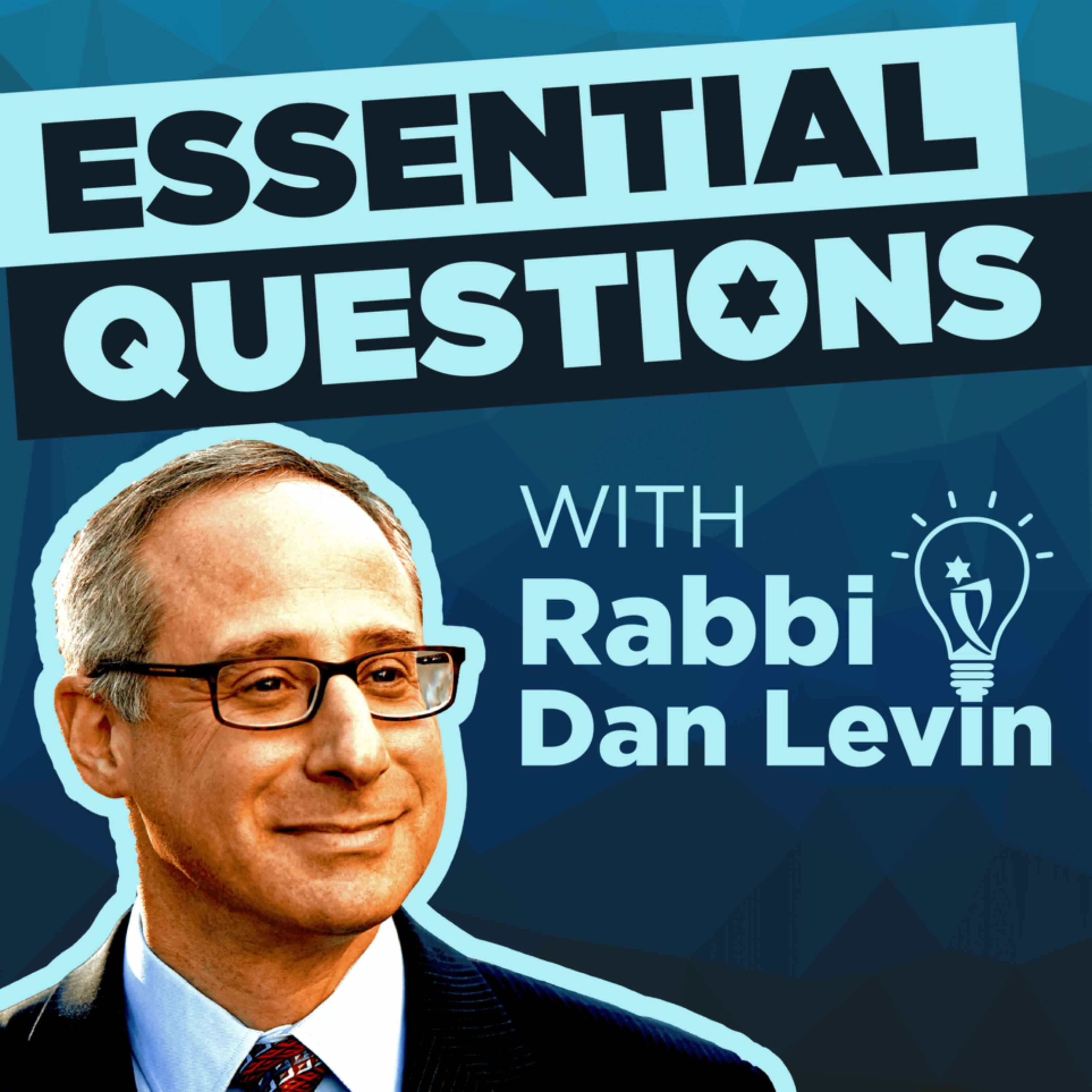
Essential Questions with Rabbi Dan Levin
Hosted by Temple Beth El of Boca Raton · EN
Each episode of Essential Questions with Rabbi Dan Levin will pose an essential question and invite a conversation with remarkable people in the Jewish world and in our community to consider what those questions and answers mean.
16episodes
Episodes
Newest firstAll episodes
What Should We Know About Alzheimer’s and Dementia? with Dr. Robert Colton
3w ago00:48:07Tap to summarizeDr. Robert Colton joins Rabbi Dan Levin for a conversation about Alzheimer’s, dementia, and what to look for as cognitive decline begins. Drawing on decades as a physician, he explains how symptoms often start and how to tell the difference between normal aging and something more serious. They also talk about the human side of diagnosis, including the experience of “living loss” for patients and families, and the difficult moments that come with it. Early detection, he explains, can make a meaningful difference as new treatments and approaches continue to develop. The conversation touches on lifestyle changes that support brain health, from exercise to social connection, as well as how individuals and families can better prepare for what lies ahead.
Transcribe →How Do We Build a Better Israel? with Orly Erez-Likhovski
Jul 800:47:26Tap to summarizeOrly Erez-Likhovski, Director of the Israel Religious Action Center, joins Rabbi Dan Levin for a conversation about law, justice, and what it means to live Jewish values in the public sphere. She shares how her path—from a secular upbringing to discovering Reform Judaism—shaped her belief that being committed to equality and being Jewish go hand in hand. Drawing on her work as a human rights attorney, she reflects on challenges within Israeli society, including religious freedom, racism, and the gap between the country’s founding ideals and its current reality. She also discusses some of the legal battles she’s led—advancing women’s rights, supporting LGBTQ+ equality, and pushing back against discrimination. Throughout the conversation, Orly Erez-Likhovski returns to a central question: how do you keep working toward a more just society without becoming cynical? Grounded in Jewish tradition and real-world experience, this episode explores what it takes to hold onto both hope and responsibility in a complicated moment for Israel.
Transcribe →What Does it Mean to Be Human? with Rabbi Rachel Mikva
Jun 2400:51:25Tap to summarizeRabbi Dr. Rachel Mikva joins Rabbi Dan Levin and Rabbi Laila Haas for a conversation about what it means to be human through Jewish thought and lived experience. Together, they explore human awareness, self-reflection, and the responsibility we carry toward one another and the world. The conversation moves through big questions: what it means to be created in the image of God, and the tensions between justice and mercy, freedom and responsibility, and peace and conflict. Rabbi Mikva reflects on how these ideas shape both individuals and communities. Drawing on her experience in multifaith education, she speaks about navigating difference with humility, listening across belief systems, and speaking from personal perspective rather than absolute certainty. At the center is the idea that how we treat one another reflects something larger, and the work of becoming human is never finished.
Transcribe →What Does it Mean to Love the Stranger? with Rabbi Peter Berg
Jun 1000:43:38Tap to summarizeRabbi Peter Berg joins hosts Rabbi Dan Levin and Rabbi Greg Weisman to explore how Jewish values call us to engage with the world beyond our own community. As Senior Rabbi of The Temple in Atlanta, he reflects on a legacy shaped by courage and social justice—from the congregation’s role in the Civil Rights Movement to its ongoing partnerships across the city. Rabbi Berg shares how relationships with leaders of other faiths, including historic ties to Ebenezer Baptist Church, have shaped his approach to building coalitions around issues like gun safety and mass incarceration. These efforts often bring together people with deeply different perspectives, where conversation itself becomes a sacred act. From difficult dialogues around Israel to moments of unexpected connection, this episode looks at what it means to listen across difference, to stand firm in one’s values, and to find holiness in the work of showing up for others.
Transcribe →What Does it Take to Renew a Jewish Community? with Rabbi Michael Paley
May 2700:47:36Tap to summarizeRabbi Michael Paley joins Rabbi Dan Levin and Rabbi Laila Haas to explore how renewal in Jewish life takes shape through both inner spiritual work and lived experience. Reflecting on his early studies of Islam and physics, he shares how encountering other traditions deepened his own Judaism and expanded his sense of spiritual curiosity. Rabbi Paley was drawn to Budapest, where the legacy of the Holocaust left a community marked by silence, survival, and hidden identity. There, he met individuals only discovering their Jewishness later in life and communities slowly finding their way back to tradition. Through stories, study, and reflection, this conversation looks at what it means to build Jewish life as creators rather than consumers—and what renewal can look like in places where so much was nearly lost.
Transcribe →What's it Like to be a Persian Jew? with Rabbi Tarlan Rabizadeh
May 1300:44:50Tap to summarizeRabbi Tarlan Rabizadeh joins Rabbi Dan Levin to share her experience growing up between cultures—as the child of Iranian immigrants raised in Los Angeles, and now a rabbi and educator. She talks about the experience of being raised in a Persian Jewish home while also moving through broader American Jewish spaces that didn’t always reflect her background. The conversation explores what it’s like to navigate different cultural and political perspectives within the Jewish community, and the ways Persian Jews often feel both deeply connected and sometimes misunderstood. Rabbi Rabizadeh speaks about carrying Iran with her in a very real way, even from afar, and how that perspective influences the way she teaches, leads, and connects with others. From the warmth and energy of Shabbat in a Persian home to the challenges of code-switching between communities, this episode looks at the complexity of Jewish identity across cultures—and what can open up when people take the time to listen and understand one another.
Transcribe →What Does it Take to Write a Novel? with Andrew Furman
Dec 1700:44:58Tap to summarizeWhat inspires someone to write a novel, and how do those stories take shape before the writer even knows where they’re going? Rabbi Dan Levin is joined by novelist and FAU professor Andrew Furman for a thoughtful conversation about creativity, uncertainty, and finding a voice. Furman reflects on being drawn to Jewish literature as a reader while taking a different path as a writer, often working on the margins of what was being published and expected. Together, they explore enduring questions about writing: how much comes from personal experience, whether a writer needs an extraordinary life to tell meaningful stories, and what it means to write with genuine curiosity. Furman shares how passion for the subject and attention to the inner lives of characters can draw readers into experiences that feel deeply familiar, even when they are not their own. The episode also looks at the writing process itself: planning versus discovery, resisting self-censorship, and allowing larger themes to emerge over time. Along the way, Rabbi Dan connects fiction to the layered way we read Jewish texts, and to the power of stories to create empathy across distance and difference. At its heart, this conversation asks why novels matter, and what they awaken in us when we read and write them.
Transcribe →What Is the Future of Jewish Education? with Heather Erez, Director of Youth and Family Education and Engagement
Dec 1000:51:40Tap to summarizeWhat will it take to shape a Jewish education that kids actually want to come back to? Rabbi Dan Levin sits down with Heather Erez, Temple Beth El’s Director of Youth and Family Education and Engagement, whose own Jewish journey began in summer camps, youth groups, and a transformative year in Israel. They explore how meaningful, relevant, and joy-filled Jewish learning can ignite a lifelong connection. Drawing from her experiences on a kibbutz, at HUC, and working with college students seeking safe Jewish spaces, Heather shares what truly inspires young people to lean in. Together, they tackle the big question: how do you build a program that matters when you only have a few hours a week and learners come with wildly different levels of interest? Heather argues that the future isn’t about rote learning—it’s about belonging. It’s interactive experiences over textbooks, community over content, and giving kids and parents tools that help Judaism show up in real life, from the classroom to the car ride home. As Jewish education faces a rapidly changing world, especially after October 7th, Heather sees the path forward as adaptive, relational, and deeply purpose-driven. This episode digs into how we help kids understand why Hebrew and b’nai mitzvah matter, how we create spaces that feel safe and joyful, and how we build a Jewish future rooted not in obligation, but in connection and meaning.
Transcribe →How Does Reform Judaism Shape Jewish Identity Today? with Rabbi Michael Marmur
Dec 300:48:33Tap to summarizeIn this episode of Essential Questions, Rabbi Dan Levin and Rabbi Michael Marmur explore what it means to exist as Jews in the modern world. They look at how Judaism, shaped by specific historical moments, continues to influence the ways we understand identity, purpose, and belonging today. They discuss the ongoing task within liberal and Reform Judaism: helping people make thoughtful, informed choices about Jewish life rather than relying only on moments of inspiration. This raises questions about how ancient tradition can meet modern sensibilities and how communities cultivate engagement that feels both authentic and accessible. Along the way, they touch on the quiet concern many share about the movement’s future—whether it will continue to resonate across generations—and how hope, while not a complete answer, still offers grounding and encouragement. Drawing on ideas from thinkers like Abraham Joshua Heschel, the conversation considers how knowledge, intention, and the moments that move the spirit can shape a meaningful Jewish life today.
Transcribe →How Do Jewish Values Guide us in Today’s Immigration Crisis? with Rabbi Sarah Bassin and Bill Gerstein
Nov 2600:48:46Tap to summarizeWhat draws Jews to stand with immigrants—and what does our tradition demand of us? In this episode of Essential Questions, Rabbi Dan Levin speaks with Rabbi Sarah Bassin of HIAS and immigration attorney Bill Gerstein about Judaism’s call to protect both neighbor and stranger, the Jewish memory of being outsiders, and the need to resist the dehumanization of those seeking safety. They break down how immigration has changed: deportation is used more readily, legal pathways have narrowed, and becoming a citizen now requires navigating complex systems of sponsorship, the diversity lottery, and increasingly limited asylum options. They also address how people become undocumented and how often their nonviolent circumstances don’t match the severity of the penalties they face. The guests highlight the critical work Jewish communities do to support newcomers through job assistance, training, and advocacy—rooted in the legacy of Jewish refugees once denied refuge themselves. Their conversation asks what it means, today, to make room for human dignity within a strained immigration system.
Transcribe →