Podcast
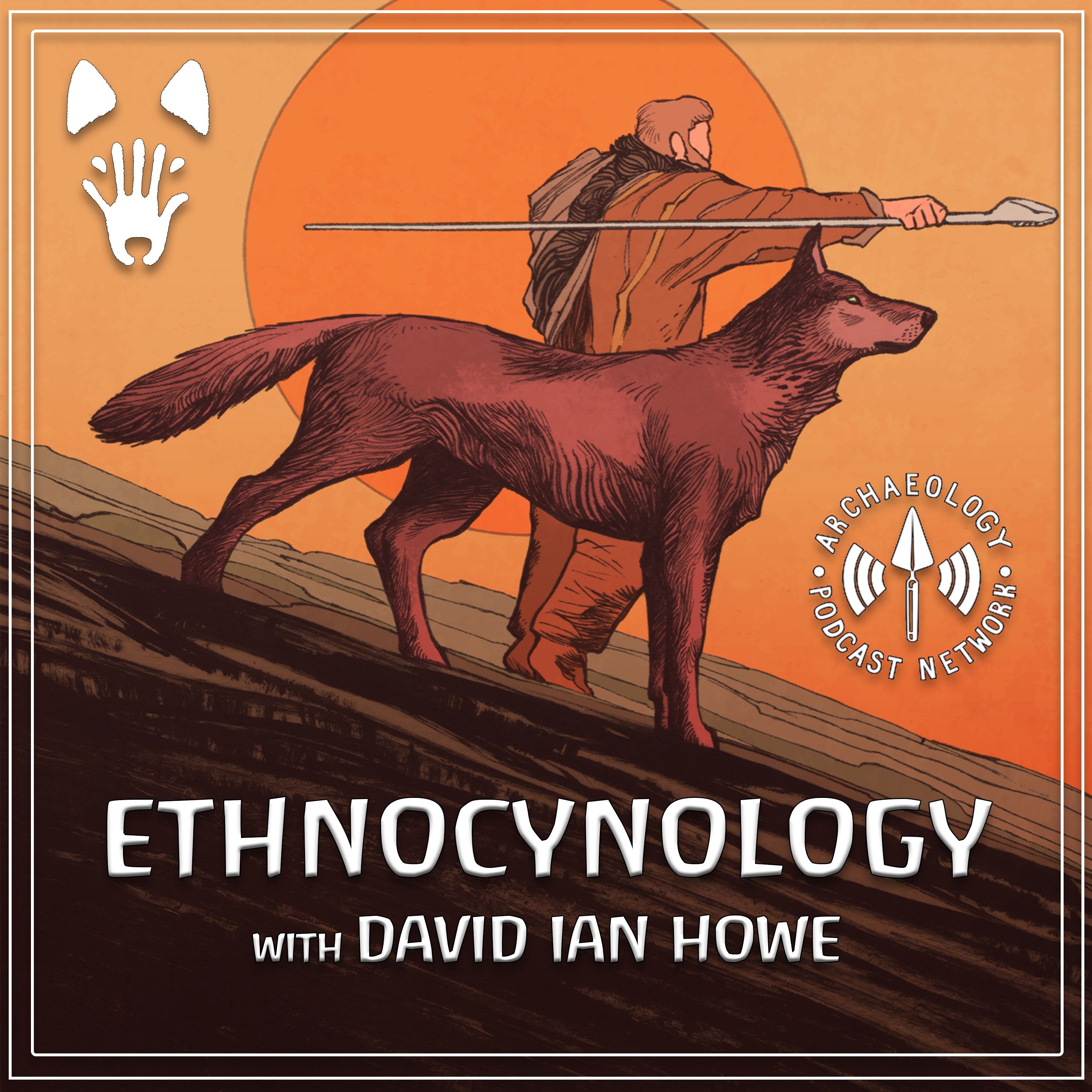
Ethnocynology with David Ian Howe
Hosted by The Archaeology Podcast Network · EN
Ethnocynology is the study of dogs in human cultural contexts. This podcast, hosted by anthropologist and comedian David Ian Howe, explores the history and archaeology of dogs, the roles of dogs in modern media, and the latest findings from archaeology in general.
14episodes
Episodes
Newest firstAll episodes
Fieldwork and Wolf Spotting in Yellowstone - Ep 41
2w ago00:40:22Tap to summarizeIn this solo episode, David shares stories from two unforgettable weeks in Wyoming—from excavating an ancient Bison antiquus at the Willow Springs archaeological site to spending a day tracking wolves in Yellowstone National Park with wildlife guide Evan Stout. Along the way, he reflects on field archaeology, the challenges of living with permanent neuropathy after Guillain-Barré syndrome, the history of Yellowstone, wolf conservation, and why observing wild wolves offers a unique window into understanding the dogs that have shared our lives for thousands of years. Whether you're interested in archaeology, wildlife, human evolution, or America's national parks, this episode is a behind-the-scenes look at two worlds that are more connected than they might seem. Books Mentioned Empire of Shadows Undaunted Courage Eavesdropping on Animals Rise of Wolf 8 Reign of Wolf 21 Transcripts For a rough transcript head over to: https://www.archaeologypodcastnetwork.com/ethnocynology/41 Links: davidianhowe.com Davidianhowe.com/store History of Dog course: The History of Dogs Yellowstone Wildlife Guide Company The APN Awards: The APN Awards - Nominations Open! ArchPodNet APN Website: https://www.archpodnet.com APN on Facebook: https://www.facebook.com/archpodnet APN on Twitter: https://www.twitter.com/archpodnet APN on Instagram: https://www.instagram.com/archpodnet APN Shop Affiliates Motion Hosted by Simplecast, an AdsWizz company. See pcm.adswizz.com for information about our collection and use of personal data for advertising.
Transcribe →Nature is Not Metal with Bradley Rydholm (Part 2) - Ep 40
4w ago00:42:09Tap to summarizeIn this episode of Ethnocynology, David continues his conversation with Bradley Rydholm of Nature Is Not Metal to discuss animal cognition, ecology, and humanity’s relationship with the natural world. Bradley shares the story behind his popular Instagram page, his work as an outdoor educator, and why he believes wild animals possess rich social lives and individual personalities that are often overlooked. The conversation explores everything from wolves to topics like anthropomorphism, cooperation in nature, and the emotional lives of animals. David and Bradley also discuss how experiences in the wilderness can change the way people view themselves, other species, and the world around them. Finally, they examine environmental philosophy, the challenges of communicating science online, and why both dogs and wild animals can help reconnect us to a deeper understanding of nature and our place within it. Books Mentioned: Beyond Words By Carl Safina The Spell of the Sensuous By David Abram Goliath’s Curse by Luke Kemp Transcripts For a rough transcript head over to: https://www.archaeologypodcastnetwork.com/ethnocynology/40 Links: davidianhowe.com Davidianhowe.com/store ArchPodNet APN Website: https://www.archpodnet.com APN on Facebook: https://www.facebook.com/archpodnet APN on Twitter: https://www.twitter.com/archpodnet APN on Instagram: https://www.instagram.com/archpodnet APN Shop Affiliates Motion Hosted by Simplecast, an AdsWizz company. See pcm.adswizz.com for information about our collection and use of personal data for advertising.
Transcribe →Nature is Not Metal with Bradley Rydholm - Ep 39
Jun 2000:39:17Tap to summarizeIn this episode of Ethnocynology, David sits down with Bradley Rydholm of Nature Is Not Metal to discuss animal cognition, ecology, and humanity’s relationship with the natural world. Bradley shares the story behind his popular Instagram page, his work as an outdoor educator, and why he believes wild animals possess rich social lives and individual personalities that are often overlooked. The conversation explores everything from wolves to topics like anthropomorphism, cooperation in nature, and the emotional lives of animals. David and Bradley also discuss how experiences in the wilderness can change the way people view themselves, other species, and the world around them. Finally they examine environmental philosophy, the challenges of communicating science online, and why both dogs and wild animals can help reconnect us to a deeper understanding of nature and our place within it. Books Mentioned: Beyond Words By Carl Safina The Spell of the Sensuous By David Abram Goliath’s Curse by Luke Kemp Transcripts For a rough transcript head over to: https://www.archaeologypodcastnetwork.com/ethnocynology/39 Links: Nature is not Metal (Instagram) davidianhowe.com Davidianhowe.com/store History of Dog course ArchPodNet APN Website: https://www.archpodnet.com APN on Facebook: https://www.facebook.com/archpodnet APN on Twitter: https://www.twitter.com/archpodnet APN on Instagram: https://www.instagram.com/archpodnet APN Shop Affiliates Motion Hosted by Simplecast, an AdsWizz company. See pcm.adswizz.com for information about our collection and use of personal data for advertising.
Transcribe →Argos, the Odyssey, and dogs in popular Media with Dr. Alyce Cannon - Ep 38
Jun 600:55:10Tap to summarizeIn this episode of Ethnocynology, David chats with friend of the show Dr. Alyce Cannon, who is an expert in classics and dogs in the classical world. The discussion begins with an overview of Alyce’s research an ancient Greece and how dogs appear in pottery after the great Athenian plague. Then they begin to discuss Odysseus’s dog Argos in Home’s Odyssey: his roles, significance, and sad story. And discussed as well as whether or not he will be in the new Christopher Nolan version of the epic poem. Towards the end of the episode, the two discuss dogs and popular media and why the dog always has to die in films, and what this means for the human mind and it’s connection to the ancient Classics. Transcripts For a rough transcript head over to: https://www.archaeologypodcastnetwork.com/ethnocynology/38 Links: History of Dog Course davidianhowe.com Davidianhowe.com/store ArchPodNet APN Website: https://www.archpodnet.com APN on Facebook: https://www.facebook.com/archpodnet APN on Twitter: https://www.twitter.com/archpodnet APN on Instagram: https://www.instagram.com/archpodnet APN Shop Affiliates Motion Hosted by Simplecast, an AdsWizz company. See pcm.adswizz.com for information about our collection and use of personal data for advertising.
Transcribe →10 Dog Archaeology Questions Answered - Ep 37
May 2300:30:30Tap to summarizeIn this Q&A episode of Ethnocynology, David answers listener questions about dogs, archaeology, human evolution, and the ancient past. From whether Neanderthals had dogs, to why humans mourn dogs so deeply, to what ancient people may have named their dogs, this episode explores the relationship between humans and dogs across history. David also discusses archaeological misconceptions, Ice Age societies, ancient dog breeds, civilization, language, and what life may have actually looked like 20,000 years ago. Links: History of Dogs Course davidianhowe.com Davidianhowe.com/store ArchPodNet APN Website: https://www.archpodnet.com APN on Facebook: https://www.facebook.com/archpodnet APN on Twitter: https://www.twitter.com/archpodnet APN on Instagram: https://www.instagram.com/archpodnet APN Shop Affiliates Motion Hosted by Simplecast, an AdsWizz company. See pcm.adswizz.com for information about our collection and use of personal data for advertising.
Transcribe →Women for Wolves with Anjali Ranadive - Ep 36
May 901:11:24Tap to summarizeIn this episode of Ethnocynology, David has a deep discussion with Anjali Ranadive. Anjali Ranadive is a wildlife conservationist and founder of Women for Wolves, a California-based nonprofit and wolf-dog sanctuary focused on wolf conservation, rescue, education, and human–wildlife coexistence. Based in El Dorado County, her work bridges conservation, advocacy, policy, and storytelling to protect wolves and reshape how people relate to predators and the natural world. Anjali studied at the University of California, Berkeley, and is currently pursuing her master’s degree in wildlife conservation. She received the Paul Walker Ocean Leadership Award for her work in conservation and serves on the board of Earth Daughters, an Indigenous-led organization focused on women’s empowerment and environmental justice. David asks Anjali about her background and childhood, and how that got her into animals, conservation, and animal science. And then they discuss Anjali’s first wolf-dog rescue, and how that led her to open the sanctuary. And as the episode progresses, they discuss Anjali’s relationship with the Wolf dogs, what ancient people might have thought about wolves, and the current lobbying work she is doing within the California government to pass more legislation to protect wolves. Links: Women for Wolves (IG) History of Dogs Course davidianhowe.com Davidianhowe.com/store ArchPodNet APN Website: https://www.archpodnet.com APN on Facebook: https://www.facebook.com/archpodnet APN on Twitter: https://www.twitter.com/archpodnet APN on Instagram: https://www.instagram.com/archpodnet APN Shop Affiliates Motion Hosted by Simplecast, an AdsWizz company. See pcm.adswizz.com for information about our collection and use of personal data for advertising.
Transcribe →New Dog Studies and New Dog Course! - Ep 35
Apr 1100:28:56Tap to summarizeWith two new dog genetic and archaeological studies in the news, David briefly overviews his thoughts on them before he interviews the researchers in the coming Episodes. One was found in Britain, and another in Turkey, and they help fill in the gaps of previously published genetic studies. Secondly, David discusses his newly launched The History of Dogs Course hosted by FluentPet! Check the link below to sign up for the course and to get a special APN listener discount. OR use code DAVIDDOGS at checkout. That is FLUENT.PET / DAVID The History Of Dogs (NOT fluentpet. com /david) As well, David discusses the newly launched Office Hours and Media Consulting services hoste don his website. You can find them at davidianhowe.com! Transcripts For a rough transcript head over to: https://www.archaeologypodcastnetwork.com/ethnocynology/35 Links: davidianhowe.com Davidianhowe.com/store FluentPet History of Dogs Course David’s Website Office Hours Media Consulting ArchPodNet APN Website: https://www.archpodnet.com APN on Facebook: https://www.facebook.com/archpodnet APN on Twitter: https://www.twitter.com/archpodnet APN on Instagram: https://www.instagram.com/archpodnet APN Shop Affiliates Motion Hosted by Simplecast, an AdsWizz company. See pcm.adswizz.com for information about our collection and use of personal data for advertising.
Transcribe →Monte Verde Discussion Panel with Drs. Shane Miller, Spencer Pelton, Jesse Tune, and Carlton Gover - Ep 34
Mar 2801:04:33Tap to summarizeIn this episode of Ethnocynology, David hosts a panel of guests, including Drs. Shane Miller, Spencer Pelton, Jesse Tune, and Carlton Gover, to discuss the recent Monte Verde paper by Surovell et al. They discuss the recent paper, the synopsis, and address the many professionally published comments and critiques of the paper, as well as the conversation of the paper on the YouTube video of the previous episode. Links: davidianhowe.com Davidianhowe.com/store ArchPodNet APN Website: https://www.archpodnet.com APN on Facebook: https://www.facebook.com/archpodnet APN on Twitter: https://www.twitter.com/archpodnet APN on Instagram: https://www.instagram.com/archpodnet APN Shop Affiliates Motion Hosted by Simplecast, an AdsWizz company. See pcm.adswizz.com for information about our collection and use of personal data for advertising.
Transcribe →BREAKING NEWS - Monte Verde is no longer a pre-Clovis site, with Dr. Todd Surovell - Ep 33
Mar 2300:48:42Tap to summarizeFor decades, Monte Verde in southern Chile has been one of the most famous archaeological sites in the Americas. The site was widely accepted as 14,500 years old, making it one of the strongest pieces of evidence for human presence in the Americas before Clovis. But what if that interpretation was wrong? In this special episode, I sit down with Dr. Todd Surovell, professor of anthropology at the University of Wyoming, to discuss new research that re-examines Monte Verde using modern geoarchaeological methods. The results suggest that the famous site may actually be much younger than previously believed, dating to the Holocene rather than the Ice Age. If true, this would mean that Monte Verde is not evidence for pre-Clovis humans in South America, and it could force archaeologists to reconsider one of the most influential discoveries in American archaeology. We discuss: The history of the Monte Verde discovery Why it reshaped textbooks in the 1990s How new geological and dating analyses challenge the original interpretation What this means for Clovis-first vs. pre-Clovis models Why independent verification and skepticism are essential in science This episode explores how science evolves—and how even the most famous discoveries can be re-examined. Links: Video Version to follow along Surovell’s Study Surovell’s UW Page davidianhowe.com Davidianhowe.com/store ArchPodNet APN Website: https://www.archpodnet.com APN on Facebook: https://www.facebook.com/archpodnet APN on Twitter: https://www.twitter.com/archpodnet APN on Instagram: https://www.instagram.com/archpodnet APN Shop Affiliates Motion Hosted by Simplecast, an AdsWizz company. See pcm.adswizz.com for information about our collection and use of personal data for advertising.
Transcribe →The Anthropology of Tattooing with Aaron Deter-Wolf - Ep 32
Mar 1401:10:46Tap to summarizeIn this episode, David sits down in Nashville with archaeologist Aaron Deter-Wolf, a leading researcher in the archaeology of tattooing and co-editor of Ancient Ink: The Archaeology of Tattooing. They explore how tattoos function as deep cultural expressions across human societies, from Ötzi the Iceman’s 5,000-year-old tattoos to newly documented tattooed mummies in Peru. The conversation dives into experimental archaeology, ancient tattoo tools made from bone and stone, and what tattoos can reveal about identity, belief, and social structure in the past. Together they discuss how tattoo traditions changed under empires, how archaeologists identify tattooing in the archaeological record, and why body modification may be one of humanity’s oldest cultural universals. Links: davidianhowe.com Davidianhowe.com/store Aaron’s Book: Ancient Ink ArchPodNet APN Website: https://www.archpodnet.com APN on Facebook: https://www.facebook.com/archpodnet APN on Twitter: https://www.twitter.com/archpodnet APN on Instagram: https://www.instagram.com/archpodnet APN Shop Affiliates Motion Hosted by Simplecast, an AdsWizz company. See pcm.adswizz.com for information about our collection and use of personal data for advertising.
Transcribe →