Podcast
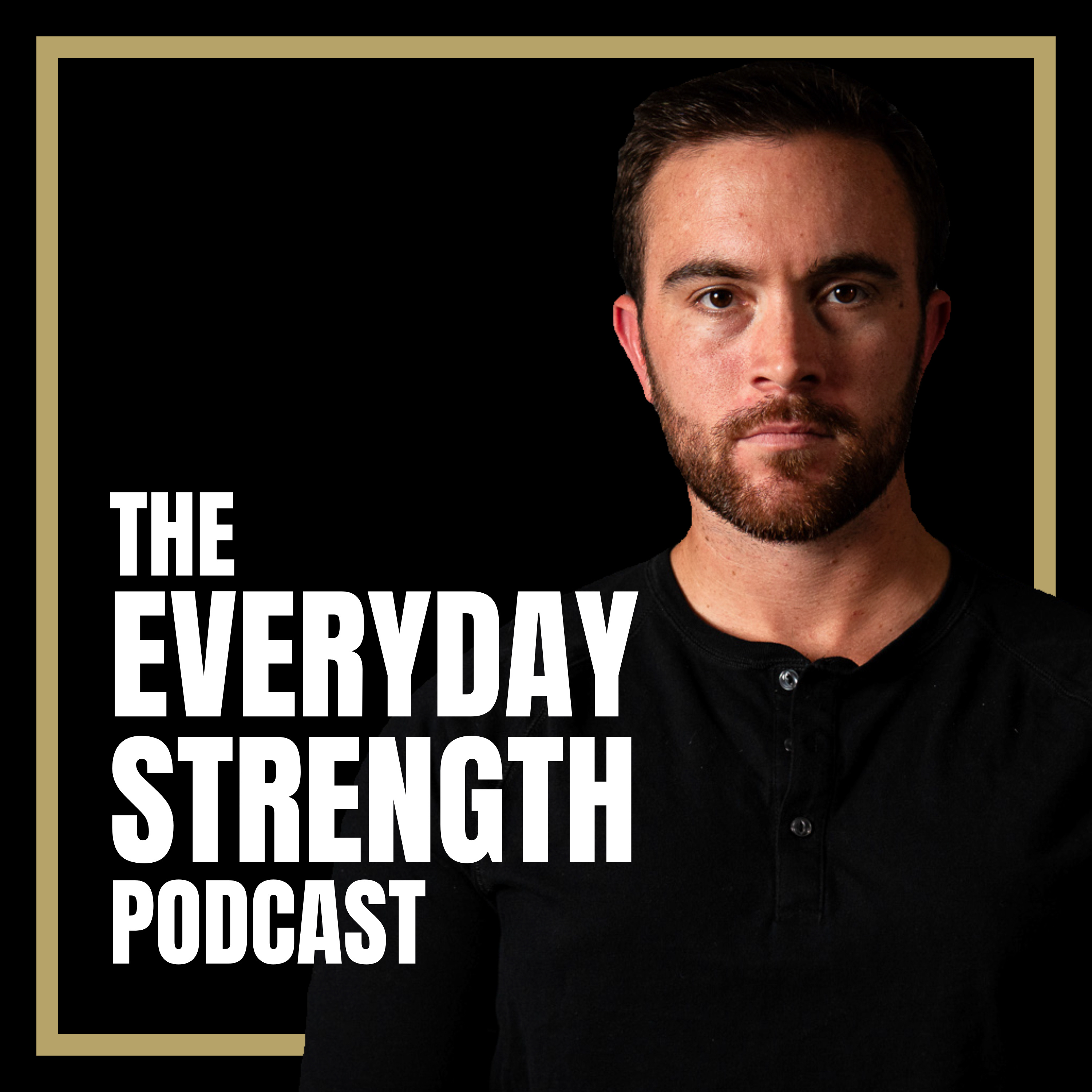
Everyday Strength Podcast
Hosted by Anthony Hagele · EN
The Everyday Strength Podcast explores the science and strategy behind becoming strong, athletic, and capable for life.
Hosted by Anthony Hagele, a coach, researcher, and hybrid athlete, the show blends evidence-based training, conditioning, and nutrition with real-world experience. Each episode gives you practical insight into how to train, fuel, and perform at a higher level while managing the demands of work, family, and life.
Drawing from sports science, strength training, and human performance research, Anthony breaks down what actually works for everyday athletes who want to stay lean,
11episodes
Episodes
Newest firstAll episodes
When Enjoyment Is Hurting Your Training
Apr 1600:31:59Tap to summarizeIn this weeks episode, Anthony Hagele break down the role of enjoyment in training and where it fits into a well-structured program. While doing what you enjoy can improve consistency, relying on it as the primary driver often leads to stagnation, poor prioritization, and a lack of progress. We discuss how to balance enjoyment with intentional programming so your training actually moves you forward.Read the full episode notes at hagelestrength.com/when-enjoyment-is-hurting-your-trainingJoin the Performance Edge Network to receive Anthony’s weekly newsletter at hagelestrength.com/newsletterTimestamps:(00:00) Introduction and episode overview(02:15) Why “do what you enjoy” is overapplied(05:40) Training as a physiological process, not entertainment(09:10) The problem with preference-driven programming(13:25) Why you enjoy what you’re already good at(17:50) Avoiding weaknesses and the comfort trap(22:30) How stagnation happens without clear priorities(27:05) Enjoyment and adherence versus adaptation(31:20) Structuring training around what actually matters(36:10) Balancing enjoyment within a program(40:45) Practical takeaways for everyday athletes(45:00) Closing thoughts and key messageDisclaimers & Disclosures:hagelestrength.com/disclaimerConnect with Anthony:Instagram: instagram.com/hagelestrengthX: x.com/hagelestrengthYouTube: youtube.com/hagelestrength
Transcribe →
Aging vs Lifestyle: What’s Actually Causing the Decline?
Apr 900:27:32Tap to summarizeAt some point, everyone is told that getting older means getting weaker, slower, and less capable. In this episode, Anthony breaks down what actually changes with age from a physiological standpoint and what is really driving the decline most people experience. You’ll learn why factors like VO2 max, strength, and recovery don’t disappear overnight and how “lifestyle drift” plays a much bigger role than aging itself.Read the full episode notes at hagelestrength.com/aging-vs-lifestyle-whats-actually-causing-the-declineJoin the Performance Edge Network to receive Anthony’s weekly newsletter at hagelestrength.com/newsletterTimestamps:(00:00) Introduction and the aging narrative(02:30) What actually changes with age(05:30) Recovery, fatigue, and common misconceptions(07:30) Lifestyle drift and behavioral decline(11:30) Life transitions and loss of structure(14:00) Metabolism and muscle loss myths(16:00) Aging vs behavior: what really drives decline(17:30) Strength training as the foundation(18:45) Conditioning and maintaining capacity(19:45) Intensity, movement, and daily habits(21:30) Training adjustments and warmups(23:30) Managing recovery and volume(24:30) Rebuilding structure and long term consistency(26:00) Final takeawaysDisclaimers & Disclosures:hagelestrength.com/disclaimerConnect with Anthony:Instagram: instagram.com/hagelestrengthX: x.com/hagelestrengthYouTube: youtube.com/hagelestrength
Transcribe →
Sleds, Carries, and Ergs for Conditioning That Actually Transfers
Apr 200:27:07Tap to summarizeAs training shifts out of a heavy strength focus, most athletes either guess their conditioning or default to random high intensity work. In this episode, Anthony breaks down how to use sleds carries and ergs to build conditioning that actually supports strength performance and recovery. You will learn how to structure aerobic work intervals and mixed modality sessions with intent so your conditioning improves without interfering with your lifting.Read the full episode notes at hagelestrength.com/episodes/sleds-carries-and-ergs-for-conditioning-that-actually-transfersJoin the Performance Edge Network to receive Anthony’s weekly newsletter at hagelestrength.com/newsletterTimestamps:(00:00) Introduction and seasonal shift in training(02:14) Overview of sleds carries and ergs(03:24) Sled work benefits and implementation(07:14) Carries for integrated conditioning(11:48) Erg based conditioning overview(15:47) Structuring aerobic and interval work(19:29) Combining methods into mixed sessions(23:12) Programming considerations and weekly structure(24:27) Applying this to your trainingDisclaimers & Disclosures:hagelestrength.com/disclaimerConnect with Anthony:Instagram: instagram.com/hagelestrengthX: x.com/hagelestrengthYouTube: youtube.com/hagelestrength
Transcribe →
What the Evidence Really Says About Resistance Training
Mar 2600:28:05Tap to summarizeThere is no shortage of opinions when it comes to resistance training, but far fewer conversations that actually reflect the full body of evidence. In this episode, Anthony breaks down what the research consistently shows about training for strength, hypertrophy, and power, and where people tend to overcomplicate the process. The goal is simple: bring clarity back to what actually drives results and what likely matters far less than most think.Read the full episode notes at hagelestrength.comJoin the Performance Edge Network to receive Anthony’s weekly newsletter.Timestamps:(00:00) Introduction and why this conversation matters(00:43) The problem with modern resistance training debates(01:39) Why the fundamentals still hold up(03:35) What kind of paper this is and why it matters(04:04) Understanding umbrella reviews and the bigger picture(05:32) The main takeaway: resistance training works(07:38) The variables that matter most in programming(08:06) Strength adaptations and key training variables(11:42) Hypertrophy and the role of training volume(14:11) What matters less for muscle growth(16:15) Power development and movement intent(18:47) Key variables that consistently show up(19:12) Variables that do not consistently influence outcomes(21:53) Progressive overload and real-world programming(23:29) Why resistance training matters beyond performance(25:03) Practical takeaways for athletes and coaches(26:44) OutroReferenced Resources:American College of Sports Medicine resistance training position stand published in Medicine and Science in Sports and ExerciseDisclaimers & DisclosuresConnect with Anthony:Instagram: instagram.com/hagelestrengthX: x.com/hagelestrengthYouTube: youtube.com/hagelestrength
Transcribe →
Applying Accommodating Resistance in Strength and Power Development
Mar 1900:28:07Tap to summarizeIn this episode, Anthony breaks down accommodating resistance and what bands and chains actually do in strength training. He explains how they change the resistance profile of a lift, how they influence force production and bar speed, and where they make sense within a program. Listeners will walk away with a clear understanding of when to use these tools, how to set them up correctly, and how to apply them for both strength and power development.Read the full episode notes at hagelestrength.comJoin the Performance Edge Network to receive Anthony’s weekly newsletter at hagelestrength.com/newsletterTimestamps:(00:00) Introduction and why accommodating resistance matters(02:00) Constant load versus changing force production and strength curves(04:15) How accommodating resistance changes loading and velocity(05:40) Origins in Westside Barbell and dynamic effort training(08:55) Chains versus bands key differences(12:00) Programming intent and when to use each tool(13:00) Movement selection and strength curve alignment(15:05) Setup mistakes and why details matter(15:40) Proper chain setup and loading principles(17:20) Proper band setup, tension, and anchoring(20:30) Programming applications and transition to loading(20:50) Peak power and optimal loading ranges(21:35) Dynamic effort examples for squat and bench(23:10) Chains for max effort and strength work(24:20) Integrating strength and power in programming(25:55) Practical use and when these tools are not necessary(26:30) Closing thoughts and where to find researchDisclaimers & DisclosuresConnect with Anthony:Instagram: instagram.com/hagelestrengthX: x.com/hagelestrengthYouTube: youtube.com/hagelestrength
Transcribe →
What I Would Do If I Could Only Train Three Days Per Week
Mar 1200:28:24Tap to summarizeIf your schedule only allows three training sessions per week, the answer is not random workouts or trying to squeeze everything in. In this episode, Anthony walks through the exact philosophy and structure he would use to maintain strength, athleticism, and long-term performance with limited time. He explains the non-negotiable qualities that must remain in any program and how to structure efficient sessions that continue driving progress.Read the full episode notes at hagelestrength.comJoin the Performance Edge Network to receive Anthony’s weekly newsletterTry a free week of the PEAK 3X program at hagelestrength.comTimestamps:(00:00) Introduction and the three day training question(00:31) Training with real life constraints(01:41) Why structure matters more when time is limited(02:19) The problem with random workouts(02:48) The philosophy behind the three day model(03:04) Who this approach is designed for(04:04) What cannot leave the program(04:31) The three non negotiable qualities(05:10) Why power stays in the program(05:38) Why heavy strength work remains essential(06:04) The role of repetition effort work(07:00) How these qualities work together(08:30) Structuring an efficient training week(10:30) How each session earns its place(12:00) Example weekly structure for three days(15:30) Managing volume and intensity with limited time(18:00) Conditioning considerations(20:30) Common mistakes with low frequency training(23:30) Why consistency beats complexity(26:00) Final thoughts on training for real lifeDisclaimers & DisclosuresConnect with Anthony:Instagram: instagram.com/hagelestrengthX: x.com/hagelestrengthYouTube: youtube.com/hagelestrength
Transcribe →
When the Box Squat Makes Sense in Your Program (And When It Doesn’t)
Mar 500:19:17Tap to summarizeThe box squat is often misunderstood. Some lifters treat it as a powerlifting relic while others avoid it entirely in favor of traditional squatting. In this episode, Anthony breaks down the mechanical, physiological, and programming reasons the box squat frequently appears in his training plans. You will learn how the lift changes hip and knee loading, how it alters force production at the bottom of the movement, and why it can be particularly useful for athletes balancing strength training with conditioning.Read the full episode notes at hagelestrength.comJoin the Performance Edge Network to receive Anthony’s weekly newsletter.Timestamps:(00:00) Introduction and framing the box squat debate(01:25) Influences from Louie Simmons and the origins of the box squat(02:21) Mechanical differences between box squats and traditional squats(05:34) Stretch shortening cycle and producing force from stillness(08:06) Starting strength and the importance of the first rep(10:38) Concurrent training and managing fatigue and recovery(12:32) Depth standards, proprioception, and positional control(14:01) Programming variables including box height and effort methods(15:12) Bar variations and how they change the stimulus(16:09) When the box squat is not the right choice(17:05) Why the box squat often solves common programming problems(18:00) Closing thoughts and supporting the podcastDisclaimers & DisclosuresConnect with Anthony:Instagram: instagram.com/hagelestrengthX: x.com/anthonyhageleYouTube: youtube.com/hagelestrength
Transcribe →
Unavoidable Trade Offs in Hybrid Training
Feb 2600:21:20Tap to summarizeIn this episode, Anthony breaks down the biological reality behind hybrid training and why progress can feel uneven when you pursue strength, muscle, and endurance at the same time. He explains the cellular signaling pathways involved, the classic concurrent training research, and how recovery bandwidth influences adaptation across systems. You will learn why strength development slows as endurance rises, why hypertrophy velocity changes, and how to manage these trade offs intelligently through seasonal emphasis rather than chasing everything at once.Read the full episode notes at hagelestrength.com/episodes/unavoidable-trade-offs-in-hybrid-trainingJoin the Performance Edge Network to receive Anthony’s weekly newsletter at hagelestrength.com/newsletterTimestamps:(00:00) Introduction and defining hybrid training(01:22) What hybrid training actually means(02:21) mTOR, AMPK, and cellular signaling(04:31) Transcription bias and adaptive prioritization(05:14) Glycogen, cortisol, and whole organism recovery(06:25) Neural freshness and motor unit recruitment(07:08) Acute fatigue versus chronic adaptation(07:46) Hickson and the interference effect(08:17) Dose dependent nature of concurrent training(08:32) Trade off one: strength development slows(10:09) Maintenance versus building strength(11:11) Trade off two: hypertrophy versus endurance(12:48) Managing muscle gain across seasons(13:20) Trade off three: power versus fatigue resistance(15:23) Trade off four: breadth versus depth(16:28) Seasonal rotation and emphasis shifting(17:30) Negotiated adaptation and competing signals(18:29) When stagnation signals excessive stress(19:30) Long term compounding of trade offs(20:02) Closing and next stepsDisclaimers & Disclosures:hagelestrength.com/disclaimerConnect with Anthony:Instagram: instagram.com/hagelestrengthX: x.com/hagelestrengthYouTube: youtube.com/hagelestrength
Transcribe →
Zone 2 Training Explained: Aerobic Development for Lifters and Hybrid Athletes
Feb 1900:48:40Tap to summarizeIn this episode, Anthony breaks down what zone 2 training actually develops beneath the surface and why it matters for strength athletes, hybrid competitors, and everyday lifters. He explains the physiology behind aerobic adaptation, how to accurately find the right intensity, how to avoid the classic interference trap, and how to integrate low intensity conditioning without compromising strength. The focus is on precision, sustainability, and building an engine that supports performance long term.Read the full episode notes at hagelestrength.comJoin the Performance Edge Network to receive Anthony’s weekly newsletter.Timestamps:(00:00) Introduction and why zone two matters(02:10) What aerobic training develops beneath the surface(03:00) Stroke volume and central adaptations(04:15) Capillary density and oxygen delivery(04:45) Mitochondrial function and processing capacity(05:25) Substrate utilization and glycogen sparing(06:20) The 2025 critique of zone two and intensity debate(09:25) Zone two as a systems argument, not a magic solution(10:28) Defining LT1 and practical intensity targets(14:05) Breathing, RPE, and heart rate guidance(15:05) The 180 minus age method(16:45) Cardiac drift and managing session stress(17:55) Weekly volume targets for lifters(19:15) Progression and deload strategy(20:15) Timeline of adaptation(22:45) Interference effect and Hickson research(24:55) Modern interpretation of concurrent training(26:10) Modality choice: running vs cycling(29:15) Session order and scheduling considerations(31:50) Sustainability and improving session experience(37:40) Common mistakes and intensity drift(41:50) Hydration and fueling considerations(43:40) Final takeaways and long term perspectiveDisclaimers & DisclosuresConnect with Anthony:Instagram: instagram.com/hagelestrengthX: x.com/hagelestrengthYouTube: youtube.com/hagelestrength
Transcribe →
Testing and Monitoring Strength: How to Use Data in Training
Feb 1200:19:38Tap to summarizeIn this episode, Anthony breaks down how strength data should guide decisions, not create confusion. He explains why both ignoring measurement and obsessing over it lead to poor outcomes, and how everyday athletes can use simple tools like a logbook, RPE, and occasional testing to drive progress. You will learn what to track, when it matters, and how to know if your training is actually working.Read the full episode notes at hagelestrength.comJoin the Performance Edge Network to receive Anthony’s weekly newsletter.Timestamps:(00:00) Introduction and the role of data(00:55) Why we measure strength(03:15) Technology versus decision making(07:07) The practical monitoring system(10:53) Tracking is not the same as using(13:19) Strength as a foundational capacity(15:44) When testing should occur(17:00) Final takeawaysDisclaimers & DisclosuresConnect with Anthony:Instagram: instagram.com/hagelestrengthX: x.com/hagelestrengthYouTube: youtube.com/hagelestrength
Transcribe →