← Everything Everywhere Daily: History, Science, Geography & More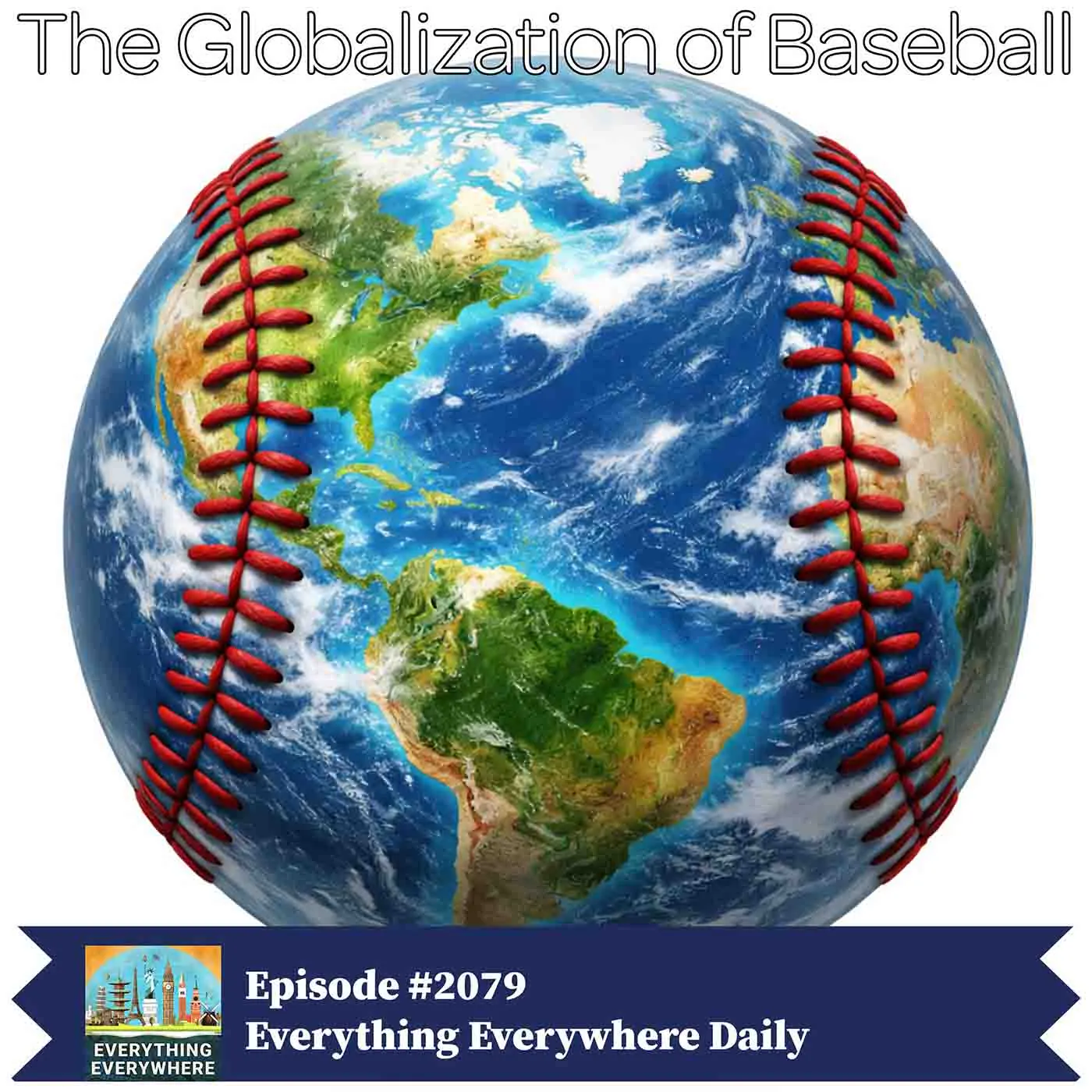
Everything Everywhere Daily: History, Science, Geography & More
The Globalization of Baseball
00:14:40
Loading summary
Transcript1 lines
- [00:01]
A
Today, baseball is played at the highest levels on nearly every continent. Stars come from the United States, Japan, Canada, the Dominican Republic, Venezuela, South Korea and more. Yet for most of its history, the sport lacked a true international championship featuring the world's best players. That finally changed in the 21st century with the creation of the World Baseball Classic, a tournament designed to crown the best baseball nation on earth. Learn more about how baseball became a global game on this episode of Everything Everywhere Daily. This episode is sponsored by Quints. I've been telling you for a while now how Quints works directly with top factories and cuts out the middleman. As such, they can sell top quality merchandise at a fraction of the price of luxury brands. But they aren't just selling products that look just as good. Their products are also made out of the exact same materials. Their cashmere is 100% Mongolian, the same stuff that luxury brands use. The Pima cotton is long staple, which means it stays soft and doesn't pill. The European jersey linen is breathable and lightweight. Everything is built to hold up to regular wear and still look good. I've been wearing my cashmere sweater every other day for months now and it's held up great right now. Go to quince.com daily for free shipping and 365 day returns. That's a full year to build your wardrobe and love it and you will now available in Canada too. Don't keep settling for clothes that don't last. Go to q U-N-E.com daily for free shipping and 365 day returns. Quints.com daily this episode is sponsored by Mint Mobile. Spring is finally around the corner, which means spring cleaning and it's also a good time to get rid of your unnecessary subscriptions and expensive mobile contracts. Mint Mobile is here to rescue you with premium wireless plans starting at $15 a month. All plans include high speed data and unlimited talk and text on the nation's largest 5G network. Bring your own phone and number, activate with ESIM in minutes and start saving immediately. No long term contracts and no hassle. That's why I've been telling people to switch to Mint Mobile. If you like your money, Mint Mobile is for you. Shop plans@mintmobile.com eed that's mintmobile.com eed upfront payment of $45 for 3 month 5GB plan required equivalent to $15 a month new customer offer for first 3 months only, then full price plan options available and fees extra. See Mint Mobile for details. In a previous episode I covered the origins of baseball While its precise origin remains shrouded in legend, two developments are certain. Baseball captured America's imagination and then spread worldwide, becoming one of the most popular sports globally. Today, professional baseball in the United States is a virtual United nations of stars from across the globe. Over the last 22 years, 10 MVP awards in the major leagues have gone to foreign born players, including Shohei Ohtani, who has won the award four times. Perhaps no country has embraced the game of baseball more than the country of Japan. In 1872, Horace Wilson, an American schoolteacher, introduced the game to Tokyo's Keisai Academy. He taught the game to his students as part of physical education and it quickly spread through Japanese schools before becoming the country's most pop popular sport. Japan's desire during the Meiji Restoration to westernize and modernize helped spread the game. Within just a few years, teams quickly formed across Japan and the country developed a passion for the pastime. A defining chapter in Japanese baseball unfolded when an American All Star barnstorming tour headlined by Babe Ruth, Lou Gehrig and Jimmy Foxx swept into Japan in 1934. The exhibition tour pitted the Americans against the best Japanese players. Baseball fever swept the nation as millions flocked to see the legendary American players and to find out whether Japanese All Stars could measure up. The Japanese team was known as the Greater Japan Tokyo Baseball Club. The visit by American legend spurned the creation of the Japanese baseball league in 1936. As it transitioned to a larger league amid significant expansion, the JBL evolved into the Nippon Professional Baseball League in 1950. After World War II, professional baseball in Japan came to represent the nation's recovery. From 1945 to 1952, Japan was occupied by the United States and administered by General Douglas MacArthur. MacArthur was a former player and a lifelong baseball fan, and baseball was a centerpiece of Japan's restoration. During his tenure, he believed the sport's values were essential to rebuilding the Japanese national spirit after such a difficult period. The Nippon Professional baseball league, comprising 12 teams, became the second best baseball league in the world, producing a steady stream of legendary baseball talent that rivaled Major League baseball. The rise of Shohei Ohtani is only the most recent example. The remarkable two way talent has revolutionized Major League Baseball, leaving many wondering if he isn't the most talented player in baseball history. A series of extraordinary players forged Ohtani's path, including the all time home run King Saruhara oh, whose 800, 168 home runs is greater than that of the major league record of 762 held by Barry Bonds. Baseball fans undoubtedly remember the hit king and hall of Famer Ichiro Suzuki, who amassed 4,300 hits in his career in Japan and the major leagues, displaying an exceptional eye at the plate that rivaled anyone who has ever played the game. Scholars often point to the shift in the samurai mindset towards discipline, learning and skill as part of the rapid rise of Japanese baseball. Baseball arrived at the end of the samurai age. In the 1870s, baseball served as a bridge, allowing the samurai ethos to transition into the new Japanese national pastime. Today, Japan is the world's top ranked national team according to the World Baseball Softball Confederation rankings. The country has won three World Baseball Classic titles, the most of any nation. Baseball's meteoric rise in Japan has provided the framework for its diffusion throughout Asia. Building on this momentum, the sport has developed a passionate following in modern Taiwan. Taiwan was a Japanese colony in the late 19th century and early 20th centuries, and Japanese settlements on the island brought with them baseball initially met with skepticism, baseball quickly gained popularity among the Taiwanese, mirroring its rapid adoption in Japan after the Japanese departure in 1949 and the Kuomintang's retreat to the island following the Communist revolution that same year. The arriving Chinese were initially suspicious of a Japanese sport held in such esteem among the Taiwanese, baseball soon won over the Chinese and Taiwan thrived with its Little League, winning 15 Little League World Series titles from 1969 to 1991. The national program competing as Chinese Taipei currently ranks second in the WBSC world rankings. In Taiwan, baseball and politics intersect, creating a unique naming challenge. Due to its history and pressure from mainland China, Taiwan cannot compete under the name Taiwan and instead uses the name Chinese Taipei as a compromise to participate in international events. The future of baseball in Taiwan is bright. Despite a late start, a professional league was formed in 1990 and has propelled the sport to even greater heights. The love and passion for baseball in East Asia are not limited to Japan and Taipei and can also be found in South Korea. South Korea has its own professional league and has consistently done well in the World Baseball Classic. As popular as baseball has become in East Asia, it's even bigger in parts of Latin America. Just as Japan served as the gateway through which baseball established itself in Asia, so too did Cuba serve as the gateway through which baseball established itself in Latin America. 19th century Cuba was one of the last bastions of the Spanish Empire in the Americas. Most Cubans suffered under Spanish colonial rule, which turned the island into a center of sugar production. Many of the elite who held social and economic standing in Spanish Cuba sent their children to the United States for their schooling. These children returned to Cuba with baseball. American sailors also played baseball in Cuban harbors where it caught on with Cuban workers. From there, the game spread to Cuban workers who toiled in the fields and worked in the refineries. By 1869, the sport enjoyed wild popularity, but the Spanish colonial governor banned it following Cuba's first attempt at independence during the Ten Years War. Making it illegal only made the game more popular. Baseball became an act of rebellion against Spanish rule. Cuban teams began to form not only out of love of the sport, but also as an act of nationalism against the Spanish occupation of Cuba, which continued until Cuba became independent in 1902. The Cuban professional League the Cuban League was founded in 1878 and remained a fixture of Cuba until the Castro regime abolished it in 1961. Despite the lack of a professional league, Cuban players could showcase their abilities in the Cuban National Series. The government established the Cuban National Series in the wake of the ban on professional baseball. The league showcases some of the best baseball players in the hemisphere and has served as a springboard to playing on the Cuban national national team. Playing on the Cuban national team is the highest honor for a Cuban baseball player. Building on this legacy, the Cuban national team was the best national team in the world for nearly 40 years. The Cuban Lions of the Caribbean won an unbelievable 151 games in a row between 1987 and 1991. And it should be noted the Cuban team was made up of professional caliber players who were largely playing against amateurs. When baseball became A Sport in 1992, the Cubans reached the gold medal game. In the first five Olympics, they won three gold medals and two silvers. Sadly, Cuban players, despite their greatness, were prohibited from leaving Cuba to play in the major leagues. The government has traditionally used family left behind as leverage against players who defect from Cuba to play in America. They enforce this by denying them their ability to visit their families. Despite that leverage, Cuba has lost some extraordinary talent over the years, including hall of Famers Tony Perez, Louis Tiant, Minnie Minuso and Tony Oliva. That list doesn't include the talent that stayed on the island, including Omar Linares, who observers believe would have been a shoo in for stardom in Major League Baseball. Cuban's baseball brilliance illuminated the rest of Latin america in the 19th century as Cuban migrants brought the game with them to sugar producing Dominican Republic and the criollo friendly havens of Caracas, Venezuela. As was the case in Cuba, the nationalist movement in the Dominican Republic strengthened when baseball became a part of it the United States occupied the Dominican Republic from 1916 to 1924 in protest of American involvement. Dominican teams were formed specifically to beat the US Marines stationed on the island, and they usually did. Under the American friendly dictatorship of Rafael Trujillo, the government used the people's passion for baseball to galvanize the nation and his control over it. He used his influence to merge the two greatest teams on the island into one superteam, naming it after himself, the Trujillo Dragons. Trujillo used his wealth and influence to stack the Dragons with his top players in America who were not in the major leagues, including Negro league players such as Satchel Page and Josh Gibson. The Dominican Republic grabbed onto baseball with both hands and has not let go. Its baseball legacy is cemented by having produced more legendary players than any nation outside of the United States. The list of Dominican greats in Major League Baseball history is too long to list, but it includes the likes of Juan Marechal, Vladimir Guerrero Sr. Albert Pulhos, Pedro Martinez and Juan Soto. Baseball grew in influence in Venezuela as American oil interests arrived, bringing greater access to the game. The nation gained a passion for the sport after a Venezuelan amateur team traveled to Havana in 1941 and shocked the world by winning the amateur World Series on Cuban soil. The enthusiasm that followed led to the establishment of the Venezuelan Professional baseball league in 1945. Venezuela, along with the Dominican Republic and Mexico, became a haven for a new type of league, one that's crucial for the development of American baseball, the Winter League. Each winter, some of the best players in the world converge on small Latin American towns and play with some of the elite prospects in the American minor league system to hone their skills and prepare for the upcoming major league season. While the Winter Leagues benefit Major League Baseball, it's also catalyzed nations like Venezuela to grow and expand their passion for the sport. Venezuela has become a fixture in global tournaments like the World Baseball Classic. It's produced a cadre of outstanding MLB players, including Miguel Cabrera, Luis Aparicio, Johan Santana and Jose Altuve. With so many countries playing baseball, the desire for an international championship arose, something akin to the FIFA World cup for soccer. The World Baseball Classic was created in the early 2000s by major league Baseball and the World Baseball Softball Confederation. After baseball was dropped from the Olympic Games following 2008, organizers wanted a premier international tournament featuring the world's best professional players. The first World Baseball Classic was held in 2006, with national teams composed largely of professional players competing for a global championship. The tournament couldn't be called the Baseball World cup because that name was already used by an existing international competition organized by the International Baseball Federation. So to avoid confusion with that long running event, they picked a different name. Baseball has become a truly global game and while it may never eclipse the global pull of soccer, tournaments like the World Baseball Classic are a vivid reminder of the sport's extraordinary global talent and the power of teams outside of the United States. The Executive producer of Everything Everywhere Daily is Charles Daniel. The associate producers are Austin Otkin and Cameron Kieffer. Research and writing for this episode was provided by Joel Hermanson. My big thanks go to everyone who supports the show over on Patreon. Your support helps make this podcast possible and I also want to remind everyone about the community groups on Facebook and Discord as this is where everything happens outside of the podcast. As always, if you leave a review on any of the major podcast apps, you too can have it right on the show.