← Everything Everywhere Daily: History, Science, Geography & More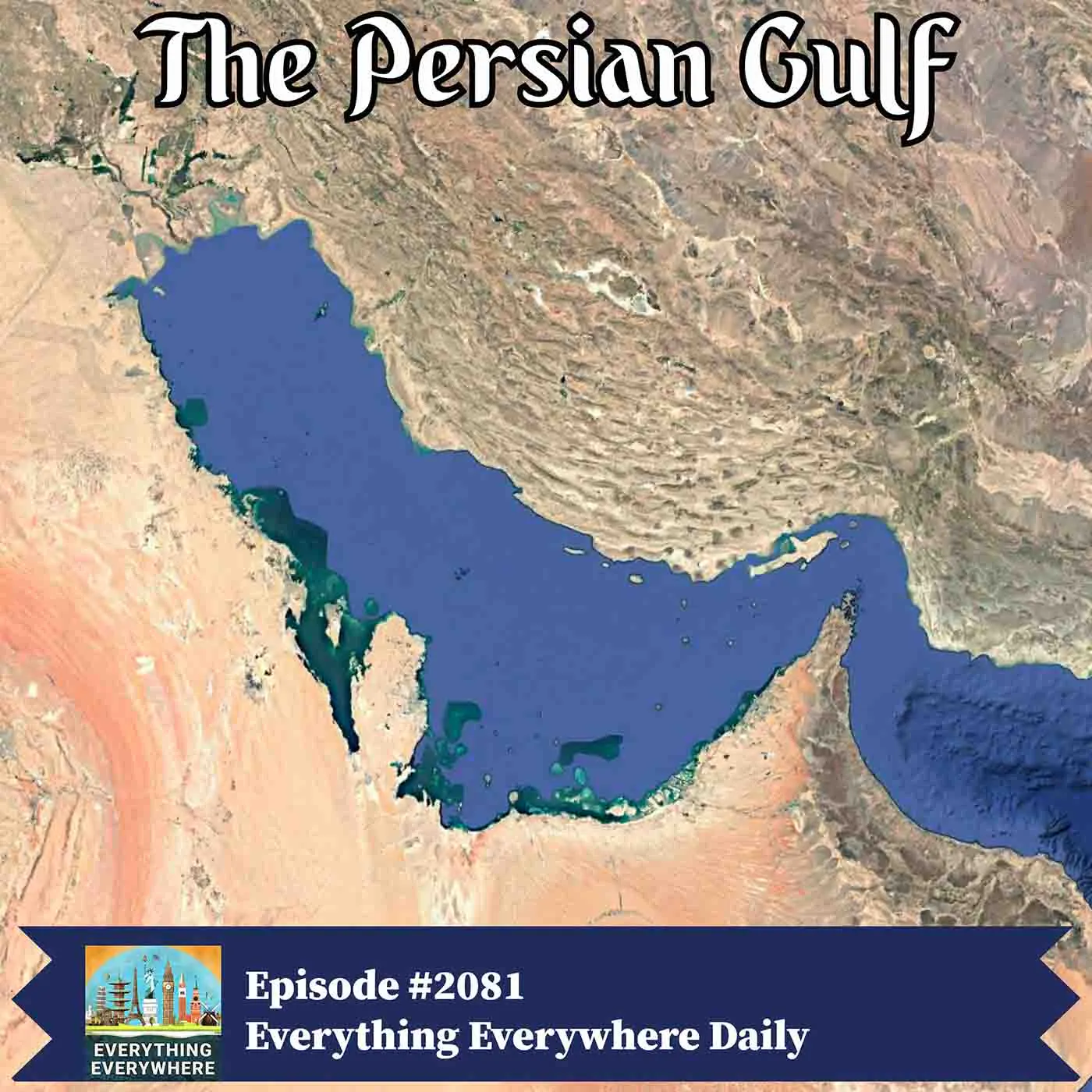
Everything Everywhere Daily: History, Science, Geography & More
The Persian Gulf Explained: History, Oil, and Global Importance
00:15:13
Loading summary
Transcript1 lines
- [00:01]
A
For thousands of years, a narrow body of water between Arabia and Persia has shaped the fate of empires, economies and the modern world. The Persian Gulf has been a crossroads of trade, a cradle of ancient civilizations and a center of global energy. Control over its waters has sparked conflict, diplomacy and immense wealth. But how did this relatively small region come to wield such outsize influence on the world? Learn more about the Persian Gulf and its history on on this episode of Everything Everywhere Daily. This episode is sponsored by Quint's. I've been telling you for a while now how Quint's works directly with top factories and cuts out the middleman. As such, they can sell top quality merchandise at a fraction of the price of luxury brands. But they aren't just selling products that look just as good. Their products are also made out of the exact same materials. Their cashmere is 100% Mongolian, the same stuff that luxury brands use. The Pima cotton is long staple, which means it stays soft and doesn't pill. The European jersey linen is breathable and lightweight. Everything is built to hold up to regular wear and still look good. I've been wearing my cashmere sweater every other day for months now and it's held up great right now. Go to quince.com daily for free shipping and 365 day returns. That's a full year to build your wardrobe and love it and you will now available in Canada too. Don't keep settling for clothes that don't last. Go to q u I n-e.com daily for free shipping and 365 day returns. Quince.com/daily this episode is sponsored by Mint Mobile. Spring is finally around the corner, which means spring cleaning and it's also a good time to get rid of your unnecessary subscriptions and expensive mobile contracts. Mint Mobile is here to rescue you with premium wireless plans starting at $15 a month. All plans include high speed data and unlimited talk and text on the nation's largest 5G network. Bring your own phone and number, activate with ESIM in minutes and start saving immediately. No long term contracts and no hassle. That's why I've been telling people to switch to Mint Mobile. If you like your money, Mint Mobile is for you. Shop plans@mintmobile.com eed that's mintmobile.com eed upfront payment of $45 for 3 month 5GB plan required equivalent to $15 a month new customer offer for first 3 months only, then full price plan options available, taxes and fees extra. See Mint Mobile for details. Any discussion of the Persian Gulf should start with the name itself. Historically, the name Persian Gulf has been used for over 2000 years, appearing in ancient Greek, Roman and Islamic texts, as well as in most international maps and organizations today. However, in the 20th century, several Arab states began promoting the term Arabian Gulf as part of the rise of Arab nationalism and regional identity. But for the purpose of this episode, I will be sticking with Persian Gulf as it's the widely accepted and historical term. The Persian Gulf is a small Indian Ocean version of the Mediterranean Sea, meaning it's a body of water nearly completely surrounded by land. Water from the Indian Ocean enters the Gulf through the vital choke point, the Strait of Hormuz, which, using the Mediterranean analogy, is like the Strait of Gibraltar. The strait is the Gulf's only connection to the Indian Ocean, and at its narrowest point is just 21 miles wide. As it's the only access point to the Gulf, the Strait of Hormuz is one of the world's most critical trade chokepoints. I actually visited the Musindam Peninsula in Oman and was able to look out and see Iran right across the strait. The Persian Gulf is among the world's most saline bodies of water. The high salinity is caused by high temperatures and low water circulation, which leads to high evaporation rates, which increases salinity. Shallow depths and summer water temperatures that reach nearly 100 degrees Fahrenheit or 37 degrees Celsius pose challenges for marine life. Yet despite harsh conditions, the Persian Gulf supports resilient coral systems that do not bleach at high temperatures. Biologists are trying to understand why these specific corals don't bleach under such pressure. What they learn in the Persian Gulf could rewrite survival strategies for coral systems worldwide. In addition to its flourishing coral systems, the Gulf is home to thriving mangrove forests and crucial seagrass meadows that devour carbon dioxide. The Persian Gulf is surrounded by more than 100 million people who depend on it for water. The region's lack of fresh water requires countries bordering the Gulf to implement desalinization strategies. There are nearly 500 desalinization plants along the Persian Gulf coast, supplying water for both drinking and agriculture. Centrally located in the Indian Ocean basin, the Persian Gulf has been economically important since the dawn of Near Eastern civilization. The earliest maritime trade in world history is linked to the Persian Gulf, which has long attracted sailors and traders. The Gulf's unique enclosed geography produces calm, lake like waters. The tides are also less extreme than those of the open sea. Early mariners from Mesopotamia developed ships that were suited to these waters and as they gained confidence, they eventually took them through the Strait of Hormuz into the Arabian Sea. Sailors entered the Arabian Sea, part of the Indian Ocean, where they developed coasting techniques, sailing close to the shoreline rather than the open sea for safety and navigation. This skill was essential in the region. Before the Indian Ocean monsoon wind patterns were understood. This growing mastery of trade meant that by 3000 BC, the Persian Gulf had become a primary artery of global maritime trade. On the western coast of the Gulf, the trading ports of Dilman and Oman served as the Gulf's middlemen. In this system, they were intermediaries. Luxury goods, grain and copper travelled from Dilmen and Oman up to Susa in Iran. And from there, these items were moved overland to the urban centers of Mesopotamia. As centuries passed and new civilizations emerged, the importance of this region expanded, with urban centers connecting to Egypt and the Mediterranean basin. The establishment of the Silk Road enhanced the Gulf's commercial significance, bringing even more trade to the region. Silk Road caravans increased trade and created an insatiable demand for silk, linking the near east to the Chinese world. As a crucial trading hub and economically valuable region, it often saw political control change hands. This trend continued until the region was unified under the Abbasid Caliphate in the 8th century. Despite the political shifts in the Persian Gulf, which saw the rise of kingdoms, city states, sultanates and eventually caliphates, the principle of free trade remained constant. Before European dominance of the region, trade in the Indian Ocean and the Persian Gulf followed the principle of Mare Librum. This Latin term means that the oceans are open to navigation and trade by all means. This principle enabled the region to flourish and remain in place until the year 1507. That year, the arrival of the Portuguese disrupted this long established practice which had been thriving since the very earliest urban communities emerged in the near east and the Indian Ocean basin. Portugal controlled trade through the Cartas system, which required ships to obtain a paid permit from Portuguese authorities to sail and trade. The free trade tradition had been replaced by strict fees and rigorous Portuguese naval enforcement. To the people of the Gulf, this was institutionalized piracy by the Portuguese. The Cartes system conflicted with the region's long standing trade customs. The Portuguese system also violated traditions associated with the Islamic Hajj. As part of their faith, every Muslim should, if they can, complete the Hajj, a pilgrimage to Mecca at least once in their lifetime. The Hajj was a major source of maritime traffic as it brought the faithful to the gateway ports of Basra and Seraf. The Portuguese disruption of the system not only violated long held beliefs about pilgrimage travel, but also created the foundation for a major international incident. In 1613, as the English under the British East India Company were growing in influence, they began to challenge the fading Portuguese for influence in the Indian Ocean. The Rahimi was a ship owned by the mother of the Indian Mughal Emperor Jahangir and was destined for Mecca and the Persian Gulf. The Rahimi carried cargo headed for the port city of Seraf, as well as Muslim pilgrims who were headed to Mecca. The ship carried the proper Cartaz authorization, yet the Portuguese stopped it, looted its contents and imprisoned the pilgrims, taking them back to India. The Mughal Emperor was outraged by the injustice to a ship under his mother's name and Portuguese protection. Following the incident, the Mughals shifted their alliance to the British East India Company. This shift in allegiance helped expand the British East India Company's influence, leading eventually to its control over the Indian subcontinent. The Rahimi incident soured attitudes towards the Portuguese. Ultimately, Polish Portuguese influence in the region suffered a mortal blow in 1622 at the Battle of Hormuz when a coalition of the British and the Safavid Empire ousted the Portuguese from the Persian Gulf. Over the next several centuries, the Persian Safavids and the British cooperated in control of the Gulf region. Unlike the Portuguese, the British welcomed local engagement in trade, expanding the potential for new luxury items in European markets. The British negotiated treaties with sheikhs in the Gulf region in order to control regional trade. The region had historically been an important trade hub for the global pearl industry as well. The Persian Gulf holds a unique place in this industry, as the high salinity and warm environments of the Gulf produced some of the world's finest pearls. During the golden age of the pearl trade, Persian Gulf pearls were in high demand around the world and were the Gulf's primary export until 1908. That year, an event took place that changed everything. British geologists discovered oil along the Persian side of the Gulf near the town of Masjid Soliman. This discovery came at a crucial moment, as the growing Japanese pearl industry had diminished the region's influence in the pearl trade. The discovery marked a turning point, not just in the history of the Persian Gulf, but in world history. After these discoveries, oil interests in the Gulf moved at a furious pace to meet demand from the expanding automobile and aviation industries. By 1930, vast oil reserves had been discovered on both sides of the Persian Gulf. During this period, the region's oil resources were exploited by the world's seven largest oil companies. These European and American companies signed contracts with local leaders, assuming control of their vast Oil reserves. The foreign ownership of oil contracts stalled nation building in the Gulf because local leaders were willing to sign away their greatest asset, which perpetuated Western economic dominance. This pattern continued largely unchecked until the year 1960, the year OPEC was formed and Persian Gulf nations began reclaiming control over their own oil. OPEC's founding membersIran, Iraq, Kuwait and Saudi Arabia knew that they had to control their oil resources or else they would remain subservient to Western interests. The successful shift of the region's oil reserves to sovereign nations represented a seismic moment for the Gulf states. As the Gulf nations began to assert control over their greatest resource, they not only became some of the wealthiest nations on the planet, but but they also became a political force. As the region gained greater control over its oil, it also gained the ability to influence global oil prices by carefully managing production levels. The Gulf states began to wield this economic influence in the wake of the 1973 Yom Kippur War. In response to American support for Israel in the war, the Gulf states placed an embargo on oil to the US accompanied by production cuts of 5% a month. These actions reduced supply, which led to soaring gas prices and severe shortages that prompted Americans to have to wait for hours in line at gas stations. The move also signaled the region's power over the flow of the world's oil. The Persian Gulf and the Strait of Hormuz are among the world's largest oil trading chokepoints today, handling approximately 20 million barrels of oil per day, eclipsed only by the Strait of malacca, which handles 23 million barrels per day. And most of the oil going through the Strait of Malacca has to first go through the Strait of Hormuz. This gives the region significant power over the global economy. Any adjustment in production and shipping has dramatic impact on gas prices and global shipping costs. Even the smallest changes in oil prices can significantly affect the price of everyday items. If for no other reason, then everything needs to be transported. Because of its geopolitical significance, it's become a persistent issue in global politics. President Jimmy Carter outlined the position of the United States towards the region in response to the 1970s oil crisis. The Carter doctrine states any attempt by any outside force to gain control of the Persian Gulf region will be regarded as an assault on the vital interests of the United States of America. And such an assault will be repelled by any means necessary, including military force. During the Iran Iraq war of the 1980s, the two nations engaged in what became known as the Tanker War, which involved both sides attacking each other's. Oil tankers to harm the other economically. Fearing a global disruption of the world's oil supply, a broad coalition of Western navies began patrolling the Persian Gulf to guarantee the flow of oil, a move spurred by Iraq's attack on the major Iranian oil center of Kharg Island. Kharg island is a small island 15 miles off of Iran's coast in the Persian Gulf, which serves as the primary terminus for Iran's oil shipments. In recent decades, Gulf states have used their oil wealth to invest heavily in sectors like tourism, finance, aviation technology, and renewable energy to diversify their economies, reduce their dependence on oil revenues, and prepare for a future where global demand for fossil fuels may decline. These investments have made the Gulf an influential region in both culture and finance, not just energy production. The Persian Gulf has served many roles over the course of 5,000 years, a central hub for early Indian Ocean traders, a contested highway for European empires, and the energy engine of our modern world. And today, it remains exactly what it's always the world's most vital and vulnerable global artery of trade. The executive producer of Everything Everywhere Daily is Charles Daniel. The associate producers are Austin Otkin and Cameron Keefer. Research and writing for this episode was provided by Joel Hermanson. My big thanks go to everyone who supports the show over on Patreon. Your support helps make this podcast possible, and I also want to remind everyone about the community groups on Facebook and Discord, as this is where everything happens outside of the podcast. As always, if you leave a review on any of the major podcast apps, you too can have it running. The show.