← Everything Everywhere Daily: History, Science, Geography & More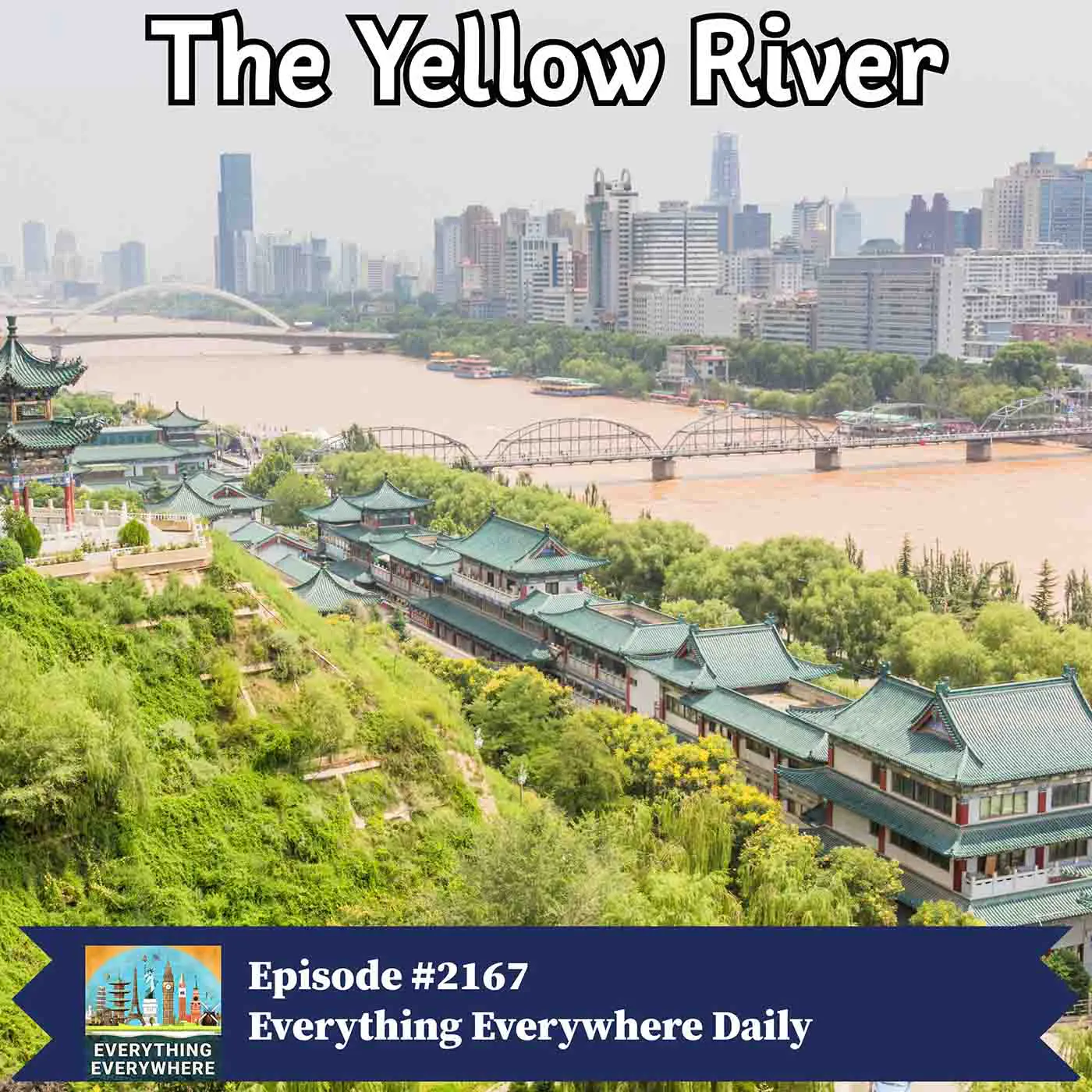
Everything Everywhere Daily: History, Science, Geography & More
Yellow River: The Cradle of Chinese Civilization
00:15:35
Loading summary
Transcript1 lines
- [00:01]
A
For thousands of years, one river has shaped the history, culture and destiny of China. Its waters helped give birth to Chinese civilization, yet its floods brought destruction on a scale that few rivers in the world can match. Known as both China's Mother river and China's Sorrow, the Yellow river is a story of geography, agriculture, disaster, and survival. Learn more about the Yellow river and how it shaped one of the world's great civilizations on this episode of Everything Everywhere Daily. This episode is sponsored by True Work. Working outside in the spring means dealing with chilly mornings, hot afternoons, mud, rain and whatever else the weather decides to throw at you. And cheap workwear can make all of that worse. That's why the T2 work pant from TrueWerk is different. Most workwear is made from cotton blends that restrict movement and get soaked after just a few raindrops. TrueWerk uses advanced performance fabrics designed specifically for job site conditions. The T2 work pant has four way stretch for bending, kneeling and climbing, a water resistant finish to shed rain, and nine intelligent pockets placed where the trade pro said they need them. TrueWerkGear has been tested and validated for over 10 years by RealTrade Pros and with over 15,000 5 star reviews and it's worth experiencing the difference yourself. I have a pair and I wish I had them years ago when I was traveling because they would have made the perfect travel pants. The work doesn't stop just because the weather changes. Upgrade to the T2 work pant and stay comfortable no matter what the day brings. Get 15% off your first order at truework.com with code everything that's T-R-U-E-W-E-R-K.com code everything TrueWerk built like it matters because it does. This episode is sponsored by Quint's Summer's Here and if you happen to live in a place with actual seasons as I do, that means wearing entirely different clothes. Wool sweaters are great when the temperatures drop, but they're not the best option when you're outside in the sun. Quince has European linen pants and shirts that are the perfect warm weather upgrade to add to your rotation. Starting at just $34. The their T shirts are soft and easy to wear, and their lightweight cotton sweaters are perfect for cool summer nights. I just got two Quint's T shirts myself and I love them as always. Everything at Quint's is priced 50 to 80% less than similar brands and they can do that by working directly with ethical factories and cutting out the middleman so you're paying for quality, not brand markup. Elevate your summer wardrobe. Go to quince.com daily for free shipping on your order and 365 day returns. Now available in Canada too. That's Q U I-N-E.com daily for free shipping and 365 day returns. Quince.com daily. Chinese history views the Yellow river through two different lenses. On one hand, people celebrate the river as the Mother river, the host to China's earliest urban civilizations. Alternatively, it also carries a more ominous moniker, China's sorrow as the river's nature has led to thousands of years of flooding, famine and disaster. There's no other river in the world quite like the Yellow. The Yellow river is the second longest river in China, behind the Yangtze, on which I've done a previous episode, and the sixth longest river in the world. The river is in fact yellow. Its distinct color comes from the fine sediment it picks up as it descends from its origins in the Bayan Har mountain range in western China. Upon entering the Loess Plateau, the river collects a staggering amount of loess, a fine powdery sediment. This region is inundated with sediment which has blown in from the Taklamakan and Gobi deserts. The Yellow river flows like a muddy yellow sludge. In fact, the Yellow river is the most sediment dense river in the entire world, and it's not even particularly close. The flow is so dense that some have even denied it the title of a river. Among hydrologists, there is a legitimate scientific argument that during the peak seasonal floods, the lower Yellow river ceases to act like a river in the traditional sense of the word, and instead becomes a distinct physical phenomenon known as hyper concentrated flow. Hyperconcentrated flows can be dense muddy streams or even slow moving debris flows. To put the Yellow River's silt density into perspective, consider some of the other great river systems in the world and their relative density when compared to the Yellow. The Yellow river carries a remarkable 38 kg of sediment per cubic meter of water. By comparison, the Congo and Amazon rivers carry less than 1/2 a kilogram per cubic meter of water, and the Nile and Mississippi rivers carry approximately just 1 kg per cubic meter. According to geologic estimates, the river dumps as much as 1.5 billion tons of dust into the Bohai Sea every year. The volume of sediment in the river creates a unique phenomenon known as a suspended river. Suspended rivers are a geological anomaly. A suspended river is one whose bed has been raised by sediment deposition to a level above the surrounding land, making levees Essential to prevent it from spilling into nearby areas. This suspension occurs because the river carries an astronomical amount of fine particulate matter, and as it hits a flat plain, the water slows and the sediment drops directly into the riverbed. If humans leave the river unmolested, it will occasionally flood its banks, leaving a rich, sediment laden soil in its floodplain. When humans alter the river and build levees to contain the floodwaters, the levee traps silt, causing the riverbed to rise even faster. Chinese civilization faced unique challenges in coexisting with the Yellow River. Historian Edwin Moise highlights how the river's unique behavior required intervention. He noted, the river is very difficult to control. It lays down so much silt that the bed of the river tends to rise with the passage of time, and the water must be kept in its course by high dikes on either side. Eventually, the riverbed may rise to a height considerably higher than the surrounding countryside when the dikes eventually break and the river flows into the surrounding land. Restoring the river to its elevated channel is extremely difficult and sometimes impossible, and thousands of people can die in the resulting floods. Workers put forth a seemingly constant effort to control the Yellow River's floodwaters and protect its floodplain. Historical evidence suggests that the earliest Chinese dynasties emerged from the early battles to stop the Yellow river from flooding. Communities across China memorialize these efforts, including a large monument in Gansu Province that honors the flood control efforts of the semi mythical first emperor of China, Emperor Yu. Chinese folklore tells of the efforts of this emperor who worked tirelessly to build dams, dikes, causeways, and even to organize massive campaigns to dredge the river. These tales tell of a young emperor who abandoned his wife and child for decades at a time to engage in flood protection. In one account, he literally passed by the gates of his own home, hearing his family's cries for him, yet moved on to continue his never ending flood work. Historical accounts directly connect Yu's ascent to the leadership of the Xia dynasty to his engagement in flood control efforts. In a very real sense, Chinese civilization arose from efforts to control the Yellow river from flooding. British writer Nicholas Wade identified the political link between river control efforts and and governance. He noted, Chinese annals record that Emperor Yu contrived a recovery from the great flood by dredging drainage canals rather than trying to repair breaches in the Yellow River's dikes, as his predecessor had done. He also laid the foundation for Chinese civilization that followed. By specifying which region should send tribute, the Chinese developed a system of political legitimacy known as the Mandate of Heaven. Under this mandate, people expected the emperors to control the Yellow river and to protect the valley. Failure to marshal the necessary resources in the constant struggle with the river offered one of the easiest paths to losing the right to govern China. The kings in Chinese history had all led these efforts, establishing a clear expectation for future rulers. The efforts of these early dynastic leaders often made things worse, as attempts to control the Yellow river or often exacerbated its most destructive tendencies. Instead of solving the problem, trapping water behind dikes and dams caused sediment to accumulate in the channel, raising the riverbed. As the riverbed rose, people built the levees even higher to compensate, locking the region into a vicious cycle. People have known the Yellow as China's sorrow for most of Chinese history. For these reasons, throughout Chinese history, since the advent of record keeping during the Zhou Dynasty, officials have documented nearly 1 1,600 flooding events on the Yellow River. Unlike the Nile river, where the Egyptians could depend on annual flooding to provide moisture and silt for agriculture, the Yellow River's flood pattern followed no discernible pattern. The ideal solution to the problem would just require people to not build near the river and to let the river flood on its own. As the silt built up, the river would overflow its banks, providing the necessary relief to the channel. The severity of these floods varied widely. Some caused relatively minor damage, while others became almost civilization crushing tragedies. In the first century, during the Qing Dynasty, a period between two sections of the Han Dynasty, one of the greatest floods in Chinese history occurred. The quality of record keeping makes it difficult to obtain exact amounts of the dead, but estimates place the deceased in the hundreds of thousands. Intense rainfall caused the river to burst through its dikes and completely change course, shifting path towards the ocean by several hundred miles. Edwin Moise notes that this pattern of the river changing directions and creating a new path happens fairly commonly in Chinese history. He notes, Three times in the past 150 years, the river has changed its course drastically, with the point where it flows into the sea altered by hundreds of miles. Not surprisingly, the floods accompanied a famine and caused profound damage to the Qing state, paving the way for the Han to re establish control with the Mandate of heaven. In 1887, the Qing Dynasty, nearing collapse after centuries of turmoil and rebellion, faced its greatest crisis. The 1887 flood is arguably the most destructive flood in human history. Unlike earlier floods, this one left visible evidence, and one needs to see the damage to believe it. A season of torrential rains and centuries of silt buildup led to massive breaches in the network of dikes. Estimates of the flood size suggest that the flood waters created an inland sea covering more than 50,000 square miles larger than Lake Superior. The amount of destroyed farmland led to a generation of agricultural disruption that potentially killed millions. Historians estimate that the immediate death toll of just the flooding was just under a million people. The 1931 flood, the worst natural disaster of the entire 20th century, did not affect only the Yellow River. It actually affected several other Chinese rivers. A heavy winter snowpack, along with a dramatic monsoon season, put pressure on the river system beyond the capacity of existing Chinese infrastructure. The challenges of marshaling resources amid the chaos of the end of the Qing Dynasty, as well as military pressure from Japan, made this crisis even worse. Estimates of the death toll reached as high as 4 million people and described a flood plain as large as Great Britain. The 1938 flood, unlike others before it, was actually caused on purpose. Nationalist leader Chiang Kai Shek, in an attempt to stop the occupying Japanese military, purposely breached the levees, turning the river into a weapon. The plan technically worked. It did stall the Japanese advance for months and caused damage to the Japanese military. However, it also flooded crucial agricultural farmlands and displaced millions of people. The accompanying death toll reached an estimated 1 million Chinese peasants. In the modern world, the Chinese Communist Party continues its efforts to try to control the river. The modern approach has moved away from simply building dikes to containing floodwaters. The new approach attempts to control the sheer volume of lust that enters the river. Efforts have shifted towards reforestation, improving soil quality and limiting erosion. Public works have still continued. In 2001, China built the Xiaolongdi Hydropower Station, a massive dam capable of holding over 12.5 billion cubic meters of water while generating power for millions of people. In 2023, the government enacted the Yellow River Protection Law. The goal of this edict is to target illegal groundwater exploitation. When cities and farms pump out too much groundwater, the underground water table drops. This drop in groundwater causes the elevated river to leak downward into the earth like a giant sponge, reducing its volume and slowing its current to a crawl. And because slow moving water loses the energy needed to carry heavy mud, the massive load of silt in the river creates drops straight to the bottom, rapidly raising the suspended riverbed and heightening the danger of a catastrophic flood. Today, roughly 120 million people live within the Yellow river basin itself, and over 400 million people live in the broader provinces that depend on the river or its tributaries for water. That makes it one of China's major population corridors. Although it's not as densely urbanized or economically dominant as the Yangtze River Basin. Economically, the Yellow river is the most important for agriculture, water supply, energy, heavy industry and transportation linked regional development. The basin supports 12% of China's population, 17% of its arable land, and supplies water to more than 50 large and medium sized cities. Despite containing only 2.6% of China's water resources, the Yellow river is more than just a body of water. It's one of the great forces in human history. It gave birth to the Chinese civilization, nourished farms and cities, carried the silt that gave it its name, and periodically destroyed the very communities that depended on it. To understand the Yellow river is to understand something essential about China itself. Its civilization wasn't just built by rulers and armies, but also by the relentless power of water. The executive producer of Everything Everywhere Daily is Charles Daniel. The associate producers are Austin Otkin and Cameron Kiefer. Research and writing for this episode was provided by Joel Hermanson. My big thanks go to everyone who supports the show over on Patreon. Your support helps make this podcast possible. I also want to remind everyone about the community groups on Facebook and Discord, as this is where everything happens outside of the podcast. As always, if you leave a review on any of the major podcast apps, you too can have it running the show.