← Everything's Perfect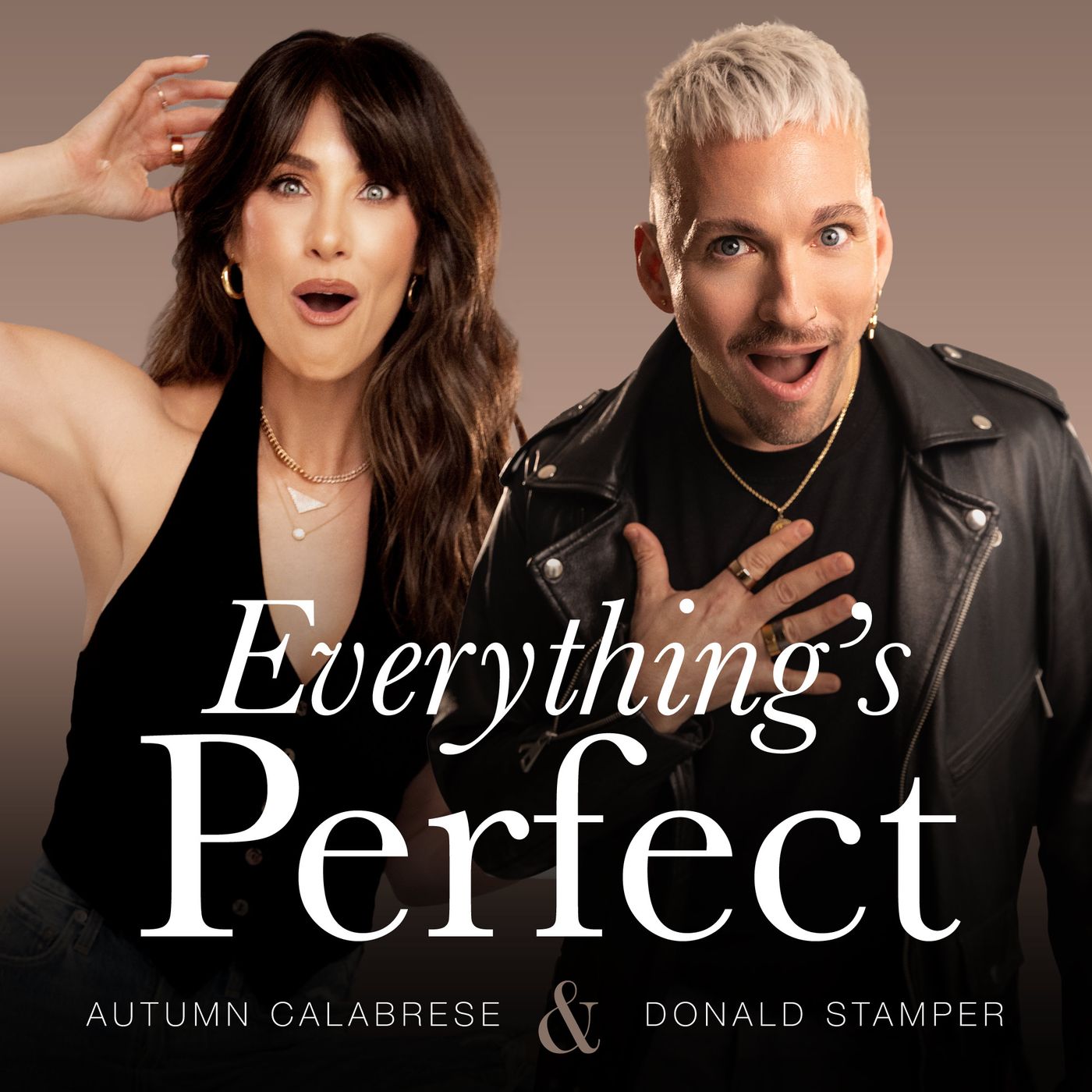
Everything's Perfect
Everything’s Perfect… Except I Miss When Social Media Was Fun
00:51:14
Social media used to be fun—remember those days? In this episode, Autumn and Donald take us on a nostalgic journey through the evolution of social media—remembering the days when it was all about fun, blurry Instagram photos, and harmless top friend...
Loading summary
Transcript260 lines
- [00:01]
A
Remind me to suck my fat stomach in the whole time because I really picked the worst shirt possible.
- [00:05]
B
This is. Whenever you need to suck in your show, I'll do this. What's up, you guys? Welcome to another episode of Everything's Perfect, where today we'll discuss Everything's Perfect, except.
- [00:31]
A
I miss when social media used to be Fun.
- [00:35]
B
Those are the good old days.
- [00:36]
A
Oh, God. Right?
- [00:39]
B
There's just. Is so much pressure now for everything from what to post or if you need to be doing whatever you're seeing other people post, keeping up with the Joneses type situation. It's just. It really is a lot.
- [00:54]
A
I mean, the Kardashians are like, the least of my worries at this point.
- [00:57]
B
Absolutely.
- [00:58]
A
Social media, I'm like, I can't keep up.
- [01:01]
B
I literally go to ChatGPT, like, how do I work the algorithm? She's not helping very much.
- [01:08]
A
Come on, chatgpt.
- [01:09]
B
I know.
- [01:10]
A
Get your life together. So, yeah, that's what we're covering today. Like social media. Let's talk about it. How it used to be, how it is now, and maybe what we can do to have a healthier relationship with it.
- [01:21]
B
And I think this conversation is important too, because even if you're listening right now and you're like, I'm not really. I don't care that much about social media. The odds are that at least half of the people you're close with do. It is such a big part of society and it's never been, like, it's. It's unprecedented. It's never happened like this before. And so I think it's important to understand the role that it plays. Even if you're one of the lucky few that you feel like it doesn't have a huge attachment to your life. It does to. I. I think most people that I know.
- [01:53]
A
Yeah. Even if, like, if you're a parent, it might. You might not have an attachment. It might not pertain to your job, but your kids have to navigate it. Your teens have to like people in your family. And, you know, when certain things start to happen on social media, it can cause so much stress and anxiety. And, you know, we've seen horrible things with bullying and stuff like that. So, like, being aware of everything that's going on is. Is just a good. It's a good conversation to have.
- [02:17]
B
Yeah, it's super important.
- [02:19]
A
But let's start with the good old days.
- [02:21]
B
Okay. My. My first social media because people had, like, I just remembered. I don't remember. I want to say Zynga or something weird like that. Do you remember?
- [02:33]
A
No.
- [02:34]
B
Well, my first one was MySpace. That was my real social media.
- [02:37]
A
Okay.
- [02:38]
B
How. Where I entered the world. And talk about. Yeah, talk about a game, because in MySpace you had your top eight.
- [02:48]
A
Okay.
- [02:48]
B
And so it was a constant popularity contest of your friends. Like, well, I'm only number three in your top eight. Why does Jessica get number two? You know what I mean? Do you. Did you ever deal with it?
- [02:58]
A
Here's the thing. I had MySpace for three seconds, literally. Like, I remember signing up for it because everybody was doing it. I was dating Kent. Like, Kent and I actually. Kent and I were like. Just got engaged when I signed up for it. So I was probably, like, 26. And I just didn't really get it. I didn't understand it. So I. I mean, I remember one post, like, I. I really didn't understand the app, so I was not a MySpace version. That's crazy, though. You ranked your friends.
- [03:30]
B
Well, it.
- [03:31]
A
Technically, this show hasn't been fun since the beginning because.
- [03:33]
B
Exactly. You could have. Well, you know what else? I remember this website called Hot or Not, where you made a profile and people could go and vote on your profile about how hot you were. Like, people.
- [03:45]
A
Wasn't that almost like the beginning of Facebook? Because it was called Smash Face.
- [03:49]
B
Oh, I didn't know that.
- [03:50]
A
And it. If you ever watch the movie, it was, like, called Smash Face, and it originated in the colleges and they would rate girls.
- [03:56]
B
Yeah, it's. It's wild. So it's always been toxic.
- [04:00]
A
Perfect.
- [04:01]
B
Trying to figure out how to navigate.
- [04:02]
A
This toxic just only gotten worse.
- [04:04]
B
But, yeah, my MySpace had. At first, you could only have a top eight. And so it's like you could have, you know, several hundred friends, and you picked who got to be the top eight would be seen on your profile. When you went to someone's profile, which was obviously only desktop because there weren't, like, smartphones, like iPhones, then you would show your picture and then right under you, a pic, the pictures of the people you put in the top eight. And so if you had a close friend who wasn't in your top eight, it's like putting. What's up with our friendship? Why isn't. Isn't this working?
- [04:37]
A
Oh, my gosh.
- [04:39]
B
Yeah.
- [04:39]
A
I'm so glad I didn't have it.
- [04:40]
B
Me, too. There's no way.
- [04:42]
A
Like, that's brutal. Because some people have big groups of friends.
- [04:46]
B
Absolutely.
- [04:48]
A
And so you're just. Yeah, like you said, divisiveness. My first real social media platform form was Facebook, and I signed up for it. When Dominic was like, three weeks old, I was sitting at the desk in my apartment holding him in my arms. And I remember signing up for it. I'm like. I think my first post was like, I'm on. What is this? Like, I had. I did not understand it. But then you quickly learn it, right? You're like, oh, did anybody like it? And you see, like, friends starting to follow you and family. And that's really what it was about for me. I lived in la, or I live in la, but, you know, and I had Dom and none of my family lived here. So for me, it was like, oh, this is a cool way for my family to. To sort of stay up to date. Because, again, we didn't have smartphones. You didn't have FaceTime. You weren't sending pictures via the phone. So unless you were mailing photos, they weren't really seeing Dominic grow up. So for me, that's kind of how it started.
- [05:43]
B
Yeah, I remember. So I reluctantly moved to Facebook. I was so into MySpace that when people. Because in MySpace, like, they got. They were like, you can pick a song for your profile. I just. I felt like it was my website that I designed, even though it was just. But Facebook was so much better at connecting people because it would, like, recognize you in photos, which also at the time seemed so futuristic and crazy that it could do that. So, yeah, I got into it, though.
- [06:16]
A
Can we just talk about. I had to do something on Facebook the other day. I was trying to link something for a brand deal. They were like, oh, we need you to link this so that we can run an ad. I'm like, okay. I don't really get on Facebook anymore, if I'm being honest. My Instagram is connected to Facebook. I don't really get on there except if I'm running a group.
- [06:34]
B
Yeah.
- [06:34]
A
So I get on for the group only. Like, go into the group. That's it. I got on and I was like, what is this? Like, there were so many. It took me an hour to figure out what they needed me to do. And a phone call, like a zoom. There were so many things. I was like, this is too much. You all are doing the most. I just need you to step back.
- [06:56]
B
My Nell, my boyfriend the other day was like, you know, bless him. He was like, you could have better profile pictures. I was like, oh. And he was like, they just don't look professional. So I was like, okay. And so I was like, trying different ones. But the.
- [07:13]
A
It shows it in the feed.
- [07:15]
B
Well, every time you change it accidentally, like, Pressed and it wasn't even cropped correctly. And I was like, oh, my God. I just made that my picture. And then so I quickly made a different one, my picture. And then I went in to delete the first one because then it shows. Like, Donald updated his profile picture twice. People are gonna think I'm a crazy person and it wouldn't let me delete it. I was like, why can't I delete this? And then the only option was that I know that I could find was hide from your profile. And then it says, but this still could be seen other places. I'm like, you're telling me one accidental button click and this is just out there in the inner. Like, I can't del. I can't undo it. It's just. I can't see it. But who knows who else is looking at it? It's beyond. I was like, I need to call 10 year old could probably show me how to fix this.
- [08:08]
A
Seriously. Okay, so Facebook came along. Friends, family, that's really all it was like, maybe some college roommates, something. But it was fun. Then I remember Twitter came along and that was such a big deal because you only got a certain number of characters.
- [08:26]
B
Yep.
- [08:27]
A
And Demi Moore and Austin Kutcher were like the face of Twitter. It was like they would literally tweet everything they did. Like, I'm on the toilet. I'm in the next room, honey.
- [08:36]
B
Yeah. It was really like. That was the first time I started feeling the pressure to. To share. Like, with Facebook, I think I felt like, okay, I'll share as I do things. But when I got a Twitter, it was like, okay, I have to post, but what do I post? Like, what are people posting? And I start looking and I'm like, same thoughts I have today. Sometimes everything people post is so dumb.
- [08:58]
A
Right. And why are we doing this?
- [09:00]
B
I have to post dumb stuff so I fit in with these people. And I would just start. There's nothing worse than seeing, like several years back posts that you've done.
- [09:09]
A
It's so bad. Like, I was eating. I'm eating dinner. Who cares?
- [09:13]
B
Yeah, it's ridiculous.
- [09:15]
A
Although I'm pretty sure that's my Instagram stories now, which is probably why nobody cares.
- [09:19]
B
I'm. We're going to look. We're going to look back on our Instagram now and be like, what? Why did I post that? But, you know, that's why we're having this.
- [09:29]
A
That's why we're having this episode. But. But at the same time, it was still. I feel like it was still mostly, like, light hearted. Like, if you were on Twitter, like, yeah, okay, I'm posting dumb stuff, I'm eating dinner, I'm going to a friend's drinks, whatever. But, like, it was still light hearted. It wasn't what it is right now. Well, I don't even go on that app anymore.
- [09:51]
B
It was. Right. It was social and I felt like that about all social media. And now there's. It almost like it feels. First of all, people seem strange if they don't have a social media, because everyone does. If you meet someone, they're like, I don't have social media. It's pretty uncommon. And also, it's so connected to the way people work. Like, it's a major industry now for a lot of people. And also, I'm a consumer on there. Like, there has been so many late nights where I see something, I'm like, I gotta have it.
- [10:24]
A
I spend way too much money late at night on social media.
- [10:27]
B
Yes. The people say, I'll see the most random things. I'm like, I didn't know you could cut an apple like that with that machine. I have to buy it.
- [10:34]
A
Yeah.
- [10:34]
B
You know, like, whatever it is. So it's changed so much.
- [10:38]
A
Yeah. I remember when Instagram became a thing, Dom was probably like two. I was going to Florida with one of my best friends, Natalie. We were going for like a little vacation. I had, like, worked so hard, saved for this because I was single mom. And she's like, you gotta get this new app. And I'm like, oh, gosh, another one. She's like, no, it's awesome. All you do is post a photo. Like, this is just posting photos. Like, nobody's on it. It's not a big deal yet. So it's super fun. Okay. So I remember getting on and to be able to share our Florida trip with just like, each other, basically.
- [11:14]
B
Yeah.
- [11:16]
A
Who knew? I know that it would grow into what it is now because that was so fun. Like, the pictures are blurry.
- [11:23]
B
I've always been resistant when social media platforms start to change. And so when I got Instagram, I was like, okay, I'm into this because you just post pictures. You can do a caption, whatever. And then when they were introducing stories, I was like, no, that's not what Instagram is. And then when you could post videos, I was like, okay, now I have two Facebooks.
- [11:44]
A
Yeah.
- [11:44]
B
You know, and I'm trying to be better about that and be one of, you know, as you get older, you don't want to be like the old Old person who's like, oh, why are they always changing things in my day? And so I'm trying to just go with the flow, but I still try to find me on TikTok. I dare you. Bleak.
- [12:04]
A
We'll get there. Because same.
- [12:06]
B
Yeah, but I'm trying to be better, so we'll see.
- [12:10]
A
Okay, I. I always do that where I'm like, oh, I'm gonna. I'm gonna do it. I'm gonna post over there every day, and I do it for, like, two days, and then I disappear for, like, three months, and I'm like, oh, I'm gonna do it. I just. But here's why. Okay. So first it was Instagram, and it was just the photos. And that was super fun. Like, easy. It's easy to take a photo and throw that up there. And it almost. I don't know if you remember, we used to post multiple times a day photos. Like, I remember three, four, five times a day, you'd throw a photo up there because it was almost like the picture version of Twitter. Like, this is what I'm doing now. This is what I'm doing now.
- [12:44]
B
Yeah.
- [12:44]
A
I remember when stories came out and everybody panicked because all of a sudden you had to talk to a camera. And I actually was like, okay, I got this, because that's what I do for a living. I talk to a camera. But it was still, again, one of those feelings of, but what do I say? What do they want to hear me say to the camera all day? It's kind of become the Truman Show.
- [13:04]
B
Yeah.
- [13:05]
A
Like, you're your own Truman show, right? Like, you're. You're 24 7, your TV station is on. If you're populating it, are you promoting something? What is it? So the stories got a little bit like, oof, okay. But there weren't that many features, Right. Your feed was still the main thing. Then when videos came. When video and reel came, I'm done.
- [13:29]
B
It just. Yeah.
- [13:30]
A
Here's why. Okay. For me, there's so much pressure when it becomes, like, video to have, like, this crazy quality edited. And we've really seen that, like, explode in the world of Influencer, right? Like, oh, my God, their videos edited so cool that for me, I'm like, well, my thing is fitness and nutrition and teaching people that. But I'm not a videographer.
- [13:57]
B
Right.
- [13:57]
A
I'm definitely not an editor. But it's like, I have to be lighting. I have to write a script. Like, I have to know what the heck I'm making this reel about. Then I gotta Edit it like, oh my God, it's a full time job. Ain't nobody got time for this.
- [14:12]
B
If you feel this pressure, like, should I do post the way this person is posting?
- [14:16]
A
Right.
- [14:16]
B
Because they got all of this traction or response and this is obviously from the view as the poster. And then you see someone else who does it another way and you're like, like, maybe that works better for me. And then you find yourself just sort of like, how do I show up flailing here? Yeah, absolutely.
- [14:32]
A
I. Okay. So do you remember when you started to really care about like how your feed was curated?
- [14:40]
B
Yes.
- [14:42]
A
When was it for you? I remember when it was for me. But when was it for you?
- [14:45]
B
So I got to do a little tour with my brother's band and I was getting at what I thought to be a lot of followers at that time. And that's when I was like, oh, this is my chance to present myself how I want to be seen, to keep people interested in what's happening in my life and maybe, you know, pursue projects that I do separate from them, stuff like that. So I started to think of it in a like, it being more curated kind of way.
- [15:19]
A
What year was that for you?
- [15:21]
B
That was in 2013.
- [15:24]
A
Oh, that was like really early.
- [15:27]
B
Yeah, that was in 2013. I started. And the reason I started pushing so much there was because of if I didn't do the tour with them, I probably wouldn't have done that. But I was getting followers.
- [15:38]
A
Yeah.
- [15:38]
B
And at the time it was a lot of followers for me.
- [15:41]
A
So I really don't think I started paying attention to it being curated. Curated like, and by the way, I don't. I think about it and then it just stresses me out and I don't bother, I would say 80 Day obsession era. So 2017 ish. 2018. Like I remember with the launch of 80 Day, I was really trying to make it. Everything sort of fit the feel of like my colors of 80 day and that launch and like, what does the grid look like? That was when I really started to get stressed out about it. Like it was. It wasn't as fun anymore of just throwing up photos of being with your friends. It was starting to become business. Mm. Like, yes. I was posting business stuff on there because my whole life kind of is my business, you know, oh, we're traveling for this, we're on set for that. But it was the first time I started going like, oh, I have to make sure people understand what I do via here. Even though like 21 Day Fix had launched on there all those things. It was the first time I was really paying attention to.
- [16:43]
B
Yeah.
- [16:44]
A
It. Like, I remember at the time, like the rose gold theme. Everybody was like, rose gold, rose gold, rose gold. And it was just like. And like getting one of the apps where you could sort of design your own post with like, text on it and stuff like that. And then hiring somebody to come shoot video for me, like, move of the day stuff. And all of a sudden it turned into another job where it was no longer good enough for me to just take some photos for fun. Right now. It was business.
- [17:15]
B
Yeah. Yeah. I. It's funny because if you scroll down, you could. You can see different on my main feed, like, where I went through a phase of having all my pictures have a border or where everything was like, I would put a cover photo with. I paid for. I forget what it's called, but it's like an effect. And it's like, why are you paying for effect? There's so many. Like, the app has so many. You can edit it, but you. I felt like that was so important. But I. I will say I came to a place where I was sort of like, so overthinking it. I was like, you know what? Forget all this. And even actually, most recently, I haven't even been putting any filter on my stories.
- [18:03]
A
Yeah.
- [18:03]
B
Because I'm like, you know, it's. First of all, it's making me sad when I look in the mirror because I think I look like I do with the Paris filter. And it's like, things aren't that smooth. Exactly. So I have just sort of decided for my own self to go back to just being me. And. And if I want to post, being just more okay with posting and not feeling the pressure. Especially after 80 day obsession, because that's really. When I got it, a lot more of a following was. I would always see how did something perform. And it's like it. I stopped just posting because it was what I wanted to post or what I wanted to say or what I wanted to show. It was because of how I thought people would respond to.
- [18:48]
A
Right.
- [18:49]
B
And that's not really the kind of person I want to be. I want to be someone who's just me. And people who connect with it can. And people who don't don't have to. But the algorithm still ain't got to be doing me wrong. You can show. They can show some people.
- [19:01]
A
They can show some people like, they do me dirty on my stories. But it's fine.
- [19:05]
B
It's fine.
- [19:06]
A
It's fine.
- [19:07]
B
It's Perfect.
- [19:07]
A
It's okay. Wait, wait. Can I tell you one thing that happens with my stories? Maybe this happens other people. And I'm just telling you guys because I know it frustrates me so bad. So you can let your stories die. And if you let your stories die, the next one you post, the views goes crazy, crazy. If you. Then once you do that, it's like, okay, so the other day I did it. I shared a photo of me and Tori and tj. We went out with lunch. Like, crazy high views. Then I showed another photo. Crazy I views. Then I did. I was talking about, like, the sale ending for Body. There was like a body sale that I was doing. So there was a link on it. They didn't show that to nobody. And I was like, how? How do they know? Like, ah, it's so frustrating. I'm like. Because all the people that looked at the first two photos don't know that there's what's next? What's next? So the algorithm just not serving it up to them. So it's like, super frustrating because you're just like, those people all followed me. I feel like I have a big following because of my job. So they probably want to see those things, but it's getting suppressed.
- [20:15]
B
Yeah.
- [20:15]
A
Or at least it feels like it is. So it's frustrating.
- [20:17]
B
But also, people, when you post something, it's for someone's benefit, including that link. Like, right. It was a special deal that was ending that day. A lot of people, I'm sure, would have liked to see it because people are still purchasing the next day.
- [20:32]
A
Yeah.
- [20:32]
B
So it is like, okay, help me help people.
- [20:34]
A
Let's have some fun with this. I wrote some questions down, like, I think finding some fun in it, but we were talking about obviously, like, authenticity, but now it's like curated authenticity. So is that really authentic? If you're trying to curate it?
- [20:48]
B
Yeah.
- [20:48]
A
Okay, so we see some crazy things shared. So for this scenario, we will decide if it's a main feed post, a close friend share, or if you just need to close that app.
- [21:00]
B
Okay.
- [21:01]
A
Before you post it.
- [21:02]
B
Okay.
- [21:02]
A
Okay. A selfie with tears in your eyes. Are you crying for me? Would you post it, send it to close friends, or just close that app.
- [21:13]
B
Okay, I want to say close that app. I. I one time posted and then took down a video, but it was because I started talking on stories and then felt the emotion of what I was saying. And, like, I, like, started to get emotional. But I'm like, you know, if you're crying, why are you Posting that.
- [21:33]
A
Right.
- [21:33]
B
You know what I mean? So Imma close that app if. If there's tears I don't usually share. What about you?
- [21:39]
A
Same it. I feel like one. It's a little bit of one thing on a story if you're talking about something and it moves you if the tears come. But when I see people in feed I'm like, oh my God. Like you're having a moment and in that moment you took your phone out to take that picture knowing you were gonna post it. Like that just seems so inauthentic and I don't want to like I understand people do it and I'm not trying to like make anybody feel bad. For me it's a close that app though. I just feel like have your moment. Like just be there and if you want to share that later because maybe it's a really hard moment.
- [22:17]
B
Yeah.
- [22:18]
A
It just seems even though it very well is. Could be authentic because you're experiencing that emotion and you want to share that. Right. Whatever it is that you're experiencing. I just think it gives the appearance of not being authentic because you in the middle of experiencing a difficult emotion, you took the phone.
- [22:34]
B
Right.
- [22:35]
A
To take the picture.
- [22:35]
B
It to me is similar to when someone's like I'm so I. I don't want to get up and they're like look like they're sleeping but you know they took the selfie.
- [22:45]
A
You had to get up to get involved.
- [22:46]
B
Yeah. It's like okay. Obvious. Yeah. So I don't know there is. I would leave like 5 to 8% window open of if it's the right subject and I really want to share that. I'm feeling emotional about something to normalize but most of the time I feel like it's a little. It's just not me to be crying on social media.
- [23:09]
A
Same. I'll just call you and cry.
- [23:11]
B
Exactly.
- [23:12]
A
Close that app. Dial a friend.
- [23:14]
B
Yeah.
- [23:15]
A
Okay. What about a new relationship soft launch? Just a tagged hand and a drink or just like so so you don't show the person you soft launch your relationship.
- [23:26]
B
To me that is main feed.
- [23:29]
A
Close friends or close it don't share it.
- [23:33]
B
I think that's a main feed.
- [23:35]
A
Yeah.
- [23:35]
B
Yeah. I think it's fun. I think because you know it's like non committal.
- [23:39]
A
Yeah.
- [23:40]
B
Because you're not seeing everything. But I feel like I actually had a post like that one time with an ex and it's probably still on my feed honestly. But yeah, I think it's.
- [23:51]
A
I would share it years, years, years ago. I would have. But, I mean, you. You won't. You ain't gonna see nothing about my relationship on social media. Like, I just. I can't. I don't. I've learned that it's better to not.
- [24:04]
B
Mm.
- [24:06]
A
People have too much judgment, and then especially if something ends, it's like, oh, my God, you put that out there.
- [24:11]
B
Yeah. And it is different. Like now, you know, my relationship with Nell, we are so on social media that it does feel. And. And we're doing really well. So.
- [24:25]
A
Yeah.
- [24:25]
B
So this is good. But. But it does feel like there's a little bit of everyone else. Yeah.
- [24:31]
A
Everybody's involved, even.
- [24:34]
B
Even though everyone's opinion is, oh, my God, I love you guys together. You're amazing. When there are people that a lot of them I've never met. And it's so sweet that they're saying it, but it does expose you in a different way where it feels like. I don't know, it's just. It's weird. And it's something that years ago, no relationship ever had to worry about.
- [24:52]
A
No.
- [24:52]
B
Because it's new.
- [24:53]
A
Went about your life and.
- [24:55]
B
Yeah.
- [24:55]
A
There was no. Yeah. You might have taken a photo. Polaroid or something. A Polaroid. I just aged myself.
- [25:01]
B
Good old days.
- [25:01]
A
Okay, let's take one more. What about announcing you're leaving your job before you know what you're doing next? Is that a Friends main feed, or is that a Close that app?
- [25:16]
B
Maybe I'm just too open, but I think I'd like main feed slash story it.
- [25:23]
A
Yeah, I. I feel like it depends, I guess, on how you're gonna say it. Like, if you're about to go on a rant, maybe Close that app. But if you're really excited and you're just moving on to the next thing and you don't know exactly what the next thing is, I say, you know, like, sometimes it's. I will say, like, I have been able to use social media to really push me out of my comfort zone. So, like, I remember when I was competing for the very first time, as soon as I decided, I actually decided to compete at a drunken Christmas party. Friends convince, yeah, perfect. Get drunk and decide that you're going to do, like, the healthiest thing ever. But Friends convinced me that night after a few shots that I should compete, and I was like, great. And I put it on Facebook. And the next morning I was like, well, shit, I have to compete because I already said it. And I'll be dang if I'm not gonna follow through.
- [26:15]
B
Yeah.
- [26:15]
A
Or be like, oh, Just kidding. I have a few too many drinks last night. Like, you know, this was like 2013. So I do think sometimes like that it's good because it. If you're like, I'm leaving my job. And then all of a sudden you're just like, but you're, you know, you're leaving your job, I hate it. I don't want to do this anymore. I'm gonna find what my passion is. And then all of a sudden you panic because your head goes. You kind of put it out there. So I do feel like it's a good thing. Like sometimes.
- [26:37]
B
Yeah, I can hold you accountable. I'm with you. I just think if something's overly emotional, similar to crying. If you're pissed and you're like, oh, this maybe take a minute. That's a phone, a friend.
- [26:48]
A
Yeah.
- [26:48]
B
But if you have the decision, like, I don't know what's going to happen next, but this isn't serving me. I'm going to move on. I would share that.
- [26:55]
A
The only other thing I would consider though is, man, you gotta be real careful because when you are starting a new job, everybody can look you up so a new boss can look you up. So if you are on a rant or if you're like, you know, some people share the party and the drinks and the this and the relationship and they did me dirty. And I'm like, okay, but keep in mind a boss can see that too.
- [27:20]
B
Yeah.
- [27:21]
A
And it can work against you.
- [27:24]
B
Totally.
- [27:24]
A
So, yeah, it sucks that you kind of have to censor certain things. But also, I don't think everything in the whole wide world is meant to be shared.
- [27:34]
B
Well, and also maybe that acts as sort of checks and balances for yourself. Like if I wouldn't want sort of is my life out of balance if I, if I'm sharing this and someone wouldn't want to hire me or work with me or associate with me because of that, maybe I should consider what I'm. At least what I'm sharing. But also if I have balance in general.
- [27:58]
A
Yeah.
- [27:58]
B
And you know, and I'm all about the balance. I'm. I'm here for the party. I'm here for the let loose and be wild. But I also think it's, of course for your own health is so important to find balance in every area.
- [28:10]
A
So I've always said, like when it comes to posting on social. Well, I guess I'll say in the last like 12 years, I have three checks for myself. I have to be comfortable with my son seeing it. My dad. Even though my dad's not on social media, I ask myself, would I be okay if dad saw this? Would it be okay if Dom saw it? Would I be okay if dad saw it? And would I be okay if my CEO saw it? And as long as those three things are okay, then I'm like, all right, I'm good. And if I'm like, oof, I don't want dad to see that, or, oh, Dom might be really embarrassed because it is different. Like, when you have a kid, you have to really think about, like, I don't have a problem sharing this, but how's my child gonna feel about that? Or what are his friends or his friends parents gonna think if they see a, B or C?
- [28:57]
B
Yeah. You know, that's so true. And that also makes me think of another point that I just want to mention. I have at times questioned posting things because of what certain people would think, but in a way of it makes me think, okay, if I'm that worried about this person's opinion of me not supporting my passion or what I'm about to post, then are they really a friend that I want to have in my life? So it's the opposite. It's like a different of what you're saying, not something crazy. But it could be posting about, let's say I want to do a month of no drinking.
- [29:34]
A
Yeah.
- [29:34]
B
And so this is just an example. But. And then friends come to my mind. I want to talk about that, talk about why. But then I feel hesitation because I think, oh, but, you know, my good friends who I always go out drinking with, they might think that I'm different, or they might not want to associate with me. And so that does also present thoughts where I'm like, if I can't post that and be myself, then what kind of friends like or what control am I giving these friends in my life?
- [29:59]
A
Yeah.
- [29:59]
B
So in that way, it's a helpful tool. Also to. For me, there's been times I've posted and been like, you know what if those people don't like it or support me, then they're not the people.
- [30:08]
A
Yeah. You know, I think when you think about it like that, for sure. I always think I was. When I was referencing was more like, of course, is this outfit okay?
- [30:17]
B
Mm.
- [30:18]
A
Is my swimsuit like, the way I'm posting in my swimsuit? Is my son going to be embarrassed?
- [30:23]
B
Yeah.
- [30:23]
A
That kind of thing. But I do agree that ultimately, if you're okay with it, then that's what should matter. But at the end of the Day, like, this is the. I think this is the topic to get into is that, like, you're getting judged. And even though you're not, we're not necessarily on social media and there's people in general to be judged. Right. You're on there because you want to share. And my, My thought is, like, I could never imagine stopping for one second in social media to put something negative on anybody's post. Like, if I don't like it, I'm just gonna keep scrolling. I. I can't fathom taking the time to be mean. Like, how does that serve you? How does that help you? But people do it all the time.
- [31:04]
B
Yeah.
- [31:05]
A
So it's like, even though you shouldn't be judged, because it should be. That's your page. And if they don't like what you share, they should just move about. We know that it's a judgmental space, and so you either sort of welcome it and you're like, I'll bring on the fight, or you censor yourself or you post it. But then you have a lot of criticism, maybe self criticism or other people's criticism.
- [31:32]
B
Yeah.
- [31:32]
A
That you have to deal with. So that brings me up to, like, the bullying that can happen on social. Have you experienced it?
- [31:39]
B
I have experienced it very. I would say slightly, but it's affected me a lot. Like. Like, it. I was surprised at how much it bothered me because when you. And I know you can relate to this, when you look at someone's posts and let's say they have tons of comments. Let's say they have a hundred comments and 95 of the comments are so supportive. But there's five comments in there that are negative. I. When I've experienced that, it's really sort of. It's really kind of hurt me. Like, not. Not in a way where I'm not gonna move past it or. But it's. It is hurtful and because it feels like there's some people out there that I didn't even know existed who hate me. You know what I mean?
- [32:30]
A
It feels like that.
- [32:31]
B
And it.
- [32:32]
A
And they don't even know you, and you're like, why do you hate me? You don't even know me.
- [32:34]
B
Yeah. Like, I'm just out here doing my best like everybody else, and you're finding reasons to say things. So it's. It's funny when that happens. And I have gotten better about laughing it off. And a lot of it's also because of how. How much support I've gotten on social media. So I'm really appreciative. Of that. But it is difficult to manage. And I can't imagine especially experiencing it, doing that to someone.
- [33:00]
A
Right. I. I have had to deal with it a lot, and especially in the last few years, like, sort of when you're on your climb, when you're on your journey to doing well, people can be very supportive. And my journey up, so supportive, like, only positive. But it's sort of like, I remember there was just like this tipping point where it was like, oh, my God, what just happened? And why does it feel like the whole world hates me? And, you know, and from that point on, there's always been a mix. There's been a mix of, obviously, people who are just the sweetest, most supportive, awesome community. And then there are just people that you're just like, what is wrong?
- [33:37]
B
Yeah.
- [33:38]
A
Like, why are. Why are you so mad at me? I don't know you. I'm not. When I post, it doesn't have a judgment on what you're doing with your life. I'm just sharing mine. Like, why do you have to be mean? Because it's the same. It can. It cuts deep. Especially when you're just like, I'm just trying to help. And this is, I feel like the really hard side of social media. And we're living in a time and we're experiencing things that we never had to experience. We have this unbelievable connected disconnection. Like, we're connected to everybody 247 via our apps and our phones, but we have, like, a disconnect to just human nature and, like, compassion, passion, and how you treat somebody. Like, you know, people would never say these things in person. They wouldn't act that way. They just. So it is really unprecedented the mental beating that you take and the mental fortitude that you have to have.
- [34:36]
B
Yeah, I think especially for. For you, like, for someone in your position. First of all, I think that, like, I've experienced it. Women experience it so much worse. Women talk about another. Another podcast. But, like, I just think society really pits women against each other and also, like, makes women really just comes down hard on women. And your entire career and focus and legacy, as far as I'm concerned, is built on helping people. And so the fact that your. Everything you put out is trying to help people. And there's a response from some people who is like, as if you're trying to attack them or harm them.
- [35:23]
A
Right.
- [35:24]
B
And it really is so difficult because there's been a couple posts that I've had that stand out or some really mean comments about, like, Music that I've shared, even this is one's funny. But our first little teaser about starting this podcast, and you were like, something big's coming. And someone was like, oh, God, just please tell me he's not gonna sing.
- [35:47]
A
Oh, rude.
- [35:49]
B
It was like that. Is that what. Yeah. But it made me laugh.
- [35:52]
A
But now I'm like, sing, Donald.
- [35:54]
B
Yeah. I've had, But I've, I've had moments where when someone's response to you like that, it makes me want to engage with them because I'm like, you just must not understand me because nothing that I've done or shared or said is meant to hurt you. It's to help you. And if it's not for you, that's fine. But I want you to know that we don't have to be enemies. But then you're engaging with someone who all they want to do is just say terrible things on social media.
- [36:18]
A
Yeah.
- [36:19]
B
And so it's difficult. It's like a black hole that I don't want to get into, but it's really hard not to.
- [36:25]
A
It is because. Yeah, you want to defend yourself. That's normal human nature. So I don't know about you, but, like, I've definitely had to put up some boundaries around it to make it a healthier place for me, because between the pressure of how often should I post? What should I post? Do I post in my stories all day long? Oh, my God. The engagement isn't there like it used to be, you know? Oh, my. My reel isn't edited as good as somebody like, it just. It. I do feel like it was taking a toll on me mentally, where I was like, I hate this. Don't let me win the lottery.
- [36:58]
B
Right. I follow you hoes. I'm out of here. Bye.
- [37:05]
A
Bye. My account's about to go private with three friends on it. Yeah, it, like, just. Because. Yeah. I'm like, this is exhausting to just feel that way all the time. So post and ghost is one of my big ones, which is like, I'll put up the post. And I try not to put up anything that I think will be controversial because that's not really what I'm looking to do is like, I'm not looking to stir up controversy, but I, I, I, I do. Okay. I still read my comments because I do want to be able to engage with my community, but I sort of.
- [37:37]
B
Yeah.
- [37:38]
A
I sort of scroll like the first 10 to 15.
- [37:41]
B
One eye closed.
- [37:42]
A
Okay.
- [37:42]
B
Yeah.
- [37:43]
A
Yeah. And you just pray you don't come across that negative one. Cuz you know it's going to ruin your day if you do. So I, I do like the post and ghost a little bit. I used to stay out of my DMs if it wasn't people I followed. But I also realized that that was working against me because I really like to be involved in my community. So I have finally, like, I just told myself like a few months ago, I was like, if you open one and you could tell it's going to negative place, like, just move on to the next one. And so I have started to go in there more and actually found that my DMs have been way more supportive and positive than I thought.
- [38:17]
B
Yeah.
- [38:17]
A
Because there was a time where it was just like I'd open it and people were being. Yeah, not say all the bad words right now, but yeah, that's been really fun to open those and be able to get to talk to people and share and stuff like that. But what do you have? Like, do you have any boundaries around it or like suggestions?
- [38:34]
B
I just try to mentally prepare myself. Like, one example that I still feel a little bit hesitant is when it. Because people follow us because of your programs. That's why I have most of my followers. There's the, the majority of them being in your programs and so. And being a wellness coach. And I was a coach and a body partner. And so that's why I share things like what I'm eating. Well, when I recently moved away from a vegan diet. Oh, I mean, which was a really big decision for me, you know, how passionate I was about being vegan. And I still say that. I'm not saying I'm never going back there. Like, I don't, I haven't even walked away, like how some people are like talk bad about their health or where they were. It really wasn't. Yeah, wasn't that bad. But I just, I'm in a place where I wanted to make some changes.
- [39:26]
A
How good was that steak, though?
- [39:27]
B
And it was, it was good. It was real good. And so the way that most people have responded because I. They're like, why aren't you sharing what you want, what you eat anymore? We want to hear that. And I have this fear about doing it. So I've started and I for a while was getting some really hateful comments about it. And then again, I want to engage to explain where I'm at and that I support their veganism and blah, blah, blah. And it's like, God, you know, I could literally spend 24 hours a day trying to make These angry people happy.
- [40:02]
A
Yeah.
- [40:03]
B
And so I'm just trying to, every time that happens, look at it instead of seeing as something I need to fix, see it as a lesson that it's not my job to be everybody's cup of tea.
- [40:13]
A
Yeah.
- [40:13]
B
And just let it. Let it be what it is. And. And it is a reminder that as long as you know what you're doing is working for you, everyone else doesn't have to sign off on it. So that's really the biggest thing for me. It's like seeing it as a lesson every time I have that feeling taking a little pause and realizing it's okay that that person doesn't like what I'm doing, because I do like it.
- [40:33]
A
Right. So I think that's a big one. Is that if you like what you're sharing, if you're good with it, then, yeah. Like, not everybody is going to like everybody. That's just the world. Right. Like, you don't have to be mean. Let's. We could. You know, we could go back to our rules of kindergarten. If you don't have anything nice to say, don't say anything for sure. But it's like, okay. I mean, I'm not inviting people to come tell me how much they don't like me, but.
- [40:59]
B
Right.
- [41:00]
A
It is. It's okay if you're happy with what you're sharing. And that's sort of where I've tried to get to be, too. Is almost like I was scrolling back, I forgot I was looking for a post, and I was like, oh, my gosh. It used to be so. Like, my Instagram used to be fun. Like, it was. We were doing fun things, and da, da. And I had to, like, sit there and I was like, am I not fun anymore? Like, no. I think I just got to a point where I got scared to put up anything because it was just worried about what people would think. And I'm trying to get back to more of just not worrying about, hey, I'm not a videographer. I'm not an editor.
- [41:38]
B
Yeah.
- [41:39]
A
And I'm just gonna put up stuff, and hopefully you like it, and hopefully it benefits somebody. And hopefully they realize they don't have to be perfect about anything, because life's not perfect. And even as a fitness and nutrition expert, that doesn't mean that I'm, like, perfect in everything that I do with nutrition or every exercise that I do. Like, that's the beauty of it, is that I'm a work in progress trying to get better. And that's what I'M trying to share.
- [42:02]
B
And for me, if someone has a question about something, I say if they want to engage, I don't, I can't always, because I don't always have the bandwidth to engage with everyone's question. But there are also times where someone's like, if you don't mind me asking, and it really is just because I'm curious, why do you feel that is so different than someone being like, well, I don't know why you'd say that because it's so obvious that ever since you. And it's like, oh my God, girl, go talk to somebody who gives a shit about what you have to say. But when someone, when I feel like, okay, this person's actually engaged and feels a connection, that makes me feel good. Because I think that's what social media can be at its best with, with people that you don't know.
- [42:39]
A
So yeah, they're trying to learn from you in one way or another. They're trying to just understand.
- [42:44]
B
Exactly.
- [42:44]
A
And I think that's amazing. Yeah. Let's talk really quick though. I mean, you have nieces.
- [42:51]
B
Yeah.
- [42:51]
A
Because obviously you don't have kids yet, but what is your thought like when you think about when your nieces grow up and being on social media?
- [43:04]
B
You asking me have a lot of faith in the world, but whether or.
- [43:09]
A
Not they'll make it to social media.
- [43:10]
B
Social media is still a thing we have. Hopefully we have elect. I'm just kidding. I'm not a doomsday person on this podcast anyways. No, I, I would tell my nieces and everyone, love yourself like every piece of yourself. Understand that loving yourself is loving something that is changing and growing. Like I've said before and I use my nieces as an example. I love my 3 year old niece, but I wouldn't love her well if I didn't want her to turn four.
- [43:41]
A
Right.
- [43:41]
B
And so loving yourself is knowing that you're loving something that is changing and evolving. So love yourself fully knowing that and then also give that love to others. And I think if, I think if you are able to really focus on that with social media so not falling into any of the mean girl shit that people can do and also understanding that people who do that are just also not loving themselves. I mean, I know people say that it sounds cliche, but that's the advice I would give them. If you want to be on social media. And also you don't have to be, but if you, if you want to be. No, make sure that you are first separate from that Loving yourself and your journey and your process and then loving others too. Because if you're hating yourself and looking at social media with the lens of hate to other people, I can't imagine.
- [44:31]
A
Yeah, I think that's beautiful.
- [44:33]
B
Thank you.
- [44:34]
A
I really do like that. That's so well said. I mean, I have a 16 year old son and you know, like, I won't make it a huge long part of this podcast, but it's. You have to be so careful with it, especially with kids of all ages. And, you know, Dom's 16 now and he's been on social media for a while, but like always heavily monitored by his dad and I. And while we thought we were really doing a great job staying on top of it, Dom is a super open book with us. And I love that about our relationship. He talks to us about everything, like good, bad, all of it. And maybe like a year, a year and a few months ago, a package showed up at our door. I opened it and it was a Bible. I was like, what? I didn't order. It was from Amazon. I was like, I didn't order a Bible. And so I thought maybe I got somebody else's package or something. And then I realized, no, it was addressed to me. And so Dom was in the other room and I was like, dom, come here. And I was like, did you order this? And he's like, oh, yeah, okay, so you're interested in the Bible. And he's like, yeah, I just wanted to learn about it. I'm like, okay. And, you know, I mentioned it to his dad and we both kind of thought like, oh, that'll pass in three seconds. Because our kid, he doesn't even like to read. Like he's not gonna read this book. And we don't have anything against religion. We both grew up Catholic and things like that, but we have not really introduced om to religion. We wanted him to find it on his own if and when. Fine. But Dom has a little bit of ocd and so sometimes he can latch onto something pretty hard. And he latched on hard and he started reading the Bible. Fine, no big deal. And we saw that it was becoming a pattern, like he was reading it a little bit more and a little bit more and we would check his social media, but, you know, it's hard to know what exactly they're looking at. You can kind of look at their feed and stuff like that. Well, especially on TikTok, he started following like one person and the first person he was following. I looked at their stuff and I'm like, okay, it was like this guy in his 20s, was very athletic, you know, would talk about God and religion a little bit, but nothing crazy. Anyways, it spiraled with Dom's ocd. He would, he ended up going down rabbit holes on TikTok and following some people that were pretty extremist in terms of like fear when it comes to God. And, and he got stuck in a bad spiral, like obsessive compulsive. Like, I have to read, I have to read, I have to read, I have to pray, I have to pray, I have to pray. And it has been, I mean, you know, six, seven months now of like every day because we almost have to like with the ocd, you have to, you have to pull them out of the pattern. And it's a hard pattern to break because there's so many questions when it comes to God and religion and all that kind of stuff. And so you think like, oh, he's a 16 year old boy on social media, he's looking at fitness, he's probably looking at girls that he thinks are pretty dancing on there, blah, blah, blah. No, my kid went down the rabbit hole of like. So you just never know. Like there's all these pitfalls. So I say it not to like scare parents and things like that, but I say it to be like, look, I was very much on top of it. At least I felt like I was. And it still kind of got away from us. He, we gave him the option a few months ago. He kind of wanted to get back on, just to be able to talk to his cous and things like that. And he got back on and then he realized very quickly that he wasn't ready and he deleted it himself. And I was really proud of him for that, but he was just like, yeah, I don't think I need this right now.
- [48:06]
B
Yeah. And the thing is I, I feel like remembering because someone, an impressionable teenager doesn't know that any person speaking on social media isn't necessarily an expert or knows what they're talking about. And something as complex as the Bible and God, which we could have a whole nother episode talking about that I'd be happy to.
- [48:27]
A
Yeah.
- [48:28]
B
And because it's not anti Bible or anti God, but it's having people, people can really use that as a source of manipulation. And that is scary for a teenager.
- [48:37]
A
Yeah.
- [48:38]
B
To hear and take that in from these voices who on social media can seem like they know everything they're talking about.
- [48:44]
A
Yeah. And they have these big followers and blah, blah. And so that's where it was, like I said, it's. Yeah, it's nothing anti religion or anything like that. But for Dom, it just got to the point where he. I was living in so much fear about, like, if I don't do this and if I don't do this and if I don't do this. And it was. It was sort of taken over his world. So I think when it comes to kids, like young, teenage even, you know, as you start to get into young adulthood, I think just open conversations about it, you know, maybe monitoring time. Listen, they're watching us. And so if you are the person that is going on and not being nice and attacking, then you're just perpetuating it. So I think being able to spread love and. And if we do it like that, it's a beautiful place to be because you do get to be connected to people that you would have never connected to.
- [49:35]
B
Yeah.
- [49:35]
A
When we didn't have it and it was just, oh, the people in my neighborhood, the people in my area. But I think we all have to approach it with a little bit more love in our heart and kindness. And until then, you put some boundaries up about how often you're on it, monitoring your own screen time, checking in. Like, how much time did I spend on this thing? You know, because there's a lot other things we could be doing with our life.
- [49:58]
B
Right.
- [49:59]
A
Than obsessing about our, like, account.
- [50:01]
B
Exactly. Yeah. It's a good reminder.
- [50:04]
A
But throw me one because my counter.
- [50:07]
B
With that said, come tell us nice things on social media.
- [50:15]
A
Okay, well, speaking of social D, where can they find you on social?
- [50:18]
B
So I'm most active on my Instagram, which is at Donald Stamper. I always say my last name is like a postage stamp because people always say, I think I say Stanford, but it's Donald Stamper at Donald Stamper.
- [50:32]
A
And yours most active on Instagram at Autumn Calabrese. Yeah, you can find us there. Make sure you check out the podcast page. If you guys want to reach out to us, you can email us@everythingsperfectpodcastmail.com make sure you, like, subscribe. Drop us a review. We greatly appreciate it. We're shouting you out at the beginning of each episode because we appreciate you being here. And make sure you check back next week for another episode of Everything's Perfect.
- [51:02]
B
See you guys then.