← Everything's Perfect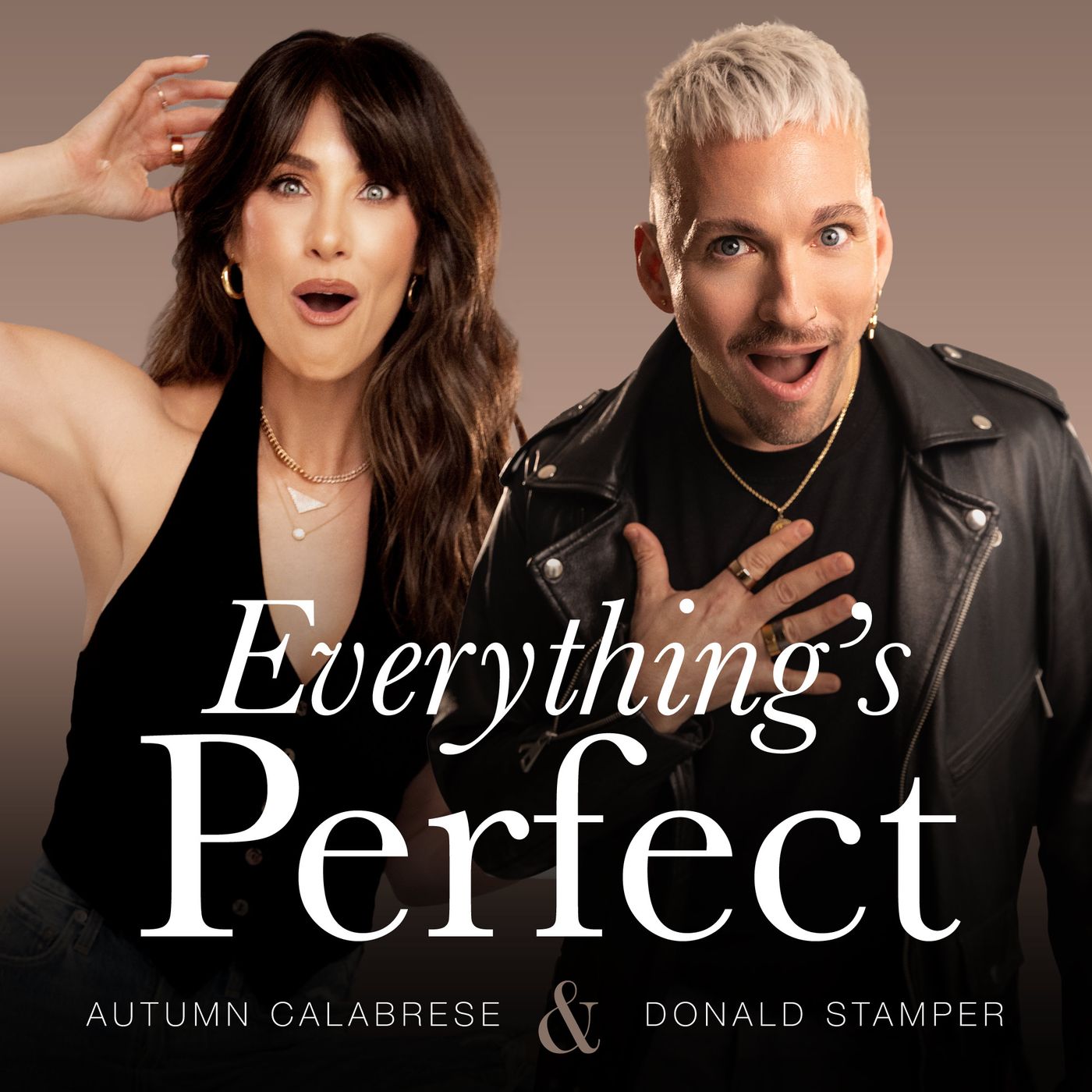
Everything's Perfect
Everything's Perfect... Except Me
00:39:18
Autumn Donald Stamper dive deep into the complex world of self-love, self-acceptance, and the struggle with negative self-talk. Sharing honest and often funny personal stories, Autumn and Donald break down how childhood experiences, family dynamics,...
Loading summary
Transcript158 lines
- [00:00]
A
All right, I'm gonna down this protein stick real fast.
- [00:16]
B
What's up, you guys? Welcome to another episode of Everything's Perfect.
- [00:20]
A
Except the way we talk to ourselves.
- [00:23]
B
The way we talk to ourselves.
- [00:25]
A
It's the whole. It's the self love issue.
- [00:28]
B
It is talking about.
- [00:29]
A
We're really tackling.
- [00:31]
B
It's a big one.
- [00:32]
A
It's interesting too, because just even thinking about while I was driving here, thinking about the episode, there's some areas where it's not really an issue for me at all. It's like, okay, I love that about myself. But really being honest and taking a deep dive and seeing how I got there, or areas that I still may struggle with it, I'm excited to talk about because it's definitely something that I think a lot of people struggle with.
- [00:55]
B
Same thing. There's a lot of things that I could say I really like about myself, and I don't feel conceited in acknowledging that. But also, especially the way I grew up, there's always certain things that I have been very conscious of, aware of, don't love.
- [01:14]
A
So what are some of those things? Let's get into it.
- [01:16]
B
Let's get into it. So I think in general, like, obviously, appearances sometimes things. I think intelligence is sometimes thing comparing ourselves. For me, honestly, intelligence has always been a really hard one for me since.
- [01:31]
A
I was little because just not wanting.
- [01:34]
B
To seem stupid, not feeling smart enough. My brother and sister are both really book smart, always have been. And I was sort of like the flighty dancer. I didn't particularly enjoy school when I was younger. I don't like sitting still, but it's a big thing. It was. It was a. People made it a point to let me know that I said dumb things when I was little. But like a little kid, right? So like, you're talking fast and you're not thinking, you're just saying things and like, they don't always make sense. Or sometimes you just say, you know, like, you're like, oh, my God, the girl. Like, I love your blue dress. I mean, your green dress. But like, man. Yeah. My siblings and cousins were ruthless. And don't get me wrong, I love them to death, but they were pretty ruthless about letting me know you're so dumb. I can't believe you just said that. And so I really grew up feeling inadequate in my intelligence.
- [02:35]
A
That makes sense. I wonder if that is something that a lot of people with older siblings feel. Because I. I'm sitting here thinking, I'm the oldest in my family, and I'm like, I Wonder if I ever was just that, telling my little brothers how stupid they were. And they're not stupid, they're very smart. But something about like just tearing your younger siblings down. I don't know, maybe it's where we come from in Ohio, it's just like the way you do things. But, but that's interesting and it makes sense now. Like with my nieces. I have a seven year old niece and a three year old niece. And so it's easy for the seven year old, still a little girl, but she's can be frustrated if they're playing together and they're cousins, they're not sisters if they're playing together. And I remind her, you know, your little cousin is older now, but she's still not old enough to understand this or that. But it can we make sense that someone just a little bit older can be like, God, why is she so dumb?
- [03:39]
B
Yeah, well, especially as a little kid, because you don't, you're not thinking like that's going to have some sort of lasting impact on them. Yeah, but we all have different personalities and how we internalize things from like one little comment, like you don't even realize, like one person could say one thing to you and it just sticks when you're younger.
- [04:01]
A
Yeah.
- [04:01]
B
And we carry that as an identity.
- [04:04]
A
I felt the same when I was young. I, I'm turning 40 this year, so it seems like a long time ago.
- [04:11]
B
Easy.
- [04:11]
A
When I was young, I remember I was born very premature. And I think that it's reasonable now, looking back, to think I probably had some undiagnosed learning issues that just took me longer to grow into because I remember certain moments. I remember when I couldn't read and my friends could. And I remember like sitting at this place in the kitchen in the house we grew up in and being like, mom, I'm never gonna be able to read. Like, I looked at that shit, it was, it looks like if you see coding and you know what I mean, I was like, it's, I don't know, a bunch of shapes on a page. I couldn't. And I wanted to.
- [04:46]
B
Right.
- [04:46]
A
And my mom was like, you'll, you'll learn, honey. I know it seems like you won't, but you will. But I remember in that moment being like, bitch, I'm glad you have faith because I ain't learning.
- [04:57]
B
Cause hell.
- [05:00]
A
And I, I was homeschooled most of my life. But before I started being homeschooled, I went to kinder, like preschool, kindergarten and first grade. I remember like A specific task where we were making the letters out of clay and I didn't even know my whole Alphabet. And so I was afraid of what I would be assigned cuz I didn't know what they all looked like when everyone else was like, this is easy. And I was like, yeah. And, and, and then in first grade I had a teacher who because of that struggle, it was a handwriting practice. And in first grade it's like all your lessons are in the same class pretty much. So they had these like five sentences that were like four word sentences written on the board and we had to write them down for handwriting practice. Well, most of the class could do that pretty quickly because they could read the sentences where I'm sitting there. And it wasn't because I was a bad kid or didn't want to learn and. But I'm literally just like tracing the line as I see them and I don't know what the hell these words say. And my teacher one time took one of those old wind up like white timers, this bitch and said, okay class, let's see how long it takes Donald to do his sentences today. And sat it on my desk and I was already like trying to be good. She didn't let me go to the bathroom on bathroom breaks because my sentences weren't done. I'm like, girl, me peeing myself is going to help me learn how to read.
- [06:29]
B
See, these are the things though. Like, teachers were ruthless when we were kids.
- [06:34]
A
They were like, it's like illegal now.
- [06:38]
B
For real. Like my kindergarten teacher, we called her. My kindergarten teacher had a nickname, Mean Green Granny Machine. She was like a thousand years old and she was just vicious.
- [06:54]
A
Yeah. I'm so tempted to say this teacher's name. I'm not going to, but. Because people changed, I'm sure. Like, I can't imagine being a first grade teacher, but, but her name was. Okay, I'll say A fake name that gives the same thing. Like if someone's name is Mrs. Gross.
- [07:13]
B
Right?
- [07:13]
A
Like her last name was not good. Yeah, I was like, this makes sense. And one time me and one other girl didn't finish our sentences and the whole class went to the bathroom. And I was so focused, like I was laser focused on my page and that board. When they came back, they were like, oh, there was a puddle of pee on the floor between me and this girl. And I looked and I was like, oh my God, like how? And the little girl who obviously did it was like it was him and pointed at me.
- [07:47]
B
She threw you under the bus?
- [07:48]
A
Yeah. And I'm thinking, you. I'm the shyest person in here. You think I'm gonna go stand up in the middle of this room? I would at least go back where we hang our coat.
- [07:56]
B
He had a plan.
- [07:57]
A
Like, I'm not gonna go. Yeah. And I'm like. And we had uniforms and the girls had to wear skirts. I'm like, you obviously did that. But anyway, I might need to do some more healing over this. Healings. But I. So I struggled with that for a long time. And I ended up. Because I was having so much trouble in that school and it was a private school and our public schools where we lived, my parents didn't really want me to go to. So that's when I started being homeschooled. And I. It was really great because I think that I just learned at my. At a pace that worked for me. And I wasn't constantly feeling like I wasn't smart enough. There was one other story from childhood. We can move on from this, but this is good for my soul. I was. They were having us do these like flashcards, reading the words. And I practice so hard. Autumn. Like, I was ready for any word they were going to throw at me. They pulled the card. As. As. And I was like, they're trying to trick me and make me say a cuss word. And I'm a little kid. So I knew, like, I was like, obviously that's ass. Like in my brain, I'm like, that word is ass. It's a S. A is a. S is ass. But I wouldn't say it because I didn't want to get in trouble. And so everyone's looking. We're sitting around and the whole class is looking at me with this. Like little kids looking at me like, if he doesn't get this two letter word. And I was just going, ah, ah. And my teacher was like, say it, say it. And it's just like, it's as. And I was like, oh, my God, I forgot that. Why isn't it a Z?
- [09:42]
B
Why isn't it a Z? Stupid English language.
- [09:44]
A
Yes.
- [09:45]
B
Okay, but see, these are the things that we probably carry with us because. And I think same thing. I probably had some sort of little bit of learning disability because Dom has ones and he's been diagnosed because as a parent, we took him when we realized he was struggling. My dad just yelled at me until, you know, but mine was times tables. Also. I can't spell to save my life. So reading scared the shit out of me in class. Like when you had to Read out loud because you sat in rows, and it was like, oh, each one's gonna get the sentence. And I would try to, like, look ahead. Or we had to spell words, but it would be like, your row is going to spell the word. Like, I remember soup. My.
- [10:22]
A
Oh, yeah, this.
- [10:23]
B
I remember this to the day my row got the word soup. And I couldn't remember if there was an e on the end or not. And I was the last person, so I had to say whether that was the end of the spelling or if I had to put an e on the end. I don't remember which one I did.
- [10:37]
A
I literally remember which one it is.
- [10:39]
B
I was just gonna say, and I don't to this day.
- [10:42]
A
Is there any.
- [10:44]
B
I don't think there is.
- [10:45]
A
I'm like. I'm pretty sure soup is S, O, O, P.
- [10:52]
B
We're winning at life, guys. Thriving.
- [10:54]
A
So, yeah, I'm feeling worse about myself. No more words.
- [10:58]
B
No. No spelling contests here. But my times tables with the other thing. Like, I still can't spell to this day. Yeah, but you can get away with it now on abbreviating and autocorrect and all that. But okay, one quick story for me, and then we really should move on to other things that we talk bad about ourselves.
- [11:15]
A
Yeah.
- [11:15]
B
Couldn't remember my times tables to save my life. And we would always have these flashcard wars, like, so there would be two rows, and the teacher would stand up, and she'd pull up flashcard. And if you got it, you got to go back the line. If you missed it, you had to sit down. Whoever's the last one standing wins. Okay. I studied the shit out of these flashcards, and I really did know them. But, you know, you get nervous. Step up there, and we're going. And y'all. I realized when I got to the front and my card came up that the answer was in the top right corner, like, of the flashcard. So I won because you could see that I could see the answer. Nobody else picked up on it. So first of all, I am street smart, like a moco, and that's what matters. And I will tell you that to this day. So, like, I know I cheated, but I did study those. I did know them. Took me a little bit longer to spit them out, but I'm the one that found that the cheat was in the right corner, so.
- [12:12]
A
Exactly. Work smarter, not harder. I'm saying, why fill your space with all. Why fill your mind or brain space with how to spell these days?
- [12:19]
B
These days, everything they told us we were going to need to know in school. I don't need to know. I haven't used algebra once in my life.
- [12:24]
A
I was thinking about this and this might be another episode. I was like, I wonder if we like, we teach children and teens of what we needed to know in the past, right? And instead of like projecting of what will need to be known in the future, like, I wonder what it would have been like if. I wonder what we would have been taught if people would have known that you actually always do have access to a calculator or also Google. Google. Like, yeah, now there's like chat, GPT, AI. There's like literally nothing you need to know because you can just not really, you know, it's like so much more accessible. Like, I remember them teaching us how to work a library.
- [13:06]
B
Oh, the Dewey decimal system. Stupid.
- [13:08]
A
Yeah.
- [13:08]
B
It's ridiculous things that we got. Anyways, we digress.
- [13:12]
A
Yeah.
- [13:13]
B
So I have had imposter syndrome for a very long time in my life. I feel like I'm. If you wanted to go to like wizard of Oz, like I'm Scarecrow, where it's like no matter how much I study, like, this is why I study so much constantly. I'm constantly getting certs and reading and learning because I never feel good enough. And I know there's always going to be people that know more than me or they went to school and they studied one topic. But it is something that I have had to really work on for myself because we kind of talked about social media in a different episode too. But you know, social media can be ruthless and they could just berate you for you don't have a degree in this. And. And honestly, half the time, like the degrees don't even matter. Like they're not even teaching the stuff that I would want to learn anyways. But intelligence has been one thing. But I think obviously appearance is a big one that people struggle with totally how they look. Being in the fitness industry, health and wellness, I see it from people. I've experienced it myself. What about you?
- [14:20]
A
Absolutely. I was actually going to ask you this question. I remember if you remember this. I remember the first time I like, or at least the first time that stands out in my mind that I was insecure about my body. I don't think I ever really, you know, with a face like this. I'm just totally kidding. But I. I did never really like, had an issue or I never felt unattractive and I never thought about being. Being attractive in general. I was just like a human living Life. And then there was this pool party and someone said something about like your how you look in a swimsuit. And I remember in the pool party was literally the next day and I was probably like 12 or 13. I was like, I have to do a thousand sit ups. Like I thought I was gonna do something in that 24 hours. I was just like going and going and my mom was like, honey, you're okay. And. But that's the first time I was like. I guess I felt aware of feeling what I would say feeling fat. Over time into later teen years and young adulthood, everything sort of comes around like in my appearance about not looking fat. And it's just interesting. It's almost like. Like running from a belief you have about yourself instead of just. It was never thinking about health at that time in my life. And I was really insecure about my. My like midsection. That's why it's funny. On the video when we filmed 80 Day Obsession I talked about that because it really is something that I carried and have and I carry still. But I've carried my entire life to the point where I've never really had fun in a setting without also feeling insecure where I don't have my shirt on ever.
- [16:08]
B
Really? Yeah.
- [16:09]
A
Isn't that crazy?
- [16:09]
B
Yeah, because you look fantastic.
- [16:11]
A
You know, I don't know. It's just one of those things.
- [16:15]
B
One of those things.
- [16:16]
A
But also I. I try to be constructive with those feelings and I understand that they're flawed and I understand no matter how I look I should be able to show up and have fun and be myself. And I also feel like there's a narrative that I'm not as like worthy could be a word or accepted if I don't look a certain way. And all of that needs to be challenged. And in a way feeling that insecurity a gift because it requires me to. To understand that I get to show up in a situation and feel good whether I fit in how. What I perceive people expect or not. But that is. Has always been my thing. Yeah like that insecure about. And I've never been overweight really like d. Like I've never been in a dangerous overweight but I definitely have always been aware of my body in that way overly.
- [17:06]
B
I think it's interesting because guys don't always talk about it or guys tend to brush it off a little bit more. Right. Like we know women, females focus on our appearance quite a bit but guys are usually just like yeah, I got a few extra lbs or ah, whatever. Love me the way I am, you know, so like. And I'm sure men have the insecurities. They just don't talk about it as much, which I don't know if it's a good thing or a bad thing. Sometimes I think as women, we talk about it so much that we almost perpetuate it for ourselves because it's just at the forefront.
- [17:41]
A
Yeah.
- [17:41]
B
Of every conversation. Almost like I have not had major issues with my physical body most of my life. I had buck teeth as a kid. I had very big teeth, big front teeth, big space between them was made fun of a lot for that. Like they called me Bucky Beaver. Oh my God, your teeth. I know. I'm telling you, man, not Bucky Beaver. Yeah. They were not 90s. They, I didn't have, I didn't have that. They were just big and they had a big space. Once I got my braces, obviously that changed. And then I went through a bad phase of like frizzy hair and puberty. So again, never like dangerously overweight, but you know, just girl going through puberty, awkward weight.
- [18:26]
A
Yeah.
- [18:27]
B
Also I've always been really small, lean. Let's just say what it is. I never got boobs. And when I say I never got boobs, I never got boobs until the day I bought them.
- [18:38]
A
I'm like, well, you got them girl.
- [18:40]
B
I got them now cuz I paid for that.
- [18:41]
A
You said, I'm going to go get me some.
- [18:42]
B
But I will tell you, I did not go get my breast augmentation until I was in my 20s. Even though I had wanted it from my early teens, I knew I was like, God, you know, like I'm just not going to have boobs. I could tell. Like I, um, I. I did want to make sure that I wasn't doing it for the wrong reasons. So I think I was 24 or 25 when I first got it done. And I needed to make sure that it wasn't like. Cause I was trying to get a guy's attention or anything like that. It wasn't for somebody else, that it really was for me and how I wanted to feel more feminine in my body. So I would say that was like my teeth and not feeling very feminine because I didn't have breasts. That was a big one for me.
- [19:29]
A
I think about what girls must go through with that because that's something that that change is displayed for everyone in school and as a female. It's like some girls maybe get breast early and are insecure about it. Some girls, it takes a long time. Some Girls are just don't like more flat chested. I don't know if there's any type of PC of what you're supposed to.
- [19:49]
B
Say, but I remember Donald, I was literally like a boy. Like I had flat chest and nipples. That was it. Okay. And I was in eighth grade. Eighth grade. So the girls, most of the girls in the class had some version of boobs. Okay. And I remember again, plain as day, gym locker room. I wasn't wearing a bra because I didn't. Oh, no, it was sixth grade. I'm sorry, it wasn't eighth grade. I was at a different school. Sixth grade. I didn't need one. There was nothing there. But I remember changing for gym and the girl's making fun of me. Oh my God, you don't have a bra. And I'm like, for what? And then I remember that night I went into my sister's drawer and I took one of her bras, which were basically like training bras because she didn't get anything either.
- [20:34]
A
Yeah.
- [20:35]
B
But it was like, oh my God, I was never going to go to school without a bra again, even though I didn't need one. I mean, and nowadays it's like accepted to not. Right. Especially if you have small boobies, you don't wear a bra. Like, whatever, who cares? But back then I was made fun of for it and it stuck with me. And so that was one of the reasons, I will say though, that I waited and waited and waited because I was like, I don't want this to be about them. I want it to be because somebody made me feel bad. I want to make sure that this is something that I just want for me.
- [21:04]
A
Yeah, that's good.
- [21:05]
B
Yeah. But I will tell you, my late 30s to early 40s was the first time I started to judge my physical fitness appearance, if that makes sense.
- [21:17]
A
Yeah.
- [21:18]
B
Because I always had a fairly easy time staying lean if I ate healthy and exercised and always had pretty defined abs. And then I went through all my gut health issues and hormone issues and my abs have been like, my midsection has not toned up like it used to. Fucking frustrates me. Like it makes me so mad.
- [21:42]
A
Yeah.
- [21:43]
B
And I do judge it. I'm not going to lie. I judge it.
- [21:47]
A
What do you, what are your thoughts? Whether out loud or what do you.
- [21:52]
B
I think it's more the how it makes me feel. Like if I, if I have, if I wake up and I feel lean and I feel tight, I am like ready to go, nothing stopping me. But if I wake up and I don't feel super lean or tight. Then it's, oh, God, what am I gonna wear today? Because I feel fat. And yes, I'm allowed to say that. I'm allowed to have these feelings too. I understand that I'm small and I'm lean and that other people are dealing with other issues, but I'm allowed to have that judgment too. So it's. I feel like sometimes it's I feel fat or I don't know what I want to wear, or, you know, am I gonna get judged for being the fitness expert and not being, like, as hard bodied as I used to be? Okay, let me be super clean and dialed in. Even though I am always clean and dialed in. Like, I really don't eat. I mean, don't judge me on that queso fundido I told you about, but once in a decade, indulgence.
- [22:45]
A
Girl's gotta deal with a girl.
- [22:46]
B
Sometimes girls gotta eat some queso fondido, but it's very rare. So, yeah, it's. It's sort of that. And then it's. It just puts me in a mood. It's more a mood like I don't necessarily, like, have the dialogue like, oh, my God, you're disgusting, you're fat, pig. It's not that I don't have that dialogue. It's more, I'm just in a mood.
- [23:03]
A
Yeah.
- [23:04]
B
When I don't feel right.
- [23:05]
A
I think it's important for people to know because it's easy with comparison when it comes to how on one side, like, you look at how great someone's doing in whatever area or someone who has something that you don't like. For me, if I look at these men. Just kidding. These men's online, I'm just kidding. And I. And, And I can see how amazing they look. And so it. I have judgment towards myself, so I try not to compare. But I also think it's important for people to realize because people can look at me and feel that way and think, why would I ever have an insecurity? And someone could say that to you, and that's really not fair. We all get to have. We all get to have struggles with and. And loving ourselves. The whole point, the reason we're talking about this now, is a journey that we each need to take that takes time and it's our process. And I think that there's a little bit of a fear of talking about it because people are like, well, you shouldn't feel that way.
- [24:09]
B
Right?
- [24:10]
A
It's like, okay, I agree. But I do. And I'm being Honest. So anyways, yeah. You know when you're talking about your boobs, it reminded me of a funny story. I had a high before I came out. I had a girlfriend and I loved her. I still to this day think about like, she's happy and married and, and they have a family and I'm very happy for them. But sometimes, just like, I like to send messages to former like, people in my life, friends, influential people. And I just want her to know because we haven't talked about really at all since I've come out. And I've wanted to be like. Just so you know, it's not like you were some kind of what they call beard. A beard is like the girl who's a gay guy is trying to use to make him look straight.
- [25:01]
B
Right.
- [25:01]
A
I like, I really had strong feelings for you there. Just didn't they. They were just misplaced. But one time I was talking to her because she had smaller boobs and I was like, girls are so lucky and because like, if you get pulled over for a ticket, you can just like flash the cop your boobs and they'll let you off. And she was like, if I did that, he'd be like, young man, put your shirt back down. And it's so funny. I was like, oh my God. So, yeah, think of all those tickets you could have got out.
- [25:33]
B
I know, right? Had I just had some. Well, good thing I didn't speed a lot.
- [25:36]
A
Yeah. But no, it's interesting and I think that everyone, like we are, we have the ability to work on our bodies and I think everyone needs to do that the way that feels good to them. Like, I love. Remember when I joked about getting LA lips when I first moved here and I've never had any filler. And then I finally got it and girl, I was like, I was like, I want to be like, just put me on a regular monthly appointment because I always want more and I still just. I haven't. I don't have any filler right now, but I'm definitely going to get some. Okay. I like big juicy lips.
- [26:11]
B
Yeah.
- [26:11]
A
And so I think that there's, there's one thing about. I'm not doing that because of a lack of self love for myself or I don't love my body, but it's just also taking liberties of. I don't know.
- [26:27]
B
I think. Here's the thing. I would think if, if it's something that makes you happy because it's what you like. Your hair is blonde right now. Clearly you're not a blonde. Yeah, nobody has judgment on that. Donald dyed his hair blonde. He wanted blonde hair. Blonde hair is great. Fine. I chopped all mine off. I wear makeup. Like, we all do certain things, and it' seems like there's a line that's acceptable and then a line where we start to get judged. So, one, I think in general, we all have to stop judging each other. And I think a lot of times we're doing it because sometimes I could be wrong. Speaking from my own. Sometimes when you're, like, looking at somebody and you're judging them, it's almost because they're. They're doing something that maybe you wish you would or you wish you could. May you. You wish you were brave enough to do it. You wish you had the finances to do it, or you're just being, you know, I'm not saying that's what everybody does, because somebody like, no, I don't want big lips. I just think it's gross. Okay, but then you don't get big lips.
- [27:23]
A
Exactly.
- [27:24]
B
But if somebody else wants them, that we have to be accepting of other people. Like, I don't know why it has to be such a judgmental thing. Because you can love yourself and still be like, I want to put on bright blue eyeshadow, or, I want blonde hair, or, I want to dress a certain way. You said something earlier that I just wanted to elaborate on, because I think, you know, we talk about the Everything's Perfect podcast like, your best friend is your best asset. Like, let's be people's best friends and help them figure out how to love themselves more, too, because we're sharing all of our hard truths, but also, let's share some of the things that we do to work through it, because we can work on our bodies. Like, you can eat healthy, you can exercise, you could do things to detoxify and all that kind of stuff. And we can color our hair. But we also do have to work on our minds. And for me, that was a big one in general, that, like, three years ago, I really started to make an effort. You know, we talk about personal development a lot in our sort of community, I would say, but I was never really doing the real work that I needed to do. Like, the deep dives into. Like, why am I. Why am I triggered by this? Why? Again, it was actually I was having. I told you at the beginning, like, my issue with not feeling smart enough, because I never addressed that it was actually causing me problems at work. Because if somebody questioned me, even if they weren't questioning me, to, like, they Weren't judging me necessarily. They were just asking a question or something about the product or why we were doing something. My immediate feeling, even though it wasn't necessarily true, was that they were judging me. That I wasn't smart enough and I didn't know what I was doing. So I would snap.
- [29:01]
A
Yeah.
- [29:02]
B
And that was starting to really become a problem. Just felt like I was always unhappy. Like, even though everything was great in life, I felt like everything was unhappy. I gotta do something about this or life's gonna take a turn that's not gonna be cute.
- [29:15]
A
Yeah.
- [29:15]
B
You know, and for me, I'm just saying this is what. For me, I did a Tony Robbins seminar, Read his books, listened to his audiobooks. He's been a huge help for me in adjusting my mindset and being able to look at things. Things from different perspectives, not just mine, but like why somebody would have said something or what. What are they dealing with? Because, you know, sometimes somebody's says something mean or not, whatever, and it's like maybe they were having a bad day or they were having a moment of not loving themselves and they took it out on me. And so when I can stop and acknowledge things from that point, I can. I can release it more.
- [29:55]
A
Yeah.
- [29:55]
B
And I think that's a big one. Like, we have to figure it out. I'm not saying you have to go to Tony Robbins, but I do think you gotta dive in deeper to what the issue is behind it and then take some actual radical steps to go. What do I need to do to love this part of me more?
- [30:14]
A
Absolutely. I think it. I think it's so important. It's funny you mentioned that because I just started doing the 21 day fixed super block and your personal development talks, like your mind mindset based talks. In this just in the first couple days, you can really see how much. And I think that was about three years ago.
- [30:35]
B
It was. I literally had just come home from the Tony Robbins seminar.
- [30:38]
A
Yeah.
- [30:38]
B
And I was like, it's great.
- [30:40]
A
I mean, honestly, that kind of program, someone could. Someone could sit in bed and listen to and benefit from because of the things you were saying. And it's so important. And at some point I think about the idea of unconditional love and that's what we should be learning to have for ourselves. And like me, the narrative, like, you know, I know that there. I'm having a thought right now that is insecure about talking about this even, because I think there's going to be people who listen to this and who just make jokes and and comments about two fit people talking about their insecurities and how they feel fat. But I'm just being honest. And the truth is, like, I've had the mindset when I have gone to places and. Or like, like I said, like a beach or a pool. And I literally in my mind think that everybody there thinks that is like disappointed in me or something. From the way I look, it's very. It's very heavy and intense. And that's what I was saying too, to your point. My journey isn't to change my body so that I can love it. It's to learn to love myself and make sure that I allow my space myself in spaces I wouldn't feel comfortable in otherwise. Because I'm working on my mind to love myself. I'm not in a dangerous place with my body. I'm not in an unhealthy area where it's like, okay, Donald, you're physically. You need to make some changes for your health. I really need to focus on the mind. And that's really important to loving and accepting yourself.
- [32:13]
B
It's surprising to me to hear you say that, but I also understand it.
- [32:17]
A
Yeah. Yeah.
- [32:19]
B
I hope you never feel that when I'm around, because I have nothing.
- [32:23]
A
But I know you don't.
- [32:24]
B
Love and pride in you and your journey.
- [32:27]
A
Thank you. It's funny too, because it's like the knowing and feeling and that also is a big thing about self love. Like, I know that about you, but I still think that. But it's not because of you, it's because of me. And that's where it really is. Like the mindset needs work and the. And you know, and the fact is, I had a friend one time say that her, her like, motto was I'd rather be grateful. And she says that about everything. And she's feeling insecure or anxious or afraid or stressed. She just thinks, you know what? I'd rather feel grateful right now. And starts talking about things that she's grateful for.
- [33:02]
B
Yeah.
- [33:03]
A
And so that's really, I'm trying to. Whenever that comes. Sometimes you can't just push out a feeling, but you can overwhelm it by another feeling. So I really just lean into the gratitude that I can swim, for example. Like what? Like, why would I allow a moment that actually is a beautiful experience in life to be affected because I'm being so hard on myself.
- [33:27]
B
Right.
- [33:27]
A
So. And it's journey. Yeah. Yeah.
- [33:30]
B
That's a good one. That I'd rather be grateful. Like, I'd rather be grateful that I have My health. I'd rather be grateful that I have the ability to exercise. I'd rather be grateful that I have the ability to buy a book or listen to a podcast or whatever. To work on my mind. Like, yeah.
- [33:46]
A
And then it's like, okay, I'm grateful now. It's like a little trick. But it really has been so beneficial.
- [33:52]
B
Okay, so before we wrap up in the spirit of self love, I know we probably all could rattle off multiple things that we want to work on or improve on or whatever. I think we should each name three things that we love about ourselves. Like, you can't make a joke about it. You can't make a disclaimer about it. Just three things that you love about yourself.
- [34:16]
A
They can be either physical, like, whatever.
- [34:20]
B
They could be anything.
- [34:21]
A
Okay. I. Well, I think we should have to say at least one physical thing because sometimes that's the hardest for people. True. Like, and. And I think anyone listening should also try this.
- [34:31]
B
Yes.
- [34:32]
A
And, you know, I'd love to hear, like, leave in the comments. I'd love to hear what. What your three things are if you're watching this. So I love.
- [34:49]
B
Wow.
- [34:51]
A
I'm just trying to think. You said three things.
- [34:53]
B
We need to work on this.
- [34:55]
A
No, I love my.
- [35:00]
B
What?
- [35:00]
A
One, I love how I show up for my friends. So that's one characteristic of myself. I think that I'm a really good friend.
- [35:08]
B
You are.
- [35:08]
A
And I. I'm just. That's something that I. I am. Have no insecurity about security, about if someone says I'm not a good friend. Like, I can be in the wrong sometimes, but I know that I'm a good friend, and I don't think anyone would say otherwise. This second thing that I love about myself is I love my butt.
- [35:31]
B
Yeah.
- [35:32]
A
I just love. I love that it's not flat. And honestly, even when I'm a little thicker, the. If you think of the bright side, where I would feel insecure again, like, I'm talking about for me, I just want to.
- [35:44]
B
No disclaimers. Just love your ass.
- [35:46]
A
I. I love. Well, I love that even if, like, okay, my midsection's growing a little bit, and I don't love that that ass grew too. And I'm not mad at that.
- [35:54]
B
Yeah.
- [35:56]
A
And I also. This sounds so far out there, but I love my. My cheekbones. But in part, I love it because I really feel my, like, connected to my family. Like, when I look at my face, I see both of my grandfathers and. And parts of my grandmothers, and I just see, like, all of Them in my face somehow. And as. I really like that about me, too. So there was two physical and one. I'm a good friend.
- [36:29]
B
I love those.
- [36:30]
A
Thank you. What are yours?
- [36:33]
B
Okay. I love my drive. Like, whether it's like, my drive at work or my drive to be a better mom, I think I show up and I always try to give something my all, definitely. So I'm. Nobody could say that I'm not trying. My best might not be the best, but nobody could say I don't try. Yeah, My best physical. I love my legs. Dancer legs. Grew up dancing. I feel very strong in my legs. Like, even if I'm like, oh, I wish my midsection was a little tighter, or, oh, I wish my upper body would develop faster, like, my arm muscle, my legs got me put up. Put on some heels, and these quads pop in a dress, and I am happy about it. Third thing. Okay, fine, I'll do another physical one. Even though I feel good. No disclaimer. I really like my smile, which that is a big deal for me because I said I was picked on for my smile and my teeth when I was younger, but I actually really do like my smile. And I think some times you see people hesitant to show their teeth. Like, my dad does not like to smile in photos. Like, with. Not with his teeth showing. I like my smile.
- [37:48]
A
That's awesome.
- [37:49]
B
Yeah.
- [37:50]
A
I think it's so healthy because people can be so quick to judge when someone is talking good about themselves, which is so crazy, right? And. But there's. It's so normal to hear people talk bad about themselves. Like, oh, I hate this. I hate that.
- [38:06]
B
It's like the mean girls movie when they're, like, all standing in the mirror, oh, my God, my pores are too big. Oh, my God. Like, again, we have no problem, right, Rattling that off. But if you say something nice about yourself, it's like, oh, my God, I.
- [38:19]
A
Can'T believe what's wrong with you.
- [38:21]
B
You're supposed to hate yourself.
- [38:22]
A
Yeah. Yeah.
- [38:24]
B
Okay, well, if anything in this episode spoke to you, share it with us. We want to know, what do you love about yourself? Let's spread the love. All right, you guys, that's it for this episode of Everything's Perfect. If anything spoke to you in this episode, we would love to hear about it. We would love to know, what do you love about yourself? We're gonna spread that love more and more. And if there's something you're struggling with and you need your besties, that's me indeed away. And you always can email us@everythingsperfectpodcastmail.com that's.
- [38:56]
A
Right, make sure you hit that like and subscribe button. Make sure you share this podcast with friends, and check back every week for new episodes of Everything's Perfect.
- [39:06]
B
See you next time.