← Everything's Perfect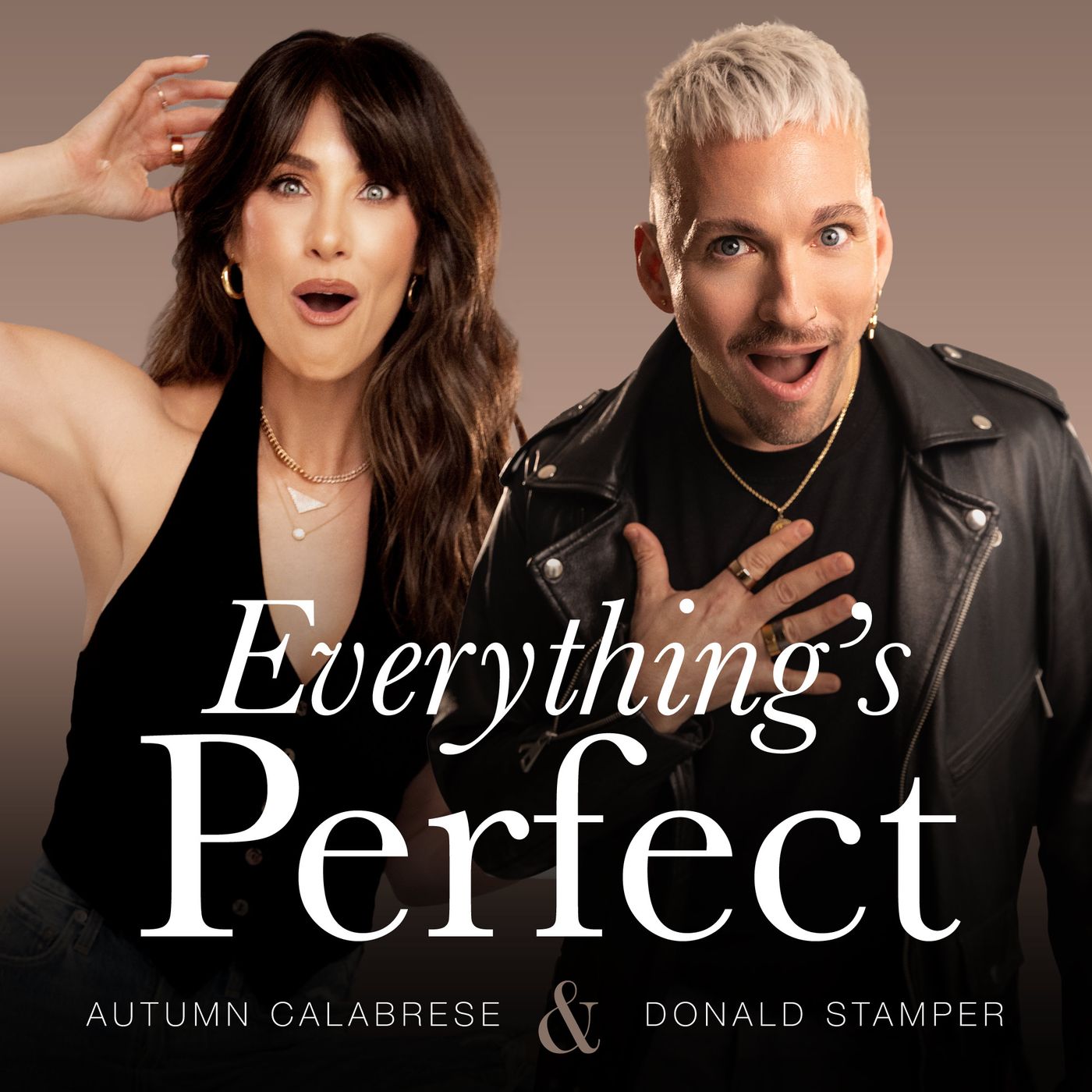
Everything's Perfect
Everything's Perfect... Except The Generation Gap
00:50:55
This episode dives deep into one of the most relatable and hilarious divides between Millennials and Gen Z. Hosts Autumn Calabrese and Donald Stamper explore the cultural, technological, and emotional shifts that define growing up before the internet...
Loading summary
Transcript343 lines
- [00:00]
Jordan
When I notice. Hey, guys, welcome back to another episode of Everything's Perfect. Where today, everything's perfect except the generation gap.
- [00:18]
Taylor
It's aggressive.
- [00:19]
Jordan
It, like. I never knew so much could change in what seems like a reasonably short period of time.
- [00:26]
Taylor
Right. And it seems like it's speeding up more and more.
- [00:29]
Jordan
Absolutely.
- [00:30]
Taylor
So we're definitely, like, we're focusing mostly today on the. The generational gap between millennials. We're millennials. 1980.
- [00:37]
Jordan
We're old millennials, too.
- [00:39]
Taylor
Like, I am the very beginning of a millennial.
- [00:42]
Jordan
Huh? Yeah. Like, like, like millennial who made it at the very end of whenever that. I guess it would have been like, 95 is different than a born in the 80s millennial.
- [00:54]
Taylor
Yeah, I was 80.
- [00:55]
Jordan
Yeah.
- [00:56]
Taylor
I am the first millen. We're on the block.
- [01:03]
Jordan
Literally. I don't even know if kids ride their bikes around. They don't even.
- [01:08]
Taylor
I was gonna say, do they even know what a block is? I mean, geez. But we're millennials. Gen Z came after us.
- [01:16]
Jordan
Yep.
- [01:17]
Taylor
And the gap is like the Grand Canyon.
- [01:21]
Jordan
Yeah, it's. It really is. From expressions to just the way living life. How technology has changed. Like, I. We were talking earlier. I remember when the Internet came out. Like, I'm pretty sure I really do remember people being like, did you know you can get the Internet now and you can, like, ask the Internet anything? I was in at my friend's house, and I was like, really? Like, ask it a question. He was like, okay. And he asked it when Coca Cola started, and it answered, and I was like, wow. Like, it is a new. It was so amazing to me that you could just look something up that way.
- [02:03]
Taylor
I mean, let's go back for a second, y' all. I had a word processor. You young folks don't know what that is, but it's like a step above a typewriter. So we. First of all, I did type on typewriters. I actually learned to type on a typewriter. We had a typewriter. I typically typed many a book reports on a typewriter. I remember when we got the word processor, which is essentially like a digital typewriter, but you could type, type, type, type, type. And you would see it on this tiny little screen, and then you would hit print at the end. So you didn't have to, like, backspace, white out. Right. These kids probably don't even know what whiteout is.
- [02:38]
Jordan
You're probably right. Except for when they're trying to, like, forge documents. Because kids do those kinds of things these days.
- [02:44]
Taylor
They do it digitally.
- [02:46]
Jordan
That's true. That's so true.
- [02:48]
Taylor
They don't know what white out is. Does whiteout exist? Did companies. Companies have gone out of business because of things and technology.
- [02:55]
Jordan
Oh, yeah.
- [02:55]
Taylor
But so I had the word processor. And then I remember when we got the first computer and it was like, this wasn't Internet. This was long before Internet. I got my first email account in college.
- [03:09]
Jordan
Wow.
- [03:10]
Taylor
I remember emailing the guy that I was seeing. And you know how, like, you text now and it's like split second. Like, I remember sitting in the computer lab because you didn't have a computer in your room and emailing him and waiting for the email to come back. Like, this was our form of texting.
- [03:28]
Jordan
It was really cool. It makes me think of the movie you've got Mail.
- [03:31]
Taylor
Yeah.
- [03:32]
Jordan
And there was something so exciting about when you'd open your. Your Internet yes box and be like, you got mail.
- [03:38]
Taylor
It was like, yes, who likes me?
- [03:41]
Jordan
Yeah. And it was just. It was. And it is something that's like, Even I look at my nieces now and just how they're like. And if I was a parent, I gotta say, people are like, I try to keep my kids down on their screen time. This is a shout out to all you parents. If I had kids, they would literally learn life through screen time. Like, I'd be like, watch this. I know it's not good.
- [04:02]
Taylor
No, they do, technically.
- [04:03]
Jordan
But it's there. There. Arguably, I think there are probably some benefits to the things that kids are seeing, but still, kids are looking, holding these iPads. I would have felt like I was in like the Jetsons if I was holding something like that.
- [04:20]
Taylor
When we took road trips, you're gonna die. Because we took road trips with my mom every year. She got this mini TV from Radio Shack. Also shout out to another business that doesn't exist. And we had a plug that plugged into the lighters, like in the car. Which also doesn't really exist anymore because first of all, road trips, you just had to talk to your siblings. Maybe you got to color. That was it. Then we remember when she got this TV and a VHS player and this thing was like Jimmy Riggs strapped into the back seat so we could watch it.
- [04:55]
Jordan
We literally had the same thing.
- [04:56]
Taylor
Yeah.
- [04:57]
Jordan
And our conversion van for our road trips. And also, I thought we were rich. And it was this big, like, ridiculous. We had TVs you had to hit on the side to make the picture clear up.
- [05:10]
Taylor
You remember blowing in a video game?
- [05:12]
Jordan
I still blow on things like, it's gonna magically fix It.
- [05:16]
Taylor
It always fixed it, by the way.
- [05:17]
Jordan
It did.
- [05:18]
Taylor
It did things Dusty, by the way. Gen Z, if you're listening, if you're watching, I'm sorry, but there are things you are never gonna fully understand. Like do you know what a phone book is? Do you know what the weather station Like, I know we got the weather at app on our phone, but we called a number to get the weather report and the time. Why do you dial a phone number to find out what time it is? Where's the clock?
- [05:39]
Jordan
Sometimes I just wanted to call somebody.
- [05:42]
Taylor
We had movies.
- [05:43]
Jordan
I would just call time and weather.
- [05:44]
Taylor
Yeah. And you. Cuz it was a person.
- [05:46]
Jordan
Uhhuh.
- [05:47]
Taylor
Yeah. It was like an operator. I remember my mom lived in Europe for two years and I had to call the operator to have the operator call my mom.
- [05:55]
Jordan
Oh my God. Long distance phone calls were such a thing.
- [05:58]
Taylor
Oh yeah.
- [05:59]
Jordan
I remember thinking you're moving. Literally. I lived in Dayton, Ohio and we had family in Toledo and we'd go to my grandmother's if who lived across the street from us if we wanted to call them because my grandpa retired from the phone company and they got free long distance because you had to pay. Literally same state. Yeah, but it was long distance calling to call people. Kids won't understand that.
- [06:25]
Taylor
They don't understand. They don't understand that when we first got cell phones, you had limited minutes that you had to buy. And if you went over that shit was expensive.
- [06:35]
Jordan
Yes.
- [06:35]
Taylor
Like you could not go over your minutes. And if you got lucky and you had minutes that rolled over. Oh, I was talking.
- [06:43]
Jordan
That's right. I had my first phone I got when I was 15, so. And honestly that would have been in 2000, I guess.
- [06:51]
Taylor
Yeah.
- [06:51]
Jordan
And I was just so happy. My friends had phones already, but my parents didn't get me one yet, but they got me a prepaid phone. So they got me a card that had like minutes on it. But if I wanted more minutes, I'd have to buy them myself. And when I tell you I kept all my conversations under one minute because if you even went like a minute and five seconds, you had to, you lost two minutes.
- [07:15]
Taylor
Right.
- [07:15]
Jordan
So I'd be like, hey, I just want to know when you're going to be here. But you have to tell me really fast. Like all my conversations were so fast and because I didn't want to lose the minutes.
- [07:23]
Taylor
And now think about how much time we spend on our phones. It's a phone, it's a computer, it's an encyclopedia, it's a movie theater. It is everything. Our faces are forever in these screens.
- [07:37]
Jordan
You know, another thing that some. I feel like it's still there a little bit, but the instant gratification of like TV shows. Like you had to catch a TV show and it. If you didn't catch it, you might not see it. Yeah.
- [07:50]
Taylor
There weren't replays.
- [07:51]
Jordan
Who knew when a rerun down a year later might be on? So. And you couldn't record it or if you, if you wanted to record it, you could only record like one thing. Did you ever have the TV that you could watch something and then on commercials, change the channel, but keep that first channel and a little square?
- [08:09]
Taylor
I know what you're talking about, but no.
- [08:11]
Jordan
Well, you poor thing. I didn't know you came from. I.
- [08:18]
Taylor
We had a. A cable box. Okay. And I don't even really know it was a cable box. Most people probably don't know what this is. And it had two buttons on it and you change a channel and we somehow learned a trick, I don't know where we learned this from that if you took a 2/4 and you pushed both those buttons down at the same time, you would get the movie channels for free. We were cheating the system.
- [08:42]
Jordan
Oh my gosh.
- [08:43]
Taylor
It was so good.
- [08:44]
Jordan
That is amazing. I remember going through like times because neither of us came from like really wealthy.
- [08:50]
Taylor
No. Yeah.
- [08:51]
Jordan
Where though, I don't know if my parents, like got a good tax return and we'd have a couple months of Disney and then Disney would go away. They'd be like, oh, the free trial or whatever is gone. I'd be like, dang. I was really getting into my shows. Right. But now it. Things are just so like, I don't even know what to watch because I can watch anything. Sometimes I miss just having like four, four options and choosing the best out of four instead of having to pick.
- [09:18]
Taylor
This world of things to see, just never ending possibilities. Like, I don't think Gen Z understands that at a certain time there was nothing else on the screen. Went black. It was fuzzy lines.
- [09:30]
Jordan
Yeah.
- [09:30]
Taylor
They could turn the TV on day or night, anytime. Phone, blah, blah. There's always something. We had our shows. Tgif. I mean, come on. Thank God it's Friday. Full House.
- [09:41]
Jordan
Yes, full. Full House.
- [09:42]
Taylor
Urkel.
- [09:43]
Jordan
Yep. I loved when they had step by step on there.
- [09:48]
Taylor
Growing Pains.
- [09:49]
Jordan
Yes.
- [09:50]
Taylor
Cheers.
- [09:50]
Jordan
So good.
- [09:51]
Taylor
I watched them all. But you had to know when they were talking about the generational gap. And these kids don't even recognize terms that are from our childhood. Young adulthood.
- [10:03]
Jordan
Yeah.
- [10:04]
Taylor
Okay, so Dom here We go. Do you know what a floppy disk is?
- [10:09]
C
0 clue what? A floppy. A floppy disk? Yeah, a disc. A disc that's got broken and now it flops.
- [10:16]
Taylor
Fantastic.
- [10:17]
Jordan
Okay, do you know what dial up.
- [10:21]
C
Is something to do with calling people? Probably, like maybe since you guys had those old phones where you had to like. Maybe. I have no clue. Dial up and calling people.
- [10:32]
Taylor
What the. Do you know what a fax machine is?
- [10:35]
C
A machine that you check facts on. Like, is the sky blue? And then.
- [10:41]
Jordan
All right, do you know what a collect call is?
- [10:47]
C
A collect call? Maybe it like collects call information. Like your parents can spy on you call or something. I have no. I don't know who to collect.
- [10:55]
Taylor
Do you know what it means to burn a cd?
- [10:59]
C
To burn a cd? Yeah, you take CD and you light it on fire.
- [11:04]
Jordan
What about a Rolodex rolling a.
- [11:08]
C
A deck.
- [11:12]
Taylor
Do you know what the yellow pages are?
- [11:14]
C
Probably something that has to do with like company's phone numbers or something.
- [11:20]
Jordan
Okay, what about a rotary?
- [11:24]
C
A rotary. Like a rotary engine, like RX7.
- [11:30]
Taylor
Or.
- [11:30]
C
Do you know a rotary dial, like a phone?
- [11:33]
Jordan
All right.
- [11:34]
Taylor
Okay.
- [11:34]
Jordan
Good job. Kinda.
- [11:38]
Taylor
These kids don't know nothing about nothing. They don't know these terms.
- [11:45]
Jordan
So. Okay. What is one of the fashion things when you were in high school, is there something that you love that hasn't come back, that you wonder if it will? Because a lot of trends I have are like back now of when we were from the 90s.
- [12:01]
Taylor
I'm trying to think if there's something I've seen. It feels like everything that was 80s and 90s, I feel like we've seen it all. Like maybe we haven't seen the French cuff gene very much. Do you remember. Do you know what a French cuff gene is?
- [12:16]
Jordan
Yeah, you like fold it, fold it.
- [12:19]
Taylor
Over and roll it up.
- [12:20]
Jordan
I did that the other day.
- [12:21]
Taylor
Did you?
- [12:21]
Jordan
Yeah. And I felt like a bad.
- [12:24]
Taylor
Right.
- [12:24]
Jordan
I was like, this is so cool and honest and it like. Yeah, yeah, yeah. I loved it.
- [12:30]
Taylor
And the double scrunch sock. So like you would put like one color and then another color that hasn't come back. But I'm okay with that.
- [12:36]
Jordan
Yeah, I. I thought I would never want to be any in anything other than ankle socks. And now I like socks with shorts and stuff like that.
- [12:44]
Taylor
But same.
- [12:45]
Jordan
I think another thing is like, although fashion clothing has come around, hair was pretty bad and in like part of the 80s and 90s.
- [12:54]
Taylor
Oh, thank God the 80s hair hasn't come back.
- [12:57]
Jordan
You know, I. I hope. I don't think it Ever will.
- [12:59]
Taylor
First of all, did we hate our hair? Like did we, did we use conditioner? Maybe a heat protector? If you look at from the 80s, it just looks like it is bleached and fried and permed.
- [13:14]
Jordan
Yeah.
- [13:14]
Taylor
To the max. Like did we know when to take the curling iron off? Yeah, cuz I don't think we did. That mullet is coming back and you said something about it and I was.
- [13:26]
Jordan
Like, oh yeah, I want it.
- [13:28]
Taylor
Dom kind of had one going the other day because like his hair was getting so long and I just looked at him and I was like if you don't go get that damn mullet cut, I. I'm going to disown you as my child.
- [13:41]
Jordan
I see. And you know what's funny? I feel like I see it a lot in Santa Monica for some reason and I'm like, maybe this is like really where it's like means it's something that's going to be in for a while because a lot of people guys are wearing it. But the thing is I have straight hair and a lot of them have wavy hair and so I'm like I'm just going to have this straight ass mullet going down my back. Well, okay. My uncle and several people I remember had rat tail.
- [14:11]
Taylor
The worst.
- [14:12]
Jordan
That is funny like wonder because just a little, I don't know, the rat.
- [14:19]
Taylor
Tails, it literally looked like a rat tail. It's like a string of hair that was like maybe braided or wore in a tiny ponytail. It's just not okay.
- [14:26]
Jordan
Yeah.
- [14:26]
Taylor
Okay. So that's a generational thing. So I think fashion, it's. Here's what's funny to me when Gen Z is wearing it like, like they invented it and I'm all like we've been there, we did it.
- [14:40]
Jordan
Yeah. Honestly.
- [14:42]
Taylor
And you're welcome for the style.
- [14:43]
Jordan
You know what's interesting? That feels like which I'm not an historian with fashion, but it does feel like like the 80s and 90s were the first time that these looks happened. Because if you think about like the 60s and 50s and those are totally different.
- [15:00]
Taylor
Right. Times and people fashion.
- [15:02]
Jordan
Yeah, it's like the 80s, especially street fashion. It was the first of its.
- [15:09]
Taylor
Yeah.
- [15:09]
Jordan
Of its kind.
- [15:10]
Taylor
We've seen the 70s come back quite a few times and I even think right now some of the 70s, the bell bottoms, the platform shoes are kind of making a comeback again.
- [15:18]
Jordan
Yeah.
- [15:19]
Taylor
Okay, so here's a little different topic. But still very big generational. Well, we talked about technology. I was telling you like before we started, you know, it's not just us and it's not millennials to Gen Z's. I feel like it's every generation. So if I have conversations with my dad about certain know he's, he just can't wrap his brain around anything, it seems.
- [15:42]
Jordan
But like, love the guy, but love him.
- [15:44]
Taylor
Technology eludes him, okay? Like he'll call me and ask me and I'll call Bob. I'll be like, you got to walk dad through it. And my poor brother has so much less patience. But it's kind of entertaining for me because he's like, dad, God, just press a button. And my dad's like, what button? And it's comedic, but I'm sure they couldn't have imagined the technology that we were gonna have. And now we're looking at the technology that the next generation is gonna have, like AI and it's almost like, how do you even prepare the next generation to handle it? I mean, we have self driving cars, right? That, that scares, I will tell you, scares the crap out of me. Like when I am driving and I see one of those cars, I am just like, I wouldn't, you couldn't pay me to get in that thing.
- [16:37]
Jordan
It's wild. And sometimes these like the cars, the self driving cars are very reckless. Like this one, the stopped in the middle of a lane to let the passengers out and a driver would be like, there's cars coming but these people aren't paying any attention and just flung open their doors. And so the lane that it stopped in is. I'm like, this is crazy. This robot's gonna kill some people.
- [17:02]
Taylor
So, okay, so oh, the next. So we looked it up after Gen Z is Alpha. Will they even know how to drive? Will driving be a thing or will everything be.
- [17:14]
Jordan
Oh, it definitely will eventually.
- [17:16]
Taylor
I mean, that's crazy.
- [17:17]
Jordan
Some will and some won't, but it's all going to be self driving cars for sure. It's not a question of if, in my opinion, it's a question of when. And I'm here for it. I know it's scary, but I also love naps and I like riding in cars more than driving. And I, I think like, man, it'd be nice to be able to get in a car and just like, you.
- [17:36]
Taylor
Know, I'm with you because I could get a lot of work done if I didn't have to drive. But I also think I noticed this with Dom a lot. You lose a sense of awareness and direction. Like, Dom started driving recently. He got his license in January and when he first Got his permit. I just remember saying to him, like, look up. Like, get your face out of the phone and pay attention. Like, do you even understand the rules of driving? Because these kids grow up with their face in the phone, in the car.
- [18:04]
Jordan
Yeah.
- [18:04]
Taylor
They're not looking. When we were in the car, there was nothing to do. You looked out the window, you knew the directions. Like, you know how to get everywhere.
- [18:11]
Jordan
Yeah.
- [18:12]
Taylor
You understood. Oh, they stop there, they do this, they do that. You know, like, because you just had to pay attention because there was nothing else to do.
- [18:18]
Jordan
Yeah.
- [18:19]
Taylor
So I do think it is something that we're seeing with Genji. Like you said, oh, they throw the door open. Because I just think, and I'm not saying this to be mean, but I think there's a little bit of. Just zoned out, oblivious. Like in their own world, the world of technology. Not aware of their surroundings as much, maybe.
- [18:41]
Jordan
Well, especially that makes me think about. I remember when I was gonna. When I was 15 and getting ready to start driving, I was paying so much attention to where things were because GPS obviously wasn't a thing. Now I don't go. I put GPS in my phone no matter where I'm going. Also, we live in LA and traffic. Traffic.
- [19:02]
Taylor
But do you remember MapQuest?
- [19:05]
Jordan
Yeah. You had to go on and print out your directions. Which also felt very advanced because my parents had. Or grandparents had a damn map. And I remember looking at that being like, what if we don't find a treasure after this? It ain't worth it. Like, that is the only kind of map.
- [19:24]
Taylor
I never understood that. Like, if I'm lost, I gotta open this thing and I'm trying to trace a line. I don't know where I am to begin with. How am I supposed to find the line of point A? That's like, just like when people would say, like, oh, you don't know how to spell the word. Look it up. I don't know how to spell it.
- [19:40]
Jordan
Am I supposed to look it up?
- [19:41]
Taylor
How am I supposed to get the dictionary out if I don't know the order of the letters?
- [19:45]
Jordan
Right.
- [19:46]
Taylor
That's for our self. Love.
- [19:47]
Jordan
If I think psychology starts with a S. Yeah. Then I'm never going to find it in a dictionary.
- [19:56]
Taylor
We digress.
- [19:57]
Jordan
It's crazy. My. When I started driving, my grandparents gave me one of those. Is it called an atlas or is that the thing that.
- [20:04]
Taylor
I think it's an atlas.
- [20:06]
Jordan
Yeah. And I just was like, y' all should have saved your money because I'm never looking at that thing. Just Makes me feel a little stressed. And I'm not going to do that.
- [20:15]
Taylor
When I moved to LA because yes, there was MapQuest, you could print them out, but it was a thing to have a Thomas guide in your car. Okay, guys, a Thomas guide is like a thousand page book. It's huge. Of maps of California. Basically like L. A. So you have to. I don't even think I ever used it. Like somebody gave me one. I don't even remember. But like you would have to like in the index, look up the address and it would tell you what page to go to the map on. Then you have to open it so it's. It's like a spiral bound. And then you would unfold it. And then sometimes the map was so big it would tell you to go to another page for the continue. Do you think I'm finding my way anywhere?
- [20:58]
Jordan
I know. And also they're like now it's like, don't text and drive. We come from the generation where you wanted us to read a book that we couldn't. We didn't even understand while we drove. Like, I didn't even know. I didn't know when the exit was coming or what sign I was supposed to look for. And I'm looking at this thing that by the way, is the same size as my windshield.
- [21:21]
Taylor
You could use it to keep the sun out during.
- [21:24]
Jordan
With my knee in a car that barely has power steering, My groin hurts from it. Like, what the hell?
- [21:31]
Taylor
No wonder we were in such a. Yeah, exactly. Driving was a work.
- [21:35]
Jordan
Kids these days will.
- [21:36]
Taylor
Power steering. My grandma accidentally bought a car that didn't have power steering. I remember if. Poor old lady, she would struggle to turn that wheel.
- [21:45]
Jordan
It's really about momentum. You want to be able to get some. Get some movement before you start. Yeah. My first car was a 77 Nova.
- [21:58]
Taylor
I don't know what that is.
- [21:59]
Jordan
It's a. It looks like an old muscle car, but.
- [22:01]
Taylor
Okay.
- [22:02]
Jordan
But I started driving in 2021 2002.
- [22:08]
Taylor
Okay.
- [22:09]
Jordan
And my car was from the 70s. It was crazy. I remember. But I did feel very safe in it until one day I was driving to work because I was working at 16 so I could pay for gas for my car. The vicious cycle of life started and my brakes stopped working.
- [22:28]
Taylor
Oh, perfect.
- [22:29]
Jordan
And literally everything's perfect.
- [22:30]
Taylor
Literally, like brakes.
- [22:31]
Jordan
Like, I push the brake and then it just goes to the floor and my car is rolling. And so I didn't know what to do. So I. The gear shift. Shift thing, which was at the steering wheel, like instead of by my side. I just threw it into park. My whole car was boom. And I was like, it was. I don't remember what it was.
- [22:52]
Taylor
You should have asked my dad. He's had this happen in multiple cars. He's driven them into trees on purpose because the brakes have gone out. Yeah, he's throwing them into park. He might have bailed out at one point. My dad's crazy. Let's make that another podcast episode.
- [23:07]
Jordan
Well, I do. Like, when I get in a car, that's the other thing. Like, every car I ride in, I sit in the passenger seat, and I look to see, does this car have an accessible emergency brake in case I need to pull it because my friend starts having a seizure or something? I just always think about these scenarios, and a lot of cars don't.
- [23:24]
Taylor
They don't have emergency brakes anymore.
- [23:25]
Jordan
Yeah, like, all right, well, I snowing ya. Good luck. But at least they have airbags.
- [23:32]
Taylor
I guess that's true.
- [23:34]
Jordan
So, yeah, a lot has changed.
- [23:36]
Taylor
But what I was gonna say was another thing that has changed, I feel like, is I'll use the word work ethic for right now. We've just grown up with a very different. Okay. I mean, I was babysitting when I was 9. I was 14 when I had my first real job. Like, and I was paying for things. I was paying for my dance lessons because that's what needed to happen. And I know people say, like, oh, millennials. And they, you know, hustle culture is dead. And I'm like, hustle culture needs to come back a little bit. Like, I feel like the pendulum has swung pretty hard in this opposite direction. And I know, like, people make fun of Gen Z and be like, oh, my gosh, they have no work ethic. And I don't like making such a broad statement. But in general, I think there's a little bit of pros and cons. I think you see things like, Gen Z is a little better about putting up boundaries and maybe finding a little bit more balance. Although sometimes it swings pretty hard, and you're just like, okay, go to work. I'm sorry you have period cramps.
- [24:42]
Jordan
Yeah.
- [24:43]
Taylor
You're gonna be all right. I'm gonna get crucified for that.
- [24:45]
Jordan
By the way, I can't speak on period cramps because I'm a man.
- [24:49]
Taylor
I've had the worst of the worst that have been debilitating and still had to go to work. So I can say it.
- [24:53]
Jordan
Yeah, well, that was me. Like, I started working, but I couldn't get a worker's Permit, I think until you were 15, you could get one in Ohio.
- [25:03]
Taylor
Oh, I lied.
- [25:04]
Jordan
But I started getting a. I got a job under the table when I was like, I think 14 is when I started. And when I turned 16, that's how old you. You had to be to work at Bob Evans. Anyone from the Midwest listening will probably know, or parts of the South, I don't know, will know about Bob Evans. And I knew that I had the best chance to make the most money as a waiter because making tips. My friends were making more than, like, working at a clothing store or something. And so I was working. They were like, how many shifts do you want? I was like, how many you got? Give them to me. I'm trying to make some money, right? Trying to do some things. I want to be able to buy outfits because I came from the world. My parents went, who. I'm very thankful for how they raised me. And I'm actually thankful for being raised like this. I usually, when I was young, got like, one new pair of shoes a year.
- [25:54]
Taylor
Oh, yeah.
- [25:55]
Jordan
And I loved the idea of, okay, if I work and make money, I can buy more than one pair of shoes. Yeah, I can go get, you know, this or that. I can go hang out with my friends. And it was this. I had. I had that motivation. And I think for some reason, a lot of times, and I know there's so much different about the world we live in. It's not just, I think, a person, a young person's willingness to work, but also so many adults are now working jobs that I was able to work then.
- [26:25]
Taylor
Right.
- [26:26]
Jordan
So I don't know. But I do think I'm thankful for that hustle because I had. I still to this day, have so much faith in myself that no matter where I find myself, if it is within my power, I will do it right. I will do. Do whatever is hard. It doesn't have to be glamorous. It doesn't. I'll do what I need to do. And I know that because that's what I've always done.
- [26:46]
Taylor
Yeah, I'm the same exact way. Like, again, I was babysitting, then I was working in a grocery store, then I was waiting tables in high school because I had to pay for all my own dance classes. Like, that's story for another time. But, yeah, I had to pay for my dance classes, I had to pay for my costumes, I had to pay my entry fees for the competitions. I had to pay for all of it. And then when I went to college, I had student loans I did the work study program and I worked full time waiting tables with a full college load. So a lot of times when people see like, oh, you made it or whatever, you know, they're not looking at the 20 something years of work that necessarily came before it. And I think also for this new generation, they have the ability to earn money in ways we would have never imagined. Just the influencer. No, but seriously. Kidding. But not kidding. Absolutely. Influencer world in general and how they can earn money. I mean, I just said to Dom the other day, it's actually harder for them to get regular jobs. I feel like Dom's been applying to different places and he's definitely having a harder time getting jobs. Like he's had a couple seasonal ones, but that's it. And like he just applied to a grocery store and I looked at him, I said, okay, you need to sign up to do Instacart. And he's like, I think I have to be 18, which I have to look at because it used to be 16. Like as long as you had a driver's license, I'm like, we're gonna look at that because you need a job.
- [28:14]
Jordan
Yeah.
- [28:15]
Taylor
Like you're 16, you have a car, you want to. And he's very good about it. Like, Dom's very good. He's very appreciative. He'll help out around the house. But I want him to actually have some crummy jobs that aren't fun and aren't glamorous.
- [28:31]
Jordan
Having to deal with bosses that.
- [28:32]
Taylor
Yeah, because I. With co workers, I want him to. That is what gave me my drive to be like, okay, what do I want to do with my life? And I'll work as hard as I need to to do that. Because I don't want to keep doing this. I can. This will pay the bills. I can again, same thing. I can do all the non glamorous things to get by. I just don't want to. I want to do the thing I love.
- [28:55]
Jordan
Totally honestly. Sometimes I think what gives motivation is doing the thing you don't want to do.
- [29:00]
Taylor
Right.
- [29:01]
Jordan
And it's good to know that you can that. Not that you can, but that you're willing to. It's not that you're above it, but you. It motivates you to move past it, grow past it.
- [29:12]
Taylor
Yeah.
- [29:13]
Jordan
One thing I really do admire, I'm not, I, I wouldn't say I'm jealous of, but I think is a good change is the awareness of like mental health or those kinds of things. Like people much Younger are making space for understanding that. And it is made fun of in a lot of ways, but I think it's better than. Than it not being there. Before, if you were emotional about something, the focus was not to be emotional, not why are you feeling what you're feeling. And I think that it's a really good shift in society to focus on that. But also, this might be controversial. There's this fine line between people who are, like, making space for their emotions. And also it seems like, well, you also are really comfortable in that. Like, it doesn't feel like you're moving and.
- [30:00]
Taylor
Right.
- [30:01]
Jordan
You know, in some. Some ways it's like it doesn't serve you if you just stay there, feel.
- [30:05]
Taylor
The emotion, but don't become the emotion.
- [30:07]
Jordan
Yeah.
- [30:07]
Taylor
But I do think I agree with you. I think it's great that it's way more talked about in all the ways I. Again, Dom deals with some OCD stuff, but I am so thankful that he is so comfortable talking to both me and his dad anytime. Even last night, he's like, mom, I'm struggling a little bit with my ocd. Tonight, I'm like, all right, let's talk about it. What's going on? Like, tell me what's on your mind. And I just count my blessings every day because I would have never in a million years said something like that to my dad. And that's not like, he's not a bad parent. You just didn't talk about it. And it's probably why we have some of the trauma we have built up, because there were just things that you kind of had to try to process maybe before you were emotionally and intellectually ready or capable of processing those emotions on your own, because you didn't necessarily have the adult guiding you, because it just wasn't talked about.
- [31:05]
Jordan
And they didn't know.
- [31:06]
Taylor
And they didn't know.
- [31:06]
Jordan
They didn't have the tools to talk about it. Because that's something I like to remind myself of most generations. Like, I can look at my parents generation and find a lot of faults, but if I look at their parents generation, I see a lot of growth. And really that's true for most generations.
- [31:23]
Taylor
I think that's important to understand why we're talking about the generational gap, too, because it's not to knock another generation, even though we're, like, having good fun with the differences between the two. It's. It is to say, if you can look at it and go, oh, wow, look how different things are. Okay, well, I understand why this person is struggling to understand that person. The world today is not the world you and I grew up in. I grew up riding my bike, going to the playground. Like I said, TGIF Sundays were spent with family. Like it was our little community. That was it. Like I grew up in Collinwood, Ohio, and it was. That's where everything happened. And that's. That's it.
- [32:02]
Jordan
Yeah.
- [32:02]
Taylor
And I do think, you know, we kind of talked about this with social media a little bit in that episode. But, you know, we've lost some connection because of it. But then we've also gained other connections.
- [32:11]
Jordan
Absolutely.
- [32:12]
Taylor
But it also ties into some of the other things that we've talked about with comparison and self love. Because you see what. You can literally see what the entire world is doing every second of the day.
- [32:27]
Jordan
Yeah.
- [32:27]
Taylor
So instead of just like maybe comparing yourself to a few people in your class or in your neighborhood, compare yourself to the world every day. So the. So the things that the Gen Z has to deal with, and this is why I think it's so good that all of the mental health issues are talked about way more, is because they have to process things that we could have never imagined having to process at their age.
- [32:49]
Jordan
Totally.
- [32:50]
Taylor
One wrong post and you might not get hired 20 years from now. One wrong sentence and you're canceled. 20 years late. Like even though you've grown.
- [32:59]
Jordan
Yeah.
- [33:00]
Taylor
You're still judged for the person you were X amount of years ago. Because of the world that we live in now.
- [33:05]
Jordan
To your point, because we can see we have a view inside what feels like everyone's life. It also feels like everyone is watching yours. So there's pressure even when they're not. Even for a normal person who might be very limited or just have like a small group of friends or followers on social media. Like I didn't have to worry what total complete strangers thought about me when I was 16.
- [33:27]
Taylor
16, right.
- [33:28]
Jordan
But now a 16 year old is probably thinking about that a lot because of technology and social media changes. One thing that I love that feel and I don't know, maybe I'm out of touch and maybe you have more understanding of this because of Dom or something like that. I do love that bullying is more talked about and people stand up against it more. I think it makes me think of the movie. I think it's the sequel of 21 Jump street or 22 Jump street when they go back and he called something gay. I'll turn that gay ass music off.
- [33:59]
Taylor
You punch me because I'm gay.
- [34:01]
Jordan
What? No, I. Oh, come on.
- [34:04]
Taylor
Yeah.
- [34:04]
Jordan
Because when he was in high school, like, man, that's gay. And everyone laughs and like. Yeah. And then he said, man, that's gay. And someone was like, why would you say that?
- [34:12]
Taylor
Right. That is really insensitive.
- [34:13]
Jordan
I didn't punch him because he's gay. I punched him and then he's happened to turn out to be gay afterwards.
- [34:19]
Taylor
I was gay when you punch me.
- [34:21]
Jordan
One of the cool kids.
- [34:22]
Taylor
Yeah, one of the cool kids.
- [34:23]
Jordan
He's gay. Don't use that as a slur.
- [34:25]
Taylor
Right.
- [34:26]
Jordan
And I thought that that was. I think that that is true. Like, Gen Z is more aware at a younger age about just being a little bit less of a bully. Even though I know the bullies are.
- [34:39]
Taylor
Still out there, I think in general Gen Z is. I actually said this. I think in a lot of ways Gen Z is better about it. Right. And they're more aware, especially like you said of slang. The millennials, actually, I feel like are some of the worst bullies. Like the people our age. They're definitely out there. Obviously you see it on social media and it again is this sort of goes back to the technology and, and you're hiding behind a keyboard and the ability to say something to somebody you do not know, but to have total judgment on them based off of whatever you think you see or you think you know or whatever's on a Reddit. I mean, there's a million ways. So I do give them props for being more aware. But I also think bullying is almost at like an all time high on social media. Like, I actually feel like maybe five or six years ago, probably before lockdown, there was a much bigger movement to end bullying on social media. And then I think bully lockdown, really mental health took some mental health issues on people and people just, just turned into like a, yeah, free for all in the streets of like, I'm gonna say whatever I want to whoever I want. I don't care how bad it makes you feel. And if taking a dig at you makes me feel better, then it's okay. And I. We could use some work.
- [36:02]
Jordan
I agree. I do. I do feel though, and I protect myself from those spaces to a certain degree. Sometimes I get lost in the negative comments, but for the most part I do wonder if those are people from our generation, like, like leftover haters more than they. I don't know. I'm out of touch. I don't have a kid. But.
- [36:25]
Taylor
You mean the ones making the negative comments?
- [36:26]
Jordan
Yeah.
- [36:27]
Taylor
Are they people our age? Are they people younger than us? I think they're People our age.
- [36:30]
Jordan
Yeah.
- [36:30]
Taylor
Yeah. I think it's the millennials. I think it's more the people our age than it is the. But, but again, maybe, maybe it's cuz Gen Z's not following us and so they're not commenting and maybe they're just doing it to each other. So.
- [36:43]
Jordan
Yeah, I mean, I know that every generation has, unfortunately.
- [36:47]
Taylor
Yeah, exactly.
- [36:48]
Jordan
But I do think all in all, they are better about that than ours.
- [36:54]
Taylor
Yeah, we had, we had slang that Dom will sometimes see. Like, he'll like Google old stuff, like 80s commercials and stuff. And he's like, you guys said this.
- [37:03]
Jordan
It's crazy, like savage.
- [37:05]
Taylor
It was a different time. And I'm not saying it was right. It just was a different time. It was okay. So let me ask you this. Do you think that we have thicker skin because of it? Like, do you think that we could just handle things a little bit more?
- [37:20]
Jordan
I want to say yes. I would like to think that the, the emotional intelligence that, that Gen Z is seeking earlier, I think, than we did, and a lot of that's because of the accessibility, helps them to mature, to be able to have thicker skin. But I do think that people who are like, that hurts me or they're just offended by everything I'm triggered. It's. It's like, that's okay. But also. Get it together.
- [37:53]
Taylor
Yeah. If you're triggered, though, sometimes this will be controversial. Yeah, I'm gonna say, though, it's on you to protect your peace.
- [38:01]
Jordan
Yeah.
- [38:02]
Taylor
It's not on the world to not ever say anything. I use this as an example when I talk about it because it drives me crazy when people are like, I'm triggered. Like, everything needs a trigger warning. And I'm like, okay, let's use alcohol for an example. Because I come from a family that has more than one alcoholic in it. People that are very, very close to me, and I've experienced some shit, so I could choose to be triggered by everybody. Oh my God. Sunday brunch, let's get drunk. It's Mama Clock. Like, hey, guess what? There's people out there that are recovering alcoholics that are on social media. There's people out there like me that have dealt with some serious trauma from alcoholics. And maybe that's a trigger to me, but it's not on me, it's not on the world. Like, if you want to post your thing about your boozy brunch or your blah, blah, blah. It's not on everybody else to have to not live their life because of my experience. It's on me to manage to either deal like, you know, do the work I need to do to manage those, those feelings or to not follow that account if I feel like it's too much posting about that and it bothers me. It doesn't. But like I'm. I'm not saying, I'm just saying I could be very triggered by it based on some pretty bad experiences I've had in my life. But that's on me to do that work. Not to think that everybody has to tiptoe around like cuz nobody know, like nobody knows what your experience is.
- [39:33]
Jordan
Yeah.
- [39:34]
Taylor
So it's like if I post something and it triggers you, wasn't an attack. It wasn't meant to make you feel bad.
- [39:41]
Jordan
Right.
- [39:42]
Taylor
So scroll past, unfollow, whatever. But like it doesn't mean that the world is out to get you.
- [39:49]
Jordan
Yeah, yeah. That's what I feel that our generation, like back to your question, probably in that way has thicker skin because if, if something bothered you, you had to get over it. And I'm not. And there's a balance there. Like maybe I think instead of get over it, it's okay, why did that bother me and what is the work on me to do to protect myself and from these feelings? But the people who are always trigger triggered or always have a problem with something that someone said or if someone says, you know, it's. You get to a place like I've been afraid to say, share my little wins because what is a victory to me could trigger someone.
- [40:34]
Taylor
Right.
- [40:35]
Jordan
And that's like, come on.
- [40:36]
Taylor
Yeah.
- [40:37]
Jordan
Like you're really just taking joy from people if you're the kind of person doing that.
- [40:42]
Taylor
So do you think it's trendy to be triggered? Trendy to find fault in everything that somebody says or does?
- [40:54]
Jordan
I think that we are in a time where that's really divided and I wish that we could meet in the middle on it because I think that there's a group of people who are like, everything is an offense.
- [41:09]
Taylor
Right.
- [41:10]
Jordan
Everything. And then there's another group of people who are like get over it. You, you know, crybabies.
- [41:19]
Taylor
Yeah.
- [41:20]
Jordan
It's not the words I was gonna use, but you get it, get over it. And you know that has no compassion. And I think that we should meet in the middle with compassion for how someone feels and understanding that not everyone shares your feelings or is their job to make you feel better.
- [41:40]
Taylor
Right.
- [41:40]
Jordan
So like meeting in the middle and. Because I do think that for some one group of people it's very trendy to be very wounded.
- [41:47]
Taylor
Right.
- [41:48]
Jordan
And for another group of people, it's very trendy to be an asshole about it, like.
- [41:52]
Taylor
Yeah.
- [41:53]
Jordan
And act like everyone doesn't matter.
- [41:55]
Taylor
Right.
- [41:56]
Jordan
And so I think that there's a real lack of people in the middle. I try to be. I try to be in the middle same, but it's hard. And sometimes it's hard on either side because sometimes I look at the person lacking compassion and I'm like, God, you suck. And then sometimes. And I do think usually those are like millennials or sometimes even older generations. I think Gen Z and younger people are more compassionate right now. And I do think that's a good thing.
- [42:28]
Taylor
Right.
- [42:29]
Jordan
But being compassionate is different than always being triggered. Oh, you know, like that for sure. So I think they're compassionate. But I like to encourage people. Like, I taught sixth graders a couple years ago. There was like 40 of them dance. And there was. It's interesting as an adult gay man now, to work with kids, because I didn't get to see myself at that age. And there was a little boy in the class who was obviously extremely feminine. And if he grew up where I grew up, would have been made fun of a lot and called a girl and a sissy and all the things that I was called at times. And when in this class we rotate dance partners. And I really didn't know what to do because. Because that little boy stood on, like, learned the girls part.
- [43:22]
Taylor
Oh, okay.
- [43:24]
Jordan
And so what. The first thing I did was call it leader and follower. And I tried to do that as a. As a ballroom instructor in general, anyways, just for the habit to, you know, because of, like, whatever. It's dancing, it doesn't have to have a gender title to it. But what I loved is that no one, like, we still rotated. And every other boy in the class, when they got to him, just dance with him like one of the girls. And. And it seemed to me like my class in first grade would have never done that with their sixth graders. But I just was homeschooled then. But it was so cool to see. And so it gives me hope for the generation that we're in now being more compassionate and understanding and less judgmental and harsh.
- [44:09]
Taylor
That's amazing.
- [44:10]
Jordan
Yeah. And it was in Nashville. It was in this. It was in a Southern, more conservative part of the country. So it was very cool. Yeah.
- [44:19]
Taylor
Go, Gen Z. Yeah.
- [44:22]
Jordan
Don't understand you. I can't understand most of the words you say.
- [44:24]
Taylor
Oh, my God.
- [44:25]
Jordan
But appreciate you.
- [44:26]
Taylor
I definitely appreciate you. But if you could just Come back to the English language. That would be super helpful because Riz and gat and. Oh, God, what is else? Skibidi.
- [44:38]
Jordan
Sigma.
- [44:39]
Taylor
Sigma.
- [44:40]
Jordan
Literally, I'm lost.
- [44:42]
Taylor
Dom says full sentences to me, and I'm like, I don't know what you need.
- [44:45]
Jordan
Huh? Yeah. Like, I. I hope you're okay.
- [44:50]
Taylor
Was. How was school? It was sigma. I'm like, was it good? Or. He'll go, bien. And I'm like, I know that's Spanish, but I'm like, tom, just please.
- [45:02]
Jordan
Why are you trying to confuse me?
- [45:03]
Taylor
Can you use a full sentence? Yeah, just tell me how you feel. Yeah, y' all need to come. What? Our slang was, like, radical.
- [45:11]
Jordan
Yeah.
- [45:12]
Taylor
Tubular. Cool.
- [45:13]
Jordan
Yeah.
- [45:15]
Taylor
I just gave you some good 80s right there.
- [45:17]
Jordan
I sure did. I. I am at a place. And then that's just where I'm trying to learn because. Because I turned 40 this year. I've referenced that a couple. In a couple episodes. I don't want to, like, say things to be cool. I don't even know if cool is what we're supposed to say anymore is. It's still cool to say cool.
- [45:35]
Taylor
I think so. Yeah. Okay. Can I tell you my thing? There are all these sayings, and because I don't use TikTok a lot, I'm not learning them. But then I'll, like, see something in a magazine or I'll see something on a reality show or something, and I'm like, what is that? These are women my age, so I guess I should know what this means, and I don't. And I feel very uncool and un up to date. I just heard on the radio the other day something like Kim Kardashian said something like, oh, that's that outfit's nachos, or something like that.
- [46:07]
Jordan
She said, okay, I know exactly what you're talking about, because I had to chat. GPT. She was talking about these pants she wore on Saturday Night Live. And she was like, I wore these when I was here before and thought I'd reheat these nachos. And I was like, huh? And then I heard someone else say. Or, like, it was a caption. Reheat nachos. And I was like, okay, what. What is going on? And I googled it, and it's an expression that's, like, sort of catching on about repeating something, right? And it can be used as, like, not because nachos are never as good when they're reheated, right? But also, people are making it, like, let's reheat those nachos.
- [46:47]
Taylor
Right.
- [46:48]
Jordan
It's like, why nachos? Like, I just don't understand.
- [46:51]
Taylor
Can't you just say wear the outfit again?
- [46:52]
Jordan
Exactly, Repeat.
- [46:54]
Taylor
Like, why do I have to chat GPT it to understand it. If I have to go like seven layers deep to understand what it means, which is what I feel like we're doing too much. You are doing the most and where. Who starts it? Yeah, I want to know who started all these words for these kids.
- [47:14]
Jordan
Well, that's why I like to watch the Kardashians, because I figure they are our aids. And I'm with you, by the way. They're. They are, they have kids and they're also like at all the parties and they also have a whole team of people trying to keep their brands relevant and stuff. So I'm like, if they say it, I'm going to learn it and say it. And so if you're listening, follow along because whether we figure it out from the Kardashians or Dominic will help. I'm going to do my best to not say outdated.
- [47:47]
Taylor
I mean, you can't say things like chillax.
- [47:49]
Jordan
I'll. Yeah, I would. Trying to think. If there's anything that I say, I say chilling. I say I'm chilling.
- [47:59]
Taylor
Do you?
- [48:00]
Jordan
Yeah.
- [48:01]
Taylor
I haven't heard you say that.
- [48:02]
Jordan
People are like, how you doing? I'm like, I'm just chilling. Or like, or like if I'm home and just being quiet or something. And Nell's like, are you okay? I'm like, yeah, I'm just over here chilling. I'm just chilling.
- [48:12]
Taylor
Chilling. That's an oldie but a goodie. Yeah, but see, it works. I understand that. Yeah, you're on ice, you're cool, you're calm, you're collected.
- [48:20]
Jordan
Uh huh.
- [48:21]
Taylor
It's not reheated nachos, by the way you talk about reheated nachos. I'm hungry, I want nachos.
- [48:28]
Jordan
Yeah, like, I'm like yum.
- [48:31]
Taylor
When you mean. And me what you say if you're.
- [48:34]
Jordan
Re eating Anjos, my third favorite food. That's why I never reheat them. I eat them all the first time. Something that I'd like to say is I just really. There's so much, I think from one generation to the that can criticize the other. And I really think, actually in this conversation I've thought about this more than ever. There's a lot that like, we can learn from each other, whether we're talking millennial, Millennials and Gen Z or millennials and Gen X or baby boomers I think were before Gen X or maybe, you know, maybe I missed one in there somewhere.
- [49:13]
Taylor
I think it's baby boomers.
- [49:14]
Jordan
But the truth is, it's. It's a lot of times you hear people talk about the problems in generations before them or generations after them and really thinking of it and having this talk together, there's also a lot that we can gain and learn both from the ones before and after.
- [49:30]
Taylor
Absolutely. And I think it just goes back to the compassion thing and like, instead of having judgment all the time of like, learn from your elders, but also learn from the next generation. Because let me tell you, these kids got certain things figured out that it's just an 8 in them, especially when it comes to technology and things like that. Like, they just get it. They look at it and they're like 2 year olds figuring out the iPad. And I'm over here like, I can't turn it on.
- [49:50]
Jordan
Yeah, absolutely.
- [49:51]
Taylor
Trying to get a camera.
- [49:52]
Jordan
Yeah. Who knows if this will ever be seen, Dom? Is it recording?
- [50:00]
Taylor
But no. I do agree that there is a lot to be learned in general from each other. It really doesn't matter the age. All right, you guys, thank you for tuning in to this episode of Everything's Perfect except the generational gap. Let's remember to have a little bit more compassion for each other for the generation before, the generation after, and keep learning and growing and not judging as always.
- [50:24]
Jordan
We'd love to hear your thoughts on this subject. If you'd like to leave them in the comments. Make sure you're liking and subscribing. You can check this out on the YouTube channel if you're listening. And we'd love to hear from you more. Come back every week for new episodes. Episodes of Everything's Perfect.
- [50:40]
Taylor
See you next time.
- [50:40]
Jordan
When I noticed.