← Everything's Perfect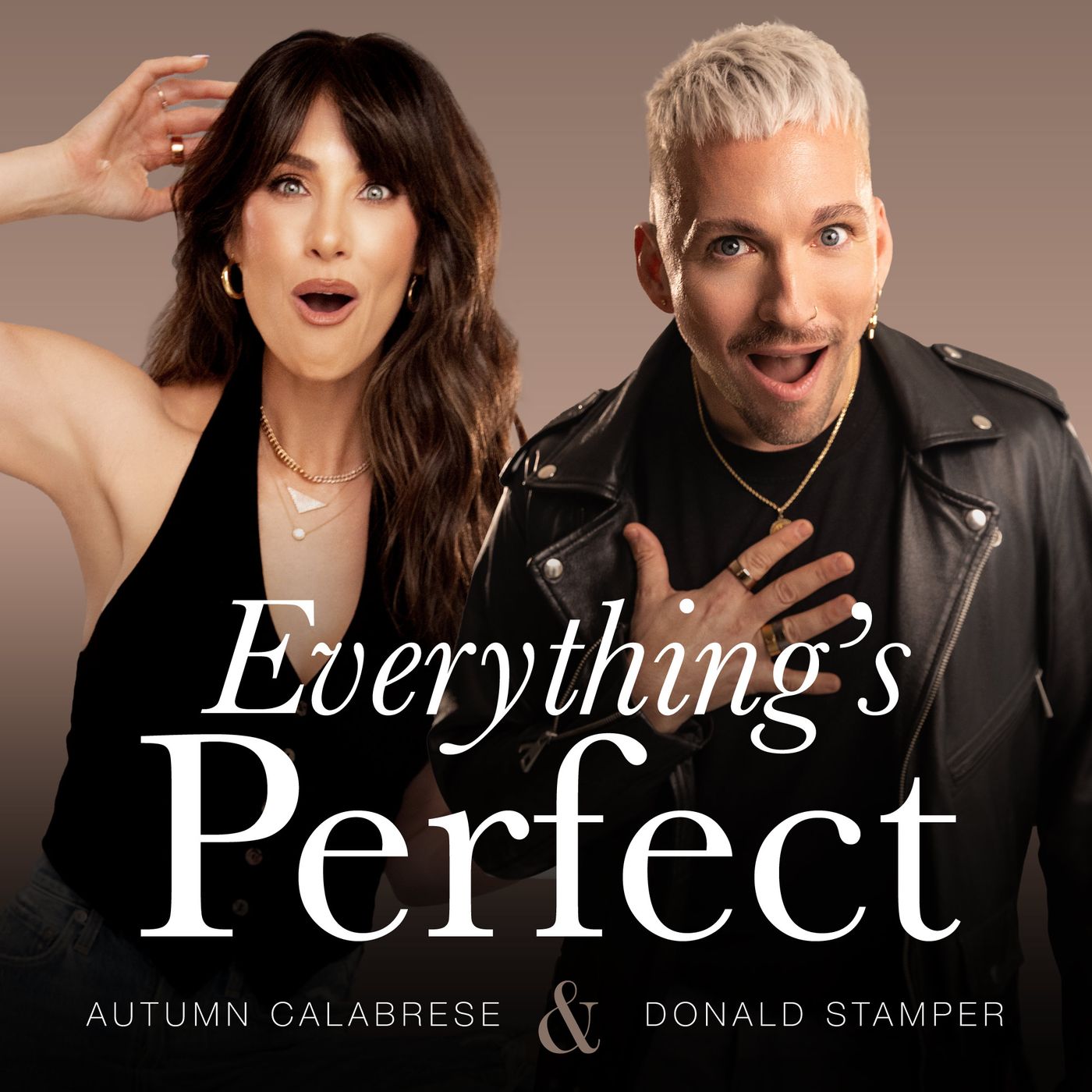
Everything's Perfect
Everything's Perfect...Except The Violence We Can’t Ignore
00:58:48
⚠ Sensitive Content Warning This episode includes open discussions of gun violence, trauma, loss of life, social division, and political issues. Listener discretion is strongly advised. In this special episode, Autumn and Donald step away from their...
Loading summary
Transcript264 lines
- [00:00]
A
One murder. Horrific. Shouldn't be happening. Hard stop. That's that.
- [00:06]
B
It brought a gravity. It brought a weight. I know in my mind, the words can't even describe how evil it is, but it brought an emotion that I gotten desensitized. I was grateful for. Because we should be sick. We should be sick by these things.
- [00:21]
A
That are happening, but also that entire crowd of people, their lives are never the same. They just watched a horrific act of violence. They watched a man get shot in the carotid. Until the news broke that he had been shot. I did not know who this man was.
- [00:52]
B
All right, guys, welcome back to another episode.
- [00:56]
A
Everything's perfect. It. And the world is exploding.
- [01:00]
B
It's really. What is so. Our name is not lost on me. Like, we picked it at the perfect time. I mean, because it's like, everything's perfect.
- [01:12]
A
Honestly, we. I was waiting for you to get here, and I was like, you know, sorry. That's okay. I was like, you know, doing a. A opinion podcast. I'm not. I'm not thrilled.
- [01:29]
B
It's a little. It's actually a little bit more intimidating because. Yeah, if you do a factual one, don't blame me. Facts are.
- [01:36]
A
Facts are facts.
- [01:37]
B
Like, I don't make the rules. I just report them.
- [01:38]
A
That's what I always say about fitness and nutrition and science. I'm like, I didn't make up the science. I'm just telling you what it is.
- [01:44]
B
Yeah.
- [01:45]
A
But opinions are like assholes. Everybody's got one.
- [01:51]
B
And some are. Never mind. Some are dirty.
- [02:02]
A
Some we gotta laugh about just so that we can get through this, because this is actually a hard. You know, what is today? What's the date today? Today is the 12th. September 12th. Yesterday was September 11th. So, you know, may we never forget. We're deal. You know, everybody in the country is dealing with multiple shootings that just happened in the same day.
- [02:25]
C
Yeah.
- [02:26]
A
And we're gonna. We're gonna talk about it because it affects everybody, you guys. So first of all, it is an opinion show.
- [02:36]
C
Yeah.
- [02:37]
A
And. And I also just want to say that the world and life is just not black and white. Like, really, people want to make things so black and white. You love them or you hate them. It's right or it's wrong. It' or it's only that. And I can only speak for myself, but that is just not the lens at which I look at the world.
- [03:01]
B
Yeah. There's so much more nuance to, like, people's feelings and opinions and experience. And we live in a time that is so polarizing like you are either like in this camp or in this camp or you feel this way or that way. And I'm. As much as having this show, we. Well, I can. Speaking for myself, I've had the intention of being totally myself and, and honest with everything that I feel and say, but also keeping in mind that I don't want any listener to feel polarized, to feel like they're not welcome to be a part of our audience, that we don't value them and what they have to bring. But it gets to a place where you. Then you have to. Basically, we live in a time right now where you start feeling like you can't say anything because you're going to make somebody angry.
- [03:54]
D
Right.
- [03:54]
B
And I hope that if nothing else, even if we say something and someone listening doesn't agree with anything we say, I hope that we can at least demonstrate a healthy way to engage in conversation about these things.
- [04:09]
D
Right.
- [04:10]
B
With friends. Because. Because I think it's important. And the truth is, if you're a human in the world right now, your mind is probably swirling and it'd probably do you some good to be able to talk to a friend about some of the things you're experiencing and feeling.
- [04:23]
A
And I think right now what we're even seeing and experiencing is you might think that you're on the same page as people that you're like, friends with, friendly with, in the same circles with. And you know, there's a lot of posting on social media and you might be caught off guard. I've been caught off guard a few times in the last 48 hours of like, oh, I did not expect that response from that person.
- [04:48]
C
Yeah.
- [04:51]
A
I personally, while I might be caught off guard, there hasn't been anybody I've unfollowed. There hasn't been anybody whose stuff I've commented on. I just, that's just not me. I'm just not a go on somebody's social and be like, your opinion. Wrong. It's your. It's your social media. You're allowed to have your opinion. Welcome to the United States of America, where freedom of speech is something that we are all entitled to. And having our own opinions is one of those things. And we don't have to agree with each other and, and at the same time, we don't have to hate each other for not agreeing.
- [05:26]
B
Yes, but that's hard for me to hear.
- [05:29]
A
Hold on, hold on. There's a line and we'll get to it.
- [05:35]
C
Yeah.
- [05:36]
A
What I'm saying is. And also, I just want to Preface this as we're getting into this, you guys, Donald's a little different than I am. He follows along a little bit more than I do, or maybe it's a lot more in terms of politics and stuff. I sometimes hesitate to even speak on this stuff because I'll be the first to admit I don't really fully educate. Like, I do not spend my days obsessed with the news. I don't go down those rabbit holes. Like, it's. It's not something I dive into because honestly, I don't know where my mental state would be if I did. That being said, I'm still a human being living in this world. I'm still a mom. I'm. You know, I like, I still have opinions when I see tragedy happen.
- [06:20]
C
Yeah.
- [06:21]
A
So I'm gonna speak from that point. I'm gonna do my best to not say anything that is. Is inaccurate in terms of a fact or not. You know, like.
- [06:32]
B
Yeah.
- [06:33]
A
That sort of thing. And I'm gonna fumble my way through this because I don't think there's any eloquent way to have this discussion.
- [06:40]
C
Yeah.
- [06:40]
B
I'm.
- [06:40]
A
Well, other than with an open heart and open mind.
- [06:43]
B
Yeah. And. And the thing is, I think that everyone agrees that tragedies are happening. I think the. Where we all get very divided is what's causing them or what the solutions are to them.
- [06:56]
A
Right. What. How to.
- [06:57]
B
Yeah.
- [06:58]
A
How to stop it.
- [06:59]
B
But I think really what we're talking about today too is like, it's not even the, quote, politics of it, as it is like the social angst and division that's happening with people.
- [07:13]
A
And that's the thing. Yeah. It's really not the politics of it. It's. Everything's being turned into politics. And I'm like, where is just the damn humanity?
- [07:20]
C
Yeah.
- [07:21]
A
Like, this is not a democrat republic. Like, what the man? Murder is wrong, period. Hard stop. The end.
- [07:28]
B
Always right.
- [07:30]
A
Like, vigilantes are not a lot. Like, that's not a thing. Like, you don't get to like, you know, And. And we're taught there's multiple things that have happened in just the last week. The Ukrainian girl was murdered on the subway or on the train. There is obviously the school shooting that just happened the same day as the death. Public shooting of Charlie. Charlie Kirk. Sorry. Like, my brain literally went black for a second. Like, what?
- [08:08]
C
Yeah.
- [08:10]
A
And. And I just feel like before we get into all the things and the opinions and all the stuff, but, like, I don't. Why. What. First of all, those videos shouldn't be out why, why are we posting the video? I wonder? Like, where'd the video from the train come from? When people stood around and watched poor girl get stabbed in the neck and then didn't do anything to help her. Like, what the fuck? Where's the humanity in that? Like, nobody jumped in. How do we look at it on social and just keep scrolling and it doesn't. Like, I don't know, man, for me, when I hear it, when I catch even like, I did not watch any of these videos. These are not things, these are not images I want in my brain. But I was scrolling something on social and a news station, a news outlet was showing the stabbing on the train. They weren't showing the full thing, but they showed the girl getting on, sitting down and literally the man behind her standing up and lifting his arm up. This was a very large man. This girl sat down. She did nothing. She literally sat down. And within seconds he stood up and. And even just seeing the motion of his arm, because that's where they cut the video off. They didn't show more than that. Just made me so sick to my stomach. It stays in my brain. Like, I, I don't.
- [09:27]
C
Yeah.
- [09:28]
A
How are we all just okay that we see it, we. We hear about it and we just keep going?
- [09:34]
B
Well, you know, I have really been struggling with that, seeing the things. And even. Honestly, about a year ago, I. It was towards the end of when I was living downtown that I, I had a couple intense moments downtown. But I was laying on my couch and I heard this like, pop, pop. Well, downtown LA is very loud. You never know. Car, whatever, people might be firing a gun into the air. It's. It's wild.
- [10:07]
A
I'm glad you don't live there.
- [10:09]
B
Well, so then my citizen app that says what like that gives me real time alerts popped up and said someone was shot at this corner, which happens to be the corner like that I see from my balcony. It's the closest corner to me. So I walked out and I see someone laying on the sidewalk. Literally autumn to the, a police officer arriving, starting to do chest compressions on him. Ambulance come, more police officers stopping traffic, roping off the scene and do chest compressions on this person and until they cover them with a sheet because they couldn't resuscitate. And I was like, oh my God. Sitting on my balcony, I just watched someone get shot and killed. And it's like these. This is so tragic. And I don't have the answer, but I do wish we could engage in a little bit more Conversation to find a middle ground. Because I feel like whenever we talk about things like all of these shootings, which I do know, the facts are our country has a very unique problem with gun violence and shootings. And people. The. I'm not stating any opinions yet. I think everyone agree. Can agree that that's a very touchy subject because of the second amendment. And people feel like it's. Their gun rights are constitutional. And a lot of people believe that if you tried to change the gun, like any of the gun laws, it wouldn't help anyways. So it's like you can't even enter conversation. So the only other answer is we just keep letting it happen for years.
- [12:02]
A
That's the crazy part to me. And I'm like, as a parent, especially since so many of them are happening.
- [12:07]
B
At school, oh, my God.
- [12:09]
A
I'm like, I mean, I've never been more thankful that I homeschool my kid. I don't even want him leaving the house. Like. And I was reading somebody saying, again, you know, social media. And somebody was like, we don't have shootings at airports because we have armed guards. And we don't have shootings at sporting events because there's armed guards. We need to put armed guards at all the schools. And I was just like, in my mind, I'm like, this is my opinion. I'm like, really? That's the answer. Like, as the kindergartner walks into school, it's walk through a metal detector, walk through, walk past armed guards. Like, Guys, I'm 45. In a week and a half, I didn't go to school with armed guards, nor did I go to school worrying about being shot. It wasn't a thing.
- [12:53]
B
No, I really. I feel like the first big one I remember is Columbine.
- [12:57]
A
Columbine.
- [12:57]
B
And it was like, oh, my God, we can't believe.
- [13:01]
A
And it was like, what do we do to make sure this never happens again? And then it was like, one happened. And it just. People were like, oh, if I'm mad, this is what I'm gonna do. And by the way, you. Here's the thing. I don't have the answer either, but I know that armed guards isn't the end all, be all, solve all. Because guess what? You put the armed guards at the school and they're going to show up to the next place, the grocery store. Like, there was. What was it? Two weeks ago, there was a shooting when the kids were in church. So they weren't in the school, they were in the church.
- [13:30]
C
Yeah.
- [13:31]
A
And I Don't know if you remember, you're only a few years younger than me, y'. All. There used to be a time when the airport barely had security. When I was a kid, everybody could go to the gate. So if I was flying, because I was, I think I was like 10 or 11 the first time I flew. And I flew by my. Well, I flew with my sister Kaylee. We were go. We lived with my dad. We were going to see my mom for the summer and she bought us plane tickets. Like any other time she would come, drive, pick us up because she lived in a different state. My dad walked us to the gate and he waits. And they would wait for you to get on the plane. And all you did was walk through a metal detector. Not like the crazy. You didn't skip a suitcase, nothing. And when you, when you met people at the airport, you met them at the gate.
- [14:18]
C
Yeah.
- [14:19]
A
If you watch old Friends episodes where Rachel goes to pick Ross up from the airport when he's coming back from China, she's at the gate.
- [14:27]
B
Right.
- [14:29]
A
Younger. The younger generation doesn't even know that to be a thing. The airport didn't used to be a giant pain in the ass. You didn't have to get there two hours ahead of time. Yeah, but what was it? Was it the. Was it the shoe bomber that made the airport? Yes, I think. Don't hold me to it. Like I said, I thought it was.
- [14:49]
B
9 11, but I never flew until like 2006. I think was my first time flying.
- [14:54]
A
I could be wrong, but I think it was before 9 11. And I think it was somebody with a shoot in his bomb or a bomb in his shoe, all flustered already and that. I think that started it. Yeah, but it was something like that. It was an incident like that and then the world has just gotten crazier.
- [15:12]
C
Yeah, it has.
- [15:14]
B
And we find ourselves this week. It's really a difficult subject because specifically with the shooting assassination of Charlie Kirk, people feel so different, so many different kind of ways. And I think I just want to speak to that because it's felt. I haven't said anything other than I said the day of. I forget what I shared. But I do think political violence, a shooting, period, murder is wrong like always.
- [15:45]
A
Always.
- [15:46]
B
And I am saddened by every loss, by every life lost to that type of senseless violence. And I did the first thing I thought about. And for the record, I'm just going to be honest with you guys. I could not stand Charlie Kirk in my mind. He was part of it, like very evil and negative message. And I know I'm just speaking my opinion about that, and I'll tell you why. I also know a lot of people feel differently, but he said a lot of specific things I think are very damaging. But that doesn't matter. That in no way. That's totally separate. That doesn't speak to me saying, well, you know, there's no sense of he had it coming or anything like that. For me, it's tragic. My heart goes out to his family. My heart goes out to his loved ones. And my heart really does go out because I remember being the little conservative kid who was literally protesting outside of abortion clinics and praying that God would save the gay people because they're going to die and go to hell. I lived in that world. And as much as I don't agree with it, I really do. I can remember like it was yesterday how it felt believing that you were fighting against something evil and really trying to make the world a better place by doing that. And so I even feel for the people who followed him because they. They. Everyone's world is so rattled and all it's done is create this bigger divide.
- [17:19]
D
Right.
- [17:19]
B
Between individuals.
- [17:21]
D
Right.
- [17:22]
A
I am with you on everything you just said. One murder. Horrific. Absolutely. Just shouldn't be happening. Hard stop. Like, that's, that's that. Until the news broke that he had been shot, I did not know who this man was. If you had said that name to me, no clue.
- [17:46]
C
Yeah.
- [17:47]
A
So up until two days ago, I would have had zero opinion on him because I knew nothing about him. Obviously, lots of information has come out. Well, has been made more mainstream, shared things that I have heard, seen. I don't agree with anything that I've seen Him. Him say. I'm with you on the. I felt like. I feel like what I saw, and obviously this is very little bubble, but was like, very negative. I. I can say with 100% conviction that for as strong as I believe that murder, shooting, all of that is never the answer. I feel just as passionately about spewing that. That somebody spewing hate towards anybody. Wrong. Hard stop. That's it. There is no. There's no conversation to be had. And I guess maybe I'm contradicting myself because I'm like, we should be able to have an open conversation. You can have your opinion, I can have mine. No. If you're. If you're judging somebody because of the color of their skin, if you're judging them because of their sexual preference, if you're judging them because their gender identity Gender identity, you know you're wrong. And if you try to stand behind religion and God as your reason for that, then you and I just don't agree. And that would not be a topic of discussion for us, because we're never going to agree. Because in my mind. And again, this is just my opinion, you can use the word God, source, creator, however you want to look at it. The power that is bigger than us, that put us here, put all of us here. And I don't believe that that power said, I'm better than you because I'm a female and I like men, or I'm better than you because my skin is this color and your skin is that color. Mm. So if it. For somebody spewing those things. And yes, I use the word spewing because that's the visceral reaction it gives me. You're wrong.
- [20:09]
C
Yeah.
- [20:09]
B
That's what's difficult, because I'm saddened, like, by another life lost to gun violence, including his.
- [20:19]
A
Can I say something? Yeah, I want you to keep going with that, but I want to say something. Yes. I am so heartbroken by another life lost to gun violence. And the fact that that was in a huge crowd every. Like, so his wife, his kids, his family, like, but also that entire crowd of people, their lives are never the same. They just watched a horrific act of violence. They watched a man get shot in the carotid. Mm. And that is. Again, I haven't seen that. But that's not gonna be. A little bit of blood. Like, that is.
- [21:08]
B
Traumatizing.
- [21:09]
A
Yeah, I just. I just.
- [21:11]
B
Well, I saw an interesting post to that point, and I actually really appreciated it because it gave me a perspective that I haven't thought, because I. As much as you don't want to become desensitized, you can't help it. Living in the world we live in, things that just are normal, that should not be normal. And talking about school shootings, I saw someone post. It said something like, if you're feeling bad for the people there who saw that happen and witnessed it and how they've been affected, think about all the kids that weren't even injured but had seen their friends, innocent children, shot and killed, shot and killed. And I was like, it brought a gravity. It brought a weight to that. Like, I know in my mind that that is. The words can't even describe how evil it is, but it brought an emotion that I think I'd gotten desensitized from, that I was really grateful for. Because we should be sick. We should be sick. By these things that are happening.
- [22:11]
A
Think about being that young. Like some of these kids. Like, I mean, it's high school and lower. Typically, yes, it's happened at universities too, but yeah, the majority is like high school and lower. We say this all the time. Frontal lobe isn't even developed. Like, it would be hard to process as a full grown adult seeing that. But a 10 year old, a 12 year old, a 13 year old, and you're hiding, hoping that you're not shot. Like, I remember seeing one, I don't remember what school shooting it was, but this little boy couldn't have been more than six years old. And he laid down in a puddle of blood of his friends and played dead. And the shooter came in the room and thank. And thank God the little kid was smart enough to lay down and fake being dead.
- [22:59]
C
Yeah.
- [23:00]
A
Because the shooter was shooting people that were still alive in the room. And I just think about these kids. I shared this story on my social, like the day it happened because everybody was talking about Charlie Kirk. But no, like, a few hours later was that school shooting. And it was like barely getting attention. It was like, oh, yeah, and another school shooting, but this man is dead. And I was like, these are both equally horrific.
- [23:24]
B
Right?
- [23:25]
A
And so what I was sharing was when Dom was in second grade, so, you know, he went to kindergarten, he went to first grade at one school. Then we homeschooled him for a year, like first grade. He started the school year and we pulled him. We didn't end up liking the public school that he was at. Couldn't get him in anywhere else. Second grade, we put him in a private school, great school. And he comes home the first day. So second grade, what is he, seven? And he is not himself. And I'm like, what's wrong, buddy? He's like, mom, we did a thing today for shooters. And I was like, what do you mean, honey? And he's like, like, if. If a shooter comes to the school, we lock ourselves in this room and we wait and we have to be very quiet. And he had a million questions. And he was like, why would somebody come to the school and shoot us? And what if I can' get to you? And what it. And he was like, he lost it. He started crying. Oh, it still gets me. Because he was so traumatized by having to do a shoot. An active shooter drill.
- [24:27]
C
Yeah.
- [24:28]
A
That I took him and got him an iPhone that day. Because in my mind too, I remember seeing all these reports of like. And the kid called the parent from the thing and they Were so scared and they were hiding and the parent was on the phone and like, so they at least got to have their mom or dad and they at least. And some of them, it was like the last time they talked to them because then they did get shot. I never wanted Dom to have a phone at 7 years old, but my kid was so fucking traumatized from having to do an active shooter drill, which, by the way, there is security all over that campus. There always has been because it's a high profile, celebrity type school. And they're still doing active shooter drills, of course.
- [25:09]
B
And probably. I mean, not really, but probably weekly. I mean, you ha. Like at this point. And there's the thing too, about security guards at schools. There's no way to know what school it might happen. It's not. It's not prejudice against lower income communities or more affluent communities or private schools or. It happens everywhere. And that's what's really tragic about it.
- [25:35]
A
Well, I mean, you know, yes, among many things.
- [25:40]
B
Among all of it.
- [25:41]
A
And here's the other thing. And again, I think you and I have both established, like, we don't have the answers when it comes to gun violence. But there has. Something has to be done.
- [25:50]
B
I mean, I am.
- [25:51]
A
I'm not taking away your second amendment right. I'm just saying something has to change. But everybody's like, you know, you keep seeing all these people, like, oh, we're seeing more of a reason, you know, not for gun legislation, but for more reason for right to carry. And I'm just going to raise a thought. I just want people to have this thought, okay? Right now, people do still have their right to carry. It's not stopping these. It's not stopping anything.
- [26:19]
B
Right?
- [26:20]
A
Even if Charlie Kirk had a gun on him, he had security there. If the security had guns on them, guess what? The shooter took the shot and hit him. The security is not going to fire until somebody's firing first. It's too late if you have the gun. If you're at the school and the active shooter comes, they still might get a shot off, right?
- [26:50]
C
Yeah.
- [26:50]
B
I was robbed at gunpoint once and it was in Ohio. I don't know if I've told this story on the podcast.
- [26:58]
A
Not on the podcast, you've told me this, but I forgot about it. But go ahead.
- [27:01]
B
So I finished working. My friend came to hang out with me and her and I like, closed up the restaurant. I was the last person in the restaurant. I sort of like, managed, bartended. So I shut everything down. Like closed the books, whatever And I'm walking to my car, which is parked behind the building. So we walk around the side of the building, my friend's in front of me, and we step like, right as we get behind the building, so we can't be seen from the street. I hear something, and I turn my head to look, and all of a sudden there is a gun pressed up on my forehead. And I was just in total shock. And there were two people, and one of them had a gun against my forehead. And then the other person went up and had my friend by the neck. And so a lot's going through my mind. Not just my safety, but my friend's safety. They're asking for my wallet. I happen to not carry a fucking wallet. And I had a jacket with like 20 pockets on it. And I was like, I'll give you everything I have. And they're like, you're gonna make me waste my bullets, you better give me, like, getting really aggressive. And I was terrified. We were both safe. They. They robbed us, took our phones and stuff. But after that happened, people told me, well, that's why you should carry a gun. And I was like, at what point? If I had a gun, they would have stolen it. That's what would have happened. It's not the movies. I can't stole this one while there's a gun on my forehead.
- [28:37]
A
Yeah, if you try to pull a gun, you're getting shot.
- [28:39]
B
Exactly. And maybe my friend.
- [28:41]
A
And maybe your friend.
- [28:42]
B
So it's not even about my own safety. And I was so turned off by that. And that's another example of when a lot of people. And I encourage everybody listening as I do, and like, we all should check ourselves when we're so quick to say what we would do in a situation. Because unless you've been in a situation like that, you don't know what you would do. People have this fairy tale idea.
- [29:05]
A
My pants, literally.
- [29:07]
B
Well, like. And some people in my life are like, oh, I would have done this or I would have done that. And it was so rude and disrespectful.
- [29:12]
A
You're not doing when there's a gun to your head.
- [29:14]
B
Yeah. Because also what you're saying is I didn't do the right thing.
- [29:17]
D
Right.
- [29:18]
B
Which really made me angry, but I was terrified. And you know what? Talk about. I didn't see anyone die. Nothing happened in that moment. But for. For months, I was just. Someone would have even, like, done a gun, like, bang, bang motion at me with their hands. I had this physical trigger. I felt panicked. If someone was walking behind me. I felt panicked, to be totally honest. I really had to go through a lot of process because I didn't trust certain people based on how they looked for a period of time because of how those people looked.
- [29:52]
D
Right.
- [29:53]
B
And so I knew, okay, Donald, you can't just take your trauma into the world and allow that to be the lens that you see the whole world. And I did work and talked with people and did what I needed to to really face that. And I do feel totally recovered from that experience. But the idea that people think having a, the, a gun could help a lot of those circumstances. Now, I'm not going to say, and I know that there are stories and I know that someone listening might say, well, what about fill in the blank of the times? I think there was a church time that some of the attendees had guns and like stopped a shooter. And to that I say, that's amazing. And you know what, if gun reform, a gun reform type thing happened, I'm not saying that those people shouldn't have guns or the right to, to carry a firearm. I just think, and I don't have all the answers. I'm not a politician. I'm not, I don't write the laws and I don't, I don't study the Constitution. But I do think that we have a problem. We have guns that weren't even imagined possible, that people have access to when the, the second amendment was written and settled. And I think we need to really look at the access that just anyone can have to guns. I just think that people should have to pass a test, a medical, like go through some things, anything. Let's start the conversation because something needs to be done.
- [31:29]
A
Exactly. And again, I'm with you. Where, like, I don't know, ideas out there of like, well, how many do you really need? Yeah, like when the Vegas shooting happened, I mean, that guy had an arsenal.
- [31:40]
C
Yeah.
- [31:41]
A
Like, how, why, why do you have so many, why do you have so many semi automatic rifles?
- [31:47]
B
Yeah.
- [31:47]
A
Like, I have not been somebody who has experienced firsthand gun violence, but the fact that you have like that alone just scares me for you. And, and again, with every, with people being like, oh, well, it just shows, you know, right to carry, you know, like, nobody's stopping these school shootings. Nobody stopped Charlie Kirk, like, the right to carry is there right now.
- [32:16]
B
Right.
- [32:16]
A
It's not stopping it.
- [32:18]
C
Yeah.
- [32:19]
A
I will be the first to tell you, there's somebody in my life that I was arguing with this about the other day. And it was, I wasn't Even arguing. It was more of a discussion. I was genuinely asking the question. That's usually where I come from. I come from. Really the point of I'm just, I'm really posing the question. Like, I don't have the answer, but I am posing the question, why do you think that this makes a difference? And the person was like, it's not gonna stop the criminals from getting the guns. And I was like, you're right, it's not. But there are criminals in Italy and France and Great Britain and Ireland there. There's criminals in every other country. But why do we have hundreds of shootings a year? And by the way, why are there so many again, school shootings. These are not full grown adults going in and shooting kids. These are kids shooting kids. These are students that are obviously having some real issues and they're taking it out on their classmates or former classmates, and then they take it out on themselves. Because a lot of times we're seeing that they end up killing themselves as well. And I'm like, I don't understand why we're not looking at other things. I'm gonna spin the topic for a second. And people might think I'm real crazy with this. But like I said this to you the other day. If I had a research background, like a real research, like a scientific, like I could actually conduct a real research study. I would be conducting it on all of these people that are doing the shootings on their gut health, their hormone levels, what's out of balance because your gut affects your brain. Like, why do we have so many people wanting to shoot other people? Like, and then you look at our food system and you look at what these kids eat before they go to school, and it's just like monster energy drink and, and triple blah, blah, blah, caffeine and sugar and, you know, like. And I'm like, guys, we can look at some things here. And I know, like I said, people are gonna think I'm crazy. Oh my God, I can't believe she made it about health. But at the same time, shouldn't we make it about something about health? Because mental health, like, it's all tied together. Like, why are we not looking at the picture as a whole and going, we got a lot of things to address. That's, that's real. Like, I don't know.
- [34:39]
B
Well, I think it would be a very interesting study. I mean, that's all you said you would do a study I'd super curious.
- [34:45]
A
To see, like, what is there something constantly that's coming up that's off.
- [34:50]
B
Right?
- [34:51]
A
That's out of balance.
- [34:53]
C
Yeah.
- [34:53]
A
I mean, we talked about my brain scan. Like, I'm like, what can. What can we look at to figure out why is everybody wanting to shoot everybody? Why is. Why are we so angry?
- [35:03]
C
Yeah.
- [35:05]
A
And we are desensitized, like you said. You know, we just. We scroll constantly. We're taking in so much information all the time without even really processing it. I think that's part of it. We just take it in, but we don't. We don't really let it sink in.
- [35:20]
B
Well, I've really been struggling lately because of that, and it's sort of like, maybe I'm not as desensitized as I thought, but so I am very intentional on my socials, and if someone follows me, hopefully they can agree with this. To not get in, like, the. Like, I don't name names of people most of the time that I don't agree with. I really try to stick to subject matter that I don't agree with. That's actually what's hard. Back to the Charlie Kirk situation. That's what's hard about this, because I do not agree with violence in this way at all, and that is totally wrong. But we're in this uncomfortable place now where I've seen a lot of people sort of create a narrative of the kind of person he was in a positive way. And I also feel a responsibility to the black community that's seen the way he talked about black people to the trans community, to the LGBT community. I've seen, like, when people are trying to do positive. Someone like me, and. And frankly, as much as I'm, like, walking on eggshells, the fact is, if you don't agree with gay. Gay people, then why the.
- [36:37]
A
Why are you listening to me at all? Yeah, exactly. Like.
- [36:40]
B
Like, I. I want to make the world a better place. The first song I ever rose called Keep Spreading the Love around. It's like, everything I put out, my intention. I'm not saying I'm perfect. It's always good. Is to bring people together.
- [36:51]
D
Right.
- [36:52]
B
You don't have to understand. I don't have to understand what it's like to be a trans person, to know that they exist and they have value too. And so I want them to be supportive. I don't have to feel. I don't have to fear them because they're different than me. I don't have to. There's so many things. And so with Charlie Kirk, it's difficult because I'm sad for his family. I'm sad that he was murdered. And it speaks to how dark the minds are, our mindset is. But also it was talked about like it was some radical leftist and move from. From liberals that did this and the liberals owned this. And that is not fair. It's. One person made that decision, that wrong decision. It was a 22 year old who, from what I've read and understand, comes from a conservative family.
- [37:43]
D
Right.
- [37:43]
B
And so it's not, it's not right when someone like me who does outwardly speak out in like for trans. For. For all people.
- [37:55]
D
Right.
- [37:55]
B
For all people.
- [37:56]
A
I was just going to say you don't even. It's not yet. You speak out for love.
- [38:00]
B
Yeah.
- [38:00]
A
And acceptance.
- [38:01]
B
Yeah. People for kindness. Kindness, like. And so that's what's been so difficult for so much that I've seen.
- [38:07]
D
Right.
- [38:10]
B
And so immediately it became a fight. It's like all of a sudden I can't say that I disagree with the things that he said because that means I must be happy that he was shot.
- [38:22]
D
Right.
- [38:22]
B
And that's not fair. And that's why I wanted to have this conversation because I want people to be able to be. Be so sad and mourn the fact that he was murdered and also be so angry at some of the things he was saying in a public forum.
- [38:33]
D
Right.
- [38:33]
A
And that's why I started by saying it is not black and white. Like the world isn't black and white. It is a million shades of gray. Like, and, and there isn't. And you can feel all the emotion for the fact that somebody was murdered. It happened at this event. You can feel for their family, but you can also not agree and speak out against the messaging that they had because again, if you're judging people based on race, color, sexual preference, sexual identity. Yeah, I, you're just wrong.
- [39:18]
B
The biggest thing that I think is a problem that I'm really against is it seems like religion is becoming such a big part of our government and it's not supposed. That's literally the first thing they talked about in the Constitution. Like, I mean, keep that shit separate. People have a right to worship and practice their faith. However, there's not a more American way. You're not more American if you're a Christian than if you're a Muslim.
- [39:44]
D
Right.
- [39:45]
B
You're not more American if you believe in God or if you don't. And so I, I do. I'm having a hard time because there's a lot of. It feels like a lot of almost everything that he said was charged from a very Christian Nationalist perspective.
- [40:05]
D
Right.
- [40:05]
B
Like believing that the Bible is what should dictate the law. And that's really just not the case.
- [40:12]
A
Well, I. Let me tell you, in case anybody was wondering where autumn stands, because I don't talk politics. Like I said, this is just not a thing I talk about. But my body, my choice, my right. Government has no place. And you can have your feelings, but I'm allowed to have mine. And I said it before, there's a million different situations that would apply to a bunch of different things. So again, it's still not black and white.
- [40:43]
B
Right.
- [40:43]
A
But at the same time, there. There is my right to decide how my body is affected. There's. And, and, and like you said, people are now using religion and politics. Neither one of them has a place in my body.
- [41:08]
B
Yeah.
- [41:08]
A
Only my. Only my beliefs, what my religious beliefs are or aren't, has a right to happens to my physical body. And obviously, I'm speaking about the fact that, like, women's right to abortions has been, you know, removed in so many.
- [41:24]
B
Places to, like, birth control.
- [41:31]
A
That people need, like, you don't want them to have abortions. You don't want them to have birth control. You don't want them to have this. You don't. Like what? Yeah, I just. Again, it brings up all these other topics, and, man, we could spiral and we could spend days talking about it, but it's like you start talking about all the different circumstances that could happen to a woman that would then make her have to decide about the next step in her life and carrying or not carrying a child and what, you know, like.
- [42:02]
B
Yeah, it's just. It's just, you know, the problem with these things becoming law. Like, there are some places where doctors can't offer care to a woman to save her life if it would mean.
- [42:20]
A
Even if the baby's not gonna survive.
- [42:22]
B
Exactly.
- [42:23]
A
Maybe it's not gonna survive, but Mom's probably gonna die too, and they still can't.
- [42:26]
B
All right, if it's like some. Yeah, my thing, something that I felt really immediately affected by, even though I don't know if I'll ever get married, is the fact that. And I actually don't even. Don't even know where it stands or what has happened with it because of everything that's gone on, but the Supreme Court was looking at overturning the Marriage Equality act. And, and in my mind, it's like, if. If you are listening right now and you're against gay marriage, first of all, I encourage you not to get one. Don't get gay married. Yeah, but. But second, it is because of your faith. And that's okay, because you have a right to believe that because of your faith. But that shouldn't be what dictates the law.
- [43:19]
A
But yeah, your faith doesn't get to dictate everybody else. By the way, my thought is this. Why do you care?
- [43:25]
B
It's a good question.
- [43:26]
A
Why do you care? It's like Donald said, you don't go get gay married, then guess what? It doesn't affect you. Why do you care? Yeah, why do you care how the gay or the lesbian or the tran. Or like, why do you care how they get to express their love? They're not entitled. Like, when you were born, you weren't entitled to love.
- [43:45]
C
Yeah.
- [43:47]
A
You weren't entitled to. Okay, you want to take it to the just like, nitty gritty of, like, business side of marriage. Because it's a. You're marrying another man. You're not entitled to, like, the tax breaks that come with being married.
- [44:04]
B
Right.
- [44:04]
A
Why?
- [44:06]
B
Well, when I was growing up, entitled to him.
- [44:08]
A
If you were marrying a woman. So it's like, okay, well, as a person, you were gonna get, like, if you got married, you were gonna get that tax break. You know what I'm saying?
- [44:15]
C
Yeah.
- [44:15]
A
Like, I'm just making it about the business side because it's like.
- [44:18]
B
You're right. Well, they used to have something like, they used. Well, I don't remember if it. If they had it because I was. This is right around when I was 18, and I was like, okay, I'm gonna be able to vote, but. So I was learning as much as I could. But I was from p. It was from people I knew. Like, we didn't have chat GBT back then, so who know accurate. They had like, civil unions where you could do that, but you weren't considered married. And it's like you care so much about that word that you want to keep it from this group of people who already have been fighting their whole life to be brave enough. And I'm speaking from personal experience, coming from. And there's a lot that I love about conservative ism in ways in life still today. So when I say conservative, I'm not just blanket saying, but when I come from a conservative background, I mean, like a religious conservative background. And there's a lot that I remember fondly of that. But the fact that being in that spot, you just feel like you can't even share that word with other people who have had to fight to come out of those places and just Be themselves is really unfortunate. And I just. Since we're talking about issues and being honest, I actually just want to make. Say one other thing. I want people to feel safe. I want to be a presence that makes people feel safe. I want to stand up for people, even a stranger. If someone is feeling like they're in a situation, I want them to feel supported by me because I'm there if they would be talked down to or treated poorly because of the way they look or the way they speak or anything like that. And I'm really struggling. And I do think, think it's unconstitutional for ICE to be able to target individuals because of the color of their skin or because they're speaking another language. That is wrong. That is racial profiling. And it's wrong. It's not American. Yeah, that's not. And just that I. What I didn't say. Because a lot of times people are like, your words. Yeah. What I didn't say is I just think we should have open borders for any. Anyone to come and go. I think that, quote, I don't use this term, but I think that illegals should be able to run the streets and commit crime freely. I didn't say any of that.
- [46:29]
A
I don't think anybody should be allowed to run the streets and commit crime freely.
- [46:33]
B
Right.
- [46:33]
A
US Citizen or not.
- [46:35]
B
Right. And, and I'm not. So I'm not even. Because that is another topic that I could go on for a long time, getting into immigration, but I am. There's this spirit rising up that is making people able to just look at others and judge them by how they look, how they sound, how they come across. And I don't like that. That's what I fight against. So I'm really struggling because I do think that a lot that Charlie Kirk said when he challenged Ms. Rachel's Instagram post and said that God's perfect plan was for gay people to be stoned and killed. He said a lot of terrible things. He told. I told I, I saw the video. I sent it to you. Of him telling this little black boy that he was against the Civil Rights Act.
- [47:24]
D
Right.
- [47:25]
B
Because it was stupid and just. It's like that. Why would you say that to that person? So, so I guess what I, I, the thing is, because I feel like I've been talking a lot.
- [47:38]
A
No, you're good. We both have been.
- [47:39]
B
The thing is I, I wanted to have this conversation because it's, it felt like being in, quote, everything's Perfect podcast and just not talking about any of the real things. That are actually going on in the world because afraid of it being an uncomfortable, comfortable conversation felt like being a fake ass.
- [47:57]
A
Yeah.
- [47:57]
B
And I didn't want to be a fake.
- [47:58]
A
No. And honestly, you and I are having these conversations right. At your house. At my house. So it's like if we're sitting down with friends, which is what our podcast is, we're really having these conversations and we're having a really open conversations about it. We tend to agree on pretty much everything. I think for. Yeah, I don't think we've come across anything. We haven't. But, like, even if we didn't, we would still just have a conversation and I would hear your side and you would hear my side, and we would either agree to disagree or we would maybe learn from each other. And that's really what it comes down to is like learning from each other, Opening your mind up, opening your heart up. Like, the whole thing with ice, that's. It's. That's a big one for me too. Like, I mean, I think about it. Nell.
- [48:40]
C
Yeah.
- [48:41]
A
Your boyfriend, he's Puerto Rican. He is a u. S. Citizen.
- [48:44]
C
Yeah.
- [48:44]
A
But he could be racially profiled like that here in la with his accent, with the color, like, the way he looks. Listen, my son is half Mexican. Like, Kent is a hundred percent Mexican.
- [48:58]
C
Yeah.
- [48:59]
A
Now, Kent is a u. S. Citizen. He was born and raised here, but his mom and dad were not. His mom and dad came up from Mexico. They are legal. Sid like, well, his dad passed away years ago, but was a legal citizen. And like, his mom and his dad worked and they got their citizenship the appropriate way. But, like, my son is half Mexican.
- [49:19]
C
Yeah.
- [49:20]
A
That is a part of his heritage.
- [49:22]
B
Well, the.
- [49:23]
A
And you know, he doesn't necessarily, like, yeah, like, he would meet.
- [49:31]
B
Like, he doesn't look like he stopped on the street.
- [49:33]
A
Racially profiled, but nonetheless, I can't tell you how many conversations I have with him because his last name is guzman. And with driving and everything right now, I'm like, just, dude, just don't.
- [49:45]
C
Yeah.
- [49:46]
A
Don't speed in your mustang. Don't get pulled over right now. Like, I just don't. Just because you see things these days where you're like, you really can't believe that it happened. Like, when just, you know, you're like, there's no way that person would get a. Like, would get racially profiled. There's no way that person would get. Blah, blah. And then it happens and you're like, like, what? Yeah, so it is. We're in a. We're in a time that is just hard to wrap my brain around. And I think growing up the way that we grew up, you know, 80s 90s kids, it was a different time before all this technology. And I don't know, I'm. I'm literally just taking a shot in the dark sometimes. I feel like all the technology has become a major part of the problem because we are not. Like, you used to live in your community and you knew your neighbors and you would go outside and play and you would interact with people and, and I said it earlier, but that humanity was there. Of like, you're being there for your neighbor and you're, you got each other's backs, right? And like nowadays it's like, do we still have that? Everybody's face is in the phone, you see somebody on a screen and they're not really a real person to you, so you think you have the right to say ignorant to them in the comment section because you got nothing better to do with your time.
- [51:12]
B
Right.
- [51:13]
A
Like, I feel like technology has become a little bit of, or a lot of bit of the problem. I don't know. I just think back at these times when I'm like, man, I think it's.
- [51:28]
B
Given people the space to be terrible. Like, they've been terrible. Like we've had.
- [51:35]
A
Do you think it was as terrible? I'm really asking the question, though. Like, when we were kids, the big thing that we were always taught, like kids getting kidnapped was a big thing. When we were kids, that was the big thing. Like, if you go back to the 80s, it was like kids photos on milk cartons and it was like, don't take candy from strangers and don't get in a van.
- [51:54]
C
Yeah.
- [51:57]
A
But like, I would, I'd be super curious to be like, well, how many of those were happening compared to like, I don't know. I guess shootings, you know, are like the big thing. Like now it's like, it is interesting.
- [52:09]
B
Like, but I, I don't know. I think, I don't know. But I do think that it's always been bad. Like, I think, of course there's always.
- [52:21]
A
Been bad people in the world. I just am wondering if we're seeing if it's always been this many or if it's just that we have access to everybody now because again, because of technology, you have access to the ent. Entire world. You're on Instagram, you're on Tick Tock, you're on Facebook, you're on X. You have access to not just the people in your Community being, which maybe there's two or three, you know, like, ah, that's that. That kid's the school punk.
- [52:51]
C
Yeah.
- [52:51]
A
Now it's the world, right.
- [52:55]
B
And people like, what do you see? It's like you might see a terrible video, someone saying a terrible thing, and then you see all the people who agree with them. Now, where before you didn't see that, you didn't see. And so you're like, oh.
- [53:08]
A
Like, yeah, you're like, oh, that person said the one thing. And you're like, oh, that person's whatever. But now everybody can sort of get on there and. And then. And then you have more of a divide because then they start fighting.
- [53:20]
C
Yeah.
- [53:21]
A
You know, granite. The fighting is happening with the posts and the this. And I'm gonna say this because there's not a real face to face.
- [53:30]
C
Yeah.
- [53:31]
B
I. I don't know. But. But I am proud from. From me. That there is no. Like, if I was gonna help someone in a situation, it would make no difference to me if they agreed with me or disagreed with me or if they were Republican or democrat or if they were a U. S. Citizen or not. Like, I really.
- [53:57]
A
Yeah. I'm not gonna ask people, like somebody if they're in trouble.
- [53:59]
B
We're all human beings and also for the sake of the conversation, and we both have friends and family. I have friends and family who I have an active, healthy relationship with, who don't agree with me on some topics. On some, we agree. And a lot of times we just don't talk about it. And I think that there's like an unspoken respect, like, you do what you have to do without causing harm. And obviously, like, there's. I feel like people who never meant to cause harm to me did cause harm. So I. I feel a different kind of mission in life. As a gay person who came from where I came from. That's just who I am and that's the way I see life.
- [54:42]
D
Right.
- [54:42]
B
But you don't have to agree with me for us to have dialogue. And I say that on my Instagram a lot. If you. If someone wants to engage with me, present something maybe I haven't thought of in a respectful way. Not.
- [54:55]
A
Not in a rude way.
- [54:56]
B
Yeah. Or ask me a question. Maybe the eye makes me see something differently or I love those kinds of conversations and I invite them. But if someone's just going to be rude and start saying talking crazy to me, then I'm like, okay, this isn't. I'm not going to engage.
- [55:16]
D
Right.
- [55:16]
B
I'm done with this.
- [55:18]
A
You can't argue crazy. And there's a difference between having a healthy dialogue and debate and just being hateful.
- [55:29]
B
Right.
- [55:31]
A
So this has been a.
- [55:35]
B
It's heavy, heavy, heavy episode.
- [55:38]
A
But, like.
- [55:39]
B
But it also felt really good.
- [55:40]
A
We can't. We can't have a podcast called Everything's Perfect that is a play on words where life isn't perfect and not talk about the hard things. Yes. Your fun, funny friends will always be here for good laughs and, you know, talking about God knows what, the poop cruise and everything else.
- [55:59]
C
Yeah.
- [56:00]
A
But when the world gets heavy, it's not like we don't feel it or experience it too. And it would be really crazy not to talk about it, even though every ounce of my being is like, oh, God, am I gonna get canceled?
- [56:17]
B
I don't think you said anything to get canceled, girl. Don't you?
- [56:20]
A
No, it's not about. It's not about. It's not even that, because, like I said, I'm allowed to have my opinion. It's just that things can get taken out of context so quickly. And it's like, in general, we're just trying to be good people. I just want the world to be a happy place. I just want people to be nice to each other.
- [56:39]
C
Yeah.
- [56:40]
A
Oh, is that too much to ask? I mean, me literally, kind of a lot right now. Like, I feel like it's asking a lot to just be nice.
- [56:49]
C
Yeah. Well.
- [56:54]
A
Anyways, let's do it. If anybody has something not horrifically rude.
- [56:59]
B
To say, we'd love to hear from you.
- [57:02]
A
Everything's Perfect podcast gmail.com also on Instagram.
- [57:06]
B
Everything's Perfect official. We're there, and we'd love to see you there. Give us a follow if you haven't and comment. I really. I really am excited to just. You know what it is? It's also just about being real. And so much of the world is, like, people playing a part. And now you guys don't have to guess about how I feel about certain things. And if you want to have a conversation, I welcome it. Just, you know, I'll try not to be a bitch, because you know, she can sometime.
- [57:36]
A
Girl.
- [57:37]
B
I'm just kidding me.
- [57:39]
A
Never.
- [57:42]
B
Me a. No, I'm.
- [57:45]
A
All I'm doing is sitting here saying, don't say it. Don't say mama. Say it. Just don't be a dick. If you leave us a comment, don't be a dick.
- [57:52]
B
Yeah.
- [57:52]
A
If you send an email again, we're fine with an open dialogue, but don't be a dick. Although I might let you look at the emails next week.
- [58:01]
B
Okay.
- [58:01]
A
Or whenever this goes up, I'm gonna be like.
- [58:05]
B
It'Ll be fine. Anyways, in all seriousness, I just want to say, as we, you know, tell you, see you next week. That I, I, we really have shared all this in love, and we were vulnerable and it was uncomfortable because we know that we have a mix of listeners, and we do value each and every one of you. And I think having uncomfortable conversations might be the first step to healing.
- [58:31]
A
Agreed. So here's to healing.
- [58:34]
B
That's right.
- [58:35]
A
And we'll see you guys next week.
- [58:36]
B
See ya.
- [58:37]
A
Bye.