Loading summary
Transcript117 lines
- [00:08]
Will Sharp
Where to start, because there's a lot of ways to tell this story. A lot that's weird, dark, freaky, a lot that just, well, doesn't add up. Do we start with the premonition or the strange birthmarks? Or maybe we just cut straight to the accident, the event that sets everything in motion. I mean, that's probably where John would start it because everything in this story comes back to John.
- [00:38]
Lauren
And I think if you understand him, then you understand the story.
- [00:42]
Will Sharp
That's Lauren. I'll tell you more about her in a bit. But for now let's just say this is her story too, okay? John was a milkman, he delivered milk. But he wasn't just any old milkman. John was a milkman who really knew how to tell a story. And this story, well, I mean it is phenomenal.
- [01:06]
Lauren
Every time I tell somebody, it's like their faces is like gasping and they're just, you know, mouth wide open and like, oh my gosh.
- [01:14]
Will Sharp
So let's start the story how John might start it, John's version of events and see how it goes. There are plenty of other versions, but, you know, all in good time. Now it begins as a tragedy and of course it remains a tragedy, but then it becomes something else.
- [01:36]
Lauren
Thankfully at the end of this there's hope in there, it holds something hopeful.
- [01:41]
Will Sharp
So bear with us. It happens on a Sunday. We're talking about May 5, 1957, in Hexham, a market town in the north of England and in the 50s, basically nothing happens on Sundays, apart from this Sunday, that is.
- [02:06]
Lauren
So John was married to Florence and they've got four boys and two girls at this point in their life. Joanna's about 11 and Jacqueline's six. They're, yeah, very sweet, cute girls with brown hair, big smiles. They spend almost all of their time together, even though they're quite different in age.
- [02:29]
Will Sharp
It's just after 9am, a gorgeous spring day. John's out with his boys delivering milk. His two girls, Joanna and Jacqueline, are walking along the road hand in hand and their nine year old friend Tony is with them.
- [02:45]
Lauren
They used to go to church every Sunday.
- [02:48]
Will Sharp
The road is really quiet and that's when it happens. Maybe they hear it coming, maybe they're just too busy chatting and singing. But behind them, a green car on the wrong side of the road mounts the footpath and heads towards the three kids. There can be no other outcome. The car is going too fast, the collision is too direct. The children are all killed.
- [03:36]
Lauren
The accident is unimaginable. It's horrific. It's the worst thing that can possibly happen to a family.
- [03:44]
John Pollock
Thy dead men shall live together with my dead body. Shall they arrive?
- [03:51]
Will Sharp
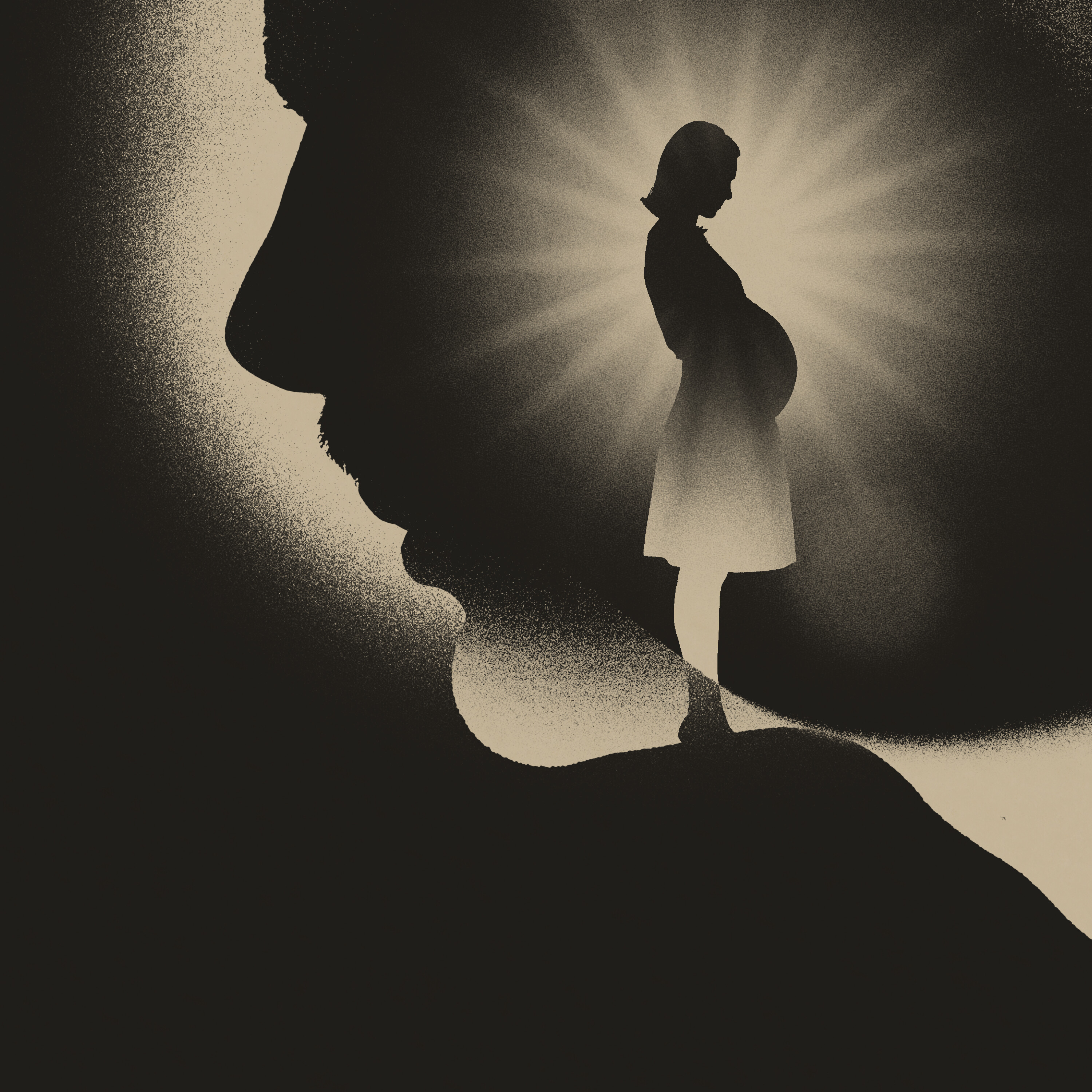
Of course. Hexum goes into mourning. The sense of loss is deep. Very deep. Three children on their way to church. Taken. But there's a twist. One man recovers from his grief in short order. Surprisingly short order. Before long, he feels no sorrow, no pain. And he lays no flowers at the little girl's grave. And that man is John. John Pollock, their father. Because John Pollock becomes convinced that his daughters aren't dead. Utterly convinced. And he is certain that he'll see them again, not in the afterlife, but right here on Earth. That they'll come back.
- [04:45]
Lauren
It's kind of extraordinary. But he really meant it. He really believed that they were coming back to life.
- [04:52]
Will Sharp
And before long, he'll show the world evidence, hard evidence, that it's true, that his little girls have been reborn. Before long, John Pollock isn't mourning, isn't grieving. He's celebrating. This is extrasensory. An Apple original podcast produced by Blanchard House. I'm Will Sharp. Episode 1 the Prophet okay, time to introduce you to Lauren. She's 37 and a self confessed beach girl. She lives on the south coast of England and keeps a surfboard in her living room. And she's spiritual.
- [06:18]
Lauren
Because I've lost people in my family, I feel them around me all the time and there's moments where I just can't explain things and I'll feel them or see them or something will happen that's unexplainable and I know that it's their spirit.
- [06:38]
Will Sharp
So here's her connection to this story. Let's go back to when she's 13 and she's at an all girls school.
- [06:45]
Lauren
We wore kilts, so it's quite fancy.
- [06:48]
Will Sharp
Yeah, kilts. They wore kilts. So Lauren's in her kilt and a navy school sweater. It's a rainy Tuesday morning religious studies class, which is generally seen in most British schools as a dos. As we say, that is the least important subject when you can just sort of lark about. Anyway, just like all the other kids, Lauren is slouched over her desk. Her teacher is a short woman with short hair.
- [07:14]
Lauren
She was nice. She was a bit stern.
- [07:16]
Will Sharp
The nice but stern teacher says that for this class the kids are going to learn about reincarnation, but there's a massive plus. They're going to learn about it from a vhs.
- [07:28]
Lauren
And obviously everyone's like, woohoo. We're not looking at textbooks, we're looking at the tv. This is great.
- [07:36]
Will Sharp
Picture the scene, a massive old school TV and video machine is wheeled in. Of course, that's a bonus, but I mean, this is religious studies, so it's never going to be that interesting. Right? Anyway, Lauren is sitting there, the teacher's telling people off for chatting in the back row. Like, the lessons are dos, remember? But the VHS flicks on and Lauren has a shock.
- [08:05]
John Pollock
This looks like an ordinary family photograph, but it tells a quite remarkable story.
- [08:10]
Will Sharp
Because on the screen is a photo.
- [08:13]
Lauren
Of a family and I was like, that's the photograph that we've got on the mantelpiece at home.
- [08:18]
John Pollock
Two small girls.
- [08:20]
Will Sharp
All right, that's a bit weird. And then this TV show starts to tell the story about two little, little girls walking to church. It tells the story of the horrible crash that we heard about at the start of the show and the prediction by their father, John Pollock, that his two daughters would be reborn. So here's the reveal. Turns out that the two little girls who died are Lauren's aunties. Which means that, yes, John Pollock is Lauren's grandfather. And now, here in class on a rainy Tuesday morning, in a class which is supposed to be just like a dos, Lauren is hearing about this mad, crazy story that nobody in her family has ever talked about. Lauren wants to know more. Of course she does.
- [09:17]
Lauren
I remember looking to my friends in the class and being like, what the heck is going on? Yeah. I was, like, astounded.
- [09:23]
Will Sharp
She stumbled upon a family secret. Lauren is bursting to get home to ask her parents about it, but her dad's out at work.
- [09:31]
Lauren
I do really remember Mum telling us, like, kind of rolling her eyes in a way and being like, oh, you know.
- [09:37]
Will Sharp
Yeah.
- [09:37]
Lauren
Your dad never tells us about it. I mean, she sort of brushed it off because I think dad had brushed it off.
- [09:43]
Will Sharp
So Lauren decides to leave it there. It's just a pretty cool story, spooky story. And everything that she knows is from what she saw on that grainy old VHS in religious studies class.
- [09:57]
Lauren
We were kids, so it was just quite, like, amusing. It wasn't. We weren't asking the right questions at the time.
- [10:03]
Will Sharp
And in any case, her dad's not interested in talking about it. It's all in the past, you know. But now here we are, 24 years later, Lauren's an adult and she wants to know the full story, the real story.
- [10:19]
Lauren
I just want to know the truth, finally. My whole life I've questioned what actually happened and I'm. Yeah, I'm ready to find out the true story. It's all been just a secret for too long now. So, yeah, I need to know.
- [10:31]
Will Sharp
So I guess the obvious thing would be to ask her parents. But sadly, there's a problem with that in that they've both passed away. And that's where we come in. Nobody has told the full story of all this before, so we've been tracking people down, digging through all the newspaper cuttings and archives and piecing it all together. We'll be telling this story for the first time and Lauren is discovering it all in real time at the same time as us. So, anyway, here we go. Now, that horrible, tragic crash doesn't just make the local newspapers, it goes national. The next day's papers are full of it.
- [11:14]
John Pollock
Three children were killed by a car yesterday as they walked hand in hand to mass in the early morning sunshine.
- [11:20]
Lauren
Said that just before the road accident, the car seemed to wobble and swerved.
- [11:24]
Will Sharp
At the wrong side of the road.
- [11:25]
John Pollock
People came running, but they were too late. The girls were dead on the pavement, the boy dying in a front garden.
- [11:33]
Will Sharp
I mean, it's devastating. But tracking people down who remember all of this, let's just say it's been tricky. I mean, it was nearly 70 years ago. But producer Poppy, she's persistent and she's done it. And the people who were there could never forget it.
- [11:51]
John Coleman
Remember the accident, which was 200 yards away from where we used to live?
- [11:57]
Will Sharp
That's John Coleman.
- [11:58]
John Coleman
The whole town was shocked by it. I can sort of remember everybody talking about it and how tragic it was, which obviously, three children killed at that age.
- [12:09]
Will Sharp
Even now, John can picture Joanna and Jacqueline.
- [12:13]
John Coleman
I can remember the two girls playing out in the battle.
- [12:17]
Will Sharp
We also found Pauline Todd. She went to school with Joanna and Jacqueline and went to the same church. She remembers that day as if it were yesterday. There are May Day celebrations, planned processions.
- [12:33]
Pauline Todd
The nuns used to organize them. Everybody wore white dresses. One of them used to carry a basket, throw the petals out.
- [12:41]
Will Sharp
That morning in 1957, Pauline's already arrived at Mass, the same Mass that Joanna, Jacqueline and Tony are on their way to. But of course they will never get there. And news travels fast.
- [12:56]
Pauline Todd
We knew more or less straight away because that was half past nine months. The whole parish knew by 11 o'clock it was a terrible time for everybody. The whole. I mean, you know, the whole school. And that seemed to shut down.
- [13:12]
Will Sharp
Some people that we contacted said that it's still too painful, that even all these years later, they just don't want to talk about it. Wednesday, May 8, 1957, just three days after the crash, seems like the whole town has turned out to pay their respects. The traffic has stopped. 300 children from Jacqueline, Joanna and Tony's school march down the road towards the church. A hearse pulls up. The tiny coffins of Joanna and Jacqueline are slid out and carried into church by pallbearers. John and Florence Pollock and their four surviving kids follow behind. So too do little Tony's family. It's all just desperately, desperately sad.
- [14:07]
Pauline Todd
I can remember we all had to line up and all had half stool uniform on.
- [14:13]
John Pollock
And many of them that sleep in the dust of the earth shall awake.
- [14:18]
Will Sharp
A boy who sat next to Jacqueline at school lays a bunch of roses. And here's an interesting detail. The driver responsible, a Marjorie Wynn, sends three wreaths of flowers, one for each coffin. Joanna, Jacqueline and Tony are laid to rest in the quiet tree lined churchyard. A small white angel with her wings spread out marks the spot. But of course that's not the end of the story. Here's John Coleman on how he feels.
- [14:53]
John Coleman
About what plays out afterwards, which is very strange really. It's something that's hard to get your head around. It's very hard to see it's coincidence. But the more you read into it it could be quite possible, you know.
- [15:08]
Will Sharp
So the whole town's in mourning. But amidst it all, John Pollock does something you never expect a grieving father to do. He makes two predictions which are, well, pretty far out. First, he says that his wife Florence will give birth to identical twins. And second, he says that these twins will be the reincarnation of their daughters, Jacqueline and Joanna, who they just laid to rest. Lauren understandably finds this all sort of bananas.
- [15:39]
Lauren
That's so cruel in a way to your own wife to be like, come on then, let's have some more babies and let's try and bring these girls back to life. Like I can't. Oh man. Yeah, you can't even imagine.
- [15:52]
Will Sharp
And indeed, Florence is not happy about it. Not happy at all. So who is this John Pollock? What kind of a man are we talking about here? Well, yes, as we know, John is a milkman. Now that doesn't sound like a money spinner, but in the 50s, apparently it is. He's up at the crack of dawn, probably driving an electric delivery van or milk float as it's affectionately called. And in the 50s everybody drinks milk and everybody has it delivered, which means John's not exactly short of cash, some of which he likes to spend on clothes. And I think he sees himself as pretty dapper. He always wears a Three piece suit and a cravat which is like, you know, one of those fancy silk scarves. And just so you can picture him, he has a moustache. John loves his classical music. He spends hours in his study listening to records, drinking scotch late at night, smoking cigarettes or his pipe. He fancies himself as a pretty cultured.
- [17:05]
Lauren
Guy, from what I can make out. He spent a lot of time in that office with his books. I think he's probably saw himself as a bit of an intellectual.
- [17:12]
Will Sharp
He also plays the piano, though sometimes he struggles to reach lower notes because apparently he trapped the little finger on his left hand in a tank door during the Second World War. He served in the Far East, Malaya. But the precise details of John's war record are all, well, a bit hazy. Now, it seems that John has always been into reincarnation. He first read about it in a novel at the age of nine. But it doesn't exactly square with his religion because he's a Catholic. And you probably know that pretty much all Christians do not go in for reincarnation. They go in for afterlife. You live and then you die and then you go to heaven or you go to hell, but you're definitely not reborn. But John, well, let's just say that John does things his own way. He prays for evidence of reincarnation. And that's not exactly what good Catholics do. We'll come back to his wife, Florence, because she's a bit harder to figure out. A couple of years younger than him, has her work cut out raising the six kids, the two girls, of course, and their four boys, Ian, Keith, Bobby and David. From everything we can find out, she seems like a nice lady. Now, when the girls die in that terrible crash, John apparently turns inwards. He sort of retreats, spending longer and longer in his book line study perhaps listening to his music. And it's probably in these late night sessions with a scotch and his pipe that John develops an idea, an idea that grows and grows and grows. It's about the girl's passing. John starts to believe that Joanna and Jacqueline's deaths are God's way of punishing him.
- [19:02]
Lauren
Yeah, some of the old newspaper articles say that John saw the accident as basically God's judgment on him for praying for evidence of reincarnation, which of course is like totally against what the Catholic Church says you should do. And John had been doing that since he was a kid.
- [19:17]
Will Sharp
But in spite of all that, John still firmly believes that God will answer his prayers, that God will provide evidence of reincarnation not only that it's John's own daughters who will provide that evidence by being reborn. Now understandably, none of this goes down well with Florence, who is deeply religious, according to John, religious in a much more conventional way than her husband. In fact, she's sort of furious. She just wants him to shut up, the silly man. But then sure enough, one night, lying in bed, Florence turns to John and tells him that she is pregnant. And that is when John makes his big prediction.
- [20:05]
Lauren
He believed in reincarnation and he thought that his daughters were going to come back to him as twins.
- [20:11]
Will Sharp
Yep, as twins. And John just keeps banging on about it. So to make him stop, Florence consults a gynecologist who says twins? No, that's impossible. There's one heartbeat, one set of limbs, it's one baby. And I mean the odds of twins are slim, very slim. The odds of twin daughters, even slimmer. Plus there's no history of twins in this family. So that's it, right? End of story, isn't it? There's something I haven't told you yet and it's pretty wild. Something that John tells the national newspapers on the very day his little girls died. The accident happens on the Sunday and in the next day's Daily Herald on the front page they print this story about John's 14 year old son, Ian. It's midnight, the Tuesday before the crash. In the boys bedroom a street lamp shines in through a crack in the curtains illuminating the clutter. A football, a cricket bat, toy planes, toy soldiers. And Ian's fallen into a deep sleep. He's fast asleep. Ian is sitting bolt upright in bed. His pajamas are drenched in sweat. His father John hears the scream and rushes in to see what's wrong. Now according to that front page story, Ian then tells his dad that he's dreamt about something terrible and tragic. A serious accident involving a member of the family. And five days later, Joanna, Jacqueline and Tony are killed. Now that 14 year old boy, Ian, he'll grow up to be Lauren's uncle. And this whole premonition thing is all news to her. It's the first that she's ever heard of it. She reads the old clipping from the Daily Herald.
- [22:33]
Lauren
He said it would happen only a few hundred yards from where my little girls died. God, that's mental. I mean I'd never, he never mentioned that to us. That's awful though.
- [22:45]
Will Sharp
But the premonition seems to be just a warm up for what comes next. It's as if John is saying there's some bigger design at Work here. Something planned and predestined about all of this, that this is all God's will. Maybe John thinks the premonition is a sign. After all, he's been praying for years for evidence of reincarnation. Praying and praying and praying, even though he knows it's wrong and it's against teaching. But now, finally, he feels no. He knows that something is happening, and he's never been more sure of anything in all his life. And that something is very, very significant, something deep and profound which will prove beyond all doubt that there are no endings. That while the human body might perish and might perish in a horrible, tragic way, the essence of a human being lives on. Dr. Geoffrey Long of Elizabethtown College spends a lot of time thinking about this kind of thing.
- [23:58]
Dr. Geoffrey Long
There is something that you could call the soul, the consciousness, the core of the person that persists after the body dies and that re associates with another physical form. And this process has been going on for a very, very long time. Some will say it's been going on forever.
- [24:16]
Will Sharp
And so John Pollock believes that the bodies of his two girls may be buried in the cold earth, but their spirits are not gone. Far from it. They will return, and they will be as beautiful and vibrant in their next life as they were in the last. And though they never met, Lauren can relate to her grandfather on much of this. She's experienced loss in her life. Both of her parents have passed. So has her little sister Sophie. And Lauren feels that reincarnation isn't just possible, it's real.
- [24:52]
Lauren
I definitely believe in life after death. Yeah, I mean, I have to, because I've lost so many people in my life, but I. Yeah, I feel them around me all the time. Yeah, it makes me feel so much happier about loss.
- [25:06]
Will Sharp
So Lauren's a believer, but how did John's predictions go down in hexham in the 50s? Well, even before all this, John is already regarded as a bit, well, strange. Pauline Todd remembers exactly what people thought of him.
- [25:24]
Pauline Todd
I think he was a very. He was a peculiar fellow.
- [25:28]
Will Sharp
A peculiar fellow. And here's why. For starters, as we know, he's a Roman Catholic. I mean, Pauline's family is too. But John is a convert. He converted as an adult. And in the 1950s in rural England, where the Protestant Church of England is the heart and soul of every village, that is definitely a bit suspect. Then add reincarnation into the mix and. Whoa. Now, that is just deeply weird. And for Pauline's family, it's sort of the final straw.
- [25:58]
Pauline Todd
Well, that was it. I mean, we never had anything more to do with them.
- [26:02]
Will Sharp
But maybe Jon saw it another way, another way entirely. Maybe he saw it this way. Maybe he saw himself as one of those figures you find in every great faith, in Christianity, in Judaism, in Islam. A figure that does inspire suspicion, fear, even hatred. Yes, maybe John saw himself as a prophet because John's doing exactly what prophets do. They deliver messages, divine messages that people don't want to hear. They stir things up, they make trouble. And John knows precisely what happens to prophets. They're cast out into the wilderness. And that is just the start. Prophets are stoned, burned at the stake, crucified. But John also knows something else about prophets. None of the suspicion, hostility, persecution, none of it means they're wrong. Prophets need people to hear their prophecies. But for now, John's struggling to find anyone who'll listen, even his own wife. And on the other side of the Atlantic, there's another man struggling to be heard. His name is Stevenson. Ian Stevenson. Now, these two men will meet. You might even say it's their destiny to meet. But for now, they're strangers, an ocean apart. Two men crying out, each in their own wilderness. When we first meet him, Stevenson is in his office, which is crammed with books, books on every surface, and he's hunched over his typewriter writing an academic paper. And he knows it's going to be controversial. Now Stevenson doesn't exactly look the controversial type. He wears a suit, a pretty average suit, an old school tie, sometimes maybe a bow tie and horn rimmed spectacles. He seems trustworthy.
- [27:59]
Lauren
He looks like quite a warm and friendly chap. He sort of looks like Hugh Laurie in a way.
- [28:04]
Will Sharp
So, okay, think Hugh Laurie. 38 year old Hugh Laurie. Very polite with a wry sense of humor, twinkle in the eye, but also maybe kind of hard to read. Now Stevenson's a shrink and he's got a pretty good job at the University of Virginia. Head of neurology and psychiatry. And he's super smart. When he's a kid, he has a long period of illness, a lung condition. And that's when he starts reading. Just reading and reading and reading.
- [28:30]
Jesse Bering
His illness encouraged his intellectual aspirations because he couldn't go outside and play football. He was quite frail.
- [28:37]
Will Sharp
That's Professor Jesse Baring of the University of Otago in New Zealand.
- [28:42]
Jesse Bering
So he just found himself curled up with a book in the library in his parents home and read ravenously.
- [28:49]
Will Sharp
So as a kid, Stephenson's a nerd, a geek, or as we sometimes like to say in Britain, a boffin. And Guess what? Some of the books that he reads are books about reincarnation. His mum's books. But for now it's just a passing interest. He doesn't really pursue it. When he grows up, he studies medicine, he becomes a psychiatrist, he gets a good reputation. Until he does something a little outside the box. Yes, he returns to reincarnation. And now he gets into it in a really big way. And Stevenson does what he always does. He reads and reads and reads. He gets obsessed and he starts collecting stories of reincarnation from wherever he can find them. And then he goes public, writes a paper on the subject titled the Evidence.
- [29:40]
Ian Stevenson
For Survival From Claimed Memories of Former Incarnations.
- [29:48]
Will Sharp
And he starts categorizing all those stories. The most interesting category of all, he says, is Type three, which Stevenson describes.
- [29:56]
Ian Stevenson
As instances in which a person apparently recalled details about himself during a previous existence as another identified person. I am familiar with accounts of 44 such cases.
- [30:11]
Will Sharp
And then Stephenson starts talking about some of his 44 examples, including an 8 year old Japanese kid who said that in a past life he died of smallpox.
- [30:20]
Ian Stevenson
He gave details of his own burial and described the appearance of his former parents and their house. 16 items correctly matched with the verified facts.
- [30:35]
Will Sharp
Then Stephenson talks about the three year old Indian girl who in her past life said she died shortly after childbirth. She recognized her parents from her past.
- [30:43]
Ian Stevenson
Life, whom she correctly identified out of a crowd of 50 persons and correctly called them by name.
- [30:52]
Will Sharp
Then there was a six year old Belgian boy claiming that a portrait of his uncle who had been killed in.
- [30:58]
Ian Stevenson
The First World War in 1915 was a portrait of himself.
- [31:04]
Will Sharp
On one occasion, when the kid heard a loud noise which, which sounded a.
- [31:07]
Ian Stevenson
Bit like gunfire, he protested, saying, don't, don't. They killed me that way the last time.
- [31:16]
Will Sharp
So these are great stories. They're great stories, but they're just that, stories. Stephenson is after more convincing evidence of.
- [31:26]
Ian Stevenson
Human survival, of physical death. A much more extensive and sympathetic study.
- [31:34]
Will Sharp
And at first, Stevenson's sure it's not going to be him doing that study. But then, little by little, Stephenson changes his mind and decides that this is going to be his life's work. To come up with the strongest evidence yet of the reality of reincarnation. The only problem is he knows this will be a hard road. He assumes that he's going to be trashed by his colleagues, by his peers, and he's ready for that. But it turns out he isn't trashed. Not publicly at least. No, it's far worse than that.
- [32:10]
Jesse Bering
For years he was basically Ignored.
- [32:12]
Will Sharp
That's Jesse Bering again. He's writing a biography called the incredible afterlives of Dr. Stephenson. So Stevenson's colleagues don't even engage with his work on reincarnation. They're just baffled.
- [32:25]
Jesse Bering
They, you know, shrug their shoulders or scratch their heads thinking, what the hell is he doing?
- [32:30]
Will Sharp
Stevenson would love to be challenged in the pages of academic journals. That's the cut and thrust of intellectual life, right? But no, Stevenson's critics don't just snigger behind his back, but in front of his wife at cocktail parties, people would.
- [32:46]
Jesse Bering
Make jokes at his expense when he wasn't there. So she would kind of feel the brunt of that antagonism.
- [32:57]
Will Sharp
But Stevenson doesn't care. Because if John is the prophet, a man of faith, Stevenson sees himself as a pioneer and a man of science, like Darwin and Galileo. And Stevenson knows that all the great men of science were ridiculed, shouted down, attacked.
- [33:15]
Jesse Bering
The criticism and the overt skepticism emboldened him. You know, it really kind of motivated him to prove them wrong.
- [33:24]
Will Sharp
The only thing is, all of the cases that Stephenson has dug up so far are decades old. Stephenson needs something new, something fresh, if he's going to be noticed and recognized and not just seen as a fruitcake or a fraud. He has to find his own case. Just one compelling case is all it will take. Then, he thinks, people will start listening. HEXHAM Saturday, October 4, 1958. It's around 5am Hexham General Hospital. The maternity unit. Series of single story wooden huts. The midwife on duty gets a call. Florence Pollock is in labor. The midwife picks up her medical bag, jumps in the car to the Pollock's house. For Context, in the 50s, pretty much all births are home births. Now the midwife knows all about John's predictions. All the midwives in Hexham do. Crazy. They think there's no way Florence Pollock is having twins. I mean, all the observations confirmed it, right? Anyway, it's just a few minutes drive to Lysa's Crescent where the Pollux live. The front door opens. It's one of the boys. John's on his milk round. The midwife heads towards Florence's cries. She's in the late stages of labor, so the midwife needs to move fast. She puts on an apron and gloves, lays out the oil sheet on the bed and assembles her instruments. Forceps. Scalpel. Clamp for the umbilical cord. The midwife feels that Florence is 4 inches dilated. The contractions are coming fast now, so it's time to Start pushing now, who knows? But we assume that when John went off on his milk round, Florence was already in labor.
- [35:16]
Lauren
In those days, men didn't usually attend the births anyway. So maybe at that point John was probably thinking, this is strictly just for the women and, yeah, he would just leave it to them. So hence he went off and did his milk round instead.
- [35:29]
Will Sharp
So John's out on his round and he must be aware that the moment of truth is approaching. After all his talk, his prophecies are about to be tested. If he's got it wrong, he's not a prophet at all. He's just an idiot, a crank, a lunatic.
- [35:45]
Lauren
Oh, yeah, it's coming now.
- [35:47]
Will Sharp
Anyway, back at Leez's Crescent, Florence pushes and pushes and pushes and the baby is born. A healthy little girl. Chopped up. The midwife clamps the umbilical cord, cuts it with a scalpel and ties a knot. She then wraps the tiny newborn in a towel. She's about to hand the baby to Florence, but the contractions just don't stop. Florence is crying out. She can feel something, something, something coming. The midwife has a quick look and guess what? She can see ahead. Another baby is on the way. The midwife and Florence look at each other, stunned. Yeah, twins.
- [36:45]
Lauren
I mean, I guess at that point Florence must have been totally flabbergasted because, I mean, remember, she just thought John was talking rubbish about having twins, but actually he was right. Everything that he prophesied was coming true.
- [36:58]
Will Sharp
The midwife keeps telling her, one last push, one last push, and then that's it. Another child, a second child has arrived in the world. And it's a girl, just as John always said it would be. Now the news reaches a friend before it reaches John. So that friend goes and finds John, who is still out delivering milk.
- [37:24]
Lauren
And the story goes that the friend goes up to John and says, I have some good news for you. And straight away John says, yes, I know twins. I mean, that's. That's crazy.
- [37:36]
Will Sharp
John knows he's beaten the odds with his prediction. Tall odds. But the birth of twins isn't the end of the story. Far from it. The birth of twins alone, clearly it's not evidence of much. No, John needs a lot more than that to prove his doubters wrong. He needs a sign. So John delivers his last few pints of milk, goes back to L's Crescent and heads upstairs.
- [38:04]
Lauren
I can imagine John being like, I told you. I told you this was going to happen. You know, this. This is. I knew it. And Florence just kind of probably Staring.
- [38:14]
Will Sharp
In disbelief, John lights his pipe with a flourish, taking a series of satisfying puffs on the burning tobacco. He peers at the little babies. And that's when he sees it. On one of the little girls. A birthmark. A birthmark above her left. Die. And John starts smiling. Because that can only mean one thing. It's happened. Evidence is the evidence. He's been praying for night after night after night ever since he was a little boy. Get this. That birthmark on his newborn baby is in exactly the same place as a facial scar on one of his little girls who died in that terrible accident. Exactly the same spot. This is it, John thinks. What?
- [39:11]
Lauren
I mean, that is just mad. That's just. How the heck do you explain that? That's unbelievable.
- [39:18]
Will Sharp
So John's certain. More certain than anything ever in his life. His girls have come back. Back to life. His two little girls who died aren't dead at all. They're alive. In fact, they couldn't be more alive. They're breathing and crying and screaming right here in front of him. Reborn. Reincarnated. Living proof that life does not end. And in that moment, John Pollock makes a promise to himself. Even though he knows it will be hard. A trial, a cross to bear. He will convince the world. You've been listening to Extrasensory, an Apple original podcast produced by Blanchard House and hosted by me, Will Sharp. The producer is Poppy Damon. Extrasensory is written by Lawrence Grisel. Additional production by Saran Jones. Original music by Daniel Lloyd Evans, Louis Nank Manel and Toby Matimong. Sound design and mix engineering by Vulcan Kiseltug and Daniel Lloyd Evans. The part of Dr. Ian Stevenson is played by Mark Arnold. Florence Pollock by Jasmine Hyde. The Pollock children are played by Edie and Francisco Paebola and Stevie Pye. Other parts by Mark Gillis. Research by Alan Sargent. Fact checking by Jesse Baring and Karen Walton. Our managing producer is Amica Nolan. The creative director of Blanchard House is Rosie Pye. The executive producer and head of content at Blanchard House is Lawrence Grissell.