Loading summary
Transcript3 lines
- [00:01]
A
This podcast has been prepared exclusively for institutional, wholesale, professional clients and qualified investors only, as defined by local laws and regulations. Please read other important information which can be found on the link at the end of the podcast episode.
- [00:25]
B
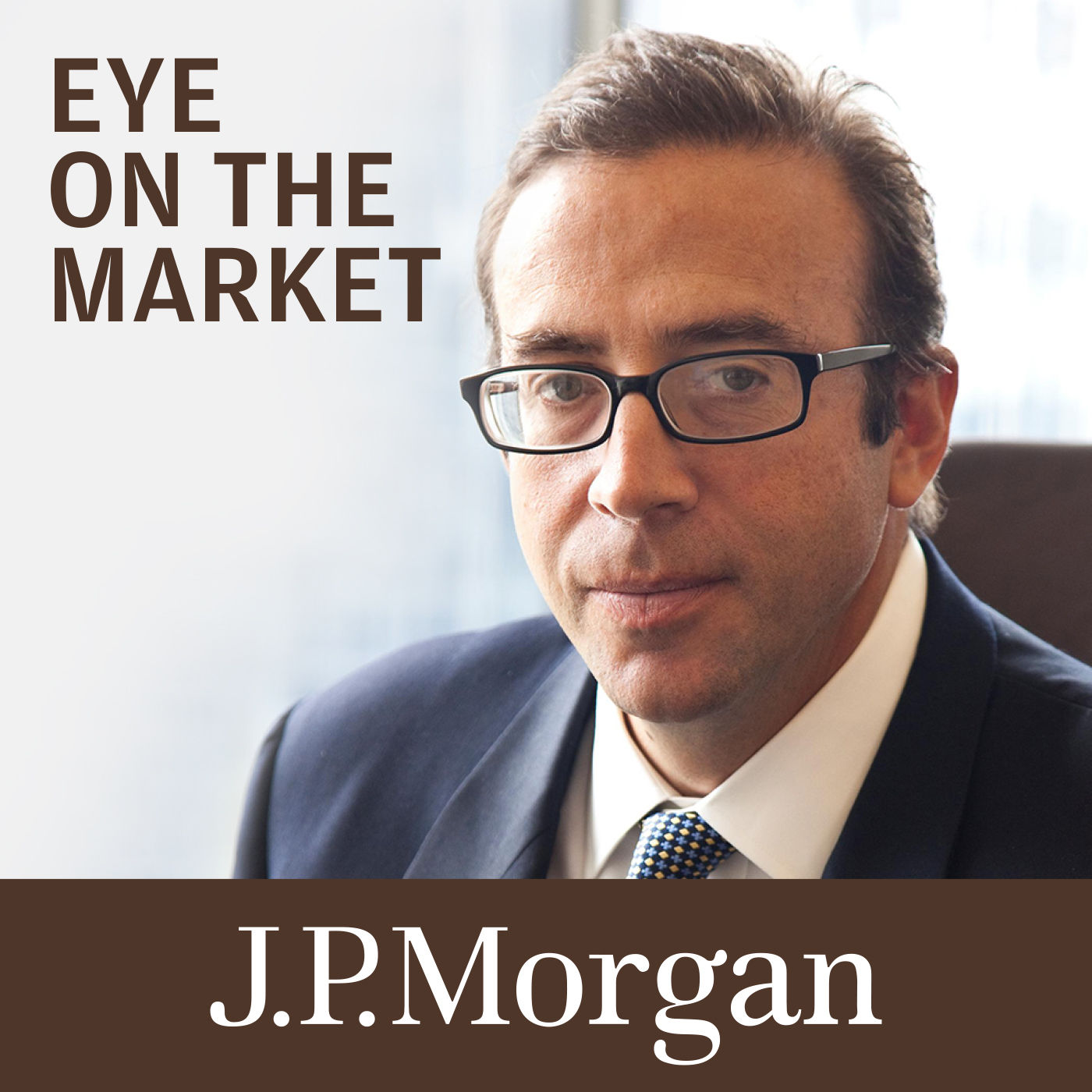
Morning everybody. This is Michael Sembalist with the Iron market podcast for October 2025. This one's called Mad Libs. I'll explain in a minute. First, here's a picture of me in my new office here in 270 park, working with a couple of colleagues that you will remember from my webcast. I'm working on our biennial Alternative Investments Review for December, where we go over the whole world of alternatives. The Outlook, which comes out January 1st, and the energy Paper, which comes out in March. The Outlook will focus primarily on the following question how indestructible is this Nvidia TSMC ASML moat, which stretches from chip design to lithography to chip production, and which is now really the foundation of the whole US Equity market when you consider the hyperscalers that are built on top of it? So there's four specific risks we're going to look at there. We're going to look at power constraints, rest China's ability to scale that moat on its own one day, the China Taiwan relationship, and then the profitability of the AI investments relative to capital deployed. Since ChatGPT was launched in November 2022, the four hyperscalers have invested over a trillion dollars capital spending in R and D. It's an amazing number and we're all trying to figure out if there's going to be a sufficient return on it. So the this is the market is called Mad Libs. It's not about mad liberals, although certainly it could be because liberals are certainly mad. The latest Pew Research polls show Democratic support for Trump at around 6%, which is close to Republican support for Biden, but among the lowest numbers in the post war era. And then in Gallup Poll, just to outdo them, a Gallup poll from August showed 1% approval rating for Trump among Democrats and only 35% among independents and only, you know, a little bit higher for things like education, economy, foreign affairs. So we could be writing about the mad liberals, but we're not. This this sign the market was named after, if you remember the old mad Libs game that you would play when you were a kid. So there's a bunch of stuff we're writing about and then we leave open the blanks that you can fill in the nouns and the adjectives and the adverbs and I'll share you what My answers were. The first topic is tariffs. And here's our latest chart on tariffs. You've seen it before. It's got all these dots for how high the tariffs go depending upon the outcome of the court cases. And the mad libs is the impact of these tariffs on US Growth will be. And you put in an adjective, and mine was manageable. And the reason why I think these are going to be manageable has to do with this next chart that shows different estimates of tariffs for from a different perspective. So we start with the highest number, which is the Yale budget tariff rate estimate, which goes from around 2% at the start of the year to a whopping 18%. These are really hard estimates to make. I know because my team and I do them. We have a matrix of over 200 countries and 12,000 HTS codes. Codes. And though each one of those combinations has their own tariff rates, their exemptions, their special treatments, their fentanyl tariffs. And the rules keep changing. Right? And so it's the full Employment act for tariff lawyers. And so our estimate of the same thing that Yale says is 18%. We're closer to 14%. We also assume some domestic substitution in the US and substitution weight for China is already happening. That may be why our rates are lower than theirs. Then you have the issue of misclassification. The red line on this chart shows actual tariff collections are running closer to 10% than either 14 or 18. And misclassification is a nice way of talking about tax evasion or tax avoidance where companies deliberately misclassify goods to pay lower tariffs on. And then the lowest line on the chart, which is closer to 5% or even 3%, is the actual observed change in selling prices of imported goods, which comes from this thing called the bipartisan policies. And so. Oh no, that one comes from the digital design pricing lab. And the issue there is that a lot of goods, particularly consumer goods, get marked up by a hundred percent or so in terms of their final selling prices. So the impact on final selling prices from an increase in the tariff cost component is often a lot lower than the stated tariff rate. So I don't think the tariff issues are a huge problem. I think they're manageable. I'm much more concerned about two things. Issue number one is how does the US eventually navigate all of these new expanded critical mineral export controls targeting the United States? Earlier this year, when there was a temporary export ban enforced by China, Ford actually stopped production of each blur. And so, and not just the EV version, the whole thing, all of them, even the internal Combustion engineers. And so the mad libs is if these restrictions remain in place, the eventual impact on US military, industrial and renewable energy output would be, and I put in the word huge. Like the Trump version with the Y and the several use and then the GE at the end. China broadened the scope of their rare earth export controls. And what they did is they mirrored the US approach of a foreign direct product rule, which doesn't just say they're going to pass rules around how entities in China can export these products. They're going to say we're going to put those rules on foreign entities outside of China in terms of how they can export the products and to whom. And if you violate those rules, you lose access to product. That sounds extreme. That's what the United States started doing a few years ago with its own far direct product rule on things like semiconductors. And so we have a table in the eye in the market that walks through all of the different critical minerals, some of which are rare earths and what their primary uses are. The thing that jumps out at you is one, the US is almost entirely import reliant on these things. 80 to 100% of US consumption supported and then of that amount a large number, anywhere from 50 to 70 to 100% of the imports are coming from China. And so these, these Chinese rules are, will bite. And I, I think the, I think the US may underappreciate as a general principle how much negotiating leverage the China has here. And in terms of the negotiating leverage that the US has on China, we have a chart here showing very few Chinese industry actually substantially rely on exports to the U.S. you know, in spite of what you might hear certainly for consumer electronics and electrical equipment, that is the case. But for all sorts of other industries in China, their domestic market plus other export markets that the Chinese have been working to build are much larger than their revenues to the United States. And since that's the case, I think the United States may be overestimating the impact of, of tariffs in terms of its negotiating stance relative to China. And China has now developed their own analogs to all these national security tools. So for all of the critical input controls and extraterritorial reach and list based sanctions and retaliation frameworks that, and the security and market access reviews that the US has been building over the last few years, that China now has a compliment to every one of them and increasingly the inclination to use them in the outlook, we'll get into the fact that I consider this to be a, an implicit reflection of the fact that China's further along the value chain in terms of semiconductor advanced AI chip design. But you know, we'll, we'll talk about that more in the out and here you can see that when China announced a rare earth export controls in April and enforced them, these exports to the US almost collapsed at zero. And they since rebounded because China has decided to grant some licenses. But they have the ability to kind of turn this bigot on here and off here at any time. And so I would, I, I think the United States is going to find by the end of the year that there has to be some kind of a deal with China given the military, industrial and energy applications that these things affect. And then of course an indicative ETF of rare earth miners has been skyrocketing this year given what looks like a concerted effort by the US to provide anchor levels of demand, which we wrote about last time for its own critical mills industry. Okay, where am I? Okay, next Mad Lib. The bigger risk as it relates to economic growth is not tariffs but and then you have to fill in the answer. And for me it's immigration and there's, there's nothing that I've worked on that has more people looking at the same issue in different ways. And you know, when I, when I engage your PhD level economists, people at the PLs in these discussions, everybody has a different, a mildly different view. Here's what jumps out at me. The Dallas Fed just published a paper showing that the break even level of payroll gains has fallen from 250,000 a couple of years ago to less than 50,000 today. Now everybody's estimate on this thing is different, but most of them are going down. And what does that mean? That this estimate is the level at which payroll growth will become inflationary. And it also tells you something about contributions to growth. And so you know, my concern and is is more about the growth impact of a shrinking labor supply than the inflation impact of a shrinking labor supply. And United States is already a place where the fertility rate is way below the replacement rate. It's not as bad as Europe, but the replacement rate is about two births per woman and the fertility rate is now almost one and a half in the US I did my part, I kits but the replacement rate issue is going to start to bite at some point. And again this, these are numbers where depending upon who computes them and how they compute them, they can be different. But Goldman did some interesting research and that combined with numbers from the DHS and the CBP and ice, everything else, this is the picture of net immigration into the US including visa and green card recipients, asylum parolees, tps, legal immigrants, et cetera. And basically the net immigration numbers have looked to be falling to around half the level they were averaged from 2001 to 2022. Now, I've often said, yes, that's taking place after a surge to four times the level they used to be. And so the stock of labor is still substantial even though the flow has shut down. And so right now, I think, is the wrong time to start looking for an enormous negative growth impact from a shrinking labor supply. But I think it's coming. And so the bottom line is, for me, either one of three things has to happen for the Trump administration's growth projections to come true. They're either going to need more workers, a larger number of workers, they're going to have to have the labor force participation go up, but for some cohorts, it's already about as high as it's been, or they're going to need a substantial positive, positive productivity shock from the workers we've got now. There's plenty of people projecting a huge boom in productivity from AI, but, you know, let's see. I think it took a long time for the productivity booms from the Internet and the interstate highway system and penicillin and antibiotics to show up in the data. So I'm not sure. But the bottom line is I think the immigration, the administration's immigration policy is a bigger risk to growth than the tariffs are in the last eye in the market. I wrote a, a bit about Oracle and how they have a very high debt ratio and that that debt to equity ratio would make borrowing, could make borrowing difficult as they seek to raise the amount of capital to meet the expenditures they have committed to OpenAI. Assuming, of course, that OpenAI comes anywhere close to earning the money that they promised to pay or do it. But the bottom line is, you know, we, I was, I was casting doubt on Oracle's ability to tap the debt markets easily to comply with all these goals. And the mad libs for this one is that chart was, and I now think, I think my chart was misleading. So I put in the word misleading for this because debt to equity ratio is not the only way to look at debt capacity. And after years and years of buybacks which have seen Ellison stake in the company double the debt to equity ratio is probably not the right, the best thing to look at. It is true, Oracle does not generate a ton of free cash flow relative to revenues. And when you look at the Universe of our AI stocks, their free cash flow to revenue ratio is 0 compared to 10 to as much as 40% for the rest of the AI stocks in our universe. But if we change the lens a little bit and look to net debt to ebitda, which is basically how much is your net debt relative to your cash flow, Oracle is not quite as much of an outlier. Now to be clear, they're still at the very high end. And for most of the companies in our AL universe their net debt ratios are negative, which means they actually have more cash and marketable securities on their balance sheet than both than the sum of their short and long term debt. So Oracle is still a little offsides on the debt front as it relates to this. But at the end of the day a net debt to EBITDA ratio of around four times is consistent in the broad fixed income universe. With a triple B rated company, its 30 year bonds have been trading at spreads of 110 to 170 basis points over Treasuries all year and at least the early stages of additional Oracle borrowing, there would probably be plenty of investors that would line up to buy those bonds. So I, I, I think that more context around that discussion probably needed. And I used the wrong chart to portray their debt capacity. Okay, the next mad lib is so gold prices are soaring as we know. And, and one of the common theses is that central banks, the rising central bank share of their reserves in gold is a part of the reason and B reflects substantial institutional investor concerns about the dollar. And so this logic is, and then you fill in your adjective and mine. My adjective is flawed. I think this is a flawed logic. So the central bank gold holdings have been through an amazing journey. They used to be about a billion ounces back in the 1980s and early 90s. They went as low as 950 million ounces in the trough in 2009 and are now back at the same 1.1 billion ounces that they were in the 80s and early 90s. And but I think what, what I'm going to show you is that yes, the gold share of foreign exchange reserves has gone from 11% to 23%. But almost that entire jump is just because of the gold price and not because central banks have been buying a lot more gold. So let me show you this chart. So the, the chart, one of the charts we have in the eye in the market shows this increase I mentioned from 11% in 2009 to, to 23% today. If we assume no change in gold holdings since March 2009 and just use the change in the price, it goes from 11 to 20%. So almost the entire increase in this widely publicized central bank gold share reserve is because gold prices have gone up. If we do the reverse and flip the switch and we let the gold holdings go up, but we keep the price where it was in March 2009, the gold share reserves actually go down. So it's very obvious here that what's going on, at least with the strength of the central banks is the vast, vast majority of what's happening there is simply a price change rather than an asset allocation change. I understand the partial disintegration of the post war world order, rising trade deficits, rising developed world government debt, those things are all driving gold prices higher. And I get that part. But central bank gold allocations don't be appear to be a big part of the reason why. And I don't think more importantly even that they are clear verdicts of some kind of institutional negative view on the dollar as the long reserve crisis. Okay, so I had one last thing that I want to discuss with you. Let me find it. So I a client sent me this chart which I thought was was notable. This looks at psychiatric medication use by gender. So it's the percent of individuals that are reporting any kind of psychiatric medication. And, and women in particular in their 40s and 50s and 60s have a much higher, almost double the rate of psychiatric medication than men. And so the mad libs is the reason for this is and you have to put in a noun and I couldn't think of any other plausible explanation so I put in men. Right. And the other interesting thing to point out is that in related research the the people that die fastest are widowed men on an age adjusted mortality basis. And so in other words, to conclude men appear to drive women crazy and then after they lose their spouses they're the ones that disproportionately suffer. So that I thought was was notable too. Thank you very much for listening. And again, the next Eye in the Market will be our once every two year alternative investments review on private equity venture, private credit, things like that. See you next time. Bye.
- [20:07]
A
Michael Semblast's Eye on the Market offers a unique perspective on the economy, current events, markets and investment portfolios and as a production of JP Morgan Asset and Wealth Management. Michael Semblast is the Chairman of Market and investment strategy for J.P. morgan Asset Management and is one of our most renowned and provocative speakers. For more information, please subscribe to the Eye on the Market by contacting your JP Morgan representative in. If you would like to hear more, please explore episodes on itunes or on our website. This podcast is intended for informational purposes only and is a communication on behalf of JP Morgan Institutional Investments, Inc. Views may not be suitable for all investors and are not intended as personal investment advice or a solicitation or recommendation. Outlooks and past performance are never guarantees of future results. This is not investment research. Please read other important information which can be found at www.jpmorgan.com disclaimer EOTM.