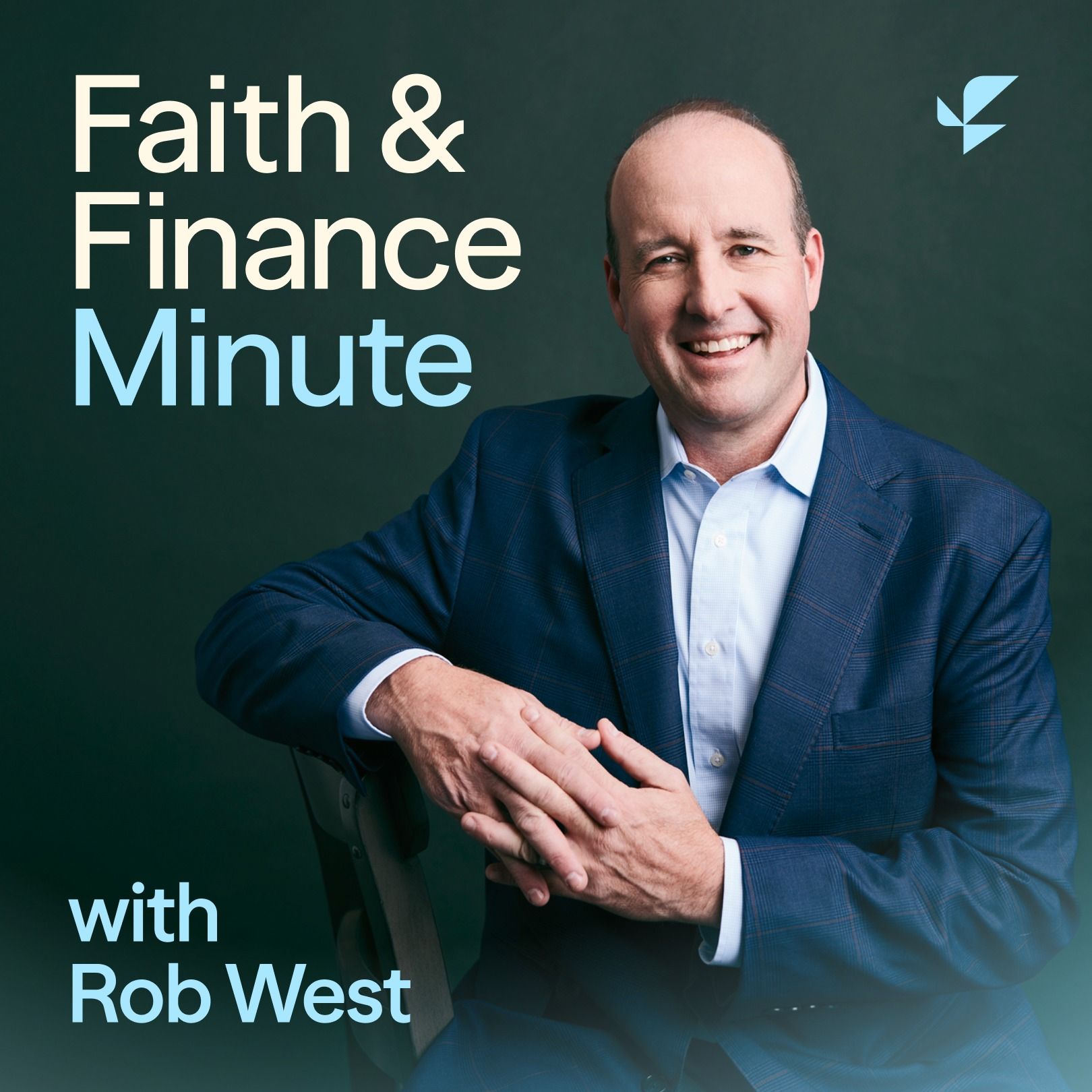
Episode Overview:
Title: Testing God or Trusting God?
Host: Rob West
Date: July 15, 2026
This episode of Faith & Finance Minute explores the biblical perspective on giving and addresses the frequently misunderstood notion of “testing God” in the context of financial stewardship. Rob West clarifies scriptural intent and encourages listeners to practice generosity out of trust, not as a transactional formula.
Key Discussion Points & Insights
1. Understanding “Testing God” in Malachi 3
-
Rob West opens with a caution against misunderstanding the phrase “testing God” when it comes to giving.
“We should be careful with the phrase testing God.” (00:01)
-
He explains that Malachi 3 is often cited to suggest God guarantees a financial increase for generous givers, but this misapplies the text.
“Malachi 3 is often quoted as though God promises every believer financial increase if they give.” (00:06)
-
Context: Malachi was addressed to Israel under the Mosaic covenant, where tithes funded temple operations, Levites, festivals, and aid for the poor.
“Malachi was written to Israel under the Mosaic covenant where tithes supported temple worship, the Levites, festivals and the poor.” (00:13)
2. God’s Promise in Malachi: Call to Faithfulness, Not a Financial Guarantee
- Rob notes that when God says “put me to the test,” He’s inviting covenant people to return to faithfulness, not offering a universal guarantee of financial return.
“So when God says put me to the test, he is calling his covenant people back to faithfulness and not giving Christians a formula for guaranteed financial return.” (00:20)
3. Christian Giving: Motivation and Principle
-
Rob encourages Christians to give generously, worshipfully, and sacrificially, but with proper motivation.
“Yes, Christians should give generously, worshipfully and sacrificially.” (00:29)
-
The act of giving is not about invoking more material blessings, but a response to God’s prior generosity in Christ.
“But we don’t give to make God bless us with more money. We give because God has already given Himself to us in Christ.” (00:33)
4. Defining Biblical Stewardship
- Rob summarizes biblical stewardship as an act of trust, not a test of God.
“Biblical stewardship is not testing God, it’s trusting God.” (00:39)
Notable Quotes & Memorable Moments
-
On interpreting Malachi 3:
“Malachi was written to Israel under the Mosaic covenant where tithes supported temple worship, the Levites, festivals and the poor.” — Rob West (00:13)
-
On the purpose of Christian giving:
“We don’t give to make God bless us with more money. We give because God has already given Himself to us in Christ.” — Rob West (00:33)
-
Stewardship in a nutshell:
“Biblical stewardship is not testing God, it’s trusting God.” — Rob West (00:39)
Timestamps for Important Segments
| Timestamp | Segment |
|-----------|-------------------------------------------------------|
| 00:01 | Introduction to “testing God” in the context of giving|
| 00:06 | Common misinterpretation of Malachi 3 |
| 00:13 | Historical context: Mosaic covenant and tithing |
| 00:20 | God’s intent in inviting His people to “test” Him |
| 00:29 | Christian approach to giving: generosity and purpose |
| 00:33 | Motivation: God’s generosity in Christ |
| 00:39 | Stewardship defined as trusting, not testing God |
Conclusion
Rob West challenges a transactional mindset toward financial giving, urging listeners to ground their stewardship in trust rather than formulas. He encourages believers to emulate God’s generosity, recognizing that faithful giving is an act of worship and trust, not a means of securing material blessings.
Listeners are reminded:
“Biblical stewardship is not testing God, it’s trusting God.” (00:39)
For more biblical financial guidance, Rob directs listeners to the FaithFi app and website (advice outside episode’s main content).