← Fashion Neurosis with Bella Freud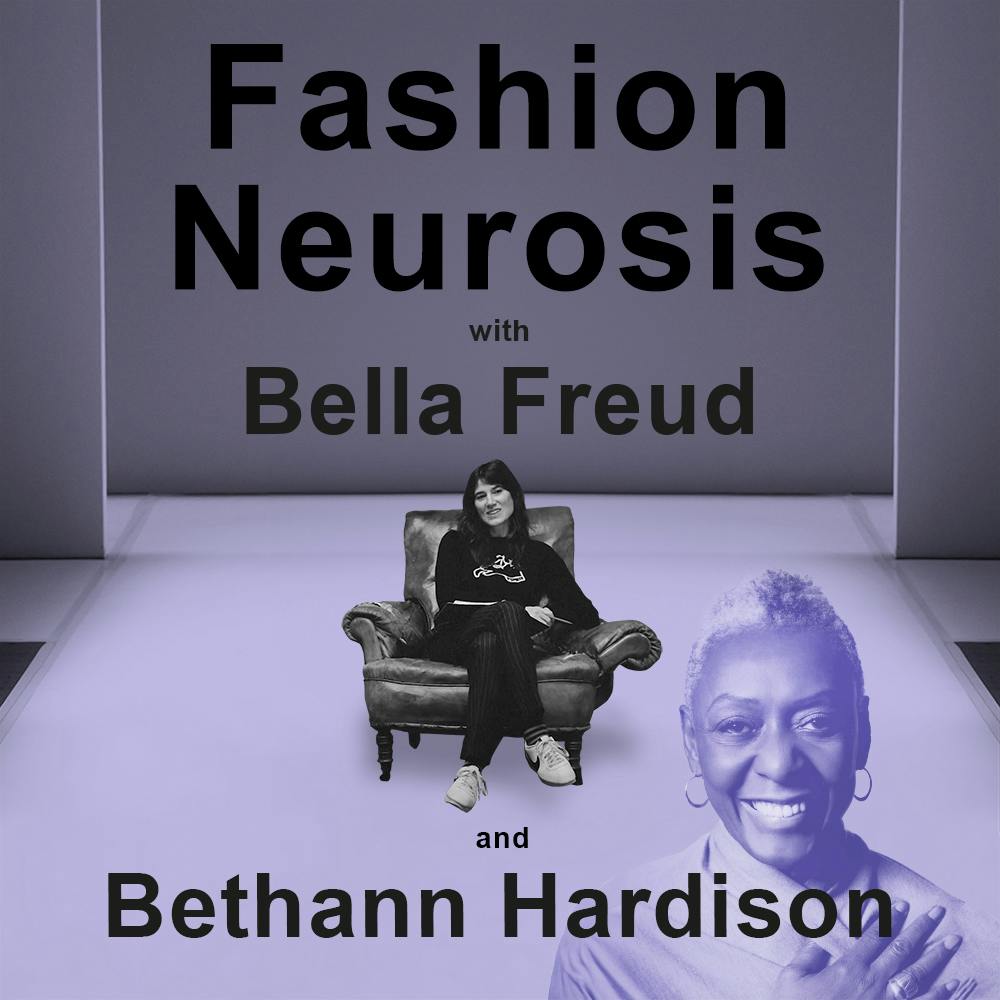
Loading summary
Transcript188 lines
- [00:00]
Bethann Hardison
She's made up her mind to live pretty smart Learn to budget responsibly right from the start. She spends a little less, inputs more into savings Keeps her blood pressure low.
- [00:14]
Unnamed Guest
And credit score raises she's cutting debt right out of her life she tracks her cash flow on her spreadsheet at night Boring money moves make kinda lame songs but they sound pretty sweet to your wallet. Brilliantly boring since 1865 this episode is brought to you by Amazon Prime. From streaming to shopping, prime helps you get more out of your passions. So whether you're a fan of true crime or prefer a nail biting novel from time to time, with services like Prime Video, Amazon Music and fast free delivery, prime makes it easy to get more out of whatever you're into or getting into. Visit Amazon.comprime to learn more.
- [01:08]
Bethann Hardison
Hi, come in. Welcome to Fashion Neurosis. Bethann Hardison. Can you tell me what you're wearing today and why you chose these clothes?
- [01:23]
Unnamed Guest
Oh my goodness, you're so nosy. Well, I'm wearing a Ralph Lauren denim shirt, a pair of old Donna Karan double pleated pants, pearls and oh, some socks, some Gucci socks and some Gucci little kitten heels and some Mexican earrings and some sunglasses. Oh, and my sunglasses are from Oliver Peoples.
- [01:55]
Bethann Hardison
Gotta give them credit, I do love Oliver Peoples. You're an award winning legend in the fashion business, one of the first highly successful black models, a brilliant businesswoman and an activist for black representation in luxury lifestyle and high fashion. When were you first aware of your drive?
- [02:19]
Unnamed Guest
Oh, I think when I was growing up as a latchkey kid in Brooklyn with my grandmother and my mother. You notice that I didn't think I had it then, but I was just busy doing it. And I think once I start to write and try to tell my story, I recognized that I was already pretty successful by the time I was 12 years old. Didn't have like a mother or grandmother who basically was like parents are today helicoptering and making sure you get to places and coming up with ideas for you. Everything was all me. They went to work and I went to school and I got home before them. And latchkey kids have a lot of freedom. I would get home around 3:30. They wouldn't get home until like 6:30. So you have like three hours or four hours to be anything you want to be. And I wind up doing a lot of things as a kid.
- [03:11]
Bethann Hardison
Because you moved in with your father when you were 12, is that right?
- [03:14]
Unnamed Guest
Yes, I went to live with my dad because he had always had the rights to have Me, but because he had asked my grandmother to come from the south to take care of me, you know, she did. And he would ask earlier years and she would say, oh, she started to cry. He felt bad, so he left me, let me stay with her. But he knew that he was Islamic imam, but he was a religious young man and he knew that by the time his child was to turn 13, he had a certain responsibility before they turned 13. So that's why he made me. And the only reason why I went is because he said, you'll have your own room. That was like a tease. That was exciting.
- [04:00]
Bethann Hardison
Yeah, because he seems to have been a big influence on you. And I had that too. And your father was a mentor to Malcolm X and innovators and change makers like you show what can be done in a practical way. And I wondered if you learned some of that when you were growing up in that atmosphere.
- [04:23]
Unnamed Guest
You know, that's asked of me often. And I don't think. I didn't think so. But I think you sometimes fall really from your parents tree depending on who they are. I am a little bit like my mother who really liked people and really was a good time girl and party and then I'm a lot like my dad, who's quite serious in another way. But I was just, you know, trying to get through because I live also with his wife who wasn't as easy on me. She was kind of tough with me. She was, you know, I guess it was hard because she never could have children. And I think because, you know, she had to, you know, say yes to him having me come live with her and him. So I think I just was busy just trying to dodge bullets. I was like. But I think, you know, you just are some part of your parents, you know, you don't see that they're influencing you in any kind of way. But he was so smart and he was so cool. You would be happy to let him lead you or be that person you go to. Because as much as he was religious, he was also very cool. He was very modern in his way of, you know, handling things. So maybe in some way I like the fact that he was so popular amongst many people and at the same time he made hajj two or three times. Is going to Mecca.
- [05:47]
Bethann Hardison
Yeah.
- [05:47]
Unnamed Guest
So he was a hajji, so. And he always come back looking very kind of like, you know, like coming like he just came off the desert. It was very interesting to see that.
- [05:59]
Bethann Hardison
I saw a photograph of him. He looked so. He did look really cool.
- [06:03]
Unnamed Guest
Yeah. He's cool. And when Yul Brynner came along, everyone used to say to my father, God, because my father had a bald head, he cut all his hair off. He had hair, but he liked having a shaved head. And he has very similar features. And they said, you know that Yul Brenner guy, he looks a lot like you. And my father said, oh my God, if another person says that. And believe it or not, because of that, I watched the Ten Commandments the other night just so I could watch. Yo, bread. Oh, it's so funny.
- [06:35]
Bethann Hardison
That's hilarious. God. And do you remember a time in your life when you found a piece of clothing that made you feel different?
- [06:46]
Unnamed Guest
Well, a piece of clothing that made me feel different to what?
- [06:53]
Bethann Hardison
Like, well, say rather than being feeling different, maybe feeling yourself, your true self, like your identity.
- [07:02]
Unnamed Guest
I think Issey Miyake. I don't know if that's true either. I don't know. Maybe. Maybe there's a little touch of something all the time. Sometimes Ray does things comme des gason. I always tend to go towards that. Yoji and Ralph I like, of course. And Calvin I always like. But I think it's very funny that you say that. I think integrating into another culture made me also feel something because I was very taken with samurai and I was very, very much. It was a big. At one point it became an influence on me, like for me even to walk the Runway.
- [07:39]
Bethann Hardison
But as a child, was there like something that you became obsessed with that somehow you, you know those things when you're like under 10 or 12 or something and you think I have to have that. Because it sounds sort of almost superficial, but it isn't. It's almost like a spiritual calling to find how to dress yourself or who you're going to be.
- [08:06]
Unnamed Guest
I was very much a tom, you know, a little tomboy. So I can't really think clothes didn't mean that much to me then, I don't think because I was, you know, I ran track. I was a well known child tap dancer. I was basically someone who was so active at just doing things I did like my mother's taste. So the things that she selected for me was fine. And if I think about what you just said, there was a striped T shirt that I liked quite. That's. What are you saying there? But, and the stripes of course, went this way, not that way. Yeah, I remember that. But not really like. I like what my mother wore. Cause I liked her style.
- [08:49]
Bethann Hardison
How did she dress?
- [08:51]
Unnamed Guest
You know, very 50s. And she had a lot of, like I said now, double pleated pants with cuffs. I liked the way she dressed. I liked her style. It was very casual in a way, but I liked her because she was, you know, a girl who went to bars all the time, dragged me into bars with her. I mean, she just had a certain style that was bigger than just even what she wore.
- [09:13]
Bethann Hardison
Yeah.
- [09:13]
Unnamed Guest
And so they. The two sort of complemented each other.
- [09:19]
Bethann Hardison
And you saw that.
- [09:20]
Unnamed Guest
Yeah, I really appreciated her. I really did. She was funny. She was the opposite of my father, you know, in so many ways. Really? Yeah.
- [09:29]
Bethann Hardison
Yeah. That must have been difficult for both of them, like, disapproving of each other, or was it? Not really like that.
- [09:37]
Unnamed Guest
No. No, they weren't. No. Sophie was so funny. You know, she liked everybody. She didn't care. You know, that's the great thing about. You know, I think I never got all of the right story or the whole story from either or that could understand. But it was never like she was upset about him or he was upset about her.
- [09:59]
Bethann Hardison
No, that's nice, isn't it?
- [10:01]
Unnamed Guest
And when I went to live with him, you know, he promised my grandmother and my mother that I would be able to be with her them every weekend.
- [10:10]
Bethann Hardison
So.
- [10:10]
Unnamed Guest
And that. That and I would always still be able to go south with my grandmother every summer, as I had done as a, you know, a baby toddler till as a young child. So it was all good in that sense.
- [10:24]
Bethann Hardison
And in the 60s, when you were working in the garment industry and you were deemed too stylish to work in the.
- [10:31]
Unnamed Guest
Oh, the button factory.
- [10:32]
Bethann Hardison
Yeah. And then you became the first black saleswoman.
- [10:37]
Unnamed Guest
It was interesting. You know, they. I went for my first job in the garment industry, and when I first went for the job, the man said, well, I'd like to hire you, but you can't come dressing like that. Well, you know, when you go for a job, you dress well, you think for an interview. I said, oh, no, no, I could. I don't have to dress like this. He said, okay, good. So, okay, I want to hire you, so come, but just dress down a little bit because you look so nice. You're going to be working in a factory here. You know, it's going to be too much. And I came the next day to work, and he said, you could do a little bit better on the dressing down. So I kept trying, and by the third day, he said, all right. He gave me a job where he sent me out with the buttons to be the delivery, to deliver the buttons to the designer. It was the best Thing ever to go behind those doors and see what those designers did. And you had to stand there and they talked you, and they made you feel kind of important.
- [11:30]
Bethann Hardison
Yeah.
- [11:31]
Unnamed Guest
Because they would give you the information that you needed to go back and take back to correct the buttons and stuff. So that was kind of a cool thing.
- [11:38]
Bethann Hardison
Yeah, because that was when I think you said, if you want a great shape show, you should have me in it.
- [11:45]
Unnamed Guest
Yeah. That was when I was then no longer working. That was two jobs later where I was working for a junior dress company. And that's where I was. Where I was put into the showroom. And the guy who was the head of sportswear. Junior. Junior dresses and junior sportswear, he would put together all of. All of the buyers from those different stores. And he loved Broadway. So instead of just doing a boring presentation, he would do, like, a show.
- [12:17]
Bethann Hardison
Wow.
- [12:17]
Unnamed Guest
Entertainment. And he'd have Runway. And when I saw that, me being a child, former child tap dancer, where I used to have the roar of the crowd, oh, man. I was like, wow, he's really doing a show. And that was the first time I did. I said to him, by the time I got up to him to give him our samples, I said, you know, if you really want to have a great show, you'll put me in it. And he looked at me, and he looked at me with such a stern look and said, where are you from? I said, oh, I didn't cross the line. And I told my place. And by the time I got back with my head hanging low with, you know, back to the office being prepared, that he's probably called him. They were so excited because Bernie wanted me in his show.
- [13:04]
Bethann Hardison
Oh, my God.
- [13:05]
Unnamed Guest
So that was the beginning of me starting out as, like, a little model. Wow.
- [13:10]
Bethann Hardison
So cool. I mean, it's just so great listening to that story of confidence. And then.
- [13:17]
Unnamed Guest
Yeah, you.
- [13:18]
Bethann Hardison
Yeah, you became amused to the designer Willie Smith, who introduced you to Bruce Weber when he was just starting out. And he said, you. You did photographs every weekend, and what kind of pictures were you making?
- [13:32]
Unnamed Guest
Then we go to the park using natural light. Of course. We go to the park. We go to Central Park. It was like every weekend when Bruce is. Bruce is in my film. And he just. He described it in a very perfect way, the way I scribe. But he did it even better. How it used to be like two kids, you know, just going and taking pictures, trying to figure it out. But Bruce. The pictures that Bruce took of me to this day are still the best pictures anyone's ever taken of Me, really. And then we'd leave the park after a few hours. His mother would have us come and have a little lunch with her. And it was very nice.
- [14:11]
Bethann Hardison
How great. So he really captured you, if you still love those pictures.
- [14:16]
Unnamed Guest
Yeah, I really do.
- [14:17]
Bethann Hardison
Really something.
- [14:18]
Unnamed Guest
Yeah.
- [14:19]
Bethann Hardison
Now, there are certain clothes that make you feel better if you're feeling low.
- [14:24]
Unnamed Guest
It's very funny about clothes. I never, you know, I never think of myself in that way, of being in need of clothes like some people do. I don't know. I mean, whenever I couldn't figure out what I wanted to. To wear someplace, I always sort of went to Comme des Garcons. I don't know. I tend to relate to that kind of madness. But I. Something about what she does calls me because I need a little silliness or fun or scary, you know, or, you know, someone who's really, you know, taking it to the next level in some other kind of weird way. But then, you know, you wear a lot of people that you do like too. You know, you have a way of.
- [15:08]
Bethann Hardison
Pulling things together that makes them elegant. Like, you know, with the Comme des Garcons, that's kind of wild, and sometimes you don't quite know what to do with it. But when I've looked at all your pictures, you. You do know what to do with it. You. You settle it down and it comes to life, and it's. You're in command of it. And I love to see that. That's real style, you know.
- [15:32]
Unnamed Guest
Well, that's what, you know, the great thing of working with. So closely with Issei Miyake, he was always so happy that when he made things, a lot of the. Once he brought it out of, say, the studios, he would always be counting on me because I would understand how to wear it. Yeah, I would put it on, and he never had to tell me what to do. So you do have those things where people just appreciate when you are. When you put the clothes on, you help the designer understand them more, and that's what. You then become amused to them, you know. And so that. That's the great thing about that. And I think with Issei, he would always say, besan, Besan. Understand it. It good. So. Because, you know, I. You know, Issei. You know, putting on Issei's clothes is like. It's a test, you know, you say, okay, where does this end and where does this go and what part? Yeah, he would always be so happy. He'd walk away, go, okay, yeah.
- [16:33]
Bethann Hardison
And you modeled in the historic battle of Versailles fashion show that five European designers and five Americans and 10 of the 36American models were women of color and including you and Pat Cleveland and Norma Jean Darden. And your show was fun and it had great music as well. And you, you described this thing of stopping at the end of the Runway and defiantly staring into the audience. And I wonder, what did you want people to feel when they saw you?
- [17:09]
Unnamed Guest
Yeah, that was a moment. Even, even when you, if, if I speak about it. You speak about it. I think about it. It's. It was, you know, still, I remember doing something for the BBC and I remember telling him about it and I just, the way I was just explaining it, I just broke into tears. Just. It really was a moment. It was because we were rehearsing a lot and we had these three days and we were the underdog. And it started out to be a, like a community effort. That's what Eleanor Lambert and Ms. Francois de la Renta, which was Oscar de la Renta's former wife, she's passed away. But that's what they wanted. They just wanted to have this opportunity to do something that's so brilliant and it would benefit the Marie Antoinette Theater and the whole of Versailles. But what wind up happening is once the media in France start to hear about it, they start to say, what are these American designers coming here? They're just sportswear people. They could never compete. And they started using the word compete against our, you know, couturiers. Well, we weren't trying to compete. We're just going over to do a show. And then it went on. And that's when it became the Battle of Versailles. It was never the Battle of Versailles. That was the French press. So by the time they finished dogging us, even the support we had from America, it just started dropping out.
- [18:37]
Bethann Hardison
Really.
- [18:37]
Unnamed Guest
They weren't interested in coming and being embarrassed.
- [18:40]
Bethann Hardison
No.
- [18:43]
Unnamed Guest
It was something. Only person I think was Mary Lou Luther and I think Bill Cunningham. Those are the two. I remember Bill Cunningham. Yeah. They were sticking to the, they were sticking to it because they were curious. But it may be another one. I don't, you know, forget maybe someone else. But those two. I remember clearly and, and I promise you, it was like getting there and doing it. I had, I, I've never as a model and I was a Runway model, never really a print girl. I never had the fortune to be able to just be that a model. I always had a full time job when I modeled. So I, being Stephen Burrows assistant, as well as his fit girl, I had to pay Attention to Stephen and also Anne Klein. She had asked me, before we left America to work with her and help her. I'd go and leave my office from Steven and go and talk to her about. Because she was doing a certain kind of collection. And that's. For the first time, she knew she needed black girls, too.
- [19:45]
Bethann Hardison
Yeah.
- [19:45]
Unnamed Guest
And there was a cabin of, you know, at least 10 of us that were going to be there. But Ann was going through something, and she felt very insecure because it was all guys and just her. And so I'd have to go and talk to her and spend time with her and, you know, give her energy and then make sure Stephen was always. Always cool and always together. But he was. He's pro. You know, he's very shy. So I would, you know, go and talk with him and make sure everything was going well on our side. So I didn't have time to be like the model.
- [20:14]
Bethann Hardison
Yeah.
- [20:15]
Unnamed Guest
And when we would do a practice of our rehearsing time, I would always hear Halston saying, come on, Bethann, Come on. And meanwhile, I'm just pacing. I'm just doing my, you know, just pacing it out, knowing where I have to be, making sure we have to stand. That's not the moment. It's not real yet, so. But he was wanting me to, you know, the other girls, that's what they did. But when I put on that yellow dress that Stephen had made, and it was. It was a dedication to couture the best he could. Where he always worked in knits, this dress was woven, and he fitted it for me. And the nights of fitting that dress of me in the studio with him, I knew it was special, and I knew that. That us being underdogs, we had to really bring it. And that was a moment I really thought these guys and these French people and these people think that we're nothing, and who do they think? And when I hit that stage, I kept thinking about. I knew what a great walker I was. I knew how good I was as a model. But I put an intention in my head. And because of the way I look, I was skinny, looked like a boy, very short hair, and he was. All the girls had twills in their head, and the mind looked more like a boa look, more Afrique. And I had this canary yellow dress on with the train, and I. And the music was. The music was so good, I forget. I think it was. I think it was Barry White, really. But the beat of that. Just that beat. I took the beat. And this is a stage and another thing, we. We lost out because our sets weren't. Our sets weren't there because Joe Eula, who was supposed. Joe Eula, who's the right hand of Halston, was assigned to create our sets. But he did it in inches, and it was centimeters to the stage, so they didn't fit. So we had nothing. We are already the underdog. We don't even have any sets. All we have is this bare stage, which is stage embanked, so it's not a Runway, so it goes down as you walk it. And then we have nothing but the girls, the music, the clothes, and, you know, Liza Minnelli. Thank God. Kate Thompson's choreography. So when I hit that stage, I knew we. You know, I had to really deliver. You know, to me, it was like, you know, this is it. Because we don't have. You know, you only have. I have worked for two others, of course, but Stephen was my moment. And walking down that stage, I was really thinking I was defying them. And the way I walked with such strength that when I got to the end of it, and each one of us had a. You know, had a train, and we held the train on a pinky ring that you held with your dress. I threw it down and just stood there so long. But they'll hear Bill Cunningham tell it because he. He was watching it. He makes me know how strong it was. And I just stood there so long that they started to stomp and stomp and stomp. And the next evening, they took their programs and threw it up in the air screaming, bravo. Bravo. And then I knew. Even though we were first to present, I knew we had them. And that was a great moment for us. It was a moment of defiance. It was a moment of fear and just being at the place of thinking, we can't lose. We just can't lose.
- [23:52]
Bethann Hardison
God, how amazing. I. Because I didn't know much about that until I watched the Halston series on, you know, the Ryan Reynolds one, which was really interesting. And, yeah, it's great that they included that whole. I mean, he was a big part of that, but was amazing.
- [24:10]
Unnamed Guest
You mean Halston or Stephen Holston? Yeah, no, really important that, you know, each one of them, they were such wild. It was. You know, that's why I learned so much about being American, in a way, how they all were so tense with each other, and Halston was so grand because he was the only one that was really like. More. Had a lot of friends in Paris and Europe, and he could. Every night he'd go out to, you know, regimes and. And all. Everybody was with him. And the American designers were, like, corny, and Steven didn't care and the only one. And Halston didn't like any one of them. He only liked Stephen. He only thinks Stephen was the only really designer, you know, and it's so funny. He was so. And poor Anne. You know, I didn't know at the time, and I don't know if she knew that she had cancer at the time. Really? Yeah. But she was really, like, suffering, too, in her own way, because, you know, they weren't, like, being, like, all together. Five of them together. The only time it became together is when we said Showtime. And then that's when everybody's energy, we had to click. And that's when I recognized, you know, they can all fight and be all against, but when the moment comes, the roar, they come together.
- [25:25]
Bethann Hardison
Yeah.
- [25:26]
Unnamed Guest
Yeah. At New Balance, we believe if you run, you're a runner, however you choose to do it. Because when you're not worried about doing things the right way, you're free to discover your way. And that's what running is all about. Run your way@newbalance.com Running now at Chipotle.
- [25:58]
Bethann Hardison
Our all new Chipotle Honey chicken brings Chipotle heat with a touch of sweet, seared smoked peppers and savory, savory Mexican spices blended with a hint of pure honey for a perfectly balanced sauce, all combined with fresh, tender chicken hot off the grill. Served up in your favorite burrito or bowl, new Chipotle honey chicken takes heat and sweet to a whole new level. But it's only at Chipotle for a limited time. Order now in the app for pickup or delivery. Chipotle for real. You founded the Black Girls Coalition with Iman initially to celebrate and promote black models, including Veronica Webb and Karen Alexander and Naomi Campbell. And what happened to the black is beautiful movement? How come it seemed to have lost momentum? Because it was such a big thing.
- [26:46]
Unnamed Guest
I had a very diverse agency, but I also knew I had more than anyone because of the fact that I believed in diversity and racial diversity. I mean, it was interesting at that time because it none of the. All the models were. You know, we were Runway models. And then the change of Calvin Klein having the. Once that great, the great marketer he is. He's the one who brought the print girls on the Runway, and he wanted to.
- [27:16]
Bethann Hardison
Really?
- [27:17]
Unnamed Guest
Yeah. You're gonna get a lot of stories. Oh, sorry. I don't want him to spank you. But, I mean, you got a lot of knowledge Here. Yeah. That this is a great. And I tell a lot of people that, you know, I just said, you know, when you're old enough, you just know so much shit, you know?
- [27:33]
Bethann Hardison
Yeah. It's crazy.
- [27:35]
Unnamed Guest
And you're there. You were there. I mean, I was there because I was one of his models. But that's what he did. He saw that he wanted to start making sure that his clothes were on the. Were in the magazines already. So he then had the editor sit there, put the print girl that they normally would use editorially on the Runway. They didn't even know how to walk. And slowly, slowly, they began to end the life of the Runway model. So now what you see is that everybody does equal to the same. But back in the day, the market for designers in the garment industry were always serviced by model agencies that only worked with models who only serviced that industry. They weren't print girls.
- [28:24]
Bethann Hardison
God, I. I never knew that.
- [28:25]
Unnamed Guest
Nobody knew. That's until Bethann told him.
- [28:28]
Bethann Hardison
Yeah, I swear.
- [28:29]
Unnamed Guest
I promise you, I tell so many people, they go, wow. I never knew that. No, of course not. Because no one talks about it until someone takes you down memory lane. And I have to explain that. And Calvin kept me. I was the last Runway model he kept. I was down to one outfit, but he held on to me because we had a lot of great moments and fittings because I was very inspiring for him.
- [28:49]
Bethann Hardison
Yeah.
- [28:50]
Unnamed Guest
But in the end of the day, you know, we didn't have many black girls doing editorial. So you had. When they found Iman. Yes. And little by little, Naomi comes on the scene in the 80s, and she's one of those girls. But we didn't have a lot of that. But Remus Pinz came from France and he started American Ale. He just had a. He had a real appreciation for blacks, beauty, brown girls. So he started putting them in the magazine and putting them on the covers. And that challenged Conde Nast and Hearst. So they had Bazaar. We had, you know, Mademoiselle, which you don't have anymore. Glamour magazine, Vogue. And what wind up happening is that these girls all of a sudden started having. Now those magazines wanted to have those black girls because they had to compete with this French. French magazine that came, and he was killing it. I mean, he had no problem putting black girls because there was nothing for them to lose. And it was brilliant.
- [29:58]
Bethann Hardison
Yeah.
- [29:58]
Unnamed Guest
So then all of a sudden, we have all these black girls working. Now all of a sudden we have, you know, Vogue taking, you know, girls on photo shoots. Before it was just studio shoots. Black girls they never went on a really. A location.
- [30:13]
Bethann Hardison
So it was really, really divided in who it was.
- [30:16]
Unnamed Guest
Yeah, it was like departments like Bargain. You know, you had black girls do catalog shoots, maybe, but editorial? Oh, no, not a lot of that. So this is the change. And I started watching this. Now, of course, these girls don't know the history of Bethann and the girls that were Runway models. This had never happened before. To see this many girls starting to be Beverly Peel, Tyra Banks, you know, these different girls now are working editorially in these top magazines. I decided I wanted to do something, and I had this idea, let's celebrate them. I had my model agency already, and I had it for, you know, now I thought it was 1984. So this is, by this time, it's 1986. Enough time for girls to start to be groomed in that world and that editorial world. I Iman, had just finished. She stopped modeling, and she has started to be. Started going towards acting. She was bummed out one time about losing a role. And I told I got an idea for us, and she always liked that idea of mine. And she and I would do things together, like parties and things. And I came up with this idea, let's celebrate the black girls and blah, blah, blah, blah. And the way I told the story and pitched it to her, she said. She always said yes, but she said, that's a great idea. And I just want to take her out her doldrums at the moment. And she said yes. And so we put it together. So we had all the girls who worked, and I wanted them to understand what it was about. It was about, you know, just celebrating being that girl, but learning to work together and be models who could work together, be of the same color. And while we were having the terrible time of homelessness in New York City, if we could benefit homeless children, organizations that supported homeless children and their mothers and parents. And so I just did something to just bring attention to that, and that was great, because that started in 1988, I think.
- [32:13]
Bethann Hardison
Yeah, yeah.
- [32:14]
Unnamed Guest
And it went on for a while, and then it was good. We, you know, I would do these parties, and everybody in the world would come, and of course they would, because all these beautiful black girls are there. And we would make people, you know, we sell, like, raffles and make friends and us and Keith Haring and all them give us products so we could raffle off. It was just. It was just an awareness, make people learn how to give back. And I was teaching everyone something, you know, that most people didn't do in our industry. They wouldn't even thought about other people. And the homelessness thing was something that really bothered me because I always thought I could be homeless one day. So anyway, I really, really, really thought that that was what was important at that time. We did it until 1990, 93, 94, I can't remember. 92, maybe. But then, by then, eventually, you know, the black models started disappearing because Eastern Europe had opened up and people started bringing them forth. So that's when it became something that I had to pay attention to, noticing that the black model had disappeared, started disappearing. She who had been so prominent amongst whites, then she started to disappear. And not only did she disappear, just good old American white girl started disappearing too.
- [33:33]
Bethann Hardison
So bizarre that the idea that Eastern Europe opens up and there's this kind of coming together of things, and immediately a whole. Whole sectors of people are just dropped out. And I suppose that's the downside of fashion. Everyone becoming obsessed with one thing.
- [33:52]
Unnamed Guest
Yes.
- [33:53]
Bethann Hardison
And that's the limitation. Yet the other things you're describing, which fashion is great at, is seeing something that we care about, homelessness or any person would care. And we're really good at coming up with the best idea and the most fun idea and the most dignified idea weirdly coming from fashion. But there is a lot of dignity.
- [34:15]
Unnamed Guest
I think what happened too, with that whole thing with Eastern Europe, it really was something that was so new. And as you say, this is true. Everyone thinks they're individual. And then you watch them all follow the yellow brick road. When it comes down to designers, the attraction of all these beautiful in the body alignment, I even liked, I mean, me and Stephen Burtos, we love that narrow, hip girl. And a lot of American girls, as well as black girls don't have that same hip alignment. So it was really beautiful to see these girls. And then, you know, the way they were used became an idea. And all of a sudden, you know, you don't notice the model she's replaced. Even Linda Evangelista. You don't even see Linda Evangelista anymore because she was part of the supermodels and the glamorous girls. So now these girls just, you know, notice them. You don't remember them. They're just becoming hangers.
- [35:12]
Bethann Hardison
Yeah, yeah.
- [35:13]
Unnamed Guest
And that's the interesting thing about it. And then it starts to become a trend that it looks like it makes sense because, yeah, you don't have to have black girls, you don't have to have Brazilian girls, you don't have to have white girls that looks like they're milk fed. These Eastern European girls are coming and they barely have eaten their generations of eating very little. And they've got the alignment that looks so good and they just don't. You're not noticing their faces per se.
- [35:46]
Bethann Hardison
It's like a statistic, isn't it? It's like, oh, this is our aesthetic now. This is statistic. It's mysterious how captivating it is when everyone chooses the same thing. It just, it's really weird that and. But you have this incredible eye for a model. And Susie Cave, who was also on Fashion Neurosis, talking about you talent spotting her and her walking up the steps of the Carnegie hall age 14. And you were putting up the sign for your agency and you said, hey, you know, and you, you noticed her. I just wondered if she remembered that so well. I wondered if you remembered that moment.
- [36:31]
Unnamed Guest
You know, it's so funny, I was trying to remember this so much because she stayed with me in my head because of her name and her look. And I love the fact that I hear from so many when I'm. And I'm gonna, I'm gonna use as part of my speech. Cause I never write speeches down when I get awards. Which makes me so neurotic right before I go up on the stage. But that's one thing I wanna talk about is the. How much I get the memories of others writing to me, letting me know how I treated them and how important I was at their point in their life. And I think that comes down to this sense of compassion.
- [37:16]
Bethann Hardison
Yeah.
- [37:16]
Unnamed Guest
And that's one thing I, I want to really speak about too. Because, you know, I didn't go into the model industry business because I wanted to be a model agent. I hated the idea. I got talked into it and I got. Then they found me the money. Then these models were so willing to show me the love they had to do something that no model agency had ever done, which was basically to wait for the money. Because I didn't have enough money to have a model agency. And the money that I was given was to have that for the basics. So this was like a great thing. And when you have people like Susie reminding you and others that you gave her great confidence at a point in her life that was really important. And I hear this so often. And one person who, you know, because here I'm in London right now talking to you. One of the most important people in my life that gave me a great deal of confidence was Nick Kamen.
- [38:13]
Bethann Hardison
Wow.
- [38:14]
Unnamed Guest
And he took a chance on me when I was starting the Agency. I had eight girls and one boy. It was him. And he had three agencies that wanted him, and I had nothing. I'm sitting in this big open space that I had just found an office down in a place called Tribeca that nobody even heard of. And for some reason, he chose me. And I promise you, it did everything for me. So starting this agency for nine kids, mixed. All of them mixed different backgrounds. Blondes, you know, mixed kids. And having Nick say yes to me gave me the belief that I could do this. And they don't know if I'm going to make it or not, but they wanted me to do it so badly.
- [39:00]
Bethann Hardison
Yeah, that's.
- [39:02]
Unnamed Guest
It was such a. It's such a pleasure. So every time. And I came here on his birthday and. Which is always April 15, and he was everything for me, and he was a great loss to all. A lot. All of us, and we're Buffalo people, you know, so.
- [39:17]
Bethann Hardison
Yeah, he was an incredible. I mean, that. That advert, when he's in the laundry and he takes. Oh. I mean, it's just worth going back and looking again and again. The wit and the sort of languidness and leave.
- [39:33]
Unnamed Guest
It was a Levi, right?
- [39:34]
Bethann Hardison
Levi's. Yeah. It was so cool. It was just like, you got to see somebody rather than something being promoted. It was so. So funny as well.
- [39:44]
Unnamed Guest
So it was advancing his thinking. Yeah, it was advanced thinking. And I just want to go back to saying something about, you know, to not put too much weight on the designer, but I do, in many ways, of how they allowed the change of the industry. When it came down to who they put their clothes on, it came down to the change in the industry because we didn't have casting directors before. Yeah, casting directors and stylists didn't exist. So, you know, when I was a model, those things, of course, didn't exist. But the idea of it is that the game changed, and then it changes for everyone.
- [40:23]
Bethann Hardison
Yeah.
- [40:23]
Unnamed Guest
And then you have to help bring them back. Bring them back to what is real. Because I really do believe that the industry, even though it looked bad and it looked like it was racist, and I didn't think that was their intent. And that's the only reason why I could approach them saying and letting them know they had gone in a rabbit hole.
- [40:44]
Bethann Hardison
Yeah.
- [40:45]
Unnamed Guest
And now this is who. This is who you look like. This is what you are, whether it's your intention or not. You keep using consistently 35 models, and not one is. Is of color. And if it is, it's one season one. One season one. One season, whether you, you know, your intention or not, the result is racism. And that sort of got everyone's attention because between here, whether it be London, Paris, Milan, New York, none, not one designer thinks they're racist.
- [41:17]
Bethann Hardison
Yeah, no one thinks they're racist.
- [41:19]
Unnamed Guest
They never think they're racist because that's not their intent. They're creative people. And so when you say that to them and you show them, they responded right away.
- [41:29]
Bethann Hardison
Yeah. You've talked about the importance of language in educating people about racism. The language of casting is pretty crude sometimes. Like no blondes, no redheads, no freckles, but no ethnics, no blacks. That sounds like pure discrimination. And how do you deal with that? How do you approach that?
- [41:52]
Unnamed Guest
Well, you know, that's the thing that's interesting about that. When I would tell people who are not in the model industry or the fashion industry, the blatant conversations.
- [42:03]
Bethann Hardison
Oh.
- [42:03]
Unnamed Guest
They would say, oh, that's terrible. And I say, but you have to use words. I mean, if you're choosing a type of individual to represent whatever you're doing, your product or your brand or whatever you're representing, you have to describe to the other person what you want. Because this is a physical business.
- [42:21]
Bethann Hardison
Yeah.
- [42:22]
Unnamed Guest
When many people say, oh, you can't say they can't. They don't say they don't want a black girl. Or they don't want to say, well, in this particular case, a black girl wouldn't work. And in some cases a black girl would work. You know, when I had my having my model agency, it was always so interesting to me because I'm so free flowing. I had the good news about having a model agency that is predominantly white. When you're a person of color gives you a lot of freedom. Because it was easy for me to see something and call it. And I think because of who I am, it worked in a way because of the way I would say it. I had one beautiful white girl named Katherine Hammond, who was a brunette who worked all the time commercially and she always did Brides magazine. So I always had the relationship with Brides magazine and I could talk to them. So it was very easy for me to one day say that. The bride's editor, model editor, who books the talent for the man. You know, you do know that blacks people do get married. Yeah. And the woman almost died. Oh, Bethany. Oh, yes, of course. I said, but you never have. I never see a black bride, an Asian bride, a Latin bride, ever. What do you think they do? They get married.
- [43:50]
Bethann Hardison
Oh.
- [43:51]
Unnamed Guest
And then they don't Know what to say, because it's almost like. It's not like they do it. It's like it just happens.
- [43:57]
Bethann Hardison
Yeah.
- [43:57]
Unnamed Guest
Yeah. Or when Calvin, they would call me, say, bethany, I got a great job for you. Calvin wants a fight because by this time he's using print girls and all the print girls, all, you know, they're all white. Calvin wants to find a great black girl, and he wants you to find them. I said, how many black. Just one. I said, you see, now, you know, now I'm happy to help you, but you see how racist I said I was. Ann, we're not racist. I said, I didn't say you're racist. You hear how it sounds? You want. How many girls are you going to have? And they would name it. And then I. It was very easy for me to do this. Maybe because I came on earth to do it.
- [44:41]
Bethann Hardison
Yeah. Well, I suppose you have a way of showing people what they're missing, and that's the generosity that you have to. To show people that rather than criticizing.
- [44:56]
Unnamed Guest
Yes.
- [44:56]
Bethann Hardison
That's the difference where people can't hear. And even though it's sort of shocking. Yeah, you are very, very good at that. Just drawing back the curtain so someone can bear to sort of acknowledge how blind they're being and how. What they're, you know, what's available instead of continuing down this tiny, narrow path. And this is your. Your gift, isn't it?
- [45:25]
Unnamed Guest
Stephen, myself used to say to me when he called cast, he called me one day, he said, do you know you're the only one ever, all the model agencies that has a. An Asian person.
- [45:35]
Bethann Hardison
God, Stephen said that.
- [45:37]
Unnamed Guest
I said, you're kidding me. But I didn't think it was like, he wasn't wrong.
- [45:41]
Bethann Hardison
Yeah.
- [45:41]
Unnamed Guest
I said, you can't. I thought somebody. Because everybody copied me, if they saw that I was having a little run with something, then they'd get a black girl like I always wanted. Lorraine Pascal.
- [45:50]
Bethann Hardison
Oh, she.
- [45:51]
Unnamed Guest
Oh, I wanted that girl so bad when she first came out. And I could have had her, almost had her. And just because someone had more. More dominant kind of model agency than they would go after because they could see, I started to make black girls work. She.
- [46:05]
Bethann Hardison
My first bit of editorial was on Lorraine Pascal for the Base magazine. Yeah.
- [46:12]
Unnamed Guest
That was one of the black girls that I wanted so much coming out of the. Coming out of this area. And it was just so many. I got a lot of good girls, you know, like from Zed Model Agency, you know, that all the, the. All the kooky white kids. I Like I love, I love a good looking English boy. English boys in the house, I really do. And I just, it was just always so good to have that kind of way of being. But it was, you're right, it was more not saying it, not badgering anyone, not making them feel bad. It was making him. Like I always say, I'm here to help white people. I'm not here necessarily to help black people, but looks like it. Cause I'm getting that results but to just to make them think. Yeah, because I believe in them, you know, I believe in them. I know that they, you know, and I watch what happened when I sent the letters out that I watch how London reacted first. You know, the British Fashion Council, they were the first ones that respond to the letter would such like, what can we do?
- [47:16]
Bethann Hardison
So this was when you wrote the letter to all the councils of the major fashion council calling them out for not using any, any models of color.
- [47:26]
Unnamed Guest
Yeah, it was going well for a minute and then we slipped back a bit. You know, it's going well for a minute but by that time I figured, you know, you got it now you got to do, you know, you put the last bullet in the gun, this. Now you got no choice because you've done it all nice. From 2000, 2007 to 2013, you know, it's been poco, poco, poco, poco, you know, little by little and then they slide back a bit. So then you just saw what you know and then you had to just explain it out, go to the press with it, make it make sense to them and name names.
- [48:00]
Bethann Hardison
Yeah.
- [48:01]
Unnamed Guest
And you just. That just changed the game, I promise you. And they all responded so well, so fast. It's all those kind of things change through the industry little by little by little, you know, you just don't know what's going to happen. But so far so good.
- [48:16]
Bethann Hardison
Can I ask you, if you fancy someone and you don't like something they're wearing, does it kill your attraction to them?
- [48:28]
Unnamed Guest
Yeah, I think, I think, I think if you're attracted to someone and they have no style. Yeah, the attraction is leaner.
- [48:39]
Bethann Hardison
That's a great description. Are there any specifics? Like Stefano Pilati said he couldn't bear those cut down socks, those sports socks and skinny jeans. Well, that's so frisky that he kind of got over it.
- [48:56]
Unnamed Guest
Well, when you used to see some cute little, you know, some cute white boys and you saw in America and you saw them with Birkenstocks when Birkenstocks weren't Cool. That was like, oh, man, what you wearing? Yeah. Birkenstocks weren't cool at one point.
- [49:15]
Bethann Hardison
No.
- [49:15]
Unnamed Guest
You know, and they would have little hairs on their toes. I'm sorry to get so descriptive, but that could make you go, okay, next.
- [49:28]
Bethann Hardison
You have a particular kind of thing about Birkenstocks from my school when the teachers wore them. And they were just so dowdy.
- [49:38]
Unnamed Guest
Oh, yeah.
- [49:38]
Bethann Hardison
And everything was so dowdy. But even though now they're kind of cool, I. I have kind of like a conflict whenever I see one. The person has to be so dazzling, like some sort of.
- [49:52]
Unnamed Guest
Yeah, they can make. They can make it cool.
- [49:54]
Bethann Hardison
Yeah. Yeah.
- [49:55]
Unnamed Guest
Some people can really make something that's corny cool. Yeah. Because of the way they know how to throw a twist to it and do something to it. Yeah.
- [50:03]
Bethann Hardison
And that you were involved in the all black issue of Italian Vogue. That's. That was an amazing. The only issue that's ever been reprinted at all, I think. Is that correct?
- [50:15]
Unnamed Guest
Three times.
- [50:16]
Bethann Hardison
Three times. And did that change attitudes in the industry?
- [50:22]
Unnamed Guest
Oh, yes. I mean, for so many people. Pride. I mean, Franco Sasani, God bless her, you know, she. It was like I was having that press conferences in 27, 2007, and the magazine came out 2008. She asked me to, you know, participate in it, even though they did a whole piece on me in the back of it. And I had her son and I. Her son did the pictures and she gave us 10 pages to find new young black girls, too, to add to it. Just the idea that she believe so much that blacks would sell. That was her way of trying to make a point.
- [51:02]
Bethann Hardison
Yeah.
- [51:04]
Unnamed Guest
And she always would say it. She said, they're not racist, they're not racist. And then even though I say this now, too, I would say, well, come on, Franka, sometimes you got to give it up. Some of them are a little. She's no bet that. No. And I went to work and, you know, afterwards, I went to work with her for her, you know, vogue.it she was the first one to ever go on the Internet, Really. As a magazine. Yeah, she's.
- [51:30]
Bethann Hardison
I didn't.
- [51:31]
Unnamed Guest
Yeah, she did that. She was the first one who did that. And I. And she brought me on as a. An editor to do Vogue Black, it was called. And I did all the black side. And they had a white girl do all the finding of models that were white and stuff. I did that part. Yeah. So it was. And I. In mine, of course, I made mine more special. Of course, mine was so good. I did so much Great for the industry because I'd find these young black kids coming up in the industry and I'd interview them and I have real, real, you know, filmmakers, you know, shoot for me and we take them outside with the other girl. The white girl in Milan was just doing a, you know, portrait in their studio. But I was taking it, making it more film like, you know. Yeah, no, but it was really good. What we had this opportunity at that time to have the black issue come out because everyone loved it. You know, it just surprised people because it was so well done collaboration with Steve and myself and all the girls who were already successful on the covers and the other girls. And it was just beautiful what she did.
- [52:34]
Bethann Hardison
I remember Vivian Westwood saying that bankers were responsible for climate change. And I remember thinking, oh God, that's ridiculous. And then she explained that it was because they reduced everything to a number. So it doesn't really mean anything. There's no emotional attachment and no inclination to feel accountable. And I wonder, do you think diversity has been co opted in that way, Racial diversity?
- [53:01]
Unnamed Guest
In what way? Say it again.
- [53:03]
Bethann Hardison
Well, that it's. People take it and make it about numbers or a statistic and then suddenly there's no reason to care about something.
- [53:16]
Unnamed Guest
I'm thinking right now, have faith or having some belief that I think that the advertising industry and the designers and the brands are enjoying and sincerely booking the models that they see because I think they can see when they put it on, this silhouette, they put the clothes on certain body types, you know, Western West Africans, you know, can easily compete with the Eastern European, you know, when it comes down to body alignment. And I think when they put it on certain guys and certain. And everyone just doesn't see the color but they see the art and the physique. And that's why I'm proud of people that I helped too, like a Iman Haman who came along or Cindy Bruna who came along and they have 10 years of still working as a model today. That's unusual for a girl of color.
- [54:18]
Bethann Hardison
Yeah, I remember seeing Naomi in the street when she was 16. And I was walking down Carnaby street and I bumped into the stylist, Kathy Kastarin and she was with this girl. And I said, who is that girl? Of course I naturally she was cute. Oh my gosh. It was just.
- [54:35]
Unnamed Guest
She was cute. She really was cute. I just found something. I came to meet her and her mom when they were. When she was 14, 15, right after Beth Bolt is the one who asked me, called me and said, I Have this girl because she, you know, was discovered by Beth. And then she says, I have this girl I want you to see. I think you could take care of her better because she was young and I was everybody who, anybody who was good people in the industry, there was a lot of good people then, but knew that I was right, that kind of person. And so I was really. Basically I went to meet her. I flew over to London to meet her and her mom and her stepfather. And she was, I think she was 14 and a half, going into 15, and then she came to America at 16. And that's. We continue to bond, but I didn't, I didn't wind up representing her, but she stayed in my, she stayed in my life. I stayed in her life. So she looks at me like her, her American mother. Her mother sees it that way too. We stayed, but she. I looked at pictures the other day. There's a little roll on her. She was really cute, but I didn't think so much that she was then. I just thought she was the nice looking kid.
- [55:45]
Bethann Hardison
I thought she was the prettiest girl I'd ever seen in my life. I mean. And then she was successful in me.
- [55:52]
Unnamed Guest
I mean, she just shoved that on top of it. But she had something to give. She brought something.
- [55:57]
Bethann Hardison
Yeah, yeah. And so you've co directed a documentary, Invisible Beauty, about your story and you emphasize that this is your story, not your life. And what's the difference? What do you mean by that?
- [56:16]
Unnamed Guest
And I'm very happy you said that there is a difference between my story and my life. I hear people saying this is the life of Bethany. Well, no, because it's not everything, you know, it's not the life. It's a common thread of a story that connects the beginning to the end. And yet to get to know who this person is, you show. We show. We show certain elements of the woman. It gives you a little bit more who she is as we tell the story. But if I, you know, there are things that I've done in life that it's not in, that it's not in the film that's pertinent.
- [56:56]
Bethann Hardison
Yeah.
- [56:56]
Unnamed Guest
And it doesn't show. It's not my. It's not like focus on the life. It's focused on a story, it's a storyline. And that's what's so wonderful about it. But you do get to know more about me.
- [57:06]
Bethann Hardison
Yeah.
- [57:06]
Unnamed Guest
And how I did what. No one knew how I did it. Yeah, yeah, that's how.
- [57:12]
Bethann Hardison
That's great. So that's what makes it and activism can be a lonely place. And I wondered, what art do you turn to to rekindle the joy because you have so much joyousness about you?
- [57:26]
Unnamed Guest
Well, the good news about activism for me is that there's something right after called advocate. So for me, at some point, you have to really put your foot on the gas. That's activism. And then at some point, you have to know when you have to put your foot on the clutch and the gas. Then you start rolling back a little bit. Then you start putting your foot just on the clutch and don't touch the gas. That's being an advocate. So for me, what I come to realize is that when people say, well, you're an activist, I said, well, not now, because that's really activism, has to remain active. And that's a quote of mine that I've said often. That's an activist. Someone who's constantly doing it. But when you stop from doing it and lean back, you know, I like film. I'm right. You know, I love going to the movies. I love, you know, watching television. I love seeing series. I love seeing what someone does, creates in that kind of motion picture way. I wish I read more. I stopped reading in the, like, maybe early 90s. But in the end of the day, I think that I know that I'm always going to be. If I need to be an activist again, that's when you have to get involved again. Strongly. Yeah, yeah.
- [58:45]
Bethann Hardison
Now I really understand what you mean. The momentum changes and where to focus changes. Anyway, thank you so much, Bethann Hardison, for being on fashion. Your roses. I learned a lot.
- [59:04]
Unnamed Guest
I am so happy you have me. Lay down here. Thank you. Can I go to sleep now?
- [59:10]
Bethann Hardison
You can stay forever.
- [59:12]
Unnamed Guest
Thank you, Bella, for having me. It's been a pleasure.
- [59:14]
Bethann Hardison
Thank you so much.
- [59:15]
Unnamed Guest
Yeah.
- [59:32]
Bethann Hardison
Running a business is hard work.
- [59:35]
Unnamed Guest
Building your website shouldn't be.
- [59:37]
Bethann Hardison
With wix, you can express your ideas.
- [59:39]
Unnamed Guest
Give direction, then leave the heavy lifting to AI.
- [59:42]
Bethann Hardison
From site creation to branded content and images.
- [59:46]
Unnamed Guest
Have fun with the details, customize what you want the way you want, and.
- [59:50]
Bethann Hardison
Manage your whole business from a centralized.
- [59:52]
Unnamed Guest
Dashboard with expert AI tools. Build, scale, and enjoy the incredible results. You can do it all yourself on wix.