Loading summary
Transcript208 lines
- [00:01]
Cate Blanchett
Yeah, sure thing.
- [00:02]
Doctor
Hey, you sold that car yet? Yeah, sold it to Carvana.
- [00:06]
Cate Blanchett
Oh, I thought you were selling to that guy.
- [00:09]
Doctor
The guy who wanted to pay me in foreign currency, no interest over 36 months. Yeah. No. Carvana gave me an offer in minutes, picked it up and paid me on the spot. It was so convenient.
- [00:21]
Cate Blanchett
Just like that? Yeah.
- [00:22]
Doctor
No hassle? None. That is super convenient.
- [00:26]
Cate Blanchett
Sell your car to Carvana and swap. Hassle for convenience. Pickup fees may apply.
- [00:31]
Doctor
Wow. What's up? I just bought and financed a car through Carvana in minutes. You, the person who agonized four weeks over whether to paint your walls eggshell.
- [00:39]
Cate Blanchett
Or off white, bought and financed a car in minutes.
- [00:42]
Doctor
They made it easy. Transparent terms, customizable, down and monthly. Didn't even have to do any paperwork. Wow.
- [00:48]
Cate Blanchett
Mm.
- [00:50]
Doctor
Hey, have you checked out that spreadsheet I sent you for our dinner?
- [00:52]
Cate Blanchett
Options finance your car with Carvana and experience, total control. Financing subject to credit approval.
- [01:08]
Doctor
Hi.
- [01:09]
Cate Blanchett
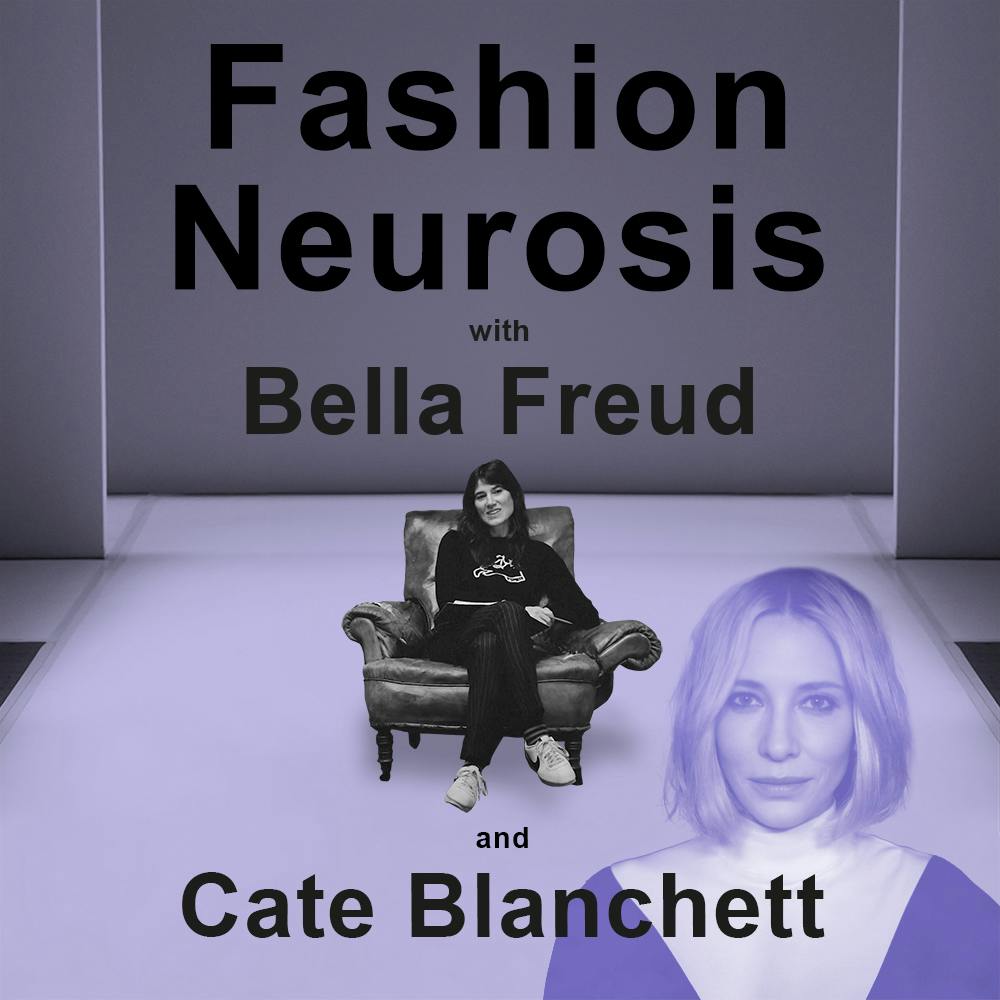
Come in. Welcome to Fashion Neurosis, Cate Blanchett.
- [01:19]
Doctor
Thank you, Doctor.
- [01:22]
Cate Blanchett
Can you tell me what clothes you're wearing and why you chose these particular ones today?
- [01:28]
Doctor
Well, I. I've got dressed and undressed several times today. And in fact, it wasn't. Not in a bad way, but it was a very complicated thing. Even getting out of bed, I don't think I wanted to get dressed. So it was quite a problem for me, actually. But I think it was to do with warmth, actually. So I. I. The first thing. I love this little. Think someone knitted it for me when I was. I think it might have been Sandy Powell.
- [01:57]
Cate Blanchett
Really? This little.
- [01:59]
Doctor
And so, yeah, so I sort of worked from the neck down, but it was quite complicated because I live in the country and I had to come up. I'm rehearsing a play, so you sort of. You have to be. So I have to feel like I'm able to move because I was coming up on the train and then I knew I was coming to you, and I was going to be up into the evening and it was snowing at home, and then I. Yes. So I sort of had to. And then I was constantly changing at the shoot, which I enjoy, but it made my. And then I went into the cold water this morning, so the first thing I put on was my Budgie Smugglers. So, yeah, it was a bit complicated. So I don't really know. I think I was probably half asleep and half in a dreaming state when I got dressed.
- [02:55]
Cate Blanchett
Do you do cold water swimming?
- [02:57]
Doctor
Yes. Which. Yes, is quite a surprise for those who know me, because I can't stand cold water. Well, I mean, I quite like it now. We just went to the base of the Arctic Circle and my husband and I saw this image of people smashing the hole in the ice and jumping in. And we thought it was really romantic. But in fact, I think, I mean, I saw Katherine Hape, you know, she swum her whole life. Right. The day she died, she was breaking the ice and swimming. So I thought, yeah, that's a good thing to do. Yeah. And this old Russian nonnas going on that long. Those long Russian races along the river. Yeah. So I think that's where I'm heading. I don't know where I'm heading professionally, but yes, that's where I'm going in my old age. Along with every other middle aged woman I think is plunging into the water.
- [03:59]
Cate Blanchett
Yeah, I do a cold shower. I don't go into a lake cause there isn't one Dubai. But I do have a cold shower after my hot shower every morning.
- [04:11]
Doctor
Oh, so you do it that way. I go cold first because I would lose the will. I just wouldn't. I wouldn't be able to follow through. I'm too cowardly. I have to go straight in.
- [04:24]
Cate Blanchett
It's very good for the mood, isn't it?
- [04:26]
Doctor
Yes. I think it's maybe the one time, apart from being on stage, the one time of the day where I'm truly this terrible thing to admit, where I'm truly present, I think, because obviously your body goes into such shock. Well, depending how cold the water is. Yes. I just. It's. Yeah. I hear the bird song and I hear my breathing and I hear the water and. Yeah. And the distant traffic and. Yeah. The sounds of the trees. I love it. I really love it.
- [05:02]
Cate Blanchett
Oddly enough, Nick Cave was talking about doing it too. And that effect of it being such a shock to the system that you just don't have any of your other kind of distracting thoughts.
- [05:17]
Doctor
And you. I think. Well, for me I realize how. Yeah. It's interesting, Nick does it, because obviously having music in your head constantly and poetry and. But I read this book during lockdown, Lucy Elman book called Ducks Newburyport. And it's this. I mean, her father was a Joyce scholar. And so I guess that's partly why and partly because there's, you know, she's decided to not punctuate this stream of consciousness of this woman who's baking in her kitchen. And you realize the amount of intrusive, elliptical, rhythmic thoughts that go on in your head, a lot of which is just habitual. Garbage. And to not have those intrusive rhythms going on in your mind even for three minutes a day. It's just this little island where the synapses disconnect and hopefully stay disconnected for at least another three minutes when you get out of the water.
- [06:22]
Cate Blanchett
But this is odd.
- [06:24]
Doctor
This is odd, the lying down thing. Looking at the ceiling. I think I'm probably realizing how much I spend looking at things rather than listening to them.
- [06:36]
Cate Blanchett
Well, it's interesting that you don't read the signs from somebody else by looking at their face and speaking. Speaking in a slightly kind of. In this kind of unnatural way where you're not looking at each other, wondering what's coming out next.
- [06:55]
Doctor
Yes. But it's also. I think it's the thing about lying. I mean, I am not saying anything that hasn't already been said. Not remotely interesting. But it's the lying down thing, I think that is the weird thing because I probably. I'm constantly in motion. I don't know about you, but I'm like a shark, I think. So if I stop moving, I fall asleep. So to be lying down and not doing something is very. Is a very strange thing for me. I mean, you know, even something as ordinary and as interesting as reading, you know, or mending something.
- [07:39]
Cate Blanchett
Yeah.
- [07:41]
Doctor
Listening to music. Well, I'm listening to your musical voice.
- [07:46]
Cate Blanchett
And what was your first memory of glamour and how did it affect you? You have a childhood memory of. I remember very vividly when I was around four, that my mother had this friend and she. I found her really glamorous and she had an Afro and she wore these beads and she was so cool. I didn't really realize what cool was at the time. But I was really drawn to her because of how beautiful she was. And I wondered if you had a.
- [08:19]
Doctor
Memory, was it the way she moved in the clothes or the sounds that she made, or was it simply the looking at her?
- [08:27]
Cate Blanchett
It was her atmosphere, it was her vibe. And so I always used to ask about what happened to Bobby.
- [08:35]
Doctor
Oh, and her name was Bobby.
- [08:36]
Cate Blanchett
Yeah, she was just.
- [08:38]
Doctor
Fabulous name too.
- [08:39]
Cate Blanchett
Just great. And I think of her and that was the moment where I thought there's something in how you style yourself. Even though I obviously didn't think that.
- [08:50]
Doctor
Logically, that there's the way you wear what you wear, I guess, isn't it? Yeah.
- [08:56]
Cate Blanchett
I was drawn to her.
- [09:00]
Doctor
It was probably texture and smell. It's interesting. Probably my mother. And I don't think by a universal definition you'd say that she was a glamorous woman. But she had one particular dress that was very floaty. It seemed the dress was a summer dress. It was heavier than chiffon. Like it was a. But it moved so beautifully. And I. I used to go into her wardrobe just so I could touch it. And then I did spend time in her wardrobe. Cause it smelled so beautiful. So I used to lock myself, not lock myself, but I used to love being in little dark, enclosed spaces. I wanted my bed to be. You know, I read about these, you know, these childcraft books and, you know, a very Americanized children's way of looking like it's a very Disneyland, it's a small world way of looking at cultures other than ones that were living and breathing in 1950s America. But, you know, European countries that had beds that were in walls. So I would go into my mother's wardrobe and I think I'd probably smell the clothes, actually, if that doesn't sound too weird.
- [10:27]
Cate Blanchett
Did she wear perfume or anything like that?
- [10:30]
Doctor
Did she? Yes. Yeah, she did. So it's probably that. But that seemed very glamorous to me. No. Oh, no. When I was at drama school, I was living with a woman who had a much older husband, very wealthy husband, and she. And got married very young. And she had eight pairs of sunglasses. And I just thought that was the most glamorous thing I could possibly. I thought, imagine having more than one pair of sunglasses. I thought that was very glamorous. But, yes, it was probably the earliest one was that dress of my mother's.
- [11:09]
Cate Blanchett
Because you've talked about growing up with very little money and how you didn't have a lot of things. And I grew up like that too. So the notion of having more than one thing or having any nice things, you know, like lots of pairs of socks or something. I remember I had one pair of socks.
- [11:35]
Doctor
And would you darn. Well, darn them?
- [11:39]
Cate Blanchett
I remember when I started school, we'd come back from Morocco. My mother had made me the school uniform before they abolished the school uniform. And I had.
- [11:50]
Doctor
She'd made you your school uniform? Yeah, because my mother used to make my underwear. No. Yes. Yes.
- [11:56]
Cate Blanchett
How amazing. And did you like it or did you hate it?
- [12:00]
Doctor
I just sort of accepted it. She made all our clothes, I think now, obviously for financial reasons, but yes, it's probably like the same reason why your mother made you a uniform. Or was she experimenting with.
- [12:15]
Cate Blanchett
No, it was very much. Well, this is, you know, how to get a uniform. I'll make it. And. But I was conscious that I wanted to be a bit more like other People and.
- [12:30]
Doctor
Yeah.
- [12:31]
Cate Blanchett
Did you have things? Did you have that or.
- [12:34]
Doctor
Yes. I remember that I went to quite an exclusive. I think my mother wanted to give me clothes that she was not able to have and experiences that she felt that she would have liked to have had as a young girl, even though he couldn't afford it. And so she took me to this one very quite exclusive dress shop for young ladies. And I was given this. I had a fitting. I mean, I must have been about five or six. It was all a bit sort of. I found it all a bit creepy. They had these velvet curtains and you knew things that were behind there. Felt like there was a dead body hidden somewhere. And I got this pale pink, very stiff dress with rose sort of trimming, pale green trimming and little sort of ruched sort of frills around the. I've still got the dress. Really? Yeah, I've still got the dress. And I. I don't know why I put my daughter in it when she was about 5 and still felt wrong. And I went to a party and I had party shoes and party socks. And I think I only wore that dress once. Cause I grew very tall very quickly. I don't know. And then it just sat in a box, sort of like a. I had a friend who'd. This beautiful. Beautiful. At university. Beautiful auburn hair. And she cut it and sold it to pay her rent one month. And I came home and I didn't realize she'd done this. I saw that she had cut her. Her hair went right down to the. Behind her knees. It was magnificent hair. And I came in and all her hair was cut off. And I screamed and she screamed back and she burst into tears and she brought me into the room and. Why am I telling you this? There's a woman on the couch. It's got nothing to do with fashion. And. And she. She. Her hands were shaking and she opened the box on the bed and we both screamed. Well, I screamed because she'd already. She'd seen it. And the hair was sitting there in the box. And it was literally like a severed limb. It was this part of her body, like her arms sitting in a box. And this dress felt slightly like that to me. That it's this thing that I. I sort of inhabited, but it wasn't really me. It was like an avatar in a way that I'm. So. I don't know why I put it on my daughter as well, but she didn't enjoy it and she didn't wear it. And I don't know. I Think it's up in the attic somewhere as things that are, you know, ways that you should not wear clothes. It seems so aspirational. It seemed to contain a lot of perhaps not particularly healthy psychology or, I don't know, aspirations of my mother's that even she hadn't processed. And yeah, I didn't enjoy wearing it.
- [15:52]
Cate Blanchett
Did you experience any kind of judgment or disdain from other people to do with how you'd been dressed as a child?
- [16:04]
Doctor
Oh, you mean because of the mothers who make their children's clothing?
- [16:10]
Cate Blanchett
Yeah.
- [16:11]
Doctor
Did you feel that?
- [16:13]
Cate Blanchett
Yeah, I mean, my mother was very young when she had me. I think she was 18. And she wasn't married or anything. And she dressed as a hippie, so already she kind of was out of the norm. And she didn't have a wedding ring. We were very much judged by. And I was so conscious of it. And even though I didn't want to be like other people, I was. Felt the burden of their kind of contempt in a way. And it was quite a loaded thing.
- [16:47]
Doctor
Yes, I, I mean, I felt that through the clothes that, that I wore. I used to go roller skating at a roller rink and it was really incredibly rough. You know, like it's. And I loved roller skating. I just, I loved moving that quickly going backwards. And the music was, you know, it was, it was Kiss and AC dc. But it was just really great music to, to roller skate to. And I remember going. My mother would always make two. My sister's a couple of years younger than me and she would always make one outfit in one color and exactly the same outfit in another color for my sister. And she'd made these terry toweling sort of culottes. I guess they were in one in hot pink and one in kind of like this turquoise sort of blue color and a matching bolero jacket. I know. And I just thought that it was really comfortable, stretchy. You could move in it and add a little singlet to go underneath. And can you imagine? I mean, I just went. These guys with this cut off flannel hats with their, with their packet of cigarettes stuck in there with wife beaters underneath and torn jeans. And then we showed up in these culottes made of terry toweling spinning round the roller rink. And I can remember being stared at, but I thought I was being stared at because I looked so fabulous, because I felt fabulous. And then after being on the, the. The rink for about half an hour, I thought, I don't think everyone thinks I look as fabulous as I feel. So that. And then I. And then I. I got off because I realized that I just. It was probably going to be dangerous for me to continue wearing that outfit. Who knew that terry toweling was such a dangerous fabric?
- [19:09]
Cate Blanchett
Did you?
- [19:10]
Doctor
I don't know that I've worn it again, though.
- [19:13]
Cate Blanchett
But did you have a shame attack or you just thought, actually, I'm not being appreciated properly? It sounded like you had quite a good sense of yourself, then. You weren't susceptible to.
- [19:26]
Doctor
Yeah, I think I had a slight retrospective shame attack when I saw a photograph of me wearing the outfit at a birthday party later on. Winning them. One of those. Yeah, I think it was a Polaroid. I went, oh. I think I could see what they were. I didn't necessarily think they were entirely right, but I could see their point of view.
- [19:51]
Cate Blanchett
I bet you look fantastic. I mean, I'm sure you were right there.
- [19:54]
Doctor
You must have been. I was right there. I was very present on that rink. And then. Yeah.
- [19:59]
Cate Blanchett
And did you get praise from your.
- [20:01]
Doctor
Mother for that outfit or just sort.
- [20:05]
Cate Blanchett
Of appreciation for being beautiful and a young girl, you know, everything that you would sort of.
- [20:14]
Doctor
That. I don't remember it being negative. I just don't really remember it. Maybe I didn't seek it. I don't. From Mum? Yeah. I don't know. For my outfits.
- [20:28]
Cate Blanchett
Well, just. I suppose I. Putting myself in the picture of, like.
- [20:34]
Doctor
Was your mother very free with her praise?
- [20:38]
Cate Blanchett
Not really. I think she hadn't received any and it didn't really. She didn't know how to pass that on. So I felt loved in it. But there was no demonstration. So I had a lot of shame about sort of being excited about myself. I sort of measured. I would slap that down quite quickly because it felt so risky. I always remember this time when we lived in Morocco and I'd learned this dance that they did in the main square and I had it off perfectly and I wanted to show my mother. I was probably six and I was standing behind this door doing this dance and just. I knew I needed to open the door and go through and do the dance, but I never did because there wasn't enough encouragement for that sort of expression. Yeah. And.
- [21:41]
Doctor
And what were you wearing when you were.
- [21:43]
Cate Blanchett
I had two outfits that Mum had got me from the. The souk. One was a patterned dress, one was a lilac nylon caftan with a kind of gilet thing that went over and gilet. It was so nice. It was gorgeous. I pretty much wore that all the time. So I looked like a local Moroccan girl and I spoke fluent Arabic.
- [22:09]
Doctor
Do you still?
- [22:10]
Cate Blanchett
No, I wish I did. I had.
- [22:12]
Doctor
No, it must be there somewhere.
- [22:14]
Cate Blanchett
I feel like it must be there. And in lockdown. I tried to do Arabic with duolingo, but anyway, it was so difficult.
- [22:22]
Doctor
I know, but it's one of those things. Maybe you need to re immerse yourself in it. But did you play dress ups? Well, obviously you were in that particular instance because my sister and I would play that all the time. I mean, we'd raid the closets of my mother and grandmother and my. My elder brother and then she'd put me in clothing and then give me a name.
- [22:49]
Cate Blanchett
Oh, really?
- [22:50]
Doctor
Yeah. This would be a Saturday afternoon. We'd either be out on our bikes going down by the river or she'd dress me up and call me Piggy Trucker. And then I'd have to come and invent how that piggy talked and moved. And then, yeah, we'd spend hours and hours and hours with mountains of clothes and yeah, some of them were very her. And she ended up. She started off as a costume designer. Oh, really? She works in urban design, but yeah, she started off costume.
- [23:30]
Cate Blanchett
Did you have a code way of dressing? Like did you want to stand out or blend in?
- [23:38]
Doctor
I probably wanted to stand out, I guess. Although I was really and still am really shy. Like, it's not like I. I certainly don't feel that way now. I guess maybe that. That risk of exposure or being looked at, you know, when you walk down the street dressed like a banana, you know, in banana yellow, that I don't no longer have that urge, but there's that similar sort of exposure, I guess, when you're in front of the camera or certainly when you're on stage. So that gets fulfilled, I guess, that urge in other ways, but not in everyday life. No. Did you want to be looked at?
- [24:32]
Cate Blanchett
Well, I think I had a similar thing to you. I didn't want to be anonymous, but I didn't want to be. I didn't want to be ridiculed.
- [24:47]
Doctor
Yes, you can be looked at for the wrong reasons or what feel like slightly perilous reasons. Potentially perilous.
- [24:55]
Cate Blanchett
And did you. Was there anything that someone else wore when you were at school that you felt bestowed almost magical power on them that you wanted to have?
- [25:07]
Doctor
Well, I went to a girls school with a uniform for high school and so it was obviously it's the way you wore the uniform. And so there was a girl in a year above me who just all of a sudden started wearing her skirt, her winter skirt, incredibly long. So it Wasn't. It wasn't. We were all wearing the same uniform, but it was how she wore it. And she wore her socks pulled right up. So it was the antithesis of the way that everyone else was wearing the uniform. And I thought that was so cool. Oh, thank you. And she did. She started doing her summer uniform up with the top button done up. And we had a star that was the emblem of our school. And she didn't put the star in her blazer, she put it up there as a brooch. And I just thought this. I thought she was deeply cool. I couldn't tell you her name or where she is now, but I thought that. And so I just did exactly the same thing.
- [26:17]
Cate Blanchett
That is very cool. I must that because most people, they wear, you know, they go really, really short, but to go long, that's just really long. That's major.
- [26:30]
Doctor
Yeah, she's like a little pilgrim. But yes, it was fabulous. And then really everything was incredibly oversized.
- [26:40]
Cate Blanchett
Because the sort of shy thing. And you've described yourself as part wallflower, part extrovert.
- [26:48]
Doctor
Oh, have I? Yeah, I guess I am, yeah. I mean, aren't we all? I mean, to some degree. It depends on the circumstance, I guess, doesn't it?
- [26:59]
Cate Blanchett
I think it does. I mean, Nick described Susie as the most introverted extrovert he's ever met, which is so spot on because there's so interesting. There is this wealth, there is this desire to express and wear amazing things or be visible and this kind of mortification that happens at the same time. And I'm always so impressed when someone goes against the grain and acts out in spite of feeling so self conscious.
- [27:37]
Doctor
Yes, it's interesting because some people, it's not necessarily the of them that will make them feel exposed. It's, you know, they don't want to talk about something in particular or some subject will make them feel incredibly exposed, or, you know, touch will make them feel exposed, whereas they can actually wear the loudest, most conspicuous clothing. And that's not an area of exposure for them. So. But I think it's also. It goes along with professions like certain professions are just expected to be. You know, you work in fashion or you're a dancer or, you know, you're an actor or whatever or musician, that therefore, because you get up and expose yourself through your work, that somehow everything about you is available all the time and it doesn't cost you anything to express that or to let people see it. I guess.
- [28:38]
Cate Blanchett
Yeah. I'm always interested in when people wear more or less when they Feel particularly vulnerable. Do you know what you like to wear when you feel like that?
- [28:57]
Doctor
It's funny because I. I think probably I. I don't think necessarily, unless for practical reasons about what I'm going to wear that day. Unless. Although I'm sure you've had these days too, where you, you know, particularly sometimes, you know, have to leave in a hurry and so you think, I know what the weather's going to be like tomorrow and I've got to get on a train or what, like today. And so you think, I'll just wear this. And then for some reason you put it on and you go, no, this just feels really wrong. I mean, and there are some days it's not of how you're going to be looked at. It just doesn't feel right, or you feel like a fraud even in your own clothes. And then I guess maybe that somehow you are unconsciously vulnerable because you're feeling slightly uncomfortable in your own skin that day. And then some days you might be terribly upset or fragile or something, but then getting dressed is quite easy because you don't have time to think about it because you're concentrating on something else. I don't think I necessarily think about clothes as something to hide in, although I do love a big coat and I do own more than eight pairs of sunglasses.
- [30:21]
Cate Blanchett
Good.
- [30:21]
Doctor
How glamorous am I? So those things are things to hide behind. And often before I needed glasses, I would sometimes wear glasses. You know, whether you go down the street to get your proverbial pint of milk.
- [30:42]
Cate Blanchett
I think that seems appropriate for a film star. I mean, you've got to do something.
- [30:48]
Doctor
Oh, film star, yeah.
- [30:52]
Cate Blanchett
And did it also. I mean, it is. It isn't exactly hiding because sometimes it's a way of revealing too, isn't it, to be covered up? But that's what you're revealing. You're revealing. And I find there's certain ways of covering up that enhance the face. It's like focus on my. My mind or my. The oval of the face.
- [31:21]
Doctor
Yes. I remember seeing Baryshnikov dance in his. Later. Well, towards his end of his career. And it was the most simple but most effective piece of dance costume I think I've ever seen. It was literally to enhance the bits that he wanted seen, obviously. And the parts of his body which were obviously not as mobile as they once were. And it was just a turtleneck and he didn't, you know, he couldn't see his ankles or anything. And the dance. It's literally like his hands were jumping, you know, 12ft into the air because you were aware of every single joint and minuscule movement of each of those joints and how expressive his hands were. I felt, I mean, I literally felt he was just, yes, moving from one side of the stage to the other. And I'm sure he barely was moving, but it did exactly that. And so you were very aware of the dance of emotions on his face and it was exquisite. But yes, I mean, and for that, Roman, that's Turtlenecks are fantastic things, multitude or no, emphasize the things that you want emphasized.
- [32:50]
Cate Blanchett
This is a paid advertisement for BetterHelp. We are always hearing about red flags and the traits we should be on the lookout to avoid. What about green flags? The qualities we want to enjoy in a relationship or friendship, like kindness, listening, not jumping to conclusions. Therapy has helped me break some of my old patterns and embody some of the qualities that I long for in another person. I can get trapped in negative fantasy and talking to a therapist has helped me become less wary and guarded and communicate my feelings better. With over 5,000 therapists in the UK already, BetterHelp can provide access to mental health professionals with a diverse variety of expertise in mental health. Discover your relationship green flags with BetterHelp. Our listeners get 10% off their first month at betterhelp.com neurosis that's BetterHelpH. E L-P.com neurosis I always remember a, you know, think about you in the 2000s when on the red carpet. It was always so exciting when you were on it because you'd be wearing some of the best fashion that's almost ever existed and some of those things by John Galliano and oh, I know. And also, yeah, you have this kind of dazzle and you also have this kind of inscrutability and it's such a wonderful combination. And I, I was think thinking about when you would be getting ready for those moments which are such big moments. Did you think at all about what other people were wearing and how you would just kind of streak into the streak front of the race and just eclipse everyone?
- [34:53]
Doctor
We don't see streakers really anymore, do we? Oh God, the streakers were great. Yeah, they were. You'd always beg for there to be a streaker at the football game. Yeah, well, of course when I first stepped up I was totally green and there wasn't really, there was red carpet to walk on, but there wasn't. It was much more chaotic and not as awkward, organized and orchestrated and over designed as the whole enterprise is now. I remember the Very first time I went to the Oscars, I was behind the fabulous Celine Dion, and she was wearing. That was it. Forgive me. I think it was Galliano who designed it. She wore this incredible white that was sitting at a slant and a backwards suit that was done in reverse. So the lapels and the button were at the back. And I was behind her on the red carpet, such as it was. But the crews weren't organized like, you know, room 101, where you go in and they're just there. It wasn't like that. It wasn't a step and repeat. You just meandered your way through it. But I was behind her as she worked the carpet. I'm sure if any photos were taken of me, it just would have been looking at Celine Dion going. Just watching her strike all these extraordinary poses in this outfit, like, really work it so you've got a proper picture of it. It was like a masterclass on. But of course, that doesn't come natural to me. So I've never been particularly good at that. But, yeah. So, yeah, I don't think. I thought. I didn't have a sense, fortunately, a sense of consequence there. So I just sort of. I think I just was looking out rather than thinking how I was not even thinking that anyone would take a photo of me. Although I had this. The very first time I went. I had this beautiful dress that John had made for me. I'd seen. I can't remember which. What year it was, but he'd done this beautiful collection with a lot of embroidered knits, and there was one gorgeous white dress which was embellished with a whole lot of flowers. And I'd asked. I was doing a photo shoot for Vogue in Australia, and I'd asked for them to. If they could call it in. And getting anything through customs still in Australia is so complicated. So it didn't make the shoot. And then he and I met in London through a mutual friend, and he offered to design something for me. I couldn't believe it. And I was describing this dress, and he says, well, why don't we make it in another color? And so we decided on this beautiful purple. And then he just. This whole beautiful back that was embroidered with hummingbirds. And I remember that, yeah, it was just gorgeous. But why I didn't think anyone would take a photo of that beautiful dress had nothing to do with me. It was just all Galliano.
- [38:16]
Cate Blanchett
But you inhabit these dresses so well. You seem so at ease, and it's the sort of combination of your sort of natural modesty. And you seem to sort of have this natural instinct of how to. How to show it and how to.
- [38:32]
Doctor
Work was Celine's masterclass. Yeah. No, no, I've. Look, it's taken me a very, very long time to feel I'm much better in. I mean, you know, when I. You know, if I had my time over, I would have loved to have been a Bhutto dancer or worked with Pina Bausch or Martha Graham, you know, And I had the ability, of course, which I don't, but I sort of feel like I make sense in motion. And so to make sense to a still camera has. It's been a long, awkward road. I think, for me, that's something that has. I'd look at other people in awe at the comfort. And then I had the great fortune. I made a film about Queen Elizabeth, and Richard Avedon was taking some pictures for the New Yorker. I think it was of. I think it was people who. Because Judi Dench was photographed. I think Patrick Marborough was photographed. So it must have been people on stage. But for some reason, I was in front of his lens, and I realized he didn't look down the lens at all. Of course, he just had the. What do you call that thing? Clicker thing, the presser butter thing. But we would just talk, and he only took about five pictures. He did a Polaroid and then. Or the equivalent of. He did one test, and then we just talked and he just knew. Exactly. And I realized, oh, okay, so you can have a conversation with the photographer through the lens. So you're actually communicating something. And I know that sounds so simple, but by working with these amazing photographers and you learn. You do learn a lot from them, but the red carpet's something different. And also, of course, what it is today.
- [40:37]
Cate Blanchett
There's even the notoriously discerning and exacting Tiktoker, Nikki Campbell. He's declared your outfits are flawless. And it's.
- [40:47]
Doctor
Oh, well, there you go.
- [40:49]
Cate Blanchett
I mean, that is really something.
- [40:51]
Doctor
What am I doing here on the couch? Bella Freud. I should be on TikTok.
- [40:55]
Cate Blanchett
What. I mean, what does it feel like to have designers projecting their love onto you? Because it is an amazing thing to be able to dress someone who seems to bring. Will bring your work to life. And you were really good at that.
- [41:14]
Doctor
Oh, well, I enjoy it, but it's also. I'm always curious. It's like a part that you get offered. You think, oh, you want me to play that? That's fascinating. Wow. And so you rise. You're moving towards Someone's perception of you or something they've seen in you that perhaps you didn't even think was there. And so when someone does a sketch for you, I mean, it's an incredible privilege, of course, but I'm always curious. It's like, oh, wow, you, you think that I would be able to move well in that, or you've seen me wearing that. That's really interesting. Well, that color, that fabric, that silhouette. So it's, and then it's of course, then how you wear it. And it's wonderful when you're in dialogue with a designer and then you through the fitting process, I mean, that's the part I almost love the most about developing a character is that time with the costume designer where you try things on and you think, well, no, that's not the right direction and you move in another direction or they make an offer and then you then tweak it and say, what if the shoulders were slightly larger, smaller, you know that, that. So through that process of the fitting with a designer, you know, whether it's for an event or as a costume that a character might wear, that process, is that those little nuances, I think those details, finessing those details, I find really interesting.
- [42:57]
Cate Blanchett
Because when you're working on a character, do you imagine what that character would wear or do you find the clothes and develop her from within that or him?
- [43:11]
Doctor
You never know where it's going to come from. I mean, sometimes it's nothing to do with clothes. Sometimes it's a piece of music or a painting that you've seen or something, a snatch of something you've read that seems to resonate with something in the story. But it's usually something akin to, you know, a head on collision between the exterior and the interior. But certainly because costume fittings in a way are very practical. It's like meeting someone that you're enamored by or deeply admire. If you approach making something together, your conversation has a focal point in a way. Whereas sometimes it's really difficult to, or there's too many hurdles of shyness or whatever to actually approach knowing how to talk to one another. And sometimes it's like that with the character. If you approach it too directly, barriers can go up. So if you have something practical to do, like okay, what are we going to wear? What shoes am I going to wear? What colors, what silhouette might you inhabit? And you start trying things on, then your brain, the synapses, disconnect a little bit. And so into that space can come more unconscious thoughts. I think but yes, in that space, in the psychological space of the changing room, that's where a lot of things are born. And you don't know why, necessarily, or drawn more to that shirt or, you know, that jacket or that skirt or whatever it is, but you don't need to know, really. And then, of course, it's then when you've built the wardrobe, it's then, how do you. How might those clothes tell that story? So you don't have to do it with the other bits of your arsenal or the other parts of your performance. Or you can, you can. I mean, not to be too obvious, but you could wear something to. To show the. The mental disarray in slightly, you know, slightly akimbo, that. That then you can be. You're not paying any attention to that, that internal disarray. And the character actually thinks, well, no, I've got this. I'm on top of this. But you can see by the way they're presenting themselves, they might be sweating or maybe they've done their button up their shirt up with the wrong button, you know, and then you've got to know what the shot is. So is the audience even going to see this? If it's all shot in a long shot? Maybe I need to express it differently. So it's not just the choosing of the clothes, it's working out in the moment how you might wear them.
- [46:18]
Cate Blanchett
Oh, that's so interesting.
- [46:20]
Doctor
And also, too, I think I worked with an actor really early on on stage, and she. I thought, she's a bit older. And she'd always come. Her stockings were really wrinkled and sort of. And often she'd put, you know, she'd put something on a bit wrong and I'd try and fix it up for her in some, you know, very discreet way on stage. And then I realized halfway through the run that she was doing it deliberately so that she was giving me something to do with her. We had some. So she was making offers to me about a relationship through the way she was wearing those clothes. And here I was feeling terribly embarrassed and sorry for her. But she was a genius, you know.
- [47:11]
Cate Blanchett
That's fantastic. Did she tell you that or did you.
- [47:13]
Doctor
Yes, yes. No, I think I said. I think I said to her dresser something about it and her dresses went as if, you know, you. You know, she's doing it deliberately.
- [47:26]
Cate Blanchett
That's wonderful. One of my favorite of your roles was you playing Bob Dylan in Todd Haynes film there.
- [47:36]
Doctor
Todd Haynes. What a genius.
- [47:38]
Cate Blanchett
Genius.
- [47:39]
Doctor
I mean, there's a strange ask you have to say yes to that, don't you?
- [47:44]
Cate Blanchett
Well, I mean, it was just brilliant. And you play a boy very well and it suits you. And I wondered what adjustments you make within yourself to incorporate being a man. Because it wasn't just you playing a man. It was so much more subtle and.
- [48:03]
Doctor
Well, it was so liberating, for starters, because I was playing him at one of his most sort of iconic, visually iconic periods. When he went electric, I lost a lot of weight. And so the clothes were feeling. Because he was rake thin himself and quite, in a conventional sense, quite feminine. You know, big hair, small body, and he, you know, he was wearing a lot of heels and quite embellished shirts. And so I lost a lot of weight and so the clothes felt differently on me. So I think I was moving differently anyway. And then there was a scene on a bed in a hotel room and a friend of mine who was working on the film says, put a sock down your trousers. I went, you said, it'll change the way you move. And it really did. Suddenly I had another thing to contend with. I must try that just for fun. Just because. Just put a sock down your trousers. See how it changes the way you move? And it did. And so I did that for the rest of the shoot. And I was really. Yeah, I was really grateful for that really simple piece of advice. It really helped, actually.
- [49:31]
Cate Blanchett
I can imagine it's totally, you know, couldn't be more alien, could it?
- [49:38]
Doctor
Yeah, and it was a bit strange at first and then I got used to it. I don't still have a sock down my trousers.
- [49:44]
Cate Blanchett
But because you also talked about, around that film about something called identity avoidance. And I wondered what that mean, what that meant.
- [49:56]
Doctor
And who talked about that?
- [49:58]
Cate Blanchett
You did.
- [49:58]
Doctor
Oh, did I?
- [49:59]
Cate Blanchett
Yeah, I was looking at an interview and you. Someone had asked you something and you said it was more like identity avoidance.
- [50:06]
Doctor
You mean for that part?
- [50:08]
Cate Blanchett
Yeah. I wondered sort of if that meant you close something down in yourself in order to.
- [50:16]
Doctor
Well, they. People are always asking you as an actor, whether you identify with your role. And I mean, all acting cultures are subtly different. And being Australian, I think it's perhaps an acting culture. Certainly on the stage, it's more akin to performance in Germany than it is in England or we're somewhere between Germany and America. You know, we're quite physical and we don't mind being a bit messy emotionally, but yet we've inherited and been colonized by sort of so much of British culture. And so we have a regard for language. But people are asking often if you identify with the role in the way that they do in America say so that the closer your experience is to the identity within the role, the more true it it has the chance of being. And I think I probably. Not that I avoid that, but I don't think of that first and foremost because I think if there's any identification with those things, it's going to be there. You don't have to mine that. But is that what you mean or you mean because I was playing against my gender?
- [51:37]
Cate Blanchett
I've never heard anyone say identity avoidance.
- [51:40]
Doctor
Yeah, I probably. I think I do. I don't think about it, to be honest. Maybe you could say, because I have the privilege of being perhaps conventionally identifiable. But I don't try and pin down the character's identity because I think about my. Maybe it's rolling and de rolling constantly. As an actor, I've always had a very fluid sense of that and I don't think about it until someone asks me the question. And I tend to probably avoid direct questions pretty absolutely. So maybe I just avoid everything. Everything. Avoidance. That's why I don't. So having gone through a bit of therapy, the bed, the couch. Well, see, I don't even know what to call it was in the room, but I never got on it. You never got on it either?
- [52:40]
Cate Blanchett
No. I was slightly horrified when he said, do you want to lie down? I said, no.
- [52:44]
Doctor
Yes. Have you ever done that thing? Sometimes when I have an excruciating amount of lines to learn and, you know, having a lot of train journeys and car journeys, I will record myself saying the other person's lines and leave a gap so that I can then say my lines in, you know, just by rote, if I have to learn them. And I wonder if you. If you ever laid on this couch and recorded yourself and put a little speaker over there asking the questions, or would that be too weird?
- [53:18]
Cate Blanchett
No, I haven't done that, but.
- [53:20]
Doctor
But you'd see. Wouldn't work because you'd know what the questions were that were coming.
- [53:25]
Cate Blanchett
Yeah, I wouldn't.
- [53:26]
Doctor
Maybe you'd get so, you know, involved in your own answers that you would forget what the next question was.
- [53:32]
Cate Blanchett
I mean, I. I quite like the idea of any kind of, you know, kind of contortions of trying to find anything out about anything. So it isn't. I could imagine trying some weird thing out or maybe. I mean, I like the idea of any exploration really. And you know, when. Just going back to the. Identity avoidance. It was such a good phrase because Bob Dylan seems so avoidant. You know, he won't. He doesn't seem like. I mean, obviously I've never met him. Like someone who will be placed. No matter what he seems to represent, he absolutely won't have it.
- [54:18]
Doctor
Yes. I mean, there was a. There was a lot of furor, wasn't there, when he didn't go and pick up the Nobel Prize. I mean, he continues. He doesn't want to be called a poet. He doesn't want to. Labels are very difficult. But he was so claimed so early. And I think it's the thing too, when you get known, you know, he doesn't want to be a folk singer. But he said something interesting recently, relatively recently, in an interview saying he doesn't even know who wrote those songs that he wrote all those years ago. Was it him? He's not that person anymore and he certainly couldn't write that way now.
- [55:00]
Cate Blanchett
Yeah.
- [55:00]
Doctor
And he was. He was sort of saying it with quite a good deal of awe. But I think it's. When you're so engaged in the stage you are currently in, creatively, aesthetically, whatever you. To imagine yourself back in a previous time is. Yeah, I don't know if that's a useful thing to. Maybe it's the only way you can deal with it is to avoid it until there's enough distance.
- [55:31]
Cate Blanchett
Seems like a good position, rather than harking back and being nostalgic to sort of think, well, you know, that was then and this is now, and now is what counts as. As we know from cold water submersion.
- [55:47]
Doctor
But it is a wonderful thing. I'm sure you've had this from moving around so much that if you. You discover something from a time long ago, an object, you know, a pair of shoes or a scarf or a shirt that you haven't seen, say 20 years. Like, I. The other day I went into. We were getting out. I'd put a whole lot of stuff in the attic and I was getting out some because we're going to. Going to the. The Arctic Circle. And I was trying to get out some old ski jackets for the. For my kids. And I found this suit that I wore it when I was pregnant with my. Just after I had my first son, who's just turned 23. And I hadn't seen it for, I'd say about 15, at least 15 years. And I just. There and then, I didn't have the time. I just took my clothes off and I put it on straight away and I was transported back. It was like a portal right back to when, you know, my son was sort of one and being Sydney and right back to that time it smelt a bit stale, but so it wasn't smell, it was just the feeling of it and. Yeah. So they can. It is nice to revisit those things if you keep them long enough.
- [57:18]
Cate Blanchett
Yeah.
- [57:19]
Doctor
But not to. I wasn't trying to, you know, I took it off again and you know, I didn't, I didn't, I didn't feel nostalgic or try and reinvent it, but I certainly loved remembering it.
- [57:33]
Cate Blanchett
And if you fancy someone and you don't like what they're wearing, does it kill your attraction to them?
- [57:43]
Doctor
No, no. Actually, no. I'm always quite curious because you think, you think that. I mean, look, it's because I think people who are very. I think what probably does would kill attraction is if they threw something out the window or they put their shoes on the sofa, which I find very. I don't know.
- [58:17]
Cate Blanchett
I tried to get you to get.
- [58:19]
Doctor
Your shoes on the sofa. No, I couldn't. I'm really sorry. Do you want. Is there a big thing? I couldn't. No, but I. It's more about if they think they. You know, there's a wonderful thing when people feel so comfortable in their own skin and in a way you could feel they're just thrown on what they're wearing and they're not, they're not wearing it to. For you to admire. That's really attractive. I think probably the turn off would be. Is if they're wanting, they're wanting some comment on it or there's some. There's some sort of overly self aware thing about the effect that they're having on people that's not necessarily appealing. Why do you. If you, if you, if you come across someone and you think, wow, that just doesn't suit you. I. I'm kind of. I want to give them a pat on the back for having a good Aussie go.
- [59:23]
Cate Blanchett
Yeah, A good Aussie go is a great, A great attitude. Definitely. I definitely find that walking around East Town I'd be critical if someone was showing out. But now when I see that I'm. I'm so glad. I'm so grateful that anyone makes an effort.
- [59:45]
Doctor
Yes. Yeah.
- [59:47]
Cate Blanchett
And do you have it. Are there any things, particular pieces of clothing that a man wears that you find instantly attractive?
- [59:58]
Doctor
I like a man who doesn't wear socks.
- [60:01]
Cate Blanchett
That's so interesting.
- [60:02]
Doctor
No socks. Yeah. I find socks are funny things. I mean, I like them. They're pract. For practical reasons, particularly in trainers, I guess. Do you I'm. Yes. No socks, I think is really. And I do. I do love jewelry on a man. I do. Really glamorous, actually, isn't it?
- [60:31]
Cate Blanchett
Yeah.
- [60:32]
Doctor
I mean, not. There's jewelry and there's jewelry, but I think that's. Yeah. A bit of gold.
- [60:41]
Cate Blanchett
It's quite thrilling, isn't it?
- [60:42]
Doctor
Yeah.
- [60:43]
Cate Blanchett
I think the only thing. I don't like his matching earrings on a man.
- [60:48]
Doctor
I mean, you can overdo it, but then on some people it works.
- [60:51]
Cate Blanchett
I know, I know. You can never entirely know, but it's. When a man does wear jewelry or rings and stuff, it's like they're telling you something about something you don't know about, which is always an exciting clue.
- [61:11]
Doctor
Or you just catch a glimpse of a. Like a bracelet under the shirt. But I do like knitwear. It's because it's just the touch, I think.
- [61:25]
Cate Blanchett
When I worked for Vivienne Westwood in the 80s, she.
- [61:29]
Doctor
How fabulous.
- [61:30]
Cate Blanchett
I mean, she was an amazing bigger mentor to me, but she'd often go off to be interviewed and she'd wear the same things. And she would usually wear this red jersey corset with long sleeves and a matching jersey skirt that had. She designed. It had these kind of covered balls at the back of the, like the. The small of the back. And it was based on a kind of 18th century idea. She wanted exaggerate that shape. And she'd wear this outfit and sometimes even we would say, like, are you wearing that again? But.
- [62:14]
Doctor
But she just knew how fabulous it looked.
- [62:16]
Cate Blanchett
I don't know. She just. There was no. She just wore what she thought was good. And you, you, you know, it's one of those fashion things that's noted about you that you will occasionally wear something that you've worn before, which is almost a crime in this day and age. But you're very. It's very appreciated and noted and.
- [62:41]
Doctor
Oh, it's just. I mean, the excess of it. It's. There's a sense too, when you have a public profile, I guess, is that something that you wear in public for an event or something public, it can become a bit like a uniform that Cate Blanchett wears or whatever your name happens to be. And I felt that these really beautiful objects that I. Items that I really loved were becoming like a uniform. And I thought I just wanted to wear them more so that I could feel that they were mine, that I wasn't becoming something other than who I was. You know, I mean, there is a certain skin or armature that you want to put on in Order to often endure being in the public if it's not a space that you necessarily feel comfortable in, which I don't always. But that said, it just felt like these things were. I wanted to either bring them into my everyday life or wear them again to claim them, I guess.
- [63:58]
Cate Blanchett
Yeah.
- [63:59]
Doctor
Apart from the fact that it's just a bit wasteful, isn't it? I mean, you do. I'm sure the sweater that you're wearing now you've worn lots of times because it's fabulous and that you might, you know, you'll wear it in lots of different ways. So why does that not happen when you're in the public eye? Seems. But I know the people have said to me, you know, been slightly embarrassed for me, like I've somehow forgotten that I've worn it before. Fashion dementia.
- [64:34]
Cate Blanchett
I know. I wondered, like, if you're wearing a major look, that do you have to work harder at not feeling self conscious? Because you. You do wear these things incredibly well and you just always look at ease in them. And I just wondered, do you have, like, certain adjustment if it's a major fashion look? How do you kind of adjust yourself to seeming your natural self while having to incorporate.
- [65:06]
Doctor
Oh, gosh, I think you mean if you're on the.
- [65:10]
Cate Blanchett
On the.
- [65:10]
Doctor
On the carpet.
- [65:11]
Cate Blanchett
On the carpet?
- [65:12]
Doctor
Yeah, I think I probably wouldn't because there's a slight gladiatorial quality to those events. You do want to feel comfortable. It's the only way. I. I mean, some people, I guess, are better at it than me, but I can't do it unless I feel comfortable. And so that's kind of the bottom line, in a way. It has to express the mood you're in that day. And oftentimes when you're getting dressed, you'll. You'll take one bit off or you go, no, actually, I won't wear that with that. I'm going to do that. It has to feel. Even though sometimes these things are, you know, particularly if you're working with, you know, an atelier or at a certain time of year when things can't be changed at the last minute, you have to plan something in advance, you do want to feel that there's a modicum of spontaneity to it, otherwise all the fun's gone out of it, really. Don't you think? I mean, I. Yeah, yeah.
- [66:20]
Cate Blanchett
I think that sounds like a good way of handling it. Because sometimes you have to figure out how something can belong to you. And I suppose if you're going out, not just representing you know, the work that you're promoting, but also this designer.
- [66:44]
Doctor
Who'S got so invested in you and the atelier. I mean, so many hours and stitches and, you know, go into making these incredible things.
- [66:57]
Cate Blanchett
And you're playing that Arcadena arena.
- [67:02]
Doctor
I say a cardinal, but some people say Arcadena, Yeah. Oh, yes, in the Czecho. In the Seagull.
- [67:09]
Cate Blanchett
Yes.
- [67:10]
Doctor
It's a thing that, you know, as an actress, playing an actress, you know, in a way, I think the tendency or the temptation is to lean into the cliches so you can actually avoid looking at who you are as an actress. You know, there's a comedy gold to be had there. But then there's also probably a lot of quite confronting gold, if you're prepared to go there. But I, you know, I had a director say to me once when we were doing Uncle Vanya that Chekhovian women are like the weather. They change like the weather. And so I think too, I mean, I know that if you put. On some days, if you put. Took a picture of me at 10:00 in the morning, and then at 4, you know, in the afternoon, and then after dinner and then maybe 1:00 in the morning, they look like four different people. You know, we can hold all these very eclectic aesthetics and impulses and within us. So I'm kind of quite interested in exploring that.
- [68:22]
Cate Blanchett
That's such an interesting.
- [68:24]
Doctor
Within her.
- [68:25]
Cate Blanchett
Yeah. I'm such a Chekhov fan.
- [68:29]
Doctor
Yeah. And particularly when you return to a place, as these characters do, a place that you've had a life outside your current life, her very public life, you know, what items and objects would you leave there or pick up there or would only ever wear there? What combinations. You come in mid fashion, conversation with someone, you think, why are they wearing that?
- [68:56]
Cate Blanchett
I watched the trailer for Black Bag, your upcoming film directed by Steven Soderbergh, and your character's very sexually avert, or that's the impression I get from the short amount I've seen. And you seem. You're so private without being like, you know, Greta Garbo. But I wondered, I wish, what bit of yourself do you switch on to allow everyone to see that side of yourself?
- [69:27]
Doctor
Well, I had to do it because Steven Soderbergh was directing and I was really, you know, keen to work with him again. And I don't know once. I mean, a lot of that comes out of the script. And, you know, it's really important that the character's seen through a certain lens, certainly at the beginning of the film. And so it's just something you have to butch up and do and you know that you're going to go home at 5 o'clock in the afternoon and take a bath and get back to normal and go back in. I think perhaps if I was doing. Inhabiting a certain energy, a certain mode of operating all the time that was distinct from my own, or ploughing one faro all the time, I think it could be unsettling. But when you visit that island and then you return to your own, it's actually quite pleasant because you. I think, certainly for the time that you're in that other modality, it's. It sort of augments your own, which is kind of nice, actually. I guess it's a little bit like your therapist saying, why don't you try attending to that through this perspective? Maybe. But, you know, when you're working on something, does it influence the way you look at the world around you? Does it like, you know, when you're reading a book and you're so inside the way that particular author will express themselves, the pictures that they're painting or the emotions that they're drawing, I find what I do, I find it will come into my conversation. The way I will attend to certain things, it will be influenced by what I'm reading. And when I'm in a film or really happens when I'm on stage, because of the situations that you're inhabiting, you will start picking those. The similarities up in the world around you. So I don't think it's necessarily. I start moving as the character and thinking as the character, but it's literally like you're constantly coming from having dinner with that character. So you're. They're very much alive. Their perspective on the world is very much alive.
- [72:08]
Cate Blanchett
I mean, like, when you go home on the train, do you sort of notice. Do you find it slightly catching, like, to notice someone watching you and to have some sort of, you know, enjoyment of that? Do you find yourself playing with it watching me? Well, in the trailer, your husband. So you say you're watching me. I like it.
- [72:40]
Doctor
Oh, yes. Oh, yes, of course.
- [72:42]
Cate Blanchett
And I just wondered. I mean, obviously you're great actress and you can do all these amazing things, but I. It's such a kind of powerful thing when that spark is lit. And I wondered how much you kind of tinker with it, just to see how much more you bring to your performance or how you're affected by it.
- [73:08]
Doctor
Yes. I mean, it's one thing to be watched by someone that you're really close to and being watched by a stranger that may or not be unwanted. Get me a bit creepy. But with a director like Soderbergh, the frame in which you're put into is so particular. Like he's always got a very specific way that he's shooting and looking at the characters. So, you know, there's a very particular point of view on what it is that you're doing. He's not prescriptive at all about action and is quite monosyllabic in terms of what directions that he'll give. I mean, if you ask him a question, he'll give you some feedback, but he lets the actors completely go. But if you see the frame, I think, oh, okay, we're doing that dance. And so it kind of. It directs your flow, I think. And so I know that it's always within that frame that I'm behaving like that. It's not a constant roll. And like some sets you go on and you know that the camera's there and you're just. You've just got to keep expressing that particular mood or moment over and over and over. And they. They're going to pick it off and put it together in the editing room with Stephen, you know exactly what you're. You're all going fishing for, if that makes sense. So it's quite streamlined in a way that doesn't make me feel remotely uncomfortable. But was someone to be. Was I in a free flowing mood? Which sometimes has happened, and then you realize someone at another table is taking a picture of you, then that's very strange. And that will completely arrest my mood. And so it's knowing that that's a work frame. It means that you can be as free as you like because you're all heading. You're all dancing the same dance together. I think it's when you're dancing a very private dance and that is suddenly turned out as being public. It's a weird. Yeah. Suddenly everything feels slightly contrapuntal and out of sync.
- [75:49]
Cate Blanchett
Yeah.
- [75:49]
Doctor
It's the invasion and stolen. Yeah.
- [75:52]
Cate Blanchett
Yeah. Thank you so much, Kate, for being on Fashion Neurosis. It's been just wonderful to talk to you.
- [76:00]
Doctor
Yes, you too. And if you ever want to switch places, you know where I am.
- [76:05]
Cate Blanchett
Okay. That would be fun.
- [76:07]
Doctor
Although my questions won't be nearly as soul searching and interesting.
- [76:13]
Cate Blanchett
Well, thank you so much.
- [76:14]
Doctor
Thank you. Night.