← Fashion Neurosis with Bella Freud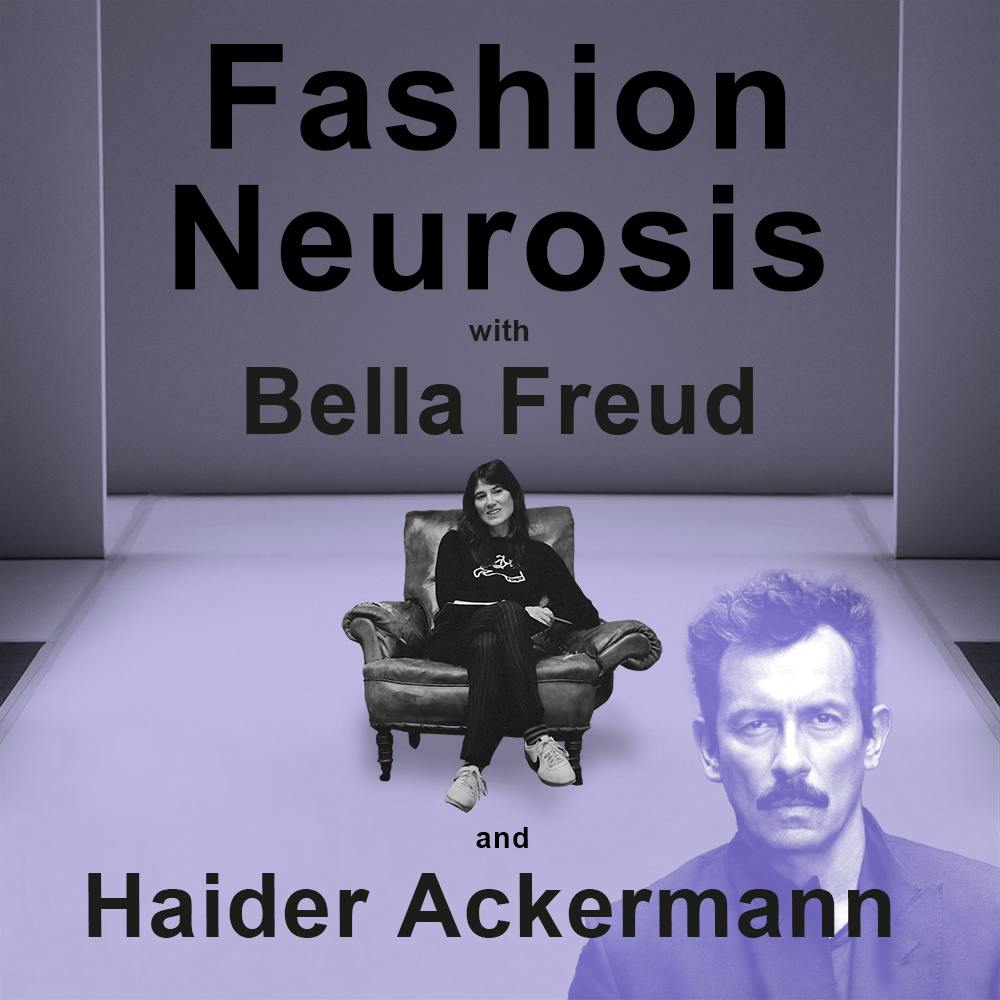
Loading summary
Transcript181 lines
- [00:01]
Carvana Customer
Wow.
- [00:01]
Fashion Interviewer
What's up?
- [00:02]
Carvana Customer
I just bought and financed a car through Carvana in minutes.
- [00:05]
Heida Ackermann
You?
- [00:06]
Carvana Customer
The person who agonized four weeks over whether to paint your wall's eggshell or off white bought and financed a car in minutes. They made it easy. Transparent terms, customizable. Down and monthly. Didn't even have to do any paperwork.
- [00:17]
Fashion Interviewer
Wow.
- [00:18]
Carvana Customer
Mm. Hey, have you checked out that spreadsheet I sent you for our dinner? Options finance your car with Carvana and experience.
- [00:26]
Fashion Interviewer
Total control financing subject to credit approval. Yeah, sure thing.
- [00:32]
Carvana Customer
Hey, you sold that car yet? Yeah, sold it to Carvana. Oh, I thought you were selling to that guy. The guy who wanted to pay me.
- [00:40]
Heida Ackermann
In foreign currency, no interest over 36 months. Yeah, no.
- [00:45]
Fashion Interviewer
Carvana gave me an offer in minutes.
- [00:47]
Heida Ackermann
Picked it up and paid me on the spot. It was so convenient.
- [00:51]
Carvana Customer
Just like that? Yeah. No hassle?
- [00:53]
Fashion Interviewer
None.
- [00:54]
Carvana Customer
That is super convenient. Sell your car to Carvana and swap hassle for convenience.
- [00:59]
Heida Ackermann
Pick up.
- [00:59]
Carvana Customer
These may apply.
- [01:09]
Fashion Interviewer
Hi, come in. Welcome to Fashion Neurosis, Heida Ackermann.
- [01:20]
Heida Ackermann
Thank you.
- [01:21]
Fashion Interviewer
Can you tell me what clothes you're wearing today and why you chose them?
- [01:25]
Heida Ackermann
I did not really choose them. I think is the accident of the morning. It's kind of invisible workman's clothes. It's very abstract.
- [01:36]
Fashion Interviewer
Can you give me some more detail? Because I'm looking at you and I've seen so many charming, subtle things. Like you have workwear, blue trousers and a shade of lavender for finely knitted sock. And that is totally killing me. With pleasure.
- [02:05]
Heida Ackermann
I don't know. I don't even. I. You know, the mornings, you just grab your phone, you look at your email, so you don't even think about what you're going to wear or you going to put it together. I didn't think about this. You just remind me.
- [02:21]
Fashion Interviewer
God, it's such a naturally kind of harmonious thing. While there's quite a lot of contrast happening as well. Like you've got this black silk shirt with a white piping underneath your shirt jacket. And what have you got around your neck?
- [02:43]
Heida Ackermann
Oh, it's a Charvet scarf. I don't know. I always wear scarves. It's kind of protection. Yeah. This kind of accessory that you drag with you everywhere. You can hide behind it or you can cover yourself. It's just protection.
- [03:02]
Fashion Interviewer
It's interesting the areas in your body that you feel inclined to protect. I always feel around my stomach. Somehow I wish I could wear a corset because it just always feels so wild, like it'll just take over my body. It's where I feel all my emotions and the throat is where, you know, all your language and your feelings come from. So.
- [03:30]
Heida Ackermann
Yeah. And you know, because I grew up in Africa and you always, you had those big scarves around you to protect yourself from the sun, from the wind, from everything. So perhaps due to my childhood, it remained in a more subtle way.
- [03:45]
Fashion Interviewer
And you're a very highly regarded fashion designer, much esteemed by your peers and you'll be showing your first collection as the creative director of Tom Ford. When this fashion neurosis, the day it comes out, I wondered how you generally handle pressure.
- [04:04]
Heida Ackermann
Well, I'm just first questioning what I'm doing here two and a half weeks before the show. Quite anxious to talk to you at this very moment where, you don't know, it feels like a little break for my daily life. I lay down, I sit down. Yes, you're in this very strange moment where you don't know what's going to happen. You're just on the road, you have your mission. Yeah. Strange to be here.
- [04:36]
Fashion Interviewer
It's interesting that because I find as I go forward in my life, I have these moments that are a big deal for me. And this is, you know, a show for any designer is such a big deal. And it's that thing of not wishing yourself done that you. Even though it's so nerve wracking that you appreciate the moment or that you not even appreciate because sometimes it's too stressful, but that you stay in the moment because that's where the ideas suddenly germinate. Are you finding that at the moment?
- [05:16]
Heida Ackermann
But you know, it makes your heart beat faster, it makes your life, it makes you. The nervous and anxieties are very helpful to move forwards in life. There's nothing negative about it, it can be exhausting, but at the same time it pushes you forwards, it makes you ambitious and it helps you to think and overthink. I think it's a good thing, basically.
- [05:38]
Fashion Interviewer
I spent some of my childhood growing up in Morocco and my mum went to Algeria and I think part of my love of tailoring comes from watching Arab men and how they wore their tailored jackets with their jalabas. And I've always loved that look. And do you have a favorite look that you refer to even if it's not immediately apparent?
- [06:01]
Heida Ackermann
Oh, yes, you just mentioned I grew up in Algeria, partly for seven years. The elegance of the Arabic man, the way he puts his jalaba, his blazer over it, the gestures, the big hands. It's just, you know, we are all searching for elegance. But when you go to countries like Morocco, when you go to Bhutan, to India, natural, there's no research for it. The art is very elegant. And the way they lay it, everything by the movement, it's so beautiful. It's just.
- [06:37]
Fashion Interviewer
Yeah, it's so lovely having this kind of this edit, this tailored, strict edit. And then. And then I love the back as well. And when I lived there, me and my sister, we used to wear turbans. And I used to be really good at putting a turban on her. We get a strip of fabric and just wind it round our heads. And I always dressed like an Arab girl, and I have a real fondness for that long caftan over a pair of trousers. What was the first piece of clothing that you became obsessed with as a child?
- [07:23]
Heida Ackermann
Oh, simply the sarong. The sarong we used to put. We were mostly naked, running around, and we just put a piece of fabric around the waist. There was a sarong, so whenever I'm on holiday, I'm always wearing one. It's just one piece of fabric and it does it all. It's very refined, actually. It's so strange that we designers are searching for all kind of cool patterns. Well, it looks like a sari is like a basic piece of fabric, meters long, and you just fold it with your hands. And the elegance of the gesture is amazing. And you made the most beautiful dress out of it. We're complicating our lives so much more than they are.
- [08:04]
Fashion Interviewer
I know, but that's part of the fun, isn't it? I mean, that's how you push an idea, isn't it? Somehow something that's been completely satisfactory is suddenly not good enough.
- [08:19]
Heida Ackermann
Yeah, but are we not drawn to simplicity as well? You just mentioned the jelloba. I mentioned sauron or sari.
- [08:29]
Fashion Interviewer
Yeah, but then I like. I like the shirt and tie underneath the jalaba. And I like these kind of references to other traditions from other people and the way they get subverted. I. I find that very. It just wakes me up and I. I feel like I could be like that. You know, this. I like to have an element of strictness about my own way of dressing. But then I love this feeling of wild. Well, not wild, but just this freedom and the way those things combined. And you do that very well. I love your description just now of the gesture of putting on the sarong and how. How the jest that gesture makes. You know you've got it right. Like, I know when I put a tie on, I have a. If I do it In a rush, it just won't come out. I have to give it a little bit of time so I can get that. That jest. Right.
- [09:36]
Heida Ackermann
To take the moment is that. To take the moment to take care of how you fold your clothes, how you care about yourself. Those are very selfish at present moments, but really, really important. And for them, it's like daily ritual, which I find quite extraordinary because there's something also eccentric about it slightly.
- [09:56]
Fashion Interviewer
How do you mean?
- [09:58]
Heida Ackermann
Well, you know, to be very like, everything looks so natural, but everything is so well thought at the same time. There's an eccentricity to it that we might have lost here a little bit.
- [10:09]
Fashion Interviewer
Maybe that's why you. When you describe what you're wearing today, you said you hadn't really thought about it yet. It's such a. It's so elegant, the composition of the clothes you're wearing. And I find if I give too much thought to my outfit, it becomes static and I have to be a bit chaotic and throw things on and then suddenly they settle. Is that what you do?
- [10:40]
Heida Ackermann
Yeah, but I'm looking more. I'm looking up. Back in the days I would have dinner with Mr. Lagerfeld and I was obsessed by how everything was so immaculate and sharp and just 2 centimeter sleeves. And I wish I would have been this kind of person. I tried sometimes, but after one minute I was just a mess, a completely mess. I can't do it. But I do admire it. I do admire the preciseness. I'm very much watching American Psycho at the moment.
- [11:08]
Fashion Interviewer
Oh, my God, I love that film.
- [11:10]
Heida Ackermann
I love. Oh, yes, fantastic. I love this preciseness. I will never be that guy, but I do look up to him.
- [11:16]
Fashion Interviewer
I know what you mean, but I. I suppose trying to adopt the regulation that other people use when it doesn't fit your own response, your sort of internal response. I've tried to do that unsuccessfully, too. And I suppose it's a way of remembering that your own process is very effective.
- [11:41]
Heida Ackermann
Yeah, but the embarrassment of not succeeding it. The embarrassment of not being perfect, well.
- [11:49]
Fashion Interviewer
I think that's a really big deal for designers. I think that we often have a lot of anxiety about imperfection, and it's part of why people become designers. So we can make other people perfect.
- [12:06]
Heida Ackermann
Yeah, but I think we're all searching for certain designs. We're all searching for kind of beauty, whatever it is, and it might not exist, and that's fine, and we will never find it. But the road that you take and travel is interesting. It's actually very romantic. You're searching for. In German we say auf Zucher and Blau Blumen. You're searching for the blue flowers which doesn't exist. We have quite romantic jobs, actually.
- [12:34]
Fashion Interviewer
And you describe being kicked out of fashion school in Antwerp for being untamed and losing yourself a bit in the darkness for a few years. Years? Oh, yeah, around that time. And how did you get back on the rails?
- [12:49]
Heida Ackermann
It's. It's a part of me, this whole business. It's what I am, it's what I'm dreaming of, it's what I want, it's what I desire. I can't do anything differently. So you always get back on track and you always, somewhere, perhaps despite all the insecurities, you have something to say and you would like to say it even if your voice is trembling. My moments, you just do. So, yes, I lost myself in nightlife, but I'm happy I did. It was needed. I'm coming out of a very Catholic family where everything was so strict and clean. And then at 17, I moved to Amsterdam, observed the wildlife, didn't take part of it, so everything came much later. It was good, it was needed. It's good to lose yourself by moments. But you always find your way back.
- [13:45]
Fashion Interviewer
Well, I think it's a. It's not a given to find your way back. I mean, not you personally, but it is a big fire that people can go through and get lost in there. So it's quite a big feat to get back on track and to become so productive as a result of that. And I agree, you know, with what doesn't kill you, makes you stronger and all that. But I think it's really something to be commended to be able to go through that path and go through those wild, dark times that are very unhinging and then come out with all this kind of extra knowledge and resources.
- [14:32]
Heida Ackermann
When I say you need it, it's really, I needed to go through this. I needed to have lived it. I can't explain.
- [14:42]
Fashion Interviewer
No, I know.
- [14:43]
Heida Ackermann
And I enjoyed it very much, I have to say.
- [14:47]
Fashion Interviewer
Yeah, I know exactly what you mean. And you have a definitive and recognizable handwriting. And you've also talked about experiencing lack of confidence. And as we were saying, lack of confidence is quite a signature in designers. And do you have an area where your self doubt crops up the most?
- [15:14]
Heida Ackermann
My self doubt? It's every morning when you look at yourself in the mirror. That's why it starts, basically. Yeah. Self doubt. It's. It's present, but it's also, as I said before, it's what helps you to move forward? There's no. There's no limitation to it. And I like that it puts you in a very dangerous zone. But it's good. It might have by you, some years, it might have hold me back. And I wish I had it less, but. But, you know, to be secure is not everything either.
- [15:49]
Fashion Interviewer
Mm, I agree. I think I find there's a certain amount of insecurity that I need in order to feel secure. In an odd way to do with walking a tightrope, which is so exhilarating because the danger is so present and the adrenaline is so focusing.
- [16:12]
Heida Ackermann
But how can you not doubt yourself when you are almost naked in front of an audience when you're showing your work? I mean, of course, there's so much self doubt. You put yourself out there, you do your show, and then five minutes later, everything is finished. Yeah.
- [16:28]
Fashion Interviewer
And you're a designer. That inspires belief in confidence in other designers. And Martin Margiela himself asked you to become the creative director when he retired.
- [16:42]
Heida Ackermann
How do you know?
- [16:42]
Fashion Interviewer
Well, you told me. I remember you telling me this story, which I've never forgotten, and you decided at the last minute against it, and now you're taking on another mantle, and I wondered how that felt.
- [17:00]
Heida Ackermann
Well, you know, I'm coming out of Belgium school, and Martin Margiela is one of our heroes. You can never replace your heroes. You never can stand. I could not. I would not have his talent and his very avant garde way of seeing things. I'm not that kind of designer. Perhaps I wish I was, but I'm not. And yet here I am, stepping in the shoes of Mr. Ford. It's a different story. Perhaps Mr. Ford and I are more aligned in our aesthetics. We have many references which are the same, we understand one another. So perhaps that language might be more fluid for me, and perhaps I'm more mature and older and ready.
- [17:50]
Fashion Interviewer
I once had a dream, I mean, it was so long, it must have been 30 years ago, that everyone wanted to know who Martin Margiela was because he never had his photo taken. And then in the dream, I realized maybe I was Martin Margiela. And it was one of the most exciting dreams of my life, because, like you, Martin Margiela is a genius. And somebody whose ideas are just. Is one of the designers where you see something that is sort of inexplicable and immediately feels like you want it, you want to be it, you want to wear it. And so even having the dream felt like imposter syndrome. But I interpreted it as a very Good sign of a moment of kind of confidence that was lurking about somewhere.
- [18:48]
Heida Ackermann
But just to say, he's one of the most charming person I've ever met. But it's so strange how you see, like, for instance, the collection he did for Hermes back in the days, his first collection, which was so criticized and totally not approved by the fashion industry, became the collection that everybody's copying still nowadays, so many years later. It is impressive. I mean, his. What he left us is just simply impressive.
- [19:17]
Fashion Interviewer
Yeah, it's wonderful. I mean, it's very impressive that you didn't take on that role at that time. Whereas. And it's so interesting when as a creative person, something feels right.
- [19:36]
Heida Ackermann
And, well, you have to know your place. It wasn't my place to be there.
- [19:43]
Fashion Interviewer
But I suppose, yeah, because also you talked about Karl Lagerfeld, who is such a big figure in all of our lives, and he named you as someone he would have liked to take over from him at Chanel. And were you good friends with him?
- [20:02]
Heida Ackermann
But I don't think. Yes, he mentioned that sentence. But I think it was more like trying to put a light on me than really thinking that I should take over Chanel. It was just saying, like, to the industry. Look at him. Just look at him. And that's how I felt. We never spoke about it. I never mention it to him, but that's how I took it, as a kind of backbone, as a kind of also for me to stand straight and to take myself seriously, that I had something to say. Because if Mr. Lagerfeld would say this, it means that I might have been someone. Something for this industry at least. So, yeah, I took it as okay, how to take. Put yourself together and put your lack of confidence aside and just go for it.
- [20:54]
Fashion Interviewer
He was very generous like that with.
- [20:56]
Heida Ackermann
Certain people and very faithful to it as well. Faithfulness is something which is really very important in our industry. Loyalty, friendships.
- [21:08]
Fashion Interviewer
And did he have any funny habits?
- [21:14]
Heida Ackermann
It's hilarious because he and I speak German, so when we would be in front of the photographers, he would make so many funny remarks and all enjoyment for me for just the two of us to understand what he was saying. He was hilarious. He had the biggest sense of humor and the biggest sarcasm. Admire him on many levels.
- [21:35]
Fashion Interviewer
And if you fancy someone and you don't like something they're wearing, does it kill your attraction to them?
- [21:41]
Heida Ackermann
Oh, totally. I remember one day meeting the most gorgeous person, and basically we start kissing. One of the best kisses ever. And then the person took his sweatshirt off and he had a T Shirt with three buttons. I think you call it a Henley in English. And I stopped. I couldn't. I couldn't. I could not kiss him any further. I have a forbe for buttons. I'm just. You can't put my hand. I can't put my hand in a box of buttons. It's impossible. So for him to wear this T shirt with three buttons. No. He must have thought I was mental, but I could not continue. I just left. Quite extreme, isn't it?
- [22:36]
Fashion Interviewer
It is. But you describing that you have a phobia of buttons, it makes it kind of forgivable in a way. So you're not.
- [22:46]
Heida Ackermann
And not understandable for him. Trust me.
- [22:50]
Fashion Interviewer
You're not like Stefano, who said if he's in a frisky mood, he doesn't really mind about those cutaway socks. He has a petite and skinny jeans that he has an aversion to.
- [23:04]
Heida Ackermann
No, I could not. You must really thought that I was mental.
- [23:08]
Fashion Interviewer
You didn't say, I'm sorry. I have a phobia and I can't. I have to leave.
- [23:12]
Heida Ackermann
How can you explain this? You can't. I just. I just walked away.
- [23:20]
Fashion Interviewer
Gosh. And when you dress, are there certain things you consciously like to reveal or hide about yourself?
- [23:28]
Heida Ackermann
Yeah, well, for years I would not wear shorts or T shirt with short sleeves because I was so. I have very skinny arms and. Yeah, so I didn't wear shorts before my 40th birthday.
- [23:45]
Fashion Interviewer
I can identify with that. I had so many hang ups about my body and I think it's probably why I became a designer, so I could have a. A kind of way of handling it. But it's always so peculiar when someone else says it. And there you are, lying there, beautiful as possible. I think it's a common trait in the fashion industry that people have so many judgments about their physical self, but.
- [24:17]
Heida Ackermann
We'Re all hiding something, therefore we project on others. I think so, yeah.
- [24:25]
Fashion Interviewer
And how does it feel to create a combined identity in your collections? Tom Ford is synonymous with the slinky kind of sexy irony. And I associate you with a sexy boy girl, soldier elegance. Like how Edie Campbell wears your clothes. What kind of feeling are you looking for?
- [24:48]
Heida Ackermann
You know, I think also when Mr. Ford was at the helm of the fashion industry and it was also a very different period. Things have changed over time. We speak about sexuality very differently than back in the days. So I will need to find my rhythm in there. I will need to find my way. But I do trust that as much he as I is searching for desire Seduction. I think it's a big words of his vocabulary and certainly mine. So if I would play around those words, I think we will find a common way that I respect his story, but lead it somewhere else. It's a fine line. It's very strange. The person is still there.
- [25:37]
Fashion Interviewer
Yeah.
- [25:38]
Heida Ackermann
In the back of me, breathing. So it's a very strange situation, but I feel very humbled and honored by it. But, yeah, it's just searching for desire and seduction. We all want to be desired, we all want to seduce. We all like that game and that play. So, yeah, let me play it.
- [26:00]
Fashion Interviewer
Have you been friends for a long time or have you been on each other's radars?
- [26:07]
Heida Ackermann
We've been flirting with each other. I mean, flirting in a very professional way. I mean, back in the days, I had this very honorable. I received this very honorable letter from him in my time at Baluti. So I knew that he respected my sensibility and vice versa. I mean, his legacy is enormous. When you look back at the 90s, you can't go around Ms. Stumford. So, yes, we always were flirtatious with each other. So it's really wonderful now to really get to know him and to have conversation, exchange.
- [26:40]
Fashion Interviewer
Yeah. He has an authority and a kind of vision about that whole thing to do with desire and seduction. That is very.
- [26:52]
Heida Ackermann
He's one of the most seductive man, let's be honest.
- [26:54]
Fashion Interviewer
Yeah. I mean, I've only met him a few times, but he's one of those people that makes you want to, you know, be in his radar because he's so witty and urbane and tremendously, he's marvellous. And you said your work ethic, with all the deadlines, means you'd like to be like a soldier. And one of the things I particularly love about your work is your military style stripes. And I won that sort of sportswear thing, and I wondered where that comes from.
- [27:28]
Heida Ackermann
I don't know where it comes from. I have no family, my many army. I'm far away from it. But I like to have perhaps this German side of my father. I like to have this kind of rhythm and this kind of. You trace your line and you follow the steps. I don't know where it comes from.
- [27:46]
Fashion Interviewer
I find it. Whenever I've seen Edie out and about, I'm always completely kind of knocked out by her outfit. And it's always you. And it has this masculine and feminine thing going on. And it's just got so much charm. And it's renegade as well, because I always love the military that's been adopted by the freedom fighter. And the way people in reggae music and reggae stars, they like Lee Scratch Perry, the way he used to wear all that amazing stuff with all the. All the adornment from the military. But subverted. And you do that, but you bring something about nature into it. Because the way you use the stripe is also like when you see a bird and it opens its wings and it has this other kind of amazing thing, flash of color or a bit of, you know, some sort of attractive signal. And you do this so well. And it works for boys and for girls and it has this intensity to it.
- [29:04]
Heida Ackermann
But why are we so seduced by military? Certainly in the world that we're living now, which is kind of more scary one, why is this attraction to it? Do we need authority? Do we need it to maintain our line or road? But at the same time, authority nowadays, there's not much to say.
- [29:27]
Fashion Interviewer
Yeah. I think the authority aspect is really unattractive. But the uniform is fantastic.
- [29:34]
Heida Ackermann
Oh, yes, absolutely.
- [29:36]
Fashion Interviewer
Especially when someone messes with it, which means that they're not under the jurisdiction of authoritarian figure.
- [29:45]
Heida Ackermann
Yeah. But, you know, it also helps you to stand straight. The uniform. And to refer to Mr. Ford. I do remember I did a Met gala back in 2015 wearing my first Tom Ford suit ever. Even 2009 must have been. I remember putting the pants on and it made me sense. Straight. You have to stand straight in a Tom Ford suit, which is kind of uniform. So, yeah, perhaps this standing straight and tall in life is important and perhaps that's why we adore everything that's coming from the military and the uniform. It helps us.
- [30:28]
Fashion Interviewer
Yeah. Sometimes a garment will remind you of how to be really. It's like what you just. When you describe the gesture of putting on sari, the physical movement will kind of wake up what you want to project and how you want to be seen.
- [30:49]
Heida Ackermann
I think that's what clothes are doing nowadays. We have been so laid back in our way of dressing recently. So perhaps this. This reflecting now about beauty that people are searching more than ever for. Or when you see the craftsmanship of new collections, perhaps this is all helping you to sense straight. I don't know.
- [31:15]
Fashion Interviewer
In fact, there's a lot of encouragement these days about relaxation, which I actually find quite hard.
- [31:24]
Heida Ackermann
It's too relaxed, isn't it?
- [31:27]
Fashion Interviewer
I like to do a relaxation that's progressing something like reading. And I wondered what things you enjoy or what is a relaxing action? Because sometimes it sounds like the opposite to some people. But what are your. What Are your things.
- [31:45]
Heida Ackermann
To lose yourself in the nature is the only thing that relaxes me. Because I think we're searching for space, for silence. And when you're in rhythm like us, you hardly breathe. You just trace your road. So just to lose yourself in nature and having the space for it is the only thing that relaxes me. Nowadays.
- [32:13]
Fashion Interviewer
Do you take specific trips or what are the things you do?
- [32:18]
Heida Ackermann
Oh, recently I go camping.
- [32:22]
Fashion Interviewer
Really?
- [32:23]
Heida Ackermann
For God's sake. Yeah.
- [32:25]
Fashion Interviewer
Like what? Literally putting up a tent, or is it a bit more of a luxury?
- [32:31]
Heida Ackermann
Literally a tent above the car. Oh, can you believe it? I traveled through Namibia with my partner for two weeks with a tent above the car. Last year we did British Columbia.
- [32:45]
Fashion Interviewer
Gosh.
- [32:46]
Heida Ackermann
When I met this person, it's first. On the first date, he asked me, should we go camping? Would you ever come camping? And I was like, obviously, this is not gonna work. And now my greatest joy is to go camping with this person.
- [33:02]
Fashion Interviewer
It's funny, these kind of organized intimacies, really. It's such a lovely thing to take part in.
- [33:13]
Heida Ackermann
Oh. You spend time together, you have to deal with each other. You're depending from the other. You really connect with each other. It's just most beautiful adventure. If you wanted to be romantic and wanting to get to know each other, just go camping.
- [33:31]
Fashion Interviewer
Do you find that part of that is the way the practicalities of having to put the tent up and light a fire, it sort of takes care of some of the suspense of actually.
- [33:43]
Heida Ackermann
Being together and the trust in each other, the trust that you're going to take care of each other. One lies a fire, the other one puts up the tent, the cooking, the wildlife. I mean, we pretty go wild. Yeah. We lose each other in the world. Nature. It's wonderful. So that's the only thing that really relaxes me because you have to think about your next step.
- [34:10]
Fashion Interviewer
Also quite nice to find that someone else has an idea that you don't immediately respond to. And then you find there's so much in what that person has offered you and that you actually really love it.
- [34:25]
Heida Ackermann
A calmness. You step out of your life, it's a good thing, it's a break.
- [34:32]
Fashion Interviewer
And you fought successfully to regain ownership of your name from an investor who almost held you hostage and became over controlling and obsessed with you. And this happens quite a lot to designers and that the money person wants the limelight. And how did you cope with that negative possessiveness?
- [34:52]
Heida Ackermann
You resign? I resigned for my company. I left for a designer to leave his own company. It's quite a Hardcore thing to do. I don't like to look back at his periods. It's really uninteresting. But what's interesting, like, when I was young, I was telling, in interviews, I was always telling the young kids, like, dream your dream alone, it's only a dream and dream together is reality, which are the words by Yoko Ono, which I really stand by and never forget to dream, follow your dreams. But nowadays I would tell them also be anchored in reality, surround yourself by lawyers, protect yourself for being able to continue a dream. But many of us have been through this. Yeah, it's been a challenge. It's not been easy. But I gained my name back, which I couldn't do differently. Honestly, as an adopted child, the only thing I've got for my parents is their name. So no one can take this away from me. Trust me. And then you had this moment of trying also to find your way. It's been a very educative moment for me because I understood what I don't want to do anymore. Well, I will not accept any longer. So it gives me also a sense of freedom that I might not have had before. But mentally, like knowing where I want to go and knowing how I want to do it.
- [36:16]
Fashion Interviewer
Yeah, it's a. It's very. I mean, it's not something that's talked about much in our business because it's. It's like someone taking possession of you literally. It's like Stranger Things when all those weird creatures go into your body and you're. You're just taken over. It's a. It's the worst possible thing.
- [36:38]
Heida Ackermann
And it's tremendously violent. One cannot understand how violent it is. The fact not to be able to use your name and that clothes would be made with your name on it. And you, not. You have no control about, just outrageous. But I don't look back at it. It just helped me to move forward. And it's also. I became much better out of it, knowing more what I want to do.
- [37:05]
Fashion Interviewer
It's interesting you talked about coming out of it with more freedom. I've had experiences where people have, you know, investor figures in the past have wanted something from me, and I found it so hard to say no that I almost just think, just take it. It's a terrible feeling. And then, of course, the idea of a lawyer, you think, oh, that's going to be so expensive. I can't do that. But I think your advice to any young person establishing themselves is even just one conversation establishes a resilience, and that person is more respectful And I remember sitting next to you at a dinner, actually, and you describing what had. What was going on. And it's so great that you came out with your name and you got yourself back. And I used to work with Ozzie Clark back in the 90s, and, you know, he lost his name forever. And he was one of the most gifted people. And it was so spiteful, really, and pointless to take someone's name.
- [38:14]
Heida Ackermann
Well, the perversion out of it and simply the other person thinking that they can owe your name and also continue the work without you and without your permission. It is really violent. Yeah, it is very violent. And it's. But listen, I am. I am. I came better out of it.
- [38:39]
Fashion Interviewer
New era.
- [38:40]
Heida Ackermann
But I would say to everyone, protect yourself, because that's the only way to continue your path. And you don't own anything to anyone. And no one owns you. No one.
- [38:55]
Fashion Interviewer
I think the relationship to being adopted and really understanding the value and the essentialness of your name being remaining yours is that must have given you some extra force and drive and confidence to. To fight back.
- [39:15]
Heida Ackermann
Oh, yes, totally. I mean, you know, you're the son of your father and your mother. You look like them most of the time. We adopted children, my parents are white. My brother's sister are Asian. So I don't look like them. The only thing that we have in common is a name.
- [39:36]
Fashion Interviewer
And they nurtured you. Well, would you say they did? It's interesting coming from the Catholic background as well and the strictness and.
- [39:50]
Heida Ackermann
But you saw, you know, also, like, going through all of this, it gives you a sense of freedom because you have no fear any longer. And that's really important, having no fears, just being totally free.
- [40:06]
Fashion Interviewer
And do you ever have any good fashion dreams or recurring fashion dreams?
- [40:12]
Heida Ackermann
Fashion dreams. Listen, when I walk through the night in the streets, I have the most beautiful dreams. I made the most beautiful shows in my head. I think my reality is less beautiful than the dreams that I have when I go through my walks at night. I think it's Pasolini who said that he didn't want to make any movies anymore because in his head he made already the most beautiful movies that one cannot realize. I did the same. I think I made the most beautiful shows in my head.
- [40:47]
Fashion Interviewer
You don't have recurring, kind of neurotic dreams about things going wrong? That's what I have in my dreams.
- [40:57]
Heida Ackermann
No, no, not in my dreams. I stay up. I don't sleep. Having this sleeping disorder of anxieties. But no, I don't dream about it. Strangely lucky You.
- [41:10]
Fashion Interviewer
I have recurring dreams.
- [41:12]
Heida Ackermann
Oh, really?
- [41:13]
Fashion Interviewer
I'm watching. I'm at my show and this stuff is coming down and it's just twirls or it's. I don't recognize it. It's made by some, you know, I just know what's going on. Or there's a show happening and I haven't even finished the collection. I mean, I don't even show anymore because I hate showing so much. It makes me so anxious. I prefer to do like films and things like that. But this, all my kind of worry shows up in these awful running order dreams.
- [41:49]
Heida Ackermann
Oh, my God. Thank God I don't have that.
- [41:51]
Fashion Interviewer
I'm so glad for you. You don't have that. And can we talk about Tilda Swinton? Because I know she's a great friend of yours and she's a great friend of mine as well. And we were talking earlier about loyalty and friendship in this. In our business of fashion. And there's something about Tilda that she takes an outfit into a different realm. I wondered if you could describe that.
- [42:24]
Heida Ackermann
Well, it's very strange with Ms. Winton. We've been friends for more than 20 years. I don't know exactly when we became friends. All I know is that we were supposed to meet each other, that's for sure. She and I, we were supposed to be in each other's life. And then she's been wearing my clothes forever and ever. I think she's got a basic, biggest wardrobe of me. But you know, many people ask me if she's my muse and she's not. I don't have a muse. I don't believe in that word, at least not for me. But she knows how to put. I don't know how you said in English, but in French we say. I suppose, yeah. It's like she. She take the clothes and make her own. It's very strange. It's very bizarre. I'm always surprised when I see her, even though we spend so much time together on holidays, that every time when she dress up, it's. I'm just blown away every time. It's just extraordinary how she. I know how you say it in English sometimes. My English is very poor. I'm sorry, but I don't know how she wears it, how she carries them, how she. Elegance is very rare nowadays. She has a way of doing it.
- [43:53]
Fashion Interviewer
I know she seems to be able to take an outfit or look or a dress and transform it into something more and something that you. That doesn't exist without her inhabiting that.
- [44:10]
Heida Ackermann
Look, but there again, it's about her gestures, her attitude, the way she stand, the way she hold her necks. Her neck, her haircut, all of it.
- [44:23]
Fashion Interviewer
Her haircut is just out of this world, isn't it? So good.
- [44:27]
Heida Ackermann
And she always makes you question yourself. That's the most interesting part. I might be much more bourgeois than she is. She does, she always triggers me and questions me.
- [44:38]
Fashion Interviewer
Yeah, she does do that. It's so interesting in this kind of very subtle way that she, she kind of makes other ideas occur to you or I find that I think, oh gosh, I really could do more. You know, there could be more to this and it's a very encouraging thing rather than any sort of critical.
- [45:06]
Heida Ackermann
It's encouraging and it's non stop. It's non stop and at the same time it's really, really exhausting. I mean, you know, obviously when she writes your letter, how the words are sounding, try to respond to that. It takes me forever to try to respond to her words because they are so well chosen, so particularly beautiful. Yeah, so it's a beautiful, exhausting friendship. I'm very proud of it. I personally don't own anything, I don't own any painting photographers. But I do have the biggest luxury in my life is I have the best friends I could have. That's my luxury. This faithfulness, this loyalty. You know, also when I went through what I went through with my former CEO, this industry that stood by me, all my friends who stood by me and remained faithful, you know, you didn't do your job but you have also whole surrounding next to you who holds you toll the moment you can't is not to be underestimated. It's really, really important. That's what we do for each other. Certainly in this industry, which is very fragile and you put yourself so much naked out there to have those friendship.
- [46:23]
Fashion Interviewer
It's everything, isn't it? It's everything and it's very little documented. Journalists never seem interested or there seems very little interest in showing the other aspects of the fashion industry, which is about incredible loyalty, real helping each other out, real support.
- [46:44]
Heida Ackermann
I mean, just recently now, when I was approached by Ms. Tom Ford and I accepted the honour, how the industry reacted towards me, the immense amount of letters, flowers from all my colleagues, from all the other designers, the welcoming, it's just we do support one another, we do stand by each other, we do know what it is and we do admire each other. I do admire them, many of them. I look up to them immensely. I think there's so much kindness in this industry, compared despite what people say.
- [47:22]
Fashion Interviewer
Yeah, I agree. I think that doesn't fit in with the caricature that's presented of fashion.
- [47:28]
Heida Ackermann
No, not at all.
- [47:29]
Fashion Interviewer
It's very misunderstanding, understood. And people don't make any effort to understand it. And so it's just flattened into this thing, this kind of bitchy, competitive all the time. But there's much more going on than that. And it's quite, you know, it's much deeper.
- [47:50]
Heida Ackermann
It's much deeper. And, you know, you know, so the pride that you take from when you look at other designs work, that. That also makes your heart beat fast and you want to be as good as them. It brings lots of ambition and work into it and it's. It's accelerating, accelerating everything. So I always embrace when they design it. It's a very good collection. It's joy for all of us.
- [48:12]
Fashion Interviewer
It is. It's really thrilling.
- [48:13]
Heida Ackermann
And there's absolutely.
- [48:15]
Fashion Interviewer
There's everything to be learned for all of us as well. It's so exciting when someone does an amazing show.
- [48:23]
Heida Ackermann
Oh, so nice.
- [48:23]
Fashion Interviewer
And, you know, like Marc Jacobs, an amazing show. And it was so, you know, energizing and fun and sort of thought provoking. And I love that. I think that's such a great kind of frisson that runs through the whole world of our people.
- [48:45]
Heida Ackermann
Exactly. It makes us question ourselves even more. And that's the interesting part as well. Oh, no, I love it. I do. I love the industry and I love fashion in general, so I can only look up to it.
- [49:00]
Fashion Interviewer
And how do you feel about praise? I know it's all any of us want in a way, but it's quite hard to take some time worrying. I mean, you're a humble person with. I noticed that you've expressed that all the way through our conversation, and I wondered if that was to do with a background critical voice or, you know.
- [49:28]
Heida Ackermann
Also the praise is just one second because then you have to move forward and the next problem issue is standing in front of you that you need to resolve. So you don't even have the time to. So I wish I would sometimes I wish I would take more time to accept all of it and embrace it all at the same time. I like to escape it and to continue and to work and to try to face the next collection issue, problem to resolve. I don't think it's so good to stand by it too long, but it's.
- [49:59]
Fashion Interviewer
Nice to feel it go through the system, isn't it?
- [50:02]
Heida Ackermann
It is, but it's very occasionally that you feel it I re felt it with when the industry supported me so much. Yeah, that's really beautiful.
- [50:18]
Fashion Interviewer
You know, it's called praise, but it's really a kind of a hug, isn't it?
- [50:24]
Heida Ackermann
And we do love a hug. But also, you know, it's a praise, but it's a praise. It's not only for you, it's also for your team, for all the people are standing by you because you know you're not doing this alone. Of course it turns around my name, but I have a team behind me of people who are tremendously faithful there as well. And it's also for them that you do it. It's also for them to make them feel proud about their job and feel proud to collaborate with you. It's a whole industry, it's everything.
- [51:04]
Fashion Interviewer
And what interests you about what you're doing?
- [51:09]
Heida Ackermann
The fact that I don't know what I'm going to do next. The fact that I'm still searching for something. I don't know what I'm searching for. This search of recognition. Why? This search for attention somehow. But that at least makes your heartbeat. Otherwise what's the point? But we're always searching, designers as us, we're always searching for something. Every time we look at a movie or we look at a vase in museum, we try to translate this in a collection. It's non stop.
- [51:43]
Fashion Interviewer
It's like a tyranny sometimes, isn't it?
- [51:46]
Heida Ackermann
Oh, it is, trust me. I wish I would look at something and nature does this to me. Perhaps that's why it's calming that it doesn't. I don't think how to translate this in my collection, this peaceful moment.
- [51:58]
Fashion Interviewer
Well, thank you so much, Haida Ackermann.
- [52:00]
Heida Ackermann
Thank you.
- [52:01]
Fashion Interviewer
Being on fashion neurosis, it's been fantastic to be with you in this moment.
- [52:06]
Heida Ackermann
Before your show, before this very anxious moment.
- [52:10]
Fashion Interviewer
I'm so excited to see it and I'll be there cheering you on.
- [52:14]
Heida Ackermann
Thank you so much and I'm sure.
- [52:16]
Fashion Interviewer
It will be incredible.
- [52:18]
Heida Ackermann
Thank you for inviting me.
- [52:19]
Fashion Interviewer
Thank you.
- [52:36]
Carvana Customer
You know where your business would be without you. Imagine where it could go with more of you. Well, with Wix you can create a website with more of your vision, your voice, your expertise. WIX gives you the freedom to truly own your brand and do it on your own. With full customization and advanced AI tools that help turn your ideas into reality, scale up without being held back by cookie cutter solutions and grow your business into your online brand. Because without you, your business is just business as usual. Take control. Go to wix.com.