Loading summary
Transcript128 lines
- [00:01]
Interviewer
Wow.
- [00:01]
Carvana Customer
What's up? I just bought and financed a car through Carvana in minutes. You? The person who agonized four weeks over whether to paint your wall's eggshell or off white bought and financed a car in minutes. They made it easy. Transparent terms, customizable. Down and monthly. Didn't even have to do any paperwork.
- [00:17]
Interviewer
Wow.
- [00:18]
Jürgen Teller
Mm.
- [00:20]
Carvana Customer
Hey, have you checked out that spreadsheet I sent you for our dinner? Options finance your car with Carvana and experience total control financing subject to credit approval. Yeah, sure thing. Hey, you sold that car yet? Yeah, sold it to Carvana. Oh, I thought you were selling to that guy. The guy who wanted to pay me in foreign currency, no interest over 36 months.
- [00:44]
Jürgen Teller
Yeah, no.
- [00:45]
Carvana Customer
Carvana gave me an offer in minutes, picked it up, and paid me on the spot. It was so convenient. Just like that? Yeah. No hassle? None. That is super convenient. Sell your car to Carvana and swap hassle for convenience. Pick up. These may apply.
- [01:09]
Interviewer
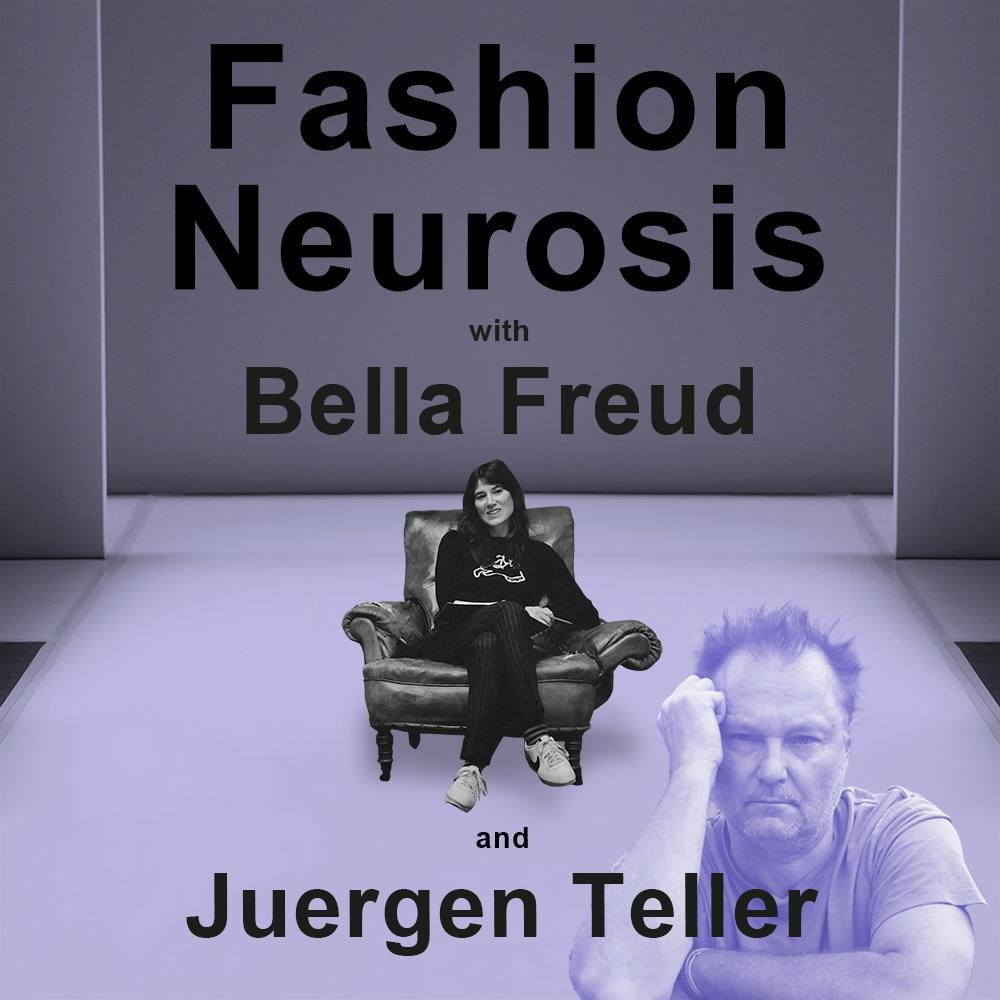
Hi. Come in. Welcome to Fashion Neurosis. Jrgen Telle.
- [01:19]
Jürgen Teller
Thanks for having me.
- [01:21]
Interviewer
Can you tell me what you're wearing today and why you chose these clothes?
- [01:25]
Jürgen Teller
You know, it's very important for me to be comfortable because I kind of always. In my mind, I could always be working or I'm always working. And with what I'm doing is I have to be comfortable, whether it's kneeling down or crouching down or whatever. I just want to be comfortable in what I'm wearing. And I pretty much wear the same thing in a slightly different arrangement. I have a couple of those jumpers, same kind of jeans, same kind of trainers. And it just varies a bit.
- [02:02]
Interviewer
I like the pink. It looks really good on you.
- [02:05]
Jürgen Teller
Thank you. That's. You see, that's what I thought.
- [02:10]
Interviewer
You're one of the most famous photographers in the world, and especially for your work in fashion and your campaigns for Marc Jacobs and Vivian Westwood. I used to wait for those Marc Jacobs campaigns, almost like a new episode of a series. It was always so exciting. And I wondered what drew you to fashion Possible.
- [02:33]
Jürgen Teller
The reason why you kind of like them and why you were looking forward to seeing them as a series. As you. As you. As you say, is ultimately, I'm interested in human beings, in people and what they do. And it's a great vehicle for me to express what I'm thinking and, you know, what is fashion for me? It's like a fantasy. It's like something you have to. You should be enjoy wearing or a necessity when it's cold and not be too serious about it. And I have fun with it. And I started to be getting involved in fashion really at the beginning. I started doing record covers. And that is really where a lot of fashion comes into. Where actually fashion gets completely influenced by the. By the music, by the musicians. And I started record. Doing record covers. And I kind of asked myself, what is this? Is this a reportage? Is this a portrait? This is a fashion photograph. It's kind of everything or can be whatever you want it to be. But it really stems out of. I'm not so interested in fashion per se, but it's really the people who wear clothes. That's what I'm interested in.
- [04:00]
Interviewer
Yeah. In the end, it's people who are interesting. They're the people that make clothes come to life. But you have something that's so kind of endearing as well, about the way you bring those people into the. You know, they're not just models. They are kind of the feeling that you want when you. When you become obsessed with clothes. I suppose that's what I enjoy about your fashion portraiture. And when you were a child, did you have any obsessions with any particular clothes?
- [04:37]
Jürgen Teller
No, not really, No.
- [04:40]
Interviewer
I always had something that I fixated on because it seemed to bring order or some sort of fantasy of order into my life. And I. I wondered whether you had any, how. Whether there was any attachment that started when you were a very young person.
- [04:59]
Jürgen Teller
I do remember having these. I can't remember how old I was. I kind of wanted to have this foxtail on my. On my jeans sort of thing that. That were like the bad boys who were wearing those. They're kind of like complete stupid fashion accessory. But it meant like you were kind of like the moped driver, the cigarette smoker, and kind of cool guy. That's the only fashion equipment I think I've ever thought of.
- [05:33]
Interviewer
That's freak. How old were you when. When you had that?
- [05:37]
Jürgen Teller
I think I was still under the control of my parents. And they were obviously horrified what the I'm doing with this thing. And I. I don't know, like 11, 12, 13, something like that.
- [05:51]
Interviewer
It seemed very high fashion, weirdly, which is your Melia.
- [05:57]
Jürgen Teller
Of course, it was real fur at the time.
- [06:02]
Interviewer
And you described picking up a camera when you were 18 and it feeling as though you could see for the first time. And I wondered how did you see things differently from when you look through the lens?
- [06:17]
Jürgen Teller
It helped me to concentrate and focus. Looking through this square thing behind the camera, you know, the viewfinder. It really helped me to shape and focus of Something. And when you are young, you kind of like eat, drink, smell things, listen to music. But everything is sort of so. You're so young and so undeveloped kind of thing, like the ears and the eyes. What you see, you're not trained, or you're so naive and so young. But looking through the square thing, it just suddenly helped me to focus and I immediately knew what I wanted to do. I wanted to be a photographer and I wanted to explore things and it gave me a really excellent adventure in life.
- [07:13]
Interviewer
Yeah, it's such an evocative description because when I read that bit where you'd said that, I. I could feel like all the world, like all the shards coming together as if towards a magnet. And your idea of how crystal clear everything suddenly became. I suppose it's quite rare that anyone has those moments. And it's very interesting to hear about how succinct that was and how quickly that started, you know, set you on your journey. You seem like quite an extrovert person. And you also grew up with an alcoholic father. And there's quite. I always think there's a lot of shame associated with alcoholism. Not to do with the drinking, but really to do with the feelings that are being suppressed by alcohol. And I wondered if you had an introvert side of yourself that you're protecting with your extrovert.
- [08:17]
Jürgen Teller
I am actually not so extrovert. I believe I'm actually quite a shy person. But what needs to be done and what needs to be said needs to be done, you know, And I'm quite strong about it. And I have quite a strong backbone. And if my moral compass is correct, I consequently do this. That's what I would say. Yeah.
- [08:47]
Interviewer
Oddly enough, maybe sometimes it's your clothes that make you seem like an extrovert. Because when I've met you, you have always been quite shy and you give a good impression of being, you know.
- [09:03]
Jürgen Teller
Because you associate it probably together with my work.
- [09:07]
Interviewer
Yeah, absolutely. There's an unself consciousness and a kind of urgency about your work and how you do things and how you cut to the chase.
- [09:18]
Jürgen Teller
I think if you're sort of consider it's with everything, really. If you're confident with your. Within yourself, you know, you can do whatever you want, in a way.
- [09:31]
Interviewer
Yeah, I agree. You've talked a lot about your love of football. And one of my first guests on Fashion Neurosis was Eric Cantona. And I just had this thing that I had to. He had to be here. And he's my favorite player. I mean, I'm not that interested in football itself, but I am interested in certain players because they make it mean so much more. And I wondered if you had a favorite player.
- [10:05]
Jürgen Teller
Yeah, of course, of course, of course that would be. Without even thinking too much, it would be. Ronaldinho was a Brazilian footballer and he was like absolutely magic. Because also you could see not just the skill of it, but the pure joy of playing and the tricks he did and the things we did. And you could also see the kind of like how fantastic it is and how life sort of changes. And after a couple of years of being just absolutely taking the world by storm and then also getting involved like anybody else would be when you're rich and famous and fabulous, getting involved into the possibly drinking and women and everything else, what comes within the world. And it's sort of fabulous that it's not only that it doesn't only exist football, it rather becomes a bit sort of dull and boring or cooperative and. And serious. This is, you know, it's all about money really. So it would be Ronaldinho for me.
- [11:09]
Interviewer
Have you ever met him?
- [11:11]
Jürgen Teller
No, never met him. But I met quite a few footballers.
- [11:14]
Interviewer
Have you photographed a lot of sportsmen?
- [11:17]
Jürgen Teller
Cuz I have, just out of complete intrigue and. But, but, but it's, it's. It's very difficult because yours, you know, that it's such a serious business and they can't really do so many things. But I enjoyed it.
- [11:37]
Interviewer
And you don't retouch your photographs, which is pretty unusual in this day and age. And there's a way that you light things and that gives people this recognizable beauty that's associated with your work. And you make limbs look very beautiful, like in 70s photos when people didn't use retouching either. And I wondered if you're interested in glamour and what it means to you.
- [12:09]
Jürgen Teller
Well, first of all, it's not quite correct that I don't retouch. It's, you know, for many, many years now I work in digital, so it comes as a raw file. And even if you have a color negative, you actually control of how things look like how I want things to look like. So you are manipulating immediately something already. But if you talk about like if I do self portraits or if I photograph, you know, like if I would do a portrait of someone, I would. That, you know, I photograph them so well, I subjectively believe this person should be seen by me, then there's no need to be. To be retouched. You know, if. And there's people who want to be photographed by me. And people who don't want to be photographed by me, it's completely fine. But the people who want, you know, feel secure within themselves, they are completely fine to be photographed by me. That's just quite easy. It's quite straightforward.
- [13:19]
Interviewer
Because what I really like about your work is when you photograph people, you seem to bring out a kind of spirit in them, like something wild, which, when you're searching for that thing to capture, what's the instinct? What's it is.
- [13:37]
Jürgen Teller
It is instinct. And I think I have a kind of, like, might sound funny or something, but I think I have a really good sense of that. I can feel and sense the aura around the person. And I really. I think I'm really fast with assessing what would be good and how I should be photographing that person in the best possible way for me and for that person.
- [14:07]
Interviewer
Yeah, really comes across. It must be exhilarating to know that you've got that. Even if it doesn't always work, it always works.
- [14:16]
Jürgen Teller
It has to always work. Yeah, that's the point, you know, and then it's not like. And sometimes things, you know, you mentioned that picture you've seen at the Paris bar in Berlin, the photograph I did of Saint Laurent, that literally took 15 seconds, and that was it. And I knew I had the photograph I needed to have. But sometimes it takes long time, and sometimes you. You do this and. And you become. And I have to ask somebody to, you know, I had this idea and. And I can't quite reach it. And I'm thinking of, this could be, why don't we try this? And it. And it could be another session or another day and another day. And sometimes this takes a very long time. So you have to have patience and, and to yourself, you have. You have to say you haven't quite got it yet, and you have to work till you. Till you really have it. And you also have to be saying to, you know, I think you have to just be honest. You think, oh, my God. It's, it's, it's. It's. This room here is so beautiful. And you take. Try to take a picture of you and, and you look beautiful. And for some fucking reason, it doesn't quite click, but all the kind of ingredients are there, and you don't know what. And you have to be honest to the person. You say, I don't quite know how to do it right now. And let's just have a coffee or let's just have a cigarette or go for a little walk and then try again. And through this conversation through this openness. And I think it's about showing a certain vulnerability within yourself to be open. I can be a clown in front of the, behind the camera. And of course, I'm the director of the whole scenario. And you have to show your vulnerability of being a human being photographing another human being.
- [16:16]
Interviewer
Yeah. It's interesting listening to you describe that. Cause I spent a lot of time sitting for my father who was an artist. And when things went wrong, I think my great lesson from him was when something goes wrong, you don't give up. You, you persevere however you do that.
- [16:38]
Jürgen Teller
Yes. And for things to go to, I think that is really the point. You, you kind of try, you, you kind of think, I think that could be really good. And you, when you outspoken that idea of what you, what you, what you think you're gonna do, it might, when you outspeak, it might sound ridiculous or stupid. But actually when you then work on it and you, you, you have to learn from your mistakes of like you say, well, that didn't quite work. But through this working process, something else comes along which does make it work. And it, and it drifts to the left or to the right and, and you always have to. If we're talking about portraiture or photographing someone, you know, I'm very dependent on the, and I want to be dependent on the, on the subject, on the person I photograph. You know, if somebody is more extrovert, like let's say Chris McManamy, the pictures are going to be more extrovert. If somebody is more shy, it will be more of a sweeter shy photograph obvious. I would never ask anybody to do something which I felt morally or wouldn't fit to that person. That would be ludicrous. And I think you have to be, it's all, it's a lot about psychology. You have to be very clever and very sensitive and very sharp of how, where you want this thing to be going towards.
- [18:13]
Interviewer
It's interesting because you, you seem to be able to bring your subject into the solution if things for some reason aren't coming out how you want it even. And I like the way you describe, you know, giving them an opportunity somehow to be involved in that. And when I used to sit for my dad, I'd be hyper aware when things went wrong because he'd get incredibly agitated and sometimes stab himself in the leg with his paintbrush and. But I knew there was nothing I could do except for will myself to be as good a subject. And sometimes I say, should we have A cup of tea or something. Just trying to gauge how I could just move it out of that trapped in time moment where everything seemed to be going wrong into the next moment when there was a somehow some movement.
- [19:17]
Jürgen Teller
That'S really part of it. Not to be afraid of time and of failure and of letting it be. And it's really difficult. It is really painful. And every time I'm nervous, you know, it's because every time is a new thing. Every time is a new situation, it's a new scenario, whether it's sunny or rainy or whatever. And it's really nerve wracking. It's really because I don't have a. You know, I have, of course, let's say I have an. I have a very strong idea, but I let that be quite open and fluid and I can react very quickly to, to change that if something doesn't work. You know, I'm not, I don't have a. Have a, have a storyboard or look at some old photographs and trying to copy that. You know, I'm trying to do my own thing. And that is nerve wracking. But I have a excellent partner in crime with me now because it's my wife and she's always missing me and she keeps me calm and she, through her, I'm getting better and better.
- [20:39]
Interviewer
Yeah, that's a big deal, being so nervous because feeling so nervous that it could paralyze you is always the big kind of threat. But nerves are so great as well because, you know, they propel you.
- [20:58]
Jürgen Teller
But of course, if you're blase, forget about it. Yes.
- [21:02]
Interviewer
Yeah.
- [21:02]
Jürgen Teller
Yes.
- [21:03]
Interviewer
But I often find if I'm really nervous, my adrenaline goes so crazy that I become very, very slow and then that makes me really panicky and I have to try some other techniques to, you know, be speedy and not feel this syrupy kind of awful, like quicksand that I feel I'm going to disappear into. You're often naked in your self portraits, and I wonder how come. I mean, my dad used to paint a lot of naked portraits and then he would do naked self portraits as well. And I wondered if you used the nakedness as a start of a new phase of work.
- [21:52]
Jürgen Teller
Well, it's really just a small part of my whole repertoire of interest. I did a lot of fashion photography and photographed a lot of actors and celebrities and people. And in about 2000, I got a bit tired and bored of the vanity of people to a certain extent. And out of pure interest, I thought, how would it be to photograph yourself? I wanted to feel how it feels like to be photographed by myself. And it was an exercise I did and you know, and I have been photographing fashion to a certain extent quite a bit. And I didn't want to deal with any kind of clothes and things and I kind of wanted to be as natural and pure as possible. And that meant being naked and it wasn't anything else. And apart from that, I really like the skin color, any kind of skin color, whether it's. And I like the flesh and I like the fat and I like the muscles and I like the veins and I like, it's like I like photographing a tree. You know, it's all amazing. And for me it all doesn't, it doesn't make any difference whether I'm as much excited as photographing a tree than my mother, my wife, my children. A fashion photograph, like a cookbook I might be doing or anything, if my interest lies in whatever it is. I just got commissioned by the Vatican to photograph the Pope.
- [23:49]
Interviewer
God, really?
- [23:50]
Jürgen Teller
Yes, I love the Pope. And that was super exciting. You know, he didn't ask for any retouching, so, so there you go. And, and I just worked on a book. I got commissioned by the International Auschwitz Committee to photograph Auschwitz. And, and that was a life changing experience actually for, for, for my wife and me to, to go there and spent three days. I've been there once in, in 97 already. And coming back to these naked self portraits, it just gives me a, you know, I wanted to feel like how it is to be photographed by myself and, and it really helped me to, to be. Whether it's naked in the, in, in, in the forest, whether it's cold, how, how, how long can you withstand something in weather condition or without somebody, some model complaining when it's 18 degrees and it's a little bit cold or, you know, it puts things in perspective for me and pushes me. And when people seen some people who showed the photographs, it really helped me to go even further. You know, I showed the pictures to Charlotte Rampling and she said, yeah, that's what you're doing. Okay. And it helped me to go further with other people too, because I do it to myself, I mean it in a very much positive way to know.
- [25:33]
Interviewer
What kind of a journey you can invite someone to.
- [25:37]
Jürgen Teller
For example. Yes, yes, yes.
- [25:40]
Interviewer
Do you have any phobias?
- [25:48]
Jürgen Teller
My wife is asking me to pay for plastic surgery. I don't know. I'm sure she won't because she is as beautiful as she is.
- [26:04]
Advertisement Voice
This is a paid advertisement for BetterHelp. We are always hearing about red flags and the traits we should be on the lookout to avoid. What about green flags? The qualities we want to enjoy in a relationship or friendship, like kindness, listening, not jumping to conclusions. Therapy has helped me break some of my old patterns and embody some of the qualities that I long for in another person. I can get trapped in negative fantasy, and talking to a therapist has helped me become less wary and guarded and communicate my feelings better. With over 5,000 therapists in the UK already, BetterHelp can provide access to mental health professionals with a diverse variety of expertise in mental health. Discover your relationship green flags. With BetterHelp, our listeners get 10% off their first month at betterhelp.com neurosis that's BetterHelp. H-E-L-P.com neurosis and you worked a lot.
- [27:12]
Interviewer
With Vivienne Westwood, who I started my kind of journey in fashion with her and she's quite a critical person and I wondered how you connected with her to find what she wanted from the campaigns that you did together.
- [27:31]
Jürgen Teller
I really loved Vivian and I really love Andreas, her husband and I worked with her probably 35 years, 30 years ago, for her company. And then French Vogue asked me to photograph her and it was one of my first assignments for this Conde Nast adventure. And Vivian said, this is the most sexiest picture of anybody ever taking of her. And it made me so proud. And she's. It's black and white, which is unusual for me. And she sits with sort of ripped stockings, with these sort of high. I don't know what you call them, these high heels, the rocking horseshoes or something like that. And she sits there and I thought she was so incredibly beautiful and had such a great aura around her. And then afterwards we worked together for ID magazine and I said to them, you know what? I think I should be shooting your campaigns. And I've never done that before, ever, and never asked for work ever. But I only would do it, you know, forget about other people and things like that. I think you should always be in your own campaigns. And Andreas, you too. And then, of course, we had other people involved in it. And so that was the first time when actually Vivian, Andreas were in their own campaigns. And then Vivian, of course, being super pragmatic and funny. So Andreas, he's right, it's cheaper that way as well. For me, it just made complete sense and we had a wonderful journey together all these years. Like, for 20 years I've been doing their campaigns or longer. I don't know what and it's always something new and is always inspiring. And I never had any difficulties with Vivian. She kind of like ate out of my finger, out of my hands. She really trusted me and she really believed in me. And there was another thing which I normally also never really do that much at all. I mean, I don't do many nudes at all. People think I do, but actually, maybe because they are known, but I don't really do so many at all. But that's because I've been photographing her for so many years in all these clothes and everything. And I thought she, and I think she is so wonderful looking and so special looking and so bright and intelligent and what she's a political engagement. And she had these orange hair and she had this white skin. I just said to her husband, I would love to do some nudes with her. And she was about 68 years old, I believe, at the time. And I was like, oh my God, I can't believe what I said. I'm far too shy to say these things, but I said it to, to, to, to Andreas, who's her husband, and, and my friend, and he, and, and he's. Oh my God, you should. I, I'm going to ask. I think that's a great idea. And then Vivian said, oh my God, I never thought about that. I, I, I would love to see these photographs myself. And oh my God, I was shitting myself in my pants. I was so nervous when it came down to it. So went, went down to her house in, in Battersea and then she made some lunch for us and everything. And I was like, like took ages. And she, and she says, so when are you taking your camera out? Let's do it. And then she's just stripped naked and, and sat there with her legs wide open, full blown, full on. I was like, oh my God, this is excellent. This is beautiful. And I'm really proud of these photographs and Vivian too. And I had them in my show at the ICA in London. And there were, they were really large. They were like, let's say 80 by 100 inches. Like huge prints, right? Three of them as a triptych. And people said to me, oh my God, I wonder what, you know, have you even thought of what Vivian's gonna think about this being so huge and everything? So she comes in at the opening and somebody asked her about that. And then she says, and then she said, I think that could be bigger. I have very, very fond memories of Vivian.
- [32:48]
Interviewer
Yeah. God, she was so great. And she just, she made Everything go further, didn't she? I mean. Yes, I learned I was so useless when I worked for her. I made so many mistakes and was really unreliable. But she was a mixture of very exacting and very patient. And she was such a good teacher. I mean she'd been a teacher.
- [33:10]
Jürgen Teller
Yes, yes. She's very teachery.
- [33:14]
Interviewer
Y.
- [33:14]
Jürgen Teller
Very teachery. But she was also incredibly beautiful, naive and playful and that's I think where we connected to kind of go on something which we haven't seen or, or. Or want to do and things. Yeah, yeah.
- [33:32]
Interviewer
Cuz she was quite. There were very few people that she completely trusted or. Yes, kind of was unconditional with and. But she, when she chose that person, they were, they had everything.
- [33:50]
Jürgen Teller
Yes.
- [33:50]
Interviewer
From her.
- [33:51]
Jürgen Teller
Yes.
- [33:52]
Interviewer
Did she teach you something in particular do you think?
- [33:59]
Jürgen Teller
I'm not sure in particularly, but I think just to be another notch of being confident of being yourself.
- [34:09]
Interviewer
Yeah.
- [34:09]
Jürgen Teller
And doing what you really believe in and what you're doing and being consequent about it.
- [34:15]
Interviewer
Yeah.
- [34:17]
Jürgen Teller
That's all. When you meet good people, that's all they can give. That's all. That's. That's what they give you.
- [34:23]
Interviewer
Yeah.
- [34:24]
Jürgen Teller
That's wonderful.
- [34:25]
Interviewer
Yeah. She did, she, she instilled that but she, she did it in a kind of, you know, now everyone is so considerate, which is very nice as well. And she wasn't, she didn't have that style. He just expected a lot of you and so it made you rise to the occasion even if you fell over loads of times doing it. But you know, she raised the bar, showed you what was possible and it, you know, that I'm indebted to her for that. You said that everything is a self portrait in some way and I, I wondered like when you photograph of very sort of amazing young model, what part of yourself you're revealing then.
- [35:13]
Jürgen Teller
I have to admit what you're saying now, that seems a bit far fetched now in a way. But what I meant to say is like the way I see the world, the way my opinion is that if you see a whole body of work, you know, a project I'm doing that I would see as a self portrait, I mean if I just photograph a young girl, you know, it's a bit difficult to say that's kind of a self portrait, but it's the attitude I have with how it might look or whatever.
- [35:54]
Interviewer
Also I suppose there's a tenderness within that picture that is part of you. Doesn't seem that far fetched at all really. Even though it sounds a bit of A cliche coming from me.
- [36:10]
Jürgen Teller
I mean, I never thought of, you know, if I do photograph a young, beautiful model, it's. It's brutally speaking, it's just a job. It's a job I want to do very well. If it would be a young, beautiful model, it would be, you know, then I would photograph my daughter or somebody's friend's daughter or something. But if we talk about models, it's an assignment, you know what I mean?
- [36:46]
Interviewer
Yeah, but I was looking at your Balenciaga campaign and that young athlete who's so kind of delicate looking. And why did you decide to choose her? I mean, she's obviously totally remarkable, so I suppose that's your reason. But there's this very. This feeling of incredible strength that comes from her, this tiny, delicate person.
- [37:14]
Jürgen Teller
Well, sometimes within. Within. If you do some fashion advertising, you discuss with a client who you should be thinking would be good for promoting that product. And sometimes me or the photographer have a say and then sometimes that's who I have to photograph. You see what I mean? But I like Balenciaga very much and they have a very good. I like them. I think they're probably the most modern outlook on forward thinking of fashion for me, to a certain extent, on a wider scale of what you can see on the street wearing. And I like that. It's been excellent fun, it's been really fruitful and good working with them. And they very clearly wanted to have something from me in it. And De and me, we worked really hard on it and it was just really, really, really good what we ended up doing.
- [38:41]
Interviewer
Yeah. Looks fantastic, looks very real. I mean, it looks very like a natural collaboration.
- [38:49]
Jürgen Teller
Yeah, you sometimes you photograph these fashion and you never see them in the street. You're thinking, what will this happen? Where is, where is this all going? You know, I'm not a fashion expert per se, but. But in terms of balance yoga, I like how it gets. How high fashion can be translated into a normal world, and I like that.
- [39:14]
Interviewer
Yeah, that's a real accomplishment, I think.
- [39:17]
Jürgen Teller
Yeah. Very rare.
- [39:19]
Interviewer
That's true. And brutally honest, what does that mean to you? And what about hurting people? Does that worry you?
- [39:34]
Jürgen Teller
I know I must have said that brutally honest. Mina. It only refers to hurting someone. It only refers to myself and to my mother. I never hurted anyone, you know, I never. There was just one, one photograph I wanted to do and I executed it and I kind of wanted to. I never had a good relationship with my father. And as you said before, he was an alcoholic and he never, he Never talked to me. And my mother liked sport, so we had that football thing very much in common. And anyway, to fast forward, I did a photograph because I wanted to be closer to my father and I didn't want to hate him. And you know, he killed himself. And it was when I was 24 years old. And for many, many years I carried around this sort of heaviness and sort of what an asshole he was and everything else. And I remembered when I was a late teenager or something, I was hitchhiking to Italy. And the only time in my life when my father was talking to me, he says, I want to give you something. And I was like, what the fuck are you giving? What the fuck are you talking to me now? And he wanted to hand me his beloved camera. And because he was an enthusiastic photographer early in his years, and of course I completely rejected it. And I was like, what the fuck? You know, I'm like, first of all, I was 16 years old or something. I didn't want to schlep a camera with me. It's like I wanted to be free. I wanted to go be as far away as possible, away from this village next to the woods where I come from. You know, I wanted to go away and I didn't want to carry anything. And then years, years after I remembered, ended up thinking, my God, he would have given me that already then. And. And you slowly think of some, some positive thoughts about your father. And I kind of wanted to be. Wanted to do self portraits on my father's grave. And I was naked because it didn't make any sense because he's just bones down there. And I had a cigarette in my hand and beer, because I do drink myself, not like my father, but. And I was standing on a. Resting on a football. And that was an extremely important photograph. And people misunderstand that photograph. And it's fine if people misunderstand that photograph to a certain extent, and some people don't, but it was a really honest feeling of being emotional close to my father there. Like, the football represents my mom, the beer and cigarettes represent my father, which I also have these addictive more or less scenarios with this scenario. And it was extremely powerful photographs and it was very important to me. And I did it, of course, where he was at his grave. And I was working on a book. And I had later on when I visited again, my mother and I had the kind of platter proof of the book in my suitcase. And my mother opened the suitcase because she wanted to do some washing for me. And she seen this fucking photograph and we had a really hardcore conversation about it. And of course she was, as you said, she was extremely hurt. And I had to be brutally honest that I need to have this photograph published. I need to have this published. But because of this action of doing this photographs, my relationship with my mother and through this endless talking about it got us a lot closer. So through pain you have a conversation and it might be painful, but you come to a more closeness of whoever you have this with. And it's absolutely needed. And it was very, very difficult for, for my mother. And she was begging me not to publish it, but after a while.
- [45:01]
Interviewer
I.
- [45:02]
Jürgen Teller
Said, I'm gonna publish this anyway. I have to, you know, like your dad would have done it too, in that way, you know what I mean? And she was like that. That is the thing. She understands, she understood. But she says, what about if I go to the butcher in the village?
- [45:21]
Interviewer
Yeah.
- [45:22]
Jürgen Teller
To the baker? What are they going to say?
- [45:24]
Interviewer
Yeah.
- [45:27]
Jürgen Teller
And so it's a double problematic, you know, so that is the only time I heard someone and, and, and, and otherwise, I guess you didn't expect this, where this convers, this question is going, but otherwise I'm incredibly sensitive of what people would be willing to go with or not.
- [45:51]
Interviewer
You know, so interesting you talking about, you know, your father and the lack of closeness and because we were talking before about Karlove Knausgard and his relationship with his father, who didn't commit suicide per se, but he drank himself to death in this extreme way and lived in this extreme squalor. And I was just so somehow how you can redeem your relationships with your parents even when they're dead? And it's difficult always to show that it's well intentioned, because part of it is by showing it at all, but it's very. It takes you through the mirror into a new place, which is essential to kind of go into the next phase of life.
- [46:51]
Jürgen Teller
I, I find, you know, some people, you know, are not capable of facing the mirror, you know, you know, and, and, and, and I think this is my only strength of learning or dealing with difficulties and being stronger and learning from mistakes and doing that. And I think we work very, very, very similar, Carl Ove and me, in a lot of respect. And I do some writing too, and he read my writings. I was with him in Sweden for two days and we had wonderful conversations and I really enjoyed his time and his reading. It's really about being brave and brutally honest within the world. And there's sadness, there's happiness, there's sunshine and there's rain and there's fog and everything is a way happy and melancholic and everything, you know, I don't want to just paint. It would be boring if everything would be sunshine.
- [48:10]
Interviewer
Yeah. Yeah.
- [48:13]
Jürgen Teller
Then you get skin Sc. And then you are sad.
- [48:17]
Interviewer
Yeah. The whole kind of subject of happiness is so subjective anyway, isn't it?
- [48:23]
Jürgen Teller
Yes. Yes.
- [48:26]
Interviewer
And can I ask you, if you fancy someone and you don't like what they're wearing, does it kill your attraction?
- [48:34]
Jürgen Teller
I never thought of this. In which way? Attractive, deeply attractive or just like sexual pleasure attractive? I mean, should have seen what my wife was wearing when she was living in New York. Now I'm telling her what to wear.
- [48:52]
Interviewer
That was gonna be if.
- [48:53]
Jürgen Teller
That's the. If that's the answer where we're going. I'm just kidding.
- [48:57]
Interviewer
I was going to ask you also if you've ever told someone how you want them to dress and what you ask them to wear.
- [49:05]
Jürgen Teller
No, no. I'm very, very, very open. Sometimes I agree to my wife's strange footwear choices and things, but she always, you know, she always asks me for advice. So it's a very loving thing.
- [49:23]
Interviewer
And you quite often wear shorts, but you wear the very short, satiny ones, not the dad shorts. That's practically become a uniform for most men. And it's quite a provocative look. And I wondered what effect you wanted it to have.
- [49:41]
Jürgen Teller
It's like, I never, I never do anything for effect. You know, like people ask me, oh, do you want to shock me with your photographs? And like, no, this is completely wrong. End of the stick. People think that, you know, I just. First of all, the shorts are. Because they suit me. I have very short legs and they make my, you know, my legs look good. When, when the shorts are short, it's, it's quite. Everything is really quite simple and has a reason why things are that. I got them first from American Apparel. Do you remember?
- [50:18]
Interviewer
Yeah, they were great.
- [50:20]
Jürgen Teller
And, and it's basically I, I'm that age. I grew up in these shorts. That's how I played football in. That was the length of these shorts. And that's how it was. You know, all this other stuff came, Came later and, and, and, and we are talking about shorts. So they are short. It's quite straightforward. They're not. Otherwise you should say medium trousers or something.
- [50:52]
Interviewer
No, it's such a good thing to know that they suit you and that's all you need to know.
- [50:57]
Jürgen Teller
Yes.
- [50:58]
Interviewer
And then to wear them and people get into the habit of Wearing the same thing. Yeah. And seeing you in those particular, particular.
- [51:06]
Jürgen Teller
Yeah.
- [51:07]
Interviewer
Things.
- [51:08]
Jürgen Teller
I mean for me it's, it's a, it's in terms of what I'm wearing. It has to be practical. Just because of what I do and, and, and, and, and how I am. I don't like, I, I, I, I really hate when people tell you what to wear. Like, like these sort of dress code scenarios of, of certain parties and things like that. I really, I cannot do this.
- [51:38]
Interviewer
I love that. I love, yeah.
- [51:39]
Jürgen Teller
People like that. It's totally fine. But for me it's like a nightmare if somebody tells me what to do. I have a problem with authority. In a way.
- [51:51]
Interviewer
You've made a good use out of it, haven't you?
- [51:54]
Jürgen Teller
Yeah. Thanks.
- [51:57]
Interviewer
And your pictures, they have such an anarchic feeling of force. And you've also talked about being depressed as well. And when that happens, can you feel it coming on? And what happens to you when you get down?
- [52:15]
Jürgen Teller
It just comes and you can't explain it and you think the life is all good and everything and it's just like kind of something is depressing but it has a combination of really don't quite know right now what to do within your work, what is your next subject. And you're kind of doodling along with sort of work which isn't quite there and it becomes incredibly frustrating. And that is depressing when you don't know what to do, when you don't know how to what kind of new work you should be expanding on. And then I get quite, used to get quite depressed and then you kind of like have to let go. You completely let go when you try really hard and it doesn't work, it gets worse and worse and worse and then there's always a moment when you let go and then something from life comes and gives you new inspiration. And this thankfully hasn't happened for, for, for a long time. I'm kind of like a, like a fountain of energy. And which, which, which is together with my wife we do, we do so much work now. We, we just constantly work and it's, and it's super fun and, and I have so many ideas and it's just like, and I've shown you so many shows, plan and books and things and it's excellent and I'm so happy we're doing this together and we inspire each other and it's just brilliant. And every morning I make her coffee.
- [54:00]
Interviewer
So nice.
- [54:02]
Jürgen Teller
See, people think I'm hot. I'm romantic.
- [54:08]
Interviewer
Well, thank you so much. Jurgen Teller. For being on fashion neurosis. It's been so interesting to talk to you.
- [54:15]
Jürgen Teller
Pleasure.