← Fashion Neurosis with Bella Freud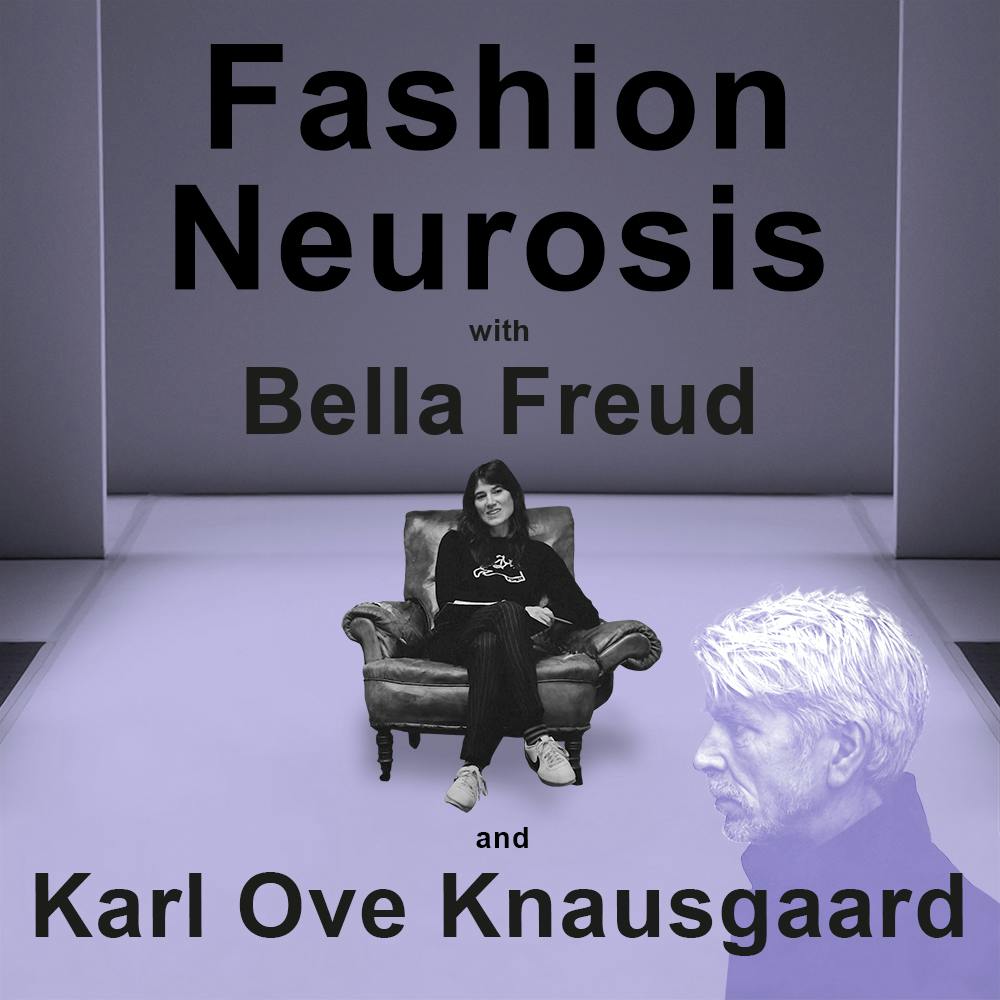
Loading summary
Transcript151 lines
- [00:00]
Shopify Representative
It's 2025, a new year and the best time to turn your great idea into a business. Shopify is how you're going to make it happen. Let me tell you how Shopify makes it simple to create your brand, open for business and get your first sale. Get your store up and running easily with thousands of customizable templates. All you need to do is drag and drop. Their powerful social media tools let you connect all your channels and create shoppable posts established in 2025. Has a nice ring to it, doesn't it? Sign up for your $1 per month trial period at shopify.com promo all lowercase go to shopify.com promo to start selling with Shopify today. Shopify.com promo.
- [00:43]
Carvana Customer
Wow. What's up? I just bought and financed a car through Carvana in minutes. You, the person who agonized four weeks over whether to paint your walls eggshell or off white bought and financed a car in May. They made it easy. Transparent terms, customizable down and monthly. Didn't even have to do any paperwork.
- [01:00]
Carl Ove Knausgård
Wow.
- [01:02]
Carvana Customer
Hey, have you checked out that spreadsheet I sent you for our dinner options? Finance your car with Carvana and experience total control financing subject to credit approval.
- [01:21]
Fashion Neurosis Host
Hi, come in.
- [01:23]
Carl Ove Knausgård
Foreign.
- [01:28]
Fashion Neurosis Host
Welcome to Fashion Neurosis. Carl Ove Knaus Guard.
- [01:32]
Carl Ove Knausgård
Thank you.
- [01:34]
Fashion Neurosis Host
I'm not sure if Carl Ove is the right way to pronounce your name, but it sounds so good. That sounds a bit like works a Roman emperor. I thought I would just continue to use it if that's okay with you.
- [01:48]
Carl Ove Knausgård
Oh, that's good.
- [01:49]
Fashion Neurosis Host
I have had quite a lot of weird pronunciations of my name. People mostly call me fraud or fiend. And then Froude. My dad told me that he went to this posh doctor once and the doctor said, oh, you're any relation to the grapefruit? And he said, the grapefruit. The grapefruit. No, I'm no relation at all. And then that's what we all called Sigmund Freud, the grapefruit. And that was kind of how he was positioned. Like, don't conform to any kind of notion of deity. Because my focus on my father was all about his work rather than anyone else's. Can you tell me what clothes you're wearing today and why you chose to wear them?
- [02:41]
Carl Ove Knausgård
Well, only really dress up when I'm doing events or interviews like this. Then I wear black T shirt and black jeans and black shoes. That's my uniform. But today was snowing in the morning, so I had to have a Sweater also black.
- [03:06]
Fashion Neurosis Host
Being interviewed for fashion neurosis would seem like an unlikely request to agree to. I wondered if you could tell me why you said yes, exactly.
- [03:17]
Carl Ove Knausgård
Because it was unlikely. You know, everyone has a relation to clothes, and it is very meaningful, even if you don't reflect upon it. And I thought it would be interesting to kind of talk about life and art through that lens, in a way.
- [03:46]
Fashion Neurosis Host
Yeah, I agree. I asked Martin Amis if he would do it, obviously, a while ago, because I remember reading in Money, he described cool trousers, and you knew exactly what he meant. And when I, like, read his work and read yours, I can feel that there's a relationship and I know there's things I can find out that I'm really interested to find out. But anyway, he said no.
- [04:17]
Carl Ove Knausgård
Yeah. Did he say why?
- [04:21]
Fashion Neurosis Host
No. Because I asked his wife and it wasn't out of the question until she chose the right moment when he said, no way. You know, I don't know anything about fashion. But he actually did, you know, whether he knew it or not, he just did know about. He knew how to use words that made you have an idea of how someone looked in these cool trousers and how attractive it was. You're quite a shy person. What was the first thing you wore that you knew would invite disapproval?
- [05:08]
Carl Ove Knausgård
I started to be kind of rebellious when I was in my early teens. I really wanted to be someone else, somewhere else, I think. And it wasn't so much an item of clothes that I got. I shaved my head and I had a cross in my ear and another cross in that ear. And I remember my father, when he saw it, he said, well, you look like an idiot. And that was kind of what I wanted to achieve, I think.
- [05:46]
Fashion Neurosis Host
Did it make you feel freer or more self conscious?
- [05:52]
Carl Ove Knausgård
I think it made me freer, really.
- [05:56]
Fashion Neurosis Host
I met the actor Dennis Hopper once, and we were standing outside an event and I said, I love your work. And he said, what about me? And it was funny and it was really great because obviously that's what I meant. And I wondered, how do you deal with that, the fandom and all the people obsessed with you?
- [06:18]
Carl Ove Knausgård
I try not to think about that at all. I mean, when I meet people, they read my books. I write very personally in my books, but I never think about that when I meet people that I know anything about me. So I feel that the whole thing, doing events, talking with readers, are very distant to me as a person, really. It's more like, yeah, like I'm representing my books or something like that. It's not personal, but it could be personal because people then, you know, they can tell me things that is really hard to deal with for me. They do it because they feel they know me and almost like we're friends. And I can't give that much back is the feeling I often get. Was, for instance, one who. Her brother died like three days before the event that she want to talk about Akzalan. What can you do? She was crying. And so we went to a cafe to talk about it. And it was more like I was a priest or, you know, psychiatrist or something. And those kind of situations doesn't normally occur when you're writing. But just because I'm so personal, it kind of evokes that kind of situations, really. And I want to, you know, to be good and kind and help, but then I don't know them, you know, I feels like I owe them something, but I don't. So it could be difficult. But yeah, it's dream situation, really, because that's what you want, you know, connection with the readers.
- [08:14]
Fashion Neurosis Host
Yeah. Something I find. I mean, reading your books, you write and it feels like you're somehow writing for us or when. When I'm reading, I feel like you're writing and I'm writing too. I mean, it sort of doesn't make any sense because I could obviously never do that. But it's so connected. And even though you write in such a personal way, it feels like my story. So I can imagine people wanting to feel that connection that you make possible through your writing. And it's so intimate, but it doesn't feel at all over sharing for want of a better.
- [09:09]
Carl Ove Knausgård
Well, it is oversharing, for sure. But when I wrote it, I thought, this isn't interesting for anyone. And I also thought, this is really only me, you know, this is only. I have experienced this, I mean, in exact situations and relations and. But then it turned out, no, it was the exact opposite. People related very closely to even the most private and, you know, things that I thought was unique to me. So I guess the lesson from that is that we are more alike than we think. And there's no use of having secrets, because it's all the same.
- [09:53]
Fashion Neurosis Host
Yeah. When you described seeing your father when he was dead and being able to look at him rather than trying to read his face and see what mood he was in, I found that resonated for completely different reasons. Because I was so obsessed with my father and I was always trying to read him, even though I felt loved by him and I was loved by him. But I'd witnessed his sort of abandoning of other people, especially my mother. And I was always worried I was going to lose that. So I find now when I. People tell me, oh, do you remember when we went to the Woolsey and sang Irish songs together? And I can't remember because I was so fixated on the moment of figuring out how to be the perfect kind of co conspirator.
- [10:50]
Carl Ove Knausgård
Yeah, you wanted to please him.
- [10:53]
Fashion Neurosis Host
Yeah, yeah, yeah.
- [10:56]
Carl Ove Knausgård
I know that feeling very well.
- [10:59]
Fashion Neurosis Host
But I knew that if I tried to please him I would also. That wouldn't work either. So I had to find a kind of space where I was pleasing and autonomous, where I felt so dependent. And it was like.
- [11:22]
Carl Ove Knausgård
Did that change through your relationship with him when he got older?
- [11:27]
Fashion Neurosis Host
No, not really. It only changed when he died. And even though I dreaded him dying when he actually died and I'd wondered about this before he died, it was though his greatest gift to me was to set me free from his opinion. And did you find.
- [11:50]
Carl Ove Knausgård
Do you think he was aware of this or.
- [11:53]
Fashion Neurosis Host
I don't know. I. He definitely. He knew I was his staunchest ally and I don't know because he never talked like that. You know, he never. We didn't talk about feelings. I remember doing some self help course once and then saying, I love you. And it was. He looked at me in a kind of quizzical way and I thought, okay, well, I've done that. You know, it was silly, but, you know, it was just something to. In a way it was, will he still love me if I say I love him?
- [12:43]
Carl Ove Knausgård
Did he see you, do you think?
- [12:45]
Fashion Neurosis Host
Yeah, he definitely did. Probably more than I sort of realized and. But I was. I wondered why your father showed you love in such a aggressive and hostile way because he clearly was interested and sort of followed you and wanted to have a relationship. But you describe, you know, he was so horrible.
- [13:22]
Carl Ove Knausgård
Yeah, he was very young when he got children and he was very chaotic and I think he really didn't want to be the person he was. There was a lot of longing in his life. I think I didn't know about that at the time, but I think that was kind of the key. He often talked about, you know, he wanted to be a gardener, he wanted to be a truck driver. He wanted to be, you know, wanted to be something else. And when he was, you know, like a kind of old fashioned father, very authoritarian and I know for sure he was speaking when he grew up and he was kind of traumatized really. But when he divorced, he and I Think I write about this. He changed character kind of almost completely. He was. When I was, you know, like 10, he was a teacher and he was local politician and he was, you know, he dressed like a proper adult. Like tweed suit jackets with patches on the elbow and he also had a pipe at a point and bed and. But he was, he looked good. He was a man, was a good looking man. And then he divorced and started his new life. He started to drink a lot, start to invite people, never invited a person in his life. Started to change the way he dressed, start to dress like kind of almost hippie, hippy, ish, you know, with, what do you say, tunics or whatever. And that was really scary for me because I. I remember I wanted him to be, you know, that strict, authoritarian teacher that he was because that was. At least he was safe. I knew where I had him. But then he changed and, you know, start to talk about things I never heard about and he could cry or he was. And I was that age. I was 16, 17. That was the least thing I needed was him floating away, you know, and become something else.
- [15:50]
Fashion Neurosis Host
Yeah, I remember that bit where he. You said he wore soft clothes.
- [15:55]
Carl Ove Knausgård
Yeah.
- [15:55]
Fashion Neurosis Host
And that these liberal people wore these soft clothes and that you despised it and. Yeah, I think that's a good response. In my school, I went to a Steiner school and they wore these drab, droopy things and Birkenstocked, and it was as though they were kind of counterbalancing their ego with these horrible drab clothes. And it was, you know, I think it created a panic in me that if I didn't watch out, I would slide into this kind of muddy thing that they all did. And they, yeah, they didn't have proper rules, they had no rules, but they had weird rules. Like you couldn't wear black or they disapproved of corners for some reason.
- [16:52]
Carl Ove Knausgård
Yeah, exactly.
- [16:54]
Fashion Neurosis Host
And it's so interesting, that thing of absolutism, because I remember reading that seal, the singer had a stepfather and he said it was easy because he was so horrible. There was no sometimes nice, which is more confusing.
- [17:13]
Carl Ove Knausgård
Yeah, that's true.
- [17:18]
Fashion Neurosis Host
In your teenage years, you. You took a lot of trouble not to be noticed, but how did you draw attention to yourself and what kind of clothes did you start to wear?
- [17:30]
Carl Ove Knausgård
So my relationship to clothes is really a kind of a long and rather complicated story because when I was little, like 7, 8, 9, I really loved clothes. You know, I was belonging for specific items of clothes that I wanted or that I wanted to wear or and that was not the correct way to be where I grew up. It was, you know, I just. The fact to be interested in it was wrong. And I remember also the only one I could talk about clothes with was girls. And I thought that was a good way to get to know them, you know, because I was also very into girls. But it wasn't. It was also completely wrong. Nobody was a boy who talks about.
- [18:26]
Fashion Neurosis Host
Clothes, you know, what clothes, what items did you now?
- [18:30]
Carl Ove Knausgård
When I was really little, I just wanted to be, you know, beautiful or pretty or something like that. So white shirt, you know, or whatever.
- [18:42]
Fashion Neurosis Host
Kind of something nice.
- [18:44]
Carl Ove Knausgård
Yeah. And also I remember a desire for some sneakers. I remember they were orange and green. This was in the 70s, you know. I still remember them, still remember my desire to have them on me. But I never got them. But the thing was that it was kind of wrong, but I do remember how important it was to me. And then there was, you know, I was 12 or 13, I think. And we should choose college camps of a school, you know, so you could have red and blue. And I picked red. I was the only boy who did it. I was completely broken after that. They started to call me Femi, which is like feminine. And I was hitting puberty and that was the worst thing that could happen, really. Everybody called me that. So then I decided to change. And luckily we moved then to another place. Nobody knew about this, but I started to have a different approach to the world, really. I understood I can't continue this, so started to dress differently and behave different, really. But at the same time, I really loved music. And this was, you know, was Norway and was outside of everything. So that created some sort of longing also in me. And it was British music and this was in the 70s and 80s, so it was punk and then post punk. And I read, you know, New Musical Express and Sounds and all of that and looked at those people. They were so incredibly cool. It was like, you know. And so when I was a teenager, a little bit older, I tried to go in that direction, which, you know, I didn't never looked cool, but tried to. But I couldn't understand what made them so cool. But I think it's the attitude, not what they're wearing, really. So that was long, long coats and. Yeah, that kind of stuff.
- [21:00]
Fashion Neurosis Host
Where do you think the shame came from? Around wanting to look nice, you know.
- [21:07]
Carl Ove Knausgård
I was kind of adjusted. It wasn't right. You shouldn't do that as a boy or as a man, you know, There was a lot of things you should do. And. And I did those things, you know, I cried a lot too. And I liked flowers and, you know, this. And the social code where I grew up was like in the Viking era, you know, so the basculinity demands were high and you had to adjust. And I think that's fine. I mean, it's good. Have to have some boundaries. And I think it's very different to grow up now than I was then. Really. Yeah, those things has changed a bit.
- [21:46]
Fashion Neurosis Host
Yeah, they have.
- [21:47]
Carl Ove Knausgård
Which is very good, of course.
- [21:49]
Fashion Neurosis Host
Yeah, it is good. I think the whole kind of freedom about what you can wear is so uplifting. And having shame about wanting to look nice is. God, it took me so long to shake that. Maybe about 45 years or something. But I think it's partly one of the reasons I became a designer, so I could control my. Yeah, my kind of look. And it's very handy. I mean, it's great. The older I get, the more important I see clothes being just because they're a way to make you feel unself conscious and kind of liberated, really. Do you remember what it was that someone else wore that you first found attractive?
- [22:44]
Carl Ove Knausgård
Well, you know, I can't really remember, but I remember seeing, you know, cool people wanting to be like them. Of course, but I can't remember any specific item.
- [23:00]
Fashion Neurosis Host
Like on a girl. Did you have like, girls that wore certain, I mean, certain items? Did you notice those?
- [23:11]
Carl Ove Knausgård
Not so much, really. So I trying to be this post punk figure. I lived in a town that was where the cool thing was to be Christian, really. So in my gymnasium, everyone was Christian. Also the girls, I mean, they were very, you know, proper and nice looking in that way, almost like American prep style. So it was enormous gap between me and them. That didn't mean I didn't desire them, but it was. They couldn't relate to the way they dressed, really. But I do remember, you know, if you buy stuff and you think it looks good, but it doesn't look good on you, you can't make them. I can't look good in anything really. And then I was in. That's out Kirsten, where I grew up, walking Saturday morning. And then there was a guy walking 10 meters ahead of me and he looked incredibly cool. I mean, really, really cool. And I walked past him and had a look and I was actually. What is his name? The bass player in Blur. Alex. Alex James.
- [24:35]
Fashion Neurosis Host
Oh, yes.
- [24:36]
Carl Ove Knausgård
And I realized he was wearing something very simple. He was just cool, you know.
- [24:42]
Fashion Neurosis Host
And it was him.
- [24:43]
Carl Ove Knausgård
It was him they were playing. I was there because it was a music festival and they were playing and this was, you know, early in the morning, hardly anyone in the street, but he was walking there. And then I realized it's the attitude, it's the way, you know, that's the key to being cool. That's why I never achieved that. Even though if I.
- [25:05]
Fashion Neurosis Host
Everyone else thinks you're cool.
- [25:07]
Carl Ove Knausgård
I don't think so.
- [25:08]
Fashion Neurosis Host
They do.
- [25:08]
Carl Ove Knausgård
No.
- [25:10]
Fashion Neurosis Host
You used to have a very cool haircut. It was quite specific and I wondered where that came from. Had you seen someone that you wanted to emulate?
- [25:24]
Carl Ove Knausgård
No, but I had the same haircut throughout the 90s, really. It's like short and. Yeah, just very simple. And then I was. I left the town I lived in, went out on an island far out in the sea. It was four or five people living there and me to write, but I couldn't write. So then I, you know, I remember exactly after a shower I thought, well, maybe because my hair started to be a bit longer, maybe I'll just try to see what happens if I. If I don't cut my hair. And I had this idea of the 70s. I really loved the 70s, kind of more than I should really. The aesthetics and. Yeah, I think it's in the music and everything. But it was in the end really associated with my book by struggle. I let the hair grew then. And then when the book was finished, I cut my hair and Yeah, I also grabbed by a bed so I looked kind of. Yeah, I think a bit 70 ish. And I cut everything when the book was done, I thought I should get back to normal. So it was. Yeah, it was just a way of looking very different from how I. The one I feel inside. And it was like freedom in a way. It felt like freedom, really. And I guess that's the old hippie feeling. They must have felt that in the 60s. Let the hair grow. That's freedom. But I once went to a talk show at this time and I was sitting next to Robin Williams, the singer and he called me throughout Gandalf. So that wasn't. That wasn't. And that was. Yeah, it was funny, but I guess I looked like Gandalf.
- [27:28]
Fashion Neurosis Host
I don't think so. That's really a bad description. It was a really cool haircut actually. And because I remember you describing how you and your brother had this kind of short, spiky hair on top and it was.
- [27:44]
Carl Ove Knausgård
Yeah, yeah.
- [27:45]
Fashion Neurosis Host
And it was as though you had long hair and short hair and. Yeah, it was great. I mean, it's so rare to see a writer with, with something, you know, with like showing, showing out, you know, just letting, Letting people see they. They're interested. And I, I think it's very exciting. It's, you know, it's exciting reading books. And when you see a bit of the writer and you have another way of connecting, I find that really thrilling. And I'm sure I'm not the only one.
- [28:28]
Carl Ove Knausgård
Yeah, I think it is actually connected with the writing because the writing was very much then about being unprotected. And when you're writing, the thing that restricts you is other people's opinions. I mean, and you've got that in your head, you know, so I can't write this, or what will she think? Or what will he think? Or this is bad. All those kind of things. That's a social thing you have in your head when you're writing. And when I did Master Rug, it was just because I couldn't. I couldn't write. Didn't make sense, anything. And I thought I should just, you know, do exactly what I want and don't think about if it looked good, if it was good, anything. Just try to, to be free in the writing. And I think it was the same with the haircut and with all of that. I. I was in a point where it was very important not to think what other people. Not to care about what other people will think. I never thought about this, but it seems obvious now when you're asking.
- [29:42]
Fashion Neurosis Host
It's interesting because you talk about caring a lot about what people thought, and then you went completely against that. And when you were writing, did you think, I'll just put it down and then maybe I'll take stuff out? And then you never went back.
- [29:58]
Carl Ove Knausgård
Yeah. And it was a process. I remember the first little piece I wrote, I sent to my editor, and he kind of jumped back, back and, and said, this is. I call it manic self confession. Because the first thing I wrote was something I've never said to anyone, you know, in my life, not a single person. It was completely secret. And the, the power in that, the power in just writing that down and sending it to someone was, you know, it's immense. And then it was difficult to continue, but it became easier and easier, and I think I fooled myself. And I thought that nobody would actually read this at all. So I managed to create a space where I could be free. But of course, there's always restrictions anyway. I mean, I couldn't write exactly what I was thinking about other people. That's impossible. But I'm back in hiding now, so it was those years I did it.
- [30:56]
Fashion Neurosis Host
It's interesting you say about that he's the sort of self confession because I don't find it confessional, I just find it like so urgent and important as I'm reading. But confessional, there's a sort of victim about it which I never get from reading my struggle.
- [31:19]
Carl Ove Knausgård
But that's because it's more like, you know, it's turned into novels or stories. And in those stories there are much, much more space than this little person thinking about himself. And that space is also, yes, very much part of the novel.
- [31:43]
Fashion Neurosis Host
I think you've been asked to be modeled in campaigns as a model, is that right? But you haven't agreed to do them.
- [31:52]
Carl Ove Knausgård
Yeah, that's right.
- [31:54]
Fashion Neurosis Host
Would you ever walk in a show?
- [31:57]
Carl Ove Knausgård
No, no, no.
- [31:59]
Fashion Neurosis Host
Not like Miu Miu or Comme des Garcons or something?
- [32:03]
Carl Ove Knausgård
No, but I do get, you know, I cut my hair in a little men's barbershop in Blackhaith. It cost like £30 or maybe even £25. And I always go there and the one who cuts my hair there, she asked me and I was very flattering and she asked me, she said, you know, modeling for old people, you know, you can and would you be interested in that haircut? And I said no.
- [32:39]
Carvana Customer
Yeah, sure thing. Hey, you sold that car yet? Yeah, sold it to Carvana. Oh, I thought you were selling to that guy. The guy who wanted to pay me in foreign currency, no interest over 36 months.
- [32:53]
Carl Ove Knausgård
Yeah, no.
- [32:54]
Carvana Customer
Carvana gave me an offer in minutes, picked it up and paid me on the spot. It was so convenient. Just like that. Yeah. No hassle.
- [33:02]
Fashion Neurosis Host
None.
- [33:03]
Carvana Customer
That is super convenient. Sell your car to Carvana and swap. Hassle for convenience. Pickup fees may apply.
- [33:09]
Fashion Neurosis Host
I remember when I worked for Vivienne Westwood when I was in my. Probably like 23 or something. And she asked me to be in one of her walk in one of her shows and I said no because I, you know, I thought my arms were fat or I was so self critical and anyway, she sort of didn't really try and persuade me because she wasn't a very maternal type of person in that way. And she obviously just thought I was completely stupid not to do it but. And she didn't, she didn't get self loathing. And no, I have very few regrets, but I wish I'd done it but. But it's that thing of just being too afraid to be. Act as though I thought something of myself in my struggle. When you describe going to your father's house and seeing all the empty bottles and the rotting clothes and the smell. And particularly your grandmother who had lived there with him and the state that she was in as well. And her dress kind of stinking of urine. And was there anything earlier that gave you an idea that she could. She was capable of enabling a situation of such sort of degradation and degenerate life. And I wondered if you thought her relationship with him was responsible, you know, was to do with. Had created his alcoholism.
- [35:03]
Carl Ove Knausgård
That's a very good question and it's very interesting. I. I felt that she was probably had done some social climbing. She came from a different social class really from that one she married into, which was kind of a bourgeois small town class. So I think she had a life that wasn't entirely hers. And so there was an element of performance in it. And it was when. When this happened. I mean they had a very special bond. He was very connected to her. He tried to break free from her many times through his life. Never succeeded completely. And when his life, you know, went to pieces, that was where he went to her for her to take care of him. And there was no one else there. He threw out everyone who was, you know, coming to help and shut the doors and start to drink. And she too. And when I saw her there, it felt like she. It was not like it was her true self, but it was like it was something closer to her somehow. Not the drinking, but the way she behaved. It was incredibly tragic and also very moving. But I saw once the grip she had on her. I mean, I was afraid of my father. Really, really afraid of him. And there was one and he was there drug and I was visiting them. We were out and come back and he accidentally turn on the. The alarm in the house. And she was angry with him and he was like a schoolboy, you know, his arms down, his head down. And she yelled at him. And I saw that connection that she had on him.
- [37:26]
Fashion Neurosis Host
Yeah.
- [37:26]
Carl Ove Knausgård
And that was my father who I really was afraid. It was kind of mind blowing to be and see that relation and that relationship they had was so complex. It's not that complex in the book. But then also as I get older, I understand more and more of it, of course because I can understand her more and him more. So it was. I had to write about this. You know, he was dead two days before. She asked us constantly do about the dragon and we said no. We thought that was the worst. But then we realized she wanted a drink. And I would drive with her. We all get drunk. That was that was completely crazy but also incredibly good in a way. It was like. Yeah, it was like a relief or something was released there, you know. And then writing about that is the first kind of real transgression I've done because situation was so charged with everything. And this was. You shouldn't do this, you know. But it was so good to do.
- [38:32]
Fashion Neurosis Host
It like a reality rather than this kind of awful rigidity, you know, just this fear really that you describe all the way through. The fear of your father and.
- [38:48]
Carl Ove Knausgård
Yeah.
- [38:50]
Fashion Neurosis Host
And being the child of an alcoholic often results in a lot of self destructive behavior. And do you have any of that that you're still wrangling or that you're. That you wrangled with?
- [39:05]
Carl Ove Knausgård
Yeah, I think my kind of natural instinct is to be self destructive somehow. But I found many ways to deal with it and to writing is one of them, which is really the thing that it really helps me. And also having children, having a family, all of that. Yeah, it's made this kind of. Yeah, it's something from the past really. I suppose with you can't afford it. I mean you can't really do it.
- [39:45]
Fashion Neurosis Host
And with alcoholism there's so much dishonesty and in your writing there is so much honesty that must deal with that kind of. It's so pervasive that urge to just.
- [39:59]
Carl Ove Knausgård
Yeah, but it is an element of self destruction in writing. So personal, you know, because it is. You're doing something to yourself somehow when you do it. And now people know this and you have. There is an element to it, I think but in the grand scheme of things it's constructive and good and almost healing. But it has that element. And I remember that when I did it it felt like almost. Sometimes it felt like violence to write about it. I mean not about other people, but about myself somehow.
- [40:36]
Fashion Neurosis Host
Like when you say about being self destructive, is it to do with just giving more and more of yourself away and wondering if event at some point there'll just be nothing there and that feels self destructive.
- [40:50]
Carl Ove Knausgård
Yeah, that was the point. I wanted to write so much about myself that in the end shouldn't be any more. That's why the last book ends with that. I'm so happy I'm no longer a writer. That was the whole point. And it was the only thing I knew when I started. It should end like that. I'm no longer a writer because I've written about everything.
- [41:14]
Fashion Neurosis Host
I think because I read that you said when you finish writing every day you feel like it's been a failure. But that Might not be the case now. And I wondered if you have a come down every time you finish a book.
- [41:34]
Carl Ove Knausgård
And I. This last five years, I published one book a year. So when I finish one, I start the next one. So it's. But it's true that I don't. I don't like my writing, I don't like what I'm doing. And I feel it's incredibly hard to do it just because of that.
- [42:00]
Fashion Neurosis Host
How do you go through the mirror with that?
- [42:04]
Carl Ove Knausgård
I get help. You know, I have some people, my editor, who says, this is great, go on. And it's also. This is very much what surrounds the writing. It's before and it's after and sometimes during. But when the writing is good, that you don't know where you are, who you are, you're in it, then that's the place. That's a good place to be, is like the selfless place. And that's almost the point of writing, to get to those places. And then there's no shape there or no, you know, no demands or anything. So. And I know those places exist. And so the whole point for me is to write a book, publish it, never look back, write the next, hope it's better, you know, and go on like that. And that's a good way to be productive. And it's a good way to. Yeah, to write. Because it's the writing that's the important thing, not the books, really.
- [43:13]
Fashion Neurosis Host
So interesting that I'm always struck by. It doesn't take much to make you feel better. I mean, not just you, but, you know, you describe such an intense process and then your editor says, this is great, and it is great. It just needs a little bit of encouragement. Everything that you described not having in your upbringing. And it's, you know, it's easy to go back, like being drawn by a magnet to everything is wrong. And then someone says it's right and it's just great. And it's like this enormous dam breaking. Freedom.
- [43:55]
Carl Ove Knausgård
Yeah. I work sometimes as an editor myself and that's the one thing I try to, you know, to bring forward is. Is to talk about the good stuff and to be in the good stuff and to. Because if you do that, then there is some sort of, you know, some sort of energy, some sort of positive stuff, some sort of creative stuff that, that comes alive and it comes alive in. In what's good. And if you do deal too much with that, this is not good. This is, you know, take that away. That's for always, for later. The more you know, that's. It's the. It's. It's almost like you shouldn't practice what you can't do. You should only practice what you can do, you know, because it's the. It's not the technical parts of doing something that's difficult because everybody could learn that, but it's. It was inside you that has to be, you know, come out there and it has to have some sort of conditions to do that, I think. Yeah, that's. That's just my personal experience.
- [45:09]
Fashion Neurosis Host
Really a really good point. Practice what you can do and sudden. Because when you have a sense of progress, it's quite encouraging to do more. But without that, it's easy to do nothing and then assume that that's normal. To do nothing.
- [45:30]
Carl Ove Knausgård
Yeah. And do something is better than doing nothing, even if something is not very good.
- [45:35]
Fashion Neurosis Host
Yeah, yeah. That's crucial. As soon as there's something to shape, then there's something.
- [45:43]
Carl Ove Knausgård
Yeah, exactly. You can build on.
- [45:45]
Fashion Neurosis Host
Yeah. Do you consider yourself to be a romantic in.
- [45:52]
Carl Ove Knausgård
Romantic in what way?
- [45:56]
Fashion Neurosis Host
I suppose in your kind of perspective, it. It's a bit of a. I suppose in your kind of heart, I mean, for want of a better way to frame it, that you. Your writing is so kind of un. Murky in any way. It's so deliberate and clear. But then maybe to do with like, you know, love of music and interesting clothes. Like when you described being interested in beauty as a little child.
- [46:37]
Carl Ove Knausgård
Yeah, yeah, I think I am, very much so. I'm also. I find, you know, truth in emotions and emotions are, you know, it's hard to define. It's even hard to know what it is. But I do trust them. And it's like you say, it's beauty and color and all of that, but also the feeling of something more to life than the trivial. You know, all of that that we have to do is something I'm kind of constantly seeking at this, at least in my writing, so. And also the art I like is, you know, it's romantic art. There's some longing in it I can really, you know, connect with. So.
- [47:39]
Fashion Neurosis Host
Yeah, longing is one of the feelings that I most. I hate the most. I wondered how you felt about it. I think I associate it with despair.
- [47:56]
Carl Ove Knausgård
It's not longing after something concrete. It's not long enough to, you know, a different life or longing to go there or do that. It's not that at all. It's more like. It's the poetry said about music that it. It lifted him up and put him down somewhere else, which is exactly what music can do. So it's almost. You know. I wouldn't say it's a religious logic because it's not a logging for God, but it is related to that. It has to do with that, really. And the weird thing is that you could find that everywhere. I mean, it could be lifted up by anything. But it's so hard to fine and to see at the. And to find space for, you know, when you have to make dinner and take the dishes and do the hoovering and all of that. But it's there.
- [48:53]
Fashion Neurosis Host
Yeah. During lockdown I had terrible anxiety. I've always had anxiety, but I never really called it that. But it was so. It was so kind of constant and overpowering that I would use. I would think I must put on some music because it might work as some sort of antidepressant. And it always did, but I'd always forget. And every time I'd put the music on, I didn't know if it would work. But then it did and I know it works, even though I've forgotten the feeling every time I need it.
- [49:30]
Carl Ove Knausgård
Can I ask what kind of music you play then?
- [49:33]
Fashion Neurosis Host
I've got such a weird playlist I. I play when I'm particularly down in the dumps. I play quite a lot of Elton John because it's so bouncy, but it's tough too. And sometimes a few sad songs to kind of rebalance and like I found this song by Frank Ocean called Super Rich Kids about this boy who just sits on the roof and eventually. And drinks with his friends and then he falls off and there's a brilliant line which is my silver spoon, it fed me well or something like that. It was very. As he's plunging down the 60 blights of the floors. But Elton John is great for bouncing you out and hip hop and what do you listen? What bounces you?
- [50:44]
Carl Ove Knausgård
At last few years it has been very much classical music because I never listened to it, really never. And it has been like a. Almost like a secret world has been opening up. But other than that, I'm stuck in my indie. In my indie world. It's like my musical taste, you know, stopped at the age of. Or the adventure of music where you discover new things. Stopped like the age of 40. I don't know why really. But yeah, there are lots of bands.
- [51:22]
Fashion Neurosis Host
I like, but any heavy metal.
- [51:27]
Carl Ove Knausgård
Not so much. But in these last books there are some black metal musicians in it. So I listened to that, but it's not my favorite. But it's really weird how Extreme it is. And how it could come out of Norway of all places, which is a very, you know, harmonic and peaceful and very rich country. This is so destructive and aggressive and dark and really terrible. But very, very much energy in it though. So I can understand why people listen to it, but I don't listen to it.
- [52:11]
Fashion Neurosis Host
Yeah, it takes you. I mean, I love the getting lost in that extreme frantic music. But it's quite narrow. That particular type might have.
- [52:24]
Carl Ove Knausgård
When you're 16.
- [52:25]
Fashion Neurosis Host
Yeah. And if you fancy someone and you don't like something they're wearing, does it kill your attraction?
- [52:34]
Carl Ove Knausgård
No, no. As I said, when I, you know, the girls when I was 16, they were very different from what I thought was cool, but I still fell in love with them. So that didn't matter at all really. It's basically this bit the opposite really, because if I think someone that I thought looked cool would be someone almost, you know, coming from me. And if they don't look cool, in my opinion, it would be them somehow, you know, more. And I think I would notice that more. And also if it's. If you have this thing with perfection and imperfection, someone is not very good at dressing. There is an element of imperfect, something imperfect in it, which is, I think, attractive in itself because there is. Yeah, there is kind of an instant connection emotionally. But if you just see something super beautiful, super cool. There is, yeah, it's like an image. How do you relate to that? There's. There is, you know. You know what I mean?
- [53:53]
Fashion Neurosis Host
Yeah. It's endearing when someone has something awful on. I mean, it.
- [53:59]
Carl Ove Knausgård
Yeah, it is.
- [54:00]
Fashion Neurosis Host
It just kind of. Either it's a. It's like an allergic reaction or it draws you closer.
- [54:06]
Carl Ove Knausgård
Yeah, but not, of course, really awful stuff that's. I don't really know if you're talking about the same things.
- [54:14]
Fashion Neurosis Host
Like what could be really awful.
- [54:16]
Carl Ove Knausgård
No, really off putting would be something, you know, very vulgar and very, you know, like that.
- [54:21]
Fashion Neurosis Host
But what's vulgar to you?
- [54:24]
Carl Ove Knausgård
A follow up question. Yeah, I mean, if you go out in a British town, any British town, in maybe February, 1:00, and you see these girls, they're nothing on high heels, nothing on. And it's like minus 2 degrees in snow and they're drunk. And that is fascinating and interesting, but it's not attractive, I think. You know what I mean?
- [55:00]
Fashion Neurosis Host
Yeah, I know what you mean.
- [55:01]
Carl Ove Knausgård
I. Yeah, but I guess if you are very drunk and British and in that, then it works somehow. Must work because people do these things, I suppose.
- [55:12]
Fashion Neurosis Host
It's familiar, isn't it if you're in that situation and that's part of it. But yeah, I agree it's fascinating and I'm always fascinated when I see people wearing very little in the street just because I'm so self conscious and I appreciate it more and more.
- [55:33]
Carl Ove Knausgård
Yeah.
- [55:35]
Fashion Neurosis Host
I'd like to thank you so much for talking to me and being on Fashion Neurosis. Carl Ove.
- [55:42]
Carl Ove Knausgård
Thank you. It was my first therapy session ever.
- [55:46]
Fashion Neurosis Host
Oh really?
- [55:46]
Carl Ove Knausgård
Yeah. It's a pleasure.
- [55:48]
Fashion Neurosis Host
In fact, one of the questions I sort of wanted to ask you but didn't ask you was have you ever been to therapy because you've been through so much. Wow. Gosh, that's interesting. I mean I've been going to therapy for years because I was so self destructive and then I went to this new therapist about three years before my father died because I thought I have to get a grip. I have to get a perspective and prepare for him dying so I don't fall to bits and cease to exist when he ceases to exist. And it was really helpful. I still go and see him because it was like you were saying, things shift but they don't go away. And I'm always so afraid of things stopping. I try different things all the time and it works. It helps me to this feeling that you described of moving forward. If I don't have that, I feel like I'm going to die.
- [57:08]
Carl Ove Knausgård
I think I don't go in therapy because I don't want really things to change. Even if it's terrible. I still feel that's what I got. That's what I have to work with and live with and I don't want that to change somehow. I don't know, that's maybe a bit awkward or weird but that's the way I feel.
- [57:32]
Fashion Neurosis Host
I think that's good. It's good to know. And also it's your. Sounds like your generator as well. And you seem to know it as that. So it's useful to you and it clearly works.
- [57:51]
Carl Ove Knausgård
There are many pages.
- [57:55]
Fashion Neurosis Host
I think I find I go to therapy almost for the odds. The flip side of the same thing and which is I can keep the bit of myself that I like from being eroded by my.
- [58:15]
Carl Ove Knausgård
Yeah.
- [58:15]
Fashion Neurosis Host
Sort of my kind of almost the awful side of longing that reduces and reduces. So I just become more and more self critical.
- [58:27]
Carl Ove Knausgård
Yeah.
- [58:28]
Fashion Neurosis Host
And it just soften, softens things and I can carry on anyway.
- [58:37]
Carl Ove Knausgård
Well, it was nice being undercoat chair.
- [58:39]
Fashion Neurosis Host
Anyway, thank you so much. It's great to talk to you.
- [58:51]
Carl Ove Knausgård
Sa.