Loading summary
Transcript118 lines
- [00:00]
Shopify Advertiser
It's 2025, a new year and the best time to turn your great idea into a business. Shopify is how you're going to make it happen. Let me tell you how Shopify makes it simple to create your brand, open for business and get your first sale. Get your store up and running easily with thousands of customizable templates. All you need to do is drag and drop. Their powerful social media tools let you connect all your channels and create shoppable posts established in 2025. Has a nice ring to it, doesn't it? Sign up for your $1 per month trial period at shopify.com promo all lowercase. Go to shopify.com promo to start selling with Shopify today. Shopify.com promo.
- [00:51]
Kim Gordon
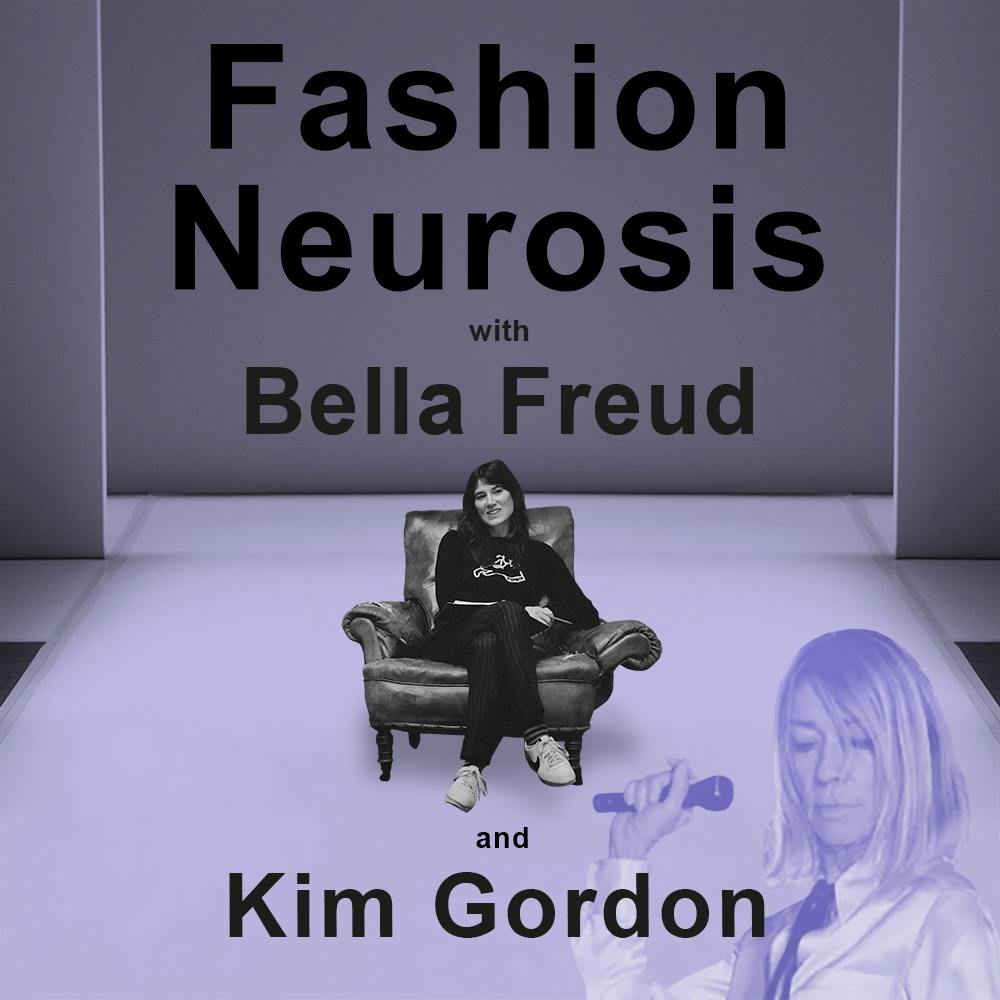
Hi, come in. Welcome to Fashion Neurosis. Kim Gordon.
- [01:01]
Unknown Guest
Thanks.
- [01:03]
Kim Gordon
Can I ask you, why did you choose what you're wearing today?
- [01:07]
Unknown Guest
Well, it was partly because it's hot out. I've been wearing these silk pants for most of the tour, alternating them with these flared Adidas pants and I don't know, just something comfortable that's. I kind of actually recently refound this red necklace. It's like an ancient Agnes P. Necklace. So I just. Because I'm wearing all black, I just thought I would put it on and accessorize a bit.
- [01:43]
Kim Gordon
It's quite Marie Antoinette, actually, in a kind of. I mean, I've no idea if she wore it, but I imagine someone with the blonde hair would wear this kind of significant color around her neck.
- [01:57]
Unknown Guest
As you get older, you become less visible. So I thought, oh, why not wear a red necklace?
- [02:04]
Kim Gordon
It's a really good point, actually, because there's this whole thing about being less visible. But there's so much to say and do as we get older and especially if we can wear clothes, it's like, gotta wear them, you know, be a bit more adventurous. If you're a bit inclined to hiding.
- [02:26]
Unknown Guest
Yeah.
- [02:27]
Kim Gordon
You've described yourself as shy and even introverted, yet you have a way of drawing attention to yourself. I've always been quite fascinated by how you dress and the sort of subtlety of your style and especially your short skirts. And you've got really amazing legs.
- [02:47]
Unknown Guest
Thank you.
- [02:48]
Kim Gordon
You really do. And I wondered what the first pieces that you chose, like, as you were sort of establishing your sense of identity when you were a child, what were the first pieces of clothing that you adopted as your identity?
- [03:03]
Unknown Guest
My mother, you know, she grew up in the Depression and so she would buy my clothes at thrift stores or make clothes for me. But then when I was 12. We lived in Hong Kong, and it was still a British colony then. And there was one store that had all these sort of modish clothes. And I saved up all my money and I bought a pair of these red corduroy hip hocker bell bottoms. And that was the first sort of cool thing I ever bought. And then it wasn't really for a long time till I, when I was in Sonic Youth, that I started wearing shorts. Like, I had a pair of silver leather shorts that I guess I bought during, like, the Goo era and. Or we did this kind of goofy photo shoot for the COVID where basically I really sort of, for me, glammed it up. Because before that, it was more just sort of struggling with clothes and things like that and being kind of poor also. But it was always kind of like a challenge to sort of balance out, like something cool and something that's maybe more femme and kind of shorts on stage seem to. I don't know, I just got more energy from showing my legs, really, because.
- [04:34]
Kim Gordon
There'S a way that you look on stage. Like I was watching an old video of you in a punk movie where you're wearing this really short stripy dress and it's. You're just moving around, but there's something about your legs being sort of almost out of sight that they can just. You seem really unselfconscious. And I'm always intrigued by that because you're a shy person, but it's not like you're showing yourself. You're just being agile. And wondered how that happened.
- [05:09]
Unknown Guest
I don't know. I mean, I used to take a modern dance Martha Graham, when I was a teenager, and then some kind of rigorous ballet and playing music felt like just moving around on stage. And it was just very physical to me, which I think I was. You know, I was kind of sporty when I was a kid and good at things like that. So I noticed I like to always contrast a dress with, like, playing dissonant music. And that dress, it seemed like the perfect dress because it wasn't like, too femme or anything. And it just got shorter and shorter through throughout the tour because I would sweat so much. And then I just started shrinking.
- [05:58]
Kim Gordon
It's quite good, really, because it sort of deals with any conscious, like, I'm gonna have this. It just. It just makes the look for you and you're in it, and then you can be slightly more visible.
- [06:12]
Unknown Guest
Yeah, I mean, I always like that, you know, like, Keith seemed like the Stones early on seemed to wear the same thing all the time or like, maybe they were. It's just because there were. There were drugs involved. They're sort of, like, too lazy to change. But it wasn't like. I know it was sort of like, embedded into, like, their personalities in a way. And I don't know, it just seemed like this kind of effortlessness in terms of, I don't know, what they wore on stage or something. And I think that Anita Pallenberg obviously had a lot to do with that.
- [06:56]
Kim Gordon
Yeah, she did have a huge influence. She was a friend of mine and she had a big influence on me, too.
- [07:05]
Unknown Guest
Have you seen the documentary? Yeah, I really want to see that.
- [07:08]
Kim Gordon
It's great. It's fantastic. It's really, really good. In fact, she's one of those people of which you are too. When I feel stuck and I want some, like, fire about, like, a direction to make things for or I want a mood to kind of immerse myself in. I think of her. She was quite strict as well. I think of you because you both have this elegance as well as this kind of.
- [07:39]
Unknown Guest
Wow, that's so funny because she was a big role model for me. Really?
- [07:43]
Kim Gordon
Oh, great.
- [07:45]
Unknown Guest
Yeah. I mean, she's. I'm not really that bold, but. Yeah, I think it's interesting adding small details to what. What you wear.
- [07:55]
Kim Gordon
Yeah, it gives things more association, doesn't it? And that's, I think, why people are obsessed with how you look, because your look relates to all sorts of thoughts and ideas, and that's very stimulating for an admirer.
- [08:16]
Unknown Guest
It's funny because, honestly, like, I really always struggled with what I wore on stage or just day to day or like, when I first moved to New York, everyone looked so Chicago because they wore black all the time. And I kind of felt pretty out of it. But when I did that book for Vasoli, which is all pictures, it was like, oh, my God, it's just a collection of bad outfits. That's how I thought it was gonna be. And then actually, when I look through it, it's kind of. It is kind of interesting because everything now looks so kind of polished in a way or generic or something.
- [09:01]
Kim Gordon
Yeah, I think that's you. That you bring that to the outfit, this sort of polish. And you probably being a very modest person, but you do bring that. And that's what's interesting because it's. It's. There's not a lot, you know, you don't laden you. It's all quite subtle, but it's very. It's so specific as well. It's so noticeable. And it goes through sort of affecting.
- [09:34]
Unknown Guest
Well, I've gotten better, you know, I know more what works. And kind of.
- [09:41]
Kim Gordon
Did you have a code or a way of dressing when you were growing up? Did you want to stand out or blend in?
- [09:51]
Unknown Guest
When I was in elementary school, I went to a school that was like an experimental lab school and girls could wear anything they wanted, whereas in public schools they had to wear dresses all the time. And I was kind of a tomboy, if I can use that term now. But, you know, I wore like jeans and my mother had no idea how much new clothes cost. And so, you know, and I sort of dressed kind of hippie ish. But I just really never felt like when I bought those red corduroy bell bottoms that somehow like it was equated with music that I was into. And so that really influenced me in the sense of like what was going on in England. And you know, it was so far away. But then I lived in la, which seems so un. Like mod, you know, is more like, you know, more hippie. And I was confused, like, how can people be into David Bowie and live in LA or something? Because it's just all about being casual and, you know, wearing T shirts, it's so dictated by the weather. And so, you know, Hollywood is such a pocket or bubble of la.
- [11:12]
Kim Gordon
Yeah. How were they into David Bowie? I mean, I'm shocked even now when I go to LA and how dressed down people are. It's like there are no clothes. But I mean, I know everything that is costs a fortune. Those kind of totally. Those cashmere rags.
- [11:30]
Unknown Guest
But yeah, it's kind of interesting how that has become. That way of dressing has also become such an export.
- [11:38]
Kim Gordon
Yeah.
- [11:38]
Unknown Guest
You know, it's like now all over and you know, skatewear, street wear, like even in London. Like I think of it as a place where people dress more formally, but I go out on the street and actually that's not really true.
- [11:52]
Kim Gordon
But somehow people, the sportswear and stuff, it's much more overt than, you know, James Purse, kind of open neck T shirts and sort of mild jeans and stuff. Everything is very anonymous. Whereas at least what you're describing is skatewear is kind of exciting and it has an energy, right?
- [12:17]
Unknown Guest
Yeah, I guess at some point it really influenced the fashion world.
- [12:20]
Kim Gordon
I had a similar sort of. We had very little money growing up too. And it made one or two things seem completely amazing, like the chords you were describing. And then the idea of having lots of things was just. It was just like a fantasy. And sometimes it's I think that sort of stays a bit. Well, I hope it doesn't, because I'm in the fashion business. I need people to want more.
- [12:58]
Unknown Guest
I think it's kind of. Fashion is sort of all about making people desire things. And you do have to kind of want to desire. I mean, some people, I do sometimes shop out of anxiety, but since this is a fashion neurosis moment. But I think that you also have to really. Yeah. Like, want it or there is desire involved. And that's what makes it fun.
- [13:31]
Kim Gordon
When you have your anxiety moment. Is there something in particular that you try and buy as a sort of anesthetic?
- [13:39]
Unknown Guest
It's more like, oh, let me go back online and look at those jeans. All these different style of jeans or something. Or, you know, it's just like buying something that I probably don't need.
- [13:51]
Kim Gordon
Can I ask you something about your hair? I know you're a natural blonde, but you have this very particular kind of sheet of blonde hair. And whenever I see you on stage or in photographs, it's almost like someone has photographed you in colour and translated into black and white, like those Andy Warhol sort of silver screen things. And I wondered if you'd like. If you'd seen something or based it on anything.
- [14:23]
Unknown Guest
Well, okay. I'm not a natural blonde anymore, but when I was a natural blonde, it was always dark underneath. I had dark roots, dark eyebrows, recently, actually lightened it up a bit. But, you know, instead of letting it go gray, I go more blonde because it does look better in pictures or on stage.
- [14:47]
Kim Gordon
It looks really good. Have you ever tried another color?
- [14:51]
Unknown Guest
I once dyed it black, and then I also used to put medic panic colors.
- [14:55]
Kim Gordon
What are they like?
- [14:57]
Unknown Guest
It was. I think it was like magenta at one time, which I really liked, and then red.
- [15:02]
Kim Gordon
You're more daring than me. I've never dyed my hair, but it's partly because when I used to sit for my dad, which I did a lot, he. I just knew he'd freak out if that ever happened. Oh, yeah, I was gonna go blonde once. And then he said, do you want to start a painting? And that was the end of that.
- [15:20]
Unknown Guest
Wow. Yeah. Coco has never colored her hair. My daughter.
- [15:25]
Kim Gordon
Yeah.
- [15:25]
Unknown Guest
And it's like it is turning darker as she gets older. But it's this really unusual, you know, color dark blonde now, you know, it gets lighter in the summer. But, like, people really try and achieve that color. And I was glad as a teenager when her friends were all doing that she didn't do that.
- [15:49]
Kim Gordon
How did your Parents dress. You talked about your mother making clothes and things and I wondered whether you were influenced by. How did they. What was their look?
- [16:02]
Unknown Guest
Well, my mom, you know, she would shop at thrift stores and then tailor her. She wore like blazers and stuff like that. But when she was making clothes and occasionally she would have like a showing in the house. She collaborated with this man who made these beautiful wood cut fabrics on chiffon and velvet. And then she would make caftans and these dresses called Abbas, which were really simple, but the fabric was really beautiful actually. And I had some of those things. But mostly she was, she was, you know, kind of unconventional.
- [16:46]
Kim Gordon
In what way?
- [16:48]
Unknown Guest
Well, my parents weren't materialistic. I mean, they were maybe because they did grow up in the depression, but they, you know, they were middle class academics and they just never really bought into consumer culture. And I don't know, maybe because she grew up sewing and making her own clothes, they were kind of like. I always thought they were a little odd. Some of the clothes, like they were dark. A lot of them, like weird kind of dark patterns sometimes for herself. But as she got older, she would buy things from the Beverly Hills thrift store and loafers and she became more dress more conventionally. I guess I didn't realize, like, I was like, why does she still so obsessed with the way she dresses and looks? And now that I'm older and I realize, boy, I was really unempathetic. She's like pretty clueless. Like she has all these shoes in her closet, but she only wears these or something, you know. And it's like I do the same.
- [17:55]
Kim Gordon
Thing, but it sounds like she was like staging something almost like fashion shows rather than just making clothes. I mean, that she was, it was a performative thing.
- [18:07]
Unknown Guest
Yeah. I think partly like she grew up thinking her other her sisters were more beautiful than her or something. I don't know. She never really felt like really seen, I think as how beautiful she was or could be, you know, when she dressed up. And so I think it was like a preoccupation.
- [18:28]
Kim Gordon
It's a really good function of clothes actually to have, you know, to use clothes for that feeling of being. Of being too shy to show yourself or just lack of confidence. Yeah, they're like a soldier's uniform if you have a good outfit. I remember going to this therapist who asked me if I had a lot of good clothes in my wardrobe. So I was describing sort of crisis of confidence and I said no. And she said, well, you really should, because that is your tool for feeling Better. It's a means to an end. And I took her advice, and I have loads of clothes, and I remember when my mood is going down that I can sort of adjust it up to a point that an outfit is a kind of useful strategy.
- [19:20]
Unknown Guest
Yeah, definitely. I mean, I also like the idea that you're maybe curating a little bit of the environment that you go into.
- [19:28]
Kim Gordon
Yeah? How so? Can you think of an instance?
- [19:32]
Unknown Guest
I don't know. It just kind of. It's like the outer layer, you know, you're just projecting some outer layer yourself, I suppose. But you kind of add aesthetically to the environment in a way, just visually.
- [19:46]
Kim Gordon
In your memoir, Girl in a Band, you talk about your brother, Keller, and how brilliantly articulate he was. And you also say how sadistic, manipulative and controlling he was, and that he was then diagnosed as a paranoid schizophrenic. But you also said that he had the most profound effect on you, sort of more than anything in your life. And I wondered what that was.
- [20:15]
Unknown Guest
I mean, I was definitely influenced by, like, books he was reading. You know, whether it was Nietzsche or Sartre or something. But more in kind of always feeling like the underdog, in a way, and just sort of maybe made me a little bit of an overachiever or just always he was, I don't know, just kind of searching for, like, well, what am I good at? I don't know. I mean, I knew I was always artistic and good with my hands. But it was strange because when I moved to New York, I started writing. I never really thought that I was a good writer, but to me, it was all about ideas. And if the ideas were good, then the writing could be good. And it was just strange. Like, it's kind of how when you move away from your family, you know, you have a certain dynamic in the family and you move away, you can sort of rediscover or reinvent yourself or something like that. And I guess that was a big part of it. Like, oh, I guess I can write, but I'm not, like, good with. I'm not flowery or, like, good with words.
- [21:35]
Kim Gordon
In a way, I was interested because I could imagine that kind of level of being held to account by someone with a very critical mind. And how. I wondered if that had. Well, in fact, you just described how it had made you sort of examine yourself and, like, work harder at what you may have to offer.
- [22:00]
Unknown Guest
Yeah. And also, I mean, it made me into probably a giant people pleaser, but at the same time, I'm kind of like, fuck it.
- [22:12]
Kim Gordon
My dad was a bit like that because even though he wasn't. He didn't pay negative attention to me. He was one of the most articulate people. Even though English was his second language, he. He had this way with words that was so devastating that it kind of. It was fascinating and how he would sort of single things out. I mean, I didn't grow up with him, but it made me very interested in the power of words and how I could damn someone. You know, this was when I was at school and trying to feel powerful. But then, you know how language is everything. And I still believe in that very much. In your book, you also talked about no wave music and how you were drawn to that and the dissonance. And I think I could sort of picture you, like, in the Eye of the Storm. And I wondered if that influenced, like, how you decide to present yourself in this kind of sort of chaotic noise. And there you are, this kind of beam of light in the middle of it.
- [23:26]
Unknown Guest
I mean, to me, it just seemed like really free. Just really free music. Like, it wasn't. It kind of had the attitude of punk, but it was in a certain way more interesting because it wasn't just three chord rock or. I mean, there were bands like the Raincoats or the Slits who were not conventional in that way. And there's a certain amount of not knowing how to play an instrument that gives you an awful lot of freedom. And I just felt like, oh, this is. I can do this. It just. It was a little bit of escaping from the art world at the same time, which was a bit like a pressure cooker.
- [24:17]
Kim Gordon
Yeah, I was intrigued by some of the things you talked about in. In your book. Like, you talked a lot about that song Going Back to Cali by LL Cool J. And then you talked about the video. And I didn't. I wasn't that familiar with LL Cool J. And so I listened to the song, I watched the video, and then I did a shoot and use some of the backdrop just as, like, a photocopy in the background. And then I made a jumper for you, even though I'd never met you. And I was reading something you'd said and you said, I wanna. I don't know what you said, but I just thought this. I wanna. And I put that on the jumper.
- [25:02]
Unknown Guest
That's cool.
- [25:03]
Kim Gordon
Cashmere with navy with shorts.
- [25:05]
Unknown Guest
Do you still have that?
- [25:07]
Kim Gordon
I think I have it somewhere. In fact, maybe. Maybe I'll make another one and give it to you. And I like to read about musicians and who they're interested in. And I got so much from what you were interested in and you just seem so definite and I was wondering if that's something that you nurture on purpose.
- [25:32]
Unknown Guest
Yeah, I don't know. I guess I liked how minimalistic the music was and Rick Rubin produced that record and. And then the video I just thought was so funny. Actually he probably didn't produce Going Back to Cali, but his first record called Radio, his first album he did, but it was just so funny. Like just. Yeah, I just really liked the humor of it and the way it was shot and making fun of like California white girls. I don't know.
- [26:00]
Kim Gordon
I wanted to ask you, if you fancy someone and you don't like what they're wearing, does that kill your attraction to them?
- [26:08]
Unknown Guest
Possibly, it depends on what that item is.
- [26:13]
Kim Gordon
Is there anything that springs to mind?
- [26:15]
Unknown Guest
Oh, God, I don't know, maybe a baseball cap on sideways. And maybe a mullet.
- [26:23]
Kim Gordon
I'm sorry, just a mullet.
- [26:24]
Unknown Guest
I never really got used to that.
- [26:26]
Kim Gordon
It is very self conscious, actually. A mullet, isn't it? I think when people are too self conscious, there's an embarrassment for them that is hard to overcome. And then, you know, be attracted to them. Yeah. Sometimes I sort of override that. I feel so bad for them that I fall in love with them. I did that one.
- [26:54]
Unknown Guest
Or just like somebody who's like too fashioned out, you know. You know, I think. I don't know, it's different now, but there was a time when. Yeah. Men who were straight who were like too preoccupied with fashion or something, just like, I don't know, just plain button down can be sexy to me.
- [27:17]
Kim Gordon
Arthur Miller style. A lot of people project their fantasy onto you. And in reverse, who do you think dresses in a cool way at the moment? Do you have any fashion icons?
- [27:32]
Unknown Guest
Well, I always go back to Chloe Sevigny. To me, she's truly a fashion icon. And I like that she kind of always plays to the street and just kind of has fun. And she also has great legs too.
- [27:50]
Kim Gordon
But she does, she just makes clothes look good. It's her all the time, isn't it?
- [27:57]
Unknown Guest
Yeah. And she, you know, she takes a lot of risks and. Yeah.
- [28:03]
Kim Gordon
And if you're feeling low, are there certain clothes that make you feel better?
- [28:08]
Unknown Guest
It's more about having a good hair day, actually.
- [28:12]
Kim Gordon
You do have this great kind of floppy hair that is so enviable. So how do you keep it like that?
- [28:22]
Unknown Guest
It's not good. I mean, honestly, it's just. It's A constant thing. I mean, second day hair is just always best. But I'm really bad at blow drying it, you know, I've just sort of given up. Yeah. There's only one person who really blows out my hair the way I like it. People don't. Other people don't understand bend. Just put a little bend in it.
- [28:50]
Kim Gordon
What is.
- [28:50]
Unknown Guest
Oh, it comes out too, like, fluffy.
- [28:53]
Kim Gordon
It's amazing how of all the hairdressers you've come across, there's only one person that sort of makes your hair yours.
- [29:02]
Unknown Guest
Yeah, I mean, I've had other people on shoots that are fine, but, like, just walking into like a, you know, a salon, if I'm like. If I feel like getting a blowout that will last, you know, or something. So I'm lazy, so I don't have to wash my hair for a few days, and that's difficult.
- [29:24]
Kim Gordon
And when you get dressed, where do you start with an outfit if you have that.
- [29:30]
Unknown Guest
Oh, I don't know. Pants?
- [29:32]
Kim Gordon
Yeah. Probably not a shoe or any.
- [29:37]
Unknown Guest
Definitely not a shoe or a sock. I almost never wear socks, actually.
- [29:45]
Kim Gordon
What are you wearing on stage on this tour?
- [29:49]
Unknown Guest
So I'm mostly wearing just these Celine satin boxer shorts and a satin, black satin shirt that has, like a little sort of bow thing around it and these Isabel Marant boots. It's good, like, sort of low key.
- [30:11]
Kim Gordon
But black rather than. You had a lot of white last time, right?
- [30:15]
Unknown Guest
Exactly. Yeah. I hope it's not boring, but.
- [30:22]
Kim Gordon
But on stage, even if you're wearing different clothes, you seem to have this incredible look. And when I first met you and you came to my studio and tried some things on, and I gave you this white silk minnelli shirt with a black tie, and then I saw you wearing it, and that was so thrilling and exciting. I felt like I got into your psyche by providing you with this thing.
- [30:49]
Unknown Guest
Honestly, I love that blouse, and I would still be wearing it, but I felt like I had to change things up a little. But it's definitely. That was my favorite look on stage.
- [31:02]
Kim Gordon
Do you find as you get older, your relationship to your body and how you dress it changes?
- [31:09]
Unknown Guest
Yeah, I guess. I. I mean, I always have to, like, I always ask myself, is this, you know, am I dressing too young or is this, like, you know, is this age appropriate? And it's difficult. I mean, I think if you're on stage, you can get away with wearing things that I probably wouldn't wear. You know, like, I don't go around wearing shorts. But I also like what Chloe kind of reminds Me sometimes, like, isn't it better to be, like, street and eccentric, you know, and keep that, you know, which is part of your personality as you get older or something?
- [31:54]
Kim Gordon
It's true. Do you find that you're less critical of yourself as you get older? I mean, I find that about myself. I was so locked down and judgmental. Now, like, go for it, you know.
- [32:10]
Unknown Guest
In some ways, like, it fluctuates wildly.
- [32:14]
Kim Gordon
And in your hit song, Bye Bye, you make a list that's like a poem, and you name check three designers, and one of them's me. And I wondered how I managed to get onto the list of all the amazing clothes you have.
- [32:32]
Unknown Guest
Well, it really was like a packing list. So I was wearing your shirt on tour, or I had worn it, you know, so. Yeah. And then I don't know why I put Echo slotte. I just. I think I like the way it sounded. And. Yeah, ysl. I don't know. Like, I have a couple things that were given to me. Yeah, I just, you know, something. It's a. It's a list that's, like, partly real, partly not real.
- [33:01]
Kim Gordon
So it's incredible that the real list.
- [33:04]
Unknown Guest
Would be much longer, but somehow the.
- [33:07]
Kim Gordon
Things that you've included is like a philosophy, almost what you've described. And then my friend Joseph said it reminded him of Joan Didion's packing list.
- [33:20]
Unknown Guest
Oh, yeah. It's funny, I had forgotten about her packing list. And then I was listening to on Audible, this memoir of hers, which I highly recommend. That's really well read. The narration is good, and they. There's a lot of quotes from her work in it. And yeah, there's a part that talks about the packing list, and I thought that was awesome. She is kind of a style icon, I guess, Joan Didion. Yeah.
- [33:52]
Kim Gordon
She is magnificent, isn't she? She's just so great. I must listen to that. That memoir, it's written by someone else.
- [34:01]
Unknown Guest
It's a biography, but it has a lot of her writing in it.
- [34:04]
Kim Gordon
Yeah, I think she has a similar thing to you in that she has this innate elegance, this kind of freedom, and also something of the soldier and of. I've got this. I'm gonna do that. And no one will stand between me and my idea. But it's sort of gentle and steely at the same time, which I always admire.
- [34:39]
Unknown Guest
Well, that's a huge compliment.
- [34:42]
Kim Gordon
Well, thank you so much for being on Fashion Neurosis, Kim. It was lovely to have you.
- [34:47]
Unknown Guest
Thanks for inviting me to your couch.
- [35:12]
Shopify Advertiser
Your time and expertise are valuable, making Focus one of the most important resources to have at work these days. Professionals spend nearly half the workweek on written communication and it can be difficult to stay on task with all the emails and documents you have to get through. With Grammarly as your AI writing partner, you can stay focused and quickly get through your work with relevant, real time suggestions wherever you write. It works across 500,000 apps and websites, so it can help with everything from brainstorming presentation ideas to sounding more confident and persuasive in emails and reports. For 15 years, Grammarly has offered best in class communication support and enterprise grade security on a business model that doesn't sell your data. 93% of professionals report that Grammarly helps them get more work done. Download Grammarly for free@Grammarly.com podcast that's G R-A M-Marly.com podcast.