Loading summary
Transcript322 lines
- [00:01]
Narrator/Advertiser
Support for this show comes from pure leaf iced tea. When you find yourself in the afternoon slump, you need the right thing to make you bounce back. You need pure leaf iced tea. It's real brewed tea made in a variety of bold flavors with just the right amount of naturally occurring caffeine. You're left feeling refreshed and revitalized so you can be ready to take on what's next. The next time you need to hit the reset button, grab a pure leaf iced tea. Time for a tea break. Time for a pure leaf.
- [00:33]
Koji Radical
From Pushkin Industries, I'm Jonathan Goldstein and Heavyweight is back. The new season is bigger than ever. Bigger hopes.
- [00:42]
Jonathan Goldstein
I keep waiting for this moment when.
- [00:45]
Koji Radical
He says, mom, I get it.
- [00:47]
Narrator/Advertiser
I'm sorry.
- [00:48]
Koji Radical
Bigger dreams. Tom Hanks wants to meet with you. This is a real chance and bigger heartbreaks.
- [00:55]
Narrator/Advertiser
I thought it would be my movie moment and maybe he would even whisper in my ear, I've always been in love with you.
- [01:04]
Koji Radical
Check out new episodes of Heavyweight on Apple Podcasts.
- [01:20]
Interviewer
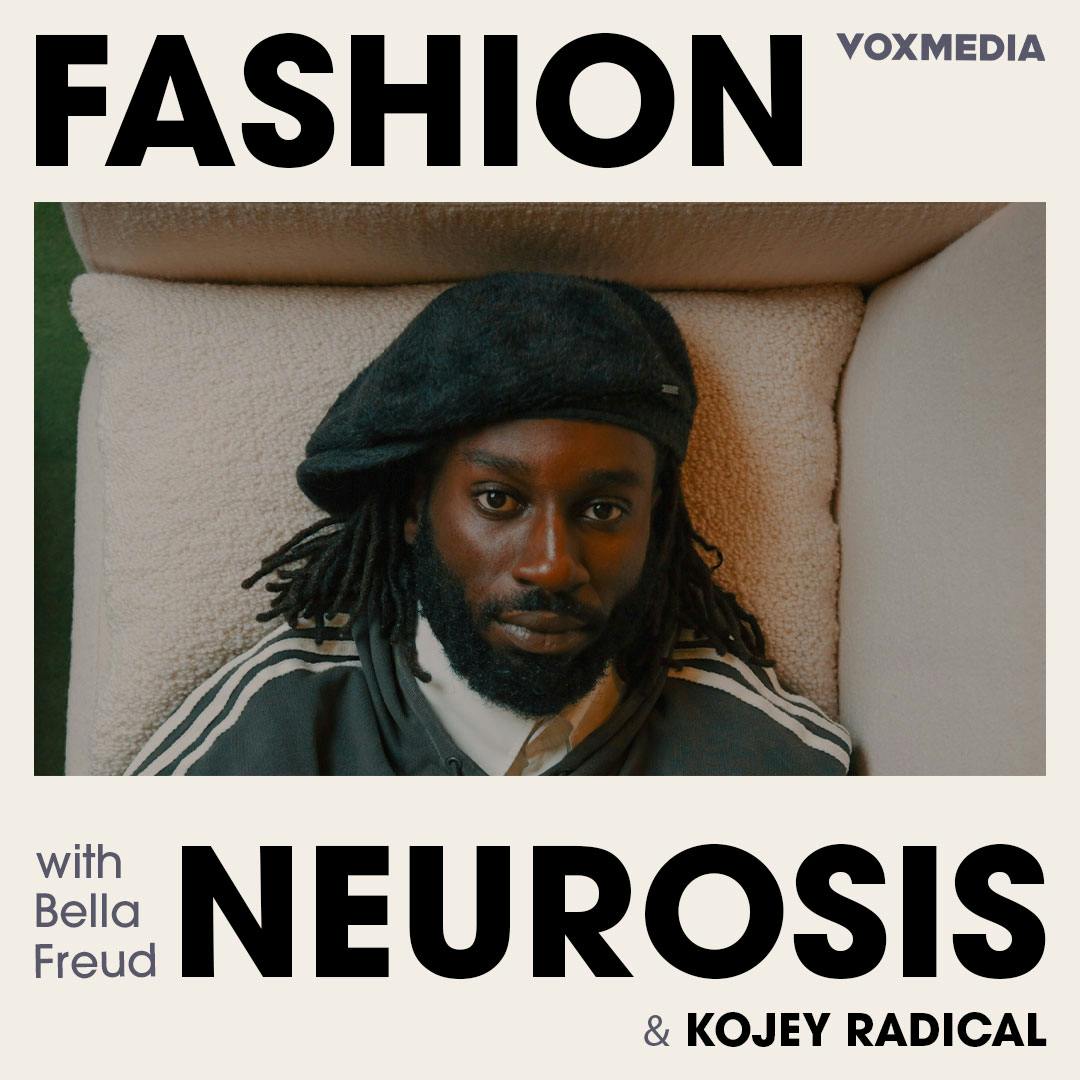
Hi, come in. Welcome to Fashion Neurosis. Koji Radical.
- [01:31]
Koji Radical
Oh, go on.
- [01:33]
Interviewer
Can you tell me what clothes you're wearing today and why you chose them?
- [01:38]
Koji Radical
It's like a Avav. I don't know if it's like hoodie Margiela shirt that I cut because it was way too long. Some random jeans that I found in bricklaying that I cut myself as well. Some I have shoes I can't. I feel like this is probably like a Stenson hat. Some I've got somewhere I'll be finding stuff. And then all my rings. I think all of these are the great frog apart from this one. But I don't know. There's only so many places in life I can get away with wearing these shoes. So I just took my opportunity, really. But other than that, I don't really think when I put stuff on, I just kind of go with whatever I feel that morning. It's like, I feel like clothes kind of give you the opportunity to kind of articulate how you feel before you've ever had to say anything. I kind of, for the most part, I always go for comfort on a normal day. Just like everyday. Like, what do I feel comfortable in?
- [02:40]
Interviewer
It takes a lot of confidence, I think, to cut a Margiela shirt.
- [02:44]
Koji Radical
Yeah, yeah. Especially with the janky pair of scissors that I cut them with. Oh, my Lord. If anyone saw what I was going through, even just try and make it even. But. And I could get the tools to do it properly. But no, you know, I think it's.
- [02:58]
Interviewer
Good to show irreverence to clothes as well.
- [03:02]
Koji Radical
Yeah, I feel like we can put them on a pedestal sometimes and it's like, actually, nah, they're just clothes, you.
- [03:10]
Interviewer
Know, especially Margiela, who does deserve to be on a pedestal.
- [03:15]
Koji Radical
But exactly, if you. But then I feel like his whole thing is just like almost every. Almost feels like he's made something and then customized it.
- [03:23]
Interviewer
No, it's so true. The shoes are perfect for the sofa. They just seem to be like an extension of the elegance. Yeah, really good.
- [03:34]
Koji Radical
Walking on clouds.
- [03:35]
Interviewer
Walking on clouds. That's great. And you're a multi award nominated musical artist who has also been described as UK's raps renaissance man. You said you've always been a servant of creativity and I wondered how you wake up to that each day.
- [03:57]
Koji Radical
As long as my eyes open, I know I've got work to do. And I think everyone's. Everyone finds their purpose, you know, I think making things is mine. And to a certain degree, like I never really knew what I was gonna do when I was growing up. I kind of went through loads of different avenues and never with the intention of making it in any of them. It was just like, I have to do this, so I'm gonna do this. And over the years, all these kind of like frivolous side activities kind of like came together in one outlet, which was music. And I think that's how I got my name out there. But it's interesting because depending on what angle you see me from, I'm a different person, you know, because for me.
- [04:48]
Interviewer
The word radical is the greatest description of anything that has good value. And I wondered how you became radical.
- [04:55]
Koji Radical
Oh, I wish it was a great story like that. I picked the name Radical at a time where I was, I was a kid, so like certain words were just cool to me. Radical just felt like I used to skateboard. So like it was just like a slang word that kind of came up a lot. And at a time I needed a username because my Facebook and stuff kept getting hacked. So I was like, I'm just going to make a new one. And I drew this comic book cover once and it was called the Escapades of Koji Radical. And it was me as this kind of like superhero figure on the COVID And when I was picking my username, I've looked down the side of my PC and I've seen the comic book cover and I was like, that would work as a name. And this is before I ever picked up a microphone or anything like that. And I think over time the name started to make sense. Like, I kind of grew into my name.
- [05:53]
Interviewer
Because your actual name is Koja, right? Because I was reading that at school. You were like dreading the register and everyone getting your name.
- [06:04]
Koji Radical
Yeah. So basically. So Ghanaian names, we're named after days of the week primarily, which is why the names come up so often. You'll meet a lot of Kofis, a lot of Kwakus, a lot of Kwame's or Kojos. They're all days a week. But depending on what tribe, village, region you're from, the spelling will be different because, like phonetically certain words come together to be pronounced differently in tree. And my name spelled traditionally has like W's and D's. It's like, it's a whole thing. And like being over here, which is all I've ever known, like, I was born here, but like, my name is definitely very traditional Ghanaian name. The register was an ordeal and I think my mom just kind of was just like, let's just remove the challenge. And when they can put like, oh, what, what else are they called? Like, what else do they go by? She just spelled it phonetically. So she spelled it K O, J O. So for ages I thought my name was spelled K O, J O until I learned to actually spell my real name, which was K W A D, W O. Wow.
- [07:13]
Interviewer
Yeah, I used to get called all sorts of things. Fiend, few, mostly fraud.
- [07:21]
Koji Radical
So how do you say it?
- [07:22]
Interviewer
Freud. Freud, because it's a German Austrian name and EU is oi. And. But I just got rather youth. I quite liked being called fiend and fun. That was like, all right, yeah, yeah, yeah.
- [07:39]
Koji Radical
Use them as alter egos if you have to.
- [07:43]
Interviewer
And your artistry started with a love of poetry. And when did you first realized that language was your ally?
- [07:52]
Koji Radical
Oh, I like the way you phrase that question. When was it my ally? I used to go to a place called Hoxton hall and there I met a guy called Rhymey. And he was, I don't even want to say a local MC because I feel like talent wise, he should be global. But by the time it was like growing up in Hoxton, everyone knew Rymie Rimey was the rapper from Hoxton and repped Hoxton, but also kind of gave back and would work with the kids in the area or whatever through Hoxton Hall. And I remember one time we were set this kind of challenge and it was to write a poem. And I've gone away and I've written this poem and I've come back. And he was like, you're rapping it. Slow it down. And I set it back again slowly, and it's, like, announced all the words and all that stuff. Got it all out clearly. And he was like, your pen's special.
- [08:51]
Interviewer
Wow.
- [08:52]
Koji Radical
And I was like, thanks, mate. Yeah, yeah. And I was just like, well, maybe I should keep doing this. But I never took it serious. And, like, years and years later, a guy called Sully Breaks had come to my college. And Sully Breaks is, like, a prolific poet from the uk Been doing his thing, and I think he's actually even doing a little bit of comedy now. Interesting enough. But he came and he was doing a special assembly that I didn't really even know was happening. One day we just got asked to go into, like, the assembly hall, and he was there, and he's doing these poems, and everyone's, like, transfixed and, like, locked in on everything he's saying. And I'm like, well, that's cool. And I've turned to my boy, and I'm like, I could do that. He's, like, gone then. All right, what should I write about? Write about feet or something. I don't care. I was like, okay. So I went home and I wrote this stupid poem about this lady having her feet out on the bus. And I came to college the next day, and I've said it in the canteen, and then everyone's crowded around, like, right. I was sick. Do it again. So I did it again.
- [10:02]
Interviewer
Do you remember it?
- [10:03]
Koji Radical
Could you say, absolutely not? I don't remember. I don't even remember a lyric. I don't remember a lyric from it because I think I purposely just tried to delete it from my brain because it was. It wasn't what I wanted to be known for, you know? Like, I think once I realized I can capture people's attention with the poetry, I didn't want to be, like, a comedy poem writer. I wanted to use it to actually speak about what I felt and what I was seeing around the world. And kind of very quickly started writing about, like, life and my mental and politics and all of that stuff. And, yeah, eventually, through kind of chasing the spoken word scene around, I was like, I'm in the grand scheme of the scene. I'm not that good. So how do I. How do I make myself stand out? And I started incorporating music, bringing my guitarist maybe like a cajon player, to kind of give me something to bounce off in terms of, like, rhythm. And suddenly, like, the crowds got bigger, you know, until here we are today.
- [11:13]
Interviewer
So great. And who were the poets that you first read and loved?
- [11:20]
Koji Radical
Oh, it's, I always say, is Saul Williams and Benjamin Zephaniah. Yeah, Benjamin Zephaniah in a literary sense, like reading his poems was always so interesting to me. And Saul Williams in a performance sense, in a spoken word sense. I used to watch his clips on Deaf Poetry Jam a lot and yeah, one day, one day he took me on tour actually.
- [11:46]
Interviewer
Did he?
- [11:47]
Koji Radical
Yeah, I remember this. I remember this one particular show that we did. I think it was at the garage in Islington and he invited me on stage with him while he was doing his set as well because I like opened for him. I used to come back and we shared this moment on stage together and I was like, wow, I wonder if he'll ever remember that because that would never leave my memory.
- [12:07]
Interviewer/Supportive Voice
Yeah.
- [12:07]
Koji Radical
Do you know what I mean? But I wonder if that was a thing for him or if it was just him like arm around a young G, do you know what I'm saying? Just go for it. But hey, inspired me.
- [12:18]
Interviewer/Supportive Voice
Yeah.
- [12:20]
Interviewer
They're so important those moments. I got really into the Last Poets. Do you know about them?
- [12:27]
Koji Radical
Yeah, I do. So who taught me? I think I see them at Ronnie Scott's.
- [12:31]
Interviewer
Yes.
- [12:31]
Koji Radical
Yeah, yeah, yeah, yeah.
- [12:33]
Interviewer
Someone took me there about 10 years ago. Yeah, I was there.
- [12:37]
Koji Radical
Is it? Yeah, yeah, my bad, my bad, my bad.
- [12:41]
Interviewer
I love them. And I became friends with, with them actually because I, I was, I was aware of them when I was a teenager and then when I was doing one, I just decided to make a jumper with the last perts on. I didn't know if they were still active. I couldn't find anything.
- [13:01]
Koji Radical
Wow.
- [13:01]
Interviewer
So I made this jumper and after about a year maybe I got an email saying, you're treading in murky waters. Why are you using our name? So I was like, oh no.
- [13:17]
Koji Radical
Oh.
- [13:17]
Interviewer
And I was really excited and like I'd done an homage and that wasn't. Well, you know. So anyway, after a certain amount of correspondence they came over and we met up and they came for dinner in my house.
- [13:34]
Koji Radical
Oh, really? What'd you make them?
- [13:36]
Interviewer
Well, I was so anxious. My ex husband, who was a really good cook, he made this amazing meal and I thought, what if it's not enough? And so I got some extra like takeaway and really nice rum punch and we had such a nice time and then, and I've then become really close friends and I went to see Abyaddon Ayawale when I was in New York last a couple of Months ago. And it feels, like, really close. And their lyrics and their words, incredible. It's just so meaning. It's everything. And there's something about poetry. It's just, like, intravenous. It just goes straight in, and you don't forget it. It's so intense.
- [14:28]
Koji Radical
Exactly. I remember when I was coming up, it was. The spoken word scene was kind of like. It was almost like a variety act. So you would get a lot of shows that were being put on, and you'd have, like, a singer, you'd have a rapper, you'd have a comedian, you'd have whatever it was, and then you'd have a spoken word artist. And the spoken word portion of those shows kind of always, like, you could tell, like, everyone was super transfixed on whatever that person was saying. And I think even being in those audiences was probably what made me kind of get that imposter syndrome of going, that's good. What I'm doing is all right, but that's good, you know? And I kind of. Even now, I kind of carry that imposter syndrome through, but I'm learning to get rid of it, I think.
- [15:17]
Interviewer
Do you think everyone who's kind of driven has that. I don't like that phrase because I feel like the peace. I mean, you aren't an imposter. You are the real thing. And that's why everyone is so drawn to what you do and how you do it. And then I don't know where that phrase. It feels like it came out of a sort of, you know, bad magazine.
- [15:42]
Interviewer/Supportive Voice
Yeah.
- [15:43]
Interviewer
And. But it's. I think it's. Looking for the next creative opening is like, okay, where am I going? How am I going to move forward? And that's useful. Unless it's crushing you.
- [15:57]
Koji Radical
Yeah.
- [15:57]
Interviewer
And. But.
- [16:00]
Koji Radical
But Romesh was saying to me yesterday. We were speaking about this yesterday, and he was basically saying a lot of the time that comes from the expectations you have on yourself.
- [16:08]
Interviewer/Supportive Voice
Yeah. Yeah.
- [16:09]
Koji Radical
And I guess the moment that you stop having those expectations, what happens to you? So it's like, maybe lean into it, you know, maybe stop seeing it as a hindrance and something that's supposed to, like, anchor you down rather than it being something that kind of sets you free into whatever else that you want to do.
- [16:26]
Interviewer/Supportive Voice
Yeah. Yeah.
- [16:27]
Interviewer
That's a good. It's always good getting other people's ways of how they handle this stuff.
- [16:34]
Koji Radical
Yeah.
- [16:34]
Interviewer
It's so daunting.
- [16:36]
Koji Radical
Yeah. I always find I have to enjoy my stuff through the ears and eyes of other people.
- [16:42]
Interviewer
No, it's a Great exhilarating feeling. And you cite your mother as being a very supportive person in your upbringing. And I wondered, was it a soft love or a tough love?
- [16:55]
Koji Radical
No, my mom's gangster. She was like, she's. It's not soft, it's not tough. It's just love. She's just a G, innit? Like, at the end of the day, Mumsy had to hold down a lot of us. Do you get me by herself? And maybe by the time it got to me, because I'm the youngest by far. Wow. I'm the youngest by about 10 years.
- [17:16]
Interviewer
Really?
- [17:16]
Koji Radical
So, yeah, yeah, yeah. My sister's 10 years old. Well, my youngest sister, who's actually one of my managers, is 10 years older than me.
- [17:23]
Interviewer
Gosh.
- [17:24]
Koji Radical
So maybe by the time I came, and especially by the time I fit my teenage years, maybe she'd, like, calmed down a bit or softened up a bit. But there were still certain things that she weren't going for. I remember there was one time. There was one time I come to her now and I'm like, yo. Because I was working part time, I'm like, yo, Momsy, I want to. What's them people called, yeah, at the galleries that stand there and they tell you about what's in the exhibition.
- [17:53]
Interviewer
Oh, yeah, they're docents.
- [17:55]
Koji Radical
Is it them, man?
- [17:56]
Interviewer/Supportive Voice
Yeah, yeah.
- [17:57]
Koji Radical
So I said. I said, mumsy, I want to be a docent. Yeah. And she says, what's that? I go, you know when you go to the galleries and then the people that are standing there to tell you about the exhibition or whatever, and it's. It's a thing, like, it's nice. And she was like, is it paid? I was like, nah, nah. She's like, you wanna go stand in there for free? I was like. I mean, when you put it like that, she was like, go to work. And my mom was never like, you can't follow your dreams. She was just more like, make your dreams make sense.
- [18:32]
Interviewer/Supportive Voice
Yeah.
- [18:32]
Koji Radical
You know, like, don't be a burden because of your dreams. Do you know what I'm saying? Find a way to make your dreams make sense for you. And it was never, like, I was like, scared to tell my mum what I did or anything like that, but until I made it make sense, I didn't feel like it was worth telling my mom. So I remember, like, I lady didn't really know my mom and my sister didn't really even know I was doing music at this point. And then I had a couple tunes and I get a call from young Father's Manager. And he's like, oh, yeah, we want you to come on tour. It's like 17 dates.
- [19:11]
Interviewer
Wow.
- [19:12]
Koji Radical
But the boys really want you on the tour. I'd never. I didn't know what that was. So I've gone home and I'm like, mom, mama, sister, gather round. And I've told them like, yo, I do music, and I'm doing pretty all right at it. And there's this big band that just won a Mercury Prize that want to take me on tour. And my mom's just, like, looking at my sister, like. My sister's like, that's amazing. You should let him go. My mom's like, all right, go then. That's it. I don't know how I'm gonna go. And then my sister sat there on me with. On Trainline and booking dot com. And we booked all the trains ourselves. All the. The rooms had to go lowest to highest because you get me early days, but booked all the rooms now. And then off I went, me and my guitarist guy called Jude. And yeah, that. That was like. That was a test. That was a test because I think up until that point, music was kind of like this fun thing I was doing in my local area that was kind of building traction because of, like, SoundCloud and Tumblr. But it wasn't like. Do you know what I mean? Like, I weren't. I weren't hitting the road. And then all of a sudden it was like, okay, wake up, train, next city. Boom. Show. Yeah, pack up. Next, next city. Like, you're moving. You're moving and grooving and. Yeah, there was, ah, there was one day. Sorry if I'm just chatting.
- [20:42]
Interviewer
No, this is great. It's lovely.
- [20:45]
Koji Radical
There was one time. Yeah, this is why I never been to Oxford again. Oxford might never see me again. We still got beef Oxford. Yeah, we still got beef Oxford because. So I feel like Oxford must have been like city number nine or something like that. It was like mid tour, and up until that point, we had run into some jankiness. Like, there was one promoter in Newcastle that didn't want to pay us or whatever. It was like some silly business there. But everywhere we'd go, the routine was kind of similar. Yeah. So you get there, Uber to your hotel quickly, check in, boom, Drop the bags off, head to the venue, sound check, go get some food, come back, do the show. Easy. Because young father stuff was already on the stage. So. And my setup was mad simple. It was just my laptop and the guitar. So it's like two DI's and you're good to go. Yeah. So get to Oxford. There's no Uber. You have to get a taxi. I didn't know this. So we're standing outside that station for time. Fine. And get a taxi. Get in a taxi. Taxi man tells me, depending on where we're going, the tariff goes up. I say, where we're going? He says, yep, up. So then now I'm paying more for this taxi than I would have paid for the Uber. I'm like, all right, boss, take me where I need to go. So we're going now on our merry little way. And about five minutes away from where we're going, he's saying, ah, the sun go back this road. That sounds familiar. So I'm like, what does that mean? So then, boom, Pull up. Ah, yeah, there's a brothel on this road. Opens the door. I'm like, huh? What are you talking about? So I get out. There's no hotel. I'm like, there's no. There's no way. But it's just this house in it. And, like, they've got a sign that says, whatever. Whatever hotel. Like, they're running a hotel at the crib. I'm like, all right, cool. Whatever. This is what you get for going lowest to highest. But it's my business. So we're getting in. They're chatting mad fast, asking me to sign the contract. Sign the contract, pay the deposit. They give me a key. The key says, like, 112B. I'm looking around this gaff. I said, there's no way there's 112 rooms in here. He says, no, no, you gotta go up the road to door 112, and it'll be room B. I was like, right. So we carry all our stuff up the road, get to 112, open the door. It's just sticky notes on the door. A, B, C, D. Like, it's just like, through the hallway, we see a man with a. With a lady that I know. They did not go school together, so I don't know where they know each other from, but they're in this building now. Anyway, boom. So they go into their room. Now we're like, open, B. Bear in mind, we've. Everywhere we go, we ordered twin rooms. This is just one big double bed. Yeah. Look like the sheets have been, like, starched to the bed. Like, the whole room just had this green tint. The TV had the big back on it. Like, there was mold in the bathroom. It was grim. And we're like, there's no way we can stay here, we go back, have to argue up the man at the other place to give us some of the money back. Gives me a little bit of the money back. Bear in mind, I'm only getting about £100 a night, only because Young Fathers is giving me an extra 50 out of their own pocket. So, boom. Now I'm in the red. Anyway, between the cab and paying for that, I'm in the red. But we have to get to somewhere else to stay, find a little travel lodge somewhere. Again, big tariff. So I'm super duper in the red. Get there, pay it, get back to the venue, do my soundcheck. One of the band members from Young Fathers, he didn't even know I needed it. I think he could just tell in his heart. Took me out for lunch afterwards after my sound check, because Lord knows how I was going to eat that day. But I've ate with him. He's giving me mad advice and feeling super inspired now. Get there, get to the show. I'm ready, doing my show. I'm rapping my little heart out. Nah, giving it big. And middle of the lyric, I'm there, I'm going up. I look up at the sound, man, turn the mic off on me saying changeover. I didn't even get to say goodbye to the crowd. No, turn the mic off. So I'm like, bearing in mind Young Father stuff is already on the stage. Yeah, they have to just lift the curtain and the show is ready to go for them. So there was no changeover. He just was tired of me. So. So I'm just sat in the back now, staring at the ceiling, thinking, boy, do I even want to do? Like, what is this, man? Like, I'm struggling through these nights, man. I'm broker now than I was when I left. Do you get me? Like, what is this music thing? What am I doing? I sat there and I thought about it for time and I was like, bro, what else are you gonna do? And I just got up and got on with it, finished the tour out. Sickest tour ever. So, I mean, but that was the day where I really had to sit there and think to myself, boy, is this what I want to do with my life? Short answer was yes. And here we are today, man. I'm on the sofa, you get me?
- [25:52]
Interviewer
You went through the mirror.
- [25:53]
Koji Radical
Yeah, I had to.
- [25:55]
Interviewer
But you haven't been back to Oxford since.
- [25:57]
Koji Radical
They couldn't pay me to go back to Oxford. They could pay me large sums.
- [26:01]
Interviewer
Yeah, they will as well.
- [26:07]
Narrator/Advertiser
Fox Creative, this is Advertiser Content brought to you by Nature Sunshine New Marine Glow Collagen.
- [26:19]
Tracy Obolski
If I surf in the morning or if I get in the ocean, my day is always better. It's amazing. This is amazing.
- [26:25]
Narrator/Advertiser
Right now it's early morning, just past sunrise, and we're out at Rockaway beach in Queens. The beach is empty except for the surfers like Tracy, the only surfing beach.
- [26:36]
Tracy Obolski
In New York City. And it's pretty awesome. My name is Tracy Obolski and I am the owner of Rockaway Beach Bakery. The ocean is very powerful. There's also so much beauty to it. Being in the ocean makes me feel really connected, more confident, motivated, energized. I come out and I'm smiling. You just feel on top of the world.
- [26:57]
Narrator/Advertiser
Nature Sunshine New Marine Glow harnesses the powerful vitality of the ocean by combining the inherent skin supporting properties of marine collagen with the powerful blue light protection of lutein to help you defy aging naturally. It's the only collagen product clinically proven to support eye and skin health and defend against blue light. Try Nature Sunshine New Marine glow now@naturesunshine.com it's so wild.
- [27:25]
Tracy Obolski
I mean, these people are stoked right now. Look at this getting.
- [27:28]
Koji Radical
Ah, there you go.
- [27:29]
Tracy Obolski
Nice little wave.
- [27:35]
Advertisement Voice
Avoiding your unfinished home projects because you're not sure where to start. Thumbtack knows homes, so you don't have to. Don't know the difference between matte, paint, finish and satin or what that clunking sound from your dryer is with thumbtack, you don't have to be a home pro, you just have to hire one. You can hire top rated pros, see price estimates and read reviews all on the app download today.
- [28:00]
What do walking 10,000 steps every day, eating five servings of fruits and veggies, and getting eight hours of sleep have in common? They're all healthy choices. But do all healthier choices really pay off with prescription plans from CVS Caremark? They do. Their plan designs give your members more choice, which gives your members more ways to get on, stay on and manage their meds. And that helps your business control your costs because healthier members are better for business. Go to CMK Co Access to learn more about helping your members stay adherent. That's CMK Co Access.
- [28:42]
Interviewer
And you have amazing style and you dress in a superb way.
- [28:46]
Koji Radical
Thank you.
- [28:47]
Interviewer
And were you obsessed with anyone's look when you were a child?
- [28:50]
Koji Radical
Oh, bare people. Because I went through phases in it. I went through phases and the phases were always linked to the music. I listened to do. You get me? So when I was skateboarding, I wanted to dress like Pharrell, but, like, not like I wanted to dress like Pharrell when Pharrell was, like, pretending like he could skate. And there used to be. There used to be these merch T shirts that said skateboard P Can't skate. It's funny as hell, but, yeah, I wanted to just like that. It was like Supra days. Like there was this trainer brand called Supra.
- [29:22]
Interviewer
Yeah, I remember.
- [29:23]
Koji Radical
And I saved up my little shillings, boy. And I bought these shoes, man. I bought them, rocked them to the back, started to lean up. I don't even know what angle to call it no more, but I burnt through those shoes. And then there was like my little rocker stage when I thought, oh, yeah, man, I'm into. I want to be a little punk, boy. And then there was my super colorful stage when everyone was jerking. I remember my first pair of skinny jeans, man. Got them from uniqlo after my GCSEs, collecting my results. Yeah, ace that. Boom. Went straight to West End. That's when West End was a day out.
- [30:00]
Interviewer/Supportive Voice
Yeah.
- [30:01]
Koji Radical
Went to Uniqlo, boom. Greased my legs up and jumped in them skinny jeans. Asked me if I ever do it again.
- [30:09]
Interviewer
Maybe you're the only person that's ever looked good in this.
- [30:12]
Koji Radical
Maybe, boy, but at the time, everyone wanted to be a little jerk. Everyone wanted to do the little dance move, the little. We was rocking plimsoles outside, man. Changing the laces in the plimsoles. Do you get what I mean? Roman Road Market. Get your fakes. Had me a couple fake Louis belts. Yeah, man, all sorts. A lot of trial and error to get to where we are today. But my mum would tell me, like, when I was a kid, I get back from primary school or nursery or whatever, get changed three times in one evening.
- [30:42]
Interviewer
Really?
- [30:43]
Koji Radical
Yeah. The outfit for dinner, then my after dinner outfit and my bedtime outfit. She was just vexed with all the.
- [30:49]
Interviewer
Washing and she just allowed. She didn't, like, try and stop you.
- [30:53]
Koji Radical
Or she was just too quick.
- [30:57]
Interviewer
Too quick. Oh, that's such a. I love that story. So good.
- [31:02]
Koji Radical
Yeah.
- [31:03]
Interviewer
And sometimes you wear grills and I wonder what it feels like to wear a grill.
- [31:07]
Koji Radical
You ain't got a grill. Come on, man.
- [31:11]
Interviewer
I've never had one. Is it like action? I thought it was more just a guy thing.
- [31:16]
Koji Radical
That's what the next episode is. We just pull up somewhere, get a mould done, get a mold done for you. Because we nah grills.
- [31:24]
Interviewer
What's the feeling? Like, how does it make you feel?
- [31:26]
Koji Radical
You ever had braces?
- [31:27]
Interviewer
No. Never had anything?
- [31:30]
Koji Radical
Not even like an Invisalign? Nothing?
- [31:32]
Interviewer
No, no, it's kind of.
- [31:33]
Koji Radical
It's just like. It's a feeling on your teeth. But I think. I think it was kind of linked to, like. I remember growing up and seeing grills, or my TV kind of was linked to a lot of, like, American down south culture. The Air Force ones, the grills. Like, it was all like this aesthetic. And then I think maybe the initial meaning or the. The value of what grills were kind of been lost over time, just through generations, not necessarily knowing the history. But I think. I think for a lot of people, their insecurity, one of their first insecurities, is usually their teeth. And I feel like. I felt like grills kind of gave people a way to wear their smile again.
- [32:18]
Interviewer/Supportive Voice
Yeah.
- [32:19]
Koji Radical
There was like a generation of kids that didn't want to smile until they got grills in their mind. And I was probably part of that generation. But also, it's like them learning how to make them. Like, there were so many. Like, a lot of the girls I've made that have been made for me were made by kids that were learning the craft, you know what I mean, and starting their own business for it. And then now they got shops in Hatton Gardens and stuff like that. But before it was them running around with their little mould kit, just trying to figure it out with a little dremel and just work it out. And then what? Now everyone's doing their tooth gems. I ain't quite got to that, but I've lost more grills than I can count.
- [33:00]
Interviewer
Really? Where do they go?
- [33:02]
Koji Radical
I mean, everywhere. Like tissue.
- [33:04]
Interviewer/Supportive Voice
Yeah.
- [33:04]
Koji Radical
Do you know what I mean? Like, I gotta eat bomb, put in tissue, leave the restaurant. It's gone now. I lost one recently. I was doing a show and I always, like, start with the ambition of thinking I could rap in them, and then it's tmi, but it works up too much frigging saliva in my mouth.
- [33:20]
Interviewer/Supportive Voice
Yeah.
- [33:21]
Koji Radical
So then I can't rap no more. So I gotta, like, slide them out. And I think I slid them out at a show when we was announcing the album and then put them in a cup. Someone dashed a cup away. Lost them once. Yeah, yeah. Or like some other ones over there, sat on them, bent them up a bit. It's peak. But I'm not.
- [33:40]
Interviewer
Because they have loads of diamonds and stuff in sometimes.
- [33:43]
Koji Radical
Yeah. Some people get the diamond things. I don't really like the diamonds I like. I like to keep it. I used to do the rose gold. Yeah, I like a bit. I like a bit of dinge.
- [33:53]
Interviewer
Yeah. I knew Roy used to wear these amazing gold teeth, but then I stopped wearing gold.
- [34:00]
Koji Radical
I only wear silver now. I need to get some silver ones done.
- [34:06]
Interviewer
If you're feeling low, are there certain clothes that make you feel better?
- [34:11]
Koji Radical
If I'm feeling low? Well, like, emotionally. Yeah, fabrics. Certain fabrics make me feel better.
- [34:22]
Interviewer
Really?
- [34:22]
Koji Radical
Yeah, certain fabrics make me feel better. I like fabrics that are, like, softer touch. Like crushed velvets and things like that. Like, almost like that weird kind of almost like, not real fur, like faux fur.
- [34:34]
Interviewer
Oh, yeah.
- [34:35]
Koji Radical
Kind of like that stuff. But it's tough, I think. I think certain clothes can make me feel low.
- [34:46]
Interviewer/Supportive Voice
Yeah.
- [34:46]
Koji Radical
Because they don't fit right.
- [34:47]
Interviewer/Supportive Voice
Yeah.
- [34:48]
Koji Radical
So, like, putting them on me makes me go. You mean, like. And then sometimes guys get, like. We get, like, insecure in weird ways. Do you get me? Like, a T shirt can. Can be the meaning of, like, a gym membership. Sign up immediately. You put it on and go, nah. How did I let it get this far? Then you're at pure gym the next day, just curling. Just curling. Do you know what I mean? Do you know what I mean? Like, the medium tops ain't fitting the way you need them. You need them to hug. Now they're all baggy. I'll do the baggy thing, but before, I'd start sizing down. Start sizing down just for the look.
- [35:30]
Interviewer
It's interesting, though, with the T shirt, because it's such a kind of simple garment. But when it's wrong, it's more wrong than anything.
- [35:38]
Koji Radical
Oh, yeah, it's awful. When it's wrong, it's bad. Yeah, it's bad. It's like. And then. Do you know what I find funny? It's like, at a certain point, bad becomes good. Before a belly top, Impossible. Can't go out in a belly top. But now everyone wants to crop their T shirt to the point where it's all snail trail and boxer lines.
- [35:57]
Interviewer/Supportive Voice
Yeah.
- [35:58]
Koji Radical
I'm like, what's going on here? Then I do it, and I'm like, that's not too bad. Do you know what I mean? You gotta hate until you try it. Do you know what I mean? I'm a hate until I try.
- [36:07]
Interviewer
There's so much to be said for. For changing, reviewing, like, your opinion.
- [36:12]
Koji Radical
Yeah, I hated gazelles. I was like, why is everyone wearing these flat shoes? I put them on. I said, all right. I understand it, though.
- [36:21]
Interviewer
Yeah. They have a Lot of charm, don't they?
- [36:23]
Koji Radical
Just got to give it a go, man. There's so many things I hated on until I tried it. Yeah. See what? Skinny jeans. I used to hate on those until I tried it. But now I'm back to being a hater. But at one point I was a supporter.
- [36:36]
Interviewer
That's the joy of clothes to go in and out of. Or the joy of fashion. Anyway.
- [36:42]
Koji Radical
Do you know I hate single breasted suits?
- [36:44]
Narrator/Advertiser
Oh, really?
- [36:45]
Koji Radical
I hate them.
- [36:46]
Interviewer
God, that's fascinating.
- [36:48]
Koji Radical
I need double breasted. I need two pairs or nothing. Something about a single breasted blazer makes me feel like I'm back at school.
- [36:57]
Interviewer
Okay. It's so powerful that the trap of like, what something reminds you of sometimes.
- [37:05]
Koji Radical
Puts me back there. School uniform, getting peanutted in my tie.
- [37:11]
Interviewer
When you were shortlisted for the Mercury Prize for your album Reason To Smile, you described feeling trembly and almost tearful. And it was moving to listen to you being so unguarded. And I wondered who in your life had showed you how to be like that is a powerful thing.
- [37:33]
Koji Radical
I don't think anyone showed me. I think I wasn't discouraged for showing emotion.
- [37:38]
Interviewer/Supportive Voice
Yeah.
- [37:39]
Koji Radical
I think maybe that's why I go back to my mum being a gangster. It's like I wouldn't get penalized for feeding away and I think I couldn't, I couldn't really. Like, I was, I would. Everything was me back in the day to get me. Like, yeah, when I had to share my music, it was me searching up 150 blog writers and sending out the emails to all of them, only to get two responses. It was me on my Twitter, going through all my followers, sending my link one by one to everyone sitting there, right? And one day I'm going to get a Mercury Prize. They can't stop me. And then now I'm there, I'm like, ah. Like, it means too much to try and hide, like. And like, I'm a cool cat. I could be a cool cat sometimes. But it's like being emotionless isn't cool.
- [38:30]
Interviewer/Supportive Voice
Yeah.
- [38:31]
Koji Radical
Like we're all human beings but our feelings, that spectrum of feelings is kind of what drives everything that we do regardless. Like whatever we create, whatever we eat, whatever we see, whatever, whatever, they're all based on emotion on how you feel that day. So hiding them is, like, pointless. Like, I cared and I really cared and I cared about the opportunity, especially because it was the album that my mum was the center of it.
- [38:58]
Interviewer/Supportive Voice
Yeah.
- [38:59]
Koji Radical
Do you know what I'm saying? I could jump off the stage I remember we're backstage now. Yeah. And they're running me through the show, and they're like, but they've got a dummy award in the back. Yeah. So they said, ah, like, for this rehearsal, you gotta put this back. And I goes, oh, but the real thing on the night is that mine? He's like, yeah. And I goes, I can do whatever I want with it. Yeah. I was like, okay. But I can see my tour manager, Niecy, looking at me from the. From the corner of my eye, and she knows what I'm like, I'm gonna do something. I'm gonna do what I want. So as she see me, like, kind of iron up this award, she's like, come over to me. She's whispered, the stairs are on the left. I said, safe. So I'm doing the show now. Boom. Look, stairs are on the left. Grabbed the award, ran down the stairs, gave it straight to my mum and just left it with her and then went back and finished the show. Because regardless of whether I won or I lost.
- [39:58]
Interviewer/Supportive Voice
Yeah.
- [39:59]
Koji Radical
No one can't take that moment from me. Do you know what I mean? That's, like, my way of giving back to my support system. So it was. It was. It was a great day for me, man. I loved that day.
- [40:08]
Interviewer
That's such a wonderful thing to have done as a mother. I can appreciate it, even vicariously.
- [40:16]
Koji Radical
Yeah, man. It's weird because, like, being a dad now, I think to myself, Ra, like, he's so innocent, man. He don't know nothing, but, like, I'll take a loud. Took him to album. I'm like, yo, look, this is the album cover. Like, look, there you are. And he. It's not Paw Patrol, so he doesn't care, but he's like. But he's trying to pretend to care for me. Do you know what I mean? And I'm like, oh, this is. This is the best. Because one day, this will be the coolest thing to you. Do you know what I mean? Once it kind of clicks in your mind, these memories will last forever. Like, because you're so. This is your normal. It's not affecting you. Do you know what I'm saying?
- [41:00]
Interviewer/Supportive Voice
Yeah.
- [41:01]
Koji Radical
One day you'll realize, like, wow, like, all of this really happened and I was there. Like, I got to see it. Like, I was around. I think that's why I kind of write with him being older in mind. Join.
- [41:14]
Interviewer
Like, there's a song almost like it's you when he becomes older.
- [41:20]
Koji Radical
Yeah.
- [41:20]
Interviewer/Supportive Voice
Yeah.
- [41:21]
Koji Radical
There's a song on the album called baby boy where essentially I'm writing to him in the future about like now and just kind of more about perspective, you know, just so that way once he kind of gets older, he can listen to it and go, ah, I get it, I get it. Yeah, man.
- [41:44]
Interviewer
That's such a thoughtful thing to do. It's a really great thing as a father to leaf put out there for your child. Amazing.
- [41:55]
Narrator/Advertiser
Every day, millions of customers engage with AI agents like me. We resolve queries fast, we work 247 and we're helpful, knowledgeable and empathetic. We're built to be the voice of the brands we serve. Sierra is the platform for building better, more human customer experiences with AI. No hold music, no generic answers, no frustration. Visit Sierra AI to learn more.
- [42:25]
Jonathan Goldstein
Support for this show comes from Macy's it's almost fall and that means it's time to cycle your wardrobe to the cold setting. Because while everyone loves a breezy summer outfit, let's be real, layering is even more fun. That's why Macy's Fall Fashion Guide has everything you need to piece together the perfect, perfect look for you. It's your one stop shop for fall's latest trends and must haves curated by their experts. Add a statement shoe to your collection, like the calf hair loafers from Steve Madden, or tap into your romantic side with flowy dresses from CC and sheer pieces from Inc. You can even throw in some textural layers for contrast, like a faux fur bomber jacket from Karl Lagerfeld Paris. Whether your old favorite sweater or coat is on its last threads or you're just craving a new vibe to switch things up, Macy's has got you covered this season. Find the perfect layering pieces for you by exploring the Macy's Fall Fashion Style Guide. Shop in store or online@macy's.com.
- [43:25]
Narrator/Advertiser
Support for the show comes from Mercury. What if banking did more? Because to you, it's more than an invoice. It's your hard work becoming revenue. It's more than a wire, it's payroll for your team. It's more than a deposit, it's landing your fundraise. The truth is, banking can do more. Mercury brings all the ways you use money into a single product that feels extraordinary to use. Visit mercury.com to join over 200,000 entrepreneurs who use Mercury to do more for their business. Mercury Banking that does more.
- [44:06]
Interviewer
And going back to talking about proportion in fashion, it's a vital component of fashion and doesn't really get talked about that much. But when you're preparing for a performance, what do you decide which part of your body do you decide to hide or to reveal?
- [44:27]
Koji Radical
Well, the abs come out every now and again. Most of the 8% of the time depend if I'm having a good time, they're coming out. So really my stage outfits are based around the trousers because that's the only thing that's really guaranteed to stay on. And. And it's weird. It's like it would change in it. It's like in the moment I might have felt super comfy, free, moving. See the pictures back. I'm like, ra, my legs are skinny. Can't wear them shorts again. Do you know what I mean? So it just changes over time.
- [44:59]
Interviewer/Supportive Voice
Yeah.
- [45:01]
Koji Radical
Where it's how you see yourself in the moment, it's how you feel. But then once the moment's done, it's how you see yourself.
- [45:08]
Interviewer
It's so true, actually. Yeah.
- [45:10]
Koji Radical
And you look back at a picture or photo or a moment, you go, yeah, can't do that one again. Do you know what I mean? But I would like. Sometimes it's like the theater of stage kind of lets me. Gives me the opportunity to wear things that I can't wear. Do you know what I mean? Like day to day I can't go. I can't go to the shop in certain outfits.
- [45:30]
Interviewer/Supportive Voice
Yeah.
- [45:30]
Koji Radical
I mean it's only built for stage so you kind of got to lean into that a lot more. There was a period of time where I was only wearing graduate collections on stage.
- [45:40]
Interviewer/Supportive Voice
Yeah.
- [45:41]
Interviewer
I read that you've always been very supportive to young up and coming designers.
- [45:47]
Koji Radical
Yeah, well, I went to lcf. I went London College of Fashion.
- [45:50]
Interviewer/Supportive Voice
Yeah.
- [45:51]
Koji Radical
And like big up ual, man. They still show me a lot of love.
- [45:54]
Interviewer
Yeah, they're amazing.
- [45:55]
Koji Radical
I opened the building for them, the Stratford one year. We did a performance on their opening night with like a massive choir. I like taught a few lectures there a couple times.
- [46:08]
Interviewer
God, how great.
- [46:09]
Koji Radical
They gave me an honorary degree. Big them up, man. Cuz at the time when I was there, yo was stressing me out. But now that you get me on the outside, guys are good to me. I appreciate it. But in general, I mean, where are some are going to find the like if I want something fresh, if I want new ideas, where are they going to be newer? Yeah, Graduate collection is like the rawest you can find because a. It's like an amalgamation of all these ideas kind of cultivated in, in this, this space where it's like all you have to think about is what you're going to make. Do you know what I mean, and. And. And the realms for that is kind of, like, endless, but then also when, like, that. That's never going to be seen. Do you know what I'm saying? Like, yeah, on that scale. So it makes their clothes real, you know, like, it's weird as the wearer putting it on stage, putting it in front of that many people, kind of exposing it to an audience that way makes that moment of them sat in front of the sewing machine, kind of worried about, like, is the finish okay? Is this gonna be all right? It makes it real. It makes it tangible. It's like, no, that's my work. And it's like seeing it in movement is different to seeing it on a mannequin. You know, I think the conversations I've even managed to have with certain designers about what those moments kind of meant just reminded me of, like, getting that call from young fathers and being like, come on tour. It's like, in your world, that's normal. In my world, this is the biggest thing that's happened to me this week.
- [47:51]
Interviewer/Supportive Voice
Yeah.
- [47:52]
Koji Radical
Do you know what I mean?
- [47:52]
Interviewer
So it's like, it's so great to be able to gift that back, especially you going to fashion college. You see how hard. I've never seen people work that hard in my life. And you know what's gone into it. And so it's so perceptive of you to know that to road test it and like, you know, with such glamour and visibility.
- [48:14]
Koji Radical
Yeah.
- [48:15]
Interviewer
Is an amazing.
- [48:16]
Koji Radical
We try.
- [48:17]
Interviewer
Amazing thing to.
- [48:18]
Koji Radical
We try do what we can.
- [48:20]
Interviewer
And have you ever walked in a fashion show? Is there anyone you'd like to walk for?
- [48:25]
Koji Radical
Yeah, I've done. I did Liam Hodges and me bopping the Runway in some pajamas, man. Big up. Liam Harishi.
- [48:34]
Interviewer/Supportive Voice
Oh, yeah.
- [48:35]
Interviewer
I love Maharish.
- [48:36]
Koji Radical
I've done Oswald Boateng.
- [48:38]
Interviewer
Yeah, he's fantastic.
- [48:40]
Koji Radical
Who else have I done? I feel like I've done one more. And if I forgot you, I'm sorry, but I want to do more. I want to do more now. Like I was doing when I did that. It was still when I was kind of treading the line of, like, a model part time, because I was just trying to get my cake up. You know what I'm saying? I was trying to get some money because I wasn't touring. I wasn't get me. I wasn't raking in the big. The big bucks from music. So however I could use my local face and my stature and my presence, I was using it. So if someone wanted me to come walk, I come walk. Someone wanted me to come and help design something. I'll come help design something if someone wanted me to come and do whatever, like, speak, do a poem, do whatever. I'm on my way. Just raise the bat, signal I'm there. But, like, now especially, like, where, like, I really, like. I've always loved fashion, but I, like, love fashion. Do you know what I'm saying? I feel like now it'd be, like, even cooler, you know? Yeah, but who would I want to walk for now?
- [49:40]
Narrator/Advertiser
Yeah.
- [49:40]
Interviewer
Is there, like, a.
- [49:42]
Koji Radical
Who would I want to walk for? At one point, I wanted. I definitely wanted to do the Louis thing.
- [49:47]
Interviewer/Supportive Voice
Yeah.
- [49:47]
Koji Radical
When Pharrell first popped up there. It's not even to say that I would have shot me if you. If you're watching, but not even to say that I wouldn't do it now. But I feel like there's something in that. Do you know who I'd want to walk for now? But she don't do. I don't think she does menswear anymore. Tolu Koka.
- [50:08]
Interviewer
Oh, I don't know her.
- [50:09]
Koji Radical
Yeah. Cold. She's done a lot of stuff for Tyler.
- [50:14]
Interviewer
Oh, yeah?
- [50:15]
Koji Radical
Yeah. I think she done Tyler's met outfit, if I'm. If I'm not mistaken. But yeah, I'd want to walk for. I'd want to walk for Tolu Coco.
- [50:24]
Interviewer/Supportive Voice
Yeah.
- [50:26]
Interviewer
Oh, well noted. And what. What was the first thing you wore to be consciously attractive for someone?
- [50:36]
Koji Radical
I'm trying to. I'm trying to get her. I'll put it on. Trying to get her. Oh, what I put on cologne. Gotta smell good, man. Pheromones. It's like, maybe. Maybe if I'm trying to cheat. Might go gym, get a pump in, pull up in the tank top to get me. Little arm vein and that. Show that off. That's fashion. That's fashion.
- [51:01]
Interviewer
Yeah.
- [51:02]
Koji Radical
I worked on that myself, but. But, yeah, it's sense. I wanted to make sense for ages. It's funny because. So my, like, last kind of EP mixtape thing was called Cashmere Tears. That was the one that kind of blew me up. But originally, that name was for a. A perfume line that I was basically designing that I wanted to, like, launch, but had no idea how complicated it was to make fragrances and launch fragrances. I was just a dreamer. That's just a dreamer, man. But I had all these different scents in mind and these bottle designs and was working with this crazy graphic designer from Brazil, Vic, and. And Cashmere Tears was the name of that brand. And then once I kind of realized I'm. I'M probably not going to be able to make this happen. It ended up becoming the name of. Of the EP because I wrote a song around it. Like this kind of like the song. It's like Cashmere Tears, I'm In My Feels, which is like the. All the sense was going to be based on different emotions. And, yeah, I had that song for ages. Just kind of sat there. And when we worked on the Cashmere Tears ep, that song wasn't even on there. That project was originally called Numbers. And then my boy came to the camp and he was like, listening to the project and he was like, yes, it's. Don't get me wrong, it's an amazing project, but Cashmere Tears ain't on there. I was like, what are you talking about? He was like, bro, that song is the one. So we put Cashmere Tears on that project. And then he was right. It was the one. That project ended up being named after it and. Yeah. Blew me up and then covered hit. Couldn't tour it. Yeah, man, that's tough.
- [53:05]
Interviewer
But a great title. It really.
- [53:07]
Koji Radical
Yeah. I mean, there's still hope. I'm still breathing.
- [53:09]
Interviewer
Yeah.
- [53:10]
Koji Radical
I could do it one day.
- [53:11]
Interviewer
Yeah. And if you fancy someone and don't like something they're wearing, does it kill your attraction?
- [53:18]
Koji Radical
Yes and no. You know, it depends on how bad it is.
- [53:21]
Interviewer
Yeah.
- [53:22]
Koji Radical
If I'm being honest. Depends on how bad it is. Because sometimes you can just be like, that's their. That's their little quirk, you know, and it's like, cool, like, go off, sis. But sometimes it's like. Like with the lights on in the yard when you was getting dressed. Lights on. Do you know what I mean? But I'm trying to think of what in particular. Jeggins. Uggs with a lean. Get out of here.
- [53:52]
Interviewer
Uggs with a lean.
- [53:53]
Koji Radical
Yeah. You know when you wore in your Uggs.
- [53:55]
Interviewer
Oh, right, right.
- [53:57]
Koji Radical
Leading now. Get that.
- [53:58]
Interviewer
It's a terrible. Yes, I agree. It's like the. The foot sloping in, collapsing in. It's too much.
- [54:07]
Koji Radical
And it's like, it's not even like commerce, like, keep buying shoes. But it's like just recognize when them shoes are knackered.
- [54:12]
Interviewer
And I saw you on as a guest on a cooking show called Love at First Bite.
- [54:24]
Koji Radical
Where you see that at?
- [54:25]
Interviewer
Oh, no, it was.
- [54:27]
Koji Radical
Get off the Internet, mate. You know what I mean? You're looking too hard there. You're looking too hard.
- [54:32]
Interviewer
Three women cooked you a meal each. And one. One girl had made you a fish finger sandwich.
- [54:37]
Koji Radical
Sandwich. Yeah.
- [54:38]
Interviewer
Which you described. Brilliantly. Described as passive aggressive.
- [54:42]
Koji Radical
Yeah, it was a cry for help. It was a passive aggressive help.
- [54:44]
Interviewer
I wondered what makes a sandwich passive.
- [54:46]
Koji Radical
Aggressive because where was the sauce?
- [54:50]
Interviewer
Well, she had put Heinz mayonnaise in.
- [54:53]
Koji Radical
No, I think. No, she put a bit. I think that she put butter. Yeah, she put butter. I don't feel like. I don't even think there was ketchup in there. I was like, do you. Like what? Like, we had an argument. It felt like. It felt like the meal that you get served the day after you've had a row and you still expect to come downstairs and get dinner. But dinner is a fish finger sandwich. That way you have to deal with it, you know? She's upset, man.
- [55:17]
Interviewer
Was genius.
- [55:18]
Koji Radical
Yeah, man. But she's. She's dope. Like, I think her name's Kimberly, but I didn't know. I didn't know at the time. But since then I've seen her so much on my social feeds and she's. She's brilliant. She's brilliant. She's, like, really funny, really insightful. And. And now that I've seen her after, in terms of what content. I understand the sandwich at the time went over my head, but hey, you know. Hey.
- [55:46]
Interviewer
Yeah, that. I thought that was very witty. It was like. I mean, in my childhood, we got. We got like lentils, you know, it was just. Everything took 20.
- [55:56]
Koji Radical
Never had a lentil, you know.
- [55:57]
Interviewer
God, you're so lucky. Don't waste your time. Yeah, but like, a fish finger sandwich was like a dream to me.
- [56:06]
Koji Radical
So, you know what? Yeah, I can't lie. I'm partial to a filet of fish. So, like. Yeah, it wasn't. It wasn't a bad idea. I think the execution was just.
- [56:16]
Interviewer
It was the wittiness of saying, like, oh, that's passive aggressive. That was like.
- [56:21]
Koji Radical
Yeah, it was rough.
- [56:22]
Interviewer
It was very, very entertaining. And your new album is called Don't Look Down.
- [56:28]
Koji Radical
That's the one.
- [56:28]
Interviewer
Is that referring to the quote, don't look down unless you're helping someone up?
- [56:34]
Koji Radical
No, that's a good one. I should take that one. I might. I might. I might just steal that. No, in the. So on the album, there's an introductory poem and it says, don't look down if you've got the world at your feet. And the. That poem came from a conversation that I had in Japan with two of my boys. We went on a trip for my birthday and we was in our onsen, overlooking the mountain and talking about life, talking about success, talking about, I guess, like, plans for the Future. Because my birthday's in January, Capricorn. But my birthday's in January, so it started a year. Everyone's on some reflective business. So we're reflecting, talking about life. And basically we was talking about this idea of like, the climb to success is usually a process in which you have to isolate yourself. Even if you've got a team, even if you got help, the idea of reaching that level of success that you want to is quite a lonely experience. And a lot of the time people fall away. Do you know what I mean? Like, people that you were close to, you're not necessarily as close with anymore. Whether it was just a lack of time, being able to spend or whatever it was, you're away from everything you knew in order to kind of acclimatized to this new life that you have worked so hard to kind of achieve. And then for whatever reason, one day that could just not exist anymore and you kind of have to come back to your real life. And the fear is not necessarily the fall itself, but the idea of like, not being sure who's going to catch you when you land.
- [58:18]
Interviewer/Supportive Voice
Yeah.
- [58:18]
Koji Radical
And so it's like, don't look down. If you've got the word at your feet. It's like, yeah, you've got the. This is the world now you've got it. But if it's. If the idea is falling or scary, you have to keep your head up. You have to keep going.
- [58:34]
Interviewer/Supportive Voice
Yeah.
- [58:36]
Koji Radical
So, yeah, it ended up like that again. The album had a different title, I think before it was called the Life of the Party. And then I got back from Japan and hit Swindle and was like, yeah, we gotta change that, bro.
- [58:47]
Interviewer
That's so different, isn't it?
- [58:49]
Interviewer/Supportive Voice
Yeah, yeah.
- [58:52]
Interviewer
You said about your new album, we have to be able to accept that the messenger has flaws and all. And it's a humble thing to say. And I wondered what the flaws you're looking to resolve through your music.
- [59:06]
Koji Radical
Oh, I think in the bravado of rap, we can kind of rap about our elements in a way that sounds so cool that you realize, you don't realize actually kind of, it might be a little bit problematic. Do you know what I mean? And I think with past projects, because I'm so passionate about so many things, whether it is like society, politics, race, love, everything. Like, I could have hour long conversations about each one of those things individually, but I'm trying to have all of those conversations in one body of work. So by the time it comes down to like an interview process, where do we Start. Where do we finish? There's too much going on. And then also, why should you listen to me? Do you know what I mean? I think in all my projects before, I've kind of put a wall between the story and me. And I think for this one, I kind of had to introduce people to the narrator.
- [60:13]
Interviewer
That's lovely.
- [60:14]
Koji Radical
Do you know what I'm saying? Whether it was all good or all bad, I kind of had to be like, this is me, and this is what I've been going through. And the top of the album is set in a party. It was funny. It was. The party is in reference to this after party that I went to after the Fashion Awards.
- [60:36]
Interviewer/Supportive Voice
Oh, yeah?
- [60:36]
Koji Radical
Yeah. I'm hosting the Fashion Awards. Get a knock on the door. As I'm doing, like, getting ready to go do the next little transition. Knock, knock, knock. Look at the door now. It's like the door just opened by itself. Some old lady, she's like, edward Enenfel would like to invite you to his after party. In my mind, I'm thinking, when did them invites go out more or less on the fly? I'm hosting. That's all right. Okay, cool. Thanks. I'll come. So I've gone to this party, and it's just celebrities and everyone. That's everyone in the fashion world. And it's a thing. It's like, whoa, big house, big paintings, pillars, butlers, hors d', oeuvres, the whole nine. And I'm in this place, and I just was like, I'm a civilian. What am I doing in here? But obviously, everyone's coming up to me because I've just hosted the awards. So everyone's like, you did so good. There's a picture of me, Winnie Harlow, Nicole Scherzinger, and Tiny Temper. And I'm just like, what am I doing in this picture? This is. This is. This is. These people are very rich and very famous. I'm, like, very regular. But it was like, even being in that space is like, eventually you feel like, rah, okay, this is my life, so I need to kind of, like, acclimatize and get used to it and indulge. And that's what life kind of felt like after reason to smile. I felt like I was trying to catch up to the life that was now being afforded to me.
- [62:06]
Interviewer/Supportive Voice
Yeah.
- [62:07]
Koji Radical
And it caused me to kind of separate from what I knew, the people I was around, like, I missed a lot. And there was, like, two key moments that kind of, like, shook me up a little bit, where one of My really, really, really close friends. Like, his dad was the guy that bought us our first camera. Canon 550D. 500 quid. Tried to give him the money back, he wouldn't take it to this day. But his dad bought us that camera. Me and him chipped in for a 50 mil lens. And we would go out every other day, every weekend or whatever, and just find these little spots to shoot these creative little short films that we can apply to the poetry things. And then that grew and grew and grew. He ended up directing. Probably my biggest video was a video called Water and Slash. If only he directed that. But after that, we. I wouldn't even. This is the problem. I didn't know. We fell out. We just lost. We just stopped talking as much. Yeah, but I'm still on my path. I'm like just going head down. Gone, gone, gone. Then one time. Now I've decided to open the group chat because I just. I wasn't even checking my. I've had the same friend since college, primary school, whatever. Weren't open in the group chat. Yeah, Opened it one day I realized, oh, Broski's got a birthday party. So I've decided to go to the birthday party. Everyone's surprised to see me because I ain't been turning up. So seeing me is actually a surprise. But I'm thinking, why is everyone surprised? You're my friends, of course I'll be here. But no, it's actually surprised to see me here. He's drunk, drunk as a skunk. And he grabs me, pulls me to the side. And he's like, bro, do you know how long I've been upset with you? And I was like, nah. He's like, bro, there was one time you said something to me, bro, and it hurt. And we ain't spoken since. And I know you don't even know what you said. And I was like, yeah, damn, we was cool the next day. Do you get me? Like, because. Yeah, that's just memory to see it, have it out, boom. Next day we're calm. But it was that realization of like, wow. Like I actually took myself away from everything I knew to be somebody else. And. And there was. There's a. There's another kind of part. The second half of the album's kind of like when you step out into the smoking area, you don't realize how long you've been in there. Don't know how long you've been in the party.
- [64:36]
Interviewer/Supportive Voice
Yeah.
- [64:37]
Koji Radical
Might look across the road, you see boss man opening his shop shutters. It's 5am Just because you was in there don't mean life stopped. Everyone's moving on. So I kind of had to, like, use that section of the album to kind of examine all these relationships that I'd built up, whether it was love, whether it was friends, whether it was family. And you realize some of them are repairable. Some of them you can kind of just walk back into. And every fine. Some things are chalked. They're done. You will never get them back. I mean, some things are just the way they are. And I think that that realization throughout the album is kind of like the. The arc that you follow. And it was. It was. It was tough to write it in that way. But, hey, man, tough things make you stronger.
- [65:21]
Interviewer/Supportive Voice
Yeah, they do.
- [65:22]
Interviewer
It isn't. And it's very. I mean, it's. It's hard to do that. It's hard to kind of acknowledge where you've been. This the kind of defaulter in the relationship.
- [65:36]
Koji Radical
Yeah. And especially when you're the center of the attention.
- [65:38]
Interviewer/Supportive Voice
Yeah. Yeah.
- [65:40]
Interviewer
It's much easier to blame other people. But it sounds like you've done the opposite of that and that you're kind of getting a real rich feeling from that, even. I mean, not everything's resolvable, but at least having the intention to resolve it.
- [65:57]
Interviewer/Supportive Voice
Yeah.
- [65:58]
Interviewer
It's a very empowering and powerful feeling.
- [66:01]
Koji Radical
Yeah.
- [66:02]
Interviewer
No, it's impressive. And you talked about when you were a kid and you had a cartoon character called the Escapades of Koji Radical, and his superpower was adaptability. I wondered what your superpower adaptability sounds like.
- [66:22]
Koji Radical
Same one.
- [66:23]
Interviewer/Supportive Voice
Yeah.
- [66:23]
Koji Radical
Do you know what is. There's. There's a character in Marvel comics. Yeah. His name's Darwin, and his superpower is his body will adapt to whatever situation he's in. So he either wins or survives. Right. So, like, let's say now he's fighting somebody that can fill this home room up with water, his body will grow gills. Do you know what I mean? Like. Or, like, if he's fighting someone that can burn him alive, his skin will adapt to be fireproof. It's like that kind of thing.
- [66:54]
Interviewer/Supportive Voice
Yeah.
- [66:56]
Koji Radical
That would be my power. It's funny because there was one point they were fighting somebody, and it's like his body. The adaption that his body made was, you're not going to win. So his body learned how to teleport and just left. I was like, that's the one I want slay. I'm gone.
- [67:20]
Interviewer/Supportive Voice
Oh, wow.
- [67:21]
Interviewer
Well, it sounds like you're on such a great journey and it's such a privilege and so interesting to listen to you. And thank you so much for being on fashion. Your roses. KG Radical.
- [67:34]
Koji Radical
I was gassed to do this. It's a comfy sofa as well, man.
- [67:37]
Interviewer
Oh, that's always good.
- [67:38]
Koji Radical
Yeah.
- [67:39]
Interviewer
Now we can have fish finger sandwiches.
- [67:41]
Koji Radical
Oh what?
- [67:42]
Interviewer
I could really eat one.
- [67:43]
Koji Radical
Enjoy. I could do with one of them right now. Let's get an order in.
- [67:48]
Interviewer
Thank you so much.
- [67:50]
Koji Radical
Anytime.
- [68:10]
Advertisement Voice
Support for this show comes from Nike. What was your biggest win? Was it in front of a sold out stadium? Or the first time you beat your teammate in practice? Nike knows winning isn't always done in front of cheering crowds. Sometimes winning happens in your driveway, on a quiet street, at the end of your longest run, or on the blacktop of a pickup game. Nike is here for all of the wins, big or small. They provide the gear you bring, the mindset. Visit nike.com for more information and be sure to follow nike on Instagram, TikTok, TikTok and other social platforms for more great basketball moments.
- [68:51]
Narrator/Advertiser
We all have moments where we could have done better.
- [68:53]
Koji Radical
Like cutting your own hair. Yikes.
- [68:57]
Narrator/Advertiser
Or forgetting sunscreen so now you look like a tomato.
- [69:01]
Interviewer
Ouch.
- [69:02]
Koji Radical
Coulda done better.
- [69:04]
Narrator/Advertiser
Same goes for where you invest. Level up and invest smarter with Schwab. Get market insights, education and human help.
- [69:12]
Jonathan Goldstein
When you need it.
- [69:13]
Narrator/Advertiser
Learn more at schwab.
- [69:14]
Koji Radical
Com.