← Feel Better, Live More with Dr Rangan Chatterjee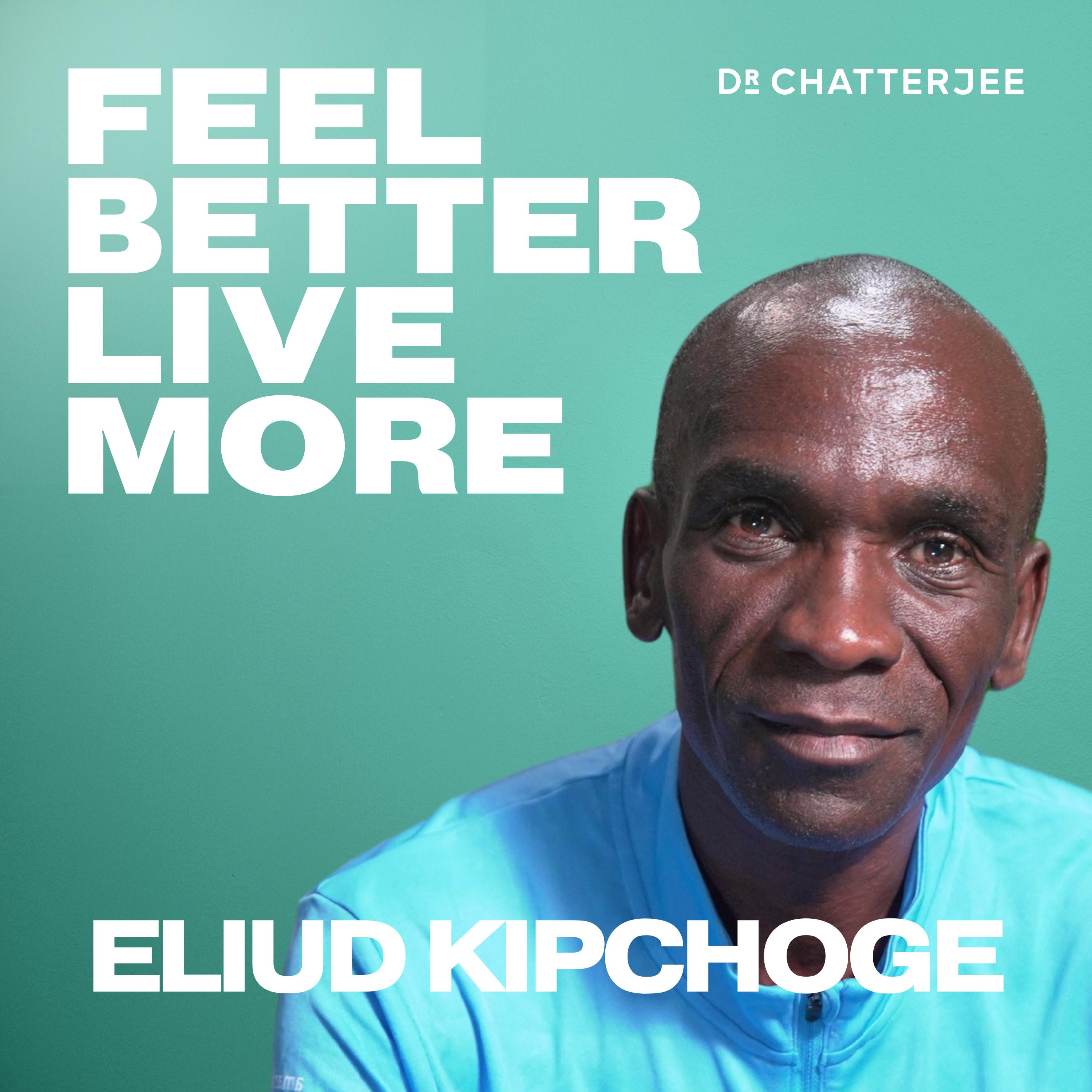
Feel Better, Live More with Dr Rangan Chatterjee
Letting Go of Perfection: The Power of Process, Presence & Planning with Eliud Kipchoge #567
01:40:50
When life doesn’t unfold the way we hoped, it can be tempting to see that as failure. But what if it was those moments that actually shape us the most?
Loading summary
Transcript206 lines
- [00:01]
A
I always say marathon is life and life is marathon. In life there is a lot of challenges. We can laugh every day because we get challenges, but we move on because every day we need to press on, press on, press on, press on. The moment we are no longer pressing on, that's the end of life.
- [00:25]
B
Hey guys, how are you doing? Hope you're having a good week so far. My name is Dr. Rangan Chatterjee and this is my podcast, Feel Better. Live More when life doesn't unfold the way we hoped, it can be tempting to see that as failure. But what if it was those moments that actually shape us the most? This week my guest is the one and only Elliot Kipchoge. Elliot first came on my show almost three years ago in October 2022, just one week after after he broke the world record at the Berlin Marathon. And this brand new conversation with him was recorded a few weeks back, just days after he completed the 2025 London Marathon. Elliott is a Kenyan athlete who is widely regarded as the greatest marathon runner of all time. He has won two successive Olympic marathons and 10 major titles. And of course he's the only athlete to have ever run a marathon in under two hours, which he did back in 2019 in Vienna as part of the 1:59 challenge. But Eliud's wisdom goes far beyond running. During our wonderful conversation, you will hear why discipline is what creates freedom and how keeping promises to yourself builds the self trust needed to face life's hardest moments. Why failure is not the opposite of success, but instead the soil where wisdom grows. How running has become a metaphor for life with its highs, lows, unexpected challenges and the need to keep moving forward. Why goals alone do not define success. How Elliot not being able to finish his last Olympic marathon taught him more than any victory ever could. The true power of community, humility and purpose. And why he still cleans toilets at his training camp despite being a global icon. And why he believes that ego is something we must all learn to let go of. Yes, Elliot is an elite, all time great athlete, but honestly, what I love about him the most is his warmth, humility, compassion and clarity of thought. Whether you identify as a runner or not, this episode is an invitation to reflect on your own mindset, your own values and your own relationship with failure. And it also serves as a powerful reminder the progress in life is not always linear and often happens in the moments we never planned for. Many people regard you as the greatest marathon runner of all time and often, I've noticed before you compete in a race Journalists ask you, what is your goal? Very often your answer is, my goal is to run a beautiful race. We're sitting here two days after you completed the London Marathon, when you finished sixth. Was that a beautiful race?
- [03:57]
A
Absolutely, yes. Beautiful race is a race whereby you start and you finish. Starting is a different thing, and finishing actually is a different thing. Going through the whole 26 miles and just crossing the finishing line is two different things. Your mind, your body is changing. Immediately you cross the finishing line, and when you cross, you get that accomplishment that I have accomplished your mission of a beautiful race. And that's why I always say it was a beautiful race, regardless of any number, regardless of any position. But it was beautiful because I was running with the values. I was running with the spirit of sport and spirit of humanity. And I managed to go through all 42km with the same spirit and finish with the same strength, with the same spirit. And that's beautiful.
- [05:07]
B
When you say you ran with the values of humanity, what does that mean.
- [05:16]
A
By saying the values of humanity? I mean the values which actually respects the humanity. I mean, I respect the sport. I value the sport. I run with respect. I run with integrity. And above all, I regard sport as a movement, you know, and I am really a big supporter of this movement. So inside it, there is respect, there is integrity, there is consistency, there is love. And those are the values which actually every human being, all the 7 billion people, should live with, and we'll have a fruitful world.
- [06:03]
B
You know, a lot of people, Elliot, when they run, they're thinking about their finished time. Okay, so let's say, you know, people run a 5K.
- [06:14]
A
Yes.
- [06:15]
B
Right. Oh, I want to beat 30 minutes or I want to beat 25 minutes. Do you think it's good for people to have goals in terms of the time in which they run, or can sometimes those goals become limiting and we can forget about the joy and actual experience of running.
- [06:36]
A
They say, actually trimming is good, but don't trim too much. Getting efficient and setting a call is really good, but don't set too much goals first. There is a real system for that goal that you need to plan well and prepare well. And the minute you respect the two values of preparation and planning, then the fighting of that goal, the fighting of that vision comes in. Because if you put actually in front of your mind, the coal itself and what goes on behind the scene is not actually is not a call itself. You need to work more hard. There is a lot of things going on behind the scene before that coal. I'll Give you an example that when you are planting a seed, when you put a seed into the soil.
- [07:35]
B
You.
- [07:35]
A
Wait for seven days to germinate. But what's happening between the first day and the seventh day is really wonderful. You know, the seed starts to grow downwards, not upwards, but going down inside the soil. It's really warm, it's hard to penetrate. And trying to penetrate that soil, resisting that warmth, that hotness inside the soil and then coming out after seven days, then you get. The real plan is coming out, testing the sun and going very fast. That's now the call. But what has been going on behind the scene or inside the soil is a lot of things, a lot of heartbreaks, a lot of tiredness, a lot of hunger. Anything which can actually make you to go back has been happening. I always give that, respect that philosophy and bring to running that you can set a call an efficient, that I want to run 13 minutes in 5K. But what are the recipes for actually running 13 minutes? There is a lot of precipice for running 30 minutes. You need to prepare well, you need to plan, you need to go all through the trainings, you need to create consistency in training, you need to be disciplined, you need to eat well, you need to actually throw away the normal food and eat with food which can pill you. You need to eat that food, which is not really sweet, but which brings us a lot of energy. And that's the hardest moment ever. So it's all. It's good to trim, it's good to set a goal, it's good to actually have a vision. But to draw a map, to draw a roadmap for running 30 minutes is crucial.
- [09:46]
B
Yeah.
- [09:46]
A
Yes.
- [09:47]
B
It's interesting because I understand for an elite athlete like you, a marathon training cycle is what, three, four months? Yes, something like that. Okay, so let's think about that through the lens of goals. Okay? So the reason I asked the question is because I find, well, I've experienced this myself in the past, but I also find with many people that goals, they sound like a good thing, but sometimes they can become a trap. Right. And so let's say in a four month training cycle, let's say there's many days in those four months where you're training, you're preparing, right? You're doing what you need to do. So I don't know, let's say 30 days a month, right? So let's say it's 120 days of preparation and planning for the one race.
- [10:36]
A
Yes.
- [10:37]
B
You could have 119 perfect days, right? Where you train, where you rest, where you follow the plan, you exercise discipline. But on the 120th day, the marathon day, things outside your control could happen. Right? And so some people, if all the focus is on the goal, they Forget about the 119 days that were brilliant, that 120th day where they don't get the time or they don't win the marathon. They then regard themselves as failing. But that's the problem, isn't it? Because that's not failure.
- [11:15]
A
That's a huge problem. That's not failure. In fact, that person is a real, real success. Yeah, that's a huge success.
- [11:23]
B
But they don't see it. Some people, they look at the time and go, I didn't make the time. I failed without seeing all the great things that they did. That's when I say, for some people, I think goals become limiting.
- [11:36]
A
Yes.
- [11:36]
B
That's what I mean by it.
- [11:38]
A
I get you.
- [11:39]
B
Yeah.
- [11:39]
A
Go. Circle becoming limited. But, you know, we should appreciate what we have been doing all the way. We should appreciate when you wake up and do the right thing. That's what. That's what circularly we should be appreciating. You know, 119 days, like, is a real accomplishment.
- [11:58]
B
Yeah.
- [11:58]
A
What can we do with this 190 days? What have you learned? There's a lot of learnings inside. And, you know, if we are open enough, if you have shock absorbers enough to handle any setback which can arise, then we can confer those days, get real accomplishment and move on. Those days can make us to actually skyrocket very fast again because you know what's going on. You now have experience, take time, sleep, wake up tomorrow in the morning, set another goal and move on.
- [12:38]
B
In some ways, the goal is there to help you focus and do the preparation. But actually in many ways, whether you achieve the goal or not, I guess in some ways doesn't matter.
- [12:51]
A
It doesn't matter. Goal is what makes you to be disciplined.
- [12:55]
B
Yeah.
- [12:57]
A
To bring you to the course. That's the reason why people are setting their goals, is to bring you around the course when you want to go astray, it brings you back. That's the real reason for setting a goal. But all in all is that what's happening within the course is what life is.
- [13:17]
B
You know, when you first came on my podcast two and a half years ago, I spoke to you one week again exactly after you broke the world record in Berlin. Since then, a lot has changed in the running world. Records have changed. People coming and competing against you has changed. And you went through this period of time, for years where, you know, everyone knew or we thought, ellie is going to win, Ellie's going to win. You kept winning, okay? And that's constant string of victories has now changed. Okay, and one of the interviews you gave before the London Marathon, you were talking about the new generation, and you were saying, hey, the new generation are better. Okay, when you said the new generation are better, what did you mean by that?
- [14:11]
A
I am now 40, approaching 41, and I consider myself not the next generation, because I believe anybody after five years is no longer the next generation. And our work now, and my work now because I am no longer the next generation, is to nurture the next generation, is to build the next generation is to give holistic education and holistic training to the next generation. What I mean by holistic training is training which makes them better than the way I am. I believe that anybody younger than me is really better because they are better than me, because they are getting the holistic education for myself, which makes them better than where I am now. That's what I mean. Because, you know, when they talk of love, they say beautiful ones are not yet born. I believe that Takuli, the fastest ones, are not yet born, but those who are younger than me are faster than me.
- [15:16]
B
Yeah.
- [15:17]
A
Yes.
- [15:19]
B
It's so interesting. In some ways, it feels as though you have that sort of fatherly relationship with them or you want to give that sort of fatherly guidance to them. Is that fair to say?
- [15:32]
A
That's fair to say. I want to give everybody a fatherly love. And, you know, my profession now is 22 years old.
- [15:41]
B
Yeah.
- [15:42]
A
Most of the athletes now are between 18 and 22. My profession is really older than their age.
- [15:53]
B
Yeah.
- [15:55]
A
And my CAL now is 18 years, first year, the universe. So all these people are like my kids. I need to provide a father love to them, the fatherly guidance, the fatherly nature. And I need to be more friendly to them and provide the right things which make them actually think, make them with the world of sport.
- [16:17]
B
Where do you think that comes from within you? Because if I look across elite sport, beyond running, I'm not sure I've seen this kind of approach that much. I'm not sure I've seen people who were the very best. You know, I'm not sure how common it is for people to then want to spread that love. I don't know if it comes to upbringing, mindset, culture, what our parents instilled into us, but you don't see it everywhere. And so I'm interested for you where do you think that kind of giving, collective community mindset comes from?
- [16:58]
A
I always take time myself to think and ask myself, what? What will the world benefit from me? I ask myself a lot of questions that I am 40 now that I am 40, but for the next 12,000 days, where will Elliot be? What are the contributions to the sport? What are the contributions to this planet? Those are 20 years to come. So I see that because I'm a sportsman, I want to use running as a messenger to carry the message off to the whole world for the next 20 years. And the only way is actually to nurture the next generation, to nurture the young people, to make the young people more better than me, to make the young people to think more than what I think, to make this world a lovely world, a unity, a united world, and, you know, to make everybody respect each other in a healthy way. That's what I've been thinking. Because, you know, sometimes you ask yourself, this world, we have 7 billion people. Can we say the next 3650 days, that's 10 years. Where will the world of sport be? Those are the questions we need to ask ourselves every time we wake up. And if all of us can ask ourselves those questions, we love a platform whereby will make the sport beautiful, will make a sport benefit each other, and the next generation will actually enjoy sport. And, you know, there will be big reasons to be in sport. Not only to get money and run, not only to get money and just walk. There is life beyond that sport.
- [19:00]
B
Yeah.
- [19:02]
A
Touching lives is the real reasoning sport.
- [19:07]
B
Yeah. It's clear from watching you run, hearing you speak, that you feel that your contribution to running is much more than just winning races and setting records. Okay. I know you want to inspire people and I think you inspire people in so many different ways. When I sat down with you face to face two and a half years ago, you very kindly spent some time with my children afterwards, okay? It had a really big impact on them to the point where just six weeks ago, my son did a project for his school. Okay? It was an important project. And do you know what the title was?
- [19:51]
A
No.
- [19:52]
B
The title of his project was will someone run an official marathon in under two hours, a race marathon, within the next 10 years. So he had to do a whole project on this idea. And he went through various points and looked at what the scientists say and running shoe technology and all these things. But he finished off talking about mindsets and he brought up the example of Roger Bannister. When Roger broke the four minute mile, everyone said he couldn't do it. It wasn't possible. And after doing it, I think eight people in the next two years broke it, you know, because we, we look back to that with the four minute mile and some people call that the Bannister effect. Okay. By Roger Bannister breaking the four minute mile. It showed the next generation what is possible. And we were saying, well, maybe in 10 years people will say, well, that's the Kipchoge effect by Eliud Kipchoge Breaking two hours in those conditions, it then sets the scene for the younger generation to do it in a race. How does that feel for you to know that your impact isn't just for people running, it's even affecting children and how they do their school projects.
- [21:11]
A
That's huge news for me. And, you know, that's what makes me to wake up every morning and run. Those are the news which actually acts as an ignition key in my life.
- [21:22]
B
Yeah.
- [21:22]
A
That when I hear those news makes me the chamber at 5:30 in the morning, cut my clothes and shoes and go to the road and run. That's my motivation and that's my inspiration.
- [21:37]
B
Yeah. One of your Kenyan compatriots, Kelvin Kiptam, unfortunately died a couple of years ago. Kelvin broke your world record in Chicago.
- [21:53]
A
Yes.
- [21:55]
B
I'm really interested in your relationship to winning and your relationship to world records. When Kelvin broke your world record, do you remember where you were at that time? Do you remember, you know, were you watching the race? When did you first hear about it? And how did you feel when you found out that somebody had broken your world record?
- [22:19]
A
When Kelvin was actually breaking the world record in Chicago, I was at home watching on tv and I was happy, man, to see somebody younger than me breaking the world record because I broke the world record twice. And you know, inside my heart I believe that records are there to be broken. And that's the beauty of sport. When the sport actually will reach a space whereby records are not touched, then that's no longer a sport. So it's really a sport. You pract today. I pray tomorrow you win. Today I win tomorrow. That sport, that sport. It's like Premier League, you know, the listed three are going for allocation and, you know, teams are fighting to win, EPL teams are fighting not to go to relegation. That's sport and that's the sweetness of sport. So when I saw actually Kelvin running and actually breaking the world record, I was the happiest man, you know, because after all, my name will be there twice as a record breaker and people and I was not the fast one. A lot of people have been breaking the world records from 1980 all through to 2022. Then the breaking of the record should really go on. Go on, go. That's why I always believe that anybody younger is better than me.
- [23:54]
B
The circle of life.
- [23:55]
A
Yes.
- [23:56]
B
Yeah. In my son's projects he has to write a conclusion because the question was, will a human be break the two hour barrier in an official race within the next 10 years? And in his conclusion he made the case for why he thinks they will. What do you think?
- [24:19]
A
I think the conclusion that he made as a human being can practice war party in the next 10 years.
- [24:25]
B
You think so?
- [24:26]
A
I think so.
- [24:27]
B
What's the key factor for someone if they're going to run sub two hours in an official race?
- [24:33]
A
It's simple. The key factor actually is that dare to think, dare to try and dare to do it. If you go in that process, that's the simple process to predict whole body.
- [24:49]
B
Yeah. It's interesting when I talked to you, when I spoke to you the very first time in 2022, this, this deep belief you have that no human is limited. Absolutely right. That we shouldn't believe the stories that people tell us. Like people say a human can't run a marathon in under two hours. What did scientists say it's going to be? 2075, right?
- [25:18]
A
Yes.
- [25:19]
B
Yeah. People were telling you that it's not going to happen till 2075.
- [25:22]
A
Absolutely.
- [25:23]
B
But you did it. Right. Right. And it's interesting. Yesterday I spoke to a fellow athlete of yours, Sufan Hassan, and I was chatting to her about her mentality and that in the 2024 Olympics she decided to run the 5K, the 10K and the marathon. And she was also sharing this idea that people around her were saying, oh, you shouldn't do this, you know, it can't be done. Or, you know, you've not done enough training to do the 2023 marathon. But there seems to be in Cefan and yourself and many of the top athletes, there seems to be this inner belief, this inner belief that it doesn't matter what people say, doesn't matter what stories, what culture says, what society says. I believe I can do it and so I'm going to try right now. Sometimes you'll try to do something and it won't happen, but you still have that belief. Where did that idea come from within you that no human is limited? Do you think that applies to everyone on the planet or just to a few?
- [26:29]
A
I think by now it applied to nearly everybody but the idea came in the year 2017 when the NAIC came in with trying to get people to break the war barrier. And, you know, it was really hard. A lot of stories were going on in all social media channels, a lot of stories on Twitter, a lot of stories on actually newspapers that this be by chokers. But I ask myself, are the human beings limited? Then I answer myself, no, no human is limited. In this world, there is no human being who is limited. The moment you are limited, then it only applies in your thinking. And to be unlimited also always stays in your head also because, you know. And that's where the term no human is limited came in. I just jumped into the ship in 2017, but although I missed it to break the tour barrier, but it was a success. And I missed it by 25 seconds, which shows I'm not limited at all. Okay. Yeah. And then the world now start to open. The world in 2017 was like in a cocoon. Everybody was closed. But I used the word no human is limited to break it, you know, and leave people to be free to know that they are not limited at all. Yes.
- [27:59]
B
If there's someone who's struggling in their life at the moment, let's say, I don't know, a single mother who feels that life is tough. Okay. What can they take from your message that no human is limited?
- [28:17]
A
All the single mothers are beautiful and they have the strongest children ever. I am actually from a single mother. I went to school. I didn't know that I can sleep without food, but I was taken care of by a single mother. So the message to all single mothers about no human is limited is to know that the moment they break that cocoon and come up, that I will move on with my children. I will take care of my children, I will put the food on the table, I will take them to school, I will mend them, I will nurture them, I will live with them. I will show them the way. That's the game changer. That's a belief. Believe and put on and move ahead.
- [29:14]
B
It feels like running a marathon is a metaphor for life. We have to endure. We have to go through ups, we have to go through downs, but somehow we have to get through it. Seems like a lot of the lessons that you have learned yourself through running marathons can also be applied beyond running. For you, what is the similarity between running a marathon and getting through life? And then what are some of the key lessons you've learned through running marathons that we can all apply in our own lives?
- [29:53]
A
Foreign.
- [29:58]
B
This episode is brought to you by whoop, a brand new partner for my podcast. Now I've been wearing a WHOOP band for about a year now and it has had a transformative effect on my health and well being. I've gained so many insights how different types of exercise and life stress affect my recovery, how different evening routines affect my sleep quality, and overall, I would say that wearing a WHOOP band has helped me understand my own body much better. Now, WHOOP is the only wearable that turns your health and fitness data into personalized guidance and I'm pleased to announce that the all new latest whoop is now available 7% smaller and with 14 plus days of battery life. Now I've been a doctor for over 20 years and honestly I don't think that health wearables are for everyone, but for many people like myself, they can be absolutely game changing. I think it is really important to use your WHOOP data as a tool to help guide you, not something to dictate your life. It's also important to correlate what the data says with your own subjective feeling and and what else is going on in your own life. The all new WHOOP includes Heart Screener with on demand ECG readings that you can share with your doctor if you want to, and healthspan, a new feature that demystifies the aging process and shows you how your daily habits impact your pace of aging, as well as hormonal insights for personalized guidance throughout your cycle. So if you want to improve your performance, longevity and overall health, get the all new whoop@join.whoop.com live more that's join.wh-p.com live more Today's episode is sponsored by Vevo Barefoot. So if you've been listening to my podcast for a while, you will know that I am a huge fan of barefoot barefoot shoes and believe that everyone at some point in their life should try wearing them. I myself have been wearing Vivo barefoot shoes exclusively now for over 11 years, well before they started supporting my podcast. So why do I think you should give them a go? Well, not only are they really comfortable, many people also find that when they start wearing them or all kinds of niggles like back pain, knee pain, hip pain, even neck pain can sometimes get better. We also know from research that wearing barefoot shoes regularly helps to strengthen your foot muscles. Now this is really important. People think about strengthening their arms in the gym or other body parts. But your feet muscles are some of the most important muscles in your body. They help you walk, interact with the ground and balance. So now that spring is finally here and many of you will be trying to get outside more and move your bodies, why not give vivobarefoot shoes a try? One of my all time favorites is the Primus Trail, which come in a variety of different colors for men and women. And although I've been wearing them for many years now, I do think that the Primus Trail are a great shoe to start off with if you're new to barefoot shoes. So why not make 2025 the year you give them a go? And don't forget it is completely risk free to do so because VEVO offer a 100 day trial for new customers. So if you're not happy you can just send them back for a full refund. If you go to vevobarefoot.com livemore they are giving 20% off as a one time code to all of my podcast listeners. Terms and conditions apply. To get your 20% off codes all you have to do is go to vivobarefoot.com livemore.
- [34:20]
A
I always say marathon is life and life is marathon. In life there is a lot of challenges. We can laugh every day because we get challenges, but we move on because every day we need to press on, press on, press on, press on. The moment we are no longer pressing on that stain of life. In marathon, there is a huge and long journey. There is pumps on the way, there is potholes on the way. Perch are like small challenges coming in within your profession, within your personal life. The pothole circle is that challenge which you believe that you are down and you will never wake up. It's the same thing that actually happened to drive a car. Eat a pothole and you get a puncture. Just go on the road, change your tire and move on. That's not enough life. You cannot lift the car and just move. So it's like life. When you hit actually the hardest rock ever, that's not the end of life. Go back, see how you can eat it more, eat it more, cane that rock because the last stroke will break it. But that last stroke is not really important. The rest we have been using to hit that stroke is countable and anything you are doing actually cannot go into a loss.
- [36:02]
B
Until the 2024 Olympic marathon, you had never not completed a marathon race that you started. For many people who watched that race, it was quite a shock for us to see you stop and pull out of that race. Okay, so through the lens of what you've just said, okay, life is full of challenges and potholes and Unexpected things come up all the time. I'm guessing for you not completing the 2024 marathon in Paris, that wasn't part of the plan.
- [36:37]
A
Was, was not part of the plan, but I think I hit a portal actually on the way. When we talk and you know, bring our minds as far as life is concerned in sport, that's a big challenge. But what did I learn from this challenge? Was it the end of the world? Was it the end of my career? Was it a end of sport? All of them know, we go back, we sit, we learn from it. I collect myself, put myself on the table and you know, write what I've been doing. You actually absorb the news and move on. What happened? Actually, I learned that this world is full of challenges. Life can try to prick you, but if you are strong enough, life cannot break you. You bounce back. You know, the important thing is that I fall down, but when did I wake up? How fast can you wake up? How far can you wake up? The important thing is waking up, not cutting the ribbon because we procreated. What happened, we forget, but we wake up and move on.
- [38:00]
B
If we go back to that race. Because I think coming into that marathon race in Paris, you were hoping to maybe get three consecutive goals.
- [38:12]
A
Absolutely.
- [38:13]
B
That was your plan, right? The goal, right? Which then, as you said before, the goal allowed you to put a training plan in place to try and achieve that goal during that race. Can you just talk us through? At what point did you start to realize something was wrong? What was your self talk like? Because a lot of people struggle with negative selft talk and you know, was it hard for you to get to that point where you thought actually, you know what, I'm going to pull out.
- [38:43]
A
At 20km actually, I feel my legs actually is no longer moving. I have some pain and you know, it can come half the way, I think. Then I tried to push on and push and push, but I realized I can't go anywhere. So a lot was going on in my mind. Can I finish with the end time? Can I just stop? What can I do? Then I made a decision to stop and move on. Stopping actually for me was the hardest thing ever. Not finishing actually was the hardest thing ever. I was the oldest athlete there. And you know what comes in a lot in the social media? That hey, somebody sent me a message that the best danza knows when to leave the stage. Just a small text like that. In other words, he was telling me, it's your time to leave the stage and running. But I took it in a positive way and just read the message and leave because I know what I am doing. So it was a lot going on retirement, leaving the sport, just going to do other things. But what can I do? What can I do to empower this world? Which tool can I use as a messenger to take my messages across the world? Then the answer was this. To leave the sport, fight within the sport, make this sport your great messenger, to empower the world. Then I wake up, go to training, and here I am. Now.
- [40:39]
B
When you pulled out of that race, was it intentional to let the runners pass you? First.
- [40:48]
A
I realized I can't move on anymore. Then I say, hey, let me start to choke around. That's joke. Because I didn't see anybody who can. I didn't see any car actually coming for me to jump in and go to the finishing line. Then I choked slowly by slowly and start to walk and, you know, just decided to say, let me stop, wait for the people who are actually taking people to the finishing line.
- [41:20]
B
It's interesting. You talk a lot about values and running with the values of humanity. And a lot of people had a huge amount of respect for you that when you stopped, you walked with a lot of the crowds.
- [41:38]
A
Yeah, I walked with over 600 people on the way.
- [41:41]
B
And you took your, your vest off, you designed things, you gave people things, my socks, everything.
- [41:47]
A
So I say these are the gift because they are giving me, I have inspired them. You know, people actually a lot who are coming from north and South America, Asia, everywhere, Europe, Africa. And I say, hey, let us walk together. Let us actually, you know, running as a movement, let us use this vehicle actually to move things in this world.
- [42:13]
B
It was a wonderful moment and I think it really, you know, again, people call you the greatest of all time. I think for a variety of different reasons. Yes, your athletic ability, the records, the wins. But I don't think it's just that. I think it's the humility. It's the way you conduct yourself, the values with which you race. And I think you walking at the Paris Olympics after you'd pulled out, you must have been very disappointed. You'd never done that before. Yet even in that moment of disappointment, you were able to conduct yourself with this sort of humility and this warmth. You didn't seem to be angry and didn't want to talk to anyone and go off, leave me alone. You were there with this supportive community. It was quite incredible to watch.
- [43:09]
A
Yes. So, you know, humility is the key and, you know, understanding life is the best thing ever. They say anger Actually is a weed which can destroy you. But if you manage to throw away anger, that's the only way to get knowledge and, you know, think straight and do the right things.
- [43:36]
B
Yeah.
- [43:36]
A
And I believe that the moment you are humble in a good way, that's the best time actually to think and be on the right course.
- [43:46]
B
Yeah.
- [43:47]
A
Yeah.
- [43:49]
B
How do you feel now, almost a year on from the Olympics? You had this plan, you had this goal. Third consecutive goal. It didn't happen. Do you regret that now, or do you think that you pulling out of that marathon has taught you incredible things about life that you could not have learned had you not been through that experience?
- [44:11]
A
Absolutely. You know, pulling out of the Paris marathon actually touched my heart, and I learned a lot because, let us say, the best things had happened last year, and I won the Dutch gold medal for now. I didn't actually know how to handle the setbacks. I didn't know I could not have the knowledge on how to sit down, see what has been happening behind my back, what has been happening for the last 20 years, try to wake up, sit on the chair, and, you know, see the table in one eye and draw another roadmap. But I think I thank God that it happened in Paris. Now I think I am old enough to hold any setback which comes in, in my own, my way.
- [45:11]
B
They say, don't they, we learn more from our bad races than our good races?
- [45:14]
A
Yes.
- [45:15]
B
And one of the things that I find myself trying to teach or share with my children quite a lot these days is when something doesn't go to plan for them, one of the questions I ask them is, what has this situation taught you that you would never have learned had it not occurred? It's my way of trying to get them to start taking that sort of mindset to life, the mindset that I didn't have until recently, that when things don't go to plan, there's always a learning opportunity if you train yourself to look for it.
- [45:55]
A
Yes. That's. That's exactly what you know. Anything you fail, then you actually scoop the learnings.
- [46:05]
B
Yeah.
- [46:06]
A
But anything you get it, become a success. It's hard to actually poke on the positives.
- [46:14]
B
Yeah.
- [46:14]
A
But if you fail to actually get those. Those negatives, it's very easy. And learn from it.
- [46:21]
B
Was you pulling out of the 2024 Olympic marathon. Do you regard that as a failure?
- [46:28]
A
Not real failure, but, you know, anything can happen in life you can't control your hands, cannot handle. But life must continue. That's the thing. I've got I realized that you can spend five months and fail to clinch what you have been doing. You know, I took time. I always watch the fighting games, boxing, you know, waking up very early in the morning to watch those people fighting in Saudi Arabia, in America and learn and, you know, research on their training and, you know, somebody has been living in a gym for four months, could be sick. Good man. A lot of energy going to the ring. 18 seconds, knock down, knockout. 18 seconds. Just imagine you have been there with a whole team of 12 people training for three, four, five months, but your fight only instead of 25 minutes, took 18 seconds. That's a real challenge that anything can happen. But life is about facing it with your two highs and going through it, what will happen. Let us learn from it. If it's success, let us absorb success and move on. If it means that we miss success, let us learn from these missings and move on.
- [48:02]
B
Yeah, Something I think about a lot, Elliot. There's a narrative that goals are always good, but I don't believe anything in life is always good. It depends on what's going on behind that goal. Okay. If the goal is there to say something about who you are as a human being, then I think that goal can become problematic. I don't know if you've heard of the English rugby player Johnny Wilkinson. He was one of the best rugby players in the world. And in, I think it was 2003, in the final minute of the World cup final, he scores the winning goal. Okay, so it's the kind of thing that children in rugby playing nations would dream about as kids. Right? The final minute of the World cup final, you take the kick and your country wins the World Cup. He did that at the age of 23, but he will share that. Actually, that caused him 10 years of depression and anxiety and real mental health struggles. There was too much focus on the outcome. A lot of the things you're talking about today is about process over outcome, journey over destination, and he will share that there was a real focus on the outcome. He said to me that he used to play rugby as a child for, for fun, to express himself. Then somewhere along the line, rugby said something about who he was as a human and that's when all his problems started. Right. So this idea that goals can be helpful but also limiting, I think is really, really interesting for people to think about.
- [49:46]
A
Yes, goals can help, but it can be a limiting factor too, that we need to have a call, but we need to put aside. But work on the right systems and make that call as A guidance to guide you not to fall, to guide you not to stop, to guide you not to fall astray or do anything else. But if all of us can have all the right systems, all the workings in front of our minds, put the coal at the parkour of mines, then as the time goes, we'll grow in a good way.
- [50:28]
B
I was at my local parkrun last week, okay, Saturday morning, and there's a prime example here of what we're talking about. This chap who I know super well there, two years ago, he was averaging 25, 26 minutes for his Saturday morning 5K run, okay? And then for a few years, he's now transformed his lifestyle and his training, and he's now running like 22 minutes. 22 and a half minutes. Yeah. Huge improvement from just two years ago. And then recently he ran a. He ran a parkrun and it was like 2240. And he was so disappointed. He was like, oh, man, I can't believe it. I messed up. And what was really interesting to me, I said to him, hey, you know, like, just two years ago, if you broke 25 minutes, that was amazing.
- [51:26]
A
Right?
- [51:27]
B
But now you're disappointed and you're really, really upset with a 2240. And it was just quite interesting to me how that goal or that, again, it's not for me to say, it's for him as an individual to figure out what's important to him. But there's so many things that we can't control when we just focus on the time. The weather, the wind, how much sleep did I have the night before, how stressful was my week at work. Right? So the time is just the time. It doesn't show us the story behind the time, does it?
- [52:03]
A
Yes, absolutely.
- [52:05]
B
So for him, I would argue that in some ways, that goal is not allowing him to appreciate how far he's actually come.
- [52:14]
A
Yes. I think the only thing for him is actually to understand that he has made a huge, huge improvement of three minutes, which is really huge. Huge. But not all days are equal. You can run 19 minutes tomorrow, next week you can run 25 minutes. And that's life in sport. That's life. Yes. And you can run 25 minutes next week, and the following day you can run 19 again. That's how the putty actually reacts in sport. So it needs understanding that the moment we are okay, we are okay. The moment we feel our energy actually is average, we appreciate the average energy. When our energies actually are at 90%, we appreciate also and we press our bodies to the limit.
- [53:13]
B
You Said before that running is not just about the legs, it's also about the heart and the mind.
- [53:20]
A
Yes.
- [53:22]
B
What does that mean?
- [53:25]
A
I say that, Kali, I'm not training with my own legs, but it's about my heart and my mind. That what drives me is what I'm putting in my heart, put in my mind, and say it with my mouth, that I need to control my body. And the moment I have internalized about running in my heart, then to control my legs is really easy because it can move, because the body is just your body. But, you know, respecting and putting your everything running in your heart and, you know, making your mind to control everything, it's what's needed.
- [54:05]
B
This whole idea of controlling our minds, it's something that a lot of people struggle with. I recently saw an interview with the amazing tennis player Novak Djokovic. And the interviewer said something to Djokovic said something like, you have the gift of a strong mindset. And Novak stopped. The interviewer said, no, this is not a gift. This is a skill that I've worked on and cultivate it. How do you work on and cultivate the skill of a positive mindset?
- [54:43]
A
I am using actually what I am doing in training, that if I train for four months running, 50%, 70%, 90%, I don't care if trainings are up and down, but hitting the targets and feeling that I am okay, then that's the way to build a fit. That's my only skill that I am using. The moment I am happy with my trainings, then my mind is happy also. Because the moment I don't know I'm not happy with the training, the mind is not happy. And that's a real, real challenge. So I need to train in a happy way, and the mind will be calm enough knowing that all is well.
- [55:33]
B
Is this the reason that you say that discipline is what leads to freedom?
- [55:38]
A
Absolutely. I always say those who are disciplined are the free people. The moment you do what, you know more every day without missing it. Thus your mind will cope it, your body will cope it, and, you know, then your profession will be clean.
- [55:58]
B
Yeah.
- [55:58]
A
Yeah.
- [56:00]
B
One of my roles for many years as a doctor has been to help patients make different choices with their lifestyle and their eating habits. Okay. And one of the things I often share with people is this idea that saying you're going to do something and not doing it is one of the most toxic things you can do. Because you say, I'm going to do something, and then by not doing it, you show yourself that you can't trust yourself, you can't rely on yourself. And I think about that when I hear you talk about discipline. To me, it seems that by you having your training plan and doing it and committing to it, you're building up that trust in yourself. Right. You know that actually I said I was gonna do it and I did it, which. Which is why I think a lot of people struggle. They make New Year's resolutions, they say, I'm gonna do this this year, and they do it for two weeks, and then they stop, and then they don't do it anymore. And there's many reasons for that, but I think they start to break the trust that they have with themselves. The word that they give to themselves, they're breaking. So I say to people, listen, make your goals less. Maybe it's just one thing, but do that one thing every day. Because by doing that thing, you build up trust in yourself over time. And it sounds very much that you have a similar approach to training. Do you think it helps you build that trust in yourself, which is what you, of course need when you're in the middle of a race?
- [57:40]
A
Absolutely. As you know, doing everything actually without missing is creating trust between my call, my trainings, and myself. Trust is a sermon between me and what I am doing. Trust is of huge value, which can destroy you if you don't take care of it. So you need to mix it well. You need to make that trust actually have real, real. Make it real, real hard. Because, you know, between me and what I'm doing is the trust. But I respect and treat trust as a sermon. It needs to be really firm, and I'm moving on in a good way. The woman is not firm, then you can't go anywhere.
- [58:28]
B
What's the balance people need to have between discipline and compassion? What I mean by that is discipline, we get taught is about, you know, the mind's in control. Okay, I said I was going to do that. I'm going to do it. You know, I said I'm going to work out or walk for one hour a day. I'm going to do that. But on some days, of course, life can get in the way. Okay? People can be busy. One of their family members could be sick, maybe they've got an injury and they need to rest and not move. So how do you see that balance between discipline, doing what you say you're gonna do, and compassion, where you sometimes need to be kind to yourself and allow yourself to go? Actually, not today.
- [59:18]
A
You know, I believe the real person, most of the human beings are not busy. You can wake up and plan your days well, unless otherwise, that you have something like an injury, you have something that can prevent you not doing that, but any other thing, you can plan yourself and say, I am in my office up to actually one o' clock, but I need to grab water and walk for 45 minutes, come back, take a shower and go back to the office. That's creating time. There is nobody who is busy in this world. Being busy is just in our minds, but in reality there is nobody who is busy.
- [60:14]
B
Now, I imagine there'll be some people listening to that Elliot, who might be pushing back and saying, elliot, you don't understand my life. I've got two jobs to do. I don't have any help with my children. My life is busy. What would you say to that person?
- [60:30]
A
You know, I always tell people, before you go to sleep, know what you will be doing tomorrow. If you wake up in the morning without any plan, stay in your house in the evening, just go cut a paper, write the assignments or appointments you will be doing tomorrow, create all the timings. Even if you are doing actually good two jobs, there will be a loophole somewhere where you can do something. So I believe planning is the key. If you sleep with your plan, that's the best. But if you don't sleep with your plan tomorrow morning, you feel like you are really crazy busy, but you are not busy.
- [61:22]
B
Yeah, I love that. I definitely think for some people, at least they haven't taken the time to ask themselves the important questions. Get clarity on what is truly important in life. And so the lack of clarity means that we don't properly prioritize. So everything feels equally important. Right. But it's not. And. And I know you're a fan of journaling. I'm a fan of journaling. One of the questions I ask myself every morning as part of my journaling practice is, what is the most important thing I have to do today? And it's such a beautifully simple but very powerful question. Because in a world where many people have all these competing demands, you know, I've got to do this for work or family or my fitness or whatever. That question forces you to make a decision every morning. What is the most important thing I have to do today? And then you go and do it.
- [62:21]
A
Yes. On my side, actually, in the evening, I get a channel, write 20 things that I need to do it tomorrow morning I wake up, go to training, come back. I cannot do all of them. Even if I just jump out for two hours and do ten things that's enough. The rest will come on the next day or next week. Don't rush. Provide that you are actually well planned and you know you have prioritized. 2. First things first, the rest will come in.
- [62:56]
B
Elliot, where do you think your humility and lack of ego comes from?
- [63:03]
A
Foreign.
- [63:09]
B
This episode is brought to you by Airbnb. Now. Recently, I was chatting with a friend and we were talking about how when life gets really busy, it can be tough to keep up with everything. Especially if, like him, you travel a lot for work. And that's when the idea of hosting on Airbnb came up. And it really got me thinking. Hosting your place when you're not around is a fantastic way of earning a bit of extra income. And now it's even easier with the new co host network on Airbnb. With the new co host network, you don't have to do it all on your own. You can team up with a high quality local co host who can step in and handle things for you and they can do as much or as little as you need. Whether it's managing reservations or talking to guests, or even helping with styling your home, a co host can do it all. So if hosting is a side hustle you've thought about, but you need a bit of extra help getting started, find a co host@airbnb.co.uk host.
- [64:31]
A
I think respecting humanity and knowing having a purpose in this world is what has given me power of humility and power of actually throwing away ego. I believe that we are all human beings. You know, at the end of the day, you ask yourself, when you arrive in your house, what did I do that promotes humanity? What did I do that they benefited me and the whole planet? And if ego is there, that one has actually subtracted your mind, it has subtracted your values, it has subtracted your spirit to work, and we need to throw it away. But humbleness actually connects you with people. Humbleness actually create a real connection with everybody in this world. And that's my power.
- [65:28]
B
Did you have ego earlier on in your career?
- [65:34]
A
I have never possessed any ego at all.
- [65:36]
B
Do you think your upbringing you shared before that?
- [65:40]
A
Yes, sir.
- [65:41]
B
You were brought up by a single mother. Do you think part of your childhood has sort of taught you about humility and the importance of compassion?
- [65:50]
A
Absolutely. I think being taken care of by a single mother is what has brought me to learn many things, learn to pimbo trauma. Because, you know, I come from Africa, I come from Kenya, where we have different cultures, traditional cultures, whereby children with their fathers are more superior than children who have been taken care of by the single mothers. And we feel inferior because we don't have our fathers. But I ask myself, I will cut across all these things, move on, use the sport to empower anybody and everybody in this world. And that's what I am doing. I treat all the human beings in equal way. I keep the same love the same, respect the same thing to every humanity.
- [66:54]
B
I was looking at the winners list of the London marathon for the last few years. And in the men's race at least, there's been a string of Kenyans.
- [67:04]
A
Yes.
- [67:06]
B
Why is it, do you think that there are so many elite Kenyan marathon runners? Is it the physiology, the psychology, the culture? What is it you think?
- [67:23]
A
I think it's the culture under thinking. It's the culture that we have enough muscles, enough our high altitude holes as well, and we have energy transfer along and that's why East Africa are producing long distance runners. But if the world actually will come out of the cocoon, know that all of us, we are human beings, will compete in a good way. In America, Fisher actually broke the world record. Indo, he's not a Kenyan. Mofarez living in United Kingdom. He won a lot of gold medals in Olympics and world championships. All other marathoners actually from across all over the world are now realizing that if we train for it and work for it, will actually get to where people are.
- [68:25]
B
Yeah. One thing I notice when I watch these elite races is the Kenyan runners seem to be very close. At least from what I can tell when I watch it. There seems to be a real joy when you or another Kenyan runner sees another Kenyan runner do well. Would you say that is something that exists in Kenya? Are real? Yes. People are competitive, they want to do well. But are they also happy when one of their comrades also performs well, even if that person beats them?
- [68:58]
A
Absolutely. As you know, Kenyans, most Kenyans actually respect the sport. And you know that if you want to enjoy sport, you need to accept the outcome. And that's why Kenyans are happy when they see somebody else is winning and pitting them. And by accepting and enjoying, that's the only way to love the sport and you know, make the sport live again.
- [69:26]
B
That's such an interesting point. Kenyans respect the sport. So it sounds as though the sport is the most important thing. Right. That we conduct ourselves with the values associated with that sport. Now I'm not convinced that all countries as a generalization have that relationship with sports. Some countries and cultures to me seem to be more individualistic. It's about me and my relationship with that sport. You know, I want to be the best, and the way I can be the best is by being better than others. You've never struck me as someone who thinks like that. And I'm also drawn to something you said in our first conversation together, that you never train by yourself, right? You're always training with your crew, with your tribe, with your group, right? You always train together, you guys run together. And I said to you last time that in countries like the UK and the US there can sometimes be a me perspective with your sport. And it seems that you and other Kenyans have a we perspective.
- [70:44]
A
For the rest of my life. For 22 years, I have never said hi. I always say we as a team. I've been training for 23 years with the whole team. And when I jumped in into the pass of marathon, then our management actually started a running club called NN Running Team. And we tried to sell the narrative of teamwork. And our motto is because running is a team sport, I believe that running actually in general is a team sport and it makes you to get the best results when you are with a team. I always tell my people, team is a group of people who trust each other and team is a group of people who are working to create a community of runners and spread the gospel of running across the world. And if all of us, if all of the partners can see us as people, then you are going far. I always tell my training partners that a training camp is not a training camp. If athlete is not there. An office is not an office. People at the office, what makes a training camp, at the people inside, what makes an office, is the people working in that office. The moment we remove the human force, it's no longer a company, it's no longer an office. It becomes a building. And that's why I always say running is a team event. And when you win, you win alone. But what's the important thing? The important thing is what you have been going through all the way. That the mutual interest that you exchange with your teammates because you know, you were discussing that somebody got discouraged when he ran 25 minutes on 5K three weeks ago. He was running 22 minutes. It's because he was running alone, not with the team. Today the whole team can run 25 minutes. Tomorrow the whole team can run 18 minutes in 5K. The next day they can run 22 minutes. And that's how to enjoy running with the whole team. Because you don't measure yourself alone, you measure yourself with the team. And you enjoy. You don't feel that you have put your hole. You feel that you are 70% with the team. When you are alone, even if it's 60, you feel it's 90. And it's training. It makes your mind work hard. It makes you work more hard.
- [73:44]
B
Yeah. It's so interesting hearing how you talk about running being a team sport. I think there's many people in the world who think it's an individual sport. And, you know, when we read about your team and your training camp, one of the things I've read at least, is that there's still a simplicity to daily life. There's a real focus on running together, resting, eating together. But also there's a road to. For, let's say, cleaning toilets. Okay. And we read that you're still part of that road, sir. And that when it's your turn to clean toilets, it's your turn to clean toilets. Even though you're regarded as one of the greatest athletes of all time, you're still doing your part in the team. Is that correct?
- [74:34]
A
That's very correct. You know, it's. You know, I always say what I am saying is what I am doing. So I want to be a real good example by cleaning the toilets, cleaning the dining room, cleaning the kitchen. And the next generation can get a small teaching from myself and say, hey, this is the way to go. And, you know, I will be leaving a mark which can cool her head, can hide and head for the next 300 years.
- [75:10]
B
I love that so much, Elliot. It really paints a very powerful picture and helps, at least on one level, explain this incredible humility that you have that I think draws so many people towards you. It also makes me think about what you said before, about a great dancer knows when to lead the stage. Right. I've been thinking about this a lot in preparation for our conversation today. Okay. And I've been, frankly, I've been thinking about this a lot for years. There's this phrase that people often say, oh, that athlete's gone on too long. Okay. They might talk about a boxer who should have retired at the top or a golfer who keeps playing even though they're no longer winning majors, right? And the kind of societal narrative is, oh, they've gone on too long. But I thought, that's ridiculous. How can we say someone's gone on too long? They've only gone on too long if their relationship was only about winning and being number one. But if their relationship was about enjoying the sport, being the best that they can on any given day, then who's to say that they've gone on too long? If that's the goal, then who the hell can say that you've gone on too long? You should have retired at the top. And so I look at your career and I watch you when you finish sixth on Sunday. A lot of athletes these days know the correct things to say. They've been media trained. Right. They say the right things. But you're someone who's not just saying the right things. It's so clear that you believe those things, like you're speaking truth. You had such a big smile on your face afterwards. And I think a lot of people who were interviewing you were confused. They were like, yeah, but, you know, two years ago you're breaking world records, but you're still really happy and have a smile on your face even though you finished six. And I'm not sure people fully understand your relationship to running and your relationship to winning. Do you know what I mean?
- [77:16]
A
Yes. Personally, I want to live in sport and tell all the athletes running marathon that running for three hours is just nothing. Longevity is the key. The more you stay in this sport, the more you learn more. Let us use this sport actually to get the right values which can inspire the right people and make the right people to be there for long. Because, you know, if you stay for long, you get a partner which you think together and move on is pushing you and you are pushing them. And that's what we want. Yeah, we really need to see who are you? Ask yourself, who am I? What contribution am I making in this sport? What did I bring to London Marathon? What did I bring to those 1 billion people who watched you over the weekend? What did they learn from me? Are we on the right track? That's the questions you need to ask yourselves. Because it's not about just winning or be on the limelight for some few years and just disappearing. You'll give more people hard time to write history and you know, and they don't understand you because you came and just go away.
- [78:36]
B
Yeah.
- [78:37]
A
Yes.
- [78:38]
B
What defines a successful race for you today?
- [78:42]
A
What defines a successful race is the accomplishment that I am getting when I finish a marathon. That's success in myself. Whom the Thai inspire? Whom the Thai motivate? The Thai master running on the road in a good way, which can inspire the next generation. That's success. You know, to handle those pressures in training, in art trainings, in life and, you know, and staying for four months in a good way and managing to run all through the Marathon in a good way. That's success. According to me.
- [79:30]
B
There was a world record on Sunday. I think it was around 56,000 people finished, completed the London Marathon. You're someone who wants to spread the inspiration of running all around the world. I think you said in an interview recently that running is a movement.
- [79:50]
A
Yes.
- [79:50]
B
Okay. And you are clearly one of the leaders and spearheads of this global movement. What does it say to you that two days ago there was a world record in the number of people completing a marathon? That must give you hope, I imagine, for the future. And also, Elliot, if someone is listening right now, okay, they've clicked on the video because they're interested to hear what you have to say. And they hear about the life lessons you've learned through running marathons. But they don't run and they're scared. They're not sure if they can do a marathon. I'd also love to know if you have any words of wisdom or advice.
- [80:34]
A
Them, you know, when 56,740 people cross the finishing line of the London Mardel. They have helped me to make this wall a running wall. They broke a world record of New York. And I trust in future the governments, the county governments, you know, the local governments, the whole government in every country should try to accommodate over 100,000 people per weekend. And if all of us, you know, we are still far, about 1.5 million to 2 million people are running marathons every year. We are still far. We have a lot of job to do because the population is 7 billion people. We need 4 billion people to run a year. We need 4 billion people to run.
- [81:27]
B
Why?
- [81:28]
A
Because we want to make this wall a running wall. And if all of us, we can run, there is a lot of benefits. Let me come to anybody who was watching actually London Marathon and knowing that the record has been broken, I want to tell that person, please get out of your door and walk, don't run. Just walk for 20 minutes, 30 minutes and come back. Feel the difference in your body and in your mind. Take that difference to the place of your work. Create a theater in the evening. The work you have done that day and the work you have been doing for the last one year, you will be shocked. I want to actually challenge the human resource managers. Let us make all our stuff to walk and run. And you will never write any letter of sickness at all. Never.
- [82:34]
B
The world can sometimes seem very divided. A lot of conflict, a lot of division. Do you think if more people were runners that would help to heal the world?
- [82:45]
A
Absolutely. As you know, if all of us can run, we can heal the world. It can help us to come together on the table and ask ourselves, what do you really want? Sometimes I sit and ask myself, how do people think? You know, I respect the law, that we can't think together. That's against the law of nature. But also, on the other hand, the law of nature is actually allowing all of us to bring our minds together, sit on the table, discuss, bring all the ideas, put on the packet, share all the ideas, have an agreement and move on. And the moment we move on, we move on with a mutual agreement in our hearts and our minds. Not on the paper, because just paper, it's under our hearts and our minds. I always ask myself, when will this happen? Because we want to see when we are still living. We want to see people sitting together. When we see people enjoying their lives and, you know, exchanging the ideas, everybody raising his own issues and, you know, trying to think together. And if all of us can cut out of the door and run, then you get a lot of ideas. Put the paper and the pen outside your door, run for 40 minutes, one hour, all the ideas you are cutting in, come and put on paper and go back, take shower, quote the job, work on the ideas when you get back home and we will luckily transform this world.
- [84:26]
B
Yeah, I don't know how much of an issue this is in Kenya, Elliot, but certainly here in the uk, many people feel self conscious. So let's say people have got, you know, a body that they're not happy with, that they're not proud of, that they may be a bit ashamed of sometimes. I know because I've had patients tell me this in the past, they are nervous to go out running because they don't like their body and they don't like what people might think of them when they do go running, what do you say to them?
- [85:05]
A
Can I tell you something?
- [85:07]
B
Please.
- [85:08]
A
This wall belongs to all of us. Nobody's owning the wall. All of us in this world are honing the wall. The whole 7 billion people are honing the planet. Do what you like, cover Nexus and come back. Don't get ashamed. Just why it belongs to all of us. So I want to tell anybody who feels that he or she is not accommodated somewhere, no, we belong to this world. We need to fight for the space and that's the only way.
- [85:50]
B
Has running made you a better father?
- [85:52]
A
Absolutely, yes. Running has met me up a good father and I want to be the best father for my children and, you know, bring all the children actually who are at the same age with my kids and take them actually in a good way to this world.
- [86:09]
B
What specifically has running taught you that's helped you become a better parent?
- [86:15]
A
It has told me. It has actually taught me about humility, that I need to be humble and transfer to my children. I need to understand more, and I'm understanding my children in a good way. I need to absorb the values which can make me the better human being. And I'm teaching them the right values to be the better human beings. And that's what running has actually taught me.
- [86:42]
B
You say running is a team sport and you have had a very close relationship with your own coach for many years.
- [86:49]
A
Yes.
- [86:50]
B
How important has that relationship been to your success as an athlete?
- [86:57]
A
I've been with my coach for the last 22 years.
- [87:00]
B
Your entire running career?
- [87:01]
A
My entire running career. Same coach, Same coach. That shows that the value of trust is playing a big role, that we trust each other in a good way. He's doing his part, I'm doing my own part. We are coming together, talk of what has been happening and move on. So respect is the key, trust is the summon. And, you know, understanding each other is the way to go.
- [87:33]
B
Yeah. A few years ago, you gave a talk at Oxford University, a wonderful talk. Um, this was, I think, the year after you'd broken two hours in your race. In that talk, there were some life lessons that you were sharing with the attendees. There were seven. Okay. The importance of self discipline, the importance of preparation, the importance of organization, positive thinking, working with other people, consistency. And also the ability to accept and adapt to change. I wonder if we could just briefly go through those seven key life lessons and just get a couple of lines from you on what they all mean. So, number one, self discipline.
- [88:23]
A
Self discipline actually means sacrificial of my personal passions and pleasures. First, you set your priorities right. That's auto and self discipline. You learn to say no when anything comes in. That's self discipline. Make that self discipline your lifestyle. You are ready to move.
- [88:52]
B
Number two, preparation.
- [88:54]
A
Preparation is the key. The moment you set a call, that call is just nothing. Without the best preparation ever. Preparation is what moves you every day. Preparation is what makes you to work for that call that you have set that call, which brings that call, which acts as a discipline to bring you between your course.
- [89:18]
B
Organization.
- [89:20]
A
Organization actually is how you organize yourself daily, how you plan yourself. I always plan myself at the end of the day, what I will be doing the next day, and the next day. My life moves in an organized manner without Any interruption. And that's why I stress that organization should play a key role when you are a student, when you are a manager, when you are anything in this world.
- [89:48]
B
Positive thinking.
- [89:50]
A
Positive thinking is the key that when you go to sleep, go to sleep with positivity and sleep deeply. But wake up thinking in a positive way and your day will be great.
- [90:06]
B
Working with other people.
- [90:08]
A
Working with other people is another name for teamwork. And I always define teamwork as a group of people who are trusting each other and working together. That's the way to go. That's the way to get actually a lot of knowledge, a lot of resources and make sure not to work 100%, but help each other to work. And the same thing is the mutual interest. Help you, you help them.
- [90:37]
B
Number six, consistency.
- [90:39]
A
Consistency actually is a trope that you have a class of both. And slowly by slowly, you are bringing just small drop of water, but at the end of the month, it's full. That's consistency.
- [90:59]
B
Accept and adapt to change.
- [91:03]
A
Change is the key. Without change, you can't go anywhere. So the only thing when you find yourself anything has changed, be it in technology, be it in anything, accept and move on. And that's the only way to develop this world, that's the only way to develop yourself, develop your families, to develop our communities, to develop our nations and to develop our planet, is to accept the change. And if you want to know more about change, just get a book. Who Took My Cheese? It's a very small book you can read in 30 minutes, but it's actually giving us more about change.
- [91:50]
B
Those are seven life lessons you shared, I think six years ago. Now, given what you've learned over the past few years, are there any new ones you would add to that list?
- [92:03]
A
Not really. I'm still working on the seven. I'm still working on planning is there that you need to plan. But I think the key 7 is what actually driving us.
- [92:17]
B
What does the word happiness mean to you?
- [92:20]
A
I always tell people, let us be happy. Happiness means actually accepting change. Accepting what's in your table, what's in your plate is what happiness means. Work on those which you see and that's happens and that's happiness.
- [92:38]
B
Yeah, yeah. In terms of breaking records, of course. You've been someone who has made world records. You are still the only human being that we know of that has run under two hours a marathon. Okay. Recently, someone I think you know very well, Faith Kip Yegon, has announced that she is going to try and become the first woman to run a sub 4 minute mile later this year. When you hear other athletes really expressing this idea that no human is limited trying to do something that no human has done before, I don't know, how does it make you feel?
- [93:21]
A
I think the obvious man is myself, you know, especially Haman saying that for Faith to run under four minutes will be a huge, huge day for women in this world. It will show that women can do anything they put in their hearts and their minds. It will be a precious day and a fruitful day for the human family, especially on women and mothers. Girls, women, mothers. Anybody actually call anybody female in this world, that's their day, but will help to celebrate because it's humanity. But above all, it's their day. For the women, actually, it will be awesome. You know, it will inspire Carl in India, it will inspire Carl in Macedonia, it will inspire Carl in South America, anywhere in this world to come up and do other things which can create history. Because that history is not about breaking the world record. It will be a world record, but what matters is history.
- [94:29]
B
Yes, Elliot, normally I finish off the conversation asking for advice for someone who's listening. But it's interesting as I spend more and more time with you and I'm struck by how humble you are, your humility, your lack of ego. And unfortunately, I don't think that is as common as we might want it to be. Okay, so there will be people listening now who struggle with their ego, who know that they judge others too much, they judge themselves too much. They look down on other people, they criticize other people. Okay, you're someone who appears to not do any of those things. So for that person who knows that this is a problem for them, what advice do you have for them on how they can reduce their ego and be a bit more humble like you.
- [95:30]
A
First and foremost is that anybody who's like Owasan Hico, you should sit down, think well, put the right side of yourself as a human being. The left side of yourself. Put an ego. Put all those things you think you have achieved, which makes you to have an ego on your left side, just relax and behave like a human being. You know, I'll tell you something. If you buy a prate a loaf of bread, you cannot finish it alone. You will eat with the whole family, even for two days, even for two mornings. That means we cannot finish everything in this world. Let us not criticize anybody. You know, when you have been served lunch, try to eat your own food. Don't concentrate on seeing what your neighbor is eating. What I'm Trying to say is this. If you concentrate on what your neighbor is eating, yours will become cold and the neighbor will finish the food. You will see the neighbor finishing the food and then you start eating. That's criticizing what somebody else is doing. Leaving your own problem within yourself. What am I meaning? You are a problem yourself. So as a human being, let us put all the titles we have apart. You know, one of the Navy soldiers actually holding high ranking in us long time ago once said, if you want to be successful, make your own bed. It means solve the small things first before you go to the big things. But on the other hand, it means that make this bed because at the end of the day, you will come back here in that bed, you will sleep alone and you cannot show your hiko to yourself. You only show hiko to the rest of the population. Then what's the reason for actually possessing an hicu? If that hico you can only show the rest of the population, have those things you can do to yourself and to the population and sleep with it. The rest whereby you can see that you can get rid of, just get rid of. Because all of us, we are human.
- [98:07]
B
And no human is limited.
- [98:08]
A
Absolutely yes. No human is limited. And all of us, we must fight for the space. And that's the only way to enjoy life in this one.
- [98:16]
B
Elliot, it's been such a joy chatting to you on my show for the second time. You really are an inspirational human being. You're inspiring millions around the world, in the running world and outside of the running world. And thanks for making time to come back on my show.
- [98:33]
A
Thank you very much. Lastly, I want to actually challenge all people who will be watching this podcast that for the next 15,000 days, where will you be? What contribution will you actually make to this planet? If you answer those questions, please let us work on it and we'll make this planet a beautiful one.
- [99:04]
B
Ellie, keep checking. Thank you.
- [99:06]
A
Thank you Fairways.
- [99:11]
B
Really hope you enjoyed that conversation. Do think about one thing that you can take away and apply into your own life. And also have a think about one thing from this conversation that you can teach to somebody else. Remember, when you teach someone, it not only helps them, it also helps you learn and retain the information. Now, before you go, just wanted to let you know about Friday 5 Bits, my free weekly email containing five simple ideas to improve your health and happiness. In that email I share exclusive insights that I do not share anywhere else, including health advice, how to manage your time better, interesting articles or videos that I've been consuming, and quotes that have caused me to stop and reflect. And I have to say, in a way, in a world of endless emails, it really is delightful that many of you tell me it is one of the only weekly emails that you actively look forward to receiving. So if that sounds like something you would like to receive each and every Friday, you can sign up for free@drchatterjeet.com Friday 5 Now if you are new to my podcast, you may be interested to know that I have written five books that have been bestsellers all over the world covering all kinds of different topics. Happiness, food, stress, sleep, behavior change and movement, weight loss and so much more. So please do take a moment to check them out. They are all available as paperbacks, ebooks and as audiobooks, which I am narrating. If you enjoyed today's episode, it is always appreciated if you can take a moment to share the podcast with your friends and family or leave a review on Apple Podcasts. Thank you so much for listening. Have a wonderful week. And please note that if you want to listen to this show without any adverts at all, that option is now available for a small monthly fee on Apple and on Android. All you have to do is click the link in the episode notes in your podcast app and always remember, you are the only architect of your own health. Making lifestyle change is always worth it because when you feel better, you live more.