← Feel Better, Live More with Dr Rangan Chatterjee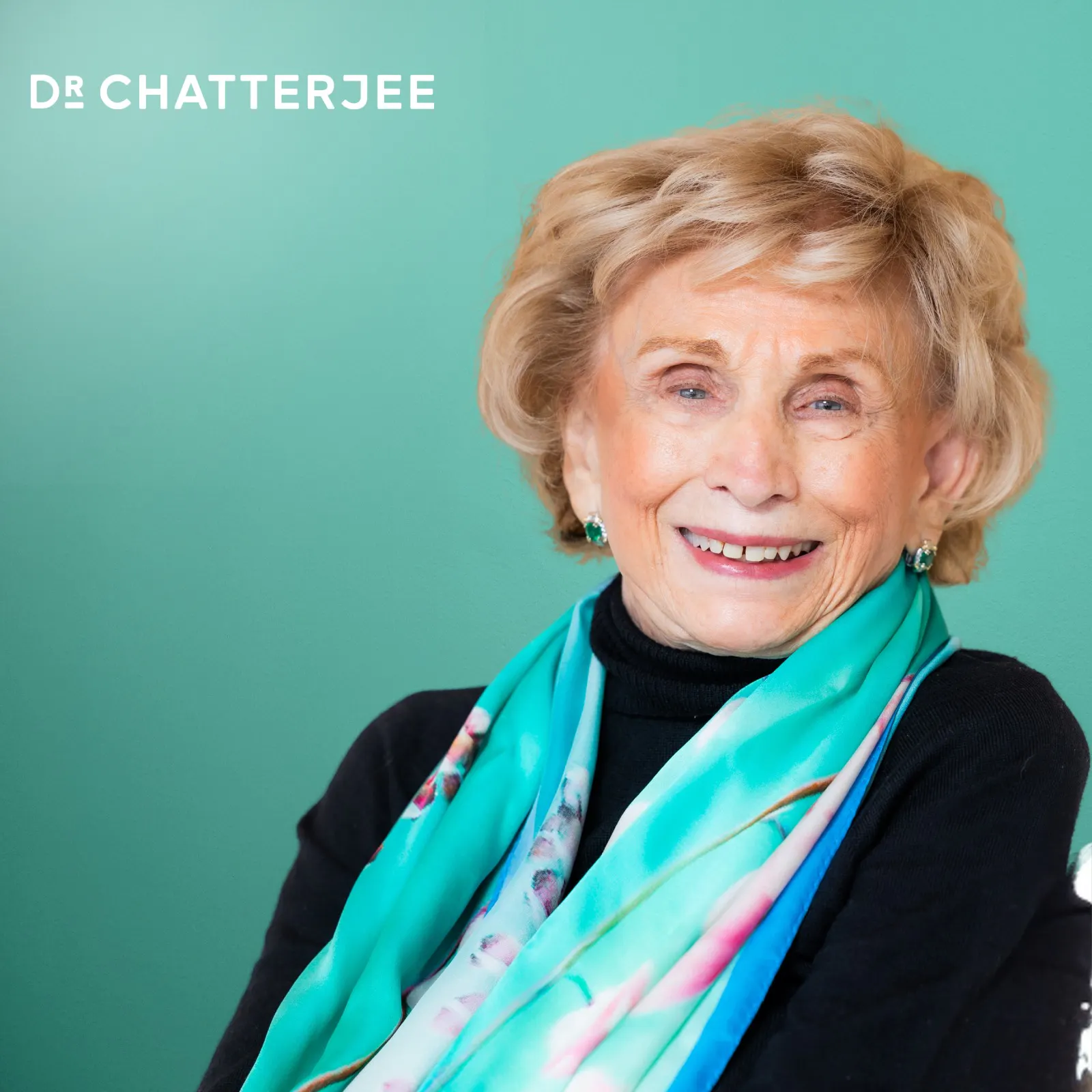
Feel Better, Live More with Dr Rangan Chatterjee
The Most Powerful Conversation I Have Ever Had: The Secret To Dealing with Any Stressor In Life with Dr Edith Eger #500
01:47:25
This week marks the 500th episode of this podcast! And what a journey it’s been! There have been so many conversations that have had a profound impact upon my life and to celebrate, I thought it would be fitting to share the conversation that has impacted me the most.
Loading summary
Transcript144 lines
- [00:03]
Dr. Rangan Chatterjee
Hey, guys, how you doing? Hope you're having a good week so far. My name is Dr. Rangan Chatterjee, and this is my podcast, Feel Better Live More. So this is episode 500 of my podcast. Wow, what a journey. Where did all the time Go? I can still remember seven years ago being in a basement studio in London. It was dark, there wasn't very good lighting, and I started recording my first few episodes. And I was thinking, I think I'm gonna enjoy this. I think I wanna get into podcasting. I think I'm gonna enjoy it, and I think it's a great way to help people. Of course, so much has happened over the past few years now. I do think this is a milestone worthy of celebration. And I've thought long and hard about how to mark this moment. I get asked time and time again, out of all the conversations I have ever had on this show, which one has impacted me the most? And the truth is, that is a really difficult question to answer. So many of the conversations have had a profound impact on my life and how I view the world. And I know that is the same for you as well. But if I had to pick just one for me, it would probably be a conversation I had four years ago with the incredible lady Edith Eager, who, when I spoke to her, was 93 years old. And when she was just 16, she was sent to Auschwitz concentration camp with her family. Now, if you're a regular listener, you will probably have heard me talk about this conversation on many occasions, but I know from looking at the download figures that many of my newer listeners over the past four years have still not heard this conversation. And I genuinely believe that this is one of the most important conversations I have ever had in my entire life, not just on my podcast. This conversation changed me. It literally changed who I was and how I saw the world. So why did it have such a powerful impact on me? Well, there are so many things I learned during this conversation. But I would say the key take home for me is that we get to choose the story we put on every single experience in our lives. We have a choice in how we do that, and with that choice comes our power. Now, some of you will have already heard this conversation, but even if you have, I would encourage you to re listen for two different reasons. Firstly, because each time you listen, you will hear something different. Perhaps you've heard the quotes from Heraclitus, the Greek philosopher. You never step in the same river twice because you. You're not the same, and the river's not the Same. And I kind of feel that we can see this conversation in exactly the same way. It is a timeless conversation that just keeps on giving. Even if you've heard this conversation before, you will hear different things every time you listen because you're different. And so the wisdom that Edith shares will land in a different way with you than last time. The second reason I'd encourage you to re listen is because there is a bonus extra at the end. Now, I did try and record a Part 2 conversation with Edith a few weeks back, but unfortunately it didn't go to plan. Since our first conversation, Edith is four years older and over zoom. We really struggle to have the kind of conversation we both would have ideally liked to have. And I honestly think that releasing that conversation would do Edith and her message a real disservice. However, I have just come back from two weeks in America where I was doing a lot of interviews for my upcoming book, Make Change that Lasts. And I had the opportunity to meet Edith in person for the very first time. She was hosting a live event with her grandson, Jordan. I went along, I spoke on stage, and when I came off, I had a bit of time put aside for me and Edith to catch up in person. So at the end of this episode, you will hear a short recording of my live face to face conversation with Edith from just a few weeks ago at the tender age of 97. Now, before we get into this episode, episode 500, let me give you a quick introduction to Edith. She is a Holocaust survivor, she is a psychologist, and she's an expert in the treatment of post traumatic stress. She is the author of three amazing books, the Choice Even In Hell, Hope can flower, the Gift, 12 Lessons to Save youe Life. And most recently, she has released the Ballerina of Auschwitz, a retelling of her story for younger adults from a different perspective, which I have recently read. And like all of her books, it is simply sublime. Edith not only survived Auschwitz concentration camp, she also freed herself from the trauma of her past by using her mind and the the healing powers of forgiveness. This is such an incredible story. It's powerful, it's confronting, and at times it's really challenging. But above all, it's deeply inspiring and I cannot think of a better way to celebrate 500 episodes of my podcast.
- [06:23]
Edith Eger
Edith, welcome to the podcast.
- [06:26]
Thank you. Thank you. I'm looking forward to have a very meaningful conversation.
- [06:33]
I certainly hope so. You are a guest who I have been really looking forward to speaking to for about three months now, ever since I started reading the Gift, which I have to be honest, is just one of the most phenomenal books I've read. And it's gone straight onto my favorite pile. I have a pile in my living room where in the morning, where I'm just having my morning routine, I'll have a few books from which I just pick and read a couple of chapters from each morning. And your book has gone straight onto that pile. So thank you for writing it.
- [07:09]
Thank you for reading it. It is a self help book. People ask me for it after the choice. So you read the chapter and then there are the how tos and you know, none of the talking does any good unless it's followed with an action. So you make a decision what you're going to stop doing or start doing or more of the same.
- [07:36]
Yeah, you have a choice and that is something. Obviously that's the name of your first book. But even that idea, it really rings through this book as well that we've always got a choice.
- [07:51]
We always got a choice. And my name is not a shrink, but a stretch. So I'm hoping to stretch people's comfort zone because when you change, you have to replace it with something else. So this is a good time out with me and you that people can really take stock of their lives and see what they need to leave behind, what they need to rethink and most of all make a decision and putting it into action.
- [08:26]
Yeah, for sure. Now I wonder if we could go back right at the start of this conversation you say about leaving our comfort zones and in quite an extreme way, when you were 16 years old, you had to leave the comfort of everything you knew. I wonder if you could take us through that step by step so we can really understand what happened to you at the age of 16.
- [08:58]
Well, there are two things happened. I was put in a place I was not prepared for and I was told one thing and I found another. I hear that a lot, especially with the military people who come back and they wanted to take their lives because they don't know how to readjust and rethink and redecide. And I think we are going through that same period right now. And it's a very difficult place to be when you don't know how long everything will last. It's not permanent. Hopefully it's temporary. I'm hoping that people use this time to take stock of their lives. Whether they're able to hold on to things that are not working anymore or are they able to redecide and risk. That's a very good English word. I love and risk to do something new that is very scary because you have the fear of the unknown. That's why people don't change. But change is synonymous with growth. So I'm hoping that people can find some positive way to make a decision that life is not from outside in. But I have discovered my inner resources in Auschwitz that I was able to decide that they were the prisoners, not me, and they could never murder my spirit. So it's not what happens, it's what you do with it.
- [10:49]
Dr. Rangan Chatterjee
Yeah.
- [10:50]
Edith Eger
I wish this was an opportunity. And today we have an opportunity to really decide whether we are holding on to hatred or recognizing that hatred is eating us up and how to be a survivor and not a victim of anything or anyone or any circumstance.
- [11:18]
You say Auschwitz was an opportunity.
- [11:21]
Yes.
- [11:22]
You're saying that now as a 93 year old lady, is that right?
- [11:28]
Yes.
- [11:29]
Which is incredible.
- [11:31]
Yes. I don't know.
- [11:32]
93 years young.
- [11:34]
I love that chronological age doesn't count at all. But I think Auschwitz was an opportunity for. An opportunity to discover my power within me that no Nazi could take away or touch.
- [11:57]
Could you take us through that day when you were. I mean, what was that day like? Was it just a normal day for you in your life?
- [12:08]
One of the things I always say in schools is, is what my mother told me in a cattle car. We don't know where we're going. We don't know what's going to happen. Just remember, no one can take away from you what you put here in your own mind. I tell the children in school to watch the Karate Kid because the best power is a brain power, okay? And not to smoke pot because it interferes with the natural growth of the brain. So this is exactly what happened. When arrived, there was a sign. Our wife must fry. Work makes you feel, work makes you free. And it was chaotic. I didn't know where I was. I never heard of Auschwitz. But then we were separated. My father said, actually, you know, we're just going to work and then we're going to go home. But that's not what happened because an hour later he was in a gas chamber. So was my mother. So. And then I stood in line with my sister Magda and there was a guy who was referred to as the angel of Death. He was pointing to the left or to the right and pointed my mother to go to the left. And then I followed my mother. He grabbed me. And I never forget those eyes. I pay a lot of attention to eye contact. You have a very good eye contact with Me, because I can kill you with my eyes and I can love you with my eyes. So check your temperature. Actually, that's good. Just with the eyes. And so he drew me on the other side and said, you're going to see your mother very soon. She's just going to take a shower. And as she drew me on the other side, I ended up a few miles away, called Birkenau, and one of the inmates pulled my earrings out and yelled at me that while I was going to the theater, she said I was rotting here. And so she took her anger out and me. Today, we call it displaced aggression. But I didn't know that. I just said to her, you know, I would have given you my earrings. And besides, when will I see my mother? And she pointed at the chimney and fire was coming out of the chimney and said, your mother is burning there. You better talk about her in past tense. And my sister hugged me and she said, makes me cry. She said, the spirit never dies. The spirit never dies. So I consider it my duty to celebrate. One of the most beautiful gift of God is the gift of memory. And I want to do everything in my power to see to it that your children and grandchildren and great grandchildren. I have seven doors. They never experienced what I did. I'm for prevention. I'm for a lot of things rather than being against, for life and for uniting and for hopefully having a human family that you can be, you and I can be I. But together we're going to be much stronger. So I invite you and your culture and wherever you are, and I make a good jubu. I make many Jewish young children become Buddhists. And I think there is a great deal to be said about being awake. Being awake every moment to me is beautiful because I say what I lived. Look at the IQ and the eq, the emotional iq, the school of the experience that you had in life. And I'm hoping that people are recognizing that the IQ is fine. But unless you have a good sense about your life, where are you now and where do you want to be? And pick a goal and then pay attention to what they're focusing on. So it has to be in alignment to have the goal. And the goal is to have freedom.
- [17:36]
How do you define freedom?
- [17:40]
By letting go of the concentration camp that you created in your own mind. That's what forgiveness is. You give yourself a gift that you do not carry the people that you hate, that you release them, you let them go. That's how. That's why forgiveness isn't about me. Forgiving you for what you did to me. It's for me to liberate myself, not to be a prisoner or the hostage of the past. I don't live in Auschwitz. I go through the valley of the shadow of that. I don't camp there or set up house on that, But I don't forget it or overcome it. I came to terms with it. I call it my cherished wound.
- [18:41]
Yeah, I mean, Edith, your book. I've got marks and underlines on almost every page of this thing. There is wisdom, there's gold. I've been on my own personal, inward journey since my father died seven and a half years ago. And lots of the truths that I am learning are beautifully and very articulately put together in the gift. And it really has been a gift into my life. So I thank you for that once again. But the first thing I've underlined is on page three. And it's just so powerful, it almost echoes what you just said. As an Auschwitz survivor, I'm here to tell you that the worst prison is not the one the Nazis put me in. The worst prison is the one I built for myself. When did you start building that prison, and when were you able to get out of it?
- [19:49]
Before I answer your question, I like to ask you, how old were you when your father died?
- [20:00]
So I'm 43. Dad was 12. 75. I was 35 years old when my dad died.
- [20:11]
So would you consider looking at it from a different perspective? That you didn't lose your father? That spirit was sent to you for 35 years, and you celebrate every moment, and then that spirit had to go home.
- [20:35]
I would.
- [20:36]
Dr. Rangan Chatterjee
Yeah.
- [20:37]
Edith Eger
Just how you look at things.
- [20:41]
Dr. Rangan Chatterjee
Yeah.
- [20:41]
Edith Eger
Your father would be very grateful knowing that his son has a full life, that he's interviewing survivors, that he is an ambassador for peace. Isn't that a wonderful feeling, just looking at the same thing from a different perspective?
- [21:07]
Dr. Rangan Chatterjee
Yeah.
- [21:09]
Edith Eger
Thank you for that.
- [21:11]
Let me be your ophthalmologist. And recognizing that the prison is in our own minds and the key is in our pocket, we create the Nazi within us. I graduated with honors, and I never showed up for my graduation because I did not forgive myself that I survived. See, I didn't need a Nazi. I had, in my mind, unfortunately, that part that didn't allow me to celebrate the freedom fully today, I won't do that. But I think the prison that we put ourselves in our own mind needs to be really examined, because every behavior satisfies a need. And when you have the victim's mentality, you Always going to find the victimizer. There is no victim without the victimizer. And it also gives you a secondary gain. It gives you the idea that you don't have to do anything. Zero. And that's why also yesterday's victims easily become today's victimizers because they look at the world two ways. The victim is weak, the victimizer is thrown. So part of the psyche will identify with the aggressor. And that's what we call the Stockholm syndrome. Yes, you identify with the aggressor. And many times children who are beaten, unfortunately, they grow up and they carry it from generation to generation. I do everything in my power to teach, especially fathers, the way they treat their children is important because children don't do what we say, they do what they see. And the way he loves his children is the way he treats the mother of their children. How he loves and adores and takes care of the mother, his wife, his life mate. So love is not what you feel, it's what you do.
- [24:08]
Just so powerful, really. There's such wisdom in what you say, Edith. But there's also. There's love. I can really feel there is love. There's no charge, there's no anger. There's no sense that you're trying to talk down to me or talk down to anyone. It's a really lovely energy that Even though we're 3,000 miles away and I'm looking at you through a screen, I can still feel it.
- [24:47]
I can feel you too. Yes, our spirit is really connecting. Well, people don't come to me, they're sent to me. And I couldn't be more really blessed to have you in my life. And your father is winking now and he says, like Mr. Higgins, by God, he's got it.
- [25:18]
Yeah, no, for sure. Why do you think it's so important for fathers, as opposed to mothers, to behave a certain way in front of their children?
- [25:39]
Dr. Rangan Chatterjee
Just taking a quick break to give a shout out to AG1, one of the sponsors of today's show. Now, if you're looking for something at this time of year to kickstart your health, I'd highly recommend that you consider AG1. AG1 has been in my own life for over five years now. It's a science driven daily health drink with over 70 essential nutrients to support your overall health. It contains vitamin C and zinc, which helps support a healthy immune system. Something that is really important, especially at this time of year. It also contains prebiotics and digestive enzymes that help support your gut health. All of this goodness comes in one convenient daily serving that makes it really easy to fit into your life no matter how busy you feel. It's also really, really tasty. The scientific team behind AG1 includes experts from a broad range of fields including longevity, preventive medicine, genetics and biochemistry. I talk to them regularly and am really impressed with their commitment to making a top quality product. Until the end of January, AG1 are giving a limited time offer. Usually they offer my listeners a one year supply of vitamin D and K2 and five free travel packs with their first order. But until the end of January they are doubling the five free travel packs to 10 and these packs are perfect for keeping in your backpack, office or car. If you want to take advantage of this limited time offer, all you have to do is is go to drinkag1.com livemore that's drinkag1.com livemore this episode is brought to you by Airbnb Now. My family and I just love using Airbnb. We often book an Airbnb for our family holidays and I also stay in Airbnbs often when I'm traveling for work. I love the convenience and the fact that I can have my own kitchen wherever I go, which makes it so much easier for me to stick to my routine and eat healthily in the way that I like. Now, with Christmas and the holidays appearing on the horizon, I've been wondering, are you planning to be away maybe a few days out of town or even a bigger trip abroad? Well, if you are, I know that many of you are probably thinking about staying in an Airbnb, but have you ever considered hosting your own home or perhaps even just a room in your home on Airbnb? I have many friends who do this and they tell me it's a really easy way to make some extra money. So the next time you're away, you could do the same and earn a little extra to go towards household expenses, holidays, or even a few extra Christmas presents. Your home might be worth more than you think. Find out how much@airbnb.co.uk host.
- [29:02]
Edith Eger
I think the fathers are the role models to be a knowledgeable leader, but not a dictator. A father is a man. There are lots of males running around, lots of boys are running around, but a father who is a man is the knowledgeable leader, a teacher, a protector, a provider. You see, it's the family that is really totally protective by a man who was called upon to have a family that looks up at him because respect is recognition that you look at your father and knowing that he is not going to say one thing and do another. That's the definition of a hypocrite. So when the phone rings and you pick up the phone and you tell your father very quietly, daddy, it's for you, and your father tells you very quietly, tell him I'm not here. And the following week, he's giving you a lecture about honesty. You're going to catch your father very quickly and say, hey, dad, what are we talking about? Okay. Children see everything they say, you know, and I think that's very important with the children to be consistent. I train parents to be good parents to themselves so they can be good parents to the children.
- [30:59]
Yeah, no, thank you for that. It's. You know, I've been a father now for 10 years, and I've very much changed my parenting style over those 10 years. But a lot of that has come from me clearing out my own closet, you know, looking in the mirror, being honest with myself, not trying to kid myself, and saying, hey, listen, listen, listen, mate. You can't say this and do something different. And I totally agree with you. And certainly this has been my experience that kids don't do what you tell them to do. They do what they see you doing. And that really has been a huge motivator and driver for me to change. Because I'm thinking, well, if I value my role as a father as one of the most important roles in my life, which I do, then what could be more important to me than addressing my past? Getting rid of guilt, shame, anger, all kinds of toxic emotions that I have felt really until very, very recently. And by freeing myself from them, I parent in a different way. The interaction is different. It's more joyful, more happy. But it started with looking in the mirror and being honest with myself.
- [32:30]
Beautiful that you do that. And you're also called upon to be a guide to others, A guide from darkness to light, from prison to freedom. You know, respect is that someone looks at you and says, I want to be like him. So it's not what we feel, it's what we do that we commit ourselves. And that's what happened in Auschwitz. We had to commit to each other. It was cooperation, not competition or domination. Because all we had was each other then, and all we have is each other now. How can we empower each other with our differences?
- [33:24]
Would you mind if I asked you a few more questions about your experience in Auschwitz?
- [33:31]
Yes, Auschwitz was hel. You know, I usually like to quote Hans Selie, who has a theory on stress. He says anytime something stressful Come to us. We have two automatic responses. We either fight or flee. That did not work in Auschwitz, because if you touch the guards, you were shot right there. And then I witnessed that when people would go and touch the guard and they were shot, there is no way I could flee. Because if I touched the barbed wire, I was electrocuted. And I saw that blue body. So I. I knew what not to do. And I was able to turn the hatred into pity and decided that they were the prisoners. So I became a very talented schizophrenic. I did what I was told every day. But deep inside I had my spirit. They could put me in a gas chamber any minute. I had no power over it. 4:00 in the morning. When we stood, it was cold air, pale. They were counting heads. They told us, if you don't feel well, just stay in the barracks. We're going to take you to the hospital. We had to discover it was a place for discovery that there was no hospital, there was the gas chamber. So don't ever stay behind because we'll never see you again. We had to learn very quickly the rules not to fight or flee, but to stay in a situation and just kind of one day, say one day at a time. I would say to myself, if I survive today, then tomorrow I'm going to see my boyfriend because he told me I have beautiful eyes and beautiful hands. So it's the way you think, you create what you think that's important. Every morning when you get up in the morning and you look in the mirror and you say, I love me. Because self love is self care. It's not narcissistic. It's okay to love you and look forward to the day that you create your thinking, you create your feeling, and you create the behavior. So before you say anything, ask yourself, is it kind? Is it really very important and necessary? And if it's not, don't say it. I teach couples how to share silence. Don't ask, how are you? That's the stupidest question. People say, fine, I tested that. I tested that because I was professor of psychology. And my student told me that in America people are hearing but not listening. I said, let's test it. Tomorrow morning when you pick up your books, someone is going to say hi to you. And you say very quietly, my mother died this morning. Sure enough, the morning someone came, said hi to him. He said, hi, how are you? And my student said, my mother died this morning. And guess what happened? Oh, that's great. I'll see you this Afternoon. People are hearing but not listening. I like to be a compassionate listener, even to the white supremacy member who came to see me and told me how he's going to kill all the Jewish people, all the black people, all the Mexicans, all the Chinese, and not to react. If I would have reacted, I would have taken that boy and dragged him to the corner. I would step on him and tell him, who do you think you're talking to? I saw my mother going to the gas chamber. But I think that the most obnoxious person is my best teacher.
- [38:40]
Dr. Rangan Chatterjee
Yeah.
- [38:41]
Edith Eger
So I think it's very good to look at the bigot in you. It's there, there is a Hitler there, there is a Mother Teresa there, there is kindness, there is goodness. And I think it's very, very important to really change our thinking that can change our lives.
- [39:06]
Dr. Rangan Chatterjee
Yeah.
- [39:09]
Edith Eger
I'm getting shivers as you're talking because this, these words of wisdom that you speak, I can feel the truth in them, you know, I can feel this. I guess this is. This is where I've been coming for a few years. I've really been trying to understand myself, understand human behavior. And I'm fascinated by people. I'm fascinated why someone's ended up in front of me, why they've got a particular realness, why they talk about it in a particular way, why some engage with what you want them to do and others don't engage. And I've never really judged my patients. I've always tried to learn from them and understand. And I guess where I'm currently on in my journey and what I love about what you just said is I.
- [40:15]
Dr. Rangan Chatterjee
Literally do this every day.
- [40:16]
Edith Eger
I look for the friction. I look for where was I not at ease with something, where did something bother me? Or where did I feel an emotion? And then my current approach is instead of trying to blame somebody else for that, I go, no, no, no, hold on. This is me. What is this bringing up in me? Because that's what I can control. I can control my reaction. So if I'm getting triggered, what is it triggering? So I spend my life now going inwards, and I gotta say, it's so rewarding because what could be better than understanding yourself?
- [41:00]
Oh, that is so beautiful. Because you said the magic word, trigger. It has nothing to do what's going on this minute with that person. That person is triggering something in me that is totally mine. Unfinished emotional family of origin business. See? So then you're grateful and you say, tell me more, because love is time. T I M E and it's very hard to give time, right? How much time do they give you with a person? 15, 20 minutes?
- [41:48]
10. 10 minutes.
- [41:52]
10 minutes. 10 minutes. Every moment is changing their lives. Don't try to understand things that belongs to a classroom. It's all in your head. Just go to the heart and just say sounds like. And then put a feeling word next to it. Sounds like you're angry about that. I did that with a general, okay. And he said about the daughter, a teenage daughter who is smoking pot and telling the father all kinds of unfortunate labels, dictator and so on. And you cannot change what other people are going to say to you. But you can say, the more they talk, the more relaxed I become. That you take the negative stimuli and turn it into positive. You see? And then you say, I'm practicing my low frustration tolerance level. So you. I'm not a shrink. I'm a stretch. You are a stretch. And they really are testing you, pushing your buttons too not to react. Because when you react, you don't think. But how to respond. Just take a deep breath. You cannot change the external circumstance. I could not change that. But I actually looked at the guards, that they were the prisoners, not me, that I was innocent. And when a woman tells me somebody touched me inappropriately, and I don't know how to tell you because you were in Auschwitz. And I tell that woman you were more in prison than I was because I knew the enemy. I was told, I'm never going to get out of here alive. I was told, I'm cancer to society and the only way I will get out of here is a corpse. And they took my blood many, many times. And one time I asked, why are you taking my blood? And he said, to aid the German soldiers so we can win the war and take over the world. I couldn't yank my arm away, right? But I said to Myers, you stupid idiot, I was a ballerina with my blood. You're never going to win the war. I had my humor, sarcasm, cynicism, whatever kind of humor that really kept us alive. But it is very important for you to know that many people can do what you can do, but not the way you can do that. You're unique. You're one of a kind. I love the way you are with me. You see, I see the honesty and the humanness accepting the fact that you're human and you make mistakes and you will make mistakes because we don't have any godly powers. We're humans and it's okay not to be perfect.
- [45:51]
Dr. Rangan Chatterjee
Yeah.
- [45:52]
Edith Eger
And by the way, when you are a perfectionist, you're going to procrastinate. Keep that in mind that you want to do everything just right. And when my granddaughter was in a class and the IQ was 148, she was a perfectionist. And I went to visit the class and she would erase one thing a million times. And the teacher called her my little red caboose. That's the train, the last car on a train, it's called the red caboose. So she thought she doesn't qualify to stay in that class. And she was ready to check out. She was about 10 years old. And the first time I talked to her about auschwitz on a 10 year old level, you have to know, age wise, who you're talking to. I cannot talk to a 10 year old about cognitive dissonance. I can talk to you about it, but I think we need to learn how to meet people where they are and then treat them the way you want them to be. So I told her not to allow the teacher to call her names. I don't like labels. Anyway, I succeeded. She went back to school and when it was time to write letters, to get to colleges you have to write your autobiography. And the title was when the Caboose Became an Engine and she got into Princeton. She graduated with honors, she got a UCLA, got a PhD and she's a professor of psychology today. So you see, you got to question authority rather than blindly adhere to authority. I also like to tell you that Ahmadijidad said many years ago, and I was interviewed by the same person, Larry King, he said that the Holocaust did not exist. And I'm quite sure that Ahmadijidad did not read Plato who said, you have to think of a lie, it has to be a big one. And then you repeat it, repeat it until people believe it. So our biggest enemy is ignorance. And it's very, very important to look at the small towns when people are hearing a preacher and talking against this one or against that one. And be sure that children question authority rather than blindly adhere to authority.
- [49:10]
Dr. Rangan Chatterjee
Yeah.
- [49:12]
Edith Eger
What was it about you in Auschwitz that gave you the spirit to keep going? Because you mentioned the story that if you touched the guard, you'd be shot. And you saw some of your fellow inmates doing that. And the question that rose up for me is, do you think that some of them did that on purpose because they couldn't take it anymore and they knew if they touched a guard that it would be over.
- [49:46]
I had a friend who was so proud that her father into the barbed wire that he took charge of his life. You know, death is dead. I was 16, in love. I wanted to live so badly. I wanted to do everything in my power not to ever allow them to take over that spirit that is with me now, that spirit that you're reading. Because people ask me for a how to book. They wanted to know what can be done in a challenging situation. So there is no problem. There are only challenges. There is no crisis. There is only transition. So if you approach midlife, don't talk about crisis, talk about transition. Because you're going to give up your need to please other people. You're going to give up the need for other people's approval. You regain your power. You give birth to the you that is free at last.
- [51:18]
Some people may listen to this and listen to your story and go, wow, she's an incredible lady. Which I completely agree with. But they may go one step further and they may say, well, she's special, she's got a superpower. I'm not like her. She was able to overcome what she went through and come out the other side. She's stronger than me. What would you say to someone who's feeling like that?
- [51:54]
Dr. Rangan Chatterjee
This episode is sponsored by Thriver, the app that helps you listen to your blood and get personalized guidance on how to optimize your health and fitness. Now, I think regular blood tests can be a really valuable tool that can help tell us which Lysar changes are working and where we might need to make changes. And Thriver is the perfect tool to help us do that because they make it really simple. You just take a blood test at home, which is really easy, send it off and then you get all of your results in a matter of days in an easy to understand app. And all of your results come with personalized, actionable lifestyle advice from doctors. You can then test again in a few months time and learn what's working well and where you might need to make some changes. For example, your average blood sugar, known as your HBA1C I think is a really important marker that gives you information on the state of your metabolic health. And I personally like to check it every three to six months to make sure it's staying in its optimal range. The Thriver app is what I use to help me do this and it offers many different options. You can do general nonspecific blood testing or get more focused on things like hormonal health, heart health, sports performance and nutrient levels. For listeners of my show, Thriver are offering an exclusive offer of 20% off your first thriver cycle. When you enter the promo code. Live more at checkout. Just visit Thriver Co to get started today. That's T H R I V A Thriver. Listen to your blood.
- [53:45]
Edith Eger
Get rid of the word overcome. I don't forget. I do not overcome. I come to terms with it. Part of me was left in our shreds. I want to be a realist, not an idealist. Life is difficult. The more I suffer, the stronger I become. I did not ask to go to Auschwitz. You did not ask to be touched inappropriately. You did not ask to be daddy's little woman. Like when you watch Gone with the Wind, the movie. It's a wonderful movie to talk about and take each, every one of those wonderful characters that he doesn't take his wife to London, it takes the little girl to London. And that's why I ask many people, when did your childhood end? See, because many children have to take care of their parents. If father is an alcoholic, if mother doesn't get up until 4 o'clock in the afternoon because she has migraine headaches, I think it's very important to ask yourself, when did you have my childhood end? If you're a child of an immigrant? My little girl was two years old when we came to America. She taught me how to speak English. She taught me how to buy peanut butter. I never soaked peanut butter in my whole life. Or tuna fish. So the children become parentized. So you got to kind of see whether you went through the ages, stages of life. The person to really study is Piaget. And Piaget as a Swiss psychologist, studying the ages and stages of our development. And many, many people are grieving over childhood or the teenage years they never had.
- [56:07]
Dr. Rangan Chatterjee
Yeah, for sure.
- [56:10]
Edith Eger
One of the things I've heard you say before is I don't want you to hear my story and say my own suffering is insignificant. I want you to hear it and say, if she can do it, so can I. And it was such a wonderful thing to read. And it sort of partners very nicely with another thing you say in the book, which is there is no hierarchy in trauma. And I think this is such an important point. And actually this morning, I mean, I'm talking to you in the British evening. I'm sure it's morning, I think, for you in California. And I had a conversation with someone today about just about racism and actually how we can talk about race to our children. And as we were talking about it afterwards, this whole idea came up that sometimes in life, if we hear that someone has suffered more Than us. There's often a guilt that happens. And we think, oh, well, I can't really tell them how I'm feeling because my suffering is nothing compared to theirs. And I thought the way you put it in the book, there's no hierarchy. And trauma was just so beautiful.
- [57:29]
No, because it's in my book. The choice when a woman came and the daughter was dying of hemophilia, and we cried and cried, and the following hour someone cried the same way because her Cadillac was delivered and it was not the same shade that she expected. So do I tell that woman, you stupid idiot, you should have been here an hour ago. That don't minimize or trivialize anything. Suffering is a feeling. It's part of life. It's good to invite it in when you get triggered, feel that feeling. But then you decide how long you're going to hold on to that feeling. Any behavior satisfies a need. And if you're a victim, you're going to gain a lot because you don't have to do anything. You're always going to find the victimizer. And couples do that too. The victim becomes the victimizer, goes back and forth and back and forth. I don't know if that means any sense to you, but all I can tell you that men created patriarchy. And the Bible even says that the woman comes to the world to please man and take care of man. If I would be a man, I would do the same thing. That you marry someone who's a virgin, you marry someone who's younger. So God forbid that you'll find out that another man is a better lover. You know, it's very well defined that the man is the king and it's okay if she is the queen and the children are the princess and the princesses, there is nothing wrong with that. But the man has to use his power to be the role model to the children who are looking at that father and say, I want to be just like him, or I want to be everything he's not. Can you relate it to that?
- [60:00]
Dr. Rangan Chatterjee
Yeah.
- [60:01]
Edith Eger
That boy especially looks at dad and says, I want to be just when I came over. There is no way I'm ever going to be like my father. And guess what? He grows up and he decides to be a caregiver, even though the father wants him to join his business or become a doctor just like him. That's no problem, because the son chose to give up the need for his father's approval. See, that is, you got to give up something, and that's no problem. But when he said, I'm never going to be like my father, then he's a rebel. And if you are wanting prove something, you're still a prisoner. Yeah, if you want to prove something, you're still not free.
- [61:11]
So if you want to prove something to somebody else, there's still charge, isn't it? There's still emotion behind that.
- [61:19]
You're still a child and you don't know how to just let go. Oh, my father is my father. I carry half of it in my blood. Half of it is my mother, half of it is my father. And I'm going to make peace with my father. I don't have to be like him. He can be himself and I can be I. And hopefully we can empower each other with our differences. You don't come from an agenda in marriage too. When a woman said, my love is going to cure him and he's going to stop drinking. No, he's already married to the alcohol. He's an addict. She doesn't realize that love is something that you accept someone just the way they are. When I marry him and I'm going to love him, he's going to stop drinking. That's not reality. Or an alcoholic. Anything that you do, excess. You got to look at addiction.
- [62:45]
Yeah, you mentioned that you would say if you. Or when you wake up tomorrow, I think you said you'll see your boyfriends. Was it the thought of your boyfriend that kept you going? Was that the picture you painted inside your mind to keep you going? And also along with that, how important is it for all of us, no matter who we are or where we are in life to have something outside ourselves to be holding onto and to, you know, to serve others. I guess is what I'm trying to say is how important was that to help get you through, but also how important is it for those of us who haven't been through what you went through but are still struggling?
- [63:36]
You are so brilliant. But I'm going to give you one word that guided me to survive. And the word is curiosity. I always wanted to know what's going to happen next. I was curious. There is no way I wanted to ever do anything other than wanting to know what's going to happen next and who knows what's going to happen next. You may find your freedom and you may find out that you can discover within you that you never thought was possible. That no one can take away the way you think about anything. Your attitude, your responses, your opportunity to pray for the gods because they were the prisoners so it's just what you think you create. That is very true. So if you use words like I always, I never, you know, woman tells me I gotta find a man. And I say to her, you know what, if I were a man, I would run from you. See, she's operating on a very negative self fulfilling prophecy. I'm always this, I'm never that. Get rid of those words. They are absolutistic. Just say, up till now I did this and now I can read the gift and I have a choice. The more choices you have, the less you feel like a victim.
- [65:38]
You bring up this very important concepts of language and the words we use to describe things. Now I'm going to share with you that I actually, generally speaking, no longer say, to my knowledge, I lost my dad. But for some reason in this conversation early on it popped out. So clearly I haven't fully eliminated that because normally I don't say it anymore, but for some reason I did. And why I'm sharing that is because I've been really feeling over the last few years. And this is something that my wife and I spend a lot of time with our kids doing is being very mindful of words like if the kids say, oh, I'm never good at it, that always happens. It's like, hold on, is that true? Is that really true? How about we rephrase that? Or if they say something like, oh man, I need that. Do you need that? And I tell you, my daughter, who's only seven, she gets this like, she calls me out now, daddy, do you really, do you need that? Oh, you mean you want it? Okay, you know, thanks, darling. Thanks for letting me know. So I guess what I want to ask you is how important are the words we use? And then you're writing this brilliant world, life changing books in your 90s. But how can we teach those lessons to children so they don't need to wait till midlife and later life to learn what you've learned and what you're trying to teach us now.
- [67:23]
Beautiful needs are things without which we cannot survive. Period. We need to breathe. Without air, we cannot go on beyond four minutes. We need to sleep. After three days, we hallucinate. We need to sleep. We need to eat. Eventually I knew for about two weeks I didn't get any food. I knew that Gandhi went possibly a month without food. When people say, I need to go downtown, I need to take care of this and that, that's not a need, that's a want.
- [68:18]
And why is it important that we get this Right. Because some people will go, yeah, but this is just colloquial talk. It doesn't. But I suspect you think as I do, that it actually does matter.
- [68:30]
It does matter. And also people have the rules that are very rigid rather than flexible. I need to write a letter to my mother. I need to call my mother every day. My sister Clara made her granddaughter call her every morning, 8 o'clock and sing a Hungarian song song. Otherwise she was going to be punished. You see, my sister was a very controlling person. And you know what? That kid didn't want to go to grandma after that. She really didn't know how to be a grandma. Okay, you get to learn two things. Negotiate and compromise. You make a deal with your child there, they give me $50, but don't tell me what to do with your $50. That's a child. They want all the freedom and no responsibility. So you write the constitution for your family that you work as a team, you have two children, then you have four wheels. And that four wheels is necessary because if one of them goes, the other three goes with it. That you have rules. Right, Dan, America has a constitution. You write your constitution.
- [70:12]
Dr. Rangan Chatterjee
Yeah.
- [70:13]
Edith Eger
But there is no punishment, only consequence. So if you don't do this and this and this, that means the weekend you stay home. See, you talk about rules and the children are part of the decision making process. It's not me telling you what you should do. Get rid of that word. You could. It's called assertive discipline. So if I am a schoolteacher, I am certified and if you make noises in my class, I'm coming to you and tell you, you know, I get paid for teaching this class and if you make noises, it really interferes with my process. So you see, I'm giving you a choice. To leave or stay here quietly. Because there is no freedom without responsibility. It's anarchy.
- [71:29]
Dr. Rangan Chatterjee
Yeah.
- [71:32]
Edith Eger
So love is again not what you feel, it's what you do and you do for the betterment of that family. And I think you can teach the 7 year old how to put the dishes in a dishwasher. It has to be age appropriate.
- [71:53]
Dr. Rangan Chatterjee
Yeah.
- [71:55]
Edith Eger
So you have a seven year old.
- [71:56]
Daughter and a ten year old son.
- [71:59]
Okay. So the seven year old daughter will tell you, I want to go to bed when my brother goes to bed. I don't want to go to bed earlier. Am I saying something?
- [72:13]
Yeah.
- [72:14]
Dr. Rangan Chatterjee
Okay.
- [72:15]
Edith Eger
And I hate you, daddy, I hate you, mommy. And I say, and the child says, why do I have to go to bed early? And why do you tell me And Mommy said, because I'm a good mommy. And that's what good mommies do rather than because I said so. That's stupid. What do you mean, I said so? That's how I grew up. That's how I grew up. Before I said so, there was no conversation. So what do you want? What kind of family do you want? Do you want dictatorship? Do you want to be a knowledgeable leader? I'm sure you are. I don't have to tell you any of that. You create an atmosphere where children can feel any feelings without the fear of being judged. There is no right, you know, bad or good. No, no, no.
- [73:40]
One thing we started doing this summer, Edith, and I think this was actually, I took about three weeks off social media. I just went off, and it was an incredible time because I was able to really tap into who I was, what I was feeling, without having to listen to the noise of the world or not having to, because I never had to. It was a choice. I made the choice to, for three weeks, to turn off the noise from outside so I could go inwards. And in that time, I started to write down some of my own personal values, really used to think about, what are they? What are the values by which I want to live my life? And then I had the idea. I was walking in the woods thinking about. I thought, oh, why don't we do this as a family? And so one dinner time, or just before mealtime, I think we sat down, the four of us, and we all had to contribute, and we came up with five values or so, and we all had to agree. So I said, mommy and Daddy can't enforce any of these values at all. We all have to agree. So once everyone had a chance to come up with their own value, and we went round the table and everyone had to say whether they agreed or not. And what's been really great about it, and this is just an experiment that I've been trying with my wife, is that if one of us has done something that is not aligned with that value, then the conversation goes like. Let's say it's one of my children. The conversation is, okay, so was what you did there aligned with the values that we've all agreed on? And I'm finding it really effective because it's not anyone telling one another what they've done or what they haven't done. It's really treating people with respect and saying, hey, look, we all agree to this. Yeah, actually, you know what? I've done something that's not aligned with that I'm going to recognize that and make a change. Is that the sort of thing you're talking about?
- [75:57]
Well, I like things to be written down. So you avoid what I thought you said, I think you said. And no, you write down what if. Then, if. Then. If this happened, then you know. And then you hear your child saying. Because sometimes we say, I understand when we don't. When I came to America, people spoke to me and they wanted to know if I really get it. And I would say yes, even though I had no idea what they were talking about. So I think you want to be sure that you hear exactly when you write it down and sign it on a dotted line and have it notarized, that those are the rules. Yeah, we are for cooperation, not competition or domination. But I was made before you, and that's why I am an adult. And your brain doesn't develop until you're 25. So a child does not play with a full card until they're 25. And that's why you have to really know how to talk to a child who is limited, not limitless. You got to study the ages as stages of development.
- [77:46]
You talk about cooperation. And one of the many striking things about your life story that I've read about is how even in Auschwitz, kindness and cooperation was absolutely key. It was key for you to survive. And actually, not only was it key for you to survive, it potentially saved your life at a point later on, I believe, when you were starving and very, very hungry.
- [78:23]
When Dr. Mengele gave me a piece of bread, I could have gobbled it all up, and I chose to climb up and share it with the girls. And later on, when I was in the death march going from Mauthausen to Gunskevjan, and if I would have stopped, I would have been shot right away. I revisited that place, every place I was, and I looked at those places that I could have been shot. And the girls that I shared the bread with, so many stopping. And they came and they carried me. They formed a chair with their arms and they carried me so I wouldn't die. All we had was each other then, and all we have is each of them now. And cannibalism broke out. And when people were eating other people's flesh, I beg people to watch a movie called the Sound of Music because I ask God to help me because I cannot possibly touch human flesh. And God said, just look down. And I realized I discovered that I still have grass to eat. And I remember then choosing one blade of grass over and against the other. So I can't is not in my vocabulary. When I go to a classroom, I run to the blackboard, I put, I can't equal, I am helpless. And then I take the eraser and take the apostle of entity. I can. Why? Because I think I can. The whole cognitive psychology based on a philosopher called Epictetus who said, it's not what happens makes you feel the way you feel, it's the way you view it.
- [80:41]
Dr. Rangan Chatterjee
Yeah.
- [80:43]
Edith Eger
You know, this idea that we have the power. We have the power to choose if we take some common scenarios. Right. So, you know, I made a little video on Judgment the other day, and I sort of released it, and it really connected well with people. But one person replied and said, rongan, look, I love the video. I find it. It's really, really helpful. I can do it. I cannot judge others. I can forgive others, but the one person I can't forgive is the neighbour who was cruel to my elderly mother before she died. Okay? So that's one thing. And then other common scenarios that I hear, let's say someone's husband has cheated on them. Right? The common narrative is it's okay then to be a victim, because on one level you are a victim, or that is the perception. Right. And so how would you help someone understand that and say, okay, something that you didn't want, that you didn't expect, that you didn't ask for, has happened to you. But the power is in what you do and how you view that situation. I mean, can you help? Maybe someone's listening or watching this right now who's going through some of those scenarios. How would you help them understand that actually they can choose the way they think about that situation?
- [82:16]
I had a woman who came to see me with a big cross, and I studied with Carl Rogers, and I learned from him unconditional positive regard to anyone who comes to see me, even if they are a member of the white supremacy group. So this woman came in and I talked to her, and then she said to me, I'm so glad I finally found a good Christian counselor like you. So I'm not saying anything because Jesus was a poor little boy who was Jewish, you know. So I thought to myself, that's okay. So we went on, and then she became very angry. My husband cheated on me. I hate him. I want to kill him. I don't know if I could ever forgive him. Shaking her fist, and I very quietly said to her, would you be so kind and repeat what I'm going to say? She didn't like Me anymore. What she said. And I said, I forgive myself for putting judgment on my husband. And she wanted to kill me. It's not fair. Why can you say that? And then I say, what did Jesus say to the woman who committed adultery? So forgiveness is about not you forgiving anyone for anything. It's for you to liberate yourself and give yourself a gift because you don't have godly powers. The judgment is not done by you. You do what's humanly possible and then you hand it over. Are you a Muslim?
- [84:49]
I'm a Hindu by upbringing, yes.
- [84:53]
So you hand it over, you know, to some higher power that you limited. So forgiveness is not about people. Tell me you're such a good person. No, no, I'm selfish. I want to have joy, I want to have passion. This woman didn't know whether she should ever take her husband back. And he's going to be in a doghouse because she's using sex as some kind of a trade off. That's not good thinking. So I think it's very, very important when people talk about forgiveness. We don't have such powers as humans, but we don't have to be a prisoner or a hostage of the past. I live in the present. I can only touch you now. I don't forget the past. I don't overcome it. I came to the Auschwedet. There is a big difference. I don't live in Auschwitz. I live in a prison. And I think young, but not young and foolish. So I'm not smart. I'm wise, hopefully. And the best thing on that is watch the movie Fiddler on the Roof when that woman knows that her husband needs to feel that he makes all the decisions in a family. And guess who makes the decisions? She doesn't have any ego needs. She makes the decisions and makes her husband feel that he makes all the decision. And that's a wise woman. I'm sure you married such a woman. But you have a modern marriage and you work as a team with each other. Because the pioneer woman worked alongside with the husband. Women became emotionally and financially dependent on a man. And that's when the wife painting began. So you really have to study patriarchy.
- [87:36]
Yeah, there's that theme, isn't there, when you say if you're a victim, there's a victimizer. But we can choose to not maintain that dynamic if we want. It's so simple, yet so powerful.
- [87:56]
It takes one to stop it. You have to victim, victimize it. And it flip flops many times in marriage. But it Takes one to stop it. So when someone talks to you, you want to ask, whose problem is it? Because when people want to put that monkey on your back, you very gently put it back where it belongs. Otherwise you become a rescuer.
- [88:26]
Yeah, I mean, on the subject of couples, there's a line that I wrote down from the book. When a couple say they never fight, you say that you don't have intimacy either. And that stopped me in my tracks. And I wonder if you could just expand upon that, please.
- [88:50]
First of all, intimacy requires vulnerability. There is no intimacy. And nothing blocks intimacy more than low level chronic anger. So I tell you what many wives do from my 40 years of experience. She doesn't want to go to bed with him. She really doesn't want to go to bed with him. She's tired. But then she does because she thinks she should. That's what good wives do. And then she resents the fact that she did something that she didn't want to do. And she can fluctuate from guilt to resentment. That's not good. It's not good. So you got to really take time out and see how you can find intimacy and have non sexual intimacy. Because when you say, let's go to bed, you may not know what you're really saying. She thinks what you're really saying, let's have sex. But you just say, you know, let's go to bed. You need to kind of cleave things out sometimes because some people just react rather than really questioning what you really. Is this true? Is this what you meant? And you say yes or no, that you kind of clear things out, that what you're saying and what a person is receiving, that you're on the same page. Once you have children, many times, for many women, the children come first and then the husband. That's not good for the children. The children need to know that mommy and daddy are on the same page. It's not good to spoil your children. They were the first one to die in Auschwitz because poor children are wait for something to happen from the outside. And nothing happened and they died. Dependency breeds depression and my daughter calls it edism. I give you two. Okay. The opposite of depression is expression. What comes out of your body doesn't make you ill. What stays in there does. The question again is, are you revolving or are you evolving? I usually wear a butterfly scarf. I'm not wearing it now. I like the idea of the metamorphosis. And then we shed the chrysalis so we can fly freely like a butterfly. The other Questions I ask, when did your childhood end? Because many children have to take care of a sick mommy or a daddy who possibly drinks too much or so on. One more question. Would you like to be married to you?
- [92:56]
That's a great question. What was the question just before?
- [93:00]
When did your childhood end?
- [93:02]
When did your childhood end? Right. So someone's listening to this and they find that a powerful question and they reflect and go, yeah, actually you know what, mine ended when I was 8 years old when I had to do X, Y and Z. What can they do with that? Because you're giving them an awareness. But some people will go, okay, I've got the awareness now, but what do I do next?
- [93:30]
You go to see someone like Dr. Edith and revisit the places where you've been and find that 8 year old and speak with the 8 year old on the language of an 8 year old so they can feel that feeling of powerlessness. So they had to give up their true self to fit that family dynamics and someone who can hold your hand and get you through that, that no matter what happened, you made it. So the question is not why me? But what now? But it's okay to say why me? It's okay to grieve because you have to go through the rage. You don't cover garlic with chocolate.
- [94:26]
Dr. Rangan Chatterjee
Yeah.
- [94:28]
Edith Eger
Is rage good? Can rage be part of the healing process?
- [94:33]
You can't heal what you don't feel. So don't medicate grief. It's a natural reaction to a loss and don't minimize it or trivialize it.
- [94:51]
Dr. Rangan Chatterjee
Yeah.
- [94:53]
Edith Eger
So you feel that rage, but don't get addicted to it. Don't get stuck in there. Some people are totally, chronically angry, but there are other emotions under anger. A lot of pain. I see a lot of pain, a lot of frustration and feeling. And of course, most of all, anger is not a primary emotion. Underneath of anger I find a lot of fear. And you can write down all your fears. Remember you weren't born with it, you learned it. And then you can get rid of it with a positive reinforcement. For one negative you can write down five positive you can do. You don't have to go years and years to therapy, not at all. You can be flexible rather than rigid. You stop blaming and you become very responsible. I think that you acknowledge that when you're a survivor, you also not thinking anything other than setting good boundaries with people because you got to accept limitations and boundaries and you have to give up a need for revenge because while you are having revenge, you're very punitive and very vengeful. And it's not going to give you the spiritual freedom that forgiveness does.
- [96:50]
Dr. Rangan Chatterjee
Yeah.
- [96:51]
Edith Eger
Edith, look, I want to be very respectful of your time. I really have had shivers on many occasions during our conversation. I think what you've been through, what you're now sharing with us, has so much value to all of us. And I really will take from this that if she can do it, so can I. You know, I want everyone who's listening to this. If she can do it, so can I. I think it's a wonderful, wonderful sentiment. I got to say, I can't recommend your book the Gift more. I think it's essential reading for everyone. I think it's a gift that will keep on giving because you'll come back to it, as I do at various times on different mornings when different things are going on in my life. And the phrases have slightly different relevance. And, oh, something happened yesterday where I got triggered. Oh, that's a nice little reminder. And so I really think it's one of those books that people can dip in and out of. And I think it's a wonderful gift to the world. Edith, my dream would have been to have done this face to face. Until the pandemic, I did all my conversations face to face. I'd come to LA twice a year, do face to face conversations. I very much hope at some point in the future, if things do return where people can travel and visit. It would be an honor to meet you face to face one day and continue this conversation.
- [98:25]
But I love to have you in my home. I love you to meet my assistant, precious Katie, and to be always solution oriented rather than problem oriented. And not to blame, but to be responsible for what we're thinking, feeling and behaving. You're a wonderful role model. I love to see you in my kitchen cooking some Indian food.
- [99:01]
That's a deal. That's a deal. I will come to your kitchen, I will cook you something when this is all over. But just to finish off, Edith, for people listening now, for someone who's struggling in their life, who feels they can't see a way out, have you got any closing words that people can use as inspiration to take them on in their lives?
- [99:26]
Just a little mantra. Yes, I am. Yes, I can. Yes, I will. Yes, I am. Yes, I can. Because it is temporary, what you're going through. So you have a choice. You have a choice. Embrace that feeling. Invite that feeling in. I hope my book is going to be in a hospital and there are no crises. There are Only transitions. There are no problems. There are only challenges.
- [100:02]
Edith, it has been my absolute honor to have almost two hours with you today. Thank you so much. And I really, really look forward to next time we get to talk in person in your kitchen.
- [100:17]
Namaste.
- [100:19]
Namaste.
- [100:20]
Dr. Rangan Chatterjee
That was my conversation with Edith Eger when she was just 93 years old. And now you're going to hear a short recording of me talking to Edith just a few weeks ago live in San Diego at the tender age of 97.
- [100:38]
Edith Eger
Edith, you share so many powerful messages with the world. If there was only one message that you could leave with people, out of all of your messages, what is the most important message that we all need.
- [100:54]
To be happy, Meet your genuine self.
- [100:58]
Do you want to know what you have picked up in your lifetime to where you are in the present? But you don't live in the past. You live in the present. I can only touch you now. And so it's think about your thinking. That's a good message. Don't say what you don't want. Just concentrate on the do's and the yes's rather than.
- [101:36]
Dr. Rangan Chatterjee
Yeah.
- [101:38]
Edith Eger
Edith, in the world today, many people are thinking about living longer, and they're thinking about longevity and how can I live maybe forever.
- [101:50]
Dr. Rangan Chatterjee
You're 97 years old now. How do you think about life and.
- [101:57]
Edith Eger
Death the best with your limitations? We are not limitless. At 97, I don't do that many high kicks, but I do the best I can to be genuine. I think it's good for us to have a good mind and a warm heart.
- [102:31]
Dr. Rangan Chatterjee
Yeah.
- [102:32]
Edith Eger
Well, Edith, as I mentioned on stage, you've touched my life so much. It's such an honor to meet you in person, like it really is. My family know how much you've meant.
- [102:45]
Dr. Rangan Chatterjee
To me, my audience, my readers. You're in both of my last two books.
- [102:51]
Edith Eger
I talk about you in my book on happiness. And in my new book, that's how.
- [102:55]
Dr. Rangan Chatterjee
Much of an impact you've had on me. And I just want to say a big thank you.
- [103:01]
Edith Eger
Thank you so much.
- [103:02]
Thank you. Thank you. You're a big boy. You're a big, beautiful boy. I like to see your picture when you were young, when you're tall in a class, I was the tallest in.
- [103:21]
A clock, I think maybe only when I was 15 or 16. I wasn't tall before then, and then I shot up.
- [103:29]
Yeah.
- [103:30]
But I've been afraid of my height for years because it made me stand out. And now I'm very happy to be tall. I'm Happy to be myself.
- [103:40]
Basically, I think it was Rollome who said, the opposite of love is not hate, but fear. So it's good to write down all your fears, and I think that would be good to know not what comes out of you so much, but what you're still keeping inside. And it's good to be a good therapist to yourself and see how you can not just take care of others and thinking that you're selfish when you don't. So maybe you and I can work together. We can work together very well. You could do the grand rounds together.
- [104:33]
Dr. Rangan Chatterjee
Oh, I'd love to do a grand rounds with you.
- [104:35]
Edith Eger
So we do the work and. Sure.
- [104:40]
Well, Edith, thank you.
- [104:41]
Dr. Rangan Chatterjee
Thank you for putting on this event.
- [104:43]
Edith Eger
And thank you for everything that you do.
- [104:46]
Dr. Rangan Chatterjee
I truly appreciate it. So what did you think? Was that your first listen, second listen, or even perhaps your third? The reason I started this podcast and the reason I continue releasing episodes every single week is because I believe that together, we can create a healthier, happier, more compassionate world. And I believe that the way we do that is through powerful, uplifting conversations like the one you have just heard. Now, every week, I remind you to think about one lesson that you can start applying into your own life and. And a lesson that you can teach to somebody else. But for episode 500, I have one more thing to ask of you. I believe that a conversation like this one should be going viral. If more people heard conversations like these, there is no doubt in my mind that we would have a healthier and happier world. So my ask of you this week is is to take a quick pause right now and think of five different people in your life who you think would benefit from listening to this episode. It could be your partner, children, parents, siblings, work colleagues, or perhaps your friends. And if you feel able to, I would love you to share this episode right now with those five people. Maybe on WhatsApp with an accompanying message, or maybe the next time you see them in person. But if you can, and if everyone who listens to this episode does the same, imagine the impact we could collectively have. Of course, if you don't feel able to or don't want to, that is completely fine as well. Thank you so much for all the love and support over the years. I cannot believe we are at episode 500. I love recording this podcast as much.
- [106:50]
Edith Eger
As I ever have, and I have.
- [106:52]
Dr. Rangan Chatterjee
No plans to stop anytime soon. So hopefully you can stay with me each week for the next 500 episodes. Now, before you go, just a quick reminder about Friday 5. It is my free weekly email containing 5 simple ideas to improve your health and happiness.
- [107:10]
Edith Eger
Happiness.
- [107:11]
Dr. Rangan Chatterjee
I share exclusive insights in it that I do not share anywhere else, including health advice, inspirational quotes, my comments on new research, and so much more. And in a world of endless emails, it really is delightful that many of you tell me it is one of the only weekly emails that you actively look forward to receiving. If that sounds like something you would like to receive each Friday, you can sign up for free@doctorchatterjee.com Friday 5 as always, thank you so much for listening. Have a wonderful week. And please note that if you want to listen to this show without any adverts, that option is now available for a small monthly fee on Apple and Android. All you have to do is click the link in the episode notes and you'll be podcast app. And always remember, you are the architect of your own health. Making lifestyle change is always worth it because when you feel better, you live more.