← Finding Mastery with Dr. Michael Gervais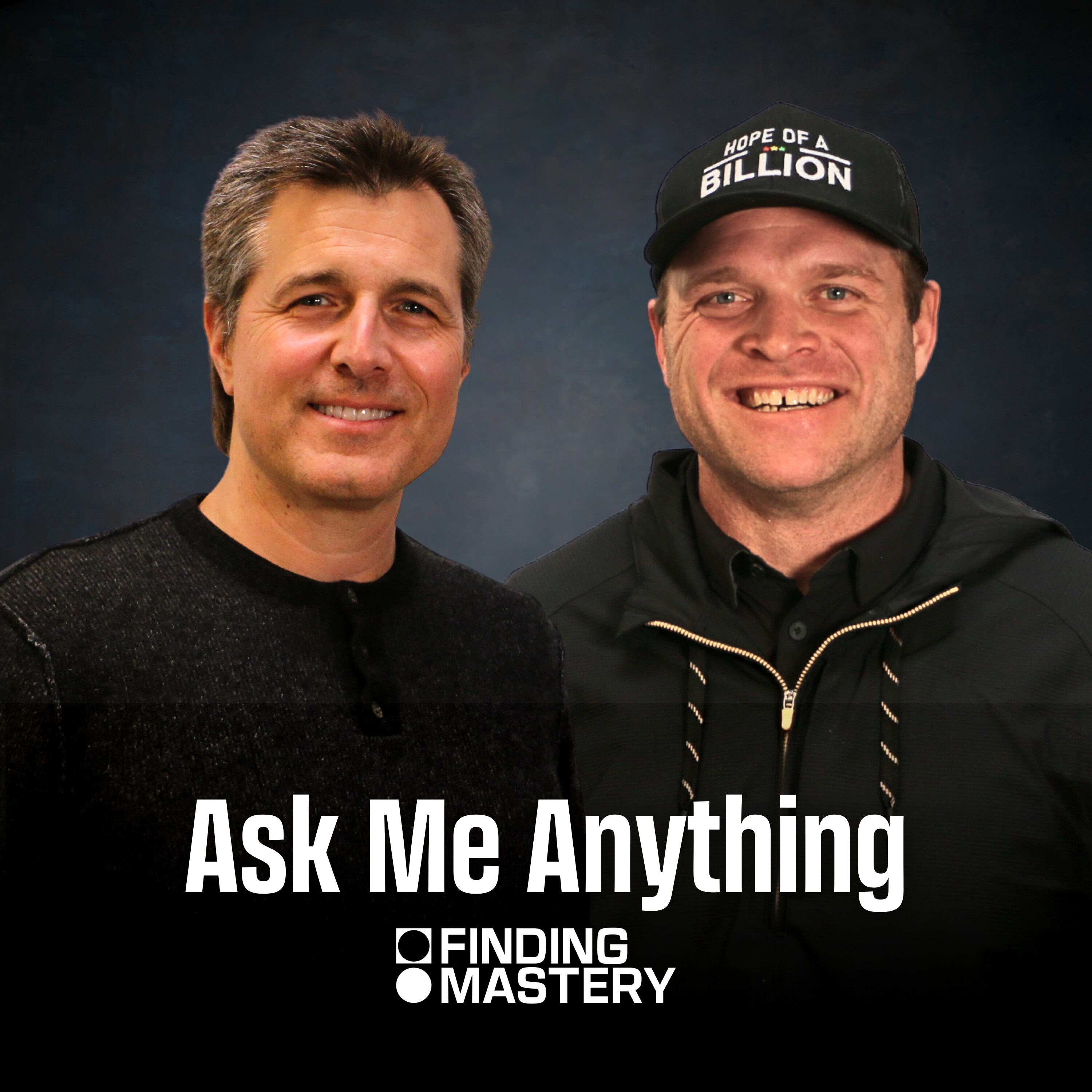
Finding Mastery with Dr. Michael Gervais
5 Questions to Unlock Your Inner Potential | Dr. Mike Gervais - AMA Vol.29
00:59:59
Loading summary
Transcript259 lines
- [00:00]
Jeff Byers
These questions are amazing. Not to have a spoiler. This first one, like, hits hard for me.
- [00:04]
Dr. Michael Gervais
Oh, boy. What questions are tugging at you right now? And how might exploring the answers to those questions help unlock your potential? Everything you need is already inside you. Welcome back or welcome to a special episode of the Finding Mastery podcast. I AM your host, Dr. Michael Gervais. A high performance psychologist named Michael Gervais, who Pete Carroll brought in to work
- [00:26]
Jeff Byers
with the Seahawks, famous for his work
- [00:28]
Dr. Michael Gervais
with Felix Baumgartner when he jumped out of space in the Stratos project.
- [00:32]
Jeff Byers
Olympic athletes depend on something more than
- [00:34]
Dr. Michael Gervais
just training and talent.
- [00:35]
Jeff Byers
They have to stay mentally tough.
- [00:38]
Dr. Michael Gervais
And this week, we're turning the microphone around again. And instead of diving into mastery through the minds of our remarkable guests, we are going straight to you for another Ask me Anything episode.
- [00:49]
Jeff Byers
What does community mean? Today, I'm having a hard time defining my purpose. With the focus on AI, are we taking our eyes off the ball on the importance of. Of human potential and mindfulness for the sake of machine learning?
- [01:02]
Dr. Michael Gervais
I love this question. You have once again submitted really deep and thoughtful and sometimes vulnerable questions about life and performance and relationships and how to navigate the complexities of our human experience. Now, in this episode, we have the help once again. A former NFL player, co founder and CEO of Momentous, and of course, the friend of Finding Mastery, Jeff Byers, all offer insights and perspectives designed to help us all think a little differently, to hopefully live a little better. What really matters to me above all else, and what are the first principles that are going to guide me as I go on this adventure? As you listen, I hope that you'll pay attention to the questions that resonate most strongly with you.
- [01:46]
Jeff Byers
All right, last question here.
- [01:48]
Dr. Michael Gervais
Wait before you go any further. That is so cool. The research on it is really clear. So with that, let's jump into your questions, our reflections, and an exploration of what matters most right here on Finding Mastery. Jeff, round two. This is like a real I said it last time. It's a treat to be able to, you know, sit with you and kind of wrestle down some really difficult, honest, real questions from our community. So thanks again for being here.
- [02:21]
Jeff Byers
I'm stoked. Again, like, these questions are amazing, and I see myself in pieces of them as a whole. Like, not to have a spoiler. This first one, like, hits hard for me, and I'm excited to have this conversation.
- [02:31]
Dr. Michael Gervais
Now, I know to put you back
- [02:32]
Jeff Byers
on the hotspot, which is here, but these are so fun, and I think this is just, like, a great reminder for me, of we all have this inside of our brain and we all have little pieces of this and that we're not alone. Right. In our feelings and what we have. And from the last conversation we had, one of the things that just kept sticking with me is like creating that process and that routine, but also how important community is and like knowing that you're not alone in these feelings of like just coming out and writing these questions, I think is a huge step for these people in like overcoming or growing.
- [03:01]
Dr. Michael Gervais
I love that take on it and I feel the same way that I feel more connected to the community by understanding what they're wrestling with.
- [03:10]
Jeff Byers
Yeah.
- [03:11]
Dr. Michael Gervais
And I see myself in the questions as well. So let's get in it.
- [03:14]
Jeff Byers
What's interesting is like the through line in, in a lot of these questions is like when your identities change and shift and you like have to make a change in your life or it's like what we became known for is not who we are going forward. And it like resonates with me. Right. From like professional athlete to not a professional athlete and a business leader and like having to reinvent yourself. So anyways, first question. It's a long one. Bear with me. It's from Emily. I'm a 28 year old competitive athlete from Canada and a mental performance consultant. I've reached a point in my sport career where I feel pulled to retire. I'm 99% sure that's what I'll do at the end of the season. I feel a lot of peace around my decision and excited to redirect a lot of that time and energy towards things. I align more with my values like building a family, investing in my community and growing my business. That being said, there are still a ton of tough emotions coming with the transition, including the sadness of leaving all of my friends in the sport and not seeing them every weekend, as well as the feeling of letting go and grieving some of the goals I set for myself a long time ago. Getting to compete in the Olympics as one of them. I know that investment, investment it would take for me to go to the Olympics would require me putting a lot of other dreams and experience on hold. And that's not a sacrifice I'm willing to make anymore. Even though logically I can rationalize that there's still this grief to go through in letting go of the sport I've played since I was 7. I've worked with athletes in the transition. However, I want to hear your thoughts on the best way to move through this transition. Thank you for your help in making such a wonderful podcast. Emily, I'm just gonna say, like, I've transitioned from sport and like, all of this, like, well said. But what I found now that I'm out of sport is that this transition you go through, you go through a couple times in your life, and it's not just in sport and everybody goes through it. It's very relatable to, like, changing your identity and those types of things. So I'm excited. Mike.
- [05:14]
Dr. Michael Gervais
The high line for the question is, like, I'm in a transition phase. There are some tough emotions that I'm working through. I love how she says, I'm letting go, I need to let go. But I think it's not really letting go of the SP sport. It is letting go of the dreams that you had through that vehicle. That's tricky. There is a transition with the relationships that you have with the people. Yep. And there's a transition with identity. So for me, those are the three main stools to this conversation. And if we address each one of those, some of the most dangerous words that an athlete says to me is when I say, like, who are you? You know, kind of a banal question, but obviously it's got some deep roots to it. And they say, well, I'm an athlete. I go, oh, boy. Okay, that's what got you good, is that you went all in. And when most people were hedging their bets, you chipped all in. And that is required to get really good. And to do it for a long time is to go all in. Unless you are a absolute freak of nature. Okay, this is a moment. Transitions are a moment to metamorphose, to, you know, kind of go through a growth arc. And it's an invitation. So the invitation is to examine identity in your life, because it was what's called an identity. Foreclosure is the simplicity of the idea. I am a something, I'm an athlete. You have foreclosed your identity on all the other variability that you could have in your life. Okay, again, that's what got you good. But that's kind of the moment to examine the invitation, if you will. There's a visual that comes to my mind, and it's not complete, if you will, but lobsters crawling on the bottom of the ocean, There's a moment in time where they need to take the vulnerable risk to shed that shell that they're in, that prod em all the safety, but they're maxing it out. Now. Shed that shell, walk across the ocean floor and venture into this new, bigger, uncomfortable shell. And if they do that, they have the potential to actually grow into something bigger. And the uncomfortableness of an old shell, the of the naked walk on the ocean floor, and then the uncomfortableness of inhabiting a new, bigger show is all kind of an image that comes to mind when I think about transitions. So first and foremost, it's an invitation to take a look at your identity. And when you sit with who am I? As the most ancient of all questions, who am I? And you sit with, I'm not suggesting you'll get an answer, but it's a process to sit with it, write about it, meditate on it, talk about it with people of wisdom. And then the second is like, what is my purpose? That's thinking much bigger than the small little transition stuff that you're going through. But what is the big aim in my life? And the third element is what is the vision? When I close my eyes and I use my imagination, what is a compelling future that I want to work toward? So those are three parts to identity that I think are really important. Who am I? What's my purpose? And when I use my imagination, what's the vision that I think is compelling? That's good work no matter where you are. But the transition bit, it's the invitation to do that internal work. You don't have to, like the lobster, shed the shell. You can move to the next phase of your life and still have the identity of an athlete. I think that that's hard. I think it's also hard to do the internal work. The downside of sticking with an old identity that you foreclosed on because it got you good, is that you miss a growth moment, a real transitional growth moment. It's also hard work to be vulnerable on the bottom of the ocean floor. I have not had to go through that transition. I'm fortunate that the craft that I've invested in psychology is kind of with me for the rest of my life. Now. I did go from a student to a professional to a professional to an entrepreneur to, like, there's micro transitions in place. So I do want to defer back to you.
- [09:08]
Jeff Byers
Yeah.
- [09:09]
Dr. Michael Gervais
How did you go from, I am an athlete, I'm assuming that you had that, maybe you didn't. Did you have that? Yeah. Yeah. How did you go through that phase? And then before you answer, just, there's two other bumpers, which is the grieving of the hopes and dreams, you know? And if losing is no longer a danger. Hold this idea for a minute. If losing is no Longer dangerous, I become really free. And in that vein, if losing, meaning letting go of the dream is no longer dangerous, I become really powerful. So I want to give you a bumper to push up against on the letting go piece. But first, let's start with identity.
- [09:49]
Jeff Byers
Well, first off, Emily, congratulations. Being 28 and still being an athlete,
- [09:54]
Dr. Michael Gervais
that's a cool way to see it.
- [09:55]
Jeff Byers
Is freaking awesome.
- [09:56]
Dr. Michael Gervais
That's a cool way to see it.
- [09:57]
Jeff Byers
And this took me time to realize this as well.
- [10:00]
Dr. Michael Gervais
When did you retire from sport?
- [10:01]
Jeff Byers
28, 29.
- [10:02]
Dr. Michael Gervais
Yeah.
- [10:02]
Jeff Byers
Right around this time.
- [10:03]
Dr. Michael Gervais
Are you congratulating yourself as well right now?
- [10:05]
Jeff Byers
Like, yeah, but, like, you got, like, Emily, you should have so much gratitude, because so many of us as young kids, right. We dream about being professionals. Dream. For me, it was like taking terrible jump shots in my driveway, saying, I'm Michael Jordan. Right. And I see to my boys right now.
- [10:23]
Dr. Michael Gervais
Were you grateful when you were in your transition phase that you did it for so long?
- [10:28]
Jeff Byers
I had a little different.
- [10:29]
Dr. Michael Gervais
You were forced out.
- [10:30]
Jeff Byers
I was. I had a transition moment early where I thought the game was taken away.
- [10:33]
Dr. Michael Gervais
That's right.
- [10:34]
Jeff Byers
Because of injury. And I. I had already grieved by the time you. I pre. Pre grieved, and it set me up differently than most. But you are one of the few human beings that got to play a game till you're 28, and it's special.
- [10:48]
Dr. Michael Gervais
And before you go any further, that is so cool. The lens that you're filtering this question through is really to myself. I'm like, damn, I missed that.
- [10:56]
Jeff Byers
Yeah.
- [10:57]
Dr. Michael Gervais
I'm really stoked to have listened to how you're framing it, even if we stopped right here, because I know you got a little bit more magic behind what you're going to say. Even if we stopped right here, I think you gave Emily the gift and our community the gift. Like, wait, hold on. Remember to frame through gratitude, because there's something. There's something really special about the moment that you get to keep going with the magic. But that's real. That's great.
- [11:19]
Jeff Byers
The other aspect of this is I still dream about playing. Like, maybe half of my dreams that I have, like, literal dreams. Literal dreams are of me still playing.
- [11:33]
Dr. Michael Gervais
Wait. When you wake up in the middle of night and your eyes come up or you. You're waking up in the morning, you're like, man, I was dreaming about tackling
- [11:39]
Jeff Byers
or I was dreaming about putting my hand in the ground. I was dreaming about sitting in Heritage Hall. I was dreaming about my, you know, running on the field. I still, like, I still Very actively dream about football, getting called back up and like the stresses of, like, I'm 40 now and I just got called by Pete to come play for the Raiders. What was he thinking? Right. Like it's crazy because it's so.
- [12:04]
Dr. Michael Gervais
Because you play for Pete Carroll, just to be clear.
- [12:06]
Jeff Byers
Yeah. It's so ingrained in my DNA of sport and I did it for such a long period of my time of who I am that I still dream about it.
- [12:15]
Dr. Michael Gervais
So have you worked through identity? Do you still say I'm an athlete or have you?
- [12:19]
Jeff Byers
I don't believe I'm an athlete. Right.
- [12:22]
Dr. Michael Gervais
Did you believe you were an athlete?
- [12:24]
Jeff Byers
Oh, yeah, yeah, yeah.
- [12:25]
Dr. Michael Gervais
Your identity, man.
- [12:26]
Jeff Byers
Like if you ask 19 year old Jeff, who are you? I'm a football player.
- [12:29]
Dr. Michael Gervais
That's right. So you foreclose your identity just like maybe Emily's doing maybe 100. Yeah.
- [12:34]
Jeff Byers
Right. And I think it's very natural. Yeah, right.
- [12:37]
Dr. Michael Gervais
Do you see the danger in it too?
- [12:38]
Jeff Byers
Oh, now, danger.
- [12:40]
Dr. Michael Gervais
Yeah.
- [12:40]
Jeff Byers
Right. And when it got taken away from me when I was 20. Right. You're like, who am I? What am I going to do? All I know how to do is work out and train, put my hand in the ground and do this. Right. And oh, my community, my people, I can relate to them. I can be myself. What I learned is football didn't define me. Football helped shape me. I define me. I get to choose that. And I had great people around me when I was younger to help realize there's more to life than sport.
- [13:15]
Dr. Michael Gervais
How did they do that?
- [13:16]
Jeff Byers
Telling you what you don't want to hear, but what you need to hear.
- [13:19]
Dr. Michael Gervais
Amen.
- [13:20]
Jeff Byers
Right.
- [13:20]
Dr. Michael Gervais
And for the parents listening right now, you can get ahead of this thing. Right. It is not a prerequisite that you foreclose on your identity for your kid to do well in sport.
- [13:31]
Jeff Byers
Yep.
- [13:31]
Dr. Michael Gervais
It's not a prerequisite. It is a natural thing that happens for the untrained family.
- [13:37]
Jeff Byers
Yes.
- [13:38]
Dr. Michael Gervais
We don't know better. You had no idea. Okay. Because what we want as parents is we see our kid good at something or they like how they feel when they're doing and then we know as an adult, like, oh, there's potentially a really exciting future that my kid could do something they're good at. That's an exciting path forward. You need to practice more. You need to be more into it. Why are you not? And so there's this press to foreclose the identity around the more narrow thing. You don't have to do that.
- [14:07]
Jeff Byers
Right. So we talk about identity now too. Right. I'm the co founder, CEO of Momentous.
- [14:11]
Dr. Michael Gervais
That's right. Is that your identity right now? No, I was gonna say. Oh, so you have.
- [14:15]
Jeff Byers
Yeah, because. Because I learned that lesson. Right. And there's going to be an end. And that's not like what Momentous is. And the special business that we're trying to create in culture, it's not who I am, that's a part of me. But there's going to be Jeff after that. Jeff lives beyond Emily. You live beyond sport, right? But what you learn in sport shapes you. Right? And what you have to find. What I found right after I retired, and I don't know if somebody said this or whatever, I went back and said, what did I love about sport? What Just like why do I dream about it? What makes it so special to me? And then you go find things in your life to replicate that you pull those things. Like I love this uncomfortableness we talked about in the last ama. Like I love feeling uncomfortable and like always having to earn it every single day. Love it. I love that like there's like this continuous pursuit of getting better. Nobody's good enough, right. As an athlete, like you never reach the pinnacle, you never settle. I love that and I love team. I love being responsive to people and like having that like sense of like, oh, can I trust this person? Can I trust that person? And like that's what I went and chased and that's why I became a founder, an entrepreneur is because that stress, that uncomfortableness, that change, that ever evolving was something that I loved about sport. It took inward reflection of that and I didn't find it right away.
- [15:41]
Dr. Michael Gervais
What you're talking about is a kind of a two step process which is you felt some pain, you did some self discovery work, you pulled forward, failed. How did you fail?
- [15:50]
Jeff Byers
I went into finance, realized it was not who I was, not what I wanted to be. I could make a ton of money. And I was like, it's not about money, it's not about an easy life, it's about what fuels the fire. Right. So I spent like two years post, Right.
- [16:04]
Dr. Michael Gervais
So you would suggest to Emily, you'd say in your self discovery process, independent of where you arrive, understand the core ingredients that have been important for you through the support process and figure out how to go build or replicate or be part of those core elements in the next phase. Bodymaster is brought to you by LinkedIn Jobs. If you've ever hired for a small business, you know the real cost isn't just the salary, it's the time that you lose when the fit is off, the momentum that stalls when that fit doesn't work. And that's the pressure of having to get it right while you're still running everything else. That's why I'm paying attention to LinkedIn Hiring Pro. It's built for the reality of hiring. When you're operating lean, you describe the role in playing language and then Hiring Pro helps you draft the job post, surface the right candidates, and then narrow to a short list without turning hiring into an another full time job. And when applications start coming in, it doesn't leave you buried in resumes, it streamlines screening, including AI powered interviews for initial conversations. How about that? So that you can spend less time searching and then more time connecting with the people who match what you need. With Hiring Pro, you can hire with confidence, knowing you're getting the best talent for your business. In fact, Those hiring with LinkedIn are 24% less likely to need to reopen a role within 12 months when compared to their leading competitor. Join the 2.7 million small businesses using LinkedIn to hire get started by posting your job for free@LinkedIn.com mastery again, that's LinkedIn.com mastery terms and conditions apply. Finding Mastery is brought to you by David Protein Nutrition is foundational to high performance and well being. And being consistent with whole food choices is really important. Sometimes that's tricky, especially when you're on the go. One small practice that helps me on those types of days is having a smart reliable nutrition option ready when I need it. And that's why I'm a big fan of David Protein Bars. The Gold Bar is their flagship product. High protein density, great texture and flavors that make it easy to stick with the team here at Finding Mastery, they love it. They're just ripping through them in the Finding Mastery lab. Chocolate chip cookie dough and peanut butter seem to be their favorite go tos. And for those who don't want to compromise performance just because you're on short time or in between meals, this is a solution that's worked incredibly well for me and the team here at Finding Mastery. They've built something with rigor and alignment that really stands out in a crowded, sometimes ambiguous space like nutrition. David bars are now available in major retailers like Walmart and Target and if you'd like to try them directly and get a special offer for being a Finding Mastery Listener, head to davidprotein.com findingmastery where right now if you buy four packs, you'll get the fifth for free. Again, that's davidprotein.com findingmastery I hope you'll check them out.
- [18:52]
Jeff Byers
And also, as you transition out, you're going to fail. Likely you're going to find things you don't want to do. And that is almost as important as finding what you want to do. Right. And just like for you, like, you went into this field of psychology, right? It is miles and miles wide, right? And you found out what you didn't want to do in this field, and you found out where your sweet spot is. Yeah, right. And like, you found out you didn't want to do those things by doing those things.
- [19:18]
Dr. Michael Gervais
You're right. And, you know, I had a mentor that early on that said something really cool to me. She said, the field of psychology is wide open. You can do anything you want in it. Like, what do you want to do? And she said, do you want to be kind of down the career transition? This is a pathway in psychology. Do you want to do transition? Do you want to do youth? Do you want to do? What do you want to do? I was like, I want to be around people that are kind of obsessed about getting better as I am. I was not healthy with that obsession. And she's like, oh, okay, that's probably like in the elite phase. And I go, I'm not interested in that. I'm more interested in being around people that I understand, because that's how I'm living. Which happen to be some of the most extraordinary doers, because they're all in on it. And I want to go back to one more piece for Emily. Is there a time. A time thing that you put on yourself? Like, how did you do the anxiety of. I don't know what I'm gonna do next?
- [20:12]
Jeff Byers
I probably have a different approach than most.
- [20:14]
Dr. Michael Gervais
What'd you do?
- [20:16]
Jeff Byers
I just did what I know how to do. Just go face first into working hard.
- [20:20]
Dr. Michael Gervais
Well, that's. As an O line. That is what you.
- [20:22]
Jeff Byers
What I do.
- [20:23]
Dr. Michael Gervais
Face first.
- [20:24]
Jeff Byers
Right. What I know is I've always been programmed. Athletes are very programmed. Meaning, like, you're always doing right, you're always going right. And I found that you say programmed, I think structured. Structured, yeah. Structure is a better word than that.
- [20:37]
Dr. Michael Gervais
Structure? Yeah, meaning you know how to show up on time, you know how to bring your intensity and your focus to
- [20:42]
Jeff Byers
do the things you always had something, but.
- [20:44]
Dr. Michael Gervais
And one of the other dangers of sport is for most stick and ball sport, you've got an adult telling you what to do, which. Okay, that's good as a. Maybe a subordinate in A corporate environment. Like, you know how to take leadership in that way. But that's not what. You didn't do that.
- [21:01]
Jeff Byers
No, I, like, I just went and, like, I need to be busy. Right. I need it.
- [21:05]
Dr. Michael Gervais
Like, I see the right.
- [21:07]
Jeff Byers
Like, there are these people like, oh, I'm going to take two years off. Right. And I think that is actually more. I believe it's more detrimental. Just go do. Right. Go get an internship. Go work for your friend. Go do something. And if it doesn't work, like, it doesn't work, you have to be okay with that. Because I think this space, right. Athletes aren't used to space. And then they spin and they're like, well, you know, like, I've talked to so many athletes. Well, I don't. Like, I want to do what you do, Jeff. I'm like, you do know I retired over a decade ago, and this path to get to where I am today, where I am today, looks super cool. This path was really hard. And I can't. Like, you can't jump to starting middle linebacker. Right. Pro Bowler to CEO of a company. Transition doesn't happen. Right. Like, it came over time. Right. Of like, grow and grow and like, I don't know. I find for me personally, putting myself in the mix helped. Sitting back didn't help. And I found what I loved. And that, like, while you're in the fray, in the washing machine, I found out, this is what I love. This way, I don't. This is what I love. This way, I don't. This is what I love. This is what I don't. I think if I would have taken a year and a half off, I would have been like, finance is a jam, and I would have just delayed my evolution of what matters to me.
- [22:24]
Dr. Michael Gervais
When I hear that, I also hear that that is you matched your process that people fits best for you.
- [22:30]
Jeff Byers
Yes.
- [22:30]
Dr. Michael Gervais
And time away could be best for somebody else, but they need to know. This is the value of self discovery. And the value of what I call psychology, I think about is like, the study of yourself.
- [22:41]
Jeff Byers
Yeah.
- [22:41]
Dr. Michael Gervais
You know, like, that's one version of it. Like, you got to know yourself. And then if you think like, oh, I need time, experiment with that, or I need to be active. Experiment with that.
- [22:50]
Jeff Byers
Yeah.
- [22:50]
Dr. Michael Gervais
It doesn't mean it's right or wrong. It's like an intuition or a thought. And then follow that and run mini experiments.
- [22:56]
Jeff Byers
Yeah.
- [22:56]
Dr. Michael Gervais
To figure that. Yeah. And so you ran an active experiment.
- [23:00]
Jeff Byers
An active experience. Because I'm like, you're exactly right. Like, I was the kid Like, I can't sit still, always busy. Like, I have a very hard time. Like, my gas pedal is typically on the floor and it's been on the floor since I was a really, really little kid. And I just like who I am.
- [23:13]
Dr. Michael Gervais
I love this. Do you, when you think about your identity now, do you feel like you've got clarity on that?
- [23:20]
Jeff Byers
I don't always. Right. I do feel at times I'm an imposter. Right. I'm like, why am I, do I have the right to be here? Have I done the things to earn this privilege? Right. And for me, I think that's part of what also makes you a great athlete is like this like inner drive to be better. Like, right. Like, it's not like self doubt. It's like, I gotta earn it today. I need to earn it today. I gotta earn it again and again and again. And so I think as an identity of like, I think about where I'm at and the seat that I'm in and the success that I had, it's like, did I earn it? I know, got to earn it today, right? It's like, it's like that I got to earn every day. Like, nothing's given, everything is earned. And it's like, man, can't believe I am where I'm in. And I've like, you know, like transitioned and have a really successful career in business. And did I earn it? Nope. Gotta earn it today, right?
- [24:08]
Dr. Michael Gervais
Welcome to the club. Yeah, you know, like, this is not unfamiliar.
- [24:12]
Jeff Byers
Yeah.
- [24:12]
Dr. Michael Gervais
You know, for me too. I'm better at that now because I, I've been able to with self discovery practice, like, what is this thinking about being a fraud? You know, what, what is that really about? But anyways, okay, so. All right. Nice one. Thank you. Yeah, yeah, yeah. That was great.
- [24:29]
Jeff Byers
We went on a good one there.
- [24:30]
Dr. Michael Gervais
Yeah.
- [24:30]
Jeff Byers
This one's anonymous. I'm a full time working mom of two and I've been married for 10 years. My relationship with my husband has turned into a roommate situation. I feel like I've put a lot of energy and work into my work, my marriage and my family. I'm not sure if I feel burnt out, but lately I have a feeling as I'm going through the motions, I feel like I'm lacking adventure or the spark of something. I'm grateful for what I have to do in my life, but feel as if something is missing or I'm just on autopilot. I've done therapy, have been regularly journaling and been meditating. What advice can you give to someone that sometimes just feels stuck. Have you felt stuck?
- [25:08]
Dr. Michael Gervais
Yeah.
- [25:08]
Jeff Byers
Yeah, me too.
- [25:10]
Dr. Michael Gervais
You know, for me it's not stuck. It's like I feel like I get in the fog.
- [25:14]
Jeff Byers
Yeah, that's a good way to say.
- [25:15]
Dr. Michael Gervais
And sometimes that fog is really thick and other times like I can see kind of the. My feet, you know, and I. And sometimes like I just know I need to use my sense as well to navigate. A couple things that stick out for me in this question is she's working it, she's doing self discovery work for therapy. The second thing, and so I'm pinning this from my mind. That's one element. The second element is that I don't know her age. But I would say that we need to take a look at, make sure that there's not a biological piece happening here as well. There's also thyroid as a general. Anytime there's a malaise, I think that it's really important. I can't give advice in this way, but I can point to a couple indicators on the therapy piece. The idea of having a comfortable place to go sit to do self discovery is. I don't think it's right. It doesn't work for me that way. That's not how I work. I want to create a safe space to support and challenge somebody to be their very best. And it's more intense and it's more brief rather than enduring and ongoing. Now listen, that's one flavor of how to do it. But I would take a look at that and make sure that the relationship you have with your therapist is not a place that's comfortable to complain that the therapist is actually not codependent in the way that they water and nurture the discussion of what's wrong. Now, I'm being a little inflammatory about psychotherapy, if you will, but I'm biased in the approach and how I work and what I've seen that fits my temperament and also fits the people that are ambitious in their life is it. Know them, understand their scars and tissues, their hopes and dreams and really help them. And you as well, hold a standard for them to be their very best. And it is support and challenge. It is unconditional, positive, regardless with a standard to do the work, to become the person you want to be. And then we kind of rotate that with as much moments of being fully you as you possibly can. It's a mouthful, but this is me pointing to is the therapy doing you justice right now? Okay. And the second piece is I would run a program to make sure that your Biological pieces are making sense, and there's not some sort of deficit. For example, my wife and I, we run two blood tests a year. Call it a high performance blood draw. I'm sure you do the same or some variation of it. And what that does is it helps me know the choices that I'm making nutritionally and behaviorally and psychologically. Are they supporting from a blood draw standpoint? Is it working?
- [27:40]
Jeff Byers
Yeah.
- [27:40]
Dr. Michael Gervais
And so there's been phases where my omega threes are. There's a deficit, which means that my myelin sheath in my brain, nervous system is compromised. That means that I'm not thinking the way I could. And, and, and, and. Okay, heart health for omegas. And, and, and so I think that there's something important to take a look at there and then there also. The third variable is like, feeling stuck to me is a cousin to hopelessness, is a cousin to, like, not feeling as though that the person has the agency to make the change that they want. So either they don't see it, like, the change that they want, the compelling future, you know, that they're working towards, or they can see it and they feel like they can't affect the change to make that happen. I don't think you relate to that. I think you are so high in agency, actually, you're high in what's called efficacy. Agency is like, no, I'm going to choose. I choose.
- [28:35]
Jeff Byers
Yep.
- [28:35]
Dr. Michael Gervais
And efficacy is a kind of psychological term for sense of power. I feel powerful. So it's I choose, and I think I can make something pretty special happen. So that efficacy rests on agency. Agency is no. I choose how I'm going to do this thing. And efficacy is when I choose and I apply myself to it. Good things happen.
- [28:57]
Jeff Byers
Yeah.
- [28:58]
Dr. Michael Gervais
So how do you build efficacy? Well, according to Dr. Ben Dora, one of my mentors, I got to meet him before he passed, and he was on the podcast Amazing Human. He's got a handful of ways that you increase efficacy. I'll put it in the show notes, unless you want to hear what those things are, but just really quickly. Mental imagery, vicarious experience, arousal regulation, and kind of being in the amphitheater of risk. Those are the handful of ways to increase efficacy. Yep.
- [29:25]
Jeff Byers
I resonate with what you said. Right. Like, I don't know if I ever been, like, I'm stuck. Right. But I know people like this.
- [29:32]
Dr. Michael Gervais
Yeah. But you resonate with the fog piece. Like, it's not clear. Yeah, I'm a little unsettled. There's some anxiousness in. Yeah, I gotta rely on some of my sensory information, my intu. Intuition.
- [29:42]
Jeff Byers
Right.
- [29:42]
Dr. Michael Gervais
Because I can't see it.
- [29:43]
Jeff Byers
But I can't see it. But for me, right. I do some of the things that you just mentioned, like, I just go, yeah, right.
- [29:49]
Dr. Michael Gervais
Yeah, you go.
- [29:49]
Jeff Byers
But when I see this and the people I know on this, I think we have such an overload of social media. This is what we're supposed to be or supposed to look like, right. Overall, that we as a society can sometimes paint a picture of who we should be versus who we want to be.
- [30:07]
Dr. Michael Gervais
Wait, I would of course correct that. I like what you just said, but I would tune that one more. Who we should be versus who we are.
- [30:13]
Jeff Byers
Who we are.
- [30:14]
Dr. Michael Gervais
Because everything you need. This is a first principle for me. Everything you need is already inside you.
- [30:20]
Jeff Byers
Yeah.
- [30:21]
Dr. Michael Gervais
You are already it. It's always available to you. Just like the sky is always available. It's always there. Who you are is intimately on demand. Always available.
- [30:34]
Jeff Byers
Yeah.
- [30:34]
Dr. Michael Gervais
We get clouded.
- [30:35]
Jeff Byers
Yep.
- [30:36]
Dr. Michael Gervais
And sometimes so, like, you know, the other thing is, like, if I was to ask Anonymous, if Anonymous was with us right now, so I'd say, what do I need to understand about your life experiences to understand why you feel stuck? Like, if I lived. This is my. Another first principle. If I lived the life. Unique life experiences that you had, I'd probably feel stuck too. So let me just understand what those things are. And that in of itself, with that type of information is really illuminative. And so maybe that's something Anonymous you can wrestle with a little bit. Like, what are the things that have led to you feeling stuck? And then maybe invest in the psychological skills training of the four factors of self efficacy.
- [31:18]
Jeff Byers
Yeah.
- [31:18]
Dr. Michael Gervais
Yeah.
- [31:19]
Jeff Byers
One of the things that can really help in this is just like not just talking to a therapist, talking to your partner. Right. Talking to your friends. Right. Like, hey, I'm feeling like we're in a rut. Right. Like, I think that gets you out. Like, I'm kind of clouded. We're not connecting.
- [31:35]
Dr. Michael Gervais
You know, what happens when people feel stuck is they'll blame others. So I agree 1000%. However, two things to caution. Yeah, right. Is when you are talking to your others, you're reaching out. Be aware that there's a difference between looking to be understood and there's a difference between looking for solutions. Okay. And neither of them involve blaming or complaining.
- [31:59]
Jeff Byers
Yep.
- [32:00]
Dr. Michael Gervais
And so oftentimes when I feel helpless, powerless, like if I feel in that stuck state, which this is not a very common place, but there are triggers for me, I'm sure There are triggers for you too, is that I'm like, this is not me. I'm. It must be you. I'm at my worst when I do that.
- [32:17]
Jeff Byers
Yes.
- [32:17]
Dr. Michael Gervais
And my wife, right away, like, if we're kind of in a, in a throes of something, she's like, whoa, you know what? You know, like, because we're both got that lying kind of thing about us. And so. And instantly I'm like, oh, yeah, look, I need to own my stuff. It is not anything you just said or did. And so that's this fast. You know what a OODA loop is, right? Observe, orientate, decide, act. As many OODA loops as we can do together, we're kind of, I think, a more dynamic, healthier relationship.
- [32:44]
Jeff Byers
100% yeah.
- [32:46]
Dr. Michael Gervais
Body mastery is brought to you by Rag and Bone. I've been a big fan of Rag and Bone for a number of years. I just love what they do. It's a go to for me when I'm choosing clothes. I've been wearing their infused denim for a while now. They've done just a really nice job with this product for me. I am really intentional about what I invest in in clothing. It's no different. I want things that are well made, that stand the test of time, that don't distract me, that support my focus on the things that matter most. And that's exactly why these delivery and they look sharp, full stop. They've spent 20 years obsessed with getting this product right. And that kind of long term commitment to craft, that's something we talk a lot about here at Finding Mastery. Quality compounds the right inputs made consistently over time show up in everything. And you can feel that the moment you put these on. If you're ready to upgrade your denim with something that's genuinely built to last, head to rag-bone.com and use the code finding mastery for 20% off your entire order. Again, that's raggedy. Dashbone.com R A G-B O N E.com and use the code finding Mastery for 20% off. So anyways, cool stuff.
- [33:48]
Jeff Byers
All right, let's move to Ryan. I'm having a hard time defining my purpose. I'm not completely directionless as I have a career and family hobbies that I love. But when asked to define what it is that drives me, what it is that I can use to help guide me, I don't have a concrete answer. Any tips for how to help identify and define a purpose?
- [34:09]
Dr. Michael Gervais
Yeah, it's cool. I love this question. I think that this is one of the Big rocks to get in a container to be a thriving human. And so, and the research on it is really clear, you know, whether you look at the Harvard study, the 85 year old longitudinal Harvard study that said basically kind of to live a good life, there's two main variables, purpose and connection, a la relationships. So it's less clear when I read that. And kind of some of the other work around being and becoming, your very best purpose keeps coming up, but there's no clear, I don't know, steps like, it's okay. The science is that it has three components, it matters to you, it's bigger than you and it's out in front of you. Great. What do I do? How do I do that? This is going to sound cheeky for just a moment, but we built a course called Purpose Mindset and it rests on three main variables that have a whole set of practices. Okay, so what is your philosophy that's different than purpose? Okay, your philosophy, it's a clean way to identify your first principles. Every day is an opportunity to co create a living masterpiece. And so my philosophy, if you break that apart every day, meaning today and tomorrow and yesterday, every day is an opportunity. So see how I'm framing like life and challenges. It's an opportunity what to co create together with other people, right? A living masterpiece. And a living masterpiece is something that is organic. It's right at the edge of, you know, it's this beautiful thing that we're putting together. So every day is an opportunity to co create a living masterpiece. That's my philosophy. Now that rests on a handful of values and first principles. And we explain this in the course how to do that. And then we also need to know what your vision is, what is the compelling future. We also help you support making a fundamental commitment and then we walk you through how to take all of that information and put it into a purpose. Like what is your purpose? You can take the course. I think it's a good bit of work, but also you need a pen and paper and you just go to work. And on those three variables you say, what really matters to me above all else? What is so compelling about my future that I'm willing to work toward it? And what are the first principles that are going to guide me as I go on this adventure? And you get kind of that stuff in, whatever. And then you say, in the most convenient way possible, my purpose is, and I can answer that for you as well, it's to help people live in the present moment more often. Why? Because the present Moment was where everything that's true, beautiful, and good are experienced. And so that is the keyhole for me to be able to help people create a life of flourishing. So simple kind of process that sits underneath what I just said. But it takes time.
- [36:51]
Jeff Byers
Yeah. What I found personally is it refines over time. It gets tighter over time, and sometimes it changes. Right. And I think about mine. It's like box. It just, like, keeps going. It's like, oh, yours is really tight. Right. And.
- [37:07]
Dr. Michael Gervais
But I've been working this thing for a little while. Exactly.
- [37:09]
Jeff Byers
But that's like, that's my advice to Ryan is.
- [37:12]
Dr. Michael Gervais
Is start somewhere.
- [37:13]
Jeff Byers
It's like, it can be like, just you thinking about purpose is really important.
- [37:18]
Dr. Michael Gervais
I love how you honoring wherever somebody is in the path, because we all start some.
- [37:22]
Jeff Byers
I don't know, like, for me, like, I'm on different places in my journey, everywhere, and one of the things that pisses me off the most is when somebody talks to me, right. And it's like, oh, no, just be here. And I'm like, I'm not. Like, I don't even know where there is. Right.
- [37:36]
Dr. Michael Gervais
You know, what I want to also do is, like, I want to reinforce what you're saying is like, we're all trying to just figure it out, and then we're at different stages. And again, if I lived your life or I understood the most important shaping mechanisms, I'd understand where you are, too. And a big part of doing life well is having people that understand each other. And we're good teammates, good partners, good friends. And I also think that the science also backs this or the research around it backs this. Is that for purpose? It doesn't need to be grand and big. It doesn't mean that I need to do water wells in this country or I need to save children in this part of the world. And, you know, it doesn't need to be huge. It can be intimate and kind of more narrow in that respect. It just needs to be honest. Again, purpose it rests on. Does it matter to you? Is it bigger than you? And is it something to work toward? Is it out in front of you? And, you know, I also want to say to Ryan, send me your email and I'll send you the course. Right. And so no cost. Yeah, no cost. No. I just want to honor that there is a solution. And. But for people that can't afford it and people that don't want to pay for a course like this, get a paper and pencil out and answer some of the questions that we've just Spoken about.
- [38:45]
Jeff Byers
And again, like, it's an evolution. It's a process.
- [38:47]
Dr. Michael Gervais
That's right.
- [38:48]
Jeff Byers
Right. And if you knew it right away, it wouldn't be. I mean, some people, like, I'm sure my sister has had something written down since she's 12 years old. Right. That's who she is as a person. Yeah. But for me, the journey to get there is as. Or more important than it is to actually have that.
- [39:09]
Dr. Michael Gervais
So much so that, like, let's give both of us space that you and I don't know what's going to happen in the next kind of 10 minutes or the next day. And something so radical in our life could take place that it would fundamentally shift our purpose.
- [39:21]
Jeff Byers
Yes.
- [39:22]
Dr. Michael Gervais
And this could be a trauma or it could be something that is benevolent. Keep it open.
- [39:27]
Jeff Byers
Yeah, a lot can happen.
- [39:29]
Dr. Michael Gervais
Yeah, a lot. A lot can happen. Keep it open. Yeah.
- [39:31]
Jeff Byers
Yeah. Next one is Laurel. As a longtime active duty military spouse, still my three professional and personal drivers are people, place and purpose. We've lived around the globe, moved 23 times. Dang and Gardnered perspective. Most could only imagine. My lifelong question is, what does community mean today? Finding community, joining a community, sports, military, professional. It has to go beyond the digital realm. And would that fix most things for all of us? What does community mean today?
- [40:06]
Dr. Michael Gervais
No, I don't think it fix. It's a necessary component, but not the only. Yeah, you know, there's more to life. But when I hear community, the question is, what does community mean today? I think that's a philosophical question more than anything.
- [40:19]
Jeff Byers
Yeah.
- [40:20]
Dr. Michael Gervais
But for me to make it it more first principle based. Community is the artifact, if you will, of the relationships. So the way that we relate to each other and the way that we are relating to a shared way of living is really what community is. And so I make it more simple. Say, what is your relationship with yourself? What is your relationship with your people? And do you have a bunch of people that are kind of interested in the same thing? That's a community. What I'm in control of is the way that I am relating to myself so that I can be a great teammate, a great partner, a great friend to other people. And if we're interested in the same things now, call that a community.
- [40:56]
Jeff Byers
Yeah.
- [40:57]
Dr. Michael Gervais
You know, so it could be digital.
- [40:58]
Jeff Byers
Yeah. I don't think a community means being interested in the same things.
- [41:02]
Dr. Michael Gervais
What do you think it means?
- [41:03]
Jeff Byers
When I think about the lack of community some people may have and I think we have in society, it's a dehumanization of our fellow man or woman. Right.
- [41:11]
Dr. Michael Gervais
Say that again. Like, that's a big idea. When you think of community, you think of.
- [41:15]
Jeff Byers
I think of people that you have a responsibility to, and you are more like this different then. And when I think about, like, communities and whether you're religious or not, one of the greatest things about church is it created community. Right. And what it finds is like, we're all more alike than we are different. Democrat, Republican, you're way more alike than that person that has very opposing views. Right. You care about more of the same things. When you dig deep down into it, then you don't. And I think the dehumanization of people. Right. The demonization of, like, oh, you're not like me. You think differently than me, whatever it may be, is a very dangerous, slippery slope that breaks community. Because when you think back of, like, community is the support system that we have this accountability that we have to people around us. Right. This inherent sense of belonging. Right. It's not about you and me liking each other or you and me having similar hobbies. I don't believe, like, that's friendship. Cool.
- [42:15]
Dr. Michael Gervais
I like what you're doing.
- [42:16]
Jeff Byers
Community is, oh, there's an elderly person that needs help. We help them. Right. Community is this person. Right. It's going through a hard time. Yeah. I'll pick your kids up from sports. Right. And we could vote differently. We could fundamentally disagree. But, like, I go through hard times, too. Like, some people need help. Right. And it's like this sense of building, and the people that have give and the people that don't have. Right. Will have at some point. Right. And they give on there. So I think we are dehumanizing each other in society versus we're all more alike than we are different. We all have struggles. We all like. And if we just sit down and have conversations, we all get better.
- [43:00]
Dr. Michael Gervais
I like this responsibility giving piece. Belonging as elements to how you're defining community. And so some of the most ancient of practices, you've just described them. I do think the community. For me, there's a reason to be part of the community that I think on the surface it sounds like, oh, we all like, I don't know, basket weaving.
- [43:20]
Jeff Byers
Yeah.
- [43:20]
Dr. Michael Gervais
Yes.
- [43:21]
Jeff Byers
And there's a reason why it. It exists. Yeah.
- [43:24]
Dr. Michael Gervais
Whether it's like Judaism or Christianity or Islam or whatever. And you. And then you go kind of up four levels and talk about global community. But all that being said is Laurel moved 23 times.
- [43:35]
Jeff Byers
Yeah.
- [43:36]
Dr. Michael Gervais
I don't want to miss that because that means she's really good at Knowing how to fit in and be part of something and. Or like what she likes, what she doesn't like. There's a unique thing about moving 23 times that of course, she's calling for community. And I hear maybe, Laurel, you didn't have a felt community, or maybe you got to be parts of lots of communities. I don't know that part of it, but there's an embedded question about the in person piece. And I don't want personally just the digital community. I like it. There's parts of it I really do like. I know that there's another aspect of the in person neurochemistry, the eye contact, the. All of that stuff that is. I need it. So I don't know where. Laurel, you're going with that piece. Do you have a thought on this, Jeff?
- [44:24]
Jeff Byers
I think it was a very philosophical question. And like, even, Laurel, you say it must go beyond the digital realm. And what I just heard you say is you 100% agree. I do too. We are social beings. It's how we evolved, like it or not. Right. Touch, feel, breath, those things matter. Right. And when there's a screen that divides you, digital should enhance community. I believe it should never be community.
- [44:54]
Dr. Michael Gervais
Well, let me point counterpoint. I agree just for, for clarity. But there are folks that are so overwhelmed by in person experiences that they struggle to be part of a community because of the overwhelming nature of being in person.
- [45:07]
Jeff Byers
Yep.
- [45:07]
Dr. Michael Gervais
You know, for lots of reasons.
- [45:08]
Jeff Byers
Yeah.
- [45:09]
Dr. Michael Gervais
You know, high cortical arousal or trauma or, you know, whatever. So there is like this great benefit
- [45:15]
Jeff Byers
to a hundred percent.
- [45:16]
Dr. Michael Gervais
Yeah. So I think for the most part though, the slide towards digital as opposed to the slide towards in person, is not the right slide.
- [45:24]
Jeff Byers
There's always the exception and where things really work for some people. Right. And if you're one of those people, it's amazing. Right. Because you probably used to be very lonely. Right. And like, that's so powerful. But everything is a balance in life.
- [45:41]
Dr. Michael Gervais
You know, one last piece is you're really good at community, your business, you guys work out together. So you and your employees work out together. Like community matters to you. So I really, I really appreciate how you've kind of rounded out this piece of it. Thanks. Yeah.
- [45:55]
Jeff Byers
On this, Vince has a good one as a next one. That's. Talk about digital with the focus on AI. Are we taking our eyes off the ball on the importance of human potential and mindfulness for the sake of machine learning? I don't know somebody who's embraced AI. Right. But also believes deeply in the human being.
- [46:17]
Dr. Michael Gervais
Some of the work I've done with, of let's call it, one of the largest tech firms in the world is be an agitator for you have a responsibility to use AI for human good. And so this is not a new thought, but there's such an overwhelming sense that if you're not figuring out how to use AI that you're falling behind, you know, like, I don't know, incredible fear.
- [46:38]
Jeff Byers
Yeah, I see it from my team,
- [46:40]
Dr. Michael Gervais
from a business operator, you know. Yeah. Now is like a really important time to be tuned to what AI can do. It's coming, it's here, it's still more to come. And this is the way we're thinking about it right now is how do we democratize or socialize what we know to be the best practices for people to become, you know, so that's an important thing that here at Finding Mastery we're paying attention to how do we use AI benevolently for good and also internally, how do we use AI to be good thought partners for us? And the concern that we have is most of the AI models right now are designed to affirmatively. Please.
- [47:14]
Jeff Byers
Yeah.
- [47:15]
Dr. Michael Gervais
And you know, you really need to make sure that it is scrubbing the ideas honestly as opposed to like just favorably coming up with a convenient answer. So I don't know. I think that if we are not paying attention to best practices, to be our very best, that we're missing the foundational step in the process.
- [47:31]
Jeff Byers
Yeah.
- [47:32]
Dr. Michael Gervais
To be part of something bigger is a foundational first principle step. So I'm not overly concerned about like is AI, are we taking the ball off of AI for human potential? Rather, how are we using this new to enhance the potential?
- [47:46]
Jeff Byers
Yeah. How I see AI, you can put a giant list of all the things that are wrong with it from environmental to jobs. AI's here. Right. And it's a tool no different than, you know, the iPhone, no different than the PC, no different than an automobile, a weapon system, railroads. They can be used for good and they also will be used for. Right, Like AI will be used for bad things for sure. Because there are people out there that are not good or not good intentioned, etc.
- [48:19]
Dr. Michael Gervais
Reminder that the majority of people, when given the opportunity, act in good faith. 100. Yeah. So that research just for folks that are like overwhelmed by what bad actors, the majority of people will do the quote unquote right thing to fit in with society and social norms. But the outsized impact of a bad actor with this type of tool is actually really, really Dangerous.
- [48:40]
Jeff Byers
I think about, is it taking our eyes off the ball? The importance of human potential and mindfulness. I am hopeful. Right. When I reread this question. I think AI has the potential to allow us to maximize our potential more than ever before, but also maximize our mindfulness right on there because it allows us to do things so much faster that maybe it gives us more time to have a meditative practice.
- [49:09]
Dr. Michael Gervais
Cool.
- [49:10]
Jeff Byers
Maybe it has gives us more time to build community. Right. Like, that's how I want to look at it.
- [49:16]
Dr. Michael Gervais
I like it. It's not more free time. It's time to invest in other ways
- [49:20]
Jeff Byers
we can't make more time. Right. But it's like, I think about the things that I do in my life and I'm like, man, but like, go back 30 years ago, right. And the things that people did just to live. We're very different than we have now. AI can be a huge privilege and a multiplier for us as humans. Right. My bigger concern is how do we think about jobs, employment? Because that is a real implication of, like, are we just going to wipe out everybody's job that lives in accounting right now? You know?
- [49:50]
Dr. Michael Gervais
No, I don't think it's going to happen.
- [49:51]
Jeff Byers
Yeah, I don't either.
- [49:52]
Dr. Michael Gervais
I don't see it. It's like, but the people need to know how to use this tool. That's not a replacement yet. You know, like. Yeah, you know, but one thing I just want. You use word privilege. And I just want to be super thoughtful about that because it is a tool. There's a cost to this tool. There's a divide of people that can afford it, that cannot, and, you know, let's call it, I don't know, 30 years ago when we started to be a lot smarter about nutrition, there was health food. And junk food still is now. And there's a divide. There's like a socioeconomic strata divide between. The wealthy could afford health food. They got to choose junk food, let's say.
- [50:30]
Jeff Byers
Yeah.
- [50:31]
Dr. Michael Gervais
And so junk food, health food. Okay. Obviously we want health. Okay. But if you can't afford it or it's not available or it's hard to get to, it's problematic for the kind of health of that family. Now, it's not junk food. Yes. There's an extension, though. Junk light and healthy light. Junk light is all the blue stuff. It's all the screen stuff. It's the indoor stuff. And I think there's going to be a divide that is going to be more noticeable that the rich, the wealthy are going to have more healthy light, more sunlight, they're going to be outside more. There's something about health light and junk light that I'm tuning to. And there's also the other divide and I don't have a neat four by four if you will. But there's another divide, which is access to this technology. Finding Mastery is brought to you by our flagship mindset training course, Finding your best. Anytime you feel the pull to reset, to zoom out, to refocus and ask, am I moving toward the person I want to become? It helps to remember this lasting change comes from training. Not resolutions, not short term sprints, but deliberate practice of the skills that shape how we show up, work in relationships and in the moments of great intensity as well. That's what finding your best best is all about. It's a science backed framework for training your mind. And it's the same set of tools that we've taught to Olympic athletes, top executives, elite military teams and artists at the peak of their craft. In this course, you'll learn the foundational psychological skills to be your very best, full stop. And the best part is you can start anytime. To get started, head to findingmastery.com course and use the code MASTERY. To get $50 off your registration again, go to findingmastery.com Course and use the Code Mastery. Because your future isn't shaped by what you intend, it is shaped by what you train. Finding Mastery is brought to you by AG1. Spring is it's just a natural time to reset. You know, the days are getting longer, at least for the northern hemisphere, and there's just an energy in the air that shifts. There's a kind of pull to simplify for me, to recalibrate what's working, what isn't. And one area I come back to regularly is my daily routine. It's not about overhauling it, but it is about scrubbing the material of it to really making sense of why I'm doing what I'm doing. So I look at it all and I reexamine it. AG1. It's been one of those foundations for me for over a decade now. I'm still using it. I like what they're doing. What I appreciate most is how much it simplifies the equation. One scoop covers a lot of ground. They've got some multivitamins in there. And more than anything it's the pre and probiotics that I appreciate that they've done. It's all in one glass of water. So if you're taking a bunch of supplements, you don't have that pill fatigue that so many people talk about. I'm traveling a lot right now for our corporate clients, and that means shifting time zones and schedules. That's when consistency really helps. The AG1 travel packs, they've been a game changer for me. I throw a few in my bag and I don't have to think twice about it. I'm giving my body what it needs to keep showing up for work for the people I care about. For the long game, really. Visit drink ag1.com finding mastery to get an AG1 flavor sampler and a bottle of vitamin D3 plus K2 free in your welcome kit with your first AG1 subscription. That's a 72 value for free. Again, that's drinkag1.com finding mastery
- [53:54]
Jeff Byers
all right, last question here, Lindsay. This is a good one. This is a really good one and I'm interested to hear your answers. Who and what are your idols and inspirations and influences growing up? And how have those changed as an adult?
- [54:09]
Dr. Michael Gervais
I didn't have idols, I didn't have heroes. I don't know uniquely exactly how that came to be, but I remember very clearly. It was a fourth grade experience. I was playing soccer. It was a end of year banquet and it was all of the soccer kids in the area came and Mark Mosley, I think was the name of the kicker for the Washington Redskins. It was a long time ago, okay? This was like early 80s and there was a big lineup afterwards to get his autograph. And my dad's like, hey, let's get in line. And I said, I have no interest. He goes, Mike, like, this is one of the, you know, and my dad loved the Redskins now called Washington Commanders. And I had zero interest. And I remember standing in line, I was like, what does he care so much about this other man? Like, yeah, good. He's good at what he does. And I remember a young age, like in an off access, counterculture, nearly defiant way, like, that's not me. I'm not interested in that way. And I wasn't saying my dad was love slobbing in any way over this, but he thought it was cool for his kid to, you know, maybe get a gem of wisdom from somebody that's really skilled. And so I will tell you, growing up my parents, I grew up in a Christian family where we were Catholic. And so I came to understand Jesus in a really cool way. And I was kind of spoon fed it growing up. And then I went to a Jesuit university. And so Jesuits are a particular. It was Loyola Marymount for undergrad. And they are intense. They are the academicians of the, you know, the Catholic faith. And point blank they said to me, to the class, they're like, so what's this thing about eating fish on Fridays during Lent? What is that about? And so the studious would say, oh, it's this or it's, you know, it's because of that tradition. He goes, wait, hold on. Who do you think owned the wharf? Do you think had anything to do with the bishop's uncle? What do you think? Who made that rule that on Friday you eat fish? Who benefited from that? So I started going, oh well, hold on. There's a whole human structure to quote, unquote, religion.
- [56:09]
Jeff Byers
They really talked about that. Oh dude, that is fascinating.
- [56:13]
Dr. Michael Gervais
Straight up. Every practice principle they really made me examine, like, why does the church establish this? Where does it come from? Is it right? I don't know, like they're radicals. The Jesuits are radicals. They're very smart, very academic, very rebellious and they've got a, they've got a checkered history themselves. So this is a long way for me to get to. I think the most significant human that has walked our planet is Jesus. There's 100,000 books written in just the US language about his biography. That's a lot. Yeah, okay. X number of billion people say, yeah, you got some stuff, right? And I like learning about what you did. So I think that that is a muse that is worth investigating and understanding. Even if you don't say I believe, but you say, I'm curious about what did this person represent and how did they design their life. To me, I am inspired by the people that have created real change. Buddha did some cool stuff, Confucius did some real stuff. You know, like I'm inspired by those folks and those are the ones I'm way more interested in understanding and thinking about how they designed their life, how they thought, how they chose their words and how they behaved and the communities that they shaped. Thoughts, words and actions. Community, Are those the four variables? And so I'm still into those great kind of movers of culture. And how's it changed? It hasn't really changed. I just see it a little bit differently than I once did as a spoon fed person. Now as somebody that has really scrubbed the thinking around the fallibility and the flaws in all of the systems. But I'm not caught by that. I'm inspired by it. So I hope that's not too heady or too serious. And you know, I'm on my journey with it. As well. Now, I think you probably had a different response than I think you probably had heroes and idols.
- [57:59]
Jeff Byers
Yeah.
- [57:59]
Dr. Michael Gervais
But like, yeah, give it to me.
- [58:01]
Jeff Byers
That was an awesome response. I never thought about, right. Jesus that way, right. Of being like a hero or an idol or whatever, you know, of like. And listening to you talk, right. Like, I grew up in the Catholic church as well. I didn't expect it to go that way. And I love it when I don't expect things. Right. And it drives my curiosity in here of like, man, thinking about how that and my faith have shaped me. To think about community, which we talked about, to think about impact in the world. Right. And to think about whether you believe or not the books about Jesus is he was the greatest leader of all time, probably.
- [58:39]
Dr. Michael Gervais
I mean, think about what the community
- [58:42]
Jeff Byers
and what he led and how. Right. Like how it's written about him of like, he gave. He always did, right. He put others in front of him. Right. Like that type of leadership.
- [58:51]
Dr. Michael Gervais
You know, one note on him, he was a radical.
- [58:54]
Jeff Byers
Yeah.
- [58:55]
Dr. Michael Gervais
He got killed because of his radical ideas. Pushing against power. He is off access, counterculture. And that to me, I'm like, damn, be about it. And then his 12, the disciples, if you will, they were part protectors and they were rebels.
- [59:08]
Jeff Byers
Yeah.
- [59:08]
Dr. Michael Gervais
They were like, they were the oddballs, they were the misfits. And I'm like, man, his ideas were so honest and pure and connected that there was a real community, a real thing. I'm like, that's.
- [59:20]
Jeff Byers
It's crazy.
- [59:20]
Dr. Michael Gervais
Yeah.
- [59:21]
Jeff Byers
I mean, just when you think about from a leader perspective, the influence that one man had.
- [59:26]
Dr. Michael Gervais
Well, how about Siddhartha? Siddhartha had it all. Buddha had it all. Okay. And he was living in the temple with a high. Like, he never saw dirt or not dirt, but the, the trash in the streets. And then one day, you know, he's like, wait, what is all of this kind of pain that I'm. And then he radically goes on a self discovery journey, adventure.
- [59:45]
Jeff Byers
Come on.
- [59:45]
Dr. Michael Gervais
That off access, counterculture, revolutionary. Be about something. And if you're not sure what it is, go invest in it.
- [59:52]
Jeff Byers
Yeah.
- [59:53]
Dr. Michael Gervais
That honest commitment. The fundamental commitment.
- [59:55]
Jeff Byers
Yeah.
- [59:56]
Dr. Michael Gervais
When people ask me, like, what's the secret? There's no secrets. But what's the secret for high performance? It's a fundamental commitment.
- [60:01]
Jeff Byers
Yeah.
- [60:01]
Dr. Michael Gervais
Yeah, It's a fundamental commitment.
- [60:03]
Jeff Byers
All right, sorry. We went down that. I definitely had sports heroes.
- [60:07]
Dr. Michael Gervais
Yes.
- [60:08]
Jeff Byers
Right. Like, and I'll say that, like, I trial of 90s, right. Like, and I lived in the Midwest. Like, there's nobody other Than Michael Jordan. Right. And he's the greatest of all time. Don't care what you say on there. And so I remember sitting in my parents room, like keeping stats of Michael, like how many assists he had, how many, like when I was 10 years old, like my boy's age, I remember like sitting there and what I drove from that was like he was relentlessly great and like I, you know, really just love that effort that he always had. And that's something that resonated with me as an adult.
- [60:46]
Dr. Michael Gervais
When you look at how his life is now and like knowing what you know now, do you have that same feeling about.
- [60:51]
Jeff Byers
Oh, yeah. I mean, I would say like how we practiced and all that. Like, I thought a lot about that in my youth of like, how did I show up at practice, did I work hard, did I push others to be better? And all of that. When I look now, I'm like, yeah, I don't know if like how and why he was driven in the choices he made of what I do. He really shaped me as an athlete. Right. And taught me like how to practice, how to show up and all those things. And then, you know, growing up, you know, I want to be like my dad. I want to be my dad and I realized I don't want to be my dad. Right. I love my dad and he's a great human, but that is not who I am. And there's a lot that I've learned from him as a whole. And so he was a huge role model and teacher. Right. He taught me a lot of things I don't want to do.
- [61:30]
Dr. Michael Gervais
Still does.
- [61:30]
Jeff Byers
Right. And how I want to show up differently in the future. And I think that's an incredible gift. Man, he's an amazing human. But there's a lot that I'm like, I don't want to do that.
- [61:39]
Dr. Michael Gervais
Yeah, that was good for him. Or that was the choices he made and.
- [61:43]
Jeff Byers
Right. Another huge influencer portion of my life is Pete Carroll.
- [61:48]
Dr. Michael Gervais
I know.
- [61:48]
Jeff Byers
And like we share and you're an adult. I was 18 to 24.
- [61:52]
Dr. Michael Gervais
Yeah.
- [61:53]
Jeff Byers
I spent six years with Pete. I was a two time captain. Spent a lot of time seeing the inner workings of it. And I think I was really lucky. In my last three years at usc, I was going through grad school, so I had a very different perspective. And that's when I was a captain and I was really like, I was in, you know, like leadership courses in grad school and like really thinking about and watching Pete leading and his system and his approach to that and Also, I really gotta see. I look back and I see so much purpose in Pete. Like, I remember Pete going out at night, going into Compton or South Central, and like, he realized he had a really unique platform as the head coach of USC to potentially change somebody's life and that he had an obligation, if he could change somebody's life, to change it. Like, I'm going to go out at 2 in the morning, even though we have practice the next day, and maybe I can help, right, Do a ride along with some. Some LAPD and pull a kid off the street and make that. That kid's life better. And I saw him not just coaching humans, I saw him trying to make better humans and teaching people life skills through football, but beyond it, to be better contributors to society, which I take a lot. So when I think, like, young kid was really Michael Jordan, and that was just because I love sports and basketball and all of that, my dad has had a huge influence in my life. And then Pete Carroll really helped shaped a lot of how I think about leadership and team. And now I'm really inspired by those that have a ton of privilege and give it all away. I'm really inspired by those who aren't afraid to check their privilege card and put it in the line for somebody else who might not as a whole, because a true worth of a man is not what's in their wallet. Right. It's the impact they have and the happiness they spread. And I remind myself that a lot. And I'm of the most privileged class you ever could be. And I want to make sure that I'm able to be better and do better. And so the people that I see around me that are willing to give and give and give and not accumulate, accumulate, accumulate is something that I'm inspired by. And we all have different things to give. Could be wealth, it could be your skills and expertise, it could be your love, all those things. So I'm. That's where I'm really right now. Inspired by other people doing that.
- [64:11]
Dr. Michael Gervais
That was fun, man. Yeah. Thank you for sharing that. And great reminder of your first principles and the foundations you're working from.
- [64:17]
Jeff Byers
Yeah, these are great. And I just. I love that you're doing these AMAs. Ask Mike anything is what I'm gonna call not ask me anythings. I also just, like, applaud everybody who writes in.
- [64:27]
Dr. Michael Gervais
Me too.
- [64:28]
Jeff Byers
It's a such an important step. Step in who you are is to be able to articulate what things you aren't sure about and have fears or need to work on as a whole. Like, I take that back from my sports world. If, like, if you're like, oh, I'm good, nothing, you're never gonna be, you're never gonna get better. Right. And the first thing you need to be coachable is like the thing I love. Like, all these people are trying to be coachable and being coachable is so important.
- [64:53]
Dr. Michael Gervais
That's right. Yeah. We should thank them again. And I love our community. They're awesome, they hold a standard and they're great learners. And so, Jeff, thank you. Thank you for sharing your time and your expertise and thank you for sharing the partnership that we're able to have together. Momentous. And Finding Mastery, it matters to us and so we're stoked to be able to kind of do our best to prop what you're building. Awesome. So we appreciate it.
- [65:17]
Jeff Byers
Yeah, this was fun. Thank you, Mike.
- [65:20]
Podcast Narrator
Next time on Finding Mastery, Charles Duhigg is back. Pulitzer Prize winning journalist and best selling author of the Power of Habit and Super Communicators. At a time when friends, families and entire countries are struggling to communicate, he breaks down why so many of us are talking past each other and how the real issue isn't what we're saying, but the type of exchange we think we're in. From navigating tough moments at home and work to recognizing when someone needs to be heard, helped, or simply understood, this episode offers a practical framework to connect more effectively. Join us Wednesday, May 13th at 9am Pacific only on Finding Mastery.
- [66:00]
Dr. Michael Gervais
All right, thank you so much for diving into another episode of Finding Mastery with us. Our team loves creating this podcast and sharing these conversations with you. We really appreciate you being part of this community. And if you're enjoying the show, the easiest, no cost way to support is to hit the subscribe or follow button wherever you're listening. Also, if you haven't already, please consider dropping us a review on Apple or Spotify. We are incredibly grateful for the support and feedback. If you're looking for even more insights, we have a newsletter we send out every Wednesday. Hunch over to findingmastery.com newsletter to sign up. The show wouldn't be possible without our sponsors and we take our recommendations seriously. And the team is very thoughtful about making sure we love and endorse every product you hear on the show. If you want to check out any of our sponsor offers you heard about in this episode, you can find those deals@findingmastery.com sponsors. And remember, no one does it alone. The door here at Finding Mastery is always open to those looking to explore the edges and the reaches of their potential so that they can help others do the same. So join our community, share your favorite episode with a friend and let us know how we can continue to show up for you. Lastly, as a quick reminder, information in this podcast and from any material on the Finding Mastery website and social channels is for information purposes only. If you're looking for meaningful support, which we all need, one of the best things you can do is to talk to a licensed professional, so seek assistance from your healthcare providers. Again, a sincere thank you for listening. Until next episode, be well, think well, keep exploring.