← Finding Mastery with Dr. Michael Gervais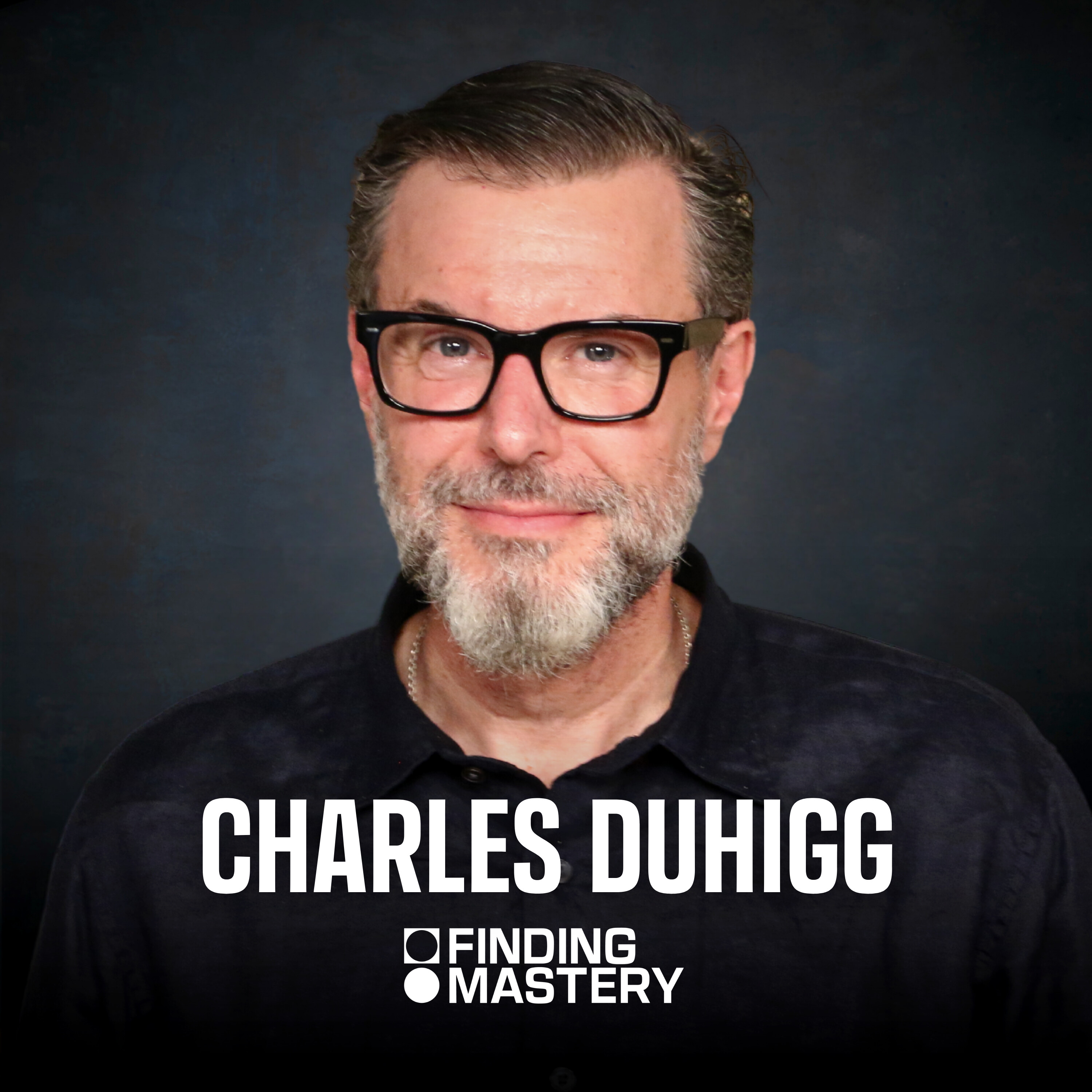
Finding Mastery with Dr. Michael Gervais
The Psychology of Being a Super Communicator | Charles Duhigg
00:51:30
Loading summary
Transcript274 lines
- [00:00]
A
Nobody remembers what you say. They remember how you made them feel.
- [00:03]
B
Why do so many conversations break down even when both people are trying to connect?
- [00:08]
A
If you look at the research on communication and you ask people, what did you guys talk about in that hour long conversation you had? People on average won't remember anything specific that was said. But if you ask them, how did you feel throughout that conversation? They'll be able to say, oh, at the beginning I felt like, really good. And then we talked about this one thing. I started feeling really bad about myself.
- [00:25]
B
Welcome back. Or welcome to the Finding Mastery podcast, where we dive into the minds of the world's greatest thinkers and doers. I AM your host, Dr. Michael Gervais.
- [00:34]
A
A high performance psychologist named Michael Gervais, who Pete Carroll brought in to work with the Seahawks, famous for his work
- [00:40]
B
with Felix Baumgartner when he jumped out
- [00:42]
A
of space in the Stratos project. Olympic athletes depend on something more than
- [00:46]
B
just training and talent.
- [00:47]
A
They have to stay mentally tough.
- [00:50]
B
Today's conversation is with Charles Duhigg, Pulitzer Prize winning journalist and bestselling author of the Power of Habit and and Super Communicators.
- [00:58]
A
So what's important is to have the same kind of conversation at the same moment. It's known as the matching principle, that when you and I are in the same mindset, as long as we are aligned, then we can move from conversation to conversation together and we feel connected.
- [01:10]
B
This is Charles third time on the podcast because the world has shifted since last we spoke.
- [01:16]
A
We're at the Thanksgiving table, politics comes up. I'm going to prove to you that I want to understand how you see the world.
- [01:22]
B
I'm going to say the rise of AI has quietly eroded the signals that we previously used to read each other.
- [01:29]
A
Now every email can be really well written. And so these soft skills that we have as humans, the ability to transmit emotions, to be emotionally contagious, to detect insincerity, those are becoming even more valuable now because the practical has gotten easier.
- [01:46]
B
So with that, let's jump into this week's conversation with Charles Duhigg. Charles, this is the third time. We don't have many people that come on three times to the podcast. And so this is the third time that you're here and the first time that we've met in person.
- [02:07]
A
Yeah, well, it's a. It's a huge honor. I feel like I would rather be on this show three times than on Saturday Night Live.
- [02:12]
B
Three times you had that loaded. That's not true. Saturday Night Live would be a lot of fun. Well, we've got something to live up to. Exactly.
- [02:21]
A
Exactly.
- [02:22]
B
Yeah. Cool. You're exceptional as a storyteller, as a writer. I mean, you've had huge success on those fronts. The last time you're here, we talked about your book, which I think is still your newest book.
- [02:32]
A
Yeah.
- [02:32]
B
Right. So there's no new book that I've missed here.
- [02:35]
A
Right. Super Communicators. Yeah.
- [02:37]
B
And when we spoke, I was like, oh, the perfect timing was like 2024 super communicators. Okay, let's be great. Let's understand the science, the application of it. What's changed your experiences? The world has changed. How are you thinking about super communicating differently?
- [02:52]
A
Well, I think one of the things that comes up a lot when I'm talking to people about the book and about how to use the book is there wasn't a chapter on AI because generative AI really didn't exist at that point when I was writing it. And now, of course, we live in a. In a chatgpt and clawed world. But what's interesting is that I was talking to someone, actually someone at Microsoft the other day, and she was saying that the drawback of generative AI is that it used to be when someone sent you an email and it was really well written, that was a signal. It was a signal that they had thought about it, that they had spent some time on it, that they're pretty smart now. Every email can be really well written. And as a result, what's happened is that a lot of the signals, not just in emails, but in all kinds of things around language, a lot of the signals are no longer functioning as well as they can. Right. We've lost where a fluency and a polish meant something because that fluency and that polish can be artificially manufactured now.
- [03:49]
B
Absolutely. I think everyone in our community knows exactly that. Like emails coming through now, you can't tell if somebody took a lot of time, a little bit of time. But on that, on that point, it's almost like, let's go back to 2024, 2014, whatever. There's an artificial nature to that signal.
- [04:06]
A
That's exactly right.
- [04:06]
B
Oh, okay.
- [04:08]
A
So here's the thing that I think it's not so much that it's changed as much as it's become more true. Which is in the book, we talk about the practical conversation, the emotional conversation, the social conversation.
- [04:18]
B
Let's come back to that and really open those up.
- [04:19]
A
Yeah, okay. But to the practical AI is really good at the practical conversation. Right. AI can give you instructions on how to do something. But the emotional conversation and the social conversation, those are as important, if not more important. And AI isn't good at that. You're exactly right. I can read a beautiful worded email that actually even has some poetry to it that's written by AI, But I can tell when it's AI and when it's a real person.
- [04:43]
B
Okay, so actually I was doing something a little differently. Okay, I'm agreeing with you. What I was pointing to is, let's go back 2014, before we knew about AI, is that email is a signal of a thoughtful, smart person. But I'm saying, Wait, hold on, maybe, maybe not. Because it's not an honest signal. It is a signal. So honest signals, quote unquote honest signals, and that's an actual thing, is when somebody gives you a tell that they can't hide. And like pupil dilation, like reflexive sweating in an uncomfortable situation, or heart palpitation, or hives crawling up the neck, like there's quote, unquote honest signals. Those, for people that are exceptionally aware and tuned, are incredible bits of information. But on an email, I don't know how long you took to craft it. I don't know if you asked your neighbor to help you craft it. So there's. There's a proxy in here somewhere. That's where I was going.
- [05:45]
A
Yeah. And I think that's right. I mean, I think what you're getting at is that different channels of communication have different densities. Right? And when we're talking face to face, those honest signals, I can pick up on a lot of them because I have so much information. I get to see where your eyes are going. I get to hear your tone of voice. I get to see your expressions. On an email, I still have some channels of and information available to me, but it's less. And so as a result, what I think was happening back in 2014 and is happening even more now is we are starting to lean into the other forms of information in a much more serious way. For example, for example, if somebody sends me an email and it's just effusive with praise, you wrote the best book ever. I read it and it changed my life. There's a part of my brain that's saying, this seems like it might be AI generated. Right? This seems like it might be something that, like, is a form letter, that maybe it's not AI generated, but maybe you're saying that to everyone. But then if it says something not only unique to me. I liked this about the power of habit. Or super communicators. But more importantly, something that seems emotionally true, something that seems emotionally real, that's the signal I pay attention to now. And so these soft skills that we have as humans, the ability to transmit emotions, to be emotionally contagious, to detect insincerity, those are becoming even more valuable now because the practical has gotten easier.
- [07:11]
B
There you go. So you're still supporting your framework, practical, social, and emotional?
- [07:16]
A
A little bit, yeah.
- [07:17]
B
Okay.
- [07:17]
A
Yeah.
- [07:17]
B
And just to reiterate the obvious of what you said is that AI is exceptionally skilled at practical communication.
- [07:23]
A
Yep.
- [07:24]
B
Right. So that mindset of like, let me just hit the kind of thing and it tries with some emotion bit, but it's not very good at it, is what your point is. And as humans, there's three approaches to be great communicators. There's a practical communication style, there's the emotional and there's the social.
- [07:40]
A
And we'll do all three of them. Right. So in a real conversation, like this conversation, we will move from a practical conversation to an emotional conversation into a social conversation, and then back to a practical conversation together. And that's the key, is that if we're having different kinds of conversations, if you're telling me about something emotional that happened with you and your family, and I say, oh, here's how you want to solve that, here's what you want to do. Right. I'm in a practical mindset, you're an emotional mindset. We're not going to feel like we're connecting with each other, and we're definitely not going to be able to hear each other really well.
- [08:12]
B
It's really frustrating.
- [08:13]
A
Absolutely. So what's important is to have the same kind of conversation at the same moment. It's known as the matching principle, that when you and I are in the same mindset, when we're having an emotional conversation together, when we're having a practical conversation together, as long as we are aligned, then we can move from conversation to conversation together and we feel connected.
- [08:31]
B
So are you saying, okay, I just had an idea. Let's see if, like, if I'm missing the point here is that let me say good communicators, specifically using the word good, good communicators are able to discern which type of mindset, which type of communication path we're on.
- [08:47]
A
They pay attention to it.
- [08:48]
B
I'm going to say good.
- [08:49]
A
Yeah.
- [08:49]
B
Okay, super communicators. Let me go. Great communicators can actually. So I'll go, good, great, super. Okay, great communicators. Know what path we're on. And they can move in and out. They can stay at a depth of whichever of those three that feels appropriate for the other person. And they're good partners in the conversation, in the relationship. Super communicators, and I don't think I remember this part, this is what I would add if, like, you and I were writing it together, I would say that the super communicators are able to pick up above and beyond what mere mortals seem to be able to do, all of the honest signals.
- [09:25]
A
So I would say yes, except with one caveat. I don't think being a super communicator is that above and beyond. I actually think every single person can be a super communicator. It's just a matter of looking for the signals.
- [09:39]
B
If you're busy in your head or you're anxious or you're frustrated or you run with emotion. Right. Like, and I mean, emotions are running the program as opposed to you being able to work with them. And you miss so much of this on a signal. Absolutely right, yeah. So you also, to be a super communicator, need to be able to work with emotion.
- [09:59]
A
Well, absolutely. Well. And here's what I would say, and I'm curious your thoughts on this because you obviously communicate and you teach communication for a living.
- [10:05]
B
Not like you, I think I just do it. Right. Well, yeah. I don't know how to necessarily teach any of this.
- [10:12]
A
I think that the reason why I'm saying you don't have to be like a superhuman to do this, that anyone can do this is because if I'm in my own head and I am anxious and I'm thinking about myself and I'm wondering, oh, does he think that I'm cool? Is my answer impressive. It's hard for me to connect with you. Right. So what's the way that I break myself out of that? I ask you a question.
- [10:32]
B
There you go.
- [10:33]
A
And the thing is, anyone can ask a question. Right? Learning to ask a question is not a hard skill to learn. It's a habit that anyone can build. And particularly if I ask you what's known as a deep question, if I ask you a question that invites you to talk about your values or your beliefs or your experiences, I'm going to figure out what kind of mindset you're in right now. Are you looking for an emotional conversation? Are you looking for a practical conversation? And that can sound kind of intimidating, but it's as simple as instead of saying, what team are you working with right now, saying what made you excited about sports? What was it about sports psychology that really attracted you? That second question? That is not an overly intrusive question. That is not a too personal question, but it invites you to tell me so much about yourself. Right. What you're passionate about, the experiences you've had.
- [11:16]
B
Because what that does is now if you're a great communicator and what your job now at this point is, is you've kind of thrown the ball up in the air. There's a lob, so to speak, as a metaphor. And depending on how I go get it, I might say, oh, let me tell you, when I was a kid, like, I was. And I'm going to an emotional place.
- [11:35]
A
Absolutely.
- [11:36]
B
Then you're like, oh, okay, I know the mindset that he's in. So let me parallel path.
- [11:41]
A
Yeah, that's exactly. And you might just as easily say, depending on how you're feeling in that moment, might say, you know, I just. I really. I heard a lot about saber. Saber metrics, and I think the stats of sports are really compelling to me because we can measure stuff. Okay, you're using words to tell me you're in a practical mindset right now.
- [11:56]
B
That's right. Or look at. Sport was so much fun and I loved it. And like, me and my friends and da, da, da.
- [12:02]
A
This is how I bonded with my dad. Right, Exactly. This is how me and my friends got to know each other.
- [12:07]
B
So it's fun. Like in my training, which I don't talk about much, you know, like, I think I want to tell you a funny story in a minute, but I don't talk about my training. And one of the things that I think was this amazing gift that one of my professors just hammered. This was in graduate training. And he said to me very clearly, he's like, mike, what are you listening for? Like, oh, I'm just. I'm really attuning and following the story and just. I wanna make sure I really understand. He goes, you're missing most of the story. Then I go, what do you mean? He says, there's two conversations that are happening within a person. Which one are you listening to? I said, well, the story. He goes, right. Well, the story is emotional, so listen to the words, but let them fall away as best as you possibly can and work to understand the emotional experience that's happening that happened or is happening now. Yeah, right. And so there's the talk track and there's the emotional track. And if you can get both of those lined up, like you. You've really Got an understanding. But I was just busy trying to be like clocking, you know, all the beats.
- [13:13]
A
Right.
- [13:13]
B
And then the other person wants to tell their story over and over and over and over. Now they've perfected their traumatic story.
- [13:21]
A
Yeah.
- [13:21]
B
Now we got a different problem that I'm introducing. But the idea that there's at least two was part of my training.
- [13:27]
A
I love that.
- [13:28]
B
Yeah, it was a really. It was an important.
- [13:30]
A
Well, and. And I think the example of that is that if you look at the research on communication and you ask people, what did you guys talk about in that hour long conversation you had? People on average will be able to remember two, maybe two and a half topics, and they won't remember anything specific that was said. But if you ask them, how did you feel throughout that conversation? They'll be able to say, oh, at the beginning I felt really good. And then we talked about this one thing and I started feeling really bad about myself. As Maya Angelouins put it, nobody remembers what you say. They remember how you made them feel.
- [14:01]
B
That's right. Yeah.
- [14:02]
A
And that emotional level is so critical. So let me ask you something, actually, because oftentimes my experience of sports is that particularly coaches, particularly in the training room particularly, is that that can become a very practical conversation. How are you gonna react? What are you looking for? But I imagine emotions for those players and for anyone who's performing as an elite executive or artist or athlete, those emotions must be a huge part of how they're making decisions.
- [14:29]
B
Yeah. You know what I love about sport is that it's really honest.
- [14:33]
A
Yeah.
- [14:34]
B
So there's two rooms I'll talk about in sport and then I'll move it outside of sport. Sport for me is like. What I liked about it is it's so concrete. And I am fascinated by the invisible world. Like, thoughts are invisible. We can't see them. We don't know how much they weigh, where they come from, where they go. We don't know really what the immaterial world of thought is at this point. And so it's hard to wrestle it down because you can't get your arms around it in any meaningful way. But we know that thoughts matter, but the artifact of thoughts are behavior. Okay, so follow me on that and then we can observe. Performance is the cauldron, if you will, when you put some pressure on it, to see how behavior and thoughts work and what's the stitch between our emotions.
- [15:21]
A
Yeah.
- [15:22]
B
So sport at the highest level, and same with business and same with relationships are for big emotions. So you asked the question about emotions, really. And if the conversation between coach and athlete, or executive and manager, or husband, wife, fill in any relationship pair you want is transactional in nature, and it's information sharing you're missing. I'm missing if I'm in one of those people so much of the information, if it's true that. That to live an extraordinary life and do extraordinary things like the Olympics or the super bowl or like boardroom pitches that could change the world or the business, there's a lot of emotion involved in there. And the idea that we haven't taught our people, our children, how to work well with emotions has provided a massive opportunity for me and people like me to say, hey, let me show you how thoughts, emotions and behaviors work together so that you can literally dissolve pressure because you're in control of the things that you actually can control. And once that starts to open up. And the coaches in elite sport that are not untrained, let's say, but like very sophisticated, they are working at the emotional level.
- [16:32]
A
They must be.
- [16:34]
B
Right.
- [16:34]
A
There's so much going on there that, I mean, every conversation that we have is colored by emotions. And if I'm talking about the thing I love most. Right. The way I define myself is I am an athlete. I get on that field and I perform well every single time. Then of course, there's a huge amount of emotions and social issues and identity issues. Right.
- [16:52]
B
All that. It's all.
- [16:53]
A
I recently went to Indian Wells to see the tennis tournament.
- [16:56]
B
Oh, you did?
- [16:56]
A
Yeah.
- [16:57]
B
I haven't bent my hair. It's really fun.
- [16:58]
A
It's awesome. It's my first time at a professional tennis tournament and it was just amazing.
- [17:03]
B
Body mastery is brought to you by fatty 15. Healthy aging is not about chasing the newest trends and fads. For us at finding Mastery, it's about taking care of the fundamentals consistently. And one of the most important fundamentals is cellular health. That's why I continue to be excited about Fatty 15. It's a daily supplement that's based on C15. This is the first essential fatty acid discovered in more than 90 years. Fatty 15 co founder, Dr. Stephanie Van Watson. She's a previous guest on the podcast and it's an amazing conversation. By the way, she discovered the benefits of C15 while working with the US Navy. Based on over 100 studies, we now know that C15 strengthens our cells and is a foundational healthy aging nutrient. What it does is it helps slow aging at the cellular level. When our cells don't have enough C15, they become fragile and age faster. And when our cells age, our bodies age as well. Fatty 15 is on a mission to optimize your C15 levels to help support your long term health and wellness, especially as you age. You can get an additional 15% off their 90 day subscription starter kit by going to Fatty1FINDINGMASTERY and use the code FINDINGMASTERY at checkout. What Stephanie and the team at Fatty15 are doing is something I'm really excited about. I really hope you'll check them out.
- [18:17]
A
But you see, you see those tennis players, it's the loneliest game on earth. Right. You see them on that court, they just lost a point. They have to get their mind in the right place for the next serve.
- [18:27]
B
There's nowhere to go.
- [18:28]
A
There's nowhere to go, there's nowhere to hide. There's no one to talk to. And it's entirely emotional. Right. Whether it's the yips on a golf course, whether it's what my team does for me, do we come together as a team or are we just individuals who happen to be playing with each other? And of course, the exact same thing is true in business and in relationships.
- [18:49]
B
Yeah. I think that on the surface level, if you just look at sport, you're like, oh, it's so transactional, it's so aggro, it's so whatever. But when you look at the sophistication of the best of the world, it is marrying that or merging that with the high emotional kind of context that's taking place. Here's the thing. I don't know, 300,000 years ago, our ancestors passed on this gift. When something matters, your body's supposed to respond with emotions, survival, matter. Our brains are wired to find the threats and kick on the emotional kind of all the kickers that happen. But you know what, performing well, that matters.
- [19:22]
A
Yeah.
- [19:22]
B
So we're dealing with this like a circuitry that's pretty ancient.
- [19:26]
A
Absolutely. Well, and this gets to language like. One of the things that I think is really interesting about language is that it did not evolve as a knowledge or information sharing device. It's a nice secondary benefit that I can tell you. Oh, the code for the lock is 0894. Right. We can use it as an information sharing device, but the reason why language evolved was to help us connect with each other. And if you think about 90% of the conversations you had yesterday, you weren't really sharing that much information. You were talking to your wife and you were saying, hey, how was your day? Not because you really want to know exactly what she did that day. But because you want to connect with her. Right. Or you're saying to a friend, like, hey, I saw this movie. It was pretty good. We should hang out sometime when we communicate. And the reason why communication, which is our superpower, Homo sapiens superpower, is our ability to communicate. When we communicate, it is not to share information. It is to feel connected to each other.
- [20:23]
B
Did you just go practical for social and emotional.
- [20:28]
A
What do you mean?
- [20:28]
B
So your mindset. Yeah, I'm listening to your mindset. I'm listening to the words, but also tracking the mindset that you're in.
- [20:34]
A
Yeah.
- [20:34]
B
And you're just explaining the utility for language is to connect. But you went very practical. Were you in a practical mindset just now? Yeah, but for the utility of driving home, two points, which is social and emotional valiance, or value of using words. Well.
- [20:49]
A
And because we're connected. So. So. And you probably know this research within the neuroscience, this is called neural entrainment, that if. If we could look at our bodies right now, we see our pupils are dilating at the same rate, Our heart rates are starting to match each other. More importantly, the activity in our brain is looking more and more similar. It's becoming very simultaneous as we share ideas, as we share emotions. And so if I get practical because we're entrained, because we've matched each other, you can get practical with me right away. And then if you say, you know, that reminds me of this conversation I had with my son that made me feel, like, just amazing, then you're emotional, and I'm gonna go emotional right with you. We don't even have to think about it.
- [21:26]
B
Very cool. So, all right, so let's kind of go backwards to take maybe a couple steps forward, maybe give a definition, if you can, about. Or just describe the practical one more time. The social and the emotional and how to help people tune to those better, and then how to help with the entrainment piece so they can become a super community.
- [21:43]
A
Exactly. Each of these three kinds of conversations, and this is what researchers, neuroscientists have kind of found, is that we're having multiple different kinds of conversations every time we have a discussion with someone, but they tend to fall into one of these three buckets. And the practical is exactly what it sounds like in a practical conversation. We are usually sharing information, or we are solving problems together, or we are coming up with plans together. We're doing something where there is an outcome that is not only practical, but is oftentimes maybe transactional, but maybe also just like an itinerary. But then there are times that I tell you about what I'm feeling, and I don't want you to solve my feelings. I don't want you to come up with a plan for me to improve my feelings. What I want in that case is I want you to empathize with me. I want you to show me that you understand what I'm feeling. And you might say, like, oh, that's a really hard problem. I don't know if we're going to be able to solve that. But I'm so sorry that you're going through that. That sounds so hard. I'm not looking for you to solve it. Right. All I'm looking for you is to empathize. And then finally, the social conversation is when we're talking about how we relate to each other, how we relate to society, when we're talking about other people, when we're talking about the identities that are important to us. And in that conversation, I'm not looking for you to solve anything. I'm also not looking for you to empathize. I'm looking for you to acknowledge. So if I say something like, you know, as the father of a 17 year old, it's really, really hard to raise kids right now. I'm not looking for you to say, oh, I understand what it's like to be the father of a 17 year old, though you also have a 17 year old, so you can, you can empathize. But simply to say, you know, that's a really interesting perspective. Like you have a unique experience there that's giving you some perspective on this. Just acknowledging the identity that you just voiced, that's clearly important to you. That's what we're looking for in that conversation.
- [23:32]
B
So how do people actually do this?
- [23:34]
A
Okay, so one of my favorite ways of explaining this is that if you're a teacher, one of the things you learn in teacher training is that if a student comes up and they have something important that they want to ask you about, you should start by asking them a question. And the question you should ask is, do you want to be helped? Do you want to be hugged? Or do you want to be heard? Which of course is the practical, the emotional and the social. Right? And what's amazing is that if anyone listening has young kids at home, next time they come up to you with something, ask them, do you want to be helped, hugged or hurt? And they'll know exactly what they want right away. They'll tell you like, no, no, no, I don't need you to help me. I just need you to know that Jimmy's been mean to me. Right? I need to T on him. I need you to hear me right, or I don't need you to fix this problem. I just need you to give me a hug and make me feel better about it.
- [24:17]
B
What about when the response comes back and is like, you should know the answer to that.
- [24:23]
A
You've been talking to my wife, haven't you?
- [24:25]
B
Don't you know me by now, damn it, I need a hug or whatever it is?
- [24:29]
A
Yeah, well, so. So one of the things, I mean, the other place is that in the workplace, you can't really ask people if they want to be helped. Hug to her. Right. They're going to call hr. So in those cases, asking a deep question is the next best thing we can do. And sometimes you can just ask a question about what kind of conversation they want. When I come home and I start complaining about my day, my wife will often say, do you want me to help you solve this problem or do you just need to get it off your chest?
- [24:52]
B
Yeah. That hinge between those two ideas has been really important for my wife and I. Are we in problem solving mode?
- [24:58]
A
Right.
- [24:59]
B
I'm just asking, like, do you want me to go problem solving with you or is this calibration? Yes, you know, problem solving or calibration. And she's like, nah, calibrate. I need to talk it through, you know? Or like, no, I'm looking for a solution. Come on, get with it. Got it.
- [25:12]
A
And we can do that in any conversation. That's why I say being a super communicator, it's not really a superhuman thing. It's something that any human can do. Because at any point we can ask. That sounds like a really tough time you're going through. Do you want me to help you think through some solutions to it? Is that helpful? Or do you want to just tell me what it's like to be living with this?
- [25:32]
B
But what you're doing, that's, I think, materially important. That's almost kind of the trick in plain sight. So let me go back to my training one more time. Is when you're going to ask a question, have a general idea of where it's going to go.
- [25:43]
A
Yeah.
- [25:44]
B
And if it zigs when you thought it was going to zag, no problem. But you're. You have a general idea of where it could lead, and that's exactly what you're doing. You're having a general idea. Am I going towards practical? Am I going towards social. Am I? So you're giving a pretty innocuous, thoughtful question. You're lobbying it back to that sport analogy, and then you're watching where they go.
- [26:05]
A
Yeah, and what I love about what you just said is if I have a vague hypothesis in my head, and my hypothesis is this might be emotional, like we should probably. I'm gonna pay a lot more attention to your answer. I'm gonna listen a lot better. That's exactly right, because I want to see if the hypothesis in my head is true. So let me ask you a question, because I have this theory about psychology, particularly about therapy, which is that one of the most powerful things that we do as psychologists, as people who are helping other people, whether we're trained or untrained, is that we're helping them recognize the story they're telling themselves, sometimes without realizing it, and helping them recontextualize that story a little bit. It sounds like you're having a really hard time. Tell me, what was it like last time you were in this? Well, last time I was in this, it all turned out fine. So now I'm changing the story in my head. The story isn't, I'm on the path to doom. The story is, this is kind of like last time, and everything worked out okay.
- [26:58]
B
You know, I think we don't really know how this works. I think we have a good sense that being part of it with someone else, that is not judging or critiquing or shaming or any of that kind of performative, less than stuff. That there's something about just having somebody else with a positive regard, nonjudgmentally going, mm, yeah. Oof. You know, like. But honestly, doing that, there's a recalibration that takes place there, and there's something about not letting people. Sounds like a little directive, if you will, not tolerating people to re traumatize themselves by telling the story again.
- [27:31]
A
Oh, interesting.
- [27:32]
B
I'll tell you how this happened for me. I was in a tough way freshman year in college, and there was a professor. He happened to be a psychology professor. And there was attunement that was happening. Like, I felt, like, connected to him some kind of way. I didn't know psychology was a thing, really, but I liked the conversations in the class. I saw him outside of the building as we were walking to the building, and I was having a tough time. I was, like, really anxious at this time of my life. So I came up to him. I was like, hey, doc, you got a minute? He said, yeah. And I go, I just want to talk to you about something real quick. Are you going to class? So we both knew it was a short conversation.
- [28:03]
A
Yeah.
- [28:04]
B
And he goes, yeah, let's walk. And so he's. What's up? And I started getting into this thing that was bothering me, and he interrupted me right in the first third of my entree into what I was struggling with. He didn't even get to the struggling piece. And he said, mike, when the doorbell rings, do you have to answer it? And I looked at him like, what's that got to do with anything? And my thought was like, psychologists are kooks. And he looked at me and he saw that I was like, big eyed, like, what are you saying? And what has this got to do with my trauma? That I'm, you know, not really trump micro trauma. And he peeled off and walked away.
- [28:41]
A
Huh.
- [28:42]
B
I didn't get. Took me another. The next week, I was like, hey, Doc. I came back around to him. I didn't get what happened. Like, do you have a minute? I just really want to tell you. He did it again. He interrupted me about a third of the way through. It took me years. He never gave me the answers to what he was doing. But I know now he interrupted my story. And in doing that, he didn't allow me to rehydrate it. He stopped it from blooming. He created a chaos that was a gift. He wasn't gonna sit in the presence of a person re. Traumatizing themselves through telling their story again and again. And I had the story perfected.
- [29:25]
A
Yeah.
- [29:25]
B
Yeah. So was he a good communicator? I think he was a super communicator.
- [29:30]
A
Yeah, I think so too.
- [29:30]
B
Yeah.
- [29:31]
A
Well, and what I love about what you just said is you had this story perfected. Like, this story was so integral to how you saw yourself, how you saw what was happening to you. It didn't even occur to you, I'm guessing, that there was another story you could be telling yourself. Right.
- [29:45]
B
Or that I don't need to keep telling this story.
- [29:47]
A
Yeah. Or that this story is in the past and now we're writing a new story.
- [29:50]
B
That's right.
- [29:51]
A
And I think that sometimes one of the most powerful things we do as communicators, as humans, as people who feel connected, is simply listening to someone tell their story and then saying, like, you don't have to answer the doorbell when the doorbell rings.
- [30:06]
B
Which just for clarity, means that when the thought arises, you don't have to entertain.
- [30:09]
A
Exactly. Exactly. Or to say, I'm really Sorry you're going through that. Let me tell you about something similar that happened to me right now. What's key here is it's not to steal the spotlight. Like, oftentimes we'll tell a story and someone else, or even worse, we go to a party and someone says, where'd you go on vacation? And we started answering the question. We know within 10 seconds, they don't care where we went on vacation. They just want to talk about their vacation. Right. They want to tell us about the fancy yacht that they rented. So I think when we ask questions of people, when we say, you don't have to answer the doorbell, when we say, it sounds like this is tough for you. Let me tell you about something I went through that was similar. If my goal is to help you, instead of stealing the spotlight away from you, you can feel that that's cool. Right? And I think when your professor said, you don't have to answer the doorbell, and he walked away, what he was actually saying is, he's saying, I'm not stealing the spotlight from you. Right. Like, I'm gonna let you sit in the spotlight. I'm just gonna tell you, this is a spotlight I don't wanna be a part of. You don't have to be a part of.
- [31:09]
B
Are you using the word spotlight from Gilovich's work? You know, the spotlight effect?
- [31:13]
A
A little bit, yeah. Yeah.
- [31:15]
B
So Professor Gilovich did an experiment, Right. Where he identified that people are thinking about themselves way more than anyone else ever would.
- [31:23]
A
Right.
- [31:24]
B
And is. Are you purposely using that?
- [31:26]
A
Yeah, exactly. Exactly. Because I think that we feel that generosity of spirit we feel when someone actually wants to help us. And sometimes that help. I mean, what's amazing to me about the story you told is that you came back to the professor. Right. Because it would have been really easy to be like, oh, this professor just blew me off. I'm not going to make a fool of myself again. I'm going to find someone else to talk to.
- [31:48]
B
Thank you for pointing out my inability to recognize that.
- [31:53]
A
But he did it in a way that you knew he was doing it for your benefit. You knew that he was trying to help you.
- [32:00]
B
I knew he had something that was useful, that could be useful. And I went back because I thought I missed kind of the mark. I just thought it was weird. I thought he was doing something weird. But I knew that, like, if there was a moment to syncopate, he could be helpful.
- [32:14]
A
Yeah, yeah.
- [32:15]
B
Full circle. Like, his name is Dr. Cuzio, Dr. Perkins, and Dr. Zanka. These three professors one was a psychologist, theologian, and the other was a philosopher. Those three were their best friends.
- [32:26]
A
Huh.
- [32:27]
B
And materially changed my life.
- [32:29]
A
That's amazing.
- [32:29]
B
Yeah. The world of the invisible. Yeah, yeah. So that interaction sounds like it was maybe casual, but it was actually really important.
- [32:37]
A
Yeah, yeah. And I'm certain that they thought about connecting with you and for you, connecting with them.
- [32:44]
B
That's right.
- [32:45]
A
I mean, these are people you look up to, these are people you admire.
- [32:48]
B
Yeah.
- [32:48]
A
Like the desire to connect is probably. You don't even have to think about it.
- [32:53]
B
How are you doing with your connection in life?
- [32:57]
A
We're in LA right now. I'm here because I took my 14 year old and two of his friends on their spring break trip down here to la. And I think a lot about how to connect to my kids. I have a 14 year old and a 17 year old, both boys. And you know, part of it is that I really want to have a relationship with them, that as they get older, that we have a genuine relationship. Friendship is like I want us to be friends, but like that's almost too small a word for what I want. Right. But I want to know who they are in the most genuine way and I want them to know me. And so I spend a lot of time thinking about how to connect with them because they're not thinking about it. Right. They're kids, they're teenagers. They shouldn't have to be thinking about it. They should be thinking about girls or sports or riding scooters, which is what they love to do in la. And so I spent a lot of time thinking about how do I create moments when we can actually hear each other?
- [33:51]
B
How do you do it?
- [33:52]
A
So a lot of it's in the car, right? Because with boys, and you have a 17 year old boy, you know this
- [33:56]
B
shoulder to shoulder conversations, they're amazing.
- [33:59]
A
They are fantastic.
- [34:01]
B
Finding mastery is brought to you by momentous. We tend to think about creatine as something for athletes, for power, for muscle, for strength. But what often gets missed here is that our brains rely on creatine, just like our body does. Your brain burns about 20% of your body's total energy. Means every thought, every decision, every late night brainstorming, it depends on that same cellular energy system that powers our muscles. And over the last several years there's been a lot of research around creatine and in particular its cognitive effects. And a bunch of those studies, they've shown that supplementing with creatine can improve working memory and processing speed, even during periods of sleep loss or High cognitive demand. And I know we all know this, but we do need to fuel our brain. And for me, I trust momentous. They take the long road here. Years of testing, rigorous research, there's no shortcuts for them. Their new creatine chews are built to the momentous standard. That means it's clean. It's NSF certified for sport, and scientifically validated. Always talk to your doctor, Always talk to your nutritionist. But for me, creatine is a performance tool. It supports the energy our brain needs to stay sharp under stress, to think clearly to, and maybe most importantly, to recover faster from long days and deep work. How you care for your brain. It matters. Head to livemomentous.com and use the code findingmastery for 35% off your first subscription. Again, that's livemomentous. L I V E M O M E N T o u s livemomentous.com and then use the code findingmastery. For those who are in it for the long game.
- [35:44]
A
My friends who are raising daughters, a lot of it for them is about talking about emotions, right? Their daughters are having an emotional life in middle school and high school that often my male friends didn't have themselves because as men, we tend to mature a little bit slower than our female counterparts. And part of it is learning just to say, tell me how you feel. And not trying to solve those feelings, but just saying, tell me how that made you feel. Like, why did you feel that way? Like, what do you think would make you feel better?
- [36:13]
B
Do you use the word feel?
- [36:15]
A
Oh, all the time.
- [36:15]
B
Yeah, it's cool.
- [36:16]
A
All the time.
- [36:17]
B
Yeah. I'll sometimes, if I want to slide into it a little bit easier, I'll say, what was that like for you? And then watching if he says that I was scared or he says, like, ah, you know, I don't know, da, da, da, da, da. I'll go, oh, he wants to go Feelings or he wants to stay practical.
- [36:31]
A
Yeah.
- [36:32]
B
To your. I didn't have your framework before. I read your book three years ago, two years ago now, or whenever it was. But your framework is. It shows up.
- [36:38]
A
It's very intuitive, right? Yeah. I think it's how many of us communicate. I think that's exactly right, is asking that question, like, what do you make of that? Again, at the core of these deep questions is why you just told me about something. Why is it important to you? Why are you telling me about this? What does it mean to you?
- [36:56]
B
As you've been studying super communicators and the real thing that you're studying one more time is about connection. How are we doing? Just do the US for right now. Like, how are we doing as communicators?
- [37:09]
A
I'm going to answer that question, but let me preface it by saying this. The moments in our nation's history that we are proudest of are not when everyone agreed with each other. Let's go back to the Constitutional Convention. To write the Constitution. You get, like, a couple of dozen men in a room, many of whom actually hate each other. Right. They were like, they were physically threatening each other, and they certainly didn't agree about what America is supposed to be, but they managed to write a Constitution. The moments in our history, whether it's that moment, whether it's a civil rights movement, whether it's Post World War II, the moments that we're proudest of are not when everyone agreed with each other. It's when we could disagree and hear each other and still live peacefully alongside each other. When we felt connected, even though we disagreed with each other. And so I look now at the test that I'm gonna apply there and say, so if I voted for someone different than you voted for, for president, can we talk about that and still feel connected to each other?
- [38:06]
B
It's hard.
- [38:06]
A
It's hard.
- [38:07]
B
It's really hard. It's getting harder.
- [38:10]
A
Yeah.
- [38:10]
B
It's like people aren't wanting to show up at family events because it could go sideways.
- [38:15]
A
Yeah, absolutely.
- [38:16]
B
Take us through some things that we can do a little bit better.
- [38:18]
A
Absolutely. So what are the components of feeling connected even when we disagree with each other? A huge part of it is that I need to believe you're actually listening to me. Because very often if I'm in a conversation about politics and you're telling me all about why you support your guy, and I'm going to tell you all about why I support my guy. As you're talking, I'm waiting my turn to speak. I'm not necessarily listening. And you know that. Right? You can feel that in the back of your head. Is this person actually listening, or is he just waiting his turn to speak? So I have to actually prove to you that I'm listening. I have to say, look, here's what I hear you saying. You told me that you like your candidate because it feels like he's standing up for the little guy. And what I hear you saying is that it feels like the little guy isn't getting the opportunities that you think America is supposed to provide for them. Am I getting that right? Am I Hearing you correctly at that moment. What I'm doing is I'm proving to you that I'm paying attention. I'm proving to you that I'm processing what you're saying. Most importantly, I'm asking you if I got it right.
- [39:13]
B
What do you do in a situation to be a super communicator when you are listening hard. Well. And you are recalibrating that you're aligned, you just heard. This is what I heard you say. And you might add a little to it to take it a little bit deeper, further, whatever. And then the person is not as interested in your experience, but wants to keep going because now they feel seen and heard. Yeah, right. Like, would you say, fine, just let them go. Like, let that be.
- [39:43]
A
I mean, look, you don't have to have a conversation with anyone. There is no obligation to have a conversation with someone, particularly if they don't want a dialogue with you. If they just want you to be listening.
- [39:52]
B
Post. That's a cool framing.
- [39:53]
A
I can walk away from it now. Sometimes though, I can just remind the other person that I belong in this conversation. The classic thing that happens is you go to a party, start talking to someone, you're asking them question after question, they never ask you a question back. Here's what I do in that situation. I say, oh, my gosh, you know, I've been asking you so many questions. I'm sure you have some questions to ask me. Let me take a break and give you a chance to ask me some questions. And here's the interesting thing they do. They have questions.
- [40:16]
B
That's a nice bit of judo.
- [40:18]
A
It's a nice little bit of judo, yeah. And most importantly, it's not that they didn't have questions. It's that they're not in the habit of asking questions. They don't feel comfortable asking questions. They need my permission.
- [40:28]
B
Why do you want to ask them questions?
- [40:29]
A
I mean, sometimes it's just because you're at a party and you need someone to talk to. Right.
- [40:34]
B
I was wondering if this is for you or for them. Yeah. Or for the material understanding. Yeah. Okay, so.
- [40:40]
A
But sometimes.
- [40:41]
B
Let's go back to family.
- [40:42]
A
Yeah, but let's say it's my kid, right. And I'm asking my kid questions after question. And I often use the yum. The Fast Friends procedure, which I'm sure you know that. Oh, the 36 questions that like lead to love. It's this great experiment. If anyone looks it up, it's called the Fast Friends procedure. These 36 questions that they use in experiments to help people feel closer to each other.
- [41:00]
B
Whoa. What is this? Really?
- [41:02]
A
Yeah.
- [41:03]
B
How have I missed this?
- [41:04]
A
Yeah, it's. It's wonderful. It's a wonderful.
- [41:05]
B
It's called yum.
- [41:06]
A
No, the Fast friends procedure.
- [41:08]
B
Oh, where did I hear yum from? I thought this was like. I thought you were saying Dr. Yum. And it's like, okay, the fast friends procedure. I don't know.
- [41:15]
A
Yeah. Arthur and Elaine Aaron in. In Rhode Island. They came up with this.
- [41:18]
B
Okay, say the names again. I missed it.
- [41:20]
A
Arthur and Elaine Aaron. A R, O, N. Okay, cool. Married couple.
- [41:23]
B
Let's find the link and put it in the show notes.
- [41:25]
A
Yeah, and it's actually a fun story behind it, because what happened? They wanted to come up with a system that could make any two strangers into friends. And they tried all kinds of stuff. They had people go on walks together or do puzzles together or sing songs together, and basically none of it worked. Some people would become friends and others wouldn't. And so one day they have a big graduate lab, and their grad students are kind of like hippie pot smokers. And so they're like, look, why don't you guys just come up with a bunch of questions that you ask each other after you've been recreationally relaxing? So they write up a bunch of questions, and they choose 35 of them. And it starts pretty easy. The first question is, if you could have dinner with anyone from history, who would it be? That's pretty easy, right? But question number seven is, how do you think you will die? Question number 18 is, tell me about your mother. Question 35. The second to last question is, when was the last time you cried in front of another person? Because one of the things that the Aarons found is they would bring people into a room, sit down kind of like this. They'd give them the list of questions, and they'd tell them, go back and forth. So I would ask you the first question, you'd answer it, and then you'd ask me the first question. Back and forth, back and forth. And people felt incredibly close to each other. In fact, so much so that seven weeks later, 70% of the people who had sat in that room had sought out the other person on campus or in the workplace and just said, like, let's go have a beer together. One of them actually got married a year after doing the experiment.
- [42:53]
B
Very cool.
- [42:53]
A
They do the exact same experiment, but this time, instead of having them go back and forth, they give them a list. I ask you all 36 questions, you answer them. Then you ask me all 36 questions. Didn't work. I think what's important. And this gets to what we were saying before about the back and forth, the why I can't just ask you questions. You have to ask me questions, too. Is it is the back and forth. It is the synchronicity, the building with each other. That's what makes us feel connected.
- [43:20]
B
So go back to somebody's having a hard time speaking to their brother, to their sister, to their parent, cousin, uncle.
- [43:26]
A
So the first thing they're going to do is they're going to prove that they're listening, right? And they're going to indicate, I genuinely want to listen to you. I understand we voted for different people. I don't want to convince you that my guy is right and your guy is wrong. I don't want to convince you I'm smart and you're dumb. I honestly just want to understand how you see the situation. And when you tell me, I'm going to prove to you that I'm paying attention. And what's going to happen is you're going to be more likely to listen to me in return. Right? Just social reciprocity. We can't help but do it. But then the second thing I'm going to do is I'm going to try and abstract that conversation to talk about what underlies it. And this is where the why question, the deep question, becomes so powerful. Okay, you voted for your guy. I voted for my guy. They see the world really differently. Instead of asking you why you voted for your guy, I'm gonna ask you, why is this important to you? Like, of all the things we could be talking about, we could be talking about the super bowl right now. Right? But we're talking about politics. You seem to care a lot about this candidate. Why do you care about this candidate?
- [44:22]
B
Why don't you?
- [44:23]
A
I mean, I do. I care about my candidate. Right. But I'm just wondering, like.
- [44:26]
B
But you see, you're seeing. I don't understand how you're seeing it. You're seeing it so wrong, you're missing the big point.
- [44:33]
A
So instead of trying to convince you that I'm seeing it wrong, let me just ask you, because I really, genuinely want to understand how do you see it? And you're going to answer that question, and I'm going to repeat back what's known as looping for understanding, proving that I'm listening. I'm going to repeat it back. And because you and I feel like we're actually sharing with each other, we're not going to change our mind about who we vote for, but we're going to walk away feeling connected to each other. Right. Because the truth of the matter is that if I'm talking to my neighbor and we vote and we have different lawn signs on our lawn for different candidates, that takes up like, 1% of my brain. Right.
- [45:10]
B
What do you do in that conversation when you're in question mode, listening mode, and you get an uptick in emotions? You get triggered somehow. You stepped on a wire and you're shocked.
- [45:24]
A
Yeah.
- [45:24]
B
Right. What do you do with that?
- [45:25]
A
I think at that moment you say, I want to tell you how I'm feeling. You actually say, like, okay, look, we're having kind of a practical conversation. We're talking about who's increasing the deficit. But I'm going to ask your permission. I want. Can I tell you how I'm feeling? Can we move together from a practical to an emotional conversation?
- [45:40]
B
Yeah. You know what's cool about this? Because let's say you do that, and then if I say, whatever now, you should probably walk away. Yeah, Right. Or if I say, yeah, what happened? And you're like, oh, yeah. So you can go into it. Yeah, that's cool. So then you're taking a moment for vulnerability.
- [45:56]
A
Taking a moment for vulnerability. And it's costless, right? Because I'm actually asking you, can I
- [46:01]
B
tell you how you feel? You haven't said anything yet. Right?
- [46:03]
A
I haven't said anything.
- [46:04]
B
Right.
- [46:05]
A
I've just asked you if we can go there together. And the truth of the matter is that, like, you're definitely not going to say no. You're not going to say, whatever. I don't care how you feel. Unless you're a real jerk, in which case we're not going to have a conversation anyways. But what you're probably gonna say is, you're gonna say, no. What are you feeling? And then I'm gonna talk about myself. I'm gonna talk about what I am an expert on, because I am an expert on my own emotions. I'm an expert on my own experiences. I'm not gonna say the reason I get super scared is because your guy just seems mean and he seems crass. Instead, I'm gonna say, sometimes when I watch the news, I feel bad. Like, I feel like there's something on that news that makes me feel bad about our country. And I don't like feeling that way. Like, I wanna feel.
- [46:43]
B
You're watching the wrong news. You're watching fake news.
- [46:46]
A
It could be. It could be. But I don't need to disagree with you. Right. Like, all I have to do is tell you about what I'm an expert on. I'm an expert. So you're staying on my experience.
- [46:55]
B
And when you're doing that, are you enveloped in yourself because you're, like, accurately trying to express your emotions when you do that, you almost kind of look within to make sure that you're calibrated. That's what most people do. Or are you doing something simultaneously, which is you're looking for signals? Is it okay for me to keep going?
- [47:14]
A
I think both. I think we do the second thing almost unconsciously. But at that moment, my goal is to help you understand how I see the world. So in a tough conversation, the only goal should be, I want to understand how you see the world, and I want to speak in such a way that you understand how I see the world.
- [47:33]
B
This seems like a non sequitur, but was that Heigl? There's a German philosopher, I'm blanking on his name right now, that introduced the equivalent of the word called worldview. And it's a German word I can't explain. We'll put this in the show notes, too. It looks like Wienerschnitzel in my mind, but of course that's not it. But it's the first time that the word worldview as one word was introduced.
- [47:55]
A
Interesting.
- [47:55]
B
Do you have a methodology to help people understand their own worldview or methodology to help people understand somebody else's worldview?
- [48:05]
A
So what we know from the research, and I'm sure you know this also, is that oftentimes we talk about perspective taking. We say, put yourself in someone else's shoes. So if I want to explain my worldview to you, I'm going to invite you to sit in my shoes. Perspective taking does not work very well. What works pretty well, because it's just hard to do, is perspective getting that when I ask you questions about your perspective, oftentimes what I'm doing is I'm nudging you to actually come up with that worldview. The truth of the matter is we all walk around with a worldview and we don't think about it.
- [48:39]
B
That's right. It's not really clear. No, it's background noise.
- [48:42]
A
It's water. The two fish in the water. One of them says, how's the water, boys? And they go on. And then one of them says, what the hell is water?
- [48:50]
B
What are you talking about?
- [48:52]
A
We don't know what our worldview is until someone asks us about it. And so It's a gift.
- [48:56]
B
Okay. Our producer just put it up. It's Veltenschanunung.
- [49:00]
A
Veltenschanung. Okay. I love it.
- [49:03]
B
Yeah. It was the first time worldview or world perspective was introduced as a word. So I think that there's. What you're doing is helping people. I think you use the word nudge, nudge towards understanding their worldview.
- [49:15]
A
Yeah.
- [49:15]
B
And maybe it's just thin slice to the political worldview perhaps, you know, but there's probably other stuff in there. I'm fascinated by people's worldview, their belief systems, which are very hard to excavate. Yeah, they're very difficult, but they're so powerful.
- [49:29]
A
I think part of that is also signaling to you that I'm actually curious about your worldview. I'm interested in your worldview. I'm not just asking you about your worldview because I want to change it. I'm asking because I want to understand it. So get back, we're at the Thanksgiving table, politics comes up. I'm going to prove to you that I want to understand how you see the world. I'm going to prove to you that. I'm listening, that I'm actually taking that in. Then the third thing I'm going to do is I'm going to share something that I'm an expert on and that's probably going to come across as a little bit vulnerable. Right. I'm going to say the reason I'm so worried about this election is that it makes me scared or it makes me excited to elect someone like this to have my kids see that someone like this can become president. That is so exciting to me. You can't disagree with that. You might not be excited.
- [50:16]
B
That's right.
- [50:17]
A
But this is my experience. I'm telling you what I'm an expert about.
- [50:20]
B
Very cool, clean, simple. It's something that I can deploy at the next kind of holiday and it becomes a habit.
- [50:27]
A
That's the nice thing about communication. Our brains have evolved to be really good at communication. And one of the things that we do is we create communication habits very, very quickly.
- [50:38]
B
Finding mastery is brought to you by AG1. Spring is. It's just a natural time to reset. You know, the days are getting longer, at least for the northern hemisphere. And there's just an energy in the air that shifts. There's a kind of pull to simplify for me, to recalibrate what's working, what isn't. And one area I come back to regularly is my daily routine. It's not about overhauling it, but it is about scrubbing the material of it to really making sense of why I'm doing what I'm doing. So I look at it all and I reexamine it. AG1. It's been one of those foundations for me for over a decade now. I'm still using it. I like what they're doing. What I appreciate most is how much it simplifies the equation. One scoop covers a lot of ground. They've got some multivitamins in there. And more than anything, it's the pre and probiotics that I appreciate that they've done. It's all in one glass of water. So if you're taking a bunch of supplements, you don't have that pill fatigue that so many people talk about. I'm traveling a lot right now for our corporate clients, and that means shifting time zones and schedules. That's when consistency really helps. The AG1 travel packs, they've been a game changer for me. I throw a few in my bag and I don't have to think twice about it. I'm giving my body what it needs to keep showing up for work for the people I care about. For the long game, really. Visit drink ag1.com Finding Mastery to get an AG1 flavor sampler and a bottle of vitamin D3 plus K2 free in your welcome kit with your first AG1 subscription. That's a $72 value for free. Again, that's drinkag1.com Finding Mastery I want to take a second here to tell you about a morning routine that I've been using for years. For me, it's a great way to to switch on my mind to ready myself to take on the day. So before I check my phone, my emails, market updates, or text threads, I choose how to start my morning. That's always in my control. That's always in your control too. This is the same morning mindset routine that some of the world's top performers across sport, business and the arts are using. The best part, it only takes about 90 seconds to do. So just head over to findingmastery.com to download the audio guide for free. Again, head to findingmastery.commorning to get your morning mindset routine. How clear are you that we are social beings?
- [52:59]
A
100%.
- [53:00]
B
Yeah. And if there was a better way for us to do the social environment better, would you say it's asking questions?
- [53:07]
A
Yeah. Well, I think that's part of it. I think definitely part of asking questions. And second of all, it's something you said before is just Transmitting nonjudgmentalism. Right. Saying, look, I actually want to understand you. I don't want to convince you that you're wrong and I'm right.
- [53:22]
B
Yeah. Carl Rogers, Dr. Rogers says, unconditional positive regard for the other person. And if you can hold that, you're going to do more good in this world than not.
- [53:30]
A
I have a friend named Greg Nelson who, like, you bring him to a party and he's just like, he can talk to anyone. And I've studied why he's so good at this. And the reason why is because when he's in the conversation, you feel like he is genuinely in the conversation. Right. He's never saying, like, he's never looking over your shoulder. He's never saying, like, ah, that seems like a really dumb thing for you to believe. Right. Instead he's saying, like, tell me more and let me tell you about me. Let me tell you how I think about this.
- [53:59]
B
Yeah, right. That's cool. So he gets himself in there.
- [54:02]
A
Yeah, he gets himself in there. And in that positive regard, it doesn't cost us anything. It doesn't mean that you agree with the other person. It doesn't mean that I'm saying, actually, you know what? Your candidate is the right candidate. It simply means I want to understand you and I want you to understand me.
- [54:18]
B
Charles, well done. Always enjoy our conversation. Me too. Quick hits, though. If I knew what you knew, how would I be a better leader?
- [54:27]
A
I think the best leaders are people who ask a lot of questions. And what's interesting is if you look at Jamie Dimon, if you look at leaders from history, we tend to put these people on a pedestal, and we tend to remember the moment when Abraham Lincoln gives the Gettysburg Address. Right? He's speaking, he's not listening. And then you read a biography of this guy or you read his writings, and he talks about all the questions he's asking.
- [54:50]
B
Very cool. If I knew what you knew, how would I parent better?
- [54:53]
A
I'll just speak for myself. How I try and parent better is instead of trying to teach my kids so much, I try and just ask them to teach me. I want to understand how you see the world. I want to understand why this seems so important to you. Our instinct is to say, I know so much. I want to help you avoid these missteps. But they get that. If we say to them, teach me how you see the world.
- [55:20]
B
That's rad. And then lastly, how would I be a better spouse if I knew what you knew, how would I be a better spouse?
- [55:26]
A
Again, Just speaking from my own experience, the most important things I've done in my marriage is to tell my spouse that I want to connect with them. Like, sometimes just saying. Because you can get so bogged down by the nature of life sometimes just saying, like, look, if it's okay, could we go take like an evening and just like, walk around and talk for two hours? Because I really, I like, I just want to feel close to you.
- [55:48]
B
Did they teach you this at hbs?
- [55:50]
A
They did not teach me this at Harvard Business School. This was not a lesson at Harvard Business School.
- [55:55]
B
You've come a long way, my friend. Yeah. Well done. Yeah. This is not what's taught there. Charles, thank you for coming through.
- [56:01]
A
Thank you for having me. This is so much fun.
- [56:03]
B
Yeah, let's do a fourth one.
- [56:05]
A
Absolutely. I love it.
- [56:06]
B
Do you have a book on the horizon?
- [56:07]
A
I'm working on. I'm trying to figure out what it is right now. So I'm, I'm playing with some ideas and hopefully going to figure out what the next book is.
- [56:13]
B
Well, I'm looking forward to it.
- [56:14]
A
Thank you so much. Really appreciate it. Next time On Finding Mastery, Dr. Sonja Lubomirsky joins us to explore a powerful
- [56:23]
B
idea that happiness may depend less on
- [56:25]
A
being loved and more on whether we truly feel loved.
- [56:28]
B
This conversation is full of practical insight on connection, curiosity, and the small ways
- [56:33]
A
we can create more love in our everyday relationships.
- [56:36]
B
So join us Wednesday, May 20th at
- [56:39]
A
9am Pacific only on Finding Mastery.
- [56:44]
B
All right, thank you so much for diving into another episode of Finding Mastery with us. Our team loves creating this podcast and sharing these conversations with with you. We really appreciate you being part of this community. And if you're enjoying the show, the easiest, no cost way to support is to hit the subscribe or follow button wherever you're listening. Also, if you haven't already, please consider dropping us a review on Apple or Spotify. We are incredibly grateful for the support and feedback. If you're looking for even more insights, we have a newsletter we send out every Wednesday. Hunch over to findingmastery.com/newsletter to sign up. The show wouldn't be possible without our sponsors and we take our recommendations seriously. And the team is very thoughtful about making sure we love and endorse every product you hear on the show. If you want to check out any of our sponsor offers you heard about in this episode, you can find those deals@findingmastery.com sponsors. And remember, no one does it alone. The door here at Finding Mastery is always open to those looking to explore the edges and the reaches of their potential so that they can help others do the same. So join our community, share your favorite episode with a friend and let us know how we can continue to show up for you. Lastly, as a quick reminder, information in this podcast and from any material on the Finding Mastery website and social channels is for information purposes only. If you're looking for meaningful support, which we all need, one of the best things you can do is to talk to a licensed professional, so seek assistance from your healthcare providers. Again, a sincere thank you for listening. Until next episode, be well, think well, keep exploring. Come on.