← Finding Mastery with Dr. Michael Gervais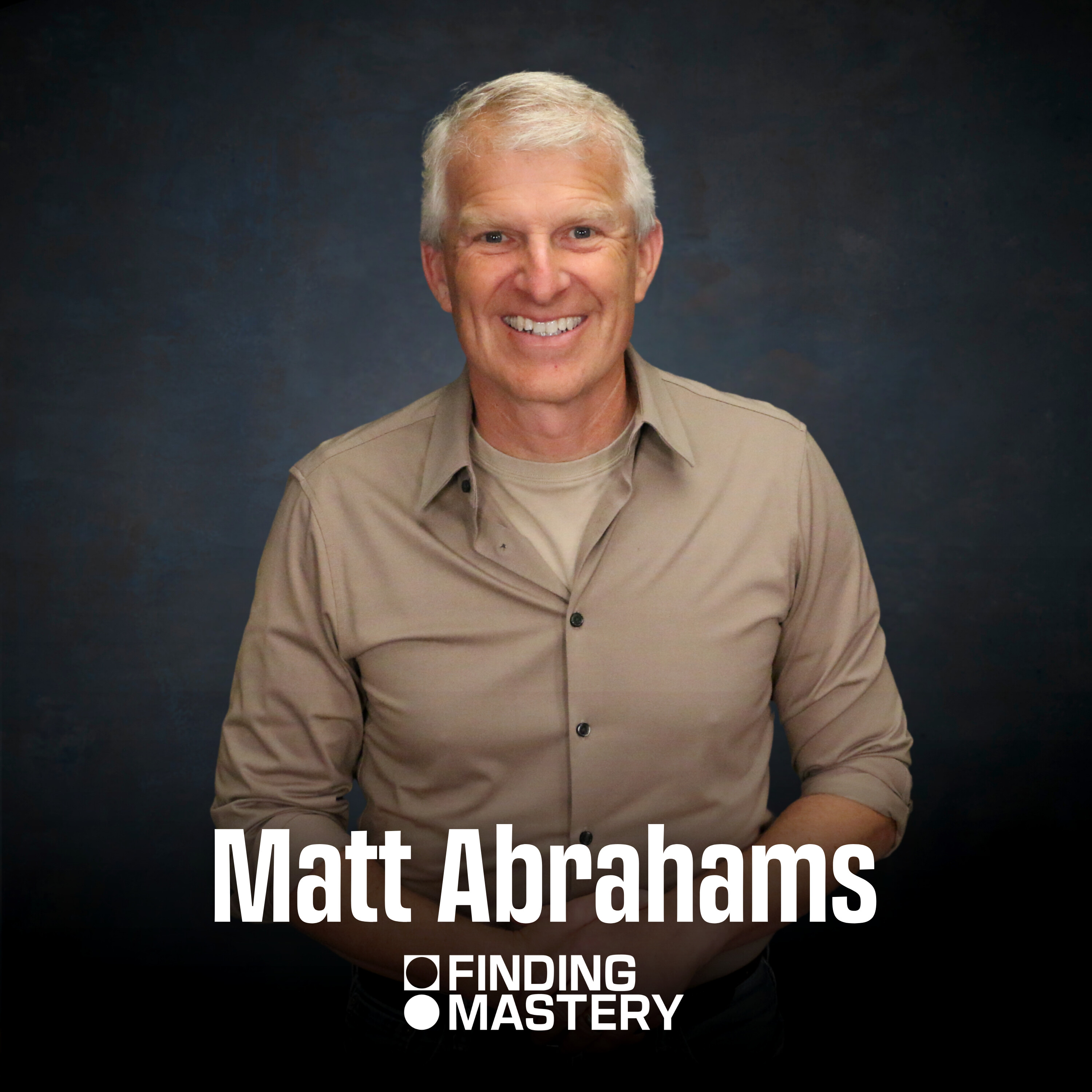
Finding Mastery with Dr. Michael Gervais
The Psychology Of Speaking Under Pressure | Matt Abrahams
00:48:30
Loading summary
Transcript150 lines
- [00:00]
Dr. Michael Gervais
Finding Master is brought to you by Momentous. I have spent my career studying the mind, how to develop it for high performance, how it can be great in high stress conditions, and what helps it stay sharp over the long arc of life. And one of the things I've learned is to pay close attention when science starts pointing somewhere new. Creatine is one of those places right now. We've known for decades what it does for the body. Strength, power, recovery. It's about well studied as any supplement out there. But the work emerging on creatine in the brain is what has my attention. The brain runs on energy. Same currency a working muscle does. And creatine appears to support brain energy metabolism, helping working memory, easing mental fatigue under exactly the conditions so many of us operate in. Sustained demand, stress, not enough sleep. For something that's been around this long, that's a genuinely interesting frontier. So if I'm going to take something daily, the quality has to be unquestionable. That's why I use Momentous. They searched the globe for the highest quality creatine. Then they built their own specification around it. Signature Spec is what they call it. It's made in a pharmaceutical facility, six stages of testing, four independent agencies, and it's NSF certified for sport. When you take something every day, that level of quality compounds. Go to livemomentous.com findingmastery and use the code findingmastery for up to 35% off your first order. That's live L I V E momomentous.com finding mastery with the code findingmastery the
- [01:29]
Matt Abrahams
biggest fear people have is I'm going to be up in a high stakes moment and I'm going to blank out two things to do. And if you know these two things, they reduce the likelihood of that moment happening because you know you have tools to get you through it first when
- [01:40]
Dr. Michael Gervais
you're put on the spot. Do you know how to be great in those moments?
- [01:45]
Matt Abrahams
A lot of us feel like some people are born with this ability to speak in the moment, to be present and to really be engaging. But all of us can learn it. It's a skill. And the irony is you can prepare to be spontaneous.
- [01:57]
Dr. Michael Gervais
Welcome back. Or welcome to the Finding Mastery Podcast where we dive into the minds of the world's greatest thinkers and doers. I AM your host, Dr. Michael Gervais. Today's guest is Matt Abrahams, lecturer in Organizational Behavior at Stanford Graduate School of Business, host of the Think Fast Talk Smart podcast, and author of Think Faster Talk how to Speak Successfully when youn're put on the spot.
- [02:23]
Matt Abrahams
A lot of us, when we communicate, we just list and itemize information, and we make it very difficult for somebody to follow along what we're saying. We take our audiences on a journey of our own discovery of what we're saying while we're saying it, and that can be very difficult.
- [02:36]
Dr. Michael Gervais
In this conversation, Matt shares how to manage the anxiety that shows up when the spotlight is on why communication is a trainable skill and why the goal is not to try to sound perfect, rather to create connection.
- [02:48]
Matt Abrahams
We mostly listen for the top line. I just get sort of the initial idea of what you're saying, and then I begin rehearsing, judging, evaluating. I turn very inward, and I've lost the connection. So the opposite of the top line to me is the bottom line. And so that's where I came to that idea, and most people can relate to that.
- [03:03]
Dr. Michael Gervais
With that, let's jump into this week's conversation with Matt Abrahams. Matt, your research and what you have pointed to is something that I think all of us can see ourselves in, which is this little moment that pops up, and in that nano of a second, within, you know, a couple heartbeats, boom. All of a sudden, we're flooded with an anxiousness, a temperature change, and the required need to say something in front of other people. And so do you have a name for this experience?
- [03:43]
Matt Abrahams
Sometimes I call it an oh, crap moment. It's that. That moment where all of a sudden the spotlight is on. You knew it was coming. Often you don't, and you have that moment of I have to step up or I have to run away.
- [03:56]
Dr. Michael Gervais
What do you hope the viewer will receive from this conversation?
- [04:01]
Matt Abrahams
I'd love everybody to know that this is a skill you can work on. A lot of us feel like some people are born with this ability to speak in the moment, to be present and to really be engaging. But all of us can learn it. It's a skill. It's just like any athlete. You can learn it, you can train it, and. And the irony is you can prepare to be spontaneous.
- [04:20]
Dr. Michael Gervais
What experience in your life or what moments came up for you that led you down this path to make such a deep investment in the spontaneity of being on when you feel unprepared, as if you're gonna fall into a thousand pieces?
- [04:37]
Matt Abrahams
Well, like everybody, my life is full of instances where people have put me on the spot or I have made a mistake and put myself on the spot. I think I have a slightly different experience than many, though. My last name is Abrahams, a B. All through school, I was always going first teachers. I am a teacher. Sometimes we can get lazy and we just do things alphabetically. So I was often called on first. And so I really understood and appreciate how that feels. Later on in my career, I saw when I was working in the corporate world, how people could respond in the moment. Well, how that enhanced their career, gave them more opportunities. And then as an academic, now that I teach at Stanford's business school, I see the need for our students when they're put on the spot. In fact, the deans came to me and said, our students are struggling when they're cold. Called. Remember back in the day where the professor would say, what do you think? I'm not a big fan of cold calling, but others do. And the students who know the answers aren't able to answer. So all of those came together to really motivate me to study this.
- [05:35]
Dr. Michael Gervais
Okay, so we're talking about that moment when you feel like the intensity of the moment is collapsing on you, right? And you're asked to say something. And I think one small example of this is, hey, everybody, we're just getting together today and there's a bunch of new people in the room. Let's make sure that we just maybe say where you grew up, one thing that you love about, you know, something, and of course, your name. And in that instant, I mean, these are pretty academically simple things to be able to say, right? And then I will watch people or. And I have experienced myself where it's like my heart is pounding. Like, what is happening? This is what you're talking about?
- [06:12]
Matt Abrahams
Absolutely. It's where that attention focuses on you, where we really are. We feel as if we're being tested. If it's a crucible, it's not, but it feels that way. And it drives me nuts when everybody goes around the room because you feel the tension mounting and it almost becomes competitive. Somebody says, oh, my favorite hobby is this. You're like, well, my hobby isn't that great. And all of a sudden you get in your head, judging and evaluating. And so it really does feel stressful.
- [06:42]
Dr. Michael Gervais
Can you describe what is actually happening psychologically, physiologically, in this moment where it feels as though the whole world is collapsing on you?
- [06:54]
Matt Abrahams
I think the one word answer is threat. We feel under threat in that moment, and our bodies respond as it would respond to any threat, fight or flight. And in that moment, our physiology ramps up to protect us. And our brains do one of two things. They either get very scattered or they get hyper focused. So anything we can do to pull ourselves away from that threat, be it through cognitive means, reframing, be it through physiological acts, taking deep breaths, moving around, that can snap that threat that we feel. But what's happening in that moment is threat. And all of the symptoms that we feel are the physiological and psychological arousal that comes with that.
- [07:35]
Dr. Michael Gervais
So go into psychological reframing, explain for somebody that might not be familiar with that.
- [07:43]
Matt Abrahams
The situation is an opportunity. In any moment where I'm put on the spot or in any communication, there's an opportunity to learn, to connect, to build trust, to realize something. And when you see it as an opportunity versus a threat, then all of a sudden you approach, you are more open, you ask questions. So seeing these circumstances and helping people realize that. So a Q and A session where somebody could potentially ask you a challenging, hot, spicy question. In that moment, there's an opportunity for you to learn something.
- [08:15]
Dr. Michael Gervais
Let's say it's your report, you've just represented your ideas to the board of directors or to a management team and somebody asks you a question and your first thought is like, I missed that, or I can't remember, or damn, they picked up on the one thing that was still fuzzy. For me, that's a threat. It feels like a threat. Everything I just framed, I can't magically do gymnastics in a moment and go, oh, I'm in threat mode. Let me flip this around and see the opportunity. I feel like I get too locked in to that framework. So I need to do all of my work well in advance so that my framework for opportunity for approaching success is far more robust. So I have to do the prep work to get to that. So are you, does it work the other way for you that you can instantly kind of reframe in a moment?
- [09:10]
Matt Abrahams
The prep work is absolutely critical in that moment. There are things you can do to buy you a little bit of time to help you pull out of that moment, to go from.
- [09:18]
Dr. Michael Gervais
Create a little bit more space.
- [09:20]
Matt Abrahams
Absolutely.
- [09:20]
Dr. Michael Gervais
In a different framing.
- [09:21]
Matt Abrahams
So you could take a breath, you could say, give me a moment to think about that. You could ask a clarifying question, you could paraphrase what was said. There's a lot you can do in that moment to buy you a little bit of space to get out of that panic, to come back. When people ask me, the biggest fear people have is I'm going to be up in a high stakes moment and I'm going to blank out. I'm not going to remember what to say, or I'm just going to it's going to leave me two things to do. And if you know these two things, not only do they help you get through that moment, they reduce the likelihood of that moment happening. Because you know you have tools to get you through it. First, repeat yourself. If you forget what you said, most likely you'll remember what you just said and you can't remember what to say. So by repeating yourself, it gets you back on track. Most of the time that gets people back. If that doesn't work, pause for a second and ask a question. Get the attention off of you. I teach a lot and sometimes I'll forget what comes next and I just need a fraction of a second to think about it. So I'll just stop and I'll ask my students. I'll say, let's pause for a moment. Let's think about what we've just learned and how we can apply it. It's a very generic question. Most of us can create a generic question that we can prepare well in advance. And when we ask it, it gives us that space. And just knowing we have it so we could ask it helps us relax. So in those moments, buy yourself a little bit of time and then know that there's some tools that you can use to bring it up.
- [10:44]
Dr. Michael Gervais
Bounty Master is brought to you by LinkedIn jobs. If you've ever hired for a small business, you know the real cost isn't just the salary. It' the time that you lose when the fit is off, the momentum that stalls when that fit doesn't work. And that's the pressure of having to get it right while you're still running everything else. That's why I'm paying attention to LinkedIn Hiring Pro. It's built for the reality of hiring. When you're operating Lean, you describe the role in playing language and then Hiring Pro helps you draft the job post, surface the right candidates and then narrow to a short list without turning hiring into another full time job. And when applications start coming in, it doesn't leave you buried in resumes. It streamlines screening, including AI powered interviews for initial conversations. How about that? So that you can spend less time searching and then more time connecting with the people who match what you need. With Hiring Pro, you can hire with confidence, knowing you're getting the best talent for your business. In fact, Those hiring with LinkedIn are 24% less likely to need to reopen a role within 12 months when compared to their leading competitor. Join the 2.7 million small businesses using LinkedIn to hire. Get started by posting your Job for free@LinkedIn.com mastery again, that's LinkedIn.com mastery terms and conditions apply. Finding Master is brought to you by Magic Mind. Something that I come back to often is the power of principled mornings. The performers who sustain excellence over decades, not just for a season. They almost all have one. A set of behaviors that they do not negotiate away because they understand that how you enter the day shapes how you move through it. For a long time, my mornings have been disciplined but a little incomplete. I do all the practices for stillness and movement, but when I sat down for the first real hours of cognitive work, there was a ceiling that I kept noticing. Clarity that faded faster than I wanted to and I told myself it was normal. Magic Mind is part of my mid morning routine as a way to work with that. It's a daily 2 ounce mental performance shot with clinically backed ingredients like lion's mane, ashwagandha, turmeric. Two seconds every morning. It's awesome. And I notice when I skip it. Sharper thinking, steadier focus, better energy through the back half of my day. I'm not wired. I'm just more consistently on. The formula is based over 10 years of research. Nano encapsulated for five times better absorption than traditional pills and powders. Go to magicmind.com to get 50% off your first order. Small routines done consistently are where excellence tends to live. This one might be worth adding.
- [13:10]
Matt Abrahams
You know way more about sports than I do, but the notion of next play I think is so powerful in these moments. This idea that if you stay and ruminate, you're actually doing not only yourself a disservice, but a disservice to everybody else. So move on. Next play. If somebody asks you a question, it doesn't get answered well, next play. Reflect later. Figure out how to fix it. But having that mindset of next play and knowing you have some tools to expand that moment can really help.
- [13:39]
Dr. Michael Gervais
It's great. And the breathing bit is the same for me is that if I'm in a moment and I know that I'm keyed up and it's too tight and it's the first time that I'm going to try to deploy breathing way too late. I need to practice and train that. I'll tell you a funny story is that it was my first international conference and I was presenting this. Let's go back a couple decades.
- [14:01]
Matt Abrahams
Yeah.
- [14:01]
Dr. Michael Gervais
And I'm about to go on. Room's filling up. You could feel the buzz in the room. You know that sound right when you're backstage, that's happening. And one of my friends leans over, he's back there with me and he goes, hey, you know that researcher that you're challenging his ideas? I go, yeah. And he goes, look in the front row. And I kind of peeked around the corner, I looked and he, this professor looked like he was 12ft tall. He looked like he was 700 pounds. He looked like this massive, pissed off, disgruntled because the title was out of my talk. I was challenging this really grounded, well accepted research or position. And it hit boom, flooded. So I've got. This is different from your work, but similar micro experience. Heart started pounding. I could feel a light sweat. My, my breathing changed instantly. All of my thoughts went up to oh no, I'm going to be found out. Like, who was I fooling that I can go do this thing? My hands are shaking. And then I thought, oh my gosh. So I reached into my jacket, like my first suit, right? I reach into my jacket to grab my business cards and I realized that I was now a total fraud because I didn't have an email. I forgot to put an email address on. This is early days, right? And so I was like, I got to put this my email. So I'm now trying to just work my way through and I'm trying to write my email on the back of my card. And cognitively, when you're nervous, there's a narrowing of attention that you said my spacing was all wrong. It was like down the side of my card now completely sideways. And so my point is that I was trying to breathe to relax. It wasn't working. I intellectually knew that I should be breathing because I was heating up. I was in a fight or flight mode. But in that moment I had not properly trained myself for my breathing to be effective. I was a fraud. I completely understood what to do, but I hadn't conditioned and trained or prepared properly. What do I mean by that? Is that if you want to be great in moments that are highly emotional, like you got to be able to be great with emotions. There's lots of ways to go about it, but one of the ways is to down regulate emotions through breathing, the sensations of emotions through breathing. And I hadn't done it, I don't know, three to eight minutes a day of breath work all the way upward towards 20 minutes a day. Well, the dividend is legit. And I was a fraud in that moment.
- [16:27]
Matt Abrahams
I appreciate you sharing that story and I think a lot of us can really relate to moments in our lives where we wish we would have done the work. And for many people, that moment initiates this kind of work. You have to prepare to be spontaneous. You have to prepare yourself so that when I take a breath, my body knows how to receive a breath.
- [16:45]
Dr. Michael Gervais
Okay, so what about let's scrap the tools. I'm a fan of tools. Mental skills are really important. We can build into. If I said no tools, give me the big rock to put in the container. I don't want a little like thin slice self talk reframing or self talk thing, or reframing thing or breathing thing. I don't want that. I want the big rock in the container. That's going to give me the outpaced leverage.
- [17:10]
Matt Abrahams
All those things you just dismissed are really important to me, but I'll put them aside to answer your question.
- [17:15]
Dr. Michael Gervais
Sorry. To be clear, they're important to me too. I train all of them. Okay.
- [17:19]
Matt Abrahams
All right, good. For me, it's being physically present, grounded. If you feel the ground, if you feel the breath, you are there in the moment. And it will help you focus and it will allow you to put the attention where it deserves to be in any communication, which is in the act to connect with the other person. At the end of the day, being present physically will help you.
- [17:44]
Dr. Michael Gervais
Great. And that's a practice that you can do on a cushion, on a walk in the ocean, in a living room. There's scores of places that you can practice being present.
- [17:56]
Matt Abrahams
That's right.
- [17:57]
Dr. Michael Gervais
I love that. And then there's one other thing that I really loved about your reporting of a research was the two to one ratio. Can you talk about that about your attention in a conversation?
- [18:07]
Matt Abrahams
So when you are in communication with somebody, your attention needs to be external to yourself. A lot of us are internal. And it is in that external focus that you learn so much and that you can adjust and adapt. My mantra is to be in service of the people I'm communicating with. I can only be in service if I am paying attention to their response, to how they are interacting with me. So having the externalized attention is really important. And turning down the volume of the
- [18:45]
Dr. Michael Gervais
internal chatter, so that's how you map your intention, which is to be in service of. And then to do that well, you have to give attention to. And it's like a 2 to 1 ratio or maybe even a 12 to 1 ratio. The spotlight effect to kind of come back full circle is like the opposite. You are obnoxiously paying attention to your internal state, believing that not only are you focusing on your internal state, but the external world is also focusing on you, which is actually not the case for most people.
- [19:14]
Matt Abrahams
The example I use that really drives the spotlight effect home is when I talk to my students. I think, you know, when you're on zoom teams meet, when you see your own face, you see your own image, and how you're just so fixated on that. Everybody else is doing exactly the same thing.
- [19:28]
Dr. Michael Gervais
So.
- [19:29]
Matt Abrahams
Yes. So we have to. It's all about turning the spotlight on the other person. Actually, the light should be on both of you.
- [19:36]
Dr. Michael Gervais
Yeah. And if you can do it benevolently, kindly, gently, with a curious curiosity. Yeah, there you go.
- [19:42]
Matt Abrahams
Curiosity and empathy.
- [19:44]
Dr. Michael Gervais
Yeah. So would you say those are, like, superpowers of yours or those are actions?
- [19:49]
Matt Abrahams
I don't know if I have any superpowers, but I certainly train.
- [19:51]
Dr. Michael Gervais
You are training to.
- [19:52]
Matt Abrahams
I'm training curiosity and empathy. I have a practice that I. I do every night. I journal. I've journaled for a long time. Every night, I'll write down one thing that went well in my communication that day and one thing that didn't. And at the end of every week, Sundays, I spend about five minutes going back, and I reflect on the things that worked and didn't, and I make a plan for the next week. And that's how I try to build that empathy, that curiosity. I don't know that I'm a good communicator or not. I am a better communicator because I do that practice.
- [20:22]
Dr. Michael Gervais
Well done. Really Cool.
- [20:24]
Matt Abrahams
Keep doing it. Yeah.
- [20:25]
Dr. Michael Gervais
So what you're pointing to in your book, Think Faster, Talk Smarter, which you've put the spotlight on something that I think all of us understand. And you opened up great storytelling, and you've also opened up supporting science to walk us through a pathway to get better at it. And one of the things that I appreciated when you said, okay, my last name starts AB so I went first. You had lots of practice.
- [20:49]
Matt Abrahams
Yeah.
- [20:50]
Dr. Michael Gervais
The other thing that I do want to talk to you about, it's not just reps, because reps alone, you can be tortured in your reps psychologically, if you will, or emotionally hemmed up in a way that it feels overwhelming to you while you're doing it, and you never find that relief or that growth arc. So can we pause for a minute and just point to a couple things you hope people could do or would do to get through this experience?
- [21:16]
Matt Abrahams
So when I look at speaking in the moment, I see it as two equally important pieces. One, we have to work on mindset, and the Other is messaging and mindset resonates, I'm sure, with you. First and foremost, we have to manage the anxiety. Anxiety is inherent in all of our communication, be it planned or spontaneous. And there are ways that we can reduce that anxiety. I know you do a lot of work on becoming very present oriented, being present focused, that can tune out a lot of the consequential worry that we have. Once we have managed our anxiety, we then have to remember that these are opportunities, they're not threats and challenges. So that reframe of seeing it as an opportunity really can help.
- [21:54]
Dr. Michael Gervais
How do you prepare to see something as an opportunity? What do you ask people to do prior to a moment?
- [22:00]
Matt Abrahams
So when it comes to the opportunistic approach, one, I do a rationalization with them, help them understand that in most circumstances, people are not out to get you. They're actually there to learn something from you. So helping people reframe the situation as one that is positive rather than negative. Second, I ask people to recall and remember situations that are similar, that went well, and how does that benefit them and to forecast if this is like that, what could the potential positive outcome be? So it's really helping people to reflect on past experiences, to really help them see the situation, rationalize it a little differently. And in so doing, they begin to feel much more comfortable.
- [22:40]
Dr. Michael Gervais
When you ask people to go back in time and talk about what went well, are you more interested in them rewriting or rewriting a narrative about what could be, or are you more interested in them recalling what was great as a reminder that they can be great in the future?
- [22:56]
Matt Abrahams
Actually, I think it's both and I really like the question. It's insightful because I want them to remember what was, think about what could be, and then have them come up with, along with me, the steps that help them to get to the potential future state that they like. It is for me that thought process that. Oh, the connecting the dots. If I do this, that's possible. That's very empowering. At least I've seen that in my teaching and coaching.
- [23:21]
Dr. Michael Gervais
Okay, so let's go a little further. So remembering times in past that were successful, sorting out what led to that, creating imagination of what could be in the future.
- [23:34]
Matt Abrahams
Like that's a visualization.
- [23:36]
Dr. Michael Gervais
Yeah, like performance imagery is kind of table stakes for athletes. And so, however, all that being said is we're, we're not doing it outside of athletics the way that athletes do it. They rely on that skill, right? Yeah.
- [23:47]
Matt Abrahams
A lot of folks haven't had that skill or what's interesting to me, and I wonder if you see this in your work. I will ask people, have you ever done any kind of performance? Maybe you've been an act, you've acted, you've done some singing, dancing, or you've done a sport? And they'll say, yes. And they'll say, what were the skills you used to help you get through this? And they'll share, and I'll say, have you ever thought of applying those to your speaking? And it's like an epiphany, like, no, I haven't. It's really interesting to me how people compartmentalize their skill sets and when they start looking across. You know, I work with many athletes who have to get up and give presentations or run meetings, and the preparation that they did for their sport serves well in their preparations for their communication.
- [24:26]
Dr. Michael Gervais
Okay, so I'm a super visual person. If you had an equalizer, let's do round knobs. Okay, so imagine you've got a little dashboard, equalizer, dashboard, and you got a bunch of round knobs. What are the knobs that indicate a specific skill that you would like people to be able to work with?
- [24:47]
Matt Abrahams
So I think the knobs, there's several, but the first has to do with confidence, confidence in yourself and confidence in the topic that you're communicating. So the first knob we have to play with and adjust is confidence. And if we're looking at an equalizer board, there's some sliders that we're working on on that, for sure. The next thing is depth of knowledge with the topic that you're speaking. You have to have an appreciation of that. Finally, in that the three knobs I would want people to turn is that you have to have the ability to structure the information in a way that is accessible to the audience. A lot of us when we communicate, especially when we get nervous, especially when the lights are bright, we just list and itemize information, and we make it very difficult for somebody to follow along what we're saying. We take our audiences on a journey of our own discovery of what we're saying while we're saying it. And that can be very difficult. So if I'm sitting there futzing with the knobs, I'm really starting with confidence, and then I'm really trying to help make sure that people know their material and then use structure.
- [25:47]
Dr. Michael Gervais
Okay, so let's go in reverse order on the structure. Can you walk through the structure that you find valuable for people when they are telling a story or when they are spontaneously on the spot? That you found useful for you.
- [26:02]
Matt Abrahams
So you're right. There are myriad structures. A structure is nothing more than a logical connection of ideas. A beginning, a middle, and an end. And there are many different types. And certain types serve best in certain circumstances. Before I would ever deploy a structure. So I'm going to take us one step back. I have to be very clear in the goal that I'm trying to achieve. When you have a fuzzy goal, your communication is fuzzy. It meanders to me. A goal has three parts. Information, emotion, and action. What do you want people to know, how do you want them to feel, and what do you want them to do? Once you have a clear goal, then the structure helps you achieve it. So you asked about a storytelling structure. I have one that I love. It is very simple. Three questions. What so what now? What? The what is the information you're sharing? The so what is why is it important? The now what is what comes next? If I have a clear goal, I can then apply that structure in service of that goal in service of my audience. And it helps. It's a roadmap. It's hard to get lost if you have a map. And structure provides that map.
- [27:02]
Dr. Michael Gervais
Super simple. You know, this has gone around a long time, right? Like what, so what now? What?
- [27:07]
Matt Abrahams
Yeah.
- [27:07]
Dr. Michael Gervais
And it is one way that people write briefs.
- [27:09]
Matt Abrahams
Absolutely.
- [27:10]
Dr. Michael Gervais
What is the thing? Okay, why does that matter? And, you know, what are we going
- [27:13]
Matt Abrahams
to do with this? Absolutely.
- [27:15]
Dr. Michael Gervais
Finding Mastery is brought to you by David Protein Travel a lot at Finding Mastery. And sometimes travel makes it tricky to eat well, best intentions, and then you're at the airport, and then suddenly the only options around you are the ones that you'd rarely choose at home. Something I come back to often is that discipline isn't really about willpower in the moment. It's often about choice, architecture, setting up your environment ahead of time so that the easy choice and the good choice are the same one. That's the role David plays for me on the road. The gold bar. It's their flagship. High protein density, great tech, texture, flavors that make it easy to stick with. So when I throw a few in the bag before my trip, I've already made the decision. The hard moment later takes care of itself. And the team here at Finding Mastery, they love the bars as well. They are ripping through them in the Finding Mastery lab. Salted peanut butter and fudge brownie seem to be the fan favorites right now. They have built something with real rigor in a crowded, sometimes ambiguous space like nutrition. That matters when it's something that you reach for again and again. David bars are now available in major retailers like Walmart and Target. And if you'd like to buy them directly and get a special offer for being a Finding Mastery Listener, head to davidprotein.com findingmastery where right now, if you buy four packs, you'll get the fifth one for free. Again, that's davidprotein.com Finding Mastery Finding mastery is brought to you by Leesa. We are serious about recovery. Sleep sits right at the center of that practice. I have been fortunate to work with some of the most extraordinary performers for the last two decades, and sleep and recovery are foundational, full stop. It's where the body and the brain repairs. And that's why finding a mattress that supports your recovery matters so much. A great mattress, it's not something that you stumble into. It is a choice. You find it on purpose, the same way that you'd approach anything that really matters in your life. We've worked with Leesa for a long time now because they get it. They build beautifully crafted mattresses tailored to how you actually sleep. Your position, your feel, your preferences, all of it. You can take their sleep quiz and find your match in about two minutes. Premium mater comfort, full body support, no matter how you rest. One of our teammates here at Finding Mastery picked one up recently. Can't stop talking about it. Says that they're waking up more rested than they have in years right now. Go to leesa.com for 25% off select mattresses, plus you get an extra $50 off when you use the promo code Mastery. That's exclusive for our listeners. That's Lisa L E E S a.com promo code mastery for the 25% off select mattresses, plus the extra $50 off when you use the code Mastery. You had also invited another structure that I think we could almost kind of borrow, which is like setting up the problem, helping people see themselves, maybe if they're aligned with that problem and then working through a solution. It was something like that on the.
- [30:02]
Matt Abrahams
It's very simple. It's problem, solution, benefit.
- [30:04]
Dr. Michael Gervais
Yeah, there it is.
- [30:05]
Matt Abrahams
If, if, if you've ever seen a television advertisement, you've seen this play out, there's some issue or challenge in the world. The product or service helps remedy that, and then you benefit in some way. So the foundational structure is problem, solution, benefit. There are lots of ways of tweaking that based on what you know about your audience, based on what your goal is.
- [30:23]
Dr. Michael Gervais
You know, when I read that, I was like, yep, that seems exactly what's happening in the world of marketing and whatever, and it's problematic for me. Okay. So when you address a problem, it's easy to see yourself in the vision that you've just created. It's easy for someone to see themselves in that vision that you just created. If you're a good storyteller, you create a problem. It's like freshmen in college taking a psychology course and they go, I think I have that.
- [30:49]
Matt Abrahams
Yeah.
- [30:50]
Dr. Michael Gervais
Oh, I think I remember those. Hates that disorder too, right? Wait, I probably. I've got them all. Because you can see yourself inside of the narrative that somebody is painting. So when marketers, sales folks are creating the problem, you're actually inviting part of somebody's psychology to see themselves as part of that problem or having that problem too. That's the whole design of it. And I was talking to one of the senior leaders at a company I'll keep nameless, Fortune 250 company. And he says, yeah, we don't do it that way. We only talk about what could be amazing and invite people to see that and to imagine themselves being part of that. Don't you want to do that with us? And from that point, it was like, I don't know, 12, 12, 15 years ago, I said, that's how I'm going to do almost my whole life.
- [31:43]
Matt Abrahams
Yeah.
- [31:43]
Dr. Michael Gervais
Whether it's, you know, I'm selling an idea, if you will, a product, or where I want to go on vacation, like, it's always above the line in that aspiration. So with that. With that kind of lenses on, what I'm suggesting, how would you design or structure for impromptu conversations?
- [32:01]
Matt Abrahams
So there's actually a variant of problem, solution, benefit where you flip the problem to be an opportunity. And that's exactly what you're talking about. So I paint an opportunity for you, and when I pair that with what I call time traveling language, the ability to take you into the future by saying things like, what if you could picture this? Imagine I then take that very structure, which works very well, and leverage it, turbocharge it to have people see what's possible. So it becomes opportunity, solution, benefit. So if I were trying to get you to follow me, to suggest you take on a different attitude or belief, I might paint the picture of the potential future. Wouldn't it be great if we could do this? Here's the opportunity and way in which we can, and here's the benefit for you if you do so again, it comes down to what you know about your audience and what your goal is to decide which of Those framings work
- [32:52]
Dr. Michael Gervais
best for you if you're with a God love you if you're, if you're an attorney. But if you're a bunch of attorneys, you should probably figure out what the problem is that you're trying to solve as opposed to just the opportunity.
- [33:02]
Matt Abrahams
Well, absolutely. It depends on the audience. So I tell people, if you're dealing with somebody who's very technical, scientific, deeply financial, they like solving problems. When they were in school, they did problem sets, they didn't do opportunity sets. So frame it in a way that makes sense for the audience you're speaking to. That's the adaptability that you need to have the agility to be effective in communication.
- [33:24]
Dr. Michael Gervais
So we're working backwards from having a structure and practice that structure. So when you get called on randomly, you've got something to fall back on. Okay, good. The second is depth of knowledge. You just got to do your homework.
- [33:35]
Matt Abrahams
You have to do your homework and you have to think about the topics. One of the things that is really concerning to me in a world of AI where everybody can be polished, if you don't have the depth of knowledge and the deep critical thinking that's involved, you can get yourself in trouble. I see this in the students that I teach. They'll do a lot of work with AI to memorize answers for job interviews. And they answer the first question really well. But the follow up question, they fall apart because they don't have that depth of knowledge. So preparation to me is not just knowing the material, it's embodying it, it's thinking it through, it's really understanding it. So to me, that's a critical step.
- [34:19]
Dr. Michael Gervais
Okay. Synthesizing information is a real skill right now. And can you talk about, do you have any insights on how to help people synthesize information so that when they go to speak in a spontaneous moment, they've got something to say more than just kind of one layer deep.
- [34:35]
Matt Abrahams
I have been fascinated by this question for a long time. And one of the most insightful interviews I did is I talked to a graphic artist. These are real time artists who take notes. You've seen them, they draw the notes.
- [34:46]
Dr. Michael Gervais
They're awesome.
- [34:47]
Matt Abrahams
Think about what they're having to do in that moment. They're having to take in the information. They have to synthesize it, they have to represent it in a way that captures not just what was said, but how emotionally. There's a lot going on there. That synthesis is critical. And in my discussion with these folks, one of the things that is absolutely Critical is pattern recognition. They are looking for patterns in the moment. But across everything that's being said, how do they get to that point? They train. So when they get ready or as they're preparing for one of these meetings, they're reading previous meeting notes, they're talking to people, they're trying to think about what ideas might lead to other ideas. And it is in that pattern recognition that they begin to synthesize. So I said, take me one level deeper. And they said they are constantly asking themselves this question, what's the bottom line? What's the bottom line? So they're listening for the bottom line. They're looking for those patterns. And because they've trained themselves to be open to certain patterns, to know that certain things cascade one step after the other, it really helps. And we can do the same thing in our communication. Even if I know I'm stepping into a room where I have to make small talk or people are going to ask me questions, I I can think about what are some of the topics that might come up? What topic might lead to another topic? In this pre work, we prepare ourselves much like an athlete does a lot of drills for different situations. What happens in the moment is unique, but the training can prepare you to respond. So it's about synthesis. The synthesis comes down to pattern recognition and looking for the bottom line.
- [36:18]
Dr. Michael Gervais
What is the difference for you between preparing and training?
- [36:22]
Matt Abrahams
To me, preparing is a mental activity. I'm thinking about the different connections, the different ideas. Training is actually doing it. And here's where AI I think can be a really valuable tool. Let's say I'm giving an important pitch. I can go to my favorite LLM and say giving a pitch on this topic to these type of people generate questions for me, it will spit out questions and you can practice answering them. Much like a person who boxes has a boxing partner. They're throwing punches, you're responding. It's a great way to train. So training to me is the physical act of doing it, speaking it. I don't know about you. In my mind, I'm amazingly eloquent. When I open up my mouth, I'm not always as lucky. So I have to practice that. But at the same time, mentally, I'm thinking about and preparing in advance.
- [37:05]
Dr. Michael Gervais
When we're in this conversation right now, are you using or how much of you is using? Get to the bottom line or what is the bottom line?
- [37:13]
Matt Abrahams
Absolutely. Every question you ask, I'm thinking to myself, the bottom line of this question is this. And I over the years learned I don't have to get it right. I just have to commit. So when you say something like the last question was about synthesis, I said, the bottom line is synthesis. Immediately I said, synthesis for me equals pattern recognition. And then I start building my message from that.
- [37:33]
Dr. Michael Gervais
There's probably a fine line between what's the bottom line and what are the first principles for me to work from. And I love first principles thinking and first principles alignment, but it's not easy to do. And so to be aligned with first principles, you need to know what your first principles are. Your approach is to say, okay, what is the bottom line that is in this conversation? And that can be the bottom line for me. What do I want to say? What is the bottom line for the other person? And where did the phrase bottom line come from for you?
- [38:04]
Matt Abrahams
It comes from listening. I do a lot of work helping people listen better. My wife thinks I'm a fraud because she thinks I need a lot of work on it myself. But. But listening. We mostly listen for the top line. I just get sort of the initial idea of what you're saying, and then I begin rehearsing, judging, evaluating. I turn very inward and I've lost the connection. So the opposite of the top line to me is the bottom line. And so that's where I came to that idea. And most people can relate to that.
- [38:29]
Dr. Michael Gervais
I was in a conversation with the CEO of Alaska Airlines, Ben Minicucci, and we're talking about characteristics of a great leader. And he says you have to listen hard. It's a cool way of thinking about it, like listening hard.
- [38:45]
Matt Abrahams
I heard a talk once, and I don't remember who said it, but the quote was, listen until you sweat. And I love that idea because it means you're very present, you're working hard, and you're there for the other person. And that's what it's all about.
- [38:58]
Dr. Michael Gervais
So when you think about great listening, because you teach that skill, you're practicing it yourself. How can you help our viewer listeners be just a little bit better? And what can they do to be better?
- [39:08]
Matt Abrahams
A couple things I learned from a colleague of mine at Stanford's business school, Collins Dobbs. This pattern that I've subsequently applied to listening, he uses it for something else. Pace, space, Grace. You have to slow things down. You can't listen well and be moving fast, physically or mentally. So slow it down. Pace. You have to give yourself space, not just physical space, but psychological space, to really be receptive to what's being said. But it doesn't mean you agree Just means you're receptive and seeking understanding. And then you have to give yourself grace permission to not just listen in the moment to what's being said by the other person, but how you're responding. And from that you can then act. And to me, the one skill I really train people to work on to listen better is to paraphrase. If you listen to paraphrase, you don't even have to paraphrase, repeat it back. But if you listen to paraphrase, you actually train yourself to be very present, to work hard, and to strive to really understand what the person is saying. So pace, space, grace. That's the mental preparation. And then the listening to paraphrase is the physical training you can do.
- [40:15]
Dr. Michael Gervais
For example, what is a listening to paraphrase?
- [40:19]
Matt Abrahams
So I might say you're curious about what paraphrasing is. So that's me listening for that bottom line. And then paraphrasing to me is just naming it. And the added skill of paraphrasing is connecting the bottom line to either where I want to take the conversation or where I think you should or would want to take it as well.
- [40:39]
Dr. Michael Gervais
As part of the training in psychology, we are deeply instructed to not just pay attention to the narrative, but for all of the other information that is either not coming forward and. Or is just below the surface. And when you start to attend to those things, you get a fuller picture of what's actually being said, or not being said, but the experience of the person. So in the space piece, in pacing, you're talking about slowing down in space. Are you trying to buy space? Are you trying to create more space through paraphrasing?
- [41:15]
Matt Abrahams
Absolutely. So creating space to me is not speaking. It's taking a pause. It's using, I think, the three most powerful words of connection, which are? Tell me more. Yeah, exactly. And so that's creating space and giving the other person the opportunity to step forward.
- [41:34]
Dr. Michael Gervais
What doesn't work is when you mimic or parrot back what the person just said. You can half listen to someone catch five interesting kind of buzzwords that have emotional content or are highly descriptive. And then the person say, wait, are you listening? And then you parrot it back and. But they know you're not listening, or you're acting like you're listening, but you're really kind of on another. And then you say it back to them what they've just said. In using the buzzwords back, people know. Yeah, that's not hard listening. That's not really scrubbing to deeply understand. So I. I like your Three, I
- [42:10]
Matt Abrahams
think you're highlighting attention and intention. And a lot of people can pay attention, but they don't have the intent behind that attention to really listen. And that's what you're highlighting.
- [42:20]
Dr. Michael Gervais
So what is your intention in this conversation today?
- [42:24]
Matt Abrahams
I really want to connect with you. I like your work and I think there's a lot of synergy between what you do and I do. And so I am personally here to learn about how your work and my work interlace and interact. And so to me, I'm all about learning. I'm very curious. So that's my intention, is to be present and to see and connect through the questions you ask and the interests you have and see how they overlap with what I do. That's my intent.
- [42:52]
Podcast Narrator
Yeah.
- [42:52]
Dr. Michael Gervais
Cool. And so obviously you're from a first principle standpoint, you're honest.
- [42:58]
Matt Abrahams
I like to be honest.
- [42:59]
Dr. Michael Gervais
Yeah. You could have said a lot of things, but that was like. No, that's. I just, I want to make a connection because there's a, there's an overlap in the work. Yeah, Very cool. Body mastery is brought to you by fatty 15. Okay, let's talk about longevity. Longevity is much more than simply adding years. It's about maintaining health and a zest and a vitality and enhanced performance as you age. And that's why I'm excited about Fatty 15. It's an award winning supplement. It's powered by C15, which is the first essential fatty acid discovered in over 90 years. Okay. So C15, it's a Geroprotector. What that means is it helps to slow biological aging by strengthening your cells, basically protecting them from damage. You can think of it like kind of like a 401k for your health, where you're investing in cellular quote unquote resilience. And I dug into the research on the relationship between C15 and heart health. I love what I saw. Fatty15 is on a mission to optimize your C15 levels to help you live healthier longer. Get 15% off your 90 day subscription starter kit by heading to Fatty15.com FindingMastery and use the code Finding Mastery at checkout. That's Fatty F A T T Y15.com FindingMastery. Start investing in your long term health today. Now, if we're using our model from the three levers that we've talked about, which is confidence. Know your content with depth and then structure. You're now speaking to confidence. Can you be brave for a moment and just kind of of help me and help us understand somebody as successful as you. What do you say to yourself that doesn't work? And I'm going to also want to explore, like, what do you say to yourself that does work?
- [44:45]
Matt Abrahams
There's a lot of chatter in my head when I communicate, and I think that's true of everybody. I feel a little extra pressure because of what I do and what I focus on. So people look at me to say, is that the right way to speak? There is no right way. There are better ways and worse ways. The thing that gets in my head,
- [45:01]
Dr. Michael Gervais
I can't tell you how much I appreciate that.
- [45:03]
Matt Abrahams
Oh, well, thank you.
- [45:04]
Dr. Michael Gervais
Yeah.
- [45:05]
Matt Abrahams
There's a lot that I say to myself that puts me at a disadvantage. I am constantly striving to help make sure what I say is clear and understandable. And there's a judgment that's going along all the time to do that. And I know that that judgment pulls me away from being connected to the person. And so that's where I work against myself, where I'm actively working to be very clear and connected. And yet at the same time, I'm evaluating. Am I being clear and am I being connected? So that, to me, is the hardest part. How I've learned to turn that dial down significantly is I constantly remind myself that I'm in service of the other person. And the actual magic in communication happens through connection. And if I allow myself to be there, I can experience that and hopefully, through being there, help somebody else experience it.
- [45:58]
Dr. Michael Gervais
What you're doing is humanizing your science and the art of your science, which is, look, somebody put you on the spot. There's a thing called the spotlight effect. Absolutely. Yeah.
- [46:10]
Matt Abrahams
Yeah, absolutely.
- [46:11]
Dr. Michael Gervais
Is that Gilovich? Professor Gilovich.
- [46:13]
Matt Abrahams
And there's a very funny New Yorker cartoon where everybody's walking around with a spotlight shining on them, and you realize, like, oh, that's reality.
- [46:22]
Dr. Michael Gervais
Everybody has their own spotlight. But what you're reminding us is that in that nanosecond where you feel like you're on the spot, there's a voice that is your partner in there. And that voice is either, like, I don't know, borrowed from a mom or dad or a coach or something, like, oh, you're great in these moments. Like, you really matter. You've got something to say, you're funny. Fill in the blank. Or there's a voice that says, hey, be perfect. Don't blow this one. First impressions are the only ones they're going to find out. There's another. Call it positive, negative. It's really productive, unproductive, useful, unuseful. And I wish that they would, over time, just completely evaporate, but they do get less pervasive, then they become more quiet, and then they eventually become distant, you know. So I'm wondering where it is for you and your work right now. Like, on that arc, the big unlock
- [47:21]
Matt Abrahams
for me came from mindfulness and really being able to say, this is me feeling this way. This is me hearing these voices in this way and not saying it's bad or good, but giving myself that distance. Because in some of those voices where it's like, you know, maybe you're not prepared, that actually is motivational to me. But when I hear it from a distance instead of how loud it used to be, similarly, when I hear the positive voice saying, oh, you're going to kill it. This is great. That distance helps as well. So for me, the mindfulness of saying, this is me hearing that voice. This is me feeling that feeling gives me a little bit of space to act. And it's taken me a long time. And I wouldn't say I've reached the destination, but I've really worked hard to get there.
- [48:10]
Dr. Michael Gervais
Once you are more connected to awareness, you can see it to go back to the space. Yeah. Is that you have more space to be able to adjust to whether it's a voice or a feeling or an emotion. And when you widen the gap and you have more space, you play more freely. And so I'm hearing what you're talking about going, oh, you've actually been down this path for quite a bit. You've invested in your own psychology to be able to help others. Where did that. Let's call it unuseful type of thinking. Where did that come from for you,
- [48:46]
Matt Abrahams
in terms of the negative thoughts that.
- [48:48]
Dr. Michael Gervais
Yeah. Like, why would those spring up for you? Still, as a.
- [48:52]
Matt Abrahams
You know, I actually see it as highly motivational, so I don't know that I'd want to get rid of that. I think it has. I am somebody who has always been a striver. I always strive for learning to understand, to better connect. And part of that desire, I think, incumbent in that is knowing that there's always more or different. And that's where I think that voice comes from. There's more, there's different.
- [49:16]
Dr. Michael Gervais
See, for me, I identify with being a striver so much that I wanted to only work with people that were as kind of wildly as motivated as I was. Like, call it maybe unhealthily obsessed. And I didn't understand it at that point, that part of my life. And now what I do Understand is that I needed to show for a long time that I was smart and I led with competence as a way to have people not see what was actually me, because I wasn't sure. And I wasn't sure if it was going to be okay for other people. So my model was completely corrupted. And then after a lot of internal work, I say, wait, this is. This is not a right. I don't want this chessboard anymore. This is not the right game to be playing. And so I just got sick and tired of that and started playing a new game, which is how do I let go of this identity thing and be more present? And when I'm more aware, I can be more present and I can adjust more eloquently. Okay, all that being said is I think you're nodding your head because that's similar in your arc.
- [50:24]
Matt Abrahams
Yeah. Part of my journey has been to think about not just what I'm striving for is motivating the striving. It's what am I running away from or what am I moving away from? And that, to me, has been a lot of deep thought and reflection too. So there's what you strive for and what motivates that, but it's also what are you moving away from?
- [50:44]
Dr. Michael Gervais
Go ahead, finish it. Let us in.
- [50:46]
Matt Abrahams
Yeah, yeah, no, I'm trying to figure that out. Is it insecurity? Is it the feeling, the deep need for connection?
- [50:55]
Dr. Michael Gervais
Look, you're at one of the brightest institutions in the world. You're obviously very smart, and you've written something that is intelligent in a niche that is crowded. And like. So this intelligence thing, you didn't earn it. Your parents gave you intelligence. Right. Like, how well you express it is the performative aspect of it. And when we start to get into the performative aspect of ourselves, it's very fragile when we're getting down into the roots and the essence of who we are, it's super stable. And what you're describing in my lens is a performance based identity gets triggered in these moments that you have brilliantly highlighted. Say, hey, Matt, can you tell us where you grew up and the most fun thing you ever did and what your role here is at the company, all that stuff. And then all of a sudden we're flooded with emotions, feelings, and this unuseful type of narrative that is crap. Because we know our performance identity is at stake now, and it feels like our whole essence is at risk. That's bullshit. But it's not clear until you actually do something with it to address it, to Dress it down, if you will. So can you reflect on what I just said and put it through your filters?
- [52:04]
Matt Abrahams
Yeah. So this notion of performance identity is very real in my life and in the work I do. From my perspective, I see this as part of the human condition. Human beings are by evolution designed to be concerned about how others perceive us. Because in the 150 person group that we used to hang out with in evolutionary history, your relative status in that group meant everything. And if I do anything that risks that status, it could have life and death consequences.
- [52:39]
Dr. Michael Gervais
When you're marginalized for poor performance, it was a near death sentence in some tribal experiences.
- [52:44]
Matt Abrahams
Absolutely. And because we have that ingrained in who we are, it manifests itself in lots of ways. And when you're put on the spot to speak, that is a crucible moment for that to come forward.
- [52:58]
Dr. Michael Gervais
Yes. Until you actually address the performance based identity is like this heavy armor that you've been carrying around and shining up and it's now starting to be rusty at some point. That armor is unuseful and flip flops are also cool. All right, so all that being said, if we knew what you knew, how would we be better parents?
- [53:21]
Matt Abrahams
Better parents? Oh, I am not the person to give parenting advice. I have two 20 somethings and thankfully they're out in the world doing good stuff. But for me, I'll channel my wife. My wife often says to me, say minimal words, minimal words. And that's her way of saying one, don't lecture. I do that professionally. That's what I do. But second part of what she's saying is listen more. Because if you're saying lots of words, that means they're not saying lots of words. So that would be the advice that I would give. And that's what I try. That's the voice I hear in my head when I'm interacting with my kids.
- [54:01]
Dr. Michael Gervais
If we knew what you knew, how would we lead better?
- [54:04]
Matt Abrahams
Again, it's empathy. It's really thinking about what do people need in that moment. I am often asked what's my leadership style? And I don't have one style. I adjust and adapt my style for the different people and the moments that I'm leading in. So it's really understanding who you're leading, what they need, where they need to be pushed, where they need to be rewarded. So to me, it's really again, about that empathy and understanding.
- [54:28]
Dr. Michael Gervais
Why have you committed your life efforts to this?
- [54:30]
Matt Abrahams
I have always been intrigued and challenged by communication. My, my mother was an elementary school teacher. My father was a lawyer. We were always talking about communication. My mother's like, how do you connect? How do you engage? How do you make it fun? My father's like, how do you make it clear and concise? So I'm motivated to really solve that. To me, communication is a puzzle and I'm very curious about it. And. And as we get more technology, as we communicate with more and different people, to me it's absolutely thrilling and and invites me in. So I'm motivated by the cur.
- [55:00]
Dr. Michael Gervais
What a fun conversation. Thank you for sharing and doing the hard yards to articulate your point of view and a path for folks to think faster and talk smarter, which really for me is like how to be yourself in these spontaneous moments. And you've got some really practical ways to prepare and some very concrete ways to train.
- [55:22]
Matt Abrahams
I've really enjoyed the conversation. Thank you. I felt very connected.
- [55:25]
Dr. Michael Gervais
Thank you, bud.
- [55:26]
Matt Abrahams
Yeah.
- [55:27]
Podcast Narrator
Next time on Finding Mastery. We're back with another Ask Me Anything episode. Together with mental health Advocate, former Division 1 athlete and founder of the nonprofit the Hidden Opponent, Victoria Garrick Brown, Mike tackles your questions about performance, pressure, parenting, burnout, confidence, and the mental health challenges facing young athletes today. Drawing from questions submitted by our community, they explore how to build resilient kids, support athletes through difficult moments, and create healthier relationships with performance, identity and success. So join us Wednesday, August 5th at 9am Pacific only on Finding Mastery.
- [56:08]
Dr. Michael Gervais
All right, thank you so much for diving into another episode of Finding Mastery with us. Our team loves creating this podcast and sharing these conversations with you. We really appreciate you being part of this community. And if you're enjoying the show, the easiest, no cost way to support is to hit the subscribe or follow button wherever you're listening. Also, if you haven't already, please consider dropping us a review on Apple or Spotify. We are incredibly grateful for the support and feedback. If you're looking for even more insights, we have a newsletter we send out every Wednesday. Hunch over to findingmastery.com to sign up. The show wouldn't be possible without our sponsors and we take our recommendations seriously. And the team is very thoughtful about making sure we love and endorse every product you hear on the show. If you want to check out any of our sponsor offers you heard about in this episode, you can find those deals@findingmastery.com sponsors. And remember, no one does it alone. The door here at Finding Mastery is always open to those looking to explore the edges and the reaches of their potential so that they can help others do the same. So join our community, share your favorite episode with a friend and let us know how we can continue to show up for you. Lastly, as a quick reminder, information in this podcast and from any material on the Finding Mastery website and social channels is for information purposes only. If you're looking for meaningful support, which we all need need, one of the best things you can do is to talk to a licensed professional, so seek assistance from your healthcare providers. Again, a sincere thank you for listening. Until next episode. Be well, think well, keep exploring.
- [57:50]
Matt Abrahams
Come on.