← Fintech Insider Podcast by 11:FS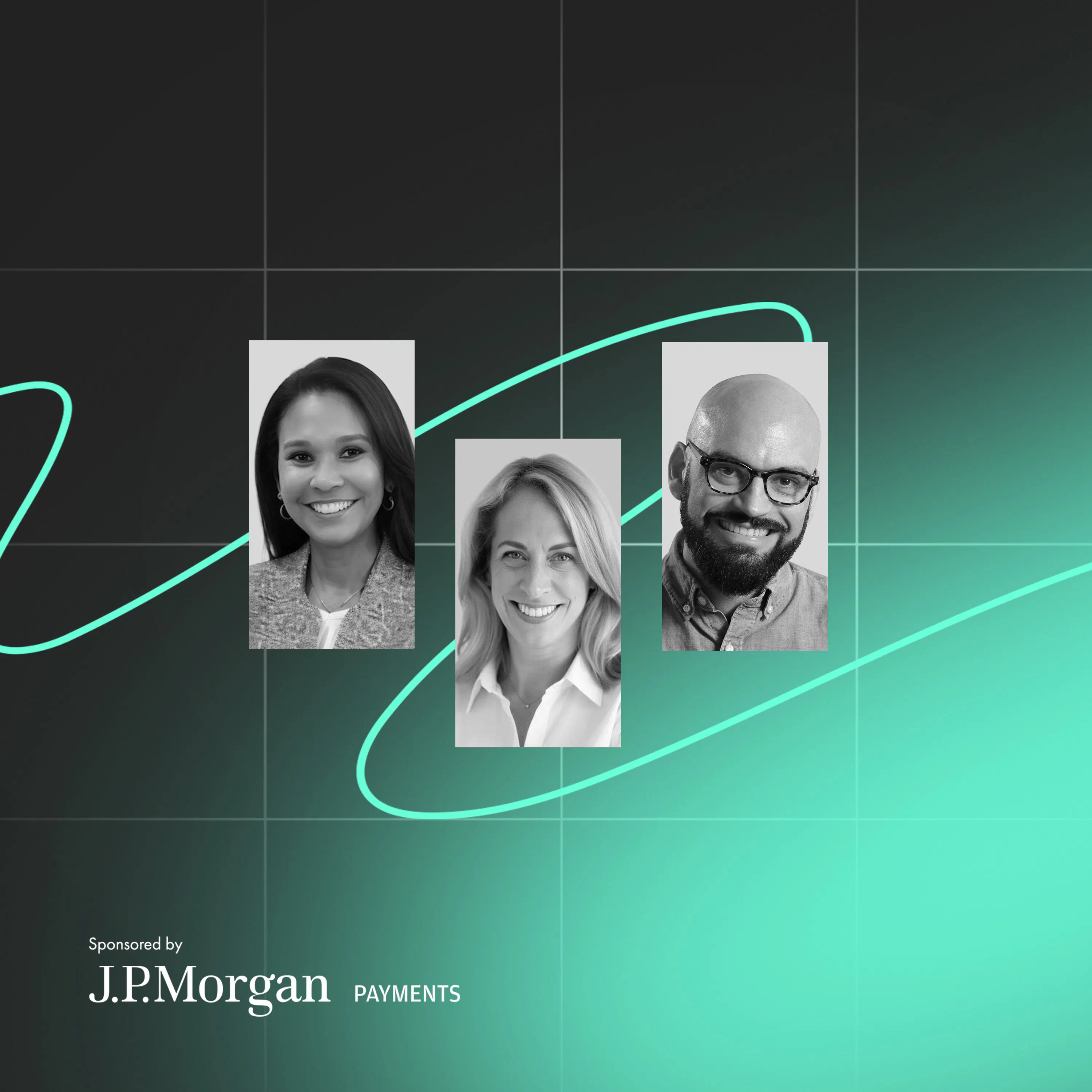
Fintech Insider Podcast by 11:FS
1027. Insights: Lights, camera, transactions! Engineering payments at a global scale with JP Morgan and Netflix
00:52:43
Loading summary
Transcript64 lines
- [00:15]
A
Hey, folks, welcome back to FinTech Insider Insights, where we cut through all of the noise and get straight to the people actually shaping the future of finance. And today, oh boy, we've got an absolute blockbuster of an episode for you. As you know, I'm David Brea Group CEO over at 11 FS and sitting alongside is two absolute heavyweights in the payment world. Tracy Birdsall is the Managing Director and head of Emir and Apac for JP Morgan Payments. And we've also got Kristen Morrow Greven, who is the Vice President and head of Global Payments at Netflix. Today, what we're going to be doing is talking about the stuff that nobody really notices until it breaks. The reliability, scalability, infrastructure, resiliency, and yes, those mind boggling numbers, the transactions per second, tps, as they say in the industry. The things that are really behind the scenes that make the pay systems an absolute blockbuster. So what we're going to be doing is diving into some of the insights we've seen. I mean, JP Morgan have got a Payments Unbound series and particularly volume three of that was really interesting, where they explore how Netflix delivers millions of seamless payments around the world without missing a beat. That's the kind of behind the scenes magic that keeps the lights on, the subs happy and the business running 24 7. So grab your popcorn, settle in and let's get into it because this one is going to be a bit epic, I have to say. So first up we have Tracy Birdswell, head of Amir and Apac Merchant services sales at J.P. morgan Payments. Welcome to the show. Tracey, how are you doing?
- [01:43]
B
Great, great. Thanks for having me. Really great. Yeah. I mean, the title's one thing, right? But at its core, my role is really solving a single massive puzzle like moving instantly, securely and seamlessly payments, different rules, currencies, like it's less about geography and more, I'd say, about connection. So happy to be here and connecting.
- [02:06]
A
Very good. And like you say, that's it sounds like a, when you sort of stand back from it, that's a pretty complex puzzle with all of the moving parts that are all around it, isn't it? But we'll, we'll dig into more of that as we go. But great to have you on the show. Anyway, lovely to see you. Next we've got Kristen Morrow Greven, who is the Vice President and head of Global Payments at Netflix. Welcome to the show. Tell us a little bit more about your role at Netflix.
- [02:29]
C
Hi, David, thank you so much for having me today. Yes, I'm heading up Netflix's consumer payments. And my role centers on making it as easy as possible for our consumers all around the world to pay for Netflix. My team and I are responsible for the strategy, the execution and the operational excellence behind every single payment transaction on our platform. Our shared goal is really just to get rid of all the friction that's out there and making sure that our members can focus on enjoying all the great stories that are on Netflix while we take care of all the behind the scenes mess.
- [02:59]
A
Very cool, very cool. And going rather well as well. Like in terms of achieving that then great job. Everybody must be very happy. Happy on that front. But I guess a smaller panel than we're used to, but very perfectly formed given everybody's experiences. And maybe before we start getting into the wonderful world of payments, then it's always nice to know a little bit more about the background of the people that we're talking to. I imagine when we were all kind of like little boys and girls, we didn't fantasize about a world where we worked in payments or financial services. When we were older, I wanted to play basketball. Weird how it turns out, isn't it? But maybe if we start, Tracy, with your origin. Like how did you get to running not just one geography but two geographies for payments?
- [03:41]
B
I love this question, right? I mean the origin story, like honestly the reason I love it is because I had absolutely zero intention of ever being in payments. Like it was by mistake. I think about. It's funny we talk about movies of Netflix. I'll say it's quite akin to the opening scene of the Matrix, right, where Neo gets this mysterious message to follow the. The white rabbit. And like I, I definitely did that. I followed the white rabbit and ended up in this reality of payment. So I started off at, at IBM and I was in service oriented architecture and application server layer and we ended up building what was essentially the first real payment gateway called CyberSource back. Back when. Right. And so accidentally like laid the groundwork for what became the industry and E commerce and and years later, you know, Visa called me back and said hey, do you want to, you know, help run our sales and relationship management team for the technology that you built when you were at IBM? So quite fi. Just no intention of ever being payments happened to follow the white rabbit. And now I'm in payments. It's really actually been, it's been a fabulous journey and I'm really excited here. Like, I guess I should say like my role from a official answer would be more about P&L you know, regional strategies and client portfolios. But my entry into into payments was certainly that just by happenstance.
- [05:12]
A
Yeah. It's amazing those career opportunities that present themselves, isn't it? I always forget. I mean, I'm a big, big Matrix fan, but we were actually having this conversation backstage at After Dark that we recorded a couple of weeks ago with Richard Davies, who's the CEO of Alica Bank. I always forget which one's the red pill and the blue pill, I'll be honest with you. So, like, that would be a difficult metaphor for to follow. But, Kristen, how about yourself? What's your sort of origin story? How did you get into the wonderful world of payments?
- [05:40]
C
Also completely by accident. But my journey into payments started in the early 2000s. It was Silicon Valley. I was just out of university, not to directly put an age on myself, but it was right in the middle of the tech boom, and I was working as a consultant for retailers who were trying to figure out how to bring their brick and mortar businesses online. And no matter what the business was, clothing, houseware, kitchen utensils, even grocery items, every company had exactly the same sticking point. And that was how to move the money from the consumer to the merchant. And no one had an idea of what all those steps were on the back end in between to move that money. So it piqued my interest in payments, but it became a little bit more personal after that. So I moved abroad, actually to Germany for a new job opportunity. And my curiosity grew as the challenge became really personal. So I had bank accounts in two different countries at that point. I had my student loans and other obligations back in the US and my salary was coming into my German bank account in euros. So every time I tried to move money from Germany back to my US bank account to pay some of those loans, it was like sending a message in a bottle and hoping it would eventually wash up on the right shore. I was literally trying to optimize payments just for myself personally, where every dollar counted at that point in my life. I wanted to move the monies faster. I wanted to pay less. I just wanted to simplify the experience. So it was that combination of my love for technology and my international money mishaps that made me obsessed with finding better solutions for consumers. And I started my career then shortly thereafter in payments, which was starting with PayPal as they worked on their global expansion. And then I moved more recently into Netflix. And we're working to make paying for great entertainment as enjoyable as watching it.
- [07:28]
A
There's nothing quite as motivating as really feeling the problem yourself is there in that sense and. Yeah, exactly. Charting a career to go and fix that problem. It's pretty cool. I mean, Tracy, you talked about multiple geographies there. Obviously. You know, when you talk about the payment systems globally, you know, they're not singular. Like we're talking about different regulators and different regulations and different technology stacks and different competitive landscapes and expectations from consumers. How do you manage that? Because that's not a, that's not a simple thing to deal with.
- [08:01]
B
Yeah, I think it's complex. Right? But complexity doesn't just shape our design, it like defines it. So you can imagine just being global. Like you have to be intensely local and then perfectly synchronized like at the same time. So I guess to bring it to life here since we have Netflix with us today, like recently Netflix has been doing these live streams, right? The heavyweight fight recently that Netflix put on live, like think about the challenge from our side on the J.P. morgan side, right? I mean first you're scaling this massive simultaneous peak, right? Millions of viewers buying, like hitting that buy button and this very tight window of time. So like, and, and of course they're all expecting zero latency, like everywhere in the world. Like it's a tidal wave of transactions and it has to feel instant. So second, like intricate localization, right? When you talk about complexity, like in Europe you're navigating the SCA regulations, like dynamic currency conversions, dozens of different banking behaviors. So in Australia it's completely different, right? And it's not just the payment ecosystem, but consumer expectations that we're dealing with. So two worlds, one seamless event, which is the live event that's going to be streaming on Netflix that everyone wants to buy immediately on. So you know, our systems have to be local everywhere but consistent globally, which is the design principle that's kind of the anti fragility, I'd say say we build redundancy, like intelligent routing. Of course not, not just handling the load, but also like to get smarter under pressure. Like one, one thing I would say like a pathway in Frankfurt as an example, like if we show a millisecond lag time, like our systems can reroute to Amsterdam before like a customer can even fill it. So like David, your question, like the global complexity, you know, it forces us to stop thinking in terms of regions and we start thinking in terms of real time. Adaptive grids. Adaptive grids. And so like the Netflix fight, it wasn't just like a streaming event for us. It's like the ultimate live test of payments infrastructure that like, it cannot ever like fail or fall out of sync because when that main event starts, the last thing anyone wants to be thinking about and certainly Kristen and her team is like, is their payments working? Right. The last thing they want to be thinking about is oh my gosh, can we handle this peak? Right. So extra stuff I would say on this topic is a payment system for a global merchant isn't just moving money.
- [10:52]
C
Right.
- [10:53]
B
You can't just simply say we're just moving money. It's like managing thousands of people of local realities like regulatory consent in the EU and then real time settlement windows in Singapore, perhaps to building transaction codes in Brazil and then like none of those can fall out of sync and the user for the user. Right. And the user experience because it would break our trust. So hopefully that helps kind of share how we really local everywhere but consistent globally.
- [11:25]
A
Yeah, it's a crazy tapestry like the regulation, the payments set up globally. You know, I don't even know how many countries there are. Was there like 200 plus countries, something like that? You know, like the amount of countries that are out there that have a different regulatory capability, it's like everybody having a completely different system and having full interoperability for payments to work in a consistent way. Because like you say at the end of the day the merchants who are working, but also the consumers who can consuming, they don't care about the complexity, they just care that the, the outcome that they want is there. As somebody who watched the fight, by the way, it worked perfectly. So thanks very much for that. I really appreciate the efforts that you did. And yeah, I got to, got to stream that great, great spectacle as well. But I mean, Kristen, obviously Netflix, you guys were pretty early in terms of the subscription model and actually as a, I mean as a business model, it's putting yourself out there every month as a, you know, to, to say, you know, other organizations do an annual thing or longer in that way to tie people down to these things. But subscription model, I think it's quite an interesting way of ensuring that actually there's always value that's being exchanged there and not just from a payments perspective in terms of, you know, a typical merchant setup around that, but really in terms of the value to the end consumer. So I mean as a business that's very successfully built your business on that, then talk to us a little bit more about that.
- [12:50]
C
Sure, yeah. With the subscription model, I think the really important thing is that that payment relationship with the end consumer is ongoing. So instead of a customer actively deciding to pay Every single month we're working to ensure that the service continues without interruption and that payments happen reliably in the background. But we need to keep delivering on the content so that the customer doesn't lose trust in the product or the choices that they made. And we want to make it really easy for them to get out of the subscription if, if they're not seeing the value anymore. I think that Netflix was lucky because we started off with a very simple subscription model from the very, very beginning, even going back to the days when we were sending DVDs in envelopes. And we maintained that simple model for many, many years. And that allowed us to focus on optimizing the performance of these subscription payments. There's a lot of things that are really unique about subscriptions compared to one time payments. And maybe I'll go into a couple of those things very similar to what Tracy was already talk around that global and local performance needs. First off, there's authorization and retention. And I would say most important is you just want to be ready in case a card expires, accounts change, banks have downtimes, or people even run out of funds. So where we try to anticipate and really manage these changes to avoid any sort of unintended service interruptions. And then similar to what Tracy said, we've also built intelligent retry systems and member friendly notifications because we want to resolve these issues and keep the viewing experience unerrated well before the customer even notices it. So it's that kind of seamless backend experience which is what we really value. And certainly we've got the global complexity. So Netflix operates in more than 190 countries around the world. And each one of those countries, as you both know, has its own preferred payment methods, banking rules, local nuances, compliance. And so we want to invest in building a platform that supports all of those local payment options so that payment payments are as local as possible and members can pay in the way that's really familiar and convenient to them. And what's been really challenging for Netflix is sometimes those locally preferred payment methods are not ones that work really great in a subscription model. So it adds to the complexity and challenges that my team faces. We try to either encourage customers to give us another payment method or in some cases work with those local regulators and local schemes in order to make those payment methods work in a subscription environment. Really what undermines all of this is if we break the trust or have any sort of breaches in security, so we're handing sensitive payment data over a really long Period of time for some of our subscribers and security privacy, it's just absolutely paramount to the experience and we're investing heavily in keeping our members information safe and keeping those compliance standards in order. But behind the scenes we're looking at a lot of advanced technology to do that. So it might be machine learning to optimize payment performance or potential issues that might come up, or it might be tokenization that helps keep the payment credentials secure. So we're working really closely with partners like Chase to stay ahead of the industry changes and continuously work on that reliability and stability of those subscription payments.
- [16:11]
A
Yeah, it's fascinating, isn't it? It's one of those ones, especially for an organization that sets such a high bar from the service that somebody's buying, then no part of the touch point with consumers can be any way less than that. Right. So your, your sort of first interaction with somebody when they've decided to do it and then the ongoing interaction with somebody is the, is the payment flow, isn't it? So it's sets the rest of the company sets a pretty high bar for you in that regard.
- [16:37]
C
Absolutely.
- [16:38]
A
Yeah. You guys have done a lot in this space to sort of evolve it as well. I mean, not just the extended sort of subscription model around it, but things like Netflix House is in. A really good example is it's sort of evolving what you guys are offering, even to the point where you, you like you say you're, you're putting on globally televised events, sporting events, which was not really your reason to be in the beginning.
- [17:02]
C
Thank you for the question. Yeah, that's an exciting one because it's really an evolution of Netflix for the first time in a long time. We had the envelopes more than 10 years ago and we had the streaming memberships and now we're really trying to offer some new things for our customers and the fans of our biggest shows. We're evolving beyond the streaming model and our payment playbook does need to evolve right along with it. And you know, we're seeing things like new subscription tiers, our ad supported plan. And there what's different for Netflix is that we're reaching different audiences who may actually have different payment preferences and sensitivities to price than we've seen before. So we need to be more flexible in the payment options that we offer. We need to support smaller transaction sizes which can change our operational setup. And we need to ensure that our systems can handle things like planned upgrades or downgrades and just a seamless transition between plans for our consumers. We just Want it to be as accessible as possible to them. On the other hand, there's experiences like Netflix House. So we're moving into physical in person entertainment, bringing a whole new set of payment scenarios for us. And I think it's taking my whole team back through payments 101 as we remember what it's like to do point of sale transactions. So suddenly we're just not processing digital subscription, but potentially ticket sales or merchandise, food and beverage payments. Who knows what else is going to. So this is going to require being very thoughtful around, making that transition and ensuring that our payment capabilities as they existed in the digital space, can work also in the physical space. We're really just aiming to have that same frictionless experience that our members expect online, but in a real world setting. And so I would say each of these sequels in the Netflix universe, it really challenges us to rethink and expand our payment infrastructure so that we can move more quickly because I don't even know if we know yet what it's going to look like in another year or two. So we need to be agile, we need to be able to be ready to scale really quickly to these new business models. And hyperlocal still is very, very important because, you know, what works for a streaming subscription in Brazil might not look the same as a ticket purchase in Dallas, Texas, for instance.
- [19:20]
A
Yeah, I mean, you say the sort of, the scaling part of that. I think that's the particular bit that, I mean, you guys have all probably sat around a table at Thanksgiving or, you know, Christmas is coming up and you know, expl all of your relatives. The scale of the things that you do when you talk about, I mean, obviously Tracy moving, you know, loads and loads and loads of money around the world and Kristen, from a scale of subscriptions that are coming through Netflix, I mean, there must have been a few times through your career I remember sitting at a bank going, man, we've got like a lot of customers now. Like, this feels like the stuff we're doing actually has like a huge impact. So that's exciting, but obviously comes with a, an interesting sort of an element of pressure, doesn't it, with, you know, providing this level of service around the world. So are there any points where you've got to, where you've gone? Do you know what, like, wow, this is serious now. Or, you know, is there any particular moments where you've had to rethink the. Either the resiliency or the reliability or the scalability of the systems that you're dealing with? Tracy, maybe starting with You.
- [20:25]
B
Yeah, absolutely. I mean we absolutely need to rethink our systems. Like I think it, it's, it's interesting, right? Like for us, you think about the movies, right? When I think about Netflix, I think about movies. And like it's, it's really that blockbuster opening weekend where everything has to be right at the same time. Like the, the projector has to work, the lobby can't be jammed, the popcorn's ready. Like everyone has to be in their seats all at once, right? When you talk about scale, like for us at JP Morgan, like opening weekend happens. Happens every single day. Yeah. So like we, every day JP Morgan is moving $10 trillion in transactions. Like that's more than a GDP of most major economies, quite frankly. And of course supporting 120 currencies and that. So I guess it's not an accident. Like it's architecture when you talk about scale. And globally, like our acquiring transactions this year will hit well over 2,0 point trillion dollars from merchant car payment processing. But the real magic, I would say is anticipating like the spikes and that scaling before it happens. Our annual tech budget at JP Morgan is $18 billion. Like it's massive. And it becomes a story of intelligence, not just infrastructure. Right. So there's a significant portion that we call our predictive grid and AI machine learning. And Kristen kind of alluded to machine learning layer as well. It doesn't just monitor traffic, it starts to forecast traffic. So you know, it's, I would say like it's like a highway, right? You can't just build wider highways. Like, because could you imagine like you're driving down a highway, we just keep building wider highways. We have to like have a self organizing traffic system, right? So it sees the congestion a couple exits ahead, like where we're headed. You know, rerouting flows in milliseconds, like one pathway in Frankfurt. Like if we have a pathway in Frankfurt that hesitates, like we should be able to glide it seamlessly over, you know, Amsterdam or London. Like before the customers can even notice that. Right? So we rehearse for chaos. Like we really rehearse for chaos. I kind of laugh, but it's like the simultaneous volume earthquakes that we are deliberate for. Such full scale tests that mimic everything from a market crash, you know, a viral shopping holiday. Like we just had Cyber Monday and we had Black Friday. But we turn kind of the crisis response into this muscle memory here at J.P. morgan, right? So without missing a beat, we have like this massive intelligent investment that we put into our systems predicting self healing technologies as well, like this, that highway that I was talking about. And then a culture, I think really I have to. It all comes back to people in culture. Like, we treat being prepared as performance. Like, because, you know, if it's, whether it's a global payment or a Blockbuster ticket that you're trying to buy, the experience should feel effortless. Like no matter how, you know, many people are rushing through the door at once. So I think that's really important that we treat our teams as well that look at the complexity and interconnected failures and think ahead of where things can fail.
- [23:55]
A
Yeah, it's fascinating. And like you say, the sort of predicting. I think it's the old adage with insurance, isn't it? The best form of resolving something is preventing it. Right. So systems that can actually preempt that there's going to be major requirements of it or impact to it in one form or another. But I love what you say, ultimately every business is a people business. Right. So, Kristen, I mean, you guys are OGs when it comes to everybody's crush for culture. So how much do you share that when it comes to the need for really reinforcing those boundaries and actually that people really are the ones that make all of these things happen?
- [24:36]
C
Yeah, I think that's a great question for us as well. And I can really resonate with everything Tracy said on those moments of, of just having huge customer demand. And we talked about live a little bit already. We thought things like Stranger Things, new seasons were big. You know, I'm a big fan of our Love is Blind series. I thought that was pretty big. People are tuning in for that. But Jake Paul and Mike Tyson took us to the next level in terms of audience excitement. And then you've got Christmas Day NFL with some Beyonce star power added in. And we knew we were expecting huge audience audience. So can really relate with that. Yeah. But I love this question because it's the reason I've chosen to stay at Netflix as long as that I have. It's really a truly learning environment where the dynamic payment industry is changing all the time. And the Netflix business model and the consumers it's bringing in is changing all the time as well. And the Netflix culture that has been built by our founder and continues on with our CEOs is really what enables my team and me to remain flexible and innovative, to move quickly and prepare for all of these changes that come our way. And I think one of the things that, you know, we do as a cross functional team is that we work to really create this mentality where we don't operate in silos and we understand that to deliver any project, it takes so many different functions operating at their best to deliver. This could be payment managers, product managers, engineers, analysts, data scientists, designers, operations experts, frauds experts, legal folks. It's really massive. So we do see ourselves as a single unified crew and we want to bring our own expertise while working towards the same end goal of delivering that seamless experience to our members. And Netflix is also quite famous for its culture of freedom and responsibility. And you know, when I think about what that means in our team, it's around empowerment of the team members, giving them the autonomy to make decisions, paired with a strong sense of accountability towards that single goal that I talked about already. And because everyone understands that mission critical nature of payments, we really rally together and we communicate very transparently and we debug our mistakes early so that we can focus on the solutions.
- [26:58]
A
Very good. Yeah. We say at 11Fs success is essentially a team sport. And I completely agree with all of this. I think we could probably do a whole nother podcast just on what you've said. So we'll come to that point another time. So, I mean, at this stage we're about talking, talked about scale, we've talked about technology. I promise not to beg for Stranger Things releases early, so I've managed to keep that promise, which is good. But what we're going to do is get in a little bit more about, really about what making payments work flawlessly at Netflix level really means. So don't go anywhere, folks, because after the break, we'll be diving into how that is handled and dealing with those massive spikes, building resilience into those systems, navigating global complexity and exploring the trends and lessons that have really shaped, shaped what they think the next frontier for payments is going to be back with you very soon. All right into the second half then. There is so much that we could unpick from the first half of the show. I think. I know, sadly, everybody's got a life and other things that they've got to go to in everybody's diary. So this edition won't be another seven hours long like I want it to be. But maybe if we start with some of the technological pizzas that we've just talked about. Because, you know, at this scale, you know, with peaks that we're talking about in terms of the, the, the, the payments requirements and the engagement from consumers, there's nothing really that compares to this. You know, the, the only thing that I can think of in the Payment sense that is even comparable would be built around live events, something like a gap, maybe gambling. That would be the only thing that even compares to, to payments. And even then, the payments plays a massive part of, of that industry as well. You even design for these scales of volumes because, Tracy, I think every CTO in the world that you might give this option to would probably freak out. So what does that look like? How do you start there?
- [29:03]
B
Wow. So there's a lot to unpack in that question, right? It's a trillion dollar question.
- [29:08]
A
It's like there's no whiteboard big enough, is there, to start with that diagram.
- [29:14]
B
But really, like, you know, you have to think about multiple risks as you build out payments today, right. There's no singular risk, right. They're kind of cascading. So it's involved in like, it's like, I wish it was an isolated system failure, but it's way more complex interconnected failures that could happen. And so we, we build for that, right? So it's coordination, intelligence, trust. Like, I think the three primary risk layers to think about are the synchronization risk, I would say is number one. So what I mean, right, by that is like a delay isn't just a delay. Like it's a mismatch. And payments might clear in one country, but then they get held up in another country due to time zones, cutoff times, like local holiday schedules. So if a settlement cycle falls out of sync, like liquidity gets locked up. Like this is like the silent systemic risk that scales when we open any new corridor, right? So that's, that'd be one is to think about that synchronization risk. The, the next one I'd say is more that intelligence risk. So what I mean by that is when you're handling the type of volumes at scale, trillions daily, you can't just monitor like it's no longer good enough to monitor, but we have to predict, as I said earlier, so the risk isn't just an outage, right. The risk is failing to see a pattern before the break. And a fraud algorithm, for example, in Europe might work perfectly well, but then it would misfire in Asia. So like blocking legitimate transactions at scale. So I think when we look at building and we look at the different coordinations and risks, it's not just the synchronization risk, but the intelligence risk risk. And the third would be adaptation. And what I mean by that is behavior, right? So where global expansion turns into, I would say a drama is like every new market isn't just A new regulation or a local rail, it's a new behavior. Like in Germany as an example, invoiced in invoices and, and bank transfers are dominant. But in Indonesia like real time wallet based behaviors are. And then in Brazil like installments becomes baked into the culture. So the risk of building a global system that's rigid like that, then you try to force everyone into that same mold like it doesn't work. So you've got to also think about that adaptation risk. Like I think it comes down to resiliency that keeps the show running.
- [32:00]
C
Right.
- [32:01]
B
But we have a principle at JP Morgan that's about global coherence but local autonomy. And we have to first we decouple to survive. And the architecture is built in those regional pods. So hopefully that helps kind of answer the question. I think there's a lot more that I could unpack there.
- [32:22]
A
Definitely. Yeah. I mean it feels like the trillion million dollar question, doesn't it? Because actually like you say, when you've got this tapestry and you're creating capabilities that sit across all of them and in real time they're syncing up to allow all of these things to happen with a customer experience. I mean, Kristen, actually for you as well, with people moving geographies like actually keeping the consistency of the experience all around the world must be an interesting challenge to match. But I guess on, on that operational risk for an operation at the scale of Netflix, I mean, how do you stand back far enough to take into account all of the possible things? Again, it's a very large whiteboard to get all of this out and up on. But how do you manage that effectively? And I reckon your answer is probably very good people. But what's the way of managing those types of operational risks?
- [33:17]
C
That's absolutely a big part of the magic at Netflix. But I would say the biggest risk in those moments is customer disruption. As we talked about before, if people can't pay, especially during something like a live event, it's not just a missed transaction for us. It's a poor customer experience. It's a hit to our brand. It's an opportunity for a competitor or in a new content area, it could be a trust breaker where customers just don't believe that we can deliver on that type of content. So we're really designing for resilience from the ground up and we've got a couple of rules that we stick by and has served us quite well. So in our largest markets, we certainly are looking for redundancy by integrating with at least three payment processors in this way, if one network or processor goes down, we can just seamlessly reroute those transactions and keep the stream flowing. And we try to tailor our mix of payment methods by region too. So even if there's a payment method failure, the customers have a redundancy in the way that they can pay and they've got alternative options in case their preferred payment method isn't available. And here's where, like maybe the subscription part of our business is somewhat of an advantage and gives us some flexibility in when and how we process charges. So just, you know, if you think it's a one time transaction, you don't have a lot of flexibility. But we can sometimes hold onto those transactions, allow someone in to stream that content and then charge them at a later date in case there's any sort of system failures or outages. So that helps us optimize timing and manage volume a little bit more effectively than other merchants that don't have that subscription set up. And of course, you know, we really look at data transparency from our processing partners. It's really critical to us because we can't quickly identify issues or reroute the payments as needed if we don't have that data. So we have set a really high bar for our partners and we prioritize those partners that don't just bring us great technology, but also operational excellence. Chase, for example, sets the gold standard and support and continuous improvement there. So those are a few things that we always are having to think about and have helped set us up for success in some of these high demand areas.
- [35:26]
A
And obviously the world is evolving amazingly quickly. You know, from a technological perspective, we're seeing advancements in technology quicker than ever before. You know, it's, I feel like every third sentence anybody says at this stage is to do with artificial intelligence. Right. So you talk about a little bit about machine learning earlier on. I mean, this system is not standing still and actually the world that it operates in is definitely not standing still. So how do you sort of bring in and you know, with the, all of the resilience, all of the stability that you need, you're constantly evolving the way in which you're engaging and the things that you're doing. I mean, Tracy, this is a, is a huge task in itself. But you're, you know, you're changing the tires on the car while you're hurtling down the road, aren't you?
- [36:11]
B
Yeah, absolutely. I mean, first of all, Kristen, thank you for the nice words you have to say about Chase. And you know, it is, I Think as we look at the emerging technologies and things that are going at the speed of light, right? You talk about the buzzwords AI, ISO standards is also another one. But it's important, right? We look to kind of three principles, right? Deep local partnerships. We also partner modular scalable infrastructure, but also that continuous innovation. So when I talk about the continuous innovation, it's not instant payments, AI, blockchain, rails. So it's kind of a client backed approach. And when we think about our merchants, we think about our customers. Customer, right. It's not just about our customer, but the end user at the end of the day. So we're embedding AI not to just catch fraud, but also predict the bottlenecks. You know, we're making payments smarter. We're rolling out that ISO standards globally. Like that has to, every rent has to carry the richer data sets. And Kristen mentioned early, like, data is so important to our merchants, right? And, and so these are some of the things like turning a transaction, I'd say more into a conversation. So we, that data kind of helps us put that conversation together like in the background. We're trying to have discipline in all of these areas and there's so many of them, right. So we have to make sure that while we're in isolated environments, while we're testing, we're mimicking real scale without real risk in some of these walled garden, safe, isolated environments that we're testing in. Like nothing for us will go live until it's battle tested, fail safe and all of these things, right? We have to build like that modular, those modular pieces that we can sliding, slide into to other areas of our business. So anyway, it's really being able to have the confidence that comes with knowing like the show has to go on, right. Even though we're like quietly rehearsing in the background, like the next act that we're putting together for what's to come in terms of emergent technologies. So we're, we're doing a lot of things in the background that hasn't hit prime time yet, but it's, it's on its way out.
- [38:36]
A
Feels like a sneak peek that you just gave us there. I feel like, I feel like there'll be another episode talking about that as well. But I mean, as you, as you say, the, the industry is not, you know, is not a protected bubble either. There is a, you know, a deeply organized fraud all around the world. And actually being ahead of that, they're known to be reasonably innovative fraudsters, you know, so actually they were, you know, they really sort of lean in on those sides. So to continually stay ahead of that curve. But also from all of the advancements that are happening in other forms of engagement that customers standards are set from. It's, it is a, it is a difficult task. But one, it, it feels like you guys are kind of really staying ahead of that curve on though I guess there's always an interesting balance of like bringing in new things and disrupting the old way of doing things and that you talk about that continual experimentation piece. Do you think that again is a, is more of a sign of like a cultural change than it is necessarily a technological one?
- [39:33]
B
It can be for sure. Like the engineers who can spot a fragile assumption that we've made.
- [39:38]
C
Right.
- [39:38]
B
Like before they're put into production. So we, it's, I would say our architecture has shaped in our culture and you know, we don't just test now for like what we expect to fail, but we simulate what we can't even imagine failing. And that's built into the culture of, of the team. I mean it was. You were talking about things about production and I love that Netflix calls them their crew. Right. Like it's exactly that. Like a great film crew. Like if you're filming a movie, right. They, they know their role. Like it's not just, you know, they rehearse in the rain, right. They rehearse when equipment fails and it's the unexpected. So in the same way we're rehearsing for like that unimaginable rhythm, we're also making sure that our production crew and our crews behind the scenes are rewarded. So that brings out culture as well.
- [40:24]
A
Yeah, yeah. So it is fascinating that that drill of, you know, what if it goes ridiculously well as well as what if it goes, goes wrong. It's training for both those scenarios is really important. There were some highlights from the so the JP Morgan Payments and Bound series that there was some Netflix specific insights at scale that came out of that. And this first one is a bit of a tongue twister. So I'll go through it and then Kristen, we can talk about it a little bit after that. So the findings including Netflix manages its global subscription revenue with a layered FX hedging strategy, smoothing currency volatility rather than locking in the exposure at once. So treasury is thus a strategic, strategic lever, not just a back office support got through that first time. I was quite impressed that I did that. But I mean that's definitely not Christmas table communication to your family. But for people listening to this, who might just be getting into Financial services. What does that mean? What does that mean for payments?
- [41:23]
C
This really just means we need to be incredibly agile and adaptable. We need to offer a wide range of locally preferred payment methods. We need to anticipate regulatory changes and challenges and we need to work closely with our partners who understand the nuances of each market. I think that's the most important part to take away from that. But you know, what we've seen on the treasury side is that in some countries, currency controls can really mean sudden changes in what's possible for recurring payments or even whether certain cards can be used at all. So being very closely aware of what's happening in the treasury landscape is really critical to the customer experience as well. And you know, similar to the comment in that article, the big learning here is that payments teams also need to be very strateg, forward looking. It's not just about being a robust platform, but all about staying close to what's happening on the ground and constantly monitoring, adapting and innovating so that we can keep the customer experience as smooth as possible.
- [42:20]
B
So I just want to say one thing, right, Like, Netflix is amazing. So if you look at foreign exchange and hedging as a strategic lever, like it's, it's ready for prime time in any global subscription business, I mean, if you think about a SaaS company, streaming rival, you know, different platforms, like you're billing in 50 currencies or even if you're billing in 10 currencies, like you're not simply collecting revenue, like you're smoothing out volatility instead of like locking everything down. Like as it gives you optionality and margin resilience. And it's very dynamic and it's fantastic to see.
- [42:58]
A
Yeah, as you say something that would typically be a back office, you know, thing is being used as an opportunity to make every local element much more strategically capable. And that's an amazing thing. Again, it's part and parcel of the, you know, the beautiful world that we live in of interconnectivity and 24 hours a day and you know, being able to do everything everywhere. But organizations that truly take advantage of that and use that to become a strategic weapon is few and far between. So one of the other things that was talked about in that there is, and obviously, you know, the subscriptions and the adverts and the programs that Netflix do, the opportunity for being ever more personalized with those things. So there was exploring shoppable interactive ads through smart TVs, which sounds like Jetson stuff, you know, in terms of where you're going to get to with it but you know, paying by voice, remote based checkouts, that all sounds amazing for creators. You know, Netflix is known for such a personalized. It's the things that I love and curation of the stream of things for me. But taking that not just from the shows but into all of the experiences that you can have. And obviously that has a knock on effect with payments, engagement and everything as well, that feels like a pretty exciting future.
- [44:19]
B
So I mean I could answer some of that. So the Unbound series also, you know, shared some about the shoppable interactive. Like it's, it's really great fun. Right. When you think about it, I think it's a future of commerce in the stream like or even applying to live sports and broadcasts. Like you want to buy that jersey while the players scoring on the field. Right. It's the lesson of like removing those steps between being inspired you're being inspired or the inspiration of a purchase to directly to the transaction. Right. So I think the commerce and stream, it's really fun and a lot of customers are doing that today and a lot of merchants are looking at expanding on how to build that engagement. Engagement and you know, media, gaming, fitness, education, even like, you know, how do you embed payments into an experience and not just like wait till the end and slap up a QR code. Right. You want it to be part of that experience, if you will. So I think, I think that was a interesting lesson learned and unbound. Really talked about that in the article.
- [45:25]
A
Yeah, I mean it feels like, it feels like you're doing it to yourself now guys like you, you talk about the peaks of these sporting events. You're going to do it every weekend with everything and every like yeah, it sound, sounds great. It's going to be a really good film.
- [45:35]
C
I'm definitely going to be spending a lot of my own money on those ads.
- [45:38]
A
I know, that's what I was thinking. I can't help but feel I'm going to be broke here. But, but that sounds, that sounds awesome. All right, well, we're going to have to wrap up I'm afraid guys, because really, really great conversation but I know you guys have got to head off very shortly. I know we touched on this a little bit at the beginning with you know, you've, you've had a, both had amazing careers and you're both doing amazing roles. But I guess for fintech leaders and payment teams around the world who are engaging with this, what type of behind the scenes or what bit of advice Would you give them to be able to deal with the level of scale and reliability in the way that you guys are? Tracey, maybe starting with you, what would be the advice?
- [46:19]
B
I would say frictionless in the background. Right? Like frictionless until the point of desire for someone to settle an intention, whether it's buying that jersey or buying something, something in the transaction. Like it's. It's almost controversial to say, but it's kind of the end of payments itself. It's more about settlement. Right. It's more about the negotiation before and then the validation around it. So business becomes more about the outcome and, and the settled transaction. So it's. Yeah, I definitely would say the real frontier is making payments to a certain extent disappear and then all that's left is the value that's delivered and then settled at the end.
- [47:01]
A
Very good, very good. Kristin, what would be your advice to a team trying to emulate you guys?
- [47:06]
C
I would tell that team that they should treat their payments function not just as a technical team, but as a core part of the customer experience. The most reliable and scalable systems are built when engineers, the product leaders and the business teams work together as one team and are just constantly collaborating, sharing context and solving for the member first, not just the metric.
- [47:27]
A
Very good, very good. And most importantly, question like, what are you most looking forward to watching on Netflix in 2026? Tracy, what about you?
- [47:34]
B
Well, outside of catching up on Stranger Things, I have to say the. The liveaction adaptation of Avatar the last Air Bender season three. Right. Like, it's just a legendary story. I'm really looking forward to seeing that. Like, it's handling enormous power and responsibility which quite frankly ties into what we're talking about here of handling so much responsibility. And like, it's a metaphor for scaling payments infrastructure. So I'll be curious to see how Netflix also handles the next live events that they're pioneering and a perfect blend of, you know, next gen streaming as well. So yeah, I mean, I'm really excited about it, but yeah, obsess over designing for your worst day. Not your average.
- [48:21]
A
Very good. Kristin, what are you most looking forward to, series or movie wise next year?
- [48:27]
C
I can't wait to see what magic that Greta Gerwig brings to one of my all time favorite childhood series, the Chronicles of Narnia, which is coming in December 2026. So we've got a while to wait.
- [48:39]
A
Yeah, love that as a child I have to. Do you know what? Bizarrely, this year we are actually changing our family's routine on Boxing Day because of the release schedule of Stranger Things. Like, that's how big big that is. So, yeah, like, no, I don't want any spoilers over Boxing Day lunch, you know, so. So, yeah, we're getting together as a family and watching it before everybody gets together. So that's one for me. All right, folks, we're gonna have to wrap up today's discussion though a massive thank you to the panelists for breaking down this really, really important subject matter with me today. Thank you so much for joining me. Christian. Where can people learn a little bit more about you and all the good stuff you're up to?
- [49:17]
C
You can find me on LinkedIn and occasionally at a payments or e commerce conference, mostly in Europe, sometimes in the US or you can find me for coffee in Amsterdam or Silicon Valley.
- [49:26]
A
Sounds good. Sounds good. Tracy, how about yourself?
- [49:29]
B
Best place to connect is on LinkedIn, of course. And look, you can find me on the beach in Portugal with a notebook thinking about, you know, designing and, and having these problems solved. But yeah, thanks again for the conversation, David. Kristen, it's been an absolute pleasure.
- [49:44]
A
No worries at all. As always, you can find me predominantly lurking on LinkedIn these days. Thank you so much for listening. If you like what you've heard, follow our podcast. Don't forget to leave us a review. It helps us make it even better and helps other people find the show as well. As always, if you do want to join the conversation, you can find us on all social media channels. Just search for 11Fs or FinTech Insider. Or if you really want to, email us on podcasts@11fs.com. Thank you very much for listening. Missing everybody. Goodbye. Well, the holidays have come and gone once again, but if you've forgotten to.
- [50:17]
B
Get that special someone in your life.
- [50:19]
A
A gift, well, Mint Mobile is extending.
- [50:21]
B
Their holiday offer of half off unlimited wireless. So here's the idea.
- [50:25]
A
You get it now, you call it.
- [50:27]
C
An early present for next year.
- [50:29]
A
What do you have to lose? Give it a try@mintmobile.com Switch limited time.
- [50:34]
B
50% off regular price for new customers. Upfront payment required $45 for three months, $90 for six month or $180 for.
- [50:39]
C
12 month plan taxes and fees. Extra speeds may slow after 50 gigabytes per month when network is busy. See terms.