Podcast
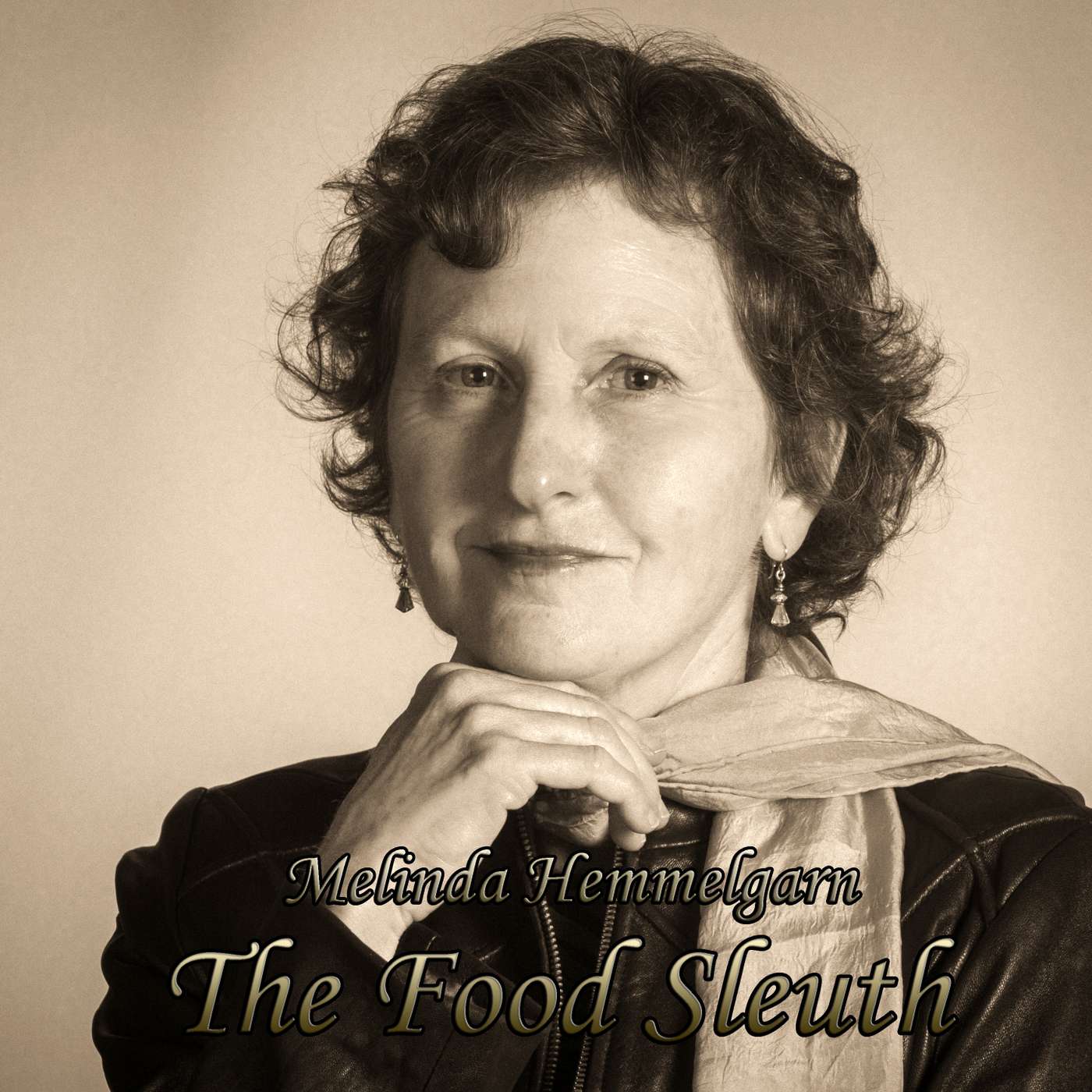
Food Sleuth Radio
Hosted by Melinda Hemmelgarn · ENGLISH
Dietitian Melinda Hemmelgarn helps listeners “think beyond their plates,” connect the dots between food, health and agriculture, and find food truth.
891episodes
Episodes
Newest firstAll episodes
Don Schaffner, PhD, food safety microbiologist discusses cyclospora.
6d ago00:28:09Tap to summarizeDid you know that we have a “cyclospora season” in the United States? Join Food Sleuth Radio host and Registered Dietitian, Melinda Hemmelgarn for her conversation with Don Schaffner, PhD, food safety microbiologist at Rutgers University. Schaffner discusses the nationwide cyclospora outbreak, cuts to the Centers for Disease Control and Prevention’s FoodNet, and what is likely multiple outbreaks of cyclospora. Schaffner has been widely interviewed and discusses the topic on his podcast, Risky or Not: https://www.riskyornot.co/ Related Websites: https://www.fda.gov/food/outbreaks-foodborne-illness/investigation-9-state-outbreak-cyclospora-illnesses-iceberg-lettuce-july-2026
Transcribe →Lauren Dinour, PhD, RD, professor of nutrition and lactation consultant.
2w ago00:28:09Tap to summarizeDid you know that Arkansas is the only state that requires breastfeeding education in K-12 curriculum? Join Food Sleuth Radio host and Registered Dietitian, Melinda Hemmelgarn for her conversation with Lauren Dinour, PhD, RD, professor of nutrition, lactation consultant and advocate for “first food justice.” Dinour discusses the multiple benefits of breastfeeding, and her research looking at breastfeeding education in K—12 schools, breastfeeding images and how they inform cultural norms, and why and how workplace support of breastfeeding is critical to public health. They also discuss how breastfeeding is key to sustainability and resilience. In honor of National Breastfeeding Month (August) and World Breastfeeding Week (August 1-7), the two discuss how society supports or makes more difficult a mother’s ability to feed her infant human milk, and the multitude of benefits breastfeeding provides to infants, children, maternal and planetary health. See: https://worldbreastfeedingweek.org/ Related Websites: Breastfeeding Education in Kindergarten Through 12th Grade: A Content Analysis of United States Health Curriculum Standards: https://onlinelibrary.wiley.com/doi/full/10.1111/josh.70173
Transcribe →Jon Magee, Agricultural Justice Project
3w ago00:28:09Tap to summarizeDid you know that the Agricultural Justice Project (AJP) has worked to promote farm and farm worker justice for nearly three decades? Join Food Sleuth Radio host and Registered Dietitian, Melinda Hemmelgarn for her conversation with Jon Magee, farmer, organizer, researcher and lead author of AJP’s sunsetting report, “A Season for Solidarity.” Magee shares key components and barriers related to farmer and farmworker justice. The Project will be closing, but their report and toolkit can carry their critical work forward. See: https://agriculturaljusticeproject.org/toolkit/ Related Websites: A Season for Solidarity Report: https://agriculturaljusticeproject.org/pdf/AJP-Season_For_Solidarity-web.pdf
Transcribe →Kelly Hunter Foster, JD, Senior Attorney, Waterkeeper Alliance, discusses data centers.
4w ago00:28:09Tap to summarizeDid you know that AI data centers consume large volumes of water in their cooling systems and generate polluted waste water that requires treatment? Join Food Sleuth Radio host and Registered Dietitian, Melinda Hemmelgarn for her conversation with Kelly Hunter Foster, JD, Senior Attorney, Waterkeeper Alliance. Foster discusses water use, pollutants, and overall environmental and public health concerns from data centers. She also discusses externalized costs, the loss of agricultural land, critical protective policies, and discussion points to share with legislators and citizens faced with data center construction in their communities. For impact on rural communities, see the fact sheet produced by the MO Rural Crisis Center: Big Data Centers Make Bad Neighbors: https://save-our-farms.org/ and for the link between data center and PFAS compounds, see: Data Centers and PFAS: https://www.eesi.org/articles/view/data-centers-are-contributing-to-pfas-forever-chemical-pollution Related Websites: Invisible, Unbreakable, Unnatural: PFAS Contamination of U.S. Surface Waters: https://waterkeeper.org/wp-content/uploads/2022/10/Waterkeeper-Alliance-PFAS-Report-FINAL-10.14.22.pdf
Transcribe →Tristan Brandhorst, PhD, on the fungicide, fludioxonil.
Jul 1000:28:09Tap to summarizeDid you know that breakdown products of a widely used fungicide in the U.S. food system poses both environmental and public health risks? Join Food Sleuth Radio host and Registered Dietitian, Melinda Hemmelgarn for her conversation with Tristan Brandhorst, PhD, Senior Research Scientist, University of WI-Madison. Brandhorst discusses his research on fludioxonil, a widely used fungicide in agriculture which breaks down to form a PFAS compound, thereby posing harm to our environment and human health. Consumer Reports ranks fludioxonil one of the six most concerning pesticides on produce. Related Websites: Breakdown products of the fungicide Fludioxonil may account for observed environmental impact: potential implications for human health: https://pubmed.ncbi.nlm.nih.gov/42254677/
Transcribe →Marc Boom, Senior Director of Public Affairs, Environmental Protection Network.
Jul 200:28:09Tap to summarizeDid you know that the majority of Americans believe the burden of pollution is being shifted onto families through medical bills and long-term health consequences, and that by a 7-to-1 margin, Americans favor strengthening or expanding the EPA rather than weakening it? (See: What Americans — including Trump Supporters — Actually Want from the EPA: https://substack.com/home/post/p-200483632) Join Food Sleuth Radio host and Registered Dietitian, Melinda Hemmelgarn for her conversation with Marc Boom, Senior Director of Public Affairs for the Environmental Protection Network, a non-partisan organization comprising more than 750 former EPA scientists, engineers and policy analysts. Boom discusses how EPA safeguards have been eroded, staff eliminated but still dedicated, and how citizens can get involved to restore regulations that save lives. He also describes EPN’s Safer, Not Sicker campaign: www.safernotsicker.org Related Websites: www.environmentalprotectionnetwork.org
Transcribe →Robin Mesnage, PhD, toxicologist, Scientific Director at the Buchinger Wilhelmi Therapeutic Fasting program in Uberlingen Germany
Jun 2600:28:09Tap to summarizeDid you know that there is a conceptual change in science that includes a broader understanding of how pollutants and our microbiome interact to impact the development of disease? Join Food Sleuth Radio host and Registered Dietitian, Melinda Hemmelgarn for her conversation with Robin Mesnage, PhD, toxicologist, Scientific Director at the Buchinger Wilhelmi Therapeutic Fasting program in Uberlingen Germany, and visiting research fellow in the dept. of Nutritional Sciences at King’s College, London. Mesnage spoke at the Glyphosate Symposium at the U. of WA-Seattle in March, 2026. He shares his insight into how glyphosate, and more specifically Round-up herbicide affects the liver and microbiome. He also discusses the challenges of living in a toxic environment, polluted with plastics and pesticides. Mesnage discusses how banning toxic substances (bis-phenol A, glyphosate) can lead to unfortunate substitutions with more toxic compounds. Finally, he speaks about the power of intermittent, and therapeutic fasting to combat common diseases that plague modern society. Related Websites: https://www.instagram.com/robin_mesnage/
Transcribe →Jessi Silverman, MPH, RD, Deputy Director in the Programs Department at the Center for Science in the Public Interest discusses the new report, “Private Food, Public Harm: Privatized Food Service in Prisons and Jails
Jun 1900:28:09Tap to summarizeDid you know that people who are incarcerated typically receive poor quality food that contributes to poor mental and physical health? Join Food Sleuth Radio host and Registered Dietitian, Melinda Hemmelgarn for her conversation with Jessi Silverman, MPH, RD, Deputy Director in the Programs Department at the Center for Science in the Public Interest. CSPI and the Carceral Nutrition Project produced a report and webinar which explore the consequences of private food service companies taking over food services at prisons and jails. This report specifically focuses on Aramark, which has the largest share (35 percent) of the US correctional food services market. Aramark has also been a party to litigation regarding carceral food conditions in more than 500 cases since 2000. These cases reveal widespread allegations of nutritionally inadequate, unsafe, and contaminated food. Most legal claims have been brought under the Eighth Amendment, arguing that inadequate or unsafe food constitutes cruel and unusual punishment. Related Websites: https://www.cspi.org/PrivateFoodPublicHarm-fullreport
Transcribe →Kendra Klein, PhD, Deputy Director of Science at Friends of the Earth, discusses the new report, “Regenerative Food Labels: What’s Behind the Claim?”
Jun 1100:28:09Tap to summarizeDid you know that there is no standard legal definition of “regenerative” food and agriculture? Join Food Sleuth Radio host and Registered Dietitian, Melinda Hemmelgarn for her conversation with Kendra Klein, PhD, Deputy Director of Science at Friends of the Earth, and co-author of “Regenerative Food Labels: What’s Behind the Claim?” Klein helps us navigate organic and regenerative food labels in the marketplace, the many benefits of organic food and farming, and communication and policy challenges. Klein references the report: “Merchants of Poison:” https://foe.org/resources/merchants-of-poison/ Related Websites: https://foe.org/resources/label-guide/
Transcribe →Andrew Flachs, PhD., Associate Professor of Anthropology at Purdue University, discusses his book, Feeding the World as If People Mattered: How Small Farms Produce Value Beyond Yields. (Part 2 of 2).
Jun 500:28:09Tap to summarizeDid you know that agribusiness logic places emphasis on big yields while neglecting the value of small farms and gardens? Join Food Sleuth Radio host and Registered Dietitian, Melinda Hemmelgarn for her conversation with Andrew Flachs, PhD., Associate Professor of Anthropology at Purdue University, food and farming systems researcher, and author of Feeding the World as If People Mattered: How Small Farms Produce Value Beyond Yields. Flachs continues his conversation in the second of a two-part interview on the benefits of smaller scale farming and home and community gardens, especially in times of crisis. He discusses his research into Cleveland Ohio’s urban gardens, GMO vs. organic cotton in India, and home gardens in Bosnia. He is also the author of an Op-Ed in Civil Eats: “Facing Global Disruptions, Congress Should Invest in Local Food” https://civileats.com/2026/04/23/op-ed-facing-global-disruptions-congress-should-invest-in-local-food/ Related Websites: https://www.cla.purdue.edu/directory/profiles/andrew-flachs.html
Transcribe →