← For Good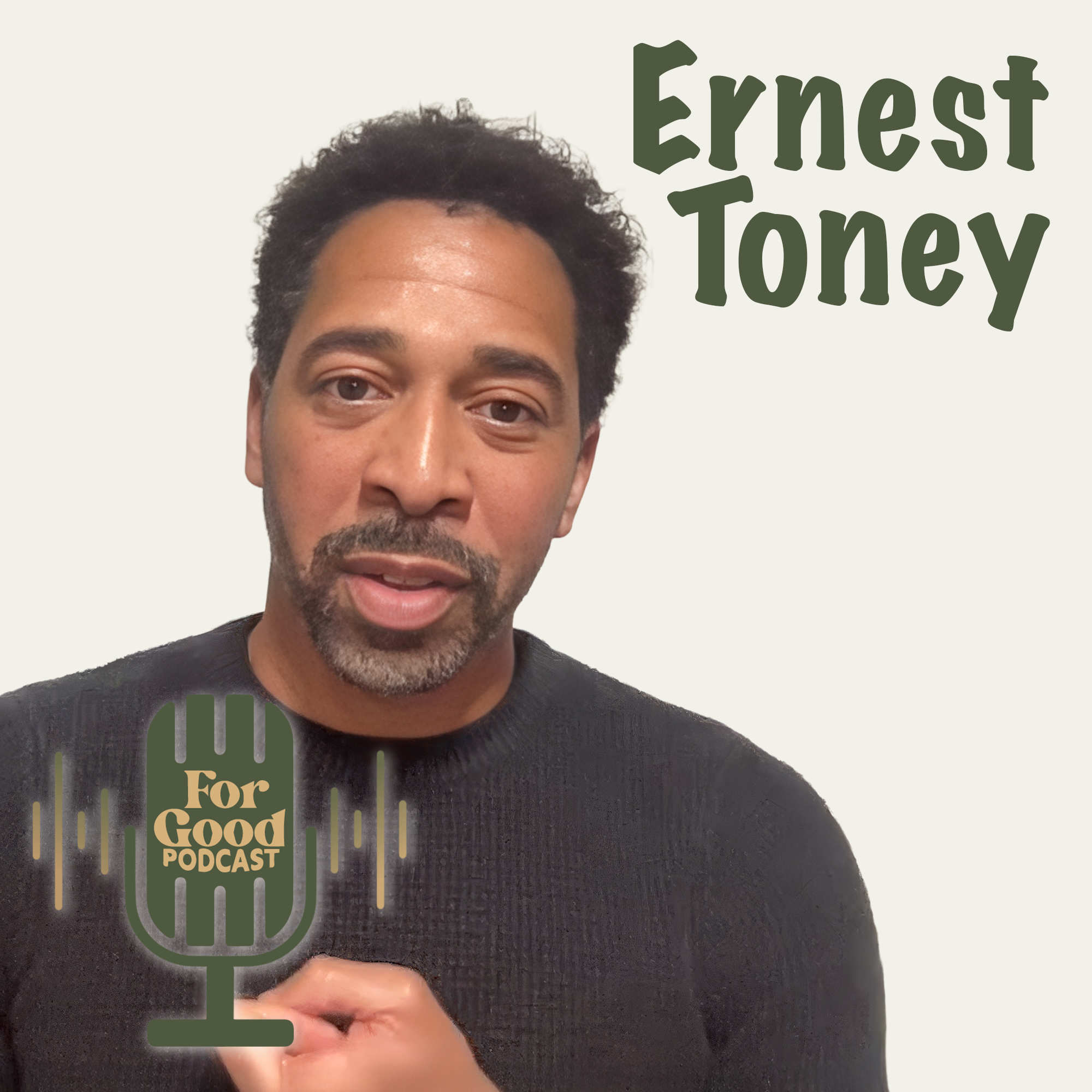
Loading summary
Transcript68 lines
- [00:01]
Ernest Tony
Hey, y'.
- [00:01]
Libsyn Ads Host
All.
- [00:01]
JoJo Simmons
As a growing family, my husband and.
- [00:03]
Ernest Tony
I love game night, especially when it's Wayfair edition.
- [00:06]
JoJo Simmons
Let's do it. You gotta name as many Wayfair furniture and decor categories as you can. Ready? Go.
- [00:12]
Ernest Tony
Sofas, bar stools, beds, ottomans, outdoor seating, bookshelves, kitchen tables, garden sheds, uh, mid century modern lamps. Time. Nice.
- [00:21]
JoJo Simmons
You got nine out of a lot. Not too bad. Keep practicing by visiting Wayfair.com which you can shop every style for every home.
- [00:28]
Libsyn Ads Host
Wayfair.
- [00:29]
JoJo Simmons
Every style, every home.
- [00:30]
Ernest Tony
I really just wanted to create something that I felt was going to be impactful. I was trying to find a way to put my talents and resources and connections to good use. And I saw that the biggest problem in the industry was that it was not a very representative one. And I wanted to do something where I felt like we could create opportunities for folks who were excluded from, from, you know, the, the money making opportunities. And, and that's really why I started the organization. I try to make sure that I, I take care of my, my, my full health, like holistically, so I'm very active. You know, I'm a runner. It's a great way for me to clear my mind because I can just get out there, you know, get the body moving. I also make sure that I block out time to read every day. Another big thing is having my own support system as well. So, you know, I'm lucky to have a, a great fiance and I have my son and fiance's children. So we do, you know, activities.
- [01:29]
JoJo Simmons
Van Damme. Like, God damn Van Damme. Van Damme. Stop playing with them. Stay woke and drink Van Dammes. Today's episode is sponsored by Van Dammes, the luxury energy drink that keeps your grind sharp and your vibe clean. Premium energy, no crash level. Up your day with Van Dammes. What's good, everybody? It's your guy, JoJo Simmons. And welcome back to the For Good podcast. We focus on the good, never the bad. And we're measured by what we do, not what we have. Today I'm sitting down with Ernest Toney, founder of bipocan, a network dedicated to creating opportunity and equity for black, indigenous and people of color in the cannabis industry. We dive into his journey, the challenges and lessons of leading a mission driven organization, how he's working to make this industry more accessible, fair, and impactful. This conversation is all about purpose, impact, and building a legacy that matters. Let's get into it. What's up, Mr. Tony? Thank you, Earnest, for coming on the for good podcast, brother.
- [02:22]
Ernest Tony
Hey, thank you so much for having me, Jojo. Glad to be here.
- [02:25]
JoJo Simmons
So we were just talking before we get into these questions. I know we were just talking about how we met. Right. So how we met was MJ Bizcon. And I do want to put a shameless plug in that. We just dropped that, you know, that Vic Mentor episode from that day. But I was just saying to you before we went live that I love that we were able to meet there, and now it materialized into a real conversation on the podcast. So, you know, before I jump in, you know, jump in anything, how did you. How did you enjoy MJ bizcon and did you make a lot of good connections there?
- [02:53]
Ernest Tony
I always have a great time there. It was. It was really fun. It's always like the. The culmination of the year, at least for the industry. We come together and just good time to reconnect with some friends, you know, clients and build new relationships. So it was fun.
- [03:07]
JoJo Simmons
Same here, man. Every time we go to any of those trade shows, whether it's bizcon or. Or any of the things that we've done, we make it intentional to talk to the people that we align with and that we are like minded to. And seems like you were right up our alley. Now you're here on the For Good podcast, so let's get into it. For people who may not know your journey, Ernest, beyond the titles and the work, how would you explain yourself to people when you're introducing yourself?
- [03:30]
Ernest Tony
Yeah, so first off, you know, I'm the founder of bipocan, which is an organization that is all about helping minority and underrepresented entrepreneurs navigate business entry and growth in the cannabis industry. Now, I started this back in 2020, but we also were at a point where social justice was the dominated conversation at the time. And I had already had a couple of years working in the cannabis industry. Actually, for two years prior to starting by, I was in charge of international marketing at MJ Biz. Oh, yeah, I got to. I got to. I was one of the guys behind the scenes that was trying to make sure that we could get people from all across the globe to show up at that Vegas show at the end of each year. You know, I think I was just at a nice inflection point in my life in 2020, and I really just wanted to create something that I felt was going to be impactful. I was trying to find a way to put my talents and resources and connections to good use. And I saw that the biggest problem in the industry was that it was not A very representative one. And I wanted to do something where I felt like we could create opportunities for folks who were excluded from, you know, the money making opportunities. And, and that's really why I started the organization.
- [04:46]
JoJo Simmons
And we were going to talk about why you started that down the line, but I love how you went right into it because that's the important stuff. Right. Could you tell us, in me what was your first real exposure to the cannabis industry and what made you realize the space could be a vehicle for change and not just business?
- [05:00]
Ernest Tony
Yeah, you know, so I moved to Denver, Colorado in 2011, and that was a year before the legislation was on the ballots, Amendment 64, which really made Colorado first state in the country to allow adult use cannabis sales. So for a full year, you know, for my first full year, I couldn't ignore all the conversations that was around what was going to happen if this bill passed. And once it happened, I was living right in downtown Denver and, you know, you just saw industry popping up overnight. I mean, there was all types of new dispensaries, new businesses, lots of people moving in from other states. It felt like overnight real estate increase, real estate prices increased, traffic increase. And I realized that there was this new industry that was getting a lot of publicity and you couldn't really ignore it. And I started to like, learn a little bit more about it. And I think around, around 2015 was when I started to meet people who worked at MJ Biz and I got introduced to sort of like the business side of it. So I was really on the outside looking in, just learning a little bit. In 2018, that's when I made my, my pivot. I used to work in sport and I decided that I wanted to try something different because I felt that this was the start of something new, something big.
- [06:23]
JoJo Simmons
But why cannabis? Were you ever a cannabis user? Do you like cannabis? What made you say, I'm gonna leave the current career and go towards this? Because, you know, even when Denver went legal, it was still a lot of uncertainties around the plant and where it would be today. And obviously it's booming now. Right, but what, what made you. Well, why were you interested in entering to the cannabis space? And then I want to make that a double question after you answer that about bipocan.
- [06:49]
Ernest Tony
Yeah, so when I was younger, yes, I, you know, I experimented. I use, back in, you know, teenage years, going into college. Yep, yep. And actually when I moved to Denver Back in 2011, I got a medical card. So it was really cool. I was able to just walk right around the corner. And at that time, like, they had medicinal dispensaries that were open. So, you know, I was a consumer. And then that also played into, like, me being aware of what was happening, you know, within the industry. But the reason I started my business, it felt like it had more to do with not only the opportunity, but just thinking about my background, like where I grew up. I was born and raised in a rural town in Virginia, and it was not a very well off town. And I think when I was around six years old, my father started working at a correctional facility. And he worked that correctional facility for close to 25 years. So he started as a security officer, retired as a superintendent. And throughout my entire childhood, after school I would go to the correctional facility and I knew people who worked for the facility, but I also knew a lot of people who ended up getting, like, incarcerated. So there's a lot of folks from my neighborhood, family, friends who were locked up for cannabis possession. So I saw that, like with this industry coming up, you know, there was this opportunity to right some wrongs, educate people. There is some restorative, know, justice elements to that. And there was so much stigma around the plant that I really just wanted to let people know that some, A lot of that information was misguided. So I was trying to create, you know, I was just interested about the industry and all the history. And also there were some, you know, personal connections to seeing, you know, family and friends and neighbors getting locked up.
- [08:45]
JoJo Simmons
Yeah, that's dope. And, you know, you were very intentional about how you entered the space in a way that I entered the space as well. It was like, I love this industry. I see it could be something. But let's cover all facets of the industry and make sure that we're speaking up for the people, the family members, the friends, the neighborhood, people that we've known that have been getting arrested for it. So I love it. Now when you look at the cannabis industry today, where are we still getting equity? Wrong.
- [09:13]
Ernest Tony
You know, I feel like a few years ago when it seemed like the leading conversation in the industry was around equity and it, it felt like in a lot of new states that were, you know, because, you know, the way that it works is a state will pass legislation and decide that they want to create a new industry and maybe they allow adult use or recreational sales. And usually what they'll do is have some types of licenses that are available for businesses to apply for. In recent years, a lot of the newer states will create social equity programs which tend to be Policy driven. And they tend to focus on creating access for folks who are formerly incarcerated or who lived in a disproportionately impacted area, maybe one that was affected by cannabis prohibition, war on drugs. And in some cases, like in the Midwest, like in Minnesota, they've opened up equity programs to be broader, more inclusive for like veterans and, and other underrepresented groups. Now, I think that a lot of times you'll see these programs start with good intention, but usually it's around access to licensing and the focus is not on how to create and sustain businesses. And I think that has been a problem in a lot of states from the beginning, because from my opinion, it seems like legislators were like, all right, hey, we saw the problem. We're creating access to opportunity. You know, this is one of the most regulated industries. It's very capital intensive. And a lot of these equity programs were creating these pathways to start a business for folks who, who were come from disproportionately impacted communities. Now, the problem with that is most of these communities were black and brown communities and they may not have been communities that representative of a lot of wealth. So you have somebody who might have an access to a license, but they don't have the means or the capital to run. Yeah, to get it off the ground.
- [11:15]
JoJo Simmons
So they sell it.
- [11:16]
Ernest Tony
Exactly right. And on top of that, you know, sometimes people will get into the industry thinking that, you know, this is like a lottery ticket and, you know, you get the license and it's going to be pretty easy, you'll make money. And that's not the case. I mean, it's, it's a business. And, you know, there's a lot of regulation that you have to go through on the local level, the state level. Because cannabis is still a Schedule 1 drug. There's talks about it being rescheduled, but because it's still federally illegal, business owners can't write off basic business deductions if they have a licensed cannabis business. So you're seeing some folks who are under resourced may not have run a business before and now responsible for trying to make this thing work because they had this promise that it was going to create wealth and they have tax rate, you know, they're being taxed at levels that they can't even imagine. So there's so many challenges, but part of it is, I think, you know, there's some people that probably say that equity is a handout. And it's not that, you know, this is about creating opportunities for, you know, folks who have been marginalized communities that have been systematically, you know, simply impacted over time. And we're trying to create, you know, pathways for them to participate in this industry. So a lot of what we try to do is bring the knowledge, the network, the connections and we're ultimately working towards being some, a business that can provide capital to help those businesses get off the ground. And I love it.
- [12:45]
JoJo Simmons
I think you helped answer the next question and you may want to add to it, but I was going to ask, what are the biggest barriers bipoc founders face that aren't talked about enough? But I feel like you just basically said it all. You know, the, the lack of access to capital, the banking, you know, just all these different barriers and obstacles put in front of anybody in cannabis space, but especially bipoc people. It's been super hard. So is there anything else you'd want to add that like, you know, doesn't get talked about enough that, you know, bipoc owners, founders face?
- [13:17]
Ernest Tony
Yeah, I mean the capital, the capital, access to capital is a huge one because if you don't have the means to get your, your business off the ground, then either never going to get started or you open yourself up to a lot of predatory practices. You know, there's people that are going to come in and try to say, yeah, we'll fund it, you know, if you give me, you know, 49% of your, your, your, your business. I'm just seeing like a lot of folks being in positions where they're being set up to fail from the beginning. So being able to solve that capital piece is a huge one. But you know, over the years, like through the programs that we do, we work with hundreds of founders across the country. And after the capital piece, I feel like the biggest barriers have to do with business fundamentals. In some cases you have people who have never run a business before, they're getting access to licenses and if you're lucky to have some business experience or have a co founder, then you have, then that's cool. But a lot of times people are doing this on their own, so they're having to wear every hat that a business owner has to wear. So access to community and mentors who can help you be strategic work on your business is something that I see is really, really needed. And on top of that, you know, because we saw how cannabis affected our communities, you know, back in the 80s and 90s, there's still a lot of issues with trust. So, you know, you have folks from communities that get access to licenses and actually what you do need is to trust people to come in and work with you and build a team. But a lot of times people, I've noticed, want to sort of keep it all to the vest, do it themselves. And when you're building a business, you need the help and the collaboration.
- [14:56]
JoJo Simmons
I've always said collaborating team is huge in any business, really, but especially right now in cannabis, where we can help each other, we should, and where we can lean in with each other, we should. And because it's very important, especially it's very hard to navigate. I want to talk about mental health a little bit because we take that very serious on the For Good podcast. And I wanted to ask you, knowing that you carry a lot of responsibility in this work that you do, how do you protect your mental health while constantly advocating for others?
- [15:22]
Ernest Tony
You know, I had some balance with that over the years. You know, I try to. First off, I try to make sure that I take care of my. My. My full health, like, holistically. So I'm very active. You know, I'm a runner. You know, I. That's like my thing. You know, I try to make sure I do that a few times a week. And that gives me, like, a goal. It's a great way for me to clear my mind because I can just get out there and, you know, get the body moving. I also make sure that I block out time to read day. That's something that I used to do a lot as a child. And then as I got older, you know, it just got harder and harder to do. But it's just been a good reset. I just make sure that I knock out, you know, Even if it's 20 minutes a day that I take care of it. And another big thing is having my own support system as well. So, you know, I'm lucky to have a great fiance, and I have my son and fiance's children. So we do a lot of, like, family, you know, activities. And I think as a business owner I mentioned this earlier, that support system is so, you know, important. So there are folks that I consider like my inner circle, like my best friends. And in some cases, these are some guys, some brothers that were started out as clients, but, you know, now we're best friends. I think you actually met one when he met Carlando. He came up to you. Oh, perfect. Yeah. When we were in MJ biz. But I make sure that I have those folks that I can, you know, call and just run things by. You know, it's like not asking for anything. You know, it's not about transaction. It's just relationship building.
- [16:51]
JoJo Simmons
I love the.
- [16:52]
Ernest Tony
One of the things that we also do through bipocan is we run these mentorship programs. They're like business accelerators, about 15 weeks long, but we do that every single year. And we usually have, you know, somewhere between 10 to 20 entrepreneurs. And we've actually, by creating like a, a safe space where founders can come together and be vulnerable. It's like I'm always also sort of like creating a space where I can also lean into and contribute. So there's a lot of ways, good.
- [17:22]
JoJo Simmons
For you guys of creating that space for founders, CEOs, all those, you know, those, those people that really do need a mental reset, a mental break, or just to be in a room of like minded people or be in a room where vulnerability is accepted, I think is very important. What would you say burnout looks like for someone like you leading a mission driven organization? How do you know when you're approaching that line where you feel like the burnout is coming?
- [17:48]
Ernest Tony
I can usually tell because I start getting irritable, maybe getting a little shorter with the people that are close, you know, to me. And I mean I think back to like 2023 and I got towards the end of the year and it was actually like a couple of months before going to the, the Vegas show MJ Biz. And I noticed that like I was having these like muscle spasms like with my eye and I realized that after a couple days it wasn't going away. I was like, all right, I'm doing too much. You know, we had a great year that year, like financially and impact driven. But I was pushing myself to the limit. And something I always remember to my, my father says is, you know, you can't, you can't help anybody if you don't, if you can't help if you don't help yourself, take care of yourself. Yeah, I try to look out for little signs like that. And I also try to structure my year like this is my six year business, you know, doing, doing bipoc game and I've started to learn the cycles for, you know, just the general business calendar and try to structure our programs in such a way where you know, we have these intensive periods maybe from like February to May. And then when, you know, school's getting out and the kids are finishing up, I try to align my schedule with that so I can be present, you know, and then I can go back and you know, for the fall pick it up and do another three month intensive. So that's how I make it happen.
- [19:11]
JoJo Simmons
Has there ever been a moment, like one of those moments or a moment where it ever made you question the work you were doing and made you question continuing your work?
- [19:20]
Ernest Tony
Oh, I've had so many of those moments. And a friend, I'm going to mention him again, Carlondo, he's the founder of Fifth House Farms. He's my best friend now. But, you know, we were having this conversation at the. At the beginning of 2024, halfway through 2024, because both of our businesses were going. Taking some hits. We were like, you know what? Like, right now we're. We're in that. We're in the valley of despair. You know, it's like this. This is that. That moment of being tested where we have to decide, like, do we want to keep pushing through or are we going to, you know, step aside and. And call it quits? And. And that was, like, I say, it's important to have that support system because, you know, we were both going through it and, you know, then we get to the end of last year and we look back and said, man, remember, we were in the Valley, you know, now we're, you know, like, now we're back on the. On the upswing. So that's one moment. But I've had so many, so many other moments, man. I've had times when, you know, you just have just the nature of the business is that because I provide a service, a lot of times, some of the folks that, you know, support me, our clients, you know, they're the licensed cannabis businesses. And if they're taking a hit, if they're getting. If they're struggling or if they're not in a position where they can keep their doors open, then we're not getting paid. You know, so we've had some real moments where it feels like it's feast or famine and. And when you go like a couple of months and you're not making any revenue, I don't care. I don't care if you've just started the business and it's an idea or if you're in year three or four. It hurts.
- [20:52]
JoJo Simmons
Yeah, we know it. I know it, been through it. I feel it. And, you know, it's hard being that guy, the leader, to make all those decisions to make, you know, to ask yourself, should we keep going? To ask yourself, how do we grow? To ask yourself, how do we get ourselves out of this tight spot? So I'd love to know what kind of leader did you have to become to build, you know, Bipocan, you know.
- [21:14]
Ernest Tony
I think when, when I started the business, there was, and there still are, like so many other things that I could be doing, and I know I could be making a lot more. But you know, I, I saw that there was a need and I felt that I was a position to do something about it, and I felt that I should do something about it. And on top of that, like, once I figured out the actual structure of the business, I had to tell myself that like, this isn't just, this isn't a get rich quick scheme. This is you building something sustainable. Recognizing that, you know, it takes a lot of time to see. Sometimes it's, Sometimes, you know, there's a lag between like the work that you're doing and the impact that it has or even for people to recognize it. And I've been like a student of business for so many years, and one of the cool things about this industry is that I've met so many great people and I've met so many amazing and aspiring entrepreneurs. Like even, you know, like, for example, the, the co founder of MJ Biz. Like I was there when was working on that team when she was building it up, and then I got to see when she sold it for, you know, a couple hundred million dollars. And I know, you know, folks who've had multi million dollar exits and I've seen their journey and I've talked to them about that. So it's great to be able to lean in and say and understand that this is a process.
- [22:35]
JoJo Simmons
It is.
- [22:35]
Ernest Tony
And I think, you know, as far as being a leader, I think the, I just try to continue to be humble and try to learn and understand that you have to go through the different stages of growth.
- [22:45]
JoJo Simmons
Yeah.
- [22:45]
Ernest Tony
And sometimes you realize like during those, it's not as obvious when things are going well. It's usually when things are not going so well, you realize, okay, this is a, this is how you grow, you know, you know, you, you, you grow through moments of friction. You know, like if you're strength training, then, you know, it's the, it's the breaking down of the muscle that helps you repair. Right. So, yeah, I try to think about things like that. And I listen to a ton of podcasts too. To me, focus.
- [23:14]
JoJo Simmons
I, I agree, man. I think a lot of people are afraid of the process, but they just got to see it through. You know, you just gotta, you know, the process is, is, is highs and lows. Right. The process is like a roller coaster. There's days where it's great. There's days where it's not so great, but you just gotta go through the process. If you're building anything, you got to go through the process to get to where you want to go. Because if you don't go through the process, you'll just be stuck in the same place that you're at and you won't go any further. So you got to trust the process. Now you're a man of the people and you talk up for people. So I'd love to know, how do you hold people and companies accountable without losing access to those rooms and resources?
- [23:51]
Ernest Tony
Yeah, that's a good one. I think it's very, it just sort of, it varies. It depends on who you're, who you're talking to and sometimes like the relationships that you have. And I will say this too, one of the things that is challenging sometimes, like when working in a mission driven, mission driven industry, you know, there's a lot of advocacy and a lot of times the folks that I might be working with, communities I'm standing up for and even some of the businesses that like we mentor, they may feel like we should be doing something different or speaking loud or, or acting in a way that, you know, they feel is the correct way to hold someone accountable. And the thing that's helped me like from the beginning is when I started this business, like I put a lot of thought into it and I created like our mission and our vision and sort of our founding principles. And because of that, it's like I, I have this almost like our North Star. So I sort of know like where we're supposed to go and how we're supposed to show up. And sometimes people want me to be a bit more visible and hold someone's feet to the fire. And I try to like pick my battles and be as strategic as possible because I want to make sure that we're going to be in spit position where we're around and we can have the impact that we need to have. So, you know, a good way to think about that is, you know, when we start to build a relationship with a company, maybe they end up being a partner, maybe they end up being a client or we spend a lot of time like educating them on what some of their, the shortcomings are. But we also try to understand that, you know, we, that they, they, they play a role like in this industry as well. And the role is not to exploit the community and grow their business off of the backs of folks who have not had that access or who have been hurt and harmed. You know, so we want to, like, make sure that if we're working with somebody, the values are in alignment. And because of that, like, we aren't one of these organizations that are just, like, focusing on volume and trying to get as many, you know, customers as possible. We want to get the right people and the right partners. I think because we build so much trust and relationship building with the community and with our partners, it's easy to have conversations where we go to a decision maker and say, hey, you're not showing up the right way.
- [26:12]
JoJo Simmons
So it's about trust, really. It's really about building partnership, building friendships, and building that trust within each other.
- [26:18]
Ernest Tony
Right?
- [26:18]
JoJo Simmons
Yeah, I like that. What's a lesson that leadership has taught you that you weren't prepared for while, you know, going through all of this and you say you've been rocking for six years. What's one of the most important lessons you've learned that you weren't prepared for?
- [26:32]
Ernest Tony
That's a good one. Something that, you know, something that I wasn't prepared for, like, pretty early in the business. I'd probably say around maybe the second year is just. I didn't realize at first, like, the influence that I had. And because we, you know, we caught on pretty quick, and a lot of people were very interested in what we were doing and, you know, but for all intents and purposes, like the first, you know, year and a half, two years, we were still a startup and trying to figure out, you know, how we're going to actually, like, make this a business. Like, your passion has strong beliefs, but it's like, okay, well, what's our revenue drivers? How are we going to monetize this thing? You know, and one of the things is that I wasn't prepared for was how closely people monitored, like, what you said and did, and also how people would make their own judgments about what you stood for. They'd have opinions about you as a leader or your business. And you may not have ever even had a conversation with folks. And yeah, I mean, I remember, like, there was a few times when, you know, I went into some rooms and, you know, some people were not happy, like, with me or my organization or just dealing with some backlash. And I was like, yo, where'd that even come from? I was just doing the same thing I've always been doing, and I got all these people angry with me. It's like, what happened? So that was one of the things, realizing that, you know, it was cliche because they. Because you always hear people say, you can't please everybody, but that was one of the things I had to learn, you know, the hard way.
- [28:05]
JoJo Simmons
They say it all the time, but to actually live it is real. Like, when you actually live those words, it's like, oh, you really can't please everybody. I learned that throughout my whole career, trying to please everybody, wanting to be a people pleaser. I'm a Libra. So we like for everybody to love us and it's just not true. Everybody isn't going to love you. Everybody isn't going to be your cup of tea and you won't be theirs. And that's okay. You know, when you think about legacy, what does success really look like for you?
- [28:31]
Ernest Tony
No, I mean, I would like to build something that is, that's going to have a lasting impact, if that means that. And it doesn't necessarily mean that this business needs to, you know, continue to live or outlive me. But I think success would be knowing that through all of these efforts, through the business, we had some real lasting, you know, positive contributions. And, you know, like I said when I started the business, part of it was to address the lack of representation of, like, minority entrepreneurs. But part of that, you know, you always hear people say social equity. And I really think it's more of an economic conversation because when you have folks who you have, you know, families that were torn apart because of incarceration and prohibition and the war on drugs, it had lasting effects, you know, on families, households and communities, you know, for, from, for, in some cases, multiple generations. And when I saw that, you know, can like this opportunity with this industry, to me it seems like this is an opportunity like cannabis could be an opportunity to change that story and create some economic wealth that can go back to those communities. Yeah. And if I can, you know, if I can be, you know, a positive contributor to changes, whether it's at the policy level, you know, in a lot of cases, because we've run, we've managed like these, so many programs, so many mentorship programs, we're actually getting success stories and helping people go from having not just an access to a license, but we're helping them go through the entire process to the point where they're starting a business, growing business, generating millions, and now thinking about taking it into other states. And, you know, we're having that positive effect on, you know, folks that have come through our program. I like thinking myself as somebody that was able to help, you know, many, many more people do that.
- [30:26]
JoJo Simmons
So I love that. So for somebody that's watching us and if you could speak to them directly through this podcast, and they feel locked out of opportunity. What would you tell them, you know.
- [30:36]
Ernest Tony
For folks in the cannabis industry? First, I'd encourage them to reach out. I'd love to have a conversation whether they're in cannabis or not, because sometimes it just starts there. You know, you need somebody to. To be vulnerable, to see if there's a way that they can help you. I might know somebody that I can refer you to or something like that, too. But sometimes I like, for folks who maybe are feeling locked out within this industry, I would like to have a conversation to see, like, how. If there's a way that we can help them. And I also would say for folks in general who are feeling locked out, you know, being able to find, like, a network, finding, you know, aligned people, finding organizations like ours, which really are. I mean, in some ways is like, we try to focus on transformation, right? It's where are you trying to go? You know, where are you now? And what are some of the steps that you can take to get you there? One of the toughest things and loneliest things in the world is to, like, be in your own head, you know, so you can find some. Some support.
- [31:35]
JoJo Simmons
I love that. So basically, everybody hit up Ernest. Tony, if you. If you feel locked out of opportunity, he's down to holl at you and give you some good advice to close it out. You know, I heard a lot throughout this interview that you spoke a lot about the process, spoke a lot about the ups and downs of some quarters, of good quarters, some quarters. It's like feast or famine, right? How do you find hope? And how would the somebody watching this find hope? When progress feels slow, when it feels like the progress isn't going as fast as you want it to be going, how do you find hope? And how would somebody find hope when the progress feels slow?
- [32:10]
Ernest Tony
I look for little wins, you know, and sometimes. So my focus for this year is really about. I know everybody says at the beginning of the year, it's like New Year's resolution. I'm focusing on habits. You know, one of the biggest things that had that struggle that I've struggled with over the years is it started out with, like, being a perfectionist. And because of that, like, I would procrastinate. I've had to learn the hard way over time that just the act of doing something is better than not doing anything. Yeah, that's what you need to do to change, you know, change your own.
- [32:42]
JoJo Simmons
Definitely better than not doing anything. I preach that. And not to cut you off, but I preach that a lot is like, do something, right? Because doing nothing doesn't get you anywhere in life. But doing something, you know, at least it starts the. You know, it starts the process.
- [32:56]
Ernest Tony
Yeah, absolutely. I try to think. I always give this advice to folks that come through our programs, but how it's important to create, like, the big picture, long term goals, but also like the little. The little goals. So, you know, you might feel stuck where you are right now, but, you know, I try to say, like, well, where do you want to be in a year? Okay, well, what are the steps you need to take to get there? You know, and if that's too big of a time or, you know, a chunk in time to think through, it's like, all right, well, what do I want to be doing different next month? Okay, you got 30 days where, you know, you can make a difference towards that. So what are some little steps that I can do starting today, you know, to help me get there? And then write those down and then just be consistent. Like, literally write it down and then say, did you do it? Did you not? You can put on a whiteboard, you can do it on notes app on your phone, but just start doing that. And I promise you, like, if you just do those tasks and you even. And you look back, if you're feeling stuck, you can say, all right, this is what I've done, you know, over the past month. And, you know, we have a tendency to forget, you know, as humans, a lot of. A lot of our successes. Shoot, just over the weekend, I was like, man, I'm feeling a little slow. I'm not sure what I was doing on Monday. You know, on Monday I had such a great weekend relaxing, and now I'm out of the.
- [34:11]
JoJo Simmons
Out of the swing of things. Yeah, I know the feeling.
- [34:13]
Ernest Tony
And I look back at my calendar, I was like, oh, man, I did all that last week. Oh, and I got all this stuff. I'm talking to JoJo tomorrow.
- [34:20]
JoJo Simmons
That's dope.
- [34:21]
Ernest Tony
Just look at it, document it, you know, And I promise you, that is a great way to get you out of the funk.
- [34:27]
JoJo Simmons
Yeah, I agree on small steps. I talk about that a lot. Small steps will make you feel really good if you focus on them instead of taking that one large leap to the biggest step. I like how you said, where do you want to be in a year? Because that gives people the mental note of saying, you don't have to be there tomorrow in a year. How do you take the small steps to get there in the 365th day. Right. So I love how you kind of broke that down. And it's a very, you know, it's a very useful way for people to implement in their lives. To try to, you know, get a goal done is to write down the steps and ask yourself and hold yourself accountable, did I do that? And if you didn't do it, you know exactly why you aren't where you want to be. And if you did it, you'll see the results of that work and of that, you know, planned out goals and plans that you had. So I love how you broke that down, my brother. I really do appreciate you coming on the For Good podcast, man. You've been creating opportunity and spaces for, you know, black and brown people in the cannabis space for access to the plant. Access is huge for us, like we spoke about earlier is not very easy to get access even with these programs they put in these different states. It is that access isn't always the final say of saying, we have hit the jackpot. We know better than that. So I appreciate you speaking up for our people. I appreciate you, you know, being a business for six years and not giving up on yourself and not giving up on bipocam because it's important that we have these type of organizations, missing driven organizations out here. So thank you. I want to give you a round of applause and give you your flowers and I want to say thank you. If you can tell everybody of my listeners where they can find you on social media or what, you know, anything you have up and coming that you want people to know about before we get out of here. Please do, my brother.
- [36:12]
Ernest Tony
Okay.
- [36:13]
JoJo Simmons
Yeah.
- [36:13]
Ernest Tony
Hey, first off, thank you so much for having me. I really enjoyed this and, and, and thanks for the flowers.
- [36:19]
JoJo Simmons
I accept.
- [36:20]
Ernest Tony
So for folks that want to catch up with me, you can, you can visit the website, which is bipocan.com b I p o c A-N-N.com. you can find me on LinkedIn under Ernest L. Tony and love to connect with you there, you know, set up a conversation or something. And as far as some things that we're doing like this year, you know, we're very, very excited that, you know, we actually just won a state contract in Colorado where I'm based. Congratulations. I get to do this mentorship programming for an entire year and we're looking at helping somewhere between 50 to 60 social equity license businesses.
- [36:58]
JoJo Simmons
Here we go, there we go, here we go. The work is 20, 26. Work has been good for you, it sounds like. God bless you. I'm so happy for you, my brother. That's amazing, man. So that's really dope. And I love how like y' all know he's about his business because he gave his LinkedIn. Everybody always gives their Instagram and stuff like that. Somebody that gives their LinkedIn is trying to get that business done and he's trying to get that word out. So yeah, man, thank you, brother. Is there anything else you wanted to add before we get out of here?
- [37:24]
Ernest Tony
No, man, I just really appreciate it and thank you for the work that you're doing. This is such a great podcast and I'll make sure that I let people know about it as well.
- [37:33]
JoJo Simmons
Please do. We need the eyeballs, we need the ears, we need it all. You know, we're building brick by brick. We're taking the small steps like we spoke about and you know, we're just trying to create a community of just everybody. You know, whether you're an A list celebrity or somebody like yourself that is doing mission driven work where it matters. You know, everybody matters to me. And that's why this is a for good podcast because everybody is out there trying to, well, not everybody, but we hoping that most people out there trying to put good out into the world and give back, not only just make dollars and, and, and, and and help themselves be successful, but give pathways and, and opportunities for, for others. So that's what this is about. I appreciate you Earnest. As we get out of here, I'm gonna wrap us up everybody. Thank you. This is the Four Good podcast, your boy, JoJo Simmons, where we focus on the good, never the bad. We're measuring on what we do, not what we have. Till next time. Ishi guy, JoJo, Ernest, Tony Peace.
- [38:35]
Libsyn Ads Host
Marketing is hard, but I'll tell you a little secret. It doesn't have to be. Let me point something out. You're listening to a podcast right now and it's great. You love the host, you seek it out and download it. You listen to it while driving, working out, cooking, even going to the bathroom. Podcasts are a pretty close companion. And this is a podcast ad. Did I get your attention? You can reach great listeners like yourself with podcast advertising from Libsyn Ads. Choose from hundreds of top podcasts offering host endorsements or run a pre produced ad like this one across thousands of shows. To reach your target audience in their favorite podcasts with Libsyn ads, go to Libsynads.com that's L I B S Y N ads.com today.