← For Good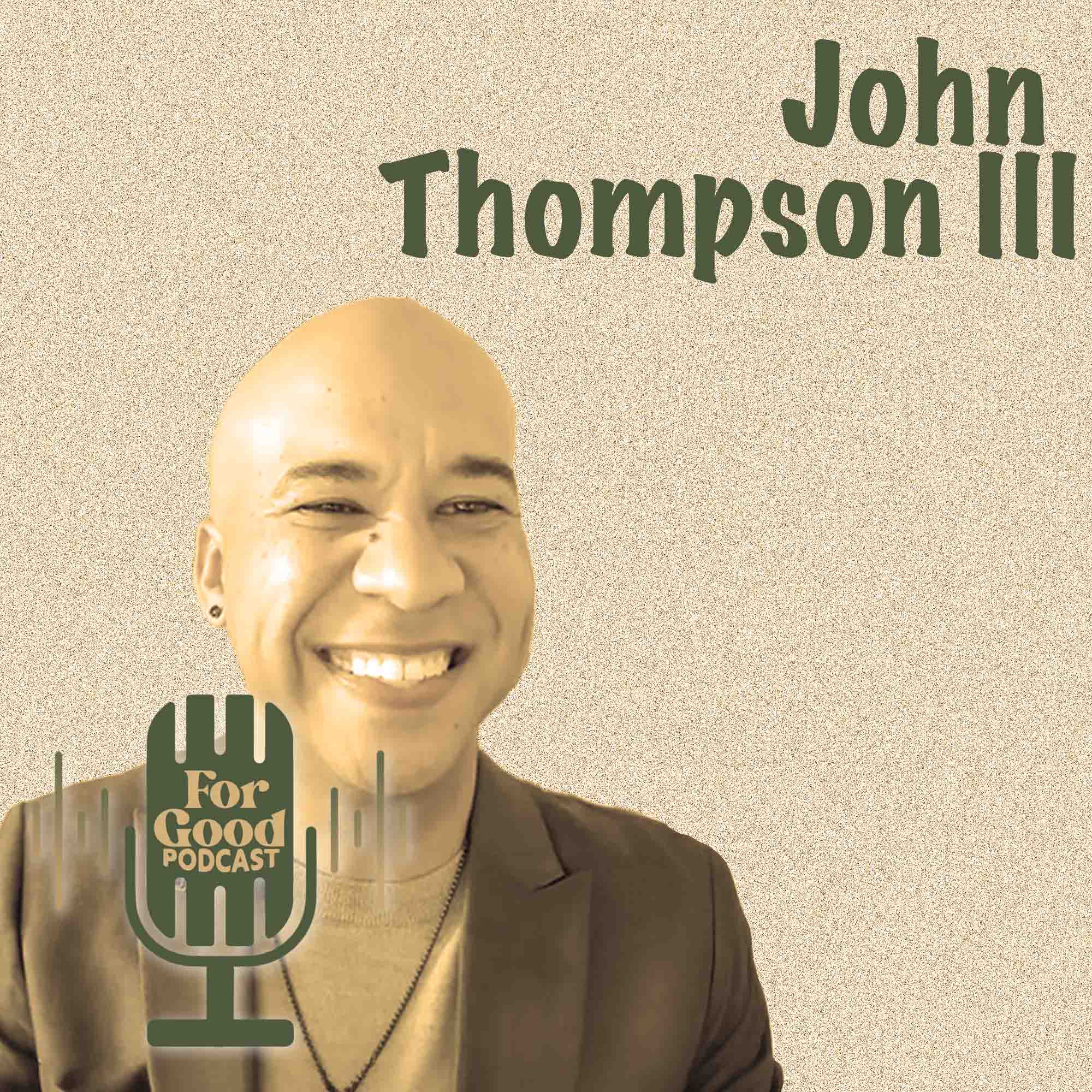
For Good
From Burnout to Billions: John Thompson III on Resilience & Redefining Success
00:47:27
What happens when chasing success costs you your health? Business leader and executive coach John Thompson III joins Joseph “JoJo” Simmons on the For Good Podcast to share how burnout at 25 reshaped his life, why being passed over for promotion...
Loading summary
Transcript55 lines
- [00:00]
A
What I want to see is individuals who define success on their own terms and then pursue that success relentlessly each day. And they're not concerned about the cards that they're dealt because they know that they can control how they play their hand. Just helping individuals really define what they want to get out of life and then building their life by that design that they have. If you don't put a destination in that gps, you're just going to be going aimlessly about life.
- [00:30]
B
If you know what you want early, go after it and be comfortable, successful way earlier without trying to follow what everybody else tells you. What you're supposed to look like at 17, 18, 19, 20, right, which is supposed to look like it's successful. The only way that you can become successful is if you have a plan. What made you decide to quit alcohol and what role have those habits played in your mental clarity and confidence?
- [00:51]
A
Single best decision that I could have made. You know, why I wouldn't classify myself as like a heavy drinker. I would still get it in right when I would, whether it be the weekend or out socializing. And this is probably a cheat code for me being my best in highest self. And so I call it the four Cs, which is, you know, creativity, consistency, clarity and confidence. Those, all four of those were unlocked when I, when I quit drinking. And it just started with taking a break.
- [01:21]
B
What's good, everybody? It's your guy, JoJo Simmons. And welcome to the 4 Good podcast where we focus on the good, never the bad. We're measured by what we do, not what we have. Today, I'm sitting down with John Thompson iii, an accomplished business leader, executive coach and author of Stack youk Deck. How to Be an Ace in Business and life. After 20 plus years leading teams at global companies like GE and United Technologies, generating over $1 billion in sales, John pivoted to coaching, writing and helping people unlock their potential through the ACEs framework. Attitude, connection, empowerment and strength. Let's get into it. John, I appreciate you coming out to the 4Good podcast.
- [02:05]
A
Hey, hey, Great to be here with you, Jojo. Congrats on the success of the podcast as well.
- [02:11]
B
Thank you so much, man. You know, as I always started, you know, we love speaking to all walks of life. We love speaking to the everyday person and you know, as much as we love speaking to the biggest named celebrities, we like speaking to people that are really creating impact and have been creating impact over the last, you know, teeth years or whatever you would say. So you definitely fit the mold and you definitely are all Good that we want to represent the four good podcasts, but thank you for coming on and we'll get into it. So for those who don't know you yet, how would you introduce yourself today?
- [02:41]
A
Yeah, so I'm someone, first and foremost, husband, father of two daughters, and so officially certified girl dad, and love every minute of that. And also, as you mentioned, executive coach, author, run a financial planning practice as well. And so I'm all about impact, man. That's me all the way around. And so live in the D.C. area, originally from Pittsburgh. So go Steelers. And just really all about positive energy, good energy, and helping individuals really elevate to the top of their game. That's me in a nutshell.
- [03:16]
B
I love it. I love it. So you said from a young age you dreamed of being a teacher. What drew you to coaching and writing as your way of teaching now?
- [03:25]
A
Yeah. You know, Socrates said an unexamined life is one that's not worth living. And so I've always believed in, you know, you want to make sure that you understand what's important to you, and you understand first and foremost who you are as an individual. And so I always look to put my own oxygen mask on first from that perspective. And then I think that I just always love, like, teaching. Right. Because I always feel the teacher learns the most. And so if you are coming to a point where you can understand information enough to teach others, you have no choice but to learn it yourself. Right. And so for me, writing the book was very important because as I've had success over my career, I'm always about helping other individuals elevate as well. So sending the elevator back down. And so the book was just a good way to kind of plant those seeds for others and, you know, for the next generation of leaders. So not just being a leader worth following, but how do I create other leaders and so that we can just. Again, you talk about impact, how do we amplify our impact collectively so we can all rise? So that's just, you know, why. Why I enjoy teaching and why I enjoy kind of leaving these seeds for others to embrace as well.
- [04:40]
B
I love the two things you just said that stood out to me was about creating other leaders, not just creating followers and you being a good leader. You know, I always say being a good leader doesn't mean that you create followers. It means you create other leaders to lead with you or lead in other spaces. Right. It's about teaching people how to lead in the spaces that they're comfortable in or lead in the spaces that you Know they want to take over. Right. So I love that you said that. But something that's really stood out to me just now that you said was the teacher is the one that learns the most. Right. I love that because it's almost in a sense that you would think a teacher knows it all, but a teacher is probably constantly looking for knowledge to give to others. Right. Can you speak on what that means? Like, the teacher learns the most? That's a very powerful statement.
- [05:18]
A
Yeah, it's all about Curiosity. I've got two daughters, so my oldest daughter is 15, my youngest is 11. And when I send them off to school, my oldest, it was her first day of school today. And I always share with two things. When they leave for school, I tell them, be smart and ask questions. Because I always feel like those that ask questions are the ones that are staying in growth mode. And so this idea of having a growth mindset, you don't feel like you've ever know enough. You're always just constantly looking to try to gain information, and then what you do with that information and that knowledge is based on your experience and apply that knowledge. But it really starts with just having this idea of a curious mind and really being in the question. Right. And if you're in the question and if you're asking good questions, then you know you're going to continue to increase your knowledge. So I always believe in stepping outside of your comfort zone and surrounding yourself with people that you know are smarter than you, and then you have no choice but to learn from those individuals when you're doing that.
- [06:17]
B
So, yeah, I love that. You know, last week my daughter started school, and that was one of the main things I told her was don't be afraid to ask questions. Don't be afraid to be curious. And my wife was like, well, make sure you ask it at the right time. Don't look like a teacher's pet. And I'm like, yeah, not like that. Not like, hey, when's the homework? But like, make sure if you don't understand something, ask the questions. Because teachers love questions. Teachers love the student that wants to know. Because once you ask that question, then you have the answer. And you know, you can, you can grow from that. So I love that the best leader.
- [06:47]
A
Isn'T the one that knows everything. The best leader is the one that asks the best questions. And that continues to take in information. And so. And then it's how you apply that. Information is what's important. But, you know, I always want my girls to recognize the importance of Asking questions. Because to your point, more than likely other people in the, in the class have those same questions. They're just not confident enough to ask those questions.
- [07:08]
B
They're not being the lead exact. So they're not being the leader. Right. So a lot of people, you know, they don't take on that leader initiative because, you know, they're like, I don't, maybe they're afraid to ask or maybe they just, who knows? Right. But like, like you said, I think that, you know, probably more than half the class is thinking the same question. And you, by being a leader and asking that question can help so many others. You had a long, successful corporate career leading high performing teams. What did those experiences teach you about leadership and resilience?
- [07:38]
A
So just about leadership. It's really being someone that sets a vision for a team and so making sure that you are out front of the team and constantly communicating what that vision is. So I learned the importance of just setting a vision, being kind of connected to the team. It's important to be amongst the team as well. So you're constantly understanding where the team is, where there are gaps in the team. But I really just learned the importance of creating a strategy, creating a vision for the team, then creating a strategy. And then I would say probably equally important is being a good communicator so that you're communicating that vision so that the team knows along the way why they're doing what they're doing. And I think that is key. And then I'm just, I'm a very big individual. So I'm a Gallup. You mentioned I'm a coach, I'm a Gallup certified strengths coach. And what that is, you know, it's an online assessment that you can identify your strengths. And so my top five strengths is I'm an achiever, learner, input, competition and strategic. And so when you think about those themes, first and foremost we're able as a strategic. You're able to see around corners, right? And so you gotta be strategic in nature in terms of how you're really setting the stage for your team. But then the competition in me wants to compete, wants to compete at a high level. And then the learner in me wants to continuously learn and continuously draw in new information. That's where input comes as well. And so believe in diversity. I believe in diversity of the team. So those are some of the themes that feel like I've learned over the years. It's important to helping a team succeed. So set the vision, build the strategy, communicate often to the Team and then, you know, continue to compete and compete at a high level.
- [09:30]
B
I love that. Communicate and compete. You know, communication is huge. You know, I've got, you know, I own two companies and I know what I have learned over the years, whether it's my music production company or the media company, is communication is key. Just like a marriage, Right. Communication is the only way that it can work. Right. I almost feel like business, even my business partners, is like a marriage. Right? Like, it's like if we don't communicate, then we can't raise this baby to grow. Right? So that's how I look at it. So I love how you broke that down. Now I want to talk about your book stack, your deck rooted in the aces pillars. Can you walk us through what each letter stands for and why it matters?
- [10:10]
A
Yeah. So, you know, I'm a simple individual. I like simple concepts. So, you know, the aces pillars that came to me from, you know, a very young age when I was, you know, my grandmother's house and my grandmother's favorite place for me to go growing up. And, you know, grandma would taught us how to play cards. And, you know, not just any cards, right. You know, typically grandma would teach you how to play maybe like go Fish or, you know, concentration. Right. But my grandma taught me, taught me and my younger sister how to play poker. And it wasn't just regular poker. It was like high stakes poker. Like, when we would go to her house, she would say, bring your dimes. And at the end of the night, she would have no problem going to bed with all of our dimes. And so grandma was ruthless, right? She was 4 foot 11, but actually I should say 4 foot 11 and a half because she claimed that half. Right. But she was larger than life. And so I learned the importance of, number one, how to compete with grandma. And I mentioned to you earlier about competition as one of my strengths. So learn how to compete. Learned how to win and lose. And, you know, obviously I didn't win a lot then because she was taking all her dimes, but I learned the power of an ace, right? And aces, you know, for me, they still bring value. And I just remember the feeling when I was dealt an ace. Like, you know, when you have an ace, you feel like you have an advantage. And so for me, I started really thinking about, as I've charted my course to success in corporate, in my corporate career, I thought about how have I felt and how have I really brought this theme of aces into my life over the years? And so I broke it down into Four. I call it the Aces Pillars of success, which is the attitude. That's the ace of spades. Connection, that's the ace of clubs. Empowerment, that's the ace of hearts. And then strength, that's the ace of diamonds. And so together, that's the aces. Right? And so if we double click there, I look at the ace of spades, which is your attitude. That's this whole idea of controlling your mindset. So I believe life is 10% what happens to us, 90% how we react. And so then next, the ace of clubs. That's connection. And that's all around building your network. And so I believe your network is your net worth and so choosing your friends wisely. Right? And so that's the connection. And then empowerment, that's the ace of hearts. And that's all about following your heart. I would say this idea of following your heart to your true destiny in life, that's around following your purpose. Then lastly, the ace of diamonds. That's your strength. That's all around really taking the adversity like vitamins, allowing it to build you up and really transforming your environment. That's what I call the Aces Pillars of success. Throughout the book, I tell stories and share with others around how to embrace these themes so that you can again, as I say, elevate to the top of your game.
- [13:00]
B
I love how you broke that down. And it's funny because that story you had with your grandmother, I had some really close friends that were like cousins to me, and they had a grandfather that when I used to go stay at their house, he would say, bring your quarters. But it would be. Actually we'd be playing 21. And the feeling of being dealt an ace always felt like, okay, all I need is a face card. And I got blackjack. Right. So I relate in a sense, but. And him as well. Rest in peace. Him as well. He didn't care about taking all our quarters. He would take all of our quarters. If he could win, he'd be like the household as well. Right. So that. I love that story. And you're so right about being Delta Ace and understanding the value of having an ace in those games and actually being a competitor as well. Growing up, understanding what competition is, understanding what losing and winning is. Love that I relate to you in that aspect. Like, as soon as you told that story, I was like, wow. It brought me back to when I was younger doing that with what I would call a grandfather of mine. What inspired you to fully write the book and who did you have in mind when you were writing it.
- [14:03]
A
Yeah. You know, I think what inspired me to write the book is just always being in this space where I want to send the elevator back down and leave clues for individuals. I believe success leaves clues, and so you got to follow the right clues in order to be success as well. And again, to your point, creating. Creating impact. So, you know, my goal in life or my purpose is to help others reach their purpose, inspire others to reach their purpose. And I have this lofty goal of bringing hope to millions. But I recognize bringing hope to millions starts with one individual at a time. So do for one which you wish you can do for many. And so I would say really what inspired me to write the book was the challenges and adversity that I experienced throughout my journey. How do I share those stories from a transparent place so that others can understand what maybe not to do and in some areas, what they should do so really create a blueprint for others to follow. Not only did I write the book through my lens, but then I interviewed other aces as well that have achieved great success in their journey and how they define being an ace and how they've kind of lived their life to the fullest of. Well, right. And so I would say that's what inspired me. And then, you know, as I think about who is the audience for, I really looked at it through two lenses. So, number one, I looked at it as, you know, when you're just starting out in corporate or when you're starting out making that college to corporate transition, you want to make a mark in the world. You don't know what you want to do, but you know, you want to make a mark, or, you know, again, in your words, you want to make an impact in the world. So I wanted individuals to really understand the blueprint to make their mark in the world. I looked at those individuals, and so I share a lot of stories through college, some of the experiences that I had through college, and how I was able to elevate and create an impact there in those days. And then later in life as a corporate executive, at that point, you're looking to create more meaning in life. You may be at this place where you've got a family, you've got children, you're thinking about legacy, and you may even be thinking, you know, what I've been doing, what I'm doing for the past 20 years in corporate, am I really happy at this point? How do I define success today or how do I follow my purpose? What are the steps that I should take to follow my Purpose. Those are all the tools that I put in place in the book. I really believe in this idea. Nelson Mandela says it, vision without action is just a dream. The book will help you create a vision. But I also wanted to leave individuals with steps to take that they can take action on. And so that's why at the end of each chapter I've got reflection questions that individuals can use. In addition, I've got some resources on my website where individuals can then take some practical examples from the book and then apply it to their own life. And so again, it's just all about those individuals that want to elevate to the top of their game. And if that's the case, then this book is for them.
- [17:07]
B
Yeah. Inspired through your own story. And speaking about your own story, in the past you've talked about burnout early in your career that led to a two week psychiatric ward. How did that experience change your definition of success and well being?
- [17:25]
A
Yeah, so what I'll say that was probably one of the most challenging stories that I had to share in my book. And I say that because being transparent, vulnerable is not easy. And when I experienced burnout at the age of 25, I was in the spot where I was in corporate, I was working full time and I was pursuing my master's degree, I was getting an mba, I was leading the employee resource group. And so I had a lot of different things that I was doing at that time. And as my mother would say, she johnny, you're doing too much. Right. You're burning the candle at both ends. And sure enough, that's what happened. And so I ended up having to take a six month leave of absence from work. I was on some medication that the doctors had, they prescribed me with anxiety. And then what happened was the medication caused some psychotic episodes which caused me to need to go to the psychiatric ward. And my mother still describes that time as the most difficult thing that she had to do, which was take her son and leave her son there for treatment. While I was there, I really started to learn to understand the importance of balance and striking the right balance. And not just over indexing on career. What I talk about in the book, there's a good book by Gallup, it's called well, Being at Work. They talk about the five pillars, which is your career, social, physical, financial and community. So those are five pillars that I keep front and center with everything that I do. Because what I recognized at that time, while I was really hyper focused on my career and doing all I could from a business perspective, And a community impact standpoint, I wasn't taking care of myself. I wasn't getting the right amount of sleep. I wasn't exercising as well as I could. I was single at the time, you know, going to school full time in the evenings, working full time. And so, you know, after work, you're going, you're eating chicken wings, you're, you know, staying up late, you know, you're so. It just, it wasn't. It, you know, it wasn't a balanced life. And so now here I am, you know, 25 plus years later, 20 years plus later, and I'm in a place where I prioritize my health and fitness. And so I recognize that I've got to be focused on myself if I'm going to be the most and the best for those that care about me the most and need me the most. That's really what I focus on, is how do you make sure that you're balanced and it's okay to chase career success, but you've also got to make sure that you're on target from a health perspective as well.
- [20:05]
B
I'm happy that you were able to find yourself through all those adversities and things. I'm so happy that you were able to find not only yourself, but a better you. So that's amazing.
- [20:15]
A
Well, I appreciate that, Jojo. And the way I look at it, you know, that was a valley in my life. And I recognize, you know, what we do in our valley determines the height of our peak. And so when I was off of work for six months, I really did look inward in terms of who do I want to be as a leader, who do I want to be as an individual, and then what's required of me in order to reach that level that I know that I'm capable of? That was the action that I needed to take. It needed to happen. Then once I got back to work, this was back in 2002, six months after I got back to work, my now wife, she reached out to me and we started dating. At that time, I needed to go through that valley so that I could level set and reset so that life would open up for me. And I'm thankful and grateful that it did.
- [21:10]
B
Love it. And so you sound like an extremely hard worker. Like you said, you were burning at both ends of the candle. I would love to talk about what does it feel like to you to be passed over for promotions despite being there 98% of the time? How did you feel like, how did you push through that kind of feedback like not getting those promotions.
- [21:29]
A
Yeah. So that was the impetus of the strength. The strength chat. That's how I kicked off the strength chapter, which was a time when I was passed over for promotion. At the time, my team was top team in the country, and I interviewed for a role, and it was pretty much a foregone conclusion that this would have been the next level role for me and the right opportunity for me. And then I was met by the hiring manager that said, hey, you're 98% of the way there. But we ended up going with another candidate. And that was a gut punch. That was one where it really does force you to take a step back because you're defining success as, hey, getting to this next level and having a broader impact and then being told that you were 98% of the way there. One might think, all right, let me focus on the 2%. Let me try to find this other 2%. But then you realize, you know what? I am a whole. I am 100%. So rather than focusing on what this perceived 2% gap may be, how do I make sure that I'm bringing my whole self into the world that I know that I can do right? And so that's what led me down the path of coaching and then writing my book and launching my coaching company. It's like, I believe in, you know, take the adversity, like vitamins, let it build you up. So that was some adversity at that point. But if I didn't go through that adversity, I likely would not have gone down the route of understanding how to coach individuals and getting certified as an executive coach. I first wanted to understand what my strengths are. And I mentioned to you my strengths earlier. You know, competition, futuristic input, learner, achiever. Those are my strengths. So I really got honed in on my strengths. So now I know when I'm operating in my Strengths, I'm bringing 100% to any organization I'm bringing, right? So honing in on my strengths. And then once I understood those, then I launched my coaching company, Team Aces, and then wrote the book. And now I'm on the For Good podcast. So it all comes around. JoJo.
- [23:33]
B
I love that. Where some people may say you're only 90%, you're really 100% in the spaces you're supposed to be in. That's how I kind of took that story. Don't ever let nobody tell you that you're less than your whole full self. That may mean that you're just in the wrong room and they don't see it, like, can never let nobody tell you that you're 98%. That just means that they're 98% if they don't see you 100%, you know.
- [23:56]
A
So that's how I'm talking about. That's what I'm talking about, Jojo. Yeah. And the other thing is also, how do you define success and being key on how you define success? Because in my mind, I was defining success as that next level opportunity. And so then someone took that opportunity away from me. So. So then do I feel like a failure at that point? Well, no. If I define success as the progressive realization of a worthy ideal, then you're going to progressively. You're going to progressively grow and you're going to focus on growth and focus on impact and not necessarily hang success on a particular title or a particular position.
- [24:33]
B
Here we go. That's how I look at it. Yup. So I want to talk about one of the stories in your book about you being the only black kid at your school and experiencing racism at a very young age. How did that shape your identity and your drive?
- [24:46]
A
Yeah. So, you know, we mentioned our kids just starting going back to school. Right. And so if, let's, let's, let's take a step back and think about it's the first day of school, first day of kindergarten, and, you know, lunchbox is packed and, you know, you got your new school shoes all ready that you're gonna go to school, your notebook and everything, right? And so you go to school. And on the way home from school, you know, my mother was there out front of the driveway. The school bus pulled up after school, and I'm ready to, you know, get the warm embrace from my mother. And what happened was I stepped off the school bus and as the kids, you know, saw me step off the bus, we heard the words by little, N word. And to us at that point, it was kind of like, you do not expect to hear, hear that. Right. And so, you know, and just for context, my. My father is black, my mother is white, and that my parents have been married for. They'll be celebrating their 50th wedding anniversary in April of next year. And so. Right. And so at that time, I was the only black kid not just in the class, but in the whole school. And so, you know, my mother, you know, obviously, warm embrace. But the next day, you know, she was at the school making sure that that's obviously not something that, you know, we want to see in the school. But more than anything, what my mother Taught me was not to retreat to the corner. Right. Not to feel less than who I am, but to recognize that while I was different than everyone, I was the special one. I was the chosen one. Right. And so I was the one that needed to let my light shine and bring my gifts into the world. And so I think that's really what I learned. And so as we trace back the roots of attitude that is the first aces pillar, it's that attitude that I felt really enabled me to go into school with the confidence that I needed to then thrive in school and then build the career that I'm proud of.
- [26:46]
B
Yeah. So talking about community, impact, and aces, obviously, we're still kind of speaking about that. What made you, like, you know, I know what made you start it, but what kind of transformation are you hoping to create through it?
- [26:59]
A
I'm looking to build a movement of individuals of aces that are individuals that show up as they are, show up as their authentic self and lead big and create their legacy. And so that's really what I define as being an ace. And, you know, so I have a desire to, as I said, bring hope to millions. And recognizing that if I can bring hope to one individual, one ace at a time, that's rewarding to me. And so that's really what I want to see is individuals who define success on their own terms and then pursue that success relentlessly each day. And then each day, they're being their best. They're creating impact. They're making their mark on the world, and they're not concerned about the cards that they're dealt because they know that they can control how they play their hand. And so that's really how you stack your deck. It's not about the cards we're dealt. It's about how we play our hand. So I believe if individuals focus on the ACEs pillars of success, your attitude, connection, empowerment, strength, they can elevate to the top of their game. So that's really what I'm really focused on, excited about, and that's why I launched the aces platform.
- [28:09]
B
I love how you know the analogy of playing your hand, and you've been playing your hand for about five years now with alcohol, free walking, five miles a day. What made you decide to quit alcohol? And what role have those habits played in your mental clarity and confidence?
- [28:26]
A
Yeah, it was. I'll say that that was the single best decision that I could have made. And the reason I say that is, looking back, it was one of those areas where when I was in sales, I was constantly, you're in sales meetings, you're in working with clients, meeting with clients. And so while I wouldn't classify myself as like a heavy drinker, I would still get it in right when I would, whether it be the weekend or out socializing. And you recognize that the next day, if you're real with yourself, you know that there's a little bit of a lag there, right? And so I think I decided it'll actually be, it'll turn into about seven years this October. October. And you know, when I took a break from drinking, it was a one week break. I was like, you know what, let me just take a break. And then, you know, I remember we went to, it was a Wu Tang Clan concert. That was the first kind of, you know, going out without having a drink. And you know, now I know Wu Tang is for the children, but, you know, Wu Tang concert, you're still going to get it in, right? And so I still remember that day. I was thinking, you know what I'll drink? You know, cranberry juice. Cranberry. And what I noticed was I was still my same self. I was still my entertaining self. I was with my college buddies and we had a good time. And so. But the next day when I woke up, I had energy, so the same energy that I had the day before, right? And so then I thought, you know what, this is probably a cheat code for me being my best and highest self. And so just that clarity that I have in the book, I kind of talk a little bit more about. I call it the four Cs, which is creativity, consistency, clarity and confidence. All four of those were unlocked when I quit drinking. And it just started with taking a break at the time when I wrote the book. It was probably about four years at that time. And I said, hey, why ever drink again? I don't know. But here we are seven years later. I would not be able to create at the level that I created. Whether it's my coaching company or my financial planning practice or the book that we're discussing here today. Those would not be in the world if it weren't for the clarity and like I said, consistency, creativity and confidence that came about from me saying, hey, let's take a break here.
- [30:45]
B
What's been the most rewarding part of seeing your story and your book help others grow?
- [30:52]
A
You know, I get excited like when you, when you see a review from someone, it's like, to me, it's like opening, opening a gift, right? Opening a present. And you know, I recently saw one of the Episodes that you did where you had some reflection about feedback that you got and, you know, and taking the good and the bad feedback. Right, because it all helps shape you and, you know, and I commend you for being that real and honest with individuals around. Hey, bring all the feedback because I want to learn and grow. But I think what's most, the best feedback you receive is just when individuals say, your words inspired me and they inspired me to make a difference. And, you know, individuals that I would not have thought, you know, I'll give you an example. There's an individual that, you know, he's in high school and he's a good friend of a family, good friend of mine from college, his son and this individual, he's playing on USA Hockey team. So he's like, you know, well on his way. But to hear his feedback on the book that I know it's shaping his journey and it's helping him from a mindset perspective, even an early age. I wouldn't have expected that. Right. I thought about it in terms of, like I said, individuals right out of college or individuals that are later in life. Another example, someone that was, you know, in their 60s, this individual is retired. And he said, you know what? This book gave me some ideas in terms of how I could be my best even in retirement. Again, in my mind, it's for college folks and then it's for executives, busy executives. But you really don't know who's going to take your information and who needs to hear your story at the right time. Like I said, it's not just my story. I shared the story of other aces as well that have experienced really great, great things in their life. One of the individuals we just saw in concert this past weekend, she's a Grammy nominated musician, Wayne, and we saw her concert over the weekend. She toured with Stevie Wonder in the past and she talked about how to define success and how to continue to operate on a high level in the midst of being amongst greatness and those kind of things. So I really get excited, JoJo, about being an inspiration and continuously leaving my mark in the world and creating an impact.
- [33:14]
B
Yeah, you know, feedback is big for me as well. Even with this podcast, you know, as we still grow, you know, I never know who I'm truly impacting. I think it's like people in my age range. I think it's people that like mental health talk. But then like I was in Florida one day I flew out to Florida to shoot an episode and I was walking through the airport as I landed In Miami, and this lady was behind the little fruit cart, you know, selling stuff, and she said, hey, Jojo, you know, and I thought she was gonna say, I love, you know, the old shows you on. She was like, I love the 4 Good podcast, and so does my son. And he looks up to you. And he's a teenager. And I'm like, wow, I'm impacting a teenager. Somebody that looks up to me, and I don't think I'm cool. Like, obviously, I think that what I'm doing, the impact is amazing, but not to these young guys. I'm supposed to, like, not be married, not have kids and have a bunch of women and, like, you know, driving around in the bedroom, a bunch of jewelry on. And I may have, you know, some of the jewelry and the cool lifestyle, but, like, I didn't think that I would be the representation for, like, a young guy to, like, I look up to that guy. But that's the impact I want is I want you to know that, you know, I am a guy you can look up to if you're younger. And the mistakes I made, I did make some of those hip hop mistakes as a young guy. Right. So I want the kids to know that, like, I'm here to show you that, like, it is super cool to have a plan. That's all I'm really telling people is, like, have a plan in life. Like, if you have a woman that you love, marry her or take those steps. Right? If you have kids with her. Right. You know, if you know what you want early, go after it and become successful way earlier without the mistakes, without the extra stuff, without trying to follow what everybody else tells you. What you're supposed to look like at 17, 18, 19, 20. Right. Which is supposed to look like it's successful. The only way that you can become successful is if you have a plan. And that's all I really try to teach these young dudes is like, you don't gotta do it like me, but have a plan. Have a plan.
- [35:02]
A
That's it.
- [35:02]
B
And you'll go a long way.
- [35:04]
A
That is it. Without a doubt. Yep. I love that. Love that idea.
- [35:08]
B
I would love to talk about how you're also a financial advisor. Helping people build legacy. How do you connect financial literacy with purpose and fulfillment?
- [35:20]
A
You know, it's funny when you say the importance of a plan, I feel that that is the foundation to financial literacy, is just really helping individuals create their own plan. And so that's really what I'm big about, which is just helping individuals really define what they want to get out of life and then building their life by that design that they have. Otherwise, you know, they're just going to go through life and, you know, go the way the wind blows. So we always liken it to a gps. You know, if you don't put a destination in that gps, you're just going to be going aimlessly about life. And so the better that you're able to really pinpoint where you want to go in life, then we can put the plan in place to help you get to where you want to go. And that's really what we ultimately want. And then, you know, I always thought about legacy is. Legacy is what we leave behind, but it's not as much about what we leave behind, but we can create our legacy today through taking intentional steps. And so, you know, we like to say is, hey, we'll help you turn the intentions you have into actions, and then the actions into the results that you're looking to drive. So I would say that's. That's what key. Have a plan and create your legacy.
- [36:26]
B
I love the, you know, life is like a navigation system. Set your destination and just start going, right? Like, you know, set your destination and hit the road, right? No matter if there's going to be a left turn, a right turn, a detour, you know, an accident on the way to your destination, set your destination and start going. I love that analogy. With everything you've already accomplished. Corporate leader, author, coach, what's the next mountain that you're climbing?
- [36:55]
A
You know, I would love to, at some point, have a podcast, JoJo. So, you know, I enjoy the work that you're doing. I enjoy listening to podcasts. I'm someone that's always in growth mode, and I feel like you want to be intentional with your time at all times. And so while I love listening to music, I also love taking in knowledge. Right? And that's what you're doing. And I love celebrating the goodness in the world. And that's really why I was excited to be a part of this podcast and a part of this journey. So I see one of these days having a podcast. I also see more books in the future, you know, doing a number of corporate workshops and keynotes in the. In the coming weeks and months. And so that's always great because it just helps you continue to touch lives and share the ACEs message. And so I think those are some of the things that I'm thinking about. And then, you know, just being a role model for, you know, my loved ones. And, you know, Continuing to help inspire greatness in the world. So I think that's. That's what's on the forefront for me.
- [37:57]
B
I love that. And I'm not sure if you got this question asked before, but I love to ask everybody this question because I always ask myself this question. If you can go back and give your younger self one piece of advice, what would it be? You know, pre psychiatric. Well, all of that. What would it be? What would the advice be to your younger self?
- [38:17]
A
Yeah, I like this idea of life begins at the end of your comfort zone. So every night before bed, I tell my girls three things. Life begins at the end of your comfort zone. Whatever you are, be a good one and never give up. And maybe the last one is, always remember, Daddy loves you. So those are the things that I share with my daughter every night or my girls every night. But most importantly, in front and center in that is life begins at the end of your comfort zone. I would really impress upon myself the importance of stepping outside of your comfort zone and embracing a growth mindset. What a growth mindset does is the skills. It recognizes the skills can be acquired. It recognizes the friends that you are that you surround yourself with. You can learn from them. And then it recognizes failure as one of these things where I don't win or lose. I win or I learn and I learn so I can win again. It's just all around continuous journey, challenging yourself to be your best and don't wreck it. Don't worry and don't concern yourself with, hey, what happens if I fall down? Because guess what? You're gonna get back up, right? And you're gonna continue to strive and thrive. So that's. That's what I would tell myself.
- [39:24]
B
Yeah, I'd probably tell myself the same thing. Is like, don't worry. Don't worry about failing. Fail forward, fail, fail publicly, you know? You know, it's like, you know, people so afraid to fail. But I think failing is a. Is. I look forward to failing now, right? Like, if I fail, it means I'm learning, you know, and then I know how to navigate how I wanted. How, you know, kind of how I want to go about it. Because again, and by the way, with you, the podcast you want to work on, return the favor. I'm willing to be a guest. You know, I love the concert, Jojo.
- [39:51]
A
All right, guess number one in the book.
- [39:54]
B
Whoever you need to get in touch with. I know Danica's on here. Please get. You know, I'd love to sit down with John Thompson. I appreciate that to wrap it up, I always love to ask this question, all my guests, to end it. You know, we're big on mental health. On the For Good podcast, what do you do for your mental health? Or what have you done for your mental health lately? Maybe somebody out there is paying attention and may need a regiment, may need a routine. What have you done for lately? Or what do you do for your mental health?
- [40:22]
A
Yeah, so thanks for that question, Jojo. So, you know, and I appreciate you normalizing this conversation because it's not something that we tend to talk about and specifically as brothers as well, need to talk more of it. And so I think just talking about it is important. I've got a good circle of brothers that we're a part of and we continuously lift each other up and we share what's going on in our world. I would encourage you, number one, to share what's on your head, what's on your heart, and make sure that you've got that outlet so you're not just keeping it all in. But what I do specifically is I like this idea of bookends. How you start your day and how you end your day makes the day worthwhile. Right. And so starting your day, I call it starting your day with purpose. And so right out of the gate in the morning, taking some time to visualize how you want the day to unfold, really taking some time to meditate. I exercise in the morning. And so you mentioned five mile a day walk. So that's generally when I get up and get out, whether I'm listening to a podcast or listening to. I've got a morning energy playlist that I listen to. That again, just really, can you take.
- [41:31]
B
Us that morning energy playlist for this episode? Not to cut you off, just so I can give it to my, my fan, the consumers, the listeners, they may.
- [41:37]
A
Want to hear what you listen. I will do that. Yep, absolutely. So couldn't get you the morning Energy playlist. Yep. And so, and then, you know, it's just again, starting day with nature, starting day with sweat, exercising a bit. So that starts the day on a high note. And then I'm very conscious in terms of what I put into my body, so. So I don't eat red meat or pork. I only eat chicken, fish, turkey, drink green juice. I'm a healthy, health conscious individual. And as I said, we had talked about no alcohol. And then how you end the day is key. And so that's where the reflection comes in. And so setting aside the devices, I don't even charge My phone next to my bed. It's a way, because I want to start the day with intention. I don't want to leave, I don't want to lead before being led, right? And so you know, when you're, you're being led, when you're checking your messages first thing in the morning before you can lead. And so, you know, that's why it's important. How you start your day and how you end the day is just in gratitude, right? And so keep a gratitude journal and you know, talk, talk about, you know, what were the key elements in the day? What am I grateful for? Because when you do that, it just opens up the world a bit and helps you see more things that you can be grateful for. There's, there's a whole lot of negative. That's why I like, always a positive, right? Always the positive. Nothing negative in the impact you make. So that's, that's some of the things.
- [42:55]
B
I love that I'm gonna start implementing that as well. Like, not that I don't, but like ending my day with gratitude, maybe even getting a gratitude notebook and writing down what I was thinking, even if I had some small hiccups throughout the day, but still continuing to be gracious of what was the, were the good things and just, you know, you know, going through everyday life and just being able to live and being able to provide and being able to just be right. So I think that's amazing. And one thing I will say about everybody I ask about mental health, even myself, we all start the day being active, whether it's mile, you know, running, walking, jogging, the gym. I happen to wake up at 6:30 and go right to the gym for an hour, you know, hour and a half. You know, as my, with my day to start, my day just makes me feel good. It mentally brings me at peace and it just mentally makes me feel like if I can accomplish that, then I can accomplish anything else throughout the day. So I love how like everybody I talk to is like super intentional about physical activity, right? Because that's all connected to your brain and how you feel. So I love that man. And I will say that, love that you're an intentional person on life. I love, you know, the journey that you've been through. I love that you want to learn, but not only learn, you want to educate and continue to learn and continue to educate. That's how the kind of same vibe of I'm on is. As I learn, I give right as I get, I give. And those are the best type of leaders so we appreciate everything that you've given into the world and continue to give to the world. Obviously, the book has been doing great and loving. The pillars of the Book of Aces stack your deck. I think everything that you've been doing has been a very impactful, and there's, you know, there's a need for it in this world for people to be, you know, impactful. Intentional and impactful is what I like to say. It's easy to be, you know, it's easy to come out and just say anything. But when you. When you mean it and when you're authentic and people can feel it is when it's important. So I feel it through the screen, my brother, that you're a great person. I feel through the screen that you are on a constant journey of being great and being positive and being good. And that's everything the For Good universe and the For Good podcast represents. So I do want to thank you once again for coming on the podcast. Everybody, it's your guy, Jojo Simmons. John Thompson, the third. Before we get out of here, can you let us know where we can find you any websites, any Instagram handles, anything before I close us out?
- [45:12]
A
Yeah, yeah, absolutely, Jojo. And hey, look, man, this conversation, it's been great for me. It's been uplifting. So you can best believe that this is gonna find its way to my gratitude journal tonight at the end of the night. So I appreciate you and the work and the work you're doing and, you know, maybe just to close out here, you know, one of the things that I included in the book is I write poetry. And so I write poems and included some of the poems throughout the book. And so one of the poems that I leave readers with, it's a call to action. And this poem is called Free, and so it says, all throughout the world I've been comfortable with silence. Don't ruffle any feathers don't speak on the violence. We were always taught that one day will be brighter but what if I'm the one who holds on to the lighter? It's time to spark the flame that leads to the action Change will result and then comes detraction that someday is now that someone is. We answer the call and set the world free. And so this is about this whole idea of how do you be who you are each day? Set the world free, Pursue your own freedom by being yourself and being true to who you are. And so that's my message to anyone. And I would say for individuals, you know, check me out online. Ace. John Thompson that's on Instagram, Facebook, I'm on LinkedIn as well. And you know, look, my book is on stackyourdeckbook.com and then goteamaces.com is my coaching site. And it's on all levels and all platforms. So, you know, you can get the book on, you know, paperback, hardcover, ebook, audiobook if you like listening. It's in my voice as well. So, you know, you can, you can hear me coming through the airwaves as well. So that's what it's all about, JoJo. So let's be free and let's continue to raise the bar, my brother.
- [47:03]
B
Thank you, brother. That poem was the greatest closeout, better than any closing remarks I can give you guys. So I will say thank you once again. John Thompson iii. This is the four good podcast where we focus on the good, never the bad. And we're measured by what we do, not what we have. It's your guy, Jojo Simmons signing out. John Thompson iii. Peace.
- [47:27]
A
Marketing is hard, but I'll tell you a little secret. It doesn't have to be. Let me point something out. You're listening to a podcast right now and it's great. You love the host, you seek it out and download it. You listen to it while driving, working out, cooking, even going to the bathroom. Podcasts are a pretty close companion. And this is a podcast ad. Did I get your attention? You can reach great listeners like yourself with podcast advertising from Libsyn Ads. Choose from hundreds of top podcasts offering host endorsements or run a pre produced ad like this one across thousands of shows. To reach your target audience in their favorite podcasts with Libsyn Ads, go to libsynads. Com, that's L, I B S Y N Ads. Com. Today.