Podcast
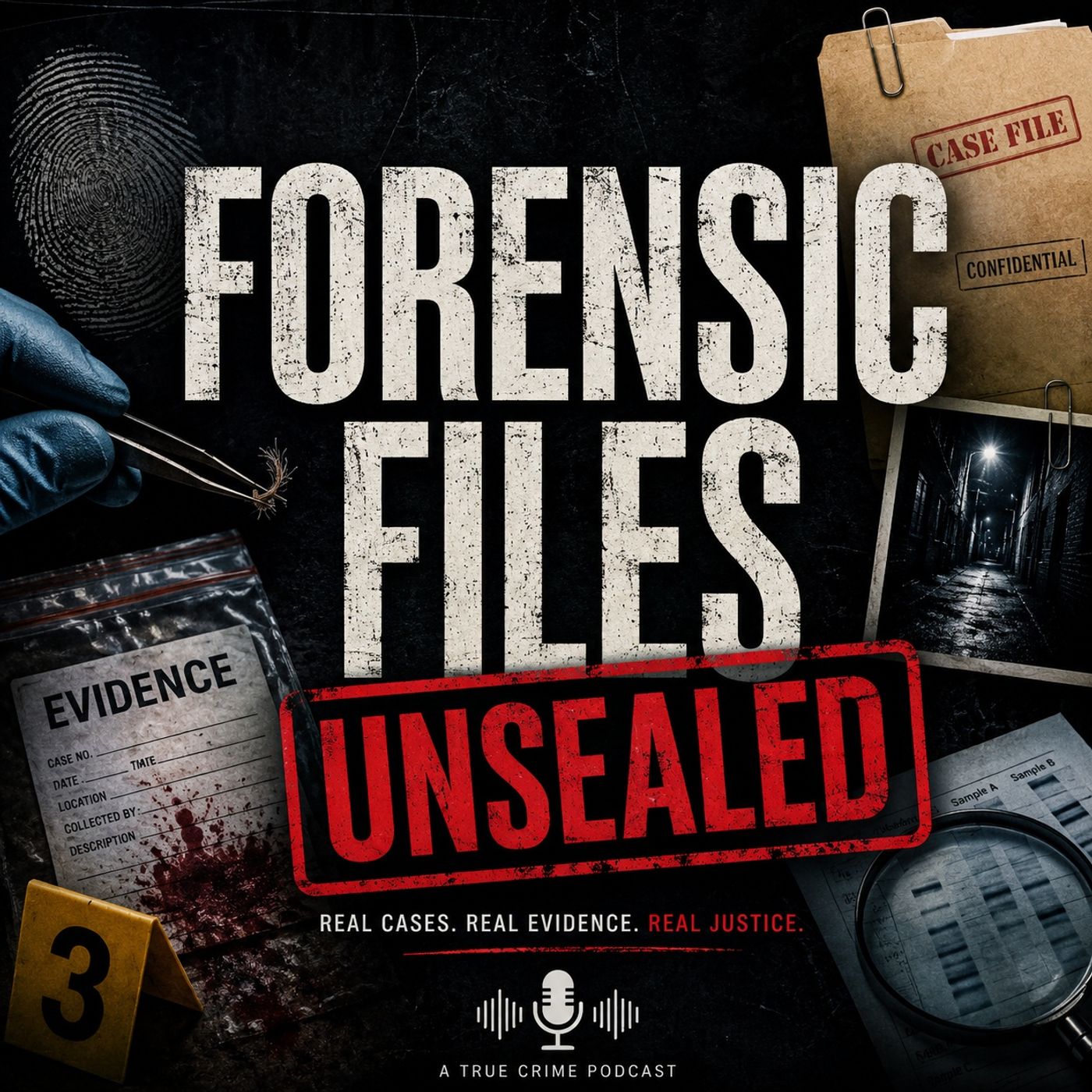
Forensic Files Unsealed
Hosted by AC Wilson · EN
Forensic Files Unsealed takes you beyond the original cases and into the deeper world of forensic investigation, hidden details, and unanswered questions behind real-life crimes. Each episode revisits compelling cases involving forensic science—from DNA breakthroughs and digital evidence to overlooked clues that changed everything. We go beyond the headlines and reenactments to explore what really happened, how investigators pieced together the truth, and what details often go unspoken in public case summaries. Whether it’s cold cases, courtroom revelations, or scientific breakthroughs, this podcast pulls back the curtain on the evidence that solves—or sometimes complicates—the story.
Disclaimer
Forensic Files Unsealed is an independent true crime podcast created for informational and educational purposes only. All cases discussed are based on publicly available records, news reports, court documents, and documented investigative material. This podcast does not claim to provide legal advice, nor does it assert the guilt or innocence of any individuals mentioned. Some interpretations are based on analysis and may include commentary or speculation intended to explore investigative possibilities, not to state definitive fact. All individuals are presumed innocent until proven guilty in a court of law. Listener discretion is advised, as this podcast may contain discussions of violence, death, and sensitive subject matter.
Disclaimer
Forensic Files Unsealed is an independent true crime podcast created for informational and educational purposes only. All cases discussed are based on publicly available records, news reports, court documents, and documented investigative material. This podcast does not claim to provide legal advice, nor does it assert the guilt or innocence of any individuals mentioned. Some interpretations are based on analysis and may include commentary or speculation intended to explore investigative possibilities, not to state definitive fact. All individuals are presumed innocent until proven guilty in a court of law. Listener discretion is advised, as this podcast may contain discussions of violence, death, and sensitive subject matter.
190episodes
Episodes
Newest firstAll episodes
The Murder Of Sophie Collombet
3w ago00:44:38Tap to summarizeThis episode details the tragic 2014 murder of Sophie Collombet, a French exchange student who was attacked while walking home in Brisbane, Australia. The narrative follows the discovery of her body in a local park and the subsequent nationwide manhunt for her killer, Benjamin James Milward. It highlights the profound grief of her family and the outpouring of solidarity from the Australian public, who organized vigils to honor her memory. The episode further explains the legal proceedings, noting that Milward pleaded guilty to his crimes and received a life sentence. Ultimately, the source serves as a tribute to Collombet’s vibrant life and a sobering account of a senseless act of violence.This episode includes AI-generated content.
Transcribe →The Riley Fox Murder and Wrongful Prosecution
3w ago00:40:41Tap to summarizeThis episode details the tragic wrongful arrest of Kevin Fox following the abduction and murder of his three-year-old daughter, Riley, in 2004. After police used coercive interrogation tactics and threats to extract a false confession, Fox spent eight months in jail despite his innocence. His exoneration eventually came through DNA evidence, leading to a significant civil judgment against the authorities for their investigative failures. The true killer, Scott Eby, was not identified until years later when FBI intervention linked him to the crime through neglected evidence. This account serves as a somber illustration of police tunnel vision and the long-lasting impact of legal injustice on a grieving family. Following his release and efforts to clear his name, Kevin Fox's life ended prematurely in a fatal car accident in 2023.This episode includes AI-generated content.
Transcribe →The Route 29 Stalker’s Deadly Deception
3w ago00:43:15Tap to summarizeThe episode recounts two separate, tragic true crime cases from the late 20th century involving deception and violence. The first account details the 1996 disappearance of Alicia Fay Reynolds, a doctoral student who was abducted from a Virginia highway by an unidentified predator known as the Route 29 stalker. Despite decades of investigation and the clearing of several high-profile suspects, her murder remains unsolved. The second narrative focuses on the 1988 Braum family murders in Minnesota, where sixteen-year-old David Braum killed his parents and siblings with an axe following years of intense domestic and religious friction. This case explores the psychological motivations behind the massacre and follows David’s eventual conviction, rehabilitation, and controversial parole decades later. Together, these sources examine the lasting impact of violent crime on families and the complexities of the American justice system.This episode includes AI-generated content.
Transcribe →The Earring in the Bag: The Samira Watkins Case
3w ago00:53:00Tap to summarizeIn Pensacola, Florida, investigators and legal experts recount the harrowing murder of Samira Watkins, whose body was discovered inside a locked duffel bag on a shoreline near a naval base. Initially a mystery, the case shifted from a missing person report to a homicide investigation after an autopsy revealed the young mother had been strangled and bound. Suspicion soon turned toward Zachary Littleton, a married military police officer who had been living a double life and was allegedly the father of Watkins’ unborn child. Detectives built a compelling case by uncovering digital evidence, witness statements, and a missing gold earring found hidden in Littleton's new residence. Surveillance footage and DNA further dismantled his false alibis, proving he had disposed of the victim's car and belongings. Ultimately, the overwhelming physical evidence led a jury to convict Littleton of first-degree murder, resulting in a life sentence without the possibility of parole.This episode includes AI-generated content.
Transcribe →Identifying Victims of a Serial Killer
3w ago00:44:55Tap to summarizeThis episode review documents the persistent efforts of Coroner Scott McCord to identify the unknown victims of serial killer Larry Eyler. After discovering the skeletal remains of two young men in his office, McCord spent years collaborating with the DNA Doe Project to give the victims back their names. Using revolutionary genetic genealogy techniques, investigators successfully identified "Brad Doe" as John Brandenburg Jr. and "Adam Doe" as Kaif Bismillah. The process involved overcoming significant DNA contamination and tracing complex family trees to find relatives in Chicago who had been searching for decades. Ultimately, the source highlights the profound emotional closure provided to grieving families when their missing loved ones are finally returned home. These breakthroughs demonstrate how modern forensic technology can solve cold cases that remained mysteries for nearly forty years.This episode includes AI-generated content.
Transcribe →Woman Murders Best Friend Over $34,000
3w ago00:36:30Tap to summarizeThis source provides a detailed account of the investigation and trial surrounding the 2017 murder of Taylor Wright, a Florida private investigator. The case centered on Ashley MacArthur, a friend of the victim who allegedly killed Wright to steal approximately $34,000 intended for legal fees. Investigators used cell tower data and bank records to dismantle MacArthur's alibi, eventually discovering the victim's remains in a shallow grave on a remote family property. Despite the defense highlighting a lack of physical forensic evidence, prosecutors successfully demonstrated a clear financial motive and history of deception. The narrative concludes with a jury finding MacArthur guilty of first-degree murder, resulting in a mandatory life sentence. Through interviews with detectives and the victim's partner, the text captures the tragic betrayal of a close friendship for monetary gain.This episode includes AI-generated content.
Transcribe →DNA Solves Teen Girl's Brutal Christmas Mall Murder
3w ago00:34:28Tap to summarizeThis episode details the resolution of the 1979 cold case murder of Michelle Martinko, a teenager found stabbed to death in a Cedar Rapids mall parking lot. For nearly four decades, investigators struggled without eyewitnesses or a clear motive, until genetic genealogy eventually linked the crime to a man named Jerry Burns. Detectives narrowed the search down to three brothers before using covertly collected DNA from a discarded straw to confirm Burns as the killer. Despite his defense team’s arguments regarding innocent DNA transfer, a jury convicted him of first-degree murder based on forensic evidence and his lack of a firm denial during police questioning. The case concluded with a life sentence without parole, providing long-awaited answers to a community and family haunted by the brutal crime. This narrative highlights how modern forensic breakthroughs can bridge the gap between historical tragedies and contemporary justice.This episode includes AI-generated content.
Transcribe →The Christmas Tree Lady: Identifying Joyce Summers
3w ago00:29:46Tap to summarizeIn 1996, a woman dubbed the “Christmas Tree Lady” was found deceased in a Virginia cemetery with a small decorated tree and a note requesting to remain anonymous. Despite her meticulous efforts to hide her identity, including typing her suicide note to avoid handwriting recognition, investigators refused to let the case go cold. Decades of traditional investigation yielded no results until advanced genetic genealogy was utilized in 2022. Forensic experts from Othram Labs successfully linked her DNA to a brother, finally identifying her as Joyce Summers. The discovery revealed a complex life story involving a journalism career, a family rift, and a self-published book about childhood trauma. This case highlights how modern DNA technology can provide closure for families even when a person wishes to stay hidden forever.This episode includes AI-generated content.
Transcribe →Mapping the Idaho Murders: The Case Against Bryan Kohberger
3w ago00:37:43Tap to summarizeThis source analyzes the forensic and investigative details surrounding the 2022 murders of four University of Idaho students. It features expert commentary from a retired crime scene analyst who explains the timeline, the layout of the home, and the behavioral patterns of the accused, Bryan Kohberger. The narrative traces the path of the suspect from his alleged stalking of the victims to the forensic breakthroughs involving genetic genealogy and digital evidence. Discussion also centers on the legal proceedings, including the significance of the recovered knife sheath and the complexities of a trial where the death penalty is a possibility. Ultimately, the material highlights how modern technology memorializes a crime scene even after a physical structure is demolished.This episode includes AI-generated content.
Transcribe →The Highway Hunter: The Hunt for a Truck Stop Serial Killer
3w ago00:50:06Tap to summarizeIn 2007, the New Jersey State Police investigated the brutal and ritualistic murder of Monica Misaro in the quiet town of Bloomsbury. Detectives initially focused on the victim’s social circle, but the investigation shifted toward a stranger-on-stranger attack after finding no forensic evidence linking the crime to her acquaintances. A critical breakthrough occurred when an intruder, Adam Leroy Lane, was apprehended during a home invasion in Massachusetts while carrying a receipt from a truck stop near Misaro's residence. Forensic analysis eventually connected Lane’s weapons to multiple victims, revealing his identity as a serial killer who targeted women along his trucking routes. Lane ultimately confessed to the crimes and is currently serving life sentences for his spree of violence across several states.This episode includes AI-generated content.
Transcribe →