← Free Thinking Through the Fourth Turning with Sasha Stone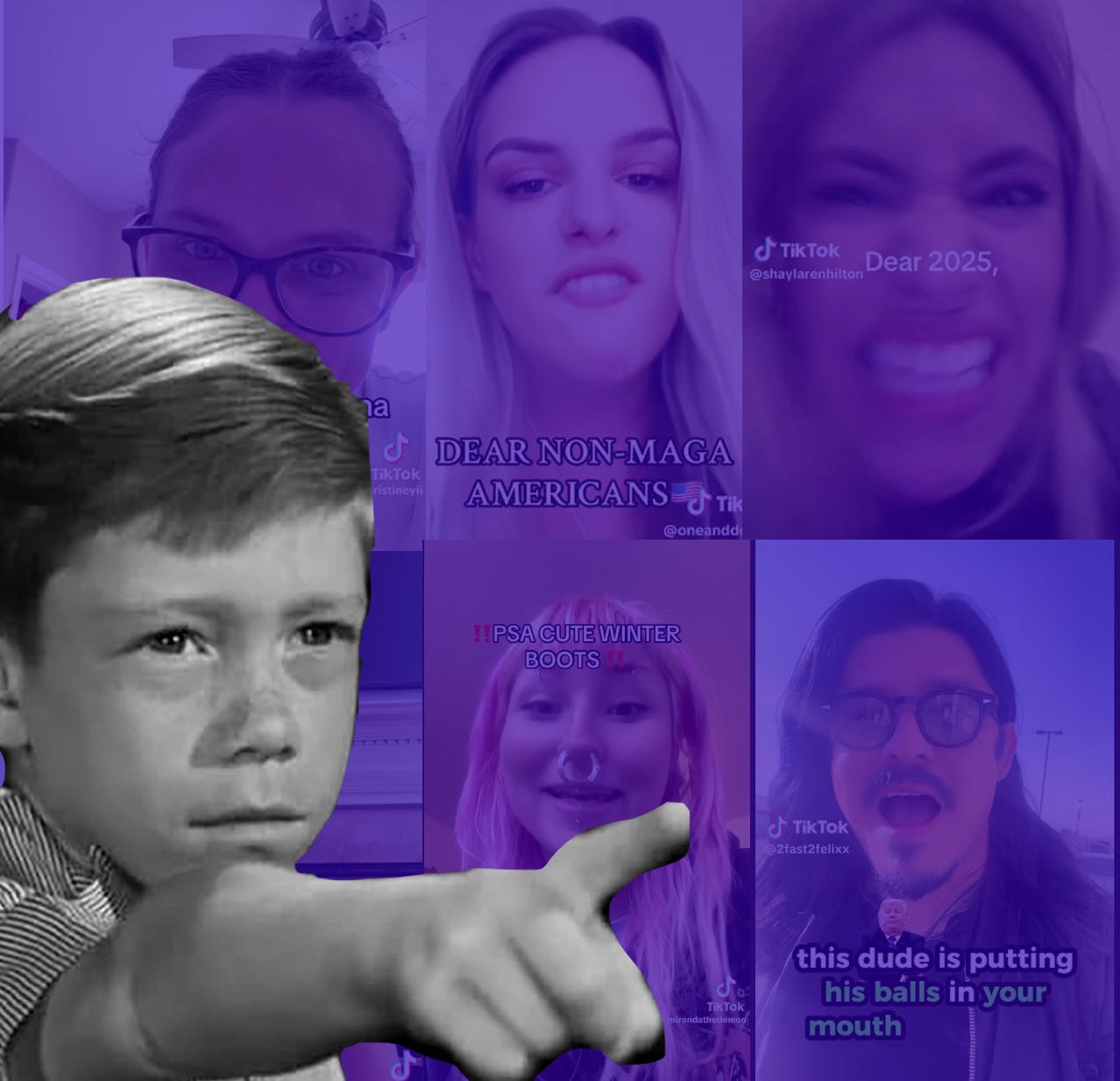
Free Thinking Through the Fourth Turning with Sasha Stone
A Survival Guide in the Time of The Intolerant Liberal
00:37:39
Loading summary
Transcript82 lines
- [00:00]
Sacha Stone
Hi, this is Free Thinking through the Fourth Turning. My name is Sacha Stone. A survival guide in the Time of the Intolerant Liberal. Modern and primitive skills for reasonable, sane people. The intolerant liberal is a new species that has arrived on the scene. They're not like the liberals of old. They would never make an offensive joke. And they are perfectly happy to not only point out those who do, but. But join in on the mob that punishes them. The intolerant liberals have forgotten much of the great art that used to define them back in the day. They have forgotten Shirley Jackson's the Lottery, Arthur Miller's the Crucible, and all of those on point Twilight Zone episodes like It's a Good Life.
- [00:47]
Anthony
Go ahead, Anthony. I'm a very bad man. Keep thinking that. Somebody sneak up behind him.
- [00:55]
Sacha Stone
Somebody end this now.
- [00:58]
Anthony
Well, he's thinking about me. Won't somebody take a lamp or a bottle or something and end this?
- [01:13]
Sacha Stone
You're a bad man.
- [01:15]
Anthony
You're a very bad man.
- [01:17]
Sacha Stone
And you keep thinking bad thoughts about.
- [01:34]
Anthony
Wish it into the cornfield, please, son. Wish it into the corn field, please. He was a bad man, so I turned him into a jack in the box. A jack in the box that still had his bad face. And you mustn't think bad thoughts about me, either, or I'll do the same thing to you.
- [02:09]
Sacha Stone
Play some more music.
- [02:12]
Anthony
It's good what you've done to Dan. It's real good. It was swell. It was just swell. It was really good.
- [02:21]
Sacha Stone
And the monsters are due on Maple Street.
- [02:25]
Anthony
Somebody's pulling a gag or something. A gag? A gag, Charlie. There's a man lying dead in the street, and you killed him. Does that look like a gag to you? Look. Look, I swear it isn't me. I swear it isn't. I know who it is. I know who the monster is. I know who it is that doesn't belong among us. I swear I know who it is. All right, Charlie, let's hear. What are you waiting for? Well, come on, Charlie. Come on. Who is it, Charlie? Tell us. It's a kid. It's Tommy. He's the one. Oh, that's not.
- [03:18]
Sacha Stone
It isn't so? He's a little boy.
- [03:25]
Anthony
It was this kid who knew what.
- [03:27]
Sacha Stone
Was going to happen.
- [03:29]
Anthony
He was the one who knew.
- [03:32]
Sacha Stone
They'd forgotten how funny it was to listen to Sam Kinison make one offensive joke after the next, gifting us with the necessary release of laughter. The very thing we need to stay sane.
- [03:44]
Anthony
Oh, yeah? Yeah. You think you're safe, huh? You people over here. You think you're safe? Do you think you're safe? What's your name? Lou. Lou, you ever been married? You do me a favor. If you ever think you want to get married, if you ever think you've met the right woman, you want to settle down, you want to get a house, you want to get a car, maybe raise a family, do me a favor, will you Lou? Remember this face. Remember it, Lou. Remember that Fraser. Cuz it's the face of hell, Lou. It'll be your face every day. Have you ever married? Are you married? What's your name? Bill. Bill, tell him, show him the face. Show it to him.
- [04:37]
Sacha Stone
Say it.
- [04:37]
Anthony
Say it. Look at it.
- [04:42]
Sacha Stone
Richard Pryor would not survive a minute in the time of intolerant liberals.
- [04:48]
Anthony
I went to penitentiary. Gene Wilder, I did a movie. I went to. Not me personally, I mean I went to do a film in penitentiary and was, I was up there six weeks, Arizona State Penitentiary. It was something. Oh, you applauding for that? Arizona State Penitentiary, real popular. Oh man, it was strange because it's like 80% black people. And what's strange about that is that there are no black people in Arizona. I'm not lying. They bus motherfuckers in. And I was up there and I looked at all the brothers and it made my heart ache. You know, it's all the beautiful black men in the joint, God damn warriors should be out there helping the masses. And I, I felt that way. I was real naive, right? In six weeks I was up there, I talked to the brothers, you know, and I talked to them. Thank God we got penitentiaries. I asked the dude, I said, why did you kill everybody in the house? He guessed it. They was home.
- [06:12]
Sacha Stone
Therein lies survival tip number one. They can't take a joke. Oh boy, can they not take a joke. If every single day is the end of the world, how can anything be funny? It's not funny, it's harm. Social media has given them a way to dissect every joke and every word said by everyone. Imagine how fast sanity would return if they admitted that Trump was funny.
- [06:36]
Anthony
I'm telling you, a young waitress. I won't say beautiful because you're not allowed to say that as a politician. Used to be you could say young, beautiful waitress. This was a young, beautiful waitress. But I won't say that because I feel like I want to continue my political career. If you call, if you call some, the governor won't say it. If you call a woman beautiful today, it's the end of your political career, so I won't do it. But a young waitress, I think you could call young. You're probably not even supposed to say young. Probably supposed to say a waitress. But a young waitress came up and I said, how are you doing? And in my restaurant, in the hotel, and Trump, I said, how are you doing? And she said, not great. Because they're after me so viciously for tips. They just want my tip income and they don't believe me and all of this. And she said, it's terrible. You know, sir, you should have no tax on tips. I said, what? Said what did you just say? No tax on tips. That was about the amount of my consultation. It's true. No tax. I said, what did you just say? Say those words again, sir. No tax on tips. I said, thank you very much. You just won the election for me.
- [07:55]
Sacha Stone
That's all it would take to open up the door to the Doomsday Bunker so they too could break free from the mass delusion that they are the oppressed resistance. And yet they can't. They've never been the resistance. They've always been the empire. An empire that is now collapsing. I'm texting with a friend and we're talking about when we're gonna have to lay our bodies on the line. And I see myself linked with her, arm in arm, waiting for them to kill us.
- [08:41]
Anthony
It's not an if, it's a when.
- [08:46]
Sacha Stone
How is anyone okay right now?
- [08:52]
Anthony
And I. I made a vow to myself that I would never be scared of these people again. And a note.
- [09:05]
Sacha Stone
Where do we begin?
- [09:07]
Anthony
I'm just.
- [09:11]
Sacha Stone
The richest intolerant liberals in the world seem to need Trump because how else to justify their wealth and privilege while they sell ice cream called Eat the Rich? Here is a video from Ben and Jerry's Stick to Ice Cream. Not going to lie, we get this one a lot.
- [09:28]
Anthony
Yeah, we're in the ice cream business, but we've always been about much more than just ice cream. We use our power, our privilege, our platform, and our relationship with our fans to advocate for progressive social change. So, no, we're not just going to stick to ice cream.
- [09:40]
Sacha Stone
And we're never going to stop trying to dismantle white supremacy, end the climate crisis, or fight for our democracy.
- [09:45]
Anthony
And no, we're not going to stop fighting laws that restrict trans rights, ban books and roll back abortion protections.
- [09:52]
Sacha Stone
Caring about that stuff, doing something about it, and supporting communities who've been directly impacted by it is part of our DNA, and it has been since we.
- [10:00]
Anthony
Opened up our first scoop shop in.
- [10:01]
Sacha Stone
Burlington, Vermont back in 1978, Ben and.
- [10:04]
Anthony
Jerry were two best friends who love making ice cream, but for them the only reason to be in business was to do business differently.
- [10:11]
Sacha Stone
Whether we're working with activists in St. Louis to close a racist and inhumane jail, or working to restore the right.
- [10:17]
Anthony
To vote for people who were formerly.
- [10:18]
Sacha Stone
Incarcerated in Florida, or turning up a delicious new flavor in support of refugee rights in the uk, being an active this company is who we are, and.
- [10:27]
Anthony
We know our fans wouldn't want it any other way. Because while we love making the best.
- [10:31]
Sacha Stone
Possible ice cream in the best possible.
- [10:33]
Anthony
Way, the world needs more than just great ice cream.
- [10:36]
Sacha Stone
We don't pretend to always know the answers, but we partner with and take.
- [10:39]
Anthony
The lead from activists and allies who do.
- [10:41]
Sacha Stone
And we hope you'll join us in.
- [10:43]
Anthony
Taking that.
- [10:46]
Sacha Stone
Note how this intolerant liberal throws in book banning as though they are the side that has any room to talk. Books aren't banned because they never make it past the assistant's desk unless they project the ideals of utopia. We've seen how books by J.K. rowling and Dr. Seuss have been left off reading lists, how warning labels have been affixed to movies because the intolerant liberals are so afraid of one person's mental breakdown and ensuing social media backlash that they play it safe. Here is a screenshot of a trigger warning posted by Kat Rosenfield. Blink Twice is a psychological thriller about the abuse of power. While this is a fictionalized movie, it contains mature themes and depictions of violence, including sexual violence. This may be upsetting or triggering for some viewers. Speaking of Amazon, they implemented guidelines for writers and producers called the DEI Playbook. After the Great awokening sane people were horrified at this level of control, but not the intolerant liberal. To them, it was both making society more correct and protecting themselves at the top from the scolds on social media. The Playbook is gone, but stories online remain. The intolerant liberal might want to take note. The Internet is written in ink. Each film or series with a creative team of three or more people in above the line directors, writers, producers should ideally include a minimum 30% women and 30% men of an underrepresented racial ethnic group. This aspirational goal will increase to 50% by 2024. Casting actors whose identity gender gender identity, nationality, race, ethnicity, sexual orientation disability aligns with the character they will be playing. Aiming to include one character from each of the following categories in speaking roles with minimum 50% of these to be women LGBTQIA person with a disability and three regionally underrepresented race, ethnic cultural groups. A single character can fulfill one or more of these identities, seeking at least three bids from vendors or suppliers on productions, one of which must be from a woman owned business and one from a minority owned business. Pay equity across casting, behind the camera, staff and crew, and for vendors and suppliers. Now that the Academy of Motion Picture Arts and Sciences has also implemented its own DEI mandate and rules for productions to be considered to win Oscars, perhaps it's time to put a different kind of trigger warning on movies. How about this movie was written and cast under strict guidelines of the DEI playbook. Or this movie reverses the power hierarchy that might offend Catholics, like making the Pope intersex. Or this movie took out the kiss at the end because we wanted to send the message that women do not need men. Or the Oscar ceremony you are about to watch includes a transgender person in the best actress category for the first time. Or this is a movie aimed at children that convinces them they might be transgender or at least non binary. Or this movie, like every movie, depicts only white people as the villains and elevates every other group just to ensure our ticket buyers go home hating themselves. Or this movie decided that it had to teach its fan base a lesson by removing the traditional male hero from and replacing him with a girl boss. Here a Nazi, there a Nazi, everywhere a Nazi Nazi. Claiming the moral high ground is important for the intolerant liberal. It might be tempting to mock them for their unending lunacy, but beware, podcast listeners. A tweet by Tom Bevin, Jewish nonprofit chief, says Musk will spur violence with his Nazi salute When encountering one of these unhinged, freaked out, delusional people, it's important to think about safety first. Keep a safe distance, especially if wearing a MAGA hat. Stay far enough away that they can't spit on you. Smack the hat off your head, or kick or punch you. Avoid eye contact. Pretend to be on a phone call and that you don't see them glaring at you with daggers in their eyes. Walk slowly or back away if confronted. If they do attack, you can't evade a fist or glob of spit. Try making yourself bigger than they are, as one might do when confronting a bear on a hiking trail. Bellow at them loudly. Hey hey liberal. Hey liberal. Subjects to avoid the truth it is always a mistake to discuss the truth with an intolerant liberal. They're not accustomed to it. Truth isn't really the truth, it's negotiated truth the truth that they have deemed acceptable. There is no such thing as biological man or biological woman. Joe Biden was not too old to run. Kamala Harris was a great candidate. Hollywood's box office isn't dying. Trump is a fascist dictator, criminal, rapist, felon. The 2020 election was perfectly normal. Masks protect us from the spread of COVID The vaccine must be given to children and masks placed on toddlers. Listen how this CNN anchor corrects the truth teller.
- [16:29]
Anthony
This is a very different Donald Trump. He's leading a very different administration. The way he's attacking things and the American public is very much more in line with him than they were at any point during his entire first term. Well, I won one.
- [16:42]
Sacha Stone
I would say.
- [16:43]
Anthony
Correction. This is not a very different Donald Trump.
- [16:46]
Sacha Stone
This is a very different Donald Trump.
- [16:48]
Anthony
As being viewed by voters in this, in the way he's going about things with Susan Wiles, leading things. I think he is, you know, going at things in a much less disorganized fashion, much more organized. Take me back in history. Take you back in history. So it was so interesting to me that Donald Trump's first net approval rating of his second term is higher than his entire first term. And I was interested has that ever happened? Has the second term net approval rating in the first month, have you ever had a higher rating than any net approval rating during the entire first term? Donald Trump is the only. I have a really hard time believing this. This is 100% true. I went back. I love spreadsheets. Donald Trump is the first guy ever whose net approval rating in the first month of his second term is higher than any rating that he had as an entire first term. Kate Baldwin. This is true. I don't make stuff up. The numbers are the numbers. I believe you in nothing.
- [17:37]
Sacha Stone
Except it is always important to ensure everyone keeps those plates spinning, lest the truth crashes them to the floor. The Ministry of Cinema. Asking a woman out can be a tricky proposition in the time of the intolerant liberal. They view most cisgendered heteronormative men as rapists and predators incels afflicted with toxic masculine masculinity. If you ask a woman for her phone number or Instagram, she might say you are harassing her and report you to your boss. It's probably best to ask a test question to determine whether she will rat you out or not. Say something like, you know that movie Body Heat? I loved that movie. If she says, yeah, except it was about a rapist. Hard pass for podcast listeners, a screenshot of a picture of Body Heat that says sexual misconduct in film. And how intimacy coordination can help to address the historic issue. When speaking directly to an intolerant, liberal female, it's best never to bring up sex at all. Not ever. Never think that this monologue from Bull Durham, for instance, would be acceptable today.
- [18:48]
Anthony
Time out. Why do you get to choose? What? Why do you get to choose? I mean, why don't I get to choose? Why doesn't he get to choose? Well, actually, nobody on this planet ever really chooses each other. I mean, it's all a question of quantum physics, molecular attraction and timing. I mean, there are laws we don't understand that bring us together and tear us apart. I mean, it's like pheromones. You get three ants together, they can't do dick. You get 300 million of them, they can build a cathedral. So is somebody gonna go to bed with somebody or what? Honey, you are a regular nuclear meltdown. You better cool off. Wait, where are you going? After 12 years in the minor leagues, I don't try out. Besides, I don't believe in quantum physics. When it comes to matters of the heart. What do you believe in there? Well, I believe in the soul, the cock, the pussy, the smile of a woman's back, the hanging curve ball, high fiber, good scotch. That the novels of Susan Sontag are self indulgent, overrated crap. I believe Lee Harvey Oswald acted alone. I believe there ought to be a constitutional amendment outlawing Astroturf and the designated hitter. I believe in the sweet spot, soft core pornography opening your presents Christmas morning rather than Christmas Eve. And I believe in long, slow, deep, soft, wet kisses that last three days. Good night. Oh, my.
- [20:23]
Sacha Stone
Crash, that was the old left when good behavior and proper language weren't in the vocabulary. Crash Davis is an example of the extinct alpha male that used to populate American film. The clearest example of this is Marlon Brando in A Streetcar Named Zire. I imagine for women of all ages and walks of life, seeing this would be like eating chocolate after going no sugar for 10 years. The nervous system couldn't handle it. That Brando plays a brute and an actual rapist.
- [20:58]
Anthony
You must be Stanley.
- [21:00]
Sacha Stone
I'm Blanche would probably mean a disclaimer at the beginning or perhaps banned outright. However, they might feel slightly conflicted after seeing how hot he is on screen in the bathroom.
- [21:12]
Anthony
Oh, well. Where you from, Blanche? I live in Oriole. Oriole. Oriole, huh? Oh, yeah, that's right. Oriole. That's not my territory, man. Look, it goes fast in the Hot weather. You want a shot? No, I rarely touch it. Well, there's some people rarely touch it. When it touches it, I'm offering. Hey, you mind if I make myself comfortable? My shirt to stick. Please. Please do. Be comfortable. That's my motto where I come from. It's mine too. It's hard to stay looking fresh in hot weather where I haven't washed or even powder. Here you are.
- [21:59]
Sacha Stone
The intolerant liberal has made a world that mostly erases the past 1984 style. You can maybe bring up a movie like Scent of a Woman. But you must admit that it would be considered rape culture by today's standards. Imagine this scene, for instance, under the ever watchful gaze of Vanity Fair or Teen Vogue.
- [22:18]
Anthony
Excuse me, senorita, Wouldn't mind if we join you. I'm feeling you're being neglected.
- [22:27]
Sacha Stone
Well, I'm expecting some.
- [22:31]
Anthony
Instantly. No, but any minute now. Any minute. Some people live a lifetime in a minute. What are you doing right now?
- [22:43]
Sacha Stone
I'm waiting for him.
- [22:46]
Anthony
But would you mind if we waited with you? You know, just to keep the womanizers from bothering you?
- [22:57]
Sacha Stone
No, I don't mind. But Scent of a Woman continues to be a problem for intolerant liberals. Because of a scene that exposes the truth about how all of them used to think in the old days. Before they decided to become the very thing they used to condemn.
- [23:14]
Anthony
I'm going to recommend to the disciplinary.
- [23:17]
Sacha Stone
Committee that you be expelled.
- [23:21]
Anthony
Mr. Sims, you are a cover up artist. And you are a liar. But not a snitch.
- [23:29]
Sacha Stone
Excuse me?
- [23:31]
Anthony
No, I don't think I will, Mr. Slade. This is such a crock of shit. Please watch your language, Mr. Slade. You are in the Baird school, not a barracks. Mr. Sims, I will give you one final opportunity to speak up. Mr. Mr. Sims doesn't want it. He doesn't need to be labeled still worthy of being a bad man. What the hell is that? What is your motto here? Boys, inform on your classmates, save your hide anything short of that, we're gonna burn you at the stake. Well gentlemen, when the shit hits the fan, some guys run and some guys stink. Here's Charlie facing the fire. And there's George hiding in big daddy's pocket. And what are you doing? You're gonna reward George and destroy Charlie. Are you finished, Mr. Slade? No, I'm just getting warmed up. I don't know who went to this place. William Howard Taft, William Jennings Bryant, William Tell, whoever. Their spirit is dead if they ever had one. It's gone. You're building a rat Ship here. A vessel for sea going snitches. And if you think you're preparing these minnows for manhood. You better think again. Because I say you are killing the very spirit this institution proclaims it instills. What a sham. What kind of a show are you guys putting on here today? I mean, the only class in this act is sitting next to me. And I'm here to tell you this boy's soul is intact. It's non negotiable. You know how I know? Someone here, and I'm not gonna say who, offered to buy it. Only Charlie here wasn't selling. Sir, you're out of order. Out of order? I show you out of order. You don't know what out of order is, Mr. Trask. I'd show you, but I'm too old, I'm too tired. I'm too f Cking blind. If I were the man I was five years ago. I'd take a flamethrower to this place. Out of order? Who the hell do you think you're talking to? I've been around, you know. There was a time I could see. And I have seen. Boys like these, younger than these. Their arms torn out, their legs ripped off. But there is nothing like the sight of an amputated spirit. There is no prosthetic for that. You think you're merely sending this splendid foot soldier back home to Argonne with his tail between his legs. But I say you are. Executing his soul. And why? Because he's not a bad man. Bad men. You hurt this boy, you're gonna be bad bums the lotta ya. And Harry, Jimmy, Trent, wherever you are out there, you too. Stand down, Mr. Slade. I'm not finished. As I came in here, I heard those words, cradle a leadership well. When the bow breaks, the cradle will fall. And it has fallen here. It has fallen. Makers of men, creators are leaders. Be careful what kind of leaders you're producing here. I don't know if Charlie's silence here today is right or wrong. I'm not a judge or jury. But I can tell you this. He won't sell anybody out. To buy his future. And that, my friends, is called integrity. That's called courage. Now that's the stuff leaders should be made of.
- [27:36]
Sacha Stone
Ministry of Truth I've spent much of my life feeling like I wasn't enough. Not pretty enough. Not smart enough. Not talented enough. Not hard working enough. And not organized enough. One thing I've learned over the past decade is that I might be all of those things but the one thing I am not is what the intolerant liberal said I was. And that was the most important lesson I learned from watching Trump. He didn't accept it either. He knew who he was. His gift throughout this era was to survive. As their attacks against him escalated, he never backed down. He just shrugged and went on with things with optimism and good cheer. Deflecting attacks from an intolerant liberal reminds me of something we used to say as kids. I know you are, but what am I? So here are some rules to live by by you are on the right side. History never sides with the witch hunters, the pitchfork mobs, the struggle sessions, the show trials. They side with those who stood up against them. Never apologize unless you make a mistake or do something wrong. Apologizing to people for their choice, to take offense or their definition of who you are is like confessing as a witch to live. Never allow them to make you feel shame for who you are and what you believe. They are the ones who should feel shame for never giving anyone the benefit of the doubt, accusing and condemning in the court of public opinion and all of the ways they have destroyed people over their own refusal to relinquish power. Does it hurt to be on the other side of so many friends and family who used to love you? Of course it hurts to be rejected. It hurts in places you never knew existed. It's a punch in the stomach every day. But sooner or later the worm will turn. Then will come the apologies and the denials. You can decide for yourself whether you think they are worthy of your forgiveness. In the time of the intolerant liberal, Be a Thomas Maule A rabble rousing Quaker named Thomas Maule was a righteous pain in the ass to the Church of Salem in 1692. He spoke out repeatedly against the Puritans. Nothing they did to him could shut him up. One of Thomas early attacks was a statement in 1669 accusing Mr. Higginson, the minister of Salem, of preaching lies and instructing in the doctrine of devils. For this he was sentenced to be whipped. He might have been rather consistent in his attacks because in one of his writings he states he was imprisoned five times, fined three times and whipped three times. Thomas opposed the caste system, Puritan laws denying persons with less than a specified amount of wealth the right to wear certain clothing and accessories, and other Puritan laws. When his store in Salem was robbed, the authorities refused to apprehend the culprits or to recover the stolen merchandise. End quote. And then after the mass hysteria and the hangings In Salem, Maul wrote another pamphlet against the church called Truth Held Forth and Maintained, directly accusing the church of going against God. Among the points discussed by him in the pamphlet was an allegation that God would adversely judge the prosecutors of the Salem witch trials. Maul, like everyone else in Salem, knew it had all been lies, so why would they not be judged? He was funny too, and famously wrote, better a hundred witches should live than one person be put to death for a witch which is not a witch. For podcast listeners, a cover of his book Truth Held Forth and Maintained. Mull would have spent his life in jail with his pamphlet banned had he not demanded to be tried in front of a jury of his peers. In Salem, he argued before the court and was found not guilty. How to survive in the age of the intolerant liberal means being a Thomas Maul, a righteous pain in the ass, never shutting up. Mall's case would ultimately be cited as an early inspiration for the First Amendment. These rights are our most valuable gift from the Founding Fathers because they wrote into our Constitution that they are inalienable. Not given to us by the government, but by God. But what good is that freedom if you aren't going to use it? Thank you for listening to my podcast, sashastone.substack.com and welcome to all new members who caught me on the Megyn Kelly Show. You should go listen to it if you haven't yet. And I've also been interviewed by the great Matt Taibbi on his site Racket. Both of these were the thrill of my life. So thank you new followers and listeners and remember to thine own self be true.
- [33:20]
Anthony
Don't look back all those days of yesteryear Can I live on in the past? No no maybe those days are gone gone gone don't look back if I would call back all those days of yesteryear days of yesteryear I will never.
- [34:03]
Sacha Stone
Grow.
- [34:06]
Anthony
I will never be poor but darling those days are gone gone gone gone gone gone gone gone gone gone gone gone gone gone gone you gotta.
- [34:21]
Sacha Stone
Stop.
- [34:28]
Anthony
Oh all on your dreaming baby yeah live on live on in the future baby don't look bad if I were to call back all those days up just yeah I will never go I will never be poor but Thailand those days are gone gone gone gone gone you gotta stack baby love.
- [36:32]
Sacha Stone
All.
- [36:33]
Anthony
Your oh yeah all your dreaming you live on in the future a matter of fact be here now you don't look back don't look back don't look back don't look back don't look look back don't look back don't look back don't look back don't look back don't look back don't look back don't look.
- [37:02]
Sacha Stone
Back don't look back.
- [37:06]
Anthony
Don'T look back don't look back don't look back don't look back don't look back don't look back don't look back don't look back don't look back don't look back don't look back don't look back don't look back don't look back don't look back.