← Free Thinking Through the Fourth Turning with Sasha Stone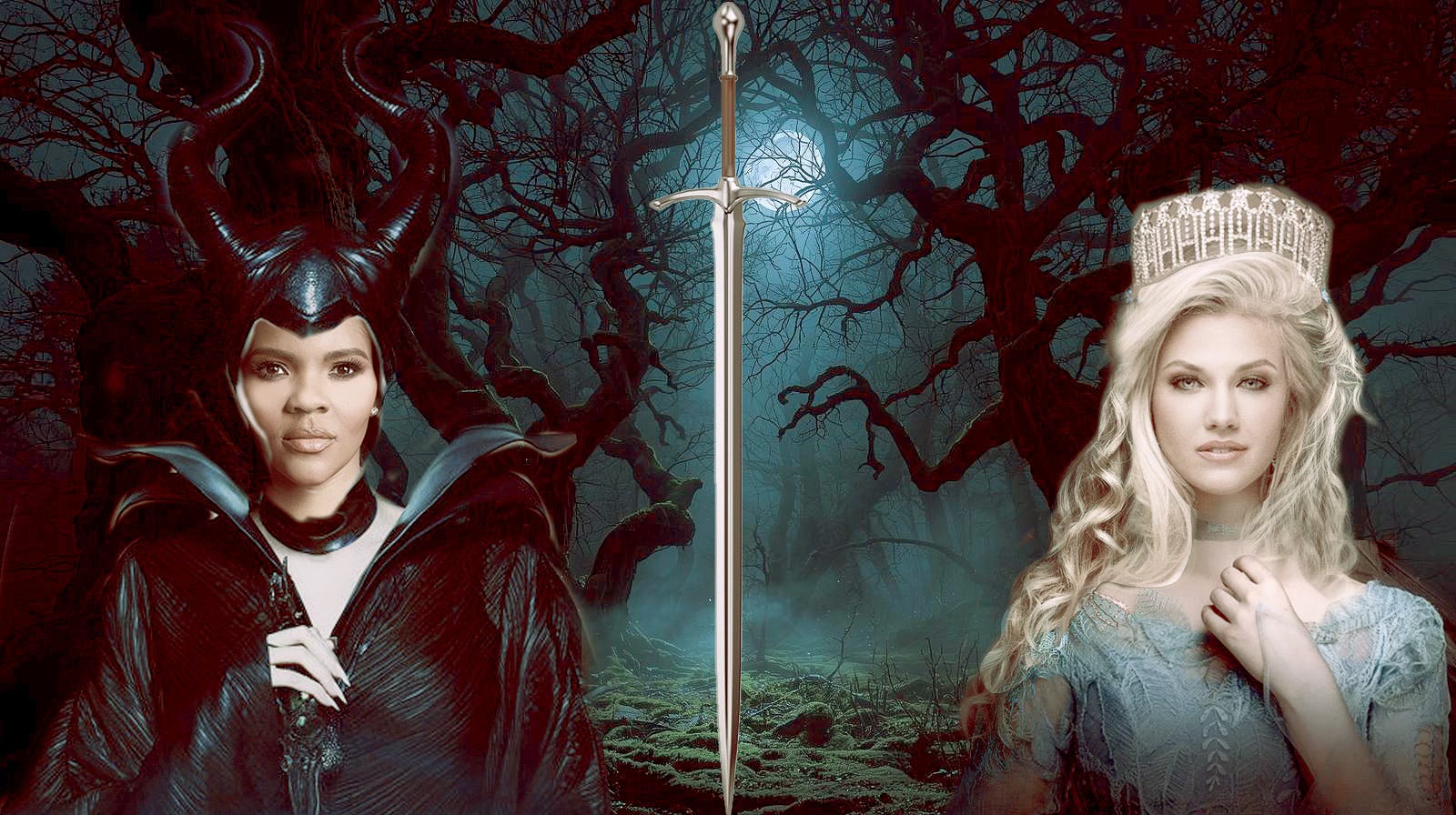
Free Thinking Through the Fourth Turning with Sasha Stone
Candace Owens: A Disney Villain of Her Own Making
00:46:35
Loading summary
Transcript94 lines
- [00:00]
Sasha Stone
Hi, this is Free thinking through the fourth turning. My name is Sasha Stone. Candace Owens, a Disney villain of her own making. Something wicked this way comes.
- [00:14]
Narrator/Commentator (possibly a podcast host or commentator)
So welcome to Bride of Charlie. Look, I have seen enough, ladies and gentlemen. I've seen enough. Erica Kirk should be dragged into a police precinct for questioning. Like I said, you can show me the person who disagrees with me on that. After I will reveal to you what we can now confirm. You can show me that individual, and I will show you a full blown fraud. We're gonna win, guys. I want you to know that as well. We are going to win. God wins in the end. They know that, we know that. And I feel bad for these people that are selling their souls for money. It just doesn't. It's your whole soul, man.
- [00:55]
Sasha Stone
The Disney movies I grew up with made it easy for a kid like me to recognize good versus evil. We knew, walking in the door that goodness would prevail because it must. The alternative is nothing less than the end of civilization as we know it. Goodness was personified by the beautiful princess, whose purity of heart drew the forest creatures and eventually, a handsome prince. Their union was a symbol of harmony, stability, and happy endings. Here is a scene from Sleeping Beauty.
- [01:27]
Matt Walsh
Oh, I'm awfully sorry. I didn't mean to frighten you.
- [01:31]
Sasha Stone
Oh, it wasn't that. It's just that you're a.
- [01:37]
Matt Walsh
A stranger.
- [01:39]
Sasha Stone
But don't you remember?
- [01:40]
Matt Walsh
We've met before.
- [01:42]
Narrator/Commentator (possibly a podcast host or commentator)
We.
- [01:42]
Sasha Stone
We have? Why, of course. You said so yourself.
- [01:46]
Matt Walsh
Once upon a dream,
- [01:51]
Sasha Stone
Evil was embodied in the wicked queen, who was jealous of the princess's purity. So much so that she couldn't rest until the princess was obliterated. Somehow the villains never know their demise is a certainty, because goodness must prevail. Here is another scene from Sleeping Beauty.
- [02:11]
Narrator/Commentator (possibly a podcast host or commentator)
Why, it's Maleficent. What does she want here?
- [02:15]
Matt Walsh
Well, quite a glittering assemblage, King Stefan.
- [02:20]
Sasha Stone
Royalty, nobility, the gentry, and. How quaint. Even the rabble.
- [02:33]
Matt Walsh
I really felt quite distressed at not receiving an invitation.
- [02:36]
Sasha Stone
You weren't wanted. Not what? Oh, dear, what an awkward situation.
- [02:44]
Matt Walsh
I had hoped it was merely due to some oversight.
- [02:48]
Sasha Stone
Well, in that event, I'd best be on my way.
- [02:51]
Narrator/Commentator (possibly a podcast host or commentator)
And you're not offended, your excellency?
- [02:54]
Sasha Stone
Why, no, your majesty. And to show I bear no ill will, I too shall bestow a gift on the child.
- [03:06]
Matt Walsh
Listen well, all of you.
- [03:10]
Sasha Stone
The princess shall indeed grow in grace and beauty, beloved by all who know her. But before the sun sets on her
- [03:25]
Matt Walsh
16th birthday, she shall prick her finger on the spindle of a spinning wheel.
- [03:32]
Sasha Stone
And die.
- [03:33]
Matt Walsh
Oh, no.
- [03:34]
Narrator/Commentator (possibly a podcast host or commentator)
No.
- [03:36]
Matt Walsh
Seize that creature.
- [03:38]
Sasha Stone
Stand back, you fools. Some might say that this is what happened to the MAGA movement one bright sunny day in Utah when a psycho killer avenging the crippling despair of his transgender furry lover took aim and shot the handsome prince, killing him within minutes. Since then, MAGA has struggled to hold on to the coalition Charlie built, the support for the president he helped elect, and to protect the beautiful princess from the evil forces that threatened to destroy her. Turning point and MAGA Candace Owens might think she's the hero of this story, but she's written herself in. After she was left on the cutting room floor, she's amassed an audience of dim witted women and a weaponized army of international bad actors hoping to infiltrate the US and use Candace to shape public opinion. A growing portion of her audience, as with many influencers on the right now, is comprised of people convinced that Jews are behind every evil thing that ever happens, has ever happened, or will ever happen. And in Candace Owens, they found their princess. Candace is the only one who sees the truth. Candace is an instrument of God. Candace will make sure justice is served. How good it must feel for someone who's always been a whole lot of charisma with no real place to land. She tried out many different masks over time, moving through political parties and various ideologies until finally landing the role of a lifetime mean girl with a microphone after being booted out of the Daily wire. Her gossipy YouTube channel would take her into the wet, slimy corners of culture and politics, and her audience would lap it up. But she would hit pay dirt when she decided to run with the idea that Brigitte Macron was really a man. Cruelty sells online, and Becoming Brigitte was a huge hit for podcast listeners. A montage of videos, Becoming Brigitte, an investigative series by Candace Owens with tens of millions of views. Getting slapped with a massive lawsuit by the Macrones only seemed to make her more popular. And by the end of that mess, everyone knew her name. So then what? Back to Blake Lively and Diddy's freak offs? Not for our Disney villain. She needed something as big, if not bigger. What could really dig into the tender spots and manifest itself as emotional terrorism in the same way? Who is as protected a target? Here is Erica Kirk talking about Charlie.
- [06:47]
Narrator/Commentator (possibly a podcast host or commentator)
He. He is my husband. Charlie Kirk is a force.
- [06:54]
Sasha Stone
He is a force.
- [06:56]
Narrator/Commentator (possibly a podcast host or commentator)
He is bold when the world demands silence. He is fearless where others flinch. And he has taken on the battle of the next generation, changing these hearts and minds. I know you guys have seen it. The college campuses changing the hearts and
- [07:14]
Sasha Stone
minds of these kids.
- [07:15]
Narrator/Commentator (possibly a podcast host or commentator)
So behind the podium, he's a fighter, but behind closed doors, he is Daddy. He is the love of my life. And I find it so incredible that my children, our children, get to watch him be the man that God has called him to be so fearlessly and so boldly and get to see that conviction come to life.
- [07:40]
Sasha Stone
I think that is.
- [07:41]
Narrator/Commentator (possibly a podcast host or commentator)
There is no greater thing as a wife to be able to watch that. And so it is my honor to be able to introduce you guys to one of the greatest fighters that I know who is so intentional, who is so amazing. And he never backs down from the fight because he knows who and what he fights for, and that is God. It's his family and his country.
- [08:11]
Sasha Stone
Social media amplifies the ugliness inside of us all. The algorithms do the rest. The left has been unleashing levels of dehumanization and bullying at Erica Kirk since the day Charlie died. Why her? Who knows? They hated him and were happy he was dead. They wanted to see his widow suffer, especially because she's a pretty blonde. All the while, Candace, who'd been sidelined from Charlie's life, didn't attend his wedding to Erica. So the story goes, I was pushed out of TP USA and not present at the memorial, saw that Erica was suddenly a subject both too hot to touch and impossible to ignore. And, yeah, a pretty blonde for podcast listeners, a montage of terrible tweets by the left at Charlie and Erica. And so, just as the evil queen and Snow White can't stand it any longer and sends a huntsman to kill what torments her, Candace finally pulled the lever. Especially after Erica Kirk told her to stop in an interview with the very Jewish Bari Weiss, no less.
- [09:23]
Narrator/Commentator (possibly a podcast host or commentator)
The podcaster, Candace Owens. Okay, at one time a friend of Charlie's, at one time an employee of Turning Point, she has been one of the main peddlers of these conspiracies, and she is making a huge amount of money on it. She is building her business off of these lies. What do you want to say to her and the other people that are putting these lies out into the world right now? Stop. That's it. That's all I have to say.
- [09:55]
Sasha Stone
Stop. So many women and even some men wanted to see our princess fall, and Candace was more than happy to serve it up fresh and hot. The Disney princess. Charlie Kirk's marriage to Erica was always met with the refrain, she's out of his league. Charlie got lucky and found himself a true beauty. Half Syrian, Lebanese, and half Swedish, Erica Kirk looks like no one else. With cascading platinum locks and sparkling blue eyes, she was Charlie's dream girl. How did he ever get so lucky? He saw her, knew he wanted her, and he said to her, I don't want to hire you. I want to date you. So goes the famous story of how they met. Podcast listeners, a picture of Erica Kirk and a wedding photo of Charlie and Erica. Candace is pretty, but she's not that pretty. Few women are. Candace had to develop other skills that pretty girls usually don't have to worry about. Candace is better on camera than Erica. She's better at performing and at storytelling. Erica's still slightly awkward and hasn't yet found her voice. She's trying, under enormous pressure and undeserved scrutiny, to keep Turning Point alive and make Charlie's dreams come true, not to mention caring for two small children and an ailing mother. Podcast listener is a picture of Erica Kirk standing next to Candace at Candace's wedding. But it's Erica's beauty, especially her leaning into her half Swedish identity, that seems to drive Candace into fits of despair and jealousy. And what else could explain it? Candace admits she wasn't the kind of kid that people sought out to be in beauty pageants. I was funny looking, she says. I had an underbite.
- [11:53]
Narrator/Commentator (possibly a podcast host or commentator)
Okay, so it wasn't about narcissism. She wasn't groomed, by the way, if you have to say that you weren't groomed for something, you probably were. You have to just kind of say that. It's probably because you were. And the reality is that every single year from 2005 through to 2012, Erica was involved in beauty pageants. So that's seven years of her life that we could find. There could be more. There could be. She could have been doing pageantry while she was in Ohio for a couple of years. I'll let you know. Could be posted. I should also add here that some pageant women disputed her narrative. They wrote to us that she was just randomly invited. They said that minors in particular are not just freely solicited. Solicited to join Pageant World, and that their photo has to be submitted by a parent or a guardian. I'm not an expert on that, and maybe I was. I wasn't pretty enough. I was a little funny looking, had a little bit of an underbite. But I never received any of these mailers that she's talking about.
- [12:41]
Sasha Stone
And therein lies the tragedy of Candace Owens. She has an abundance of charisma and is a gifted Storyteller. But none of that gave her the happy ending she wanted because it was never about the handsome prince. She wanted power, influence, all eyes on her. And that has taken her down a dark path. A Disney villain. Candace's slice and dice this time would be called the Bride of Charlie. Like the Bride of Frankenstein. Get it? Frankenstein. With Charlie as the hapless creature and Erica built just for him and used as bait to lure him into a trap that would eventually get him killed. The views were in the millions as Candace's audience spread the lies and rumors far and wide on social media. Podcast listeners A montage of Candace the Bride of Charlie. Her idiot followers pretended like there was something to the story when it was obvious they just needed another woman to hurl into the public arena. Our modern day Coliseum. Why? Because they're bored and they're stupid and they don't know what else to do with their time. Here is a montage from TikTok.
- [14:01]
Narrator/Commentator (possibly a podcast host or commentator)
If you're still supporting Erica Kirk, especially as a Christian, you're seriously lacking discernment. If you can't see faith being used to silence and manipulate people, you're part of the problem. Plain and simple. The first time my bells went off
- [14:14]
Sasha Stone
is two days later she shows up in Charlie's office saying the cries of a widow will be echoed like a
- [14:19]
Narrator/Commentator (possibly a podcast host or commentator)
battle cry, except there's no tears and she's acting like this is Lord of the Rings. One day she's untouchable, saying how dare you question a widow's attire. The next day she's a boss, babe CEO telling women to stay home when she's doing the exact opposite. Does Erica Kirk have ties to a
- [14:34]
Sasha Stone
non for profit called Romanian Angels which is somehow linked to child trafficking?
- [14:38]
Narrator/Commentator (possibly a podcast host or commentator)
Is the number one question I've been getting in my comment section. So I wanted to do a deep dive and figure out where this originated from. Guys, episode one of Bride of Charlie.
- [14:49]
Sasha Stone
Candace was on fire.
- [14:51]
Narrator/Commentator (possibly a podcast host or commentator)
Erica always says I have nothing to hide.
- [14:54]
Sasha Stone
And tell me this.
- [14:54]
Narrator/Commentator (possibly a podcast host or commentator)
If somebody was going to do an investigative series on your life, would you care? I think most of us are pretty honest and that wouldn't matter.
- [15:04]
Sasha Stone
You know what makes me want to listen to someone even more so when a group of people are trying to silence them. Just like how TPUSA was trying to silence Candace Owens. I had to pause Candace because I
- [15:16]
Narrator/Commentator (possibly a podcast host or commentator)
feel physically ill. She produced evidence allegedly
- [15:20]
Sasha Stone
that Erica Kirk had an inappropriate relationship with.
- [15:23]
Narrator/Commentator (possibly a podcast host or commentator)
She was 25 with a 15 year old girl she met and they maintained a friendship through social media and texting.
- [15:29]
Sasha Stone
And Erica Love bombed her.
- [15:30]
Narrator/Commentator (possibly a podcast host or commentator)
According to these texts, the girl at the time was totally enamored because Erica was Miss Arizona.
- [15:36]
Sasha Stone
Her investigative series is a whole lot of nothing. It is petty and dumb, revealing that Candace just wants to be back in the movie and keeps writing herself back into the script. Here is Candace.
- [15:50]
Narrator/Commentator (possibly a podcast host or commentator)
Tell me what happens. What happened with Turning Point usa? You just knew. Got lucky. You were on a pilgrimage, I guess. And there Charlie was at the airport in Israel. You saw him. Your mom said, go up to him. She's a pusher, right? Lori's a pusher. I always thought it was so strange how you never mentioned that I was at the airport with Charlie. Just thought that was so weird. You never said that. Yeah, I saw Charlie with Candace because we were actually together for that trip, so. Interesting. Anyways, it's a tangle, tangled web that we weave.
- [16:22]
Sasha Stone
Erica, he's like a little brother to me. She said no one would treat their little brother this way. She brags about encouraging Charlie to date women and pushing him toward Erica, all the while suggesting she was more important to Charlie, to Turning Point, to the entire world, than Erica ever could be. Pick me. Look at me. Talk about me, not her. But not even Charlie is as important as the bigger conspiracy that Israel killed him. Candice repurposed Charlie's corpse as proof of her delusional fantasies that Israel would even bother. She has invented a version of Charlie that never existed and used him as a prop to push insane levels of Jew hate not seen for a long time in media, if ever, not counting Nazi Germany.
- [17:12]
Narrator/Commentator (possibly a podcast host or commentator)
I'm going to now read you an unhinged text message that Charlie received, this time from a female Christian donor. Zionist, of course. And as I read this, I want you to keep in mind that this information once again is being shared to you from me, not from Charlie's closest friends over at Turning Point usa, who purport to care about what happened to him, purport to want the truth to get out. Except not when it comes to the pressure that Charlie was under in the months leading up to his assassination. Pressure that was coming from donors. These people, in fact, wouldn't dare utter a word, bad word about Israel. Tons to say about Candace Owens. They're not going to send any legal letters over to anybody that is pro Israel. Yeah, it seems that that's the way, right? Not for a single second do they want to betray the Israel narrative. On March 21st of 2019, Erica visits with Charlie. She's in Jerusalem with Charlie, what is known as Zion's Gate in Jerusalem. She Posts a picture with a pretty curious caption. It reads in part, meet Darla, a Romanian Jew that now calls Israel home. She was sitting by my family's dedication sign for restoring the Zion gate in Jerusalem. Oh,
- [18:36]
Matt Walsh
what?
- [18:36]
Narrator/Commentator (possibly a podcast host or commentator)
The Zion's Gate as her family's dedication. Speaking of which, why does her one time roommate Nicole Rothstein allege that half of their family referring to her and Erica's family is Jewish? Doesn't make sense. She also claimed that Charlie's assass after Charlie's assassination that Erica she was online going back and forth people that Erica was her best friend and her cousin Nicole Rothstein said this to be clear. The Rothstein family Zion's Gate is their dedication. We could imagine how it could make sense. Now again we're, we're imagining here. We're trying to make sense of the things that Erika is saying. I could imagine a very easy way it could actually make sense her closeness to the Rothstein's, her dedication to Jerusalem. If and only if we take Erika literally when she says more far, let's assume that Grandpa Carl is indeed her mother's father. That would mean, well, obviously Lori's not wouldn't be her mother. It would also mean that Kent, just by nature of him being a man, is not her father. We're looking for her mother's father. So we Jack and Erica's aunt, Mommy, aunt, I don't know Carla live in Utah. He graduated from what is today known as Utah Valley University. He's very involved in the university. It was formerly known as Utah Valley State College. When he graduated from there, he also created on their campus the center for Jewish Studies. I mean the very least you'd think with all of the money that he poured into that university, he might be able to call someone to get us more footage of Tyler Robinson. My imagination made it to the hospital when Charlie was shot and killed. I mean, why did none of them make it to the hospital? They're all so nearby. She still lives in Utah. Also a professor at BYU in political science. He's the former director of the university's Jerusalem Center. He also served on the center for Jewish Studies on the board at UVU Zion's Gate.
- [20:39]
Sasha Stone
Like I said, it wouldn't be until the US and Israel bombed Iran that it would all come together for her in a nice neat package. They needed Charlie out of the way so they could start this war.
- [20:52]
Narrator/Commentator (possibly a podcast host or commentator)
One person who stood between America's involvement with a full scale, full scale war in Iran was Charlie Kirk. With Charlie Kirk, it is my personal belief that that is the very reason that they colluded to have that obstacle eventually removed just months later. That's what my timeline reveals to me, that it is very likely a plan was set in motion after Charlie beat Bebe's desires at the White House. Now, I believe on the basis of evidence, that Charlie's murder was likely a very sophisticated military operation that was meant. And here's the funny part, this is how insane these people are. Ironically, they wanted his murder to galvanize American support behind Israel. That was their plan. That's why PB immediately got on the air to remind you all how much he loved Israel. Right? They wanted to all get out there and say that because they didn't want us to learn that Charlie had actually abandoned their cause entirely. So Charlie was removed and in his place, we got a Shabbat Shaloman, not so grieving widow. This is the book my Charlie wanted you to read. He just finished it. He loves the Jews. He just finished speaking about how much he loves to Shabbat and to shalom and to say daddy's home and to throw down his phone. Barry Weiss it's just incredible when you think about it all coming together,
- [22:17]
Sasha Stone
whatever is happening now. Courtesy of algorithms and anonymous users driving influencers farther to the right, Robert Malone warns that we're seeing the kind of hate we haven't seen since World War II, the last fourth turning for podcast listeners. A tweet from Robert Malone quote, the amount of people who hate those who are Jewish or of Jewish origin in the comments of my feed is astounding. I never thought I would see this much racism in the USA in my lifetime. Again, it's shocking and disgusting. So basically, I'm just hiding these replies and blocking a lot. I hope one day they come to understand that this is another type of mass formation, just like what happened under Hitler. And yes, I'm sure this post will be another opportunity to block tens, if not hundreds of people. And so shines a good deed in a weary world. Calling out Candace Owens is dangerous. Once she makes you a target, her minions will attack like the flying monkeys in the wizard of Oz. Some people on the right do have the courage, not so much, to attack Candace, although plenty have but to stand up for Erica. One such person is the Daily Wires Matt Walsh, who dedicated an entire show to exposing just how ridiculous the Bride of Charlie actually is. And none of it is evidence of any crime. It's not true, Matt says, and so it's wrong. But for someone like him, who mostly exists in the Tucker Carlson Lane. To do so was brave. The whole video is worth watching and you can find it here, but here is how he opens it.
- [24:10]
Matt Walsh
I still remember where I was and what I was doing when I heard about the massacre at Sandy Hook almost 14 years ago. It was the second national tragedy in my lifetime after 911 that left an indelible and permanent mark on the conscience, something you remember for the rest of your days. Now, the two events are not the same in terms of their scale, severity, geopolitical importance or death toll, obviously, but they were so shocking, so morally outrageous that they imprint themselves somewhere deep in your soul like a kind of psychological impact crater. I also remember just as vividly the conspiracy theories that almost immediately sprouted up like weeds around the Sandy Hook shooting. Within days of the attack, if not hours, it had been decided by legions of Internet commenters and a few prominent right wing personalities. Alex Jones, most famously, that the attack never actually happened. It was staged. It was a hoax. Now, in the case of Sandy Hook, this wild and baseless theorizing was not just an academic exercise. Real children actually died. Real parents were dealing with a trauma beyond comprehension. And now, thanks to the Sandy Hook truthers, they found themselves cast as the villains of the story. You know, it wasn't enough to suffer the worst tragedy of their lives. Now they also had to deal with being demonized and defamed for no good reason. I bring all this up because it reminds me very much to an almost eerie degree of the third national tragedy that impacted me and many millions of Americans so deeply that we'll never forget where we were when we heard about it. That would be the assassination of Charlie Kirk. Just like Sandy Hook, Charlie's Kirk assassination has become the subject of wild and baseless conspiracy theories. And just like Sandy Hook, one of the living victims of this tragedy, tragedy in this case Erica Kirk, has become, for no good reason, a target. She's been demonized and defamed, and on the exact same basis, the Internet peanut gallery has decided that she smiles at inappropriate times, she rubs them the wrong way, they don't like her vibes. And for that reason, she must be the villain of the story rather than the victim. Now we're finding out that the Internet is like the matrix. It allows you to construct whatever reality you want for yourself. That's how the trans craze took hold. That's every weird subreddit full of bizarre perverts living out their fetishes in the company of other perverts who share the same interests. And it's what conspiracy theorists do. They marinate in a selectively curated assortment of facts that stitch together whatever story they're telling themselves. The earth is flat. Sandy Hook was staged. Erica Kirk conspired with a half dozen foreign intelligence agencies to murder her husband and frame a gay, furry, etc. And this time around, the chief media personality promoting the alternative version of events is, of course, Candace Owens. Now, as you may remember, a couple of months ago, I laid out the reasons why. Contrary to claims by Candace, it's clear that Tyler Robinson killed Charlie Kirk.
- [27:25]
Sasha Stone
Candace might be playing with fire like Alex Jones did when he was hit with a billion dollar lawsuit after Sandy Hook. Candace is slippery in the things she says, always careful to add in my imagination or this is speculation. But she has done visible harm to Erika Kirk's reputation, the very definition of defamation. She's also made the children of Charlie Kirk have to grow up with these lies, this unfair albatross that will haunt them forever. How could anyone who calls themselves a friend of Charlie do that? So that's all the more reason I was moved by Matt Walsh's willingness to go there. He didn't attack her and he could have. He didn't destroy her and he could have. He tried to appeal to the better angels of her nature. But the thing is, I don't think she has any.
- [28:19]
Matt Walsh
Literally. No matter what this woman does, no matter what she says, how she looks, what facial expression she displays, it is used as evidence against her. Look at this tweet from the news outlet rt. It says Erica Kirk's State of the Union demeanor goes viral. Commenters on social media argued Charlie Kirk's widow was acting weird, fake and performative at the State of the Union address. Do you spot anything? And you can see the video there. Well, the answer is no. I don't spot anything strange. She's just sitting there. What do you want her to do? At some point, she looks like she's getting emotional. At other points, she smiles in response to something Trump says from the podium. She looks up, she looks down. What do you want? What is the precise facial expression that Erica Kirk is supposed to have? Maybe, maybe one of her critics can show us. Go ahead and prescribe for Erica exactly what her face is supposed to look like at all times. This is completely ridiculous. I mean, we're at the point now where Erica's facial expressions are being judged on a second by second basis. People are parsing the slightest move of an eyebrow and looking for evidence of something sinister. I don't think it's an exaggeration to say that nobody in history has ever been subjected to this intense level of scrutiny. So much that they literally can't smile or use a tissue without 10,000 people on the Internet attacking them in the most ruthless and uncharitable terms possible. I've never seen anything like it. If you have, let me know now. I've heard it argued by Candace and many others that Erica has put herself in line for this level of scrutiny by assuming the role of CEO. Now, I'm not sure why a person becoming CEO of an organization inherently justifies ripping their life apart. I'm not aware of any other CEO who's ever been subjected to anything like this. It seems more that her becoming CEO offers a pretense for the criticism, not a necessary reason for it. And in any case, even if becoming CEO makes her a candidate for increased scrutiny, what it doesn't do is lower the evidentiary bar for everybody else before accusing her of nefarious crimes or implying that she's guilty of them. Her becoming CEO does not give anyone moral license to make wild and defamatory speculations about her. And anyway, her decision to become CEO is not surprising. It certainly is not scandalous. Wanting to keep a man's life, work in the family, to preserve his legacy is an understandable instinct, and by the way, a very conservative one. Now, as to her behavior, I personally don't think that she's been acting strange at all. But if you do, then here's your explanation. Not that Erica owes you one. Any human being under that much scrutiny in a situation this traumatic and terrible would behave strangely. Indeed, I don't even know what a normal reaction would be. This is not a normal circumstance. We have no frame of reference for it. Our only frame of reference is how private people mourning, much less public deaths, behave. And even based on that comparison, a comparison which is not entirely fair to Erica, still, her behavior is wholly understandable. Grieving people, people often laugh, they smile. Other times they're crying. They try to compartmentalize their grief and carry on hiding their trauma as best they can. That's what Erica is clearly doing. And she's doing it while trying her best to carry on her husband's legacy and life's work, which is what she feels called to do. Again, that is not difficult for a reasonable person to understand. But all of this is irrelevant. Even if you don't like how she acts, the pants she wears, her facial expressions, anything else, you have no actual evidence based reason to think that she is guilty of committing any crime. And if she isn't guilty of a crime, then all you're doing is nitpicking a widow, which is every bit like critiquing the color of somebody's nail polish while you watch them drown in the ocean and make no attempt to help. Yes, maybe she made an odd choice of nail polish that day. She's also drowning. And that would seem to be the more salient fact. And it's interesting to me to note that Tyler Robinson is not subjected to even a fraction of the public scrutiny. Even though all of the evidence, literally all of the evidence, points to him. There is no evidence connecting Erica to the crime. All of it, all of the evidence we do have, every bit of it connects Tyler Robinson to it. And yet, for some reason, he's not the subject of public scorn. Instead, it all goes to the widow of the man he killed.
- [33:39]
Sasha Stone
Matt was very good friends with Charlie Kirk. And this is what friends do. They don't pillage the corpse for clicks and views. They don't bully, harass, and smear the widow and endanger the lives of their children. They don't try to dismantle the movement Charlie built. Candace was no friend of Charlie Kirk, but Matt was. And if I had to guess, I'd say he'd made a silent promise to his good friend that he would step up and provide support and be a kind of guardian angel for Erica and their two kids. His monologue is so good, so well written, so moving. It should have been more of a reason for others to do the same. But the content churn won't allow it. It's on to the next thing.
- [34:26]
Matt Walsh
So I've laid out over these past 45 minutes or so the argument I've made the case. I've tried to explain as thoroughly and systematically as I can why Candace's claims about Erica and insinuations about her are not based in fact. And having done that, I'd like to, now, if you'll forgive me, merely as epilogue, speak on a more emotional and personal level for a moment. I admit that I have a certain advantage when it comes to assessing Erica's actions and motives. I've spoken to her multiple times since Charlie died. You know, you don't need to know her or speak to her to understand that the accusations and insinuations against her are utterly without merit. You don't need to know her or speak to her to understand that there is no legitimate reason, no evidence to justify treating her with anything but compassion and sympathy. You don't need to know her or speak to her to understand the biblical mandate to be kind to widows. But if you did speak to her, you would see, as I have clear as day, that this woman is completely devastated, broken into a thousand pieces by this tragedy. She is shattered. She is crushed. And now, already grief stricken and gutted, she must deal with public scorn, mockery, and defamation unlike anything I've ever seen in my life, much less experienced myself. If you're worried that she isn't sad enough, fear not. I can report she's sad. She is very, very sad. And if for some unknown reason it makes you feel better to know that, well, now you do. The other thing you notice about Erica, if you talk to her in real life, is that she is a real person dealing with a real thing. Everybody else on the Internet has the benefit of treating this whole thing like some kind of game. A piece of content that you watch and then scroll past. You engage with the story in bits and pieces when you want to, here and there, and then you don't. I'm talking about it right now as an episode of my podcast. Candace has done many episodes about it. Erica lives with it every second of every day. This is her life. It's not a game for her. It's not content. It's her life. Now, I've talked about how deeply Charlie's death affected me, and it did. I was changed by it, and not for the better, I'm sorry to say. I'm an angrier person now. I admit that. But I also recognize that even in the immediate aftermath of his death, I could still put my phone down and turn off the TV and try to take my mind off the tragedy and go spend time with my family, with my wife, who is alive, and my children who are happy and safe with two parents who love them. I have that luxury. So does Candace. Erica does not. When I was trying to take my mind off of things, do you know what Erica was doing? She was explaining to her young children that their daddy will never be coming home. Do you know what that's like? Have you ever had to have a conversation like that? I haven't. I pray I never do. And every night since that day, while I am happily at home with my family and Candace is with hers, Erica is home with two children who are suffering a trauma that they're far too young to process, while she carries a grief that most of us can't comprehend. And all the while, she is gleefully ripped to pieces by hordes of people who cannot muster even the faintest shred of sympathy for her? Will anything I'm saying right now change that? Will it make any difference at all? I don't know. Probably not. Is it likely to persuade Candace or any of her fans or anyone else who's been attacking Erica? That's probably unlikely, though I can always hope. You know, there's a debate on the right right now about the best way to defend Charlie's family and legacy through all of this. Is it better to starve the conspiracy theories of attention, deprive them of oxygen? Or should we focus on them intently? Should we scream and shout and get angry? Should we approach the issue objectively and offer a dispassionate rebuttal? I'll be honest with you. I've argued with myself about this. I don't know the answer. All I know is that Erica Kirk is a victim, not a culprit or a conspirator. She doesn't deserve any of this. What she deserves is sympathy and maybe a little bit of grace. And if we really loved and admired Charlie, then extending that basic level of decency to his wife is the least we can do.
- [39:31]
Sasha Stone
Matt's monologue makes me think Charlie Kirk was right in how he chose his closest friends. If it's true that he had parted ways with Candace Owens before his death, that speaks volumes. If his legacy is to be handed over to anyone, let it be to those who cared about him, so they care about Erica. Those seeking to destroy the ones Charlie loved the most should be kept far, far away. And all you have to do is listen to Charlie's voice, to his children, and to Erica to find solid ground. This is real. The other stuff isn't.
- [40:11]
Matt Walsh
You know what I would love? I would love to be a very popular radio host, podcast host, great father, great husband, and live a very happy life where I can run a major organization, influences the country, and I could pick up the phone, the President answers on the first ring. That would be awesome.
- [40:25]
Narrator/Commentator (possibly a podcast host or commentator)
But I feel like you're doing that
- [40:26]
Matt Walsh
right now, so maybe I'm living the life. The greatest joy I've ever had is coming home to my little daughter, running up to my leg. There's nothing that even comes close to it. Not flying on Air Force One, not meeting with presidents. That's all that pales in comparison to your little girl coming up and squeezing your leg.
- [40:55]
Narrator/Commentator (possibly a podcast host or commentator)
Daddy. Try not.
- [41:06]
Matt Walsh
Working very hard and say hi. Thank you, guys, and we'll talk to you soon.
- [41:15]
Narrator/Commentator (possibly a podcast host or commentator)
Talk to you guys soon.
- [41:17]
Matt Walsh
We are back. There's J.D. i love you,
- [41:25]
Sasha Stone
Charlie. Kirk is missed because Like Scott Adams and even the podcast America this week, he had a calming effect on the spiraling craziness. His words echo from beyond the grave to shame the pretenders like Candace, who could never be like Charlie. In the end, it would turn out that Candace's object of Scott scorn wasn't Erica at all. It was Charlie. She could never be him. She would never be loved like that. She will never lead a movement like he did. She will never change the world. She will always be on the outside, her face pressed against the glass, screaming into the void. Candace cast herself as the villain in our Disney movie. And if her rise has been fascinating to watch, her fall will be spectacular. If for no other reason, goodness must prevail. Thank you for listening to my podcast, sashastone.com. i don't know if you know, but my Twitter has been hacked by a crypto scammer. I do not have access to it. I've written tech support. I've done everything I can to get it back, but for the moment, I don't appear to be able to even use Twitter or X. I just wanted you to know that. And if you like my work, please consider leaving a tip. You can find the link on the main page or becoming a paid subscriber or writing a review. Hope you're having a nice week. And remember to thine own self be true.
- [43:21]
Matt Walsh
I'm playing at the wrong key.
- [43:32]
Narrator/Commentator (possibly a podcast host or commentator)
Well, I heard there was a secret chord that David played and it pleased the Lord. But you don't really care for music, do ya? But it goes like this.
- [43:52]
Sasha Stone
The fourth, the fifth, the manifold.
- [43:56]
Narrator/Commentator (possibly a podcast host or commentator)
When the manger lives, the baffled king composes. Hallelujah, Hallelujah. Hallelujah. Hallelujah.
- [44:22]
Sasha Stone
Hallelujah.
- [44:35]
Narrator/Commentator (possibly a podcast host or commentator)
Your faith was strong but you needed proof. You saw her bathing on the roof. The beauty and the moon Light movers through you. She tied you to her kitchen chair. She broke your throne and she cut your head and from your lips she drew that.
- [45:03]
Matt Walsh
Hallelujah,
- [45:08]
Sasha Stone
Hallelujah.
- [45:12]
Narrator/Commentator (possibly a podcast host or commentator)
Hallelujah. Hallelujah. Hallelujah. Hallelujah. Now baby, I've been here before. I've seen, seen this room.
- [45:39]
Sasha Stone
I walk this floor.
- [45:42]
Narrator/Commentator (possibly a podcast host or commentator)
I used to live alone before I knew you. I've seen your flag on the marble.
- [45:56]
Sasha Stone
Love is not a victory march. It's a con and it's a broken heart.
- [46:04]
Narrator/Commentator (possibly a podcast host or commentator)
Hallelujah, Hallelujah. Hallelujah. Hallelujah. Hallelujah.
- [46:30]
Matt Walsh
Thank you very much, guys. Thank you. Thank you so much.
- [46:33]
Sasha Stone
Thank you.