← Free Thinking Through the Fourth Turning with Sasha Stone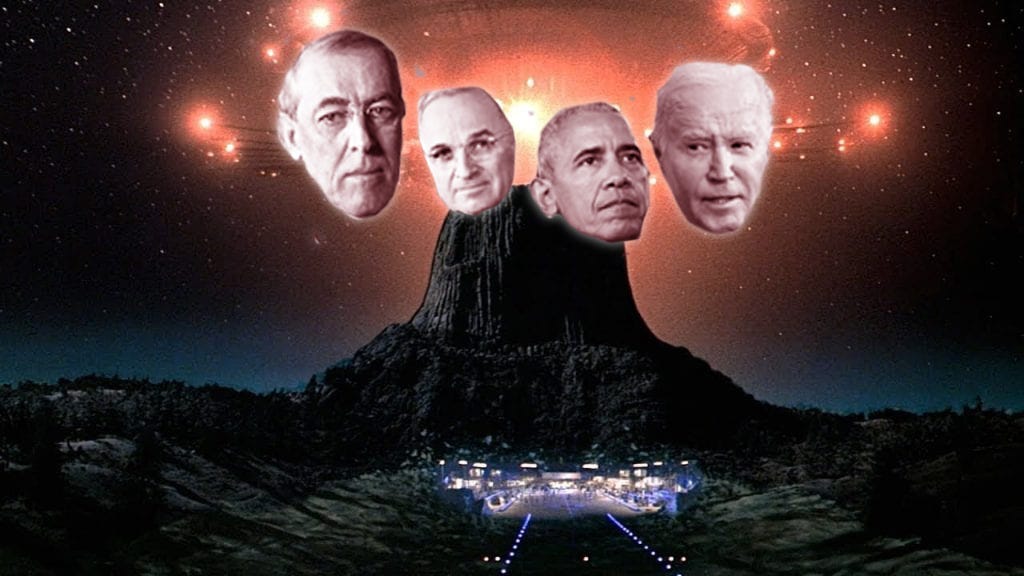
Free Thinking Through the Fourth Turning with Sasha Stone
Close Encounters of the Totalitarian Kind
00:33:35
Loading summary
Transcript10 lines
- [00:00]
A
Hi, this is free thinking through the fourth turning. I'm sasha stone. Close Encounters of the Totalitarian Kind Jacob Siegel's the Information State means no one will ever forget what happened to our country at the hands of the Democrats and the ruling class. The following excerpts are from the Information State audiobook by Jacob Siegel.
- [00:26]
B
The Information State as a model of a working post Totalitarian system conquers space rather than time. It is defined not by its penetration to great depths, but by the digital speed that brings all things to their surface in the shadowless glare of information on a grid of auto control. The ideal in such a system is not to conquer the soul, but to render it obsolete. With enough informational stimulus and algorithmic tuning, the individual has no chance to reflect or contemplate their own chosen ends. Action becomes reflexive, inhuman and bot like
- [01:14]
A
totalitarianism came to America slowly at first, and then all at once. It began as a utopia, one I helped build. It seemed like a perfect new America and gave all of us godless creatures who'd been chewed up and spit out by the boomers, counterculture revolution, a collective sense of purpose. It was all going so great. Until it wasn't a virtual utopia. I got online 30 years ago. I never planned on living half my life on the Internet. It just turned out that way. I had motive, means and opportunity to kill off my real life self and be reborn in the virtual world. Why wouldn't I escape a life that had become a full spectrum failure at everything I tried to do? A relationship that blew up when the man I thought loved me went back to his wife? The graduate film program at Columbia I'd targeted as my life's dream ended in one semester as I chased that loser guy back to la. There are things about that moment that are too painful to write about, at least for now. But I will someday. The result was me staring at the wall with nothing achieved and nowhere to go. I had just turned 30. The Internet allowed me to remake myself as someone else. I could be strong, I could be confident, I could be beautiful, because who knew what you looked like? I could just use words. And I was good at words. So I dove into a life online full of excitement and wonder, a dreamscape of endless possibilities. There was no Amazon, no ebay, no Google. There was barely a web browser. I fell in love with an Italian I met online and came back from Italy pregnant. He didn't want to be a father, but I wanted to be a mother. So I had my baby. And then I built a website so I could stay home with her and support us. I was a success story for every progressive female. A single mom and a business owner. A daughter of feminism, en route to helping launch the Great Feminization and the Great Awokening. I was in Italy when I sent my first tweet from my trio. When Barack Obama signed on, I followed him and he followed me. And then I became part of his army of clicktivists, shaping the new rules and building our desired narratives. We felt omnipotent. This was the Internet after all, and you could be anything you wanted to be. An activist for moral good? Check. An outspoken exhibitionist? Check. A West Wing like politicos acting like experts in politics? Check. Remaking a new America, one social media post at a time? Check. Virtue signaling with images blasted out to followers displaying our goodness? Check. For all the ways we use the Internet, it shouldn't be that surprising that we built a virtual America, a fantasy utopia that we forgot wasn't real. We were riding high with our media stars like Jon Stewart and Rachel Maddow. We were the new, the progressive, the forward thinkers, the early adopters. We colonized the Internet in our image. The utopias only have two paths forward. They either collapse or they must become more totalitarian out of necessity. To quote Milan Kundera in the Book of Laughter and Forgetting, totalitarianism is not only hell, but all the dream of paradise. The age old dream of a world where everybody would live in harmony, united by a single common will and faith, without secrets from one another. Andre Breton too dreamed of this paradise when he talked about the glass house in which he longed to live. And if totalitarianism did not exploit these archetypes which are deep inside us all and rooted deep in all religions, it could never attract so many people, especially during the early phases of its existence. And once the dream of paradise starts to turn into reality, however, here and there people begin to crop up who stand in its way. And so the rulers of paradise must build a little gulag on the side of Eden. And in the course of time, this gulag grows ever bigger and more perfect, while the adjoining paradise gets even smaller and poorer. Our utopia was opt in at first, and who wouldn't want to be a part of it? For a time it felt like the best thing ever. All of our problems solved. It was everything, everywhere, all at once. A whole of society effort. It was Oscars so white. It was critical race theory. It was every institution, corporation, legacy, media outlet and movie studio. But it was also dull. Movies became infused with dogma, the rules became stifling. Sooner or later people like me were going to shake the tree, says Siegel.
- [06:37]
B
A deadening sameness settled over American culture like a wet wool blanket. Art retreated into a chorus of polite assent. Artists advanced in their profession by denouncing other artists. Gender identities multiplied, but people had less sex and did so in what seemed to be ever more strenuous yet joyless permutations that resulted in fewer children being born. The bedroom became a personal police state. The global village was not a cross cultural utopia illuminated by the cosmic light of science. The wholeness of the new society resulted in a claustrophobic orgy of incessant swarming communications that frequently ended in bouts of outrage and cancellation, with everyone crying and the cops getting caught.
- [07:38]
A
Maintaining utopia, let alone defining it, meant that there would eventually be people like me who ask too many questions, who would be hurled before the almighty Panopticon, an army of puritanical scolds policing thought and speech, and eventually destroyed and purged as the mob cheered. The breakdown. I'd been a good liberal, a loyal and devoted Democrat all of my adult life. I'd never thought about conspiracy theories. I didn't really challenge the system. I never doubted the intent of our government. For podcast listeners, a picture of my old Highlander with a 2012 and Obama Biden sticker and Save Medicare on the back. I was all in for Obama, Hillary Clinton and Joe Biden. I was so loyal, a supporter that I was invited to an early Biden fundraiser in May of 2019. I watched him speak with tears in my eyes. He will save us, I thought. For podcast listeners, a picture of me wearing a Biden hoodie. One year later, however, Covid hit. My daughter had to leave her senior year of college and have her graduation on my balcony. We were sewing our own masks and making our own hand sanitizer. It was a whole of society effort to deal with this once in a generation pandemic. For podcast listeners, a picture of my daughter holding her NYU 2020 banner. By the end of May, the George Floyd video whipped around the world and before long the whole of society's efforts had to shift to racial injustice as millions poured into the streets and what I saw unfold that year, the lies that were told, the gaslighting, the lurching from one narrative to another, and all of the obedient robots going along with it in full mass formation. It was too much even for me. We watched them lie. The experts, the journalists, the celebrities, the Democrats. For podcast listeners, a headline 50 Former Intelligence Officials Warn New York Post Stories sounds like Russian disinformation and another headline revolt of the generals. Trump faces heat from US military leaders. Current and former Pentagon officials break with embattled US President over crackdown on Floyd protesters. And another one suddenly. Public health officials say social justice matters more than social distance. I kept trying to scream from the rooftops that we would lose the 2020 election if the violent protests didn't stop. What I didn't know, what I would find out by the end of the election, was that it didn't matter. They would bend the media narrative to pretend there were no violent protests. It all worked so cleanly and smoothly, and no one was even allowed to question it. Trump was campaigning hard, doing multiple rallies a day, and it seemed to me he was making headway in changing minds. We know this because he won Florida, Ohio and Iowa. Only once in history has anyone won those three states and still lost the 1960 election. For podcast listeners, a side by side of November 8, 1960, with JFK winning 303 electoral votes and Richard Nixon winning 219. The popular vote was 34 million 220 to 34 million 108. And the 2020 election showing Joe Biden with 306 electoral votes, Donald Trump with 232 popular vote 81 million for Biden versus 74 million for Trump. The difference in votes between Kennedy and Nixon proves how close the election was. But it never made sense to me that Biden would win by such a large margin and also lose Ohio, Iowa and Florida. Unless, of course, they'd built a system that was too big to fail and had collected enough ballots long before election day. The FBI, still working under Trump, had helped the Democrats by suppressing the Hunter Biden laptop via social media. Covid gave Biden the excuse to hide in the basement and not campaign. A whole of society effort to purge a once in a generation threat seemed to justify everything they did. As we know from the confession in Time magazine, our elections, it seemed, were too risky to leave up to the people. This system, this utopia we built, believed itself to be more powerful than our democracy, more powerful than our elections. I couldn't go along with that, just as I couldn't go along with everything that came after as our utopia devolved into a totalitarian dystopia. The information state. Sometimes, during those dark nights of the soul, I wonder, did I do the right thing? Did what I thought happened really happen? No one in the mainstream media or culture has ever acknowledged any of it. They don't want to admit it or talk about it. Their war on Trump simply rages on and they hope all of us will one day get with the program. But for me, there is still that untold story, a story I need to be told so that everyone on the left, my friends and family and all of Hollywood and much of our legacy media understands what happened in the last 10 years. Why are we living like this? With one half of the country marching by the millions to protest a president who defeated them not once but twice? Their hatred and shunning of half the country is still justified and accepted. Why? Well, now, thanks to Jacob Siegel, we don't have to wonder. He's written it all down, the whole ugly tale in this essential text. The Information State Politics in the Age of Total Control there's nothing they can do about it now. It will set the record straight at long last. The information state starts with Woodrow Wilson's Great War crackdown on speech and moves through World War II, Harry Truman and the Cold War up to 9 11, and the expansion of the surveillance state. But it was the Obama administration that took it much farther beyond mere surveillance. He used information to change hearts and minds and to create a utopian society not unlike those of the Soviet Union or China, says Siegel.
- [14:36]
B
Early in his presidential run, Obama returned to Google's headquarters to announce his innovation agenda and was joined on stage by the company's CEO, Eric Schmidt. In an insightful essay on the merger of state and tech power entitled google.gov, the constitutional scholar Adam J. White describes a moment at the end of the event when Obama spoke of the need to use technology and information to break through people's ill founded opinions. Platforms like Google that controlled the world's data flows would serve in Obama's vision as the White House fact checking and opinion shaping departments. Correcting the misperceptions of an uninformed public and nudging it toward the right ideas. As Obama put it in his talk at Google, mainly people, they're just misinformed or they're too busy, they're trying to get their kids to school, they're working, they just don't have enough information or they're not professionals at sorting out all the information that's out there. And so our political process gets skewed. But if you give them good information, their instincts are good and they will make good decisions and the president has the bully pulpit to give them good information.
- [15:59]
A
How the protests and riots over the summer in 2020 versus those on January 6th were treated so differently by our government remains one of the clearest examples of the kind of two tiered society we were living under before Elon Musk bought Twitter and Donald Trump won again. The BLM riots attacked working class people, so they didn't matter, but January 6th attacked the powerful, and that to them meant war, siegel writes.
- [16:29]
B
After losing the election, Trump spent two months challenging the results and stoking the fury of his supporters with a manic Stop the Steal campaign that mixed reasonable questions of electoral interference with absurd claims while prodding at the fragile basis of civic peace. The effort culminated on January 6, 2021, when a large pro Trump demonstration that had assembled in Washington, D.C. to challenge the election results splintered off into a riot at the US Capitol building. Ugly scenes of Trump supporters rampaging around the Capitol and fighting with police officers blanketed the news in a symbolic register. The images of protesters dressed like Vikings marauding inside the Capitol building had a unique power to shock and disturb. But despite the symbolism, the riots were disorganized and ineffectual. Moreover, January 6th fit into a larger pattern of political violence that had played out over the previous year. The nationwide Black Lives Matter protests, which had taken place six months earlier, were orders of magnitude larger and more destructive than the pro Trump riot. 19 people were killed in violence connected to the BLM protests, which spread to more than 100 cities across the US and caused over $1 billion in damages. And yet the elite establishment overwhelmingly supported the movement. Nancy Pelosi, the powerful speaker of the House, posed for a photo op, kneeling in a brightly colored African kente cloth to show solidarity with the protesters. Public figures who for months had vilified public gatherings as deadly super spreader events, suddenly celebrated the sight of tens of thousands of demonstrators crowding in the streets. One petition, signed by more than 1200 health officials, declared it incumbent on members of the medical profession to offer unwavering support to the BLM protesters. In contrast, the response to January 6th was as Swift and decisive as any political fallout in recent history. One day after the Capitol melee, Facebook banned the sitting president from posting on its platform. Then Twitter banned Trump permanently, citing the risk of further incitement of violence. PayPal and its subsidiary Venmo blocked the accounts of individuals and groups involved in organizing the pro Trump demonstrations, as well as a Christian crowdfunding site raising money for the protesters. GoFundMe announced that it would remove fundraisers promoting conspiracy theories and misinformation about the election. The bans triggered a mass migration to an upstart social media app called Parler that promised not to censor Trump or his supporters. Installations of Parler shot up by 355% in one day, making it the most downloaded item on Apple's App Store. A day later, Parler was shut down under intense pressure from leading Democrats, including New York Representative Alexandria Ocasio Cortez. First, Apple removed the app from its marketplace so users could no longer purchase it. Then Google did the same. Finally, Amazon said that it would no longer host Parler on its servers, temporarily evicting it from the Internet. But before Amazon took Parler off its servers, anonymous hackers obtained its entire database of user activity and uploaded it to public sites like Reddit. The creator of a new website called Faces of the Riot told Wired magazine that he used open source machine learning and facial recognition software to detect, extract and de duplicate every face from the 827 videos that were posted to Parler from inside and outside the capitol building on January 6th. The goal was to let anyone sitting at home go through the footage looking for people they recognized so they could turn them into law enforcement. The FBI worked with a citizen group called the Sedition Hunters that combed through the video and social media, trying to identify people at the Capitol. With the crowdsourcing of police work, the whole of society seemed to be merging with the swarm. Whatever one thought about the events of January 6th, the coordinated response that it provoked laid bare the outline of a new power structure that transcended partisan divisions. A cartel of Silicon Valley tech companies had accomplished in days what Congress had failed to do over four years. It shut Trump up. Biden's inauguration a week later came as a mere formality. The Trump presidency ended the moment he lost his means of speaking directly to the public, which social media had initially provided, propelling him into the White House and then unilaterally revoked the invisible hand of the information regime once it decided to reveal itself, simply hit mute on the most powerful man in the world. In doing so, it revealed an essential rule of power in the digital age. Sovereign are they who control the information.
- [22:36]
A
Truth Held forth and maintained the scandal of how 20 people were hanged as witches in Salem would have been long forgotten were it not for a cantankerous Quaker named Thomas Maule, who made the brave choice to expose the scandal in a pamphlet he called Truth Held Forth and Maintained, And a quote about his in cool and cutting sarcasm, he wrote that God would condemn the witch trial judges. He famously stated, for if it were better that 100 witches should live than that one person be put to death for a witch which is not a witch. Moll's pamphlet was banned, and he was thrown in jail for blasphemy and slander. He would eventually get a trial, and the jury, exhausted and demoralized by the events of that winter, ruled in his favor, handing him a landmark win. That would be among the cases that inspired the First Amendment. Jacob Siegel won't be jailed for blasphemy. Those named in the book will either ignore it outright or attempt to discredit it. As of today, there are no reviews in the New York Times or the Washington Post. As if out of a chapter in his own book, Rene Diresta objected to how she was portrayed and wrote a letter of complaint to the website Baffler, which then pulled the review. Siegel and Diresta publicly debated whether it counted as censorship. But who needs censorship when you have total societal control, at least among the university educated ruling class? For podcast listeners, a tweet by Renee Jurista the reviewer pulled his review because he no longer stood by it and Jacob is crashing out and accusing me of censoring him to sell more books. That's it. That's the story. I denied making any demands over 36 hours ago, and the Free Press hasn't updated Jacob's ridiculous accusations off a tweet by Jacob Siegel that didn't deny asking the Baffler to pull its review of my book. That's a fact proved by our email exchange, which readers can find here. No amount of technocratic snark is going to rewrite history. And she writes, as I explained here, I don't like takedowns because they give bad faith liars the opportunity to make themselves into victims, as Jacob Siegel is doing to push his book. Diresta's bio on Twitter reads recurring Twitter file Supervillain the files are bullshit. Diresta and the machine she works for have rigged the game in their favor. No media outlets will ever call them out. Hollywood won't write any controversial screenplays about them, late night comedians will never mock them, and they will always be treated gently with soft cotton gloves, lest anyone leave a mark. Into the unknown. Jacob Siegel's the Information State does not paint an optimistic vision for the future. It ends with a question mark. Who will control this vast leviathan of data and human behavior that now includes unstoppable AI? And how will we survive it? What will these same people who took complete control of society of thought and speech do if they take back power? I think we can probably guess. If they've never admitted it, never atoned for any of it, then we can expect it will come roaring back. And this time they won't bother trying to hide it. My advice? Log off. Migrate back to the real world. Look at the sky at twilight. Dig your toes into the sand, Build a fire in the woods, look people in the eye, attend a poetry reading, go to a coffee shop. Meet people in the real world. And leave the Internet and the information state far behind. It's probably too late for me. I'm a lifer. I know that. But I'm also a cautionary tale. This is what happens when you spend 30 years of your life in the virtual world. But if I can find my way out, then anyone can. Thank you for listening to my podcast, sashastone. Com, and I hope you all had a lovely Easter and Passover. And if you like my work, you can always leave a tip on the main page sashastone.com or become a paid subscriber or write a review. And remember to thine own self be true.
- [27:50]
C
Sa. All this feels strange and untrue and I won't waste a minute without you. My bones ache, my skin feels cold and I'm getting so tired and so old. The anger swells in my guts and I won't feel these slices and cuts I want so much to open your eyes Cause I need you to look into mine. Tell me that you open your eyes Tell me that you open your eyes Tell me that you open your eyes Tell me that you open your eyes get up, get out get away from these liars Cause they don't get your soul or your fire. Take my hand not your fingers or mine and we'll walk from this dark room for the last time. Every minute from this minute now we can do what we like anywhere I want something to open your eyes Cause I need you to look into mine. Tell me that you open your eyes Tell me that you open your eyes Tell me that you open your eyes Tell me that you open your eyes Tell me that you open your eyes Tell me that you open your eyes Tell me that you open your eyes Tell me that you open your eyes. Sam. Sa. All this feels strange and untrue and I won't waste a minute without you.